Sexual Health Education and STD Prevention in Minority Communities in Durham: A Descriptive Cross-Sectional Survey Design Studying a Sexual Health Program
By
Melody Alexander
Senior Honors Thesis School of Nursing
University of North Carolina at Chapel Hill
April 13, 2020
Approved:
____________________________ Marianne Cockroft, PhD, RN Thesis Advisor
Abstract
The prevalence of sexually transmitted diseases (STD’s) is an ongoing public health issue, particularly in the state of North Carolina. While strategies for prevention, treatments, and some cures exist, it remains a concern. North Carolina has consistently ranked in the top ten nationally for gonorrhea, syphilis, and human immunodeficiency virus (HIV) cases, with minority
individuals being disproportionately affected (Centers for Disease Control and Prevention [CDC], 2019; North Carolina Institute of Medicine [NCIOM], 2011). The purpose of this project was to assess if attending a sexual health workshop impacted sexual health beliefs, attitudes, and willingness to be screened for STD’s in adults from minority communities in Durham County. Increasing education was selected as an intervention for improving health, based on the health beliefs model (Janz & Becker, 1984). Minority adults (N = 13) residing in Durham County attended a one-time hour and a half long class, and a cross-sectional survey (n = 6) was conducted prior to and following the class. Findings were inconclusive, due to a small sample size and a ceiling effect with the data results. As the maximum or minimum value of the range was selected on the pre-survey, there was no room for upward change or improvement. Future recommendations would be to create a different assessment tool, have resources available in multiple languages, and to obtain a larger sample size. Further research is needed to support the effectiveness of sexual health education on changing sexual health behaviors, while the need for improved sexual health persists.
Acknowledgements
I would like to express my gratitude for the guidance of my advisor, Dr. Marianne Cockroft. Her encouragement and support allowed me to pursue this topic in a way that was engaging and exciting. Her commitment to public health nursing is inspiring, and I continue to learn from her. Thank you to Claudia Christy for her expertise in navigating the institutional review board process. Thank you to Dr. Maureen Baker for sharing her wisdom about the
research process, and helping me organize my thoughts when planning the research study design. Her passion for teaching and dedication to her students is remarkable. Thank you to Dr. Diane Berry for providing me with insight into the world of nursing research, and for sharing some of her approaches to her work. Lastly, thank you to Honors Carolina for granting me funding to allow this project to be implemented. I am grateful for the support from the university faculty and institution at-large that have supported this project.
Foreward
Sexual Health Education and STD Prevention in Minority Communities in Durham: A Descriptive Cross-Sectional Survey Design Studying a Sexual Health Program Sexual health is a public health concern that has persisted at the state and national level, with the CDC (2019) reporting a 19%, 63%, and 71% increase (respectively) in chlamydia, gonorrhea, and primary and secondary syphilis cases since 2014. Sexually transmitted diseases (STD’s) can have serious health consequences, including infertility, ectopic pregnancy, cirrhosis, and even death, and can spread insidiously through individuals who are asymptomatic (Durham County, 2017). Extensive research exists focusing on the most at-risk populations – men who have sex with men, the lesbian, gay, bisexual, transgender, and queer (LGBTQ) community, incarcerated individuals, and intravenous (IV) drug users, yet research specific to ethnic minorities in Durham and North Carolina is lacking.
Many barriers exist to STD prevention, such as minors being unable to get tested without parental notification, an absence or lack of sexual health education in school curriculums, and inaccessibility of testing or treatment (Lloyd et al., 2012). Young people are at highest risk, with half of all new STD infections being from individuals aged 15-24 (CDC, 2019).
According to the 2017 Durham County Health Assessment, Durham County was ranked highest in North Carolina for syphilis cases, fifth for three-year average of new HIV cases, and above the state average for gonorrhea and chlamydia cases. Furthermore, the HIV rate was nine times higher in African Americans than in Whites, exemplifying how minorities are
disproportionately affected (Durham County, 2017). Similar trends are seen nationally with gonorrhea and chlamydia as well, with the highest incidence being among African Americans (CDC, 2019). This project focused on providing education to address aspects of the health belief model, with the goal of causing behavioral change (Janz & Becker, 1984). This leads to the question of study; In adults from minority communities in Durham County, does attending a sexual health workshop impact sexual health beliefs, attitudes, and willingness to be screened for STD’s?
Literature Review Key Terms Searched
The search engines CINHAL and PubMed were used. Inclusion criteria was peer
reviewed articles within the past 10 years (2010-2020) that were specific to interventions related to sexual health/STD’s and racial minority groups, in Durham, North Carolina, or the United States. Expert opinions, case reports, and editorials were not included. Articles that focused on a population different than racial minorities (men who have sex with men, the LGBTQ
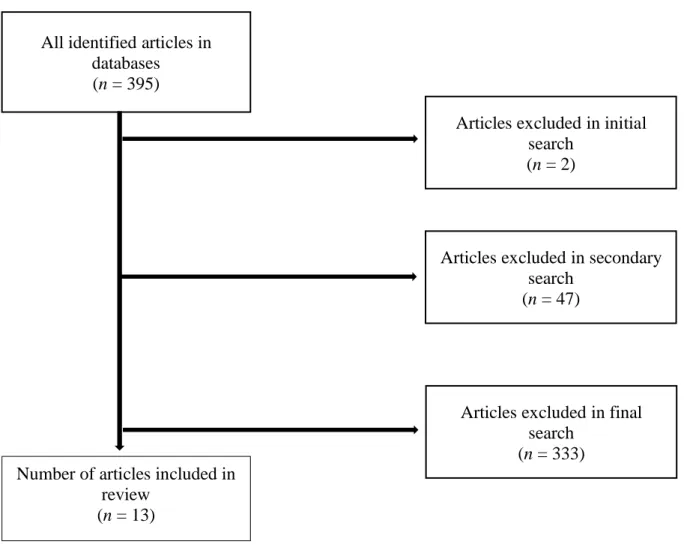
search terms were (sexual health or STD or STI) AND (Durham[title]), which led to four results, two of which were included. A second search was run with the terms (sexual health or STD or STI) AND (North Carolina[title]), which led to 51 results, four of which were included. The last search terms were (sexual health OR STD OR STI) AND (prevention[title]) AND (minority or people of color or race or racial [title]), which led to 340 results, in which seven were included. A total of 382 articles were excluded due to not meeting inclusion criteria. The final 13 articles included were compiled into a table (Table 1), and the selection process is in Figure 1.
Figure 1 – Article Selection
All identified articles in databases (n = 395)
Articles excluded in initial search
(n = 2)
Number of articles included in review
(n = 13)
Articles excluded in secondary search
(n = 47)
Articles excluded in final search
Summary of Literature Review
Sexual Health in Minority Communities. Cultural competency is necessary and beneficial when considering health interventions for minority populations. A study of African American and Hispanic individuals (N = 833) who underwent a 45 to 60-minute program (with a culturally specific video on condom use and negotiation, a group discussion with a facilitator, and role-play exercises) found that participants had reduced HIV risk behaviors at the 30- and 120-day post-intervention assessments (Fisher et al., 2011). It was determined that culturally tailored behavioral interventions were more effective at reducing sexual risk behaviors (Fisher et al., 2011).
A systematic review and meta-analysis of HIV prevention studies (N = 43) focusing on low-income or unemployed ethnic minority women found that effective interventions had elements of cultural adaptation, a cognitive–behavioral approach, small groups and trained facilitators, and a program duration of one to six weeks (Ruiz-Perez, Murphy, Pastor-Moreno, Rojas-García, & Rodríguez-Barranco, 2017). These effective interventions resulted in improved knowledge of HIV transmission, increased frequency of condom use, and reduced risk of STI transmission by 41% (Ruiz-Perez et al., 2017).
Barriers to STD Prevention.
Testing and Treatment. Interviews of professionals in HIV prevention and care systems in North Carolina (N = 21) identified barriers to testing and linkage to care as stigma, hard to reach populations, lack of resources, lack of providers offering testing, psychosocial and
Focus groups at the Duke University Hospital System found that barriers for treatment and testing included fear, stigma, denial of risk, cost, transportation, mistrust of providers, language barriers, and fear of deportation (Kolman et al., 2011).
Qualitative interviews of Black men in Georgia (N = 90) regarding health care and HIV testing experiences revealed problems such as navigating health care systems and confidentiality concerns (Doshi, Malebranche, Bowleg, & Sangaramoorthy, 2013). Individuals who reported being tested felt more empowered to do so, while those who had not been tested reported more negative health care experiences and were dependent on the medical provider to suggest HIV testing (Doshi et al., 2013).
In a survey of African Americans in Durham (N = 508), 80% of participants had reported being tested for HIV in their lifetime, and of those who had not been tested, the most common reasons were not believing they were at risk (49%) not wanting to be tested (39%), and not knowing how or where to get tested (27%) (MacQueen et al., 2015).
Contraception Accessibility. For students at historically Black colleges and universities,
environmental and emotional barriers can exist that prevent individuals from using condoms, such as a lack of accessibility and availability, and feelings of stigma, discomfort, or
embarrassment about condoms (Francis, Noar, Fortune, & Adimora, 2018). Therefore, programs that provide free condoms may help minimize barriers of accessibility and availability.
health professionals or individuals living with HIV teach sexual education classes and having a health professional work in the school to increase accessibility to testing and education (Lloyd et al., 2012).
Interventions to Prevent STD’s.
Testing. In an intervention where routine STD testing was implemented, the greatest benefit was seen in individuals not usually tested, but overall benefit was marginal, suggesting testing everyone is not the best response (Klein et al., 2014). However, analysis of STD data found that coinfections were common, with 14% of HIV positive individuals having an STD, and 22% also having hepatitis B or C (Kolman et al., 2011). Therefore, in situations when testing is appropriate, individuals should get tested for multiple infections.
Sexual Health Education. Peer education was found to be successful in several studies. The intervention frequency varied from a single session to multiple, but both were successful. Education methods also varied, and the assessment typically included a pre- and post-test, and some had follow-up assessments months later as well.
A study focusing on HIV prevention in African American male college students in North Carolina (N =54), found that individuals who underwent five 2 to 3-hour peer-led education sessions were less likely to contract HIV, as there was improved behavioral outcomes (increase in condom use, fewer usage errors) at the three month follow up (Aronson et al., 2013).
Single-session education interventions have also been successful. A randomized controlled trial in Brooklyn, New York, collaborated with barbershops to offer an HIV
significant increases of participants reporting no incidents of condomless sex (Wilson et al., 2019).
A group randomized controlled trial in Atlanta, Georgia, implemented a single HIV prevention session for pre-existing groups of Black women (N = 313), which resulted in
participants being more likely to use condoms than the control group in follow-up assessments at 3 and 6 months (Diallo et al., 2010).
A single-session HIV prevention class (50 minutes) was led by nursing students for minority freshman college students (N = 965), and resulted in increased knowledge of HIV transmission and prevention, the importance of consistent condom use, the importance of getting an HIV test, where to go for a free HIV test, and a decrease in likelihood to engage in risky sexual behavior (Jones et al., 2017). Peer educators were reported to be knowledgeable, organized, articulate, interactive, and effective in class time management, suggesting peer teaching is successful (Jones et al., 2017).
Contraception Accessibility. An HIV prevention program for African American females
(N = 118) at a historically Black college in North Carolina found that by implementing free condom dispensers, 90% of individuals surveyed saw the dispensers, 44% reported taking from the dispenser, and 70% of those that took condoms reported using them (Francis et al., 2018). In total, 1,979 condoms were distributed over three months, suggesting that increasing accessibility to free condoms will also increase their use (Francis et al., 2018).
Methods Design
federally funded program facility, where the population was predominately low-income
minorities. Sexual health was relevant to this population, as many individuals were parents, and could use the information for themselves or to teach their older children or others. Participants were recruited through word of mouth and flyers, which were emailed and posted in English and Spanish at the facility. Participants were compensated for their time with a free breakfast and grocery store gift cards. Anyone over the age of 18 was included. This project was reviewed by the Office of Human Research Ethics at the University of North Carolina at Chapel Hill, which determined that this project did not constitute human subjects research as defined under federal regulations [45 CFR 46.102 (e or l) and 21 CFR 56.102(c)(e)(l)] and did not
require IRB approval.
Data collection. A descriptive cross-sectional survey design was used, and an
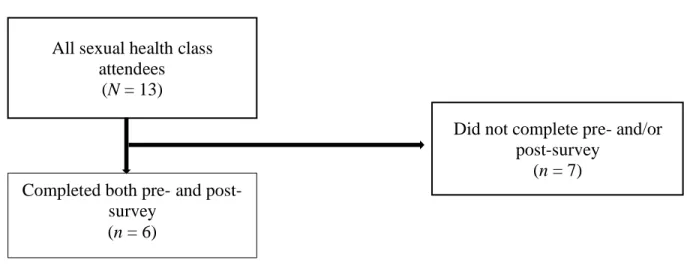
Figure 2 – Data selection
Program Development. An educational workshop was selected as the intervention, and the curriculum was designed to address aspects of the health belief model. The model suggests that health behaviors are dependent upon perceived benefit vs. barriers, perceived threat, self-efficacy, and cues to action (Janz & Becker, 1984). The curriculum addressed these aspects by providing information about the benefits of STD testing and prevention (perceived benefit), ways to reduce testing barriers (perceived barriers), facts about the local prevalence STD’s and
consequences of untreated STD’s (perceived threat), and the ability of individuals to get tested and prevent STD’s (self-efficacy/cues to action). The purpose was to determine if individuals would be enabled to change their health behaviors if they were informed about these things.
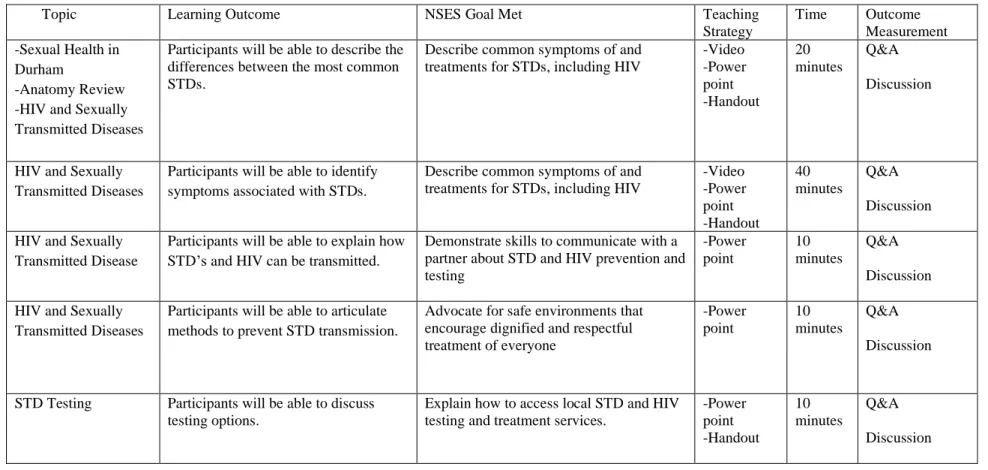
The teaching plan (Table 3) was taken and adapted from “Promoting Sexual Health: A Curriculum to Reduce Unintended Pregnancy, Prevent Sexually Transmitted Infection, and Improve Sexual Experience”, designed for an 18 to 24 year-old audience by the nonprofit Education, Training, and Associates (Charles, Kirby, Lepore, Walker, & Coyle, 2011). The National Sexuality Education Standards (NSES) designed for school aged children was used by adapting the 9-12th grade goals, since no standards exist for adult sexual health education
All sexual health class attendees
(N = 13)
Completed both pre- and post-survey
(n = 6)
Did not complete pre- and/or post-survey
(“Future of,” 2012). From there, aspects from the sexual health curriculum that aligned with the goals selected from the NSES were included. The selected goals were as follows:
• Describe common symptoms of and treatments for STDs, including HIV. • Explain how to access local STD and HIV testing and treatment services.
• Demonstrate skills to communicate with a partner about STD and HIV prevention and testing.
• Advocate for safe environments that encourage dignified and respectful treatment of everyone.
Based off the above goals, the following learning outcomes were established, which guided the teaching plan and focused on the top STD’s in the state (gonorrhea, chlamydia, syphilis, and HIV).
Participants will be able to:
• Describe the differences between the most common STDs. • Identify symptoms associated with STDs.
• Explain how STD’s and HIV can be transmitted. • Articulate methods to prevent STD transmission. • Discuss testing options.
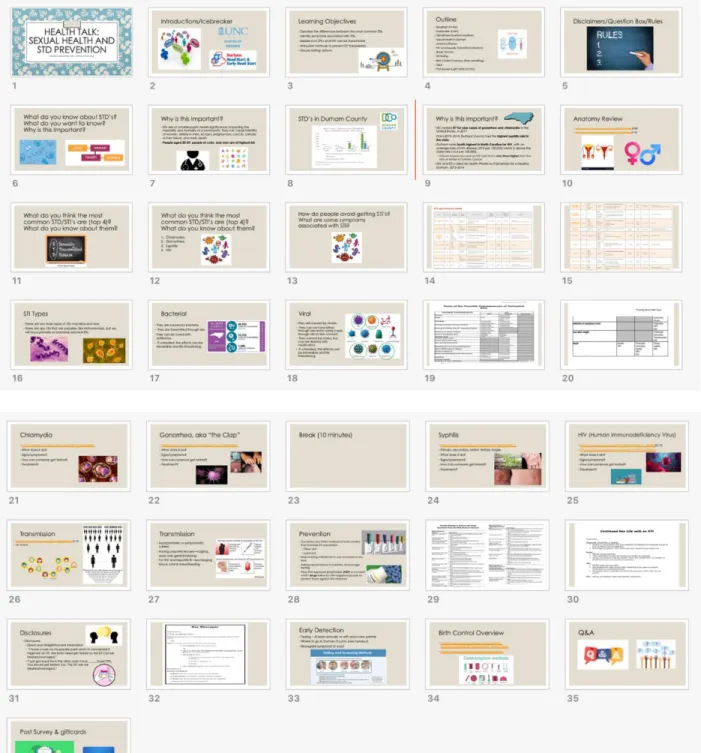
A power point presentation was utilized (Figure 3), and customized handouts with local free STD testing and condom distribution sites were provided for participants. Handouts with general information on the various types of STD’s and contraception methods were also distributed.
Results Demographics
total number of responses for some characteristic groups was less than 10, as some individuals chose not to answer all sections. For example, some individuals who selected “Hispanic” for ethnicity did not list a race.
Table 2 – Demographics of Class Participants who Completed Pre-Survey (n = 10)
Characteristics n (%)
Age (years)
18-24 2 (20)
25-44 7 (70)
45-64 0 (0)
64+ 0 (0)
Ethnicity
Hispanic 6 (60)
Non-Hispanic 4 (40) Race
American Indian or Alaska Native
0 (0)
Asian 0 (0)
Black or African American
4 (40)
Native Hawaiian or Other Pacific
Islander
0 (0)
White 2 (20)
Gender Identity
Male 1 (10)
Female 9 (90)
Intervention
The class was taught one time in English (with a Spanish interpreter from the facility present) and was 1.5 hours of in-person education. Teaching methods included showing
accompanying visual. Videos used were produced by VICE media, the Mayo Clinic, and AMAZE, a free online sexual health resource that has been evaluated and focuses on topics that meet the learning goals of the NSES.
Statistical Analysis
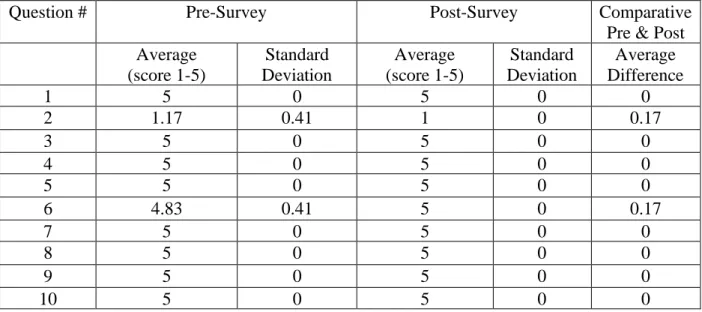
The results from the surveys were manually inputted into an excel spreadsheet, and analyzed to compare changes (on the 1 to 5 scale) in individual responses from pre-survey to post-survey, average responses for each question, standard deviation of the average responses, and difference of the averages between the pre- and post-survey. Statistical significance was not measured due to the small sample size. The change in individual responses was omitted as it was not significant.
Discussion
Results of the survey analysis can be seen in Table 4. The sample size was small (n = 6), from the original number of participants (N = 13). The only exclusion criteria for the data analysis was lacking a pre- and/or post-survey, resulting in a loss of seven participants. Barriers for not having a pre- and/or post-survey included individuals needing to leave early or come late and the survey only being available in English. The total number of participants (N = 13) being relatively small also contributed to the overall small sample size ultimately included in the results data.
standard deviation of 0). This suggests that someone may have initially thought that prevention from STD’s is difficult (question #2), but then changed their mind as everyone put 1 (strongly disagree) by the post-survey. Similarly, someone did not initially know that STD’s can be asymptomatic (question #6), but by the post-survey everyone responded with 5 (strongly agree), suggesting that learning may have occurred in both cases. Another possibility is there may have been a misunderstanding in the wording of the statement in the pre-survey, or that someone did not understand what it was asking due to a language barrier.
Table 4 – Survey Results (n = 6)
Question # Pre-Survey Post-Survey Comparative
Pre & Post Average
(score 1-5)
Standard Deviation
Average (score 1-5)
Standard Deviation
Average Difference
1 5 0 5 0 0
2 1.17 0.41 1 0 0.17
3 5 0 5 0 0
4 5 0 5 0 0
5 5 0 5 0 0
6 4.83 0.41 5 0 0.17
7 5 0 5 0 0
8 5 0 5 0 0
9 5 0 5 0 0
10 5 0 5 0 0
Summary of Results
Overall, a significant change in the pre- and post-survey results was not noted, and therefore results are inconclusive of the question being studied: In adults from minority
communities in Durham County, does attending a sexual health workshop impact sexual health beliefs, attitudes, and willingness to be screened for STD’s?
Limitations included a small sample size, lack of participation due to attendees leaving early and coming late, and language barriers. The surveys were only in English, but there was a large Spanish speaking population, which created a barrier. While an interpreter was present to translate the class, discussion, and questions, the paper copies had not been made accessible to all participants as it was only available in English. The survey format being a 5-point numerical scale was also limiting, since many people picked the maximum values on the pre-survey and there was no room for growth in the post-survey.
Significance
While there was not a statistical significance, there was anecdotal feedback from attendees about the class being interactive and a positive experience. This suggests that the teaching methods employed were engaging and could be expanded upon in the future. Other recommendations would be to make the information more specific to the audience. The
Conclusion
There is an increased prevalence of STD’s locally and nationally, and it remains a public health issue (CDC, 2019). As such, there is an ongoing need for improved sexual health through preventative services such as increased accessibility to vaccinations, STD testing, and treatment. This project attempted to provide sexual health education to determine if there would be an impact on sexual health beliefs, attitudes, and willingness to be screened for STD’s. While the results of this project were inconclusive, further studies should be done to address this issue and expand upon solutions that can improve sexual health, particularly in minority communities.
Future recommendations would be to reach a larger audience by hosting multiple sessions of the educational workshop, and to offer free and confidential on-site STD testing for
convenience at the events. Moving forward, the survey validity could also be improved by changing the format from a 5-point numerical scale to a 7-point scale or other alternative method of evaluation. The presence of a Spanish interpreter was also invaluable and would be
References
Aronson, R. E., Rulison, K. L., Graham, L. F., Pulliam, R. M., Mcgee, W. L., Labban, J. D., … Rhodes, S. D. (2013). Brothers leading healthy lives: Outcomes from the pilot testing of a culturally and contextually congruent HIV prevention intervention for Black male college students. AIDS Education and Prevention, 25(5), 376–393. doi:
10.1521/aeap.2013.25.5.376
Centers for Disease Control and Prevention. (2019). Sexually transmitted disease surveillance 2018. Atlanta, GA: U.S. Department of Health and Human Services. DOI:
10.15620/cdc.79370.
Charles, V., Kirby, D., Lepore, G., Walker, J., & Coyle, K. (2011). Promoting sexual health: A curriculum to reduce unintended pregnancy, prevent sexually transmitted infection, and
improve sexual experience. Scotts Valley, California: ETR Associates.
Diallo, D. D., Moore, T. W., Ngalame, P. M., White, L. D., Herbst, J. H., & Painter, T. M. (2010). Efficacy of a single-session HIV prevention intervention for Black women: A group randomized controlled trial. AIDS and Behavior, 14(3), 518–529. doi:
10.1007/s10461-010-9672-5
Doshi, R. K., Malebranche, D., Bowleg, L., & Sangaramoorthy, T. (2013). Health care and HIV testing experiences among Black men in the south: Implications for “Seek, Test, Treat, and Retain” HIV prevention strategies. AIDS Patient Care and STDs, 27(2), 123–133. doi: 10.1089/apc.2012.0269
http://healthydurham.org/cms/wp-content/uploads/2018/04/2017-CHA-FINAL-FOR-PRINT.pdf
Fisher, H. H., Patel-Larson, A., Green, K., Shapatava, E., Uhl, G., Kalayil, E. J., … Chen, B. (2011). Evaluation of an HIV prevention intervention for African Americans and Hispanics: Findings from the VOICES/VOCES community-based organization behavioral outcomes project. AIDS and Behavior, 15(8), 1691–1706. doi: 10.1007/s10461-011-9961-7
Francis, D. B., Noar, S. M., Fortune, D. A., & Adimora, A. A. (2018). “Be Straight Up and So Will He”: Evaluation of a novel HIV prevention condom distribution and health
communication intervention targeting young African American females. AIDS Education and Prevention, 30(2), 137–151. doi: 10.1521/aeap.2018.30.2.137
Future of Sex Education Initiative. (2012). National sexuality education standards: Core content and skills, k-12 [a special publication of the Journal of School Health]. Retrieved from http://www.futureofsexeducation. org/documents/josh-fose-standards-web.pdf
Howden, L. M., & Meyer, J. A. (2011, May). Age and sex composition: 2010 census briefs.
Retrieved from https://www.census.gov/prod/cen2010/briefs/c2010br-03.pdf
Janz, N. K., & Becker, M. H. (1984). The health belief model: A decade later. Health Education Quarterly, 11(1), 1–47. doi: 10.1177/109019818401100101
Jones, S. G., Chadwell, K., Olafson, E., Simon, S., Fenkl, E., & Framil, C. V. (2017). Effectiveness of nursing student-led HIV prevention education for minority college students: The SALSA project. Journal of Health Care for the Poor and
Klein, P. W., Messer, L. C., Myers, E. R., Weber, D. J., Leone, P. A., & Miller, W. C. (2014). Impact of a routine, opt-out HIV testing program on HIV testing and case detection in North Carolina sexually transmitted disease clinics. Sexually Transmitted
Diseases, 41(6), 395–402. doi: 10.1097/olq.0000000000000141
Kolman, M., DeCoster, M., Proeschold-Bell, R. J., Hunter, G. A., Bartlett, J., & Seña, A. C. (2011). The increasing impact of human immunodeficiency virus infections, sexually transmitted diseases, and viral hepatitis in Durham County, North Carolina: A call for coordinated and integrated services. North Carolina Medical Journal, 72(6), 439–446. Lloyd, S. W., Ferguson, Y. O., Corbie-Smith, G., Ellison, A., Blumenthal, C., Council, B. J., …
Akers, A. (2012). The role of public schools in HIV prevention: Perspectives from African Americans in the rural south. AIDS Education and Prevention, 24(1), 41–53. doi: 10.1521/aeap.2012.24.1.41
MacQueen, K. M., Chen, M., Jolly, D., Mueller, M. P., Okumu, E., Eley, N. T., … Rogers, R. C. (2015). HIV testing experience and risk behavior among sexually active Black young adults: A CBPR-based study using respondent-driven sampling in Durham, North Carolina. American Journal of Community Psychology, 55(3-4), 433–443. doi: 10.1007/s10464-015-9725-z
North Carolina Institute of Medicine. (2011). Healthy North Carolina 2020: A better state of health. Morrisville, NC: North Carolina Institute of Medicine.
Ruiz-Perez, I., Murphy, M., Pastor-Moreno, G., Rojas-García, A., & Rodríguez-Barranco, M. (2017). The effectiveness of HIV prevention interventions in socioeconomically
disadvantaged ethnic minority women: A systematic review and meta-analysis. American Journal of Public Health, 107(12). doi: 10.2105/ajph.2017.304067
Sullivan, K. A., Berger, M. B., Quinlivan, E. B., Parnell, H. E., Sampson, L. A., Clymore, J. M., & Wilkin, A. M. (2016). Perspectives from the field: HIV testing and linkage to care in North Carolina. Journal of the International Association of Providers of AIDS Care (JIAPAC), 15(6), 477–485. doi: 10.1177/2325957415617830
U.S. Census Bureau (2020). Questions asked on the form.Retrieved from
https://2020census.gov/en/about-questions.html?cid=23759:census%20questions:sem.ga:p:dm:en:&utm_source=sem.ga& utm_medium=p&utm_campaign=dm:en&utm_content=23759&utm_term=census%20qu estions
Wilson, T. E., Gousse, Y., Joseph, M. A., Browne, R. C., Camilien, B., Mcfarlane, D., … Fraser, M. (2019). HIV prevention for Black heterosexual men: The barbershop talk with
Appendix A
Sexual Health Education and Sexually Transmitted Disease (STD) Prevention Pre-Talk Survey
The workshop and surveys are voluntary and completion indicates your willingness to participate.
Please check the following boxes that apply to you:
Age: 18-24 years 25-44 years 45-64 years 64+ years Ethnicity: Hispanic Non-Hispanic
Race: American Indian or Alaska Native Asian Black or African American Native Hawaiian or Other Pacific Islander White
Gender Identity: Male Female
Please answer the following questions about your beliefs BEFORE attending this health talk: On a scale of 1 to 5, with 1 being “Strongly disagree” and 5 being “Strongly agree”, please
rate the following statements: 1) It is possible to prevent STD’s
1 2 3 4 5 2) Protection from STD’s is difficult
1 2 3 4 5
3) Being tested for STD’s is an important part of a person’s sexual health 1 2 3 4 5
4) STD’s can be contagious 1 2 3 4 5 5) STD’s can cause serious health issues
1 2 3 4 5
6) People with an STD do not always have symptoms 1 2 3 4 5
7) I am confident in by knowledge about preventing STD’s 1 2 3 4 5
1 2 3 4 5 9) I am willing to be tested for STD’s
1 2 3 4 5
Appendix B
Sexual Health Education and Sexually Transmitted Disease (STD) Prevention Post-Talk Survey
The workshop and surveys are voluntary and completion indicates your willingness to participate.
Please answer the following questions about your beliefs AFTER attending this health talk: On a scale of 1 to 5, with 1 being “Strongly disagree” and 5 being “Strongly agree”, please
rate the following statements:
1) It is possible to prevent STD’s 1 2 3 4 5 2) Protection from STD’s is difficult
1 2 3 4 5
3) Being tested for STD’s is an important part of a person’s sexual health 1 2 3 4 5
4) STD’s can be contagious 1 2 3 4 5 5) STD’s can cause serious health issues
1 2 3 4 5
6) People with an STD do not always have symptoms 1 2 3 4 5
7) I am confident in by knowledge about preventing STD’s 1 2 3 4 5
8) Individuals who are sexually active should be tested for STD’s 1 2 3 4 5
9) I am willing to be tested for STD’s 1 2 3 4 5
Tables and Figures Table 1 – Selected Articles
Article Title, publication year, author, journal
Purpose Sample Size Sample Characteristics Method/Intervention Results
Perspectives from the Field: HIV Testing and Linkage to Care in North Carolina (2016) Sullivan et al. Journal of the International
Association of Providers of AIDS Care
Identify the strengths and weaknesses of the system of care in North Carolina in its ability to provide testing and linkage to care for HIV
N = 21 Professionals in the HIV prevention and care systems in NC
Qualitative, interviews Barriers to testing and linkage to care identified included stigma, hard to reach
populations, lack of resources, lack of providers offering testing, psychosocial and economic factors, transportation, and lack of consistency for following up with no-show patients. Impact of a Routine,
Opt-Out HIV Testing Program on HIV Testing and Case Detection in North Carolina Sexually Transmitted Disease Clinics (2014) Klein et al. Sexually Transmitted Diseases
Analyze the impact of routine HIV testing in 102 STD clinics in North Carolina on case detection
N = 1149 Adults aged 18 to 64 years who received an HIV test in a North Carolina STD clinic from July 1, 2005, to June 30, 2011
Interrupted time series analysis
Routine testing had greatest benefit in individuals not usually tested, but overall benefit was marginal.
HIV testing experience and risk behavior among sexually active Black young adults: a CBPR-based study using respondent-driven sampling in Durham,
Assess the experience of being tested for HIV as a Black or African American young adult in Durham, North Carolina
N = 508 Sexually active Black or African American men and women aged 18 to 30 in Durham, North Carolina from May 1, 2011 to June 9, 2012
Cross-sectional survey, respondent driven sampling
North Carolina (2015) MacQueen et al.
American Journal of Community Psychology
(39%), and not knowing how or where to get tested (27%).
The Increasing Impact of Human
Immunodeficiency Virus Infections, Sexually Transmitted Diseases, and Viral Hepatitis in Durham County, North Carolina: A Call for Coordinated and Integrated Services (2011) Kolman et al.
North Carolina Medical Journal
Analyze the incidence of individuals with HIV and a coinfection, and community perspectives on HIV-related issues
Quantitative:
N = 9799 Qualitative:
N = 76
Individuals with an HIV infection, STDs, and/or hepatitis B or C who visited Duke University Hospital System from 2004-2008 and HIV-infected individuals who received care at the DUMC Infectious Disease Clinic and the Lincoln Community Health Center Early Intervention Clinic in 2009
Quantitative (health care utilization data, clinical data, and geospatial information) and
qualitative analysis (focus groups, key informant interviews)
Barriers for treatment and testing included fear, stigma, denial of risk, cost,
transportation, mistrust of providers, language barriers, and fear of deportation. Coinfections were common, with 14% of HIV positive individuals having an STD, and 22% also having hepatitis B or C.
Effectiveness of Nursing Student- led HIV Prevention Education for Minority College Students: The SALSA Project (2017) Jones et al. Journal of Health Care for the Poor and Underserved
Assess the effectiveness of the nursing students as peer educators for improving freshman college students’ HIV knowledge/ awareness following a 50-minute class, and perceptions by freshman attendees of the nursing students as teachers/ prevention educators
N = 965 Freshman students aged 18 to 19 years from January 2011 to December 2013
A 50-minute class (taught 66 times) with a
questionnaire (using a liker scale) and program evaluation form at the end
The role of public schools in HIV
prevention: perspectives from African Americans in the rural south (2012) Lloyd et al. AIDS Education Prevention
Interview African
American adults and youth living in rural North Carolina communities with a high prevalence of HIV to ask about sex education policy in public schools, its relation to youth sexual practices, how the school should be used for HIV prevention efforts, and what barriers to school-based
intervention exist
N = 93 Youth (ages 16–24), perceived to be at high risk for HIV/AIDS infection, adults, and formerly incarcerated individuals in 2006
11 focus groups (90 minutes each) that asked 12 open-ended questions with African American adults and youth in rural North Carolina
Barriers towards STD prevention included public schools’ policies and practices of abstinence only education, political opposition, lack of funding, parents withholding consent for sex education, and unapproachable educators. Proposed solutions included having health professionals or individuals living with HIV teach sexual education classes, and having a health
professional work in the school to increase accessibility to testing and education.
Brothers Leading Healthy Lives:
Outcomes from the Pilot Study Testing of a Culturally and
Contextually Congruent HIV Prevention Intervention for Black Male College Students (2013) Aronson et al.
AIDS Education Prevention
Pilot an educational intervention that targeted heterosexually active African American/black male college students that were at-risk for HIV
N = 54 Heterosexually active African American/black male college students at UNCG and NCA&T between the ages of 18-24 who reported having unprotected vaginal and/or anal intercourse with two or more female partners in the past three months and was HIV negative or had unknown status
5 educational sessions (2-3 hours each) taught by 2 peer facilitators and 2-3 peer educators
(undergraduate and graduate students trained using the Bacchus Network curriculum), and a baseline, immediate posttest, and 3-month follow-up surveys
Individuals who underwent the intervention were less likely to contract HIV, as there was improved behavioral outcomes (increase in condom use, fewer usage errors) in the three-month follow-up.
Evaluation of an HIV Prevention Intervention for African Americans and Hispanics: Findings from the
VOICES/VOCES
Assess long term changes in sexual risk of African American and Hispanic individuals in the Video Opportunities for Innovative Condom
N = 833 African Americans and Hispanics who partook in the VOICES program at four sites between September 1, 2006 to August 31, 2008
A 45 minute to an hour-long program that included a culturally specific video on condom use and negotiation, a group discussion with a
Reduced HIV risk
Community-Based Organization Behavioral Outcomes Project (2011) Fisher et al. AIDS and Behavior
Education and Safer Sex (VOICES/VOCES) programs at 4 agencies
facilitator, and role-play exercises. Self-reported change in knowledge, attitudes, and behavioral intentions for condom use was assessed
interventions were more effective at reducing sexual risk behaviors.
“Be straight up and so will he”: Evaluation of a Novel HIV Prevention Condom Distribution and Health Communication Intervention Targeting Young African American Females (2018) Francis, Noar, Fortune, & Adimora.
AIDS Education Prevention
Evaluate a HIV prevention program for African American females through free condom dispensers at a historically Black college in North Carolina
N = 118 African American female college students over the age of 18 that were heterosexually active in the past 12 months
6 focus groups at one setting, followed by a pretest and posttest prior to and three months after the intervention at a different setting
90% of participants saw the intervention, 44% reported using the intervention, and 70% of those that used the intervention reported using the condoms. 1,979 condoms were distributed over three months.
The Effectiveness of HIV Prevention Interventions in Socioeconomically Disadvantaged Ethnic Minority Women: A Systematic Review and Meta-Analysis (2017) Ruiz-Perez et al.
American Journal of Public Health
Determine the effectiveness of HIV prevention studies focusing on ethnic minority women who are low income or
unemployed, in member states of the Organization for Economic Co-operation and
Development (OECD)
N = 43 Randomized controlled trials or
quasi-experimental investigations with a comparison group in an OECD state were included, where at least 80% of the participants were an ethnic minority who had low income or were unemployed
A systemic review with data extraction of qualitative and
quantitative information
The effective interventions resulted in improved knowledge of HIV transmission, increased the frequency of condom use, and reduced the risk of STI transmission by 41%.
HIV Prevention for Black Heterosexual Men: The Barbershop
Assess a strengths-focused HIV prevention program
N = 657 African American or Black men over the age of 18 who reported at
A randomized controlled trial, with a single small group session led by peers
Talk with Brothers Cluster Randomized Trial (2019) Wilson et al. American Journal of Public Health
for high-risk heterosexual Black men
least 2 sexual partners in the past 6 months, with at least 1 episode of condomless sex during that time, in Brooklyn, New York from November 2012 to July 2016
through collaboration with barbershops in areas that were high risk for heterosexual HIV infection with a 3- and 6-month follow-up assessment
of participants reporting no condomless sex at follow-up.
Efficacy of a Single-Session HIV Prevention Intervention for Black Women: A Group Randomized Controlled Trial (2010) Diallo et al.
AIDS and Behavior
Evaluate the effectiveness of a single-session HIV prevention intervention for pre-existing groups of black women
N = 313 Black women over the age of 18 who were not pregnant or planning to be in the next 6 months who spoke English from March 2006 to June 2007 in Atlanta
A group randomized controlled trial, with a single session intervention with a baseline, 3 month, and 6 month follow-up behavioral assessment
Single-session HIV prevention interventions in pre-existing groups of black women can be effective, with intervention participants being more likely to use condoms than the control group in follow-up assessments.
Health Care and HIV Testing Experiences Among Black Men in the South: Implications for ‘‘Seek, Test, Treat, and Retain’’ HIV Prevention Strategies (2013) Doshi et al. AIDS Patient Care and STDs
Describe Black men’s health care and HIV testing practices and experiences in Georgia and identify how themes of these experiences reflect domains of the Anderson Model among Black men
N = 90 African Americans men over the age of 18 living in Georgia who reported an HIV negative or unknown status
In-depth qualitative interviews (ranging 70 minutes to two hours), followed by a cross-sectional survey
Table 3 - Teaching Plan
Topic Learning Outcome NSES Goal Met Teaching
Strategy
Time Outcome Measurement -Sexual Health in
Durham
-Anatomy Review -HIV and Sexually Transmitted Diseases
Participants will be able to describe the differences between the most common STDs.
Describe common symptoms of and treatments for STDs, including HIV
-Video -Power point -Handout 20 minutes Q&A Discussion
HIV and Sexually Transmitted Diseases
Participants will be able to identify symptoms associated with STDs.
Describe common symptoms of and treatments for STDs, including HIV
-Video -Power point -Handout 40 minutes Q&A Discussion HIV and Sexually
Transmitted Disease
Participants will be able to explain how STD’s and HIV can be transmitted.
Demonstrate skills to communicate with a partner about STD and HIV prevention and testing -Power point 10 minutes Q&A Discussion HIV and Sexually
Transmitted Diseases
Participants will be able to articulate methods to prevent STD transmission.
Advocate for safe environments that encourage dignified and respectful treatment of everyone
-Power point 10 minutes Q&A Discussion
STD Testing Participants will be able to discuss testing options.
Explain how to access local STD and HIV testing and treatment services.