LABOR AND THE RISE OF THE TIWANAKU STATE (AD 500-1100): A BIOARCHAEOLOGICAL STUDY OF ACTIVITY PATTERNS
Sara Kathryn Becker
A dissertation submitted to the faculty of the University of North Carolina at Chapel Hill in partial fulfillment of the requirements for the degree of Doctor of Philosophy in the
Department of Anthropology.
Chapel Hill 2013
Approved by: Dale L. Hutchinson
ABSTRACT
SARA KATHRYN BECKER: Labor and the Rise of the Tiwanaku State (AD 500-1100): A Bioarchaeological Study of Activity Patterns
(Under the direction of Dale Hutchinson)
This dissertation focused on understanding labor during the development of Tiwanaku (AD 500-1100), one of the earliest Andean states. Prior archaeological research (Kolata 1991, 1993a, b; Stanish 1994, 2003) argued that Tiwanaku labor was centralized under a corvée mit’a system. Labor was controlled and distributed by elites living within the city of Tiwanaku under a hierarchical political organization (Kolata 2003a). Other research (e.g. Albarracín-Jordán 2003; Erickson 2006) argued that local and decentralized control of labor, with workforce cooperation and collaboration under a heterarchical political system, was an important factor to the state’s emergence,
formation, and expansion. The author interpreted bioarchaeological research on
ACKNOWLEDGEMENTS
This material is based upon work supported by the National Science Foundation (grant no. 0925866), the University of North Carolina, Chapel Hill (UNC) Off-Campus Dissertation Research Fellowship, and a Timothy P. Mooney Fellowship. Preliminary research performed in 2007 for this project was funded by the UNC Graduate School’s Graduate Student Opportunity Fund for Pre-Dissertation Research.
There are many people I need to thank for helping me get here. First of all, my advisor, Dale Hutchinson, for guiding me through the program at UNC as well as all of the advice and edits throughout the years. Without his introduction to Bolivia, phone calls, and emails made on my behalf, I would never have ended up working on this project. I also thank Deborah Blom, who graciously invited another bioarchaeologist onto the project and provided me with access to her personal database on the Tiwanaku
In addition to my work overseas, I had local support in the form of statistical training from Chris Wiesen of the Odum Institute at UNC, Kathy Roberts at UNC’s Campus Health Services, who donated materials and time to this project, and Steve Churchill at Duke, who advised me on biomechanics and cross-sectional geometry. My local departmental support has been wonderful and I acknowledge Haeran Miller, who worked with me while I was overseas in 2008, and Nicholas LeBlanc, who helped with recent organizational and logistical events.
I am thankful to the many friends and colleagues who have helped me throughout the years including John Janusek, Sara Juengst, Lara McCormick, Randi Gladwell, Jonah Augustine, Ann Laffey, Claudine Vallières, Clare Sammells, Jen Zovar, Carrie Anne Berryman, Beth Plunger, Mabel Ramos Fernandez, Kent Johnson, Jose Capriles, Andy Roddick, Meg Kassabaum, David Cranford, Anna Semon, Kelly Houck, Tomás Gallareta Cervera, Courtney Lewis, Joe Wiltberger, and Kristina Killgrove. Additional gratitude goes to two friends and former classmates, Celeste Gagnon and Will Meyer, who have been there for me throughout this process.
TABLE OF CONTENTS
TABLE OF CONTENTS ... viii
LIST OF TABLES ... xiv
LIST OF FIGURES ... xxii
Chapter 1. Introduction... 1
1.1 Introduction to the Research Problem ... 1
1.2 Organization of the Dissertation ... 4
Chapter 2. Background on the Tiwanaku State ... 5
2.1 Introduction ... 5
2.2 Chronology of the Study Area ... 6
2.3 The Environment of the Study Area ... 10
2.4 Culture History ... 13
2.5 Labor in the Andes ... 20
2.6 Explanations of Tiwanaku Political Organization ... 23
2.7 Summary ... 32
Chapter 3. The Bioarchaeology of Labor ... 33
3.1 Introduction ... 33
Geographic Differences ... 34
Chronological Differences ... 43
Caveats to Testing the Models ... 44
3.3 Bioarchaeological Approach to Labor in Subgroups ... 45
Sex and Gender ... 45
Age-at-Death and Age ... 49
3.4 Prior Tiwanaku Bioarchaeological Research ... 52
3.5 Summary ... 56
Chapter 4. Context of the Populations ... 58
4.1 Introduction ... 58
4.2 Reconstructing Sample Profiles with Skeletal Populations ... 59
Calculating the Minimum Number of Individuals (MNI) ... 61
Age Estimation... 61
Sex Estimation ... 62
4.3 The Sample ... 63
Archaeological Sites - Bolivia ... 65
Archaeological Sites – Peru ... 86
4.4 Summary ... 95
Chapter 5. Methods for Estimating Labor ... 96
5.2 Musculoskeletal Stress Markers (MSM) ... 97
5.3 Osteoarthritis (OA) ... 107
5.4 Concerns about Using MSM and OA ... 112
5.6 Statistical Methods ... 113
5.7 Summary ... 116
Chapter 6. Musculoskeletal Stress Markers (MSM) Results ... 117
6.1 Introduction ... 117
6.2 Synopsis of the MSM Results ... 118
6.3 Regional Core vs. Regional Colony MSM Results ... 122
6.4 Inter-Highland Area Comparisons MSM Results ... 127
6.5 Intra-Area Comparisons MSM Results ... 127
Within the Katari Valley ... 128
Within the Tiwanaku Valley ... 130
Within the Moquegua Valley ... 135
6.6 Chronological MSM Results ... 138
Intra-Core ... 138
Intra-Colony ... 139
6.7 Composition of the State’s Workforce Using MSM ... 141
Regional MSM Comparison by Sex and by Age ... 141
Intra-Area MSM Comparisons by Sex and by Age ... 149
Within the Katari Valley ... 150
Within the Tiwanaku Valley ... 154
Within the Moquegua Valley ... 163
6.8 Summary ... 169
Chapter 7. Osteoarthritis (OA) Results ... 170
7.1 Introduction ... 170
7.2 Synopsis of the OA Results ... 171
7.3 Regional Core vs. Regional Colony OA Results ... 174
7.4 Inter-Highland Area Comparison OA Results ... 178
7.5 Intra-Area Comparison OA Results ... 179
Within the Katari Valley ... 179
Within the Tiwanaku Valley ... 181
Within the Moquegua Valley ... 188
7.6 Chronological OA Results ... 191
Intra-Core ... 192
Intra-Colony ... 195
7.7 Composition of the State’s Workforce Using OA ... 198
Regional OA Comparison by Sex and by Age ... 198
Intra-Area OA Comparison by Sex and by Age ... 205
Within the Katari Valley ... 206
Within the Tiwanaku Valley ... 208
Within the Moquegua Valley ... 212
7.8 Summary ... 219
Chapter 8. Summary and Discussion: Skeletal Evidence of Labor in the Tiwanaku State ... 220
8.1 Introduction ... 220
8.2 Summary and Discussion of Regional Core versus Colony Results ... 221
8.3 Summary and Discussion of Inter-Highland Area Results ... 222
8.4 Summary and Discussion of Intra-Area Results ... 222
Within the Katari Valley ... 222
Within the Tiwanaku Valley ... 222
Within the Moquegua Valley ... 226
8.5 Summary and Discussion of Chronological Results ... 226
8.6 Summary and Discussion of the Composition of the State’s Workforce by Sex and by Age ... 227
Regional Results by Sex and by Age ... 228
Inter-Highland Area Comparisons by Sex and by Age ... 229
Chapter 9. Conclusions: Labor in the Tiwanaku State ... 232
9.1 Revisiting the Research Questions ... 232
9.2 Conclusions ... 238
Appendix A. Ordinal Scales of Involvement for MSM and OA ... 240
Appendix B. Additional MSM Data Tables ... 241
Appendix C. Additional OA Data Tables... 271
LIST OF TABLES
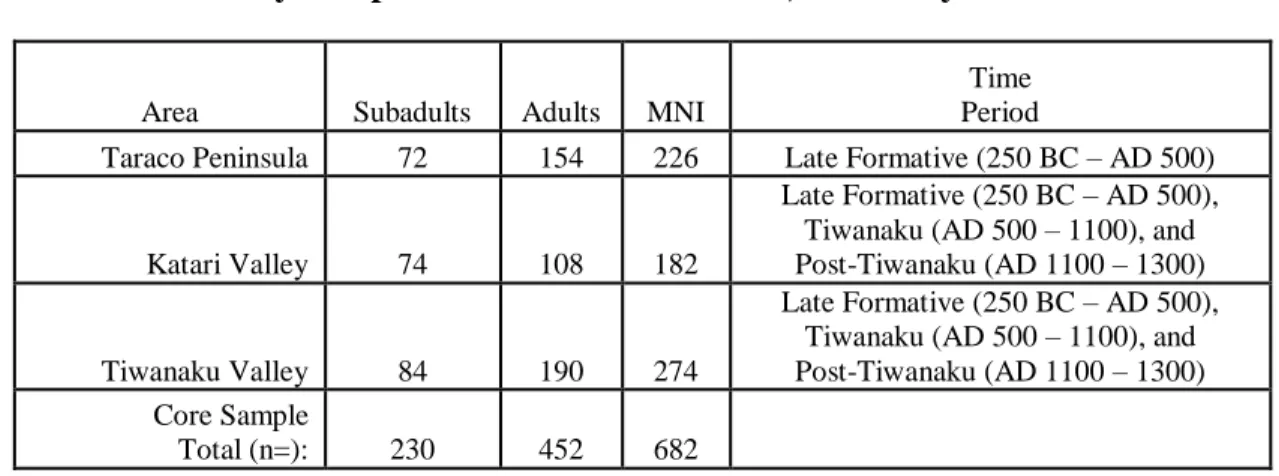
Table 3.1 Bioarchaeological Expectations of Labor ... 42 Table 4.1 Sample Population of Subadults and Adults
Divided by Region (n=2232) ... 64 Table 4.2 Time Period Distribution of All Individuals Sampled in this Study Divided by Region (n=2212) ... 64 Table 4.3 Sex Distribution of All Adults Sampled in this Study
Divided by Region (n=640) ... 65 Table 4.4 Age-at-Death Distribution of All Adults Sampled in this Study
Divided by Region (n=706) ... 65 Table 4.5 Study Sample from the Titicaca Basin, Bolivia by Area ... 66 Table 4.6 Taraco Peninsula Sample Population by Archaeological Site and Divided by Subadult and Adult (n=226) ... 68 Table 4.7 Katari Valley Sample Population by Archaeological Site
and Divided by Subadult and Adult (n=182) ... 74 Table 4.8 Time Period Distribution within the Sample Population
of the Katari Valley, Bolivia (n=172) ... 74 Table 4.9 Age-at-Death Distribution of the Sample Population
within the Katari Valley, Bolivia (n=65) ... 75 Table 4.10 Sex Distribution of Adults within the Sample Population
of the Katari Valley, Bolivia (n=52) ... 75 Table 4.11 Sample Tiwanaku Valley, Bolivia Population Divided by
Subadult and Adult Divided by Archaeological Site (n=274) ... 85 Table 4.12 Time Period Distribution within the Sample Population
of the Tiwanaku Valley, Bolivia (n=274) ... 85 Table 4.13 Age-at-Death Distribution of the Sample Population
within the Tiwanaku Valley, Bolivia (n=100) ... 85 Table 4.14 Sex Distribution of Adults within the Sample Population
Table 4.16 Time Period Distribution within the Sample Population of the Moquegua Valley, Peru (n=1550)... 94 Table 4.17 Age-at-Death Distribution of the Sample Population within
the Moquegua Valley, Peru (n=505) ... 94 Table 4.18 Sex Distribution of Adults within the Sample Population
of the Moquegua Valley, Peru (n=478)... 95 Table 5.1 List of Musculoskeletal Stress Markers used in this Study... 100 Table 5.2 List of Joints and Joint Surfaces Observed for Osteoarthritis ... 108 Table 6.1 MSM Core vs. Colony Upper Anatomy Results during
Tiwanaku Phase ... 126 Table 6.2 MSM Intra-Area Katari Valley GEE Chi-Square Results
during the Tiwanaku Phase ... 129 Table 6.3 MSM Intra-Area Katari Valley Ordinal Mean Scores
during the Tiwanaku Phase ... 130 Table 6.4 Upper Anatomy MSM Intra-Area Tiwanaku Valley
GEE Chi-Square Resultsduring the Tiwanaku Phase ... 133 Table 6.5 MSM Intra-Area Tiwanaku Valley Ordinal Mean Scores
during the Tiwanaku Phase ... 134 Table 6.6 Lower Anatomy MSM Intra-Area Tiwanaku Valley
GEE Chi-Square Resultsduring the Tiwanaku Phase ... 135 Table 6.7 MSM Intra-Area Moquegua Valley GEE Chi-Square
Resultsduring the Tiwanaku Phase ... 137 Table 6.8 MSM Intra-Area Moquegua Valley Ordinal Mean Scores
during the Tiwanaku Phase ... 137 Table 6.9 Core Upper Anatomy MSM Results from Late Formative to the Tiwanaku Phase ... 139 Table 6.10 Colony MSM Results from Tiwanaku to Post-Tiwanaku Phase ... 141 Table 6.11 MSM Core vs. Colony Results during Tiwanaku Phase for
Table 6.12 MSM Core vs. Colony Results during Tiwanaku Phase for MALES ... 146 Table 6.13 MSM Core vs. Colony Results, Tiwanaku Phase by
AGE-AT-DEATH ... 147 Table 6.14 MSM Inter-Highland Area Valley Ordinal Mean Scores during the Tiwanaku Phase for FEMALES and MALES ... 149 Table 6.15 MSM Inter-Highland Area Results during Tiwanaku Phase
by AGE-AT-DEATH ... 149 Table 6.16 MSM Intra-Area Katari Valley GEE Chi-Square ... 152 Table 6.17 MSM Intra-Area Katari Valley Ordinal Mean Scores
during the Tiwanaku Phase for FEMALES and MALES ... 153 Table 6.18 MSM Intra-Area Katari Valley GEE Chi-Square Results
during the Tiwanaku Phase by AGE-AT-DEATH ... 153 Table 6.19 MSM Intra-Area Katari Valley Ordinal Mean Scores
during the Tiwanaku Phase by AGE-AT-DEATH Table ... 154 Table 6.20 Upper Body MSM Intra-Area Tiwanaku Valley GEE
Chi-Square Resultsduring the Tiwanaku Phase for FEMALES ... 158 Table 6.21 MSM Intra-Area Tiwanaku Valley Ordinal Mean Scores
during the Tiwanaku Phase for FEMALES ... 159 Table 6.22 Lower Anatomy MSM Intra-Area Tiwanaku Valley GEE
Chi-Square Resultsduring the Tiwanaku Phase for FEMALES ... 159 Table 6.23 Upper Body MSM Intra-Area Tiwanaku Valley GEE Chi-Square Resultsduring the Tiwanaku Phase for MALES ... 160 Table 6.24 MSM Intra-Area Tiwanaku Valley Ordinal Mean Scores
during the Tiwanaku Phase for MALES ... 160 Table 6.25 Lower Anatomy MSM Intra-Area Tiwanaku Valley GEE
Chi-Square Resultsduring the Tiwanaku Phase for MALES ... 161 Table 6.26 MSM Intra-Area Tiwanaku Valley GEE Chi-Square Results
during the Tiwanaku Phase by AGE-AT-DEATH ... 162 Table 6.27 MSM Intra-Area Tiwanaku Valley Ordinal Mean Scores
Table 6.28 Upper Anatomy MSM Intra-Area Moquegua Valley GEE Chi-Square Resultsduring the Tiwanaku Phase for FEMALES and MALES ... 167 Table 6.29 MSM Intra-Area Moquegua Valley Ordinal Mean Scores
during the Tiwanaku Phase ... 167 Table 6.30 MSM Intra-Area Moquegua Valley GEE Chi-Square
Results during the Tiwanaku Phase by AGE-AT-DEATH ... 168 Table 6.31 MSM Intra-Area Moquegua Valley Ordinal Mean Scores
during the Tiwanaku Phase by AGE-AT-DEATH ... 169 Table 7.1 OA Core vs. Colony Results during Tiwanaku Phase ... 177 Table 7.2 Core vs. Colony OA Ordinal Mean Scores during the
Tiwanaku Phase with Percentage of Joint Involvement... 177 Table 7.3 OA Intra-Area Katari Valley GEE Chi-Square Results
during the Tiwanaku Phase ... 181 Table 7.4 OA Intra-Area Katari Valley Ordinal Mean Scores during
the Tiwanaku Phase with Percentage of Joint Involvement ... 181 Table 7.5 OA Intra-Area Upper Anatomy Tiwanaku Valley GEE
Chi-Square Resultsduring the Tiwanaku Phase ... 185 Table 7.6 OA Intra-Area Tiwanaku Valley Ordinal Mean Scores
for Arm Joints during the Tiwanaku Phase with Percentage of Joint Surface Involvement ... 186 Table 7.7 OA Intra-Area Lower Anatomy Tiwanaku Valley GEE
Chi-Square Resultsduring the Tiwanaku Phase ... 187 Table 7.8 OA Intra-Area Tiwanaku Valley Ordinal Mean Scores
for Arm Joints during the Tiwanaku Phase with Percentage of Joint Surface Involvement ... 188 Table 7.9 OA Intra-Area Moquegua Valley GEE Chi-Square Results
Table 7.11 Intra-Core OA Results from Late Formative Phase to the Tiwanaku Phase ... 194 Table 7.12 Intra-Core OA Results from Tiwanaku Phase to
Post-Tiwanaku Phase ... 194 Table 7.13 Intra-Core Tiwanaku Phase to Post-Tiwanaku Phase
OA Ordinal Mean Scores with Percentage of Joint Involvement .... 195 Table 7.14 Intra-Core Late Formative Phase to Tiwanaku Phase OA
Ordinal Mean Scores with Percentage of Joint Involvement ... 195 Table 7.15 Intra-Colony OA Results from Late Formative Phase to the Tiwanaku Phase ... 196 Table 7.16 Intra-Colony OA Results from Tiwanaku Phase to
Post-Tiwanaku Phase ... 197 Table 7.17 Intra-Colony Late Formative to Tiwanaku Phases OA
Ordinal Mean Scores with Percentage of Joint Involvement ... 197 Table 7.18 Intra-Colony Tiwanaku to Post-Tiwanaku Phases OA
Ordinal Mean Scores with Percentage of Joint Involvement ... 198 Table 7.19 OA Core vs. Colony Results during Tiwanaku Phase
for FEMALES ... 201 Table 7.20 Core vs. Colony OA Ordinal Mean Scores during the
Tiwanaku Phase with Percentage of Joint Involvement for FEMALES ... 202 Table 7.21 OA Core vs. Colony Results during Tiwanaku Phase
for MALES ... 202 Table 7.22 Core vs. Colony OA Ordinal Mean Scores during the
Tiwanaku Phase with Percentage of Joint Involvement for MALES ... 203 Table 7.23 OA Core vs. Colony Results during Tiwanaku Phase by
AGE-AT-DEATH ... 203 Table 7.24 Inter-Highland Area OA Results during the Tiwanaku Phase for MALES ... 205 Table 7.25 OA Inter-Highland area Results during Tiwanaku Phase
Table 7.26 OA Intra-Area Katari Valley GEE Chi-Square Results
during the Tiwanaku Phase ... 207
Table 7.27 OA Intra-Area Katari Valley Results during Tiwanaku Phase by AGE-AT-DEATH ... 208
Table 7.28 OA Intra-Area Upper Anatomy Tiwanaku Valley GEE Chi-Square Resultsduring the Tiwanaku Phase for FEMALES ... 210
Table 7.29 OA Intra-Area Tiwanaku Valley Ordinal Mean Scores during the Tiwanaku Phase with Percentage of Joint Surface Involvement for FEMALES ... 210
Table 7.30 OA Intra-Area Tiwanaku Valley GEE Chi-Square Results during the Tiwanaku Phase for MALES ... 210
Table 7.31 OA Intra-Area Tiwanaku Valley Ordinal Mean Scores during the Tiwanaku Phase with Percentage of Joint Surface Involvement for MALES ... 211
Table 7.32 OA Intra-Area Tiwanaku Valley GEE Chi-Square Results during the Tiwanaku Phase by AGE-AT-DEATH ... 211
Table 7.33 OA Intra-Area Moquegua Valley GEE Chi-Square Results during the Tiwanaku Phase for FEMALES and MALES ... 216
Table 7.34 OA Intra-Area Moquegua Valley Ordinal Mean Scores during the Tiwanaku Phase with Percentage of Joint Surface Involvement for FEMALES ... 217
Table 7.35 OA Intra-Area Moquegua Valley Ordinal Mean Scores during the Tiwanaku Phase with Percentage of Joint Surface Involvement for MALES ... 217
Table 7.36 OA Intra-Area Moquegua Valley GEE Chi-Square Resultsduring the Tiwanaku Phase for AGE-AT-DEATH ... 218
Table B.1 Tiwanaku Core vs. Colony Right Side MSM Comparisons... 241
Table B.2 Tiwanaku Core vs. Colony Left Side MSM Comparisons ... 242
Table B.3 Core vs. Colony MSM Results during Tiwanaku Phase ... 244
Table B.5 Intra-Katari Valley MSM Comparisons ... 246
Table B.6 Intra-Area within the Tiwanaku Valley MSM Comparisons ... 248
Table B.7 Intra-Area within the Moquegua Valley MSM Comparisons - Chen Chen vs. Omo ... 254
Table B.8 Intra-Area within the Moquegua Valley MSM Comparisons - Chen Chen vs. Rio Muerto ... 255
Table B.9 Intra-Area within the Moquegua Valley MSM Comparison - Omo vs. Rio Muerto ... 257
Table B.10 Core Upper Anatomy MSM Results from Late Formative to the Tiwanaku Phase ... 258
Table B.11 Core MSM Results from the Tiwanaku to the Post-Tiwanaku Time Period ... 260
Table B.12 Colony MSM Results from Tiwanaku to Post-Tiwanaku Phase... 261
Table B.13 MSM Core vs. Colony Results during Tiwanaku Phase for FEMALES ... 263
Table B.14 MSM Core vs. Colony Results during Tiwanaku Phase for MALES ... 265
Table B.15 MSM Tiwanaku Core vs. Colony Comparisons – GEE Chi-Square Significant Differences by AGE-AT-DEATH ... 266
Table B.16 MSM Intra-Area Moquegua Valley GEE Chi-Square Results during the Tiwanaku Time Period by AGE-AT-DEATH ... 267
Table C.1 Tiwanaku Core vs. Colony Right Side OA Comparisons ... 271
Table C.2 Tiwanaku Core vs. Colony Left Side OA Comparisons ... 272
Table C.3 OA Core vs. Colony Results during Tiwanaku Phase ... 273
Table C.5 OA Intra-Area Katari Valley GEE Chi-Square Results during the Tiwanaku Phase ... 274 Table C.6 Intra-Core OA Results from Late Formative Phase to
the Tiwanaku Phase ... 275
Table C.7 Intra-Core OA Results from Tiwanaku Phase to Post-Tiwanaku Phase... 276
Table C.8 Intra-Colony OA Results from Tiwanaku Phase to Post-Tiwanaku Phase... 277
Table C.9 OA Core vs. Colony Results during Tiwanaku Phase for FEMALES ... 278
Table C.10 OA Core vs. Colony Results during Tiwanaku Phase for MALES ... 279 Table C.11 OA Core vs. Colony Results during Tiwanaku Phase by
AGE-AT-DEATH ... 280 Table C.12 Inter-Highland Area OA Results during the Tiwanaku
Phase for FEMALES ... 281 Table C.13 OA Inter-Highland Area Results during Tiwanaku Phase
by AGE-AT-DEATH ... 281 Table C.14 OA Intra-Area Katari Valley GEE Chi-Square Results
LIST OF FIGURES
Figure 2.1 Area Controlled by the Tiwanaku State ... 7 Figure 2.2 Map of Region and Sites in this Study ... 8 Figure 2.3 Chronology for the Study Area ... 9 Figure 2.4 Highland Bolivia Study Area with Taraco Peninsula,
Katari Valley, and Tiwanaku Valley Noted. ... 11 Figure 2.5 Middle Moquegua Valley Study Areas with Archaeological
Sites of Rio Muerto, Omo, and Chen Chen Noted ... 12 Figure 2.6 Model of Hierarchical and Centralized Organization. ... 24 Figure 2.7 Model of Heterarchical and Decentralized Organization. ... 27 Figure 2.8 Hybrid Model with a Combination of both Centralized
Hierarchy and Decentralized Heterarchy. ... 31 Figure 3.1 Geographical Changes Expected in a Centralized Labor
Model of the Tiwanaku State ... 37 Figure 3.2 Geographical Labor Changes Expected in a Decentralized
Labor Model of the Tiwanaku State ... 38 Figure 3.3 Chronological Changes Expected in Centralized or
Figure 5.2 Muscle Attachment Points on the Scapula and Humerus for the Upper Arm ... 102 Figure 5.3 Muscle Attachment Points in the Forearm ... 104 Figure 5.4 Muscle Attachment Points in the Mid-Body ... 105 Figure 5.5 Muscle Attachment Points in the Lower Body ... 106 Figure 5.6 Muscle Attachment Points in the Foot ... 106 Figure 5.7 Shoulder Joint ... 109 Figure 5.8 Elbow Joint ... 109 Figure 5.9 Wrist Joint ... 110 Figure 5.10 Hip Joint ... 110 Figure 5.11 Side View of Sacroiliac Joint with Separate View of Sacrum ... 111 Figure 5.12 Knee Joint ... 111 Figure 5.13 Ankle Joint ... 112 Figure 6.1 The Gait Cycle of Bipedal Walking ... 127
Chapter 1 Introduction
1.1 Introduction to the Research Problem
The control and distribution of labor is essential for the development of prehistoric states. Studies of state development worldwide show a range of labor distribution from specialized craft and agricultural production (Costin 2004; D'Altroy 1992; D'Altroy and Earle 1985; Earle 1997) to dispersed labor systems (Crumley 1987, 1995; Kunen and Hughbanks 2003; Levy 2006; Lozada 1998). My research focuses on understanding labor during the development of Tiwanaku (AD 500-1100), one of the earliest Andean states. While prior Tiwanaku labor studies have considered settlement distribution (e.g. Albarracín-Jordán 1996, 1999, 2003; Albarracín-Jordán and Mathews 1990; Couture 2003; Goldstein 2005; Janusek 2003a, 2004a, b, 2005b, 2008; Janusek and Blom 2006; Kolata 1993a, b, 1997, 2003c), site types (e.g. Bandy 2001; Couture and Sampeck 2003; Goldstein 1989, 1993a; Janusek 2004a; Janusek and Blom 2006; Kolata 1996b), and material culture (e.g. Geisso 2000; Geisso 2003, 2011; Janusek 1994, 1999, 2003b, 2005a; Plunger 2009; Rivera 1994, 2003; Roddick 2009), my research is the first to analyze Tiwanaku skeletal remains for evidence of labor and activity. Because
questions about the Tiwanaku workforce, possible activities performed, workload levels, division of labor, as well as the political structure of the state.
Prior archaeological excavations have shown that the Tiwanaku state emerged approximately AD 500 in the Bolivian highlands of the Lake Titicaca Basin, becoming a major influence in the south-central Andean region. Expansion took place throughout the Bolivian and Peruvian Andes before the state collapsed around AD 1100. Some
archaeologists (Kolata 1991, 1993a, b; Stanish 1994, 2003) argue that Tiwanaku state organization was politically centralized and hierarchical, with the city of Tiwanaku as the core settlement. Labor was part of the larger political economy, controlled and distributed by elites in the city of Tiwanaku (Kolata 2003a). However, other studies (e.g. Albarracín-Jordán 2003; Erickson 2006; Goldstein 2005; Janusek 2004a, 2008; Owen 2001) describe the Tiwanaku state as heterarchical, with a federation or alliance of settlements. These allied settlements locally controlled labor, with workforce cooperation and collaboration as an important factor to the state’s emergence, formation, and expansion.
My research considers what impact state organization, as assessed through labor, would have had on the human body. A wide range of labor, whether agricultural,
pastoral, or craft-based, would have left distinct signatures on the bodies of people working within the Tiwanaku state. Skeletal activity studies carried out elsewhere have shown certain agricultural tasks cause an intensification in skeletal strength through increases in levels of muscle mass and bone strength over the lifetime of an individual (Larsen et al. 2001; Ruff 2000). In addition, specific precision tasks, such as grinding grain or weaving textiles, can be seen on areas of the body involved in their performance (Merbs and Euler 1985; Miller 1985).
I examined skeletal samples from previously excavated archaeological sites in the core region in the Titicaca Basin, Bolivia and a colony in the Moquegua Valley, Peru for the bioarchaeological evidence of activity through musculoskeletal stress markers (MSM) and osteoarthritis (OA). The burials represent a minimum of 1,235 adults. To understand activity distribution and types of labor present within different areas of Tiwanaku society, I compared skeletal evidence of labor geographically during the Tiwanaku state (1) by region (between the core and colony), (2) by inter-highland area (between areas within the core), and (3) by intra-area (between archaeological sites). I also looked at
chronological change and compared labor during the Tiwanaku state (Tiwanaku phase, AD 500-1100) to labor from prior to polity formation (Late Formative phase, 250 BC – AD 500) and labor after the collapse of the Tiwanaku state (Post-Tiwanaku phase, AD 1100-1300). Finally, I correlated osteological age-at-death and sex with group
1.2 Organization of the Dissertation
I begin this dissertation by providing background on the Tiwanaku state (Chapter 2) and the environmental context for the core and colony regions. I also cover the
chronology, culture history, and proposed models for Tiwanaku political organization, including further information on state typology. In Chapter 3, I provide expectations for the skeletal evidence of labor within this early state’s emerging political complexity. I also address the theoretical construction of age and gender, essential to understand group composition within anthropological studies, from the bioarchaeological estimates of age-at-death and sex. In Chapter 4, I further describe the methods for reconstructing sample profiles of individuals in this study and include a description of the archaeological sites located within each of these regions. I provide information on the distribution of the study sample, including detailed information of sex estimates, age-at-death, and temporal composition of the skeletal populations. In Chapter 5, I describe the osteological and statistical methods used to evaluate prehistoric labor. The results of the activity studies are presented in the latter chapters, with Chapter 6 containing the results for
Chapter 2
Background on the Tiwanaku State
2.1 Introduction
Tiwanaku was “discovered” in the sixteenth century by Spanish explorers, and first documented by Pedro Cieza de Léon (Cieza de Léon 1998 [1553]). However, the ruins in this area were no new discovery to the native people living in their vicinity. Instead, when questioned about who built these impressive stone structures, the locals had no memory of the civilization, but a legend had been passed down from Inca times about these ruins in the form of an origin myth – Viracocha, a creator deity who labored and sculpted the Andean peoples, plants, and animals at the site of Tiwanaku. This story had early scholars creating fanciful tales about the Tiwanaku civilization; most were not based on any factual evidence.
various regions within the south-central Andes (Goldstein 2005; Goldstein and Owen 2001; Janusek 2003a, 2008; Kolata 1993a, b).
In this chapter, I first give the chronology of the Central Andean region, as well as explain the environmental context of the two regions discussed in this study, the southern Lake Titicaca Basin, Bolivia and the Middle Moquegua Valley of Peru. I then describe the culture history of the Tiwanaku civilization using the archaeological record. I also discuss zonal complementarity and the Inca forced labor system of the mit’a as historic paradigms of Andean labor. Finally, I provide information about competing models of Tiwanaku’s development into statehood in order to understand the emergence of this polity and how labor would have been controlled and organized.
2.2 Chronology of the Study Area
Tiwanaku developed over 1300 years, from its early antecedents (ca. 250 BC – AD 500) into a powerful state (ca. AD 500-1100). During this time, Tiwanaku controlled, or at least influenced, much of the southern Andes and lowlands, including present-day southern Peru, northern Chile, western Bolivia, and western Argentina (Fig. 2.1)
(Berenguer and Dauelsberg 1989; Kolata 1992; Rivera 1985; Stanish 2003; Thomas et al. 1985). The two main areas in this study are (1) the highland Andean region in the
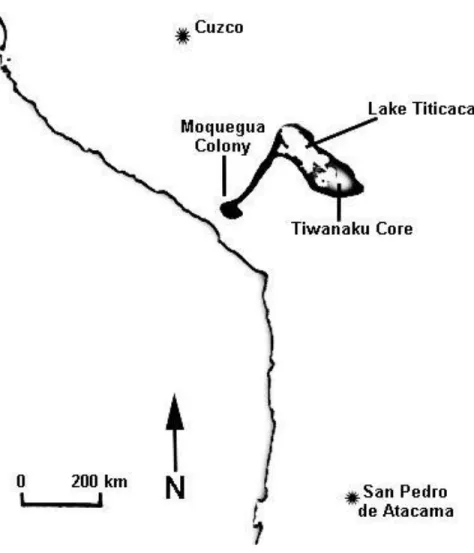
Figure 2.2 Map of Region and Sites in this Study (adapted from Blom 1999)
Because the social and cultural development of Andean South American varies by location, Figure 2.3 provides the chronology for the Central Andes, the Southern Titicaca Basin, and Middle Moquegua regions. Time period designations from the Central Andes (Fig. 2.3, column one) are the most widely used in scholarly literature about prehistoric Andean peoples. Using this chronology, the archaeological sites discussed in this study date from the Early Intermediate Period through the Middle Horizon to the Late
Figure 2.3 Chronology for the Study Area (after Bandy 2001; Goldstein 2005; Janusek 2008; Stanish 2003)
The temporal context of the archaeological sites used in my study fall within the Late Formative, Tiwanaku, and Pacajes periods; sites in the Middle Moquegua region fall within the Huaracane, Tiwanaku, and Tumilaca phases. For clarity, I discuss the
represents the height of the Tiwanaku polity. “Post-Tiwanaku” encompasses the Pacajes period in highland Bolivia and Tumilaca in the Middle Moquegua, Peru region.
2.3 The Environment of the Study Area
The environment of the study area varies greatly in elevation, with the Lake Titicaca Basin, Bolivia core region at approximately 3800m and the colony area in middle Moquegua Valley, Peru at approximately 2000m. The core area is located approximately 80km west of modern-day La Paz, Bolivia, and consists of the Taraco Peninsula, the Katari Valley, and the Tiwanaku Valley, on the southeastern edge of Late Titicaca (Figure 2.4). These areas are situated between the Cordillera Oriental and the Cordillera Occidental Andes Mountain ranges. Average high temperatures range between 50º F and 60ºF and low temperatures range between 40º F and 25º F in this region due to the high elevation and proximity to the equator. This region also has a dual climate with a dry and rainy season. The dry season has cold temperatures in the fall and winter months, and the wet season has warmer, monsoon-style downpours during spring and summer months. Despite these conditions, people have been able to thrive in this region from Archaic through modern times, with the local Aymara people as one of the present-day native populations.
The Moquegua Valley, Peru, is approximately 300km from the Tiwanaku core region (Fig. 2.5). This area comprises a system of rivers and underground aquifers that make up the Osmore Drainage1 into the Pacific Ocean. Local temperatures are generally warm with average temperatures around 70º F and very little seasonal change. Tiwanaku
1
settlements in the Moquegua Valley are centered in the middle valley zone (1000-2000m in elevation). This zone has the most arable farmland in the drainage, as anything above 2000m must be terraced, and below 1000m is a coastal desert.
2.4 Culture History
During the Early (1500-800 BC) and Middle (800-250 BC) Formative periods, the southern Titicaca Basin area underwent a transition visible in the archaeological record as the use of ceramics, new architectural techniques, and dependence on domesticated plants was noted (Browman 1984; Pearsall 1989, 1992; Pickersgill and Heiser 1978; Wright et al. 2003). During this time, people farmed and lived in small settlements of
approximately 10 households per village (Bandy 2001). By 800 BC, increases in village size, production of ceremonial artifacts, such as decorated serving ceramics or ceramic trumpets, and the appearance of public architecture indicated expanding cultural and ideological complexity. Archaeologists (Bandy 2001; Chávez 1988; Steadman 1999) have attributed this to the emergence of the “Yaya-Mama” religious tradition, as
evidenced by newly built temple structures. These structures were accompanied by stone carvings with unique iconography and ritual paraphernalia in various areas like the Taraco Peninsula and Copacabana Peninsula. Also during this time, trade networks spanned the Titicaca Basin area and farther into the lowlands, with exotic goods, such as lapis lazuli beads, originating from areas as far as 300km away (Browman 1981). Bandy (2001) noted that with the appearance of exotic goods in some Taraco Peninsula graves and not others, could translate as a greater disparity of social status and power. He (2001:160) describes this new dynamic as a way for,
“groups and individuals to lay claim to the reciprocal labor services of their neighbors…[with] surplus labor harnessed back into the system via the
As such, by the end of the Middle Formative, goods exchange along with cultural
changes may have led to an intensification in asymmetrical relationships accompanied by the beginnings of complex labor relationships.
In the Late Formative (250 BC – 500 AD), highland Bolivia saw the movement of individuals from more rural to urban settings with multi-polity communities emerging throughout the lake basin (Bandy 2001; Bermann 1994; Couture and Sampeck 2003; Janusek 2004a; Janusek and Alconini Mújica 1998; Kolata 1986, 1991, 1993a; Stanish 1994, 2003). The increases in population growth and settlement at the site of Tiwanaku in the Tiwanaku Valley suggest this area’s growing cultural and political influence among the Titicaca Basin’s residents (Kolata 1986, 1993a). Archaeologically, the use of special ceremonial vessels continued from earlier periods and special purpose ceramic vessels decorated with zoomorphic, geometric, or anthropomorphic designs were also found in what have been called “elite” contexts (Bandy 2001; Janusek 2008; Kolata 1993a). These vessels have been interpreted as increasing ideological complexity among Tiwanaku people (Bandy 2001; Bermann 1994). This increasing complexity was also observed in Tiwanaku architecture through specialized areas consistent with ceremonial centers for ritual activities (Couture and Sampeck 2003; Hastorf 2005; Kolata 1993a; Manzanilla 1992). The development of public architecture persisted during the transition from the Late Formative to the Tiwanaku period, indicating a continuing transformation in public divisions of space and place, and likely in the way the Titicaca Basin people viewed each other.
trade (Janusek 2004a, 2008; Kolata 1986, 1991, 1992, 2003c; Stanish 1994). However, by the latter half of the Late Formative (300-500 AD), Tiwanaku had begun to establish itself as a population center that controlled local trade routes and had an increased emphasis on food production in an agro-pastoral lifeway (Janusek 2008:20). Bandy (2001) interpreted these changes as a new and successful political strategy involving a system of labor management. This system increased political and ideological control with greater levels of ceremonialism and large-scale feasting during the Late Formative, so that by AD 500, “Tiwanaku was a city [that] had become capable of dominating the entire Titicaca Basin politically, economically, and militarily” (Bandy, 2001:204).
In the Tiwanaku phase (AD 500 – 1100), the state reached its height of control in the highland Bolivia region, as well as throughout the southern Andes Mountains. The city of Tiwanaku and surrounding neighborhoods emerged as the major regional urban center. Monumental structures, like Akapana and Pumapunku, were built using precise methods such as mortise and tenon construction. These platforms, with interior sunken courts and decorated with carved iconographic images (e.g. pumas, humans), served as ceremonial centers during the Tiwanaku state. Additionally, within the city, various distinct neighborhoods (barrios) developed around the city’s center and were likely home to various groups, such as specialized producers like metalworkers, potters, weavers, or herders (Berryman 2011; Blom 1999, 2005; Janusek 1999, 2003a; Janusek and Kolata 2004; Rivera 1994).
occupied physical space in accordance with their relative social and ritual status” (Kolata 1993a:93-94). Neighborhoods near the core were elites connected to the Tiwanaku ritual and ceremony through feasting and corn beer (chicha) production (Berryman 2011). These elites could have used feasting to create reciprocal obligations to create “productive obligations among communities” (Janusek and Kolata 2004:416). Barrio communities could have produced to service the core, and many of their goods may have ended up as part of the feasting cycle. Kolata (1997:253) suggested that the whole purpose of the city of Tiwanaku was for servicing elites and their aristocratic lineages; Tiwanaku urbanites and craftspeople enjoyed high status living, however, only if they served the aristocracy.
In contrast, other researchers (Bermann 1994; Goldstein 2005; Janusek 1999; Rivera 1994) suggest that craft production was performed by independent households or larger artisan collectives, autonomous in their social and exchange relationships.
the Tiwanaku period (Kolata 1986:759). The largest settlement in the Katari Valley, Lukurmata, also increased in population during the Tiwanaku period. This community may have been home to administrators and an administrative center involved in overseeing the farming, as well as organization and movement of the agricultural products (Bermann 1994, 2003). However, Bermann (1994) also noted various areas within Lukurmata for producing craft goods.
In addition, during the Tiwanaku phase, Tiwanaku-style material culture was found increasingly farther away from the core area in the warmer lowland region. Prior to this expansion, there is very little evidence for control over lowland areas, just trade exchanges (Goldstein 1989; Goldstein and Owen 2001). Archaeologists (Albarracín-Jordán 1999; Goldstein 1989, 2005; Janusek 2004a, 2008; Kolata 1993a, b) generally agree that this expansion to lower elevation areas was a political one. The Tiwanaku peoples had a wish for luxury items, such as maize or coca, which can only be abundantly grown at lower elevations and in warmer climes. Goldstein (1989:251) believed that sometime within AD 500-650, Tiwanaku peoples arrived in lowland valleys “suddenly and in force.” He noted that in the Moquegua Valley, one of these locations, colonization was peaceful and there is very little evidence of violence2 or warfare in the archaeological and bioarchaeological record (Blom 1999; Blom et al. 1998; Goldstein 1989, 1993b, 2005; Isla et al. 1998). Agro-pastoral production would have been a major impetus for
2
There is little direct evidence of sustained warfare or violence present throughout the growth and
movement to this lower elevation region. Maize production was probably of primary importance to both core and colonists alike (Berryman 2011; Blom 1999). Blom (1999:99) noted that “whoever was controlling Moquegua might have held a powerful bureaucratic tool that could be used to gain prestige and power in [highland] Tiwanaku society.” With the movement of Tiwanaku people to the Moquegua Valley, there was a local standardization of ceramics, clothing worn was similar to Tiwanaku highlander styles, and similar monumental architecture built. Goldstein (1989, 1993) argued that this could have been part of an increasing centralized government, with state control over goods production and trade networks. However, Blom (1999:98) noted that the standardization of goods may have been a byproduct of the migration to help identify Tiwanaku highlanders in a local, visually perceptible way, as they were only one group of people living in the Moquegua Valley3.
After AD 800, an economic and ideological shift in the state occurred, as noted through Tiwanaku-style ceramics looking more mass produced (Janusek and Kolata 2004). Along with increased construction around the ceremonial core of the city of Tiwanaku, agricultural production increased to its greatest levels in the Katari Valley. However, this was concurrent with the abandonment of the city of Lukurmata in the Katari Valley. Settlements in this valley shifted to impermanent ‘field-stations’ focused on crop protection. These changes may be indicative of growing elite control and consolidation of resources (Bermann 1994; Janusek 2004a, 2008; Janusek and Kolata 2004). Janusek (2008:192-193) noted that “raised-field farming became the signature
3
productive regime of the Lake Titicaca Basin.” Other agro-pastoral activities (e.g. herding, fishing, and rain-fed farming) would have been lower status tasks as the main push was on raised-field crops. These agricultural goods funded the cyclical feasting that helped Tiwanaku’s residents negotiate power relations (Janusek 2008:193).
In addition, this change in agriculture intensification may have had a direct impact on lower elevation colonies. After AD 900, a destruction and rejection of Tiwanaku-style material culture in the Moquegua Valley coincided with the Tiwanaku state losing control of this region (Goldstein, 1993:42). In the Moquegua Valley, the post-Tiwanaku
Tumilaca phase included changes to dress, textile manufacture, and ceramics that showed the waning influence of the Tiwanaku state. Goldstein (2005:171) noted that there was still some local influence, however only as a style in transition. The change in settlement, with smaller, dispersed, and more defensible sites, along with ceramics and dress were distinct enough to be identified in the archaeological record as a transition to the Tumilaca phase in the Moquegua Valley.
in the Pacajes phase (AD 1100-1400) were generally dispersed and easily defensible, reaching into upper sectors of the mountains. Janusek and Kolata (2003:157) suggested that a lack of agricultural artifacts in Katari Valley post-Tiwanaku Pacajes sites coincided with lowered agricultural production and abandonment of the raised-field system. In addition, Albarracín-Jordán (1999:85) noted that these fortified pukara settlements marked a period of conflict with neighboring groups over economic resources as a result of the collapse of the Tiwanaku state. Whatever the cause or causes, Tiwanaku state collapse triggered striking changes in settlement, labor, and food procurement throughout the south-central Andes. The state, as a controlling component, did not return to this region until Inca elites arrived hundreds of years later to claim heritage and mythical ancestry with Tiwanaku peoples.
2.5 Labor in the Andes
As the precontact Andes lacked a public market system, goods were moved using either direct or indirect zonal complementarity, where indirect is trade or exchange between people while direct would be direct control of another zone to procure goods (Murra 1995). This zonal complementarity, first described by Murra (1965; 1972; 1980; 1981; 1985), is a model for resource procurement and labor movement in the Andes. While indirect zonal complementarity is understood as trade or exchange between zones, Murra based direct zonal complementarity on ideas of risk aversion as well as the
traditional Andean value of self-sufficiency. The more access to various areas of land, the less likely one is to starve if a crop fails or all crops fail at a certain elevation. With direct complementarity, control ranged from familial management within a short distance (i.e. within a day’s walk) to permanent colonization in disparate regions depending on the type of society and how it was organized (Murra 1968, 1972, 1985, 1995).
Murra also discussed that differences in control of resource tiers could be further developed depending on proximity. The closer the area, the more continuous (i.e.
compressed) the resources, the farther the area between tiers, the more they became discontinuous (i.e. vertical archipelagos). Thus, several satellite communities within a varying distance may support one main community. As the population increased and the system developed into a large settlement or city, the more likely they were to control a greater number of areas over a longer distance, thus adding more resource archipelagos (i.e. more than a 10 day walk away) to the network (Murra 1968, 1981, 1985). In the south-central Titicaca Basin, long distance trade networks (i.e. indirect zonal
2008; Sharratt 2011). However, major direct zonal complementarity with the movement of people to the Moquegua Valley and other regions as possible resource archipelagos did not take place until after the state had established itself in the highlands.
Murra (1985) also suggested that archipelago communities remained in close contact, could see each other as similar ethnic groups, and worked reciprocally for each other. However, Van Buren (1996) challenged this idea by suggesting a more “for profit” reason for settling in these archipelagos. She believed that people participating in this system were not ethnically related groups that worked in reciprocal trade networks. Instead, the exchange network would have been “established by internally differentiated societies [that] probably never functioned to provision whole populations, but to produce goods that were critical to the maintenance of political power” (Van Buren 1996:348). Specifically, this was a political and economic relationship as she notes that these lower elevation colonies were different groups of people that supported themselves through particular goods production (e.g. maize, coca). Some of these goods were subsequently given as tribute or tax to certain political leaders in the Andes to whom they owed allegiance. While a critique of one portion of the zonal complementarity system, Van Buren’s study provides another component to Andean labor organization and
maintenance by broadening the idea of colonial archipelagos to include various cultural groups as multiethnic communities.
men and women between the ages of 15 to 50 were required to perform yearly service to the state, averaging around 300 days a year. This system of labor, defined as “he who works when his time comes” (Murra 1980:192-193), was noted during colonial times as groups of people moved to work lowland crops for the Inca elite. As lowland agriculture often requires more work than highland production, especially to create surplus, these areas would have required a constant supply of workers to both farm and guard the storage areas (Wachtel 1982:214). In return, the mit’a groups may have received rewards, such as land or goods, as well as the right to sell some of their lowland product in the highland markets (Murra 1995). To be clear, this was not a voluntary system. Those who worked were promised support from the state for themselves and their families, and those who did not were put to death (Cieza de Léon 1998 [1553]). In addition, besides
agricultural production, under a mit’a system people may have served in Inca military functions or trained as specialists in the production of certain goods, like textiles or ceramics. In a few cases, these specialists were removed from society, elevated in status, and employed in special production locations, as is the case with the acllas. These acllas were groups of women who were weavers, chicha producers, and ritual specialists (Silverblatt 1987). Thus, the mandatory workforce in the Inca Empire was comprised of general agriculturalists to specialized producers who shaped ritual within the state.
2.6 Explanations of Tiwanaku Political Organization
al. 1987; Service 1975; Sinopoli and Morrison 1995; Wright and Johnson 1975; Yoffee 1988), where in order to have a state-level society, a centralized and hierarchical core is required (Fig. 2.6). Historic and ethnohistoric accounts of the Inca Empire, along with archaeological evidence, have often been used as a political and cultural example of how states formed in the Andes (e.g. D'Altroy 1992, 2005; D'Altroy and Bishop 1990;
D'Altroy and Earle 1985; Demarest and Conrad 1984; Earle 1997; Earle and D'Altroy 1989; Murra 1980; Rowe 1982 and others). For example, state run labor with craft production, movement of individuals throughout the Inca Empire for agricultural
production, and the building of monumental architecture under a centralized and ordered authority were noted as part of the formation and maintenance of this state.
Figure 2.6 Model of Hierarchical and Centralized Organization.
extracted by the centralized authorities of the Tiwanaku state in the form of corvée through a mechanism similar to the Inca mit’a tax system.” Elite managers, located in the city of Tiwanaku, would have been necessary to organize and maintain the state, establish authority over the various communities, claim resources in and around the Titicaca Basin, and control and organize agricultural production raised-field farming4 areas (Kolata 1986, 1993a, b, 1997; Ponce 1972). From this high-status center outwards, decreasing in status and power, were other areas home to craft or production specialists in service to this elite core (Kolata 1993a, b, 2003c).
In addition, Tiwanaku controlled various local areas outside of the urban core, such as Lukurmata in the Katari Valley, as administration centers that reported to Tiwanaku elites (Kolata 1986, 1991, 1992, 2003c; Stanish 1994). Farther-reaching settlements, such as colonies in Moquegua, Peru or Cochabamba, Bolivia could have been extractive colonies – state controlled production centers where highlanders worked in the lowlands. The degree of control to which Tiwanaku elites controlled these
highlanders is not known, but if modeled on examples from the Inca Empire, it may have resembled the mandatory corvée labor tax of the mit’a (Costin 1998; D'Altroy 1992, 2005; D'Altroy and Bishop 1990; D'Altroy and Earle 1985; Earle and D'Altroy 1989; Murra 1980; Silverblatt 1987). Kolata (1993a:213-214) does note that the relationship between core and colony would likely have struck some kind of balance of reciprocal exchange between commoners and elites. As such, colonists would have produced goods
44
and crops, thus providing the elite center with luxury items such as textiles, coca, and maize, that could not be procured at higher elevations (Kolata 1986, 1991, 1992, 2003c; Stanish 1994). Overall, this model of Tiwanaku statehood with agricultural
intensification, urban growth, centralization, and elites in-charge in the core city fits well with centralized and hierarchical states noted in other parts of the world (Carneiro 1970; Haas et al. 1987; Kolata 1997; Service 1975; Sinopoli and Morrison 1995; Wright and Johnson 1975; Yoffee 1988).
As Crumley (1995:3) noted, coming out of a dissatisfaction with the band-tribe-chiefdom-state model in systems theory, archaeologists (e.g. Crumley 1974; Crumley and Marquardt 1987; Crumley et al. 1987) began to explore an alternative to this concept of the ‘traditional’ or ‘classic’ centralized hierarchical model of state. Known as heterarchy (Fig. 2.7) and based on a study by McCulloch (1945) of human neural networks, the term ‘heterarchy’ was used to explain diallels in brain organization. McCulloch noted that the brain cannot only function linearly and hierarchically, but instead must work in more of a netlike association of orderly with occasional logical contradictions in the decision making process5.
Understanding these concepts from an archaeological perspective, a heterarchy is the “relation of elements to one another when they are unranked, or when they possess the potential for being ranked in a number of different ways” (Crumley 1987:158). Crumley (2003:41) noted that concepts of power relations in systems theory can conflate hierarchy with order, and that heterarchy is suited as a corrective to this way of thinking
5
as there can still be order or hierarchy within heterarchy (Crumley 2003:40-41).
Additionally, heterarchy does not need elements of complex systems to be permanently ranked as it is an approach to identifying ranked and unranked values, behaviors, and organization with shifts in time and space (Crumley 1995:3; 2005:45).
Figure 2.7 Model of Heterarchical and Decentralized Organization.
While the term heterarchy was not originally used by archaeologists who rejected the idea that a forming and expanding Tiwanaku state required a centralizing and
hierarchical core of elite managers (e.g. Albarracín-Jordán 1992, 1996; Bandy 2001; Erickson 1985, 1993, 1999, 2006; Erickson and Candler 1989 and others), recently it has been appropriately applied to studies of the landscape, material culture, and power relations within this area (Arnold and Hastorf 2008; Goldstein 2000, 2005; Janusek 2004a, 2005b, 2008). Albarracín-Jordán (1996) introduced the concept of “nested hierarchies” 6
in the Lake Titicaca Basin using ethnohistorical and ethnographic
6
examples of modern Andean community ayllu7organization to explain Tiwanaku
statehood. From his model, the local family is the haatha,while an ayllu means the local community within the larger region (marka) and territory (suyu). These levels are used to explain the state’s emergence at an ayllu level. These ayllus function as “nested
hierarchies,” which combined a kin-based (real and fictive) household group that considers itself linked to the land.
Albarracín-Jordán (1996) noted that control would have been organized and maintained by those elected or appointed from certain ayllus, such as mallkus8 who each head their own ayllu. These leaders shared common ideology and would have organized and labored within a reciprocal network, as is the case in modern Aymara groups
(Abercrombie 1986; Albarracín-Jordán 1996, 1999, 2003; Browman 1981, 1984). Experimental reconstructions of raised-field agriculture suggest that rural groups could have controlled Tiwanaku agriculture under a local leader who also worked the land in the ayllu system (Erickson 1985, 1993, 2006; Erickson and Candler 1989; Janusek 2004a). Craft production within the urban city of Tiwanaku is explained by Janusek (1999) as families (haatha) ofembedded craft producers, instead of specialists attached to elite households. Multiple neighborhoods practicing different crafts in the city of Tiwanaku, many of which had associated household contexts, could be an example of a heterarchical and ayllu-oriented organization. In addition, colonies of the state could be
7
The world ayllu has multiple meanings and varying levels of complexity. Albarracín-Jordán (1996:185-186) noted some of various ways this word is used. Abercrombie (1986:97-100) also discussed the varying scale (i.e. macro-, micro-ayllu) to which local Aymara people apply the word and in what context.
8
explained as the migration of individuals or families who voluntarily moved to other regions and had personal or familial motivation, such as a better climate or relatives in an ayllu network (Blom 1999; Blom et al. 1998; Janusek 1999, 2004a; Mujica 1985).
In summary, a major difference between these competing models, centralized and hierarchical or decentralized and heterarchical with nested hierarchies, would have been in labor organization and production. In this centralized and hierarchical model, the labor force could have been mobilized to work more homogenously at the behest of the state. For example, the Katari Valley’s residents would have been called upon to work the “proprietary agricultural estates [i.e. state-owned and operated fields] in which ownership and usufruct rights were… in the hands of the elite, dominant classes” (Kolata 1991:120) and that labor organization management was “beyond that of locally autonomous village or ayllu groupings” (Kolata 1993a:223). While decentralized labor control in a
heterarchical model, local areas would have controlled and supervised their own labor under someone such as a mallku, not under “an urban elite and their hydraulic engineers” (Albarracín-Jordán 1996:205). This localized labor force worked reciprocally and
benefited numerous settlements in the area, as well as had the potential for local
would have had more localized reciprocal labors and exchanges, with fewer large-scale events like feasting, while a Tiwanaku centralized hierarchy would have had larger-scale redistribution and reciprocity between elites of disparate areas, with more mit’a-like events of feasting for most labor projects.
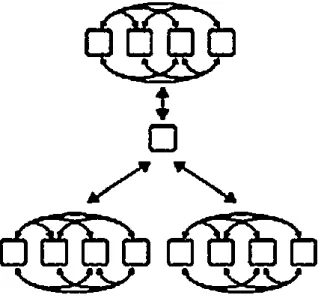
In theory, these two models of Tiwanaku state formation are diametric contrasts in political and social organization. However, it is possible that the Tiwanaku state was not radically one or the other as this polity was not static or monolithic. Instead, political control could have changed over time during the state from decentralized and local heterarchical labor control to more hierarchical and centralized labor arrangements as Tiwanaku elites consolidated power and ideology. The state could also have been centralized near the city of Tiwanaku, but left rural households farther out to their own devices, as is shown in Figure 2.8. For example, Hassan (1994:178) noted that Pharaonic Egypt, with its well-known hierarchy and elite society, survived for such a lengthy period of time because of “weak connections between central administration and production.” Farmers, who were generally left alone to produce their goods, helped the centralized core flourish with food surplus; labor was local, but still with a centralized core.
Figure 2.8 Hybrid Model with a Combination of both Centralized Hierarchy and Heterarchy.
In addition, recent work by Angelbeck and Grier (2012) provided an interesting example adding to the political complexity discussion of a hierarchy and heterarchy. In working to understand their Pacific Northwest Coastal Salish material culture evidence and human skeletal remains, the authors took an anarchistic approach with
decentralization and self-governance as the main components to complex society formation in this group. This anarchistic approach also allowed for the “development of power, privilege, and influence while retaining consensual, decentralized properties of non-hierarchical systems” (Angelbeck and Grier 2012:4). Although the case study in this paper was technically from an ‘egalitarian chiefdom,’ many of the organizational
properties the authors put forth, such as individual and local autonomy, network
reciprocal obligations (Abercrombie 1986; Platt 1982), similar to the Coastal Salish chiefs in charge of potlatch goods redistribution. In both areas, these autonomous local corporate groups voluntarily link into bigger networks that are structured according to the needs of the people. While I am not trying to reduce these cultures to a one-to-one
comparison, I do want to point out that the article presents some interesting associations, and at the very least, the anarchist perspective on political and social complexity is one that should be studied and considered in future research on Andean states.
2.7 Summary
Chapter 3
The Bioarchaeology of Labor
3.1 Introduction
In this chapter, I focus on labor organization and its effects on people within the Tiwanaku state. I first present the labor-related differences one might expect to find on the skeletal remains of individuals who worked within the study area for both models of Tiwanaku state formation, with centralized and hierarchical labor organization at one end of a spectrum and decentralized and heterarchical labor organization at the opposite end. I also discuss caveats to these models because the skeletal evidence of labor may suggest a hybrid of both models, falling somewhere within the range of expectations. Second, because there is a cultural legacy of division of labor by gender or age in the Andes (Abercrombie 1986:115; Bolin 2006:72; Carter 1967; Hardman 1976; Lucy 2005:43; Mitchell 2003:276), I describe my contextual approach to reconcile these cultural
3.2 Expectations of Labor in the Tiwanaku State Geographic Differences
The control of labor during Tiwanaku state formation was described in Chapter 2 as centralized and hierarchical or more decentralized and heterarchical with nested hierarchies. To assess which of these models is more appropriate, I looked at labor during the Tiwanaku time period (AD 500-1100) from three geographic perspectives: (1)
regional (i.e. between the highland core and the Moquegua colony), (2) inter-highland area within the highland core (i.e. between the Tiwanaku Valley and the Katari Valley), and (3) intra-area (i.e. between archaeological sites within each valley).
Kolata (1991:100) described labor organization in the Tiwanaku state as, “structured hierarchical interaction between urban and rural settlements characterized by a substantial degree of political centralization and the mobilization of labor by social principles that reached beyond simple kinship relations… Tiwanaku urban elites had a compelling interest in establishing a dedicated landscape of intensive agricultural production in the core territory and that the organizational principles they instituted to manage this landscape were of regional, rather than local scope.”
Kolata (1991:115) also noted that “labor was most likely extracted by the centralized authorities of the Tiwanaku state in the form of a corvée through mechanisms similar to the Inca mit’a labor-tax system… and points to a managerial hand beyond that of locally autonomous village or ayllu groupings.” Kolata (1991:117) further noted “repeated and consistent occurrence of major Tiwanaku hydraulic structures in both rural and urban zones vitiates application of the laissez-faire hypothesis to the Tiwanaku system.” Thus, Kolata believed that labor would have been more constant, as opposed to the idea that the state rarely invested in capital- and labor-intensive projects (i.e. laissez-faire hypothesis). In addition, this labor was also managed by a regional authority with at least a
communities and the subsequent flow of produce from state-operated fields” (Kolata 1991:120).
Thus, in a centralized model of the Tiwanaku state, as described by Kolata (1991; 1992; 1993a; 1993b; 2003c), if labor were organized around servicing the elites, then I would expect to see significant differences in both the regional and inter-highland area comparisons (Fig. 3.1). I would argue that the farther one was from the urban center of Tiwanaku, the greater the demand on labor of non-elites would have been. For example, there would have been a greater labor demand on the workforce in the Katari Valley when compared to individuals from the Tiwanaku Valley. In addition, as lowland agriculture often requires more work and a constant supply of workers than highland production (Wachtel 1982:201), I argue that colonists would have likely worked in some form of an extractive colony under a mit’a-style leadership to grow luxury crops like maize and coca for the state’s elites (Kolata 1991, 1992, 1993a, b, 2003c).
In contrast, research by Erickson (1988a; 1985; 1988b; 1992; 1993; 2006) asserted that raised-field agriculture in the Titicaca Basin did not require a centralized and hierarchical core of elite managers. Instead, Erickson (1988a:348) noted that
“the raised fields were associated with relatively small cooperative groups, while the dominant political organization in the basin was at the level of a state. It is unlikely that this highly productive system which functioned efficiently under local management would have been tampered with by the state."
These small corporate groups could have been more locally organized around the community and the Andean ayllu in what Albarracín-Jordán (1996) called “nested hierarchies,” rather than in a mit’a system with a centralized authority.
(1) REGIONAL COMPARISON
Colony has greater labor demand than Core
Colony has significantly different labor rates from the Core
(3) INTRA-AREA COMPARISON
Only elite sites within the Tiwanaku Valley have lowest labor demands
Few to no significant
differences within the Katari Valley or Moquegua Valley
Figure 3.1 Geographical Changes Expected in a Centralized Labor Model of the Tiwanaku State
(2) INTER-HIGHLAND AREA COMPARISON
Katari Valley has greater labor demand than Tiwanaku Valley
Katari Valley is statistically significant from Tiwanaku Valley
HIERARCHICAL MODEL
(2) INTER-HIGHLAND AREA COMPARISON
Labor demand is equal between Tiwanaku Valley and Katari Valley
There are no statistically significant differences between Katari Valley and Tiwanaku Valley
(1) REGIONAL COMPARISON
Labor demand is equal in both Core and Colony
There are no statistically significant differences between Core and Colony
(3) INTRA-AREA COMPARISON
Local Labor Control with more
significant differences between sites:
o Within the Tiwanaku Valley
o Within the Katari Valley
o Within the Moquegua Valley
Figure 3.2 Geographical Changes Expected in a Decentralized Labor Model of the Tiwanaku State Tiwanaku
Valley (Core)
Moquegua Valley (Colony) Katari
Valley (Core)
HETERARCHICAL MODEL
In order to assess activity levels and labor intensity, I use two
bioarchaeological indicators of activity, musculoskeletal stress markers (MSM) and osteoarthritis (OA). In measuring labor within both the centralized and decentralized labor models, I conduct comparisons over the three geographic areas during the Tiwanaku state: (1) regional core vs. regional colony, (2) inter-highland area between the Tiwanaku Valley and the Katari Valley, and (3) intra-area within the Katari, within the Tiwanaku, and within the Moquegua Valleys (Table 3.1).
For the centralized labor model, I would expect to see that the prevalence and muscle-use intensity of MSM and percentage of area affected in OA would be statistically significantly different in the regional comparison between core and colony. Rates would also be highest with greatest workload intensity for both indicators of activity from the colony in the Moquegua Valley, Peru area. I argue that the reason for this is that colonists would have been subject to the heaviest of the state’s labor demands for the core under a mit’a system.
traditional Andean tools such as the rawkana (hoe), chakitaqllaa (foot plow), and waqtana (clod-breaker) (Erickson 1985:36; 1988b:14,16) could have especially effected these joints and musculature.
Finally, the intra-area comparisons within the Katari Valley and
Moquegua Valley should show few to no significant activity differences between sites. Katari Valley and Moquegua Valley residents likely labored more
homogenously at agriculture for the core. In this model, everyone within the Katari Valley or the Moquegua Valley worked just as hard as his or her neighbors at nearby sites did. In addition, areas with differences would be within the
Tiwanaku Valley in the city of Tiwanaku where burials from elite areas should show the lowest rates and evidence of activity indicators as this “ceremonial core of Tiwanaku were… the palatial residences of the elite” (Kolata 1993a:91-92).
In contrast, a decentralized labor model within the Tiwanaku state would show fewer labor differences in within the core or in core and colony area comparisons because the majority of differences should be within each region. Bioarchaeological evidence should show similar prevalence and muscle-use intensity of MSM and percentage of area affected in OA in regional comparisons between the core and colony. Any differences in patterns of activity between core and colony would be more indicative of differences in activities, such as raised-field farming in the highlands and canal/riverine irrigation farming in the colony, but should not be statistically significant.