Comparison of Brief Health Literacy Screens in the Emergency Department
By Eric Kiechle
A Master’s Paper submitted to the faculty of the University of North Carolina at Chapel Hill
in partial fulfillment of the requirements for the degree of Master of Public Health in
the Public Health Leadership Program
Chapel Hill 2013
Advisor:
Date
Second Reader:
! "!
Table of Contents
Abstract………..……..3
Systematic Review Manuscript………...4
References………..15
Tables and Figures……….20
Research Study Manuscript……….28
References………..43
Tables and Figures……….45
! "!
ABSTRACT
Lower levels of health literacy, the skills needed to appropriately navigate a health care system, are associated with a number of negative health outcomes, from higher rates of
Emergency Department visits to decreased vaccination rates. Measuring health literacy is of great interest both clinically and in research to further describe these relationships and to find ways of mitigating these outcomes, but there are many tools available. Their varying
characteristics may affect the way we understand these relationships. This paper includes a systematic review and an original research component. In the review, we compare self-reported measures of health literacy to performance-based measures, with an eye towards their differential abilities to predict health outcomes. The evidence from the three included studies suggests that these measures differ in unpredictable ways in their capacities to detect health outcomes, and that instrument choice may determine the presence or magnitude of these associations. In the research study, we compare five brief measures of health literacy (Newest Vital Sign, SILS, brief
! #!
Use of Performance-Based and Self-Reported Measures of Health Literacy and Numeracy
in Predicting Health Outcomes: a Systematic Review
INTRODUCTION
Health literacy is a broader construct than traditional literacy, and has been defined as a “constellation of skills, including the ability to perform basic reading and numerical tasks required to function in the health care environment”.1 The U.S. Department of Education’s last national assessment of adult literacy in 2003 measured this concept separately from traditional literacy, and found that 36% of Americans have below intermediate health literacy.2. Lower levels of health literacy are associated with a number of negative health outcomes, including higher mortality, increased use of emergency departments and inpatient facilities, and lower use of preventive services.3
No gold standard currently exists for measuring health literacy, but the tools most often used to measure health literacy in clinical studies are the Short Test of Functional Health Literacy in Adults (S-TOFHLA) and the Rapid Estimate of Adult Literacy in Medicine (REALM).4,5 Both tests are performance-based, or objective in their assessment of health literacy.6 The former test requires patients to select one of four words to fit into 36 blanks scattered through two medical passages, while the latter assesses pronunciation of 66 medical words of varying difficulty. For the numeracy component of health literacy, the most common tools used are the objective questions developed by Schwartz and Woloshin and the questions later developed by Lipkus.7,8
Self-! $!
reported questions are potentially shorter and less embarrassing to administer13, which could allow for more efficient research into health literacy, as well as fewer negative feelings for patients involved in this type of research.
No reviews to date have focused on the differences between self-reported subjective measures of health literacy and performance-based objective measures of health literacy and their relationship to health outcomes. This review assessed studies that specifically used both types of measures and also reported outcomes in trying to determine if there are differences in their predictive ability.
METHODS
INCLUSION/EXCLUSION CRITERIA
A full list of inclusion/exclusion criteria is included in Table 1, but was modeled on the 2011 systematic review by AHRQ.3 Inclusion criteria included English-language studies that focused on patients and caregivers of all ethnicities. Studies had to measure health literacy and/or numeracy using both objective and subjective tools. Any health outcomes (disease-specific outcomes, general health status) as well as use of health services were considered, although health knowledge and patient-provider relationships were not. Both cross-sectional and prospective study designs were allowed.
SEARCH STRATEGY
! %!
articles, a variety of terms were included (literacy, numeracy, names of specific tools). English language studies only were searched. All study design types were allowed, but case reports, editorials and letters were excluded from the search. Additionally, the included study tables from the past review were examined to identify studies prior to the search date met inclusion/exclusion criteria. The included studies were assessed for sources of selection bias, confounding, and measurement bias but were too heterogeneous to use a single quality assessment scale.
RESULTS
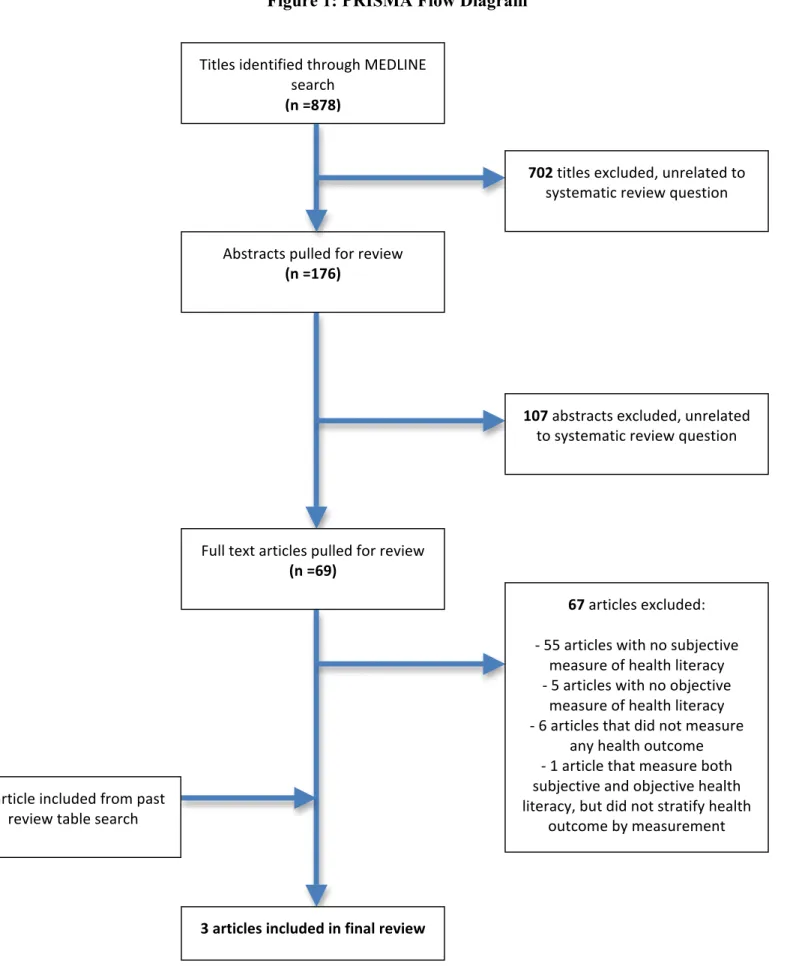
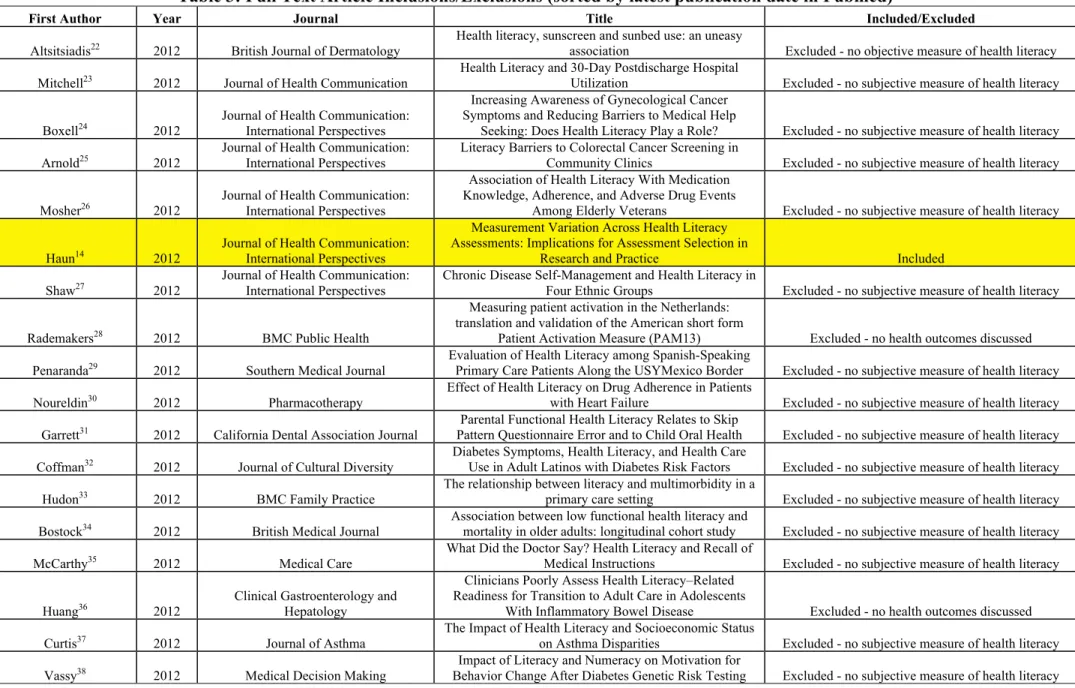
One author (EK) reviewed the 878 titles from the initial PubMed search. Titles that appeared relevant were identified and abstracts were procured for 176 of those articles (Figure). The latter were reviewed, and if no exclusion criteria were identified, the article measured health literacy and focused on any health outcome, the full text was retrieved. In this way, 69 full text articles were reviewed for inclusion. Of these, 67 were excluded because they did not meet inclusion criteria. Specifically, 55 did not assess health literacy and/or numeracy subjectively, 5 did not assess health literacy/numeracy objectively, 6 did not measure any applicable outcome, and 1 measured both subjective and objective health literacy, but did not stratify its outcome of self-reported health outcome by tool used for measurement (Table 3). Two articles met inclusion criteria and are assessed in this review. Additionally, one article was identified by reviewing the abstracts from all “fair” and “good” rated studies from the 2011 Berkman review, which also included those articles carried forward from the original AHRQ review. The characteristics of the full-text articles reviewed are included in Table 3.
! &!
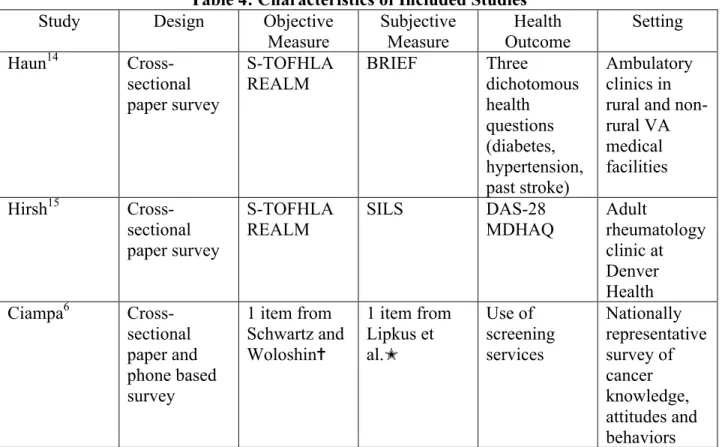
measurements used, the health outcomes considered, the study designs and settings are summarized in Table 4. None of the studies focused specifically on the differences between measurement types for predicting health outcomes, but all three reported health outcomes by measurement type, allowing conclusions to be drawn.
The performance of the various tests for detecting adequate health literacy or numeracy varied based on study setting. In Measurement Variation Across Health Literacy Assessments: Implications for Assessment Selection in Research and Practice14, Haun et al. examined the differences between three health literacy instruments and associated factors in eight ambulatory VA clinics in the Southeastern United States, collecting information from a convenience sample of 378 English speaking veterans. They used the aforementioned S-TOFHLA and REALM tests, as well as the BRIEF, a combination of four self-reported health literacy questions, including three questions shown in the literature to predict inadequate/marginal health16 and a fourth item geared at measuring oral health literacy (“How often do you have a problem understanding what is told to you about your medical condition?”).17 The outcomes considered were collected cross-sectionally, and consisted of three dichotomous indicators (diabetes, high blood pressure, and past stroke). This study found that 83% of its sample had adequate health literacy on the
S-TOHFLA (a score of >23), compared to 63% with the REALM (using a score of 61-66) and 43% with the BRIEF (using a score of 17-20 based on the summed likert scores on the four
questions).
In Limited Health Literacy is a Common Finding in a Public Health Hospital’s
! '!
forms (referred to in the article as SILS) were linked to disease severity, as assessed through a physician completed tool (the 28 item Disease Activity Scale, or DAS-28) and a patient completed tool (the Multidimensional Health Assessment Questionnaire, or MDHAQ) . They found that 65% of their sample had adequate health literacy on the S-TOFHLA, compared to 51% on the REALM and 70% on the SILS.
In Patient Numeracy, Perceptions of Provider Communication, and Colorectal Cancer Screening Utilization,6 Ciampa et al. used data from the 2007 National Cancer Institute Health Information Trends Survey (HINTS) to connect numeracy, measured by one self-reported question (how hard or easy the respondents found it to interpret medical statistics) and one objective question (asking respondents to pick the largest risk from three ratios) with perceptions of provider communication and up-to-date colorectal cancer screening status. Data were
collected by mail (n=1808) and by phone (n=2325). Using the objective question, 77.4% had adequate numeracy, compared to 60.6% using the subjective question (using a dichotomous measure of very easy/easy or very hard/hard to interpret medical statistics).
Two of the studies, the Haun and Ciampa articles, examined agreement regarding health literacy or numeracy status between measurement tools. In the Haun study, the Pearson
correlation between the TOFHLA and the REALM was 0.61 (p<0.01), between the
! (!
The results for prediction of outcomes were heterogeneous. In the two studies looking at health literacy, the subjective measure was associated with health outcomes more reliably than the objective measure. In the rheumatologic study, only the SILS was found to be significantly associated with MDHAQ score (beta coefficient of an improvement of 1 on the 4 point likert scale = -0.33696, p=0.008) while only trends were found for the S-TOFHLA and the REALM. This pattern persisted after adjustment, with higher subjective health literacy still being
significantly associated with lower functional disability as measured by the MDHAQ. None of the health literacy measures were significantly associated with the DAS-28 disease severity measure, although the SILS came closest with a coefficient of -0.47178 (p=0.14) (i.e. for each incrementally more confident response on the SILS, the disease activity score would be about half a point lower). In the Haun article, only the BRIEF test came close to being significantly associated with diabetic status (p=0.115), unlike the REALM (p=0.358) and S-TOFHLA (p=0.368). Both the S-TOFHLA (p=0.036) and the BRIEF (p=0.008) were significantly
associated with high blood pressure. Only the S-TOFHLA was associated with history of stroke (p=0.037), while there was a trend for the BRIEF (0.111). The REALM was therefore not
significantly associated with any of the outcomes in either of the health literacy studies, while the SILS performed better than the S-TOFHLA in the rheumatology study and the S-TOFHLA was associated with two of three health outcomes compared to just one for the BRIEF in the Haun study.
! )*!
those with low objective numeracy. Among respondents with high subjective literacy, 53.4% were up-to-date on screening, compared with 47.8% among those with low subjective numeracy.
DISCUSSION
This systematic review highlights important information about the differences between subjective and objective health literacy and numeracy measurements, and the implications for predicting outcomes. Our review finds that there are insufficient data to support using an
objective over a subjective tool, and that these tools differ in their measurements as well as their associations with health outcomes.
All three articles showed that tool selection greatly affects the proportion of patients that will be deemed to possess adequate health literacy, with objective tests categorizing more patients as having adequate health literacy or numeracy than subjective tools in two studies (Haun and Ciampa) and the reverse being true in the Hirsh article. These differences draw attention to the thresholds used for subjective measures. While the thresholds for objective measures are often defined in the validating studies for those tools and carried forward without change,4,5 subjective measures are more malleable introducing measurement bias into studies that use them and vary thresholds. Some studies consider questions individually, such as the
! ))!
used and a score of 4 or 5 out of five was deemed adequate, that 70% of patients had adequate health literacy, while in the Haun article where anything less than 17 out 20 on four pooled questions was deemed less than adequate, just 43% were listed as having adequate health literacy. The sensitivity of these subjective measures for detecting limited health literacy can be increased by pooling more questions, or lowering thresholds, with a resulting loss in specificity.
Two of the articles highlighted the lack of agreement between subjective and objective measures of health literacy and numeracy, with low correlation coefficients underlining the different constructs being measured and the difference in skills measured by each instrument. The 2009 systematic review of health literacy and outcomes by the AHRQ3 draws attention to the lack of a gold-standard instrument, and other studies have drawn attention to the lack of correlation stemming from different constructs being measured between self-report items and task-based items.19,20 Since this research is ongoing, some authors suggest using more than one literacy-screening tool or selecting an instrument based on the population and skill set being assessed17,20 to gather as much information as possible as definitions of health literacy and conceptual frameworks catch up to the instruments.
! )+!
heterogeneous results that a downstream consequence of the different constructs measured by subjective and objective tools are different predictive abilities that may depend on the outcome considered. It is not possible to say based on the studies considered whether subjective or objective tools are more predictive of outcomes, but it is clear that certain outcomes are associated exclusively with a specific tool, as evidenced by all three of our studies, and that subjective tools being weakly correlated with objective tools, the use of self-reported instruments could predict a different set of outcomes that would be missed by objective instruments, and vice-versa.
There are many limitations to the literature reviewed here. For one, all study designs considered were cross-sectional, making it impossible to discuss the role of causality in the associations found between health literacy and outcomes. Randomized controlled trials, or other prospective study designs, could more accurately describe the relationship between the two. No other reviews have compared the use of subjective and objective screening measures, so our work cannot be evaluated against the literature, and no specific studies have tried to study the differences in subjective and objective measurements’ effects on outcomes; all three of our studies discussed this relationship incidentally and were focused on other key questions.
Cross-sectional study designs introduce a large potential for selection bias and
confounding. In multivariate analyses, the Hirsh study controlled for age, race, gender, marital status, education, tobacco, and disease specific markers/treatment, making a stronger case for the significance of the relationship between SILS and the MDHAQ scores. In contrast, the
! )"! difference between the subjective and objective tests.
The sampling strategy used varied by article. The Haun article used a convenience sample of mostly older adults at various VA ambulatory clinics, and did not report the total number of patients approached to reach their target. Similarly, the Hirsh article does not discuss how many patients were approached, nor if the 110 patients were recruited systematically or through a convenience sample. Both these studies may suffer from a selection bias in which only patients with higher health literacy might enroll, while those with lower health literacy may have declined for fear of embarrassment or shame, a concern reported by other studies.12,21 This could have weakened the association found between health literacy and health outcomes. In the
Ciampa article, this is likely less concerning since the information was collected by mail or by phone, and the tools used were succinct and a minor focus of the survey as a whole. This would likely mitigate the selection bias associated with embarrassment or shame. Additionally, using random digit dialing and a USPS list for addresses would create a largely nationally
representative sample, although possibly biasing the result towards older and wealthier adults who have a landline, and a home address.
! )#!
CONCLUSION
This review found that there is a paucity of data that precludes any conclusions about the advantages of subjective or objective instruments of health literacy/numeracy on predicting health outcomes. The evidence reviewed showed that there is a lack of agreement between these two types of instruments, and that their association with health and other outcomes is varied, with subjective tools being more strongly associated with outcomes in one study, and mixed results being found in the others.
The implication for current practice is significant; current research papers that connect health literacy or numeracy with outcomes may miss the presence or the magnitude of an effect solely because of the specific instrument selected. Until further research improves our
understanding of the underlying construct we are trying to measure, clinicians and researchers need to decide what skill they are trying to measure, and either carefully deliberate on which instrument to use, or if time allows, possibly use multiple instruments, including both objective and subjective tools. Subjective instruments have the advantage of being generally faster to administer and less embarrassing for patients17 but may not be measuring the same construct as objective tools, which correlated more often with each other in our review.
! "#!
REFERENCES
1. Parker RM, Williams MV, Weiss BD, Baker DW, Davis TC, Doak CC, et al. Health literacy-report of the council on scientific affairs. JAMA. 1999;281(6):552-7.
2. Kutner M, Greenburg E, Jin Y, Paulsen C. The health literacy of america's adults: Results from the 2003 national assessment of adult literacy. NCES 2006-483. National Center for Education Statistics. 2006.
3. Berkman ND, Sheridan SL, Donahue KE, Halpern DJ, Crotty K. Low health literacy and health outcomes: An updated systematic review. Ann Intern Med. 2011;155(2):97.
4. Baker DW, Williams MV, Parker RM, Gazmararian JA, Nurss J. Development of a brief test to measure functional health literacy. Patient Educ Couns. 1999.
5. Davis TC, Long SW, Jackson RH, Mayeaux E, George RB, Murphy PW, et al. Rapid estimate of adult literacy in medicine: A shortened screening instrument. Fam Med. 1993;25(6):391.
6. Ciampa PJ, Osborn CY, Peterson NB, Rothman RL. Patient numeracy, perceptions of provider communication, and colorectal cancer screening utilization. J Health Commun. 2010;15(S3):157-68. 7. Woloshin S, Schwartz LM, Byram S, Fischhoff B, Welch HG. A new scale for assessing perceptions of chance A validation study. Medical Decision Making. 2000;20(3):298-307.
8. Lipkus IM, Samsa G, Rimer BK. General performance on a numeracy scale among highly educated samples. Medical Decision Making. 2001;21(1):37-44.
9. Chew LD, Griffin JM, Partin MR, Noorbaloochi S, Grill JP, Snyder A, et al. Validation of screening questions for limited health literacy in a large VA outpatient population. Journal of General Internal Medicine. 2008;23(5):561-6.
10. Morris NS, MacLean CD, Chew LD, Littenberg B. The single item literacy screener: Evaluation of a brief instrument to identify limited reading ability. BMC Family Practice. 2006;7(1):21.
11. Fagerlin A, Zikmund-Fisher BJ, Ubel PA, Jankovic A, Derry HA, Smith DM. Measuring numeracy without a math test: Development of the subjective numeracy scale. Medical Decision Making.
2007;27(5):672-80.
12. Wolf MS, Williams MV, Parker RM, Parikh NS, Nowlan AW, Baker DW. Patients' shame and attitudes toward discussing the results of literacy screening. J Health Commun. 2007;12(8):721-32. 13. Chew LD, Bradley KA, Boyko EJ. Brief questions to identify patients with inadequate health literacy. health. 2004;11:12.
14. Haun J, Luther S, Dodd V, Donaldson P. Measurement variation across health literacy assessments: Implications for assessment selection in research and practice. J Health Commun. 2012;17 Suppl 3:141-59.
15. Hirsh JM, Boyle DJ, Collier DH, Oxenfeld AJ, Nash A, Quinzanos I, et al. Limited health literacy is a common finding in a public health hospital's rheumatology clinic and is predictive of disease severity. J Clin Rheumatol. 2011 Aug;17(5):236-41.
16. Chew LD, Griffin JM, Partin MR, Noorbaloochi S, Grill JP, Snyder A, et al. Validation of screening questions for limited health literacy in a large VA outpatient population. Journal of General Internal Medicine. 2008;23(5):561-6.
17. Haun J, Dodd V, Varnes J, Graham-Pole J, Rienzo B, Donaldson P. Testing the brief health literacy screening tool: Implications for utilization of a BRIEF health literacy indicator. Fed Pract.
2009;26(12):24-8.
18. McNaughton C, Wallston KA, Rothman RL, Marcovitz DE, Storrow AB. Short, subjective measures of numeracy and general health literacy in an adult emergency department. Acad Emerg Med. 2011 Nov;18(11):1148-55.
! "#!
20. Saldana S. Performance of health literacy tests among older adults with diabetes. Journal of general internal medicine. 2012;27(5):534-40.
21. Parikh NS, Parker RM, Nurss JR, Baker DW, Williams MV. Shame and health literacy: The unspoken connection. Patient Educ Couns. 1996;27(1):33-9.
22. Altsitsiadis E, Undheim T, de Vries E, Hinrichs B, Stockfleth E, Trakatelli M, et al. Health literacy, sunscreen and sunbed use: An uneasy association. Br J Dermatol. 2012 Aug;167 Suppl 2:14-21. 23. Mitchell SE, Sadikova E, Jack BW, Paasche-Orlow MK. Health literacy and 30-day postdischarge hospital utilization. J Health Commun. 2012;17 Suppl 3:325-38.
24. Boxell EM, Smith SG, Morris M, Kummer S, Rowlands G, Waller J, et al. Increasing awareness of gynecological cancer symptoms and reducing barriers to medical help seeking: Does health literacy play a role? J Health Commun. 2012;17 Suppl 3:265-79.
25. Arnold CL, Rademaker A, Bailey SC, Esparza JM, Reynolds C, Liu D, et al. Literacy barriers to colorectal cancer screening in community clinics. J Health Commun. 2012;17 Suppl 3:252-64. 26. Mosher HJ, Lund BC, Kripalani S, Kaboli PJ. Association of health literacy with medication knowledge, adherence, and adverse drug events among elderly veterans. J Health Commun. 2012;17 Suppl 3:241-51.
27. Shaw SJ, Armin J, Torres CH, Orzech KM, Vivian J. Chronic disease self-management and health literacy in four ethnic groups. J Health Commun. 2012;17 Suppl 3:67-81.
28. Rademakers J, Nijman J, van der Hoek L, Heijmans M, Rijken M. Measuring patient activation in the netherlands: Translation and validation of the american short form patient activation measure (PAM13). BMC Public Health. 2012 Jul 31;12:577,2458-12-577.
29. Penaranda E, Diaz M, Noriega O, Shokar N. Evaluation of health literacy among spanish-speaking primary care patients along the US--mexico border. South Med J. 2012 Jul;105(7):334-8.
30. Noureldin M, Plake KS, Morrow DG, Tu W, Wu J, Murray MD. Effect of health literacy on drug adherence in patients with heart failure. Pharmacotherapy. 2012 Sep;32(9):819-26.
31. Garrett GM, Citi AM, Gansky SA. Parental functional health literacy relates to skip pattern questionnaire error and to child oral health. J Calif Dent Assoc. 2012 May;40(5):423-30.
32. Coffman MJ, Norton CK, Beene L. Diabetes symptoms, health literacy, and health care use in adult latinos with diabetes risk factors. J Cult Divers. 2012 Spring;19(1):4-9.
33. Hudon C, Fortin M, Poitras ME, Almirall J. The relationship between literacy and multimorbidity in a primary care setting. BMC Fam Pract. 2012 Jul 3;13:33,2296-13-33.
34. Bostock S, Steptoe A. Association between low functional health literacy and mortality in older adults: Longitudinal cohort study. BMJ. 2012 Mar 15;344:e1602.
35. McCarthy DM, Waite KR, Curtis LM, Engel KG, Baker DW, Wolf MS. What did the doctor say? health literacy and recall of medical instructions. Med Care. 2012 Apr;50(4):277-82.
36. Huang JS, Tobin A, Tompane T. Clinicians poorly assess health literacy-related readiness for
transition to adult care in adolescents with inflammatory bowel disease. Clin Gastroenterol Hepatol. 2012 Jun;10(6):626-32.
37. Curtis LM, Wolf MS, Weiss KB, Grammer LC. The impact of health literacy and socioeconomic status on asthma disparities. J Asthma. 2012 Mar;49(2):178-83.
38. Vassy JL, O'Brien KE, Waxler JL, Park ER, Delahanty LM, Florez JC, et al. Impact of literacy and numeracy on motivation for behavior change after diabetes genetic risk testing. Med Decis Making. 2012 Jul-Aug;32(4):606-15.
39. Bains SS, Egede LE. Association of health literacy with complementary and alternative medicine use: A cross-sectional study in adult primary care patients. BMC Complement Altern Med. 2011 Dec
30;11:138,6882-11-138.
40. Rosman SL, Dorfman D, Suglia SF, Humphrey C, Silverstein M. Predictors of prescription filling after visits to the pediatric emergency department. Pediatr Emerg Care. 2012 Jan;28(1):22-5.
! "#!
42. Backes AC, Kuo GM. The association between functional health literacy and patient-reported recall of medications at outpatient pharmacies. Res Social Adm Pharm. 2012 Jul-Aug;8(4):349-54.
43. Cappelletti M, Butterworth B, Kopelman M. Numeracy skills in patients with degenerative disorders and focal brain lesions: A neuropsychological investigation. Neuropsychology. 2012 Jan;26(1):1-19. 44. Smith SA, Moore EJ. Health literacy and depression in the context of home visitation. Matern Child Health J. 2012 Oct;16(7):1500-8.
45. Kirk JK, Grzywacz JG, Arcury TA, Ip EH, Nguyen HT, Bell RA, et al. Performance of health literacy tests among older adults with diabetes. J Gen Intern Med. 2012 May;27(5):534-40.
46. Robinson S, Moser D, Pelter MM, Nesbitt T, Paul SM, Dracup K. Assessing health literacy in heart failure patients. J Card Fail. 2011 Nov;17(11):887-92.
47. Lee JY, Divaris K, Baker AD, Rozier RG, Vann WF,Jr. The relationship of oral health literacy and self-efficacy with oral health status and dental neglect. Am J Public Health. 2012 May;102(5):923-9. 48. Jeppesen KM, Hull BP, Raines M, Miser WF. A validation study of the spoken knowledge in low literacy in diabetes scale (SKILLD). J Gen Intern Med. 2012 Feb;27(2):207-12.
49. Martin LT, Haas A, Schonlau M, Derose KP, Rosenfeld L, Rudd R, et al. Which literacy skills are associated with smoking? J Epidemiol Community Health. 2012 Feb;66(2):189-92.
50. Marden S, Thomas PW, Sheppard ZA, Knott J, Lueddeke J, Kerr D. Poor numeracy skills are associated with glycaemic control in type 1 diabetes. Diabet Med. 2012 May;29(5):662-9.
51. Lindquist LA, Go L, Fleisher J, Jain N, Friesema E, Baker DW. Relationship of health literacy to intentional and unintentional non-adherence of hospital discharge medications. J Gen Intern Med. 2012 Feb;27(2):173-8.
52. Hardie NA, Kyanko K, Busch S, Losasso AT, Levin RA. Health literacy and health care spending and utilization in a consumer-driven health plan. J Health Commun. 2011;16 Suppl 3:308-21.
53. Rubin DL, Parmer J, Freimuth V, Kaley T, Okundaye M. Associations between older adults' spoken interactive health literacy and selected health care and health communication outcomes. J Health Commun. 2011;16 Suppl 3:191-204.
54. Telford RD, Cunningham RB, Fitzgerald R, Olive LS, Prosser L, Jiang X, et al. Physical education, obesity, and academic achievement: A 2-year longitudinal investigation of australian elementary school children. Am J Public Health. 2012 Feb;102(2):368-74.
55. Omariba DW, Ng E. Immigration, generation and self-rated health in canada: On the role of health literacy. Can J Public Health. 2011 Jul-Aug;102(4):281-5.
56. Fernandez S, Tobin JN, Cassells A, Diaz-Gloster M, Kalida C, Ogedegbe G. The counseling african americans to control hypertension (CAATCH) trial: Baseline demographic, clinical, psychosocial, and behavioral characteristics. Implement Sci. 2011 Sep 1;6:100,5908-6-100.
57. Morris NS, Grant S, Repp A, Maclean C, Littenberg B. Prevalence of limited health literacy and compensatory strategies used by hospitalized patients. Nurs Res. 2011 Sep-Oct;60(5):361-6.
58. Shibuya A, Inoue R, Ohkubo T, Takeda Y, Teshima T, Imai Y, et al. The relation between health literacy, hypertension knowledge, and blood pressure among middle-aged japanese adults. Blood Press Monit. 2011 Oct;16(5):224-30.
59. Shelton RC, Jandorf L, Ellison J, Villagra C, DuHamel KN. The influence of sociocultural factors on colonoscopy and FOBT screening adherence among low-income hispanics. J Health Care Poor
Underserved. 2011 Aug;22(3):925-44.
60. Diug B, Evans S, Lowthian J, Maxwell E, Dooley M, Street A, et al. The unrecognized psychosocial factors contributing to bleeding risk in warfarin therapy. Stroke. 2011 Oct;42(10):2866-71.
61. Lee SY, Tsai TI, Tsai YW, Kuo KN. Health literacy and women's health-related behaviors in taiwan. Health Educ Behav. 2012 Apr;39(2):210-8.
! "#!
63. Zoellner J, You W, Connell C, Smith-Ray RL, Allen K, Tucker KL, et al. Health literacy is associated with healthy eating index scores and sugar-sweetened beverage intake: Findings from the rural lower mississippi delta. J Am Diet Assoc. 2011 Jul;111(7):1012-20.
64. McCleary-Jones V. Health literacy and its association with diabetes knowledge, self-efficacy and disease self-management among african americans with diabetes mellitus. ABNF J. 2011
Spring;22(2):25-32.
65. Gardner PH, McMillan B, Raynor DK, Woolf E, Knapp P. The effect of numeracy on the
comprehension of information about medicines in users of a patient information website. Patient Educ Couns. 2011 Jun;83(3):398-403.
66. Pagan JA, Brown CJ, Asch DA, Armstrong K, Bastida E, Guerra C. Health literacy and breast cancer screening among mexican american women in south texas. J Cancer Educ. 2012 Mar;27(1):132-7. 67. Miller DP,Jr, Spangler JG, Case LD, Goff DC,Jr, Singh S, Pignone MP. Effectiveness of a web-based colorectal cancer screening patient decision aid: A randomized controlled trial in a mixed-literacy
population. Am J Prev Med. 2011 Jun;40(6):608-15.
68. Galesic M, Garcia-Retamero R. Do low-numeracy people avoid shared decision making? Health Psychol. 2011 May;30(3):336-41.
69. Green JA, Mor MK, Shields AM, Sevick MA, Palevsky PM, Fine MJ, et al. Prevalence and
demographic and clinical associations of health literacy in patients on maintenance hemodialysis. Clin J Am Soc Nephrol. 2011 Jun;6(6):1354-60.
70. Peterson PN, Shetterly SM, Clarke CL, Bekelman DB, Chan PS, Allen LA, et al. Health literacy and outcomes among patients with heart failure. JAMA. 2011 Apr 27;305(16):1695-701.
71. Patel PJ, Joel S, Rovena G, Pedireddy S, Saad S, Rachmale R, et al. Testing the utility of the newest vital sign (NVS) health literacy assessment tool in older african-american patients. Patient Educ Couns. 2011 Dec;85(3):505-7.
72. Ko Y, Lee JY, Toh MP, Tang WE, Tan AS. Development and validation of a general health literacy test in singapore. Health Promot Int. 2012 Mar;27(1):45-51.
73. Begoray DL, Kwan B. A canadian exploratory study to define a measure of health literacy. Health Promot Int. 2012 Mar;27(1):23-32.
74. Ishikawa H, Yano E. The relationship of patient participation and diabetes outcomes for patients with high vs. low health literacy. Patient Educ Couns. 2011 Sep;84(3):393-7.
75. Macabasco-O'Connell A, DeWalt DA, Broucksou KA, Hawk V, Baker DW, Schillinger D, et al. Relationship between literacy, knowledge, self-care behaviors, and heart failure-related quality of life among patients with heart failure. J Gen Intern Med. 2011 Sep;26(9):979-86.
76. Chaudhry SI, Herrin J, Phillips C, Butler J, Mukerjhee S, Murillo J, et al. Racial disparities in health literacy and access to care among patients with heart failure. J Card Fail. 2011 Feb;17(2):122-7.
77. Bains SS, Egede LE. Associations between health literacy, diabetes knowledge, self-care behaviors, and glycemic control in a low income population with type 2 diabetes. Diabetes Technol Ther. 2011 Mar;13(3):335-41.
78. Chen AM, Yehle KS, Plake KS, Murawski MM, Mason HL. Health literacy and self-care of patients with heart failure. J Cardiovasc Nurs. 2011 Nov-Dec;26(6):446-51.
79. Naik AD, Street RL,Jr, Castillo D, Abraham NS. Health literacy and decision making styles for complex antithrombotic therapy among older multimorbid adults. Patient Educ Couns. 2011 Dec;85(3):499-504.
80. Lindquist LA, Jain N, Tam K, Martin GJ, Baker DW. Inadequate health literacy among paid caregivers of seniors. J Gen Intern Med. 2011 May;26(5):474-9.
81. Dennison CR, McEntee ML, Samuel L, Johnson BJ, Rotman S, Kielty A, et al. Adequate health literacy is associated with higher heart failure knowledge and self-care confidence in hospitalized patients. J Cardiovasc Nurs. 2011 Sep-Oct;26(5):359-67.
! "#!
83. Osborn CY, Paasche-Orlow MK, Bailey SC, Wolf MS. The mechanisms linking health literacy to behavior and health status. Am J Health Behav. 2011 Jan-Feb;35(1):118-28.
84. Martin LT, Schonlau M, Haas A, Derose KP, Rudd R, Loucks EB, et al. Literacy skills and calculated 10-year risk of coronary heart disease. J Gen Intern Med. 2011 Jan;26(1):45-50.
85. Todd L, Harvey E, Hoffman-Goetz L. Predicting breast and colon cancer screening among english-as-a-second-language older chinese immigrant women to canada. J Cancer Educ. 2011 Mar;26(1):161-9. 86. Pati S, Feemster KA, Mohamad Z, Fiks A, Grundmeier R, Cnaan A. Maternal health literacy and late initiation of immunizations among an inner-city birth cohort. Matern Child Health J. 2011 Apr;15(3):386-94.
! +*!
TABLES AND FIGURES (listed by order of appearance in manuscript)
Table 1: Inclusion/Exclusion Criteria
Population of interest Patients and caregivers of all ethnicities
Intervention Measurement of health literacy/numeracy using subjective tool
Comparator Measurement of health literacy/numeracy using objective tool
Outcomes Any relevant health outcomes, including utilization of health services and disease specific health outcomes, by level of health literacy/numeracy (exclusion: health knowledge as outcome)
Time allowed for outcomes to appear
Any (including cross-sectional data)
Time searched Since latest AHRQ review (01/01/2011) to search date (02/26/13)
! +)!
Table 2: MEDLINE Search String 3
Query String
#1 Search numeracy
#2 Search “health literacy”
#3 Search #1 OR #2
#4 Search literacy
#5 Search “rapid estimate of adult literacy” OR real*
#6 Search #4 AND #5
#7 Search “test of functional health literacy” OR tofhl*
#8 Search #4 and #7
#9 Search “Hebrew health literacy test” OR MART
#10 Search #4 AND #9
#11 Search “medical achievement reading test” OR MART
#12 Search #4 and #11
#13 Search “newest vital sign” OR NVS
#14 Search #4 AND #13
#15 Search “short assessment of health literacy” OR SAHLSA
#16 Search #4 AND #15
#17 Search “wide assessment of health literacy” OR WRAT
#18 Search #4 AND #17
#19 Search “nutritional literacy” OR “literacy assessment for diabetes” OR LAD OR SIL OR “single item numeracy screener” OR DAHL OR “demographic assessment” OR BEHKA OR “brief estimate” OR “diabetes numeracy” OR “medical data interpretation” OR “subjective numeracy” OR “numeracy test”
#20 Search #4 AND #19
#21 Search #6 OR #8 OR #10 OR #12 OR #14 OR #16 OR #18 OR #20
#22 #3 OR #21
#23 Search #22 Limits: Human, English
#24 Search #23 Limits: Editorial, Letter, Case Reports
#25 Search #23 NOT #24
#26 Search #25 AND “2011/01/01”[Entrez Date] : “3000”[Entrez Date]
! ++!
Figure 1: PRISMA Flow Diagram
!"#$%&'"(%)#"*"%('#+,-./+'0123451' &%6,7+'
!"#$%&%''
89&#,67#&':.$$%('*-,',%;"%<' !"#$(&)''
&*+'#"#$%&'%=7$.(%(>'.),%$6#%('#-' &?&#%@6#"7',%;"%<'A.%&#"-)'
(*&'69&#,67#&'%=7$.(%(>'.),%$6#%(' #-'&?&#%@6#"7',%;"%<'A.%&#"-)'
B.$$'#%=#'6,#"7$%&':.$$%('*-,',%;"%<' !"#$),''
)&'6,#"7$%&'%=7$.(%(C' '
D'EE'6,#"7$%&'<"#+')-'&.9F%7#";%' @%6&.,%'-*'+%6$#+'$"#%,67?' D'E'6,#"7$%&'<"#+')-'-9F%7#";%'
@%6&.,%'-*'+%6$#+'$"#%,67?' D'G'6,#"7$%&'#+6#'("(')-#'@%6&.,%'
6)?'+%6$#+'-.#7-@%' D'H'6,#"7$%'#+6#'@%6&.,%'9-#+' &.9F%7#";%'6)('-9F%7#";%'+%6$#+' $"#%,67?>'9.#'("(')-#'&#,6#"*?'+%6$#+'
-.#7-@%'9?'@%6&.,%@%)#' ('6,#"7$%'")7$.(%('*,-@':6&#'
,%;"%<'#69$%'&%6,7+'
! "#!
Table 3: Full Text Article Inclusions/Exclusions (sorted by latest publication date in Pubmed)
First Author Year Journal Title Included/Excluded
Altsitsiadis22 2012 British Journal of Dermatology Health literacy, sunscreen and sunbed use: an uneasy association Excluded - no objective measure of health literacy Mitchell23 2012 Journal of Health Communication Health Literacy and 30-Day Postdischarge Hospital Utilization Excluded - no subjective measure of health literacy
Boxell24 2012 Journal of Health Communication: International Perspectives
Increasing Awareness of Gynecological Cancer Symptoms and Reducing Barriers to Medical Help
Seeking: Does Health Literacy Play a Role? Excluded - no subjective measure of health literacy Arnold25 2012 Journal of Health Communication: International Perspectives Literacy Barriers to Colorectal Cancer Screening in Community Clinics Excluded - no subjective measure of health literacy Mosher26 2012 Journal of Health Communication: International Perspectives
Association of Health Literacy With Medication Knowledge, Adherence, and Adverse Drug Events
Among Elderly Veterans Excluded - no subjective measure of health literacy Haun14 2012 Journal of Health Communication: International Perspectives
Measurement Variation Across Health Literacy Assessments: Implications for Assessment Selection in
Research and Practice Included
Shaw27 2012 Journal of Health Communication: International Perspectives Chronic Disease Self-Management and Health Literacy in Four Ethnic Groups Excluded - no subjective measure of health literacy Rademakers28 2012 BMC Public Health
Measuring patient activation in the Netherlands: translation and validation of the American short form
Patient Activation Measure (PAM13) Excluded - no health outcomes discussed Penaranda29 2012 Southern Medical Journal Evaluation of Health Literacy among Spanish-Speaking Primary Care Patients Along the USYMexico Border Excluded - no subjective measure of health literacy Noureldin30 2012 Pharmacotherapy Effect of Health Literacy on Drug Adherence in Patients with Heart Failure Excluded - no subjective measure of health literacy Garrett31 2012 California Dental Association Journal Pattern Questionnaire Error and to Child Oral Health Parental Functional Health Literacy Relates to Skip Excluded - no subjective measure of health literacy Coffman32 2012 Journal of Cultural Diversity Diabetes Symptoms, Health Literacy, and Health Care Use in Adult Latinos with Diabetes Risk Factors Excluded - no subjective measure of health literacy Hudon33 2012 BMC Family Practice The relationship between literacy and multimorbidity in a primary care setting Excluded - no subjective measure of health literacy Bostock34 2012 British Medical Journal Association between low functional health literacy and mortality in older adults: longitudinal cohort study Excluded - no subjective measure of health literacy McCarthy35 2012 Medical Care What Did the Doctor Say? Health Literacy and Recall of Medical Instructions Excluded - no subjective measure of health literacy
Huang36 2012 Clinical Gastroenterology and Hepatology
Clinicians Poorly Assess Health Literacy–Related Readiness for Transition to Adult Care in Adolescents
! "#! Bains39 2011 Complementary and Alternative Medicine
Association of Health Literacy with Complementary and Alternative Medicine Use: A Cross-Sectional Study in
Adult Primary Care Excluded - no subjective measure of health literacy Rosman40 2012 Pediatric Emergency Care Predictors of Prescription Filling After Visits to the Pediatric Emergency Department Excluded - no subjective measure of health literacy McDougall41 2012 Nursing Research
Memory Performance, Health Literacy, and Instrumental Activities of Daily Living of Community Residing Older
Adults Excluded - no subjective measure of health literacy Backes42 2012 Research in Social and Administrative Pharmacy
The association between functional health literacy and patient-reported recall of medications at outpatient
pharmacies Excluded - no subjective measure of health literacy Cappelletti43 2012 Neuropsychology
Numeracy Skills in Patients With Degenerative Disorders and Focal Brain Lesions: A Neuropsychological
Investigation Excluded - no subjective measure of health literacy Smith44 2012 Maternal and Child Health Journal Health Literacy and Depression in the Context of Home Visitation Excluded - no objective measure of health literacy Kirk45 2011 Journal of General Internal Medicine Performance of Health Literacy Tests Among Older Adults with Diabetes Excluded - no subjective measure of health literacy McNaughton18 2011 Academic Emergency Medicine Short, Subjective Measures of Numeracy and General Health Literacy in an Adult Emergency Department Excluded - no health outcomes discussed
Robinson46 2011 Journal of Cardiac Failure Assessing Health Literacy in Heart Failure Patients Excluded - no subjective measure of health literacy Lee47 2012 American Journal of Public Health Efficacy With Oral Health Status and Dental Neglect The Relationship of Oral Health Literacy and Self- Excluded - no subjective measure of health literacy Jeppesen48 2011 Journal of General Internal Medicine A Validation Study of the Spoken Knowledge in Low Literacy in Diabetes Scale (SKILLD) Excluded - no subjective measure of health literacy Martin49 2012 Journal of Epidemiology of Community Health Which literacy skills are associated with smoking? Excluded - no subjective measure of health literacy Marden50 2011 Diabetic Medicine Poor numeracy skills are associated with glycaemic control in Type 1 diabetes Excluded - no subjective measure of health literacy Lindquist51 2011 Journal of General Internal Medicine
Relationship of Health Literacy to Intentional and Unintentional Non-Adherence of Hospital Discharge
Medications Excluded - no subjective measure of health literacy Hardie52 2011 Journal of Health Communication Health Literacy and Health Care Spending and Utilization in a Consumer-Driven Healh Plan Excluded - no objective measure of health literacy Rubin53 2011 Journal of Health Communication
Associations Between Older Adults’ Spoken Interactive Health Literacy and Selected Health Care and Health
Communication Outcomes Excluded - no subjective measure of health literacy Telford54 2012 American Journal of Public Health
Physical Education, Obesity, and Academic Achievement: A 2-Year Longitudinal Investigation of
! "#!
(caatch) trial: baseline demographic, clinical, psychosocial, and behavioral characteristics
Morris57 2011 Nursing Research Prevalence of Limited Health Literacy and Compensatory Strategies Used by Hospitalized Patients Excluded - no subjective measure of health literacy
Shibuya58 2011 Clinical Methods and Pathophysiology
The relation between health literacy, hypertension knowledge, and blood pressure among middle-aged
Japanese adults Excluded - no subjective measure of health literacy
Shelton59 2011 Journal of Health Care for the Poor and Underserved
The Influence of Sociocultural Factors on Colonoscopy and FOBT Screening Adherence among Low-income
Hispanics Excluded - no subjective measure of health literacy
Diug60 2011 Stroke The Unrecognized Psychosocial Factors Contributing to Bleeding Risk in Warfarin Therapy Excluded - no subjective measure of health literacy
Hirsh15 2011 Journal of Clinical Rheumatology
Limited Health Literacy Is a Common Finding in a Public Health Hospital’s Rheumatology Clinic and Is Predictive
of Disease Severity Included
Lee61 2011 Health Education and Behavior Health Literacy and Women's Health-Related Behaviors in Taiwan Excluded - no subjective measure of health literacy Pendlimari62 2012 Journal of Surgical Research Assessment of Colon Cancer Literacy in Screening Colonoscopy Patients: A Validation Study Excluded - no subjective measure of health literacy
Zoellner63 2011 Journal of the American Dietetic Association
Health Literacy Is Associated with Healthy Eating Index Scores and Sugar-Sweetened Beverage Intake: Findings
from the Rural Lower Mississippi Delta Excluded - no subjective measure of health literacy
McCleary-Jones64 2011 The ABNF Journal
Health Literacy and Its Association with Diabetes Knowledge, Self-Efficacy and Disease Self-Management
Among African Americans with Diabetes Mellitus Excluded - no subjective measure of health literacy
Gardner65 2011 Patient Education and Counseling
The effect of numeracy on the comprehension of information about medicines in users of a patient
information website Excluded - no subjective measure of health literacy
Pagán66 2012 Journal of Cancer Education Health Literacy and Breast Cancer Screening among Mexican American Women in South Texas Excluded - no subjective measure of health literacy Miller Jr67 2011 American Journal of Preventive Medicine Effectiveness of a Web-Based Colorectal Cancer Screening Patient Decision Aid Excluded - no subjective measure of health literacy
Galesic68 2011 Health Psychology Do Low-Numeracy People Avoid Shared Decision Making? Excluded - no health outcomes discussed
Green69 2011 Clinical Journal of the American Society of Nephrology
Prevalence and Demographic and Clinical Associations of Health Literacy in Patients on Maintenance
Hemodialysis Excluded - no subjective measure of health literacy
Peterson70 2011 Journal of the American Medical Association Health Literacy and Outcomes Among Patients With Heart Failure Excluded - no objective measure of health literacy
Patel71 2011 Patient Education and Counseling
Testing the utility of the newest vital sign (NVS) health literacy assessment tool in older African-American
! "#!
test in Singapore
Begoray73 2011 Health Promotion International A Canadian exploratory study to define a measure of health literacy Excluded - no health outcomes discussed Ishikawa74 2011 Patient Education and Counseling outcomes for patients with high vs. low health literacy The relationship of patient participation and diabetes Excluded - no objective measure of health literacy
Macabasco-O’Connell75 2011 Journal of General Internal Medicine
Relationship Between Literacy, Knowledge, Self-Care Behaviors, and Heart Failure-Related Quality of Life
Among Patients With Heart Failure Excluded - no subjective measure of health literacy Chaudhry76 2011 Journal of Cardiac Failure Racial Disparities in Health Literacy and Access to Care Among Patients With Heart Failure Excluded - no subjective measure of health literacy
Bains77 2011 Diabetes Technology and Therapeutics
Associations between Health Literacy, Diabetes Knowledge, Self-Care Behaviors, and Glycemic Control
in a Low Income Population with Type 2 Diabetes Excluded - no subjective measure of health literacy Chen78 2011 Journal of Cardiovascular Nursing Health Literacy and Self-care of Patients With Heart Failure Excluded - no subjective measure of health literacy Naik79 2011 Patient Education and Counseling antithrombotic therapy among older multimorbid adults Health literacy and decision making styles for complex Excluded - no health outcomes discussed Lindquist80 2010 Journal of General Internal Medicine Inadequate Health Literacy Among Paid Caregivers of Seniors Excluded - no subjective measure of health literacy
Dennison81 2010 Heart and Lung
Adequate Health Literacy is Associated with Higher Heart Failure Knowledge and Self-Care Confidence in
Hospitalized Patients Excluded - no subjective measure of health literacy
Sarkar82 2010 Journal of General Internal Medicine
Validation of Self-Reported Health Literacy Questions Among Diverse English and Spanish-Speaking
Populations Excluded - health outcome not stratified by objective vs subjective measure Osborn83 2011 American Journal of Health Behavior The Mechanisms Linking Health Literacy to Behavior and Health Status Excluded - no subjective measure of health literacy
Martin84 2010 Journal of General Internal Medicine Literacy Skills and Calculated 10-Year Risk of Coronary Heart Disease Excluded - no subjective measure of health literacy
Todd85 2010 Journal of Cancer Education
Predicting Breast and Colon Cancer Screening Among English-as-a-Second-Language Older Chinese Immigrant
! "#!
Table 4: Characteristics of Included Studies
Study Design Objective
Measure Subjective Measure Outcome Health Setting
Haun14
Cross-sectional paper survey
S-TOFHLA
REALM BRIEF Three dichotomous
health questions (diabetes, hypertension, past stroke)
Ambulatory clinics in rural and non-rural VA medical facilities
Hirsh15
Cross-sectional paper survey
S-TOFHLA
REALM SILS DAS-28 MDHAQ Adult rheumatology
clinic at Denver Health
Ciampa6
Cross-sectional paper and phone based survey
1 item from Schwartz and Woloshin!
1 item from Lipkus et al."
Use of screening services
Nationally representative survey of cancer knowledge, attitudes and behaviors
!: “In general, how hard or easy do you find it to understand medical statistics?” 7
":“Which of the following numbers represents the biggest risk of getting a disease, 1 in 100, 1 in
28
Comparison of Brief Health Literacy Screens in the Emergency Department
ABSTRACT
Background: A fast way of measuring health literacy is of great interest both clinically and in research but there are many tools available. The objective was to determine the capacity of five
brief health literacy screening tools to predict the results of the longer Short Test of Functional
Health Literacy in Adults (S-TOFHLA) in an adult emergency department (ED) setting.
Methods: A sample of 400 adult ED patients was enrolled in two equal blocks ensuring equal representation of higher and lower educational levels. These patients completed the S-TOFHLA
as a referent standard, as well as the Newest Vital Sign (NVS), Single Item Literacy Screen
(SILS), brief validated screening questions, Rapid Estimate of Adult Literacy in Medicine –
Revised (REALM-R) and the Medical Term Recognition Test (METER). These patients also
completed a demographic survey and answered some questions about their health. Validity of the
brief screening tools against the S-TOFHLA was assessed using Spearman’s correlation
coefficients, receiver operating characteristics (ROC) curves and by calculating test
characteristics (sensitivity, specificity, likelihood ratios) at different test cutoffs.
Results: The enrolled sample of 400 patients was on average approximately 38 years old. Approximately 58% were female, 63% were Caucasian and 30% were African American. Most
patients had adequate health literacy as measured by the S-TOFHLA (93% adequate, median
score of 35, IQR 32-35). Using the brief screening tools, a range of 52% (NVS) to 81% (brief
screening question about help with medical materials) had adequate health literacy. All brief tests
were significantly correlated with the S-TOFHLA (p<0.001), with the REALM-R, METER and
29
than the self-reported measures. The greatest area under the ROC curve (AUROC) was obtained
for the NVS (AUROC=0.89, 95% CI 0.85-0.94) while the lowest AUROC was found for the
brief screening question about problems with medical materials (AUROC=0.75, 95% CI
0.65-0.85). The sensitivities and specificities for each test indicated some alternative cutpoints that
could be considered depending on the purpose of screening. In our sample, those with adequate
health literacy were significantly younger, more likely to be women, Caucasian, and to speak
English as a first language (p<0.05). They had significantly more education, better self-reported
health status, and fewer ED visits (p<0.05).
Conclusions/Implications: Our results indicate that the NVS was best able to identify limited
health literacy on the S-TOFHLA, but that all tools performed well enough at this task to be
considered as a substitute. Our data indicate widespread differences in the characteristics of these
tests beyond their ability to predict the S-TOFHLA literacy categorization, including the
proportion of patients characterized as having limited health literacy, their administration
characteristics and the skill sets that they target. Future research will need to determine their
specific strengths and weaknesses in predicting outcomes. In the mean time, researchers and
clinicians alike should think carefully about which tool to use based on the specific skills being
30
INTRODUCTION
Health literacy is the capacity to obtain, process and understand basic health information
services needed to make the appropriate health decisions.1 Unfortunately, low health literacy is a
significant problem in the United States (US). The 2003 U.S. Department of Education national
assessment of adult literacy showed that only 12% of surveyed adults possessed proficient health
literacy, with 36% of the population falling at the below basic or basic health literacy levels.2
There is accumulating evidence connecting limited health literacy with poor health outcomes.
For example, patients with limited health literacy visit emergency departments more often, are
hospitalized more often, and receive fewer preventive screening services such as mammograms
or influenza vaccinations.3 These patients have a harder time taking their medications
appropriately, or interpreting labels and health messages.3 Overall, these patients have poorer
health status and higher all-cause mortality.3
The emergency department (ED) in particular acts as a safety net for many patients with
limited health literacy,4,5 and providers in this setting are often faced with stringent time
constraints. Physicians tend to overestimate the health literacy of their patients when not relying
on standardized tools,6 but such tools are often too time-consuming for practical use. The most
commonly used standards against which other tools are validated are the Test of Functional
Health Literacy in Adults (TOFHLA) and the REALM. The TOFHLA combines a 50-item
reading comprehension section with a 17-item numeracy section, and takes approximately 22
minutes to administer.7 A shorter validated version containing just 36 items from the reading
comprehension component, the S-TOFHLA, still takes around 7 minutes to administer.8 The
31
administer,9,10 but some doubt that pronunciation can correctly identify patients with limited
health literacy.11
Screening for health literacy remains controversial in a practical context, with many
arguing for a universal precautions approach promoting clear communication with all patients.12
Alternatively, gaining a better understanding of current screening tools can inform interpretation
of existing studies measuring health literacy, as well as selection of a tool in research contexts.
Additionally, there may be a place for health literacy screening in resource and time-limited
settings, and room for physicians to tailor care to their patients’ literacy level.13,14 Such an
approach might be particularly welcome if shorter and less embarrassing tools could be
validated, removing traditional barriers to widespread screening implementation.12
Health literacy can be challenging to measure. Several brief health literacy screens have
been proposed and tested in a variety of settings and hold promise as an efficient means to screen
patients for health literacy problems.15-19 Some of these screens are as short as a single question,
and all take under 3 minutes to administer. There is limited research concerning the reliability of
these tools in the ED.20 In this study, we administered the S-TOFHLA as a referent standard and
five shorter screening tools (Newest Vital Sign, Single Item Literacy Screen, validated subjective
questions, REALM-R, and METER) sequentially to patients in a suburban ED to determine their
differences in measuring health literacy. No studies to date have sequentially employed all these
screening tools. Our secondary aim was to collect cross-sectional data about these patients’
32
METHODS
Setting and Sample
This study was conducted at a southeastern US suburban adult emergency department
and level I trauma center with an annual census of 75,000 patients. Data were collected by the
co-investigator and two research assistants between January 2013 and May 2013. Patients
deemed critically ill, decisionally impaired or intoxicated by the charge nurse or attending
physician were not approached. All other patients were sequentially approached during data
collection hours (weekday afternoons and evenings, and weekend evenings).
A prospectively defined sample of 400 participants was sought. We utilized block
enrollment to ensure equal representation of higher (some college or more) and lower (high
school diploma or GED or less) education levels. Once the block enrollment target was reached
for a group, no further subjects in that educational block were enrolled.
Subjects were excluded if they were unable to hold a conversation in English, were under
18 years old, refused participation at any time, were interrupted during the timed portion of the
study (S-TOFHLA) or required corrective eyewear that they did not have with them at the time
of the study. The local institutional review board approved the study. Verbal informed consent
was obtained from every patient after review of an information sheet.
Health Literacy Measurements
Patients who provided informed consent were given six total tests of health literacy
(S-TOFHLA, Newest Vital Sign [NVS], Single Item Literacy Screen [SILS], validated screening
questions, REALM-R and METER, in that order). The S-TOFLHA is one of the most common
tools used to measure health literacy.3 Derived from the full TOFHLA, the abbreviated test
33
development, the reading passages alone correlated as well with the REALM as the complete
S-TOFHLA.8 In our study we administered both reading passages to each patient, who had a
maximum of seven minutes to choose appropriate words to fill in blanks in the medical texts.
The test produces a continuous score based on the number of correct choices, from 0 to 36. This
score is often categorized into inadequate literacy (0-16), marginal literacy (17-22) and adequate
literacy (23-36). For our study, inadequate and marginal literacy were merged into a single
category of limited health literacy.
The Newest Vital Sign consists of a fictitious ice cream nutritional label that is handed to
the patient, as the interviewer asks six questions requiring both health literacy and numeracy
skills.15 The total correct answers are summed to produce a score from 0 to 6. In the study
validating the tool, a score of 0-1 suggested high likelihood of limited health literacy, a score of
2-3 indicated a possibility of limited health literacy, and a score of 4-6 almost always indicated
adequate literacy.15
The Single Item Literacy Screen (SILS) was developed in 2006 following an evaluation
by Chew et al. of 16 screening questions to identify inadequate health literacy in a VA hospital.16
The original study found 3 questions, each on a 5 point Likert scale, that could successfully
identify these patients: one assessing confidence in filling out medical forms, one assessing need
for help in reading hospital materials, and the final question assessing difficulty understanding
written information in trying to learn more about a medical condition. All three questions were
later validated against both the S-TOFHLA and the REALM.21 The SILS draws on this research
and asks “how often do you need to have someone help you when you read instructions,
pamphlets, or other written material from your doctor or pharmacy?” Both the SILS and the three
34
both individually, and as a composite sometimes referred to as the Short Literacy Survey (SLS),
in which all three scores (from 1 to 5 per question) are added after reversing the help and
problem questions such that the highest scores indicate higher subjective health literacy,
producing a score from 3 to 15.22
The REALM-R is a shortened version of the full REALM test, assessing pronunciation of
8 words instead of 66 (allergic, jaundice, anemia, fatigue, directed, colitis, constipation and
osteoporosis) and taking 1 minute to complete and score. A score of 6 or fewer correctly
pronounced words correctly identified 26 of 30 patients reading at a sixth grade level in the study
that introduced the test.19
The Medical Term Recognition Test (METER) contains a list of 40 medical words mixed
in with nonwords. The patient is required to identify the real words by putting a mark next to
them on a sheet of paper. Many of the words are the same as the words on the REALM test, and
the study first describing the tool was found to correlate highly with the latter.17 In our study, the
METER was scored by simply totaling the amount of real words correctly identified, an
approach shown in its validating study to be highly similar and faster to score compared to an
alternative scoring approach which penalizes nonwords identified as real words.17
Other Variables
In the enrollment phase of the study, sex, age, race, preferred spoken language and
highest education level achieved were measured among both study completers and those who
declined participation or were ineligible. Among study completers, further information was
collected after the literacy tests. These variables included self-described health status (Likert
35
doctor as “primary care physician”, and number of primary care visits in last 12 months if a
primary care doctor was identified.
Analysis
Data analysis was conducting using Stata version 12 (StataCorp, College Station, TX).
We describe the characteristics of the full sample, and stratified these characteristics by
completion status (comparing study completers to refusals and exclusions) using the chi-square
and Student t test to detect differences in those samples for categorical and continuous variables
respectively. The same tests were used to find differences in the characteristics of patients with
adequate and limited health literacy as defined by the STOFHLA. In these analyses, race was
consolidated for categories with 5 or fewer subjects (Asian/Pacific Islander [n=5], Native
American [n=3], Southeast Asian/Indian Subcontinent [n=3], Other [n=2]) into an other
category.
Spearman’s rank correlation coefficient was calculated for each brief screening test
(NVS, SILS, SLS, screening questions, REALM-R and METER) to determine statistical
dependence with the S-TOFHLA. For these calculations, all these variables were treated as
continuous.
Using limited health literacy on the S-TOFHLA as the comparison standard (score of 22
or less), nonparametric receiver operating characteristic (ROC) curves were created for the NVS,
SILS, SLS, individual screening questions, REALM-R and METER to determine the area under
the ROC curves (AUROC), and sensitivities and specificities at each cutoff point for predicting
36 RESULTS
A total of 700 patients were approached between January 2013 and May 2013, of whom
400 provided consent and completed the study. Reasons for non-completion among the 300 other
patients included not being comfortable holding a conversation in English (43 patients), not
providing consent or deciding to stop the study prematurely (173 patients), being interrupted
during the timed portion of the study (4 patients), needing corrective eyewear and not having it
available in the ED (26 patients) and after filling up the first enrollment block, exclusion based
on educational status (68 patients). These were not mutually exclusive, and as such total more
than 300 patients.
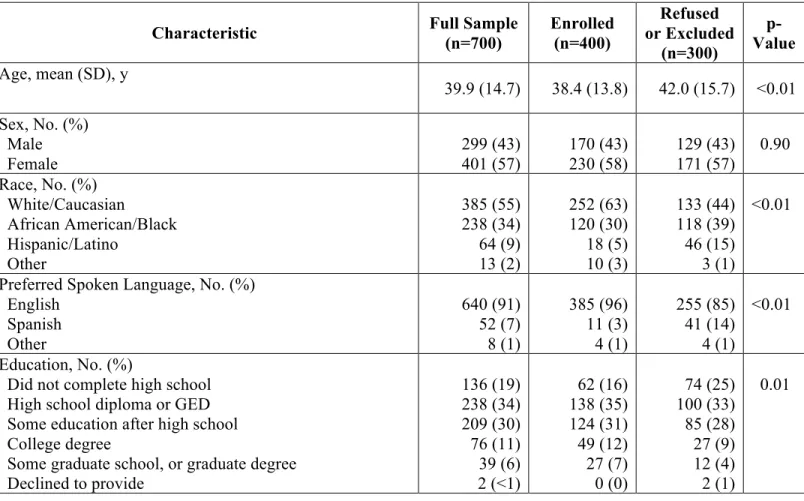
Patients enrolled in the study were on average approximately 38 years old (Table 1).
Approximately 58% were female, 63% were Caucasian, and 30% were African American. The
preferred spoken language of the vast majority was English (96%). Compared to patients who
did not consent or qualify for the study, patients enrolled were younger (p<0.01), less diverse
(fewer African American and Latino subjects enrolled, p<0.01), and preferred to speak English
(p<0.01). Despite excluding 68 subjects because of higher educational achievement in the later
part of the study, patients enrolled still had a significantly higher education level than those not
enrolled (p<0.01).
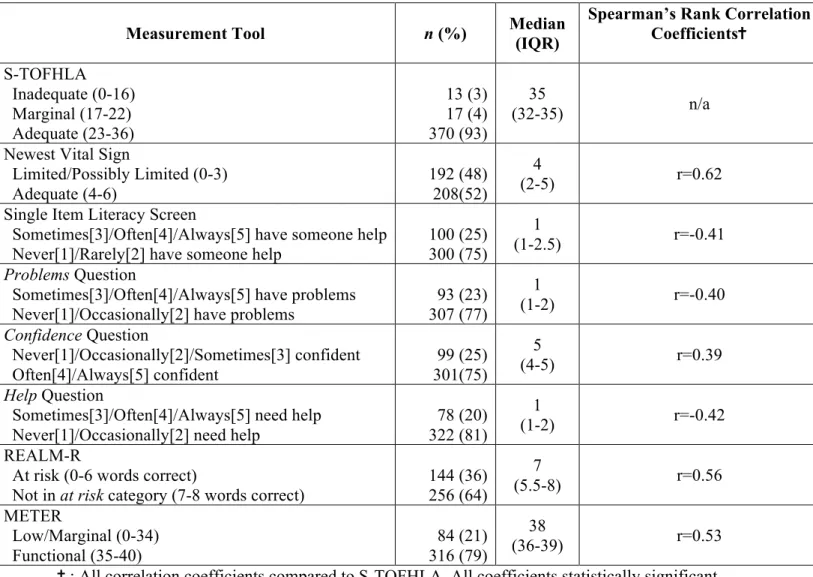
The proportion of patients deemed to have adequate health literacy varied widely based
on tool selection (Table 2). Using the S-TOFHLA and condensing inadequate and marginal
literacy into limited health literacy, 92.5% of the sample had adequate health literacy. Using the
NVS and similarly condensing categories, just 52% of patients were found to have adequate
health literacy. Using the cutoff of >2 (more than rarely) suggested in the validation of the SILS,
37
help question and the problems question, 80.5% and 76.8% of the sample, respectively, had
adequate health literacy. Using the confidence question with a cutoff of often or more (often or
always confident filling out medical forms), 75.3% had adequate health literacy. There is no
accepted cutoff for the Short Literacy Survey which combines these three questions. Using the
suggested REALM-R score of 6 or less as a cutoff, 64% of our sample had adequate health
literacy. Finally, using the METER’s suggested cutoff of ! 35 correctly identified words, 79% of
the sample had adequate health literacy.
The Spearman’s rank correlations shown in Table 2 show that all screening tools used are
significantly correlated with the S-TOFHLA. The sensitivities and specificities for different
cutoffs of each screening tool are shown in Table 3. When available, suggested cutoff points are
shown in bold within the table. Figures 1 through 8 show the corresponding nonparametric
Receiver Operating Characteristic (ROC) curves for these tools based on these same cutoffs.
Combining the three screening questions into the Short Literacy Survey moderately increases the
area under the ROC curve (AUROC) to 0.82 (95% CI 0.73 – 0.91), but not significantly more
than the individual questions. The largest AUROC was seen for the NVS (0.89, 95% CI
0.85-0.94).
The characteristics of patients deemed to have limited (inadequate/marginal) health
literacy on the TOFHLA compared to the patients with adequate health literacy on the
S-TOFHLA are summarized in Table 4. Patients with limited health literacy were significantly
older (mean of 50.0 years, compared to 37.4 years among adequate cohort, p<0.01), and more
commonly men (60% of limited cohort, compared to 41% of adequate cohort, p=0.04). Those
with limited health literacy were more likely to be Latino or African American (p<0.01), and less