Page | 1
Diabetes Related Amputations in the North West Region of Cameroon
Terence G. Verla, BSE, MPH Gillings School of Global Public Health University of North Carolina at Chapel Hill, USA
Cell: +1 651 230 8588 Email: [email protected]
Abstract
Objective: To identify cases of diabetic related amputation in the North West Region of Cameroon, determine the primary causes of amputation, assess the major determinants of the health problem, and propose recommendations to manage diabetic foot patients.
Methods: Three health facilities (Bamenda Station Polyclinic, Bamenda Regional Hospital and Mbingo Baptist Hospital) were selected to participate in this retrospective study. Medical records of patients with diabetic related amputation or debridement were reviewed between January 2006 and June 2011. Age, gender, duration of hospitalization, diagnosis, procedures performed and mortality status were obtained from the 82 medical records selected for the study. Data were analyzed using the statistical toolbox in Ms EXCEL.
Results: Most (66.2%) of the cases were adults above 51 years of age, the life expectancy of Cameroon. The age of the cases ranged from 21yrs to 90 yrs with an average of 57.8 ± 13.9 years. The male to female ratio was 1.5:1 and the duration of hospitalization ranged from 3 days to 154 days with the age group 50-59yrs producing a peak cumulative total of 1172 days of hospitalization. Amputation and debridement constituted 78% and 22% of the cases reviewed respectively. There were 14 deaths resulting from the amputation and the major diagnosis were necrosis, gangrene, ulcer, diabetic foot, ischemia, cellulitis and septicemia.
Page | 2 Introduction / Background
Diabetes is rapidly becoming a public health aspect of global concern, with the majority of diabetics found in developing countries1. Of the 150 million people world-wide living with diabetes, an approximate 15% will develop diabetic foot ulceration at some point in their lives2. The consequences of diabetic foot complications extend far beyond physical effects. In
developing countries, families face severe economic and emotional problems as a result of a family member with an amputated limb. In the North West Region of Cameroon with only one diabetic clinic at the Regional Hospital in Bamenda, many diabetic cases are left undiagnosed while some patients cannot simply afford the cost of transportation from remote villages to the diabetic clinic. This two prong problem of affordability and accessibility has left the population with improper care of their diabetic conditions and an open possibility of the development of foot complications. Moreover, post amputation procedures such as physical therapy and prosthetics are either lacking in Cameroon, or rather expensive when offered. With most of the amputees being rural occupants with subsistence living, they are thus left permanently disabled, relying on their families for moral, emotional and physical support. Therefore the purpose of this study is to identify some of the amputation cases in the North West Region of Cameroon
between 2006 and 2011, determine the primary cause of amputation, assess the socio-ecological determinants of diabetic foot complications and propose interventions to lower the rate of amputation and better manage diabetic foot patients.
Methods
This was a retrospective study looking at medical records of amputees at three healthcare centers in the North West Region of Cameroon. Participating centers included the Bamenda Station Polyclinic, Bamenda Regional Hospital and Mbingo Baptist Hospital. Ethical approvals were obtained from the Institutional Review Board at The University of North Carolina at Chapel Hill, the Medical Directors of the Bamenda Station Polyclinic and the Bamenda Regional Hospital, and the ethical review board of Mbingo Baptist Hospital. Medical records were reviewed at these participating facilities between January 2006 and June 2011 and only cases of diabetic related amputation and debridement were used in this study. Data was stratified into age, gender, duration of hospitalization, primary cause of amputation and debridement, region of amputation and mortality status post amputation prior to discharge. Cases that provided missing data on any of the stratified information were excluded from analysis. Information was obtained from the medical records by the nurses on duty with the help of the attending physicians and/or surgeons. Analysis was done using the statistical toolbox in Ms EXCEL. The social-ecological model was used as a framework to determine the holistic causes of diabetic related complications.
Results
Page | 3 Eighty-two medical records were then analyzed for age and gender distribution, duration of hospitalization, amputation and debridement procedures, region of amputation and post amputation mortality status.
Age Distribution
The mean age of the patients was 57.8 years with a standard deviation of 13.9 years and range 21 to 90. With a life expectancy of only 51 years in Cameroon3, an astonishing 66.2% of the cases were 52 years or more. Figure 1 shows the age distribution.
Figure 1: Age Distribution
Gender Distribution
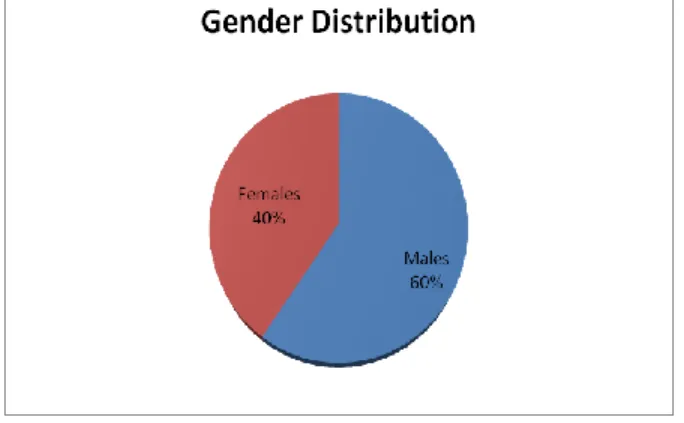
Overall, there were 49 male cases and 33 female cases giving a male to female ratio of 1.5:1. The pie chart in figure 2 illustrates this. Below the life expectancy of 51 years, the male to female ration was 2.41:1 indicating a higher proportion of male diabetic foot complications. Above the life expectancy, the gender difference was insignificant with a male to female ratio of 1.1:1.
Figure 2: Gender Distribution
Duration of Hospitalization
The duration of hospitalization (DOH) was calculated by subtracting the date of admission from the data of discharge to obtain the number of days the patient spent in the hospital. DOH ranged from a minimum of three days to a maximum of 154 days, with an average duration of 46.5 days and standard deviation of 30.9. There was a wide variance in the duration of hospitalization mainly due to some procedures (double amputation) requiring months of hospitalization while some patients checked themselves out of the hospital right after a procedure was performed.
Page | 4
Figure 3: Duration of Hospitalization
A closer look at the variation of duration of hospitalization with age can be seen in figure 4 where DOH is plotted with age distributions of 10 years interval.
Figure 4: Variation of DOH with Age
Figure 4 above shows that the least number of days spent in the hospital were from the 30-39 age group. Cases from the ages 40 to 69 and also 80-89 showed quite a significant number of DOH.
Amputation and Debridement Procedures
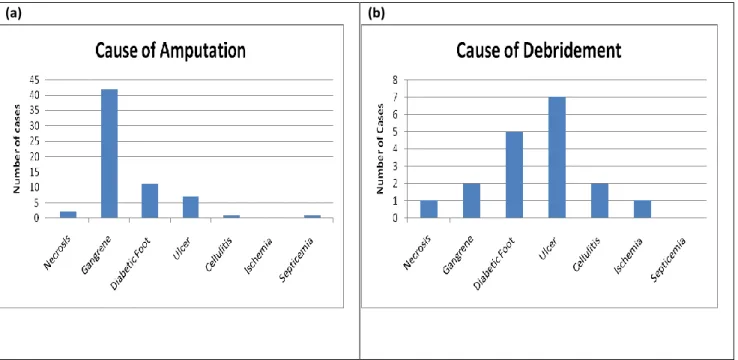
Sixty-four or 78% of the total number of cases were amputations while the remaining 18 or 22% were debridement. Diagnosis was done before the execution of these two procedures. Causes of amputation and debridement considered in this analysis include necrosis, gangrene, diabetic foot, ulcer, cellulitis, ischemia and septicemia. Sixty-five percent of the amputation cases were caused by diabetic gangrene in the lower and upper extremities. For the debridement procedures, 38.8% of cases were caused by diabetic ulcers while 27.8% of cases were caused by diabetic foot. Figure 6 illustrates this.
Page | 5
(a) (b)
Figure 6: Caused of (a) Amputation and (b) Debridement
Region of Amputation and Post Amputation Mortality Status
Amputation procedures performed included Above Knee Amputation (AKA), Below Knee Amputation (BKA), hand and toe amputation and in some cases, a double amputation of the limb where BKA is done and later on, AKA. The peak procedure was BKA with 57.8% of the total cases. Twenty-five percent of the cases was AKA while a smaller percentage (4.7%) of the cases involved both BKA and AKA. Toe amputations comprise 10.9% of the cases while the
remaining 1.6% (1 case) was a diabetic hand amputation. Figure 7 shows the number of cases for the different regions of amputations and the number of deaths in each region.
Figure 7: Region of Amputation and Mortality Status post amputation
Page | 6
Figure 8: Post Amputation Mortality Status
Discussion
Diabetic foot complications present a huge economic, physical and emotional burden on patients and their families in Cameroon. The age distribution of the study cases indicate that 66.2% of the patients lived above the national life expectancy of 51 years. This means that most of the patients have a considerably healthy lifestyle, yet plagued by their unknown diabetic health status which often results in foot complications. Most of the cases were diagnosed at a very late stage and some patients were diagnosed as diabetic after a series of attempts to treat their ulcers, gangrenous and necrotic foot.
The data obtained showed more men than women in the sample of cases. In most communities in West Africa (Cameroon inclusive), men are the primary sources of income for the family, with most of the women maintaining the household and taking care of the family. Thus it is more common for men to seek medical consultation and receive healthcare services because of the limited financial resources. This unequal and unfair distribution of family income leads to under-representation of female diabetic cases since they are not seeking medical care.
Most amputation and debridement procedures require the patient to be admitted into the hospital ward for at least a day before the procedure and a few weeks after for post-surgical care.
Nonetheless, some patients decline care shortly after surgery and choose to be discharged. Others opt to get transferred to another less expensive facility to continue care. Despite the severity of the surgical procedure and the diabetic status playing a major role in the DOH, affordability stands as a lurking variable that can have a rather significant effect. Most patients leave the health centers after amputation and/or debridement because they cannot afford the daily charges to be incurred thereafter. Some patients return home to obtain care from family, others receive care from traditional healers, while some prefer to come in weekly for check-ups, a much more affordable option. Departure from health centers shortly after surgery can be a major precursor to infection and further complications if proper care is not received. With the low level of education about diabetic foot complications and how to manage and care for diabetic foot patients, most of the patients that opt to be discharged right after amputation are left without knowledge on how to care for themselves.
Page | 7 Excessively high levels of blood sugar can lead to nerve damage and calcified blood vessels in the lower extremities. This remarkably decreases sensitivity of the foot and makes is prone to injury such as burns, cuts and wounds. These injuries can lead to infections which further
develop into what is locally called a diabetic foot. Gangrene, which is caused by decreased blood supply to the foot, and necrosis (dead cells) are also two life-threatening effects of diabetes. Most of the cases in this study were late staged diabetic cases. Majority of the patients were diabetic for more than a decade before being diagnosed. Others were accidentally diagnosed after several attempts to treat lower extremity wounds and ulcers. This suggests that knowledge of one’s diabetic status, coupled with proper care and treatment could help reduce the rate of foot complications.
Lower extremity amputations were carried out on the toes, below the knee and above the knee. Diagnosis was done by the attending surgeon to determine the most ideal region of amputation that will eliminate the damaged and infectious tissue while maintaining good circulation of blood. Based on the late stage diagnosis of most cases, amputation is usually always the last resort and must be performed to save the leg from infection and damage. In some cases, limbs are re-amputated above the knee if vascularization is poor after a BKA is performed, or if infection persists in the upper thigh. Fourteen of the amputees died as a result of their amputated limbs. Again, the primary contribution to this high mortality rate is late diagnosis of diabetic foot complications propagated by poverty, and lack of education on proper foot care.
Reasons for complications
There are several reasons why diabetic patients in Cameroon develop foot complications that lead to debridement and amputation. These reasons can be better understood by applying the social-ecological model (SEM) to assess the determinants of the health condition. The SEM incorporates an interactive framework of individual, interpersonal, community and societal aspects and how they all contribute to diabetic foot complications.
Individual Level Determinants
Poverty is the main contributor to undiagnosed diabetic conditions. Most families cannot afford the expenses incurred from one hospital visit, not to mention the many visits required of diabetic patients. Cameroon has a Pay for Service healthcare system. No money no
consultation no diabetic testing no knowledge of diabetic status no treatment of diabetic complications when they arise.
Lack of education is another primary area of concern. Education beyond high school is very rare in Cameroon. With the adult literacy rate of 76%5, quite a significant proportion of the country is still uneducated, with a disproportionate effect in rural communities. This low literacy can mean lack of knowledge about diabetes in general and diabetic foot complications in
particular. This lack of knowledge at the individual level leads to decreased awareness of diabetic health status and increased exposure of the body to risk factors such as smoking, unhealthy eating, obesity and lack of physical exercise.
Another major contributor to diabetic complications is negligence of the population. People generally wait until their pain is not tolerable before they seek medical attention. Most gangrenous and necrotic cases are late-staged because of patient failure to report foot
Page | 8 for fear of losing their toes, decline amputations and continue living their lives while their
conditions deteriorate. Some die untreated and others return to the hospital for either a BKA or AKA, procedures more severe than the previously recommended toe amputation.
Lack of foot wear can also precipitate diabetic foot complications in Cameroon. Most villagers walk for miles daily on their bare feet and this increases the likelihood of a cut, wound or infection. If proper medical attention is not sought, these conditions may become even worse for a diabetic.
Interpersonal Level Determinants
Most patients are residents of rural communities with low level of education and lack of knowledge on diabetes. When one case of diabetic foot is undiagnosed, others do not feel the need to seek medical attention for subsequent cases because they do not understand the gravity of the situation. Information spreads easily by word of mouth in most communities in the North West Region of Cameroon. With the popularity of traditional herbalists, their accessibility and affordability, they are easily recommended by members of the social network. Some cases of diabetic foot complications only reach medical facilities after unsuccessful attempts by tradition herbalists and the condition becomes unbearable.
Households in most remote villages lack the means to afford adequate clothing for the parents and children. By sharing shoes with other members of the household and community, individuals become more likely to develop a foot infection in unhygienic conditions. Some have to give up their footwear to other members of the household. This vulnerable period of bare-foot walking and show sharing can lead to foot complications with far greater implications for diabetics.
Community Level Determinants
Lack of healthcare centers in communities in Cameroon is a huge cause of the high morbidity rate. There is only one diabetic clinic in the North West Region of Cameroon. Some patients cannot afford the cost of transportation to the clinic which others simply do not have access because of unavailable means of transportation. Moreover, healthcare centers in Cameroon do not perform routine population screening for diabetes. Blood sugar check up is not a part of routine medical procedures upon arrival. The low physician density makes the situation even worse. With such low physician to patient ratio, doctors have to see hundreds of patients each day and not enough time is spent with patients to determine foot complications. Most community hospitals do not have a permanent doctor on staff and as a result, people cannot get frequent healthcare. These community factors prevent people from getting early diagnosis of their diabetic status and as such, conditions remain undiagnosed until foot complications develop.
Societal Level Determinants
Cameroon lacks a national health insurance system that can subsidize the cost of healthcare services to patients from low income families. Even those who are sick and have access to health centers are plagued by the cost of medical services. The absence of an insurance system has crippled the society as many patients cannot afford consultation, procedures,
prescribed medications and even hospitalization.
Page | 9 consequences are detrimental to the nation’s economy and healthcare infrastructure. The absence of highly qualified doctors in Cameroon destroys the healthcare infrastructure. Diabetic patients can therefore not receive adequate care because there are no attending physicians at local healthcare facilities.
It is very common practice in the society to administer medication through IV bags since most patients prefer that to swallowing medications. The two most common IV bags are the 0.9% Saline bag and the 5% glucose bag. Most facilities use the 5% glucose bag and administer to every patient, regardless of their diabetic status. Many patients have been reported dead from excessive blood glucose levels. For a diabetic patient, a constant supply of glucose to the system would aggravate his/her health condition and accelerate diabetic complications.
Another factor is the absence of societal awareness campaigns to educate people about diabetes and foot complications. This has contributed to the lack of knowledge and negligence on the part of the population.
Finally, the uneven distribution of healthcare resources in the nation has left thousands of communities without access to medical services. Communities of lower socio-economic status are mostly abandoned while affluent communities are flooded with expensive health facilities and even tertiary healthcare centers. This widens the gap in health disparities between the rich and the poor and increases the morbidity rate of the less privileged.
Recommendations
The following recommendations can help improve the health of diabetic patients, decrease the number of amputations and help manage foot complications:
- Population screening in remote rural areas and in urban centers can help identify cases of diabetes. Once these cases are identified, patients can now be placed on diabetic
treatments and instructed on lifestyle choices and eating habits that may lead to good health. Therefore early detection could reduce the rate of foot complications, amputations and subsequent mortality.
- The government should assist in subsidizing the cost of medical consultation, lab tests and prescription medications for patients in low income families. Some diabetic conditions lead to foot complications because of a default from insulin treatment as a result of financial difficulties. A government subsidized health insurance system could help address this problem of affordability. Individuals will contribute a percentage of their monthly wages to the insurance system and in return, obtain subsidized healthcare benefits. For diabetic patients struggling to pay for insulin treatment, government subsidies will definitely reduce that burden.
- Societies and communities should embark on massive education campaigns aimed at improving knowledge and awareness of diabetes and related complications. Physicians and healthcare workers should educate diabetic patients how to control their blood sugar, how to detect early symptoms of foot complications, and how to engage in lifestyle choices that can improve their health.
Page | 10 the glucose tolerance test, it is highly recommended that healthcare workers use the 0.9% Saline IV bag to reduce risk of inducing a hyperglycemic response on a diabetic patient. - Medical records at health facilities should be synchronized to provide easy access to
pre-existing conditions and past medical history. This could be done through a computerized filing system and collaboration between health care centers for easy file exchange. As a result, healthcare workers can have access to the patient’s medical history which may indicate if the patient is diabetic. This will eliminate repeated (and expensive) diabetic testing before medical treatment. Also, sharing of health status from diabetic health screening with healthcare workers can help in patient care.
- Healthcare workers should be trained to properly inspect patients for diabetic foot complications. Inspection of the bare feet has the potential of easy identification of early diabetic complications which can be treated6. Therefore it is highly recommended to perform a more intimate physical examination of the bare foot rather than relying on patient’s subjective and unreliable response as to health of the foot.
- More diabetic clinics should be opened in different areas of the country to provide easy access to diabetic foot care to patients with foot complications. This will involve collaboration of local communities with the ministry of health to build the necessary facilities and provide sufficient staff for healthcare provision and management.
Limitations
Lack of medical records for most patients makes it difficult to fully assess the number of diabetic related amputation that occurred in the participating facilities. Some records were missing from the shelves, others misfiled, some were torn to pieces and most were incomplete. This shows the need for a more advanced filing system such as a computerized system whereby medical records would be kept safe and in a defined location making access to old records an easy task.
This study was only carried out at three participating health centers because of the limited financial resources and time to carry out a larger and more extensive study. However, the results show that a larger study is not needed; rather, interventions to educate the population on diabetes and to manage and better care for diabetic foot patients are much needed.
Conclusion
Many individuals in Cameroon are dying because of diabetic related amputation. The single diabetic clinic in the North West Region of Cameroon is not sufficient to serve the entire area. Many patients cannot afford transportation to the facility and for those who have access to the facility, affordability of medical services remains an even bigger problem. Based on the economic consequences to the patients, their families and the society, the obvious question should be “How can we provide better care for diabetic patients? What efforts can reduce diabetic related amputations in less fortunate communities?”
Page | 11 graduating medical doctors to spend a minimum number of years in the country before
emigrating. It really doesn’t matter how many health care centers are constructed and how many diabetic clinics exist. Doctors are required to run the healthcare infrastructure of Cameroon. Task shifting should therefore be encouraged to train nurses and other health workers to care for diabetic patients. With most of the diabetic patients being adults above the life expectancy of Cameroon, proper care of diabetic patients could potentially result in a higher national average life expectancy and a decrease in overall morbidity of the population.
Acknowledgement
Special thanks to the University of North Carolina at Chapel Hill for the opportunity to carry out this research study. Thanks to the medical directors of the participating institutions for allowing me to gain access to medical records. Special appreciation to the VERLAs family for the constant kindness and support while I was in Cameroon.
This study is dedicated to my late grandmother who lost her life to diabetic foot amputation.
Disclosure
This study received no external funding. All costs were borne by the author. There is no conflict of interest.
References
1. Vijay Viswanathan M, PhD, FRCP (London), FRCP (Glasgow) Epidemiology of Diabetic Foot and Management of Foot Problems in India. International Journal of Extremity Wounds
2010;9(2):122-126.
2. Boulton A. The diabetic foot: a global view. Diabetes Metab Res Rev 2000;16:S2 - S5. 3. WHO. Cameroon Country Profile. http://wwwwhoint/countries/cmr/en/ 2011.
4. Dr Obimbo Moses M M, Msc , Dr Oreng'o Julius A P, Dr Njogu Sarah W M. Diabetes Related Amputation in a Rural African Population: Kenyan Experience The Journal of Diabetic Foot Complications 2010;2(1):6-11.
5. UNICEF. Cameroon Statistics. http://wwwuniceforg/infobycountry/cameroon_statisticshtml
2010.