THE WEB AS A TOOL
IN FOREIGN LANGUAGE TEACHING AND LEARNING
By Li Zhao
A Master's paper submitted to the faculty of the School of Information and Library Science of the University of North Carolina at Chapel Hill
in partial fulfillment of the requirements for the degree of Master of Science in
Information Science.
Chapel Hill, North Carolina May, 2003
Approved by:
Li Zhao. The Web as a Tool in Foreign Language Teaching and Learning. A Master’s paper for the M.S. in I.S. degree. May 2003. 48 pages. Advisor: Gregory B. Newby
This study describes a questionnaire survey of the Web’s educational role in Chinese language teaching and learning in the University of North Carolina at Chapel Hill. The survey was conducted to determine the Web’s educational role in improve the language communicative skills: listening, speaking, reading and writing.
A total of 38 participants took part in the survey. The collected data was analyzed
quantitatively and qualitatively. The results of the projects revealed both some significant strengths and weakness of the Web in foreign language teaching. Meanwhile, some suggestions regarding improving the effectiveness of the Web in the future were presented.
Headings:
World Wide Web
Internet
Table of Contents
Chapter 1: Introduction………...………….7
Chapter 2: Background and Literature Review………...…..9
2.1 Definitions………..………....…... 9
2.2 Do We Need Web in Teaching?……….…..9
2.3 How to Use Web in Foreign Language Teaching?……….…...…....11
2.4 New Requirements for Teachers……….…….…...14
2.5 The Limitations of the Web……….………..15
2.6 The Future of the Web in Language Teaching………….……….………..16
2.7 Current Problem Existing in Previous Researches………..16
Chapter 3: Methodology………..18
3.1 Participants………...18
3.2 Evaluation Instrument………..19
3.3 Pre-test Questionnaire…..……….…...19
3.4 Post-test Questionnaire………19
3.5 Procedures………20
3.6 Data Analysis Method………..20
Chapter 4: Findings……….22
4.1. Demographics of Participants……….22
4.2 Answers for the Post-test Questionnaire………..…24
4.4 Recommendations………33
Chapter 5: Conclusions………...38
Bibliography...……… 40
Appendix A: Information Handout……….. 43
Appendix B: Pre-test Questionnaire….……….45
Appendix C: Post-test Questionnaire………...46
List of Tables
Table 1. Age of the participants………...23
Table 2. Participants’ Chinese Experience………...23
Table 3. Experience with Web-based Chinese Instruction ……….25
Table 4. Time spent on Web-based Chinese Instruction per week………25
Table 5. The Web’s Role in improving Chinese comprehensive ability………25
Table 6. The Web's role in improving 4 communicative skills individually ……...26
Table 7. Which commutative skill benefits from the Web the most?………....27
List of Figures
Figure 1. The gender of the participants………..22
Figure 2: During Chinese study, those who used the Web
vs. those who didn’t use the Web ………..23
Chapter 1: Introduction
With the rapid growth of the Internet, many educational institutions began to use Web as a new medium to assist the teaching. According to the survey by Market Data Retrieval, in Shelton, Conn.: Out of 2,000 colleges, 72% offered online courses in 1999-2000, compared with 48% in 1998-1999. (Christine Larson, 2000). Using the Web in teaching makes the communication between the students and the instructor more convenient and interesting, expect for text only, some images, sounds, graphics, animations, or videos are included. Especially, using Web in teaching makes it available for the students who prefer or are required to learn outside the classroom to study at their convenient time and place. The Web has already been one of the most popular mediums to deliver the course information.
Because of the attractive characteristics of the Web, some language instructors have tried to use Web to assist language teaching recent years. The use of Web for language
teaching is relatively recent. The first materials appeared in the early 90s. The impact, however, has been considerable, mainly because the technology has advantages over the previous generations of Computer Assisted Language Learning by being cheaper and easier to develop and often cheaper and easier to run, and by offering real possibilities for authentic interaction. (Uschi Felix, 2000). “Recently, one of the most exciting
universities, such as Carnegie Mellon University, Seattle University, and Kenyon College have done a lot of researches to explore the educational value of Web in foreign language teaching. (Yueming Yu, 2002, Ming Feng, 2002, Jianhua Bai, 2002).
This paper describes a study to evaluate the Web’s educational role in Chinese language teaching and learning. The purpose is to see if the Web can improve the learner’s Chinese comprehensive communicative skills and how to use Web to assist foreign language teaching and learning in the future.
Through this project, we intend to find out the strength and the weakness of the Web in foreign language teaching and learning. We also expect to contribute our suggestions regarding how to improve the Web’s effectiveness in foreign language teaching and learning in the future.
Chapter 2: Background and Literature Review
2.1 Definitions:
First of all, we will give the definitions about some terms that will be used often in this project.
From Web-Teaching: A Guide for Designing Interactive Teaching for the World Wide Web, a book written by David W. Brooks, World Wide Web and Internet are defined as: World Wide Web: World Wide Web is a scheme for using the Internet to exchange information in hypermedia formats.
Internet: Internet is a dynamic electronic network that permits computers connected anywhere on that network to exchange information.
Internet is different from World Wide Web, but for this project, we will use them synonymously.
Web-based Instruction: A hypermedia-based instructional program which utilizes the attributes and resources of the World Wide Web to create a meaningful learning environment where learning is fostered and supported. (Khan, 1997)
From the literature review, we also found some other definitions for Web-based Instruction. Though the definitions are not the same, there is a common theme: Web-based Instruction developed with the appearance of the World Wide Web and the Internet; The Web-based Instruction takes advantage of the Internet and World Wide Web to deliver information.
With the widespread use of the Internet, the pervasive nature of the Web can be felt in all facets of our life. Internet and Web are not new for us any more. “I use web as part of my ESP teaching and I must say it works, especially with science students who spend a great deal of time in front of a computer screen.” (Marina, 2002) “If the instructors want to help students achieve a high level of competency and competitiveness, they have no choice but to make technology and integrated tool in the learning process…In order to educate students to be life-long and successful contributors to the new global market, educators must change the way they teach and the way students learn. (Morrison, 1999 cited by Tianwei Xie, 2001, p2). The necessity to use technology in teaching is also advocated by Karla Frizler. He said the use of technology added a relevance to the students’ work and was a skill the students would need as they moved into the
we teach it. (David W. Brooks, Diane E. Nolan, Susan M. Gallagher, 2001). The World Wide Web is a popular and useful instructional medium for a number of reasons: It is easily accessible, it supports flexible storage and display options, it provides a simple yet powerful publishing format and a means to incorporate multiple media elements. (Ron Oliver, Jan Herrington, Arshad Omari, 1999)
2. 3 How to Use Web in Foreign Language Teaching?
From the previous researches we can see: to use the Web is the need and demand from the reality. But before incorporating the technology into teaching, the instructors should be pretty sure: what our goal is? Why we will use Web? What can we do with the technology and how to achieve the goal?
2.3.1 Putting course information on the Web is a new way to interact with students,
thus making the teaching more accessible for students.
In the past, language instructors always gave the students a lot of handouts. Nowadays, many instructors use Web as a good mean to help them organize course information, to deliver the information to the students. They gather relevant course information, including schedule, assignment, study guides, and syllabus and put them on the course Website. The communication between the students and the instructor can occur either synchronously or asynchronously. Both the instructors and the students no longer need to be time bound. The students don’t need to be required to meet with teachers or classmates in a specific time. They can learn anytime of the day or night. The instructor can
information on the Web, students at one university have the opportunity to take a course at another university. (Joel C. Adams & Aaron A. Armstrong, 1998). Also, Web-based education can help people who don’t have the energy or physical ability to go to a campus to study. (Christine Larson, 2000). Using technology also make it easier for the instructors to organize the course an update the course information.
2.3.2 Web provides much more accessible information for the students.
When we learn a foreign language, there are 4 basic communicative skills: listening, speaking, reading and writing. Web provides the students a lot of materials to practice the commutative skills. There are endless text-based materials for reading practice; it’s also available for the students to listen to the news from a target language country online since a large amount of audio files are accessible. “The premier audio news source for English news is the “Real Audio” ABC news, which presents a 3.5-minute news summary every hour of every day. The best part is that you can listen to any of the news reports from the archives, simply by clicking on the desired month, then the desired day and finally the desired hour. (Thomas N. Robb).
If the instructor can prepare some video material based on the student language
proficiency and put them on Web, learning will be more interesting than ever and it can make the learning more efficient.
2.3.3 Web is a good supplementary teaching method
the textbook is: the students can find pre-defined text only from the book, but from the Web, students can view the information that they are really interested in. For language learners, Web is a marvelous source where they can find wide variety information on every commonly studied language around the world. Reading theinformation written in a specific language will help the learners acquire the language. Also, students can use the Web as a source for delivering information as well. “Writing for the Web allows the students to write for a specific audience, rather than merely for the teacher or the other students.” (Thomas N. Robb) As we know, everybody has the need to communicate with the others. If the students find that they can communicate with the others in a foreign language, this satisfaction and “actual need” will be a great motivation for them to learn the language consciously, thus, the learning process will be very pleasant. A combination of classroom teaching and Web material will be an ideal combination for foreign
language teaching.
2.3.4 Web provides variety of on-line exercises and activities
The Internet provides supplemental language activities that can provide students with additional practice in specific areas of language learning. These include reading tests and comprehension questions, grammar exercises, pronunciation exercises, available
review again later, to further solidify learning retention. To do the on-line exercises, the students could immediately be told the correct answer to the question, and they don’t need to wait for several days even several weeks regarding the correctness of their answers, thus, it can save the instructor’s amount of time since they don’t need to write the corrections on the paper for each student or meet with each of them, devoting significant amounts of time outside of the classroom regarding why the students didn’t answer the question correctly. (Joel C. Adams & Aaron A. Armstrong, 1998). Sue-mei Wu, a Professor in Carnegie Mellon University has used Web in her Chinese teaching for a couple of years. After comparing with traditional paper or audiotape exercise, she said, on-line exercise provides the students more flexibility compared withthe traditional exercise. She summarized the advantage of Web-based exercise from 3 aspects: “First, they are repeatable… Second, feedback is immediate… Finally, the exercises are accessible from any computer that is connected to the Internet” (Sue-mei Wu, 2002).
2.4 New Requirements for Teachers.
“Web is not a not a complete language-learning tool. It is merely one of many ways that we can learn and practice a foreign language”. (Thomas N. Robb) Web cannot replace a human instructor. “The IQ of computer is zero” (Jianhua Bai, 2002) How to make the Web efficient depends on the teacher’s planning and the devotion. Those who have used Web in the language teaching have realized there are some new requirements for the instructors:
2.4.1 Browsing guided by instructors is required.
“browsing” will waste the students a plenty of time. Especially for the foreign language beginners, “ they can easily be overwhelmed with the rich vocabulary and colloquial expressions that they find there”. (Thomas N. Robb) They need to be supported and guided by a teacher. They should be told what they should learn, andwhere they can find useful information. “It’s a very important task for instructors to guide students to material that not only is of interest to them, but also manageable at their current level of language proficiency.” (Thomas N. Robb)
2.4.2 Instructor should do a lot of preparations and researches.
If used effectively, Web is a tool that can enhance classroom teaching. But instructors should be certain what they will do with the Web before they incorporate the Web into their teaching. To learn from the others is a very effective way. Instructors should contact the others who have already used Web in their teaching to gain experience. Meanwhile, instructors should consult technique experts to find out what technology support offered in their institute. The instructors should keep in mind “the instructor can’t just drop technology into a class on short notice. It takes preparation and experience to be sure that technology enhances rather than interferes in the process of the course.”(Rick Ells, 1997).
2.5 The Limitations of the Web.
From the researches that have been conducted, some researchers have already realized Web has not only advantages but also limitations. “Without an adequate understanding of its limitations as well as its advantages, we may find ourselves disappointed as we move ahead in integrating the technology into our instructions”. First, though many
those available on interactive videodisc or CD-ROM” (Michael D. Bush, 1996). Because of the bandwidth limitation, the real-time data transmission is not satisfactory. So it is difficult to use motion video and audio of sufficient fidelity for on-line language learning applications. On the other hand, the traditional HTML model can only providestatic page display, which can be used for simple interactions,such as answer judging, but not very suitable to tutorials. “Even when materials are designed for some semblance of flow in a question/feedback instructional strategy, delays between a learner's click and the
subsequent response (the system latency) can be disconcerting, due to the delays often encountered on our present Web-based system.” (Michael D. Bush, 1996)
Second, computer is only a machine and it can do the things that have been pre-defined only. When a person is communicating with a machine, he can’t get really
communication satisfaction. In addition, the individualized learning in front of a computer will make the learners lose their concentrate because Web-based learning is lack of active classroom atmosphere. (Bin Li, Lieming Li, Jianwei Zhang, 2001)
2.6 The Future of the Web in Language Teaching.
Computer aided language teaching and learning is still at the beginning phase. Language educators need to continue to explore effectiveness and the feasibility of using computers to teach languages. We are not pretty sure what will happen in the future, but based on some clues, Karla Frizler summarized: “Greater interaction, greater emphasis on writing, less reliance on books, and distance education will become norm in the future” (Thomas N. Robb, p.6)
2.7 Current Problem Existing in Previous Researches
Chapter 3: Methodology
Although Web-based education is a new phenomenon, there is a small but growing body of researches has been done to explore the Web’s educational value. The purpose of this project is to make a contribution to the researches regarding the Web’s value in foreign language teaching and learning.
The aim of this study is to investigate:
1. Can Web-based instruction improve learner’s Chinese comprehensive skills? 2. What’s the strengths and weakness of the Web-based instruction?
3. How do the students evaluate the on-line exercise?
For this project, I used Chinese study as an example; my purpose is just want to illustrate the educational value for foreign language learning can be adapted to any language. From the previous researches, no testable model was defined to evaluate the Web’s educational value in foreign language teaching. But there is no doubt, for any language, the
comprehensive skills include 4 aspects: listening, speaking, reading and writing. According to the purpose of this project, the questionnaire was designed to reflect the Web’s role in the 4 communicative skills and the Role of the Web-based exercises. We analyzed collected data both quantitatively and qualitatively.
3.1 Participants
learned Chinese at least 1 semester. Some of them began to study Chinese when they were in high school. They were all experienced computer and WWW users who had been using the Web for at least 2 years and at least 4 times per week.
3.2 Evaluation Instrument
A questionnaire was used for data collection. The students should finish the questionnaire based on their own experience. The main aid of the questionnaire was to find out how the students used the Web in Chinese study and how they evaluate Web’s role. In order to provide the participants more flexibility of filling out the questionnaire, we prepared two versions: One is paper version, and another is electronic version, which was put on the Web for those who want to finish the questionnaire by typing. The contents of the two versions are exactly the same. The questionnaire consisted of 16 questions in total and for most of the questions, the students were expected to choose one answer; for some
questions, the students should give a brief explanation for their answers.
The questionnaires consisted of two parts: pre-test questionnaire and the post-test questionnaire.
3.3 Pre-test Questionnaire
Pre-test questionnaires include 5 questions (Appendix B), which are used to retrieve the general information of the participants, e.g. the age, the gender, and the school year. Also, two questions included to asking the participants’ the Chinese study experience. This part is very helpful to get a demographic generalization of the participants.
3.4 Post-test Questionnaire
Ann Snow Amado M. Padilla & Russell Campbell (1988). Both of them used the 4 language skills: listening, speaking, reading and writing to evaluate the language proficiency.
So, in this part, the questions are divided to reflect the 4 different skills. In addition, some questions were included to know the evaluation regarding the Web-based exercise.
3.5 Procedures
The data collection took place at two settings, Chinese 002 session 1 and Chinese 002 session 2. Dr. Eric Henry is the Chinese instructor for session 1. I am the instructor for the second session. At the beginning the semester, when I talked with Dr. Henry about my project, he showed his interest in it. He did a lot for this project. For Session 1 in which Dr. Henry taught, I gave Dr. Eric Henry the information handout and the questionnaire that I designed. I presented some introduction about this project in the information handout, e.g. the purpose, the participants’ rights, how I will protect their privacy, and what will happen during the study. On April 4, 2003, in Dr. Henry’s class, he set out the information handout along with the questionnaires to the students and asked them to decide if they want to take part in the projects after viewed the information on the handout. For the students who wanted to be in the project, he told them to start from the pre-test questions. After the students finished the questionnaires, he collected the questionnaires and gave them to me. For the session 2 in which I taught, in order to protect the privacy of the students, I asked Dr. Henry to do the same thing in my class. That is, I didn’t know who participated in the project and who didn’t in either session.
I analyze the collected data quantitatively and qualitatively. Figures and tables were used to display the results. For the pre-test questions, demographics information was
summarized which include the participants’ age, gender, Chinese experience and Web-based instruction experience. For each post-test question, I computed percentage and the frequency.
Chapter 4: Findings
The results got from this project are displayed in three sessions: demographics of Participants, the results of the post-test evaluations and the strength and the weakness of the Web in foreign language teaching that is proposed based on the comments from the participants. At the end of this part, suggestions for the future research are proposed as well.
4.1 Demographics of Participants
38 students took part in the project. The age ranges from 18 to 26. Among the 38
students, 35 of them are the undergraduate students in UNC-Chapel Hill, the rest of them are the graduate students in UNC-Chapel Hill.
The general information of the participants is shown in the Figure 1, 2 and table 1, 2.
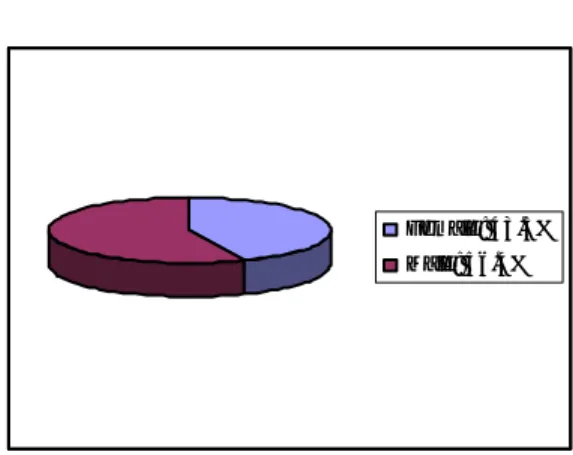
Figure 1: Gender of the participants
Female: 43.5% Male: 56.4%
Table 1: Age of the participants
AGE Number Percentage
18 6 15.7% 19 14 37.2% 20 12 31.5% 21 1 2.6% 22 2 5.2% 23 1 2.6% 26 1 2.6% 29 1 2.6%
TOTAL 38 100%
As Table 1 shown: The youngest participant is 18 years old, the oldest participant is 29 years old. The average age is 20.
Table 2: Participants’ Chinese Experience
Experience Number Percentage
1 year 27 71.2% 1-2 years 8 21% 2-3 years 1 2.6% More than 3 years 2 5.2%
TOTAL 38 100%
Table 2 tells us all of the participants have learned Chinese at least one year. Most of them have learned Chinese only 1 year, but some of them have longer experience since they began to study Chinese in the high school.
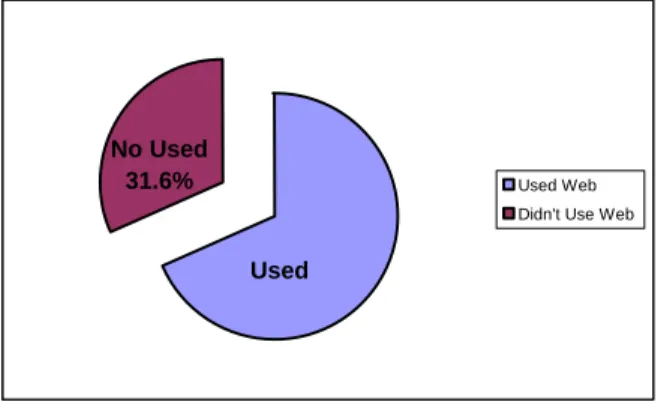
Figure 2: During Chinese study, those who used the Web vs. those who didn’t use
The Web
Used Web Didn't Use Web
Used No Used
Among all the participants, 26 students have used Web during Chinese study; the percentage is 68.4%. Actually, most students who put them on the second category “Didn’t use Web during Chinese study” have used Web at least twice because the Chinese instructor of CHIN 002 have asked the students to do the on-line exercise twice prior to this study. So, to understand “Didn’t Use Web” as “Without the teacher’s requirement, I didn’t use Web to assist my Chinese study” will be more appropriate. As Figure 2 shown, the percentage of the students who used Web is much higher.
4.2. Answers for the Post-test Questionnaire
There are 11 questions in this part. The questions can be divided into two parts: question #1 through question # 10were designed for the students who have already used Web to assist their Chinese; the last question: was designed for the students who didn’t use Web in Chinese study. Also, I gave all the participants a choice to write down their comments and suggestions: For those who didn't want to use Web, they might tell us why they didn’t prefer web-based Chinese teaching; for the students who used web-based Chinese teaching, they were expected to provide us the reason. But in 4.2, I will only display the result got from #1 to #10; the comments provided by the students will be discusses more in 4.3.
Table 3: Experience with Web-based Chinese Instruction
Experience Number Percentage
< 1 month 8 30.7% 1-3 months 4 15.3% 3-6 months 9 34.6% 6 months-1 year 3 11.5% > 1 year 2 7.9%
TOTAL 26 100%
As Table 3 shown, the highest percentage is 34.6%, which stands for 9 students who used Web to assist the Chinese learning for 3-6 months. Only 2 students have used Web for more than 1 year. But 8 students only used Web for about 1 month.
Table 4: Time spent on Web-based Chinese Instruction per week
Time Number Percentage
< 1 hour 17 65.3% 1 hour 7 26.9% 1-2 hours 1 3.9% > 2 hours 1 3.9%
TOTAL 26 100%
We can see: 65.3% of the participants spent less than 1 hour on Website per week. Only one student spent more than 2 hours on Web-based Chinese learning.
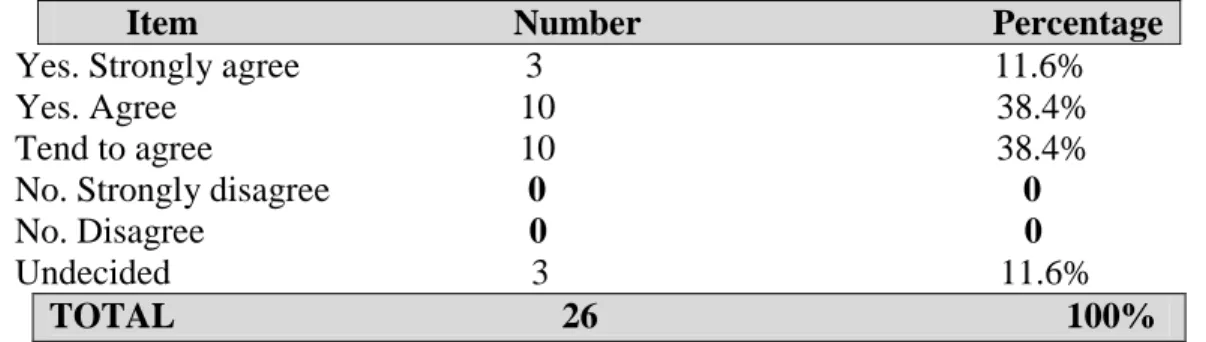
Table 5: The Web’s Role in improving Chinese comprehensive ability
Item Number Percentage
Yes. Strongly agree 3 11.6% Yes. Agree 10 38.4% Tend to agree 10 38.4% No. Strongly disagree 0 0 No. Disagree 0 0
Undecided 3 11.6%
TOTAL 26 100%
agree". Only three of them chose “Undecided”. Nobody chose "Strongly disagree" or "Disagree". The data told us: for most of the students, Web is helpful to improve their Chinese language ability overall.
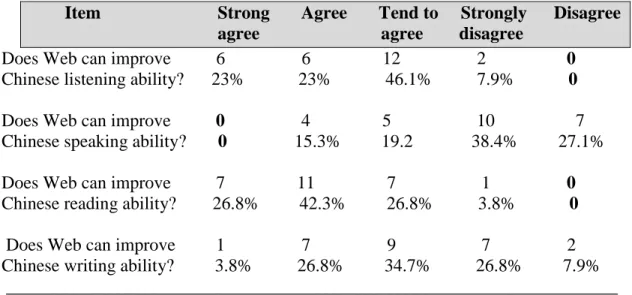
Questions 4 through 7 were designed to know the Web's role regarding the 4 skills individually. The results are shown in Table 6. For each question, I provided 5 answers: "Yes. Strongly agree"; "Yes. Agree"; "Tend to agree"; "No. Disagree" and "No. Strongly disagree".
Table 6: The Web's role in improving 4 communicative skills individually
Item Strong Agree Tend to Strongly Disagree agree agree disagree
Does Web can improve 6 6 12 2 0
Chinese listening ability? 23% 23% 46.1% 7.9% 0 Does Web can improve 0 4 5 10 7 Chinese speaking ability? 0 15.3% 19.2 38.4% 27.1% Does Web can improve 7 11 7 1 0
Chinese reading ability? 26.8% 42.3% 26.8% 3.8% 0
Does Web can improve 1 7 9 7 2 Chinese writing ability? 3.8% 26.8% 34.7% 26.8% 7.9%
____________________________________________________________________
From Table 6 we can get such conclusions:
For listening ability, most participants chose Strong agree/Agree/Tend to agree, only 7.9% of the participants strongly disagree with this opinion;
For speaking ability, more than half of the participants didn’t think the Web can improve their speaking ability;
For writing ability, number of the students who agree with this opinion is almost the same as those who disagree with the opinion. The rest of them chose "Tend to agree".
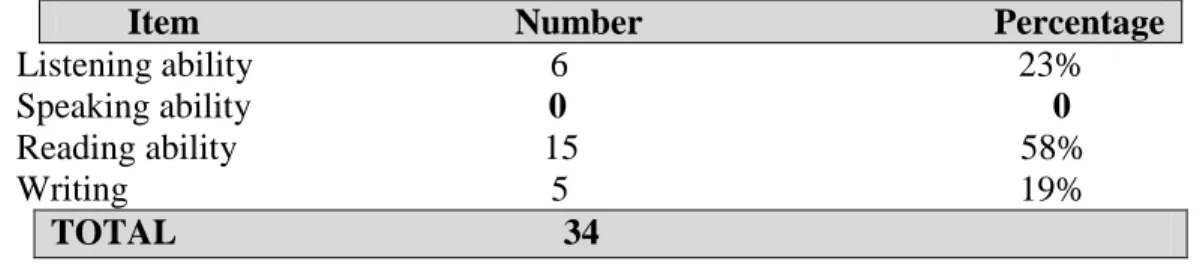
Table 7: Which commutative skill benefits from the Web the most?
Item Number Percentage
Listening ability 6 23% Speaking ability 0 0 Reading ability 15 58% Writing 5 19%
TOTAL 34
So far, it is clear that the Web is helpful to improve more than one communicative skill. Which one can benefit from the Web the most? This answer is shown in Table 7. More than half of the students think the Web is the most useful to improve their reading skill, the next is listening skill, then the writing skill. Nobody thought the speaking ability could benefit from the Web the most.
The next question was designed to know which kind of the exercise format the students prefer. There are three answers: Paper-based exercise, On-line exercise and I have no preference. Figure 3 shows the result:
Figure 3: Preference towards different exercise format
Paper-based Exercise
On-line Exercise Have no preference Paper-based:
50% No preference:
30.7%
On-line: 19.3%
For this question, 50% the participants prefer paper-based exercise. Only 19.3% show their preference for On-line exercise. The rest of them don’t care the format at all. When the student chose either Paper-based Exercise or On-line Exercise, they are asked to give brief reasons. I will mention it more in 4.3.
So far, it is not difficult for us to see that the Web has educational value. But compared with a human instructor, which one is more important for the students?
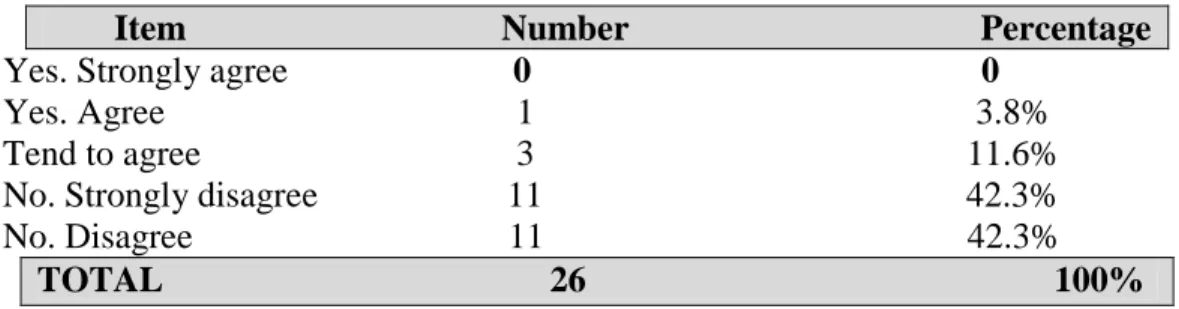
Table 8: Web’s role vs. a human instructor
Item Number Percentage
Yes. Strongly agree 0 0
Yes. Agree 1 3.8% Tend to agree 3 11.6% No. Strongly disagree 11 42.3% No. Disagree 11 42.3%
TOTAL 26 100%
22 students don't think the Web can replace the human instructor. The percentage is 84.6%. 3 students chose "Tend to agree". Only 1 student thinks it's possible for the Web to replace the human instructor, the percentage is only 3.8
4.3 Discussion
By analyzing the collected data, we can get a positive answer: the Web is helpful for Chinese study. Overall, the Web has obvious advantage in improving the reading and listening ability, as for the role in improving the speaking and writing ability, more researches need to be done in the future. Also, the comments from the students provide us the clues to think: how to improve the effectiveness of the Web in foreign language teaching and learning? I will analyze the Web’s educational value based on5 aspects:
Strength
As Table 6 shown, 96.2% of the participants agree with that the Web can improve their reading ability. Some participants mentioned: when they read the materials on line, they may choose what they are really interested in. Reading a lot is not only helpful to
improve their linguistic ability, but also help them to know the Chinese customs, Chinese culture, and important issues about China. For most of them, “Get to know China” is the real purpose to learn Chinese.
Weakness
One student noted: as a Chinese beginner, it's hard for him to find the material which matches his Chinese language level on line. It's one of the reason that discourage some students to use Web since there are always a lot of new words and pattern drills that they don't know. But if they can find the material that they can understand, they will have interest to use the Web.
4.3.2. Listening
Strength
When a person learns a foreign language, such situation happens often that he can understand what his language teacher said very well, but when he communicates with another person, he can’t understand what his partner said even if the partner conveys the same information as his teacher did. Because of it, some linguists encourage the people to talk with the native speakers who have different voice status, different accent when they practice listening ability. One student said the Web could help him "communicate" with different persons. He noted:
just being able to understand your teacher and fellow students.” Another participant noted another advantage of the on-line sound files:
"It is easier to listen to the audio files on-line because he can replay the sections easily. It is much convenient that tapes that he must rewind".
Also, the on-line listening materials provide the learners much more flexibility. One student commented:
“I think it can help the listening ability because website and on-line sound files will feature Chinese spoken at different speeds. Sometimes it is good to listen to slow Chinese to get a sense of the tones, or to fast Chinese to see how much I can understand. ”
Weakness
Because of technical limitation that we mentioned in the literature review part, the transfer speed of the on-line sound materials is slow and instable. Some students even noted because of being lack of updating and maintenance, many sound materials on line are inaccessible.
4.3. 3. Speaking
Among 26 participants, only 4 think the Web can improve their speaking ability. Most students said “To communicate with a person directly” is the best way to improve speaking ability. One student noted:
“For speaking ability, the Web can help a little because I can listen to the tones, but I also need someone to tell me when I mess up at speaking and the Web just can’t do that”.
For a foreign language learner, the correct pronunciation is the most important.
mentioned, when they listen to the tape or sound files on-line, they can tell what the correct tones is, but when they really talk with the others, they often neglect the correct pronunciation. The computer can't help them gain the correct pronunciation. Another student expressed the similar opinion:
“I think a person or instructor would be more helpful in teaching us the correct pronunciation because people may not necessarily be able to distinguish if they are saying the tones incorrectly by merely listening to the computers”.
4.3. 4. Writing
For a language, writing ability including two aspects: One is the ability to write the words or characters correctly, which is the basic requirement; another is the ability to formulate the messages or paragraphs to convey certain meanings, which is the higher-level
requirement. Use Chinese as an example: writing ability includes if the student can write the Chinese characters with the correct stroke order and if he can communicate with the others with written Chinese.
From Table 6 we can see: among 26 students, 8 students think the Web can improve the writing ability, 9 students chose “Tend to Agree”. The rest of them disagree with the opinion that Web can improve the writing ability, the percentage is 35%.
One student noted:
“I’ve communicated with friends through an online journal and email. Computer software makes character recall much easier for writing. ”
helpful for the students to practice the correct stroke order, which is the basic skills for Chinese learners. So, we can see, with the help of the computer to practice writing ability is not very ideal for the beginners. But for those who have already known how to write the Chinese characters with the correct stroke order, it's a good idea to choose computer instead of hands to write characters.
4.3. 5. On-line Exercise
Strength
As Figure 3 shown, 19.3% of the students like the on-line exercise better compared with the traditional paper-based exercise. This new format exercise provides the students flexibility: they can do the exercise anytime and anywhere. Also, the on-line exercise provided them immediate feedback, they know if they have done correctly right after they click the “Submit” button.
Some on-line exercises are designed very interesting, it gives the students different feeling. As one student said:
“It is very interesting to do the exercises on-line, it’s more like a ‘game’ than traditional paper-based exercise.”
Weakness
First of all, let's recall the result in Figure 3: among 26 participants, 50% said they prefer paper-based exercise unambiguously. Only 19.3% think they prefer the on-line exercise. The other 30.7% of the students have no preference. We can see: although the on-line has some advantages, most of the participants prefer the paper-based exercise better.
The web puts a server boundary between the instructor and the students. Even if the Web can tell the students the grades and how much did correctly, but to know the grades is not the only goal for the students to do the exercise. One participant expressed his opinion like this:
“Often online exercises although they can give you the correct answer, do not provide the individual response and guidance from turning in paper exercises and getting written responses from the teachers.”
As this student said, since there is no interaction between the computer and the students, the student can’t ask questions when they have questions.
“But a human instructor can explain the grammar, concepts effectively and give the students emotion, reasoning, logic and just makes the studying Chinese much easier.
b. On-line exercise is not suitable for all the learners.
As I mentioned before, to evaluate the language comprehensive skills should base on 4 basic skills. Can the on-line exercise improve the comprehensive skills? Some
participants answered “No”. One participant noted:
“Doing reading and writing exercises on the web would be much easier, and could go at a faster pace than doing so by hand, but it is suitable for those who already understand the methods for writing strokes and stroke order, so that they can apply more comprehensive knowledge in a more stimulating way, just as students of English may find that typing a paper can be
faster than writing one by hand.”
4.4 Recommendations
Overall, the results of this study provide strong support for the educational value of the Web in the foreign language teaching. Meanwhile, it reflects some problems that we should noticed.
Web during their study. Some participants noted without the teachers recommendation or requirement, they won’t use the Web to assist their study. I summarized some problems pointed out by the students:
1. They often get discouraged because of the large amount of the characters and pattern drills that they haven’t learned yet. Can the instructor recommend some websites fit their language levels?
2. The instructor recommended some websites to them, but actually, there is nothing special about the content of the Web-based materials. The instructor only uses a different medium to convey the same information as before;
3. Web-based materials are sometimes inaccessible on the Web and outdated. They need too much upkeep to be practical;
4. The website design is lack of the interaction;
5. The Web-based instruction is not interesting, thus, it can’t attract the user to use; 6. There are numerous materials for the reading practice, but the students need more materials to improve their listening, writing and speaking ability.
Of course, many factors would affect the students to use the Web, such as the technical condition, the instructor’s requirement, enough time for the students to surf the Web after finishing their homework, etc. But in this project, almost all the questions advocated by the students involve the instructor’s effort. When an instructor is facing so many
problems that the students advocate, what he should do? There are some suggestions for the foreign language instructors who want to use Web during their teaching.
1. Be aware of the difficulties and challenges accompanying with the Web.
Web-based instructor from the traditional education poses enormous challenges and difficulties to instructors. (Rogers 2002). Teaching on line is a new experience for most of the instructors. It requires the instructors have a different set of skills and different pedagogy. The most important skill is the basic computer skills, such as, the knowledge of HTML, text editors, the underlying documents structure or organization required for the instructor to update the course information. Every instructor should be aware of their computer proficiency and keep learning new technologies. How to organize the course material? How to develop a new pedagogy to meet the new requirement? These questions advocate new research topic for the instructor in the future research. 2. To know your students.
If an instructor wants to examine best use of the Web-based instruction, it is very important for him to understand the students: Are all the students suitable for the based instruction? Based on the previous researches, the students are suitable for Web-based instructions are: Students should be mature, assertive, self-disciplined and
independent. (Buchanan 1999), should be highly motivated and posses well-developed, self-directed learning skills. (Carlson and Repman 2000), also, they should be able to shape and manage change (Rogers 2000). As language instructors, before we incorporate the technology into our teaching, we should ask ourselves: If our students are the ideal to use the Web-based materials? “The Web supports active learning, mastery learning, and cooperative learning…much of what is on the Web is ideal for learners who are
students’ language level and what they concern about their study. There is a good
example in the University of Chicago. The foreign language instructors in the University of Chicago developed a Web-based instruction system called WILT: A WWW based interactive Language Teaching Tool. When they designed the system, they took into account the students’ needs sufficiently. They put on-line exercise on the Web, except for the answer for each question; they also included some relevant explanations on the Web to help students understand.
“When students answer the questions incorrectly, their answers are evaluated in light of typical errors. Whenever possible an explanation of the cause error is provided along with a links to suggestions about how to avoid the error and the varying productivity of different conjugation patterns. Consequently, incorrect notions about the productivity of various grammatical patterns in the language can be dealt with on an individual basis as the need arises.”
(Jonathan A. Lieberman and Nadine O'Connor DiVito).
3. To design activities those require student participation. Provide opportunities for meaningful interaction.
From this study we found many students are dissatisfied with Web-based instruction since there is no interaction between the students and the instructor. One participant said:
“For me, the language means the communication between two persons face-to-face. Can I communicate with a computer? No, I can’t. When I use the computer to study, there is no emotion and no one there to answer my questions. But I am in the classroom setting; I have teacher or classmates to help me. The teacher can answer my question effectively and make me study Chinese much easier.” So, how to design the Web-based material to attract the students to use is also a topic for the future research.
4. Try to find the Web’s potential to improve comprehensive language skills.
Chapter 5: Conclusions
Web-based foreign language teaching is a new phenomenon in education area. It appeared with the development of the Internet and the Website. The literature review supports the assertion that the Web-based Instruction is a growing trend. The project used Web-based Chinese instruction as an example to reveal the strengths and weakness of the Web in foreign language teaching and learning.
The collected data provided a lot of useful information for us to evaluate the Web’s educational value in foreign language teaching: it is helpful to improve the
communicative skills, especially the reading skill; it is an efficient supplement of the traditional classroom teaching; it makes the teaching more interesting, etc. On the other hand, this project also revealed some questions: how to use the Web to improve the listening, speaking and writing skills? What is the best and effective way to combine the Web with the classroom teaching?
Only when we realize both the advantage and the disadvantage of the Web, Web will become an effective supplement for classroom teaching and learning.
Also, we should realize there are some limitations about this project. For example, for most of the participants, they have used the Web to assist Chinese study for only 3-6 months. It’s not a long time to evaluate the Web’s role completely. If the participants have used the Web longer, how will they evaluate the Web? The result is probably different. In addition, I used Chinese study as an example only, if I invited the
Bibliography
Arena, Louis & Lobo, Félix (1993). The whole language approach to reading and writing skills for communication, Sophia Linguistica, Vol: 33, 237-252; Adams, Joel C. & Aaron A. Armstrong (1998). Web-based testing: A study in
insecurity, World Wide Web 1, p193-208;
Bai, Jianhua (2002). Curricular Innovations through Distance Learning Instruction, Southeast Conference on Chinese Language Teaching proceedings, p.1; Bush, Michael D. (1996) Language Learning via the Web, retrieved on Oct. 15, 2002 from http://moliere.byu.edu/calico/calico96.html
Buckanan, E. A. 1999, Assessment measures: Pre-tests for successful distance teaching and learning. Retrieved on April 18, 2003, from:
http://www.westga.edu/~distance/buchanan24.html
Brooks, David W., Nolan, Diane E. & Susan M. Gallagher. et al. (2001) Web- Teaching, A Guide to Designing Interactive Teaching for the World Wide Web, 2nd edition, Kluwer Academic/Plenum Publishers;
Campbell, Russell & Marguerite Ann Snow Amado M. Padilla. et al.(1988) Patterns of second language retention of graduates of a Spanish immersion program, Applied Linguistics, vol: 9(2),182-197;
Canapero, Marina (2002). Italy-Faculty of Science, 2002
http://www.darmouth.edu/~webteach/forums/assessment.html
Carlson R., J. Repman (2000), Building that human touch into your Web-based course. WebNet Journal 2(3): 9-11;
Ells, Rick (1997). Creating a Framework for Multidisciplinary Studies in Marine Affairs, retrieved October 14, 2002 from
http://www.washington.edu/computing/windows/issue20/olson.html
Frizler, Karla (1995). The Internet as an educational tool in ESOL writing instruction, retrieved on October 13, 2002 from Web page:
http://thecity.sfsu.edu/~funWeb/chapter1.htm
CALL, http://dbs.tay.ac.uk/eurocall2000/eng/HistoryofCALL/Felix.htm
Horton, Sarah (2001). Does it make a difference? Retrieved on Oct 16, 2002 from http://www.dartmouth.edu/~Webteach/forums/assessment.html
Khan, B.H. (1997). Web-Based Instruction, Educational Technology Publications, Englewood Cliffs, New Jersey, page 246.
Li, Bin & Li, LieMing & Zhang, Jianwei (2001), Web-based teaching as an assistant to classroom teaching at tertiary level, Educational Technology Center, Tsinghua University China, retrieved on Jan 23, 2003 from
http://www.icce2001.org/cd/pdf/P05/CN021.pdf
Larson, Christine (2000). Back to School: A look at how and where to find the best online learning courses, Wall Street Journal; N.Y.;
Lieberman, Jonathan A. and Nadine O'Connor DiVito, WILT: A WWW based
Interactive Language Teaching Tool, retrieved on April 21, 2003 from Web page: http://archive.ncsa.uiuc.edu/SDG/IT94/Proceedings/Educ/lieberman/lieberman.ht ml
Oliver, Ron, Jan Herrington, Arshad Omari, 1999, Creating Effective Instructional Materials for the World Wide Web,
http://elmo.scu.edu.au/sponsored/ausweb/ausweb96/educn/oliver/
Paramskas, D. (1993). Computer-assisted language learning: Increasingly integrated into an ever more electronic world. The Canadian Modern Language Review, 50(1), 124-138;
Robb, Thomas N. The Web as a tool for Language learning, retrieved October 14, 2002 from Kyoto Sangyo University’s Web page: http://www.kyoto-su.ac.jp/~trobb/lla.html
Rogers, D. (2000). A paradigm shift: Technology integration for higher education in the new millennium. Educational Technology Review, 6(3): 13-18;
Singhal, Meena. (1997). The Internet and Foreign Language Education: Benefits and Challenges, The Internet TESL Journal, Vol. III, No. 6, June 1997, also available at: http://iteslj.org/Articles/Singhal-Internet.html.
Xie, Tianwei (2001),Using the Internet to Enhance Foreign Language Instruction, Retrieved on Oct. 16,2002 from
http://www.csulb.edu/~txie/Presentations/UofCalgary/uofcalgaryhandout.doc Yu, Yueming (2002), On-line Material and Chinese Language Teaching, Ming Feng (2002) Students’ Attitudes toward Computer-assisted Chinese
Instruction: Their Relationship to Students’ Learning Performance and Other Factors; Jianhua Bai (2002) Curricular Innovations through Distance
Learning Instruction, Southeast Conference on Chinese Language Teaching proceedings, p.1;
The Power of the Internet for Learning: Final Report of Web-Based Education Commission, 2000, retrieved on April 17, 2003 from:
Appendix A: Information Handout
Introduction to the Study:
■ To invite the students in two sections of Chinese 002, one taught by Li Zhao, and one taught by Dr. Eric Henry to participate in a survey that aims to measure the role of the Web in Chinese language learning and teaching;
■ Li Zhao, a graduate student in the school of Information and Library Science, UNC-CH is doing this study.
Purpose:
■ To find out whether on-line Chinese practice can improve the learner’s Chinese language ability;
■ Whether Web can improve the learner’s communicative skills, if yes, for the four communicative skill, which skill can benefit from the web the most;
■ What we learn from this project will contribute some useful information to
evaluate the educational value of Web in foreign language teaching and learning.
What Will Happen During the Study:
This is what will happen during the study:
■ You are asked to fill out the questionnaire to find out your opinion of using Web in your Chinese learning.
■ It will take you about 15-20 minutes to complete the questionnaire.
■ If you have any questions or concerns about this project, you should contact Li Zhao at (919) 914-7791 or via email: [email protected]. Also you can contact her Master thesis advisor, Dr. Greg Newby at (919) 962-8064 or via email: [email protected]
Your Privacy is Important:
■ We will make every effort to protect your privacy.
■ You don’t need to write down your name on the questionnaire. There is no possible link between your identity and your data.
■ When the study is finished, the questionnaires will be destroyed.
Risks and Discomforts:
We do not know of any personal risk or discomfort you will have from being in this study.
■ You decide on your own whether or not you want to be in this study.
■ You will not be treated any differently if you decide not to be in this study.
■ If you decide to be in the study, you will have the right to stop being in the study at any time.
■ If you decide not be in the study or to stop being in the study, this will not affect your grades or any other services from the University of North Carolina
--remember, the questionnaire is totally anonymous and neither of the instructors of Chinese 002 will know who participated.
Institutional Review Board Approval:
■ The Academic Affairs Institutional Review Board (AA-IRB) at The University of North Carolina at Chapel Hill has approved this study.
■ If you have any concerns about your rights as a participant in this study, you may contact the AA-IRB at (919) 962-7761 or at [email protected].
If you are willing to participate, please complete the questionnaire, put it in the envelope provided. Dr. Henry will give the envelope to me, the investigator of this study.
Appendix B: Pre-Test Questionnaire
1. What is your age? _____________
2. What is your sex? _____________ Female _____________Male 3. What is your status?
a. Undergraduate student b. Graduate student a. Faculty
b. Staff
c. Other: ______________ 4. How long have you studies Chinese?
a. About 1 year b. 1 - 2 years c. 3 - 4 years
d. More than 4 years
5. Have you used Web-based Chinese Instruction to assist your Chinese Study? a. Yes.
b. No.
Appendix C: Post-Test Questionnaire
1. How long have you used Web-based teaching materials and on-line exercise to assist you to study Chinese?
a. Less than 1 month. b. 1-3 months
c. 3-6 months d. 6 months – 1 year e. More than 1 year
2. On average, how long did you spend on websites that are related with your Chinese study to improve your Chinese language ability every week?
a. Less 1 hour b. About 1 hour c.1-2 hours
d. More than 2 hours. Please specify the number of hours here ________.
3. Based on your own experience, do you think the Web is helpful to improve your Chinese language ability overall? (Choose one)
a. Yes. Strongly agree. b. Yes, Agree.
c. Tend to agree.
d. No. Strongly disagree. e. No. Disagree.
f. Undecided.
4. Do you think the Web can improve your Chinese language listening ability?
a. Yes. Strongly agree b. Yes. Agree
c. Tend to agree. c. No. Disagree.
d. No. Strongly disagree. e. Undecided.
*Note: Please specify the reason for your answer briefly
_____________________________________________________________________ _____________________________________________________________________
5. Do you think the Web can improve your Chinese language speaking ability?
b. Yes. Agree c. Tend to agree. c. No. Disagree.
d. No. Strongly disagree. e. Undecided.
*Note: Please specify the reason for your answer briefly
_____________________________________________________________________ _____________________________________________________________________
6. Do you think the Web can improve your Chinese language reading ability?
a. Yes. Strongly agree b. Yes. Agree
c. Tend to agree. c. No. Disagree.
d. No. Strongly disagree. e. Undecided.
*Note: Please specify the reason for your answer briefly:
_____________________________________________________________________ _____________________________________________________________________
7. Do you think the Web can improve your Chinese language writing ability?
a. Yes. Strongly agree b. Yes. Agree
c. Tend to agree. c. No. Disagree.
d. No. Strongly disagree. e. Undecided.
*Note: Please specify the reason for your answer briefly:
_____________________________________________________________________ _____________________________________________________________________
8. For the 4 communicative skills, which one do you think can benefit from the Web the most? (Please choose only one)
d. Writing
e. Comprehensive ability. f. None.
9. Which exercise format do you prefer?
a. Paper-based exercise b. On-line exercise c. I have no preference.
d. Please specify your reason ____________________________________________ ____________________________________________________________________.
10. Do you think Web can replace a human instructor when you study Chinese language?
a. Yes. Strongly agree b. Yes. Agree
c. Tend to agree c. No. Disagree.
d. No. Strongly disagree.
*Note: If c or d, please indicate the reason / comment here briefly:
_____________________________________________________________________ _____________________________________________________________________
11:What is the most important factor that has discouraged you from using the Web to assist you to study Chinese?
_____________________________________________________________________
_____________________________________________________________________
_____________________________________________________________________
Would you please give me your additional suggestions or comments:
Appendix D: Demographic of Participants
Item Age Gender Chinese Used Web Web-based How long spend
No. Experience To Assist Chinese on Web to assist
Chinese Experience Chinese/week
1 19 F 1 year No
2 20 F 1 year No
3 23 M 1 year No
4 20 M 1-2 years No
5 19 F 1 year No
6 22 M 1 year No
7 26 M 1 year No
8 18 M 1 year No
9 19 M 1 year No
10 18 F 1 year No
11 19 F > 4 years No
12 18 F 1 year No
13 19 F 1-2 years Yes < 1 month 1-2 hours
14 19 M 1 year Yes 1-3 months < 1 hour
15 18 M 3-4 years Yes < 1 month < 1 hour
16 20 M 1-2 years Yes < 1 month < 1 hour
17 20 M > 4 years Yes 1-3 months 1 hour
18 19 F 1-2 years Yes 3-6 months 1 hour
19 22 M 1 year Yes 3-6 months < 1 hour
20 20 F 1 year Yes 3-6 months < 1 hour
21 20 M 1 year Yes < 1 month < 1 hour
22 18 M 1 year Yes 3-6 months < 1 hour
23 19 M 1 year Yes < 1 month < 1 hour
24 20 M 1 year Yes 6 months-1 year < 1 hour
25 19 F 1 year Yes 1-3 months < 1 hour
26 20 M 1 year Yes > 1 year 1 hour
27 19 M 1 year Yes 3-6 months < 1 hour
28 19 F 1 year Yes < 1 month < 1 hour
29 20 F 1-2 years Yes < 1 month > 2 hours
30 19 M 1-2 years Yes > 1 year 1 hour
31 19 F 1-2 years Yes 3-6 months 1 hour
32 29 M 1 year Yes 3-6 months 1 hour
33 20 F 1 year Yes < 1 month < 1 hour
34 18 F 1 year Yes 3-6 months < 1 hour
35 20 M 1 year Yes 1-3 months < 1 hour
36 20 F 1 year Yes 3-6 months < 1 hour
37 19 M 1 year Yes 6 months-1 year 1 hour