Sharif University of Technology
Scientia IranicaTransactions B: Mechanical Engineering http://scientiairanica.sharif.edu
Research Note
Sensitivity analysis of the eective centrifugal pump
parameters using the EFAST method
H. Sakhani
Department of Mechanical Engineering, Faculty of Engineering, Arak University, Arak, 38156-88349, Iran. Received 24 November 2016; received in revised form 30 September 2017; accepted 18 December 2017
KEYWORDS Sensitivity analysis; EFAST method; Centrifugal pumps; Required NPSH.
Abstract.In the present study, eective parameters of centrifugal pumps are investigated using the EFAST Sensitivity Analysis (SA) method. The SA is performed using GMDH-type Articial Neural Networks (ANN) which are based on validated numerical data of ow eld in centrifugal pumps. There are four design variables: leading edge angle of blades on hub section (1 hub), leading edge angle of blades on shroud section (1 shroud), trailing edge
angle of blades (2), and the stagger angle of blades on mid span (mid). There are two
objective functions: eciency () and the required NPSH of impeller. The results show that, among design variables, 2 has the highest eect on variations of (46%) and NPSH
(45%). Except 2, 1 hub, and mid have the highest eect on NPSH (33%) and (28%),
respectively. The eects of all of the design variables on objective functions are shown in the results.
© 2019 Sharif University of Technology. All rights reserved.
1. Introduction
Centrifugal pumps are a group of turbo machines used industrially in large scales. In recent years, several researchers have investigated dierent aspects of such pumps. Demeulenaere et al. [1] investigated an optimization process on centrifugal pumps using ne/design 3D environment of Numeca software and genetic algorithms. They tried to increase eciency and head and decrease the NPSHr at two dierent ow rates; nally, they showed that the new blade geometry should have more curvature in the camber line denition. Nariman-zadeh et al. [2] presented a multi-objective optimization process on centrifugal pumps and suggested four optimal points for a designer to select. They tried to increase the hydraulic eciency and head and decrease the input power. They did not *. Tel.: +98 86 32625726; Fax: +98 8632625001.
E-mail address: [email protected] doi: 10.24200/sci.2017.20008
use CFD in their simulation and just used the ana-lytical equations for hydraulic eciency, head and the input power. Sakhani et al. [3] investigated a multi-objective optimization process on centrifugal pumps. Combining CFD, GMDH-type neural networks, and NSGA II algorithm, they presented the Pareto front for centrifugal pumps.
Korakianitis et al. [4] developed specic speed ver-sus specic diameter graphs suitable for the design and optimization of these smaller centrifugal pumps con-centrating in dimensions suitable for Ventricular Assist Devices (VADs) and Mechanical Circulatory Support (MCS) devices. A combination of experimental and numerical techniques was used to measure and analyze the performances of 100 optimized pumps designed for this application. The data were presented in the traditional Cordier diagram of non-dimensional specic speed versus specic diameter. Using these data, nine ecient designs were selected to be manufactured and tested in dierent operating conditions of ow, pressure, and rotational speed. The non-dimensional results presented in this article enable preliminary
design of centrifugal pumps for VADs and MCS devices. Wang et al. [5] proposed a method to optimize the de-sign of a typical multi-stage centrifugal pump based on Energy Loss Model and Computational Fluid Dynam-ics (ELM/CFD). Wang et al. [6] improved the eciency of a centrifugal pump using optimization of a vanned diuser. The steady simulations were carried out by solving the three-dimensional Reynolds-averaged Navier-Stokes equations with a shear stress transport turbulence model. Finally, the eciency of the optimal pump increased by 8.65%, compared with the original scheme. The velocity distributions in the diuser inlet and volute improved and became more uniform. The total pressure in the diuser and volute of the optimal pump was higher than that of the original pump. Zhao et al. [7] described the shape optimization of a low spe-cic speed centrifugal pump at the design point. Some other researchers have also done some studies on the optimization of dierent engineering elements [8-13].
In centrifugal pumps, there are many geomet-rical parameters; through a sensitivity analysis, the eective parameters should be dened. Sensitivity analysis refers to the study of \how uncertainty in model output (numerical and non-numerical) can be classied into dierent sources of uncertainty in model input factors" [14]. Saltelli et al. [15] classied the sensitivity analysis methods into two groups: local and general. The local sensitivity analysis methods analyze the response of model output(s) by changing one of the parameters and maintaining the other pa-rameters at central values, while the general sensitivity analysis methods investigate the general response of model output(s) (averaged over the variation of all the parameters) by searching a nite (or innite) region. Although the local sensitivity analysis method is simple to use, it just analyzes one point at a moment; thus, nowadays, the general sensitivity analysis methods are preferred to the local ones.
As was mentioned, sensitivity analysis can specify the sensitive and insensitive parameters of a model. In this regard, Korayem et al. [16] investigated the use of dierent contact models in the AFM-based manipulation of biological cells in bio-environments. They employed the Sobol method to analyze the sensitivity of the modeling parameters of four contact mechanic models (PT, Hertz, DMT, and JKR). Hertz model is very sensitive to the Young's modulus, and the sensitivity of the adhesion energy in this model is zero (Hertz model disregards the eect of adhesion energy). Contrary to Hertz model, the other three models are highly sensitive to the adhesion energy as well as the elasticity modulus. All the models show little sensitivity to the parameters of particle radius and Poisson's ratio.
Based on our information, no sensitivity analysis research has been carried out so far on centrifugal
pumps. Therefore, sensitivity analysis is investigated in the present study using the EFAST method. 2. Dening the design variables
To parameterize the camber line curve, the simple Bezier method is used. Schematically, denition of a simple Bezier method is shown in Figure 1. The design variables in this method are leading edge angle of blades on hub section (1 hub), leading edge angle
of blades on shroud section (1 shroud), trailing edge
angle of blades (2), and the stagger angle of blades on
mid span (mid). In the present paper, three sections
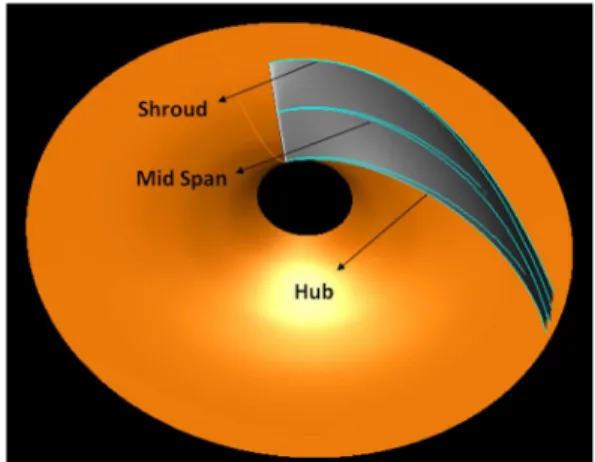
are dened in the blades: the rst section on hub, the second on shroud, and the third on the middle plane of hub and shroud, as shown in Figure 2. It is supposed that 2 is the same in the three dened sections of
blade. This problem is mathematically given by: 2 hub=2 shroud=2 midspan=Design Variable. (1)
Moreover, 1at mid span is equal to the average of 1
at hub and shroud sections:
Figure 1. Blade camber line parameterization using simple Bezier method.
Figure 2. Dening three sections on centrifugal pumps blade.
Table 1. Design variables and their range of variations. Design variable From (deg) To (deg)
1 hub 0 30
1 shroud 60 89
2 40 60
midspan 30 70
Table 2. The operating conditions in the simulations.
Parameter Value
Number of blades 7
Rotational velocity (rpm) 2900 Mass ow (kg/s) 24.7 (BEP) Outlet static pressure (atm) 3.2
1 midspan=1 hub+ 2 1 shroud: (2)
So, there are four independent design variables: 1 hub,
1 shroud, 2, and midspan. In fact, midspan is the
average of three sections. Design variables and their range of variations are shown in Table 1. The sensitiv-ity analysis in the present paper is performed using the GMDH-type Articial Neural Network (ANN) models and CFD data, presented in [3].
3. CFD and GMDH-type ANN models
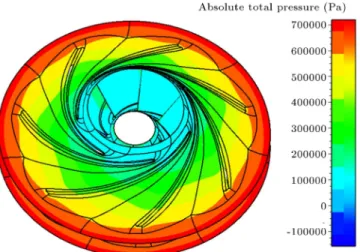
The Sensitivity Analysis (SA) presented in this paper is performed using GMDH-type Articial Neural Net-works (ANN), which are based on validated numerical data of ow eld in centrifugal pumps. The details of numerical modeling and GMDH polynomials are presented in [3]. Some operating conditions are shown in Table 2; moreover, a sample of grid generation and pressure contour in numerical simulations are shown in Figures 3 and 4, respectively.
4. Sensitivity analysis methods
An area of general sensitivity analysis methods that has attracted more attention is the variance-based methods. In these methods, the sensitivity index is computed as the share of each parameter in the overall output variance of the model. The general sensitivity analysis methods are implemented in four steps: (1) dening the inputs and the type of distribution of each input, (2) generating the samples for the input values, (3) computing the model's output for each set of input samples, and (4) determining the eect of each input factor on the output [17]. In this section, the variance-based sensitivity analysis methods are reviewed. The variance-based general sensitivity analysis approaches can be used to obtain the
rst-Figure 3. A sample of CFD structured grid generation for centrifugal pumps.
Figure 4. A sample of pressure contour in CFD simulations of centrifugal pumps.
order and the second-order eects (which include the interaction between other parameters) [18].
The Sobol method [19] is a model-independent general sensitivity analysis method which is based on variance analysis. This method can be used for nonlinear and non-uniform functions and models. For the model dened by function Y = f(X), where Y is the model output and X(x1; x2; : : : ; xn) is the vector
of input parameters, Sobol suggested to decompose function f into summands of increasing dimensionality, where the integral of each term over its own input variables is zero. Sobol showed that, when all the inputs are perpendicular to one another, this resolution is unique, and the output variance of the model (V ) is the set of variances of each resolved term [19]:
V (Y ) =Xn
i=1
Vi+ n
X
ijn
Vij+ ::: + V1:::n: (3)
In Eq. (3), Vi denotes the rst-order eect for each
input factor xi(Vi = V [E(Y jxi)]), and Vij(Vij =
V [E (Y jxi; xj)] Vi Vj) to V1;:::;n indicate the
interactions between n factors. Therefore, the shares allocated to parameters and interactions of parameters can be determined from the total output variance. The sensitivity index is obtained as the ratio of each order's
variance to the total variance (Si = Vi=V denotes the
rst-order sensitivity index, Sij = Vij=V represents
the second-order sensitivity index, and so on). The total sensitivity index (i.e., the overall eect of each parameter) is obtained as the summand of all the orders of sensitivity index for that parameter [19]:
ST i= Si+
X
i6=j
Sij+ : (4)
The EFAST method was presented by Cukier et al. [20] and was later improved by Saltelli et al. [21]. Like the Sobol method, this approach is also based on variance and is independent of any assumption of linearity and uniformity between inputs and output(s). Contrary to the Sobol method, which uses multi-dimensional integrals to obtain the total variance and the partial variances, this method converts the multi-dimensional integrals to one-dimensional ones by dening a transfer function and simplies the procedure for the calcula-tion of sensitivity indexes.
The EFAST method searches the n-dimensional space of the input factors (unit hypercube Kn) using
a search curve dened by a set of parametric equations [21]:
xi= 12+1 arcsin (sin (!is + 'i)) ; (5)
where !i(i = 1; 2; :::; n) is the frequency related to
factor xi, s is a variable that changes from to
+, and 'i species the starting point of the curve.
The output variance of the model is approximated by means of Fourier analysis:
V (Y ) = 21
Z
f
2(s)ds 1
2
Z
f(s)ds
2
X1
j= 1
(A2
j+ Bj2) (A20+ B02)
2
N
X
j=1
(A2
j+ B2j): (6)
In the above relation, the following:
f(s)=f(G1(sin(!1s)); G2(sin(!2s)); :::; Gn(sin(!ns)));
and G(s) represent the transfer functions, and Aj and
Bj are the Fourier coecients, i.e.:
Aj= 21
Z
f(s) cos(js)ds;
Bj= 21
Z
f(s) sin(js)ds:
By calculating the Fourier coecients for the basic frequency (!i) and their higher harmonics (p!i), the
partial rst-order input variance (xi) can be obtained.
Vi =
X
p2Z0
(A2
p!i+ B2p!i) = 2
1
X
p=1
(A2
p!i+ Bp!2 i): (7)
In addition, similar to the Sobol method, the ratio of the rst-order partial variance to total variance is used to compute the main sensitivity index. The total sensitivity index is obtained from Eq. (8) [22]:
STi = 1 VVi: (8)
Variance V i is obtained by changing all the
parameters except parameter xi.
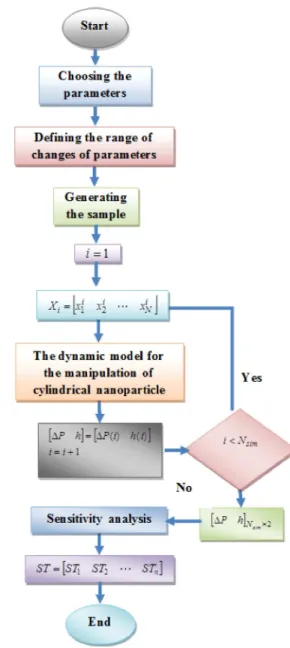
The Sobol method employs the Monte Carlo integral to obtain each partial variance; in comparison with the EFAST method, it does not use a transfer function, which is why it has low computational e-ciency. Algorithm of sensitivity analysis is shown in Figure 5.
5. Results of sensitivity analysis
The results of sensitivity analysis for eciency () and the Net Positive Suction Head (NPSH) in centrifugal pumps are presented in this section. Employing the EFAST method, the sensitivity of four parameters, i.e., leading edge angle of blades on hub section (1 hub), leading edge angle of blades on shroud section
(1 shroud), trailing edge angle of blades (2), and the
stagger angle of blades on mid span (mid), have been
explored for and NPSH. Table 1 shows the intervals of changes of the investigated parameters.
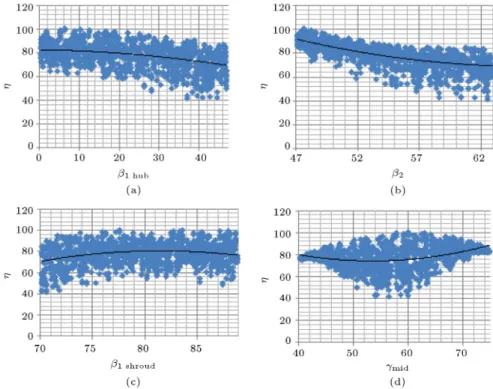
Figure 6(a) shows the changes of with 1 huband
indicates that with the increase of this parameter, the diminishes with a sharp slope. As observed in this gure, at low values of 1 hub, sensitivity is smaller, and
with the increase of 1 hub, the slope of the diagram
becomes greater. So, by considering the results that indicate the eect of this parameter on , the proper values for this parameter can be selected. As shown in Figure 6(b), with the increase in 2, also diminishes
with a very sharp slope. Therefore, the rst most sensitive parameter is 2.
The other investigated parameter is 1 shroud;
considering a near-zero slope for the diagram show-ing the changes of versus 1 shroud (Figure 6(c)),
this parameter is not considered to be a sensitive parameter for , and choosing dierent values for this parameter from its range of changes does not lead to a tangible change in values. As Figure 6(d) demonstrates, the diagram which shows the changes
of versus mid is selected, indicating that with the
increase of this parameter, rst, decreases and, then, increases.
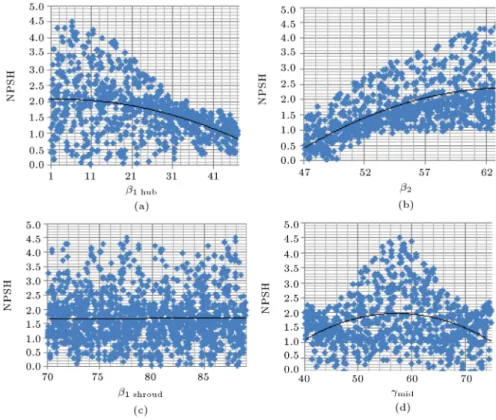
The changes of the NPSH with 1 hub are shown
in Figure 7(a). With the increase of 1 hub, NPSH
diminishes with a very sharp slope. As is observed in this gure, at low values of 1 hub, sensitivity is
smaller, and with the increase of 1 hub, the slope of
the diagram becomes greater. Thus, by considering the results that indicate the eect of this parameter on the NPSH, the proper values for this parameter can be selected. Another sensitive parameter among the parameters is 2. According to Figure 7(b), with the
increase of this parameter, NPSH also increases with a sharp slope.
The other investigated parameter is 1 shroud;
considering a near-zero slope for the diagram showing the changes of NPSH versus 1 shroud(Figure 7(c)), this
parameter is not considered to be a sensitive parameter for the NPSH, and choosing dierent values for this parameter from its range of changes does not lead to a tangible change in the NPSH values. Another sensitive parameter among the input parameters is mid. According to Figure 7(d), with the increase of
this parameter, rst, the NPSH also increases and, then, decreases.
Figure 8 indicates more accurate analysis of the results obtained by the EFAST sensitivity analysis method. According to Figure 8, among the afore-mentioned four parameters, as expected, 2 (with a
sensitivity index of 46%), mid (with a sensitivity
Figure 7. The changes of NPSH with (a) 1 hub, (b) 2, (c) 1 shroud, and (d) mid in SA analysis.
Figure 8. Percent sensitivity of input parameter changes in the and NPSH.
index of 28%), and 1 hub (with a sensitivity index of
21%) are the most signicant sensitivity parameters in . Further, according to Figure 8, 2 (with 45%
sensitivity) is the most important parameter; the pa-rameters of 1 hub(with 33% sensitivity) and mid(with
22% sensitivity) are, respectively, the other eective parameters in NPSH.
6. Conclusion
The eective parameters of centrifugal pumps were investigated using the EFAST sensitivity analysis method. The SA was performed using GMDH-type ANN based on validated numerical data of ow eld in centrifugal pumps. There were four design variables: 1 hub, 1 shroud, 2, and the stagger angle of blades on
mid span mid. There were two objective functions:
and the required NPSH of impeller. The results show that, among design variables, 2 has the highest eect
on variations of (46%) and NPSH (45%). Except 2, 1 hub and mid have the highest eect on NPSH
(33%) and (28%), respectively. The eects of all of the design variables on objective functions were shown in the results (Figure 8).
References
1. Demeulenaere, A., Purwanto, A., Ligout, A., Hirsch, C., Dijkers, R., and Visser, F. \Design and optimiza-tion of an industrial pump: Applicaoptimiza-tion of genetic algorithm and neural network", Proceedings of Insert Conference Abbreviation, ASME Fluid Engineering Summer Conference, Houston, Texas (2005).
2. Nariman-zadeh, N., Amanifard, N., Hajiloo, A.,
Ghalandari, P., and Hoseinpoor, B. \Multi-objective pareto optimization of centrifugal pumps using genetic algorithms", Proceedings of 11th WSEAS Interna-tional Conference on Computers, Crete Island, Greece (2007).
3. Sakhani, H., Khalkhali, A., and Farajpoor, M.
\Pareto based multi-objective optimization of centrifu-gal pumps using CFD, neural networks and genetic al-gorithms", Engineering Applications of Computational Fluid Mechanics, 5, pp. 37-48 (2011).
4. Korakianitis, T., Rezaienia, M., Gordon, P., Rahideh, A., Rothman, T., and Mozafari, S. \Optimization of centrifugal pump characteristic dimensions for
me-chanical circulatory support devices", ASAIO Journal, 62(5), pp. 545-551 (2016).
5. Wang, C., Shi, W., Wang, X., Jiang, X., Yang, Y.,
Li, W., and Zhou, L. \Optimal design of multistage centrifugal pump based on the combined energy loss model and computational uid dynamics", Applied Energy, 187, pp. 10-26 (2017).
6. Wang, W., Shouqi, Y., and Ji, P. \Optimization of the diuser in a centrifugal pump by combining response surface method with multi-island genetic algorithm", Proceedings of the Institution of Mechanical Engineers, Part E: Journal of Process Mechanical Engineering, 231(2), pp. 13-24 (2017).
7. Zhao, A., Lai, Z., Wu, P., Cao, L., and Wu, D. \Multi-objective optimization of a low specic speed centrifu-gal pump using an evolutionary algorithm", Engineer-ing Optimization, 48(7), pp. 1251-1274 (2016).
8. Yun, X., Lei, T., and Shuliang, C. \Multiparameter
and multiobjective optimization design of centrifugal pump based on orthogonal method", Proceedings of the Institution of Mechanical Engineers, Part C: Journal of Mechanical Engineering Science, 231(14), pp. 19-28 (2017).
9. Sakhani, H. \Modeling and multi-objective Pareto
optimization of new cyclone separators using CFD, ANNs and NSGA II algorithm", Advanced Powder Technology, 27(5), pp. 2277-2284 (2016).
10. Sakhani, H. and Dolatabadi, H. \Multi-objective
optimization of cooling of a stack of vertical minichan-nels and conventional chanminichan-nels subjected to natural convection", Applied Thermal Engineering, 96, pp. 144-150 (2016).
11. Damavandi, M.D., Forouzanmehr, M., and Sakhani,
H. \Modeling and pareto based multi-objective op-timization of wavy n-and-elliptical tube heat ex-changers using CFD and NSGA-II algorithm", Applied Thermal Engineering, 111, pp. 325-339 (2017).
12. Sada, M.H., Hosseini, R., Sakhani, H., Bagheri, A., and Mahmoodabadi, M.J. \Multi-objective optimiza-tion of solar thermal energy storage using hybrid of particle swarm optimization, multiple crossover and mutation operator", International Journal of Engi-neering, 24(3), pp. 366-376 (2011).
13. Sakhani, H. and Eiamsa-ard, S. \Pareto based multi-objective optimization of turbulent heat transfer ow in helically corrugated tubes", Applied Thermal Engi-neering, 95, pp. 275-280 (2016).
14. Saltelli, A. and Sobol, M. \About the use of rank
transformation in sensitivity analysis of model out-put", Reliability Engineering & System Safety, 50, pp. 225-239 (1995).
15. Saltelli, A., Chan, K., and Scott, E., Sensitivity
Analysis Wiley Series in Probability and Statistics, Willey, New York (2000).
16. Korayem, M., Rastegar, Z., and Taheri, M.
\Sen-sitivity analysis of nano-contact mechanics models in manipulation of biological cell", Nanoscience and Nanotechnology, 2, pp. 49-56 (2012).
17. Tong, C. \Self-validated variance-based methods for sensitivity analysis of model outputs", Reliability En-gineering & System Safety, 95, pp. 301-309 (2010).
18. Nossent, J., Elsen, P., and Bauwens, W. \Sobol' sen-sitivity analysis of a complex environmental model", Environmental Modelling & Software, 26, pp. 1515-1525 (2011).
19. Sobol, I.M. \Sensitivity estimates for nonlinear mathe-matical models", Mathemathe-matical Modeling and Compu-tational Experiments, 14, pp. 407-414 (1993).
20. Cukier, R., Levine, H., and Shuler, K. \Nonlinear
sensitivity analysis of multiparameter model systems", Journal of Computational Physics, 26, pp. 1-42 (1978).
21. Saltelli, A., Tarantola, S., and Chan, K.-S. \A quanti-tative model-independent method for global sensitivity analysis of model output", Technometrics, 41, pp. 39-56 (1999).
22. Homma, T. and Saltelli, A. \Importance measures
in global sensitivity analysis of nonlinear models", Reliability Engineering & System Safety, 52, pp. 1-17 (1996).
Biography
Hamed Sakhani is an Assistant Professor of Me-chanical Engineering at the Arak University, I.R. Iran. He received his PhD from the Amirkabir University of Technology in 2014. He is one of the members of \The Promised SORAYYA Technologist" science-based industries in I.R. Iran. He has co-authored more than 40 publications in high-quality journals and conferences. His research interests include air pollution numerical modelling, HVAC systems, energy, two-phase and single-phase convective heat transfers in macro-micro and nanoscales.