Elena M. Feinstein. Possibilities for library services at the North Carolina Museum of Natural Sciences Nature Research Center. A Master’s Paper for the M.S. in L.S degree. July, 2009. 43 pages. Advisor: David Carr.
In 2011 the North Carolina Museum of Natural Sciences will open a new wing called the Nature Research Center. Its intention is to emphasize the process, rather than the
products, of scientific research. The goals of the Nature Research Center focus on interpreting science and making it accessible for the layperson, and the plans include a small library. This paper makes recommendations for the design, collections, and services of this library, placing them in the context of the literature as well as the institution.
Headings:
North Carolina State Museum of Natural Sciences Museum Libraries
by
Elena M. Feinstein
A Master’s paper submitted to the faculty of the School of Information and Library Science of the University of North Carolina at Chapel Hill
in partial fulfillment of the requirements for the degree of Master of Science in
Library Science.
Chapel Hill, North Carolina July 2009
Approved by
Introduction
The need for improvement in Americans’ scientific literacy skills is taken for granted among most educators, and expressions of this need are frequently accompanied by sobering statistics. Scores on science tests are commonly among the lowest for state and national standardized tests, and North Carolina is no exception to this trend.1 While most scientific literacy interventions target schools exclusively, the underexploredrealm of informal education and out-of-school learning holds promise. Libraries and science museums are important venues for improving scientific literacy, and this paper discusses the intersection of these two sites: a proposed library in a new wing of the North Carolina Museum of Natural Sciences. This library presents an opportunity to leverage inspiring experiences in the museum to launch visitors into further explorations of scientific topics. It is an attempt at mediating improvements in scientific literacy by reaching a greater cross section of the population (and in a far more joyful situation for the learner) than the formal efforts at raising test scores that are typically presented.
Before proceeding, it is necessary to define scientific literacy, a task that is not entirely simple. Maienschein and students (1999) begin by disambiguating the terms
science literacy and scientific literacy, defining science literacy as pertaining to the expert knowledge of scientists and scientific literacy as the understanding of scientific “habits of mind” that can and should be achieved by everyone. (p. 75) By these
Academy of Sciences, United States National Science Foundation, American Association for the Advancement of Science, and International Center for the Advancement of
Scientific Literacy, include improving scientific literacy among their primary goals, and their publications, along with countless others, offer definitions of the term.
The most common elements that emerge from these definitions are the abilities to apply scientific thinking to everyday life and to understand scientific issues for civic participation, meaning that “a person is scientifically literate if he or she can deal with scientific matters that come across the horizon of public life with the same ease an educated person would exhibit in dealing with matters political, legal, or economic.” (Trefil, 2003, p. 151) Almost all of these definitions include statements about
understanding scientific methods and processes, how research is conducted and
knowledge advanced. The definitions of scientific literacy vary mostly in the degree to which they include specific science content. Miller (1998) discusses the diversity of definitions and articulates a measureable construct of civic scientific literacy.
As might be expected after Miller’s (1998) explanation of the difficulty of measuring scientific literacy, however, there is relatively little data on its achievement among adults. The National Science Board devotes one section of its biennial Science and Engineering Indicators to “science and technology: public attitudes and
There is far more data available on PreK-12 academic performance in the sciences. The results of one of the most authoritative sources of this data, the National Assessment of Educational Progress conducted by United States Department of
Education, are analyzed in the Nation’s Report Card. The most recent Nation’s Report Card on science indicates that average scores have declined since the 1996 tests, and that by grade 12, only 54 percent of students scored at or above the “basic” level and 18 percent scored at or above the “proficient” level. (Grigg, Lauko, & Brockway, 2006) Of course, scoring poorly on a test is not necessarily a failure that matters beyond one’s school years. But these reports, when viewed as simplified surrogates for measuring scientific literacy, are indeed alarming. We must remember that the importance of scientific literacy goes deeper than academic achievement. It is valuable in both the idealistic sense, in that “[b]eing scientifically literate allows people to lead ‘better’ lives—in the philosophers’ sense of the ‘good life,’ which is more reflective, fulfilling, and worth living,” and in the pragmatic sense of producing economic advantages for the scientifically literate society. (Maienschein and students, 1999, p. 78)
Librarians know well that school is not the only, and perhaps not the best, institution for assisting people in realizing their full potential, intellectually and
than implying a difference in the kind of learning: “out-of-school learning environment.” (pp. 126-127) Whatever the term used, what is being discussed is “learning that is self-motivated, voluntary, and guided by the learner’s needs and interests, learning that is engaged in throughout his or her life.” (Dierking, et al., 2003, p. 109) Clewis (1990) is careful to note that this out-of-school learning is not a substitute for formal education in the sciences, and that it functions most effectively in continuing education and in
providing an alternative that enhances science appreciation as much as scientific literacy. (pp. 106-107)
Though libraries and science museums are each recognized as powerful out-of-school learning environments, Rennie (2007) notes
some disagreement about the educational effectiveness of places like museums, disagreement that seems to be underpinned by three myths about learning in museums: (a) that playing and learning cannot occur at the same time; (b) that if learning occurs, it must be at the museum; and (c) that what people learn is predictable and therefore easily measureable. (p. 132)
Literature Review
Libraries and Scientific Literacy
The overwhelming majority of literature on libraries and scientific information focuses exclusively on scholarly communication in the sciences and bibliographic instruction in formal academic settings. The role of libraries in facilitating informal and adult learning in the sciences remains underexplored. The closest that most scholarly sources come to a relevant treatment of the intersection of libraries and scientific literacy are discussions of information literacy in the context of science education. This focus is exemplified by Manuel’s (2004) article in Science and Technology Libraries. She articulates well the need for librarians to conceive of information literacy skills in ways that are specific to the sciences when delivering bibliographic instruction, but her exclusive focus on higher education places the research outside the scope of this paper. Even so, Manuel and others are useful here in their exposition of the complexity of scientific information sources and the potentially valuable function of the librarian as intermediary between scientific information and learners.
the format and mode of access to the resources, and the importance and level of satisfaction the respondent assigns to the resources, as well as room for additional comments; and received 180 valid responses. They summarize the results as follows:
The results of this survey suggest that amateur scientists have diverse information needs that straddle the boundary between the realms of academic and public libraries and include electronic and print resources. Major trends include:
• a tendency of amateur scientists to purchase rather than borrow materials, • heavy use of and satisfaction with the Web as an information source, and • heavy use of books relative to the use of journals and magazines.
(Dolence & Gilmour, 2006, pp. 9-10)
The patterns identified here suggest that the amateur scientists are independent
information seekers, but that there is still an important role for libraries and librarians in assisting them. Their preference to purchase materials and their proficiency with using the Internet reflect larger cultural trends and evoke the alarmist predictions of the obsolescence of libraries.
The predicted death of the library has become less common in the current economic downturn. There is renewed interest in the economies of shared community resources such as libraries, and the public library remains the key point of access to the Internet for a large number of Americans. The Institute of Museum and Library Services’ most recent Public Libraries Survey, published in June 2009, shows United States per capita library visits and book circulation steadily increasing from 1998 through 2007 (the entire period for which data is presented), and reports from public library systems across the country suggest that 2008 and 2009 will show even greater increases in use.
suggests an opportunity to promote amateurs’ engagement withperiodical literature (which is often expensive and out of reach for the layperson).
While Dolence and Gilmour’s (2006) study informs this paper, it is important to remember that most visitors to science museums are considerably less knowledgeable than the amateur scientists that they studied. Dolence and Gilmour solicited study participants in science enthusiast Internet groups and listservs, predisposing their respondents to be highly interested science learners with above average skills in and access to technology. Visitors to science museums span the entire range of scientific literacy levels and information-seeking skills, and many will benefit from more basic instruction and materials than would interest the Dolence and Gilmour study participants.
While scholarship in the area of libraries and public understanding of science may be less than robust, there are some more practical sources written for an audience of librarians that may be instructive. Sapp’s Building a Popular Science Library Collection for High School to Adult Learners: Issues and Recommended Resources (1995) is one such title. While his subject guides have fallen somewhat out of date, Sapp makes the case for librarians’ role as interpreters of scientific information for nonscientist
audiences. He discusses the identification of high quality popular science materials and the pitfalls of poorly executed popularizations of scientific information. The numerous how-to style articles and books targeting librarians that include treatments of science information resources, but that focus exclusively on PreK-12 media centers or on academic libraries, are less useful here, as their goals are so tied to specific curricula. Scholarship on science education in out-of-school settings is rather more developed, but has failed to include libraries with anything more than passing acknowledgement. Rennie (2007), which is discussed in the introduction to this paper, reviews this literature.
Museum Libraries
Bierbaum (1996), Koot (2001), and van der Wateren (1999). Bierbaum (1996) analyzes the results of a large survey of diverse museum libraries, and compares them to her own earlier survey (Bierbaum, 1984) and one by Hull and Fearnley (1976). Bierbaum (1996) uses three dimensions to measure the status of museum libraries: funding, staffing, and utilization. Though there are some improvements over the three surveys, particularly in cataloging and services offered, the overall picture is bleak, including a worrisome decline in full-time staff. Bierbaum (1996) concludes that museum libraries, with the notable exception of those in art museums, are underfunded, understaffed, underused, and undervalued.
Koot (2001) places the library and the librarian in the organizational ecosystem of the museum. His concerns are primarily about the relationships between museum
departments and the roles of museum staff, exploring potential collaborations and how best to put to use librarians’ expertise in information management and access. Koot (2001) sees museum librarians as key partners in researching, recording, digitizing, and publishing information about the museum collection. He does not explicitly discuss the interaction of museum librarians with museum visitors, but does touch on out-of-school learning, noting that visitors
choose their own route through the information embodied in the objects, and through the museum’s knowledge resources. There is a growing group of informal learners who set their own targets about what they want to know. Meeting
[m]useum libraries see themselves as part of an information environment at their museum. A researcher may be referred from one part of that environment to another, from the library to an office where they are compiling an inventory, or to the photo archive. But the library is the fulcrum, where the researcher can start their research and be forwarded onward. (van der Wateren, 1999, pp. 197-198) The ideas of the information environment of the museum and of the library as a central agency of information referral will return in this paper. Van der Wateren also
acknowledges the general public as a growing user population for museum libraries. Additionally, there are various practice-oriented books and essays written for an audience of library and museum professionals. Bierbaum’s (2000) Museum Librarianship
is good primer and introduction to issues in the field. Art Museum Libraries and
Librarianship contains some material that is relevant to libraries in all kinds of museums. (Benedetti, 2007) The essay collection Presence of Mind: Museums and the Spirit of Learning explores the museum as a site of out-of-school learning, but makes no mention of museum libraries and their potential role. (Pitman, 1999) Indeed, Pitman’s omission of the role libraries is, unfortunately, typical of the literature on museum learning. A more open and theoretical discussion of the possibilities of libraries and museums, sometimes drawing out the congruities and contrasts between the institutions and the ways that they can function synergistically, can be found in Carr’s The Promise of Cultural Institutions
(2003) and A Place Not a Place: Reflection and Possibility in Museums and Libraries
Defining the Situation
The North Carolina Museum of Natural Sciences
The North Carolina State Museum of Natural Sciences (the name was changed from the “North Carolina State Museum” in 1986) was created in 1879 through
legislation combining the collections of State Geologist Washington Carunthers Kerr and Commissioner of Agriculture Colonel Leonidas LaFayette Polk (Martin, 2001, p. 10). The museum’s primary intention was to showcase the natural resources of the state in order to generate business interest and investment (Martin, 2001, pp. 10-11). As Martin (2001) explains, however, even in those early years, museum leaders expressed the dual goals of “educating and entertaining the public through exhibits and programs, and maintaining collections that served the needs of commerce, agriculture, and the natural sciences” (p. 13). Brothers Herbert Hutchinson Brimley and Clement Samuel Brimley guided the early period of the museum’s development. While C. S. Brimley is responsible for building important collections, H. H. Brimley shaped exhibitions and programming (Martin, 2001, p. 13). It is H. H. Brimley’s resistance to the Board of Agriculture’s pressure to focus on issues directly pertaining to farming that led the museum toward an emphasis on natural history over agriculture (Martin, 2001, p. 14).
The North Carolina Museum of Natural Sciences is now an internationally important center for research as well as hosting an average of more than 700,000 visitors a year. (Cowans, 2007, p. 28) The museum currently states its goals as follows:
The mission of the North Carolina Museum of Natural Sciences is to enhance the public’s understanding and appreciation of the environment in ways that
Located in downtown Raleigh and home to more than 1.7 million specimens, “the
200,000-square-foot facility is now the largest natural sciences museum in Southeast, the most visited museum in the state, the #1 field trip destination in the state, and one of top 10 natural history museums in North America.” (Cowans, 2007, p. 28)
The Museum also manages a field station in west Raleigh called Prairie Ridge Ecostation. Prairie Ridge contains almost 40 acres of restored Piedmont prairie and other habitats where visitors may make field observations and collect data for citizen science2 projects. Both the main museum building and Prairie Ridge Ecostation house libraries. The library at Prairie Ridge is a very small satellite collection (less than 100 volumes) of the H. H. Brimley Memorial Library, the primary collection located in the basement of the Museum in downtown Raleigh. The Brimley Library contains over 17,500
The Nature Research Center
In 2011 the Museum is scheduled to open a new wing with a different emphasis. As the Museum website states,
The focus of the Museum has been to showcase what we know, with exhibits and programs highlighting scientific knowledge gleaned from long-term research. With the construction of the Nature Research Center, Museum staff plans to share how we know it [emphasis added] — bringing scientific research to the forefront. Students, teachers and the general public will have the unprecedented opportunity to see for themselves how research is conducted. By bringing research scientists and their work to the layperson’s everyday world, staff will demystify what may have seemed to be an intimidating field of study. (North Carolina Museum of Natural Sciences, Nature Research Center: North . . .)
Very succinctly, the mission of the Nature Research Center “is to engage the public in understanding the scientific research that affects their daily lives.” (North Carolina Museum of Natural Sciences, Nature Research Center fact . . .) This is further articulated in specific objectives:
The NRC will:
• engage the public in research projects through creative and innovative methods;
• improve the ability of teachers to teach science and enhance science education for all students;
• advance environmental education’s role in North Carolina’s K–16 science curriculum;
• foster collaborative, interdisciplinary natural sciences research with universities, museums and industry; and
• encourage the use of new technology and communications media to make science and environmental information available to all communities — across the state and nation.
(North Carolina Museum of Natural Sciences, Nature Research Center fact . . .)
experiential science centers on the other.As Lewis and Martin (2006) describe the trend toward science centers in recent decades,
[t]hese new institutions were not collection based but were designed to actively engage the visitor through hands-on, interactive experiences. They paved the way for a new approach to learning by utilizing exhibits, programs, and
demonstrations that made science and technology accessible to everyone. (p. 107) While the science center model is far more popular for new museums, it has not entirely supplanted the natural history museum. There are many examples of vibrant museums exemplifying each style, such as the aptly named and highly experiential Exploratorium in San Francisco, but also the traditional Field Museum in Chicago and American Museum of Natural History in New York. With the creation of the Nature Research Center, the North Carolina Museum of Natural Sciences places itself at the intersection of these institutional models, a potentially dynamic crossroads.
Information Services in the Nature Research Center
A very small and relatively young division of the Department of Environment and Natural Resources, the Office of Environmental Education takes as its mission
to encourage, support and promote environmental education programs, facilities and resources in North Carolina for the purpose of improving the public's environmental literacy and stewardship of natural resources through planning, policy development, community involvement, innovative partnerships and collaboration. (North Carolina Office of Environmental Education)
The Office coordinates with other state agencies concerned with formal (PreK-12 and post-secondary) and informal (state parks and other environmental education centers) education. The Office of Environmental Education does not create curriculum, but much of its work is in serving as a clearinghouse to “identify, evaluate and promote” existing resources. (North Carolina Office of Environmental Education) As part of fulfilling this resource selection and promotion function, it is appropriate that the Department of
Environment and Natural Resources Library comes under the administration of the Office of Environmental Education. This library currently serves primarily Department of
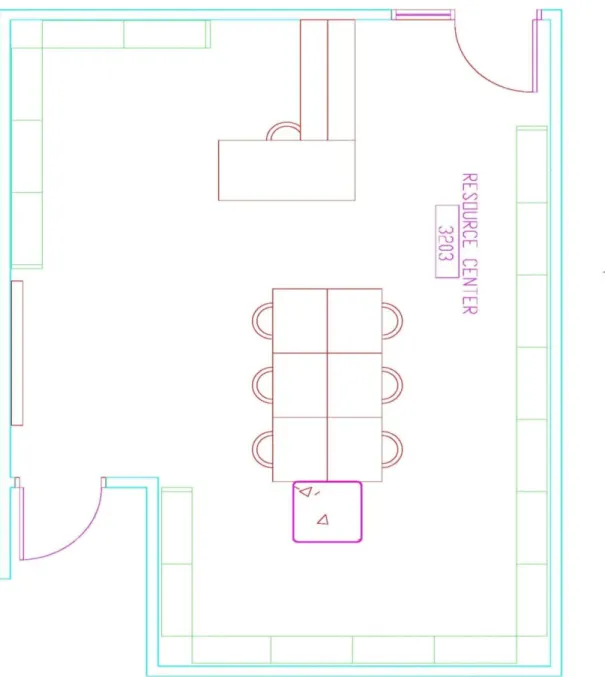
Environment and Natural Resources staff. The Library is composed of a large government documents collection; a smaller collection of environmental education materials including teaching materials, popular science materials, juvenile materials, and videos; and some science and education periodicals. It is this library, significantly smaller than the Brimley Library, that is to become the Resource Center mentioned above.
libraries of the state university system, in spring 2009. During this same period, the librarian and other Office of Environmental Education staff began weeding the
environmental education collection. Meetings were held to discuss the new direction of the library, attended by the Department of Environment and Natural Resources librarian, Mary Tucker; director of the Office of Environmental Education, Lisa Tolley; librarian of the North Carolina Museum of Natural Sciences Brimley Library, Janet Edgerton;
Brimley Library assistant, Margaret Cotrufo; coordinator of the Naturalist Center, John Connors; curator of the Naturalist Center, Colin Brammer; and the researcher. Recurring topics in these meetings were the physical space of the Resource Center, user outreach, and user services.
In the Green Square building, the Resource Center will be adjacent to the
keycard-protected Department of Environment and Natural Resources offices, but facing out toward the public space of the Nature Research Center and accessible to museum visitors. Early architectural plans placed the Resource Center within the closed offices, but relevant Office of Environmental Education and Museum staff requested that the Resource Center be on the public side of the locked door. This intentional orientation toward interaction with and service to museum visitors is key to setting the tone for this library. The existing Department of Environment and Natural Resources Library is tucked away in a state government office building, and visits from the general public are extremely rare.
librarian promotes bibliographies of recommended environmental education resources and attempts to collaborate with PreK-12 school media coordinators to enhance their collections, but these services are underused. The move to Green Square and proximity to the museum would bring about a striking change in user populations and a reorientation away from a primarily internal Department of Environment and Natural Resources audience toward a more external one. Potential new library users include PreK-12 teachers, PreK-12 students, home schoolers, parents, and other museum visitors. Of course, the library would still be located with other Department of Environment and Natural Resources offices, and could continue to serve environmental educators, researchers, and other Department staff.
The vision for collections and services in the Resource Center continues to be in flux, due in large part to ongoing uncertainty of the future of the Office of Environmental Education. In spring 2009, North Carolina Governor Beverly Perdue proposed the
Problem Statement
Museums are essentials institutions for transmitting cultural heritage and accomplishing lifelong learning. Their popularity is one indicator of their importance, with a 1999 study reporting an average of 865 million visits to museums in the United States each year. (American Association of Museums, 1999) As indicated in this paper, the North Carolina Museum of Natural Sciences alone averages more than 700,000 annual visits, and this figure will only rise. (Cowans, 2007, p. 28) This paper also presents the key role of museums as sites of out-of-school learning, and the potential of science museums in particular for increasing scientific literacy.
With the opening of the Nature Research Center, the Museum enters a new stage in its institutional life. The expanded museum will incorporate the features of the
traditional natural history museum with those of a hands-on science center, and further seeks to become a hub of scientific communication. The staff of the Nature Research Center will include both experts in science and experts in communicating science to the public. The Museum then acts as a bridge that links current research with the lived experiences of North Carolinians. This is accomplished when the tools of science, both intellectual and physical, are made available and comprehensible to visitors.
In the course of this research, three guiding questions have emerged:
• What changes in society does a hybrid institution such as this (natural history
museum/science center/center for communication of scientific ideas) seek to effect?
• What would be a librarian/library’s practical role in the operation of this
institution?
Methodology
During the spring 2009 semester, I completed a field experience jointly in the North Carolina Museum of Natural Sciences and the Department of Environment and Natural Resources Library. I participated in the planning meetings for the Resource Center and assisted the librarian of the Department of Natural Resources Library in decision making processes related to the transition, including analyzing the results of a state-wide survey of PreK-12 school media coordinators. These experiences allowed me to hear the perspectives of librarians, curators, and museum educators and administrators; they provided insight into both the possibilities and practical limitations of the project. In addition to this participant observation, I researched the literature on scientific literacy, libraries and science information for the general public, and libraries in museums.
I am also informed by many hours of formal and informal observation in the following institutions: American Museum of Natural History (New York, NY), Fernbank Museum of Natural History (Atlanta, GA), Fernbank Science Center (Atlanta, GA), New York Hall of Science (Queens, NY), North Carolina Museum of Life and Science
Recommendations
This paper is intended to articulate design and service ideas for a new library at the North Carolina Museum of Natural Sciences. I propose to view the forthcoming Resource Center as part of the “information environment” of the museum, in the sense that van der Wateren (1999) used the term. In the case of the North Carolina Museum of Natural Sciences, my view is that the collections-based exhibits are complemented by the information-based features of the Brimley Library; the Naturalist Center; and the small libraries in the Discovery Room, at Prairie Ridge, and elsewhere. These departments interact with each other at the organizational level and through the individual
information-seeking paths constructed by Museum affiliates and visitors. The Resource Center should be thoughtfully integrated into this web of interaction to maximize the benefit to the organization and to the public. It is important that its history as the
Department of Environment and Natural Resources Library not become a hindrance to its necessary transformation as part of this integration into the Museum’s information
environment.
librarian to manage all of the satellite collections. These practices could be extended to the administration of the Resource Center collection. It is worth mentioning the State Library of North Carolina as another potential partner for technical services, as they currently have such a relationship with the Department of Environment and Natural Resources Library.
Public services in the Brimley Library are focused on internal Museum users; in contrast, the Resource Center will be readily accessible to visitors, and could serve as a public face for the information resources of the entire museum. While the Brimley Library centralizes technical services, the Resource Center could centralize public services, acting as a guide for visitors to various resources within and beyond the museum. At an extreme, the Resource Center collection could be completely integrated with the Brimley Library collection, with a rotating selection of library materials featured in the Resource Center space.
influence collection decisions, it would be disappointing to devote the entire collection to typical reference and browsing materials. High quality popular science works are in short supply at most public libraries, and this is an ideal opportunity to connect them with their potential readers, even if they finally leave with a citation rather than the book itself. Electronic resources are another important collection development area. The Department of Environment and Natural Resources Library does not have adequate funding to purchase access to subscription databases or other online content, relying on the
Department’s researchers’ likely status as adjunct faculty at colleges and universities. (M. Tucker, personal communication, March 16, 2009) With the recent inclusion of public access computers in the Resource Center plans, a very favorable development, I urge the provision of as many electronic resources as possible, perhaps through cooperation with NC Live.
The Resource Center could also potentially manage some nontraditional
materials, such as the educational kits currently handled by the Naturalist Center. These kits include specimens and supporting materials and are mostly loaned to teachers and home schoolers. Similar kits are extremely popular loan items at the New York Hall of Science, where they are circulated through the library. (R. Reitz, personal
communication, June 11, 2008)
a step in this direction, and has allowed for book shelving space to be reduced to make room for public access computers. Ideally, the space would also include a display of current periodicals and some comfortable seating, but there is no additional room to add features. Perhaps periodicals could be displayed along the wall near the entrance or behind the Smartboard if a mobile model were purchased. While there isn’t room for additional seating, perhaps the arrangement of the computer work area and its seating could be configured to accommodate browsing print materials.
Arguably more important than the collection and physical space are the services provided in the Resource Center. The physical and temporal proximity to the visitor’s interaction with the museum exhibits is, after all, this library’s unique feature and greatest potential strength, no matter what books are or are not present. If visitors arrive with their curiosity piqued by museum exhibits, their time in the Resource Center can both help them formulate their information need and begin to fill it. Results of a survey of North Carolina school media coordinators conducted in spring 2009 by the Office of
Environmental Education shed some light on demand for services, at least to that user population. The survey included questions about interlibrary lending from the
respondents use the Department of Environment and Natural Resources Library recommendations when making collection decisions. (See Appendix)
This underuse reflects the library’s current physical and Internet presence as a little-known internal library of a government agency. The move to Green Square and greater exposure to the public should signal a new emphasis in public services. In addition to reference, there will be opportunities for bibliographic instruction and even a form of readers’ advisory, described below. The successful provision of these services, of course, relies upon the presence of a librarian. An information professional would have the knowledge and skills to assist visitors in navigating complex resources, as well as providing continuity and consistency in services. Bierbaum (1996, 2000) warns against attempting to staff museum libraries with volunteers or even part-time staff. The lack of full-time professional staffing would suppress the potential of the library at best, and doom it to obsolescence and failure at worst. Koot (2001) expresses both the centrality of the museum library as well as the importance of professional staff, concluding that
the need for staffed information services, combined with the importance of books, highlights the library as the best location for the museum information centre. Moreover, librarians are trained and experienced mediators between individual users and the knowledge stored in their museums. (p. 254)
In the case of the North Carolina Museum of Natural Sciences, the Brimley Library and Resource Center have the complementary functions of technical services and public services, and are likely to require librarians’ expertise to complete each.
• The Resource Center librarian compiles bibliographies that are relevant to various
museum exhibits. These bibliographies are placed in the exhibit halls as handouts or small bookmarks, as well as being distributed to educators planning group visits and being made available on the Museum website. These bibliographies include a variety of resources, from books to websites, and information about how to access them, whether in the Resource Center, at local public libraries, for sale in the Museum store, or elsewhere.
• A family visiting the Astro Lab (a planned exhibit in the Nature Research Center)
becomes fascinated with astronomy and wants to learn more. A sign directs them to the Resource Center, where they sit down and browse astronomy books for all ages, reading one picture book aloud for their youngest child. The librarian gives them a seasonally appropriate guide to the night sky and calendar of Morehead Planetarium’s skywatching events at Jordon Lake to take home.
• A visitor wanders into the Resource Center without any particular information
need. He becomes engrossed in a beautifully illustrated guide to fungi. He asks the librarian about a flyer on the bulletin board (or in a scrolling set of
• A high school student becomes interested in cellular slime molds when her AP
Biology teacher mentions them in class. During a school visit to the Museum, she gets permission from a chaperone to go to the Resource Center, where the
librarian finds a current article in a scholarly journal about a new discovery involving molecular signaling in cellular slime molds. The librarian also shows the student how to search online databases to find more articles, and how to access them from her school media center or public library.
• A North Carolina public library system receives a grant to expand their nonfiction
collection. Tight budgets have meant that they haven’t been purchasing science materials for several years. They don’t want to just buy current titles featured by vendors, so they contact the Resource Center librarian for a list of recommended natural sciences materials from the last few years.
• An exceptionally dangerous strain of influenza is transmitted from livestock to
humans and begins to spread through the Southeastern United States. The public is concerned and some are panicking, while initial media reports are sensational and perpetuate misconceptions about the science behind the disease. The
Conclusion
At this juncture in the history of the North Carolina Museum of Natural Sciences, as it realizes the Nature Research Center concept and takes as its task to elucidate how science is done in addition to what we know as a result of that process, library
perspectives and practices are relevant and have great potential to enrich the project. The Museum seeks to include North Carolinians in the work of scientific research and to empower them to understand their own lives and environment in that context; it sets out to interpret the seemingly arcane realm of science and make it comprehensible to outsiders. These functions – interpreting complex information, empowering novices to navigate that information, facilitating independent learning experiences – are those at which librarians excel. The theoretical orientation of contemporary librarianship is well matched to the goals of the Nature Research Center, and it should be allowed to inform the development of this institution.
Notes
1. Results on the 2005 National Assessment of Educational Progress: Science are as follows.
• In grade 4, North Carolina students’ average overall score matched the
national average, and 35% of North Carolina students scored in the “below basic” range, 40% scored in the “basic” range, 23% in the “proficient” range, and 2% in the “advanced” range.
• In grade 8, North Carolina students’ average overall score was below the
national average, and 47% of North Carolina students scored in the “below basic” range, 31% scored in the “basic” range, 20% in the “proficient” range, and 2% in the advanced range.
• State data is not available for grade 12 scores, but national scores declined
since the 1996 test and held steady since the 2000 test.
Grigg, W., Lauko, M., and Brockway, D. (2006). The Nation’s Report Card: Science 2005. NCES 2006-466. U.S. Department of Education, National Center for Education Statistics. Washington, D.C.: U.S. Government Printing Office.
2. Citizen science occurs when members of the general public who have not received formal training as scientists collect data that is used in scientific
ongoing eBird project, annual Great Backyard Bird Count, FeederWatch and NestWatch projects, and others.
3. Factual statements in this section about the collections of the various
References
American Association of Museums. (1999). Making the case about the value of museums. Retrieved June 30, 2009, from
http://www.aam-us.org/getinvolved/advocate/statistics.cfm.
Benedetti J. M. (Ed.). (2007). Art museum libraries and librarianship. Lanham, MD: Scarecrow Press.
Bierbaum, E. G. (2000). Museum librarianship. Jefferson, N.C. : McFarland.
Bierbaum, E. G. (1996). Museum libraries: The more things change. Special Libraries, 87(2), 74-87.
Bierbaum, E. G. (1984). The museum library revisited. Special Libraries, 75(2), 102-113.
Carr, D. (1996). Rex's Lending Center and the information life of the child at the
Children's Museum of Indianapolis. In K. E. Vandergrift (Ed.), Ways of knowing: Literature and the intellectual life of children (pp. 89-118). Lanham, MD:
Scarecrow Press.
Carr, D. (2006). A place not a place : Reflection and possibility in museums and libraries
Lanham, MD: Rowman & Littlefield Publishers.
Clewis, B. (1990). Scientific literacy: A review of the literature and implications for librarianship. Collection Management, 12(3-4), 101-112.
Cowans, E. (2007). Museum of Natural Sciences. Raleigh Digest, Spring 2007, 28.
Dierking, L. D., Falk, J. H., Rennie, L., Anderson, D., & Ellenbogen, K. (2003). Policy statement of the "Informal Science Education" Ad Hoc Committee. Journal of Research in Science Teaching, 40(2), 108-111.
Dolence, T., & Gilmour, R. (2006). Libraries, information, and amateur scientists.
Technical Services Quarterly, 23(3), 1-18.
Duckworth, E. (2006). “The having of wonderful ideas” and other essays on teaching and learning. New York: Teachers College Press.
Grigg, W., Lauko, M., and Brockway, D. (2006). The Nation’s Report Card:Science 2005. NCES 2006-466. U.S. Department of Education, National Center for Education Statistics. Washington, D.C.: U.S. Government Printing Office.
Henderson, E., Miller, K., Craig, T., Dorinski, S., Freeman, M., Isaac, N., Keng, J.,
McKenzie, L., O’Shea, P., Ramsey, C., Sheckells, C. (2009). Public Libraries
Survey: Fiscal Year 2007 (IMLS-2009–PLS-02). Washington, DC: Institute of
Museum and Library Services.
Hull, D., & Fearnley, D. D. (1976). The museum library in the United States: A sample.
Koot, G. (2001). Museum librarians as information strategists. Inspel, 35(4), 248-258.
Lewis, L., & Martin, J. L. (2006). Science centers: Creating a platform for twenty-first century innovation. In H. H. Genoways (Ed.), Museum philosophy for the twenty-first century (pp. 107-116). Lanham, MD: AltaMira Press.
Maienschein, J., & students. (1999). Commentary: To the future-- arguments for scientific literacy. Science Communication, 21, 75-87.
Manuel, K. (2004). Generic and discipline-specific information literacy competencies: The case of the sciences. Science & Technology Libraries, 24(3/4), 279-308.
Martin, M. A long look at nature : The North Carolina State Museum of Natural Sciences. Chapel Hill, NC: Published for the North Carolina State Museum of Natural Sciences by the University of North Carolina Press.
Miller, J. D. (1998). The measurement of civic scientific literacy. Public Understanding of Science, 7(3), 203-223.
National Science Board. (2008). Science and Engineering Indicators 2008. NSB 08-01; NSB 08-01A. Arlington, VA: National Science Foundation.
North Carolina Museum of Natural Sciences. Nature Research Center fact sheet. Retrieved May 26, 2009, from
http://naturalsciences.org/files/documents/NRC_FactSheet.pdf.
North Carolina Museum of Natural Sciences. Nature Research Center: North Carolina Museum of Natural Sciences. Retrieved May 26, 2009, from
http://naturalsciences.org/nature-research-center.
North Carolina Office of Environmental Education. About the NC Office of Environmental Education. Retrieved May 26, 2009, from
http://www.eenorthcarolina.org/aboutus.htm.
Pitman, B. (Ed.). (1999). Presence of mind : Museums and the spirit of learning.
Washington, DC: American Association of Museums.
Rennie, L. J. (2007). Learning science outside of school. In S. K. Abell, & N. G. Lederman (Eds.), Handbook of research on science education (pp. 125-167). Mahwah, NJ: Lawrence Erlbaum Associates.
Sapp, G. (1995). Building a popular science library collection for high school to adult learners: Issues and recommended resources. Westport, CT: Greenwood Press.
Smith, F. (1990). To think. New York: Teachers College Press.
Acknowledgements
I would like to thank the following people for welcoming me into their