KNOWLEDGE, ATTITUDES, AND BEHAVIORS OF PATIENTS REGARDING INTERDENTAL DEPLAQUING DEVICES: A MIXED METHODS STUDY
Avie Jackson Thompson Smith
A thesis submitted to the faculty at the University of North Carolina at Chapel Hill in partial fulfillment of the requirements for the degree of Master of Science (Dental Hygiene Education)
in the Department of Ecology in the School of Dentistry.
Chapel Hill 2018
Approved by: Rebecca S. Wilder Antonio J. Moretti
©2018
ABSTRACT
Avie Jackson Thompson Smith: Knowledge, Attitudes, and Behaviors of Patients Regarding Interdental Deplaquing Devices: A Mixed Methods Study
(Under the direction of Rebecca S. Wilder)
This mixed-methods study assessed patients’ oral health literacy, motivation, and barriers regarding interdental deplaquing. Participants (n=49) from a study comparing Glide® Pro-Health Floss Original (F) and GUM® Curved Soft-Picks® Advance (SP) completed daily diaries and
To my relentless and loving God.
ACKNOWLEDGEMENTS
Rebecca Wilder, my mentor and inspiration in my career. Thank you for your help & guidance. It has been a dream come true to work with you.
Jennie “JB” Brame, my professor, colleague & friend. Thank you for all your contributions & encouraging words as I mold my career.
Dr. Antonio Moretti, thank you, it has been a pleasure to work with someone who shares my passion for preventing this disease.
Dr. Akane Takemura and Sunstar, Inc., thank you for your generosity & support to complete my study & travel to share my findings. I could not have done so well without it.
Dr. Ceib Phillips, for my data analysis and teaching me the ways of quantitative research.
CHAI Core, Randall Teal, for teaching & guiding me during my qualitative research. DHED Class of 2018, thank you girls for your support and friendship, these past two years would have been much harder and very boring without you all.
Mama and Daddy, you have taught me I can do anything with hard work & determination & you have provided the nonstop support & love to do it. Jason and Adam, you have been my number one fans from the beginning. I hope to always make you proud.
TABLE OF CONTENTS
LIST OF FIGURES ... viii
LIST OF TABLES ... ix
LIST OF ABBREVIATIONS ...x
CHAPTER I. INTRODUCTION ...1
Interdental Cleaning Compliance ...2
Oral Health Literacy ...2
Motivational Theory ...3
Purpose ...3
II. REVIEW OF THE LITERATURE ...4
Definition/Etiology of Periodontal Disease ...4
Periodontitis Link to Systemic Conditions ...5
Mechanical Plaque Removal...7
Interdental Plaque Control ...8
Determinants of Home Oral Health Care...11
Periodontal Literacy ...12
Motivational Theory ...15
Purpose ...16
III. INTRODUCTION AND REVIEW OF THE LITERATURE...24
Oral Health Literacy ...25
Motivational Theory ...26
IV. STUDY POPULATION AND METHODOLOGY ...27
Quantitative ...27
Qualitative ...28
V. RESULTS ...30
Quantitative ...30
Qualitative ...32
VI. DISCUSSION ...37
Strengths ...42
Limitations ...42
Implications for Future Research ...42
VII. CLINICAL RELEVANCE ...43
Scientific Rationale for Study ...43
Principal Findings ...43
Practical Implications...43
VIII. CONCLUSION ...44
REFERENCES ...45
LIST OF FIGURES
Figure 1. Participant Daily Diary ...49
Figure 2. Participant Questionnaires 1 and 2 ...50
Figure 3. Focus Group Guide...51
Figure 4. Study Design Summary ...52
LIST OF TABLES
Table 1. Quantitative Demographics ...54
Table 2. Questionnaire 2 Percentage of Agreement Responses ...55
Table 3. Daily Diary Percentage of Days ...56
LIST OF ABBREVIATIONS
DH Dental Hygienist
F Glide® Pro-Health Floss Original
NHANES National Health and Nutrition Examination Survey
OHL Oral Health Literacy
SOD UNC Chapel Hill School of Dentistry
INTRODUCTION
According to the National Health and Nutrition Examination Survey (NHANES) from 2009-2012, 46% of US adults ages thirty and older had periodontitis.1 Medical and dental professions have come to the consensus that good oral health important to overall health, given that periodontal disease has been linked to systemic conditions like cardiovascular diseases and diabetes.2–8
The American Academy of Periodontology defines chronic periodontitis as “the
inflammation of periodontal tissues resulting in clinical attachment loss, alveolar bone loss and periodontal pocketing.”9 Periodontal diseases are caused by improper removal of biofilm, also
known as plaque biofilm. Infectious diseases, such as periodontal diseases and dental caries, are caused by a shift in the biofilm of gram-positive to gram-negative bacteria.10,11 Periodontal diseases are not caused solely by bacteria. Risk factors for periodontal diseases that can be controlled are smoking, diabetes mellitus, and psychological factors.2,12–14 Risk factors for periodontal diseases that cannot be controlled are genetics, host response to bacteria in the oral cavity, osteoporosis, some systemic diseases and aging.12,15–18 Periodontal diseases are mostly
preventable through proper oral hygiene care, including toothbrushing and interdental
Interdental Cleaning Compliance
According to the Delta Dental survey in 2014, only four out of ten Americans floss daily and 20% of Americans never floss.19 A NHANES study reported that 32% of the individuals never floss and revealed groups who were more likely to report never flossing, including: males over females, age group 75 and older than 30-44 years of age, non-Hispanic blacks and
Hispanics over non-Hispanic whites, and low-income patients over higher income brackets.1,20
There is no current data on the prevalence of use with other interdental aids. Despite the evidence shown that periodontal diseases can affect the patients systemically and interdental deplaquing can help prevent the disease; lack of compliance with interdental deplaquing is an ongoing issue with patients leading to the high prevalence of periodontal diseases. In order to devise a plan to increase compliance, it is first required to identify what barriers or limitations are causing the behavior.
Oral Health Literacy (OHL)
Lower OHL is related to poorer oral health such as periodontal diseases and caries.21–24 A patient with higher OHL can communicate more efficiently with their oral care provider leading to frequent dental care because of fewer complications accessing care, understanding the
importance of preventive actions, and sharing critical information with their providers.25 These
patients also tend to report better oral health because they tend to follow dental
recommendations, since they can understand what they are being taught.25 To increase
health.26 Increase in OHL may increase compliance when guidance is provided with a successful behavioral change model.
Motivational Theory
Flossing compliance has shown improvement after motivational messages discussing the benefits of flossing and dangers of not flossing.27 Increasing perceived control and intrinsic motivation, with persuasive messages, show a significant positive effect on flossing behavior.28 Behavioral change approaches like the Transtheoretical Model 29 can help with motivational interviewing, a patient-centered technique used to inspire changes in behavioral health.30
Purpose
The purpose of this study was to use the patient perspective to investigate patient
REVIEW OF THE LITERATURE
According to the NHANES study from 2009-2012, 46% of US adults ages thirty and older had periodontitis. Sixty-three and a half percent of patients with periodontal disease were Hispanic, 59.1% were non-Hispanic blacks, and 40.8% were non-Hispanic whites. The
prevalence was highest in patients with less than a high school diploma, current smokers, and 100% below the poverty line. Severe periodontitis was found in 8.9% and most commonly in males 50 and older.1
Periodontal disease has been linked to systemic conditions.2–8 It is mostly preventable through proper oral hygiene care, including toothbrushing and interdental plaque control. Despite this knowledge, patient compliance with interdental plaque control remains a concern.
Definition/Etiology of Periodontal Disease
Gingivitis is defined as inflammation of the gingiva indicated by redness, swelling, and bleeding and is most commonly caused by the toxins of biofilm.31 If left untreated, gingivitis may progress into periodontitis.31 Gingivitis and periodontitis are caused by improper removal of biofilm, also known as plaque biofilm, in a susceptible host. If biofilm is left undisturbed for longer than seven days the environment can shift to the gram-negative bacteria.10,11
are genetics, host response to the bacteria in the mouth, osteoporosis, some systemic diseases and aging.12,15–18
Periodontitis Link to Systemic Conditions
Periodontitis prevention is critically important due to the local and systemic effects of the disease. The medical and dental professions have come to the consensus that good oral health is important for overall health.7
C-reactive protein is a protein that increases in the plasma as an indication of inflammation and may act as an immune response.32,33 Bansal et al. conducted a systematic review that reported c- reactive protein levels in the blood are elevated in patients with chronic periodontitis.34 The body’s response to the inflammation of periodontitis,35 is why investigations have continued to study a link to diabetes, cardiovascular disease, and several other
conditions.3,35
Cardiovascular Diseases and Periodontitis
Chronic periodontitis has been associated with an increased incidence of cardiovascular events. Frohlich et al. conducted a study to find if there was a correlation between periodontitis and chronic heart failure.36 Results indicated that the occurrence and severity of periodontal diseases are higher in patients with chronic heart failure, when compared with the general population; however, the severity of periodontitis did not directly correlate with the cause of chronic heart failure or the extent of its symptoms.36 Bengtsson et al. reviewed panoramic
the two.37 Periodontal treatment has shown endothelial function improvement and decreasing biomarkers for atherosclerotic disease, especially in patients with current cardiovascular
disease.38 Matthews et al. further investigated this information and found that periodontal disease has the same physiological effects such as inflammation, coagulation effects, and insulin
resistance that was indicated in the tested biomarkers. Although no causal effect has been
identified, these findings show why chronic periodontitis may have an association with coronary heart disease.3
Diabetes and Periodontitis
The inflammatory effects of periodontitis cause an increase in cytokines resulting in systemic inflammation. Diabetes and periodontitis demonstrate a bidirectional relationship, meaning, diabetes can increase the risk of periodontitis just as periodontitis may influence the control of diabetes.2 Oral infections have been linked to poor glycemic metabolism and atherosclerosis.2 This evidence indicates that chronic periodontitis control may help with glycemic control for Type 2 diabetes and glycemic control may help control chronic
periodontitis.2,14 The systemic inflammatory response caused by periodontal infections may also lead to an increase in insulin resistance.14 Periodontal therapy provided to patients with diabetes has shown improved glycemic control.14 Matthews et al. conducted a pilot study that followed diabetic and non-diabetic patients for three years. This study discovered that patients with adequate diabetic control had good oral health, but those with poor diabetic control had greater risk of reoccurring periodontal disease.4,39 A systematic review of 10 studies showed a
These discoveries of the implications on systemic health add a significant importance to mechanical plaque removal, even if one does not include the concern for caries and periodontal diseases. Mechanical plaque removal should be advocated for regular intervals and education provided regarding its positive effects.
Mechanical Plaque Removal
Successful mechanical plaque removal can be completed through multiple avenues. It is a dental hygienists’ (DH) responsibility to assess their patients and recommend dental aids
according to each patients’ needs and abilities. This requires the DH to complete a
comprehensive exam including medical history, intra and extra oral exam and discuss with the patient their goals and limitations in their homecare. Since interdental aids come in a variety of choices (floss, interdental brushes, single tuft brushes, interdental tips, toothpicks in holder, wooden interdental cleaners, and oral irrigators) it is necessary for the DH to consider dexterity, periodontal status, embrasure space and patients’ oral condition to indicate proper interdental device.41,42
At-home mechanical plaque removal is conducted via toothbrushing and interdental plaque control devices. De Freitas et al. investigated the effect of self-performed plaque control on gingival inflammation.43 During this trial, subjects with no clinical attachment loss were instructed to floss and brush at different intervals of time (12, 24 and 28-hour increments); gingival and plaque indices were taken at baseline and the end of 30 days.43 The authors found
Toothbrushing (manual and powered) is the most widely used aid for biofilm control. Toothbrushes have been the primary source for plaque removal, as they provide mechanical disruption of biofilm and are necessary to control oral disease.44 Studies have reported a 24-61% reduction in plaque from toothbrushing.45 In order to thoroughly remove biofilm, both a
toothbrush and an interdental mechanical aid are necessary.46
Bergenholtz et al. showed that using dental floss removes a significantly higher amount of plaque than a toothpick.47 There was a slight indication that waxed floss may be more efficient than unwaxed floss in a patient; however, investigators concluded that the motivation and
education of the patient is more effective than the aid they use.47 In one study, young adult
patients who had interproximal bleeding, but not periodontitis, showed a decrease in inflammation by 71% after 3 months of flossing.48 In 1998, Christou et al. compared the effectiveness of flossing to interdental brushes.49 After taking a baseline measurement and
completing a reevaluation 6 weeks later; there was a significant decrease in the patients plaque scores, probing depths and bleeding indices for both devices.49
Interdental Plaque Control
Toothbrushing alone is not effective in removing plaque from the interproximal surfaces; therefore, interdental devices are needed for complete oral hygiene care. A study of Australian adults showed that regular interdental plaque control was associated with a lower level of plaque, calculus, and gingivitis.50 Sambunjak et al. conducted a systematic review of 12 randomized
approach, studies have shown that using other interdental devices, in conjunction with a toothbrush, have been just as effective in reducing bleeding and plaque scores.41,52–54 Effectiveness of Interdental Devices
Salzer et al. completed a meta-review to investigate the effect of mechanical interdental plaque removal in addition to toothbrushing.55 Six systematic reviews agreed that all interdental devices do help with removal of plaque and control of gingivitis, but to different extents.55 Slot et al. reported on a systematic review of interdental brushes and their effect on periodontal
inflammation. They found that in 9 studies toothbrushing along with interdental brushes removed more plaque, and showed a positive significant difference in plaque and bleeding scores, as well as, probing depths than toothbrushing alone.56 A review by Rasines et al. also concurred with Slot et al. that use of interdental brushes with toothbrushing removed the most plaque.57 Vassiliki et al. conducted a 6 week study to compare the efficacy of floss versus interdental brushes in reduction of plaque, gingival inflammation and probing depths.49 A baseline measurement was taken and participants were provided with oral hygiene instructions at the baseline appointment and at week 3.49 Participants used traditional floss on one side of the mouth and interdental brushes on the other side, as an adjunct to their toothbrushing.49 Results showed that interdental brushes removed more interproximal plaque than floss and their probing depths were shallower.49
was just as effective as a manual brush and floss in removing plaque and significantly better in reducing bleeding.52 Sharma et al. supported this by finding that adding a water jet with an orthodontic tip was more effective than floss with a threader or just brushing alone in order to remove plaque and reduce bleeding.61
In a four week single-blind study of 82 subjects, participants were assigned to use a water flosser or an air flosser in order to assess the reduction of gingivitis.62 Upon beginning of the study, baseline tests were performed to assess gingivitis, bleeding on probing, and plaque.62 The water flosser proved to be significantly more effective than an air flosser in reducing gingivitis and plaque.62 Gorur et al. studied the effect of plaque biofilm removal by a water jet.63 Four
extracted teeth were thinly sliced into 10 pieces, some were used as a control, others were either inoculated and placed in saliva and incubated or treated with a orthodontic jet tip and not put into saliva.63 The standard jet tip removed 99.9% biofilm in saliva and the orthodontic jet tip removed
99.84% with three seconds of use.63 The conclusion was that due to low compliance in flossing, clinicians should be able to offer another alternative that is just as effective.58
SP are a tapered design, with flexible rubber bristles, that can be used in healthy mouths as well as around fixed bridges, implants and orthodontic appliances.41 They have shown to be as effective as floss in removing interproximal plaque.41,64 GUM® Go-Betweens® proxabrush cleaners have three sizes designed to fit into small, moderate or wide embrasure spaces and are colored accordingly.41 GUM® Eez-thru flossers can be used for patients who have dexterity
Compliance with Interdental Plaque Control Devices
Buunk-Werkhoven et al. conducted a study of 487 participants regarding determinants of oral hygiene behaviors.65 Over two-thirds of the participants reported brushing two times a day for two minutes, as recommended, only one-fourth of participants reported using interdental aids once a day, as recommended.65 There is no current data on the prevalence of use with other interdental aids. Despite the evidence shown that periodontitis can affect patients systemically and interdental plaque control can help prevent periodontitis; there is still a lack of compliance at home. More studies are needed to determine why there is such a lack of compliance and its possible causes.
Determinants of Home Oral Health Care
Lack of compliance with interdental plaque control is an ongoing issue with patients, resulting in a high prevalence of periodontal diseases. In order to devise a plan to increase compliance, it is required to first identify what barriers or limitations are causing the behavior. Restrictions can be physical as well as psychological.
Aguirre-Zero et al. reported that the Mexican-American population is large and rapidly expanding with documented disparities in oral health care use; therefore, understanding the cause of these disparities is of public health significance.66 Their research included adolescent and
correct technique. Fifty-six percent of adults reported only flossing when there was food trapped between their teeth.66 Another barrier mentioned by 69% of the adults was the lack of media messages regarding changes in lifestyle to affect oral health.66
Buunk-Werkhoven et al. examined potential predictors of oral hygiene care including toothbrushing, interdental plaque control, and tongue brushing.65 Four hundred eighty seven participants answered a questionnaire regarding oral hygiene behavior, attitudes, social norms, perceived behavior control, oral health knowledge and expected social outcomes.65 Participants reported much value to positive social outcomes that were associated with healthy teeth and had good oral health knowledge. The first part of the study used the questionnaire to help develop a new index for assessing oral hygiene behaviors in individuals. Perceived behavior control, defined as a person’s perception of their capability to perform a behavior, was the best predictor of oral hygiene behavior.65 Kamalikhah et al. recruited 653 high school students to fill out two
self-administrated questionnaires that included demographics, perceived benefits and barriers, self-efficacy, a process of change in flossing behavior and its psychological determinants.67 Flossing behavior was related to self-efficacy, perceived benefits, low perceived barriers and process of changes.67
Periodontal Literacy
OHL can be defined as the knowledge about good oral health behaviors and
consequences of poor oral health, access to this knowledge and how to access professional dental care.21 OHL is the ability to understand how to take medications and provider
health statuses like periodontal disease and dental caries. Lower OHL is related to poorer oral health.21
Most people are familiar with the basics of dentistry and prevention techniques, but one study showed that the elderly were not familiar with the concept of periodontal disease,
children's health or oral cancer.69 Wehmeyer et al. conducted a study to investigate OHL in periodontal patients and its association with periodontal health status.22 Participants were new and referred patients in the University of North Carolina Periodontology clinic.22 The study used the Rapid Estimate of Adult Literacy-30 (a dental word recognition instrument) to measure OHL, and a clinical periodontal examination was completed on 128 participants.22 The results indicated
a significant association between OHL and periodontal health in patients. Reporting that the lower the OHL related to the severity of periodontal disease.22 In another study, results showed that in Irbid city, 71 percent of pregnant women knew the main cause of periodontal disease, 56 percent did not think they needed to increase their toothbrushing habits during pregnancy, and only 5.1 percent believed that there might be a link between periodontal disease and preterm labor.70 There was also poor awareness about their oral health state in pregnant women.70 Health professionals discuss many aspects with pregnant women but do not discuss increased risk of periodontal disease, therefore, limiting their knowledge.70 Women with a lower educational level
had less knowledge of periodontal disease and its cause by plaque.70 There was no relation between age, number of pregnancies, or educational level regarding knowledge of periodontal disease.70
Health literacy can be separated into word recognition, reading comprehension,
and 90 million are not able to completely comprehend it.25,71 This is why it is important to reevaluate these materials and even more important for dental staff to communicate with a patient in a way they will understand.25 Dental hygienists can enhance their patients' role in their home care by performing brief health literacy screenings to adjust their oral hygiene instructions individually using nontechnical language, and encouraging patient questions.68
There are many reasons why a patient may not attend a dental appointment, but patients who have limited oral health information sources are more likely to skip their dental
appointments.72 Studies show that parents with low OHL, unemployment status, and rural living were associated with a high caries rate and poor health outcomes in their children’s oral
health.23,24,73,74
A patient with a higher health literacy can communicate more efficiently with their oral health care provider. This may lead to regular dental care due to fewer complications accessing care, understanding the importance of preventive actions, and voicing the critical information for their providers. These patients also tend to report better oral health because they tend to follow dental recommendations since they can understand what they are being taught.25
Practitioners and health professionals must embrace conceptual knowledge to improve patients decisions about oral health.26 In 2003, a national assessment of adult literacy was conducted to determine adults’ abilities to read and understand health information.75 This
providing patient education.77 Dental professionals should be educating their patients, and there needs to be community-based educational messages to reach those not in a dental chair.69 Motivational Theory
The Transtheoretical Model was developed by Prochaska et al.78 consisting of stages of change, processes of change, decisional balance, and self-efficacy as an approach to modify behavior.29 It has been applied to smoking cessation and cancer programs, and has been
suggested for application to dental hygiene.29 In 2003, a model was developed and tested to aid patients step by step in the behavioral change of oral self-care;79 however, at this time there is not a published study using this model.
An oral health promotion program about self-management gave an incentive of free dental treatment in hopes that this would cause behavior change for regular dental flossing in an Indian periodontal population.80 It was found that the promotional program had a positive effect on the intention of flossing for patients with the diagnosis of periodontitis.80 One study showed a significant change in self-reported flossing one week after an experimental manipulation by giving two articles to two separate groups, one emphasizing the benefits of flossing and the other article highlighting the dangers of not flossing.27 Both groups reported better flossing habits after the motivational message was provided.27
One study of undergraduate and graduate students attempted to change flossing behavior by manipulating perceived control and motivation through persuasive messaging.28 They found
Motivational interviewing is patient-centered and used to inspire changes in behavioral health. Kopp's systematic review showed that the use of this particular interviewing in adjunct to periodontal therapy could positively influence clinical and psychological factors in the context of oral hygiene.30
Purpose
REFERENCES
1. Eke PI, Dye BA, Wei L, et al. Update on Prevalence of Periodontitis in Adults in the United States: NHANES 2009 to 2012. J Periodontol. 2015;86(5):611-622.
doi:10.1902/jop.2015.140520.
2. Bascones-Martinez A, Matesanz-Perez P, Escribano-Bermejo M, Gonzalez-Moles MA, Bascones-Ilundain J, Meurman JH. Periodontal disease and diabetes-Review of the literature. Med Oral. 2011:e722-e729. doi:10.4317/medoral.17032.
3. Mathews MJ, Mathews EH, Mathews GE. Oral health and coronary heart disease. BMC
Oral Health. 2016;16(1):122. doi:10.1186/s12903-016-0316-7.
4. Matthews DC. The relationship between diabetes and periodontal disease. J Can Dent
Assoc. 2002;68(3):161-164.
5. Weidlich P, Cimões R, Pannuti CM, Oppermann RV. Association between periodontal diseases and systemic diseases. Braz Oral Res. 2008;22(1):32-43.
6. Gurav AN. Periodontitis and insulin resistance: casual or causal relationship? Diabetes
Metab J 2012;36(6):404-411. doi:10.4093/dmj.2012.36.6.404.
7. Williams RC, Barnett AH, Claffey N, et al. The potential impact of periodontal disease on general health: a consensus view. Curr Med Res Opin. 2008;24(6):1635-1643.
doi:10.1185/03007990802131215.
8. Dhadse P, Gattani D, Mishra R. The link between periodontal disease and cardiovascular disease: How far we have come in last two decades ? J Indian Soc Periodontol
2010;14(3):148-154. doi:10.4103/0972-124X.75908. 9. Search the Glossary - AAP Connect. Available at:
http://members.perio.org/libraries/glossary/search?executeSearch=true&SearchTerm=perio dontitis&SearchMatch=any. Accessed November 14, 2016.
10. Seneviratne CJ, Zhang CF, Samaranayake LP. Dental Plaque BiofiLm in Oral Health and Disease. Chin J Dent Res. 2011;14(2):87-94.
11. Pihlstrom BL, Michalowicz BS, Johnson NW. Periodontal diseases. The Lancet 2005;366(9499):1809-1820. doi:10.1016/S0140-6736(05)67728-8.
12. Van Dyke TE, Sheilesh D. Risk factors for periodontitis. J Int Acad Periodontol 2005;7(1):3-7.
13. Bergström J. Tobacco smoking and chronic destructive periodontal disease. Odontology 2004;92(1):1-8. doi:10.1007/s10266-004-0043-4.
14. Lalla E, Papapanou PN. Diabetes mellitus and periodontitis: a tale of two common interrelated diseases. Nat Rev Endocrinol. 2011;7(12):738-748.
15. Albandar JM. Aggressive and acute periodontal diseases. Periodontol 2000 2014;65(1):7-12. doi:10.1111/prd.12013.
16. Martínez-Maestre MÁ, González-Cejudo C, Machuca G, Torrejón R, Castelo-Branco C. Periodontitis and osteoporosis: a systematic review. Climacteric 2010;13(6):523-529. doi:10.3109/13697137.2010.500749.
17. Straka M, Straka-Trapezanlidis M, Deglovic J, Varga I. Periodontitis and osteoporosis.
Neuro Endocrinol Lett. 2015;36(5):401-406.
18. Reynolds MA. Modifiable risk factors in periodontitis: at the intersection of aging and disease. Periodontol 2000 2014;64(1):7-19. doi:10.1111/prd.12047.
19. Survey finds shortcomings in oral health habits. Available at:
http://www.ada.org/en/publications/ada-news/2014-archive/october/survey-finds-shortcomings-in-oral-health-habits. Accessed November 22, 2016.
20. How Many Americans Floss Their Teeth? | Health Care News | US News. Available at: https://www.usnews.com/news/articles/2016-05-02/how-many-americans-floss-their-teeth. Accessed February 8, 2018.
21. Haridas R, S S, Ajagannanavar SL, Tikare S, Maliyil MJ, Kalappa AA. Oral Health
Literacy and Oral Health Status among Adults Attending Dental College Hospital in India.
J Int Oral Health 2014;6(6):61-66.
22. Wehmeyer MMH, Corwin CL, Guthmiller JM, Lee JY. The impact of oral health literacy on periodontal health status. J Public Health Dent. 2014;74(1):80-87. doi:10.1111/j.1752-7325.2012.00375.x.
23. Vann WF, Divaris K, Gizlice Z, Baker AD, Lee JY. Caregivers’ health literacy and their young children's oral-health-related expenditures. J Dent Res. 2013;92(7 Suppl):55S-62S. doi:10.1177/0022034513484335.
24. Khodadadi E, Niknahad A, Sistani MMN, Motallebnejad M. Parents’ Oral Health Literacy and its Impact on their Children's Dental Health Status. Electron Physician
2016;8(12):3421-3425. doi:10.19082/3421.
25. Guo Y, Logan HL, Dodd VJ, Muller KE, Marks JG, Riley JL. Health literacy: a pathway to better oral health. Am J Public Health 2014;104(7):e85-91.
doi:10.2105/AJPH.2014.301930.
26. Macek MD, Haynes D, Wells W, Bauer-Leffler S, Cotten PA, Parker RM. Measuring conceptual health knowledge in the context of oral health literacy: preliminary results. J
Public Health Dent. 2010;70(3):197-204. doi:10.1111/j.1752-7325.2010.00165.x.
28. Staunton L, Gellert P, Knittle K, Sniehotta FF. Perceived control and intrinsic vs. extrinsic motivation for oral self-care: a full factorial experimental test of theory-based persuasive messages. Ann Behav Med 2015;49(2):258-268. doi:10.1007/s12160-014-9655-2.
29. Astroth DB, Cross-Poline GN, Stach DJ, Tilliss TSI, Annan SD. The transtheoretical model: an approach to behavioral change. J Dent Hyg. 2002;76(4):286-295.
30. Kopp SL, Ramseier CA, Ratka-Krüger P, Woelber JP. Motivational Interviewing As an Adjunct to Periodontal Therapy-A Systematic Review. Front Psychol. 2017;8:279. doi:10.3389/fpsyg.2017.00279.
31. Signs & Symptoms of Gingivitis | Colgate® Oral Care Information. Available at: http://www.colgate.com/en/us/oc/oral-health/conditions/gum-disease/article/what-is-gingivitis-signs-and-symptoms. Accessed November 14, 2016.
32. Black S, Kushner I, Samols D. C-reactive Protein. J Biol Chem. 2004;279(47):48487-48490. doi:10.1074/jbc.R400025200.
33. Lelubre C, Anselin S, Zouaoui Boudjeltia K, Biston P, Piagnerelli M. Interpretation of C-reactive protein concentrations in critically ill patients. Biomed Res Int. 2013;2013:124021. doi:10.1155/2013/124021.
34. Bansal T, Pandey A, D D, Asthana AK. C-Reactive Protein (CRP) and its Association with Periodontal Disease: A Brief Review. J Clin Diagn Res. 2014;8(7):ZE21-4.
doi:10.7860/JCDR/2014/8355.4646.
35. Mawardi HH, Elbadawi LS, Sonis ST. Current understanding of the relationship between periodontal and systemic diseases. Saudi Med J 2015;36(2):150-158.
doi:10.15537/smj.2015.2.9424.
36. Fröhlich H, Herrmann K, Franke J, et al. Periodontitis in Chronic Heart Failure. Tex Heart
Inst J 2016;43(4):297-304. doi:10.14503/THIJ-15-5200.
37. Bengtsson VW, Persson GR, Berglund J, Renvert S. A cross-sectional study of the associations between periodontitis and carotid arterial calcifications in an elderly population. Acta Odontol Scand. 2016;74(2):115-120.
doi:10.3109/00016357.2015.1050603.
38. Teeuw WJ, Slot DE, Susanto H, et al. Treatment of periodontitis improves the atherosclerotic profile: a systematic review and meta-analysis. J Clin Periodontol. 2014;41(1):70-79. doi:10.1111/jcpe.12171.
39. Tervonen T, Karjalainen K. Periodontal disease related to diabetic status. A pilot study of the response to periodontal therapy in type 1 diabetes. J Clin Periodontol. 1997;24(7):505-510. doi:10.1111/j.1600-051X.1997.tb00219.x.
40. Abariga SA, Whitcomb BW. Periodontitis and gestational diabetes mellitus: a systematic review and meta-analysis of observational studies. BMC Pregnancy Childbirth
41. Interdental brushes, other aids provide alternatives to flossing - DentistryIQ. Available at: http://www.dentistryiq.com/articles/2011/03/interdental-brushes.html. Accessed January 26, 2018.
42. Wilkins E, Wyche C, Boyd L. Oral Infection Control: Interdental Care. In: Clinical
Practice of the Dental Hygienist. 12th ed.; 2016:472-485.
43. De Freitas GC, Pinto TMP, Grellmann AP, et al. Effect of self-performed mechanical plaque control frequency on gingival inflammation revisited: a randomized clinical trial. J
Clin Periodontol. 2016;43(4):354-358. doi:10.1111/jcpe.12520.
44. Wilkins E, Wyche C, Boyd L. Oral Infection Control: Toothbrushes and Toothbrushing. In:
Clinical Practice of the Dental Hygienist. 12th ed.; 2016:447-469.
45. Slot DE, Wiggelinkhuizen L, Rosema NAM, Van der Weijden GA. The efficacy of manual toothbrushes following a brushing exercise: a systematic review. Int J Dent Hyg
2012;10(3):187-197. doi:10.1111/j.1601-5037.2012.00557.x.
46. Wilkins E, Wyche C, Boyd L. Dental Biofilm and Other Soft Deposits. In: Clinical
Practice of the Dental Hygienist. 12th ed.; 2016:257.
47. Bergenholtz A, Brithon J. Plaque removal by dental floss or toothpicks. An intra-individual comparative study. J Clin Periodontol. 1980;7(6):516-524.
doi:10.1111/j.1600-051X.1980.tb02158.x.
48. Bourgeois D, Saliasi I, Llodra JC, Bravo M, Viennot S, Carrouel F. Efficacy of interdental calibrated brushes on bleeding reduction in adults: a 3-month randomized controlled clinical trial. Eur J Oral Sci 2016;124(6):566-571. doi:10.1111/eos.12302.
49. Christou V, Timmerman MF, Van der Velden U, Van der Weijden FA. Comparison of different approaches of interdental oral hygiene: interdental brushes versus dental floss. J
Periodontol. 1998;69(7):759-764. doi:10.1902/jop.1998.69.7.759.
50. Crocombe LA, Brennan DS, Slade GD, Loc DO. Is self interdental cleaning associated with dental plaque levels, dental calculus, gingivitis and periodontal disease? J Periodontal Res. 2012;47(2):188-197. doi:10.1111/j.1600-0765.2011.01420.x.
51. Sambunjak D, Nickerson JW, Poklepovic T, et al. Flossing for the management of periodontal diseases and dental caries in adults. Cochrane Database Syst Rev. 2011;(12):CD008829. doi:10.1002/14651858.CD008829.pub2.
52. Barnes CM, Russell CM, Reinhardt RA, Payne JB, Lyle DM. Comparison of irrigation to floss as an adjunct to tooth brushing: effect on bleeding, gingivitis, and supragingival plaque. J Clin Dent 2005;16(3):71-77.
54. Schüz B, Wiedemann AU, Mallach N, Scholz U. Effects of a short behavioural
intervention for dental flossing: randomized-controlled trial on planning when, where and how. J Clin Periodontol. 2009;36(6):498-505. doi:10.1111/j.1600-051X.2009.01406.x. 55. Sälzer S, Slot DE, Van der Weijden FA, Dörfer CE. Efficacy of inter-dental mechanical
plaque control in managing gingivitis--a meta-review. J Clin Periodontol. 2015;42 Suppl 16:S92-105. doi:10.1111/jcpe.12363.
56. Slot DE, Dörfer CE, Van der Weijden GA. The efficacy of interdental brushes on plaque and parameters of periodontal inflammation: a systematic review. Int J Dent Hyg
2008;6(4):253-264. doi:10.1111/j.1601-5037.2008.00330.x.
57. Rasines G. The use of interdental brushes along with toothbrushing removes most plaque.
Evid Based Dent. 2009;10(3):74. doi:10.1038/sj.ebd.6400666.
58. Jahn CA. The dental water jet: a historical review of the literature. J Dent Hyg. 2010;84(3):114-120.
59. Bhaskar SN, Cutright DE, Gross A, Frisch J, Beasley JD, Perez B. Water jet devices in dental practice. J Periodontol. 1971;42(10):658-664. doi:10.1902/jop.1971.42.10.658. 60. Selting WJ, Bhaskar SN, Mueller RP. Water jet direction and periodontal pocket
debridement. J Periodontol. 1972;43(9):569-572. doi:10.1902/jop.1972.43.9.569. 61. Sharma NC, Lyle DM, Qaqish JG, Galustians J, Schuller R. Effect of a dental water jet
with orthodontic tip on plaque and bleeding in adolescent patients with fixed orthodontic appliances. Am J Orthod Dentofacial Orthop 2008;133(4):565-71; quiz 628.e1.
doi:10.1016/j.ajodo.2007.12.008.
62. Sharma NC, Lyle DM, Qaqish JG, Schuller R. Comparison of two power interdental cleaning devices on the reduction of gingivitis. J Clin Dent 2012;23(1):22-26.
63. Gorur A, Lyle DM, Schaudinn C, Costerton JW. Biofilm removal with a dental water jet.
Compend Contin Educ Dent. 2009;30 Spec No 1:1-6.
64. Yost KG, Mallatt ME, Liebman J. Interproximal gingivitis and plaque reduction by four interdental products. J Clin Dent 2006;17(3):79-83.
65. Buunk-Werkhoven YAB, Dijkstra A, van der Schans CP. Determinants of oral hygiene behavior: a study based on the theory of planned behavior. Community Dent Oral
Epidemiol. 2011;39(3):250-259. doi:10.1111/j.1600-0528.2010.00589.x.
66. Aguirre-Zero O, Westerhold C, Goldsworthy R, Maupome G. Identification of barriers and beliefs influencing engagement by adult and teen Mexican-Americans in oral health
67. Kamalikhah T, Mazllomi Mahmood Abad S, Khalighinejad N, Rahmati-Najarkolaei F. Dental flossing behaviour and its determinants among students in a suburb area of Tehran-Iran: using Transtheoretical Model. Int J Dent Hyg 2017;15(2):106-112.
doi:10.1111/idh.12154.
68. Schiavo JH. Oral health literacy in the dental office: the unrecognized patient risk factor. J
Dent Hyg. 2011;85(4):248-255.
69. McQuistan MR, Qasim A, Shao C, Straub-Morarend CL, Macek MD. Oral health knowledge among elderly patients. J Am Dent Assoc 2015;146(1):17-26.
doi:10.1016/j.adaj.2014.10.002.
70. Alwaeli HA, Al-Jundi SH. Periodontal disease awareness among pregnant women and its relationship with socio-demographic variables. Int J Dent Hyg 2005;3(2):74-82.
doi:10.1111/j.1601-5037.2005.00121.x.
71. Health Literacy: A Prescription to End Confusion. Washington, D.C.: National Academies Press; 2004. doi:10.17226/10883.
72. Holtzman JS, Atchison KA, Gironda MW, Radbod R, Gornbein J. The association between oral health literacy and failed appointments in adults attending a university-based general dental clinic. Community Dent Oral Epidemiol. 2014;42(3):263-270.
doi:10.1111/cdoe.12089.
73. Bridges SM, Parthasarathy DS, Wong HM, Yiu CKY, Au TK, McGrath CPJ. The relationship between caregiver functional oral health literacy and child oral health status.
Patient Educ Couns. 2014;94(3):411-416. doi:10.1016/j.pec.2013.10.018.
74. Brega AG, Thomas JF, Henderson WG, et al. Association of parental health literacy with oral health of Navajo Nation preschoolers. Health Educ Res 2016;31(1):70-81.
doi:10.1093/her/cyv055.
75. White/ NAAL S. Results From the 2003 National Assessment of Adult Literacy. 2006. Available at: http://nces.ed.gov/pubsearch/pubsinfo.asp?pubid=2003495rev.
76. What is the new health literacy component of NAAL?
77. Holtzman JS, Atchison KA, Macek MD, Markovic D. Oral Health Literacy and Measures of Periodontal Disease. J Periodontol. 2017;88(1):78-88. doi:10.1902/jop.2016.160203. 78. Prochaska JO, DiClemente CC, Norcross JC. In search of how people change. Applications
to addictive behaviors. Am Psychol. 1992;47(9):1102-1114. doi:10.1037/0003-066X.47.9.1102.
79. Tillis TSI, Stach DJ, Cross-Poline GN, Annan SD, Astroth DB, Wolfe P. The
80. Lhakhang P, Hamilton K, Sud N, et al. Combining self-management cues with incentives to promote interdental cleaning among Indian periodontal disease outpatients. BMC Oral
INTRODUCTION AND REVIEW OF THE LITERATURE
Mechanical plaque removal is the use of toothbrushing and interdental plaque control devices. Interdental aids come in a variety of choices (floss, interdental brushes, single tuft brushes, interdental tips, toothpicks in holder, wooden interdental cleaners, and oral irrigators). The dental hygienist (DH) should consider dexterity, periodontal status, embrasure space and evidence for use of the aid when making appropriate patient recommendations.1–3 In order to thoroughly remove biofilm, toothbrushing and interdental deplaquing with a mechanical aid are necessary.4 According to De Freitas et al., interdental deplaquing should be conducted on a 12-24 hour basis to maintain gingival health.5 Regular interdental plaque control has shown a decrease in inflammation, bleeding, plaque scores, calculus and probing depths.6–8
There are conflicting reports in the literature regarding flossing effectiveness. Three systematic reviews, with 12 randomized controlled trials in adults and 18 studies, were
completed9 to determine the effectiveness of flossing in addition to toothbrushing.9–12 The results supported that interdental plaque control, in addition to toothbrushing, showed a statistically significant reduction in gingivitis than toothbrushing alone.10 Salzer et. al published a systematic
bristles that can be used in healthy mouths, as well as around fixed bridges, implants and orthodontic appliances, and have been shown to be as effective as floss in removing interproximal plaque.1,14
According to the Delta Dental survey in 2014, only four out of ten Americans floss daily and 20% of American never floss.15 The NHANES revealed groups who were more likely to report never flossing including: males over females, age group 75 and older than 30-44 years of age, non-Hispanic blacks and Hispanics over non-Hispanic whites, and low-income patients over higher income brackets.16,17 Due to low compliance in flossing, clinicians should offer other alternatives that are just as effective.18
Oral Health Literacy (OHL)
OHL is defined as the access to and knowledge about good oral behaviors and
consequences of poor oral health, access to professional dental care and the ability to understand how to take medications and professional recommendations.19,20 Health literacy does not reflect intelligence or education of a patient, but can be associated with prognosis, compliance and mortality. Many times, oral health professionals are unaware of poor health literacy in a patient.21 Lower OHL is related to poorer oral health like periodontal disease and cavities.19,20,22,23
A patient with a higher health literacy can communicate more efficiently with their oral care provider. This may lead to fewer complications accessing care, understanding the
importance of preventive actions, and sharing critical information with their providers.24 These patients tend to report better oral health because of an increase in compliance of dental
Holtzman et al. recommended that dental providers measure their patients’ understanding of dental terms and periodontal disease knowledge before providing patient education.26 Motivational Theory
The Transtheoretical Model was developed by Prochaska et al.27 consisting of stages/processes of change, decisional balance, and self-efficacy as an approach to change behavior.28 It has been applied to smoking cessation and cancer treatment regimes, and has now been suggested to be used in dental hygiene.28 In 2003, a model was developed and tested to aid patients step by step in the behavioral change of oral self-care,29 however, there are no current published studies in the literature with this model design.
Flossing compliance has been shown improvement after motivational messages
discussing the benefits of flossing and dangers of not flossing.30 If a patient is more oriented to avoidance or approach, they will respond better to either hearing the benefits of something or the potential dangers of not doing something.30 Increasing perceived control and intrinsic motivation with persuasive messages showed significant effect on flossing behavior31 Motivational
interviewing is patient-centered and used to inspire changes in behavioral health. Kopp's systematic review showed that use of this particular interviewing in addition to periodontal therapy could positively influence clinical and psychological factors in the context of oral hygiene.32
STUDY POPULATION AND METHODOLOGY
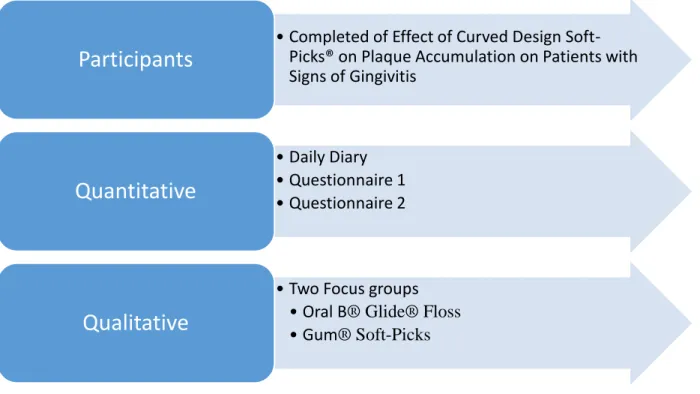
This mixed methods study was reviewed by the UNC Office of Human Research Ethics and was exempt from further review (IRB #17-1118). This study was part of a larger study titled “Effect of Curved Design Soft-Picks® on Plaque Accumulation on Patients with Signs of
Gingivitis.” (IRB #16-828). Participants of this study were divided into two groups: Oral B® Glide® Floss (F) and Gum® Soft-Picks (SP).
Quantitative
Quantitative data was collected from a daily diary (Figure 1) and two questionnaires (Figure 2) completed by the participants who completed the larger study. Inclusion criteria for this study included: participants aged 18 -70 years, who were routine manual toothbrush users with little to no experience with interproximal deplaquing devices, such as floss or interdental brush. They had signs and symptoms of gingivitis (defined by: all probing depths (PD) ≤4mm and bleeding on probing (BOP) ≥10%but ≤50% of sites), and may not have any tooth site with >5mm PD or >3mm clinical attachment loss. They may not have participated in an oral care study in the previous 90 days.
Participants were provided an at-home user experience diary, as well as his/her
scale. Choices varied depending on the topic that was asked of them (e.g., tired, confidence level, etc.).
All participants were provided both questionnaires 1 and 2 (Figure 2) and instructed on proper completion by the designated research staff. Questionnaire 1 asked “how important it is to a patient when choosing a product for between teeth cleaning”, and the answers were rated on a Likert scale of 1-5 from not at all important to extremely important. Questionnaire 2 asked “how much the participants agreed that each of the following characteristics accurately describes the product you used during this study.” The questionnaires should indicate the level of product familiarity, overall usage satisfaction, as well as motivation to use the product in the future. The scale ranged from disagree strongly to agree strongly.
Data Analysis
The demographics for the 49 participants were analyzed with Proc freq (SAS v. 9.3) and Proc Npar1way to run Chi-square and Wilcoxon Rank Sum Tests. The daily diary and
questionnaire responses were analyzed using Exact Mantel-Haenszel Chi-square tests with modified ridit scores comparing the distribution of agreement between groups. P-value was set to α< .05.
Qualitative
Inclusion criteria for the qualitative data collection included participants that completed the larger study. All 49 participants were contacted via email and phone with the opportunity to participate in the focus groups.
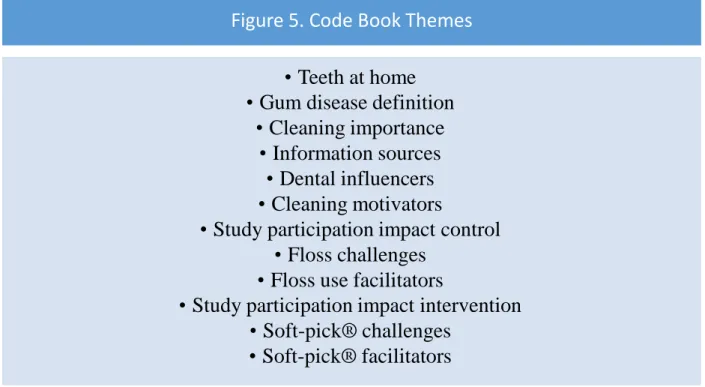
device they used in the larger study. All F participants were in one focus group and the SP participants were in another. Focus groups were facilitated by qualitative research specialists from CHAI Core (NIH funded company specializing in qualitative research). A focus group guide (Figure 3) was developed by research team, and later revised by a research qualitative specialist from CHAI Core. The focus group guide (Figure 3) consisted of 16 questions based on themes of participant periodontal knowledge, periodontal literacy, current behavior, and their feelings about interdental deplaquing. Participants received a monetary incentive and a parking voucher. Sessions were digitally recorded, and files were transcribed by an independent
company, Landmark, Associates, Inc. (Figure 4). Data Analysis
RESULTS
Quantitative
Questionnaires 1 and 2
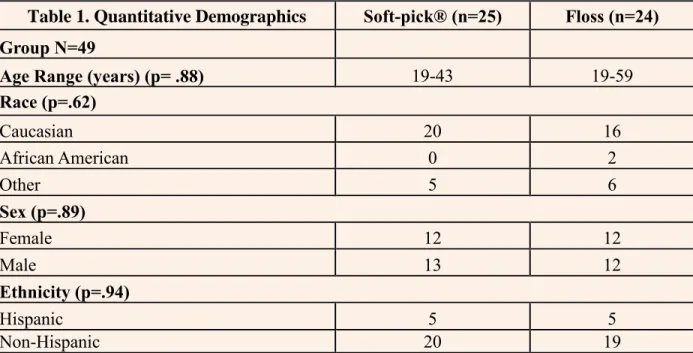
Forty-nine participants completed the Effect of Curved Design Soft-Picks® on Plaque Accumulation on Patients with Signs of Gingivitis at the SOD. The participants were divided into two groups. The SP group had 25 people with the age range of 19-43, and the F group had 24 people with the age range 19-59. There was no statistically significant proportional difference in the groups concerning sex, age, race or ethnicity for the questionnaires and daily diaries (Table 1).
when asked if the product: 1) makes cleaning between the teeth quick (p=0.006); 2) easy (p=0.01); 3) convenient (p=0.003); and 4) easy to hold (0.001) (Table 2). The F group had a statistically significant proportional agreement with the characteristic of the product being difficult to use (p=0.04) (Table 2).
Daily Diary
Data collected from the daily diary was analyzed regarding days of use with a product. For the number of days the interdental product was used, there was a median of 90.0% of days used for the F group and 93.3% of days used in the SP group. There was no statistically
significant proportional difference in the number of days a product was used during the 28-day study period between the two groups (p=.66). When asked how tired participants were on the days they were to use the product, 42.6% of the F group (n=47) and 64.3% of the SP group participants (n=47) reported being tired or very tired. When asked how motivated they were to brush their teeth on the days they were to use the product, 50.0% of the F group (n=47) and 51.0% of the SP group (n=47). The level of motivation to clean between their teeth with F at 40.7% (n=46) and SP at 53.6% (n=46). After using the interdental deplaquing method,
Qualitative
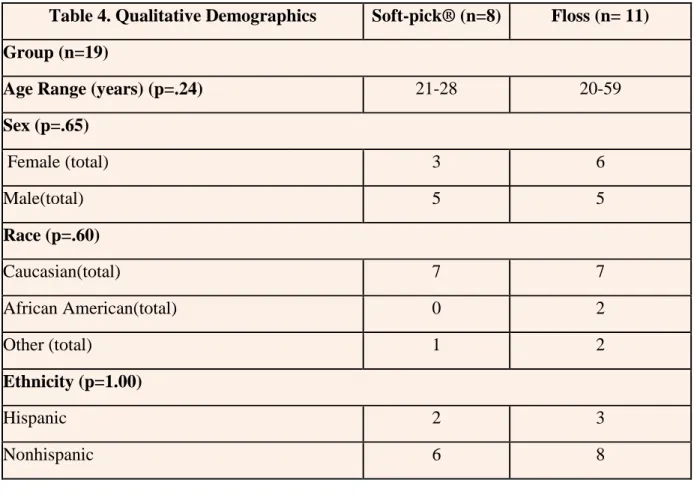
Nineteen participants completed the focus groups. The F focus group included 11
participants and the SP group had 8 participants. There was no statistically significant differences regarding age, sex, race or ethnicity between the two focus groups (Table 4).
Floss Experience and Challenges
Participants reported many benefits to being in the study, such as, establishing a maintainable routine and learning how to use the string floss correctly. Challenges reported included: uncertainty about correct flossing technique, belief it could cause aesthetic or health problems, and inconvenience and discomfort. This is represented in the following quotes:
"I think flossing is just, like, really annoying and inconvenient."
"When I was flossing, I wasn't sure if I was flossing right even though I know I was taught. And so, like, I felt like if I wasn't doing it right, then what was the point?”
Soft-pick® Experience and Challenges
Participants reported challenges, such as pain and irritation during use, difficulty cleaning between teeth effectively, the end was either too thick, or the length was too short to reach back teeth, some disliked the taste or that it was single use only. Examples of comments to
demonstrate this include:
“If they were a little bit longer and flexible maybe they wouldn’t have done that [broken].”
Facilitators for Improvement
Participants in both groups reported ways to improve the product or compliance with the products. They recommended creating a habit by incorporating it into your daily routine. Other comments suggested modifying the products for easier use. Participants also reported that clinicians should be discussing the initial discomfort for interdental cleaning. Statements to support this include:
"Create a flossing habit by making it part of daily routine." "Keep interdental aid in your home where it is easily seen."
"Improve the product or create a service that makes the product easier to use."
"Clinicians should discuss how long patients should expect initial discomfort associated with flossing."
Motivation
Many participants reported only cleaning between their teeth periodically when they felt food trapped between them. Other motivating factors included: wanting their mouth to taste and feel clean, concern about bad breath, and their awareness of the health benefits with good oral hygiene. Reasons for reported lack of motivation included: short-term benefits did not equate to amount of effort required to complete, it was a hassle and time consuming, and they were unclear about the health benefits or felt that it was more of a concern for later in life. Participant
comments included: Motivators
“I don't feel like my teeth are clean unless I floss them…And I don’t feel like the toothbrush does enough.”
Lack of Motivation
”You don't see the benefits [of interdental cleaning] right away.”
“For me would be it's not that I don't want to or can’t do or don’t like it. It's that I need to be convinced…I'm not sold on it.”
Oral Health Literacy
Knowledge of Interdental Cleaning Importance
When participants were asked what they knew regarding the importance of cleaning in between their teeth, they reported receiving mixed messages about why it is essential and
required frequency. Some participants reported awareness of a link between poor oral health and heart disease, and that bacteria could accumulate between your teeth causing gum disease. They also reported hearing that maintaining good oral health could prevent bad breath, salivary stones, TMJ, sleep apnea, gum recession and loss of bone density in teeth and jaws. Most participants were aware that cleaning between their teeth on a regular basis was recommended, but some participants reported that they heard it was unnecessary. Participant comments included:
“My dentist said she didn't floss every day.
“There's, like, research out now that you don't have to floss every day.”
Definition of Gum Disease
them, and many quotes showed their lack of knowledge on gum disease. Participant comments included:
"I haven't heard them use periodontal disease or gum disease for years. …The last thing I remember is there was early 2000's, but they didn't explain what gingivitis was. ….It was just a word that was bad that most people didn't seem concerned about."
“I know a little bit about the cause, but I have no idea what it looks like or symptoms or what it looks like when you’re about to start getting it.”
Dental Influencers/ Information Sources
Participants reported that they received their oral health information in many ways, but the most influential time period was during childhood. They described the information they received, and how they learned from their parents and oral health lessons in school or pediatric care. As adults, participants received or actively sought out information from dental providers, internet, and the UNC dental school. They explained that each of these had influenced their oral health decisions. They described ways that the media, through advertisement and product
placement, drew their attention to available products and made some appear more appealing than others. This is illustrated by the following comments:
“Yeah, I remember when I was in school…they would teach you how to brush your teeth, but nobody ever taught us how to floss… ”
“You see 100 ads for toothpaste and toothbrushes a day….I don’t think I’ve ever seen a floss ad ever.”
Priorities for Daily Oral Care Practices
Participants stated:
“Some toothbrushes actually can get between teeth and do a better job of taking care of that.”
DISCUSSION
While studies regarding interdental deplaquing have generally collected quantitative data, few have focused on a qualitative design. There is a need for research to collect data that
includes identification of barriers, perceptions of participants, current patient OHL and effect on motivation to interdental plaque control. This mixed methods study provides insight from the participants to allow a better understanding of what prevents a patient from complying/adhering to use of interdental cleaners and what would motivate a patient to be compliant with an at-home interdental cleaner.
Participants revealed in the daily diaries and questionnaires that there was pain or discomfort during flossing, similar to findings by Aguirre et. al33. Participants in the Aguirre study knew it was important to floss, but did not comply because of discomfort and bleeding that occurred during flossing.33 During the focus group, participants in the current study revealed some common themes such as inconvenience, discomfort and irritation with flossing. One participant felt that clinicians should discuss the expected initial discomfort of flossing. Participants found the value of continual flossing for 30 days and how the discomfort wanes once the gingivitis is healed. Clinicians should provide instructions and discuss the possibility of initial discomfort.
Results from this study align with other studies that reveal poor OHL in adults.
of OHL was revealed among current participants during the focus groups. Although some were correct in their one word definitions of gum disease, many could not elaborate what the word meant regarding oral health. Many had heard mixed messages about interdental cleaning, ranging from “my dentist told me they do not floss” to “there’s research out there that says we don’t have to floss.” They felt that gum disease was something “not to be too concerned about” since people do not talk about it much. When discussing influence, they reported that childhood was their most significant influential time but that even during school, brushing was always emphasized, and they were not shown how to floss. Participants reported seeing multiple advertisements for toothbrushes and toothpaste; however, they did not recall the same frequency for floss. Without adequate advertisements and community education, knowledge about interdental plaque devices and importance will not reach the part of the population without access to dental care. Social media, as well, as commercial advertising would be an excellent way to reach this population. Community outreach programs need to be developed to focus on prevention and oral hygiene instructions. School programs could be implemented to assist in reaching the younger population for lifelong behavior development.
Alwaeli et al. revealed low OHL in pregnant women. Most of the women knew the main cause of gum disease, but did not believe they needed to alter their habits to improve their oral health and were unaware of their current oral health state.34 The study suggested a need for health professionals to discuss the increased risk for periodontal diseases during pregnancy.34
the development of good oral care. Implementing the knowledge about infant through teenage oral health care into first time parenting classes and programs, or providing pamphlets to first time mothers in physician offices are some steps in the right direction to getting the knowledge out there.
Participants in this study reported a lower motivation for interdental deplaquing in their daily diaries. This result is in line with statistics that show only 4 out of 10 Americans floss daily and 32 percent have never flossed.15–17 Buunk-Werkhoven et al. showed that two-thirds of the population in his study brushed two times daily, but only a fourth flossed daily.37 When asked about motivation, participants reported that their motivation to brush was that they wanted a fresh mouth without poor breath. They did not understand the benefits and felt that flossing was a time consuming task. Participants were unaware that people who brush can still have bad breath due to the bacteria left interproximal. Therefore, with lack of OHL their biggest concern, bad breath, may still unveil in their mouth. This is why it is important to increase OHL in patients. Health professionals should be educating their patients, and there needs to be community-based education with educational messages to reach those who are not seeking routine dental care.38
health and lack of care.19 Mann et al. showed that patients who were made aware of benefits and risks of not flossing increased their interdental deplaquing compliance.30 Kamalikhah et al. agreed that perceived benefits was a factor for oral behavior.39 The participants reported in the focus group that they did not understand the benefits of interdental deplqauing. Patients with higher OHL can communicate more efficiently and typically report better oral health,24 so the increase in literacy for the public is important. Increasing a parent’s OHL should result in better oral health for children22,23 and teach them habits early to carry through life instead of trying to correct a poor habit during adulthood. This may also increase dental production in offices, since patients with higher OHL tend to keep their dental appointments.26
Participants in this study discussed social influences as a determining factor for their oral hygiene care, including friends, family, media and their dental provider. This is supported by Buunk-Werkhoven et al. who showed that motivation of patients was affected by social outcomes.37 Focus group participants discussed seeing only advertisements for expensive products instead of basic oral care needs and the desire to try some just because of the
endorsement on television. This agreed with participants of Aguirre-Zero et al. who reported lack of media messages regarding lifestyle changes to affect oral health.33 Some of this study’s
participants reported beginning to use power brushes simply because their family was using it, or their dentist suggested it with great enthusiasm.
of use and difficulty to understand how to use. One participant expressed this, “When I was flossing, I wasn’t sure if I was flossing right even though I know I was taught. And so, like, I felt like if I wasn’t doing it right, then what was the point?” Increasing literacy of how to floss properly, as well as, alternatives will be able to help patients find the most effective and efficient interdental deplaquing device to meet their individual needs. This can be accomplished by methods like the transtheoretical model that focuses on self-efficacy with processes of change.28 This method has been successful in tobacco cessation and cancer programs and is believed it could work if applied to dental situations.29 Increasing perceived behavior control through motivational messaging has been shown to increase compliance.31 Motivational interviewing is a
patient centered tool that is effective for behavior changes in oral health.32 Creating a habit of daily flossing by changing behaviors was an interest for participants of this study.
Strengths
Strengths of this study include the mixed-methods design. With a mixed methods study not only were we able to receive a quantitative Likert scale answer, we were then able to receive insight into why that answer was chosen during the qualitative focus group. Participants had a unique perspective since they had equal access and consistent experience with the interdental device they discussed. Throughout the study, an unbiased company, Chai Core, who specializes in qualitative research and analysis, guided the committee.
Limitations
Limitations of this study include: a small convenience sample size of participants that were either employed or enrolled in UNC Chapel Hill. There was a better distribution in age range of 19-59 for the quantitative portion, but in the qualitative portion, the SP group only represented ages 21-28. There was no crossover with the interdental devices used. The SP group had no experience with the F and vice versa. This would have given a great perspective to compare the use of both within the same subjects and their perceptions.
Implications for Future Research
CLINICAL RELEVANCE
Scientific Rationale for Study
Qualitative research is needed to identify patient barriers, perceptions, OHL and motivation regarding interdental deplaquing.
Principal Findings
Participants had an overall perceived satisfaction with the effectiveness of the F and ease of use with the SP. Participants showed lack of literacy and motivation regarding interdental deplaquing.
Practical Implications
CONCLUSION
REFERENCES
1. Interdental brushes, other aids provide alternatives to flossing - DentistryIQ. Available at: http://www.dentistryiq.com/articles/2011/03/interdental-brushes.html. Accessed January 26, 2018.
2. Wilkins E, Wyche C, Boyd L. Oral Infection Control: Interdental Care. In: Clinical
Practice of the Dental Hygienist. 12th ed.; 2016:472-485.
3. Floss/Interdental Cleaners. Available at: https://www.ada.org/en/member-center/oral-health-topics/floss. Accessed January 26, 2018.
4. Wilkins E, Wyche C, Boyd L. Dental Biofilm and Other Soft Deposits . In: Clinical
Practice of the Dental Hygienist. 12th ed.; 2016:257.
5. De Freitas GC, Pinto TMP, Grellmann AP, et al. Effect of self-performed mechanical plaque control frequency on gingival inflammation revisited: a randomized clinical trial. J
Clin Periodontol. 2016;43(4):354-358. doi:10.1111/jcpe.12520.
6. Bourgeois D, Saliasi I, Llodra JC, Bravo M, Viennot S, Carrouel F. Efficacy of interdental calibrated brushes on bleeding reduction in adults: a 3-month randomized controlled clinical trial. Eur J Oral Sci 2016;124(6):566-571. doi:10.1111/eos.12302.
7. Christou V, Timmerman MF, Van der Velden U, Van der Weijden FA. Comparison of different approaches of interdental oral hygiene: interdental brushes versus dental floss. J
Periodontol. 1998;69(7):759-764. doi:10.1902/jop.1998.69.7.759.
8. Crocombe LA, Brennan DS, Slade GD, Loc DO. Is self interdental cleaning associated with dental plaque levels, dental calculus, gingivitis and periodontal disease? J Periodontal Res. 2012;47(2):188-197. doi:10.1111/j.1600-0765.2011.01420.x.
9. Rasines G. The use of interdental brushes along with toothbrushing removes most plaque.
Evid Based Dent. 2009;10(3):74. doi:10.1038/sj.ebd.6400666.
10. Sambunjak D, Nickerson JW, Poklepovic T, et al. Flossing for the management of periodontal diseases and dental caries in adults. Cochrane Database Syst Rev. 2011;(12):CD008829. doi:10.1002/14651858.CD008829.pub2.
11. Slot DE, Dörfer CE, Van der Weijden GA. The efficacy of interdental brushes on plaque and parameters of periodontal inflammation: a systematic review. Int J Dent Hyg
2008;6(4):253-264. doi:10.1111/j.1601-5037.2008.00330.x.
12. Bhaskar SN, Cutright DE, Gross A, Frisch J, Beasley JD, Perez B. Water jet devices in dental practice. J Periodontol. 1971;42(10):658-664. doi:10.1902/jop.1971.42.10.658. 13. Sälzer S, Slot DE, Van der Weijden FA, Dörfer CE. Efficacy of inter-dental mechanical