Progestin-only contraceptives: effects on weight
Laureen M Lopez1, Shanthi Ramesh2, Mario Chen3, Alison Edelman4, Conrad Otterness5,
James Trussell6, and Frans M Helmerhorst7
1Clinical and Epidemiological Sciences, FHI 360, Durham, North Carolina, USA 2Department of
Obstetrics and Gynaecology, University of North Carolina, Chapel Hill, NC - North Carolina, USA
3Biostatistics, FHI 360, Durham, North Carolina, USA 4Dept. of Obstetrics and Gynecology,
Oregon Health & Science University, Portland, Oregon, USA 5Global Health Access Program,
Mae Sot, Thailand 6Office of Population research, Princeton University, Princeton, New Jersey,
USA 7Dept. of Clinical Epidemiology, Leiden University Medical Center, Leiden, Netherlands
Abstract
Background—Progestin-only contraceptives (POCs) are appropriate for many women who cannot or should not take estrogen. POCs include injectables, intrauterine contraception, implants, and oral contraceptives. Many POCs are long-acting, cost-effective methods of preventing pregnancy. However, concern about weight gain can deter the initiation of contraceptives and cause early discontinuation among users.
Objectives—The primary objective was to evaluate the association between progestin-only contraceptive use and changes in body weight.
Search methods—Until 4 August 2016, we searched MEDLINE, CENTRAL, POPLINE,
LILACS, ClinicalTrials.gov, and ICTRP. For the initial review, we contacted investigators to identify other trials.
Selection criteria—We considered comparative studies that examined a POC versus another contraceptive method or no contraceptive. The primary outcome was mean change in body weight
Contact address: Laureen M Lopez, Clinical and Epidemiological Sciences, FHI 360, 359 Blackwell St, Suite 200, Durham, North Carolina, 27701, USA. [email protected].
CONTRIBUTIONS OF AUTHORS
2010: L Lopez reviewed the search results, extracted and entered the data, and drafted the initial review. A Edelman and F Helmerhorst did part of the second data extraction. M Chen provided guidance on study design, data analysis, and interpretation of results. All authors reviewed and commented on the document.
2013: C Otterness reviewed the search results, did the primary data extraction and entering, and incorporated the new study. L Lopez did the second data extraction and updated the text. M Chen provided guidance on study design, data analysis, and interpretation of results. All authors reviewed and commented on the document.
2016: L Lopez ran the searches, revised the quality assessment for NRS, revised the text and tables to incorporate the new studies, and added the ’Summary of findings tables.’ S Ramesh reviewed the search results, extracted and entered study characteristics, and helped update the text. L Lopez and S Ramesh entered and checked the outcome data for new studies. M Chen reviewed and contributed to the revised criteria for quality of evidence for all studies, and consulted on the presentation and interpretation of the outcome data. All authors reviewed and commented on the document.
DECLARATIONS OF INTEREST
HHS Public Access
Author manuscript
Cochrane Database Syst Rev
. Author manuscript; available in PMC 2017 August 28.Published in final edited form as:
Cochrane Database Syst Rev. ; (8): CD008815. doi:10.1002/14651858.CD008815.pub4.
A
uthor Man
uscr
ipt
A
uthor Man
uscr
ipt
A
uthor Man
uscr
ipt
A
uthor Man
uscr
or mean change in body composition. We also considered the dichotomous outcome of loss or gain of a specified amount of weight.
Data collection and analysis—Two authors extracted the data. Non-randomized studies (NRS) need to control for confounding factors. We used adjusted measures for the primary effects in NRS or the results of matched analysis from paired samples. If the report did not provide adjusted measures for the primary analysis, we used unadjusted outcomes. For RCTs and NRS without adjusted measures, we computed the mean difference (MD) with 95% confidence interval (CI) for continuous variables. For dichotomous outcomes, we calculated the Mantel-Haenszel odds ratio (OR) with 95% CI.
Main results—We found 22 eligible studies that included a total of 11,450 women. With 6 NRS added to this update, the review includes 17 NRS and 5 RCTs. By contraceptive method, the review has 16 studies of depot medroxyprogesterone acetate (DMPA), 4 of levonorgestrel-releasing intrauterine contraception (LNG-IUC), 5 for implants, and 2 for progestin-only pills.
Comparison groups did not differ significantly for weight change or other body composition measure in 15 studies. Five studies with moderate or low quality evidence showed differences between study arms. Two studies of a six-rod implant also indicated some differences, but the evidence was low quality.
Three studies showed differences for DMPA users compared with women not using a hormonal method. In a retrospective study, weight gain (kg) was greater for DMPA versus copper (Cu) IUC in years one (MD 2.28, 95% CI 1.79 to 2.77), two (MD 2.71, 95% CI 2.12 to 3.30), and three (MD 3.17, 95% CI 2.51 to 3.83). A prospective study showed adolescents using DMPA had a greater increase in body fat (%) compared with a group not using a hormonal method (MD 11.00, 95% CI 2.64 to 19.36). The DMPA group also had a greater decrease in lean body mass (%) (MD −4.00, 95% CI −6.93 to −1.07). A more recent retrospective study reported greater mean increases with use of DMPA versus Cu IUC for weight (kg) at years 1 (1.3 vs 0.2), 4 (3.5 vs 1.9), and 10 (6.6 vs 4.9).
Two studies reported a greater mean increase in body fat mass (%) for POC users versus women not using a hormonal method. The method was LNG-IUC in two studies (reported means 2.5 versus −1.3; P = 0.029); (MD 1.60, 95% CI 0.45 to 2.75). One also studied a desogestrel-containing pill (MD 3.30, 95% CI 2.08 to 4.52). Both studies showed a greater decrease in lean body mass among POC users.
Authors’ conclusions—We considered the overall quality of evidence to be low; more than half of the studies had low quality evidence. The main reasons for downgrading were lack of randomizations (NRS) and high loss to follow-up or early discontinuation.
These 22 studies showed limited evidence of change in weight or body composition with use of POCs. Mean weight gain at 6 or 12 months was less than 2 kg (4.4 lb) for most studies. Those with multiyear data showed mean weight change was approximately twice as much at two to four years than at one year, but generally the study groups did not differ significantly. Appropriate counseling about typical weight gain may help reduce discontinuation of contraceptives due to perceptions of weight gain.
A
uthor Man
uscr
ipt
A
uthor Man
uscr
ipt
A
uthor Man
uscr
ipt
A
uthor Man
uscr
Medical Subject Headings (MeSH)
Body Composition [drug effects]; Body Weight [*drug effects]; Contraceptives, Oral, Hormonal [*pharmacology]; Levonorgestrel [*pharmacology]; Medroxyprogesterone Acetate
[*pharmacology]; Progestins [*pharmacology]; Weight Gain [drug effects]
MeSH check words
Female; Humans
PLAIN LANGUAGE SUMMARY
Effects of progestin-only birth control on weight
Progestin-only contraceptives (POCs) can be used by women who cannot or should not take the hormone estrogen. Many POCs are long acting, cost less than some other methods, and work well to prevent pregnancy. Some people worry that weight gain is a side effect of these birth control methods. Concern about weight gain can keep women from using these methods. Further, some women may stop using birth control early, which can lead to unplanned pregnancy. We looked at studies of POCs and changes in body weight.
Until 4 August 2016, we did computer searches for studies of a POC compared with another birth control method or no contraceptive. For the initial review, we wrote to investigators to find other trials. The focus was on change in body weight or other body measure of lean or fat mass.
With six new studies in this update, we have 22 studies that included 11,450 women. The groups compared did not differ much for weight change or other body measures in 15 studies. Five studies with moderate or low quality results showed a difference between study groups. Three studies showed differences for users of the injectable ‘depo’ versus no hormonal method. Depo users had a greater weight gain in two studies. In the third study, adolescents had a greater increase in body fat (%) and decrease in lean body mass (%). Two studies showed a greater increase in body fat (%) for users of hormonal intrauterine contraception versus women not using a hormonal method. One also showed a similar difference with a progestin-only pill. Both studies showed a greater decrease in lean body mass with POC use.
We found little evidence of weight gain when using POCs. Mean weight gain at 6 or 12 months was less than 2 kg (4.4 lb) for most studies. The groups using other birth control methods had about the same weight gain. Good counseling about typical weight gain may help women continue using birth control.
BACKGROUND
Description of the condition
Many women consider weight gain a side effect of using hormonal contraceptives (Bartz 2011; Raymond 2011). This perception may be based on self-report of side effects rather
A
uthor Man
uscr
ipt
A
uthor Man
uscr
ipt
A
uthor Man
uscr
ipt
A
uthor Man
uscr
than actual weight changes (Paul 1997; Berenson 2008; Nault 2013). Many clinicians and women believe that progestin-only contraceptives cause weight gain (WebMD 2010; Albright 2015).
Concern about weight gain can deter the initiation of contraceptives and cause early discontinuation among users. In a United States (US) study of bone mineral density, weight gain was reported more often by women using depot medroxyprogesterone acetate (DMPA) than those using a low-dose oral contraceptive (Berenson 2008). Weight gain was the most common side effect reported with DMPA use, after menstrual disturbances, in a New Zealand study (Paul 1997), and was the most common self-reported side effect in a study from Iran (Veisi 2013). Reported weight gain has been a major reason for discontinuing DMPA use in the US (Bonny 2004). Some evidence suggests that DMPA is a concern for adolescents who are already obese (Curtis 2009). From a survey of Latin American women across four countries, more women believed levonorgestrel-releasing intrauterine
contraception (LNG-IUC) led to weight gain, mood swings, and infertility compared with copper IUC (Silva-Filho 2016). In a US study, more women reported weight gain as a side effect for the etonogestrel implant than for LNG-IUC (Dickerson 2013). Weight gain was also reported for levonorgestrel implants (Sivin 2003). The gain may have been greater among women in the US than among those in China, and may be partly attributable to differences in dietary habits.
Description of the intervention
Progestin-only contraceptives (POCs) include injectables, implants, hormonal intrauterine contraception (IUC), and pills. Except for the pills, POCs are longer-acting and help free women from daily action to prevent unintended pregnancy. Such methods are among the most cost-effective contraceptives in many areas. Studies of long-acting methods are often of longer duration than those for pills, making study of weight change over time more feasible.
POCs do not contain estrogen, unlike combined hormonal contraceptives that have both progestin and estrogen. Therefore, POCs are appropriate for women who cannot or should not take estrogen (ACOG 2006). In Medical Eligibility Criteria, POCs are category 1 for women who are obese (body mass index (BMI) ≥ 30 kg/m2) (CDC 2012b; WHO 2015a; WHO 2015b). Category 1 is a condition with no restriction for use of the contraceptive method. For obese adolescents, DMPA is category 2 due to possible effects on bone mineral density. For category 2, method advantages generally outweigh the theoretical or proven risks. POCs are also category 1 for breastfeeding women who are at least six weeks postpartum. Combined hormonal contraceptives are category 3 for such women until six months postpartum (WHO 2015b). In the US, CHCs are considered category 2 by one month postpartum (CDC 2012b).
Worldwide, intrauterine contraception (IUC) is the most commonly used reversible method among women married or in union (UN 2015). In the US in 2012, IUC use was low compared with oral contraceptive use (Guttmacher 2015). However, use of long-acting reversible methods (LARC) increased to 11.6% from 8.5% in 2009 (Kavanaugh 2015).
A
uthor Man
uscr
ipt
A
uthor Man
uscr
ipt
A
uthor Man
uscr
ipt
A
uthor Man
uscr
(COCs) and progestin-only pills (POPs). In the least developed countries, injectables are most commonly used, followed by oral contraceptives (UN 2015). Some injectable contraceptives contain both estrogen and progestin, while others like DMPA are progestin-only.
How the intervention might work
In general, weight gain is due to an increase in fluid retention, muscle mass, or fat deposition. Research on mechanisms for weight change include investigations related to contraceptive use. Two uncontrolled studies included DMPA initiators, 12 to 21 years old. In a six-month study with 43 DMPA users, weight increased 1.2 kg among African Americans, as did BMI and total body fat. However, appetite score decreased while on DMPA for both African American and white participants (Bonny 2004). A 12-month study with 45 young women looked for associations of reported dietary intake with body composition change (Lange 2015). BMI increased significantly over 12 months, i.e. 1.6 kg/m2, but was not associated with total energy intake or macronutrient composition of the diet (carbohydrates, fat, or protein). The study lost 31% of participants.
Other experimental studies included adult women. A nine-week study of resting metabolic rate (RMR) with DMPA initiation included 13 women with BMI 20 to 35 kg/m2. RMR increased significantly during the first three weeks compared with the next six, especially for those who initiated during the luteal cycle (Steward 2016). An increase in non-shivering thermogenesis was consistent with the RMR change. A six-month metabolic study of P-O methods focused on 25 obese women (BMI ≥ 30) (Bender 2013). Participants chose the levonorgestrel-releasing intrauterine system (LNG-IUS), the etonogestrel-releasing (ETG) implant, or a non-hormonal method. Fasting glucose increased and insulin sensitivity decreased more with the ETG implant than with the LNG-IUS when compared to a non-hormonal method. An eight-week study examined DMPA effects on food motivation centers in the brain (Basu 2016). Eight of 14 women completed the protocol with data for analysis. All had BMI < 30 and most were Latina. The investigators used functional magnetic resonance imaging (MRI) to assess response to food cues. The blood oxygen level dependent signal was greater after eight weeks of DMPA compared with baseline. Some brain regions had significant activation after DMPA with food versus nonfood images and with high-calorie versus low-calorie food cues. Circulating leptin and ghrelin, hormones known to regulate eating behavior, did not change significantly. Such work may help elucidate mechanisms when conducted with larger sample sizes.
During adolescence, some weight gain is developmentally normal and appropriate. Also, people tend to gain weight over time (Flegal 2000). In the US, the prevalence of overweight or obesity is higher for men and women 40 to 59 years of age compared with those aged 20 to 39 years (Ogden 2014). In contraceptive studies, weight change is rarely a primary outcome in contraceptive studies. No consensus exists regarding what is excessive weight gain. Examining contraceptive use and weight gain can be complicated by the initial weight of the users. Recent interest in the effectiveness of hormonal contraceptives among obese women has led to more research with such women, who had been historically excluded from such studies (Bender 2013; Lopez 2013; Edelman 2014).
A
uthor Man
uscr
ipt
A
uthor Man
uscr
ipt
A
uthor Man
uscr
ipt
A
uthor Man
uscr
Concern about contraceptive effectiveness among overweight women (Robinson 2013; Merki-Feld 2015) has led to questions about contraceptive usage by overweight or obese women. An analysis of medical records from 231 health centers examined contraceptive use among 147,336 US women, age 15 to 44 years (Kohn 2015). The obese women (BMI ≥ 30) were more likely to use LARC than women with a BMI < 30 (13% versus 9%, respectively). Obese women were less likely than women with a lower BMI to use OCs, the injectable, the vaginal ring, or the subdermal patch (76% versus 82%, respectively). An analysis of US survey data examined contraceptive use in the past month (Callegari 2014). The women were sexually active, obese (BMI > 30), and age 20 to 44 years. LARC use among these obese women was nearly 10%, but only about 38% reported using OCs, the patch, the ring, or injectable contraception. While 21% reported not using a contraceptive method in the past month, 31% used a nonprescription method, i.e. condoms or another barrier method,
withdrawal, or fertility awareness methods. Those two groups were more likely to be the youngest and oldest (aged 20 to 24 or 40 to 44). Women who used nonprescription methods were less likely to report having discussed contraception with a healthcare provider in the past year.
Why it is important to do this review
Prior to the initial review, no comprehensive systematic review existed on progestin-only contraceptives and weight change. Concern about weight gain might deter women from using these effective contraceptives and health care providers from recommending them. We did not examine effectiveness nor focus on overweight women. Many reviews have
examined effectiveness of specific progestin-only contraceptives, such as progestin-only pills (Grimes 2013) and IUC (Grimes 2007). Further, a Cochrane review examined effectiveness of hormonal contraceptives for overweight women versus women who were not overweight (Lopez 2013).
Progestin-only contraceptives are an attractive option for many women. The longer-acting POCs, especially IUC and implants, are among the more effective methods with typical use (Trussell 2011). The cost for POCs can be less than that of COCs in some areas, and many postpartum women can use them. Further, POCs are appropriate for women at increased risk for venous thromboembolism such as those who are obese (Merki-Feld 2015), which is important given the worldwide epidemic of obesity (Prentice 2006; Flegal 2012; Ogden 2014). Being overweight or obese increases also risk for Type 2 diabetes and other diseases and disorders.
OBJECTIVES
The primary objective was to evaluate the potential association between progestin-only contraceptive use and changes in body weight.
METHODS
Criteria for considering studies for this review
A
uthor Man
uscr
ipt
A
uthor Man
uscr
ipt
A
uthor Man
uscr
ipt
A
uthor Man
uscr
information on the specific contraceptive method(s) examined. We searched for studies with comparative data on a progestin-only contraceptive versus another contraceptive (differing in formulation, dose, regimen, or initiation time) or no hormonal contraceptive. Potential studies included comparisons of a POC with a combination contraceptive as well as comparisons of two different types of progestin-only contraceptives.
Types of participants—Participants were the women in the studies who used the progestin only contraceptive for contraception or who had the comparison intervention or placebo. We did not consider studies focused on women with specific health problems, such as diabetes or HIV.
Types of interventions—We considered any progestin-only contraceptive, such as an oral contraceptive, an injectable, an implant, or hormonal intrauterine contraception (IUC). Treatment duration must have been at least three cycles or three months.
The progestin method of interest must have been specified and not combined in a group with another method, e.g. a group that used either DMPA or norethisterone enanthate (NET-EN). The comparison could have been another progestin-only contraceptive or a group of contraceptives, such as COCs. We did not include comparison groups identified only as oral contraceptive (OC) users, since the oral contraceptives could have been progestin-only pills or combined oral contraceptives.
The progestin-only method had to be intended for contraception. We did not consider studies of contraceptives used for treatment for specific disorders, e.g. acne, hirsutism, or polycystic ovary syndrome.
Types of outcome measures—The primary outcome was the continuous outcome of
mean change in body weight, BMI, or body composition (e.g. percent body fat) over time with the use of progestin-only contraceptives. If mean change in body weight or BMI was not available per study arm, we examined the dichotomous outcome of loss or gain of a specified amount of weight in each study arm.
For high quality evidence, the study had to include mean change in body weight, BMI, or body composition. The time frame had to be 12 months.
We used measured weight and not self-reported weight. We excluded studies that did not report change data but only reported mean weight or BMI at pre- and post-treatment.
Search methods for identification of studies
Electronic searches—Until 4 August 2016, we searched MEDLINE, Cochrane Central Register of Controlled Trials (CENTRAL), POPLINE, Web of Science, and LILACS. We also searched for trials via ClinicalTrials.gov and the search portal of the International Clinical Trials Registry Platform (ICTRP). Appendix 1 shows the 2016 strategies. We listed the previous search strategies in Appendix 2.
A
uthor Man
uscr
ipt
A
uthor Man
uscr
ipt
A
uthor Man
uscr
ipt
A
uthor Man
uscr
Searching other resources—We examined reference lists of relevant articles. For the initial review, we contacted investigators in the field to seek additional unpublished trials or published trials that we may have missed in our search.
Data collection and analysis
Selection of studies—We assessed for inclusion all titles and abstracts identified during the literature searches. One author reviewed the search results and identified reports for inclusion or exclusion. A second author also examined the reports identified for appropriate categorization according to the eligibility criteria above.
We considered all comparative study designs. For example, studies could have been randomized controlled trials (RCTs), other prospective studies (provided intervention; assignment not random), observational studies of users, case-control studies, or retrospective chart reviews. We also considered post hoc analysis from any of these types of studies. However, the studies had to meet the Criteria for considering studies for this review.
Data extraction and management—Two authors conducted the data extraction. One author entered the data into Review Manager (RevMan 2014), and a second author checked accuracy. These data include the study characteristics, risk of bias, and outcomes. We focused on the primary and secondary outcomes for this review, which do not include all outcomes from each study. The authors resolved discrepancies through discussion.
Assessment of risk of bias in included studies—We examined the RCTs for
methodological quality in accordance with recommended principles (Higgins 2011), and entered the information into the Risk of bias tables. Factors considered are randomization method, allocation concealment, blinding, and losses to follow-up and early discontinuation.
For the NRS, we used the Newcastle-Ottawa Quality Assessment Scale (NOS) (Higgins 2011; Wells 2014). Of the two NOS versions, i.e. for case-control and cohort studies, the latter was more pertinent here (Appendix 3). The NOS investigators are examining the criterion validity and construct validity of this scale as well as the inter-rater reliability and intra-rater reliability. The scale does not yet have an overall scoring or threshold for a ’good’ or ’poor’ quality study. The NOS has eight items within three domains: selection
(representativeness), comparability (due to design or analysis), and outcomes (assessment and follow-up). A study can receive one star (✴) for meeting each criterion. The exception is comparability (design or analysis), for which a study can receive two stars (for design and analysis). We adapted the NOS items for this project as suggested by the developers (Wells 2014).
Measures of treatment effect—Outcomes listed in Characteristics of included studies focus on those relevant to this review. We examined weight change in relation to initial body weight or body mass index (BMI) [weight (kg)/height (m)2] when we had the necessary data. Weight change may differ for women who were initially overweight or obese versus those who were not. We preferred BMI over weight alone, as BMI is a better reflection of
A
uthor Man
uscr
ipt
A
uthor Man
uscr
ipt
A
uthor Man
uscr
ipt
A
uthor Man
uscr
studies. Frequently used BMI categories are 25 to 29.9 (kg/m2) for overweight and 30 or higher for obesity (CDC 2012a).
We examined results by the contraceptive method studied, e.g. injectable or implant, as well as by formulation, dose, or regimen as appropriate. The main comparisons for this review were between users of progestin-only contraceptives and users of another contraceptive (differing in formulation, dose, or regimen) or no hormonal contraceptive.
For weight change measure with follow-up of less than one year, we selected the six-month assessment (if available) and the latest date. If multiple time points were reported up to one year, we used the 6- and 12-month data. If data were available for more than three years, we used one-year data, the midpoint, and the last measure.
Randomized trials: For continuous variables, we computed the mean difference (MD) with 95% confidence interval (CI). Review Manager uses the inverse variance approach. For the dichotomous outcomes, we calculated the Mantel-Haenszel odds ratio (OR) with 95% CI. An example is the proportion of women who gained or lost more than 2 kg. Fixed and random effects give the same result if no heterogeneity exists, as when a comparison includes only one study.
Non-randomized studies: Given the need to control for confounding factors in NRS, we used adjusted measures for the primary effect measures when available or the results of matched analysis from paired samples. Investigators may have used a variety of adjustment strategies. When presenting results, we note the confounding factors considered in the design or analysis. If the report did not provide adjusted measures for the primary analysis, we used unadjusted outcomes with the methods described above for use with RCTs.
Dealing with missing data—We excluded studies with insufficient data on weight or BMI for analysis in this review. Reports sometimes provided results in figures without specific numbers; others presented means without any variance estimate. We contacted investigators for other missing data and for clarifications if the studies were less than 10 years old or had a report within the past five years. Investigators are unlikely to have access to data from older studies. Many studies in the initial review were more than 10 years old.
Assessment of heterogeneity—We expected study populations, designs, and interventions to be heterogeneous. We described the clinical and methodological diversity (or heterogeneity) of the studies. We did not pool data from studies that had different contraceptive methods (e.g. DMPA or implants), different doses of the same method, or different criteria for reporting weight change. Therefore, we were not able to conduct meta-analysis due to the range of contraceptive methods examined and different reporting for weight change. Heterogeneity is not an issue when a comparison has a single study.
Data synthesis—To assess the quality of evidence and address confidence in the effect estimates, we applied principles from GRADE (Grades of Recommendation, Assessment, Development and Evaluation) (Higgins 2011; GRADE 2013). If meta-analysis is not viable because of varied interventions or outcome measures, a typical ’Summary of findings’ table
A
uthor Man
uscr
ipt
A
uthor Man
uscr
ipt
A
uthor Man
uscr
ipt
A
uthor Man
uscr
is not feasible. Also, the criteria for quality assessment differ for NRS and RCTs. We provide ’Summary of findings’ tables for the main results, although we did not conduct a formal GRADE assessment for all outcomes (GRADE 2013).
We based our assessment of the body of evidence on the quality of evidence from the studies. In 2016, we revised the Risk of bias tables to accommodate RCTs and NRS. For the NRS, we used the Newcastle-Ottawa Quality Assessment Scale as noted earlier (Appendix 3). Evidence quality included the design, implementation, and reporting of the study. We list the criteria for downgrading below.
1. Inadequate randomization sequence generation or allocation concealment, or no information provided for either one (RCT), or study was not randomized (NRS)
2. NRS: high risk of bias in selection (NOS) or retrospective study of selected cases
3. NRS: no stars for comparability (NOS), i.e. not controlling for relevant confounding
4. Follow-up less than 12 months for change in weight or BMI
5. Losses (by one year or primary endpoint if more than one year): loss to follow-up greater than 20%, combined loss to follow-up and
discontinuation greater than 50%, or differential losses between groups (greater than 50% difference)
For the initial review in 2010 and the minor update in 2013, we used a basic process to assess evidence quality. For those versions, the initial grade was based on study design: RCTs were considered to provide high quality evidence; prospective non-randomized studies, moderate quality; and retrospective studies, low quality. Those ratings were then downgraded for high loss to follow-up and inappropriate exclusions after randomization.
Sensitivity analysis—We examined separately the studies that provided evidence of moderate or high quality.
RESULTS
Description of studies
Results of the search—The 2013 search produced 189 citations: 123 references from the database searches, 63 trials from the clinical trials sites, and 3 references from other sources. After reviewing the full text, we included one new study for a total of 16 studies. We excluded five studies and two secondary articles related to previously excluded studies. The remaining references were discarded after reviewing the titles and abstracts. From the clinical trials sites, we added three new trials to Ongoing studies.
The 2016 search produced 138 unduplicated references from the database searches (Figure 1). With one item from another source, the total was 139. We discarded 122 citations based
A
uthor Man
uscr
ipt
A
uthor Man
uscr
ipt
A
uthor Man
uscr
ipt
A
uthor Man
uscr
primary articles plus a secondary article). We included six new studies that involved six primary reports plus two secondary articles. Searches of recent clinical trials yielded 61 unduplicated listings. Two studies are completed but have not yet produced full reports (Studies awaiting classification). We will assess them for inclusion when full reports are available. Two other trials are Ongoing studies.
Included studies—With 6 new studies in this update, 22 studies now met our inclusion criteria. Fifteen were prospective and seven were retrospective.
• 15 prospective studies
• ◦ 5 randomized controlled trials (WHO 1983; Salem 1988; Ball 1991; Sivin 1998; Westhoff 2007)
◦ 10 non-randomized studies (NRS) (Tankeyoon 1976; Castle 1978; Salem 1984; Bonny 2009; Dal’Ava 2012; Nyirati 2013; Vickery 2013; Dal’Ava 2014; Dos Santos 2014; Napolitano 2015)
• 7 retrospective studies: NRS (Moore 1995; Taneepanichskul 1998; Espey 2000; Sule 2005; Tuchman 2005; Pantoja 2010; Modesto 2015)
The studies examined four categories of progestin-only contraceptives (Table 2).
• Oral contraceptives (OCs) containing norethisterone 350 µg, levonorgestrel 30 µg, or desogestrel 75 µg
• Injectables
◦ depot medroxyprogesterone acetate (DMPA): 150 mg/mL versus 450 mg/mL (intramuscular) or versus 104 mg/0.65mL (subcutaneous)
◦ norethisterone enanthate (NET-EN) 200 mg
• Implants: levonorgestrel 6 capsules or 2 rods; etonogestrel 1 rod
• Levonorgestrel-releasing intrauterine contraception (LNG-IUC)
Comparison groups included no hormonal method or a non-hormonal contraceptive; a different formulation, regimen, or initiation time of the same POC; another POC; and a combined contraceptive or a supplement containing estrogen.
Studies were conducted in the USA, South America, Europe, Africa, and Asia; some were conducted on multiple continents. Publication dates covered nearly 50 years: five studies from 1976 to 1988; four from 1991 to 1998; five from 2000 to 2009; and eight from 2010 to 2015. Duration of prospective follow-up or retrospective data collection was six months to two years for 16 studies, while four studies gathered data for three to five years of use, and two studies collected retrospective data for 10 years of use.
The studies included a total of 11,450 women with an average of 520 and a median about 160. Six studies had fewer than 100 participants, seven had 100 to 222 participants, six
A
uthor Man
uscr
ipt
A
uthor Man
uscr
ipt
A
uthor Man
uscr
ipt
A
uthor Man
uscr
ranged from 400 to 1000 women, and three had more than 1000 women. A few had comparison groups not used in this review because they did not meet our inclusion criteria.
We were not able to examine weight change in relation to age. Earlier, we identified three studies focused on adolescents and young women. Bonny 2009 analyzed data from a larger study of hormonal contraceptives and bone mineral density. Moore 1995 and Tuchman 2005 were retrospective chart reviews. A certain amount of weight gain is part of normal
development for adolescents. None of the newer studies focused on young women. Studies that included both adolescents and adult women did not provide outcome data for age subgroups.
Risk of bias in included studies
Figure 2 summarizes our assessments for the overall review. Table 1 shows how we rated each study, and Figure 3 illustrates our assessment for each study. Because we adapted the Risk of bias tables to accommodate criteria for NRS, some categories are not relevant to an RCT or an NRS. In those cases, we left the cell empty rather than state ’not applicable’ to distinguish between ’unclear’ and no assessment.
Allocation—Of the five RCTs, two reported the method of randomization and allocation concealment (Salem 1988; Sivin 1998). The other three had no information on
randomization method or allocation concealment (WHO 1983; Ball 1991; Westhoff 2007). Of the 17 NRS, one did not meet the NOS selection criteria (Taneepanichskul 1998).
Blinding—Two of the five RCTs had information on blinding. Ball 1991 was reportedly “single-blind” without any specifics. For one trial used in Westhoff 2007, the evaluators were blinded. For most studies, blinding was not feasible due to differences in the contraceptive methods or to women having chosen their contraceptive method in the NRS.
Incomplete outcome data—Of 22 studies, 18 had high risk of bias related to incomplete outcome data. Nine had loss to follow-up or discontinuation greater than 50% (Castle 1978; WHO 1983; Salem 1988; Ball 1991; Sivin 1998; Westhoff 2007; Nyirati 2013; Dal’Ava 2014; Dos Santos 2014). In Tankeyoon 1976, loss differed substantially between groups. Seven retrospective studies may have selected charts for those with complete data and not accounted for losses (Moore 1995; Taneepanichskul 1998; Espey 2000; Sule 2005; Tuchman 2005; Pantoja 2010; Modesto 2015). Modesto 2015 also had differential losses across group that varied over time. Vickery 2013 recruited women who completed at least 11 months of use.
Selective reporting—After randomization, Taneepanichskul 1998 excluded women who developed a chronic disease or disorder during method use. This exclusion may have biased the results. Weight gain is associated with development of some diseases and disorders.
Other potential sources of bias
NRS: comparability (NOS): Of 17 non-randomized studies, eight addressed potential
A
uthor Man
uscr
ipt
A
uthor Man
uscr
ipt
A
uthor Man
uscr
ipt
A
uthor Man
uscr
baseline BMI (Pantoja 2010; Dal’Ava 2012; Dos Santos 2014) or age and weight (Dal’Ava 2014). Four studies conducted analysis that adjusted for potential confounders (Moore 1995; Bonny 2009;Modesto 2015; Vickery 2013). In some cases, a comparison group did not meet our inclusion criteria, so we did not include that group in this review. Details are in
Characteristics of included studies.
Effects of interventions
See: Summary of findings for the main comparison; Summary of findings 2; Summary of findings 3
We grouped results according to four types of progestin-only contraceptives studied, though some studies included more than one progestin-only (P-O) method. Table 2 summarizes the study interventions and outcomes, along with the mean changes in weight or other body composition measure. Two studies examined progestin-only pills, 15 addressed DMPA, 5 investigated implants, and four evaluated LNG-IUC. We subdivided the DMPA studies into those comparing DMPA with a combination contraceptive, another progestin-only injectable formulation or regimen, or no hormonal contraception.
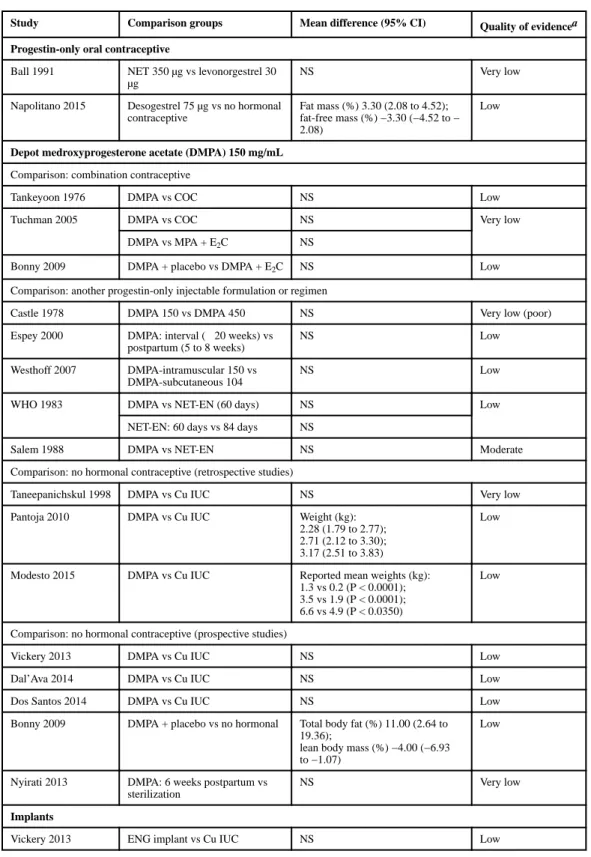
Progestin-only oral contraceptives—Two studies examined P-O oral contraceptives. In the RCT of Ball 1991, weight change at six months did not differ significantly between the norethisterone 350 µg and the levonorgestrel 30 µg groups (Analysis 1.1). Mean changes were small. The NRS of Napolitano 2015 compared body composition changes at 12 months for perimenopausal women receiving desogestrel 75 µg versus a control group with no hormonal treatment. The study also examined LNG-IUS. Changes in mean weight and BMI did not differ significantly between the OC group and the control group at 12 months (Analysis 2.1; Analysis 2.2). However, the desogestrel group had a greater increase in fat mass (%) (MD3.30, 95% CI 2.08 to 4.52) (Analysis 2.3).
Injectables
DMPA versus a combination contraceptive: Three NRS examined DMPA 150 mg/mL versus a contraceptive or supplement that also contained estrogen.
• In the small study of Tankeyoon 1976, the DMPA and COC groups were not significantly different in the proportions that gained (or lost) at least 1 kg by months 6 and 12 (Analysis 3.1 to Analysis 3.4).
• The retrospective study of Tuchman 2005 focused on adolescents and young women, age 12 to 21 years. At 6 and 12 months, weight changes were not significantly different between the DMPA group and the COC users (Analysis 3.5 to Analysis 3.8) or the group using
medroxyprogesterone acetate (MPA) plus E2C (Analysis 4.1 to Analysis 4.4).
• Bonny 2009 compared mean changes in total body fat (%) and lean body mass (%) at six months for DMPA 150 + placebo injection versus DMPA + estradiol cypionate 5 mg (E2C). The study targeted adolescents, age 12 to 18 years. The DMPA group was not significantly different from the
A
uthor Man
uscr
ipt
A
uthor Man
uscr
ipt
A
uthor Man
uscr
ipt
A
uthor Man
uscr
DMPA plus E2C group for mean change in percent body fat or percent lean body mass (Analysis 5.1; Analysis 5.2).
DMPA versus another P-O injectable formulation or regimen: Of five studies in this group, three compared DMPA 150 mg/mL with other DMPA formulations or regimens. In Castle 1978, the mean changes in weight at six months were small and did not differ significantly between the DMPA 150 and DMPA 450 groups (Analysis 6.1). The
retrospective study of Espey 2000 did not show a significant difference in weight gain at one or two years for those who initiated DMPA at 20 weeks or more after pregnancy (interval group) compared with those who initiated at 5 to 8 weeks (postpartum group) (Analysis 7.1; Analysis 7.2). In the RCT analyzed in Westhoff 2007, weight change was comparable for the group with intramuscular DMPA 150 and the group with subcutaneous DMPA 104
(Analysis 8.1).
Two RCTs examined DMPA 150 mg/mL versus NET-EN 200 mg. In WHO 1983, mean weight changes at 12 and 24 months did not differ significantly between the DMPA group and with the group administered NET-EN at 60-day intervals (Analysis 9.1; Analysis 9.2). Salem 1988 did not report the units for weight (lb or kg). However, the DMPA and the NET-EN groups did not differ significantly for mean changes in weight at one year (Analysis 9.3). Also in WHO 1983, two NET-EN regimens of 60 day-intervals versus 84-day intervals did not cause a significant difference in weight change (Analysis 10.1; Analysis 10.2).
DMPA versus no hormonal contraceptive: Eight NRS compared DMPA 150 mg/mL versus no hormonal method. Six had copper (Cu) IUC users as the comparison group; three studies were retrospective (Taneepanichskul 1998; Pantoja 2010; Modesto 2015) and three were prospective (Vickery 2013; Dal’Ava 2014; Dos Santos 2014). The remaining two prospective studies had other comparison groups (Bonny 2009;Nyirati 2013).
DMPA versus Cu IUC Retrospective studies
• Taneepanichskul 1998 did not show a significant difference in weight change between the DMPA and Cu IUC groups at 10 years (Analysis 11.1). Unlike most studies in this review, the participants did not include younger women. All were 37 to 50 years old.
• For Pantoja 2010, mean weight gain (kg) was greater for the DMPA group versus the Cu IUC group at years one (MD 2.28, 95% CI 1.79 to 2.77) (Analysis 11.2), two (MD 2.71, 95% CI 2.12 to 3.30) (Analysis 11.3), and three (MD 3.17, 95% CI 2.51 to 3.83) (Analysis 11.4). Per year, the mean weight changes for the DMPA group ranged from 1.76 kg to 3.9 kg, while changes within the IUC group were less than 1 kg (Analysis 11.5). For each year, the difference between contraceptive groups was notable within the normal to lower weight group (BMI < 25) and within the overweight group (BMI 25 to 29.9), but not within the obese group (BMI ≥ 30).
A
uthor Man
uscr
ipt
A
uthor Man
uscr
ipt
A
uthor Man
uscr
ipt
A
uthor Man
uscr
• Modesto 2015 examined cumulative weight changes over 10 years of uninterrupted use of DMPA versus the Cu IUC. Using a generalized linear mixed model, the investigators adjusted for years of school and number of children. The adjusted analysis indicated mean weight change was significantly greater for the DMPA group versus the Cu IUC group for the three time points we used. The reported adjusted means were: at 1 year, 1.3 versus 0.2 (P < 0.0001; Analysis 12.1); at 4 years, 3.5 versus 1.9 (P < 0.0001; Analysis 12.2); at 10 years, 6.6 versus 4.9 (P < 0.0350; Analysis 12.3). By four years, the DMPA and LNG-IUC group lost more than 20%; by 10 years, overall loss was 84%. The groups had differential losses at all three time points.
Prospective studies:
• Vickery 2013 was a substudy within CHOICE, a prospective study of 9256 women who received contraceptives at no cost. The investigators of the substudy examined weight change among women who had been continuous users of DMPA or the copper IUC for 11 months or longer. With a linear regression model, the investigators adjusted for the potential confounders of age and race. Weight change was not significantly different for use of DMPA compared with the Cu IUC (Analysis 12.4).
• Study designs were similar in Dal’Ava 2014 and Dos Santos 2014. While Dal’Ava 2014 paired participants in the DMPA and Cu IUC groups by age (± 2 years) and weight (± 2 kg), Dos Santos 2014 matched by age (± 1 year) and BMI (± 1 kg/m2). The regression model in Dal’Ava 2014 included the potential confounders of physical activity, consumption of coffee and alcohol, and smoking in regression. At 12 months, the study arms did not differ significantly for changes in total body mass (weight), fat mass, or lean mass in either study (Analysis 11.6). A secondary report from Dos Santos 2014 (Modesto 2014) included 29 women using DMPA and 25 using the Cu IUC. Multiple linear regression adjusted for potential confounders such as age, schooling, and pregnancies. DMPA use was significantly associated with change in total fat mass compared with Cu IUC use by 12 months (reported beta 2.09 ± SE 0.58; P < 0.002) but was not associated with change in percent body fat.
DMPA versus no hormonal method—Two studies compared women using DMPA to
another group using no hormonal method.
• Bonny 2009, mentioned above, also compared adolescents using DMPA 150 versus those using no hormonal method. By six months, the DMPA group had a greater increase in percent body fat (MD 11.00, 95% CI 2.64 to 19.36) (Analysis 13.1) and a greater decrease in percent lean body mass (MD −4.00, 95% CI −6.93 to −1.07) (Analysis 13.2).
A
uthor Man
uscr
ipt
A
uthor Man
uscr
ipt
A
uthor Man
uscr
ipt
A
uthor Man
uscr
• Nyirati 2013 compared DMPA at six weeks versus surgical sterilization among postpartum women, age 18 or older. By one year postpartum, the study arms did not differ significantly for change in weight, BMI, or percent body fat (Analysis 13.3 to Analysis 13.5). The sample size for the sterilization group was much smaller than that of the DMPA group.
Implants
Five studies examined implants, one RCT and four NRS. A 2013 report compared the single-rod etonogestrel (ENG) implant versus the copper IUC. Four older studies compared Norplant (six capsules) versus a non-hormonal IUC or another progestin-only contraceptive.
Vickery 2013, mentioned above with DMPA, also examined weight change over 12 months for the single-rod etonogestrel (ENG) implant versus the copper IUC. In the regression model adjusted for age and race, the ENG implant was not significantly associated with weight change compared with the Cu IUC (Analysis 12.4).
• Two studies utilized a non-hormonal IUC as the comparison.
◦ In a study with lactating women, Salem 1984 showed a greater weight gain (kg) at six months for the Norplant group versus the Cu IUC group (MD 0.47, 95% CI 0.29 to 0.65) (Analysis 14.1). The Norplant group also had a greater weight gain (kg) than the group that used barrier, ’local,’ or no contraceptive method (MD 0.74, 95% CI 0.52 to 0.96) (Analysis 15.1). ◦ For the retrospective study of Sule 2005, the Norplant group
had a significantly greater weight increase (kg) than the group with a non-hormonal IUC at one year (MD 1.10, 95% CI 0.36 to 1.84) (Analysis 14.2) but not at three years (Analysis 14.3). The same study compared the Norplant group versus a group using COCs. Weight change did not differ significantly between the groups at one year (Analysis 18.1). At three years, the COC group had only two participants.
• The retrospective study of Moore 1995 targeted adolescents and young women, ages 15 to 30 years. The Norplant and DMPA groups were not significantly different in mean weight change at one year (Analysis 16.1).
• In the RCT of Sivin 1998, mean weight change was not significantly different for the Norplant group versus the two-rod implant group at one, three, or five years (Analysis 17.1; Analysis 17.2; Analysis 17.3).
Levonorgestrel-releasing intrauterine contraception (LNG-IUC)
Four NRS examined the LNG-IUC versus the non-hormonal Cu IUC or no treatment.
• Dal’Ava 2012 compared body composition changes with LNG-IUC versus with the Cu IUC. The two groups were paired by age (± 2 years) and BMI
A
uthor Man
uscr
ipt
A
uthor Man
uscr
ipt
A
uthor Man
uscr
ipt
A
uthor Man
uscr
in body fat mass compared with Cu IUC group (reported means 2.5% versus −1.3%; P = 0.029) (Analysis 19.1). The LNG-IUC group also differed from the Cu IUC users in percent change in lean body mass (reported means 1.4% versus 1.0%; P = 0.027).
• In addition to DMPA and the ENG implant, Vickery 2013 also examined LNG-IUC versus the Cu IUC. The linear regression model indicated weight change with the LNG-IUC was not significantly different at 12 months from that with the non-hormonal IUC (Analysis 12.4).
• In addition to examining weight change with DMPA use (above), Modesto 2015 compared weight change with LNG-IUC versus that with the Cu IUC. The study groups did not differ significantly for mean weight gain (kg) at 1 and 10 years after adjusting for years of school and number of children (Analysis 12.1; Analysis 12.3). As noted above for DMPA, losses were high and differential across groups.
• Besides an OC containing desogestrel (above), Napolitano 2015 also compared body composition changes at 12 months for perimenopausal women using LNG-IUC versus a control group receiving no hormonal treatment. In unadjusted analysis, change in mean weight or BMI did not differ significantly between the LNG-IUC group and the control group at 12 months (Analysis 19.2; Analysis 19.3). However, compared with the control group, the LNG-IUC group had a greater mean increase in percent fat mass (MD 1.60, 95% CI 0.45 to 2.75) (Analysis 19.4) and therefore a greater mean decrease in fat free mass (MD −1.60, 95% CI −2.75 to −0.45) (Analysis 19.5).
DISCUSSION
Summary of main results
Actual mean weight gain at 6 or 12 months was limited, i.e. less than 2 kg for most studies up to one year (Table 2). The six studies with multiyear data showed that mean weight change was approximately twice as much at two to four years compared with one year, but generally the study groups did not differ significantly. These studies and their years of data included two RCTs (WHO 1983 [2 years]; Sivin 1998 [5 years]) and four retrospective studies (Espey 2000 [2 years]; Sule 2005 [3 years]; Pantoja 2010 [3 years]; Modesto 2015 [10 years]). Another RCT (Westhoff 2007) and a retrospective study (Taneepanichskul 1998) had data from 3 and 10 years of use, respectively, but not multiyear data.
In Table 3, we synthesized the results for each contraceptive category. Overall, 7 of the 22 included studies indicated a significant difference between groups for change in weight, body fat, or fat free mass (Salem 1984; Sule 2005; Bonny 2009; Pantoja 2010; Dal’Ava 2012;Modesto 2015;Napolitano 2015).Three examined DMPA, two studied the LNG-IUC, two focused on Norplant (six capsules), and one examined a desogestrel OC. The
comparisons were groups using no hormonal method.
A
uthor Man
uscr
ipt
A
uthor Man
uscr
ipt
A
uthor Man
uscr
ipt
A
uthor Man
uscr
Summary of findings tables
This section focuses on the five studies with evidence of moderate or low quality that showed a significant difference between study arms (Table 3). Of 16 studies that examined DMPA (aside from one that also studied Norplant), three indicated an association between DMPA use and greater change in weight or other body composition measure (Summary of findings for the main comparison). Bonny 2009 was a small study of adolescents from a larger trial. Compared with a group using no hormonal contraceptive, the DMPA group had a greater increase in body fat percentage and a greater decrease in lean body mass. In Pantoja 2010, a retrospective study, mean weight gain was greater for the DMPA group versus the copper IUC group at one, two, and three years. The differences were notable within the normal to lower weight group and the overweight group but not within the obese group. For Modesto 2015, also retrospective, mean weight change was greater for the DMPA group compared with the copper IUC group at 1, 4, and 10 years, the three time points we examined. Four studies compared the LNG-IUC with a group not using any hormonal contraceptives. Two showed the study arms differed in body composition change by one year (Summary of findings 2), though they did not differ significantly for weight change. Within Dal’Ava 2012, participants using the LNG-IUC reportedly had a greater increase in fat mass (%) and a decrease in lean mass (%) compared with the non-hormonal IUC users. Similarly, in Napolitano 2015, the LNG-IUC group had a greater mean increase in fat mass (%) and a decrease in fat free mass (%) compared with the no-hormonal group.
One of two studies that examined P-O oral contraceptives showed an association between the OC and body composition change (Summary of findings 3). Napolitano 2015 compared use of an OC containing desogestrel 75 µg versus no hormonal contraceptive. The OC group showed the same pattern as the LNG-IUC group noted above, i.e. a greater mean increase in fat mass (%) and a decrease in fat free mass (%).
Overall completeness and applicability of evidence
Of the 22 included studies, 18 had data from a year or more of contraceptive use and 8 of those had data from two or more years. Weight gain (or the perception of weight gain) is frequently cited as a reason for discontinuing a contraceptive method. If a contraceptive method is associated with weight gain, a year is long enough to detect some change, though the amount may not be clinically significant. Of the eight studies with data from two or more years of contraceptive use, most showed the study groups did not differ significantly for weight gain, regardless of whether the comparison group used a progestin-only
contraceptive or no hormonal method.
Within contraceptive method group, the studies varied in their comparison groups over time. Earlier DMPA studies generally compared DMPA with a hormonal contraceptive. Of the six studies added in this update, five compared DMPA with a non-hormonal IUC. For
levonorgestrel-releasing intrauterine contraception, three of the four included studies were new. All four compared LNG-IUC with no hormonal method; in addition, two studied DMPA and one examined a P-O oral contraceptive. Overall, two studies of P-O pills met our inclusion criteria. We did not find any eligible studies of the progesterone-releasing vaginal
A
uthor Man
uscr
ipt
A
uthor Man
uscr
ipt
A
uthor Man
uscr
ipt
A
uthor Man
uscr
We do not have much evidence regarding weight change with currently marketed implants. Many studies of such implants did not meet our inclusion criteria, mainly due to the lack of comparative data on weight change. Two exceptions were a recent study of the etonogestrel-releasing implant and one that compared Norplant (six capsules) with a two-rod implant. Most of the weight change data for implants in this review came from studies of Norplant, which is no longer marketed.
Quality of the evidence
We assessed the quality of evidence as noted earlier (Assessment of risk of bias in included studies). Table 1 has a summary based on the factors used in our assessment. We considered the overall quality of evidence to be low, given that evidence from12 of the 22 studies was low. Three studies provided moderate quality evidence and seven had very low quality evidence. We downgraded the 17 NRS for lack of randomization and three RCTs for insufficient information on randomization and allocation concealment. Most studies had high loss to follow-up or were retrospective studies that may not have accounted for losses to follow-up or early discontinuation.
Potential biases in the review process
We selected studies that had data on mean change in weight or other body composition measure. Several excluded studies did not report the data we needed. For the initial review, many studies were older, which limited our ability to obtain additional information from the investigators.
Agreements and disagreements with other studies or reviews
As noted earlier, many concerns about weight gain with POC use are based on perceptions and discontinuation reasons rather than measures of actual weight change. We found limited evidence of significant change for POC users versus those who did not use hormonal contraceptives. Actual weight gain was less than 2 kg (4.4 lb) up to one year. Another review showed no clear evidence of weight gain with the use of combined hormonal contraceptives (Gallo 2014). People may gain weight over time regardless of contraceptive use.
Two studies compared perceived weight gain with actual weight gain among POC users. In a substudy of the CHOICE project, women who perceived weight gain of 5 lb or more had a mean weight change of 10 lb by 12 months, which is about 8 lb more than those who did not perceive a gain (Nault 2013). Risk of perceived gain was greater for the POC group versus the Cu IUC group. However, Vickery 2013, another substudy of CHOICE, did not show a difference in weight change by 12months between the POC groups and the Cu IUC group. A secondary analysis of data from an RCT compared users of a two-rod levonorgestrel implant versus women who did not yet receive the implant (Gallo 2016). Perceived weight gain was more common in the implant arm compared with the control group. Women with perceived weight gain in the implant group were more likely to have a gain of 2 kg by three months. The proportions of women who gained 2 kg did not differ significantly between the two groups nor did median weight gain.
A
uthor Man
uscr
ipt
A
uthor Man
uscr
ipt
A
uthor Man
uscr
ipt
A
uthor Man
uscr
Reviews have suggested that DMPA and weight gain may be a concern for women who are already obese, whether they are adolescents (Curtis 2009) or adults (Merki-Feld 2015). The review with three studies on adolescents considered the quality of evidence to be fair for two studies. They lacked numbers for those discontinued due to weight gain and did not have a non-hormonal comparison. The third study lost 37% of DMPA users by 18 months, thus producing high risk of bias. A retrospective study of adult women in this review showed that mean weight gain did not differ significantly between the DMPA and Cu IUC groups within the obese subgroup (Pantoja 2010). Within the normal and overweight subgroups though, weight gain was greater for the DMPA group. We included three studies of young women, but none with adolescents who were obese. One showed an increase in total body fat and a decrease in lean body mass for adolescents in the DMPA group compared with those in a non-hormonal group (Bonny 2009).
A review of adverse events examined whether early weight among DMPA users was associated with later weight gain (Steenland 2013). The researchers concluded weight change greater than 5% of baseline weight was associated with greater mean change in weight or BMI at follow-up. Two studies grouped DMPA users by early weight gain in secondary analysis from studies of bone mineral density. One study explored whether a 5% weight change in 6 months predicted weight change by 36 months (Le 2009). The original study lost 60% of DMPA users by 12 months and 76% by 36 months, leading to high risk of bias for the results. Predictors of early weight gain, among the 60% participating at six months, were a BMI < 30 and a reported increase in appetite. The second study was apparently based on a study that lost 24% by 12 months and 43% by 24 months; the report did not include the sample sizes at 6, 12, or 18 months (Bonny 2011). Of participants in the study at 12 or 18 months, baseline characteristics may have differed between those with 5% weight gain at six months and those with less weight gain.
AUTHORS’ CONCLUSIONS
Implications for practice
We found limited evidence of weight gain when using progestin-only contraceptives. We identified some significant differences when a P-O method was compared with no hormonal contraceptive. This includes studies of a P-O oral contraceptive, DMPA, levonorgestrel IUC, and an older implant.
Overall, actual mean weight gain was low for 6 to 12 months, i.e. less than 2 kg (4.4 lb) in most studies. More weight gain was noted at two and three years, but the comparison groups did not differ much for weight change. People may gain weight over time regardless of contraceptive use. Appropriate and accurate counseling about typical weight gain may help reduce discontinuation of contraceptives due to perceptions of weight gain.
Implications for research
Five studies with moderate or low quality evidence showed a significant difference between study arms. They examined DMPA, LNG-IUC, and a P-O pill versus no hormonal method
A
uthor Man
uscr
ipt
A
uthor Man
uscr
ipt
A
uthor Man
uscr
ipt
A
uthor Man
uscr
weight, percent body fat, or percent lean body mass. Three were prospective non-randomized studies and two were retrospective chart reviews. The overall quality of evidence was low, largely due to the lack of randomization and high losses.
Weight change is rarely the focus of prospective contraceptive studies. Some of the newer prospective studies did focus on change in weight or body composition. Well-designed RCTs assessing weight change over time would better address this issue. Comparisons could be between a P-O method and a non-hormonal group. However, careful counseling and follow-up are needed to avoid the high losses to follow-up and discontinuation found in many contraceptive studies.
Supplementary Material
Refer to Web version on PubMed Central for supplementary material.
Acknowledgments
Carol Manion of FHI 360 developed the search strategies for several databases. For the initial review, David Grimes, formerly of FHI 360 and an author of the original review, did part of the second data extraction. SOURCES OF SUPPORT
Internal sources
• No sources of support supplied External sources
• National Institute of Child Health and Human Development, USA. 2010 to present: Support for conducting the review and updates at FHI 360 • US Agency for International Development, USA.
2010 through 2013: Support for conducting the review and update at FHI 360 • National Institute of Child Health and Human Development, USA.
2010: Grant for Infrastructure for Population Research at Princeton University; Grant R24HD047879 (JT, for working on the review)
2015: Infrastructure grant for population research at Princeton University; P2C HD047879 (JT, for working on the review)
APPENDICES
Appendix 1. Search 2016
MEDLINE via PubMed (1 January 2013 to 4 August 2016)
(contraceptive agents, female[Mesh] OR contraceptive devices, female[Mesh] OR contracept*) AND (progest* OR “progestin only” OR “progestin only” contracept* OR “progestin only pill” OR progestin* OR progesteron* OR progestational, hormones, synthetic OR progestogen* OR medroxyprogesterone OR DMPA OR (levonorgestrel-releasing AND intrauterine) OR “intrauterine device” OR “intrauterine contraception” OR IUD OR IUC OR (etonogestrel-releasing AND implant) OR (ETG AND implant) OR progesterone OR gestagen OR “progestogen only”) AND (body mass index OR BMI OR
A
uthor Man
uscr
ipt
A
uthor Man
uscr
ipt
A
uthor Man
uscr
ipt
A
uthor Man
uscr
weight) NOT (cancer[ti] OR polycystic [ti] OR exercise [ti] OR physical activity[ti] OR postmenopaus*[ti])
CENTRAL (Cochrane Central Register of Controlled Trials 2016, issue 1 (23
February 2016))
Abstract: weight OR body mass index OR BMI
AND Title, Abstract, Keywords: contraception OR contraceptive
NOT Record Title: premenstrual OR dysmenor* OR endometr* OR *androgen* OR HIV OR polycystic OR PCOS OR cancer OR exercise OR anorexi* OR bulimi*
NOT Record Title: postmenopausal OR post-menopausal OR hormone therapy OR male hormonal OR male contracept* OR testosterone
Publication Year from 2013 to 2015 in Trials
POPLINE (2013 to 2016 (23 February 2016))
Keyword: Body Weight
AND Keyword: Contraceptive Agents Progestin
Web of Science (24 March 2016)
TOPIC:(contracept*) AND TOPIC:(overweight OR obese OR obesity OR body mass index OR BMI)
NOT TITLE: (cancer OR polycystic OR PCOS OR diabetes OR exercise OR physical activity OR postmenopaus* OR hormone therapy OR replacement)
Refined by: RESEARCHAREAS: (OBSTETRICS GYNECOLOGY OR
PHARMACOLOGY PHARMACY OR ENDOCRINOLOGY METABOLISM) AND DOCUMENT TYPES: (ARTICLE)
Timespan: 2013–2016.
Search language=Auto
LILACS via VHL Regional Portal (29 March 2016)
tw:((tw:((tw:(“contraceptive agents female”)) OR (tw:(contracept*)))) AND (tw:(weight OR overweight OR obes* OR “body mass index”))) AND (instance:“regional”) AND (db: (“LILACS”)
AND limit:(“female”)
A
uthor Man
uscr
ipt
A
uthor Man
uscr
ipt
A
uthor Man
uscr
ipt
A
uthor Man
uscr
[Note: no listing for 2016]
ClinicalTrials.gov
(7 March 2016)
Search terms: overweight OR obese OR obesity OR weight OR body mass index OR BMI
Condition: NOT (HIV OR polycystic OR PCOS OR cancer OR anorexia OR pulmonary OR metabolic OR amenorrhea)
Intervention: contraceptive OR contraception OR contraceptives
Gender: studies with female participants
First received: From 1 December 2012 to 16 October 2015
ICTRP (29 March 2016)
Condition: contraceptive OR contraception
AND Intervention: progestin OR progestin-only OR IUD OR implant OR medroxyprogesterone OR norethisterone
Recruitment status: All
Date of registration is between 1 December 2012 and 29 March 2016
Appendix 2. Previous searches
2013
MEDLINE via PubMed (1 January 2010 to 5 June 2013)
(contraceptive agents, female[Mesh] OR contraceptive devices, female[Mesh] OR contracept*) AND (progest* OR “progestin only” OR “progestin only” contracept* OR “progestin only pill” OR progestin* OR progesteron* OR progestational, hormones, synthetic OR progestogen* OR progesterone OR gestagen OR “progestogen only”) AND (body weight changes OR weight gain OR weight loss OR body mass index OR BMI OR weight) NOT (cancer[ti] OR polycystic [ti] OR exercise [ti] OR physical activity[ti] OR postmenopaus*[ti])
limited to human, female
CENTRAL (2010 to 1 June 2013)
weight OR body mass index OR BMI in Abstract
AND contraception OR contraceptive in Title, Abstract or Keywords
NOT premenstrual OR dysmenor* OR endometr* OR *androgen* OR HIV OR polycystic OR PCOS OR cancer OR exercise OR anorexia OR bulimic in Record Title