SELF-INJURIOUS BEHAVIOR AND COMORBIDITIES IN CHILDREN WITH AUTISM SPECTRUM DISORDER
Jacqueline Lawrence
A dissertation submitted to the faculty at the University of North Carolina at Chapel Hill in partial fulfillment of the requirements for the degree of Doctor of Philosophy in School
Psychology in the School of Education.
Chapel Hill 2017
© 2017
ABSTRACT
Jacqueline Lawrence: Self-Injurious Behavior and Comorbidities in Children with Autism Spectrum Disorder
(Under the direction of Dr. Rune J. Simeonsson)
The Centers for Disease Control and Prevention (2015) estimate that the prevalence of autism is currently 1 in 68 children. Although research over the last 30 years has been extensive and scientific advances have been extraordinary, much is still unknown about the phenomenology of ASD. Many children with ASD have extremely complex medical and psychological profiles, with numerous co-occurring conditions, such as sleep, seizure, psychiatric, and gastrointestinal disorders, many of which are just beginning to be understood.
distribution of SIB and health disorders in children diagnosed with autism at a residential treatment facility providing care for those with autism and other disabilities in New York State? 2) What are the significant relationships of SIB with other restricted and repetitive behavior (RRB) and adaptive skills? 3) What demographic characteristics, psychological and behavioral characteristics, and health disorders significantly predict SIB-Frequency and SIB- Severity? The predictor variables included age, gender, the Adaptive Behavior Composite, sensory processing, aggression, stereotypies, irritability, adaptive skills (communication, daily living skills, socialization), and medical conditions (gastrointestinal disorders, seizure disorders, vitamin D deficiencies). Findings indicated that various factors correlate with SIB, including aggression, stereotypies, irritability, the Adaptive Behavior Composite,
ACKNOWLEDGEMENTS
The School of Education at the University of North Carolina at Chapel Hill, the Carolina Institute for Developmental Disabilities, and the Duke Center for Autism & Brain Development have all provided me with an excellent environment in which to study autism spectrum disorder and related comorbidities. I have been fortunate to have an excellent committee composed of renowned and respected researchers in the field. I thank Drs. Rune Simeonsson, Johanna Lantz, Sandra Evarrs, Steven Knotek, and Jean Mankowski for agreeing to serve on my committee and for helping to guide my graduate studies. These mentors have taught me to think critically and taken an interest in my scientific and personal development, and for that I am grateful. In addition, I was fortunate to have individualized support at the Odum Institute for Research in Social Science. Specifically, Cathy Zimmer, Senior Statistical Consultant and Adjunct Professor of Sociology, provided me with invaluable guidance that made statistical analyses and interpretation for this dissertation possible.
I also thank the funding sources that have made my studies possible. My assistantship as Program Director for the UNC Chancellor’s Faculty Entrepreneurship
would have been incredibly challenging for me. I am so grateful to those who have helped ensure I have had the resources I have needed in order to succeed.
TABLE OF CONTENTS
LIST OF FIGURES……...……….………..………..………xi
LIST OF TABLES…………..………...……….….………...…………...xii
LIST OF ABBREVIATIONS…………..………..………..xiii
CHAPTER 1: INTRODUCTION…….………..….…..……….…………1
CHAPTER 2: REVIEW OF THE LITERATURE..………...……..….………..…6
Ritualistic and Restrictive Repetitive Behavior……….………..6
Categorization………..…….………….………...7
Stereotypic Movement Disorder………..……….….………..9
Early Indicator of Autism………...…………..………….………10
Self-Injurious Behavior………..……….……11
Frequency versus Severity……….………..…….………11
Approaches to Understanding……….…….….………12
Previous Findings………...………….……….………12
Convergence of Findings…..……….…………..…14
Rationale of Factors………..………...………15
Proposed Factors that Affect SIB.………....………...…15
Biological Mechanisms………...……….………...…15
Genetic Syndromes……….……….………...…16
Age………...………...…….………...…17
Social Communication…………..………...…19
Need for Sameness and Stereotypies.…………..………….………...…19
Stress………..………...………...…21
Atypical Sensory Processing …………..………….………...…21
Anxiety Disorders…...…………..………...…23
Seizure Disorders………..………...…23
Gastrointestinal Disorders…………..……….……….………...…25
Sleep Disorders……...…………..………...…25
Vitamin D Deficiencies…………..………...………...…26
Polyvagal Theory…….…………..……….………...…27
Overall Effects of Self-Injury ……….…..……….………...…29
Limitations of the Previous Research.…………..……...……..……….………...…29
Conclusion……….…………..……...……….………...…30
Purpose of the Current Study ……….…………..……...…….……….………...…31
Research Questions and Hypotheses..……….…..……….………...…33
CHAPTER 3: RESEARCH METHODS………...……….….………...….34
Data Source………..…………..………...……….……….…...….34
Procedure……….……..………...………..…………...….35
Inclusion/Exclusion Criteria………37
Ethical Considerations…………..….…………..………...……...……...….………...….38
Measures……….………...……….………...….38
Adaptive Behavior Composite………..…..…..…….………...….41
Sensory Processing………....……….….………...….41
Health Disorders………..………..…...…..…….………...….42
Adaptive Skills….………..…..…..…...….……….……...….42
Analytic Strategy………..………..……...…..……….…...….45
CHAPTER 4: RESULTS……….………...……….….………...….48
Introduction….………..………..…...….……….………...….49
Analysis of the Data….…………...………..………..………....….……….………...….49
Research Question One….……..…...……..………..………….….……….………...….49
Transformation of Data…….………..………...…..……….………...….56
Research Question Two…..………..………..…...………..………….………...….57
Research Question Three….………..…..………..…...………....…...…….………...….61
CHAPTER 5: DISCUSSION………..….………...……….….………...….64
Limitations………...69
Implications for Research & Practice……….………….70
Conclusion……….……….…….74
APPENDIX A: ASSESSMENT OF SELF-INJURY.……….……….….………....76
LIST OF FIGURES
Figure 1. Summary of RRB Literature………….……….………….….…..9
Figure 2. Convergence of Findings of Previous Research………...…….….…….…….15
Figure 3. Predicted Relationships between SIB and Other Factors……….….….…….…….32
Figure 4. Definition of Self-Injurious Behavior……….……….36
Figure 5. Measures and Variables……….….…….………….44
Figure 6. SIB Classification System……….……….….…….…………50
Figure 7. Transformation of SIB-F & SIB-S Variables...………57
LIST OF TABLES
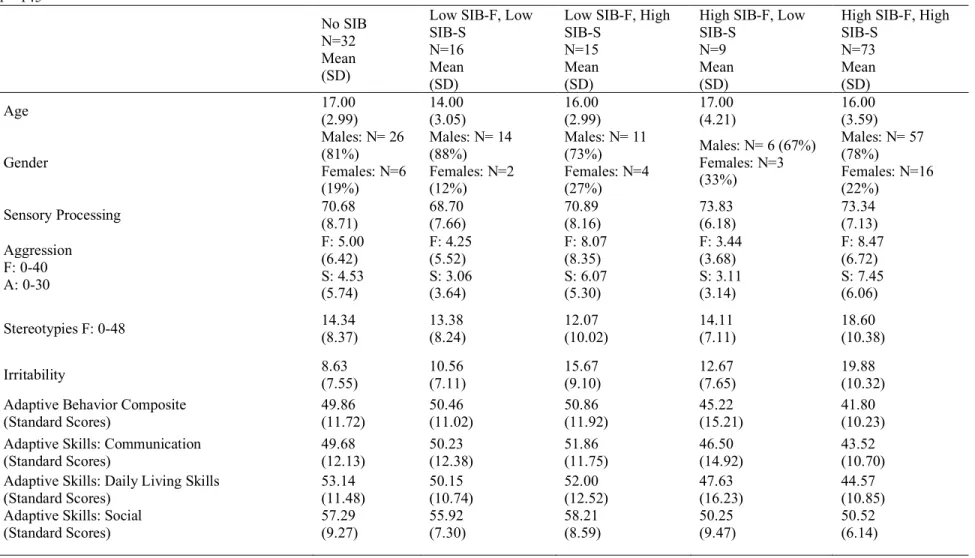
Table 1. Descriptive Data for All Participants ………...……….…52
Table 2. Descriptive Data for All Participants: SIB….……….…….…….53
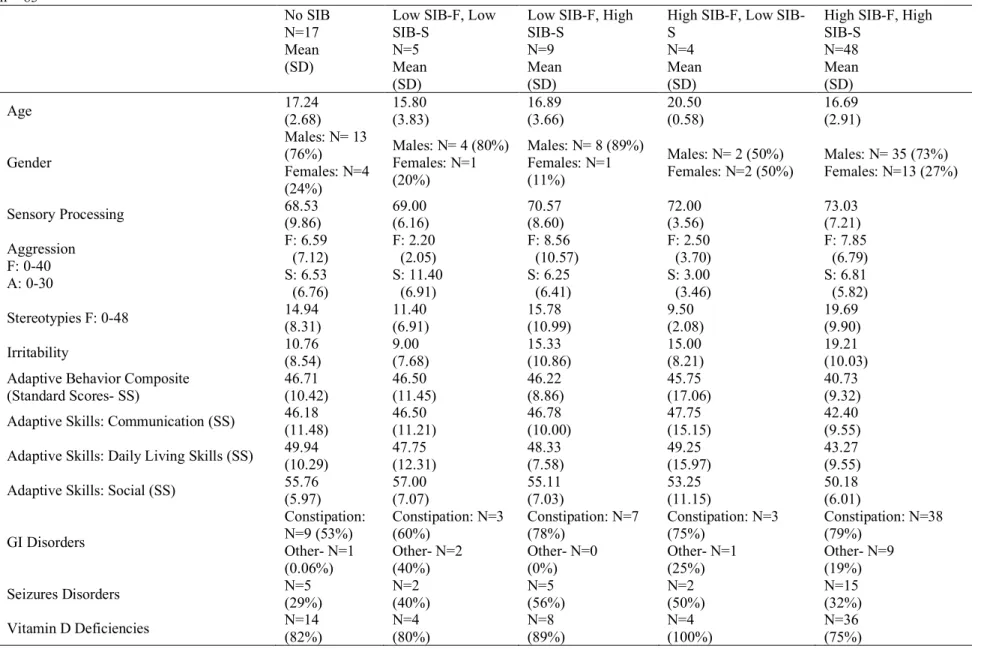
Table 3. Descriptive Data for Residential Participants.……….…….…….54
Table 4. Descriptive Data for Residential Participants: SIB.……….…….…….55
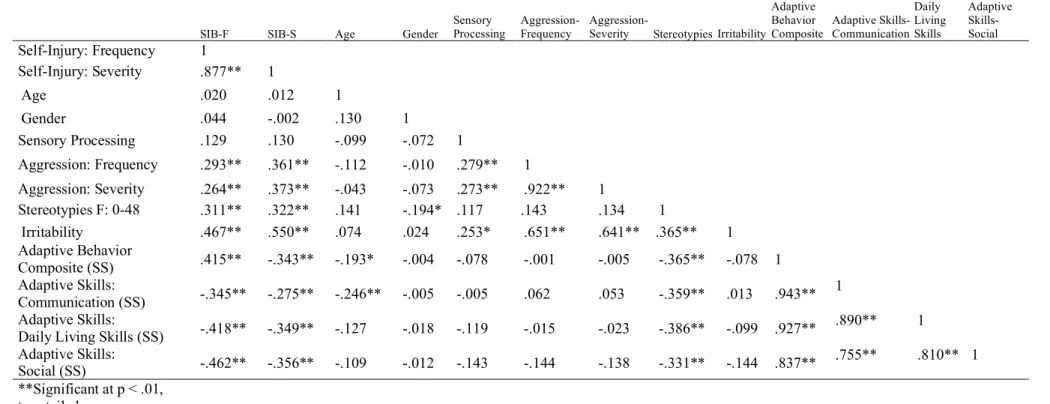
Table 5. Correlation Matrix- All Participants………...……….……….…….59
Table 6. Correlation Matrix- Residential Participants………...……….…….60
Table 7. SIB-Frequency Regression Model (Full Sample) ……….62
Table 8. SIB-Severity Regression Model (Full Sample) ………...…….……62
Table 9. SIB-Frequency Regression Model (Residential Sample) ……….……63
LIST OF ABBREVIATIONS ABA Applied Behavior Analysis
ABAS-II Adaptive Behavior Assessment System® Second Edition ABC Aberrant Behavior Checklist
ABC Antecedent-Behavior-Consequence ADHD Attention Deficit Hyperactivity Disorder
ADOS Autism Diagnostic Observation ScheduleTM, 2nd Edition (ADOS-II) ASD Autism spectrum disorder
ASRS Autism Spectrum Rating Scale
BAMBI Brief Autism Mealtime Behavior Inventory BPI-S Behavior Problems Inventory – Short Form CASI Child and Adolescent Symptom Inventory- 4R CBT Cognitive-Behavioral Therapy
CTONITM Comprehensive Test of Nonverbal Intelligence, Second Edition CSHQ Child Sleep Habits Questionnaire
DSM-V Diagnostic and Statistical Manual of Mental Disorders- Fifth Edition DRV Differential Reinforcement of Variability
ERP Exposure and Response Prevention FBA Functional Behavior Assessment FDA Food and Drug Administration
IACC Interagency Autism Coordinating Committee
ICF-CY International Classification of Functioning, Disability, and Health for Children and Youth
IS Insistence on Sameness
OCD Obsessive-compulsive disorder
PDD-NOS Pervasive Developmental Delay- Not Otherwise Specified RCT Randomly Controlled Trial
RRB Ritualistic and restrictive repetitive behaviors RSMB Repetitive Sensory and Motor Behaviors
SIB Self-injurious behavior
SPSS Statistical Program for Social Sciences SRI Serotonin Reuptake Inhibitor
SS Standard Score
CHAPTER 1: INTRODUCTION
Autism spectrum disorder (ASD) is a neurobiological developmental disability, first described by Kanner (1943), characterized by a range of social impairments, nonverbal and verbal communication difficulties, and excessive displays of restricted, repetitive, and stereotyped patterns of behavior (American Psychiatric Association, 2013; National Institute of Neurological Disorders and Stroke, 2014). Manifestations of the disorder can vary widely among subgroups, as individuals who have been diagnosed with autism, pervasive
developmental disorder-not otherwise specified, and Asperger disorder all fit under the umbrella of ASD according to the Diagnostic and Statistical Manual of Mental Disorders- Fifth Edition (DSM-5) (Ming, Brimacombe, Chaaban, Zimmerman-Bier, & Wagner, 2008). The Centers for Disease Control and Prevention (CDC) (2015) estimate that the prevalence of autism is currently 1 in 68 children, and in North Carolina, 1 in 58 children have an autism diagnosis. In 2012, 1 in 88 children were identified as fitting diagnostic criteria for an autism diagnosis. In 2009, estimates were 1 in 110 children, and in 2007, 1 in 150 children were reported to have a diagnosis of ASD. Based on these numbers, the estimated prevalence of ASD has increased by 123% since 2002 (Centers for Disease Control and Prevention, 2015). If autism rates remain constant, cost for supports and services by 2025 will be $461 billion annually (Leigh & Du, 2015). As one of the highest incidence childhood
The history of autism research and categorization has been convoluted. It was not too long ago that false scientific research pertaining to the cause of ASD was published,
indicating that immunizations children received as infants and toddlers were the main cause. Wakefield’s 1998 claim has since been discredited, and we currently know that a
combination of genetic factors, environmental factors, and risk factors, such as age of parents, play a role (Sandin et al., 2015). However, not much is known about specific genes involved, let alone what environmental factors instigate genetic mutation. Additionally, several arguments indicate that autism symptoms may result from excessive opioid activity in the brain (Chabane, Leboyer & Mouren-Simeoni, 2000). Panksepp (1979) was the first to suggest this hypothesis, as he observed that animal models injected with low doses of opiate drugs displayed behavior similar to children with autism (i.e., tolerance or extreme
intolerance to pain, lack of emotion, poor attachment to caregivers, lack of desire for social compatibility, unusual learning effects). In regards to categorization, the Diagnostic and Statistical Manual of Mental Disorders (DSM-5) made sweeping changes to its newest edition in 2013, eliminating Asperger Syndrome and Pervasive Developmental Disorder-Not Otherwise Specified, altogether. Although extensive research has been conducted and scientific advances over the last 30 years have been extraordinary, much is still unknown about the phenomenology of ASD, and a cure is also currently beyond our grasp. Despite this fact, scientists and practitioners across the field have accepted the notion that autism is a multi-faceted disorder with both genetic and environmental risk factors at play. Hopefully, we are on the brink of a scientific revolution when it comes to ASD, as a clearer
many.
In the 2013 update to the 2009 Interagency Autism Coordinating Committee (IACC) Strategic Plan, the following Aspirational Goal was included: “All people with ASD will have the opportunity to lead self-determined lives in the community of their choice through school, work, community participation, meaningful relationships, and access to necessary and individualized services and supports.” Using the World Health Organization’s (WHO) biopsychosocial framework for disability conceptualization, committee members sought to achieve this goal and also identified a number of important gaps that need attention. For instance, there is urgency for more research on efficacy of interventions directed at meeting the needs of adults with severe autism symptoms and behavior. Specifically, the
development of service approaches and service delivery models that aim to improve outcomes and the overall quality of life for adults with severe ASD are necessary (Interagency Autism Coordinating Committee, 2014).
Before more effective service approaches can be created, a better understanding of the complexities autism brings to the table is vital. Many individuals with ASD have extremely complex medical and psychological profiles with numerous comorbid medical disorders, such as sleep, seizure, and gastrointestinal disorders, many of which are just beginning to be understood. For example, Ming and colleagues (2008) analyzed
Sleep disorders were associated with GI dysfunction and mood disorders. Also, correlations between mood disorders (26%) and aggressive behavior and SIB (32%) were found (Ming et al., 2008). It is clear that the heterogeneity of presentation of this population must be better understood in order to proceed with treatment approaches. As Ming and colleagues (2008) explained, it is imperative to recognize the cause and effect relationship of comorbidities in ASD, as treatment for one disorder might unintentionally treat or exacerbate symptoms of another disorder.
The DSM-5 defines Autism Spectrum Disorder 299.00 as having two main criteria. Criterion A describes deficits in social communication and social interaction, while Criterion B addresses restricted, repetitive patterns of behavior, interests, or activities (American Psychiatric Association, 2013). The remainder of this proposal focuses on Criterion B, the
restricted, repetitive patterns of behavior, interests, or activities, or RRB, commonly seen in individuals with ASD. Specifically, self-injurious behavior will be explored, including factors associated with and affecting SIB. Self-injurious behavior (SIB) is a form of RRB that can be found across various neurodevelopmental disorders and genetic syndromes, including autism, Fragile X, Lesch-Nyhan syndrome, Prader-Willi syndrome, Smith-Magenis syndrome, and intellectual disabilities (ID) in general (Deb, 1998; Muehlmann, Wilkinson & Devine, 2011). Similar to autism, the expression and severity of SIB is variable and
self-injurious behavior can cause immense distress and devastation among families and loved ones of those who exhibit symptoms, as it has the potential to cause serious and long-lasting medical conditions. A report by Dempsey, Dempsey, Guffey, Minard, and Goin-Kochel (2016) indicated that psychological, cognitive, and behavioral factors alone do not
CHAPTER 2: REVIEW OF THE LITERATURE Ritualistic and Restrictive Repetitive Behavior
The scientific literature describes several types of ritualistic and restrictive repetitive behavior (RRB) in children with autism, including but not limited to stereotypy, obsessions, compulsions, echolalia, rituals, self-injurious behavior, and sameness (Malmberg, 2007). Despite the fact that RRB is a common characteristic in people with autism, not much is known about its phenomenology, assessment, and/or treatment (Lam & Aman, 2007;
Malmberg, 2007; Wolff et al., 2014). Surprisingly, rigid and ritualistic behavior has received considerably less attention than the social and communicative domain of autism (Malmberg, 2007), despite how debilitating and distressing it can be. In fact, in a study published in 2010 using an animal model, researchers noted that the neurobiological mechanisms that
contribute to vulnerability or resistance to SIB are virtually unexplored (Muehlmann,
Categorization
The Diagnostic and Statistical Manual of Mental Disorders (DSM-5) uses the following criteria to describe ritualistic and restrictive repetitive behavior in individuals diagnosed with autism:
B. Restricted, repetitive patterns of behavior, interests, or activities, as manifested by at least two of the following, currently or by history:
1. Stereotyped or repetitive motor movements, use of objects, or speech (e.g., simple motor stereotypies, lining up toys or flipping objects, echolalia, idiosyncratic
phrases).
2. Insistence on sameness, inflexible adherence to routines, or ritualized patterns or verbal nonverbal behavior (e.g., extreme distress at small changes, difficulties with transitions, rigid thinking patterns, greeting rituals, need to take same route or eat food every day).
3. Highly restricted, fixated interests that are abnormal in intensity or focus (e.g., strong attachment to or preoccupation with unusual objects, excessively
circumscribed or perseverative interest).
4. Hyper- or hyporeactivity to sensory input or unusual interests in sensory aspects of the environment (e.g., apparent indifference to pain/temperature, adverse response to specific sounds or textures, excessive smelling or touching of objects, visual
fascination with lights or movement).
(American Psychiatric Association, 2013)
Lam and Aman (2007) administered a survey within the South Carolina Autism Society to capture the breadth of repetitive behavior present in people diagnosed with autism. A factor analysis indicated that the 320 caregivers who replied to the survey found the
following characteristics present in the people they care for at a statistically significant level: “Self-injurious behavior”, “Ritualistic/Sameness Behavior”, “Stereotypic Behavior”,
In another attempt at categorization, Szatmari and colleagues (2005) utilized factor analysis to examine eleven different types of RRB in 339 children. The RRB examined included the following: circumscribed interests, unusual preoccupations, repetitive use of objects or parts of objects, difficulties with minor changes in personal routine and
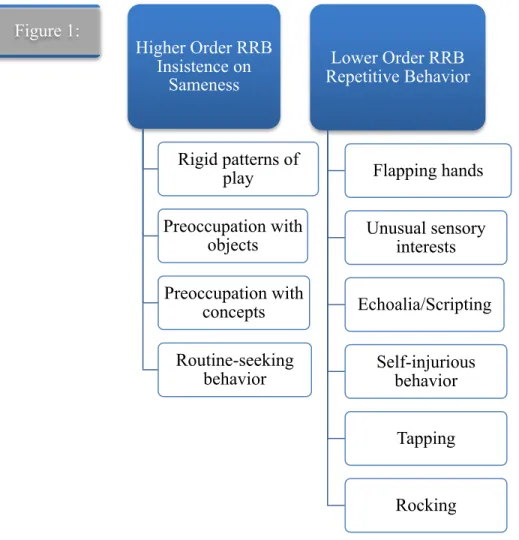
environment, resistance to trivial changes, compulsions/rituals, unusual attachment to objects, unusual sensory interests, hand and finger mannerisms, rocking, and other complex mannerisms or stereotyped body movements. Researchers categorized these eleven types of behavior into two domains: 1) Insistence on Sameness (IS) and 2) Repetitive Sensory and Motor Behavior (RSMB). Szatmari and colleagues (2005) concluded that behavior
associated with IS might have a genetic component. This behavior can be characterized as a higher-order cognitive behavior that typically exists in individuals with average intellectual functioning, while RSMB is associated with lower-order functioning, manifesting in lower functioning individuals (Turner, 1999).
A summary of previous literature can be seen below in Figure 1.
Figure 1. Summary of RRB Literature. Stereotypic Movement Disorder
Restricted and repetitive behavior can present itself in the form of stereotypic movement disorder. In this case, RRB might stem from a known medical or genetic condition, neurodevelopmental disorder, or environmental factors. Self-injury may or may not be present. According to the DSM-5, diagnostic criteria include the following:
Figure 1:
Higher Order RRB Insistence on
Sameness
Rigid patterns of play Preoccupation with
objects Preoccupation with
concepts Routine-seeking
behavior
Lower Order RRB Repetitive Behavior
Flapping hands
Unusual sensory interests
Echoalia/Scripting
Self-injurious behavior
Tapping
A. Repetitive, seemingly driven, and apparently purposeless motor behavior (e.g., hand shaking or waving, body rocking, head banging, self-biting, hitting own body). B. The repetitive motor behavior interferes with social, academic, or other activities
and may result in self-injury.
C. Onset is in the early developmental period.
D. The repetitive motor behavior is not attributable to the physiological effects of a substance or neurological condition and is not better explained by another neurodevelopmental or mental disorder (e.g., trichotillomania [hair-pulling disorder], obsessive-compulsive disorder).
(American Psychiatric Association, 2013)
Behavior in stereotypic movement disorder is variable and can range from body rocking to hand flapping to eye poking. This disorder is more often seen in individuals with intellectual disabilities and/or individuals with developmental disabilities, rather than their neurotypical counterparts. In the intellectual/developmental disability (I/DD) population, poorer response to intervention is often seen. Most children exhibit symptoms of motor stereotypies in the first 3 years of life, although topography of the behavior might change over the course of one’s lifetime. When neurogenetic syndromes are present, specific behavioral phenotypes might be present that result in self-injury. For example,
hand-wringing is commonly present in Rett syndrome and self-mutilation of fingers and lip biting are common SIB in Lesch-Nyhan syndrome (American Psychiatric Association, 2013).
Early Indicator of Autism
developmental delays or disabilities. Statistical results indicated that children already diagnosed with autism engaged in repetitive behavior most frequently, followed by children with PDD-NOS. At-risk infants displayed the least amount of stereotypic behavior as compared to the other groups. These results suggest that repetitive behavior manifests with sufficient severity and that identification of ASD in infancy is not only possible, but also reliable (Matson, Dempsey & Fodstad, 2009).
Researchers at the University of North Carolina at Chapel Hill, the University of Washington, the Children’s Hospital of Philadelphia, and Washington University in St. Louis conducted longitudinal analysis of 253 toddlers displaying repetitive behavior. One notable finding was that there were significant differences in rates of RRB between 12-month-old toddlers diagnosed with ASD and 12- month-old low-risk participants not diagnosed with ASD, further supporting the research that suggests RRB is an early symptom of autism and can be considered diagnostic markers (Wolff et al., 2014).
Since it stands out as atypical, RRB is easily identified in older children. The distinction is more ambiguous and difficult to define in infants and younger children,
particularly because repetitive behavior is both common and developmentally appropriate in this population (Wolff et al., 2014). However, this distinction is vital to determine since numerous studies support RRB as being one of the earliest indicators of autism. The likelihood for a successful outcome will be greater for the child with autism receiving early intervention services compared to the child who does not receive services until later in life.
Self-Injurious Behavior
inherent in an ASD diagnosis that RRB is present, therefore all individuals with ASD exhibit some type of RRB, whether it be lower order rocking or higher order restricted interests. However, not all individuals with ASD exhibit injury. Further, those with the self-injurious phenotype might have frequent or infrequent SIB. This SIB will also range in levels of severity. To clarify an earlier idea, stereotypic movement disorder is only diagnosed in individuals with ASD when self-injury is present or when the stereotypic behavior is at a level of severity that it needs to be a focus of treatment (American Psychiatric Association, 2013).
Approaches to Understanding. According to Dempsey and colleagues (2016), an individual or group approach can be taken in order to better understand SIB among children diagnosed with autism. In an individual approach, a psychologist conducts a functional behavior assessment (FBA) in order to determine the function of the child’s behavior (escape, avoidance, attention, etc.). A group approach can also be taken, in which researchers identify risk factors of SIB among groups of children with and without ASD (Dempsey et al., 2016). Of course, there are advantages and disadvantages to either tactic. The behavioral approach of utilizing an FBA is accurate and provides the clinician with rich quantitative and qualitative data, yet is time-consuming, resource intensive, and costly. On the other hand, using a large-scale dataset cuts costs but disallows researchers access to the function of SIB among individual participants. Similar factors among a large group can be accessed, however, so it is the group method that the current study further explores.
Previous Findings. MacLean, Tervo, Hoch, Tervo, and Symons (2010) examined 196 children under 6 years of age with significant developmental delay in at least two
male and 83% white. Of their participants, 32% exhibited SIB within the last 30 days. Within this sample, 15.8% of those who exhibited SIB also had a comorbid ASD diagnosis. It was also found that children with SIB exhibited significantly higher rates of aggression and stereotypies. MacLean and colleagues (2010) noted that previous studies involving older cohorts have suggested that risk factors for SIB include lower cognitive functioning, lower levels of expressive language, sensory sensitivities, impaired mobility, and comorbid medical diagnoses, such as seizure disorders. However, these studies included diagnoses of
intellectual disability and cerebral palsy in their sample, in addition to autism. Therefore, clear conclusions about the factors associated with SIB in relation to an ASD diagnosis cannot be drawn.
In an earlier study, Baghdadli and colleagues (2003) compared SIB in 222 children with ASD under 7-years-old with multiple variables, including chronological age, gender, adaptive skills, speech level, associated medical conditions, degree of ASD and parental social class. Researchers found that risk factors for SIB in their sample of 222 youth
included lower chronological age, associated perinatal condition, degree of autism, and delay of acquisition of daily living skills. Additionally, researchers found that approximately 50% of children with ASD engage in some form of SIB, with 14.6% engaging in severe self-injury (Baghdadli et al., 2003).
findings included atypical sensory processing to be the strongest predictor of SIB, followed by need for sameness. Lower cognitive ability and impaired social communication were found to be small contributors to SIB. Gender and severity of autism symptoms were found to be nonsignificant factors (Duerden et al., 2012).
As a follow-up to the Duerden et al. (2012) study, Dempsey and colleagues (2016) compared the profiles of 2341 children with autism ages 4 to 17. They found that children who display SIB had lower nonverbal IQ scores, lower social communication scores, higher anxiety scores, higher insistence on sameness, and higher atypical sensory-seeking scores. Of notable importance, researchers noted that they were unsuccessful in improving model fit and explaining a larger proportion of variance. As a result, they conclude that they, “appear unable to explain the development of self-injurious behavior in children with an ASD and/or provide treatment-relevant information. These findings strongly highlight that a better understanding of the etiology of SIB is needed in order to adopt a standardized approach to developing treatment protocols” (Dempsey et al., 2016).
Convergence of Findings. In looking closely at these four studies that examined factors associated with SIB in children with autism, it can be seen that various themes reoccurred. Similar factors in the Duerden et al. (2012) and Dempsey et al. (2016) studies included (a) atypical sensory processing, (b) need for sameness, (c) lower cognitive functioning, and (d) impaired social communication.
There were also many differences in indicators among the four studies. Dempsey et al. (2016) found anxiety to be a significant factor, while MacLean et al. (2003) found
of autism, and delay of acquisition of daily living skills, that are important to consider. A chart of similarities and differences between the four studies can be seen below in Figure 2.
Baghdadli et al. (2003) Age: < 6 n = 222
MacLean et al. (2010) Age: < 7 n = 196
Duerden et al. (2012) Age: 2-19 n = 241
Dempsey et al. (2016) Age: 4-17 n = 2341 Activities of Daily Living *
Age *
Aggression *
Anxiety *
Autism Severity *
Cognitive Functioning * *
Need for Sameness * *
Perinatal Condition *
Social Communication * *
Sensory Processing * *
Stereotypies *
* Indicates the study examined this variable and found it to be significant in predicting SIB Figure 2. Convergence of Findings of Previous Research.
Rationale of Factors
In order to conduct a comprehensive review of the literature, the majority of the factors that were examined in the four previous studies will be further inspected below. Factors already reviewed are as follows, in order of appearance: age, cognitive functioning, social communication, need for sameness and stereotypies, atypical sensory processing, and anxiety disorders. Other indicators that will be investigated in the present study include: biological mechanisms, stress, seizure disorders, gastrointestinal disorders, and vitamin D deficiencies, and are also included in the following literature review.
Proposed Factors that Affect SIB
reinforcement, escape, and nonsocial reinforcement (Singh, Matson & Lancioni, 2006). However, biological factors seem to have more influence over whether or not a person will develop the self-injurious phenotype (Muehlmann, Wilkinson & Devine, 2011). The fact that SIB is prevalent across various neurodevelopmental disabilities, including Lesch-Nyhan syndrome, Prader-Willi syndrome, autism, and ID, is suggestive that common underlying factors contribute to its etiology.
Both Cromwell and King (2004) and Muehlmann, Wilkinson & Devine (2011) examined the etiology of self-injurious behavior and suggested that dysregulation of cortico-basal ganglia circuitry and disregulation of limbic and hormonal stress responses seem to play a key role. The basal-ganglia (BG) system is made up of the subcortical structures of the striatum, globus pallidus, and substantia nigra. This circuitry contributes to motor behavior and habit learning, and disregulation of neurotransmitter inputs would lead to dysfunction in basal ganglia output, thus affecting behavior (Cromwell & King, 2004; Muehlmann, Wilkinson & Devine, 2011). In a more recent study, Duerden and colleagues (2014) indicated that variations in somatosensory cortical and subcortical regions and their accompanying white-matter pathways are responsible for SIB. Minshawi, Hurwitz, Morriss & McDougle (2015) summarized previous research by stating that multiple neurochemical transmitter systems seem to be involved with the pathophysiology of self-injury, including dopamine, glutamate, opioid, gamma-aminobutyric acid (GABA), and serotonin.
caused by mutations on chromosome 5p13.2 of NIPBL gene or SMC1A gene. Expressions commonly include self-hitting and hair-pulling. CdCS is caused by partial terminal or interstitial deletion on chromosome 5p15.2 of gene CTNND2. Presentation of this deletion involves hitting, vomiting/rumination, and/or biting. In Prader-Willi syndrome, skin-picking is almost always present and is caused by the absence of paternally expressed chromosome 15q11-q13 on gene SNRPN. A mutation of chromosome Xq26.2-q26.3 causes Lesch-Nyhan syndrome, which subsequently causes biting, head-banging, and eye-poking in 85% of those diagnosed with the disorder (Minshawi et al., 2015). In Rett syndrome, Lowe Syndrome, and Smith-Magenis syndrome, SIB is widespread in topography (Russell, 2006). Since genetic syndromes can coexist with autism and be underlying causes of self-injury, the initial diagnostic evaluation of patients with ASD should include a chromosomal microarray analysis (CMA) (Doheny, 2010).
Cognitive Functioning. A review of 23 epidemiological surveys that analyzed autism symptoms of 1533 subjects with ASD found that intellectual disability (ID) was the most commonly diagnosed comorbid condition (Fombonne, 1999). ID is commonly associated with ASD severity, however, the relationship between ID and SIB has not been fully investigated (Duerden et al., 2012). Thinking back to categorization, it is now generally accepted that RRB can be broken into higher-order and lower-order behavior. Further, higher-order behavior, or Insistence on Sameness (IS), is generally associated with higher cognitive functioning, while lower-order behavior, or Repetitive Sensory and Motor Behavior (RSMB), is associated with lower cognitive functioning. Since SIB falls in the
RSMB category, one can assume that individuals who exhibit SIB typically function at a
level lower than individuals who do not exhibit SIB.
Social Communication. Matson, Boisjoli, and Mahan (2009) explored the receptive and expressive communication of 168 toddlers with ASD between the ages of 17 and 36 months. Findings suggested that lower receptive communication abilities significantly correlated with self-injury and aggressive behavior. Broadly, it seems apparent that a lack functional communication skills predispose individuals to various maladaptive behavior, such as aggression and/or SIB. More specifically, SIB might be a manifestation of
underlying pain in individuals with limited language (Duerden et al., 2012). Surprisingly, a study of 196 children with ASD between 18 and 72 months found no significant difference in expressive language within participants, comparing the 32% who exhibited SIB to the rest of the sample (MacLean et al., 2010). It is clear that more research is necessary in order to understand the processes underlying the development and trajectory of self-injury in ASD in relation to communication.
Need for Sameness and Stereotypies. In a survey of 616 individuals who engaged in SIB, Oliver, Murphy, and Corbett (1987) found that stereotypy can often be a precursor to SIB. Additionally, Duerden and colleagues (2012) indicated that insistence on sameness is a significant contributing factor to SIB. This finding contradicts previous research that
insistence on sameness is a higher-order behavior typically found in higher-functioning individuals, while SIB has been categorized as a “lower order” behavior (Turner, 1999). More research examining the complexities of how various types of RRB interact is warranted.
an object, action, word, phrase, or topic involves repetition or perpetuation to an exceptional degree despite termination of a stimulus. The theory is that people with autism engage in perseverative methods to help regulate their nervous system, as the repetition of their actions provides comfort and makes them feel as if they have regained control of their environment (North Shore Pediatric Therapy, 2014). If the individual is unable to complete his or her perseverative routine, distress and dysregulation might occur, ultimately causing SIB or other some other maladaptive behavior (Allik, Larsson & Smedje, 2006).
Perhaps the best way to understand the rigidity of a person with autism would be to ask them about it directly. Cyndi H. describes her rigid and ritualistic behavior in her documentary entitled Inside Autism. She explains her internal and unexplainable need to read the same section of the newspaper every morning as she eats cereal for breakfast. Similarly, things in her environment, such as the music stands at her church, must be lined up in a particular fashion or she feels an overwhelming need to fix them. “Routine is very important to me. I have a routine for literally everything I do, both at home and at church. My mind won’t focus if I skip any part of my routines. All I can think of is the step I missed,” Cyndi explains (Stream of Awareness, 2012). According to previous research, a deviation from completion of routine or interference while immersed in behavior will cause emotional dysregulation and distress (Malmberg, 2007).
around me, but I don’t do it to be selfish, bossy or difficult. I do it because, by creating an environment of my own making, I feel more in control and I am therefore less frightened.”
Stress. Stress and heightened emotional responsiveness may also exacerbate SIB. Muehlmann, Wilkinson, and Devine (2010) used animal models to support their hypothesis that the clinical expression of SIB is related to behavioral and hormonal responses to stress. Eighteen rats were categorized as either “high responders” or “low responders” after a stress-responsiveness screening. Researchers found that rats categorized as high responders were more susceptible to SIB after being given daily injections of the indirect monoamine agonist pemoline. Previous research indicates that daily 150mg/day injections of pemoline produce self-injury in approximately 50% of rats. In this study, all 9 rats in the “high responders” category engaged in SIB, while 5 of the 9 rats in the “low responders” category exhibited evidence of self-injury (Muehlmann, Wilkinson & Devine, 2010).
Atypical Sensory Processing. RRB might also serve the adaptive function of regulating children’s emotional states through stabilizing internal sensory processing, thus reducing anxiety and/or overstimulation. As children with ASD have atypical sensory processing, we have assumed that repetitive behavior serves as a compensatory strategy in response to the experience of over or under arousal (Lovaas et al., 1987).
function of shared neurobiological mechanisms. Interestingly, Duerden and colleagues (2012) indicated that SIB might be a mechanism for pain expression in individuals with limited functional communication skills. Previous findings show that children with chronic pain self-injure close to the site of their pain, with less frequency compared to individuals without chronic pain (Minshawi et al., 2015). In a recent study of 51 children under 7 years of age, disordered pain perception and pain mechanisms were found at significant levels (Courtemanche, Black & Reese, 2016).
Dr. Martha Herbert and Karen Weintraub from Harvard Medical School describe the effects of atypical sensory processing through the case of Daniel in their (2012) book entitled The Autism Revolution: Whole-Body Strategies for Making Life All It Can Be. “Daniel wouldn’t know when he had to go to the bathroom or was hungry- his body would be
sending him messages, but he didn’t understand what they were saying. Daniel turned to his obsessions to block out the noise of these confusing signals. He tried to regulate his body’s needs by taking audio speakers apart, not understanding that he wasn’t addressing the real problem.” Carly Fleischmann provides another narrative example of the function of repetitive behavior. Carly, a 19-year-old nonverbal female with ASD found a way to
communicate through text-to-speech software on her computer. She now has a Twitter
account, Facebook page, online blog, and published book entitled Carly’s Voice. Howard
Dalal, Carly’s lead therapist, asked “Carly, why do autistic kids cover their ears, flap their
hands, hum, and rock?” Carly replied by typing, “It’s a way for us to block out all sensory
input that overloads us at once. We create output to block out input” (STAR Center, 2012).
control (Rudy, 2015). Occupational therapy using sensory integration changes the way the brain processes and interprets information, making it easier for patients to tolerate sensory stimuli (Autism Speaks, 2015b).
Anxiety Disorders. Since anxiety symptomology is as common as it is in relation to ASD, researchers might argue that symptoms of anxiety disorders in autism are aspects of autism rather than comorbidities (Leyfer et al., 2006). Prevalence of anxiety in ASD varies widely; Leyfer and colleagues (2006) cited studies that found rates of anxiety ranging from 17% to 84%. Although many individuals with ASD do indeed exhibit symptoms of anxiety, this wide range is most likely due to different assessment instruments and different
demographics among samples across studies. Leyfer and colleagues (2006) described
anxiety in children with ASD to be focused on one thing, as opposed to feeling anxious about multiple factors. Anxiety in ASD is also often related to transitions or changes in the
environment since rigid adherence to schedule is common. Since deficits in communication are inherent in ASD, anxiety is often challenging to assess. The constructs that make up anxiety consist of cognitions, subjective states, and physiological arousal, which are difficult to measure directly. Some researchers and clinicians hypothesize that anxiety might function as an internal antecedent to maladaptive behavior. According to this theory, a child feeling anxious would react to his or her anxiety by engaging in SIB (Moskowitz et al., 2013). Similarly, Duerden and colleagues (2012) indicated that insistence on sameness significantly contributes to anxiety, which in turn might reinforce self-injurious behavior.
ASD diagnosis is associated with an increased risk of epilepsy and comorbid diagnoses of epilepsy range from 5% to 46% (Spence & Schneider, 2009). Complex partial, absence, and generalized tonic-clonic seizures have all been reported among individuals diagnosed with ASD. According to Spence and Schneider (2009), previous research cites several factors that seem to indicate relationships between epilepsy and ASD, including the presence of
additional neurogenetic disorders, age, cognitive functioning, developmental regression, and gender.
In a study of 2,645 children with ASD, children who had comorbid epilepsy displayed significantly more autism symptoms and maladaptive behaviors, including irritability, hyperactivity, and SIB. Results of this model indicated that children with comorbid ASD and epilepsy showed greater impairment than children without epilepsy. Additionally, children with comorbid epilepsy had lower IQs of the two groups (Viscidi et al., 2014). Minshawi et al. (2015) cite several case studies that indicate that patients with temporal lobe seizures have improved SIB after their seizures have been treated.
Gastrointestinal Disorders. Many gastrointestinal disorders are commonly comorbid with autism, including gastroesophageal reflex disease (GERD), esophagitis, ulcer,
constipation, diarrhea, intestinal obstruction, nausea, lactose intolerance, celiac disease, gluten sensitivity, and casein sensitivity (Minshawi et al., 2015). Feeding is also affected by rigid and ritualistic behavior. Children with autism are five times more likely than typically developing children to struggle with feeding issues, including being picky eaters, having tantrums, and/or engaging in ritualistic behavior during meals (Preidt, 2013). Gossler, Schalamon, Huber-Zeyringer, and Hollwarth (2007) showed that self-injury associated with GERD dissipated following medical treatment. In a case study by Christensen and
colleagues (2009), a 7-year-old male was given a bowel cleanout to treat constipation. His rates of self-injury, which consisted of head-banging and face-slapping, declined to near-zero levels following treatment (Christensen et al., 2009). Saad and colleagues (2015) addressed the gut-brain connection in ASD in a randomly controlled trial (RCT) of 101 children with ASD. Participants received digestive enzyme therapy or placebo for 3 months and the treatment group showed significant improvement in emotional response, behavior, GI symptoms, and general autism severity score. Based on the findings of these studies, it seems as though there is a relationship between the GI system and behavior in ASD.
Sleep Disorders. An association between poor sleep and compulsive and ritualistic behavior has been found (Allik, Larsson & Smedje, 2006). In other words, this behavior affects the quality of sleep and poor sleep exacerbates the behavior. In a study of 51
reciprocal relationship between the endogenous opioid system, mentioned earlier, SIB, and REM sleep disturbance. According to these researchers, self-injury stimulates opioid release, which results in a reduction of REM sleep. Over time, a lack of REM sleep leads to further dysregulation of the opioid system, which might lead to more self-injury, creating a perpetual cycle (Symons, Davis & Thompson, 2000). As it is apparent, the nature of the association between sleep and SIB is still unclear (Minshawi et al., 2015).
Vitamin D Deficiencies. A review by Mazahery and colleagues (2016) determined that there is convincing evidence of a relationship between vitamin D and autism. However, authors noted that the nature of the relationship cannot be determined, as there are few intervention trials published to date. Cannell (2008) was the first to hypothesize that early childhood vitamin D deficiency might explain the genetics and epidemiology of autism. This study caught the attention of epidemiologists and work is being done to further explore the vitamin D and ASD relationship, but prevention and intervention literature is still in early stages of development (Mazahery et al., 2016).
More generally, it seems as though vitamins might play a role in improving autism symptomology. A randomized control trial including 141 individuals diagnosed with ASD treated with a vitamin/mineral supplement showed that participants improved significantly on multiple subscores on the Parental Global Impressions-Revised, including Hyperactivity, Tantruming, Overall, and Receptive Language (Adams et al., 2011). In Adams & Holloway (2005), improvements in sleep and GI problems were found in 20 children with ASD
Polyvagal Theory
The vagus nerve is the tenth cranial nerve located in the medulla oblongata of the brainstem. Vagus, translated to Latin, means wandering, and the vagus nerve truly wanders throughout the body. It transmits sensory information about the condition of the body to the brain (Bridges, 2015). In a sense, the vagus nerve connects our minds and our bodies. Neuroscientist Dr. Stephen Porges developed and proposed the polyvagal theory in 1995. Porges (1995) presented the following hypotheses as facets of the polyvagal perspective: (1) The vagal system is bidirectional. (2) There are two systems that make up the autonomic nervous system (ANS), the parasympathetic and the sympathetic-adrenal systems (Bridges, 2015). (3) The degree of activity occurring in the parasympathetic nervous system is termed vagal tone. (4) Respiratory sinus arrhythmia (RSA) monitors the functional output on the heart by the vagal efferent pathways originating in nucleus ambiguous. When a person’s vagal tone increases or decreases, variations in heart rate occur. (5) The dorsal motor nucleus mediates the magnitude of neurogenetic bradycardia. (6) A common rhythm that connects the heart and lungs is called the cardiopulmonary oscillator. (7) Primary human emotions are related to ANS functioning (Porges, 1995). In fact, approximately 80% of vagal nerves provide information about visceral state and sensory processing (Porges, 2003).
the polyvagal perspective, the vagus nerve helps to regulate these systems. Porges asserted, “The vagus nerve directly supports the behaviours needed to engage and disengage with the environment.” As our ‘action station’, if the vagal system is on high alert for too long, multiple systems in the body are affected (Bridges, 2015). For instance, atypical functioning of the ANS would lead to atypical processing of sensory stimuli, as well as heightened autonomic activity at rest, leading to altered arousal and difficulties with sleep (Anderson & Columbo, 2009). Effected individuals would display a range of difficulties, including having challenges with affective experience, understanding emotional expression, understanding facial gestures, reading nonverbal communication, and exhibiting contingent social behavior (Porges, 2009). They might also have digestive problems and sleep disruption (Bridges, 2015). These symptoms sound peculiarly similar to the autism presentation. Could it be possible that the vagal nerve functioning and ANS play a role in ASD?
Since pupil responses have been known to be reliable measures of ANS functioning for quite some time, Anderson and Columbo (2009) examined pupil responses in an ASD cohort compared to an age-matched control. Researchers found that individuals with autism have a larger baseline (tonic) pupil size compared to controls. In an earlier study, the ASD group also exhibit decreased responses to human faces, while the control group showed an increase in pupil size in response to pictures of human faces (Anderson, Columbo & Shaddy, 2006). The results of these studies indicate that ANS functioning might be abnormal in ASD and commonalities in underlying neurobiological mechanisms might be at play.
Another fascinating study in 2000 by Murphy, Wheless, and Schmoll showed how vagal nerve stimulation in 4 patients with autism and medically refractory epilepsy
self-injury and social communication (Murphy, Wheless & Schmoll, 2000). The results of this study imply that a relationship between the vagal system, ASD, and related comorbidities, in fact, might exist. Therefore, a paradigm shift around the current perspective and
classification system might be in order. Overall Effects of Self-Injury
Ritualistic and restrictive repetitive behavior, especially self-injurious behavior, can affect socialization (Loftin, Odom & Lantz, 2008) and interfere with learning in the
classroom (Lovaas, Litrownik & Mann, 1971). Persistent reoccurrences of this behavior can also increase strain on the family and stress levels at home (Hausman, Kahngm, Farrell & Mongeon, 2009; Lounds, Seltzer, Greenberg & Shattuck, 2007). If an individual with the need to engage in RRB is prevented from engaging in the desired behavior, distress is created. Various maladaptive types of behavior may ensue, such as tantruming, eloping, and/or aggression (Allik, Larsson & Smedje, 2006). In regards to health-related
consequences, SIB can cause tissue damage, tissue infection, permanent impairment, loss of vision, or in the most critical of cases, death (Russell, 2006). In fact, one of the main causes of hospitalization in children with ASD is SIB (Mandell, 2008).
Limitations of the Previous Research
understanding of SIB, particularly in relation to age and how SIB symptomology manifests during various developmental periods (Duerden et al., 2012).
Duerden and colleagues (2012) pointed out that future research should focus on the relation between cognitive functioning and SIB. It has been accepted that a correlation exists between ASD severity and intellectual disability, however, this issue has not been fully explored in relation to SIB. Similarly, no study has yet explored social communication skills in relation to children with ASD who exhibit self-injury (Duerden et al., 2012). Minshawi and colleagues (2015) noted that SIB is often a manifestation or expression of pain in
individuals who have impaired communication. Researchers encouraged further work in this area, as earlier recognition and treatment of underlying medical conditions could prevent associated SIB (Minshawi et al., 2015).
Conclusion
Self-injurious behavior in individuals with autism is a complex phenomenon with potentially severe consequences. We currently have limited understanding of the etiology of SIB, and it is one of the most devastating and difficult-to-treat conditions in children with developmental disabilities (Edelson, Johnson & Grandin, 2016; Russell, 2006). There are not yet evidence-based guidelines to assist clinicians in assessment and/or treatment of SIB. According to Minshawi and colleagues (2015), the etiology is influenced by multiple factors, so effective treatment will vary accordingly. A number of factors might play a role,
D deficiencies. A more in-depth understanding of these factors most commonly associated with self-injurious behavior will inform effective treatment strategies.
Purpose of the Current Study
Children diagnosed with neurodevelopmental disabilities, such as autism, often have complex medical problems. Comorbid diagnoses involving multiple systems, such as
gastrointestinal and seizure disorders, might accompany common diagnostic features, such as deficits in social-emotional reciprocity. As SIB clearly affects the child and his or her family in multiple contexts, analysis of factors related to SIB would be useful for the development of treatment strategies and skill-building techniques to manage SIB. The purpose of the current study was to examine these relationships in greater depth. Few studies have
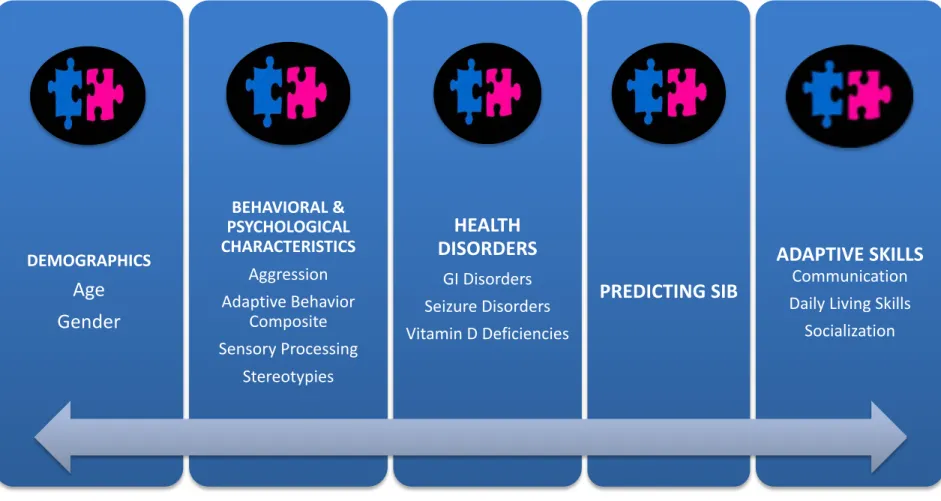
Figure 3. Predicted Relationships Between SIB and Other Factors. DEMOGRAPHICS
Age
Gender
BEHAVIORAL & PSYCHOLOGICAL CHARACTERISTICS
Aggression Adaptive Behavior
Composite Sensory Processing
Stereotypies
HEALTH
DISORDERS
GI Disorders Seizure Disorders Vitamin D Deficiencies
PREDICTING SIB
ADAPTIVE SKILLS
Communication Daily Living SkillsSocialization
Research Questions and Hypotheses
Research Question 1. What is the nature of distribution of SIB and health disorders in
children diagnosed with autism at a residential treatment facility providing care for those
with autism and other disabilities in New York State?
Research Question 2. What are the significant relationships of SIB with other RRB and
adaptive skills?
Hypothesis associated with research question 2.
2) Measures of adaptive life skills and behavior are significantly associated with SIB-F and
SIB-S.
Research Question 3. What demographic characteristics, behavioral and psychological
characteristics, and health disorders significantly predict SIB-F and SIB-S?
Hypothesis associated with research question 3.
3) Aggression, the Adaptive Behavior Composite, sensory processing, stereotypies,
gastrointestinal disorders, seizure disorders, and vitamin D deficiencies are hypothesized to
CHAPTER 3: RESEARCH METHODS
Data Source
This dissertation study was conducted at a residential treatment facility providing care
for those with autism and other disabilities in New York State, which provides cutting edge
clinical practice and state-of-the-art research. This site, which will be referred to as “The
Facility” throughout the remainder of this paper, is a national specialty center that offers
educational, clinical/health, residential, and family supports to people with severe disabilities,
medical frailties and autism spectrum disorders. It is a not-for-profit, nationally known
provider of health, educational, and residential services for approximately 500 children and
adults, across the lifespan. Managing the health needs of some of the most medically
complex children and adults in New York State, the Facility has developed a holistic model
based on current research. With an emphasis on evidence-based practice, education,
environment, eating, energy regulation, and emotional regulation, this comprehensive model
is responsive to each individual’s needs. Unique, individualized treatment plans increase
academic skills and social skills, as well as help improve self-regulation, communication, and
interaction with others.
The study was based on an analysis of a de-identified dataset on 145 children and
adolescents who are community students and residents at the Facility. For the purpose of this
sample of convenience as the study is specifically targeting children with
neurodevelopmental disabilities, many of whom may engage in self- injury. Qualitatively,
the most frequent categories of SIB in this group of individuals are self-biting and head and
body hitting. This under-represented group exhibits severe autism symptomology and group
homogeneity can be seen as both a strength and limitation. An opportunity to learn more
about this group might inform future treatment, however, results of this study might not be
generalizable to the broader autism population. Participants in this study are 79% male (n =
117) and 21% female (n = 31), ranging in age from 9 to 21. These participants are already
part of another on-site research study in which similar data have been collected.
Demographic variables such as race, ethnicity, and socioeconomic status (SES) were not
gathered and were thought to be outside of the scope of this project. In a 2012 study by the
CDC, it was found that for every 1,000 children with an ASD diagnosis, 15.5 are
non-Hispanic white children, 13.2 are non-non-Hispanic black children, 11.3 are Asian/Pacific
Islander children, and 10.1 are Hispanic children (Christensen et al., 2012). Participants in
this study are thought to be of similarly diverse racial and ethnic backgrounds. In terms of
SES, residents at the Facility are assumed to be of increased status compared to the general
population. The entire data collection process was completed by November 2016. The
selected timeframe was chosen because the majority of data were collected, organized, and
cleaned by July 2016, so secondary data analysis was the primary process that occurred.
Procedure
The aim of this study was to examine the relationship between self-injurious
behavior, behavioral characteristics, and common co-occurring health conditions in residents
deficiencies. Analyses of these factors in participants occurred in depth in order to explore
their relationships to self-injury and their effect on adaptive skills. Three specific research
questions were addressed: (1) What is the nature of distribution of SIB and health disorders
in children diagnosed with autism at a residential treatment facility providing care for those
with autism and other disabilities in New York State? (2) What are the significant
relationships of SIB with other RRB and adaptive skills? (3) What demographic
characteristics, psychological and behavioral characteristics, and health disorders
significantly predict SIB- F and SIB- S?
In order to avoid the high proportion of unaccounted variance that was found in the
Duerden et al. (2012) study, this study used a specific definition of SIB, in adherence to
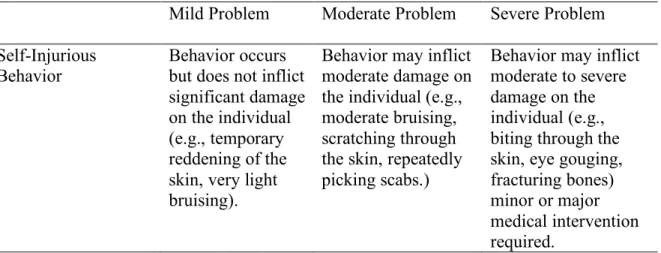
definitions on the Behavior Problems Inventory-Short Form (BPI-S). Figure 4 details the
definition of SIB per the BPI-S:
Mild Problem Moderate Problem Severe Problem
Self-Injurious
Behavior Behavior occurs but does not inflict significant damage on the individual (e.g., temporary reddening of the skin, very light bruising).
Behavior may inflict moderate damage on the individual (e.g., moderate bruising, scratching through the skin, repeatedly picking scabs.)
Behavior may inflict moderate to severe damage on the individual (e.g., biting through the skin, eye gouging, fracturing bones) minor or major medical intervention required.
Figure 4. Definition of Self-Injurious Behavior.
Additionally, the sample was composed of a relatively homogenous group compared
to the Duerden et al. (2012) study, as participants at the Facility are low-functioning and
participants at the Facility will most likely result in predominantly lower order repetitive
behavior, such as self-injury. Having a homogenous sample that exhibits high rates of SIB
will facilitate finding correlational relationships among other variables.
According to Dempsey et al. (2016), another critique of the Duerden et al. (2012)
study was neglecting to include anxiety in the model. However, Dempsey and colleagues
(2016) were unable to account for a large amount of variance in their model that included
anxiety. As explained earlier, prevalence of comorbid anxiety in autism varies widely as
symptoms are difficult to assess. To avoid this problem, the current study assumed that
anxiety is a primary symptom of autism, thus eliminating the need to add it to the correlation
matrices and/or regression models.
Inclusion/Exclusion Criteria
The inclusion criteria were as follows: (a) primary diagnosis of autism spectrum
disorder according to DSM-5 criteria by a trained psychologist, psychiatrist, or pediatrician;
(b) community student or resident of Facility. Those known to have a genetic disorder, such
as Fragile X syndrome, Rett syndrome, Angelman syndrome, or primary diagnosis of
anything other than autism, were excluded from the study. Analyses included interpretation
of two samples; the full sample of 145 participants and a smaller subsample of 83 residential
participants. This smaller subsample was used to examine medical disorders. Inclusion
criteria when considering medical disorders (i.e., GI disorders, seizure disorders, vitamin D
deficiencies) from eClinicalWorks medical software included the following: (a) must have
been seen by a primary care physician at the Facility, and (b) must have had a full physical
by a primary care physician at the Facility. These criteria were applied to ensure that
Facility get medical care elsewhere. At the time of data collection, there were 83 participants
who had full medical records at the Facility. Therefore, when considering medical disorders
in the analyses, the sample size was 83 instead of 145.
Ethical Considerations
After permission was granted from the Institutional Review Board (IRB) and Office of Human Research Ethics at the University of North Carolina at Chapel Hill, IRB approval
was sought and granted through the research review board of the Facility. The study met all
the guidelines and criteria for conducting research with human subjects before being
conducted. Prior to receipt of secondary data, all electronic files from the Facility were
de-identified. As residents and community members at the Facility are considered a protected
population according to IRB ethics and many are minors, extra care was taken and
confidentiality was of utmost importance.
Measures
This descriptive, associational study examined the relationship between SIB and other
factors in residents at the Facility through a quantitative design. A detailed battery of clinical
and psychological tests, completed by teachers and residential staff members, were used to
extract specific quantitative information. The dataset was composed of residential members
of the Facility who live on site full time, so teacher rating scales were used instead of parent
rating scales when possible. Pairs of similar raters (e.g., teacher-teacher) show significantly
higher agreement on behavior when compared to pairs of different raters (e.g.,
parent-teacher) (Lopata et al., 2016; Stratis & Lecavalier, 2015). Since teachers and staff members
spend a substantial amount of time with participants and know them well, we can expect
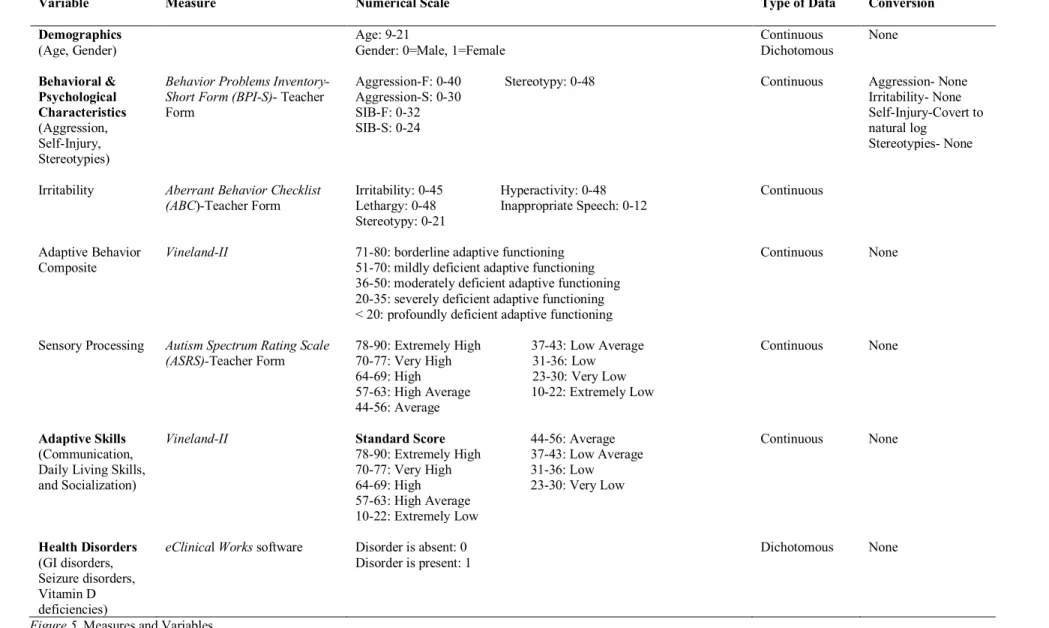
Demographic Variables including Age and Gender, 2) Behavioral and Psychological
Characteristics, including Aggression, Irritability, SIB, Stereotypies, Adaptive Behavior, and
Sensory processing, 3) Health Disorders, including GI Disorders, Seizure Disorders, and
Vitamin D Deficiencies, and 4) Adaptive Skills, including Communication, Daily Living
Skills, and Socialization.
Behavioral & Psychological Characteristics
Aggression, Irritability, and RRB, including SIB and Stereotypies, were measured
using the Behavior Problems Inventory-Short Form (BPI-S) and the Irritability subtest of the
Aberrant Behavior Checklist (ABC). The BPI-S is a 30-item respondent-based behavior
rating instrument for self-injurious, stereotypic, and aggressive/destructive behavior.
Self-injury that is measured includes the following behavior: self-biting, head hitting, body
hitting, self-scratching, pica, inserting objects in nose, ears, anus, etc., hair pulling, and teeth
grinding. Two Likert-type rating scales per item are used, including a five-point frequency
scale (never = 0, monthly = 1, weekly = 2, daily = 3, hourly = 4) and a four-point severity
scale (no problem = 0, a slight problem = 1, a moderate problem = 2, a severe problem = 3)
(Rojahn, Matson, Lott, Esbensen & Smalls, 2001). Scores on the Aggression-F scale are
continuous and can range from 0 to 40, a score of 40 indicating hourly aggression. Scores on
the Aggression-S scale can range from 0 to 30, with 30 indicating severe aggression. Scores
on the SIB-F scale are continuous and can range from 0 to 32, a score of 32 indicating hourly
self-injury in multiple domains. Scores on the SIB-S scale can range from 0 to 24, with 24
indicating severe self-injury. Scores on the Stereotypy scale can range from 0 to 48. A score
rocking, repetitive body movements, sniffing objects, sniffing own body, waving or shaking
arms, manipulating objects, repetitive hand and/or finger movements, yelling and screaming,
pacing, jumping, bouncing running, rubbing self, gazing at hands or objects, bizarre body
postures, clapping hands, and grimacing. The BPI-S was found to have sound psychometric
properties and strong internal consistency. Strong evidence for confirmatory and
discriminatory validity was found for the BPI-S in comparison to the ABC, the Diagnostic
Assessment for the Severely Handicapped-II, the Nisonger Child Behavior Rating Form and
the Inventory for Client and Agency Planning (Rojahn et al., 2012). At the Facility, the
BPI-S is administered annually to teachers and residential staff.
The ABC is a measure that is used for behavior phenotyping or describing a particular
population. It also measures the effects of pharmacological and other treatments in
individuals with intellectual disabilities. This 58-item scale is completed by an adult who is
familiar with the client. It contains five subscales: a) irritability, b) lethargy/social
withdrawal, c) stereotypic behavior, d) hyperactivity/noncompliance, and e) inappropriate
speech. A total score is also derived. The irritability scale ranges from 0 to 45, the lethargy
scale ranges from 0 to 48, the stereotypic behavior scale ranges from 0 to 21, the
hyperactivity/noncompliance scale ranges from 0 to 48, and the inappropriate speech scale
ranges from 0 to 12. The normative sample includes over 900 individuals diagnosed with
intellectual disabilities ages 16 to 38. The ABC has been used in over 300 research studies,
many of which focus on people with an autism spectrum disorder. This measure has good
test-retest reliability and internal consistency, and the validity is well-established. Inter-rater
reliability is acceptable. The ABC Irritability scale was used to measure irritability and is