ECONOMIC EVALUATION OF BIOLOGICAL THERAPY USE
AMONG PATIENTS WITH CROHN'S DISEASE
David Biaozhi Wei
A dissertation submitted to the faculty of the University of North Carolina at Chapel Hill in partial fulfillment of the requirements for the degree of Doctor of Philosophy in the Division of Pharmaceutical Outcomes and Policy in the UNC Eshelman School of Pharmacy
Chapel Hill 2012
Approved by: Joel F. Farley, PhD Betsy L. Sleath, PhD Jaya K. Rao, MD, MHS
iii
ABSTRACT
DAVID B. WEI: Economic Evaluation of Biological Therapy Use among Patients with Crohn's Disease
(Under the direction of Dr. Joel F. Farley)
Crohn’s disease (CD) is a chronic inflammatory disorder that substantially impairs quality of life for patients and entails enormous economic burden to the US society. Biological therapies can effectively treat Crohn’s disease. The treatment strategy of using biological therapy for CD is currently shifting from the conventional 'bottom-up' approach that reserves biological therapy as the last medical resort to a more aggressive 'top-down' approach that endorses early use of biological therapy. This dissertation sought to evaluate the impact of this shift in treatment on healthcare utilization by CD patients and healthcare costs to payers.
First, we examined healthcare utilization and costs for CD patients in a large claims database dating from 2005 to 2009. We found that early biological users had lower utilization of inpatient services and higher prescription drug costs than late biological users. Annual medical costs for both biological user groups were comparable. We constructed a decision tree model and conducted budget impact analysis to predict the financial ramifications for third party payers of the change in prescription drug costs resulting from top-down treatment approach. Our results showed that the top-down approach of biological therapy was
iv
following CD diagnosis. Last, we conducted a cost analysis to compare total healthcare costs for patients who adopted biological therapy following top-down or bottom-up approach. We found that patients following the top-down strategy incurred higher healthcare costs in the first year of disease. In the second and third years, the top-down strategy appeared to be cost neutral, which was mainly attributed to a cost reduction in non-drug services.
In conclusion, novel biological therapies have been increasingly used among CD patients, and the new top-down treatment strategy can affect allocation of healthcare costs. Top-down treatment approach resulted in higher prescription drug costs for patients,
v
ACKNOWLEDGEMENTS
I would like to thank my advisor and dissertation committee chair, Dr. Joel Farley, for his tremendous help and support. Dr Farley spent countless hours with me in refining
research topics, discussing questions, providing advices and improving manuscripts. His broad experience, in-depth knowledge, attention to details and striving for perfection inspire me to reach higher every day. I am grateful for his mentorship and guidance.
I want to thank my advisory committee members, Drs. Betsy Sleath, Jaya Rao, Chris Blanchette, and Hans Herfarth, for their instrumental advices and insightful thoughts. It is truly an honor to have the unique opportunity to work with and learn from them.
I would like to extend my appreciation the entire DPOP family for all the moral support I received over years.
vi
TABLE OF CONTENTS
LIST OF FIGURES ... ix
LIST OF TABLES ... x
LIST OF ABBREVIATIONS ... xii
CHAPTER I: INTRODUCTION ... 1
1.1 Overview ... 1
1.2 Specific Aims ... 4
1.3 Dissertation Outlines ... 8
CHAPTER II: BACKGROUND AND LITERATURE REVIEW ... 9
2.1 Background ... 9
2.1.1 Disease Epidemiology ... 9
2.1.2 Disease Morbidity and Mortality ... 10
2.1.3 Disease Management ... 11
2.1.4 Medical Therapies ... 12
2.1.5 Biological Therapy... 14
2.1.6 Revolution of Disease Treatment Approach ... 17
2.1.7 Economics of Crohn’s Disease ... 19
2.2 Literature Review ... 21
2.2.1 Overview ... 21
2.2.2 Use of Biological Therapies in Crohn's Disease Patients ... 21
2.2.3 Costs of Crohn's Disease ... 26
2.2.4 Cost-effectiveness of Crohn's Disease ... 32
2.2.5 Other Economic Evaluations of Crohn's Disease ... 40
2.3 Summary ... 42
CHAPTER III: THEORETICAL AND CONCEPTUAL FRAMEWORK ... 43
3.1 Theoretical Framework ... 43
3.1.1 Andersen's Model ... 44
vii
3.1.3 Model Synthesis ... 48
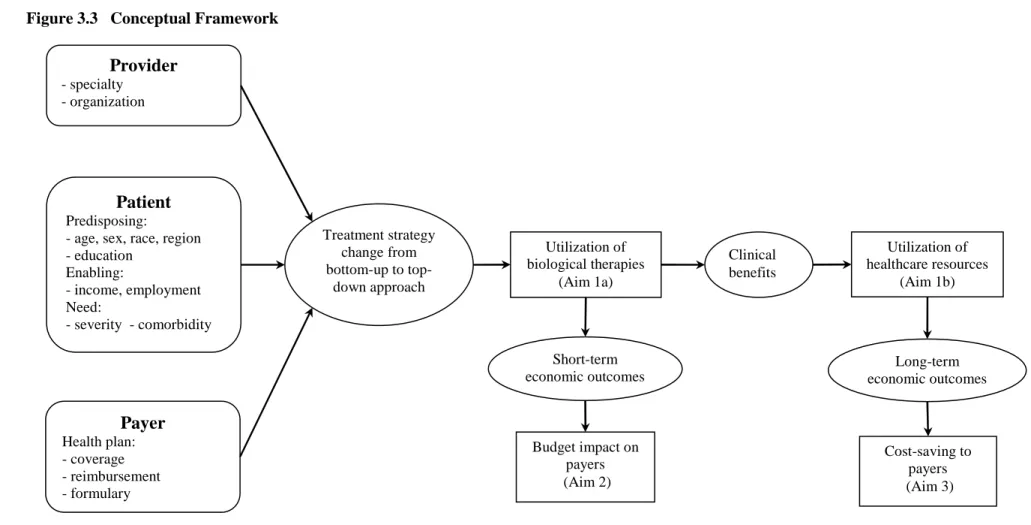
3.2 Conceptual Framework ... 50
3.3 Construction of Analytical Models ... 54
3.4 Summary ... 56
CHAPTER IV: METHODS ... 57
4.1 Data Source ... 57
4.2 Study Sample ... 58
4.3 Study Methods for Aim 1 (cohort studies) ... 59
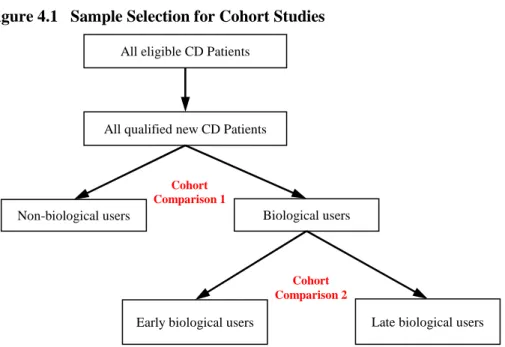
4.3.1 Study Cohorts... 59
4.3.2 Outcome Variables... 61
4.3.3 Independent Variables ... 64
4.3.4 Regression Models ... 65
4.3.5 Data Analysis and Data Security ... 68
4.4 Study Methods for Aim 2 (budget impact study) ... 68
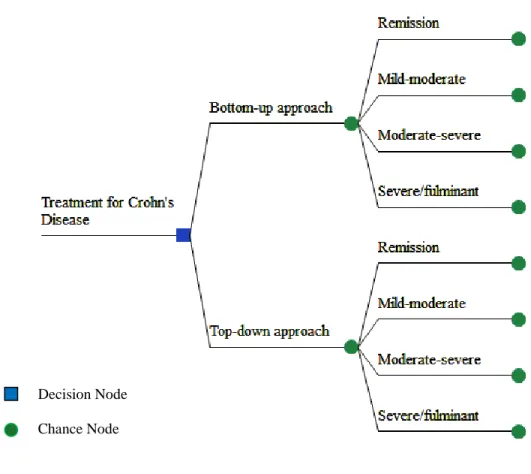
4.4.1 Decision Tree ... 69
4.4.2 Time Horizon ... 72
4.4.3 Perspective ... 72
4.4.4 Outcome Definition by Disease Severity ... 73
4.4.5 Prescription Drug Costs ... 76
4.4.6 Transition Probability ... 77
4.4.7 Model Assumptions ... 79
4.4.8 Base Case Analysis ... 79
4.4.9 Sensitivity Analysis ... 80
4.5 Study Methods for Aim 3 (cost study) ... 83
4.5.1 Time horizon ... 84
4.5.2 Decision Tree ... 85
4.5.3 Healthcare Costs ... 85
4.5.4 Transition Probability ... 87
CHAPTER V: HEALTHCARE UTILIZATION AND COSTS FOR COMMERCIALLY INSURED PATIENTS WITH CROHN'S DISEASE ... 89
5.1 Introduction ... 90
5.2 Methods ... 93
viii
5.4 Discussion ... 101
5.5 Summary ... 107
CHAPTER VI: BUDGET IMPACT OF TREATMENT STRATEGY CHANGE ON PATIENTS WITH CROHN'S DISEASE FROM PAYERS' PERSPECTIVE... 120
6.1 Introduction ... 121
6.2 Methods ... 124
6.3 Results ... 131
6.4 Discussion ... 133
6.5 Summary ... 137
CHAPTER VII: EARLY ADOPTION OF BIOLOGICAL THERAPIES BY PATIENTS WITH CROHN'S DISEASE: COST ANALYSIS FROM THIRD PARTY PAYERS' PERSPECTIVE ... 148
7.1 Introduction ... 149
7.2 Methods ... 152
7.3 Results ... 158
7.4 Discussion ... 160
7.5 Summary ... 164
CHAPTER VIII: STUDY FINDINGS AND LIMITATIONS ... 176
8.1 Summary of Findings ... 176
8.2 Limitations ... 181
8.3 Future Research Directions ... 184
ix
LIST OF FIGURES
Figure 2.1 Bottom-up Treatment Guidelines ... 13
Figure 2.2 Comparison of CD Treatment Approaches ... 19
Figure 2.3 Comparison of Proportions of Medical Costs of Crohn’s Disease ... 28
Figure 3.1 Theoretical Framework ... 44
Figure 3.2 Andersen's Behavioral Model ... 46
Figure 3.3 Conceptual Framework ... 51
Figure 4.1 Sample Selection for Cohort Studies ... 60
Figure 4.2 Decision Tree (schematic) for Budget Impact Analysis ... 71
Figure 4.3 Decision Tree for Cost Analysis ... 86
Figure 5.1 Study Sample Selection ... 108
Figure 5.2 Proportion of Biological Users from 2005 to 2009 ... 112
Figure 5.3 Comparison of Healthcare Costs for Early and Late Biological Users ... 113
Appendix Figure 5.1 Comparison of Healthcare Utilization between Early and Late Biological Users ... 119
Figure 6.1 Decision Tree (2-year model) ... 138
Figure 6.2 Comparison of Probabilities of Disease Severity in Three Years ... 139
x
LIST OF TABLES
Table 2.1 Biological Therapies for Crohn's disease ... 16
Table 2.2 Studies Related to the Use of Biological Therapies in Crohn’s Disease Patients 23 Table 2.3 Summary of Studies Related to Costs of Crohn’s Disease ... 31
Table 2.4 Summary of Pharmacoeconomic Studies Related to Crohn’s Disease... 38
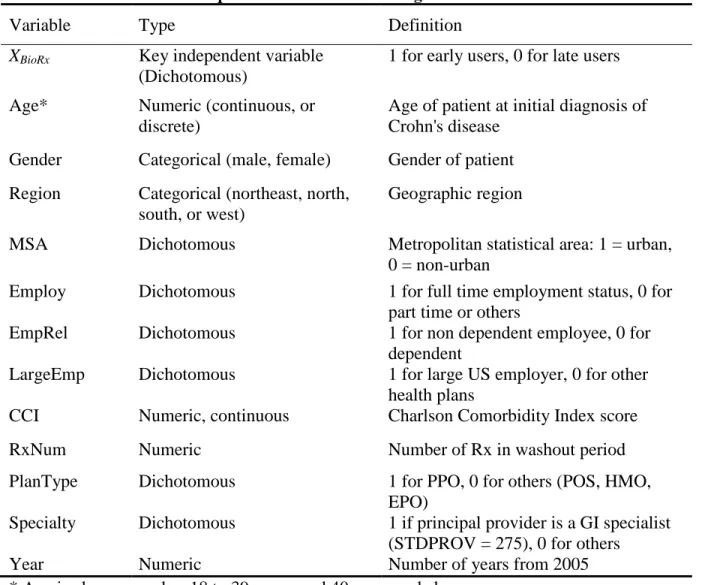
Table 4.1 Definitions of Independent Variables in the Regression Models ... 67
Table 4.2 Classification of Severity for Crohn’s Disease ... 75
Table 4.3 Distribution of Biological Therapy Users in the First Year of Crohn’s Disease .. 77
Table 4.4 Transition Distribution of Biological Therapy Users in Three Years of Crohn’s Disease ... 78
Table 4.5 Parameters Specification in Sensitivity Analysis ... 82
Table 4.6 Claims of Medical Services for Cost Analysis ... 84
Table 5.1 Characteristics of Crohn’s Disease Patients ... 109
Table 5.2 Summary of Healthcare Utilization and Costs ... 110
Table 5.3 Comparison of Outcomes Between Early and Late Biological Users ... 111
Appendix Table 5.1 Prevalent Biological Users among Crohn’s Disease Patients ... 114
Appendix Table 5.2 Use of Biological Agents from 2005 to 2009 ... 114
Appendix Table 5.3 Use of Biological Agents for Early and Late Biological Users ... 114
Appendix Table 5.4 Odds Ratios Estimated by Logistic Regression Models ... 115
Appendix Table 5.5 Odds Ratios Estimated by Logistical Regression Models on Healthcare Utilization ... 116
Appendix Table 5.6 Effects Estimated by GEE Regression Models on Costs for Biological Users ... 117
Appendix Table 5.7 Effects Estimated by GEE Regress Model on Healthcare Utilization of Biological Users ... 118
Table 6.1 Transition Probabilities ... 140
Table 6.2 Prescription Drug Costs by Disease Severity and Time after Diagnosis ... 141
Table 6.3 Budget Impact Analysis Results ... 141
xi
Appendix Table 6.2 Parameters for Sensitivity Analysis ... 144
Appendix Table 6.3 Prescription Drug Costs by Biological Drug by Claim Type ... 146
Appendix Table 6.4 Comparison of Prescription Drug Costs of Non-biological Drugs .... 146
Appendix Table 6.5 Case Scenario Sensitivity Analysis Results ... 147
Table 7.1 Total Healthcare Costs by Disease Severity ... 166
Table 7.2 Comparison of Total Healthcare Costs Between Top-down and Bottom-up Users ... 166
Table 7.3 Subgroup Analysis Results of Total Healthcare Costs for Frequent Biological Users... 166
Appendix Table 7.1 Healthcare Costs for Individual Services by Disease Severity ... 167
Appendix Table 7.2 Comparison of Healthcare Costs of Individual Services for Top-down and Bottom-up Biological Users ... 168
Appendix Table 7.3 Parameters for Sensitivity Analysis in Cost Analysis ... 169
Appendix Table 7.4 Transition Probabilities of Frequent Biological Users ... 171
Appendix Table 7.5 Total Healthcare Costs of Frequent Biological Users ... 172
Appendix Table 7.6 Characteristics of Biological Users with Crohn’s Disease ... 173
xii
LIST OF ABBREVIATIONS
5-ASA 5-aminosalicylic acid
6-MP 6-mercaptopurine
aTNF Anti-tumor necrosis factor
BIA Budget impact analysis
CCAE MarketScan Commercial claims and encounters database
CCI Charlson Comobidity Index
CD Crohn's disease
CDAI Crohn's disease activity index
CEA Cost-effectiveness analysis
CI Confidence interval
COB Coordination of Benefits
CPI Consumer price index
CUA Cost-utility analysis
DSA Deterministic sensitivity analysis
ER Emergency room
FDA Food and Drug Administration
IBD Inflammatory bowel disease
ICD-9 International Classification of Disease, 9th revision
IRB Institutional Review Board
GEE Generalized estimating equations
GI Gastroenterology
MCO Managed care organization
PBMO Pharmacy benefit management organization
PPO Preferred provider organization
PSA Probabilistic sensitivity analysis
CHAPTER I:
INTRODUCTION
1.1 Overview
Crohn’s disease (CD) is a chronic inflammatory disorder that affects around a half million Americans.[1] Despite its relatively low prevalence compared to other common gastrointestinal disorders, CD substantially impairs quality of life for patients and entails enormous economic burden to the US society.[2] In 2006, total direct medical costs were estimated at $18,000 per patient and over $10 billion to the US healthcare system.[3] Prescription drug expenditure accounted for the largest proportion of medical costs (35.3%) in 2003, an increase of almost 25% since 1990's.[4-6] Costs for prescription drugs may increase even more with several novel drug therapies entering the market that are FDA-approved for clinical use.
2
Prior to the era of biological therapy, first-line treatment for patients with moderate and severe disease consisted of low-dose steroids and/or antibiotics, then followed with azathioprine and 6-mercaptopurine (6-MP) as maintenance therapy. These traditional therapies were not clinically satisfactory, and often caused serious side effects. As many as 75% of CD patients required surgery for management of their disease after failing to respond to these pharmacological therapies, and more than 40% of CD patients needed subsequent surgeries.[10]
With a growing number of new biological agents under investigation, these biological drugs play a more important role in the therapeutic regimen for Crohn’s disease. Biological therapies have proven to be potent and effective disease modifiers, and are widely prescribed to CD patients. However, treatment strategy has been under debate in recent years as
3
late adopters.[12, 13] It is believed that the early use of biological therapies may alter natural disease progression, and provide great benefits to patients. Thus, the treatment paradigm for Crohn’s disease is currently shifting from the conventional bottom-up approach to a more aggressive top-down approach.
Despite their clinical efficacy, innovative biological therapies are associated with substantial drug cost. The annual drug costs of biological therapies are three to four times higher than conventional, non-biological drugs.[10] Because treatment strategy for CD is shifting to include biological therapies in the first-line treatment, a surge of biological therapy use is anticipated in the next few years. This rapid increase of high-cost medications raises concerns about the extent of reimbursement that payers will provide for these drugs in the long term. To contain healthcare costs, payers may practice a variety of strategies, including prior authorization, closed formulary, tiered copayments and coinsurance.[14] These policy changes can potentially affect the access to these novel drugs, and limit the therapeutic benefits to patients in need. Therefore, in order to understand the financial implication to payers, it is imperative to study the economic outcomes of CD patients due to the shifting treatment strategy.
4
were often based on the results from clinical trials, instead of 'real-world' patient data. In this dissertation, I will take a real-world data approach based on a large administrative database to assess the economic impact from the top-down therapy for CD.
1.2 Specific Aims
A potential surge in the use of biological therapies among CD patients due to the treatment strategy change from bottom-up to top-down approach raises concerns about the affordability and sustainability of third party payers, and, in the long run, the well-being of CD patients. To cope with the overwhelming financial burden, payers may potentially change their policies, thereby limiting patients access to novel biological therapies. Lack of
5
analysis and cost analysis, will be based on the predicted outcomes of CD patients. The specific research aims are as follows:
Aim 1: To estimate the utilization and costs of healthcare services used by CD patients, and to compare the utilization and costs between early and late biological users
This aim will be addressed by analyzing the commercial medical and pharmacy claims of CD patients from 2005 to 2009. Utilization and costs associated with different healthcare services, including inpatient hospitalization, outpatient visits, emergency room visits and prescribed medications, will be extensively examined. More specifically, utilization rates and costs of healthcare services will be compared between different CD patient cohorts, which are designated below.
Cohort Comparison 1: Biological Therapy Users vs. Non-Biological Therapy Users Patients will be classified as biological therapy users if they used any amount of biological therapies following a confirmed diagnosis of CD. Non-biological therapy users are CD patients who used no biological therapies at any time during the course of their disease. For each year from CD diagnosis, healthcare utilization and costs in these two patient groups are summarized for comparison.
Cohort Comparison 2: Top-down Biological Users vs. Bottom-up Biological Users
Biological therapy users are categorized according to their treatment strategy. Under conventional bottom-up approach, biological therapies are reserved as the last
pharmacological resort after patients failed in other pharmacotherapies, including
6
bottom-up biological users. Top-down biological users are those who directly used any biological therapy in the first line treatment.
Aim 1a: To calculate the utilization and costs of healthcare services for all CD patients by cohort from 2005 to 2009
Descriptive statistics will be calculated for healthcare utilization and cost variables for CD patients in four different cohorts according to the claims data from 2005 to 2009. Healthcare utilization is measured by the following outcome variables: number of outpatient visits, number of inpatient visits, total length (in days) of inpatient stays, number of
emergency room visits, and number of prescriptions. Healthcare costs include the total amount paid by payers in the following service sectors: outpatient visits, inpatient visits, emergency room visits, and prescription medications.
Aim 1b: To compare utilization and costs between early and late biological users from 2005 to 2009, and estimate the utilization and costs for patients in both cohorts in the first three years of disease
Multivariate regression models are employed to examine all individual utilization and cost variables between top-down and bottom-up biological users. The between-group
7
early and late biological users - the economic outcomes for the new treatment strategy change; b) the differences in prescription drug costs between the two biological user groups in the first year of disease - the short-term economic outcome; and c) the differences in overall healthcare services between the two groups in the coming three years - the long-term economic outcome. Predictions for both short and long-term economic outcomes are
provided in subsequent economic evaluations under Aim 2 and Aim3.
Aim 2: To assess the impact of short-term economic outcome for CD patients on third party payers based on the changing treatment strategy for disease management
8
Aim 3: To evaluate whether or not the top-down approach for CD management is more
cost-saving than the bottom-up approach for third party payers when accounting for the long-term economic outcomes of CD patients
To address this aim, the costs associated with a broader range of healthcare services, including inpatient visits, emergency room (ER) visits, outpatient visits, and prescription drugs, will be collectively examined to determine whether or not the new treatment paradigm is cost-saving in both the short (one-year) and long (three-year) term. A decision tree is designed to model the two treatment approaches according to disease severity and treatment response.
An accurate assessment of budget impact from the aggressive top-down treatment approach can facilitate third party payer decisions regarding whether or not formulary
changes are needed to cope with the change of treatment strategy. Unfavorable modifications to the formulary could prevent patients from accessing the novel therapy, and further reduce their well-being in the long term. A reliable prediction of the impact on total medical costs can inform payers, as well as healthcare administrators and providers, regarding the long-term benefits associated with the top-down approach.
1.3 Dissertation Outlines
CHAPTER II:
BACKGROUND AND LITERATURE REVIEW
This chapter consists of two sections. The first section provides the background information related to Crohn's disease, including disease epidemiology, disease management, medical treatments, and economic data. The second section is a rigorous review of related literature.
2.1 Background
2.1.1
Disease Epidemiology
Crohn’s disease (CD) is a major inflammatory bowel disease (IBD) that can affect any portion of the gastrointestinal (GI) tract from the mouth to the perianal area, but primarily the small intestine and colon.[10] The disease is relapsing and characterized by diarrhea, abdominal pain, fatigue, fever, clinical symptoms of bowel obstruction, and passage of blood and mucus. Patients may also develop strictures, abscesses, or fistulas.[15] This chronic GI disorder affects around a half million Americans with incidence rate at
10
studies show a male predominance. [18] The risk for Crohn's disease is influenced by genetic factors, and elevated by cigarette smoking, however, the etiology and pathogenesis of CD remain obscure.[19] Crohn’s disease continues to be among the most challenging chronic illnesses in clinical practice.[20]
2.1.2
Disease Morbidity and Mortality
Crohn's disease is characterized with an elevated mortality rate and significant morbidity. Population-based epidemiological studies showed that the mortality rate of CD is 20-70% higher than that in the general population.[21, 22] Recent studies reported that exposure to new biological therapy, such as infliximab, did not significantly change the mortality rate and relative risk of death. The mortality rate was 0.53 per 100 patient-year for patients who were treated with infliximab, a biological drug, which is similar to 0.43 for those who were not.[23, 24]
Surgery is inevitable for the majority of CD patients after all other medical
interventions have failed. Cohen et al. reported that 79% of CD patients will need surgery at some point in their lives, and 45% of these patients require a second surgery. The annual rate of surgery recurrence is 8-10%.[10]
11
2.1.3
Disease Management
At present, CD is neither medically nor surgically curable. Therapeutic goals for CD are to induce and maintain disease remission, improve quality of life, and minimize long-term effect from toxicity and complications.[11] Although the disease management plan for individual patient is tailored according to his or her response and tolerance to medical interventions, disease severity, disease location, and disease-related complications are the key factors prompting medical and surgical treatment decisions in clinical practice. Severity of Crohn's disease is often measured by the Crohn’s Disease Activity Index (CDAI), a research tool quantifying symptoms. The CDAI consists of eight clinical components, such as the number of liquid or soft stools each day for seven days. Each component is weighted based on a point system, and the CDAI is the sum of all points for each component.
According to the CDAI score, disease severity is separated into four categories: a)
12
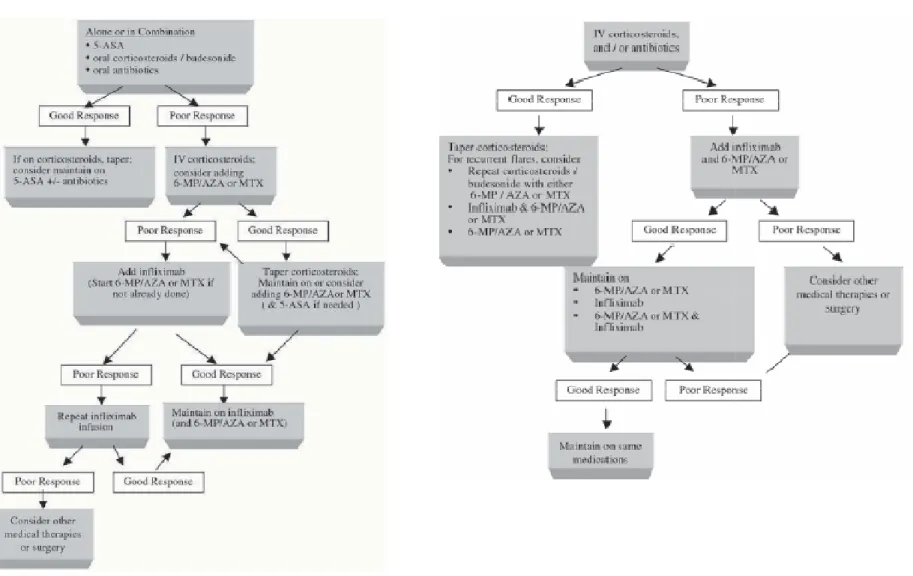
immunosuppressants (e.g., tacrolimus) are indicated. Surgical intervention is recommended for patients who have failed to respond or experience worsening symptoms. Below are the current guidelines for patients with mildly to moderately active and severe Crohn’s
disease.[11]
2.1.4
Medical Therapies
Aminosalicylates (sulfasalazine or mesalamine) are the most common drugs prescribed for Crohn’s disease to prevent or control inflammation. In patients with mild to moderate disease activity, aminosalicylates have been shown to be effective up to 80% of the time. The
primary active component is 5-aminosalicylic acid (5-ASA). Most of 5-ASA drugs (eg. sulfasalazine) are delivered to the colon, so the aminosalicylates are more effective for patients with active colonic or ileocolonic disease, but are relatively ineffective for patients with isolated small bowel disease. The 5-ASA drugs have a number of side effects, and are not helpful in patients with more severe disease.
Antibiotics (ciprofloxacin or metronidazole) are suggested when aminosalicylates can not control symptoms.
Steroids (prednisone or budesonide) are used to treat the disease if symptoms persist.
Steroids can not achieve long-term remission, and are associated with a large number of side effects, and can cause dependency.
1
3
Figure 2.1 Bottom-up Treatment Guidelines
Mild to Moderate Disease
Source: Lichtenstein et al, Management of Crohn's disease in adults.
Severe Disease
14
Biological therapies (infliximab, adalimumab, natalizumab, and certolizumab pegol) are biological therapies that have demonstrated efficacy in multiple clinical trials for patients with moderate to severe Crohn’s disease.
Immunosuppressants (cyclosporine, tacrolimus) are occasionally used to treat CD patients who have not responded to conventional drugs (e.g., steroid resistance). Concerns about their long-term toxicity (especially high risk of renal injuries) have restricted the use of
immunosuppressants to CD patients.[28]
2.1.5
Biological Therapy
Conventional drug therapies for CD treatment, including 5-ASA, corticosteroids and immunomodulators, have a relatively low response rate and only 50% of patients achieve sustained remission. Those treatments also cause many side effects, such as toxicity from corticosteroids and cytopenia from azathioprine.[29, 30] Although the etiology of CD
remains unclear, dysregulated immune responses are believed to play an important role in the process of CD development.[31] Monoclonal antibodies can be specifically designed to modulate immune cell proliferation and, indeed, biological therapies that target immune pathways have emerged as a novel and effective therapeutic class for many immune mediated disorders, including rheumatoid arthritis, psoriasis, cancer, and Crohn’s disease. For example, infliximab, adalimumab and certolizumab pegol are anti-tumor necrosis factors (Anti-TNFs). They can inhibit over production of TNF, which is an important
15
Infliximab (Remicade®) is a chimeric monoclonal antibody directed against tumor necrosis factor (TNF)-α that has shown efficacy in the treatment of patients with moderately to severely active Crohn’s disease that fail to respond to other treatment options or those with fistulising disease. Infliximab treatment is generally initiated with a single intravenous
infusion at a dosage of 5 or 10 mg/kg as induction therapy, and followed by repeated doses every four weeks at a dosage of 5 mg/kg to sustain clinical remission.
Adalimumab (Humira®) is a recombinant human IgG1 monoclonal antibody specific for human TNF. In randomized clinical trials, a greater percentage of patients treated with 160/80 mg of adalimumab achieved induction of clinical remission versus placebo after four weeks of treatment. A greater portion of patients, who experienced a clinical response after induction treatment, achieved clinical remission with a dose of 40 mg in the bi-weekly maintenance group compared to the placebo maintenance group. Adalimumab is
administered by subcutaneous injection, and initial dose (Day 1) was 160 mg, followed by 80 mg two weeks later (Day 15). At Day 29, patients began a maintenance dose of 40 mg every other week.
16 Table 2.1 Biological Therapies for Crohn's disease Brand
Name
Generic
Name Manufacturer
FDA Approval
Dosage &
Route Co-Indications
Remicade® infliximab Centocor 8/24/1998 Intravenous
Infusion, 5mg/kg at 0, 2, and 6 weeks, then every 8 weeks. Ulcerative Colitis, Rheumatoid Arthritis, Ankylosing Spondylitis, Psoriatic Arthritis, Plaque Psoriasis
Humira ® adalimumab Abbott 2/27/2007
(12/31/2002 for RA)
Subcutaneous Injection, 160 mg on Day 1, 80 mg on Day 15, 40 mg every 2 weeks. Rheumatoid Arthritis, Ankylosing Spondylitis, Psoriatic Arthritis, Plaque Psoriasis, Juvenile Idiopathic Arthritis
Tysabri ® natalizumab Biogen Idec and Elan
1/14/2008 Intravenous infusion, 300 mg, every 4 weeks.
Multiple Sclerosis
Cimzia ® certolizumab pegol
UCB 4/22/2008 Subcutaneous
injection, 400 mg at weeks 2 and 4, then 400 mg every 4 weeks
Rheumatoid Arthritis
Source: http://www.accessdata.fda.gov/scripts/cder/drugsatfda/ (Labeling information)
Certolizumab pegol (Cimzia®) is a recombinant, humanized antibody Fab’ fragment with specificity for human tumor necrosis factor alpha (TNF-α). The efficacy and safety of certolizumab pegol were assessed in two randomized clinical trials. Compared to patients in the placebo group, a greater proportion of certolizumab pegol-treated patients achieved clinical response at Week 6 (induction) and Week 26 (maintenance). The recommended initial adult dose of certolizumab pegol is 400 mg (given as two injections), and following by the same dose at Weeks 2 and 4. In patients who exhibit a clinical response, the
17
A growing number of new biological therapies are under investigation. More biological therapies may be approved by the FDA and added to the therapeutic pyramid for the treatment of Crohn’s disease.
The advent of new drug therapies has not only brought more treatment options to patients, but has also changed the landscape of the treatment strategy. All four biological agents (see Table 2.1) demonstrated therapeutic benefits to patients in multiple clinical trials.[7-9] These benefits included: a higher response rate in the induction for patients with more severe disease, rapid onset of clinical response within 2 weeks, greater effectiveness in maintaining long-term remission, and significant improvement in health-related quality of life. Due to the lack of a long-term safety profile, however, the use of novel biological therapies has been controversial in clinical practice in recent years.
2.1.6
Revolution of Disease Treatment Approach
The introduction of biological therapies in the past decade has resulted in
considerable changes in the Crohn’s disease treatment paradigm. Prior to the approval of infliximab, therapeutic options for CD patients were limited. Most patients underwent surgeries once they failed to respond to conventional treatments. While novel biological therapies have been prescribed to patients with active Crohn’s disease, treatment algorithms emphasizing on the optimal time to introduce biological therapies have been evolving as more efficacy data become available.
18
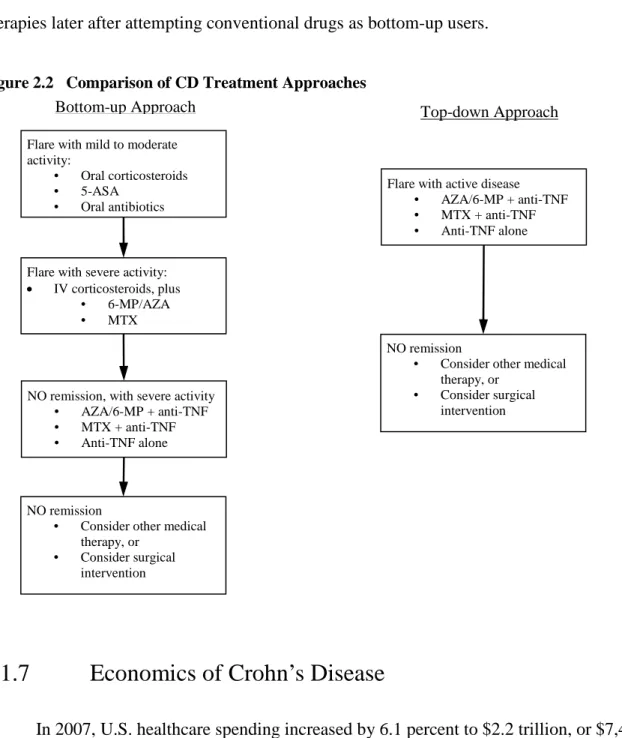
intolerant to conventional drugs. This so-called 'bottom-up' or 'step-up' approach has been recommended in most CD management guidelines worldwide. Toxicity, immunogenicity, and lack of efficacy data about biological therapies as first-line treatment have been major concerns that limit their use for CD patients.
A new and more aggressive ‘top-down’ treatment approach has gotten considerable attention from inflammatory bowel disease (IDB) specialists.[33] Early introduction of biological therapies into the CD treatment regimen can increase their therapeutic benefit, partly by changing the natural course of disease progression. Compared to the bottom-up approach, the top-down therapy introduces biological therapies as first-line treatment, either in combination with immunomodulators or as monotherapy alone. A flow chart depicting both treatment approaches is shown in Figure 2.2.
Two recent studies, SONIC1 for infliximab[12] and an open randomized study [13], have shown that the top-down approach is superior to the bottom-up approach among CD patients who were naïve to steroids and biological therapies. Study treatment arms including patients who received biological therapies early in course of their disease were found to have a more rapid remission and higher remission rate than those who received standard therapy. Evidence in these two recent studies will substantially change the perspective of the use of biological therapies. The treatment paradigm for Crohn’s disease is shifting from the conventional therapeutic algorithm to early aggressive treatment approach.
In regards to the notation of CD treatment strategy, 'bottom-up' (or 'step-up') and 'top-down' are frequently used in the literature to represent the conventional and early aggressive approaches respectively. These notations are rather conceptual with no consensus about their
1
19
definition in clinical practice. In this dissertation, we simply consider patients who adopted biological therapy early in disease course as top-down users, and those who used biological therapies later after attempting conventional drugs as bottom-up users.
Figure 2.2 Comparison of CD Treatment Approaches
2.1.7
Economics of Crohn’s Disease
In 2007, U.S. healthcare spending increased by 6.1 percent to $2.2 trillion, or $7,421 per person. The healthcare portion of the gross domestic product (GDP) reached 16.2 percent.[34] Despite its relatively low prevalence compared to other common GI disorders, CD substantially impairs quality of life for patients, and entails high morbidity and
Flare with mild to moderate activity:
• Oral corticosteroids • 5-ASA
• Oral antibiotics
Flare with severe activity:
• IV corticosteroids, plus • 6-MP/AZA • MTX
NO remission
• Consider other medical therapy, or
• Consider surgical intervention
NO remission, with severe activity • AZA/6-MP + anti-TNF • MTX + anti-TNF • Anti-TNF alone Bottom-up Approach
NO remission
• Consider other medical therapy, or
• Consider surgical intervention Flare with active disease
• AZA/6-MP + anti-TNF • MTX + anti-TNF • Anti-TNF alone
20
enormous economic burden.[2] The average annual direct cost of healthcare per patient was estimated at $8,727 in 1992[4], $12,417 in 1994[5], and $8265 in both 2003 and 2004[6]. Although the annual direct cost was relatively stable, the cost distribution for different healthcare services has changed significantly. In 1992 and 1994, drug costs only accounted for a small percentage of the total direct costs, and were 4.6% and 3.5%, respectively.
Hospital costs contributed to the majority of expenses at 55.8% in 1992 and 57.3% in 1994.[4, 5] In both 2003 and 2004, pharmaceutical claims accounted for the largest proportion of direct cost (35.3%), then followed by hospitalization (31.4%).[6] This drastic change in cost distribution is primarily attributed to the emergence of biological therapies for the treatment of CD in the past decade. The annual drug cost, including the drugs themselves, as well as drug administration and wastage, was estimated at $17,176 for adalimumab-treated patients, and $18,214 for infliximab-treated patients in 2007.[35] With the treatment strategy shifting from the bottom-up to the top-down approach, biological therapies will be used among a larger portion of patients, and will likely be used for long-term maintenance. A massive increase in the use of these expensive drugs will add to the financial burden for third party payers and patients. However, these highly effective drugs might potentially be cost-saving if patient utilization of health care resources is reduced. For example, a study conducted with the CD population at the University of Chicago showed that one year's use of infliximab was associated with significant decreases in many areas, such as: surgery (38%), gastrointestinal surgeries (18%), endoscopies (43%), radiographs (12%), ER visits (66%), and
21
In addition to direct medical costs, indirect costs can constitute a substantial portion of total costs incurred by Crohn’s disease. Indirect costs include expenses associated with disability, days off from work, transportation, and time spent with family. It has been estimated that 5-10% of CD patients each year are unable to work.[4] There is great
anticipation that the clinical effectiveness of novel biological therapies will be translated into a substantial reduction of disability and overall indirect costs.
2.2 Literature Review
2.2.1
Overview
In this section, peer reviewed journal articles from the past fifteen years are rigorously reviewed for the development of this dissertation. This review focuses on the following major areas corresponding to the research aims: a) use of biological therapies among Crohn's disease patients; b) healthcare costs related to Crohn's disease; and c) economic evaluation of biological therapies targeted for the treatment for Crohn's disease. After a thorough review of the literature, research gaps in each targeted area are identified, which support the research aims of this dissertation.
2.2.2
Use of Biological Therapies in Crohn's Disease Patients
22
sustain remission only 50% of the time, and entail serious side effects.[32] In contrast, biological therapies (e.g., infliximab and adalimumab) have proven to be novel and effective nonsurgical treatment in clinical trials, and have been prescribed to Crohn's disease
patients.[37] However, under current CD management guidelines, the mainstays of medical therapy for active disease are corticosteroids, antibiotics for fistulized disease, and
immunosuppresants when patients are steroid-dependent or steroid-refractory. Biological therapies are reserved as the last medical resort, and are limited to patients with severe symptoms. To have a better understanding of how patients and clinicians adapted to these innovative therapies, a literature review was conducted utilizing a PubMed search and the following key words: ((use) OR (utilization)) AND ((biological) OR (infliximab) OR
(adalimumab) OR (tumor necrosis factor)) AND (crohn's). Only four studies were identified
involving information about the use of biological therapies in CD patients from 2000 to 2010 (see Table 2.2).
Results of the literature search were inadequate and inconsistent. Only two studies were conducted with the US patient populations, and one of them used a small sample from a Veterans Affairs (VA) medical center. Due to the differences in patient cohorts and study time frames, the proportion of patients who used biological therapies in these studies is notably different. Hilsden et al. conducted a national survey in 2001 on all members of the Crohn's and Colitis Foundation of Canada. Among 1,787 CD patients, nearly 6% of them reported having used infliximab, even though the survey was conducted three years after approval of the drug. Patients with more severe disease, as evidenced by increased
23
inactive disease). Patients between age of 16 and 24 had the highest use of infliximab (11.6%), and older patients (age > 55 years) were least likely to use infliximab (2.7%). Significant differences in infliximab use based on region of residence, gender, and income level were not observed.[38]
Table 2.2 Studies Related to the Use of Biological Therapies in Crohn’s Disease Patients
Study Setting Findings Limitations
Hilsden 2003 1,787surveyed in Canada in 2001
6% of patients used
infliximab; younger patients used more. Variations in infliximab use based on region of residence and income were not seen.
Canada study, early days, descriptive analysis
Jewell 2005 205 patients in a retrospective audit at 7 centers in UK
72% of patients received one infusion initially; 19% of patients received 6-month infusion.
UK sample in different healthcare system, small sample, and short follow-up (6 month) period
Pressman 2008
2,964 patients from a community setting, cohort study from 1998 to 2006
494 (16.7%) initiated infliximab, younger patients used more. Infliximab use continuously increased. High discontinuation rate
Community setting, matching algorithm by outpatient visits
Feagins 2010 127 patients from VA medical center; retrospective cohort study
Biologic use varied
inversely with age of onset. 55.5% at 21, 0% for >70yrs
VA setting, small sample, majority of patients were male,
24
the study did not include assessing the predicting factors of infliximab use, no further analyses were conducted.[39]
Pressman et al. undertook a retrospective cohort study to investigate the patterns of infliximab use among CD patients in a community setting. The study population consisted data from 4,780 patients in Kaiser Permanente database from 1998 to 2006, and 537 (11.2%) of these same patients received infliximab at any time during the study period. In a cohort study, the case cohort included 494 patients who began receiving infliximab and met
enrollment criteria. The control cohort was randomly chosen from the non-infliximab users, matched by the number of outpatient visits in the preceding quarter at a ratio of 1:5 (e.g., 1 case to 5 controls). The authors found that 29% of patients began receiving infliximab during a hospitalization. Significant predictors of infliximab use were age, number of inflammatory bowel disease (IBD) drugs, and comorbidity (Charlson Comorbidity Index). Gender, race and ethnicity were not statistically significant predictors. The authors also noticed that a large number of patients received only a single infusion of infliximab, i.e., 18% of patients in the overall population. High discontinuation and low drug persistency appeared to have
controversial effects on healthcare utilization, which includes surgeries, hospitalizations, and immunomodulator use. It was also reported that the number of infusions for CD patients has been rapidly increased, and had not leveled off by the end of the study. The percentage of infusions that occurred in outpatient setting increased from 50% in 2001 to 97% in 2006.[40]
25
Overall, 34% of patients received treatment with a biological agent. Among younger patients (<21 years old), 55.5% used biological therapies, whereas no patients >70 years of age used these novel treatments. Use of biological therapies varied inversely with age at disease onset. In addition, disease severity and inflammatory arthritis had significant association with the use of biologics. There were no significant differences in disease duration, smoking status, and comorbidity.[41]
26
based on the number of outpatient visits is insufficient when controlling for potential confounders between patients groups.
In order to obtain valid information about the use of biological therapies among CD patients, we plan to conduct a cohort study (Aim 1) that is based on a large sample containing real-world data for more than seventy million insured individuals from 2005 to 2009, and employs a rigorous analytical model based on economic and behavioral theories.
2.2.3
Costs of Crohn's Disease
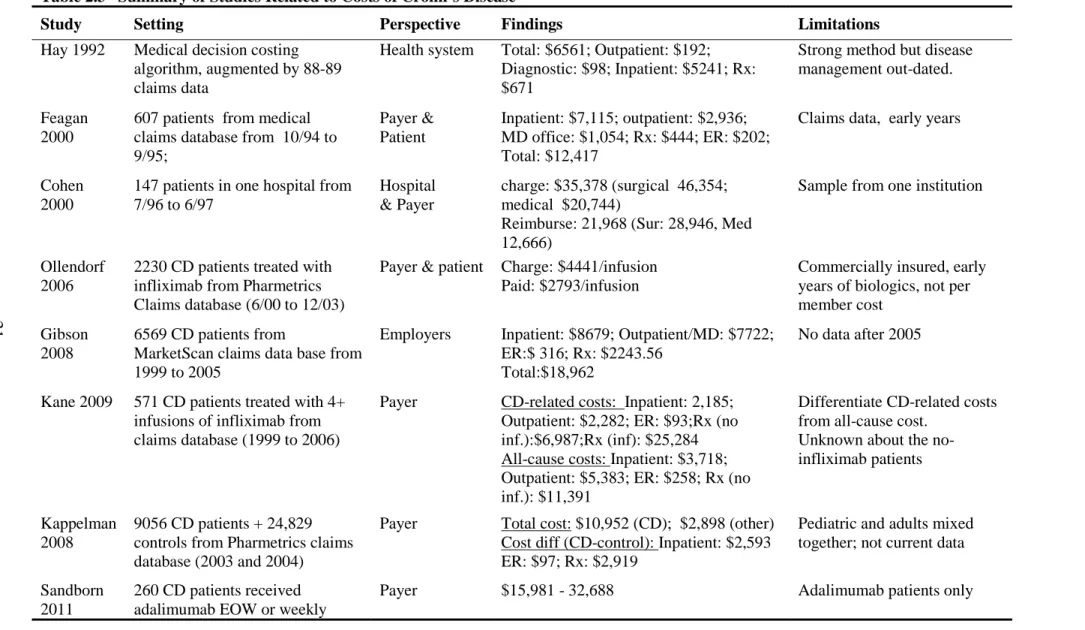
Crohn's disease is characterized by a high disease morbidity and financial burden to patients and society. The prohibitive costs of Crohn's disease are attributable to several factors: a) disease onset in early life; b) increased needs for surgical resections; and c) high drug costs. The U.S. economy is still recovering from a recession, and healthcare costs are under more scrutiny than ever. In order to better understand the economic burden of Crohn's disease and, more specifically, the medical costs and trend of medical costs among CD patients, I conducted a literature search in PubMed. Several important studies were identified that provided cost information specific to Crohn's disease in the U.S. spanning the past two decades (see Table 2.3).
27
inconsistent but can be useful in demonstrating the gross change in overall cost. Both
infliximab and adalimumab are very costly, as a result, the trend in direct medical costs may have changed in recent years because biological therapies have been more frequently
prescribed to CD patients. Ollendorf et al. estimated that the average cost for infliximab was $2,793 per infusion.[43] Kane et al. reported that the annual medical costs for patients treated with infliximab were $36,675, including a cost of $25,284 for infliximab alone.[44]
Sandborn et al. estimated that the annual medical costs can be as high as $32,688 for CD patients receiving adalimumab weekly or every other week.[45] No recent studies have reported the direct medical costs of Crohn's disease in the U.S. This, it is imperative for third-party payers in the private sector or in the government healthcare system to know total medical expenditures for CD to facilitate budgeting and planning.
28
Figure 2.3 Comparison of Proportions of Medical Costs of Crohn’s Disease
1988-89 1994-95 2003-04
$6,561 in 1989 $12,417 in 1995 $10,952 in 2003
$12,205 in 2010* $19,345 in 2010* $13,470 in 2010*
Source: Hay et al, 1992; Feagan et al, 2000; Kappelman et al, 2008 * Adjusted with annual inflation rate at 3%
While previous research provides evidence about overall medical costs and distribution of costs for different healthcare services, there are still several important, unanswered questions regarding cost trends and patterns in recent years, as well as the cost difference between biological therapy users and non-biological therapy users.
29
and economic environment, such as the enactment of Medicare Part D in 2006 and the economic recession from December 2007 to June 2009. Medicare Part D may not have a direct impact on the majority of patients aged 64 or younger, with exception of those who are dually eligible for both Medicare and Medicaid. However, Medicare Part D can indirectly affect younger patients (<65 years) by influencing manufacturers' pricing strategy and third party payers' benefit structure. The economic recession could have greatly reduced patients' ability to pay for high-cost medications, such as biological therapies for CD treatment. In the U.S., the increase in total healthcare costs has appeared to slow down in recent years[34], but the trend in medical costs for Crohn's disease remains unknown.
Second, the distribution pattern of total medical costs in recent years is also unknown. It is impractical to extrapolate the empirical results based on data before 2005 to estimate the proportion of drug costs. The increase in drug expenditures may out-pace the costs of
inpatient and outpatient services if innovative biological therapies are rapidly adapted by clinicians and patients. However, no confirmative data are available in the literature.
Third, the difference in total medical costs between biological therapy users and non biological therapy users is unknown. Studies in recent literature have paid little attention to differing the costs for these two subgroups of patients with Crohn's disease. The majority of studies summarized costs by services without delineating expenses for CD patients. While biological therapies are considered as the major contributor to total medical costs, little information is available about how much biological therapy users spent for different medical services, such as inpatient, outpatient, ER services as well as prescription drugs. The
30
non-biological users may be hindered by confounding factors, such as disease severity. However, it is worth the effort to study the cost patterns between these two groups if their medical costs are categorically different. The difference in sub-groups among biological users is also worth noting. Persistent users (>3 months of continuous use) can experience increased medical costs than episodic users (occasional use of biological therapies). No information is available in recent literature about medical costs and cost patterns of patients in these two sub-groups.
In summary, while total direct medical costs have remained relatively stable in the past two decades, the proportion of costs associated with different services (e.g. inpatient hospitalization/ surgery, outpatient visits, ER visits, and prescribed medications) has changed. There has been a clear shift in medical spending from inpatient services to outpatient
medications, which was presumably affected by the introduction of novel biological therapies. In the pre-biologics era, aminosalicylic acid drugs and corticosteroids were the mainstay of medical treatment for CD, with stable costs and cost proportions.[48] Since the first
biological agent, infliximab, was approved by the FDA for CD patients' use, drug costs have increasingly accounted for a larger portion of total medical costs. Previous studies provided valuable information about the cost trend mentioned above, however, they have two
31
Table 2.3 Summary of Studies Related to Costs of Crohn’s Disease
Study Setting Perspective Findings Limitations
Hay 1992 Medical decision costing
algorithm, augmented by 88-89 claims data
Health system Total: $6561; Outpatient: $192;
Diagnostic: $98; Inpatient: $5241; Rx: $671
Strong method but disease management out-dated.
Feagan 2000
607 patients from medical claims database from 10/94 to 9/95;
Payer & Patient
Inpatient: $7,115; outpatient: $2,936; MD office: $1,054; Rx: $444; ER: $202; Total: $12,417
Claims data, early years
Cohen 2000
147 patients in one hospital from 7/96 to 6/97
Hospital & Payer
charge: $35,378 (surgical 46,354; medical $20,744)
Reimburse: 21,968 (Sur: 28,946, Med 12,666)
Sample from one institution
Ollendorf 2006
2230 CD patients treated with infliximab from Pharmetrics Claims database (6/00 to 12/03)
Payer & patient Charge: $4441/infusion Paid: $2793/infusion
Commercially insured, early years of biologics, not per member cost
Gibson 2008
6569 CD patients from
MarketScan claims data base from 1999 to 2005
Employers Inpatient: $8679; Outpatient/MD: $7722;
ER:$ 316; Rx: $2243.56 Total:$18,962
No data after 2005
Kane 2009 571 CD patients treated with 4+
infusions of infliximab from claims database (1999 to 2006)
Payer CD-related costs: Inpatient: 2,185;
Outpatient: $2,282; ER: $93;Rx (no inf.):$6,987;Rx (inf): $25,284 All-cause costs: Inpatient: $3,718; Outpatient: $5,383; ER: $258; Rx (no inf.): $11,391
Differentiate CD-related costs from all-cause cost.
Unknown about the no-infliximab patients
Kappelman 2008
9056 CD patients + 24,829 controls from Pharmetrics claims database (2003 and 2004)
Payer Total cost: $10,952 (CD); $2,898 (other)
Cost diff (CD-control): Inpatient: $2,593 ER: $97; Rx: $2,919
Pediatric and adults mixed together; not current data
Sandborn 2011
260 CD patients received adalimumab EOW or weekly
32
In this dissertation, we sought to comprehensively examine the direct medical costs incurred by Crohn's disease patients using a large and nationally representative database with healthcare utilization and expenditure data from 2005 to 2009. Analyses focus on trends and patterns of costs for CD patients in recent years, and the comparisons of cost trends and patterns between biological therapy users and non-biological therapy users. Based on recent data, we predict costs and trends for these groups in the first three years of disease, and conduct economic evaluations on prescription drug costs and total healthcare costs from the perspective of third party payers.
2.2.4
Cost-effectiveness of Crohn's Disease
Since the movement of evidence-based medicine in the mid-1980s, pharmacoeconomics has gained more and more popularity. In the past decade,
pharmacoeconomic studies have been on the rise as third party payers faced budgetary issues due to the rapid growth of healthcare costs.[49] Crohn's disease is associated with a
33
to demonstrate the cost effectiveness of biological therapies, mostly infliximab, among CD patients, and provided important information.
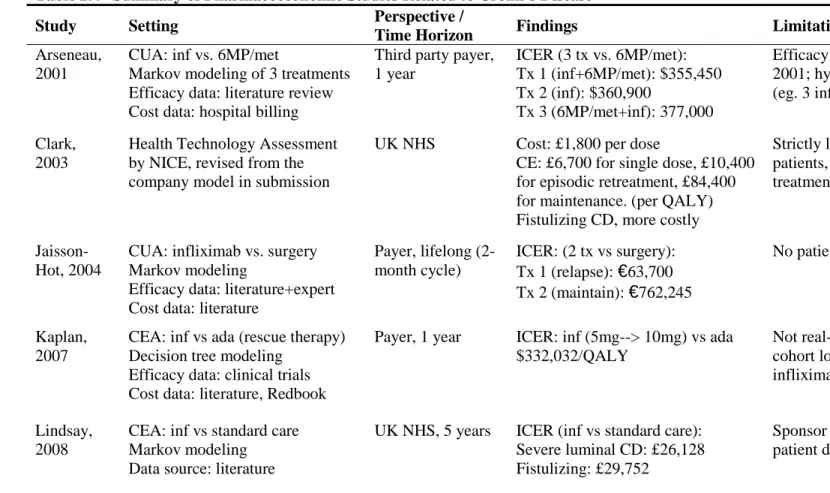
First, medical treatments with biological therapies, both infliximab (Remicade®) and adalimumab (Humira®), are associated with a very high incremental cost compared with the treatments with non biological therapy. In 2001, Arseneau et al. used Markov modeling to assess the cost-utility of infliximab by comparing infliximab combined with
6-mercaptopurine (6MP) and metronidazole (Met). The incremental cost-effectiveness ratio (ICER) ranged from $355,450 to $377,000 per quality-adjusted life-years (QALY) while infliximab was administered in combination therapies or as mono therapy. The findings of this early study indicated that infliximab interventions are more costly than other
34
disease. Compared to standard care in 2008, the incremental cost per QALY gained was £26,128 ($48,397 in U.S. dollar) for luminal CD, and £29,752 ($55,110) for fistulising CD.[53] Similar results were obtained in Bodger's investigation, which compared infliximab treatment for one year with standard care. From a Markov simulation, the ICER was £19,050 per QALY gained.[54] In summary, the cost-effectiveness ratio of infliximab treatment to standard care was around $50,000 per QALY gained among patients with severe CD disease, and this cost-effectiveness ratio could be even higher among patients with mild to moderate Crohn's disease. According to the unofficial cost-effectiveness threshold of $50,000 per QALY gained in the U.S., infliximab treatments do not appear to be cost-effective.
Head-to-head comparisons of adalimumab with infliximab have suggested that adalimumab is more cost-effective than infliximab, but still not cost-effective in comparison to the cost-effectiveness threshold. Kaplan et al. compared the cost-effectiveness of
adalimumab as rescue therapy with high dose infliximab among patients who failed to respond to low dose infliximab. The cost per patient was $35,908 per QALY for patients receiving a dose escalation of infliximab, and $23,782 per QALY for patients receiving adalimumab. Even though adalimumab showed favorable cost-effectiveness, the costs of adalimumab were still considerably high.[55] In a recent study by Yu et al., adalimumab was only marginally more cost-effective than infliximab.[35] Compared with standard care, the incremental cost per QALY gained was £16,064 ($25,148 in 2009 US dollar) in severe CD patients, and £33,731($52,806) in patients with moderate-to-severe disease.[15]
Second, most analyses were conducted from the perspective of a third-party payer or healthcare system. In principle, the societal perspective is generally considered most
35
encompasses all costs and health effects of an intervention regardless of who incurs the costs and who obtains the effects in the entire society.[56] However, there are many technical obstacles in accruing the effects and costs from all members in society, and in assessing the effects and costs quantitatively when conducting studies from a societal perspective. For example, indirect costs, such as productivity loss, are usually difficult to measure monetarily. More importantly, the perspective of economic evaluation should reflect the viewpoint of the key audience (e.g. healthcare decision makers) who are primarily intended to inform. The payer's perspective, either from a third-party payer or from national healthcare service, is common in economic studies conducted in the U.S. and abroad despite the differences in healthcare systems.[35, 50, 55] Compared to a broad societal perspective, a more narrow perspective can not only ease the determination of relevant healthcare services and costs, but also provide measureable values for decision makers. In this dissertation, I intend to inform the decision-makers who are responsible for budgeting health benefit plans in the third-party payers in the private sector of US healthcare system. It is not my intention, however, to inform the budget administrator of each individual health benefit plan. Instead, all health plans will be considered together as a single payer. The analyses in my dissertation will be based on the perspective of this joint single payer, which provides health benefits to all commercially insured non-elderly Americans.
While many economic studies have evaluated the cost-effectiveness of biological therapies in different patient groups using various analytic methods, (e.g. Markov modeling), and different data source, there are several important limitations that are worthy of comment: 1. The effectiveness of medical interventions with biologics in CUA or CEA was assessed
36
therapies was likely over-stated because patients enrolled in clinical trials are generally healthier. Also the assessment based on small samples in clinical trials can hardly be generalized to the CD patient population. Given the short follow-up time in clinical trials (6 months to 1 year), the long-term benefits or risks of biological therapies can not be evaluated accurately. It is interesting to note that the difference in utility values, the denominator of the incremental cost-effectiveness ratio, was small in several studies. For example, Yu et al. reported that utility indices for treatment with infliximab and
adalimumab were 0.865 vs 0.851 respectively.[35] The small difference in these utility indices can increase the magnitude of the incremental cost-effectiveness ratio. This is a controversial issue with methodology of CUA or CEA.[56] If credible long-term effectiveness data are not available, CUA and CEA are not the ideal approach for evaluating the novel drug therapies.
2. Cost data are not up to date, or are not based on real-world data. Several studies
approximated the costs by using cost information, such as wholesale acquisition costs in Redbook® (Thomson Reuters, Ann Arbor, MI), and average costs published in other studies. Only a few studies used patient level data to calculate direct medical costs. Bodger et al. used data from the UK to derive total cost.[54] Yu et al. used patient level data in the US to estimate total costs, but patients were limited to the enrollees in the Medicare program.[35]
37
market authorization. In the U.S., it is not mandatory for pharmaceutical companies to include the economic evaluation data as part of submission dossier. Thus, pharmaceutical companies have not incentive to conduct large scale economic studies, or publish those studies if the findings are not favorable to their products. Unsurprisingly, results in the literature unanimously favor therapies manufactured by sponsoring company, and against competing products. Due to this conflict of interest, economic studies purely designed as marketing tools by the pharmaceutical companies may not provide valid information to the public.
38
Table 2.4 Summary of Pharmacoeconomic Studies Related to Crohn’s Disease
Study Setting Perspective /
Time Horizon Findings Limitations
Arseneau, 2001
CUA: inf vs. 6MP/met
Markov modeling of 3 treatments Efficacy data: literature review Cost data: hospital billing
Third party payer, 1 year
ICER (3 tx vs. 6MP/met): Tx 1 (inf+6MP/met): $355,450 Tx 2 (inf): $360,900
Tx 3 (6MP/met+inf): 377,000
Efficacy data were scarce back in 2001; hypothetic interventions (eg. 3 infusions of infliximab).
Clark, 2003
Health Technology Assessment by NICE, revised from the company model in submission
UK NHS Cost: £1,800 per dose
CE: £6,700 for single dose, £10,400 for episodic retreatment, £84,400 for maintenance. (per QALY) Fistulizing CD, more costly
Strictly limit infliximab to severe patients, not for episodic
treatment in UK setting
Jaisson-Hot, 2004
CUA: infliximab vs. surgery Markov modeling
Efficacy data: literature+expert Cost data: literature
Payer, lifelong (2-month cycle)
ICER: (2 tx vs surgery): Tx 1 (relapse): €63,700
Tx 2 (maintain): €762,245
No patient-level data;
Kaplan, 2007
CEA: inf vs ada (rescue therapy) Decision tree modeling
Efficacy data: clinical trials Cost data: literature, Redbook
Payer, 1 year ICER: inf (5mg--> 10mg) vs ada
$332,032/QALY
Not real-world data; only the sub-cohort lost response to 5mg/kg infliximab
Lindsay, 2008
CEA: inf vs standard care Markov modeling
Data source: literature
UK NHS, 5 years ICER (inf vs standard care):
Severe luminal CD: £26,128 Fistulizing: £29,752
Sponsor funded, not based on patient data.
ada = adalimumab, inf = infliximab, TNF = tumor necrosis factor, WAC=wholesale acquisition cost, QALY=quality-adjusted life year
39
(Continued)
Table 2.4 Summary of Pharmacoeconomic Studies Related to Crohn's Disease
Study Setting Perspective /
Time Horizon Findings Limitations
Loftus, 2009
CEA: ada vs standard of care Efficacy data: clinical trials Cost data: literatures
UK NHS, 1 year ICER (ada vs standard of care):
Severe CD: £16,064/QALY
Moderate-to-severe:£33,731/QALY
Abbott funded, not real world patient data, strong assumptions (perfect adherence, etc)
Bodger, 2009
CEA: inf / ada vs standard care Markov cohort analysis Efficacy data: clinical trials Cost data: UK patient-level data
UK NHS, 1 year ICER (ada /inf vs Standard care):
Inf (1yr, 2 yr): £19,050, £21,300 Ada (1yr, 2yr): £7,190, £10,310
Rigorous assumptions for
Markov model, source of efficacy data
Yu, 2009 CUA: ada vs inf (maintenance)
Efficacy Data: clinical trials (CHARM and ACCENT I) Cost Data: WAC, Medicare
Payer, 1 year 1-year remission: 47.2% vs 37.1%
TNF cost: $17,176 vs $18,214 Total cost: $34,193 vs $39,045 QALY: 0.865 vs 0.851
Pharma (Abbott) sponsored, Small sample from clinical trials, Short time frame
40
2.2.5
Other Economic Evaluations of Crohn's Disease
In addition to cost-effectiveness studies, other formats of economic evaluation of drug therapies for Crohn's disease have been scarce in the literature. Although CEA has
commonly been used to indicate value, researchers have also shown that CEA results are rarely used by decision-makers to inform formulary decision.[57] Budget impact analysis and resource consequence analysis are two complementary techniques that can be used to assess the impact of a new treatment on costs and resource use for a specific group of individuals. Budget Impact Analysis
No budget impact analysis studies on biological therapies for Crohn's disease patients were identified in the literature search. However, budget impact analysis has been
implemented in other disease areas. Sorensen and Andersen used this approach to assess the potential impact on the Danish healthcare budget of prescribing infliximab or etanercept for patients with rheumatoid arthritis.[58]
Resource Use Analysis
In 2002, Rubenstein et al. reported that infliximab decreases resource use among patients with Crohn's disease, and suggested potential cost savings. However, healthcare resources were not expressed in monetary terms, so the magnitude of cost saving is
unknown.[36] Study patients (79 in total) were only followed for one year, and the long term effect on healthcare resources use was not addressed.
41
receiving infliximab only included 34 patients. Thus, thus, the results can not be generalized to the larger US.S population.[59]
In 2009, Nugent et al conducted a population-based study of healthcare resource use among infliximab users beginning in 2001, and found that the number of physician visits, hospital visits, and surgeries was different between infliximab users and patients receiving other drugs.[47] This is the first population-based study to report resource utilization in multiple years under the 'bottom-up' treatment approach, however, these results are not easily translated into practice because resource use was assessed in natural unit of different
healthcare service (e.g. number of hospitalizations), instead of a common monetary unit for comparison.
In 2010, Kappelman et al used a large claims database to estimate healthcare resource (inpatient, outpatient, ER, and endoscopy services) utilization occurring between 2003 and 2004, and found that utilization varied by gender, geographic region, and insurance type.[46] Although data analysis was not stratified by use of biological therapies, the study results still provided valuable information about the entire CD patient population.
In summary, the above studies prove that a budget impact analysis on medications and a cost saving analysis on resource use is feasible when using large administrative databases to evaluate the economic consequence of biological therapies under different treatment approaches. Kappelman et al showed that large administrative databases contain adequate information to investigate healthcare utilization. Additionally, Saro et al
42
2.3 Summary
The treatment strategy for Crohn’s disease is now shifting from the conventional ‘bottom-up’ to a more aggressive ‘top-down’ approach, which promotes novel biological therapies as first-line treatment for CD patients. The rapid change in the treatment algorithm could extend greater clinical benefits to patients, but simultaneously incur greater financial burden for both payers and patients. Economic evaluation of novel biological therapies, especially during this transition period, is necessary. From recent literature,
cost-effectiveness analysis studies did not demonstrate the value of these new therapies due to a lack of effectiveness data. Therefore, from the methodological point of view, it is more practical to conduct economic evaluations that focus on medical costs.
In this dissertation, budget impact analyses are used to evaluate the financial
implications to payers by comparing the use of biological therapies under different treatment strategies. To the best of my knowledge, no budget impact analysis has been conducted to address costs related to the new treatment approach from the payers’ perspective.
CHAPTER III:
THEORETICAL AND CONCEPTUAL FRAMEWORK
Modern research is often based on multiple theories from different disciplines. The theoretical framework encompasses the linkage between theories and specific research questions in a given setting. In this dissertation, Andersen's Behavioral Model of Health Services Use (Andersen's model), and Grossman's Model of Health Demand (Grossman's model) serve as the backbone for constructing the theoretical framework.
The conceptual framework outlines an operational roadmap for the research direction, and the relationships of different constructs. In this chapter, a conceptual framework is presented to demonstrate the theory-based approaches to addressing the proposed research aims.
3.1 Theoretical Framework
44
care is not only a process of health behavior undertaken to achieve optimal health status, but also a series of economic activities that produce health at certain opportunity costs. Health outcomes and economic consequences can reinforce or undermine the use of healthcare services. Figure 3.1 describes the relationships among health, health care, health outcomes and health economics. Andersen's Behavioral Model provides in-depth reasons as to why patients use health care from a health behavior point of view. Grossman's model purports that the ultimate purpose of using health care is to produce better health, and demand of health care is derived from the demand for health, and can be affected by many factors.
3.1.1
Andersen's Model
Andersen's Behavioral Model of health services was developed in the 1960s. It has been widely utilized in the research of healthcare access and healthcare services utilization. The original model was designed to assist in understanding why families use health services,
Grossman Model Andersen
Model
Health
Health care economics Health
Health outcomes