A Clinical Study to assess the Effectiveness of
CPP-ACP (Casein Phosphopeptide-Amorphous calcium
phosphate) versus Potassium-nitrate (KNO
3
) on cervical
dentine hypersensitivity
Vinayaka Konekeri
1, Darshana Bennadi*
2, Maurya Manjunath
3, Nandita
Kshetrimayum
4, Sibyl Siluvai
5, Chava Venkata Konda Reddy
3 1Department of Public Health Dentistry, Navodaya Dental college and Hospital, Raichur, India2Department of Public Health Dentistry, Sree Siddhartha Dental College and Hospital, Tumkur, India
3Department of Public Health Dentistry, J.S.S.Dental College and Hospital, Mysore, India
4Department of Public Health Dentistry, Regional Institute of Medical sciences, Dental College,
Lamphelpat, Imphal, West Manipur, India
5Department of Public Health Dentistry, SRM Dental College and Hospital, Chennai, India
ABSTRACT
Aim: To assess the effectiveness of 10% CPP-ACP gel (Casein Phosphopeptide-Amorphous calcium phosphate) and Potassium Nitrate (KNO3) on Cervical Dentin Hypersensitivity (CDH). Materials and Methods: 48 Central jail patients aged 18–67 years reporting with dentinal hypersensitivity were randomly assigned to two groups of 24 patients each. Response to air, water jet and tactile stimuli were measured using visual analogue scale initially at baseline and every progressive week till six weeks and responses were recorded using visual analogue scale. Results: CPP-ACP and KNO3 groups, when compared with their relevant baseline values CDH scores reduced at first week (mean VAS scores 3 and 3.2917, for CPP-ACP and KNO3 respectively). For CPP-ACP group there was significant reduction in CDH score and the difference being statistically significant (p<0.001). CPP-ACP was significantly more effective than the KNO3 (p<0.001) in reducing CDH.
Conclusion: Study showed comparison between the two products for treatment dentinal hypersensitivity, benefits were essentially similar, although a trend towards greater effect with CPP-ACP was apparent.
Key words:Airjet, Casein Phosphopeptide-amorphous calcium Phosphate, Cervical dentine hypersensitivity, Potassium Nitrate, Tactile stimulation, Visual analogue scale.
*Address for correspondence:
Dr. Darshana Bennadi, Reader, Department of Public Health Dentistry, Sree Siddhartha Dental College and Hospital, Agalkote, Tumkur–572107, India. E-mail : [email protected]
Access this article online Journal Sponsor
Website:
www.jyoungpharm.org
DOI:
10.5530/jyp.2015.3.12
BACKGROUND
Dentin hypersensitivity, a common condition of transient tooth pain associated with a variety of exogenous stimuli. It has been referred to as an “enigma” for a variety of
reasons, including difficulty in determining the etiology,
relief.1 It is characterized by short, sharp pain arising from
exposed dentine in response to stimuli, typically thermal, evaporative, tactile, osmotic or chemical, which cannot be ascribed to any other dental defect or pathology.2-5 It
has been shown to peak in 20-30 years old and then rise again during their 50’s. Some studies have shown that the prevalence of cervical dentine hypersensitivity, was found to be much higher in periodontal patients, ranging between 72.5–98%.6
As a result of the continuing emphasis on preventive dentistry, more adults will retain their teeth into later life. This in turn could lead to increased numbers of exposed dentine surfaces through periodontal therapy and home care products. In general, conventional therapy for dentine hypersensitivity is based on using topically applied desensitizing agents, which can be applied either professionally or can be prescribed to the patient for home use.6
The prevalence, etiology, mechanisms and management of dentine hypersensitivity has received considerable attention in the literature, and many agents and toothpaste formulations have been proposed and developed for treatment of the problem.
In recent years particular attention has been focused on potassium containing toothpastes and many other products like topical application of a Casein Phosphopeptide-Amorphous Calcium Phosphate (CPP-ACP) gel. Hence this study has been undertaken with an aim to assess the effectiveness of 10% CPP-ACP and Potassium Nitrate (KNO3) dentifrice on Cervical Dentin Hypersensitivity.
MATERIAL AND METHODOLOGY
This study was conducted among Central jail prisoners of Mysore city, with prior permission from central jail authority. 910 subjects were carefully examined for the diagnosis of dentine hypersensitivity by history of hypersensitive teeth and subjecting them to tests (air blast and probing). Among them 48 prisoners, who were diagnosed with Dentine Hypersensitivity aged 18 years to 67 years were included in the study.
Inclusion criteria
Subjects having hypersensitive teeth showing abrasion, erosion or recession with exposure of cervical dentin, and at least one tooth sensitive to both tactile and air blast stimulation were included.
Exclusion criteria
Subjects were receiving active periodontal treatment, or had received non–surgical periodontal treatment within one month, or surgical treatment within the last three months,
chronic debilitating or inflammatory disease involving
chronic pain, professional or self-desensitizing therapy during previous three months, those taking anticonvulsants,
antihistamines, anti-inflammatory drugs and analgesics or
allergic to milk proteins. Teeth were not used in the study if they had caries, enamel cracks, large restorations or cervical restorations, abnormal mobility, or if they were partial denture abutments and subjects exposed to excessive dietary or environmental exposure to acids.
Before conducting this study, ethical approval was obtained from concerned ethical committee and informed consent was taken from the participants. An explanation of trial was given to each subject along with materials. Examiner recorded a detailed demographic data, oral hygiene habits regarding brushing, materials used for brushing, frequency of brushing, method of brushing, type of stimulants evoking pain, duration and severity of symptoms.
By using lottery method, total of 48 subjects randomly divided (n=24 per group) into two groups A and B. An assistant had the participant’s details who belonged to A and B group.
A Group (CPP-ACP)
Participants were asked to use CPP-ACP gel applied topically to affected teeth, in conjunction with
non-fluoridated toothpaste twice daily which was provided to
them.
B group (KNO3)
Participants were asked to use KNO3 containing dentifrice twice daily.
Soft toothbrushes, was distributed to each subject, and
are instructed about proper brushing technique (modified
bass technique).
Cervical Dentine Hypersensitivity (CDH) responses from the participants were at baseline and at every progressive week till six weeks of treatment.
Examination procedure
Examiner had been blinded regarding subject’s groups.
Subjects were seated on the dental chair and examination
was carried out with artificial illumination, sterile gloves,
mouth mirror, straight probe and three way air &
water syringe to record the findings. On each time of
examination, subjects were asked to record their overall sensitivity (sensitivity to daily life activities like brushing teeth, sensitivity while eating or while drinking cold & hot beverages).
Each hypersensitive tooth was isolated with cotton wool rolls and cervical dentin hypersensitivityresponse to the following three types of stimuli was noted.
• Air blast for 3 seconds • Water for 2 seconds • Probe method
The response was recorded by asking subjects to place a mark on 10 cm line of Visual Analogue Scale (VAS) according to their perception of sensitivity. There was 15 min rest period between each test stimulus being applied to tooth. Study was conducted for 6 weeks. VAS7-9 offers
the advantage of being a continuous scale, providing quantitative measurements that are readily averaged and tested with parametric statistics. Operationally VAS is usually a horizontal line, 10 cm in length, anchored by word descriptors at each end.
No pain Severe pain
0 1 2 3 4 5 6 7 8 9 10
Data was analyzed using SPSS software for windows version 14.0.
RESULTS
A Study population consisted of 48 central jail inmates in the age group of 18 to 67 years, with mean age was of 20 yrs. (Table 1) distribution of subjects depending on use of oral hygiene aids, frequency and method of tooth brushing.
Cervical Dentinal Hypersensitivity
Nature of sensitivity described as sharp pain and short duration by majority i.e., 87.5% (n=42)
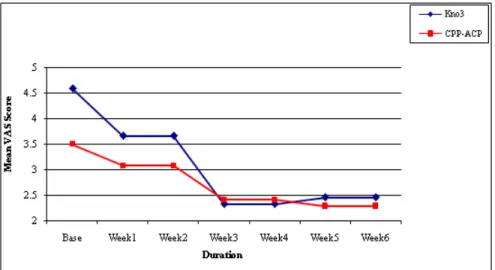
Figure 1: Comparison between Two Desensitizing agents (KNO3 & CPP-ACP) on Tactile Stimulation
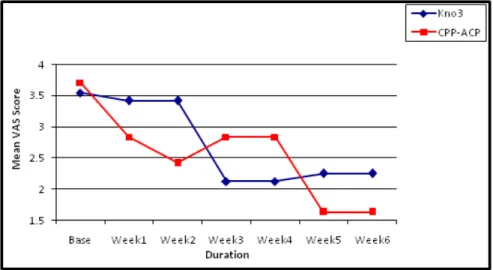
Figure 2: Comparison between Two Desensitizing Agents (KNO3 & CPP-ACP) on cold stimulation Stimulants
Most of subjects had symptoms in response to cold 39.58% (n=19), cold air 7.5% (n=18), sweet 14.58% (n=7), brushing 6.25 %( n=3), and for heat stimulant 2.08% (n=1).
For tactile stimulation
When CPP-ACP and KNO3 groups were compared with their relevant baseline values, CDH scores reduced significantly for both pastes at 3rd week. There was
significant reduction in CDH scores between weeks
(p<0.001). There was no significant reduction in CDH
scores between the pastes. (Figure 1)
Table 1:Distribution of subjects depending upon use of different oral hygiene aids, frequency and method of tooth brushing
Oral Hygiene AIDS
Oral Hygiene AIDS No. of Subjects (Percentages)
Tooth brush and Tooth paste 20 (41.7%) Tooth brush and Tooth powder 23 (47.9%)
Other materials like charcoal,
tobacco, neem sticks etc 5 (10.4%)
Frequency of Tooth Brushing
Once daily 46 (95.83%) Twice daily 2 (4.16%)
Method of Brushing
For cold stimulation
In both CPP-ACP and KNO3 groups, when compared with their relevant baseline values, the CDH scores
reduced significantly for both at 3rd week and the same was maintained up to 6 weeks. There was significant reduction
between weeks (p<0.001). (Figure 2)
For Air Stimulation
In both CPP-ACP and KNO3 groups, when compared with their relevant baseline values, CDH scores reduced
significantly at 2nd week for CPP-ACP. For KNO
3 group
this reduction was seen at 3rd week. At 5th week again there was significant reduction in CDH score observed for
CPP-ACP, after which it was maintained the same until 6th
week, Whereas for KNO3 group there was slight increase
in CDH scores at 5th week and maintained the same until
6th week. There were significant differences between weeks
and between two groups, CPP-ACP was shown to be
significantly more effective (p<0.001). (Figure 3)
Overall stimulation
In both CPP-ACP and KNO3 groups, when compared with
their relevant baseline values, CDH scores reduced at first week. For CPP-ACP group there was significant reduction
in CDH score (p<0.001). From 1st week to 2nd week there
was no changes in CDH scores for both group and from 2nd-5th week there was gradual decrease in CDH scores
for both groups, but CPP-ACP maintained lower CDH score than the KNO3, the difference being statistically
significant (p<0.001). When compared between the two groups and within weeks, there was significant reduction
in CDH scores between weeks and within the two groups
(p<0.001). CPP-ACP was significantly more effective than
the KNO3 (p<0.001) (Figure 4).
DISCUSSION
The present study was undertaken to compare the effectiveness of the CPP-ACP versus KNO3 in treatment of Cervical Dentine Hypersensitivity. To increase the sensitivity of measurement, we have used recommended test like air, water jet and tactile stimulation which are accurate for the examination of hypersensitivity levels according to Tarbet et al., and Clark and Troullous.10 The
responses were recorded using visual analogue scale (VAS).
The results of this study demonstrated that CPP-ACP
had produced significant improvements from baseline for
both clinically measured as well as subjectively evaluated parameters. The results were similar to study conducted,11
which demonstrated relief of sensitivity for tactile and air stimulation for Group 1 (CPP-ACP F), Group 2 (sodium
fluoride), and Group 3 (Propolis). Poitevin A demonstrated
the effectiveness of CPP-ACP for dentine hypersensitivity for air and tactile stimuli.12 Tung et al., have postulated
that the materials CPP-ACP and propolis precipitate and obstruct the dentinal tubules and decrease dentinal permeability by 85% or more.13
The study conducted by Walsh L.J. et al. is not in agreement
with our study results, and showed no statistical significant
difference between CPP-ACP and KNO3 in reduction Cervical Dentinal Hypersensitivity.14
In vitro study conducted15 and showed that remineralizing
capacity was greater for the solutions with the higher levels of CPP-stabilized free calcium and phosphate ions. Another study conducted16 and showed that CPP-ACP
were superior to other forms of calcium in remineralizing enamel subsurface lesions. An In vitro studied17 showed that
Tooth Mousse containing CPP-ACP is effective in reducing wine erosion in both enamel and dentine/cementum.
The mechanism by which Tooth Mousse reduced cervical dentinal hypersensitivity is unclear. The CPP contains phosphoseryl sequences which get attached and stabilized with amorphous calcium phosphate (ACP). The stabilized CPP–ACP prevents the dissolution of calcium and phosphate ions and maintains a supersaturated solution of bioavailable calcium and phosphates.15
Although, many studies15-19 were conducted regarding
CPP-ACP on the remineralization of coronal enamel and
dentine/cementum.17 Study showed that CPP-ACP has
higher remineralization potential as topical coating, in solutions, in form of chewing gums and as mouth rinses in both enamel and dentine/cementum.17 Recent study
conducted by Jitendra Saraf et al., showed that at 2nd, 4th,
7th & 14th day of application of CPP-ACP showed effective
reduction in sensitivity around 75% when compared to non treatment group (26%). Similar results were seen in other study by Rosaiah. K, Aruna. K, where gluma desensitizer, G.C.Tooth mousse and ACP were compared at 2nd, 4th and
6th month duration.20,21
Symptoms of tooth hypersensitivity to heat, cold, touch, sweet or sour stimuli are age-old complaints of human beings, which cause suffering patients to seek denial from treatment. The problem is prevalent especially in adults who have lost some of the normal protective enamel/dentin sheathing on tooth surface because of erosion, abrasion, caries, chipping of the enamel or recession of gingiva that has exposed tooth dentin or cementum.22
However, it is unlikely that the effects were produced by any one of these mechanisms alone, but rather a combination of more than one factor. Exposure of the root area
similarly may be multifactorial, but chronic inflammatory
gingival and periodontal disease and acute trauma, as with periodontal surgery, are commonly cited as major cause of gingival recession. Sometimes, sensitivity can be the result of iatrogenic damage, e.g. inadequate cervical coverage by temporary or permanent crowns.22
Currently the most accepted mechanism of intradental nerve activity associated with dentine sensitivity appears to be hydrodynamic in nature. The concept of tubule occlusion as a method of dentine desensitizing would appear a logical conclusion from the hydrodynamic hypothesis. The role of treatment of cervical dentin sensitivity therefore should be the restoration of the original impermeability of the tubules. Basically, two approaches for treatment of dentine sensitivity have been suggested. Partial or complete obturation of tubules and alteration of pulpal sensory activity at or near pulpo-dental surface.22
Study showed comparison between the two products for
treatment dentinal hypersensitivity, benefits were essentially
similar, although a trend towards greater effect with CPP-ACP was apparent.
LIMITATION
Participants have tobe blinded which was not possible in our study. Since the pain is subjective, and present study was on jail prisoners who have high pain threshold. Hence further studies have tobe conducted in these regard.
CONCLUSION
Within the limitation of present clinical study, it is
concluded that CPP-ACP is significantly more effective
than Potassium nitrate in reducing cervical dentinal
hypersensitivity. These findings have positive implications
in the control and prevention of cervical dentinal
hypersensitivity. Further studies are needed to determine the optimum frequency and mode of application of CPP-ACP for preventing Cervical Dentinal Hypersensitivity.
CONFLICTS OF INTEREST
Authors declared there is no conflict of interest.
ACKNOWLEDGEMENT
To all the participants of Central jail, Mysore.
Highlights of Paper
• Tacticle stimulation: There was significant reduction in CDH scores between weeks (p<0.001) but no significant reduction in CDH scores between the pastes.
• Air stimulation: There were significant differences between weeks and between two groups, CPP-ACP was shown to be significantly more effective.
• Cold stimulation: CDH scores reduced significantly for both at 3rd week and the same was maintained up to 6 weeks. • CPP-ACP was significantly more effective than the KNO3 (p<0.001) in reducing CDH.
• Study showed comparison between the two products for treatment dentinal hypersensitivity, benefits were essentially similar, although a trend towards greater effect with CPP-ACP was apparent.
Author Profile
• Dr. Vinayaka Konekeri: He is senior lecturer, Dept of Public Health Dentistry, Navodaya Dental College and Hospital, Raichur. His research interest towards special care children, tobacco cessation etc.
• Dr. C.V.K. Reddy: Rtd Prof and Head, Dept of Public Health Dentistry, JSS Dental College and Hospital, Mysore. Sir is interested in field activity programmes, Research and academics. He is a good mentor and guide. Sir has many national and international publications.
REFERENCES
1. Rees JS, Addy MA. cross-sectional study of buccal cervical sensitivity in UK general dental practice and a summary review of prevalence studies. Int J Dent Hyg. 2004 May; 2(2): 64-9. 2. Dowell P, Addy MA. Dentine hypersensitivity: A review, aetiology,
symptoms and theories of pain production. J Clin Periodontol. 1983; 10(11): 341-50.
3. Addy MA. Tooth brushing, tooth wear and dentine hypersensitivity – are they associated? Int Dent J. 2005; 55(1): 261-7.
4. Brännström MA. hydrodynamic mechanism in the transmission of pain-producing stimuli through the dentine, In: Anderson DJ (Ed), Sensory mechanisms in dentine. Pergamon Press London; 1963. 73-9.
5. Curro FA. Tooth hypersensitivity in the spectrum of pain. Dent Clin North Am. 1990; 34(3): 429-37.
6. Dadabneh RH, Khouri AT, Addy MA. Dentine hypersensitivity- an enigma? A review of terminology, epidemiology, mechanisms, aetiology and management. Br Dent J. 1999; 187(11): 606-11. 7. Ide M, Wilson RF, Ashley FP. The reproducibility of methods of
assessment for cervical dentine hypersensitivity. J Clin Periodontol. 2001; 28(1): 16-22.
8. Holland GR, Narhi MN, Addy M, Gangarosa L, Orchardson R. Guidelines for the design and conduct of clinical trials on dentine hypersensitivity. J Clin Periodontol. 1997; 24(11): 808-13. 9. Gillam DG, Bulman JS, Newman HN. A pilot assessment of
alternative methods of quantifying dental pain with particular reference to dentine hypersensitivity. J. Dent Res. 1996; 71(2): 92-6.
10. Sowinski J, et al. Comparative investigations of the desensitizing efficacy of a new dentifrice. J clin peridontol. 2001; 28(11): 1032–6. 11. Souparna M, Moksha N, Amarnath S, Rajesh S, Krishna P.
Dentinal hypersensitivity: A comparative clinical evaluation of CPP-ACP F, sodium fluoride, propolis, and placebo. J Conserv Dent. 2012; 15(4): 315–8.
12. Azarpazhooh A, et al. Clinical efficacy of casein derivatives, A Systemic review of literature. J Am Dent Assoc. 2008; 139(7): 915–24.
13. Geiger S, Matalon S, Blasbalg J. The clinical effect Amorphous calcium phosphate on root surface Hypersensitivity J Oper Den. 2003; 28(5): 496–500.
14. Walsh LJ, et al. Effect of CPP-ACP versus potassium nitrate on cervical dentinal hypersensitivity. Dent Res. 2006; 85(1): (Spec Iss A): 0947.
15. Reynolds C. Remineralization of Enamel Subsurface Lesions by Casein Phosphopeptide-stabilized Calcium Phosphate solutions. J Dent Res. 1997; 76(9): 1587-95.
16. Reynolds EC, Cai F, Shen P, Walker GD. Retention in plaque and Remineralization of Enamel Lesions by Various Forms of Calcium in a Mouth rinse or Sugar-free Chewing Gum. J Dent Res. 2003; 82(3): 206-11.
17. Piekarz C, Ranjitkar S, Hunt D, McIntyre J. An in vitro assessment of the role of Tooth Mousse in preventing wine erosion. Australian Dental Journal 2008; 53(1): 22-5.
Containing Casein Phosphopeptide-Amorphous Calcium Phosphate. J Dent Res. 2001; 80(12): 2066-70.
19. Kumar VLN, Itthagarun A, King NM. The effect of casein Phosphopeptide amorphous calcium phosphate on Remineralization of artificial caries-like lesions: an in vitro study. Australian Dental Journal 2008; 53(1): 34-40.
20. Jitendra Saraf, Ramesh Amirisetty, Zade RM, Sachin B, et al. Evaluation of effectiveness of CPP- ACP combination in treating dentinal hypersensitivity following non surgical periodontal therapy
–A randomized clinical trial. Chhattisgarh Journal of Health Sciences September 2013; 1(1): 32-4.
21. Rosaiah K, Aruna K. Clinical Efficacy of Amorphous Calcium Phosphate, G.C. Tooth Mousse and Gluma Desensitizer in Treating Dentin Hypersensitivity. International Journal of dental clinics 2011; 3(1): 1-4.