CSR DISCLOSURE IN THREE MARKET ECONOMIES:
A LONGITUDINAL CONTENT ANALYSIS OF THE MANIFESTATION OF ETHICS, THE COVERAGE OF STAKEHOLDERS, THE TRANSPARENCY OF INFORMATION AND
THE CSR THEMES FROM AN INSTITUTIONAL PERSPECTIVE
Tae Ho Lee
A dissertation submitted to the faculty of the University of North Carolina at Chapel Hill in partial fulfillment of the requirements for the degree of Doctor of Philosophy
in the School of Media and Journalism.
Chapel Hill 2017
Approved by:
Daniel Riffe Lois Boynton
Maria Leonora Comello Steve May
© 2017 Tae Ho Lee
ABSTRACT
Tae Ho Lee: CSR disclosure in three market economies:
A longitudinal content analysis of the manifestation of ethics, the coverage of stakeholders, the transparency of information, and the CSR themes from an institutional perspective
(Under the direction of Dr. Daniel Riffe)
Drawing on the institutional theory, this content analysis investigated CSR
communication in 750 corporate reports spanning a 10-year period from 150 companies from liberal market economies (LMEs: the US and UK), coordinated market economies (CMEs:
Germany and Japan), and state-led market economies (SLMEs: France and South Korea). While CSR communication did not become explicit over time in terms of the form of communication, the total page counts indicated significant increase from earlier to later periods,
suggesting more explicit CSR communication. Also, significant increases in the scope and depth of stakeholders as well as the transparency of messages were found. The emphasis on the
supplier significantly increased over time. The most relatively prominent stakeholder and CSR theme was the employee and the environment, respectively.
The SLMEs – while exhibiting significantly more implicit CSR communication than the
other market economies – showed market-driven CSR through the significantly higher emphasis on the shareholder than the LMEs, higher relative prominence of the shareholder and the CSR
The LMEs deviated from the characteristics as shareholder-based market economies. The
LMEs showed significantly higher relative prominence of the stakeholder groups of the
government and community, as well as the CSR theme of the community, than the other market
economies. Additionally, the relative prominence of the investor was significantly lower in the LMEs than in the CMEs.
The CMEs showed significantly lower attention to ethics than the other market
economies, with a trend of decrease from the first to last period. However, the relative prominence of the CSR theme of business ethics – which includes other areas such as human
rights as well as ethics – was significantly higher in the CMEs than the other market economies. Additionally, the transparency of messages was significantly higher in the CMES than the other
market economies.
The titles of CSR communications significantly differed, with the corporate citizenship title used significantly more and the sustainability title less in the LMEs, while CSR is less used
in the SLMEs.
ACKNOWLEDGEMENTS
First and foremost, I am deeply grateful for the guidance, encouragement, and care offered to me by my advisor, Dr. Daniel Riffe. His leadership and support throughout my Ph.D.
program were absolutely essential for me to reach this point. I will never forget the warmth and life lessons that he shared with me during my time in Chapel Hill.
I am also indebted to my doctoral dissertation committee members, Dr. Lois Boynton, Dr. Brad Rawlins, Dr. Steve May, and Dr. Maria Comello for nurturing my intellectual and
personal growth during my graduate studies. Specifically, I am enormously grateful for their influence on my continued interest in the topics of ethics, transparency, corporate social responsibility, and moral identity. I am truly lucky to have met them in my academic journey.
I am also profoundly grateful to Dr. Francesca Dillman Carpentier for her consistent support throughout my doctoral work. She continually went out of her way to share her
experiences, insight, wit, and compassion. I am a better scholar and a better person because of her.
I am fortunate to have great mentors and friends supporting me. I especially thank Dr.
June Woong Rhee at Seoul National University and Professor Teemu Ruskola at Emory Law School for endlessly acting as my role models, colleagues, sounding boards, and confidants. I
Finally, I would also like to thank my family. Words cannot accurately describe the
TABLE OF CONTENTS
LIST OF TABLES ... ix
CHAPTER I: Introduction ... 1
CHAPTER 2: Literature Review ... 5
I. The Fundamentals of CSR Research: History and Theories ... 5
I.A. History of CSR Research ... 5
I.B. CSR Theories ... 9
II. CSR Research in Public Relations... 12
II.A. The Ethical Approach to CSR in PR ... 13
II.B. The Challenges and Opportunities to the Ethical PR Practice of CSR ... 14
III. CSR and the Institutional Perspective ... 18
III.A. Institutional Theory ... 19
III.B. The Institutional Perspective on CSR ... 20
III.C. The Implicit and Explicit CSR Framework ... 21
III.D. Extension of the Implicit and Explicit CSR Framework. ... 23
IV. CSR and Transparency... 26
CHAPTER 4: METHODS ... 38
I. Data Collection and Preparation ... 38
II. Coding Variables ... 40
III. Coding Process and Intercoder Reliability ... 46
CHAPTER 5: RESULTS ... 48
I. Data Descriptions ... 48
II. Research Questions... 50
CHAPTER 6: DISCUSSION ... 86
I. Overall Trends in CSR Communication ... 88
II. Differences Among the Three Market Economies ... 90
III. Practical Implications and Qualitative Observations ... 96
IV. Limitations and future study ... 98
Appendix A. Conceptual map ... 102
Appendix B. Sample companies, country of headquarters, and the industry sector ... 103
Appendix C. Coding protocol ... 107
LIST OF TABLES
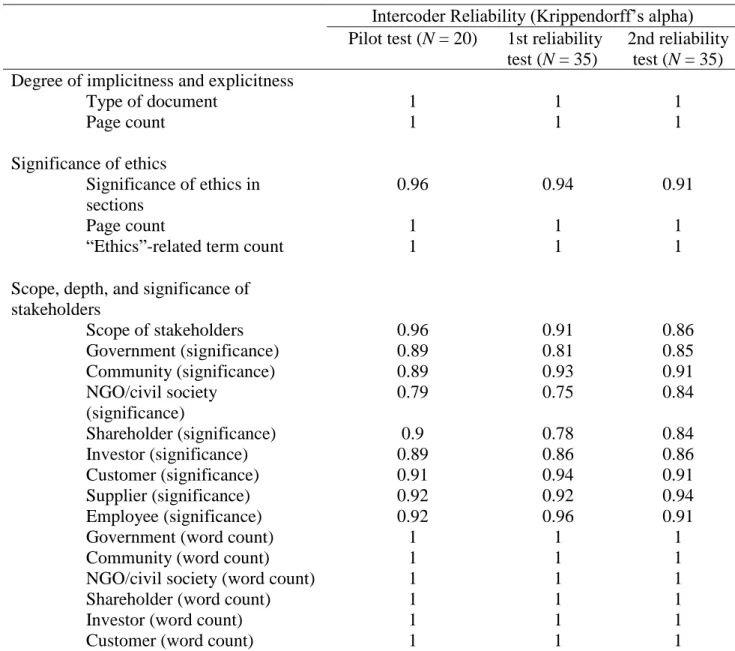
Table 1. Intercoder reliability on pre-test and actual coding ... 117 Table 2. Comparison of the breakdown of the industry sector by the market economy ... 119 Table 3. Comparison of the breakdown of corporate report type by market economy. ... 120
Table 4. The implicitness and explicitness of CSR communication by market economy and investigated period. ... 121
Table 5. The total page count for CSR communication by market economy and investigated period. ... 122 Table 6. The attention given to ethical characteristics by market economy and investigated
period. ... 123 Table 7. The emphasis on each stakeholder group by market economy and investigated period. ... 124
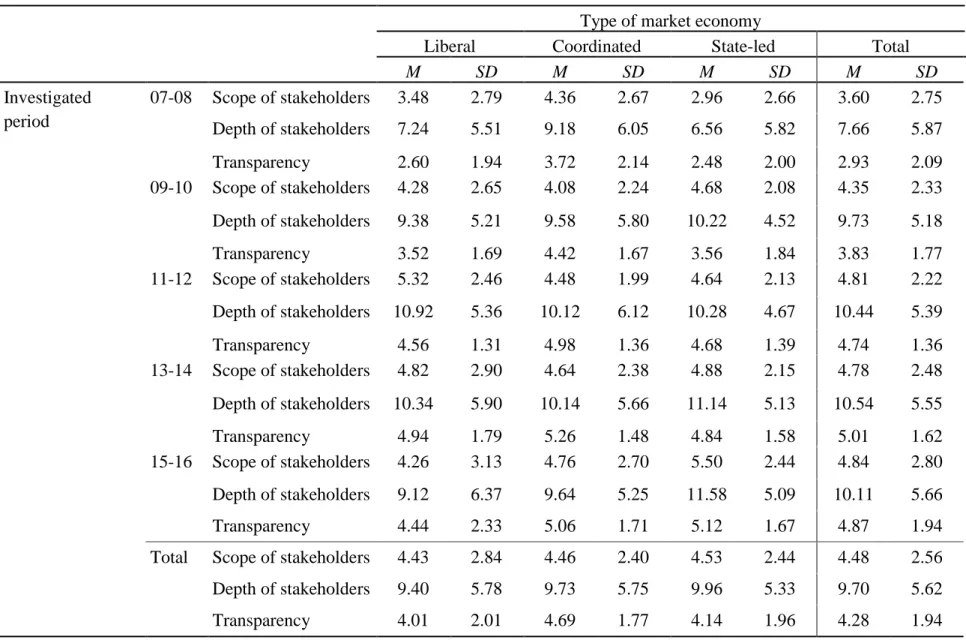
Table 8. The relative prominence of each stakeholder group by market economy. ... 127 Table 9. The scope and depth of coverage of stakeholders and transparency by market economy.
CHAPTER I: Introduction
The communication scholarship on corporate social responsibility (CSR) has emphasized the potential role of communication professionals to serve as an organizational conscience or as
internal activists, thereby making the CSR engagement of the organization more substantive (e.g., Boynton, 2002; Holtzhausen, 2002). In particular, communication professionals’ expertise in integrating various stakeholders’ perspectives, together with the profession’s function of
making organizational communication more substantive and, in particular, more transparent, has been the core rationale in arguing for the potential role of communication experts in making CSR
communication more ethical (e.g., Lee, 2017; Pompper, 2015). The research on the issue of the ethical aspects of CSR communication, however, has been scarce, especially in contrast to the
many conceptual suggestions to be found in communication scholarship.
In addition, while communication scholarship has argued for integrating an institutional
perspective into the research of CSR communication by integrating larger societal environments, such as different types of market economies (e.g., Lammers & Barbour, 2006; Lammers, 2003; Lee & Riffe, 2017), and other academic disciplines, especially sociology and management,
which have already been involved with investigating larger societal environments in relation to CSR (e.g., Matten & Moon, 2008), the current communication research on CSR has focused on
This study therefore explores the ethical aspects of CSR communication by focusing on
how stakeholders are addressed and how the transparency of a message can be evaluated. In light of the current state of neglect regarding the influence of the larger societal environment
surrounding a firm, this study is conducted by investigating three market economies: the liberal, the coordinated, and the state-led, as represented by six countries – the US and the UK (together representing the liberal), Germany and Japan (together representing the coordinated), and France
and South Korea (together representing the state-led) – over a ten-year period, based on the institutional perspective of CSR. Specifically, the implicit and explicit CSR framework, which
was developed on the basis of institutional theory, provides the theoretical framework to
compare the three market economies in terms of the stakeholders addressed and the transparency
of messages with other variables.
I argue that institutional theory and the implicit and explicit CSR framework is
particularly insightful for communication scholarship where the larger societal context has been
comparatively neglected in the research of CSR. Institutional theory considers the larger societal environment in which an organization must conform to certain social expectations in order to
receive support and legitimacy (e.g., Berger & Luckmann, 1966; Streek & Thelen, 2005). Specifically, the implicit and explicit CSR framework, drawing on institutional theory, provides insightful comparisons among different types of market economies in terms of the explicitness
and implicitness of CSR communication, the extensiveness of CSR practices, and the
comparative focus on the shareholder versus other stakeholders, among other things, based on
communication scholarship in order to enhance the comparative understanding of CSR
communication. For example, research can be conducted based on the framework to explore the potentially different ways CSR communication addresses stakeholders, CSR themes, and the
transparency of CSR communication among different countries, thereby contributing not only to the understanding of CSR communication but also to the strategic management of CSR
communication. While the framework has not frequently been used in communication
scholarship thus far, it was recently adopted to explain differences in business news framing in the US and the UK (Lee & Riffe, 2017), suggesting the relevance of the framework for
understanding and managing CSR communication among different countries.
Adopting the content analysis method, a total of 750 corporate reports from 150 large
public companies over a ten-year period were selected and examined. To examine how stakeholders are addressed, the aggregate scope and depth of the coverage of stakeholders, as well as the emphasis on and relative significance of each major stakeholder group, are
investigated. In terms of the transparency of messages, the presence and absence of a list of essential information is evaluated and then summated to constitute the overall transparency
score. Based on the implicit and explicit CSR framework, the degree of implicitness and explicitness of CSR communication is additionally investigated, followed by an exploration of the relative prominence of each major CSR theme as well as the attention given to ethics.
The major desired contribution of this study is the empirical exploration of the ethical aspects of CSR communication with a comparative and longitudinal perspective. The findings on
evaluating CSR approaches in different market economies. Additionally, the findings of the
comparative degree of the implicitness and explicitness in CSR communication among the three market economies provides an interesting theoretical insight into how CSR communication is
conducted in these economies in light of institutional theory. Finally, the findings regarding the major CSR themes provide practical insights into what kinds of CSR themes have been
emphasized in the different market economies, thereby serving as a practical guideline for CSR
CHAPTER 2: Literature Review
I. The Fundamentals of CSR Research: History and Theories
I.A. History of CSR Research
According to Carroll (2008), academic discussions of CSR began to take shape in the 1950s, and gradually became more sophisticated by reflecting the various dimensions of CSR
practices involving economic, legal, ethical, and philanthropic aspects (e.g., Carroll, 1999; Sethi, 1975) and integrating multiple perspectives of stakeholders, beyond just shareholders and
investors. Together with the conceptual development of CSR, CSR practices became officially
institutionalized in organizations as fully committed (and strategized) organizational activities that extend and reach beyond individual businessmen’s discretionary acts like joining the Rotary
Club or otherwise being engaged (as individuals) in the community (e.g., Bowen, 1953). However, the definition of CSR remains unclear, with multiple approaches to it existing. The
conceptual ambiguity of CSR is also reflected in, as well as is aggravated by, the emergence of similar yet different concepts, such as corporate citizenship or sustainability (e.g., Marrewijk, 2003; Matten & Crane, 2005).
In the 1950s, CSR as a concept began to take shape. CSR started to be discussed in the context of questions of businessmen’s responsibility toward society when Bowen (1953) defined
social responsibility as “the obligations of businessmen to pursue those policies, to make those
suggestions as to structural corporate changes in relation to CSR (e.g., board composition, social
audits, etc.), though it took a while to actually see these changes manifest in the real world. The emergence of CSR as a concept that is implicitly much more than profit-seeking (e.g., Bowen,
1953) marks a significant departure point for the conceptualization of CSR in academic discourses.
In the 1960s, various CSR conceptualizations proliferated. The idea that CSR goes
beyond profit seeking was explicitly advanced when Davis (1960) defined CSR in terms of “businessmen’s decisions and actions taken for reasons at least partially beyond the firm’s direct economic or technical interest” (p. 70). The clear iteration of CSR as more than profit seeking by
Davis (1960) adds a significant development in the concept of CSR. Among other definitions in
the 1960s, Walton's (1967) definition of CSR in terms of the intimate relationship between corporations and society seems particularly to communication studies because it granted a comparatively higher status to society (presumably equivalent to business), and it emphasized
the relational aspect of CSR. In its most relevant part, Walton (1967) explained the concept of CSR as follows: “In short, the new concept of social responsibility recognizes the intimacy of the
relationships between the corporation and society and realizes that such relationships must be kept in mind by top managers as the corporation and the related groups pursue their respective goals” (p. 18). In particular, as compared to the seminal definitions provided in this period by
Bowen (1953) and Davis (1960), Walton’s (1967) definition more formalized the concept of CSR by defining it in the context of official corporate activities rather than businessmen’s
discretionary acts.
beyond organizations or shareholders (e.g., Heald, 1970) by integrating multiple layers or
dimensions of CSR (e.g., Carroll, 1979; Sethi, 1975). For example, Sethi (1975) proposed several different notions of CSR, including social obligations per legal/economic duties, social
responsibility in terms of social norms, values, and expectations, and social responsiveness concerning social needs. Most importantly, Carroll (1979) proposed CSR as encompassing economic, legal, ethical, and discretionary expectations – which he later modified into a pyramid
model of CSR. In the 1980s, alternative concepts and themes of CSR, including, for example, corporate social performance (CSP), business ethics, and stakeholder theory, increasingly began
to be discussed. Additional notable changes in the 1980s include the change in perspective toward CSR brought on by conceptualizing CSR as a process (e.g., Wartick & Cochran, 1985)
rather than discussing CSR in terms of a set of strategic outcomes, based on the belief that such a change would allow consideration of dynamic relations and divergent discourses. In the 1990s, alternative CSR themes, such as corporate citizenship and sustainability, continued to proliferate.
In addition, marketing-related CSR concepts – e.g., cause-related marketing and strategy giving – emerged, suggesting more active implementation of the business case rationale of CSR. Also,
the practice of CSR changed significantly, in that the scope of philanthropy was significantly diversified and globalized, resulting in the emergence of various CSR corporate positions.
Despite relatively few conceptual developments in the 21st century, Carroll contributed
significantly with his three-domain (Venn diagram) approach to CSR involving economic, legal, and ethical dimensions. In the 21st century, the business case rationale – which caters to the
reevaluation of companies’ role in society, whereas skeptics criticize the way CSR is deemed
valuable only when it contributes to the bottom line. The debate essentially represents the two competing perspectives of ethical/moral approaches and business views, respectively.
Bartlett and Devin (2014) categorize these previous conceptualizations of CSR into three dimensions: (a) the ethical/normative view (e.g., Carroll, 1979), which articulates a desired role and set of proper/desirable practices for business in society (thus, normative societal
expectations); (b) a strategic response to organizational environments (e.g., Porter & Kramer, 2006), which suggests that CSR should be ideal for a firm’s strategic/competitive position
(organizational strategies); and (c) a negotiated concept between organization and stakeholder (e.g., Canto-Mila & Lozano, 2009), which emphasizes the dynamic co-construction of the
meaning of CSR (negotiation).
Among these three categories of CSR conceptualizations, the strategic view that focuses on organizational competitiveness has received significant attention because harsh market
competition and the resultant managerial decisions require the strategic advantages of CSR to be real and understood in order for it to be effectively implemented. However, and probably more
important in the context of this study, the ethical view has gained significant momentum due to the increased interest in the significance of CSR for society as a whole, and the pursuant interest in balancing the interests of different stakeholders in a comprehensive picture of CSR. In such a
context, the questions of whether CSR is actually contributing to social causes (e.g., substantiveness and the ethical aspects of CSR) have become increasingly important in
position between the strategic and ethical views, in light of the increased importance of various
stakeholders, seems to be promising in providing a platform for research into CSR,
simultaneously considering strategic as well as ethical dimensions. Such a balanced approach
was similarly proposed by Porter and Kramer (2006), who suggested that the creation of shared value (CSV) – e.g., creating economic value in a way that also creates social value – is the practical way to justify CSR, by looking at society and business as interdependent, and that the
interests of the two are not necessarily in conflict. The negotiated process approach shares the essence of the argument of Porter and Kramer (2006), who emphasized the alignment of business
conduct and social value (and thus also the consideration of various stakeholders).
Therefore, this study attempts to take a balanced view between the strategic and ethical
approaches by first focusing on the manifestation of the ethical aspects of CSR communication, and then by considering firm characteristics with strategic implications (e.g., size, profits, and industry).
I.B. CSR Theories
According to Mele (2008), scholars have advanced four major theories of CSR, namely
corporate social performance, shareholder value theory, stakeholder theory, and corporate citizenship. While each provides contributions, stakeholder theory provides significant insights to the current study because this theory pertains to the ethical implications of CSR. Specifically,
the evaluation of CSR communication in terms of the inclusion or omission of a certain stakeholder group, as well as the associated depth of coverage, can provide a diagnosis of the
current status of CSR communication in terms of the ethical approaches to CSR.
1991). This view is based on the recognition of organizations’ increased power and responsibility
in society, and the idea that for them to be legitimate (e.g., to acquire license to operate), organizations should meet the expectations and demands of society. Corporate social
performance involves a process of integrating various internal and external social issues that are relevant to corporate practice, and thus it posits that the social responsibilities of firms are defined by society (e.g., Wartick & Cochran, 1985). While scholars evaluate this view highly as
a contributor to the scholarship because it synthesized CSR research up to the 1980s, its
limitations have been consistently indicated in terms of its conceptual vagueness and the lack of
express integration of ethical perspectives.
Shareholder value theory, by contrast, argues that the only social responsibility of
organizations is to maximize their profits under the limitations of laws and customary ethics (Friedman, 1970). Thus, CSR activities are permissible only if they contribute to the increase of profits. Shareholder value theory is based on neoclassical economic theory and agency theory,
wherein managers are deemed agents and shareholders (owners) are deemed principle.
Significantly, SVT reflects a crucial skepticism toward the idea of CSR, in that corporations do
not need to serve societal needs but only the role of profit maximization. Because such
skepticism toward CSR remains strong, one of the crucial challenges for CSR researchers and practitioners has been how to address this deep-rooted criticism and skepticism toward CSR
through genuine, substantive, and ethical CSR practices.
Stakeholder theory defines CSR in terms of organizations’ obligations to various
organization’s survival as well as address the legitimate interests of stakeholders, stakeholder
theory mainly argues for coordination of a variety of interests of the stakeholders based on a pluralistic ethical approach (Freeman, 1994), which encompasses Kant’s dictum of respect for
persons and distributive justice. Stakeholder theory has several implications for the current study based on its theoretical merits, in that it is evaluated as ethically superior to shareholder value theory due to its consideration of a wider scope of stakeholders, it provides a concrete theoretical
framework to address CSR practices per specific stakeholder groups, and it provides not only ethical arguments but also strategic managerial insights, although the link between CSR practice
based on ST and strategic advantages such as financial performance remains inconclusive. Shareholder theory also faces several challenges – which are relevant to the objectives and
limitations of this study – in that the idea of balancing competing interests provides no objective and concrete basis by which to evaluate business performance, and it can be manipulated to cover managerial opportunism because it may be invoked for any managerial action. While
stakeholder theory answers these criticisms with the argument that ST considers only the valid and legitimate stakeholder interests, rather than any and all stakeholder interests, a strong
challenge still remains, as accountability to all in theory may mean accountability to none in practice. Thus, how to manage and prioritize among the different and often competing interests of stakeholders remains a crucial challenge to the application of ST.
Another crucial challenge that is presented to stakeholder theory involves the ambiguity of the motivation behind the integration of ethical values into CSR practices through the
integration of various stakeholders’ perspectives because it may be driven by either an
stakeholder interests for economic reasons, or simply because doing so has intrinsic ethical value
(Donaldson & Preston, 1995). With regards to this inquiry, L’Etang (1994) pointed out that the use of CSR for public relations purposes may raise “moral problems over the motivation of corporations” (p. 111), arguing that if “corporations and their public relations consultants are
motivated only by the self-interested desire to achieve publicity at the outset rather than out of a sense of duty or obligation to society then, on a Kantian account of morality, they are acting immorally” (p. 121). However, this absolutely ethical position is very rare in light of the
significant role of organizations’ practical interests in the implementation of CSR initiatives.
Corporate citizenship, as a recent conceptual invention that describes a practice that is mainly instigated by corporate actors rather than scholars (Matten & Crane, 2005), started out as
a concept of corporate giving and philanthropy, and later became equated with CSR. Because corporate citizenship focuses on an organization’s role as a part of society, CSR is not regarded as an external activity of organizations, but rather as one of their core obligations as a part of
society. Some discussions of corporate citizenship even point to an increasing role of
organizations in society in comparison to the literature of CSR. For example, Matten and Crane
(2005), by focusing on the original political theory perspective in terms of citizenship, describe corporate citizenship as the role of the corporation in actually overseeing and administering citizenship rights for individuals by providing social rights, enabling civil rights, and channeling
political rights.
II. CSR Research in Public Relations
literature emerged in the 1970s – an era of progressive social change in the US. During this
period, representative PR practitioners pointed out the significance of ethical PR practices. For example, Bernays (1975) acknowledged that society expects more of business than goods and
services, and Burson (1974) similarly argued that PR should help business respond to social needs in four ways: as sensor, corporate conscience, communicator, and monitor. In the same vein, Grunig (1979) argued that a fundamental assumption of PR is that it is socially responsible.
In the 1980s, PR and CSR research was expressly connected by scholars. Specifically,
stakeholder theory was advanced (Freeman, 1984), and PR scholarship started to directly engage
in discussions of CSR communication and PR’s distinct role in it (Heath & Ryan, 1989; Manheim & Pratt, 1986). In the 21st century, PR and CSR research became more intertwined,
sometimes even being regarded as crucial/essential conditions for each other. Clark (2000) argued that PR and CSR share significant conceptual resemblance in terms of their origins, theories, processes, and primary responsibilities. Kelly (2001) and Heath (2006) also pointed out
the similarity of PR and CSR in terms of the focus on interdependence between organizations and publics, and thus both can be seen to be working largely from the stakeholder perspective.
II.A. The Ethical Approach to CSR in PR
One key aspect of PR’s distinctiveness in CSR research is the emphasis on ethical
characteristics of CSR, whereas the business literature – the disciplinary home of CSR research –
still tends to focus on the utilitarian and strategic implications of CSR outright by stating, for example, that only strategic CSR is legitimate, since it brings benefits to businesses, as compared
organizational ethics manifests, for example, in the increase of ethical investment and
shareholder activism. However, not all organizations are behaving ethically toward society, as reflected in numerous corporate scandals.
The ethical approach to CSR in public relations is rooted in stakeholder theory, excellence theory, and the post-modern public relations approaches. Thus, the ethical and
professional practice of public relations through integration of various stakeholders’ perspectives
beyond stockholders or investors via two-way communication is emphasized. In practice, the ethical approach requires public relations to assume broader functions in communication
regarding CSR, mainly through engaging directly with controversial social issues that are often embedded in CSR (e.g., L’Etang, 1995; Pompper, 2015), and ensuring transparent, extensive, and accessible communication of CSR (e.g., Pompper, 2015). In this line of research, the key
stakeholder for organizations becomes society itself (Starck & Kruckeberg, 2003). In the same vein, public relations scholars grant public relations a greater role in organizations that ensure the organizations’ ethical and substantive contribution to social causes, by setting PR practitioners
up to act as the organizational conscience (Holtzhausen, 2000), ethical guardians, and internal activists (Boynton, 2002) by balancing the interests of organizations and their stakeholders.
Thus, the role of PR in CSR has been conceptualized as institutionalizing ethics within
organizations, by emphasizing that CSR should be grounded in morals and ethics. Scholars such
as Bowen (2008) similarly suggested that the ethical practice of PR in CSR could be based on the communicative responsibilities toward society, which are in turn based on transparency and timely reporting. Thus, the ethical perspective of CSR in PR inevitably implicates PR’s role in
the internal communication and decision-making process.
The ideal role of the PR profession, however, has rarely been put into practice in reality,
in large part due to the result-oriented evaluation practices of the profession. Studies in various regions of the world indicate that PR practitioners have assumed a significant amount of
workload in terms of CSR (e.g., Kim & Reber, 2008; Moreno & Capriotti, 2009). Specifically, PR practitioners’ actual roles seem to encompass advising management, managing philanthropic
programs, promoting corporate values and ethics, and communicating CSR (Kim & Reber,
2008). However, studies report the grave limitations that the idea of PR’s ethical role in CSR faces in the actual organizational setting based on public relations professionals’ lack of
authority to wield any significant influence on CSR. The decisions concerning CSR are made by senior management, and the role of PR is generally limited to technical communication aspects
of CSR (e.g., Benn, Todd, & Pendleton, 2010; Clark, 2000; Kim & Reber, 2008; L’Etang, 2006). In addition, PR professionals’ own perceptions of their roles in CSR varies significantly, from significant management to none, implying that PR occupies a highly unstable and volatile
position in CSR (e.g., Kim & Park, 2011; Kim & Reber, 2008). In the context of CSR, leaders in organizations fear invocation of the concept of PR or the involvement of PR professionals with
their CSR program, because the negative public sentiments regarding the image of the PR profession itself may hurt the integrity of their CSR programs (Benn et al., 2010; May, Cheney, & Roper, 2007). In addition, organizations seem to fear the potentially negative public reactions
(e.g., green-washing) that may result if they emphasize the communication of their good deeds, often resulting in the ironic downplaying of their CSR contributions. In other words, if it is
can ironically damage the integrity of CSR efforts that are overtly connected to PR (Bartlett,
Tywoniak, & Hatcher, 2007).
One of the obstacles that organizations face with their CSR programs is the difficulty in
addressing the different and sometimes conflicting viewpoints of various stakeholders (Benn et al., 2010). Due to the complexity of stakeholder interests, business leaders thus tend to distribute the leadership of CSR across organizations (Benn et al., 2010). Considering PR’s expertise in
creating engaging relations with diverse stakeholders and thereby providing a broader societal view from an outside perspective, this very challenge may potentially provide a venue for a more
significant role for PR. For example, the function of integrating a broad scope of stakeholders’ views can be fulfilled by PR’s expertise in proactive environmental scanning and boundary
spanning. In other words, the understanding of current CSR practice and the communication of organizations in terms of which issues and stakeholders are implicated, and ultimately, the mapping of what each stakeholder group expects from CSR – e.g., identification of the different
perspectives and conflicts – may contribute significantly to enhancing CSR practices by utilizing the role of PR.
With respect to realizing the potential contribution of PR to the ethical practice of CSR, Benn et al. (2010) suggested that PR may be useful in guiding the communication strategies of other employees of organizations so that they can effectively communicate with and integrate the
views of outside stakeholders, especially third-party endorsers of CSR programs, in order to show their compliance to social standards and thereby gain legitimacy. Similarly, Bartlett et al.
acknowledgement, and endorsement of the idea of CSR, PR practice has also changed
accordingly from mere publicity to stakeholder engagement, implying that the organizational acknowledgement and efforts to engage with diverse stakeholders for the purpose of CSR would
accompany a more professional and ideal PR practice. These studies point to a potentially more significant role that PR may play in the comprehensive CSR landscape by taking advantage of its expertise in integrating diverse stakeholders’ perspectives.
Aside from the practical obstacles to the integration of PR in CSR, PR research trends also attest to the lack of integration of distinct PR approaches (e.g., ethical perspectives).
According to a review of CSR-related articles in eleven PR related journals (Lee, 2017), the research that looks at PR’s unique contributions in terms of ethical role approaches has decreased in recent years. Further, the research looking at stakeholders’ perceptions has also decreased
recently. By contrast, most PR research on CSR has focused on the practical strategic benefits of CSR communication by looking at variables such as reputation, purchase intent, and so forth,
without evaluating the ethical aspects of CSR communication. In particular, in the study of CSR disclosure, PR scholars have looked at whether it can enhance corporate image or signal
compliance with social/regulatory requirements (Bartlett et al., 2007), thereby focusing on the strategic role of CSR communication to manage an organization’s legitimacy, which is often criticized as “strategic manipulation of external perceptions of the organization” (Bartlett et al.,
2007, p. 74). Therefore, the ethical perspective of CSR disclosure is, to illustrate, whether the information provision through CSR reports (e.g., annual reports, sustainability reports) actually
and whether it can provide a significant foundation to integrate the ethical perspective into the
actual organizational/PR practice of CSR. III. CSR and the Institutional Perspective
Next, this study turns its attention to another significant area of neglect in terms of the societal context of the public relations practice of CSR. PR research has focused on how PR operates in relationship with publics, and therefore it has neglected the societal level contexts
and impacts of what it does (Van Ruler & Vercic, 2005), i.e., the role of national differences and social structures such as different types of capitalism. In order to fill in this gap, I posit that
institutional theory – which has attempted to look into CSR by focusing on societal institutions, expectations, or norms – can provide useful insights. Specifically, institutional theory has the
potential to contribute to the research on CSR in public relations because, instead of regarding CSR as a mere voluntary corporate action and then moving on to the question of how it influences relationships with the public, institutional theory places CSR within a larger social
context of, for example, historical and political determinants in the form of the market, state regulations, and beyond, and thereby provides a deeper context for understanding the
manifestation of CSR activities themselves.
Organizational communication scholars, including Lammers (2003), have advanced an institutional perspective on communicating corporate responsibility by pointing out that an
extra-organizational view is required in order to understand extra-organizational communication practices in terms of their relationships with external environments, along with the expectation that this
and resulting national differences in the approach toward CSR has resulted in the implicit and
explicit CSR framework (Matten & Moon, 2008) to explain national differences of CSR practices in the US and Europe. Nevertheless, this stream of institutional approach to CSR has
rarely been applied to the public relations research into CSR, where the neglect of the consideration of the larger societal context has been identified.
III.A. Institutional Theory
Institutionalism manifests in certain typifications where, under certain conditions of A, a specific type of actor B (in the context of CSR, organizations) is expected to do C (Berger &
Luckmann, 1966). A certain practice is deemed institutionalized when defiant action is
reasonably expected to be socially punished and thereby leads to a loss of legitimacy in society
(W. Streeck & Thelen, 2005). Therefore, institutional theory explains the rules and requirements to which organizations must conform in order to retain support and legitimacy.
Organizational communication scholars such as Lammers and Barbour (2006) define institutions as “constellations of established practices guided by enduring, formalized, rational
beliefs that transcend particular organizations and situations” (p. 357). Examples of institutions
include the church, the state, family, markets, political structures, professions, and certain social objects such as marriage, wage labor, and the corporation. The old institutionalism (e.g.,
Selznick, 1949) generally looked at a specific organization in the context of its institutional
environment, whereas the new (neo) institutionalism is more focused on the institutional environment itself beyond a focal organization (e.g., Dimaggio & Powell, 1983).
In communication studies, the recent integration of institutional theory into
applied (e.g., Hou & Zhu, 2012; Sandhu, 2009) with respect to the possibility of supplementing
public relations research by integrating macro-level considerations into micro-organizational settings (Sandhu, 2009). Thus, institutional theory has provided insights into how institutional
environments affect public relations practice, how the public relations profession is established in relation to special training and education (e.g., Bartlett, Tywoniak, & Hatcher, 2007), and how the role of public relations is institutionalized within organizational structures (e.g., Tench,
Verhoeven, & Zerfass, 2009).
III.B. The Institutional Perspective on CSR
With respect to CSR communication, researchers in institutional theory have devoted significant attention to the larger societal context of CSR communication at a macro level,
examining, for example, differences that derive from national and cultural contexts (e.g., national business systems), or differences that come at an organizational level, with respect to industry types, the degree of internationalization, or the size of organizations (e.g., Adams, 2002; Golob
& Bartlett, 2007; Hah & Freeman, 2014; Maignan & Ralston, 2002). General findings of these studies indicate that CSR practices vary significantly when considered in terms of diverse macro
and organizational contexts (Blindheim, 2015).
National variations of CSR have, in significant part, been explained by underlying cross-societal institutional differences. First, earlier studies based on the institutional perspective have provided insights into firms’ motivations for CSR, as the antecedents of CSR are distinct
cross-nationally (Aguilera, Rupp, Williams, & Ganapathi, 2007). In greater detail, Aguilera et al.
firms’ market competitiveness (hence, competitive CSR) in terms of product and service
innovation, or through brand management. Relational motivation is driven by the need to maintain relationships with stakeholders and is related to minimizing social exclusion and
building social cohesiveness (hence, socially cohesive CSR). Finally, moral motivation is driven by a sense of deep-seated national values and of collective responsibility for social progress, which includes national economic development (hence, developmental CSR). The explanation of firms’ different motivations to engage with CSR was further conceptualized by Campbell (2007),
who proposed integrating the distinct national arrangements in terms of public/private
regulations, presence of NGOs, social norms, and so forth. Based on these developments, CSR has been approached beyond the firm level, and thus within a larger institutional setting, such as
the comparative cross-national context.
III.C. The Implicit and Explicit CSR Framework
Based on institutional theory, Matten and Moon (2008) advanced the implicit and explicit
CSR framework to explain CSR practice in the US and Europe. In essence, their framework addresses the question of why CSR is explicitly articulated in the US, but relatively implied in
Europe. They explain that the difference derives from the specific elements of nationally
distinctive business systems (Whitley, 1999) that are closely related to CSR, in terms of the role of the state, the degree of strength of capital markets, regulation of labor markets, role of trade
unions, and industry associations. Specifically, CSR in Europe is influenced by business systems characterized by concentrated financial systems, regulated education, and labor systems and
The explicit CSR practice that is more prevalent in the US refers to corporate policies
that lead firms to voluntarily assume responsibility toward society. The implicit CSR practice that is more representative of the European countries refers to a country’s formal and informal
institutions such as social norms, rules, and mandatory requirements, through which a firm’s responsibility toward society is agreed upon and then implicitly assigned. It is important to note that the two distinct approaches co-exist in any society, and the framework focuses on which one
is more predominant in a specific society.
The underlying rationale for the implicit and explicit CSR framework lies with the
concepts of neo-institutionalism and the national business systems. First, explicit CSR is explained through neo-institutionalism. Its main arguments proceed by answering the questions
of how homogenization of institutional environments across industries and nations, and more specifically, how the isomorphic processes in terms of regulative/normative/cognitive processes, lead to more standardized/rationalized/similar organizational practices, such as explicit CSR. Second, national business systems (NBS) explain implicit CSR practice’s occurrence, forms, and
most significantly, national differences. In more detail, three key areas of NBS that are shaped by
political, financial, educational, and cultural institutions that differ among countries – the nature of firms, organization of market process, and authoritative coordination and control systems – are suggested to influence CSR manifestation.
To illustrate the isomorphic mechanism, Dimaggio and Powell (1983) identified three isomorphic forms – coercive, mimetic, and normative processes – which relate mainly to legal
practices (Dimaggio & Powell, 1983; Johansen & Nielsen, 2012). Organizational practices become institutionalized because they are deemed “legitimate.” Thus, legitimacy, as compared to
other justifications such as profit maximization, is the key driver of institutionalization.
Applying neo-institutionalism to CSR practices, Matten and Moon (2008) identified a trend in Europe of shifting from implicit to explicit CSR, finding that this results from the increasing disjuncture in social governance or the national business system, such as government
failures, new market imperatives, and social demands, as more fully explained through the next four observations. First, in the face of government failures, corporations increasingly step into
the social areas that were once dominated by governments. Second, the new market imperatives now require businesses to more explicitly assume CSR initiatives in relation to granting
businesses the license to operate. Third, it appears that the threat of new and unwelcome regulation also seems to drive companies to engage more explicitly with CSR. Fourth, the need for business to appeal to global financial markets, which have become essential for the success of
business, have encouraged businesses to more explicitly prove their engagement with CSR. III.D. Extension of the Implicit and Explicit CSR Framework.
The original framework of implicit and explicit CSR has been extended to provide additional categories or sub-categories involving countries outside the US and Europe. To illustrate, beyond the implicit and explicit CSR distinction, a third category of state-led
economies, such as South Korea and France, was identified as manifesting distinctive CSR characteristics (Kang & Moon, 2012). Another example is found in Witt and Redding's (2012)
extension of the implicit and explicit CSR framework and comparative CSR research, the
varieties of capitalism (VoC) (Hall & Soskice, 2001; Kang & Moon, 2012) provide a useful context for categorizing different nations into relevant groups. The basic idea is that firms
behave in accordance with distinct national institutional arrangements in the areas of, for example, finance and labor, because acting in accord with these arrangements provides competitive institutional advantage to the firms. The original VoC frame posits two types, the
liberal market economies (LMEs) (e.g., USA, UK), and the coordinated market economies (CMEs) (e.g., Germany, Japan). Recent studies have attempted to expand the two categories by
adding a category for the state-led market economies (SLMEs) (e.g., France, South Korea), in order to explain the greater variety of capitalism.
LMEs are based on the stock market-based financial system and contract-based labor relations, with an emphasis on shareholder values (Vitols, 2001). Shareholder values direct “competitive” rather than relational motivations for companies to engage with CSR. Thus, CSR emerges as firms’ core performance-driven “strategic value.” In contrast, CMEs are based on the
bank-based financial system and neo-corporatism in labor relations, with an emphasis on
stakeholder value. Stakeholder value makes firms more sensitive to the demands of diverse stakeholders, inducing a socially cohesive motivation for CSR. As a third category, SLMEs are based on a state-controlled bank-based financial system and a labor system based on the
centralized/collective bargaining arrangements. A key feature of SLMEs is that the government controls/deters the potential short-term demands of investors or labor, as compared to LMEs and
business becomes sensitive to the demands of the state, which induces a developmental
motivation for CSR.
The shareholder-driven basis is still strong in LMEs, despite chronic corporate
scandals/financial crises and the resulting stronger regulatory reforms. The resulting regulations after scandals are in fact intended to help marketing function more smoothly. CSR is not only desirable but positioned as an integral part of firms’ competitive strategy, resulting in
market-based CSR. While liberalization of financial systems and labor markets has affected CMEs somewhat since the 1990s, the stakeholder-based value is still most important. Thus, although
there are some transformational changes, the old institutional arrangements remain strong. Thus, the stakeholder-driven basis is still strong in CMEs, but shareholder value has become layered in
the system. In turn, CSR remains stakeholder-oriented and relation-motivated, though
shareholder/competitive advantage-driven aspects also emerge. The liberalization of finance and labor in some SLMEs such as France and South Korea has been a lot stronger (and is sometimes
deemed path-changing) than in CMEs. In fact, some scholars now argue that the archetypes of SLMEs include China, Brazil, and India rather than France and South Korea. As a result, these
original nations now approximate LMEs very closely, and the situation is explained by the spread of neo-liberalism and de-legitimization of state intervention. Specifically, shareholder value has replaced public value in these nations (e.g., France and South Korea), resulting in high
shareholder protection. Thus, national developmental CSR is not promoted as much as before, and CSR agendas are being broadened beyond it.
capitalisms may provide useful insights into the practice of PR, and especially into the
understanding and implementation of CSR communication. In greater detail, the communicative practices of companies in different nations, in terms of which stakeholders are addressed,
omitted, and emphasized, and which issues are discussed in their annual and sustainability reports, may provide insights into their distinctive characters based on the institutional CSR framework, as well as the varieties of capitalism. Such a study can propose several suggestions,
such as what areas should be addressed, as well as what aspects can be more focused in
comparison to other companies in the same nation, or how substantive the CSR disclosures are
(e.g., transparency). As such, the findings of this study may guide companies expanding abroad in how to set their CSR orientations.
IV. CSR and Transparency
A comprehensive review of transparency research suggests a gradual conceptual development of transparency, from its instrumental value in terms of the role of information
dissemination, to a more substantive value wherein transparency is granted a higher value as an essential condition for other socially desirable values, such as trust (Rawlins, 2009), credibility
(Plaisance, 2007), governmental legitimacy (Licht et al., 2014), and substantive CSR activities (Coombs & Holladay, 2013; Dubbink, Graafland, Liedekerke, & van Liedekerke, 2008).
Earlier conceptualizations of transparency focused on the instrumental value of providing
more information (e.g., DiStaso & Bortree, 2012; Fombrun & Rindova, 2000; Heise, 1985). In its limited functional role of delivering information, transparency has been implicitly rendered a
subjective considerations of transparency in terms of situational contexts – under what conditions
the information is sought and shared – and stakeholders’ perspectives – what a specific group of people perceive and expect in terms of information and for what purposes – have been largely
neglected.
This neglect is, in large part, attributable to the prevalent pragmatic approach toward transparency (e.g., Schnackenberg & Tomlinson, 2014; Wehmeier & Raaz, 2012). In the
majority of transparency research approached through the lens of practical organizational benefits involving financial gains, efficiency, or effectiveness (Schnackenberg & Tomlinson,
2014; Wehmeier & Raaz, 2012), consideration of the complex situational context in which an organization can be positioned can be easily neglected, as the generation of practical value for an
organization tends to assume a functioning entity in a normal business operation – the status quo. In addition, evaluations of stakeholders’ perspectives are made only in a nominal way because they are regarded as a target to be managed and controlled for the generation of practical value
(e.g., Berggren & Bernshteyn, 2007; Drucker & Gumpert, 2007; Sudhir & Talukdar, 2015), and thus not a relevant party in organizational decision-making with regard to transparency. One
representative example of the pragmatic approach promulgates the idea that the optimum level of transparency that serves an organization’s purpose can be identified (e.g., Berggren &
Bernshteyn, 2007; Drucker & Gumpert, 2007; Sudhir & Talukdar, 2015), suggesting a tendency
toward quantitative simplification of transparency and relevant information regardless of situational contexts and stakeholders’ perspectives.
organizations and stakeholders, are downplayed. For example, disclosure, clarity, and accuracy –
the three common characteristics of transparency found in business research (Schnackenberg & Tomlinson, 2016) – imply the possible objective evaluation of information, and thus do not
account for the potential multiplicity of equally valid representations depending on situational contexts and stakeholders’ perspectives. Therefore, scholars have challenged the general
assumption of the singularity of reality, arguing that the belief that “information is ‘objective’” is
a myth of transparency (Coombs & Holladay, 2013, p. 218) because it assumes “an almost classic, linear communication process” (Christensen & Cheney, 2015, p. 75) whereby “pure information” can be transmitted by a “compliant yet disinterested” organization (Christensen &
Cheney, 2015, p. 74).
In public relations, research has increasingly suggested an invocation of ethical perspectives, by integrating the voices of publics within the decision-making process and providing practitioners with ethical guidelines (e.g., Grunig, 2006). However, public relations scholarship has “not fully accounted for whether transparency refers to transparent
communication rooted in respectful exchange and relationships or whether it refers to strategic behavior to earn public trust” (Kim, Hong, & Cameron, 2014, p. 814). In transparency research,
the value of transparency as a proxy for ethical behavior has been suggested (Berkelaar, 2014), implying that although transparency may not be an ethical value in itself, it is at least a
pro-ethical condition for organizational practices (Turilli & Floridi, 2009). In the same vein,
transparency’s potential role in creating a better society has been frequently discussed in relation
beyond profit-seeking, scholars have thus proposed normative arguments that a transparency
policy should be organized to enhance the actual CSR performance of companies instead of profit-related outcomes (Dubbink et al., 2008), and have criticized how the illusion of
transparency is created and perpetuated in CSR messages without realizing any positive social impact (Coombs & Holladay, 2013).
Therefore, based on the ethical perspective that emphasizes the realization of substantive
social values through transparency, an argument can be made for the integration of situational contexts and stakeholders’ perspectives in order to navigate the possibility of addressing the
limitations associated with the prevalent pragmatic approach. The two parameters of situational contexts and stakeholders’ perspectives provide concrete analytical dimensions to transparency –
for which the consideration of comprehensive contexts has been increasingly suggested (e.g., Heald, 2006; Licht and Naurin, 2014). In particular, the need to comprehensively consider different directions, perspectives, and varieties of transparency in terms of larger contexts or
habitats has been increasingly indicated (e.g., Heald, 2006; Licht and Naurin, 2014), yet a systematic approach to substantiating that context has not been made, resulting in premature
conclusions about the influence of transparency at a general level (Heald, 2006; Licht and Naurin, 2014).
First, the situational contexts of crises seem to add a critical analytical dimension to
transparency because the substantial degree of uncertainty in crises expands the horizon of realism (e.g., Seeger, 2006; Ulmer, Sellnow, & Seeger, 2014). Transparency research has
public relations research (e.g., Auger, 2014), an opposing view on the negative impact of
transparency also exists (e.g., Finel & Lord, 1999). Auger (2014) found independent main effects from both reputational and communicative transparency on trust and positive behavioral
intentions of stakeholders. In a crisis involving international sovereignties, however, Finel and Lord (1999) suggested that transparency could worsen international conflicts, because too much voice from a sovereignty could confuse the counterpart concerning the clear standpoint of the
sovereignty. Research also supports the idea that determination of the scope and characteristics of the information to be disclosed can differ significantly depending on the situational contexts
of crises (Albu & Wehmeier, 2014; Kim & Sung, 2014). Kim and Sung (2013) provided
evidence that crisis response strategies can have more effect on publics’ perceptions of message
credibility and source trustworthiness by involving both positive and negative information, whereas in normal situations, the message including only the positive content would result in more positive attitudes from publics. Albu and Wehmeier (2014) found that the provision of inconsistent and discrepant information destroyed an organization’s legitimacy in the crisis of a British bank, where uncertainty, instability, and publics’ demands for more transparency
increased. Thus, they proposed that targeting the common zone of meaning by addressing the common goal of relevant stakeholders – in this case, the maintenance of the bank’s solvency – should be the focus of transparent communication.
Second, the situational context of types of organizations, such as public administrations, political institutions, for-profit entities, or NGOs, also provides a significant context for the
profit or public interest. The key stakeholders with comparative importance can then be
differentiated in terms of direct financial stakes for for-profit organizations (e.g., shareholders, investors), and consciousness of specific social issues for non-profit organizations (e.g., activists,
citizens). At that point, specific stakeholder groups may be seen to hold different expectations for the organizations, such as being more profitable for for-profit organizations, or demonstrating higher social responsibility for non-profit organizations. Accordingly, specific stakeholder groups’ expectations and perceptions of transparency may differ depending on the type of
organization. A comparative insight addressing more than one type of organization has thus far
not been provided, resulting in a lack of relevant theoretical suggestions. The relevance of the type of organization in transparency research has thus far only been rather indirectly suggested
by the cases where detailed transparency criteria are provided for a specific organization type and purpose, such as corporate governance, governmental decision-making, and government communication (e.g., Bandsuch, Pate, & Thies, 2008; Licht et al., 2014; Fairbanks, Plowman, &
Rawlins, 2007; Hood, 2006).
Third, factors within larger external environments, including laws, regulations, and social
norms, can provide significant situational contexts for the transparency debate. External environments, such as laws, have been found to be significant factors in the early formation of transparency ideas (Hood, 2006). As shown in the development of several laws requiring
transparency (e.g., the Sarbanes-Oxley Act, the Freedom of Information Act, and the EU
Transparency Directive), laws and regulations, taken together with their underlying social norms,
being dominated by political discourses with active participation. This finding strongly suggests
the relevance of larger external environmental factors like laws to the research of transparency and its changing influence over time. Searson and Johnson (2010) also suggested that
transparency laws such as the Freedom of Information Act could influence governmental public relations practice, finding that countries in Latin America with transparency laws had more visual symbols aimed at national branding on their government websites.
The consideration of different situational contexts inevitably leads to the consideration of the different perspectives of stakeholders. For example, as suggested by the situational theory of
publics, a specific group of stakeholders may choose to behave and communicate in a different way, such as by seeking more information, depending on the condition in which they are
positioned (e.g., Grunig, 1997; Rawlins, 2006). Similarly, scholars have suggested that stakeholders’ interest in information tends to increase in health or financial crises (Bouvard,
Chaigneau, & De Motta, 2015), as compared to the normal situation where most stakeholders,
except for a few individuals who are eager to delve into organizational practices, are not interested in unrestricted communication from an organization about its day-to-day business
activities (Christensen, 2002).
The integration of stakeholders’ perspectives with transparency research has frequently
been advanced in conjunction with criticism of the prevalent organization-centric views. The
existing definitions of transparency are mostly sender-oriented, while approaches that consider the information receiver are comparatively scarce (Wehmeier & Raaz, 2012). Thus, transparency has been an instrument “used by organizations” for the purpose of “solving” organizations’
still focused on organization-centric views, consideration of the wide spectrum of stakeholders
and social issues has significantly increased in actual organizational communication practices. The stakeholders who are relevant to organizations have been increasingly diversified beyond
investors or shareholders to encompass employees, unions, and NGOs (e.g., Christensen & Cheney, 2015; Oliver, 2004). Also, the scope of information that must be disclosed for transparency has also been expanded “beyond financial disclosure” into “the larger arena of
stakeholder communication and the interaction between corporate management and constituencies” (Bandsuch et al., 2008, p. 114). To illustrate, the 2014 EU Transparency
Directive mandates disclosure of various CSR matters involving a diverse range of stakeholders with respect to the environment, social and employee relations, human rights, anti-corruption and
bribery issues, and diversity in their board of directors, thereby disclosing a more comprehensive picture of a company’s performance to a wider range of non-organizational stakeholders, beyond
just shareholders and investors.
In public relations, the expectations and perspectives of stakeholders have gradually garnered more attention in transparency research (Albu & Wehmeier, 2014). Based on concepts
that emphasize stakeholders’ perspectives, such as information receivers’ comprehensibility, interpretive and sense-making capabilities, and participation in the information management process, this new line of research has suggested the significance of focusing on stakeholders’
perspectives, as well as the subtle yet significant differences in the expectations and perceptions toward transparency between organizations and stakeholders.
whether positive or negative in nature—in a manner that is accurate, timely, balanced, and
CHAPTER 3: RESEARCH QUESTIONS
The literature review thus indicates a lack of theoretically-driven CSR communication research that is focused on ethical characteristics as embodied by the manifestation of ethics,
coverage of stakeholders, and transparency of messages (e.g., Lee, 2017; Pompper, 2015), while ethical characteristics have been increasingly emphasized in the communication scholarship on
CSR. The institutional perspective, especially the implicit and explicit CSR framework (Matten & Moon, 2008), is useful for this study because it provides a number of propositions about, for example, different approaches to stakeholders, which provide insights into the ethical
characteristics of CSR communication. In addition, the implicit and explicit CSR framework is useful in providing an international comparative context – which has been somewhat neglected
in the communication scholarship on CSR (e.g., Van Ruler & Vercic, 2005).
Thus, an implicit and explicit CSR framework that considers the different types of market
economies to analyze CSR is adopted to look into the CSR communication of three market economies over a ten-year period. In addition, the CSR themes and the different terminologies and concepts used to represent the relationship of business and society in corporate reports are
examined in order to provide a practical and comprehensive overview of CSR communication. The empirical research on the manifestation of ethical characteristics of CSR is scarce. In
previous research suggesting clear directional hypotheses involving the examined variables
herein, the following research questions are proposed. See Appendix A for the conceptual map. RQ1. How have the three investigated economies differed over a ten-year period in
CSR communication in terms of:
(A)the degree of implicitness and explicitness (B)the total number of pages in CSR communication
(C)the degree of attention given to ethical characteristics (D)the degree of emphasis on each stakeholder group among –
(1) the government (2) the community
(3) the NGO (4) the shareholder (5) the investor
(6) the customer (7) the supplier
(8) the employee
(E)the relative prominence of each stakeholder group among – (1) the government
(2) the community (3) the NGO
(7) the supplier
(8) the employee
(F)the depth of coverage of stakeholders in aggregate
(G)the scope of coverage of stakeholders in aggregate (H)the degree of transparency
(I) the relative prominence of each CSR theme among –
(1) labor
(2) business ethics
(3) the community (4) the environment
(5) business behavior (6) economic responsibility
(J) the use of CSR, corporate citizenship, and sustainability in the title of CSR
CHAPTER 4: METHODS
To explore the present study’s research questions, a content analysis was designed to investigate the CSR content of selected companies by following the guidelines set out by Riffe,
Lacy, and Fico (2014). Content analysis is appropriate for this study because of its proven usefulness in analyzing media texts. In particular, this method’s usefulness has been emphasized
in business ethics research wherein CSR is a main research topic (Lock & Seele, 2015). I. Data Collection and Preparation
This study first selected 25 companies to be investigated from each of six countries-- the
US, UK, Germany, Japan, France, and South Korea-- resulting in a total of 150 companies. Then, five corporate reports were gathered from each company from within a 10-year period through a
process more fully described below. As a result, a total of 750 corporate reports were gathered for analysis.
In order to select the companies to investigate in the six countries, the Forbes Global 2000 list was used. The Forbes Global 2000 is appropriate for this study’s purpose of examining the CSR communication of companies in the six countries because each of the six countries is
included in the list, and the largest public companies – which generally provide more CSR information – were listed therein. At the pilot study phase, it was observed that direct CSR
The most recent available list of the Forbes Global 2000 was from 2016, and it included
only the following number of companies in each investigated country: 579 (US), 92 (UK), 50 (Germany), 229 (Japan), 61 (France), and 67 (South Korea). Upon the determination that this
number of companies was not large enough to adequately select 25 companies in each country, a combined list of the Forbes Global 2000 from the most recent three years (2014 – 2016) was referred to as the sampling frame for selecting companies. Thus, 25 companies were randomly
selected in each country from the combined list of Forbes Global 2000 for the most recent three years.
In order to analyze CSR communication in a manageable manner, this study divided the 10-year period into five two-year periods as follows: Period 1 (January 2007 – December 2008);
Period 2 (January 2009 – December 2010); Period 3 (January 2011 – December 2012); Period 4 (January 2013 – December 2014); and Period 5 (January 2015 – December 2016). Then, the titles of all available corporate reports from the selected companies in their online archives were
reviewed in order to determine whether an independent CSR report existed in at least three of the five time periods, it having been previously determined in the pilot study phase that ensuring at
least three independent CSR reports for the five time periods was essential to ensure enough CSR communication data. When a company’s archive did not include an independent CSR
report in at least three of the investigated time periods, the company was dropped, and an
alternative was randomly selected from the list.
For each of the companies finally chosen through this process, CSR communication was