San Jose State University
SJSU ScholarWorks
Mineta Transportation Institute Publications
2-1-2010
Handbook of Emergency Management For
State-Level Transportation Agencies, MTI Report 09-10
Frances L. EdwardsSan Jose State University, [email protected]
Daniel C. Goodrich
San Jose State University, [email protected]
Follow this and additional works at:http://scholarworks.sjsu.edu/mti_publications
Part of theTransportation Commons
This Report is brought to you for free and open access by SJSU ScholarWorks. It has been accepted for inclusion in Mineta Transportation Institute Publications by an authorized administrator of SJSU ScholarWorks. For more information, please [email protected].
Recommended Citation
Frances L. Edwards and Daniel C. Goodrich. "Handbook of Emergency Management For State-Level Transportation Agencies, MTI Report 09-10"Mineta Transportation Institute Publications(2010).
Handbook of Emergency
Management For State-Level
Transportation Agencies
MTI Report 09-10
Funded by U.S. Department of Transportation and California Department of Transportation MTI H an db oo k o f E me rg enc y M an ag eme nt Fo r St ate -L ev el T ra ns po rta tion A ge nci es M T I R epo rt 0 9-1 0 Fe br ua ry 2 01 0
The Norman Y. Mineta International Institute for Surface Transportation Policy Studies (MTI) was established by Congress as part of the Intermodal Surface Transportation Efficiency Act of 1991. Reauthorized in 1998, MTI was selected by the U.S. Department of Transportation through a competitive process in 2002 as a national “Center of Excellence.” The Institute is funded by Con-gress through the United States Department of Transportation’s Research and Innovative Technology Administration, the Califor-nia Legislature through the Department of Transportation (Caltrans), and by private grants and donations.
The Institute receives oversight from an internationally respected Board of Trustees whose members represent all major surface transportation modes. MTI’s focus on policy and management resulted from a Board assessment of the industry’s unmet needs and led directly to the choice of the San José State University College of Business as the Institute’s home. The Board provides policy direction, assists with needs assessment, and connects the Institute and its programs with the international transportation community.
MTI’s transportation policy work is centered on three primary responsibilities:
MINETA TRANSPORTATION INSTITUTE
Research
MTI works to provide policy-oriented research for all levels of government and the private sector to foster the development of optimum surface transportation systems. Research areas include: transportation security; planning and policy develop-ment; interrelationships among transportation, land use, and the environment; transportation finance; and collaborative labor-management relations. Certified Research Associates conduct the research. Certification requires an advanced degree, gener-ally a Ph.D., a record of academic publications, and professional references. Research projects culminate in a peer-reviewed publication, available both in hardcopy and on TransWeb, the MTI website (http://transweb.sjsu.edu).
Education
The educational goal of the Institute is to provide graduate-level education to students seeking a career in the development and operation of surface transportation programs. MTI, through San José State University, offers an AACSB-accredited Master of Sci-ence in Transportation Management and a graduate Certificate in Transportation Management that serve to prepare the nation’s transportation managers for the 21st century. The master’s de-gree is the highest conferred by the California State University system. With the active assistance of the California Department
of Transportation, MTI delivers its classes over a state-of-the-art videoconference network throughout the state of California and via webcasting beyond, allowing working transportation professionals to pursue an advanced degree regardless of their location. To meet the needs of employ-ers seeking a divemploy-erse workforce, MTI’s education program promotes enrollment to under-represented groups.
Information and Technology Transfer
MTI promotes the availability of completed research to professional organizations and journals and works to integrate the research findings into the graduate education program. In addition to publishing the studies, the Institute also sponsors symposia to disseminate research results to transportation professionals and encourages Research As-sociates to present their findings at conferences. The World in Motion, MTI’s quarterly newsletter, covers innovation in the Institute’s research and education programs. MTI’s extensive collection of transportation-related publications is integrated into San José State University’s world-class Martin Luther King, Jr. Library.
The contents of this report reflect the views of the authors, who are responsible for the facts and accuracy of the information presented here-in. This document is disseminated under the sponsorship of the U.S. Department of Transportation, University Transportation Centers Program and the California Department of Transportation, in the interest of information exchange. This report does not necessarily reflect the official views or policies of the U.S. government, State of California, or the Mineta Transportation Institute, who assume no liability for the contents or DISCLAIMER
MTI FOUNDER
Hon. Norman Y. Mineta
MTI BOARD OF TRUSTEES
Honorary Co-ChairHon. James Oberstar ** Chair
House Transportation and Infrastructure Committee
House of Representatives Washington, DC
Honorary Co-Chair Hon. John L. Mica **
Ranking Member
House Transportation and Infrastructure Committee
House of Representatives Washington, DC
David L. Turney *
Chair/President/CEO Digital Recorders, Inc. Dallas, TX
William W. Millar ^
Vice Chair/President
American Public Transportation Association (APTA)
Washington, DC
Hon. Rod Diridon, Sr. #
Executive Director
Mineta Transportation Institute
San Jose, CA Ronald Barnes General Manager Veolia Transportation/East Valley RPTA Mesa, AZ Rebecca Brewster President/COO American Transportation Research Institute Smyrna, GA Donald H. Camph President
California Institute for Technology Exchange Los Angeles, CA Anne P. Canby President Surface Transportation Policy Project Washington, DC Jane Chmielinski President DMJM Harris New York, NY William Dorey President/CEO
Granite Construction, Inc. Watsonville, CA Mortimer Downey Chairman PB Consult Inc. Washington, DC Nuria Fernandez Commissioner City of Chicago, Department of Aviation, Chicago, IL Steve Heminger Executive Director Metropolitan Transportation Commission Oakland, CA
Hon. John Horsley #
Executive Director
American Association of State
Highway & Transportation
Officials (AASHTO) Washington, DC
Joseph Boardman
President/CEO Amtrak
60 Massachusetts Ave., N.E. Washington, DC 20002 Will Kempton Director California Department of Transportation Sacramento, CA Brian Macleod Senior Vice President Gillig Corporation
Hayward, CA
Dr. Bruce Magid
Dean
College of Business
San José State University San José, CA
Stephanie Pinson
President/COO
Gilbert Tweed Associates, Inc. New York, NY
Hans Rat Secretary General
Union Internationale des
Transports Publics
Bruxelles, Belgium
Vickie Shaffer General Manager
Tri-State Transit Authority Huntington, WV
Paul Toliver # President
New Age Industries Seattle, WA
Michael S. Townes #
President/CEO Transportation District Commission of Hampton Roads Hampton, VA Edward Wytkind President Transportation Trades Department, AFL-CIO Washington, DC
Hon. Rod Diridon, Sr. Executive Director Dr. Karen E. Philbrick Research Director Dr. Peter Haas MTI Director Donna Maurillo Communications Director
Asha Weinstein Agrawal Urban and Regional Planning Joe Giglierano
Marketing and Decision Science Dr. Jan Botha
Professor, Dept. of Civil &
Environmental Engineering
San José State University
Ron Sylvia
Political Science
Taeho Park
Organization and Management Diana Wu
Research LIbrarian
Martin Luther King, Jr. Library San José State University
Directors
Research Associates Policy Oversight Committee
** Honorary * Chair ^ Vice Chair # Past Chair
MTI Report 09-10
Handbook of EmErgEncy
managEmEnt
for
StatE-LEvEL tranSportation
agEnciES
March 2010Frances L. Edwards, M.U.P., Ph.D., CEM Daniel C. Goodrich, M.P.A., CEM
a publication of the
Mineta Transportation Institute College of Business San José State University San José, CA 95192-0219
tEcHnicaL rEport documEntation pagE
report no.1.
CA-MTI-10-2850 2. government accession no. 3. recipients catalog no.
title and Subtitle 4.
Handbook of Emergency Management For State-Level Transportation Agencies
report date 5.
March 2010
performing organization code 6.
authors 7.
Frances L. Edwards, M.U.P., Ph.D., CEM and Daniel C. Goodrich, M.P.A., CEM
performing organization report no. 8.
MTI Report 09-10
performing organization name and address 9.
Mineta Transportation Institute College of Business
San José State University San Jose, CA 95192-0219
Work unit no. 10.
contract or grant no. 11.
DTRT 07-G-0054
Sponsoring agency name and address
12. 13. type of report and period covered
Final Report
Sponsoring agency code 14.
California Department of Transportation
Sacramento, CA 94273-0001
U.S. Department of Transportation Office of Research—MS42 Research & Special Programs Administration
P.O. Box 942873 400 7th Street, SW
Washington DC 20590-0001 U.S. Department of Homeland Security
Science and Technology Dictorate Washington, DC 20528
Supplementary notes 15.
abstract 16.
The Department of Homeland Security has mandated specific systems and techniques for the management of emergencies in the United States, including the Incident Command System, the National Incident Management System, Emergency Operations Plans, Emergency Operations Centers, Continuity of Government Plans and Continuity of Operations Plans. These plans and systems may be applied to the state-level transportation agency’s disaster response systems to enhance efficiency and effectiveness. Specific guidance and management techniques are provided to aid emergency planning staff to create DHS-compliant systems.
key Words 17.
disasters and emergency operations; disaster preparedness; Emergency training; Hazards and emergency operations
distribution Statement 18.
No restrictions. This document is available to the public through The National Technical Information Service, Springfield, VA 22161
Security classif. (of this re-19.
port)
Unclassified
Security Classifi. (of
20. this page) Unclassified no. of 21. pages 114 price 22. $15.00 Form DOT F 1700.7 (8-72)
copyright © 2010
by mineta transportation institute
All rights reserved
Library of Congress Catalog Card Number: 2010922582
To order this publication, please contact the following: Mineta Transportation Institute
College of Business San José State University San José, CA 95192-0219
Tel (408) 924-7560 Fax (408) 924-7565
email: [email protected] http://transweb.sjsu.edu
acknoWLEdgmEntS
The initial impetus for this work was the development of materials to assist the California
Department of Transportation (Caltrans) Headquarters with the continuous improvement
cycle of their emergency management system. One focus was on the revision of their Continuity of Operations/Continuity of Government Plan, while another was on their participation in Golden Guardian 2007. Ken De Crecenzo, Jerry Knedel and Kathy Golberg were active partners in this effort.
The initial draft versions of these materials were used in planning for California’s annual Golden Guardian exercise in October, 2008. The Caltrans role as a state-level agency supporting the Governor was researched and new guidance materials were developed
benefitting from the in-house knowledge available through experienced Caltrans staff.
Special thanks are due to Randy Iwasaki, now director of Caltrans, Mike Miles and Herby Lissade for their partnership in developing and reviewing new elements for the Caltrans Continuity of Government and Continuity of Operations Plans (COOP/COG). William Medigovich provided expert level information on the role of transportation in emergency operations. His executive level exercise materials and his work on the COOP/COG plan development were crucial elements of this research. The authors owe a debt of gratitude to the Caltrans Emergency Operations Steering Committee for their useful comments on the materials and their ideas for inclusion of additional topics.
The Mineta Transportation Institute was the direct sponsor and overseer of the project. Research Director Karen Philbrick, Ph.D., provided the impetus for the creation of this report, and Executive Director Rod Diridon has contributed a continuing focus on emergency management in the Institute that led to the issuance of this report.
The authors also thank MTI staff including Director of Communications and Special Projects Donna Maurillo, Research Support Manager Meg Fitts, Student Research Support Assistant Chris O’Dell, Student Publications Assistant Sahil Rahimi, Student Graphic Artists
JP Flores and Vince Alindogan, and Student Webmaster Ruchi Arya. Special thanks are due to Editorial Associate Catherine Frazier, whose patience and creativity are reflected in the finished product.
i
tabLE of contEntS
EXEcutivE Summary 1 introduction 3 LitEraturE rEviEW 7 mEtHodoLogy 11HiStory of continuity of opErationS pLan (coop)/continuity of
govErnmEnt (cog) 13
Cold War 13
Oklahoma City Bombing 14
Post 9/11 Federal Mandates 14
Hurricane Katrina 15
Scenarios Requiring the Implementation of COOP/COG 16
tHE roLE of tHE EmErgEncy SErvicES managEr in a StatE
tranSportation agEncy 21
Pre-Disaster Planning and Preparedness 22 Disaster Response . 27 Recovery .. 28 Mitigation 31
tHE roLE of tHE dEpartmEnt of tranSportation HEadQuartEr Eoc 35
Role and Purpose of the Headquarters EOC 35
Relationship to the District Field Actions 36
Relationship to the Regional Emergency Operations Center 38 Relationships to the State Operations Center 38
Table of Contents ii
additionaL activitiES to LEad to a fuLLy maturE EmErgEncy
managEmEnt program, incLuding coop and cog WitHin tHE StatE
LEvEL tranSportation agEncy 47
appEndiX a: EXampLE StatEmEnt of Work for EmErgEncy
managEmEnt continuouS improvEmEnt cycLE 49 appEndiX b: StatE tranSportation agEncy HEadQuartErS LEvEL
tabLEtop EXErciSE 51
appEndiX c: typicaL ESSEntiaL functionS LiSt 57
appEndiX d: modEL mEmo to dirEctor rEgarding pLacEmEnt of
EmErgEncy managEr 61
appEndiX E: SampLE StatE diSaStEr SErvicE WorkEr brocHurE 65
appEndiX f: EmpLoyEE EmErgEncy kit fLiEr 67
appEndiX g: famiLy EmErgEncy pLan tEmpLatE 69
appEndiX H: LinES of SuccESSion 71
appEndiX i: aLtErnatE faciLitiES for HEadQuartErS 73
appEndiX J: LiSt of EmErgEncy managEmEnt pubLicationS 75
appEndiX k: EXcErptS from a SampLE StatE EmErgEncy opErationS
pLan 89
EndnotES 95
abbrEviationS, acronymS and gLoSSary 103
bibLiograpHy 105
about tHE autHorS 109
iii
LiSt of figurES
An Example of a Disaster Preparedness Exercise in San José 1
1. 7
Train Disaster Exercise in San José 1
2. 8
Train Disaster Exercise of San José Fire Department 1
3. 8
Removing a
4. Window as Part of San José Fire Department Disaster Exercise 19
Preparing for a Victim Rescue During Train Exercise in San José 1
5. 9
St. Tammanay Parish, Louisiana, EOC Sleeping Area 2
6. 5
St. Tammanay Parish, Louisiana, EOC Living Quarters 2
7. 6
City of San José
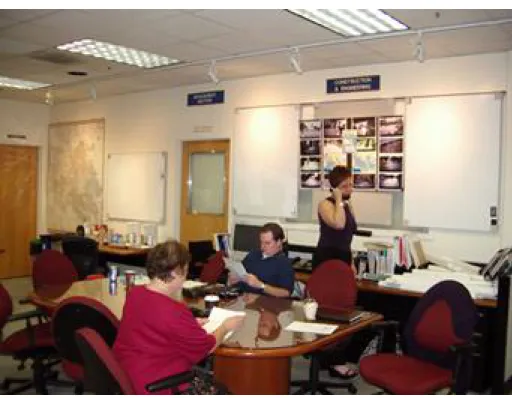
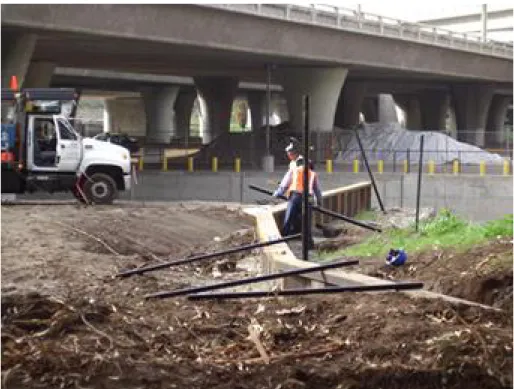
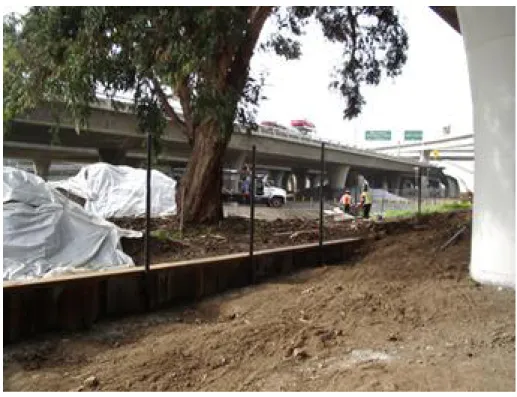
8. EOC Construction and Engineering Branch 27 Emergency Preparedness: Preparing a Section of Highway in San José for 9.
Mudslide Containment 32
10. Emergency Preparedness: Building Trusses to Prevent Mudslides in Downtown
San José 33
Santa Clara County Fire Department
11. Fire Department’s Technical Assets Truck 33
Dallas EOC 4
12. 0
Dallas’ EOC Radio Room 4
13. 0
City of San José EOP
14. Operations Section 41
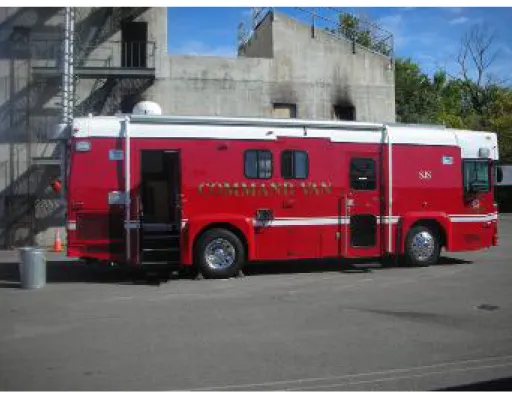
San José Fire Department Mobile Emergency Operations Command Van 4
15. 1
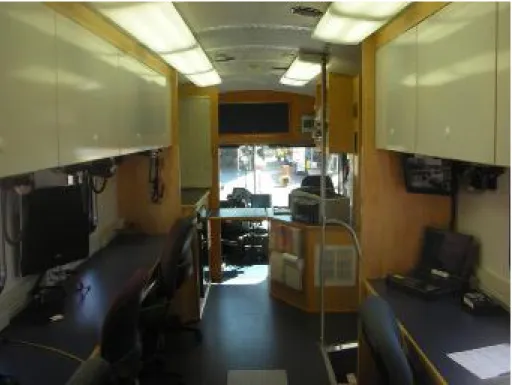
Interior View City of San José Fire Department’s Mobile Emergency Operations 16.
Command Van 42
Additional View San José Fire Mobile Command Van 4
17. 2
Montgomery County, Maryland, EOC 7
List of Figures iv
v
.
LiSt of tabLES
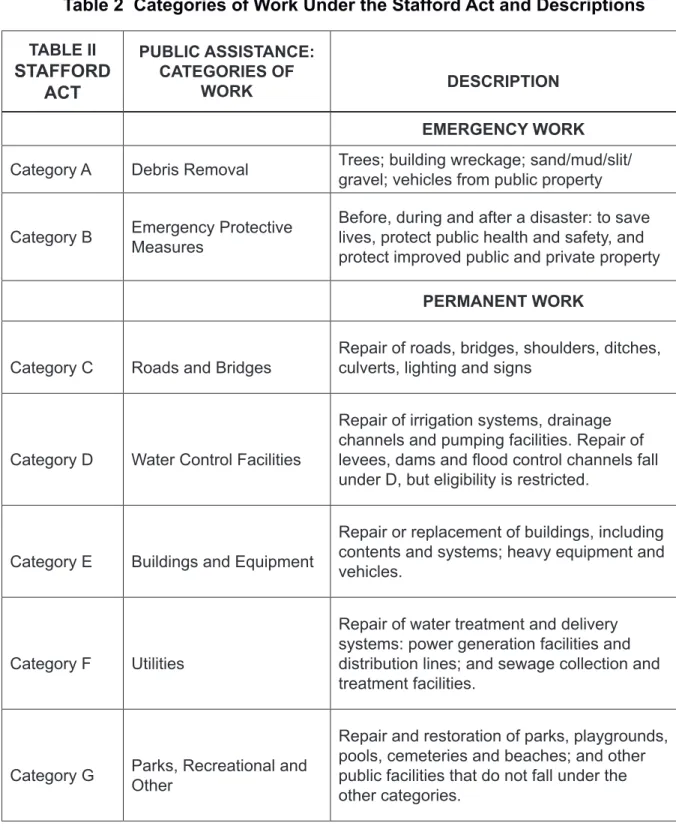
Table 1 Federal Aid Highway Emergency Relief Program 29
List of Tables vi
1
EXEcutivE Summary
State transportation agencies are required to have plans for the continuity of their government
functions during any catastrophic disaster, as well as for the continuation of the essential services that they provide to the people of the state, other levels of government, other state agencies and to federal partners during response, recovery and mitigation phases of emergency management. Emergency management guidance is normally provided in state
laws, such as an Emergency Services Act, that defines the roles and responsibilities of state-level agencies. Headquarters-level Emergency Management Plans (EOP), Continuity
of Government (COG) Plans,and Continuity of Operations (COOP) Plans embody the
actions of the specific agency in disasters, with appropriate guidance detailed in checklists and annexes for the various subdivisions of the agency’s headquarters staff.
The Incident Command System was created in the 1970s in California by the fire service
for use in large scale emergencies. Over time it has evolved to the command and control system for all emergencies in California. After the terrorist attacks of September 11, 2001 President George W. Bush mandated that all emergency response must be conducted using the National Incident Management System (NIMS) in order to receive the federal share of emergency response funds.1 Homeland Security Presidential Directive-5
(HSPD-5) was issued by President Bush on February 28, 2003 and ICS became the basis for NIMS.2
After Hurricane Katrina there was a new emphasis on catastrophic emergency planning.
Transportation is the basis for the ability of all other first responders to fulfill their disaster
roles. Without open, clear and safe roadways all other forms of response are slowed or stopped. Therefore a COOP and COG planning process for catastrophic emergencies is essential to augment the Emergency Operations Plan (EOP) that addresses “normal” emergencies.
The overall emergency management structure must be in place to support implementation of the EOP, COOP and COG. The emergency management structure must support organization-wide policy setting for the department while also supporting the governor’s
need for information. Such a system requires training of employees on the plans and their
roles, including personal and family emergency preparedness. Exercises are essential to evaluate the success of the training and the completeness of the EOP, COOP and COG. A
chain of command including delegation of authority is required, along with alternate EOC
locations.
Planning must include recovery, with training and documentation for receiving reimbursements from the Federal Highway Administration (FHWA) and the Federal Emergency Management Agency (FEMA), and plans for audit and appeal processes. Post disaster mitigation measures must also be included, recognizing Disaster Mitigation Act 2000 mandates.
The role of the emergency operations center (EOC) must be defined and exercised. It
Executive Summary 2
statewide priorities for the allocation of scarce resources. The state’s transportation agency serves as a link between the local governments that need assistance and the state and federal
resources that can be activated. As such the state transportation department’s headquarters
EOC coordinates with the department’s district EOCs, the state emergency management
agency’s regional EOCs, and the state level operations center to manage resource requests
and delivery of services, based on the department’s essential functions.
There is a hierarchy of emergency plans to support emergency response actions. Standard
operations procedures (SOPs) guide behavior at the field level. The EOP guides the
department in managing a disaster, while the COOP and COG focus on catastrophic events,
and potential the loss of executive leadership and headquarters facilities. Department
resources must be organized to support the department’s own essential functions, as well
as federal primary essential functions and mission essential functions, as defined in new
federal guidelines.
This research project was intended to lay the groundwork for establishing priorities that would lead to a mature management capability for emergencies, disasters and
catastrophes. Because transportation agencies typically have significant experience with
“normal emergencies” on the roadways, and routinely work with state police and state
fire agencies in disaster situations, some elements of a mature emergency management
capability have not been emphasized. The following activities should be completed by a state level transportation agency to ensure a robust response and recovery capability. An EOC should be created, and reasonable alternative EOC sites selected and developed. The EOP and COOP should be developed, staff should be trained on the plans, and regular exercises should be held.
Guidance on these steps is included, as well as detailed examples of some COOP materials. A complete set of EOC model checklists is available in another MTI publication, The Role of Transportation in Campus Emergency Planning, which is available as a free download at http://www.transweb.sjsu.edu/MTIportal/research/publications/documents/Role%20of%20 Transportation%20(Complete%20with%20Cover).pdf.
Appendices include reference materials, examples of handouts materials for employees, a glossary and acronym list, and an extensive bibliography of references and resource materials. Appendix F, “Employee Emergency Kit Flyer,” and Appendix G, “Family Emergency Plan Template,” are available for download at http://www.transweb.sjsu.edu/ MTIportal/research/publications/documents/Appendix0910.html.
3
introduction
State transportation agencies are required to have plans for the continuity of their government
functions during any catastrophic disaster, as well as for the continuation of the essential services that they provide to the people of the state, other levels of government, other state agencies and to federal partners during response, recovery and mitigation phases of emergency management. Emergency management guidance is normally provided in state laws, such as California’s Emergency Services Act (Government Code Chapter 7, Division 1 of Title 2) and Disaster Assistance Act (Government Code Chapter 7.5, Division 1 of
Title 2), that define the roles and responsibilities of state-level agencies.
Headquarters-level Emergency Management Plans (EOP), Continuity of Government Plans (COG),
and Continuity of Operations (COOP) Plans embody the actions of the specific agency
in disasters, with appropriate guidance detailed in checklists and annexes for the various
subdivisions of the agency’s headquarters staff.
In California all emergency planning activities and documents must comply with the state’s Standardized Emergency Management System (SEMS). Between 1989 and 1991 California
experienced three major disasters: the Loma Prieta Earthquake, the Oakland Hills/Berkeley firestorm, and the metam sodium spill into a remote area of the Upper Sacramento River. In
each case the Incident Command System’s (ICS) After Action Report (AAR) demonstrated that closer coordination among agencies would have led to a more effective emergency response. As a result, a law sponsored by State Senator Nicholas Petris, who suffered
loss of property as a consequence of the firestorm, requires that all fire departments in California use the Incident Command System (ICS) in the field, and all state agencies use
the Standardized Emergency Management System (SEMS) throughout the organization’s emergency response and management systems.3 This legislation is found in California
Government Code Section 8607, included as Appendix L of this report.
After the terrorist attacks of September 11, 2001, President George W. Bush mandated that all emergency response must be conducted using the National Incident Management System (NIMS) in order to receive the federal share of emergency response funds.4 Dr.
Richard Andrews, who had been California’s Director of Emergency Services during the Pete Wilson Administration (1991–1999), led the group of professional emergency managers that created California’s SEMS. When Homeland Security Presidential Directive-5 (HSPD-5) was issued by President Bush on February 28, 2003, Dr. Andrews was a member of the Homeland Security Advisory Council, and he recommended that ICS and SEMS be used to
fulfill the HSPD-5 mandate for a national incident management system that the Secretary of Homeland Security was required to create.5 Although not all elements of SEMS were
incorporated into NIMS (notably absent is a definition of the operation of an emergency
operations center), ICS is the basis for all NIMS actions.6
In 2006 the State of California required all state agencies to create or update their Continuity
of Government (COG) and Continuity of Operations (COOP) plans using the most current state and federal guidance.7 Caltrans’ first effort focused on business resumption and
systems, but the leadership recognized that a broader approach was needed for a state agency with a presence in every corner of the state, operating daily to meet the needs of a constituency the size of the nation of Portugal, whose infrastructure provides the basis for
Introduction 4
the ability of all other first responders to fulfill their disaster roles. Without open, clear and
safe roadways all other forms of response are slowed or stopped.
A team of emergency management research associates with significant professional
experience in emergency management from the Mineta Transportation Institute’s National
Transportation Security Center of Excellence was retained to review the first COG and
COOP plans,8 and to advise Caltrans on additions and revisions to its COG and COOP
plans in keeping with the latest federal guidelines, and with the lessons learned from its participation in the 2008 Golden Guardian exercises.9 The project included the MTI team’s
participation with Caltrans’ staff in training and exercises in preparation for the headquarters
and agency-level Golden Guardian activities, leading to a revision of the plan over a two year cycle, and ultimately the delivery of training and exercises on the revised emergency
management plans to headquarters and district leadership teams.
The MTI work plan included providing advice on Golden Guardian 2008’s first ever agency
level10 Executive Tabletop Exercise in which senior Caltrans staff would participate. MTI
team members coordinated with the agency-level exercise designers, as well as consulting
with California Office of Emergency Service11 staff members, to develop training for the
likely Caltrans participants. The training cycle included several offerings of the Standardized Emergency Management System (SEMS) Executive Level training via video teleconference
for headquarters staff, as well as all districts within Caltrans. All participants took the post-training test, and those who passed received post-training certificates.
The MTI Team developed an executive-level tabletop exercise for selected Caltrans
executive staff members, whose disaster roles included working in the headquarters
Emergency Operations Center (EOC), and who had the potential for representing Caltrans
at agency-level EOC briefings and coordination meetings. The final consensus report for
the Golden Guardian work is attached here as Appendix B.
Other activities included the review of Caltrans’ COOP/COG essential functions, and creation of a revised and abbreviated list of such functions in concert with federal and state mandates. Drafts of the revisions were submitted to Caltrans project staff and ultimately to the members of the Steering Committee, who accepted the revisions in late June 2009. The revisions incorporate new guidance from the state and federal government. The new Essential Functions table is attached as Appendix C.
The MTI team also reviewed the Points of Contact lists and the Delegation of Authority for COG events, advising internal teams in the creation of updated materials. Because this information was security-sensitive it was kept in-house at Caltrans.
The MTI team was also required to review the existing emergency management structure of
Caltrans and recommend revisions to ensure continuous compliance with all state and federal
emergency management mandates. The team provided several possible configurations
for an emergency management program, which were reviewed by Caltrans’ project staff members and the steering committee. Due to the State of California’s budget crisis in
Spring 2009 the modifications initially are modest, but a path for additional revisions has
Introduction
5
contained in this report’s chapters titled “The Role of the Emergency Services Manager in a
State Transportation Agency,” “The Role of the Department of Transportation Headquarters
EOC,” and “The Hierarchy of Emergency Plans.”
Finally the MTI staff provided a list of actions that might be taken by Caltrans “to achieve
a level of preparedness consistent with the responsibilities required by the State of California, Office of Emergency Services (OES) State Emergency Plan.” MTI staff provided
recommendations contained in the above-referenced sections of this report, as well as a suggested schedule for the delivery of training and exercises throughout all 12 Caltrans districts. These recommendations are provided in more details in the chapter titled “Additional Activities to Lead to a Fully Mature Emergency Management Program, Including COOP and COG Within the State-Level Transportation Agency” within this report.
Introduction
7
.
LitEraturE rEviEW
A significant amount of material exists concerning Continuity of Operations (COOP) and
Continuity of Government (COG) in federal, state and local government level plans and guidance. The private sector has also embraced the same basic concepts for their business
continuity, providing their unique insight to add to the collective body of knowledge. In
reviewing these documents a clear trend emerged with a single federal document being the basis for the COOP: FEMA Federal Preparedness Circular 65 (FPC 65) released in
1999.12 This base document contains the core requirements of a COOP. There were two
supplements to it: FPC 6613 was designed to provide guidance on training and exercises
for COOP, and FPC 6714 was designed to describe the acquisition of alternative facilities
to support COOP. In 2004 the three documents were merged into a new FPC 6515
encompassing all of this information.
A difference in perception was noted among each of the four partner entities using the
COOP model—federal, state, local, and private. This involved not only COOP definitions
but also roles. Most state and local COOP plans that were reviewed16 referenced FPC
65 from either 1999 or 2004 as a source document in their creation. However, one of the main operational differences is that federal departments do not have a first responder role
in a disaster, while local and state governments are directly responsible for immediate service delivery. Therefore their views of COOP and what must be covered by a continuity plan are different. While the federal government sees the COOP as inwardly focused on capability to continue their support operations, local and state governments see COOP as an extension of their emergency plans to continue delivering services to the community, because their missions directly involve the public’s safety.
Private enterprise, lead by such entities as the Disaster Recovery Institute International (DRII), follows the federal concept of COOP as an inwardly focused business continuity
plan, because they also have no first responder or public safety function, but may be
crucial to immediate recovery operations.17 Private entities see the delivery of public safety
services as purely a government responsibility.
In 2008 the Department of Homeland Security released Federal Continuity Directive 1(FCD 1),18 superseding FPC 65, that included changes in definitions, making COOP
evolve from a “best business practice” to a process that must be inculcated into the
organization and used on a daily basis. FPC 65 (1999/2004) defines COOP as “… an
effort to assure that the capability exists to continue essential agency functions across a wide range of potential emergencies.”19 The new FCD1 (2008) now defines COOP as “…
an effort within individual organizations (i.e., federal executive branch departments and agencies) to ensure that MEFs and PMEFs continue to be performed during a wide range of emergencies, including localized acts of nature, accidents, and technological or attack-related emergencies.”20
The biggest organizational change was the recognition that a department or agency would be responsible not only to have its own internal functions organized to begin an immediate disaster response, but that it also sustained the capability of coordinating with other
Literature Review 8
agencies of the executive branch during the response. This definition reflects the need for
a department/agency to maintain internal capability but also marshal resources to meet the more extensive needs embodied in the directions of the executive branch in a disaster. Continuity of Government (COG) is concerned with maintaining the essential functions of government.21 Tom Durham and Lacy Suiter put it this way: “The goals of the COG
program are to preserve lawful leadership and authority, prevent the unlawful assumption of authority, preserve vital government documents, and ensure that systems necessary for continued government direction and control are in place before a crisis.”22 This is
critical, particularly within the executive branch, to ensure continued leadership so that departments and agencies can be synchronized to deal with the needs of the country. The
general assumption of COG, created during the Cold War, was a significant loss of life among the nation’s elected and appointed officials, and massive destruction to the nation’s
capital, which would interrupt the federal government’s operations. Therefore an array of alternate facilities and a process of leadership succession would be needed to maintain Constitutional government.
FCD 1 now defines COG as “… a coordinated effort within each branch of Government (e.g., the Federal Government’s executive branch) to ensure that NEFs continue to be performed during a catastrophic emergency.”23 While the executive branch is recognized
as essential through the Presidential Succession Act of 1947,24 Congress and the federal
court system must also be provided with a chain of succession to ensure their functionality for the longer term. Therefore an entire series of COG plans for each branch of government was developed.
From a state or local perspective COG planning is normally embodied in the state constitution, the local government charter or the emergency operations plan for the succession of the senior members of the executive branch (governor or mayor/city manager). Once acting
officials are appointed they can rely on the federal government to assist with support for
response and recovery activities. All levels (federal, state and local) need to have the resources of their departments and agencies available to carry out the policies and orders of the executive, making it essential that departments remain operational, even if at a reduced level, to meet their primary responsibilities and respond to directions in spite of the situation they might be confronted with. This is the essence of COOP.
According to Stephan Parker of the Transportation Research Board (TRB)25 many state
departments of transportation and public transportation agencies have emergency plans to address immediate threats. However, few have plans to conduct operations remotely or for a protracted period. Loss of staff, resources, leadership, vital records or other critical organizational infrastructure is rarely addressed. Emphasis on creating internal plans that identify the organization’s primary responsibilities, and creation of mechanisms to guarantee they will continue at some level regardless of the situation, are considered a “good business practice.” FCD 1 went further, encouraging all responder organizations to inculcate COOP and COG into the organization’s mainstream planning process.26
Peer reviewed publications have tended to address specific operational aspects of COOP
Literature Review
9
Trade Center following its destruction on 9/11. His investigation discovered that the
large financial firms with COOP plans were able to continue operations immediately in alternate locations, while law firms without plans were often months in reestablishing their
businesses. Almost 20 percent of New York’s lawyers, or about 15,000 lawyers, were not
able to practice because their offices were either in the towers or in adjacent buildings
damaged in the attack. The interests of their clients were jeopardized because of loss of
records, and the firms lost revenue.27
Analysis of federal COOP plans by the Government Accountability Office indicated that organizations whose plans they reviewed had difficulty identifying the essential functions of their organizations. The review uncovered a significant number of interdependencies among
departments and agencies that had not been realized before. Among their conclusions were that FEMA’s limited efforts to provide guidance and assess the resulting plans were
inadequate, and had not provided enough guidance on understanding what functions were
truly essential.28
The Inspector General of the Equal Opportunity Employment Commission wrote a report on the performance of their district offices after 9/11 and Hurricane Katrina. Recognizing that it was only the hard work of office staff members that allowed the offices to provide
services to stakeholders, the Inspector General recommended that a senior accountable
officer be appointed for COOP, whose primary responsibility would be to assist the field offices with creating and updating their COOP plans.29 The Equal Opportunity Employment
Commission’s work is crucial in ensuring fairness in post-disaster hiring.
A large body of literature from government agencies on COOP and COG is collected in the TRB Bibliography and the State of California on-line resources list, both of which are included as Appendix J,“List of Emergency Management Publications.”
Literature Review 10
11
mEtHodoLogy
The MTI team undertook a review of the existing COOP and COG documents created by
Caltrans in 2006, and the guidance documents from state and federal sources that underlie the requirements for the creation for COG and COOP plans. The analytical methods included
best practices, benchmarking and gap analysis. These documents were also evaluated for currency, applicability to a state level agency, and relevance to transportation issues.
A list of requirements and best practices guided the discussions with Caltrans staff and
Steering Committee. The MTI team then provided recommended COOP/COG wording, which was iteratively reviewed and revised with Caltrans staff, leading to a revision. Some
of the concepts were tested with key headquarters staff members through the Executive
Tabletop Exercise.
Methodology 12
13
.
HiStory of continuity of opErationS pLan
(coop)/continuity of govErnmEnt (cog)
coLd War
While the terminology of Continuity of Government (COG) and Continuity of Operations Plans (COOP) was developed during the Cold War their origins are much older. The historical, and legal, precedent for the United States’ COG is in Article II Section 1 Clause
6 of the United States Constitution. “In Case of the Removal of the President from Office,
or of his Death, Resignation, or Inability to discharge the Powers and Duties of the said
Office, the Same shall devolve on the Vice President, and the Congress may by Law
provide for the Case of Removal, Death, Resignation or Inability, both of the President and
Vice President, declaring what Officer shall then act as President, and such Officer shall
act accordingly, until the Disability be removed, or a President shall be elected.” Section 3 of the 20th amendment and the 25th amendment further reinforce the concept of maintaining
a chain of command for the executive branch, as do the Presidential Succession Acts of
1792, 1886 and 1947.
The concept of the Presidential line of succession is the core concept of COG’s purpose
of enabling “…a coordinated effort within each branch of Government (e.g., the Federal Government’s executive branch) to ensure that NEFs continue to be performed during a catastrophic emergency.”30 Without a continual and clearly established chain of command
present to set priorities and policy in a disaster, synchronization between federal
departments and agencies might be significantly impaired. This recognition of the need for
line of succession can be found in most, if not all, state constitutions and local government
charters. While the office of such successors may appear largely symbolic, they have a significant role in maintaining a chain of command and line of succession to authority.
COOP is the result of the complexity and interdependency of government departments. It is an acknowledgement that an emergency could be exacerbated by the failure of a department to maintain a core service capability when it suffers an interruption of normal operations. Without this “internal emergency plan” a department could be a liability instead of the asset.
In the 1950s there was concern that a nuclear attack on the United States could result in the destruction of the capital and the deaths or incapacitation of the members of the government. Extensive plans for the continuation of Constitutional government were made,
including fallout shelters for key government officials. These plans and concepts led to a
realization that all levels of government would need to plan to ensure that legal authority
was retained by those with a legitimate claim to office.
In 1979, the Federal Emergency Management Agency (FEMA) was created as a merger among civil defense and natural hazards management programs from a variety of departments. COOP and COG plans became their responsibility. In 1987, FEMA issued a guidance document for COG, CPG 1-10,31 that remains the guidance document today.
History of Continuity of Operations Plan (COOP)/Continuity of Government (COG) 14
After the fall of the Berlin Wall there was a diminution of interest in civil defense matters, and COG was viewed as an issue that had lost salience. FEMA turned toward a natural
hazards focus-based on the needs reflected in the 1989 twin disasters of the Loma Prieta Earthquake and Hurricane Hugo, and 1991’s Hurricane Andrew and Oakland Hills-Berkeley firestorm.
In 1993 a radical Islamist group attacked the World Trade Center in New York with a truck bomb. As Professor Rick Sylves noted in his prescient article for the PA Times, this event brought home the reality of terrorist activity within the United States, and the possibility of
future attacks that present simultaneous multiple disasters: fires, building collapse, utility
damage, infrastructure damage including transit and transportation facilities.32 However,
this appeared to be a single event, and generated no notable legislative change.
okLaHoma city bombing
Two years later the reality of domestic urban terrorism was brought to the fore by two acts within weeks of each other: the Aum Shinrikyo hazardous material (Sarin) release in the Tokyo subway carried out by Japanese citizens, and the truck bombing of the Alfred P.
Murrah Federal Office Building in Oklahoma City by an American domestic militia member.
These two acts led to a reexamination of domestic preparedness for terrorist acts, including a
reassessment of COOP and COG. The Murrah Federal Office Building contained a number
of federal agencies, including Federal Bureau of Investigation (FBI), Bureau of Alcohol, Tobacco and Firearms (ATF), and Social Security Administration (SSA). Each organization lost key staff and vital records as the front part of the building collapsed in the explosion.
The federal courthouse directly across the street suffered extensive damage from flying debris from the building explosion, as well as from fire suppression system water within the
building. Evidence stored in the courthouse for trials in progress was destroyed, resulting in mistrials for a number of cases.33
Federal initiatives were undertaken in response to the attack. President Bill Clinton issued a series of Presidential Decision Directives (PDDs) aimed at changing the shape of American
emergency management, including the PDD-39 and PDD-62, which made the use of weapons
of mass destruction (WMD) inside the US territory “automatically to involve the federal government’s preeminent responsibility and authority.”34 PDD-63, “Critical Infrastructure
Protection,” also “laid the groundwork for developing counterterrorism relationships between the local and federal governments.”35 PDD-67, “Enduring Constitutional Government and
Continuity of Government Operations” was also a response to these events, replacing and elaborating on previous continuity of government directives. Neither the directive nor a fact sheet was ever released.36 The 1999 version of Federal Preparedness Circular 65
(FPC 65), Federal Executive Branch Continuity of Operations (COOP), was developed to provide guidance for all federal agencies in the development of effective COOP plans. In a change of policy as a result of the Oklahoma City bombing, FEMA also supported Presidential Disaster Declarations for human-caused disasters.37
poSt 9/11 fEdEraL mandatES
History of Continuity of Operations Plan (COOP)/Continuity of Government (COG)
15
successfully attacked the Twin Towers of the World Trade Center and the Pentagon
on September 11, 2001. Domestic preparedness efforts were significantly increased,
including the issuance of new Homeland Security Presidential Directives to establish new organizations for response to terrorist events within the United States. The Department of Homeland Security was created by Congress in 2002, reorganizing the executive branch to bring together 22 agencies with 180,000 employees, including FEMA.38 Homeland
Security Presidential Directive-5 (HSPD-5) was issued on February 28, 2003 mandating the National Incident Management System (NIMS). Later HSPDs, notably HSPD-8: National Preparedness issued on December 17, 2003, have continued to shape evolving concepts of homeland security.39
HurricanE katrina
In August 2005 the nation’s emergency response system was tested through Hurricane
Katrina and the flooding of New Orleans. Most analysts found the federal response lacking,
and also noted the leadership and operational failures of the city and state in maintaining
continuity of operations in the flooded areas. There is an extensive literature analyzing
Hurricane Katrina and its demonstration of emergency management shortcomings, including reports from both the White House40 and the Congress, which called its report, A Failure of Initiative.41 Pictures of the drowned city and its destroyed roads and bridges were
broadcast all over the world. NATO’s 2006 workshop on first responders and terrorism
found a number of cautionary messages in the American catastrophe, and included an annex on Hurricane Katrina in the resulting book.42
Local and state leaders throughout the nation were inspired to reconsider their own
entities’ level of preparedness for catastrophic events. In 2006, California Governor Arnold Schwarzenegger issued Executive Order S-04-06 creating an Executive Partnership
Advisory Workgroup, a group of executive agencies tasked with developing emergency guidelines and managing disasters. While it included the Cabinet Secretary for Business, Housing and Transportation, there was no role for Caltrans, even though the California Highway Patrol (CHP) and the California Department of Forestry and Fire Prevention (CalFire) both had seats on the workgroup. The Executive Order also mandated the Director of Emergency Services for the state to issue new Continuity of Government/Continuity of
Operations plans and guidelines by June 1, 2006, “ensuring the provision of essential
services to the public during and after a catastrophic event.”43 Executive agencies had
four months to update their plans and submit them to the cabinet secretary and Director of Emergency Services. Because of the compressed timeline over the summer (June 1
through September 30, 2006) agencies had little opportunity for creating thorough plans that were agency-specific, but rather had to follow the template provided.
At the federal level, HSPD-20 was approved on May 9, 2007, and superseded PDD-67. It creates a National Continuity Coordinator and National Essential Functions (NEFs), defined
as “that subset of Government Functions that are necessary to lead and sustain the Nation during a catastrophic emergency and that, therefore, must be supported through COOP
and COG capabilities,” while Primary Mission Essential Functions (PMEFs) are defined as
those “Government Functions that must be performed in order to support or implement the performance of NEFs before, during, and in the aftermath of an emergency.”44 In August
History of Continuity of Operations Plan (COOP)/Continuity of Government (COG)
16
“the President approved the National Continuity Policy Implementation Plan to build upon the Policy and provide guidance to executive departments and agencies on appropriately identifying and carrying out their Primary Mission Essential Functions that support the
eight National Essential Functions—the most essential functions necessary to lead and
sustain the Nation during a catastrophic emergency.”45
In 2008, two new directives were issued that defined further the concepts of essential
functions and primary mission essential functions: Federal Continuity Directive 1 and Federal Continuity Directive 2. They encompass the philosophy of the COOP as a living document that results in an evolving plan with a broad department level of participation and training. These formed the basis for the Essential Functions list found in Appendix C.
In January 2009 Continuity Guidance Circular (CGC 1) Continuity Guidance for Non-Federal Entities was issued. Focused on “States, Territories, Tribal, and Local Government Jurisdictions and Private Sector Organizations,” CGC 1 provided guidance for plans and programs that will ensure the provision of essential functions regardless of circumstances. Because this was released after these revisions were well underway, the COOP COG I material was only integrated in portions of this new guidance, although the second part of
this project will include a thorough analysis of its impact. One benefit of COOP in a tight budget is the identification of the essential functions which must be maintained, even with the loss of financial resources, to help set priorities for department work programs.
ScEnarioS rEQuiring tHE impLEmEntation of coop/cog
Not every emergency, or even every disaster, requires the implementation of COOP or COG plans. However, it is possible to envision specific events that would require their
activation. The primary event would be a catastrophic inundation of the capital city, possibly
caused by earthquake-induced levee failures. In this case the headquarters building could
be inundated or marooned. Personnel could be trapped, or at a minimum unable to access
materials contained in the building. If the flooding were catastrophic and occurred during regular business hours significant members of the Caltrans executive staff might be trapped in the building by the flood waters, and unable to communicate for hours to days. Such a circumstance would require the immediate activation of an alternate EOC facility and the
implementation of lines of succession to ensure that analysis of the disaster’s impact on roads could be conducted, and emergency actions undertaken to repair transportation services for emergency response to the disaster. Since the State’s Disaster Assistance Act mandates that “The Department of Transportation’s area of responsibility concerns streets, roads, bridge and mass transit repairs,” continuity of Caltrans’ services is essential for any disaster response to proceed.
A second plausible scenario is terrorist destruction of a government building or transportation
department headquarters facility, either of which could be located on a busy and narrow
street with on-street parking. An Oklahoma City-style truck bomb parked on the capital
grounds could create catastrophic damage to the headquarters building through both
blast effects and debris projectiles. Recognizing the level of damage done to the federal
History of Continuity of Operations Plan (COOP)/Continuity of Government (COG)
17
(on the other side of a much wider street), the need to secure vital records and have an
alternate facility is clear. Such a disaster could also impact staff within the headquarters
building, causing fatalities and injuries that would lead to the activation of the lines of succession.
In either scenario the existence of COOP and COG plans would guide whatever staff
remained capable to undertake priority work first, and maintain essential functions to
support state and federal response.
an Example of a disaster preparedness Exercise in San José figure 1
History of Continuity of Operations Plan (COOP)/Continuity of Government (COG) 18
train disaster Exercise in San José figure 2
train disaster Exercise for San José fire department figure 3
History of Continuity of Operations Plan (COOP)/Continuity of Government (COG)
19
removing a Window as part of San José fire department disaster figure 4
Exercise
preparing for a victim rescue during train Exercise in San José figure 5
History of Continuity of Operations Plan (COOP)/Continuity of Government (COG) 20
21
tHE roLE of tHE EmErgEncy SErvicES
managEr in a StatE tranSportation agEncy
The state’s transportation agency is responsible for its most far-flung and expensive
infrastructure: the system of roads, bridges and tunnels that supports emergency response throughout the state every day. As such its job is both internal and external.
It must plan, staff and train for activities required to keep the agency in business so it
can deliver services, including maintenance of maps and as-built drawings to facilitate
repair and reconstruction, maintenance of equipment and trained personnel to facilitate
repair and reconstruction, and maintenance of internal information technology systems to support Geographic Information Systems, payroll and other human resources services, and contracting in disasters. Its leaders must be prepared to advise the governor on transportation-related policy during disaster events, and must have an established chain of command to maintain that role regardless of the precipitating event.
The state’s transportation agency owns and/or maintains most of the state’s most
critical transportation infrastructure. In every disaster the first responders depend on the
availability of passable roads to get to the disaster scene and begin their work. Therefore
the transportation agency must also be organized and staffed to rapidly respond to requests
from outside the agency for road clearance, debris removal, emergency repairs, overload
permits and many other emergency response activities. These requests may originate
from other state agencies, such as the state highway patrol or state police, or the state’s
fire fighting agency. Requests may originate from federal partners such as the National Forest Service. But many of the requests for emergency response will come from local
jurisdictions within the state through the regional emergency organizations. Local agencies
may request repair of state roads as well as mutual aid for the clearance and emergency
repair of locally owned transportation assets. Therefore, a robust response capability is essential for the state level transportation department, regardless of the source of threat to its operations or infrastructure.
The emergency manager is responsible for the department’s implementation of the four phases of emergency management: planning, response, recovery and mitigation. The job is analogous to that of the budget director in that it involves every element of the department and all the department’s resources. Therefore, ideally the emergency manager is part of the department’s executive staff, with a direct reporting relationship to the chief deputy and direct access to the director.46
Emergency management tasks cannot be conducted by one person alone. Because the emergency management functions cover all aspects of the department, the emergency manager should be supported by an emergency management committee made up of authorized representatives of all sections of the department who can make commitments on behalf of their parts of the organization. These people are ideally assigned to the emergency management committee function as an integral part of their daily jobs, and their performance on the committee is part of their annual evaluation. Together the emergency manager and the emergency management committee coordinate plans, training and exercises across the department to ensure the department’s readiness for its
The Role of the Emergency Services Manager in a State Transportation Agency 22
responsibilities in all identified threats to the state. The committee is crucial to the success
of the emergency preparedness mission because the process of developing the plans for the department is in itself a learning experience for all members. The synergy of the various elements working together will result in more robust strategies for the management of disasters, for as General Dwight Eisenhower observed, “Planning is indispensable.”47
The state’s transportation agency does not function in a vacuum but as part the governor’s cabinet or of a larger agency, and ultimately as a state organization. As such the emergency manager must maintain relationships with the cabinet or agency level and statewide peers, most notably with the state’s lead agency for emergency management. The emergency manager will be the liaison to all state level emergency planning that involves transportation, and will serve as the transportation representative to statewide planning groups.
In order to be most effective the emergency manager will need to keep current on state and federal plans and programs for emergency management. Therefore he will need to attend training with the state’s emergency management agency and FEMA on a regular basis, and to participate in statewide emergency management planning and training sessions with state’s association for professional emergency managers, regional terrorism planning groups and other organizations that are developing planning and training in disaster response.
prE-diSaStEr pLanning and prEparEdnESS
Given the critical nature of the transportation agency’s emergency response requirements,
the department’s emergency manager must approach the job from the professional perspective, being guided by state and federal emergency management principles and
practices. The first responsibility is to undertake a thorough threat assessment for the department’s jurisdiction, which is the whole state. Using resources from federal agencies like the National Weather Service and the United States Geological Survey, the emergency manager can make a threat list for natural hazards likely to occur within the state. Most
states are prone to wildland urban interface fires, riverine and flash flooding; and may have the potential for landslides, tsunamis, hurricanes, tornadoes or earthquakes. A review of departmental reports and news reports, as well as consultation with the state’s fire and law
enforcement agencies, will reveal vulnerabilities to technology based disasters like
large-scale power outages, hazardous materials accidents— both fixed site and transportation-based—and denial of service of utilities and internet as a result of accident or human-caused
actions. Consultation with law enforcement will also reveal criminal and terrorist threats to the state and its critical infrastructure assets.48 The Disaster Mitigation Act of 2000 mandated
the creation of a statewide Hazard Mitigation Plan that also contains a comprehensive threat assessment that can form the basis for the transportation department’s plans. A good example is the 2007 enhanced State Hazard Mitigation Plan.49
Once the nature, frequency and consequences of the threats to the state are understood,
a NIMS-compliant emergency operations plan must be developed for the department. The
planning process should be led by the emergency manager, but participants must include representatives from all elements of the department whose roles are crucial to emergency response capability. These would include at a minimum the road maintenance, information
The Role of the Emergency Services Manager in a State Transportation Agency
23
technology, human resources and procurement elements of the department. Other elements of the transportation department should be included in the planning process, as their activities support emergency response and essential functions. Detailed planning guidance is available in FEMA’s Comprehensive Preparedness Guide 101, March 2009.50
Other state level departments may also have related plans that either address limited aspects of emergency response, or address various levels of emergency response. For example, many agencies have developed information technology-based Business Continuity Plans that describe how communications and technology systems will be backed-up, protected and brought back on-line in the event of any emergency, from a localized power outage to a
catastrophic denial of service attack. Recently agencies have developed influenza-specific
plans for the possibility of pandemic which could close all public departments. These plans often are focused on Human Resources activities to notify and protect employees during
pandemic illness, and may address staffing for critical and essential functions during a social distancing or quarantine period. The emergency manager may be an adviser in the
creation of these plans, but is usually not the lead staff member.
Continuity of Government Plans (COG) are mandated for state level departments. The COG
is required for the maintenance of constitutional government in the state. In a state-level
transportation agency the role of the COG is to describe how the essential services of the
department will be maintained following the loss of its headquarters and senior staff, what
alternative facilities will support that work, and how new leadership can be reconstituted rapidly to ensure both the direction and control of the department and the ability to advise the governor or acting governor. Continuity of Operations Plans (COOP) are mandated for the continuation of state and federal essential services during any catastrophic disaster that goes beyond the threat analysis on which the emergency operations plan was based.51
This plan will describe the maintenance of all essential functions of the agency both in support of its own internal work, and in support of the catastrophic response by other state and federal agencies. The emergency manager would generally be the lead staff member in the development of the COG and COOP following state and federal guidance.52 All plans,
whether incident specific or department wide must be ICS/SEMS/NIMS compliant.
The staff members who will have roles in the emergency response organization, in both disasters and catastrophes, must receive appropriate training in advance of the need to use
the plan. First the staff members must be notified of their expected roles and responsibilities
in a disaster. Each should be given a copy of the emergency operations plan to review, and be directed to complete the NIMS courses mandated for the level of their performance. All state agency emergency response personnel must complete the Basic NIMS course, and if they are in the emergency operations center (EOC) they should seek appropriate state-based training.53 EOC staff members should receive a briefing on the emergency
operations plan when it is introduced, and any time that it is revised. The emergency manager must keep track of the training received by the EOC staff, and human resources
should collect the training certificates for all staff in the emergency response organization, as the transportation department will be required to demonstrate NIMS compliance when requesting state and federal disaster reimbursements.
The Role of the Emergency Services Manager in a State Transportation Agency 24
law. For example, in California anyone who collects a paycheck from a public source is
a Disaster Service Worker, and is required to stay at work or return to work expeditiously
to assist the department with disaster response activities. The Disaster Service Worker program is found in the California Emergency Services Act and in Government Code 3100-3109.54 A model brochure for employee education is attached as Appendix Five. The
department must develop a cache of water and medical supplies to support employees at work during disasters. Employees should receive educational materials that encourage them to develop their own personal disaster preparedness materials for self-support during
a disaster response. A sample employee emergency kit flier is attached as Appendix F.
In order for staff members to stay at work, or return to work expeditiously, their family members and other dependents need to be prepared to deal with emergencies without the staff member. The transportation department should include family emergency
preparedness information in all employee emergency preparedness briefings, and in the
emergency operations plan training and continuity of operations plan training. A simple family plan template is included as Appendix G. Resources from FEMA are available on their website.55 Good examples of family emergency preparedness resources are available
on California’s “Bear Responsibility” website.56
Once emergency workers have been trained on the NIMS emergency management
methods and the specific emergency operations, COG/COOP and other plans, exercises
should be held to evaluate the level of understanding of the materials, the functionality of the plans, and the ability to apply the plans in disaster situations. The federal Homeland Security Exercise and Evaluation Program57 suggests a multi-step approach to exercises
for emergency response staff members. First a seminar is held to review the material to be included in the exercise. Next a tabletop exercise is held where the elements of the plan are used in a discussion format of a disaster scenario. Next a functional exercise is held in the EOC where people use their plan checklists to guide their responses to calls, emails
and requests during a simulated disaster. Finally, a full scale exercise like Golden Guardian is held with field elements and EOC elements working t