Increased knowledge of the rotator cuff has led to an appreciation of the seminal contributions provided by Codman’s14 and Neer’s original descriptions69,70 of the spectrum of rotator cuff disease. At one end of this spec-trum is edema of the rotator cuff tendons that progresses to an inflammatory tendinopathy secondary to either ten-don strain or direct impingement from the undersurface of the acromion—the so-called impingement syndrome. Fibrosis of the cuff tendons and, with time, partial-thickness or full-thickness tears of the rotator cuff may ensue. Cadaveric and natural history studies focusing on the prevalence of rotator cuff disease have shown an increas-ing incidence with age.19,40,54,55,90,94These data become par-ticularly relevant given the widespread increase in athletic activity by people of all ages. A greater understanding of the pathogenesis of rotator cuff disease, combined with improved diagnostic techniques, has translated into advances in the treatment of rotator cuff abnormalities.
Thus far, the majority of research, both basic and clini-cal, dealing with the rotator cuff has focused primarily on the 2 ends of the spectrum: cuff inflammation and full-thickness tears of 1 or more of the cuff tendons. Accordingly, these 2 pathologic conditions are responsible for the majority of rotator cuff–related diagnoses. However, the improvement in both noninvasive imaging modalities and arthroscopic surgical techniques has been accompanied by an increase in the recognition of partial-thickness rotator cuff tears. The purpose of this article is
to review the available literature dealing with partial-thickness rotator cuff tears, with particular emphasis on the optimal method(s) of diagnosis, tear classification, indications for and techniques of operative repair, and treatment results. Limitations in the existing literature will be discussed, as will areas for future research.
ANATOMICAL CONSIDERATIONS
Gross Anatomy
An understanding of normal rotator cuff anatomy is essen-tial for the surgeon treating rotator cuff abnormalities. Knowledge of the histologic and gross appearances of the cuff provides relevant insight into the abnormal state as well as a foundation for reconstructing the anatomy of the diseased rotator cuff. Clark and Harryman13have nicely detailed the gross and histologic anatomy of the tendons, ligaments, and capsules of normal cadaveric shoulders with particular emphasis on the rotator cuff. The tendinous insertions of the rotator cuff muscles, the articular cap-sule, the coracohumeral ligament, and the glenohumeral ligament complex blend into a confluent sheet before insertion into the humeral tuberosities. The tendons of the spinati muscles join 15 mm proximal to their insertion and are not readily separable by blunt dissection. The infra-spinatus and teres minor fuse near their musculotendi-nous junctions. The supraspinatus and subscapularis ten-dons join as a sheath that surrounds the biceps tendon at the entrance of the bicipital groove.23 The roof of this sheath consists of a portion of the supraspinatus tendon, whereas a sheet of the subscapularis tendon serves as the floor. This relationship is relevant to the frequent coexis-tence of subscapularis tendon tears with lesions of the long head of the biceps, a relationship that is not only statisti-cally significant86but also clinically relevant.
Partial-Thickness Rotator Cuff Tears
Matthew J. Matava,* MD, Derek B. Purcell, MD, and Jonas R. Rudzki, MD
From the Department of Orthopaedic Surgery, Washington University School of Medicine,
St. Louis, Missouri
Partial-thickness tears of the rotator cuff have been diagnosed with increased frequency because of a heightened awareness of the condition by clinicians and improved diagnostic methods. Research into the causes, natural history, and optimal treatment of this condition lags behind that of full-thickness tears. However, despite the limitations in the existing literature, there has emerged a consensus among shoulder experts that partial-thickness rotator cuff tears should be aggressively treated in the active athlete because of the unfavorable natural history of these lesions and success of accepted surgical algorithms. This review will provide an overview of the theories regarding the origins of partial-thickness rotator cuff tears, discuss the relative accuracy of accepted diagnostic techniques, and summarize the indications and methods of operative repair with an emphasis on the results of various treatment approaches.
Keywords: partial-thickness; rotator cuff; review
1405 *Address correspondence to Matthew J. Matava, MD, Suite 11300 West Pavilion, One Barnes-Jewish Hospital Drive, St. Louis, MO 63110 (e-mail: [email protected]).
No potential conflict of interest declared.
The American Journal of Sports Medicine, Vol. 33, No. 9 DOI: 10.1177/0363546505280213
The coracohumeral ligament complex plays an impor-tant role in rotator cuff anatomy as well. The coraco-humeral ligament is a thick band of fibrous tissue extend-ing from the coracoid process along the surface of the cap-sule to the tuberosities between the supraspinatus and subscapularis tendons. The ligament is deep to the tendi-nous insertion of the cuff and blends with the capsule and supraspinatus tendon to form part of the roof of the biceps sheath. A 1-cm-wide thickening of fibrous tissue extends posteriorly from the coracohumeral ligament’s origin on the coracoid to the posterior margin of the infraspinatus. This band is an extension of the coracohumeral ligament and travels between the capsule and the cuff tendons.11A sheet of fibrous tissue from the coracohumeral ligament’s origin also extends posterolaterally to form a sheet over the superficial supraspinatus and infraspinatus tendon insertions.13
Rotator Cuff Histology
Previous histologic studies have determined that the rota-tor cuff is made up of multiple, confluent tissue layers functioning in concert.13An understanding of the layered architecture is relevant when discussing the possible caus-es, pathoanatomy, and reconstruction of partial-thickness rotator cuff lesions.
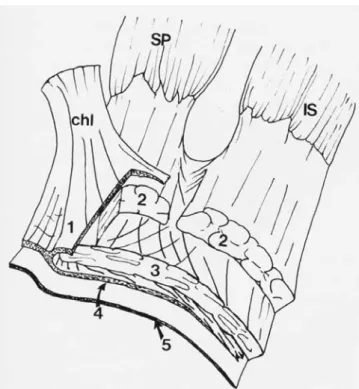
Histologic sections through the supraspinatus and infra-spinatus reveal 5 distinct layers (Figure 1). The most superficial layer (layer 1) contains large arterioles and comprises fibers from the coracohumeral ligament. This layer is 1 mm thick and contains fibers that are oriented obliquely to the long axis of the muscle bellies. Layer 2 is 3 to 5 mm thick and represents the direct tendinous inser-tion into the tuberosities. Large bundles (1-2 mm in diam-eter) of densely packed parallel tendon fibers compose layer 2. The subscapularis tendinous insertion exhibits a similar structure with collagen fiber bundles that parallel the long axis of the muscle and splay before insertion. A group of bundles from the subscapularis joins with fibers of the supraspinatus to serve as the floor of the biceps sheath, whereas the roof of the biceps sheath is formed by fibers from layer 2 of the supraspinatus. Recognition of the anatomy of the biceps sheath is important for understand-ing the spectrum of pathologic disruption seen with supraspinatus, subscapularis, and biceps tendon lesions. Layer 3 is approximately 3 mm thick and comprises smaller bundles of collagen with a less uniform orientation than in layer 2. Fibers within this layer travel at 45°angles to one another to form an interdigitating meshwork that con-tributes to the fusion of the cuff tendon insertion. Layer 4 comprises loose connective tissue and thick collagen bands that merge with the coracohumeral ligament at the most anterior border of the supraspinatus. Layer 5 (2 mm thick) represents the shoulder capsule and comprises a sheet of interwoven collagen extending from the glenoid labrum to the humerus.
The layered anatomy of the rotator cuff lends insight into the various types of partial-thickness tears, particu-larly the intratendinous type. Clark and Harryman’s work13has shown the rotator cuff, the coracohumeral
liga-ment complex, and the bicipital sheath to be intimately interconnected. Anatomical considerations allow the treat-ing physician to recognize that rotator cuff injury is a spec-trum of disease spanning from the partial-thickness tear to the massive cuff tear.
Footprint Anatomy
The insertion site of the rotator cuff tendon at the greater tuberosity is often referred to as the footprint. Dugas et al20 examined 20 normal cadaveric rotator cuff specimens and mapped the footprint using a 3-space digitizer. The mean medial-to-lateral insertion widths of the supraspinatus, infraspinatus, teres minor, and subscapularis tendons were 12.7, 13.4, 11.4, and 17.9 mm, respectively. The mean minimum medial-to-lateral insertion width of the entire rotator cuff insertion occurred at the midportion of the supraspinatus and was 14.7 mm. The articular surface-to-tendon insertion distance was less than 1 mm along the anterior 2.1 cm of the supraspinatus-infraspinatus inser-tion. This distance progressively increased to a mean dis-tance of 13.9 mm at the most inferior aspect of the teres minor insertion. The mean anteroposterior distances of the supraspinatus, infraspinatus, teres minor, and sub-scapularis insertions were noted to be 1.63, 1.64, 2.07, and 2.43 cm, respectively. Ruotolo et al84examined 17 nor-mal cadaveric rotator cuffs. The supraspinatus tendon insertion was a mean of 1.7 mm from the articular margin.
Figure 1. Schematic diagram of a rotator cuff dissection sec-tioned transversely to demonstrate the 5-layer histologic configuration of the cuff. SP, supraspinatus; IS, infraspinatus; chl, coracohumeral ligament. Reprinted with permission from Clark et al.13
Knowledge of the insertion distances from the articular margin is important when assessing the extent of sided partial-thickness tears. For example, an articular-sided partial-thickness tear of the supraspinatus with a medial cuff insertion-to-articular margin distance greater than 7 mm is consistent with a partial-thickness tear of greater than 50% of the tendon thickness.
Vascular Supply
The vascular supply to the rotator cuff consists of an anas-tomotic network formed by the suprascapular and sub-scapular arteries, as well as osseous flow from the circum-flex arteries.65The size of the blood vessels decreases from proximal to distal and from medial to lateral along the musculotendinous units as they travel between layers 2 and 3. The arterioles are larger and the vessels more prevalent on the bursal surface of the cuff and branch between layers 2 and 3,13,65,80,83which may play a role in the healing potential of bursal-sided tears. The articular side of the rotator cuff is relatively hypovascular when compared with the rich blood flow of the bursal side of the cuff.54The relative frequency of bursal-sided versus articular-sided partial-thickness tears may or may not be a reflec-tion of this difference in vascularity.
INCIDENCE AND PREVALENCE OF
PARTIAL-THICKNESS ROTATOR CUFF TEARS
The true incidence of partial-thickness rotator cuff tears remains unknown. As early as the 1930s, Codman noted that the incidence of partial-thickness tears was probably double that of full-thickness tears.14The majority of cur-rent data pertaining to this topic has been gleaned from cadaveric studies that reflect an older segment of the pop-ulation. However, the true incidence of partial-thickness tears in young overhead-throwing athletes is unknown. Imaging studies of asymptomatic shoulders have revealed the presence of partial-thickness tears.12,15,64,90
The vast majority of these tears seem to occur in the supraspinatus tendon. In a study of 306 cadaveric shoul-ders, Lohr and Uhthoff55noted a 32% incidence of partial-thickness tears and a 19% incidence of full-partial-thickness tears within the supraspinatus tendon. Cadaveric studies have noted intratendinous tears to actually be more common than bursal-sided or articular-sided tears. Yamanaka and Fukuda106reported an incidence of supraspinatus partial-thickness and full-partial-thickness tears of 13% and 7%, respec-tively, in a group of 249 cadaveric specimens. Partial-thickness tears were further grouped as bursal-sided (2.4%), intratendinous (7.2%), and articular-sided (3.6%). However, several authors have noted that, clinically, articular-sided tears are 2 to 3 times more common than bursal-sided tears. In fact, among a population of young athletes, Payne et al77found that articular-sided tears com-prised 91% of all partial-thickness tears. This discrepancy between cadaveric and clinical studies may be because the intratendinous tear is more difficult to diagnose via arthroscopy, MRI, or ultrasound than is the bursal-sided or
articular-sided tear. Therefore, the true prevalence of partial-thickness supraspinatus tears is likely to be greater than that currently documented in the literature.
Partial-thickness tears of the subscapularis have also merited attention.46,86A cadaveric study of 46 shoulders found 17 articular-sided partial-thickness tears at the supe-rior portion of the subscapularis.86Concomitant lesions of the long head of the biceps were also seen in 30.4% of these tears, which was statistically significant. Therefore, lesions within the biceps tendon mandate close evaluation for related injury within the subscapularis tendon.
CAUSES OF PARTIAL-THICKNESS
ROTATOR CUFF TEARS
As basic science and clinical research continue to enhance our understanding of the pathophysiology of rotator cuff disease, partial-thickness rotator cuff tears appear to be the end result of a common pathway from multiple con-tributing factors.26,33,57,58,99 These factors can be broadly categorized as either intrinsic or extrinsic to the rotator cuff tendons.26Intrinsic causes may be subclassified into age-related metabolic and vascular changes that lead to degenerative tearing55or intratendinous lesions develop-ing from shear stress.68Extrinsic causes may be because of either subacromial impingement,70 shoulder instability (typically anterior),66internal impingement,18,43,44,60,75,101a single acute traumatic injury, or repetitive microtrau-ma.1,24Often, more than 1 of these factors (either intrinsic or extrinsic) is responsible for the development of a par-tial-thickness tear.26
Consideration of tear origin in the context of the subtype of partial-thickness cuff tears is critical for optimal diag-nosis and may allow insight into the healing potential of the tear after different treatment approaches.25-30 Age-related degenerative changes including decreased cellular-ity, fascicular thinning and disruption, accumulation of granulation tissue, and dystrophic calcification have all been noted and are unlikely to be reversible. A zone of rel-ative hypovascularity is also seen on the articular surface of the rotator cuff lateral to the so-called rotator cable,11,13,37,54,83 which is also accentuated with aging.5,36,47,87,107 In addition, the articular surface of the rotator cuff has an ultimate stress to failure that is approximately half that of the bursal surface,68with thin-ner and less uniformly arranged collagen bundles. Intrinsic changes in the vascularity of the rotator cuff and age-related degenerative changes may be responsible for articular-surface tears in patients older than 40 years without other clear mechanisms. This theory is supported by both cadaveric and clinical studies that have shown an increasing prevalence of partial-thickness rotator cuff tears with age, as well the histologic correlation noted between areas of relative hypovascularity and recognized patterns of degenerative changes.19,40,49,54,55,80,90
Another potential cause of partial-thickness rotator cuff tears and their propagation may be differential shear stress within the tendons. The 5-layer histologic structure of the rotator cuff predisposes it to the development of
internal shear forces.13An increasing focus on intratendi-nous strain3,81and the recognition of intratendinous tear extension,26-28particularly through the work of Fukuda29-31, have enhanced our understanding of the causes and opti-mal treatment of partial-thickness tears. A cadaveric bio-mechanical study by Bey et al3found that partial articular surface tears developed increased intratendinous strain at greater than 15°of shoulder abduction. Another cadaveric study by Reilly et al81 demonstrated that intratendinous defects result in elevated strain patterns within the ten-don, which are increased on the articular surface with shoulder abduction to 120°. These same authors noted tear propagation from the articular to the bursal surface and concluded that load sharing through the supraspinatus tendon was altered by an intratendinous tear. A corre-sponding increase in articular surface strain to levels pre-viously reported to result in tendon failure was also found at and above 90°of abduction.68Intratendinous strain as a causative factor in the development and propagation of partial-thickness tears is especially relevant in overhead-throwing athletes, whose rotator cuff tendons are placed under repetitive strains with powerful eccentric forces act-ing on the tendon duract-ing deceleration (discussed below).
The extrinsic theory of rotator cuff pathophysiology was popularized by Neer in 1972.69This impingement theory proposes that the progressive spectrum of rotator cuff tendinopathy results from rotator cuff impingement pre-dominantly against subacromial osteophytes or the cora-coacromial ligament or both. Evidence supportive of an extrinsic cause in the development of partial-thickness rotator cuff tears is somewhat limited.56,74 A cadaveric study of subacromial histologic changes observed in con-junction with bursal-sided tears has been used only to draw a connection between this group of partial tears and extrinsic, subacromial impingement.74Although this con-cept has biologic plausibility, a finite-element analysis of the supraspinatus tendon has demonstrated that subacro-mial impingement generates extrinsic compression and stress concentrations sufficient to cause tearing on not only the bursal side but also on the articular surface as well as within the tendon.56Although these data suggest that subacromial impingement may cause any type of partial-thickness tear, bursal-sided tears are more com-monly associated clinically with subacromial impingement. Extrinsic mechanisms of partial-thickness rotator cuff tears extend beyond subacromial impingement to a spec-trum of microinstability, repetitive microtrauma, acute traumatic events, and internal impingement. The concept of internal impingement has been described as contact between the posterosuperior aspect of the glenoid and the undersurface of the rotator cuff (Figure 2) and is supported by cadaveric, radiographic, and arthroscopic studies.†Most commonly occurring in the overhead-throwing athlete, this contact may be physiologic or pathologic and is influenced by many factors, including subtle anterior instability through attenuation of the anterior band of the inferior glenohumeral ligament,44,75 posterior capsular tightness, decreased humeral retroversion,82,101 tension overload,1
poor throwing mechanics,44 and scapular muscle imbal-ance.16,18,24,34Repetitive microtrauma from intratendinous strain occurring during eccentric contraction of the rotator cuff in the deceleration phase of throwing in combination with subtle capsular laxity and internal impingement are likely prominent factors in the pathogenesis of articular surface partial-thickness tears commonly seen in overhead-throwing athletes.1,60,93The critical distinction in assess-ing these issues is determinassess-ing which components of the athlete’s clinical picture are adaptive for repetitive throw-ing at a high level and which factors are pathologic devel-opments that lead to clinical symptoms and deterioration of function.
CLASSIFICATION OF PARTIAL-THICKNESS
ROTATOR CUFF TEARS
Although Codman described partial-thickness articular surface tears as “rim rents” in 1934,14consideration of the contemporary classification of rotator cuff tendinopathy begins with Neer’s70influential description of the stages of impingement. This system improved our understanding of rotator cuff abnormalities as a spectrum extending from stage I (inflammation, hemorrhage, edema, and pain) through stage II (tendon fibrosis) to stage III (progressive tearing).70We now know that a multitude of factors other than impingement are at play in the development of par-tial-thickness tears, and unfortunately, Neer’s70 system fails to allow for a consistent and reliable description of these tears. More useful systems have a greater influence on treatment options and outcomes assessment by addressing both tear location and extent to allow for greater interobserver reliability.
Ellman21presented a classification of partial-thickness rotator cuff tears with descriptions of location (articular, bursal, interstitial), grade (grade 1,<3 mm deep; grade 2, 3-6 mm deep; grade 3, >6 mm deep), and tear area (in mm2). Snyder defined a partial articular supraspinatus tendon avulsion as the PASTA lesion and helped to recog-nize this injury as a separate clinical entity.63,91,92In addi-tion, Snyder proposed a classification system for partial-thickness tears based on tear location (articular, bursal, or
Figure 2. Schematic representation of posterosuperior gle-noid impingement. Reprinted with permission from Riand et al.82
†
complete) and tear severity (0-4 scale, ranging from nor-mal to greater than 3 cm severe cuff injury).92Yamanaka and Fukuda106 and Conway16 expanded on this develop-ment by drawing further attention to the intratendinous extension of these lesions, first described by Codman,14 particularly in overhead-throwing athletes. Conway pro-posed the PAINT lesion to describe partial articular tears with intratendinous extension.16 Previous studies had focused less attention on intratendinous tearing. However, over time, the presence of this entity has clearly been rec-ognized as a critical component of the optimal diagnosis and treatment of partial-thickness tears.26
DIAGNOSIS
Clinical Examination
Diagnosis of partial-thickness rotator cuff tears can be challenging, as the clinician must correlate the often non-specific physical examination findings with available imaging modalities. The details of a comprehensive shoul-der examination are beyond the scope of this article; how-ever, such an evaluation is indicated in the examination of these patients.
A thorough examination begins with an assessment of the cervical spine for range of motion, palpable tenderness or muscle spasm, and for provocative tests, such as the Sperling maneuver, to rule out a compressive neuropathy that may lead to radicular symptoms referred to the shoul-der region. The shoulshoul-der girdle should be inspected for signs of muscle atrophy or scapulothoracic asymmetry with active shoulder motion. Range of shoulder motion (both active and passive) and grading of muscle strength in the planes of elevation, extension, abduction, adduction, internal rotation, and external rotation with contralateral comparisons are also performed.
The results of impingement tests, such as the Neer and Hawkins tests, with or without subacromial local anesthet-ic injection, are often positive in the presence of partial-thickness rotator cuff tears, although occasionally these test results are negative, especially in the high-level, well-conditioned athlete. Loss of supraspinatus muscle strength with complete or near-complete resolution of pain after a subacromial injection suggests the presence of a full-thickness rotator cuff tear, whereas maintenance of strength in the absence of pain on supraspinatus testing suggests either rotator cuff inflammation or an articular surface or intratendinous partial-thickness tear.
Tests to evaluate unidirectional or multidirectional shoulder instability, such as the Jobe test, the sulcus sign, the relocation test, and the degree of anterior and posterior humeral translations are mandatory in the young throw-ing athlete who may possess both rotator cuff injury and shoulder instability because of internal impingement described earlier. The O’Brien test may help distinguish lesions of the long head of the biceps tendon from condi-tions involving the acromioclavicular joint, which often coexist with conditions involving the rotator cuff. A thor-ough neurovascular assessment of the upper extremity
with an emphasis on distal muscle strength, sensation, and pulses completes the examination.
Diagnostic Imaging
Although plain radiographs are rarely helpful in making the diagnosis of a partial-thickness rotator cuff tear, they are an important component of evaluating the patient with shoulder pain. The identification of a greater tuberos-ity notch,67though nonspecific, has been described as an indicator of partial-thickness articular surface tears in throwing athletes. The presence of a subchondral cyst in the greater tuberosity may also be seen in the presence of rotator cuff pathologic abnormalities.
Conventional and positional radiographic arthrogra-phy33,42,71 and subacromial bursography32,88,108historically have been used as the primary imaging modalities in the evaluation of the rotator cuff. However, the accuracy of arthrography and bursography has been a topic of debate in the literature. Although proponents touted accuracy rates of up to 83%42and 67%,32respectively, other studies have shown less favorable results, with reported accuracy rates as low as 15%33and 25%,42respectively.
As a result of these disparate data, arthrography and bursography have been replaced largely by ultrasonography and MRI. Increased use and improved techniques of ultra-sonography have led to its emergence as a useful tool in the diagnosis of rotator cuff abnormality100,109 (Figure 3). Specifically, Wiener and Seitz104reported a sensitivity of 94% and a specificity of 93% for the diagnosis of partial-thickness rotator cuff tears. Although valuable as a cost-effective and often well-tolerated procedure, ultrasound continues to be operator dependent. As a result, its utility is predicated on the availability of personnel with experi-ence in its performance and interpretation, as evidexperi-enced by only a 41% detection rate of partial-thickness rotator cuff tears.6
Figure 3. Ultrasonographic image showing a small hypo-echoic tendon tear, located on the deep articular side of the rotator cuff (arrow). The image is oriented in a plane parallel to the longitudinal axis of the tendon. Reprinted with per-mission from Teefey et al.94
The development of various techniques of MRI, includ-ing sequence alteration, contrast arthrography, and differ-ential arm positioning (abduction external-rotation),48,61,98 has improved the accuracy with which rotator cuff injuries are identified. Ultrasonography and MRI provide rela-tively similar accuracy rates for the diagnosis of partial-thickness tears.95However, a significant advantage of MRI is its ability to diagnose the concomitant pathologic lesions often seen with partial-thickness tears (eg, labral tears, biceps tendon lesions).
The diagnosis of partial-thickness rotator cuff tears is based on the presence of increased signal in the rotator cuff without discontinuity on T1-weighted images. This finding corresponds to increased signal noted on T2-weighted sequences with the identification of a focal defect on either the bursal or articular surfaces or within the ten-don substance26,58,79 (Figure 4). Defining the shape of the rotator cuff with MRI remains a diagnostic challenge in differentiating between small focal tears, partial-thickness tears, and an inflammatory process.48,78
The identification of partial-thickness rotator cuff tears by standard MRI historically has shown only moderate success. Previous reports have described sensitivity rates between 56% and 72% and specificity rates of 85% for arthroscopically proven tears.97 Gartsman and Milne33 reported a false-negative rate of 83% in a study of 12 arthroscopically verified articular-sided tears. As a result of these rather disappointing results, fat-suppression,78 positional variation,48 and contrast magnetic resonance arthrography61have been employed to improve the diag-nostic accuracy and reliability of MRI. Gadopentate contrast–magnetic resonance arthrography with coronal oblique fat-suppressed images has been recently shown to have a sensitivity of 84%, a specificity of 96%, a positive-predictive value of 93%, and an overall reported accuracy of 91%.61A significant advantage of MRI, and more specif-ically magnetic resonance arthrography, is the ability to diagnose concomitant abnormalities, which is critical to providing optimal treatment.67Placement of the arm in a position of abduction and external rotation (ABER view) has also been a useful adjunct to routine imaging to iden-tify not only articular-surface tears but also labral lesions, especially in throwers who often demonstrate this com-bined injury pattern.
Diagnostic Arthroscopy
Arthroscopy has proven invaluable in the diagnosis and treatment of partial-thickness rotator cuff tears. Direct inspection and probing of the tendon from its articular and bursal surfaces, a thorough examination of the cuff ’s foot-print, and a systematic, comprehensive diagnostic shoul-der examination have enhanced the identification and treatment of these lesions. Several techniques have been proposed to facilitate arthroscopic diagnosis of partial-thickness tears, including the Fukuda color test using methylene blue27 and the Snyder suture marking tech-nique92 for the evaluation of articular surface tears (Figure 5). The Lo and Burkhart “bubble sign”53has also been described to enhance the accuracy of arthroscopic
diagnosis of intratendinous tears. This test is per-formed by placing an 18-gauge spinal needle directly into the area of a suspected intratendinous tear from the bursal surface and injecting 0.5 mL of sterile normal saline. If the saline is injected easily and dilatation
Figure 4. A, T2-weighted oblique coronal image showing a deep partial-thickness tear (arrow) involving the articular sur-face of the cuff. B, T2-weighted oblique coronal image show-ing an irregular oblique tear (arrow) involvshow-ing the bursal side of the cuff. Reprinted with permission from Herzog et al.39
A
appears in this area, then an intratendinous tear is strongly suspected.
TREATMENT OPTIONS AND INDICATIONS
No simple treatment algorithm for partial-thickness rota-tor cuff tears exists. This condition is often only 1 of several pathologic conditions present in the painful shoulder, any one of which may be responsible for the patient’s symp-toms. As mentioned previously, partial-thickness tears are quite common, especially in the active, aging popula-tion.12,15,64Therefore, the presence of a documented tear on an MRI or an ultrasound may be merely a diagnostic red herring that is not contributing to the patient’s symptoms. As a result, the published treatment options for partial-thickness rotator cuff tears vary because there is limited literature on which to base any one treatment decision. However, as with most conditions in sports medicine, these options basically involve either nonoperative or surgical treatment.
Nonoperative Treatment
Patients with partial-thickness tears due to suspected external acromial impingement are treated similarly to those with rotator cuff tendinopathy and subacromial bur-sitis. Activity modification with avoidance of overhead or pain-provoking activities is recommended, along with a short course of a nonsteroidal anti-inflammatory medica-tion to reduce the associated pain36and inflammation of the condition. A dedicated physical therapy program is rec-ommended, with specific attention directed toward reestablishing and/or maintaining normal shoulder kine-matics with stretching of contracted capsular structures. Anterior capsular tightness is addressed by stretching in external rotation with the arm at the side to avoid placing the shoulder in a zone of impingement (60° to 120° of abduction). Posterior capsular contractures are eliminated by stretching with the arm in adduction and internal rota-tion and horizontal, cross-body adducrota-tion. Thermal modal-ities (eg, moist heat, ultrasound) can be used to facilitate the reduction of pain and improve motion, although data to support their use are limited. Subacromial or intra-articular corticosteroid injections can also be used judi-ciously, depending on the location of the tear for those patients with persistent symptoms unresponsive to other means of pain reduction. No more than 2 to 3 injections are recommended because of the potentially deleterious effect on the rotator cuff tissue, especially in younger athletes.
As pain decreases and shoulder motion improves, atten-tion is focused on strengthening the rotator cuff and periscapular musculature. Focused rotator cuff strength-ening may be accomplished through the use of elastic tub-ing or free weights. Strengthentub-ing of the shoulder girdle musculature is recommended to restore normal scapu-lothoracic mechanics to stabilize the platform on which the glenohumeral joint functions. Left unaddressed, scapu-lothoracic dyskinesia increases the likelihood of extrinsic acromial impingement on the rotator cuff.
Figure 5. A, arthroscopic view of an articular-surface tear of the supraspinatus tendon. B, 18-gauge spinal needle tra-versing the tear for later passage of a monofilament marking suture. C, arthroscopic view of the bursal surface of the rota-tor cuff with the marking suture identifying the site of the pre-viously identified articular-surface tear.
B
A
Throwing athletes with coexistent anterior shoulder instability or internal impingement, or both, are treated similarly with pain reduction through the use of anti-inflammatory medications and strengthening of the mus-cles of the rotator cuff and shoulder girdle complex. Particular emphasis should be placed on the stretching of contracted posterior capsular tissues, which have been shown to result in the loss of internal rotation.16,24,26 However, loss of internal rotation may also be seen in the presence of increased humeral or glenoid retroversion and should be taken into consideration. Eccentric and plyo-metric strengthening of the rotator cuff should be included in the rehabilitation program to mimic the deceleration and follow-through phase of the throwing motion. Trunk and lower extremity strengthening should also be empha-sized during this time, as significant throwing strength is generated from these areas. Attention to core strengthen-ing reduces the degree of effort that the shoulder and arm must exert to produce power during throwing. Restoration of proper throwing mechanics is followed by a progressive throwing program particular to the demands of the patient’s sport.
Operative Treatment
The timing of surgical intervention has not been firmly established. Failure of 3 to 6 months of nonoperative treatment has been recommended as a threshold for sur-gery in those patients with symptomatic partial-thickness rotator cuff tears. However, other patient factors, such as activity level, the coexistence of other lesions, and timing issues specific to the patient’s sport, may dictate earlier intervention. The surgical management of partial-thickness tears basically involves 1 of 3 options: arthroscopic debridement of the tear, debridement with acromioplasty, or rotator cuff repair with or without acromioplasty. Surgery may be performed open, arthroscopically assisted, or entirely arthroscopic. To date, there are not sufficient data to support one technique over another in the man-agement of partial-thickness tears. However, arthroscopy allows a thorough evaluation of the entire intra-articular surface of the shoulder joint as well as the subacromial space, which represents a distinct advantage over a purely open surgical procedure. The presence of such associated lesions as labral tears, bicipital lesions, Hill-Sachs defor-mity, loose bodies, and glenohumeral chondrosis should also be treated concurrent with management of the rotator cuff tear irrespective of the surgical method.
Arthroscopic Assessment. Arthroscopic evaluation of the
shoulder begins with the patient in either the beach-chair or lateral decubitus position. Placement of the arm in a position of 30°of abduction, forward flexion, and external rotation with longitudinal traction provides an excellent view of the articular cuff surface using a standard 30° arthroscope. The use of a 70°arthroscope from a posterior portal allows an assessment of the infraspinatus and teres minor tendons and may be helpful in the evaluation of the subscapularis. As an alternative, the arthroscope may be placed in an anterior portal viewing posteriorly to assess the most posterior aspect of the cuff and posterior labrum.
Placement of the arm in 90° of external rotation and abduction can be done to assess the presence of impinge-ment of the undersurface of the infraspinatus against the posterior-superior labrum.
Visualized defects of the articular surface of the rotator cuff tear are probed from an anterior portal and gently debrided with a rotary shaver of all frayed, nonviable tis-sue to determine the depth and area of injury. Placement of an 18-gauge spinal needle from the anterolateral aspect of the shoulder through the cuff defect with passage of a 2-0 monofilament suture may be used to mark the location of the tear for later viewing of the bursal surface (Figure 5). A thorough evaluation of the bursal surface of the rota-tor cuff from the subacromial space is often hindered by the presence of a thickened, inflamed, hypertrophic bursa often present with rotator cuff injury. Debridement of this tissue through mechanical or electrothermal means via a lateral working portal facilitates visualization of the entire bursal surface of the cuff, as does moving the shoulder through a range of motion. Viewing from a lateral or ante-rior portal allows for a thorough inspection of the cuff, includ-ing the area previously marked by the tagginclud-ing suture.
Identification of a bursal-sided defect is followed by debridement of the frayed cuff tissue with an assessment of tear depth. Fraying of the bursal surface often corre-sponds to the area previously marked with the tagging suture. This area should be probed to assess the depth and dimensions of the cuff defect. Full-thickness tears are often found by palpating these areas identified on preop-erative imaging studies as only partial-thickness injuries. In those situations in which imaging studies suggest the presence of rotator cuff tendinopathy or an intratendinous tear, both the articular and bursal surfaces will appear normal. Palpation of the cuff tissue to assess tissue integrity and the injection of saline into the area in question can be used to diagnose intratendinous tears (Figure 6).
Release of the coracoacromial ligament and debride-ment of the undersurface of the acromion with a high-speed bur to remove any acromial or acromioclavicular spurs (coplaning) have been recommended by some authors for the older patient with either articular-sided or bursal-sided tears due to external cuff impingement.89The creation of a flat (type 1) acromion4 has historically been the goal of a subacromial decompression. However, an aggressive acromioplasty may not be necessary in a younger throwing athlete with a normal subacromial out-let. Care must be taken during release of the coracoacro-mial ligament and acrocoracoacro-mial debridement to not release the anterior deltoid.85Data suggest that removal of 4 mm of the acromion results in a loss of 46% of the anterior deltoid attachment, whereas 6 mm of excised acromion results in a loss of 74% of the anterior deltoid.96
Repair of Articular-Sided and Bursal-Sided Tears. A
critical factor to consider in the surgical management of a partial-thickness tear is the depth of the lesion. There is no consensus regarding the influence of tear area as a deter-minant of treatment, despite the fact that the surface extent of the tear may be as important as tear depth in regard to clinical outcome.8There has been a generalized consensus on the degree of tear depth that warrants an
attempt at repair. In general, most authors have recom-mended repair of a tear that involves 50% or more of the tendon’s thickness, irrespective of the surface of
involve-ment (articular or bursal).102,103However, at present, there are insufficient data to support this number as a standard, and assessment of tear depth can be difficult, despite the use of calibrated probes. Recent work by Nicholson72used 30% tear depth as a threshold for repair. Sedentary patients may do well with decompression alone, even in the setting of a tear 50% of the depth of the rotator cuff, whereas active patients will likely benefit from a more aggressive approach with an attempted repair for a tear that is between 30% and 50% of cuff depth. An aggressive attempt at repair is also indicated in those patients with an acute, traumatic tear and in those whose tear is on the bursal surface because of the favorable blood supply of this region and the generally poor outcome associated with debridement of bursal-sided tears.17
Arthroscopic repair of articular-sided or bursal-sided partial-thickness tears may involve completion of the tear or transtendinous repair of the tendon down to the bone with suture anchors. Advocates of the latter technique favor the ability to preserve the intact portion of the rota-tor cuff.52For repair of complete tears, single or double-row suture anchor fixation may be used, although there are currently insufficient data to support one technique over another. Anchors may be metallic or bioabsorbable, depending on surgeon preference, although we favor bioab-sorbable anchors. Our preference is the 5.0-mm BioCorkscrew anchor (Arthrex, Naples, Fla) loaded with No. 2 FiberWire (Arthrex). Optimally, the anchors are placed at a 45°angle (dead man’s angle)9to the direction of contractile force of the rotator cuff muscles. Two anchors are typically used for a double-row repair of tears 1.5 cm or less in length from anterior to posterior, and 3 to 4 anchors are typically used for tears greater than 1.5 cm. Lo and Burkhart52have described a transtendinous repair technique for partial-thickness articular surface tears that restores the medial footprint of the cuff while preventing a length-tension mismatch that may result from removing normal cuff tissue that is then advanced too far laterally.10 Articular-sided partial-thickness tears may be repaired by making a small perforation in the rotator cuff to place medial anchors. The sutures from these anchors may then be used to repair the articular side of the tear and thus restore the footprint while leaving the lateral aspect of the footprint intact. Bursal-sided partial-thickness tears may be repaired by placing a lateral row of anchors and thus preserving the medial footprint. Restoration of the native footprint anatomy and length-tension relationships may be more technically difficult with this latter tech-nique.
For a double-row repair, medial anchors are placed at the medial margin of the rotator cuff footprint just lateral to the articular surface, and the lateral anchors are placed at the lateral margin of the footprint. Attention to anchor positioning is imperative to reestablish the normal foot-print. A larger area of footprint repair may potentially improve the rate of tendon healing and strength of the repair. In one study, transosseous tunnels were shown to restore 85% of the rotator cuff footprint compared with only 67% with suture anchor repair.2This finding would represent a theoretical benefit from either the mini-open
Figure 6. A, probing of the bursal surface of an area sus-pected of containing an intratendinous partial-thickness tear. B, intratendinous tear confirmed after opening the bursal surface. C, subacromial view of the rotator cuff after arthro-scopic repair of an intratendinous tear.
B
A
or standard open approach to repair these tears or the implementation of double-row fixation through an arthro-scopic technique.51
Intratendinous Tears. Intratendinous tears that are
either identified by the methods discussed earlier or that represent an extension of a surface tear can be repaired with multiple mattress sutures. This method is favored for those intratendinous tears oriented in a predominantly medial-to-lateral direction. The intratendinous tear is identified and opened on the bursal surface using either basket forceps or arthroscopic scissors while viewing from the subacromial space. All nonviable tissue is debrided, with care taken not to disrupt the intact articular surface attachment of the cuff. A recent study using immunohisto-chemical analysis on surgical and cadaveric specimens has suggested that based on morphologic architecture, only limited debridement of the tissue medial to a rotator cuff tear is required to optimize healing at the time of repair.35 This situation represents an issue of balance in determin-ing the amount required to remove nonviable tissue for optimal healing while preserving rotator cuff tendon to maximize healing and optimize length-tension relation-ships in an anatomical restoration of the footprint. The use of an accessory anterior working portal is useful to pass multiple vertical mattress No. 2 nonabsorbable sutures through either a suture relay system or penetrating suture grasper. Multiple sutures are placed from anterior to pos-terior along the entire length of the intratendinous tear.
RESULTS OF TREATMENT
Nonoperative Treatment
As previously mentioned, the treatment options for partial-thickness rotator cuff tears range from nonoperative man-agement to surgical repair. Unfortunately, the current lit-erature available to guide practitioners lacks randomized, prospective studies assessing the results of treatment as a function of such factors as tear size, tear location, mecha-nism, and patient activity level.‡In addition, most studies lack adequate statistical power, which makes any treat-ment recommendations subject to question.
The results of nonsurgical management of partial-thickness tears are largely unknown as no long-term follow-up studies using a standardized treatment protocol exist in the literature. The natural history of partial-thickness tears is not fully known, but current data are suggestive. Fukuda28-30,38 found no evidence of healing occurring in histologic sections obtained from partial-thickness tears, and in some specimens, the tear was nearly full thickness. Although imaging90and clinical41studies have suggested that partial-thickness tears do, in fact, progress, the sta-tistical significance of these data is unclear. Yamanaka and Matsumoto108arthrographically followed 40 articular-sided tears treated nonoperatively during a 2-year period and found tear progression in 80% of patients. A decrease in tear size occurred in only 10%, and complete
disappear-ance of the tear occurred in another 10%. Therefore, tear progression is certainly of utmost concern during nonoper-ative management.
Arthroscopic Debridement Alone
Budoff et al7evaluated 79 shoulders with partial-thickness cuff tears treated with arthroscopic debridement alone after a follow-up period ranging from 25 to 93 months. Acromial (25%), acromial and clavicular (15%), and clavic-ular (<1%) osteophytes were resected in some patients, although no formal acromioplasty or release of the cora-coacromial ligament was performed. Of note, a large per-centage of these patients (77%) had associated labral abnormalities. Using the University of California at Los Angeles (UCLA) Shoulder Rating Scale, the results of debridement alone were good to excellent in 89% of those with less than 5 years of follow-up. In those with follow-up greater than 5 years, the results decreased to 81%.
Andrews et al1reported 85% good and excellent results with arthroscopic debridement of partial-thickness tears in 34 young athletes with a mean follow-up of 13 months. All patients in that study had associated labral lesions, and 25% had abnormalities of the long head of the biceps tendon.
Arthroscopic Debridement Combined With
Subacromial Decompression
The literature has reported favorable results with com-bined debridement of partial-thickness tears and concomi-tant subacromial decompression. A large number of stud-ies reporting the results of subacromial decompression for a host of shoulder injuries exist. However, few studies have examined a uniform population with similar pathologic changes, such as partial-thickness rotator cuff tears. Snyder et al92 retrospectively reviewed 31 patients with partial-thickness tears treated in this fashion and reported 84% good to excellent results. However, 13 of the 31 patients did not undergo subacromial decompression. Interestingly, no significant difference was found in the outcome, regard-less of whether decompression was performed.
Esch et al22 evaluated the results of arthroscopic sub-acromial decompression according to the degree of the tear. Seventy-six percent of the patients with a partial-thickness tear demonstrated satisfactory scores on the UCLA Shoulder Rating Scale, with an improvement in pain, function, active forward flexion, and strength. Patient satisfaction was demonstrated in 82% of these patients. Interestingly, there was no significant difference in outcome between those with full-thickness versus partial-thickness tears.
Cordasco et al17evaluated the clinical outcome of arthro-scopic acromioplasty and debridement in 162 patients with normal or partial-thickness tears of the rotator cuff. There was no difference in outcome between those with partial-thickness tears less than 50% of tendon thickness compared with those without any tears. However, they noted an increased failure rate in patients with grade 2B (bursal-sided tears affecting less than 50% of tendon thick-‡
ness). As a result, they recommended repair in combina-tion with acromioplasty for these particular tears, although an objective evaluation of this recommendation was not performed.
Payne et al77 evaluated 43 athletes younger than 40 years with partial-thickness tears treated with arthro-scopic debridement and subacromial decompression. Those with acute, traumatic injuries had a satisfactory outcome 86% of the time, with a return to preinjury sports in 64%. Those with insidious onset of pain due to a partial-thickness tear were not as successful, with only a 66% satisfactory rate and a 45% return to preinjury sports. As might be pre-dicted, success with arthroscopic debridement in this lat-ter group was predicated on the absence of glenohumeral instability and the presence of subacromial inflammation.
Repair of Partial-Thickness Tears
The repair of partial-thickness rotator cuff tears has received a great deal of attention. Itoi and Tabata42 reviewed results from open repair of partial-thickness rotator cuff tears with and without anterior acromioplasty or coracoacromial ligament resection. Good to excellent results were obtained in 82% of shoulders. No statistical difference was noted between groups with regard to the performance of an additional acromioplasty or coracoacro-mial ligament resection.
Weber103 retrospectively reviewed 2 similar groups of patients with partial-thickness rotator cuff tears (greater than 6 mm cuff thickness avulsed from the humerus) who were observed for 2 to 7 years. One group was treated with arthroscopic debridement and acromioplasty with 14 good and no excellent results. The second group underwent arthroscopic acromioplasty and mini-open repair with 28 good and 3 excellent results. As a result of this study, Weber recommended repair of partial-thickness tears greater than 50% of the tendon thickness. However, an accurate method to assess cuff thickness, the effect of vary-ing individual tendon dimensions, and prospective confir-mation of this recommendation remain to be determined.
Conway16reported an 89% return to the same or higher level of play in a group of 14 baseball players who under-went repair of intratendinous rotator cuff tears. However, this group had additional injuries, including superior labrum anterior posterior tears, anterior instability, and hypertrophic subacromial bursae, that were also treated and that likely affected the final results.
Park et al76compared the results of arthroscopic repair of patients who had partial-thickness rotator cuff tears with those of patients who had full-thickness tears. After a mean follow-up of 34 months, both groups demonstrated similar improvements in pain, motion, and function by the American Shoulder and Elbow Society Score. Evaluation at final follow-up showed that 93% of all patients had good or excellent results, and 95% demonstrated satisfactory outcome with regard to pain reduction and functional out-come. Caution was given regarding the careful preopera-tive assessment of the acromioclavicular joint as a poten-tial source of pain, as the only 2 fair results were seen in patients with arthritis of this joint.
FUTURE DIRECTIONS
As a result of the paucity of randomized, prospective stud-ies specifically addressing the optimal management of partial-thickness rotator cuff tears, there exists the oppor-tunity for advances in both basic as well as clinical research dealing with this condition. Application of cur-rent animal models of full-thickness tears may be used for the simulation of partial-thickness tears. Biomechanical studies comparing current fixation techniques to novel methods, such as double-row repair, may also lead to new treatment strategies. The use of growth factors to stimu-late healing, as has been applied to other areas of sports medicine, may also have clinical application in the treat-ment of partial-thickness cuff tears. Finally, clinical out-comes research dealing with such issues as an injury mechanism-based tear classification system, the natural history and risk of tear progression, the indications for operative intervention, and the results of prospective, ran-domized clinical trials are all areas in need of further research to optimize the treatment of this condition.
REFERENCES
1. Andrews JR, Broussard TS, Carson WG. Arthroscopy of the shoul-der in the management of partial tears of the rotator cuff: a prelim-inary report. Arthroscopy. 1985;1:117-122.
2. Apreleva M, Ozbaydar M, Fitzgibbons PG, Warner JJ. Rotator cuff tears: the effect of the reconstruction method on three-dimension-al repair site area. Arthroscopy. 2002;18:519-526.
3. Bey MJ, Ramsey ML, Soslowsky LJ. Intratendinous strain fields of the supraspinatus tendon: effect of a surgically created articular-surface rotator cuff tear. J Shoulder Elbow Surg. 2002;11:562-569. 4. Bigliani LU, Morrison DS, April EW. The morphology of the acromion and its relationship to rotator cuff tears. Orthop Trans. 1986;10:228.
5. Breazeale NM, Craig EV. Partial-thickness rotator cuff tears: patho-genesis and treatment. Orthop Clin North Am. 1997;28:145-155. 6. Brenneke SL, Morgan CJ. Evaluation of ultrasonography as a
diag-nostic technique in the assessment of rotator cuff tendon tears.Am J Sports Med. 1992;20:287-289.
7. Budoff JE, Nirschl RP, Guidi EJ. Debridement of partial-thickness tears of the rotator cuff without acromioplasty: long-term follow-up and review of the literature. J Bone Joint Surg Am. 1998;80:733-748.
8. Burkhart SS. Reconciling the paradox of rotator cuff repair versus debridement: a unified biomechanical rationale for the treatment of rotator cuff tears. Arthroscopy. 1994;10:4-19.
9. Burkhart SS. The deadman theory of suture anchors: observations along a south Texas fence line. Arthroscopy. 1995;11:119-123. 10. Burkhart SS. The principle of margin convergence in rotator cuff
repair as a means of strain reduction at the tear margin. Ann Biomed Eng. 2004;3:166-170.
11. Burkhart SS, Esch JC, Jolson RS. The rotator crescent and rotator cable: an anatomic description of the shoulder’s “suspension bridge.” Arthroscopy. 1993;9:611-616.
12. Chandnani V, Ho C, Gerharter J, et al. MR findings in asymptomatic shoulders: a blind analysis using symptomatic shoulders as con-trols. Clin Imaging. 1992;16:25-30.
13. Clark JM, Harryman DT. Tendons, ligaments, and capsule of the rotator cuff: gross and microscopic anatomy. J Bone Joint Surg Am. 1992;74:713-725.
14. Codman EA. The Shoulder. Boston, Mass: Thomas Todd; 1934. 15. Connor PM, Banks DM, Tyson AB, Coumas JS, D’Alessandro DF.
overhead athletes: a 5-year follow-up study. Am J Sports Med. 2003;31:724-727.
16. Conway JE. Arthroscopic repair of partial-thickness rotator cuff tears and SLAP lesions in professional baseball players. Orthop Clin North Am. 2001;32:443-456.
17. Cordasco FA, Backer M, Craig EV, Klein D, Warren RF. The partial-thickness rotator cuff tear: is acromioplasty without repair suffi-cient? Am J Sports Med. 2002;30:257-260.
18. Davidson PA, Elattrache NS, Jobe CM, Jobe FW. Rotator cuff and posterior-superior glenoid labrum injury associated with increased glenohumeral motion: a new site of impingement. J Shoulder Elbow Surg. 1995;4:384-390.
19. DePalma AF. Surgery of the Shoulder. Philadelphia, Pa: JB Lippincott; 1950.
20. Dugas JR, Campbell DA, Warren RF, Robie BH, Millett PJ. Anatomy and dimensions of rotator cuff insertions. J Shoulder Elbow Surg. 2002;11:498-503.
21. Ellman H. Diagnosis and treatment of incomplete rotator cuff tears.
Clin Orthop Relat Res. 1990;254:64-74.
22. Esch JC, Ozerkis LR, Helgager JA, Kane N, Lilliott N. Arthroscopic subacromial decompression: results according to the degree of rotator cuff tear. Arthroscopy. 1988;4:241-249.
23. Flatow EL, Kelkar R, Raimondo RA, et al. Active and passive restraints against superior humeral translation: the contributions of the rotator cuff, the biceps tendon, and the coracoacromial arch. J Shoulder Elbow Surg. 1996;5:S111.
24. Fleisig GS, Andrews JR, Dillman CJ, Escamilla RF. Kinetics of baseball pitching with implications about injury mechanisms. Am J Sports Med. 1995;23:233-239.
25. Fukuda H. Partial-thickness rotator cuff tears: a modern view on Codman’s classic. J Shoulder Elbow Surg. 2000;9:163-168. 26. Fukuda H. The management of partial-thickness tears of the
rota-tor cuff. J Bone Joint Surg Br. 2003;85:3-11.
27. Fukuda H, Craig EV, Yamanaka K. Surgical treatment of incomplete thickness tears of rotator cuff: long-term follow-up. Orthop Trans. 1987;11:237-238.
28. Fukuda H, Hamada K, Nakajima T, Tomonaga A. Pathology and pathogenesis of the intratendinous tearing of the rotator cuff viewed from en bloc histologic sections. Clin Orthop Relat Res. 1994;304:60-67.
29. Fukuda H, Hamada K, Nakajima T, Yamada N, Tomonaga A, Goto M. Partial-thickness tears of the rotator cuff: a clinicopathological review based on 66 surgically verified cases. Int Orthop. 1996;20:257-265.
30. Fukuda H, Hamada K, Yamanaka K. Pathology and pathogenesis of bursal-side rotator cuff tears viewed from en bloc histologic sec-tions. Clin Orthop Relat Res. 1990;254:75-80.
31. Fukuda H, Mikasa M, Ogawa K, et al. The partial thickness tear of the rotator cuff. Orthop Trans. 1983;173:70-77.
32. Fukuda H, Mikasa M, Yamanaka K. Incomplete thickness rotator cuff tears diagnosed by subacromial bursography. Clin Orthop Relat Res. 1987;223:51-58.
33. Gartsman GM, Milne JC. Articular surface partial-thickness rotator cuff tears. J Shoulder Elbow Surg.1995;4:409-415.
34. Glousman R, Jobe F, Tibone J, Moynes D, Antonelli D, Perry J. Dynamic electromyographic analysis of the throwing shoulder with glenohumeral instability. J Bone Joint Surg Am. 1988;70:220-226. 35. Goodmurphy CW, Osborn J, Akesson EJ, Johnson S, Stanescu V,
Regan WD. An immunocytochemical analysis of torn rotator cuff tendon taken at the time of repair. J Shoulder Elbow Surg. 2003;12:368-374.
36. Gotoh M, Hamada K, Yamakawa H, Inoue A, Fukuda H. Increased substance P in subacromial bursa and shoulder pain in rotator cuff diseases. J Orthop Res. 1998;16:618-621.
37. Halder AM, O’Driscoll SW, Heers G, et al. Biomechanical compari-son of effects of supraspinatus tendon detachments, tendon defects, and muscle retractions. J Bone Joint Surg Am. 2002;84:780-785. 38. Hamada K, Tomonaga A, Gotoh M, Yamakawa H, Fukuda H.
Intrinsic healing capacity and tearing process of torn supraspinatus tendons: in situ hybridization study of alpha 1 procollagen mRNA.
J Orthop Res. 1997;15:24-32.
39. Herzog RJ. Instructional course lectures: magnetic resonance imaging of the shoulder. J Bone Joint Surg Am. 1997;79:934-953. 40. Hijioka A, Suzuki K, Nakamura T, Hojo T. Degenerative change and
rotator cuff tears: an anatomical study in 160 shoulders of 80 cadavers. Arch Orthop Trauma Surg. 1993;112:61-64.
41. Hyvonen P, Lohi S, Jalovaara P. Open acromioplasty does not pre-vent the progression of an impingement syndrome to a tear: nine-year follow-up of 96 cases. J Bone Joint Surg Br. 1998;80:813-816. 42. Itoi E, Tabata S. Incomplete rotator cuff tears: results of operative
treatment. Clin Orthop Relat Res. 1992;284:128-135.
43. Jobe CM. Posterior superior glenoid impingement: expanded spectrum. Arthroscopy. 1995;11:530-536.
44. Jobe CM. Superior glenoid impingement: current concepts. Clin Orthop Relat Res. 1996;330:98-107.
45. Kim TK, McFarland EG. Internal impingement of the shoulder in flexion. Clin Orthop Relat Res. 2004;421:112-119.
46. Kim TK, Rauh PB, McFarland EG. Partial tears of the subscapularis tendon found during arthroscopic procedures on the shoulder: a statistical analysis of sixty cases. Am J Sports Med. 2003;31:744-750. 47. Kumagai J, Sarkar K, Uhthoff HK. The collagen types in the attach-ment zone of the rotator cuff tendons of the elderly: an immunohis-tological study. J Rheumatol. 1994;21:2096.
48. Lee SY, Lee JK. Horizontal component of partial-thickness tears of rotator cuff: imaging characteristics and comparison of ABER view with oblique coronal view at MR arthrography initial results.
Radiology. 2002;224:470-476.
49. Lehman C, Cuomo F, Kummer FJ, Zuckerman JD. The incidence of full thickness rotator cuff tears in a large cadaveric population. Bull Hosp Jt Dis. 1995;54:30-31.
50. Liu SH, Boynton E. Posterior superior impingement of the rotator cuff on the glenoid rim as a cause of shoulder pain in the overhead athlete. Arthroscopy. 1993;9:697-699.
51. Lo IK, Burkhart SS. Double-row arthroscopic rotator cuff repair: re-establishing the footprint of the rotator cuff. Arthroscopy. 2003;19:1035-1042.
52. Lo IK, Burkhart SS. Transtendon arthroscopic repair of partial-thickness, articular surface tears of the rotator cuff. Arthroscopy. 2004;20:214-220.
53. Lo IK, Gonzalez DM, Burkhart SS. The bubble sign: an arthroscop-ic indarthroscop-icator of an intratendinous rotator cuff tear. Arthroscopy. 2002;18:1029-1033.
54. Lohr JF, Uhthoff HK. The microvascular pattern of the supraspina-tus tendon. Clin Orthop Relat Res. 1990;254:35-38.
55. Lohr JF, Uhthoff HK. The pathogenesis of degenerative rotator cuff tears. Orthop Trans. 1987;11:237.
56. Luo ZP, Hsu HC, Morrey BF, et al. Etiologic environment of rotator cuff tears: intrinsic or extrinsic? Orthop Trans. 1997;20:799-800. 57. Lyons TR, Savoie FH III, Field LD. Arthroscopic repair of
partial-thickness tears of the rotator cuff. Arthroscopy. 2001;17:219-223. 58. McConville OR, Iannotti JP. Partial-thickness tears of the rotator cuff:
evaluation and management. J Am Acad Orthop Surg. 1999;7:32-43. 59. McFarland EG, Hsu C, Neira C, O’Neil O. Internal impingement of the shoulder: a clinical and arthroscopic analysis. J Shoulder Elbow Surg. 1999;8:458-460.
60. Meister K, Seroyer S. Arthroscopic management of the thrower’s shoulder: internal impingement. Orthop Clin North Am. 2003;34:539-547.
61. Meister K, Thesing J, Montgomery WJ, Indelicato PA, Walczak S, Fontenot W. MR arthrography of partial thickness tears of the undersurface of the rotator cuff: an arthroscopic correlation.
Skeletal Radiol. 2004;33:136-141.
62. Miller SL, Hazrati Y, Cornwall R, et al. Failed surgical management of partial thickness rotator cuff tears. Orthopedics. 2002;25:1255-1257. 63. Millstein ES, Snyder SJ. Arthroscopic management of partial, full-thickness, and complex rotator cuff tears: indications, techniques, and complications. Arthroscopy. 2003;19(suppl 1):189-199. 64. Miniaci A, Dowdy PA, Willits KR, Vellet AD. Magnetic resonance
imaging evaluation of the rotator cuff tendons in the asymptomatic shoulder. Am J Sports Med. 1995;23:142-145.
65. Moseley HF, Goldie I. The arterial pattern of the rotator cuff of the shoulder. J Bone Joint Surg Br. 1963;45:780-789.
66. Myers JB, Ju YY, Hwang JH, McMahon PJ, Rodosky MW, Lephart SM. Reflexive muscle activation alterations in shoulders with ante-rior glenohumeral instability. Am J Sports Med. 2004;32:1013-1021. 67. Nakagawa S, Yoneda M, Hayashida K, Wakitani S, Okamura K. Greater tuberosity notch: an important indicator of articular-side partial rotator cuff tears in the shoulders of throwing athletes. Am J Sports Med. 2001;29:762-770.
68. Nakajima T, Rokuuma N, Hamada K, Tomatsu T, Fukuda H. Histologic and biomechanical characteristics of the supraspinatus tendon: reference to rotator cuff tearing. J Shoulder Elbow Surg. 1994;3:19-87.
69. Neer CS II. Anterior acromioplasty for the chronic impingement syndrome in the shoulder: a preliminary report. J Bone Joint Surg Am. 1972;67:41-50.
70. Neer CS II. Impingement lesions. Clin Orthop Relat Res. 1983;173:70-77.
71. Neviaser TJ, Neviaser RJ, Neviaser JS. Incomplete rotator cuff tears: a technique for diagnosis and treatment. Clin Orthop Relat Res. 1994;306:12-16.
72. Nicholson GP. Arthroscopic acromioplasty: a comparison between workers’ compensation and non-workers’ compensation popula-tions. J Bone Joint Surg Am. 2003;85:682-689.
73. Ogilvie-Harris DJ, Wiley AM. Arthroscopic surgery of the shoulder: a general appraisal. J Bone Joint Surg Br. 1986;68:201-207. 74. Ozaki J, Fujimoto S, Nakagawa Y, Masuhara K, Tamai S. Tears of the
rotator cuff of the shoulder associated with pathological changes in the acromion: a study in cadavers. J Bone Joint Surg Am.1988;70:1224-1230. 75. Paley KJ, Jobe FW, Pink MM, Kvitne RS, ElAttrache NS. Arthroscopic findings in the overhand throwing athlete: evidence for posterior internal impingement of the rotator cuff. Arthroscopy. 2000;16:35-40.
76. Park JY, Chung KT, Yoo MJ. A serial comparison of arthroscopic repairs for partial- and full-thickness rotator cuff tears. Arthroscopy. 2004;20:705-711.
77. Payne LZ, Altchek DW, Craig EV, Warren RF. Arthroscopic treatment of partial rotator cuff tears in young athletes: a preliminary report.
Am J Sports Med. 1997;25:299-305.
78. Quinn SF, Sheley RC, Demlow TA, Szumowski J. Rotator cuff ten-don tears: evaluation with fat-suppressed MR imaging with arthro-scopic correlation in 100 patients. Radiology. 1995;195:497-500. 79. Rafii M, Firooznia H, Sherman O, et al. Rotator cuff lesions: signal
patterns at MR imaging. Radiology. 1990;177:817-823.
80. Rathbun JB, MacNab I. The microvascular pattern of the rotator cuff. J Bone Joint Surg Br. 1970;52:540-553.
81. Reilly P, Amis AA, Wallace AL, Emery RJ. Supraspinatus tears: propagation and strain alteration. J Shoulder Elbow Surg. 2003;12:134-138.
82. Riand N, Levigne C, Renaud E, Walch G. Results of derotational humeral osteotomy in posterosuperior glenoid impingement. Am J Sports Med. 1998;26:453-459.
83. Rothman RH, Parke W. The vascular anatomy of the rotator cuff.
Clin Orthop Relat Res. 1965;41:176-186.
84. Ruotolo C, Fow JE, Nottage WM. The supraspinatus footprint: an anatomic study of the supraspinatus insertion. Arthroscopy. 2004;20:246-249.
85. Ryu RKN. Arthroscopic subacromial decompression: a clinical review. Arthroscopy. 1992;8:141-147.
86. Sakurai G, Ozaki J, Tomita Y, Kondo T, Tamai S. Incomplete tears of the subscapularis tendon associated with tears of the supraspinatus tendon: cadaveric and clinical studies. J Shoulder Elbow Surg. 1998;7:510-515.
87. Sano H, Ishii H, Yeadon A, Backman DS, Brunet JA, Uhthoff HK. Degeneration at the insertion weakens the tensile strength of the supraspinatus tendon: a comparative mechanical and histologic study of the bone-tendon complex. J Orthop Res. 1997;15:719-726. 88. Schneider TL, Schmidt-Wiethoff R, Drescher W, Fink B, Schmidt J, Appell HJ. The significance of subacromial arthrography to verify partial bursal-side rotator cuff ruptures. Arch Orthop Trauma Surg. 2003;123:481-484.
89. Seitz WH, Froimson AI, Sordon TL. A comparison of arthroscopic subacromial decompression for full thickness versus partial thick-ness rotator cuff tears. Paper #36, ASES Specialty Day, Anaheim, CA; March, 1991.
90. Sher JS, Uribe JW, Posada A, Murphy BJ, Zlatkin MB. Abnormal findings on magnetic resonance images of asymptomatic shoul-ders. J Bone Joint Surg Am. 1995;77:10-15.
91. Snyder SJ. Arthroscopic evaluation and treatment of the rotator cuff. In: Pennington J, McCurdy P, eds. Shoulder Arthroscopy. New York: McGraw-Hill; 1994:148-149.
92. Snyder SJ, Pachelli AF, Del Pizzo W, Friedman MJ, Ferkel RD, Pattee G. Partial thickness rotator cuff tears: results of arthroscop-ic treatment. Arthroscopy. 1991;7:1-7.
93. Sonnery-Cottet B, Edwards TB, Noel E, Walch G. Results of arthro-scopic treatment of posterosuperior glenoid impingement in tennis players. Am J Sports Med. 2002;30:227-232.
94. Teefey SA, Hasan SA, Middleton WD, Patel M, Wright RW, Yamaguchi K. Ultrasonography of the rotator cuff: a comparison of ultrasonographic and arthroscopic findings in one hundred con-secutive cases. J Bone Joint Surg Am. 2000;82:498-504. 95. Teefey SA, Rubin DA, Middleton WD, Hildebolt CF, Leibold RA,
Yamaguchi K. Detection and quantification of rotator cuff tears: comparison of ultrasonographic, magnetic resonance imaging, and arthroscopic findings in seventy-one consecutive cases. J Bone Joint Surg Am. 2004;86:708-716.
96. Torpey BM, Ikeda K, Weng M, van der Heeden D, Chao EY, McFarland EG. The deltoid muscle origin: histologic characteristics and effects of subacromial decompression. Am J Sports Med. 1998;26:379-383.
97. Traughber PD, Goodwin TE. Shoulder MRI: arthroscopic correlation with emphasis on partial tears. J Comput Assist Tomogr. 1992;16:129-133.
98. Tuite MJ, Yandow DR, DeSmet AA, Orwin JF, Quintana FA. Diagnosis of partial and complete rotator cuff tears using combined gradient echo and spin echo imaging. Skeletal Radiol. 1994;23:541-545.
99. Uhthoff HK, Sano H. Pathology of failure of the rotator cuff tendon.
Orthop Clin North Am. 1997;28(1):31-41.
100. van Holsbeeck MT, Kolowich PA, Eyler WR, et al. Ultrasound depic-tion of partial-thickness tear of the rotator cuff. Radiology. 1995;197:443-446.
101. Walch G, Boileau P, Noel E, Donell ST. Impingement of the deep surface of the supraspinatus tendon on the posterosuperior glenoid rim: an arthroscopic study. J Shoulder Elbow Surg. 1992;1:238-245. 102. Weber SC. Arthroscopic debridement and acromioplasty versus mini-open repair in the management of significant partial-thickness tears of the rotator cuff. Orthop Clin North Am. 1997;28:79-82. 103. Weber SC. Arthroscopic debridement and acromioplasty versus
mini-open repair in the treatment of significant partial-thickness rotator cuff tears. Arthroscopy. 1999;15:126-131.
104. Wiener SN, Seitz WH Jr. Sonography of the shoulder in patients with tears of the rotator cuff: accuracy and value for selecting sur-gical options. Am J Roentgenol. 1993;160:103-107.
105. Wright SA, Cofield RH. Management of partial-thickness rotator cuff tears. J Shoulder Elbow Surg. 1996;5:458-466.
106. Yamanaka K, Fukuda H. Pathologic studies of the supraspinatus tendon with reference to incomplete partial thickness tear. In: Takagishi N, ed. The Shoulder. Tokyo, Japan: Professional Postgraduate Services;1987:220-224.
107. Yamanaka K, Fukuda H. Ageing process of the supraspinatus with reference to rotator cuff tears. In: Watson MS, ed. Surgical Disorders of the Shoulder. Edinburgh, Scotland: Churchill Livingstone; 1991:247-258.
108. Yamanaka K, Matsumoto T. The joint side tear of the rotator cuff: a follow-up study by arthrography. Clin Orthop Relat Res. 1994;304:68-73.
109. Yen CH, Chiou HJ, Chou YH, et al. Six surgery-correlated sono-graphic signs for rotator cuff tears: emphasis on partial-thickness tear. Clin Imaging. 2004;28:69-76.