Potravinarstvo Slovak Journal of Food Sciences vol. 11, 2017, no. 1, p. 52-57 doi: https://dx.doi.org/10.5219/695 Received: 6 December 2016. Accepted: 13 January 2017. Available online: 31 January 2017 at www.potravinarstvo.com © 2017 Potravinarstvo Slovak Journal of Food Sciences, License: CC BY 3.0
ISSN 1337-0960 (online)
POLYPHENOLS CONTENT AND ANTIOXIDANT ACTIVITY OF PAPRIKA AND
PEPPER SPICES
Soňa Škrovánková, Jiří Mlček, Jana Orsavová, Tűnde Juríková, Pavla Dřímalová
ABSTRACT
Paprika spices (Capsicium annuum) and black pepper spices (Piper nigrum) are very popular seasonings for culinary and industrial utilization due to the change of sensory quality (taste, aroma, color) of foods and meals with their addition; their health promoting properties; and also, relevant antioxidant activity. Polyphenols are often responsible for the antioxidant capacity of plant products therefore in our study the content of polyphenols (TP) and antioxidant activity (TAA) were assessed in two common culinary spices - paprika spices (12, ground powder spices) and pepper spices (20, unground and ground, black, green, white and colored spices) of Czech, Austrian, and Slovak producers. These parameters were determined using spectrometric method, for total polyphenols method with Folin-Ciocaulteu reagent; the antioxidant activity (TAA) of aqueous and ethanolic extracts of spices was measured by DPPH method with IC50 evaluation. For paprika the total polyphenol content ranged from 14.67 to 28.78 mg GAE.g-1. However, there is only weak connection between the pungency of the spices and the polyphenolic amount, the hotter samples of paprika spices have slightly higher values of TP than sweet types. Also, more pungent paprika products showed a higher potency in scavenging of DPPH free radical than sweeter ones; and ethanolic extracts had slightly higher TAA values (8.73 to 16.17 mg AAE.g-1) than aqueous spice extracts (4.45 to 16.24 mg AAE.g-1). Phenolic amount for pepper spices was assessed in the range of 12.03 to 22.88 mg GAE.g-1. Generally, paprika spices contained more polyphenols than pepper spices. The values of TAA of pepper spices were in the range from 7.07 to 15.81 mg AAE.g-1 for aqueous extracts and from 8.25 to 15.93 mg AAE.g-1 for ethanolic extracts respectively. The highest TAA values were observed for white ground pepper and unground black pepper spices. Unground black pepper samples had higher TAA than ground black pepper. The extent of antioxidant activity of paprika and pepper spices was quite similar. The total phenolics contents in spices were correlated to antioxidant activity only slightly.
Keywords: paprika; pepper; polyphenol; antioxidant activity; DPPH INTRODUCTION
Sweet pepper or its hot varieties (Capsicum annuum L.) are important vegetable crops that could be used for the production of seasonings such as paprika spices. It could be a source of intensive natural colorant (Koncsek et al., 2016) and important also due the change of sensory quality (taste, aroma, color) of foods and meals with their addition. This very popular spice is traditionally produced by sun drying when peppers are spread on the soil where they are exposed to the solar radiation and the wind action. The traditional method is quite slow and dependent on the weather conditions, but there are new possibilities to shorten the time of drying such as microwave-convective drying (Soysal et al., 2009) or tunnel greenhouse driers (Condorí et al., 2001). Some physical, structural, chemical and nutritional alterations could occur during drying (Vega-Gálvez et al., 2009). Drying conditions affect significantly rehydration capacity of dehydrated
pepper, paprika spice (Ramos et al., 2003) that should be rehydrated for consumption of prepared foodstuffs. In paprika the most important compounds are carotenoids, capsaicinoids, and vitamins E and C. There are about forty carotenoids, carotene and β-cryptoxanthin as major. Gnayfeed et al. (2001) determined that concentration of β-carotene increased markedly due light-independent carotenogenesis with the highest level in the overripe pods. Carotenoids are responsible for the color of paprika and their contents are related to variety, ripeness and growing condition (rainy and cool season yields fruits with more β-carotene (Márkus et al., 1999), and technological factors. From the group of pungent capsaicinoids capsaicin and dihydrocapsaicin are the dominant constituents, nordihydrocapsaicin and homocapsaicin are minor ones (Perucka and Materska, 2003). About nine flavonoid and phenolic acid compounds determined Materska et al.
(2005). The main compounds from red pepper were sinapoyl and feruloyl glycosides; trans-p-feruloyl-beta-d-glucopyranoside, trans-p-sinapoyl-beta-d-trans-p-feruloyl-beta-d-glucopyranoside, trans-p-ferulyl-alcohol-4-O-[6-(2-methyl-3-hydroxy-propionyl] glucopyranoside, and also luteolin and quercetin glycosides.
These compounds have antioxidant activity and show potential health benefits such as prevention of cardiovascular diseases, cancers, or stimulation of the immune system, urinary problems (Paterson et al., 2006) and other biological activities.
Black pepper, and also other types, green, or white peppers are very popular condiments used worldwide. To its active components belong volatile essential oil, oleoresins, and alkaloids.
Piperine is a major bioactive compound present in black pepper and white pepper, an alkaloid found naturally in plants belonging to the pyridine group of Piperaceae family, such as Piper nigrum(Butt et al., 2013; Nahak and Sahu, 2011).
Black pepper has several health benefits, particularly in enhancing digestive tract function, possesses anti-inflammatory and antimicrobial properties and contains antioxidant constituents. Vijayakumara et al. (2004) indicated that supplementation with black pepper or the active principle of black pepper - piperine, can reduce high-fat diet induced oxidative stress to the cells. Piperine also protects against oxidation of various chemicals, decreases mitochondrial lipid peroxidation, inhibition of aryl hydroxylation. Piperine inhibite mitochondrial oxidative phosphorylation, growth stimulatory activity and has chemopreventive effect (Ahmad et al., 2012). It is widely used in various herbal cough syrups and it is also used in anti-inflammatory, anti-malarial, anti-leukemia treatment (Nahak and Sahu, 2011). However, black pepper was found to be less effective against yeast and Enterococcus, coliform bacteria than clove, or garlic (Cwiková et al., 2010). Also, green pepper is important condiment that contain relevant phenolic compounds such as 3,4-dihydroxyphenyl ethanol glucoside, 3,4-dihydroxy-6-(N-ethylamino) benzamide and phenolic acid glycosides in the concentrations suggesting a high radical scavenging activity of them (Chatterjee et al., 2007).
MATERIAL AND METHODOLOGY
There were analyzed 12 spices of ground paprika, powder – Austrian (1 – 7), Czech (8 – 10), and Slovak (11 – 12) producers from food markets; and 20 spices of unground and ground black, green, white and colored pepper spices of Austrian (1 – 6), Czech (7 – 16,19 – 20), and Slovak (17 – 18) producers from food markets, the origin of the spices were mostly Vietnam, India and Indonesia.
For the determination of TP aqueous spice extracts were used, for TAA evaluation aqueous and ethanol extracts were used. They were prepared with 1 g of spice that was extracted with 100 mL demineralized water (100 C) or ethanol, under stirring in a shaker for 10 min. The extract was filtered through a paper filter and used for the analyses of TP and TAA.
For the determination of total polyphenols (TP) content by spectrometric method Folin-Ciocalteau reagent was used by the modified method of Blainskiet al. (2013). To
aqueous spice extract (0.1 mL) demineralized water (1 mL) of and diluted Folin-Ciocalteau agent (1 mL) was added and after agitation it was left for 5 min in the dark at lab temperature, then 1 mL of 10% sodium carbonate solution was added and mixed again. After 15 min. standing in the dark at lab temperature absorbance of samples was measured against blank at wavelength λ = 750 nm on the spectrophotometer (Libra S6 Biochrom, GB). Results of TP were calculated using gallic acid as standard and expressed as gallic acid equivalents (GAE) in mg.g-1 sample. Determinations were made in triplicate. Total antioxidant activity (TAA) was measured by spectrometric method after the reaction of spices extracts with free stable DPPH·radical (1,1-diphenyl-2-picrylhydrazyl) that results in a decrease of absorption over time. The method was modified according to Bystrická et al. (2015). Aqueous or ethanolic spice extract (0.1 mL) was added to 1.9 mL ethanolic solution of DPPH and 1 mL acetate buffer (pH = 5.5). The reaction mixture in capped glass was shaken vigorously and left for 1 h. at lab temperature without light exposure. Absorbance of samples (A) was then measured at wavelength λ = 515 nm against blank on the spectrophotometer (Libra S6 Biochrom, GB). Also absorbance of control samples (K) was measured at 515 nm against blank. Inactivation (I) was calculated from the decrease of absorbance (%) according to relation (1).
(1)
Results of TAA were calculated using ascorbic acid as standard and expressed as ascorbic acid equivalents (AAE) in mg.g-1 sample. Average results were obtained from three parallel determinations.
The IC50 values were determined for 3 paprika and 3 pepper samples with the highest TAA. They express the concentration of spices extract that is required to scavenge 50% of DPPH free radicals, 50% inactivation. There were prepared 4 diluted aqueous spices extract solutions in the range 2.5 – 10 mg.mL-1. The reactive mixtures with DPPH solution were made in the same way as for TAA. The IC50 values were quantified graphically (plotting the absorbance against the used extract concentration) and afterwards calculated by linear regression.
Statistic evaluation of the results was made by Statistica program by the analysis of variance (ANOVA) at a 5% significance level and multiple regression analysis. RESULTS AND DISCUSSION
Polyphenols are often responsible for the antioxidant capacity of plant products. They could be important constituents to explain the protective effects of plant-derived foods and beverages (Habauzit and Morand, 2012).
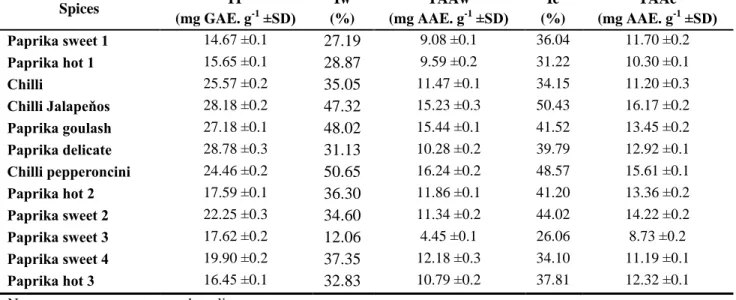
The results of the total phenolic (TP) content of paprika spices, measured with Folin-Ciocalteau reagent by spectrometric method, are given in Table 1, for pepper spices there are in Table 2.
The values of TP contents for paprika spices were in the range from 14.67 to 28.78 mg equivalents of gallic acid (GAE) per gram of sample. Therefore, the sample with the lowest TP content (sweet paprika spice) had only about 50% of the content of paprika delicate with the highest
value. Generally, there is only weak connection between the pungency of the spices and the polyphenolic amount. However, the hotter samples of paprika spices have slightly higher values of TP than sweet types what is in agreement with the results of Zaki et al., (2013).
The ammount of polyphenols, flavonoids in paprika products could be influenced by variation, and be dependent also on the time of harvesting and processing (Zakiet al., 2013; Márkus et al., 1999).
The lowest TP values of pepper spices were evaluated for grounded black pepper spices, however the lowest amount had unground pepper spice consisted of all types of pepper – black, green, and white. Also, white pepper sample had
quite low ammount of polyphenols, green pepper was in the middle of the phenolic scale. It is in agreement with the study of Agbor et al. (2006) who determined that the hydrolyzed and nonhydrolyzed extracts of black pepper contained significantly more polyphenols compared with those of white pepper. The highest values had unground samples of black pepper of Czech and Slovak producers. In comparison, paprika spices contained more polyphenols than pepper spices (12.03 – 22.88 mg GAE.g -1
sample) but the volume variance is not meaningful as the antioxidant capacity is dependent on phenolic content only for some kinds of plant products. In paprika there are the most important for antioxidant capacity carotenoids, Table 1 Polyphenols and antioxidant activity of paprika spices.
Spices TP (mg GAE. g-1 ±SD) Iw (%) TAAw (mg AAE. g-1 ±SD) Ie (%) TAAe (mg AAE. g-1 ±SD) Paprika sweet 1 14.67 ±0.1 27.19 9.08 ±0.1 36.04 11.70 ±0.2 Paprika hot 1 15.65 ±0.1 28.87 9.59 ±0.2 31.22 10.30 ±0.1 Chilli 25.57 ±0.2 35.05 11.47 ±0.1 34.15 11.20 ±0.3 Chilli Jalapeňos 28.18 ±0.2 47.32 15.23 ±0.3 50.43 16.17 ±0.2 Paprika goulash 27.18 ±0.1 48.02 15.44 ±0.1 41.52 13.45 ±0.2 Paprika delicate 28.78 ±0.3 31.13 10.28 ±0.2 39.79 12.92 ±0.1 Chilli pepperoncini 24.46 ±0.2 50.65 16.24 ±0.2 48.57 15.61 ±0.1 Paprika hot 2 17.59 ±0.1 36.30 11.86 ±0.1 41.20 13.36 ±0.2 Paprika sweet 2 22.25 ±0.3 34.60 11.34 ±0.2 44.02 14.22 ±0.2 Paprika sweet 3 17.62 ±0.2 12.06 4.45 ±0.1 26.06 8.73 ±0.2 Paprika sweet 4 19.90 ±0.2 37.35 12.18 ±0.3 34.10 11.19 ±0.1 Paprika hot 3 16.45 ±0.1 32.83 10.79 ±0.2 37.81 12.32 ±0.1
Note: w – water extract, e – ethanolic extract.
Table 2 Polyphenols and antioxidant activity of pepper spices.
Spices TP (mg GAE. g-1 ±SD) Iw (%) TAAw (mg AAE. g-1 ±SD) Ie (%) TAAe (mg AAE. g-1 ±SD) Pepper black 1 14.87 ±0.2 44.85 14.47 ±0.2 44.18 14.27 ±0.3
Pepper black ground 1 12.99±0.2 26.90 8.98 ±0.1 34.13 11.20 ±0.1
Pepper green 1 15.01 ±0.1 42.76 13.83 ±0.2 35.93 11.75 ±0.2
Pepper white ground 1 13.33 ±0.2 49.23 15.81 ±0.3 43.49 14.06 ±0.1
Pepper 4kinds 1 12.03 ±0.1 27.55 9.18 ±0.1 28.64 9.52 ±0.1
Pepper black spice 1 20.31 ±0.2 42.40 13.72 ±0.1 48.35 15.54±0.3
Pepper black 2 18.36 ±0.2 48.26 15.51 ±0.1 33.26 15.93 ±0.2 Pepper black 3 16.62 ±0.3 47.73 15.35 ±0.2 49.62 15.93 ±0.2 Pepper black 4 19.27 ±0.3 40.64 13.18 ±0.2 24.49 8.25 ±0.1 Pepper black 5 19.40 ±0.1 30.83 10.18 ±0.1 30.40 10.06 ±0.3 Pepper black 6 20.04 ±0.1 43.07 13.93 ±0.2 43.70 14.12 ±0.1 Pepper black 7 21.34 ±0.2 25.21 8.47 ±0.1 39.11 12.72 ±0.1 Pepper black 8 19.13 ±0.3 37.15 12.12 ±0.2 46.28 14.91 ±0.1
Pepper black ground 2 15.28 ±0.3 24.53 8.26 ±0.1 30.35 10.04 ±0.2
Pepper black 9 22.88 ±0.1 19.73 6.79 ±0.2 28.23 9.39 ±0.2
Pepper black ground 3 13.63 ±0.1 34.97 11.45 ±0.1 38.24 12.45 ±0.1
Pepper black 10 21.61 ±0.2 39.15 12.73 ±0.3 44.19 14.27 ±0.3
Pepper black ground 4 14.10 ±0.2 20.64 7.07 ±0.1 25.17 8.46 ±0.2
Pepper black 11 14.37 ±0.1 47.86 15.34 ±0.2 42.36 13.71 ±0.1
Pepper black ground 5 16.95 ±0.3 39.95 12.97 ±0.1 41.92 10.52 ±0.1 Note: w – water extract, e – ethanolic extract.
capsaicinoids, and vitamins E (α-tocopherol, γ-tocopherol in seeds), and C (ascorbic acid) (Gnayfeed et al., 2001; Márkus et al., 1999; Kim et al., 2011). Vega-Gálvez et al. (2009) found that the total phenolic content in paprika decreased as air-drying temperature increased from low temperatures (50, 60 °C) to high temperatures (80 and 90 °C). Marín et al. (2004) evaluated that immature peppers showed the highest content of polyphenols. To evaluate antioxidant potential of paprika and pepper spices the antioxidant activity (TAA) of aqueous and ethanolic extracts of spices was measured by DPPH method. The TAA values for paprika spices are shown in Table 1, in Table 2 there are results for pepper spices. Many fruits (Skrovankova et al., 2015), vegetables (Shetty et al., 2013), and their products contain substances, bioactive compounds, that individually or combined, possess high antioxidant activity. They can scavenge free radicals and protect foodstuffs or human organisms against oxidative damage.
Extracts exhibited different extent of antioxidant activity. The extent of paprika antioxidant activity in our study is from 4.45 to 16.24 mg of ascorbic acid equivalents per gram of sample for aqueous extracts and from 8.73 to 16.17 mg AAE.g-1 for ethanolic extracts respectively. More pungent extracts (Chilli pepperoncini, Chilli Jalapeňos, Paprika goulash) showed a higher potency in scavenging of DPPH free radical than sweeter samples of paprika extracts, both aqueous and ethanolic. This may be related to the high amount of different bioactive compounds with antioxidant power such as capsaicinoids in paprika.
Ethanolic extracts had in general higher TAA values, although in few cases the values were lower than for extracts with water. Therefore, ethanol is supposed to be better solution than water to obtain extract with higher antioxidant activity. In the study of Kim et al. (2016) the paprika ethanolic extracts showed lower values of bioactivity than the water ones.
The radical scavenging activity expresses higher TAA values at used high temperatures (80-90 °C) rather than at low temperatures (50-70 °C) as detected Vega-Gálvez et
al. (2009). Also, growing season can influence TAA values (Zaki et al., 2013), as paprika produced in November, showed higher radical scavenging activity in DPPH assay than the one produced in September, December or October.
The values of TAA of pepper spices were in the range from 7.07 to 15.81 mg AAE.g-1 of sample for aqueous extracts and from 8.25 to 15.93 mg AAE.g-1 for ethanolic extracts respectively. The highest TAA values were observed for white ground pepper (origin in Vietnam) and unground black pepper spices of Czech and Austrian producers. In the study of Agbor et al. (2006) the black pepper extracts were evaluated as more effective than white one as observed in the free radical and reactive oxygen species scavenging activities. Suhaj et al. (2006) determined that the anti-radical activity changes of black pepper caused by storage were not significant.
Generally, unground black pepper samples had higher TAA than ground, black pepper powder. The samples with the lowest TAA values (unground black pepper of Czech producers and ground spices, 4kinds pepper) had only about 50% of the activity of other black pepper samples, similarly to phenolic content.
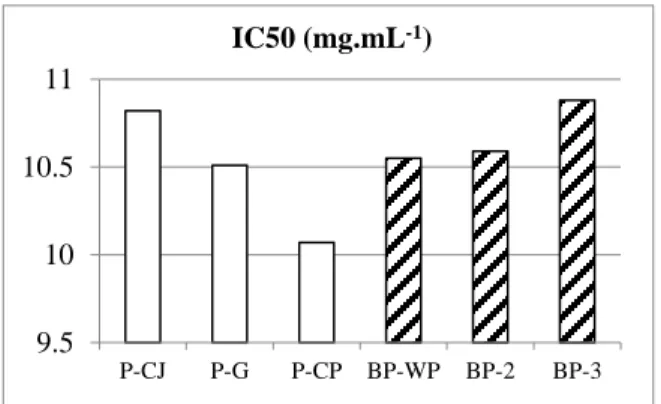
Analogous to paprika samples, ethanolic extracts had in general higher TAA values with few cases of lower values. Gülçin (2005) determined that both water extract and ethanol extract of black pepper exhibit strong total antioxidant activity. Water extract showed stronger DPPH scavenging activity rather than ethanol one, however this difference was not found significant, and both extracts have a noticeable effect on scavenging free radical. Figure 1 shows the amount of spice extracts (selected with the highest TAA) needed for 50% inhibition (IC50). Lower IC50 value indicates higher antioxidant activity. IC50 concentrations of paprika aqueous extracts were quite similar, in short range 10.07 – 10.82 mg.mL-1. The IC50 extent for pepper spices (10.55 – 10.88 mg.mL-1) was also alike paprika samples.
Overall antioxidant activity of paprika spices and pepper spices was quite similar, without significant differences among them.
Our results revealed that the total phenolics contents in paprika spices were correlated to antioxidant activity only slightly. The correlation coefficients for aqueous and ethanolic extracts were R2 = 0.66 and R2 = 0.72 respectively. However, Zaki et al. (2013) found strong correlation between the total phenolic contents and DPPH values (R2 = 0.95) in Moroccan sweet paprika and that the total phenolic contents could serve as a useful indicator for the antioxidant activity of paprika.
The values of correlation coefficients for TP contents in pepper spices were also correlated to antioxidant activity only very weekly (R2 = 0.23 and R2 = 0.38, for aqueous and ethanolic extracts respectively).
Due to our determinations polyphenols contribution to antioxidant activity of spices is, based on low regression values, quite low. Other compounds might contribute to TAA more as stated Kim et al. (2011). The amounts of capsanthin and L-ascorbic acid correlate well with antioxidant activity. Also, Materska and Perucka (2005) found a high correlation between the content of capsaicin and dihydrocapsaicin and the antioxidant activity.
Figure 1 IC50 (mg.mL-1) values of paprika (P) and pepper (BP) extracts.
Note: Extracts: P-CJ = Chilli Jalapenos, P-G = Goulash, P-CP = Chilli pepperoncini, BP-WP = White pepper ground,BP-2 = Black 2, BP-3 = Black 3.
9.5 10 10.5 11 P-CJ P-G P-CP BP-WP BP-2 BP-3 IC50 (mg.mL-1)
CONCLUSION
Addition of paprika spices (dried fruits of the pepper family) and pepper spices (mainly black pepper, white or green peppers) could change foods sensory quality and also, due to the antioxidants presence, lower oxidation in the foods. Antioxidants help to control oxidation in foods effectively, therefore usage of spices such as paprika or pepper spices are also of great economical interest. Polyphenols are often responsible for the antioxidant capacity. The total polyphenols of analyzed paprika spices ranged from 14.67 to 28.78 mg GAE.g-1. The hotter samples of paprika spices have slightly higher values of TP than sweet types. They also showed a higher potency in scavenging of DPPH free radical. Ethanolic extracts had slightly higher TAA values (8.73 to 16.17 mg AAE.g-1) than aqueous ones (4.45 to 16.24 mg AAE.g-1). Pepper spices (12.03 to 22.88 mg GAE.g-1) contained less polyphenols than paprika spices. TAA of pepper spices (7.07 – 15.81 mg AAE.g-1 for aqueous extracts; 8.25 – 15.93 mg AAE.g-1 for ethanolic extracts respectively) was quite similar to paprika spices. Therefore, both spices could be sources of antioxidants for oxidation protection. REFERENCES
Agbor, G. A., Vinson, J. A., Obenc, J. E., Ngogang, J. Y. 2006. Comparative analysis of the in vitro antioxidant activity of white and black pepper. Nutrition Research, vol. 26, no. 12, p. 659-663. https://doi.org/10.1016/j.nutres.2006.09.019
Ahmad, N., Fazal, H., Abbasi, B. H., Farooq, S., Ali, M., Khan, M. A. 2012. Biological role of Piper nigrum L. (Black pepper): A review. Asian Pacific Journal of Tropical
Biomedicine, vol. 2, no. 3, p. S1945-S1953.
https://doi.org/10.1016/S2221-1691(12)60524-3
Blainski, A., Lopes, G. C., Palazzo de Mello, J. C. 2013. Application and Analysis of the Folin Ciocalteu Method for the Determination of the Total Phenolic Content from Limonium Brasiliense L. Molecules, vol. 18, no. 6, p. 6852-6865. https://doi.org/10.3390/molecules18066852 PMid:23752469
Butt, M. S., Pasha, I., Sultan, M. T., Randhawa, M. A., Saeed, F., Ahmed, W. 2013. Black pepper and health claims: a comprehensive treatise. Critical Reviews in Food Science
and Nutrition, vol. 53, no. 9, p. 875-886.
https://doi.org/10.1080/10408398.2011.571799 PMid:23768180
Bystrická, J., Musilová, J., Tomáš, J., Kavalcová, P. Lenková, M., Tóthová, K. 2015. Varietal dependence of chemoprotective substances in fresh and frozen spinach (Spinacia oleracea, L.). Potravinarstvo, vol. 9, no. 1, p. 468-473. https://doi.org/10.5219/519
Chatterjee, S., Niaz, Z., Gautam, S., Adhikari, S., Variyar, P. S., Sharma, A. 2007. Antioxidant activity of some phenolic constituents from green pepper (Piper nigrum L.) and fresh nutmeg mace (Myristica fragrans). Food Chemistry, vol. 101,
no. 2, p. 515-523.
https://doi.org/10.1016/j.foodchem.2006.02.008
Condorí M., Echazú, R. Saravia, L. 2001. Solar drying of sweet pepper and garlic using the tunnel greenhouse drier.
Renewable Energy, vol. 22, p. 447-460.
https://doi.org/10.1016/S0960-1481(00)00098-7
Cwiková, O., Gregor, T., Šottníková, V., Mašková, H. 2010. Antimicrobial Activity of Spices. Potravinarstvo, vol. 4, special no., p. 381-386. Available at:
http://www.potravinarstvo.com/dokumenty/mc_februar_2010
/pdf/4/Cwikova.pdf
Daood, H. G., Palotás, G., Palotás, G., Somogyi, G., Péka, Z., Helyes, L. 2014. Carotenoid and antioxidant content of ground paprika from indoor-cultivated traditional varieties and new hybrids of spice red peppers. Food Research International, vol. 65, Part B, p. 231-237.
Daood, H. G. 2009. Analytical and technological aspects of bioactive compounds in spice red pepper. Acta Alimentaria, vol. 38, suppl. No. 1, p. 87-97.
https://doi.org/10.1556/AAlim.38.Suppl.6
Daood, H. G., Kapitány, J., Biacs, P., Albrecht, K. 2006. Drying temperature, endogenous antioxidants and capsaicinoids affect carotenoid stability in paprika (red pepper spice). Journal of the Science of Food and Agriculture, vol. 86, no. 14, p. 2450-2457. https://doi.org/10.1002/jsfa.2639
Gnayfeed, M. H., Daood, H. G., Biacs, P. A., Alcaraz, C. F. 2001. Content of bioactive compounds in pungent spice red pepper (paprika) as affected by ripening and genotype. Journal of the Science and Food Agricalture, vol. 81, no. 15, p. 1580-1585. https://doi.org/10.1002/jsfa.982
Gülçin, İ. 2005. The antioxidant and radical scavenging activities of black pepper (Piper nigrum) seeds. International Journal of Food Sciences and Nutrition, vol. 56, no. 7, p. 491-499. https://doi.org/10.1080/09637480500450248 PMid:16503560
Habauzit, V., Morand, C. 2012. Evidence for a protective effect of polyphenols-containing foods on cardiovascular health: an update for clinicians. Therapeutic Advances in
Chronic Disease, vol. 3, no. 2, p. 87-106.
https://doi.org/10.1177/2040622311430006 PMid:23251771
Kim, H. G., Bae, J. H., Jastrzebski, Z., Cherkas, A., Heo, B. G., Gorinstein, S., Ku, Y. G. 2016. Binding, Antioxidant and Anti-proliferative Properties of Bioactive Compounds of Sweet Paprika (Capsicum annuum L.). Plant Foods for
Human Nutrition, vol. 71, no. 2, p. 129-136.
https://doi.org/10.1007/s11130-016-0550-9 PMid:27184000
Kim, J. S., Ahn, J., Lee, S. J., Moon, B., Ha, T. Y., Kim, S. 2011. Phytochemicals and antioxidant activity of fruits and leaves of paprika (Capsicum Annuum L., var. special) cultivated in Korea. Journal of Food Science, vol. 76, no. 2, p. C193-198. https://doi.org/10.1111/j.1750-3841.2010.01891.x
PMid:21535734
Kim, J. S., An, C. G., Park, J. S., Lim, Y. P., Kim, S. 2016. Carotenoid profiling from 27 types of paprika (Capsicum annuum L.) with different colors, shapes, and cultivation methods. Food Chemistry, vol. 201, p. 64-71.
https://doi.org/10.1016/j.foodchem.2016.01.041 PMid:26868549
Koncsek, A., Kruppai, L., Helyes, L., Bori, Z., Daood, H. G. 2016. Storage Stability of Carotenoids in Paprika from Conventional, Organic and Frost-Damaged Spice Red Peppers as Influenced by Illumination and Antioxidant Supplementation. Journal of Food Processing and
Preservation, vol. 40, no. 3, p. 453-462.
https://doi.org/10.1111/jfpp.12623
Marín, A., Ferreres, F., Tomás-Barberán, F. A., Gil, M. I. 2004. Characterization and quantitation of antioxidant constituents of sweet pepper (Capsicum annuum L.). Journal of Agricultural and Food Chemistry, vol. 52, no. 12, p. 3861-3869. https://doi.org/10.1021/jf0497915 PMid:15186108
Márkus, F., Daood, H. G., Kapitány, J., Biacs, P . A. 1999. Change in the carotenoid and antioxidant vitamin content of spice red pepper (paprika) as a function of ripening and some
technological factors. Journal of Agricultural and Food
Chemistry, vol. 47, no. 1, p. 100-107.
https://doi.org/10.1021/jf980485z PMid:10563856
Materska, M., Perucka, I. 2005. Antioxidant activity of the main phenolic compounds isolated from hot pepper fruit (Capsicum annuum L). Journal of Agricultural and Food
Chemistry, vol. 53, no. 5, p. 1750-1756.
https://doi.org/10.1021/jf035331k PMid:15740069
Nahak, G., Sahu, R. K. 2011. Phytochemical Evaluation and Antioxidant activity of Piper cubeba and Piper nigrum. Journal of Applied Pharmaceutical Science, vol. 1, no. 8, p. 153-157.
Paterson, J. R., Srivastava, R., Baxter, G. J., Graham, A. B., Lawrence, J. R. 2006. Salicylic acid content of spices and its implications. Journal of Agricultural and Food Chemistry,
vol. 54, no. 8, p. 2891-2896.
https://doi.org/10.1021/jf058158w PMid:16608205
Perucka, I.; Materska, M. 2003. Antioxidant activity and content of capsaicinoids isolated from paprika fruits. Polish Journal of Food and Nutrition Sciences, vol. 12, no. 2, p. 15-18.
Ramos, I. N., Brandao, T. R. S., Silva, C. L. M. 2003. Structural Changes During Air Drying of Fruits and Vegetables. Food Science and Technology International, vol.
9, no. 3, p. 201-206.
https://doi.org/10.1177/1082013030335522
Shetty, A. A., Magadum, S., Managanvi, K. 2013. Vegetables as Sources of Antioxidants. Journal of Food
Nutrition and Disorder, vol. 2, p. 1.
https://doi.org/10.4172/2324-9323.1000104
Soysal, Y., Ayhan, Z., Eştürk, O., Arıkan, M. F. 2009. Intermittent microwave-convective drying of red pepper: Dumerying kinetics, physical (colour and texture) and sensory quality. Biosystems Engineering, vol. 103, no. 4, p. 455-463.
https://doi.org/10.1016/j.biosystemseng.2009.05.010
Suhaj, M., Rácová, J., Polovka, M., Brezová, V. 2006. Effect of γ-irradiation on antioxidant activity of black pepper (Piper nigrum L.). Food Chemistry, vol. 97, no. 4, p. 696-704.
https://doi.org/10.1016/j.foodchem.2005.05.048
Vega-Gálvez, A., Di Scala, K., Rodríguez, K., Lemus-Mondaca, R., Miranda, M., López, J., Perez-Won, M. 2009.
Effect of air-drying temperature on physico-chemical properties, antioxidant capacity, colour and total phenolic content of red pepper (Capsicum annuum, L. var. Hungarian).
Food Chemistry, vol. 117, no. 4, p. 647-653.
https://doi.org/10.1016/j.foodchem.2009.04.066
Vijayakumara, R. S., Suryaa, D., Nalinia, N. 2004. Antioxidant efficacy of black pepper (Piper nigrum L.) and piperine in rats with high fat diet induced oxidative stress.
Redox Report, vol. 9, no. 2, p. 105-110.
https://doi.org/10.1179/135100004225004742 PMid:15231065
Zaki, N., Hakmaoui, A., Ouatmane, A., Hasib, A., Fernández-Trujillo, J. P. 2013. Bioactive Components and Antioxidant Activity of Moroccan Paprika (Capsicum annuum L.) at Different Period of Harvesting and Processing. Biology Agriculture and Healthcare, vol. 3, no. 8, p. 1-8.
Acknowledgments:
This work was supported by grant IGA/FT/2017/006.
Contact address:
Ing. Soňa Škrovánková, Ph.D., Tomas Bata University in Zlín, Faculty of Technology, Department of Food Analysis and Chemistry, nám. T. G. Masaryka 5555, 760 01 Zlín, Czech Republic, E-mail: [email protected]
doc. Ing. Jiří Mlček, Ph.D., Tomas Bata University in Zlín, Faculty of Technology, Department of Food Analysis and Chemistry, nám. T. G. Masaryka 5555, 760 01 Zlín, Czech Republic, E-mail: [email protected]
Mgr. Jana Orsavová, Tomas Bata University in Zlín, Faculty of Humanities, Language Centre, nám. T. G. Masaryka 1279, 760 01 Zlín, Czech Republic, E-mail: [email protected]
doc. RNDr. Tűnde Juríková, PhD., Institute for Teacher Training, Faculty of Central European Studies, Constantine the Philosopher University in Nitra, Drážovská 4, 949 74 Nitra, Slovakia, E-mail: [email protected]
Ing. Pavla Dřímalová, Tomas Bata University in Zlín, Faculty of Technology, Department of Food Analysis and Chemistry, nám. T. G. Masaryka 5555, 760 01 Zlín, Czech Republic, E-mail: [email protected]