O R I G I N A L R E S E A R C H
Expression and Effects of Long Non-Coding RNA,
LINC01124, in Non-Small Cell Lung Cancer
This article was published in the following Dove Press journal: OncoTargets and Therapy
Zi-Bo Wang Hong-Yan Zhang Ji-Bin Lu
Department of Thoracic Surgery, Shengjing Hospital of China Medical University, Shenyang 110000, People’s Republic of China
Objective:To investigate the expression and evaluate the clinical significance of long non-coding RNA, LINC01124, in non-small cell lung cancer (NSCLC) and to study its influence in this tumor.
Methods: Hundred specimens of NSCLC tissues and normal lung tissues after surgery were collected. The qRT-PCR for LINC01124 expression was performed on cancerous and normal lung tissues. The correlations between the expression of LINC01124 and pathological character-istics were analyzed. PcDNA-LINC01124 was transfected to upregulate LINC01124 expression in NSCLC cells, and the transfection efficiency was evaluated by the qRT-PCR. CCK8 assay, wound-healing assay, and the Transwell assay were performed to evaluate the effect of ectopic LINC01124 expression on proliferation, migration, and invasive of NSCLC cells.
Results:The expression level of LINC01124 was downregulated in tumor tissues when compared with the paired normal lung tissues (P<0.05). The expression of LINC01124 was associated with patients’age and distant metastasis (P<0.05). Enforced expression of LINC01124 significantly inhibited the proliferation, migration, and invasive ability of NSCLC cells.
Conclusion:The expression of LINC01124 was decreased in patients with NSCLC of older age and with those having distant metastasis. LINC01124 may inhibit cell proliferation, migration, and invasive ability.
Keywords:non-small cell lung cancer, NSCLC, long non-coding RNA, lncRNA, LINC01124
Introduction
Lung cancer is one of the most fatal malignant tumors, with the number of new
cases worldwide exceeding 1.8 million per year.1In 2015, there were approximately
4,292,000 new cases of cancer in China and 2.8 million associated deaths, among
which lung cancer was one of the leading causes.2Many pathological types of lung
cancer exist, but approximately 85% of lung cancer patients are diagnosed with non-small cell lung cancer (NSCLC), which has a 5-year survival rate of only
10%.3 Although there has been significant progress made in recent years in
improving diagnoses and lung cancer treatments, the prognoses remain unoptimis-tic. Therefore, further research into the molecular mechanisms behind the
develop-ment and progression of NSCLC is imperative.4,5
The human genome contains approximately 20,000 protein-coding genes, which account for only 2% of the total genes. More than 90% of transcripts are non-coding RNAs. Long non-non-coding RNAs (lncRNAs) are a type of non-non-coding RNA,
greater than 200 nucleotides in length.6,7 They have no open reading frame, and
cannot be translated into protein. Increasing evidence suggests that lncRNAs play
indispensable roles in the proliferation, growth, and apoptosis of tumor cells.8The
Correspondence: Ji-Bin Lu Department of Thoracic Surgery, Shengjing Hospital of China Medical University, Shenyang 110000, People’s Republic of China
Tel +86 18940251178 Email [email protected]
OncoTargets and Therapy
Dove
press
open access to scientific and medical research
Open Access Full Text Article
OncoTargets and Therapy downloaded from https://www.dovepress.com/ by 118.70.13.36 on 25-Aug-2020
lncRNAs participate in the development and progression of tumors by interfering with processes related to
tumorigenesis.9 Studies have confirmed that abnormal
lncRNA expression is associated with a variety of cancers,
including lung cancer, although the specific mechanisms
by which lncRNAs influence tumorigenesis remain
unclear. The lncRNAs play a dual role in lung cancer,
acting as both oncogene and tumor suppressor gene.10,11
Therefore, in the vast network of cancer-related processes, it is particularly important to explore the role of lncRNAs in tumor formation and metastasis.
Long intergenic non-protein coding RNA 1124
(LINC01124) is located on chromosome 2q31.1, and con-tains one exon. In this study, we investigated the expres-sion of LINC01124 in cancer tissue and adjacent normal tissue samples from 100 patients with NSCLC, and ana-lyzed correlations between expression and clinical features of NSCLC. By adopting this approach, we explored whether LINC01124 had the potential to be a new biomar-ker for the prediction and diagnosis of metastatic NSCLC. Finally, we investigated the effects of LINC01124 on the proliferation, migration, and invasion of lung cancer cells using several in vitro assays.
Methods
Patients and Tissue Samples
Hundred NSCLC tissues and matched adjacent non-tumor tissues were collected from patients in Shengjing Hospital between 2016 and 2017. All patients recruited in this study were not subjected to preoperative radiotherapy or
Table 1Sequences of Primers for qRT-PCR
Name Sequences (5ʹto 3ʹ)
The PCR primers for GAPDH
Forward CCACATCGCTCAGACACCAT
Reverse ACCAGGCGCCCAATACG
The PCR primers for LINC01124
Forward AGACTTGTTCCTGCCACCTTTG
Reverse GCCCGCCTCTTCCTCCTT
Figure 1The LINC01124 expression levels in lung cancer tissue and normal lung tissues. **P<0.01.
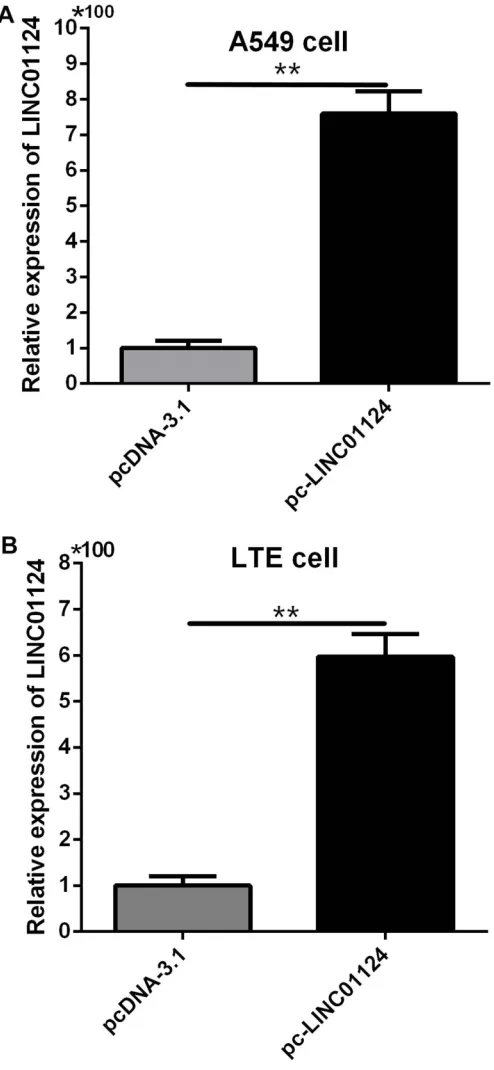
Figure 2Plasmids and pc-linc01124 were, respectively, transfected into A549 (A) and LTE cells (B) to obtain LINC01124 overexpression.**P<0.01.
OncoTargets and Therapy downloaded from https://www.dovepress.com/ by 118.70.13.36 on 25-Aug-2020
chemotherapy. This research was approved by the Ethics Committee of Shengjing Hospital, and human samples were obtained with written informed consent from all patients. All tissue samples were excised and stored in liquid nitrogen immediately until total RNA extraction.
Total RNA Extraction and Quantitative
Real-Time Polymerase Chain Reaction
(qRT-PCR) Analysis
Total RNA was extracted from frozen tissue samples or cells using TRIzol (Invitrogen, Carlsbad, CA, USA) according to the manufacturer’s protocols. For reverse transcription, 500 ng
total RNA was reverse transcribed in afinal volume of 20μL
using the PrimerScript RT reagent Kit (TaKaRa, Beijing, China) according to the manufacturer protocol. The
qRT-PCR was performed using the SYBR Premix Ex
TaqⅡ(TaKaRa, Beijing, China) on 7900HT Fast Real-Time
PCR system according to the manufacturer’s instructions. The
primers are shown inTable 1. Ct-values were calculated using
SDS 2.4 software. GAPDH was used as an internal control.
The Ct-value for each sample was calculated with theΔΔ
Ct-method, and the results were expressed as 2-ΔΔCT to analyze
the fold change (tumor vs normal):ΔΔCT=(CTtarget gene–
CTactin)normal–(CTtarget gene–tCTactin)tumor.
Cell Culture
A549 cell line and LTE cell line were purchased from the Institute of Biochemistry and Cell Biology of Chinese Academy of Science (Shanghai, China). Cells were
incu-bated at 37.5°C with 5% CO2in RPMI 1640 medium
sup-plemented with 10% fetal bovine serum (10% FBS, GIBCO), 100 U/mL penicillin, and 100 mg/mL streptomycin.
Overexpression Vector Transfection
We used a Linc01124-overexpression vector (pcDNA3. 1-linc01124) (Nanjing GenScript Biotech Corp, Nanjing, China) to induce overexpression of linc01124. The A549 and LTE cells were transfected by pcDNA3.1-linc01124 for 48 hrsand the overexpression efficiency was detected by qPCR.
Cell Proliferation Assay
Cell proliferation was determined using the cell counting kit-8 (CCK-8) assay (Dojindo, Japan, Tokyo), according to
the manufacturer’s instructions. After transfection, A549
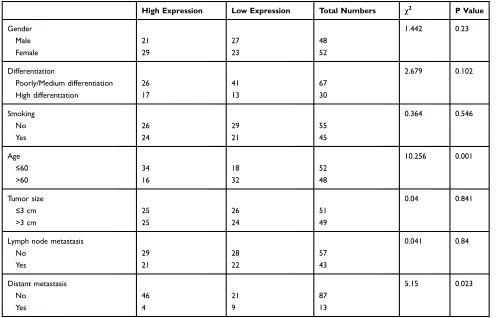
Table 2Correlation Between Clinicopathological Features and LINC01024 Expression in NSCLC Patients
High Expression Low Expression Total Numbers χ2 P Value
Gender 1.442 0.23
Male 21 27 48
Female 29 23 52
Differentiation 2.679 0.102
Poorly/Medium differentiation 26 41 67
High differentiation 17 13 30
Smoking 0.364 0.546
No 26 29 55
Yes 24 21 45
Age 10.256 0.001
≤60 34 18 52
>60 16 32 48
Tumor size 0.04 0.841
≤3 cm 25 26 51
>3 cm 25 24 49
Lymph node metastasis 0.041 0.84
No 29 28 57
Yes 21 22 43
Distant metastasis 5.15 0.023
No 46 21 87
Yes 4 9 13
OncoTargets and Therapy downloaded from https://www.dovepress.com/ by 118.70.13.36 on 25-Aug-2020
cells and LTE cells were seeded into 96-well plates (2×10⁴ cells/well), respectively, and incubated in RPMI 1640 at
37°C and 5% CO2 atmosphere. At 24, 48, and 72 hrs,
CCK-8 (10 μL/well) solution was added to measure cell
viability. After 1.5 hrs, the absorbance of each well was measured at 450 nm. Each experiment was repeated at least three times independently.
Wound-Healing Assay
Wound-healing assay was performed to detect the migra-tion ability and compare the difference among the two experimental groups (pcDNA3.1-linc01124 and blank
pcDNA3.1) of A549 and LTE cells, respectively. 2×10⁵
cells/well were seeded in 6-well plates. When cells were
completely adherent, a sterile 20 μL tip was used to
scratch a straight line through the cell layer in each well. Cell migration was determined by detecting the average distance the growing cells had migrated into the wound surface under microscopy at the designated time periods. Assays were repeated three times for each clone.
Transwell Assay
The Transwell assay was performed to detect the migration and invasive abilities. A549 and LTE cells were grown in RPMI 1640 medium containing 10% FBS and transfected with pcDNA3.1-linc01124 and the blank pcDNA3.1. After 24 hrs, the cells were harvested by trypsinization and washed once with phosphate-buffered saline.
To measure cell migration, Transwell chambers (8μm;
Corning Incorporated, Corning, NY, USA) were placed into the wells of 24-well culture plates. Matrigel transwell chambers were used to measure cell invasion.
A total of 1×10⁵cells were cultured in 100μL of
serum-free RPMI 1640 medium added into the upper chamber of
the Transwells. In the lower chamber, 600μL of RPMI 1640
containing 20% FBS was added. After 24 hrs of incubation
at 37°C with 5% CO2, the migrated cells were stained with
DAPI (Beyotime, China, Shanghai). The number of invaded cells was counted and the average value was
deter-mined through three different randomfields.
Results
Detection of LINC01124 Expression by
qRT-PCR
The qRT-PCR was used to detect the expression levels of LINC01124 in cancer tissue and adjacent normal tissue from NSCLC samples. Results showed that the LINC01124
expression levels in lung cancer tissue were significantly
lower than normal tissue (t=−19.969,P<0.01) (Figure 1). The recombinant plasmid pcDNA3.1-LINC01124 and blank-plasmid pcDNA3.1 were transfected into both lung cancer A549 and LTE cells, and LINC01124 expression was detected. Each experiment was repeated at least three times. At
48 hrs after transfection, transfection efficiency was
deter-mined using qRT-PCR. As depicted in Figure 2(AandB),
the transfected pcDNA3.1-LINC01124 significantly increased
LINC01124 expression in both A549 and LTE cells. We used pcDNA3.1-LINC01124 to perform further analysis.
Correlation Between LINC01124
Expression and Clinical Features of NSCLC
Using the median value of LINC01124 expression levels in cancer tissue as a cutoff, our 100 patient cohort was divided into a high expression group (n=50) and a low expressionFigure 3The proliferation ability of LINC01124-overexpressing cells and blank cells (A) A549 cells (B) LTE cells.*P<0.05,**P<0.01.
OncoTargets and Therapy downloaded from https://www.dovepress.com/ by 118.70.13.36 on 25-Aug-2020
group (n=50). Correlations between LINC01124 expression levels and clinical features were analyzed using a chi-squared test. We found that LINC01124 expression levels showed
significant correlations with age and distant metastasis
(P<0.05); older patient age correlated with lower
LINC01124 expression levels, and patients with distant metastasis had further lower LINC01124 expression levels.
There were no significant correlations between LINC01124
expression and sex, smoking status, lymph node metastasis, tumor size, or tumor differentiation (P>0.05) (Table 2).
The Effects of LINC01124 Expression on
Cellular Proliferation
A CCK-8 assay revealed that LINC01124 expression in A549 and LTE cells was increased following transfection of pcDNA3.1-LINC01124. When compared with the control group (blank plasmid), the proliferation of
LINC01124-overexpressing A549 (Figure 3A) and LTE (Figure 3B)
cells was significantly inhibited.
The Effects of LINC01124 Expression on
Cellular Migration
To investigate the influence of LINC01124 on migration in
NSCLC cell lines, we performed a wound-healing assay. The number of cells in the scratched area in the
pcDNA3.1-LINC01124 group was significantly less
com-pared with the control group (blank plasmid) at the desig-nated time periods (24 hrs, 48 hrs). The assay showed that overexpression of LINC01124 leads to prolonged scratch wound closure in A549 and LTE cells as compared with control cells (Figure 4A,B).
Transwell cell invasion assay indicated that the ability of LINC01124-overexpressed A549 cells and LTE cells to
Figure 4The results of wound-healing assay in LINC01124-overexpressing cells and blank cells. (A) A549 cells (B) LTE cells.**P<0.01.
OncoTargets and Therapy downloaded from https://www.dovepress.com/ by 118.70.13.36 on 25-Aug-2020
migrate in the transwell chamber significantly decreased
compared with empty vector controls (Figure 5A,B).
The Effects of LINC01124 Expression on
Cellular Invasion
We next performed a Transwell assay with Matrigel, which demonstrated that A549 and LTE cell invasion is inhibited after LINC01124 overexpression as compared
with empty vector controls (Figure 5A,B).
Discussion
NSCLC is one of the leading causes of cancer-related deaths
worldwide.12,13Due to the limitations in early diagnosis of
NSCLC, its 5-year survival rate is still less than 20%.14The
lncRNAs were once considered to be“transcriptional noise”;
however, accumulating evidence suggests that lncRNAs
have important biological functions.15–17 Studies have
shown that lncRNAs play critical roles in both physiological
and pathological cellular processes,18,19are involved in the
development of various diseases including tumors,20and are
associated with lymphatic and distant metastasis, impacting
on patient prognosis.21
A number of NSCLC-related lncRNAs have been
discovered.22–24For example, in 2013, Liu et al found that
the lncRNA HOTAIR showed significantly elevated
expres-sion in NSCLC, and its high expresexpres-sion levels were closely
related to lymph node metastases and patient prognoses.25
Zhang et al, in their meta-analysis, found that high expres-sion levels of the lncRNA MALAT1 were associated with
lung cancer prognosis.26,27 In our study, we found that the
lncRNA LINC01124, located on chromosome 2q31.1, may be involved in NSCLC. First, in examining NSCLC tissues,
we found that LINC01124 expression levels were signifi
-cantly lower than those in adjacent normal tissues. Second,
Figure 5The result of Transwell assay in LINC01124-overexpressing cells and blank cells. (A) A549 cells. (B) LTE cells. (C) Number of cells showing migration. (D) Number of cells showing invasion.**P<0.01.
OncoTargets and Therapy downloaded from https://www.dovepress.com/ by 118.70.13.36 on 25-Aug-2020
by increasing LINC01124 expression levels in NSCLC cells
in vitro, we significantly inhibited the proliferation,
migra-tion, and invasion of these cells, demonstrating that LINC01124 suppresses key tumorigenic properties of NSCLC cells.
We first detected the expression of LINC01124 in the
lung cancer tissue samples and adjacent normal tissue samples from 100 patients with NSCLC. We found that
the expression of LINC01124 was significantly lower in
NSCLC tissues than in normal adjacent tissues. We then analyzed the clinical features of 100 patients and found
a significant correlation between LINC01124 levels and
patient age and distant metastasis.
We further studied the effect of LINC01124 on in vitro cultured NSCLC cells. We transfected the recombinant plasmid pcDNA3.1-LINC01124 into A549 and LTE cells. The proliferation, migration, and invasion of
LINC01124-overexpressed A549 and LTE cells significantly decreased,
thereby suggesting that LINC01124 suppressed the prolif-eration, migration, and invasive abilities of NSCLC cells.
Relatively few studies on LINC01124 have been pub-lished, and its function in NSCLC and other cancers remains unclear. Our results suggested that LINC01124 had inhibi-tory effects in NSCLC, although we lacked in vivo data to support our observations; therefore, in vivo studies are war-ranted in the future to delineate the precise role of this molecule in lung cancer etiology.
In conclusion, our study demonstrated the important role of LINC01124 in the development of NSCLC and regulation of biological functions of cancer cells. It is expected to be a new biomarker and molecular target for the diagnosis and treatment of NSCLC.
Funding
Social development plan of Shenyang in 2013 (130245).
Disclosure
The authors report no conflicts of interest in this work.
References
1. Torre LA, Bray F, Siegel RL, Ferlay J, Lortet-Tieulent J, Jemal A. Global cancer statistics, 2012.CA Cancer J Clin.2015;65(2):87–108. doi:10.3322/caac.21262
2. Yang T, Chen BZ, Li DF, et al. Reduced NM23 protein level correlates with worse clinicopathologic features in colorectal cancers: a meta-analysis of pooled data. Medicine (Baltimore). 2016;95(4): e2589. doi:10.1097/MD.0000000000002589
3. Verdecchia A, Francisci S, Brenner H, et al. Recent cancer survival in Europe: a 2000–02 period analysis of EUROCARE-4 data. Lancet
Oncol.2007;8(9):784–796. doi:10.1016/S1470-2045(07)70246-2
4. Thomson CS, Forman D. Cancer survival in England and the infl u-ence of early diagnosis: what can we learn from recent EUROCARE results?Br J Cancer.2009;101(Suppl 2):S102–S109. doi:10.1038/sj. bjc.6605399
5. Wu Y, Liu H, Shi X, Yao Y, Yang W, Song Y. The long non-coding RNA HNF1A-AS1 regulates proliferation and metastasis in lung adenocarcinoma.Oncotarget. 2015;6(11):9160–9172. doi:10.18632/ oncotarget.3247
6. Tantai J, Hu D, Yang Y, Geng J. Combined identification of long non-coding RNA XIST and HIF1A-AS1 in serum as an effective screening for non-small cell lung cancer. Int J Clin Exp Pathol. 2015;8(7):7887–7895.
7. Yang G, Lu X, Yuan L. LncRNA: a link between RNA and cancer.
Biochim Biophys Acta. 2014;1839(11):1097–1109. doi:10.1016/j.
bbagrm.2014.08.012
8. Zhu J, Fu H, Wu Y, Zheng X. Function of lncRNAs and approaches to lncRNA-protein interactions. Sci China Life Sci. 2013;56 (10):876–885. doi:10.1007/s11427-013-4553-6
9. Gibb EA, Brown CJ, Lam WL. The functional role of long non-coding RNA in human carcinomas.Mol Cancer.2011;10:38–55. doi:10.1186/ 1476-4598-10-38
10. Yang Q, Xu E, Dai J, et al. A novel long noncoding RNA AK001796 acts as an oncogene and is involved in cell growth inhibition by resveratrol in lung cancer. Toxicol Appl Pharmacol. 2015;285 (2):79–88. doi:10.1016/j.taap.2015.04.003
11. Hu T, Lu YR. BCYRN1, A c-MYC-activated long non-coding RNA, regulates cell metastasis of non-small-cell lung cancer.Cancer Cell Int.2015;15:36. doi:10.1186/s12935-015-0183-3
12. DeSantis CE, Lin CC, Mariotto AB, et al. Cancer treatment and survivorship statistics. CA Cancer J Clin. 2014;64(4):252–271. doi:10.3322/caac.21235
13. Sanoff HK, Sargent DJ, Campbell ME, et al. Five-year data and prognostic factor analysis of oxaliplatin and irinotecan combinations for advanced colorectal cancer: N9741. J Clin Oncol. 2008;26 (35):5721–5727. doi:10.1200/JCO.2008.17.7147
14. De Rosa M, Pace U, Rega D, et al. Genetics, diagnosis and manage-ment of colorectal cancer. Oncol Rep. 2015;34(3):1087–1096. doi:10.3892/or.2015.4108
15. Loewer S, Cabili MN, Guttman M, et al. Large intergenic non-coding RNA-RoR modulates reprogramming of human induced pluripotent stem cells.Nat Genet.2010;42(12):1113–1117. doi:10.1038/ng.710 16. Huarte M, Guttman M, Feldser D, et al. A large intergenic noncoding
RNA induced by p53 mediates global gene repression in the p53 response.Cell.2010;142(3):409–419. doi:10.1016/j.cell.2010.06.040 17. Mercer TR, Dinger ME, Mattick JS. Long non-coding RNAs: insights into functions.Nat Rev Genet.2009;10:155–159. doi:10.10 38/nrg2521
18. Tsai MC, Spitale RC, Chang HY. Long intergenic noncoding RNAs: new links in cancer progression. Cancer Res. 2011;71(1):3–7. doi:10.1158/0008-5472.CAN-10-2483
19. Spizzo R, Almeida MI, Colombatti A, Calin GA. Long non-coding RNAs and cancer: a new frontier of translational research?
Oncogene.2012;31(43):4577–4587. doi:10.1038/onc.2011.621
20. Qi P, Du X. The long non-coding RNAs, a new cancer diagnostic and therapeutic gold mine. Mod Pathol. 2013;26(2):155–165. doi:10.1038/modpathol.2012.160
21. Li CH, Chen Y. Targeting long non-coding RNAs in cancers: pro-gress and prospects.Int J Biochem Cell Biol.2013;45(8):1895–1910. doi:10.1016/j.biocel.2013.05.030
22. Sung JJ, Lau JY, Young GP, et al. Asia Pacific consensus recommen-dations for colorectal cancer screening.Gut.2008;57(8):1166–1176. doi:10.1136/gut.2007.146316
23. Rerknimitr R, Angsuwatcharakon P, Ratanachu-ek T, et al. Asia-Pacific consensus recommendations for endoscopic and interven-tional management of hilar cholangiocarcinoma. J Gastroenterol
Hepatol.2013;28(4):593–607. doi:10.1111/jgh.2013.28.issue-4
OncoTargets and Therapy downloaded from https://www.dovepress.com/ by 118.70.13.36 on 25-Aug-2020
24. Arab K, Park YJ, Lindroth AM, et al. Long noncoding RNA TARID directs demethylation and activation of the tumor suppressor TCF21 via GADD45A.Mol Cell.2014;55(4):604–614. doi:10.1016/j.molcel.2014. 06.031
25. Liu XH, Liu ZL, Sun M, Liu J, Wang ZX, De W. The long non-coding RNA HOTAIR indicates a poor prognosis and promotes metastasis in non-small cell lung cancer.BMC Cancer.2013;13:464. doi:10.1186/1471-2407-13-464
26. Zhang J, Zhang B, Wang T, Wang H. LncRNA MALAT1 overexpres-sion is an unfavorable prognostic factor in human cancer: evidence from a meta-analysis.Int J Clin Exp Med.2015;8(4):5499–5505. 27. Feng J, Sun Y, Zhang EB, Lu XY, Jin SD, Guo RH. A novel long
noncoding RNA IRAIN regulates cell proliferation in non small cell lung cancer.Int J Clin Exp Pathol.2015;8(10):12268–12275.
OncoTargets and Therapy
Dove
press
Publish your work in this journal
OncoTargets and Therapy is an international, peer-reviewed, open access journal focusing on the pathological basis of all cancers, potential targets for therapy and treatment protocols employed to improve the management of cancer patients. The journal also focuses on the impact of management programs and new therapeutic
agents and protocols on patient perspectives such as quality of life, adherence and satisfaction. The manuscript management system is completely online and includes a very quick and fair peer-review system, which is all easy to use. Visit http://www.dovepress.com/ testimonials.php to read real quotes from published authors.
Submit your manuscript here:https://www.dovepress.com/oncotargets-and-therapy-journal
OncoTargets and Therapy downloaded from https://www.dovepress.com/ by 118.70.13.36 on 25-Aug-2020