
The Fate Of Water Quality Sector In Developing
Countries
Mesia Lufingo
Nelson Mandela African Institution of Science and Technology Department of Water and Environmental Science and Engineering,
P.O. Box 447, Arusha Tanzania;
Ministry of Water Department of Water Quality Services P.O. Box 570, Iringa Tanzania;
Abstract: The aspect of water quality is gaining attention in domestic water uses on a global scale. Irrigation, livestock, ecosystem, recreation and construction sectors are also oriented on the same merit. The accuracy and precision of water quality analytical findings become critical. Method to preserve water sample for laboratory analysis are available, the limited maximum holding time is realized for microbial and anionic parameters. In situ analyses are made possible with portable devices, good practices during in-situ and in-house procedures are essential. The need for extensive water quality analysis of new and developed water sources is challenged, major natural water mineral contents being central to this case. The relationship between major dissolved minerals and Electric Conductivity (EC) is utilized. Treatment of polluted water sources follows the same water quality monitoring concept; issues of free Chlorine and Microbes assessment are clearly addressed. The concept will equip water laboratory managers with sound reasoning on deciding parameters to be analyzed, individuals at household scale as well as professionals in other related sectors will serve time and cost for unnecessary water quality analyses.
Keywords: Portable photometers; Qualified and unqualified analytical personnel; Water quality analysis; Water quality monitoring; Water treatment.
1.
Introduction
Water quality is an essential sector of domestic water consumption [12]. Nowadays it is not satisfactory to secure water sources alone and supply to communities in demand, water quality is a requirement during planning and budgeting for developing relevant water source [19]. If water sources are found to be polluted by certain contaminants, relevant treatment facilities are proposed to alleviate the problem [3,30]. Information regarding the suitability of a particular water source must be accurate for facilitating effective decisions. Assessing the quality of such new water sources is usually challenging, the full and impartial water quality analysis is advocated for precise contaminant elucidation [34]. This process presents a cost to many individuals owning private wells, but it becomes a mandatory stage when community-based water project investments are realized [23]. When treatment practices are suggested, monitoring of such water sources and their distribution network becomes inevitable [29]. Since water quality treatment of public utilities is a continuous process, monitoring parameters at a given frequency are suggested by respective state regulatory authorities [4]. Inspection and compliance requirements are also accomplished on the same basis. Water research is another area where water quality finds its significance. Many academic and project-based proposals intend to fill gaps based on relevant available scientific communications [18]. Hence, individuals and groups of researchers tend to employ various water quality analytical methods to achieve this; it may include subcontracting research designed water samples to a competent testing laboratory or performing analysis on their own by using available equipment and consumables. It should be noted that all researchers in different dimensions are not necessarily appropriate analyst; thus findings obtained from these groups may be of different quality due to
different experimental analytical capabilities [25]. However, since data obtained are used for recommending the status of a particular scientific gap, it is critical that results be precise and accurate. The idea of a qualified analytical scientist arises from several observed non-reproducible findings under similar or identical experimental conditions [20]. This communication intends to address the need for qualified analyst in research-based activities, roles of researchers are also declared. It also provides guidance for water quality managers in developing countries on what samples to take, what analyses to perform, and how to determine if more detailed data are needed. Criteria are presented for simple qualification of such water sources with respect to available state guidelines and intended uses.
2.
Water Quality Analytical Issues
This section considers methodologies employed by water quality testing laboratories; the main focus being how accurate and precise water quality results are generated for academic, research, society, Inspection and or business compliance.
3.1 2.1 In-house analysis
2.2 In situ analysis
Laboratory analysis and subsequent findings are based on a representative water sample delivered. Almost all cationic water quality parameters can be preserved to a maximum of six months prior laboratory analysis [8]. A challenge is noted on most anionic and microbial water quality parameters; they usually require a combination of preservation methods but presents limited maximum sample holding time, hence on-site assessments are recommended [35].
2.3 Simplified analytical techniques
Based on scientific developments, water quality parameters have been well studied [15]. In this regard, a recent achievement on minimization and elimination of analytical errors has been accomplished [5]. The advantageous use of colour reaction in visible spectrum has made this possible. Portable photometers capable of rapid and in situ analysis are now available [35]. Simplified analytical techniques are widely known for onsite analysis. They are generally potential for anionic parameters due to their limited maximum holding time, thus field trials can be accomplished and monitored confidently over long off-laboratory sessions [35]. However, such techniques are also extensively used at the in-house analysis scale. Issues have been spotted with respect to the application of portable instruments. Their simplicity of application has attracted even unqualified analytical personnel, as the use of portable photometer meets their intended analytical purpose [13,35]. This has been possible due to dry chemistry involvement, as one need only to follow procedure and mix the respective powder pillows for a given reaction time before final result readout. In the analysis, quality control and hence assurance needs to be followed before the acceptance of final results, a challenge to unqualified personnel.
2.3.1 The use of Chemicals
Dry packages are commercially available for in situ analysis; they are usually packed in powder pillows [9] but liquid forms that require prescribed number of drops during analysis exist. Most anionic parameters for analysis require special treatment such as water filtration and acid rinse of sample cell before use in portable devices [35]. pH adjustments are key in reaction feasibility and kinetics, but this is mostly corrected from dry chemical combination used under the procedure. Preparation and testing of standards covering the expected concentration range of water sample for a given parameter are crucial [1]. Unqualified analytical personnel have a chance of missing any of these requirements towards accurate and precise result generation. 2.3.2 The use of Sample cells
Different companies are available on offering competitive devices with excellent analytical capabilities. Their instruments have similar operating principles of science [14]. During analysis, a sample is placed in a sample cell where chemical will be added for reaction or colour development. In most procedures, two sample cells are required, one for the blank and the other for the sample. Such portable photometers are programmed to collect baseline colour information from the blank and correct it after sample readout for final results. Application of different sample cells have been noticed to provide tolerable errors due to non-unique optical properties they actually present [35]; however, such tolerance is questionable with low-level concentrations
and wear/ ageing of sample cells following their routine application. Thus, the use of one sample cell for the same purpose is encouraged. On the other hand, sample cells are of different shapes, the common being round and square or angle based. Round sample cells have fill line or mark for orientations that matches with that of the photometer device; however, since the application of one sample cell is suggested here, precise replacement after mixing procedures of the same sample cell may not be practical. Errors due to round sample cells are excellently removed if square or angle based sample cells are used, also other devices have a fixed flow-through cell feature for this purpose [7].
3.
Comprehensive Water Quality Analysis
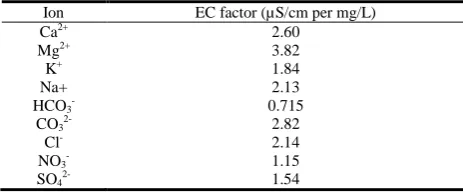
When deciding the suitability of water source for intended uses, full water analysis is commonly advocated for proper identification of any water pollutant and identifying its remediation practice. Here, Microbial, physical and chemical parameters are assessed [24]; an exception is made to unnecessary parameters based on the intended use e.g water pH on cement based constructions. In developing countries, this is becoming cost due to analytical reagents requirements. Science has proved the existence of parametric correlation in water analysis, it is commonly known as water quality analysis balance which also serves as an accuracy check of analytical results [16]. Major natural water minerals component has been identified to be Calcium (Ca2+), Magnesium (Mg2+), Potassium (K+), Sodium (Na+), Bicarbonates (HCO3-), Carbonates (CO32-), Chloride (Cl-), Nitrate (NO3-) and Sulphate (SO42-) ions [16]. An exception arises from site-specific issues such as fluoride areas that have higher fluoride content. EC of water is the function of these minerals at an appreciable level; it also depends on the water temperature and ions nature. When wastewater is considered, dissociated organic contents also play a key role in determining the EC. EC of natural water can simply be computed by major ions composition using equation 1 and Table 1 [32].
) f (C EC
i i i
(1)
Where Ciand fi are the concentration and conductivity
factor of i species in water respectively.
Table 1: EC factors for ions commonly found in water
Ion EC factor (µS/cm per mg/L)
Ca2+ 2.60
Mg2+ 3.82
K+ 1.84
Na+ 2.13
HCO3- 0.715
CO32- 2.82
Cl- 2.14
NO3- 1.15
SO42- 1.54
quality guidelines such as irrigation, construction, recreation
and others can be applied on the same basis.
Table 2: East African Potable water standards [33]
Parameter Formula Natural Potable Water (mg/L)
Bicarbonate* HCO3- Not Specific
Carbonate* CO32- Not Specific
Chloride Cl- 250
Sodium Na+ 200
Potassium K+ 50
Sulphate SO42- 400
Magnesium Mg2+ 100
Calcium Ca2+ 150
Nitrate NO3- 45
* as CaCO3
By using EC of a water sample, it is easier to address whether major water quality minerals exceed maximum limits for intended used; thus opting not to waste resources on their chemical analysis. With respect to the East African potable water standard, Table 3 shows possible EC as a result of individual major water minerals content computed from equation 2.
(C f )2 1 EC
i i
i (2)
Where Ciand fi are the concentration and conductivity
factor of i cationic or anionic major water minerals in water respectively.
Table 3. EC values and their major parameters to asses: EC values are due to individual major ion concentration contribution as per maximum East African natural potable
water standard values.
Ion E.C (µS/cm)
Major Parameters to Assess
Groundwater Surface water Ca2+ 195 K+, NO3- K+, NO3
-Mg2+ 191 K+, NO
3-, Ca2+ K+, NO3
-K+ 46 NO
3- NO3
-Na+ 213 K+, NO
3-, Ca2+, Mg2+ K+, NO3
-HCO3- - - -
CO32- - - -
Cl- 267.5 Na+, K+, NO
3-, Ca2+, Mg2+ K+, NO3
-NO3- 25.88 None None
SO42- 308 Na+, K+, NO3-, Ca2+,Cl- K+, NO3
-In the East African region, it is meaningless to assess bicarbonates and carbonates in potable water as per local standard. Table 3 depicts that, a maximum EC value of a given water sample has an implication on major water parameters to be analyzed. Parameters corresponding to lower EC value than samples are meaningless to analyze as they automatically conform to the standard. Surface water major parameters are rather limited due to the poor dominance of certain minerals; nevertheless, groundwater has certain minerals that usually dominate the water type.
4.
Treated Water Analysis
The discovery of domestic water pollution brought treatment practices that render water fit for drinking purposes [17,6,2]. Treatment practices involving Chlorination are constantly established and encouraged to communities [27], regardless of poor microbial detected pollution level for safeguarding
any emerging issue. When chemical pollution exists, conventional filters and or simple water mixing techniques are suggested [22]. The efficiency of treatment practice is assured by regular water quality monitoring; this begins from the treatment plants to various selected water domestic points. Different states have different water quality parameters to monitor.
4.1 Residual Chlorine
Chlorine Disinfectants have been used to inactivate pathogenic microbes in drinking water supplies [28]. Efficient treatment is assessed by means of residual chlorine levels after demand is satisfied; this indicates the excess chlorine responsible for safeguarding water against any possible re-contamination in the supply network after treatment [21]. Recent scientific advances have proposed the possible relation between chlorine disinfection by-products (DBP) and cancer in human being; however, the concept is discouraged by a statement which says "In attempting to control DBP concentrations, it is of paramount importance that the efficiency of disinfection is not compromised and that a suitable residual level of disinfectant is maintained throughout the distribution system" [31]. This statement seems to provide confidence in most developing countries that otherwise could not sustainably afford pre-treatment practices prior to chlorination. Hence, DPB monitoring in treated water is of no priority, this could threaten a future possibility of sound scientific conclusion on global DPB reality issues.
4.2 Microbes
One of the common and excellent indicators of water quality acceptance is the absence of microbes [31]. Microbes of E. Coli and Fecal Coliforms are widely used to present possibilities on the existence of other pathogenic microbes in the East African region. Microbial samples can be preserved by several tricks that are limited to maximum holding times [35]; however in situ analyses are encouraged due to time loss during transportation to the laboratory, and room temperature equilibration prior analysis. A number of regulatory authority exhibits different choice of indicator organism, E. Coli is gaining acceptance in natural water for portraying human based faecal contamination, and widely used as an indicator in treated water supplies [10]. The fact that E. Coli is easily destroyed in water treatments than pathogens such as Cryptosporidium parvum, renders its exclusive suitability as a sole indicator [37]. Such an indicator is relatively suitable in natural waters as other Coliform organisms are obvious from the wildlife activities on surface waters [26]. The use of Total Coliforms seems to lose its significance; in fact, this group of indicator organism better assess the efficiency of water treatment facility on microbial basis. If Total Coliforms are below detection level, then one can be confident on the suitability of treatment means and procedure employed.
5.
Concluding Remarks
analytical assistance. Researchers with limited analytical
skills only require working concurrently with the qualified analyst; when this is not practical, subcontracted water samples should be accompanied by relevant commercial certified matrices of known concentration for tracing result validity. Water quality managers can omit the burden of extensive water quality parameters to be analyzed; this is possible when EC values are preliminarily assessed. Hence, time and financial resources can be served; focus on other parameters of concern (e.g trace elements) can be preferred. National water quality database can simply be constructed in developing countries; characteristics of respective water storages such as aquifers can be identified, and the need for new testing on the same region can be minimized.
Funding: This research received no external funding Acknowledgements: Anna Mhongole (Faculty of Education, Mkwawa University College of Education, MUCE, P.O. Box 2513 Iringa Tanzania) is acknowledged for her insightful comments during preparation of the manuscript. Insightful comments are acknowledged from MDPI J Peer Reviewers and the Editorial Team. The support from J journal on free Open Access publication offer is also acknowledged.
Conflicts of Interest: The author declares no conflict of interest.
References
[1] Analytical Methods Committee. (1995). Uncertainty of measurement: implications of its use in analytical science. Analyst, 120(9), 2303-2308
[2] Bory, B. H., & Kessler, A. B. (1977). U.S. Patent No. 4,039,444. Washington, DC: U.S. Patent and Trademark Office.
[3] Brack, W., Altenburger, R., Schüürmann, G., Krauss, M., Herráez, D. L., van Gils, J., ... & Schriks, M. (2015). The SOLUTIONS project: challenges and responses for present and future emerging pollutants in land and water resources management. Science of the total environment, 503, 22-31
[4] Burby, R. J., & Paterson, R. G. (1993). Improving compliance with state environmental regulations. Journal of Policy Analysis and Management, 12(4), 753-772.
[5] Capitan-Vallvey, L. F., & Palma, A. J. (2011). Recent developments in handheld and portable optosensing—A review. Analytica chimica acta, 696(1-2), 27-46. [6] Crittenden, J. C., Trussell, R. R., Hand, D. W., Howe,
K. J., & Tchobanoglous, G. (2012). MWH's water treatment: principles and design. John Wiley & Sons. [7] Csuros, M. (1997). Environmental sampling and
analysis: lab manual. CRC Press.
[8] Csuros, M. (2018). Environmental sampling and analysis for technicians. CRC press.
[9] DeJonge, S. (2003). U.S. Patent No. 6,591,832. Washington, DC: U.S. Patent and Trademark Office [10] Edberg, S. C. L., Rice, E. W., Karlin, R. J., & Allen, M.
J. (2000). Escherichia coli: the best biological drinking water indicator for public health protection. Journal of applied microbiology, 88(S1), 106S-116S.
[11] Ghernaout, D., Aichouni, M., & Alghamdi, A. (2018). Overlapping ISO/IEC 17025: 2017 into Big Data: A Review and Perspectives. International Journal of Science and Qualitative Analysis, 4(3), 83.
[12] Gray, N. F. (2008). Drinking water quality: problems and solutions. Cambridge University Press
[13] Gunzler, H., & Williams, A,. (2001): Handbook of Analytical Techniques. WILEY-VCH Verlag GmbH, D-69469 Weinheim (Federal Republic of Germany), ISBN 3-527-30165-8.
[14] Hanson, V. F. (1941). Ultraviolet photometer. Industrial & Engineering Chemistry Analytical Edition, 13(2), 119-123.
[15] Hirsch, R. M., Slack, J. R., & Smith, R. A. (1982). Techniques of trend analysis for monthly water quality data. Water resources research, 18(1), 107-121.
[16] Hounslow, A. (2018). Water quality data: analysis and interpretation. CRC press.
[17] Hrudey, S. E., & Hrudey, E. J. (2004). Safe drinking water. IWA publishing.
[18] Juhl, L., Yearsley, K., & Silva, A. J. (1997). Interdisciplinary project-based learning through an environmental water quality study. Journal of Chemical Education, 74(12), 1431
[19] Kneese, A. V., & Bower, B. T. (2013). Managing water quality: economics, technology, institutions. Rff Press. [20] Lemire, R. J., Berner, U., Musikas, C., Palmer, D. A.,
Taylor, P., & Tochiyama, O. (2013). Chemical thermodynamics of iron. Nuclear Energy Agency, OECD, Elsevier
[21] Lundy, K. (2006). The control of disinfection by-products in water treatment plants and distribution systems.
[22] Marwa J., Lufingo, M., Noubactep, C., Machunda, R. (2018): Defeating fluorosis in the East African Rift Valley: Transforming the Kilimanjaro into a rainwater harvesting park. Sustainability
[23] Meinzen-Dick, R. S., & Rosegrant, M. W. (2001). Overcoming water scarcity and quality constraints [24] Nollet, L. M., & De Gelder, L. S. (Eds.). (2000).
[25] Pandit, N. R. (1996). The creation of theory: A recent
application of the grounded theory method. The qualitative report, 2(4), 1-15.
[26] Plummer, J. D., & Long, S. C. (2009). Identifying sources of surface water pollution: A toolbox approach. Journal‐American Water Works Association, 101(9), 75-88.
[27] Smith, M., & Reed, R. (1991). Water and sanitation for disasters. Tropical doctor, 21(1_suppl), 30-37.
[28] Sobsey, M. D. (1989). Inactivation of health-related microorganisms in water by disinfection processes. Water science and technology, 21(3), 179-195.
[29] Storey, M. V., Van der Gaag, B., & Burns, B. P. (2011). Advances in on-line drinking water quality monitoring and early warning systems. Water research, 45(2), 741-747.
[30] Sun, Y., Chen, Z., Wu, G., Wu, Q., Zhang, F., Niu, Z., & Hu, H. Y. (2016). Characteristics of water quality of municipal wastewater treatment plants in China: implications for resources utilization and management. Journal of Cleaner Production, 131, 1-9.
[31] Tallon, P., Magajna, B., Lofranco, C., & Leung, K. T. (2005). Microbial indicators of faecal contamination in water: a current perspective. Water, air, and soil pollution, 166(1-4), 139-166.
[32] Tolgyessy, J (1993). Chemistry and Biology of Water, Air and Soil Environmental Aspects
[33] TZS 789:2016 - EAS 12: 2014. Potable water specification, Tanzania Bureau of Standards.
![Table 2: East African Potable water standards [33]](https://thumb-us.123doks.com/thumbv2/123dok_us/8589459.1720726/3.595.46.299.457.575/table-east-african-potable-water-standards.webp)
