400
Repositioning The Role Of Human Resources
Management On The Improvement Of Electricity
Services In State Electricity Company (Pln) Of
South Sumatera
Yohanes Susanto, Mulyadi, Fakhry Zamzam
Abstract: The objective of this study was to examine and influence among the strategic partners, administrative experts, employee experts and agents of change on service performance (Study at the State Electricity Company of South Sumatra). The sample used in this study consisted of 360 population, with 150 sample respondents representing the region, Palembang, Jambi, Lahat, Bengkulu and South Sumatra Regional Office. The sampling method used was purposive sampling, the analysis used is multiple linear regression analysis. Based on the data analysis, the regression equation obtained is Y = 7,206 + 0,514 X1 + 0,215 X2 + 0,884 X3 + 0,109 X4 + e. The result of study by using t test partially had the most dominant influence on the service performance that is employee expert was 0,884. The result of study simultaneously used F-test count was 93,349 or P-value (Sig) 0.000 <α 0,5 meaning that it can be stated that there was a positive and significant influence between Strategic Partner variables, Administrative Experts, Employee Experts and Change agent simultaneously on Service Performance of State Electricity Company (PLN) South Sumatera. The value of coefficient of determination ( was 0.713 this is implied that there was an influence of strategic partners, administrative experts, employees experts and change agents simultaneously on Performance Service of Human resources of State Electricity Company (PLN) South Sumatera of 71.3%. It is suggested that to the state electricity company that partially the strategic partner role had the most dominant influence on electricity service in south Sumatra. This means that the company's strategy to overcome the global competition in the electricity sector, and simultaneously the role of human resources had the most dominant influence. It means that the Company’s commitment in efforts to improve and develop human resources should become a special attention in order to improve the service to customers.
Index Terms: Strategic Partners, Administration Experts, Employee Experts, Change Agent, Performance
————————————————————
1 INTRODUCTION
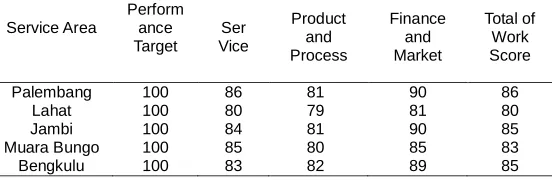
THE electrical power sector has a very important and strategic role in the development of Indonesia, because it involves the livelihood of many people. Most of the financing of the company's operations is done by foreign exchange, making it very vulnerable to fluctuations in the rupiah against foreign exchange. The condition has prompted the government to undertake a restructuring program in the power sector. The implementation of the restructuring policy that has been implemented since 1998, and has fundamentally changed the mechanism and pattern of electricity business which emphasizes on improving efficiency, competence and transparency. On the side of the State Electricity Company, the heavy conditions are placed as a stimulus in order to accelerate the process of the realization of the State Electricity Company to a new State Electricity Company, among others through restructuring, revitalization and reorientation of electricity business handled by the State Electricity Company, including through the repositioning the roles Human Resources management is currently being carried out towards empowerment of a more integrated and Strategic role. The State Electricity Company of South Sumatera, Jambi and Bengkulu is one of the business units that carries out electricity distribution service in South Sumatera, that is responsible to take an active role in the effort to improve the organization and service performance towards a concept of quality electrical services And provide benefits for the company. In 2015, it turns out the performance of State Electricity Company which has not reached the target performance that has been set, this can be seen in the following table:
Table 1. Performance Realization of PT PLN S2JB Region 2015
Service Area
Perform ance Target
Realization of Area Service Performance 2015
Ser Vice
Product and Process
Finance and Market
Total of Work Score
Palembang 100 86 81 90 86
Lahat 100 80 79 81 80
Jambi 100 84 81 90 85
Muara Bungo 100 85 80 85 83
Bengkulu 100 83 82 89 85
The 5 service areas of the State Electricity Company in 2015, the service performance has not achieved 100%, only ranged between 80-86%. The city of Palembang has the best performance of 86% and the lowest performance in the service area Lahat only at level 80%. It is still not achieving the performance of the Company's services to be interesting to investigate, what factors that have not fulfilled these performance targets. From the field observation, the phenomenon has not been optimum for the achievement of service performance of State Electricity Company of South Sumatera, allegedly by the weak role of human resource management in performing its role as strategic partner, administration expert, expert of development fund gene. The influence of management role Human resources can be either simultaneously or partially.
2. SERVICE PERFORMANCE
401 satisfaction to employees, the ability to grow commitment and
employee loyalty to the company (such as quality Speed of service to the consumer), ability to maintain reliability and continuity in the supply of electric power (public image), ability to provide electricity with quality which meet the requirements of the standard (product quality), and ability to improve employee productivity. One of the problems in the assessment of causal relationships of the human resource management system and company performance is the continuity problem between the two variables [2]. It has always been said that companies that perform well tend to have better human resource management practices. To measure company performance can be seen from two sides that is financial side and human resource performance side [8]. This study measures the company's performance by looking at the performance side of human resources only, because companies are usually reluctant to disclose their financial performance [8]. Dimensions of company performance measurement according to Khandwallaa [8], namely: (1) job satisfaction, (2) employee commitment or loyalty to the company, (3) goodwill and image Public, (4) product quality, (5) employee productivity. This dimensional measurement means that company performance can be seen from the performance of human resources management such as employee attitude and work productivity.
3.
CONCEPT OF HUMAN RESOURCE
MANAGEMENT
Human resource management is as a planning, organizing, directing, and supervising of procurement, compensation development, integration, maintenance and termination of employment with a view to achieving the objectives of an integrated corporate organization [3]. More detailed and operational limits are expressed by [7] namely, human resource management is planning, organizing, directing and supervising procurement activities, developing, providing competencies, integrating, maintaining and releasing human resources in order to achieve the goals of individuals,
organizations and communities. Human resource
management has a specificity when compared with general management or other resource management, because the manageable is human, so the success or failure of human resource management will have a very wide impact. Human resources management is a lap against the importance of human resources or labor within the organization. Human resources management is needed to improve the efficiency and effectiveness of human resources in the organization, with the aim of providing the organization with an effective working unit.
4.
ROLE CHANGES OF HUMAN RESOURCE
MANAGEMENT
In many business practices, human resource issues still tend to be ignored. Competitive advantages are usually discussed in the context of strategic planning that emphasizes industry analysis and competition, customer needs, product/service attributes, and manufacturing capabilities, Human resource issues are only in the background. Questions arise: Is it possible that human resource management plays an important role or function? Or can the human resource management system be considered as a key value-adding activity? The answers to these questions depend on how much human resource management can contribute to the development of
sustainable competitive advantage. When a human resource management system can create a real competitive advantage, then human resource management must be fully integrated in both the formulation stage and the implementation of the strategy management process. Increasingly based on the competitive advantage that is difficult to copy and sustainable is through the activities and practices of human resource management can be done with the understanding of strategic targets and strategic thrusts [6]. The changes in the business environment will bring about a change in business strategy. As it is known that business strategy changes will further lead managers to clarify where the vision and mission of human resources are brought. In the sense that human resources are an integral part of the organization. Because these changes concern many aspects and demands to be achieved, it is necessary to develop the quality of human resource implementation through human resource investment activities. It should be noted that with human resource investment, the pattern of human resource management strategies will change and demand changes in the types of competencies in different tasks that will impact on changes in the role of human resource management. Associated with the changing role of human resources, it is necessary to see the role of human resource management on traditional paradigm. In the traditional paradigm, the organization considers only human resources as a complement only, so that the main role of human resource management is nothing more than to administer mere personnel administration [1]. In this case [1] highkights some of the roles of human resource management performed on the old paradigm such as: (1) Attraction, which includes: identification of job requirements, determining the number of people and the combination of skills required for a job and providing opportunities same for each elected candidate. (2) Selection, which includes: selecting best person for the job in question. (3) Retention, which includes: providing rewards for people working effectively and maintaining the safety and comfort of the work environment. (4) Development,
which includes: improving and preparing employee
competencies through the improvement of knowledge, skill and abilities and specialist approach of corporate functions. (5) Assessment, which includes: observation and assessment and attitudes which include; Maintenance of the fulfillment of needs
related to the company's human resources policy.
Understanding the role of traditional human resources [1] will result in the use of a centralized organizational structure, where the involvement of line managers is very limited and then top-down planning types have weaknesses because there is no two-way communication and Employee involvement in the business planning process is very limited [4]. Meanwhile, [6] [4], looking at the various roles of new human resource management as a result of the repositioning process as: (1) Business person includes: human resource practitioner, participation in finance and operational, position rotation among human resource functions and other functions. (2) Shaper of changes such as: team participation on change, conducting research, and active participation in forming mission and corporate objectives. (3) Consultant to organizer or partner to lines such as: active in consortium of proposal preparation and participation in computerized system. (4) Strategy formulators and implementers such as:
understanding business strategy, strategic business
402 various strategic lines. (5) Talent managers such as:
communication with all line managers on an ongoing basis, networking and intelligent network development conferences. (6) Asset manager and cost controller such as; Accounting and finance courses, read journal articles of company accounting procedures.
5.
DOUBLE ROLE OF HUMAN RESOURCE
MANAGEMENT
As [9] has pointed out that the future agenda of creating value comes from human resources, the new role of human resource management needs to be further defined. [5] state that companies that are effective in today's highly competitive environment will encourage their human resource departments to play multiple roles. Ulrich further sees a dual role in a frame work as shown in Figure 1, which consists of four key roles that human resource management must fulfill, so that his partnership with the company's business can be a reality.
Fig 1. Double Role of Human Resources Management [5]
From Figure 1 can be explained, showing the two-axis focus and activities of human resource management experts. Focus axis shows long/operational term pattern. Human resource management specialists must learn both strategy and operations with a long-term and short-term focus. Axis activities range from process to people management. These two axes illustrate the four principles of the role of human resources, namely:
a. Management of Strategic Human Resources
The role of strategic HR management focuses on adjusting HR practices and strategies with business strategy. In this role, the HR experts working to become a strategic partner, which helps ensure the success of the business strategy. By filling this role, the HR expert to increase the capacity of a business to run the strategy. The extension business strategy into HR practices help a business in three ways. First, businesses can adapt to change as the time from conception to implementation of a shortened strategy. Second, businesses can better meet the consumer demand for consumer services strategy has been translated into policy and practice specific. Third, businesses can achieve financial performance through the implementation of its strategy which is more effective.
b. Management of Firm Infrastructure
The achievement of organizational infrastructure has become the traditional role of HR. It requires HR experts to design and
deliver efficient HR processes for search, training,
assessment, rewards, promotions, and otherwise manage the flow of employees through the organization. As the person in charge of the company's infrastructure, HR experts ensure that the organization process is designed and run efficiently. Although this role is poorly played and even opposed to a shift to a strategic focus, the achievement of success continues to add value to a business.
c. Management of the Employee Contribution
The role of employee contributions to HR experts directs their involvement in daily problems, concerns and employee needs. Companies where intellectuals are an important source of corporate value, HR professionals must be effective and aggressive in developing this capital. Then HR experts
become employee excellence by linking employee
contributions to organizational success. With employee experts (employee champions) understanding the needs of employees and ensuring that the employees' needs are met, the overall employee contribution increases.
d. Management of Transformation and Change
The fourth key role of HR experts can add value to the company is to manage transformation and change. Transformation encompasses fundamental cultural changes within the enterprise, human resource experts who manage transformation become cultural catalysts and cultural guards at once. The change refers to the ability of an organization to improve the design and implementation of initiatives and reduce cycle times in all organizational activities, HR experts help to identify and implement processes and changes. In order to better understand each of these roles, we must consider each of these three things deliverables/outcome that
will shape the outcome of the role, the metaphor
characteristics or the visual image that follows the role and the activities by which human resource management specialists must play its part to achieve the intended role.
Table 2. Role of Human Resources [5]
No Role Delivery Skill / Result
Metaphor Activity
1
Management on human
resource strategy
Strategy Implementatio
n
Strategic partner
Adjustment of company performance and
HR: "Organizational
diagnosis"
2
Management on company infrastructure
Efficient Infrastructure Development
Administr ative expert
Reengineering organizational processes "Shared services"
3
Management onemployee contributions
Commitment and ability of employees Improvement
Employe e expert
Listening and responding to employees:
"Providing resources for
employees"
4
Management o n transformation
and change
Organization
Renewal Agent of change
Set the transformation
and change: "Ensuring capacity to
change"
STRATEGY FOCUS/FUTURE
Transformation and Change
Management HUMAN
RESOURCES
Firm Infrastructure
Management Employee
Contribution Management
403 From various theories about the role of HR management, then
in this study the role of HR management used is (1) the role of HR management as a strategic partner (2) the role of HR
management as an administrative expert (3) the role of HR management as an employee expert, and (4) the role of HR management as an change agent
6.
RESEARCH HYPOTHESES
From the theoretical framework, the flow of thought and the formulation of the problem can be prepared as the research hypothesis. Hypothesis which is a temporary conclusion research that will be verified can be formulated as follows;
H1: There was a role of human resource management as a strategic partner of service performance. H2: There was a role of human resource management
as an administrative expert on service performance. H3: There was a role of human resource management
as an employee expert on service performance. H4: There was a role of human resource management
as an change agent to service performance.
H5: There was a shared human resource management role on service performance
7.
RESEARCH METHODS
Basically a research activity is about to get data with a specific purpose and usefulness. This study is academic research and included in applied research by using survey method, which is done on large and small population by using samples from the population. Technical data analysis in this study using parametric statistics. There are two important things that can affect the quality of research data, one of which is the quality of data collection. In this research, the type of data used is primary data and secondary data. Expectations to be achieved from this research is the acquisition of information (results) that approximate accurate through a measurement that will be illustrated further through a study. The number of population in South Sumatera of Jambi and Bengkulu is 360 people, consisting of 16 supervisors and 344 employees. The number of samples taken from each Service Area unit is 50% for the supervisor population and 30% for the employee population. Therefore, the way to do is to number each element of the population from 1 to 16 for supervisors and 1 to 344 for employees, then each population stirred in a different place,
then drawn by lottery as many as 8 samples for supervisor (50% of the population) and 103 samples for employees (30% of the population) as well as for other Service Area units. Therefore, these samples will later be the object of research.
Table 3. Population and Sample
No Service Area Population Sample Total %
1 Palembang 72 30 20%
2 Jambi 72 30 20%
3 Lahat 72 30 20%
4 Bengkulu 72 30 20%
5 Sumatera selatan 72 30 20%
Total 360 150 100%
Instrument testing consist of the testing of validity, reliability, multicolonierity, heterokedasitas, and test of normality. Descriptive analysis is used to describe the condition of respondent's reality to the research variables. In this analysis is known the total frequency of respondents' answers to the questionnaire research. Respondents' answers will be grouped into two categories, namely low and high category. The determination category is seen from the theoretical range of each research variable and determined its midpoint as the boundary between low and high category. To examine the influence of the role of human resource management consisting of variables: role as strategic partner, role as administrative expert, role as employee expert and role as change agent on service performance in service area of customer, using multiple regression analysis method. The model of regression analysis in this research is as follows:
Y = βo + β1X1 + β2X2 + β3X3 + β4X4 + e
Y = Service performance
Bo = Coefficient of constants
Β1, β2, β3, β4 = Free variable coefficients
X1 = MSDM's role as strategic partner
MSDM Role as a Strategic Partners
MSDM Role as Administrative Expert
MSDM Role as an Employee Expert
MSDM Role as a Change Agent
Service Performance H5
H1
H3
H4
404
X2 = MSDM’s role as administrative expert
X3 = MSDM’s role as an employee expert
X4 = MSDM’s role as change agent
e = Error
Hypothesis testing in this research is conducted on statistical hypothesis using t test, partially, with the following test criteria: "Rejecting H0, if p <0.05 or if t count > t table at 5% significant level" In testing the simultaneous effect used the F test with the following criteria "Rejecting H0, if p <0.05 or if f count> f table at a significant level of 5%. In testing whether the hypothesis can be accepted or rejected, then in the hypothesis testing research is in the following table.
Table 4. Hypothesis Accepting Criteria
Hypothesis Hypothesis Statements Criteria
H1
Ho There was no role of human resource management as a strategic partner on service performance
t table <t count
Ha There was a role of human resource management as a strategic partner of service performance
t table > t count
H2
Ho There was no role of human resource management as administrative expert on service performance
t table <t count
Ha There was a role of human resource management as an administrative expert on service performance
t table > t count
H3
Ho There was no role of human resource management as an employee expert on service performance
t table <t count
Ha There was a role of human resource management as an employee expert on service performance
t table > t count
H4
Ho There was no role of human resource management as an change agent to service performance
t table <t count
Ha There was a role of human resource management as an change agent to service performance
t table > t count
H5
Ho There was no role of human resource management collectively to service performance.
f table < f count
Ha There was a role of human resource management jointly on service performance
f table > f count
8.
RESULTS AND DISCUSSIONTable 5. The Results of Variable Validity Test
Statement
Item r-Count sig. r-table Criteria
1 0,425 0,002 0,1614 Valid
2 0,250 0,002 0,1614 Valid
3 0,301 0,000 0,1614 Valid
4 0,405 0,000 0,1614 Valid
5 0,281 0,001 0,1614 Valid
6 0,414 0,000 0,1614 Valid
Table 6. The Results of Reliability Test
No. Variable Number of Statement
Cronbach
Alpha (α) Criteria
1
Service Performance (KP)
11 0,805 Reliable
2 Strategic Partner
(MS) 6 0,738 Reliable
3 Administrative
Expert (PA) 6 0,631 Reliable
4 Employee Expert
(PG) 6 0,719 Reliable
5 Change Agent
(AP) 7 0,732 Reliable
405 Table 7. The Correlation of Indepedent Variable
Correlations Change Agent
Administrative Expert
Strategic Partner
Employee Expert Change
Agent 1 -0,049 -0,432 -0,646
Administrative
Expert -0,049 1 -0,203 -0,275
Strategic
Partner -0,432 -0,203 1 0,175
Employee
Expert -0,646 -0,275 0,175 1
After testing the research data from each Service Area of PT. PLN Region of South Sumatra, Jambi and Bengkulu, it is known that the correlation value between independent variables has a correlation value smaller than 0.90. Thus the regression estimate does not occur multicollinearity.
Table 8. The Results of Individual Parameter Significance Test (t-Test) Coefficientsa
Model
Unstandardized Coefficients
Standar dized Coeffici
ents
t Sig.
Collinearity Statistics
B Std. Error Beta
Tolera nce VIF (Constant) 7,206 2,034 3,542 ,001
Strategic
Partner ,514 ,082 ,330 6,299 ,000 ,702 1,425 Administrati
ve Expert ,215 ,068 ,161 3,154 ,002 ,738 1,355 Employee
Expert ,884 ,084 ,687 10,47
1 ,000 ,449 2,229 Change
Agent ,109 ,067 ,115 2,035 ,042 ,392 2,552 Dependent Variable: Service Performance
Based on the above table can be concluded as follows: a. The value of regression coefficient for strategic partner
variable count was 0,514 with t-count value was 6,299 and P-value was 0,000 <0,5, meaning that Ho was rejected with 95% confidence level, it can be stated that strategic partner had positive and significant impact on Service Performance , PT.PLN
b. The value of regression coefficient for Administrative Expert variables obtained was 0.215 with the t-count value was 3.154 and P-value was 0.002 <0.5, meaning that Ho was rejected with 95% confidence level, it can be stated that the variable of administrative experts had positive and significant impact on Service Performance.
c. Regression coefficient value for Employee Expert variables obtained was 0.884 with the t-count value was 10.471 and P-value was 0.000 <0.5, meaning that Ho was rejected with 95% confidence level, it can be stated that the variable of administrative experts had positive and significant impact on Service Performance.
d. The value of regression coefficient for change agent variable was 0.109 with value of t-count was 2.035 and P-value was 0,042 <0,5, meaning that Ho was rejected with 95% confidence level that variable of administrative experts had positive and significant impact on Service Performance of South Sumatra Regional Office.
The Influence of Role of Human Resource Management on Service Performance Simultaneously as follows:
Table 9. Analysis of Variance and Test Result
ANOVAa
Model Sum of Squares df
Mean
Square F Sig. Regression 1041,655 4 260,414 93,349 ,000b
Residual 404,505 145 2,790 Total 1446,160 149
a. Dependent Variable: Service Performance
b. Predictors: (Constant), Change Agent, Administraive Expert, Strategic Partner, Employee Expert
Based on table above obtained F-test value of 93.349 or P-value (Sig) of 0.000 <α 0.5, it then can be stated that there is a positive and significant influence among Strategic Partner variables, Administrative Experts, Employee Experts and Agent Changes simultaneously on the Human Resource Service Performance of PLN regional office of South Sumatra.
Table 10. Coefficient Determination Test Results (R2 Test) Model Summaryb
Model R R Square
Adjusted R Square
Std. Error of the Estimate
Durbin-Watson
1 ,849a ,720 ,713 1,670 1,506
a. Predictors: (Constant), Change Agent, Administraive Expert, Strategic Partner, Employee Expert
b. Dependent Variable: Service Performance
Based on the above, it is obtained that a value of multiple correlation of 0.849 value indicates that there was a positive and significant relationship among strategic partner variables, administrative Experts, Experts Employees and Change agent simultaneously on the human resources Service Performance PLN regional office of S2JB, and the coefficient of
determination was 0.713 this explains that there was an
influence strategic partners, administrative experts, Employee Experts and Change agent simultaneously on service performance of human resource of PLN regional office of S2JB, was 71,3%.
9. CONCLUSION
Based on the results of the analysis and statistical testing of this research data, the influence of Strategic Partners, Experts Adminstration, Employee Experts, Agent Changes on Service Performance, overall PT.PLN of South Sumatra region can be summed up as follows:
a. That the Role of Employee Expert was the most dominant
influence on the Performance of 0.884. It means that with the increase of Human Resources as an Employee Expert will increase the variation of service Performance Variables of the employee the better at PT PLN .
b. The influence of Role of Administration Expert on the Service Performance was 0.215. It means that with the increase of Human Resources as the Role of Administration Experts will increase the variation of Service Performance Variables, and Management of Concern on Occupational Safety and Health at PT PLN .
c. The influence of Strategic Partners on Service
406 management performance better and able to face global
competition.
d. The Role of the Change agent was the most dominant influence on Service Performance in Lahat Area was 0.109. It means that with the increase of Human Resources as the Role of Change Agent, it will also increase the variation of Service Performance of PT.PLN and the Company's objectives following the strategic environment.
REFERENCES
[1] Cascio, W. F., & Aguinis, H. (2005). Applied Psychology in Human Resource Management.
[2] Huselid, M.A. (2005). The Impact of Human Resource Management Practice on Turnover, Productivity, and
Corporate Financial Perfirmance. Academy of
Management Journal, 38: 635 – 670.
[3] Husein Umar. (2000). Research of Human Resource
Management in Organization. Jakarta: PT. Gramedia Pustaka Utama.
[4] Ignatius RS. (2002). Human Resource Management
Strategic: Repositioning Role, Behavior, Competency and Human Resource Management Strategic. Yogyakarta: Amara Books.
[5] Randall S. Schuler, Susan E. Jackson. (1996). Human Resource Management for 21 Century. Jakarta: Erlangga.
[6] Schuler. (2000). Human Resources Strategy: Focusing on
Issues and Action. Organization Dinamic, Summer, 5-19.
[7] Soekidjo, Notoatmodjo. (1998). The Development of
Human Resource. Jakarta: Rineka.
[8] Tai Wai David. (2000). “Organizational Strategy, Strategic HRM and Firm Performance: A Structural Equation Modelling (SEM) Approanch”, The National University of Singapore.
![Fig 1. Double Role of Human Resources Management [5]](https://thumb-us.123doks.com/thumbv2/123dok_us/8985070.1436575/3.612.312.580.524.752/fig-double-role-human-resources-management.webp)