http://www.sciencepublishinggroup.com/j/ajmp doi: 10.11648/j.ajmp.20180706.11
ISSN: 2326-8867 (Print); ISSN: 2326-8891 (Online)
The Vacancy Cluster Tubes Formation and Metal Properties
Changes After Dynamic Centrifugal Casting
Yuri Tarasov, Valery Kryachko, Viktor Novikov
National University of Science and Technology «MISIS», Moscow, Russia
Email address:
To cite this article:
Yuri Tarasov, Valery Kryachko, Viktor Novikov. The Vacancy Cluster Tubes Formation and Metal Properties Changes After Dynamic Centrifugal Casting. American Journal of Modern Physics. Vol. 7, No. 6, 2018, pp. 194-202. doi: 10.11648/j.ajmp.20180706.11 Received: October 23, 2018; Accepted: November 22, 2018; Published: March 22, 2019
Abstract:
Presents experimental results of Al and Pb metals crystallization carried out under high intensity plastic deformation (HIPD) [ε′ = (102–104) sec-1] reaching the level of so called «solid-liquid» state in the new type of centrifugal casting device at rotor speeds of up to 2000 rpm. Using the method of atomic force microscopy (AFM), vacancy cluster tubes (VCT) with average diameters of 39 nm for Al and 25 nm for Pb have been detected in the crystallized volume of Al and Pb metals. Physical model of the formation of a new substructure within the metals in the form of vacancy cluster tubes, received in the process of high-intensive plastic deformation (HIPD) during the process of mass crystallization of Al and Pb melts, and, also the changes in the mechanical, magnetic and superconducting properties of the above metals, which followed this process. When crystallizing Al and Pb under high-intensive plastic deformation (HIPD) of ε′ = (102–104) per second type, in high-speed centrifugal casting devices, specially selected modes of metal crystallization are being chosen and special conditions are being created to achieve the dimensional effect of dynamic (shift) re-crystallization. Shift deformation during centrifugal crystallization is caused primarily by a large incline of the temperature field from the periphery (relative to the cold wall of the rotor) to the molten central part of the rotor. The difference in the angular movement velocities of the already-frozen part of the metal (adjacent to the outer surface of the rotor wall) and the central part, where the metal still remains in the molten state, leads to a high-intensity deformation [ε′ = (102–104) sec-1] of the crystallized metal melt solidified phase. Since the grain sizes at the crystallized phase initially comprise around tens of nano-meters (approximately crystal nucleation size), it becomes possible to achieve the dimensional effect of the dynamic re-crystallization of a «nanocrystalline» solidified metal at high shift of strain velocities. The «non-equilibrium vacancies» formed this way condense into vacancy clusters, which are formed in the centrifugal force field in the form of vacancy-shaped cluster tubes stretched out to the center of rotation of the rotor. The process undergoes conditions that are considerably different from the «equilibrium» conditions as compared to the ordinary metal crystallization from the melt. Such processes can lead to the formation of highly ordered non-equilibrium states characteristic of non-equilibrium open systems.Keywords:
Intensive Plastic Deformation, Dynamic re-Crystallization, Non-Equilibrium Vacancies, Vacancy Cluster Tubes, Solid Phase Recrystallization1. Introduction
Papers [1, 2] show that formation of so called vacancy clusters, which occurs as a result of dynamic re-crystallization in nano-crystalline metals (those compacted from nano-powders) with an average grain size of 50-100 nm under shift deformation conditions can also be proved experimentally. Detailed physical model of this process is presented in the papers [3, 4]. This phenomenon is associated with dimensional effect of dynamic (shear) re-crystallization
in nano-crystalline materials and is caused by the process of formation of «non-equilibrium vacancies» induced by migrating boundaries.
clusters.
Purpose statement: Studying the impact of plastic deformations on the crystallization front boundary of Al and Pb metal melts.
2. Experimental Part
Crystallization of aluminum and lead (Al and Pb) metallic melts with a given mass and initial melt temperature was carried out under volume super-cooling in nonstationary conditions (the conditions of «high-intensity plastic deformation»), which also presumed time-predetermined modes of action of the centrifugal force field determined by the parameters of centrifugation, and also by the temperature-thermal effect provided by the gas heat carrier that is in contact with it. The cooling velocity of the material was set in the interval from 0 to 100 degrees per second. The shape of the material during the processing is represented by the hollow cylinder rotating around its axis. Hot gas agent with preset flow and temperature values was inserted into the cavity of the cylinder. The overload factor ranged from 200 to 1000 g, depending on the required characteristics of the intensity of plastic deformation of the crystallizing phase of the metal. The weight of the material ranged from 50 to 200kg.
3. Discussion
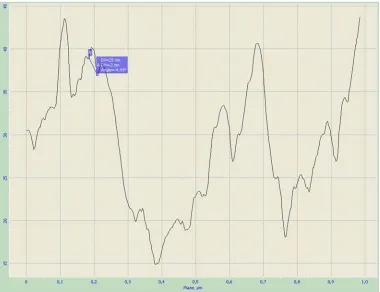
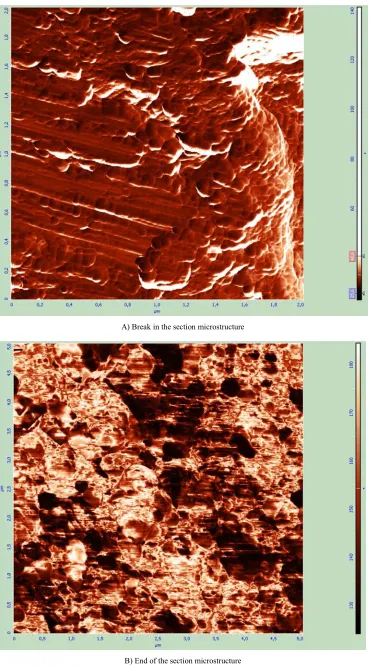
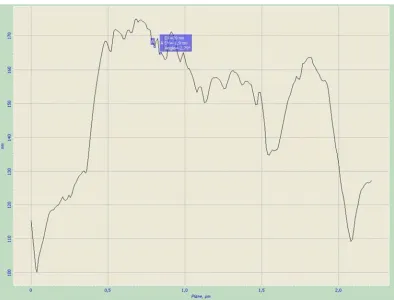
Figures 1-5 show the results of electronic microscope studies of the Al and Pb metal structure obtained under conditions of high-intensity plastic deformation at the their crystallization point. The studies were performed using atomic force microscopy (AFM) on Femto Skan and Solver probe microscopes. As it follows from the data presented, vacancy cluster tubes (VCT) with average diameters ranging from 39 nm for Al and 25 nm for Pb are found in the volume of crystallized Al and Pb metals. The tubes are extended to the center of the rotor (Figures 1, 3, and 4). Vacancy cluster tubes have hexagonal symmetry in their cross section (Figures 1 and 4), which corresponds to the FCC lattices of Al and Pb and serves as additional evidence of the fact that formation of the FCC Lattice occurs in the crystallized area of the crystallization front. When crystallizing Al and Pb under high-intensive plastic deformation (HIPD) of ε′ = (102 -104) per second type, in high-speed centrifugal casting devices, specially selected modes of metal crystallization are being chosen and special conditions are being created to achieve the dimensional effect of dynamic (shift) re-crystallization [3, 4]. Shift deformation during centrifugal crystallization is caused primarily by a large incline of the temperature field from the periphery (relative to the cold wall of the rotor) to the molten central part of the rotor. The difference in the angular movement velocities of the already-frozen part of the metal (adjacent to the outer surface of the rotor wall) and the central part, where the metal still remains in the molten state, leads to a high-intensity deformation [ε′ = (102-104) per sec-1] of the crystallized metal melt solidified
phase. Since the grain sizes at the crystallized phase initially comprise around tens of nano-meters (approximately crystal nucleation size), it becomes possible to achieve the dimensional effect of the dynamic re-crystallization [4] of a «nanocrystalline» solidified metal at high shift of strain velocities. The «non-equilibrium vacancies» formed this way condense into vacancy clusters, which are formed in the centrifugal force field in the form of vacancy-shaped cluster tubes stretched out to the center of rotation of the rotor (Figures 1, 3, 4). Processing of vacancy tube structures information (Figures 1.4), taking into account the «free void» forming and the time spent for the vacancy clustering process, gives estimated values of the concentration of «non-equilibrium vacancies» at the 10-3-10-2 level. As it was already mentioned above, such a high concentration of non-equilibrium vacancies leads to their condensation into the vacancy clusters of a tube with hexagonal symmetry. On the other hand, such a high steady-state concentration of non-equilibrium vacancies predetermines the possibility of the solid-phase re-crystallization of the metal following the primary crystallization. The process undergoes conditions that are considerably different from the «equilibrium» conditions as compared to the ordinary metal crystallization from the melt. Such processes can lead to the formation of highly ordered equilibrium states characteristic of non-equilibrium open systems. Therefore, it can be assumed that in the case of high-intensity plastic deformation (HIPD), a new type of structural elements at the crystallization stage of the melt against the backdrop of the high stationary concentration of non-equilibrium vacancies, vacancy cluster tubes (VCT) are being formed. In this case the physical processes can be interpreted as follows. The dissipation of mechanical energy during high-intensity shift deformation [7, 8] under conditions of superfast centrifugal casting (2000 rpm) on the new-type devices promotes the formation of a high concentration of non-equilibrium vacancies (approx.
«Pb-VCT» samples.
Figure 1. Microstructure of the thin section surface with vacancy cluster tubes of Pb-VCT sample, obtained by atomic force microscopy (AFM) using a Femto Skan and Solver probe microscopes, P. 47.
А) Break in the section microstructure
B) End of the section microstructure
Figure 4. Image of the vacancy cluster tubes surfaces of the Al-VCT sample, obtained using the method of atomic force microscopy (AFM) on the probe microscope Femto Skan and Solver, P47.
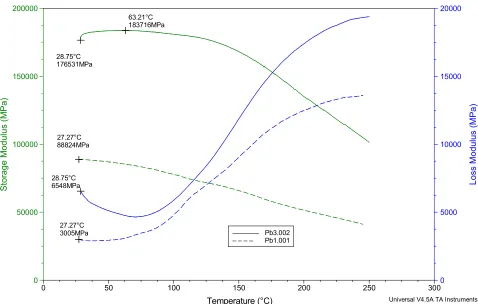
Figure 6. DMA Thermograms of «initial» Pb1 and Pb3 «VCT».
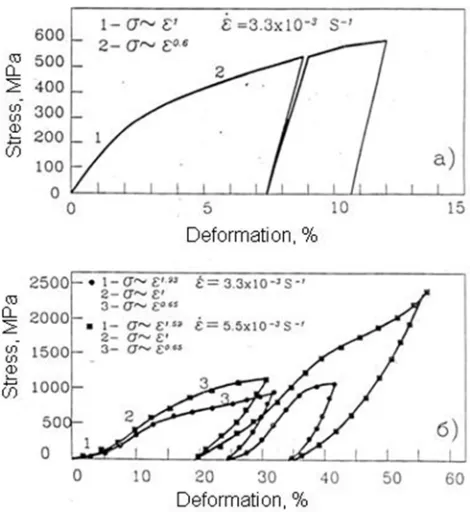
Both, sharp increase in the metal modulus after this treatment as compared to the «untreated» one, and practically the same direction of the curves during heating could be observed on the graphs. The impact of vacancy cluster structures on the mechanical properties of metals was reviewed in the papers [9-11], where the «stress-strain» relation (σ - ε) was studied in uni-axial compression for nano-crystalline nickel samples Ni (70 nm) samples with vacancy clusters formed in the process of compaction of nickel nano-powder [5, 12, 13]. Figure 7 shows «stress-strain» curves for nickel with a grain size of 100 µm (Figure 7a) and nano-crystalline nickel Ni (70 nm) with vacancy clusters (Figure 7b). On nano-crystalline nickel samples an anomalously high reversible deformation of «pseudo-elasticity» type is observed after unloading the sample; its value reaches 8%. Roughly dispersed nickel sample shows the traditional stress-strain relationship for metals (σ - ε). Specific feature of the obtained stress-strain curves (σ - ε) for nickel Ni (70 nm) is the absence of hardening effect under repeated loading, which is always the case for the metals with micron-sized grain sizes (Figure 7a). Figure 8 shows stress-strain (σ - ε) curves obtained for nano-crystalline nickel Ni (70 nm) under uni-axial compression mode at temperatures ranging from 350 °C to 500 °C in vacuum conditions of 10-2 mm Hg. The qualitative form of the dependence σ - ε is preserved in the investigated temperature range. Lowering the level of stresses as the temperature increases reflects the overall quantitative changes. Small
hysteresis loop also appears under repeated loading, which is associated with the enlargement of nickel grains following the growth of temperature (re-crystallization process) to the values of micron sizes. The effect of abnormally high reversible deformation of nickel with a vacancy cluster structure remains. The above effect of anomalously high (abnormally high) reversible deformation of the «pseudo-elasticity» is manifested within the entire framework of the investigated temperatures range (20°C - 500°C) and reaches 8% of the linear size of the sample with a total strain of the sample of up to 55%. Such high strain values of the sample, which, on the other hand, do not cause its destruction, indicate the presence of high plasticity resource of the nano-crystalline nickel Ni (70nm). Taking into account the vacancy cluster structure of nickel samples Ni (70 nm), it can be assumed that the source of internal elastic stresses - the relaxation of the latter is due to the anomalously high reversible deformation – is represented by the areas of elastic stresses, caused by the interactions of these vacancy clusters. The absence of the hardening effect upon the repeated loading of nano-crystalline nickel samples Ni (70 nm) testifies to the fact that «intra-grain plastic deformation» proceeds as a mechanism of diffusion-viscous flow without forming of a dislocation structure. The absence of a dislocation structure during the loading period changes the form and the shape of the curve (σ - ε) at the initial stage of deformation [10, 11].
28.75°C 176531MPa 63.21°C 183716MPa 27.27°C 88824MPa 28.75°C 6548MPa 27.27°C 3005MPa 0 5000 10000 15000 20000 L o s s M o d u lu s ( M P a ) 0 50000 100000 150000 200000 S to ra g e M o d u lu s ( M P a )
0 50 100 150 200 250 300
Temperature (°C)
Pb3.002 ––––––– Pb1.001 – – – –
Figure 7. Stress-strain inter-dependence (σ - ε) for poly-crystalline nickel with: (a) grain size of 100 µm, and (b) nano-crystalline nickel Ni (70 nm).
Figure 8. Stress-strain inter-dependence (σ - ε) for nano-crystalline nickel Ni (70nм) at different temperatures: а) -350°C; b) -400°C) -500°C.
It should also be emphasized that the presence of a
vacancy cluster structure in nano-crystalline nickel Ni (70 nm) significantly affects its magnetic characteristics. Therefore, [14] points out a noticeable decrease in the Curie point in compact samples of nano-crystalline Ni (70 nm) (Figure 9). The temperature inter-dependence of the heat capacity of the studied Ni (70 nm) sample also as a «reference data dependence» alike, has an anomaly corresponding to the second-order phase transition - the so called «ferromagnet-paramagnet» transition. According to the reference data, the temperature of this transition for nickel is Tc=358°C. In the Ni (70 nm) sample it turned out to
be much lower – Tc=322°C. The observed slight decrease in
the anomaly of the dependence of Cp (T) is apparently due to
the superposition of the re-crystallization process accompanied by the release of heat to the phase transition.
Figure 9. Temperature inter-dependence of the specific heat of nickel: 1-reference data, 2-sample of nanocrystalline Ni (70 nm).
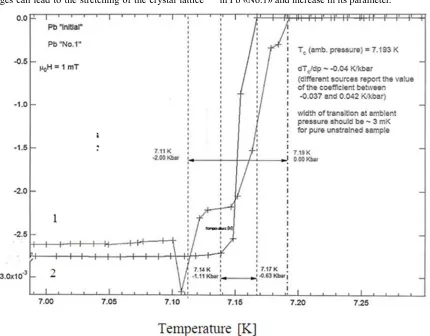
Figure 10 presents comparative studies of the nature of the superconducting transition in determining the temperature of the superconducting transition (Тс) for standard lead
(«initial» Pb) samples with a rough crystalline structure and lead («No.1» Pb) with VCT (Figure 1) after crystallization of the initial standard lead during centrifugal casting 2000 rpm speed.
As it follows from the results obtained, the nature of the transition to the super-conducting state of the sample Pb«No.1» differs significantly from the “initial” Pb sample. It is known that lead serves as a classical example of a low-temperature su-per-conductor of the first kind. Transition of the Pb «No.1» sample to the superconducting state passes using the mode characteristic of superconductors of the second kind.
Moreover, the temperature Tc for Pb «No.1» does not
coincide with Tc for «initial» Pb and is somewhat higher
Such voltages can lead to the stretching of the crystal lattice in Pb «No.1» and increase in its parameter.
Figure 10. Comparative studies of the nature of the superconducting transition during determining the superconducting transition temperature (Тс) for
standard «initial» Pb – 2 and for Pb «No.1» with VCT – 1.
4. Conclusion
In conclusion, it should be noted that the new type dynamic centrifugal casting device with high-intensity plastic deformation [HIPD: ε′ = (102-104) per second-1] on the merge of «solid-liquid» interfaces creates unique conditions for the production of metals with intrinsic substructure of the vacancy cluster tubes.
Such a sub-structure causes significant change in mechanical and physicochemical properties, which are fundamentally different from the traditional properties of the initial metal samples and, in fact, require precise comparative study of all the basic properties of the metals produced by similar methods.
(1) With centrifugal casting on new-type devices at rotation speeds of about 2000 rpm applied, establishing of the new sub-structure for Al and Pb metals in the form of vacancy cluster tubes (VCT) was achieved.
(2) The observed physical processes can be interpreted as follows: mechanical energy released by the shift deformation during centrifugal casting on a new type of device causes high concentration of non-equilibrium vacancies, which makes it possible to crystallize the metal in the solid phase (solid-phase crystallization) in a strongly non-equilibrium conditions (with the concentration of none-equilibrium
vacancies in the solid phase of up to 102), with the simultaneous formation of a structured material in the form of vacancy cluster tubes.
(3) Using new type centrifugal casting device with rotational speeds of 2000 rpm with a high concentration of none-equilibrium vacancies applied, solid-phase synthesis of refractory compounds can be carried out (such as Al4С3,
AlB2 and the like). Accordingly, other high-strength
composite materials based on Al and other low-melting metals can be obtained. The above method is not limited to the low-melting metals and could be extended to the other structural metals.
(4) Structured metals and structured composite materials with altered mechanical and physicochemical properties can be processed mechanically and take any structural form with new functional properties. The volume of new materials produced can reach up to several hundred kilograms, and, possibly several tons in the future (sic!).
5. Possible Practical Application
(2) Creation of metals with new functional properties. a. Encoding of security systems for electronic information transmission systems.
b. Electronic locks for various types of protection. c. Protection of securities.
d. Creation of isolated information exchange systems e. Creation of next generation batteries («super batteries») based on Pb, Zn-Ag.
References
[1] Novikov V. I., Lapovok V. N., Svirida S. V., Formation of non-equilibrium vacancies during re-crystallization of ultradispersed nickel powder. (Obrazovaniye neravnovesnykh vakansiy pri rekristallizatsii ul'tradispersnogo poroshka Nikelya), FTT, 1983, v. 25. No. 6, pp. 1846-1848.
[2] Novikov. V. I., Gryaznov V. G., Trusov L. I., et al., Dimensional effect of recrystallization. Surface. (Razmernyy effekt rekristal-lizatsii, Poverkhnost'), Fizika, khimiya, mekhannika, 1986, v. 1, pp. 134-139.
[3] Trusov L. I., Novikov V. I, Gryaznov V. G, et al., Properties and application of dispersed powders. (Svoystva i primeneniye dispersnykh poroshkov), K.: Naukova dumka,
1986, pp. v 98-114.
[4] Trusov L. I., Novikov V. I, Gryaznov V. G., «Solid-Phase transformations caused by migrating borders», («Tverdofaznyye prevrashcheniya, initsiirovannyye migriruyushchimi granitsami»), Growth of crystals, Edited by Givargizov E. Ya. and Grinberg S. A, 1988, v. 17, Moscow,
Science, pp. 69-86.
[5] Novikov V. I., Lapovok V. N., Svirida S. V., et al.. «Formation of nonequilibrium vacancies in ultra-dispersed nickel powder under suppressive plastic flow» («Obrazovaniye neravnovesnykh vakansiy v ul'tradispersnom poroshke nikelya pri plasticheskom techenii pod davleniyem»), Physics of metals and metal science, 1984. v. 57, pp. 718-721.
[6] Novikov V. I., Svirida S. V., Trusov L. I. «Activation of diffusion and phase transformations in ultradispersed media during plastic deformation” (“Aktivatsiya protsessov diffuzii i
fazovykh prevrashcheniy v ul'tradispersnykh sredakh pri plasticheskoy deformatsii»), Metallophysics, 1984. v. 6, No. 3, pp. 114-115.
[7] Utyashev F. Z. «Nano-structuring of metallic materials using the methods of intensive plastic deformation» («Nanostrukturirovaniye metallicheskikh materialov metodami intensivnoy plasticheskoy deformatsii», Physics and technology of high pressures, 2010, v. 20, No. 1, pp. 7-25. [8] Bridgman, P. W. Studies in large plastic flow and fracture,
(«Issledovaniye bol'shikh plasticheskikh deformatsiy i razryva»), Izdatelstvo inostrannoi literatury, Moscow, 1955. [9] Trusov L. I., Novikov V. I., Repin I. A., Kazilin E. E., Ganelin
V. Ya., «Deformation of nickel with ultra-dispersed structure», (Deformatsiya Ni s ul'tradispersnoy strukturoy),
Metallophysics, 1988, v. 10, No. 1, pp. 104-107.
[10] Trusov L. I., Khvostantseva T. P.,. Solov’ev V. A., Mel’nikova V. A. «Low temperature stress relaxation of nano-crystalline nickel», («Nizkotemperaturnaya relaksatsiya napryazheniy nanokristallicheskogo nikelya»), Journal of Scientific Materials, 1995, Science, v. 30, No. 11, pp. 2956-2961. [11] Trusov L. I., Khvostantseva T. P., Solov’ev V. A., Mel’nikova
V. A. “Stress relaxation following heating of nano-crystalline nickel, («Relaksatsiya napryazheniy posle nagrevaniya nanokristallicheskogo nikelya»), 1994, Nano-structured Materials, v. 4, No 7, pp. 803-813.
[12] Novikov V. I., Khvostantsev L. G. et al., «Deceleration of re-crystallization of ultra-disperesed nickel powder at high hydrostatic pressure», («Zamedleniye rekristallizatsii ul'tradispersnogo poroshka nikelya pri vysokom gidrostaticheskom davlenii»), Metallophysics, 1986, v. 8 (2), pp. 111-113.
[13] Novikov V. I., Ganelin V. Ya., Trusov L. I., et al. «Dilatation effect of in ultradispersed nickel polycrystalline during re-crystallization» («Effekt dilatatsii v ul'tradispersnom polikristalle nikelya pri rekristallizatsii»), Physics of solid body materials, 1986. v. 28, No. 4, pp. 1251-1254.