SCITECH
Volume 3, Issue 3
RESEARCH ORGANISATION
July 14, 2015
Journal of Research in Business, Economics and Management
www.scitecresearch.com
Spontaneous Behavior Relationship Management by Speed of
Information Flow
Dr. Nasser Fegh-hi Farahmand
1, Shirin Pour Haji Ali Farid
2 1Department of Management, Tabriz Branch, Islamic Azad University, Tabriz, Iran.
2East Azerbaijan Behzisti Organization, Tabriz, Iran.
Abstract
The strategy implementation, strategic control, spontaneous behavior and successful measurement literature develop a conceptual model and research propositions. In fact, without organizational customers
organizations would not exist. The strategic importance of organizational customers is discussed as an asset. Also this paper describes the approach to organizational relationship management at organizations. This paper proposes a relation of organizational relationship management by speed of information flow and
reviews the spontaneous behavior strategies and performance measurement literature to develop a conceptual model and research propositions. In fact, organizations influence whether or not those
organizations engage in spontaneous behavior strategies. In this field, the focus is on the special characteristics of speed of information flow such as education type and level. The facilitator manager's characteristics showing a significant association with a commitment to organizational relationship
management and also organizational relationship management showed a positive association with those speed of information flow with a growth orientation. It is concluded that facilitator manager's characteristics
can be important in explaining and compilation the organizational relationship management within the organizations for implementation. This paper is to explore the ways in which certain characteristics of speed of information flow of organizations generate a tendency to prepare formal written spontaneous behavior
strategies.
Keywords: Organizational Relationship Management; Speed of Information Flow; Spontaneous Behavior
Strategies; Spontaneous Behavior Relationship Management.1. Introduction
A positive experience throughout the customer's cycle should foster trust and develop loyalty, therefore allowing
organizations to generate more revenue for less incremental expenditure as:
I. Making new customers aware of a product or service with loyal customers tend to receive more frequently and
happy existing customers are more willing to receive other services from organization and try new service
II. The cost of servicing existing customers can be lower by security of future revenues, which is much higher
with happy customers.
For strategic purposes, satisfy of an intangible asset in its own right is not particularly relevant; however, an
understanding of how this satisfy is comprised and the key metrics that impact on the assets' contribution to organization
successful can be extremely beneficial for management decision making. Recent research into strategy implementation
is damning in its findings. The organizations field is now giving high priority to developing metrics.
The role of organizations is to implement strategy. A fundamental proposition in strategy is that distribution methods
must be aligned with customers and competitive advantage. Unfortunately, method successful measurement literature
has provided ambiguous guidance to managers.
In order to achieve spontaneous behavior success, it is important to understand the relationship between method
successful measures and strategy implementation success. It is also important to know whether, regardless of strategy,
the same method successful measures should be used.
The key question in terms of ensuring that method strategy supports spontaneous behavior successful is how do we
know our method strategy is performing? In order to understand whether the method is performing or not, we need to
ensure that the method measures are appropriate for each spontaneous behavior strategy. Although organizational
relationship management has been one of the fastest growing organizations, critics point to the high failure rate of the
organizational relationship management projects as evidenced by organizations studies. The purpose of the study is to
investigate success and failures of organizational relationship management system implementations. Also this study
found that the scope, size, complexity and duration of the organizational relationship management projects seem to vary
quite significantly across organizations. Poor planning, lack of clear objectives and not recognizing the need for
organization change are the key reasons for organizational relationship management failures. The spontaneous behavior
field is now giving high priority to developing spontaneous behavior metrics. The role of spontaneous behavior is to
implement spontaneous behavior strategy. Effective organizational relationship management is one of the important
factors in organizations success. There is speed of information flow who argue that formal written planning may be
inappropriate for the organizations but this seems a minority view. It can be argued that organizational relationship
management is as important to organizations as to larger organizations and standard textbooks on entrepreneurship offer
chapters on spontaneous behavior plan whilst a range of specialist publications outline the best ways of writing
spontaneous behavior plan (Sahlman, 1997, 67; Monks, 2001, 41; Naffziger, et al, 1991, 21). A fundamental proposition
in spontaneous behavior strategy is that spontaneous behavior plan must be aligned with customers and competitive
advantage.
Unfortunately, spontaneous behavior plan performance measurement literature has provided ambiguous guidance to
spontaneous behavior managers. In organizations, where a spontaneous behavior strategy exists, the preparation of the
organizational relationship management may have been driven by external forces. The most obvious of these are the
requirements of external agencies providing funding for either start up or expansion. However, the spontaneous
behavior strategies may serve as a strategic planning document for the managers, entrepreneurs and educated workers, a
plan to guide the spontaneous behavior and serve as a basis for taking strategic decisions and also it may serve as a
subsequent monitoring device (Deakins, 2003, 329; Feghhi farahmand, 2005, 118). In view of its perceived ongoing
value to the small business it might be expected that organizational relationship management would be a feature of
many, if not most, organizations. In order to achieve spontaneous behavior success, it is important to understand the
relationship between Organizational relationship management by Educated Managers and strategy deployment success.
As management itself becomes more emphatically fast-paced and intuitive, in order to deal with complexity and
more effective than training in the older logical comprehensive pursuits.
2. Spontaneous Behavior Strategies
The spontaneous behavior relationship model suggests strategy is a more important influence on method measures than
variables such as spontaneous behavior relationship characteristics, stage of service lifecycle, market share,
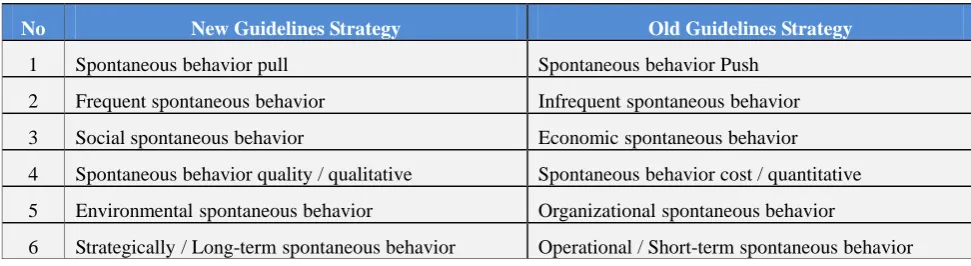
organizational or strategic organization unit size, profitability and growth, environment or competitors. Table 1 shows
the proposed relationships between method measures for each strategy type.
Table 1: Organizations Strategy Types
No New Guidelines Strategy Old Guidelines Strategy
1 Spontaneous behavior pull Spontaneous behavior Push
2 Frequent spontaneous behavior Infrequent spontaneous behavior
3 Social spontaneous behavior Economic spontaneous behavior
4 Spontaneous behavior quality / qualitative Spontaneous behavior cost / quantitative
5 Environmental spontaneous behavior Organizational spontaneous behavior
6 Strategically / Long-term spontaneous behavior Operational / Short-term spontaneous behavior
Strategy 1- Spontaneous Behavior Pull Vs Spontaneous Behavior Push:
Traditional successful measurement systems were profitable focused and were neither multidimensional nor strategic. Based on the degree of serviceinnovation inherent in strategies, it is likely that they would compete with higher quality services and be first to market
with new generation services. Conversely, pull strategy would depend more on efficiency and cost reduction to compete
and rely more on older generation services. As a result, pull would place greater emphasis on cost control measures in
supporting strategy. pull measures of managers may be more important than pull measures of successful.
Strategy 2- Frequent Spontaneous Behavior Vs Infrequent Spontaneous Behavior:
Control by successful large pull involved frequent successful reporting. Pull spontaneous behavior would be expected to be similar to costleaders as they operate in relatively certain environments with existing service receivers and undertake little service
innovation. As a result, the measures they use could be frequent yet still be meaningful.
Strategy 3- Social Spontaneous Behavior Vs Economic Spontaneous Behavior:
spontaneous behavior relationship management were outcome focused and neither multidimensional nor strategic. The control method ofsuccessful pull included careful output monitoring and was expected to be associated with pull.
Strategy 4- Spontaneous Behavior Quality / Qualitative Vs Spontaneous Behavior Cost / Quantitative:
Based on the degree of service innovation inherent in pull strategies, it is likely that they would compete with higher
quality services and be first to market with new generation services. Conversely, pull would depend more on efficiency
and cost reduction to compete and rely more on older generation services. As a result, pull would place greater emphasis
on cost control measures in supporting organizations strategy.
Strategy 5- Environmental Spontaneous Behavior Vs Organizational Spontaneous Behavior:
As pull target new markets, it appears appropriate they emphasis environmental measures. Conversely, pull would rely more onorganizational and need to monitor internal efficiency while they compete with older generation services.
Strategy 6- Strategically Spontaneous Behavior Vs Operational Spontaneous Behavior:
Successful measures must be aligned with organization strategy. The optimum control system required two different approachesThe literature argues shows that the extent to which each determinant of performance impacts firm performance is a
function of the performance metrics. Further, define performance as the sum of all processes that will lead managers to
taking appropriate actions in the present that will create a performing organization in the future or in other words, doing
today what will lead to measured value outcomes tomorrow. Speed of information flow' recent research reviewing
corporate coaching programs that we can see this move from intuition towards rationalized models as complementary
and off-setting to developments in strategic management (Mintzberg, 1994, 89; Mintzberg, et al, 1998, 45; Schwenk, et
al, 1993, 17). Like all scientific enterprises, a period of accumulation of evidence will be required before definitive
conclusions may be drawn (Brown, et al, 1998, 88; Deakin, et al 2003, 64; Mason, et al, 2004, 3). However, there are
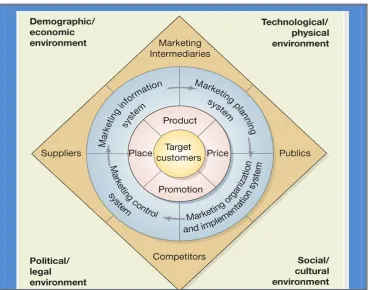
early gleanings that evidence based evaluation research is underway. For this reason by coupling quality with customer
service recovering satisfaction as Figure 1, a few tactical actions for implementation (Mason and Stark, 2004, 205;
Peters, 1988, 160) can make the challenge simpler and provide leadership (Minnow, 1996, 5; Feghhi farahmand, 2009;
Rue & et al, 1998, 97).
Figure 1: Spontaneous Behavior Strategies Model
Creative spontaneous behavior building is found in knowledge-based industries, which span many sectors finance,
technology, media and learning. Central to success as knowledge creators is the culturing of independent individuals,
organizational members able to re-invent businesses as required. Such capabilities are not nurtured in high compliance
systems that penalize out-of-envelope contributions (Goleman, 1996, 89; Goleman, et al, 2002, 185; Hamel, 2001, 89;
Feghhi farahmand, 2003, 67). Any how spontaneous behavior strategies search few question such as:
I. How does spontaneous behavior affect customer value?
II. How strategic planning is carried out at different levels of the organization?
For this reason Spontaneous behavior & Customer Value and the Value Delivery Process is as follow:
Choosing (or Identifying) + Providing (or Delivering) + Communicating Superior Value
To assist in understanding the process used in a certain application; avoid potential misconceptions regarding the intent
and define the activities associated with specific value studies, reclamation has defined four distinct types of value
studies.
Also the value chain is a tool to identify key activities that create value & costs in spontaneous behavior and identify
ways to create more customer value. Therefore organizational capability relies in particular on coaching management
skills, which rely on emotional intelligence and emphasis one-to-one, dialoguing, subordinate empowerment and
mutually agreed targeting.
In relation of value core competencies including outsource less critical resources if better quality or cost and own
competencies - core business, three characteristics are competitive advantage, applications - many markets and difficult
to imitate. For this reason three key questions as value exploration for new opportunities, value creation for new
offerings and value delivery for deliver more efficiently is necessary in according
Anyhow tactical actions steps for coupling quality with customers or customers including three Vs to Spontaneous
behavior: Value segment, Value proposition, and Value network recovering satisfaction are as follows (Curran, et al,
1994; Feghhi farahmand, 2004, 358; Feghhi farahmand, 2005, 187; Nayak, et al, 1994, 47; North, et al, 1997, 187):
I. Top manager support: An organization’s total quality efforts must begin at the very top and begin with the
board of directors (Olivero, et al, 1997, 68; Senge, 1990, 196; Perry, 2001, 66).
II. Action plan: An action plan based on the survey feedback should then be formulated by the top management
and communicated at every board meeting.
III. Vision: Develop a vision the organization does not have one already. The key to the initial adoption of quality
is continuous communication of the vision within a comprehensive communication plan.
IV. Quality improvements: Senior managers need coaching as the new theorists in coaching argue; coaching
empowers individuals to achieve their inherent potential.
V. Quality circles: Employees, shareholders and customers, suppliers and competitors have a stake and essential
ingredient for success is senior quality circles, which provides leadership in quality and stimulates cultural
change.
VI. Responsibility: The responsibilities accept of a senior quality committee can include (Feghhi farahmand, 2004,
398): establishing strategic quality goals, allocating resources, sanctioning quality improvement teams,
reviewing key indicators of quality, estimating the cost of poor quality, ensuring adequate training of
employees and recognizing and rewarding individual and team efforts.
VII. Satisfaction: This survey should be sponsored by the top management to send a clear message throughout the
organization that quality is linked to customer satisfaction and the senior executives should then present the
results to all employees that detailed strategies for improving customer satisfaction can be devised and
communicated.
In hypercompetitive economy more rational buyers many choices, company win by fine tuning value delivery process &
to choose, provide and communicate superior value. To ensure the opportunity to achieve the highest value, value
program staff attempt to keep management or administration directed mission charges flexible enough to allow
benefit from studies (Feghhi farahmand, 2009, 97; Steele, 1997, 28-68; Storey, 1994, 55; Storey & et al, 1989, 97).
Anyhow is the need to develop a means to inform administrative or procurement staff of the available resources and
how to obtain assistance. Therefore core product or service quality and customer benefits return as key drivers (Curran,
et al, 1994; Feghhi farahmand, 2005, 58).
For this reason, there is a need to re-track fundamental management systems. Such concepts as investment valuation,
ethical trading, stakeholder consultation, corporate social responsibility, value investment, preoccupy institutional
investor communities.
In any case, the level of uncertainty is continuing to increase even as consumer prosperity overlaps into the new century,
reacting against the undoubted brilliance of the recent industrial era. However, the mainly qualitative evidence available
to date suggests that SP within organizations is an activity of a minority (Bolton, et al, 2000, 88; Feghhi farahmand,
2002, 254). There may be a number of reasons for the lack of SP. Historically the typical speed of information flow has
tended not to have pursued higher levels of education level or to take formal spontaneous behavior training. Hence
there are two possible reasons why speed of information flow tend not to plan (Chell, 1991, et al, 167; Barkham, et al,
1996, 27) that they are emotionally unsuited to it. They think and act intuitively and they are simply unaware of the
various tools which would enable them to plan systematically.
A further constraint, likely to restrict spontaneous behavior relationship by speed of information flow, is that they may
not have sufficient financial information to prepare a formal plan. A lack of formal spontaneous behavior relationship
planning may also relate to the fact that small organizations are just too busy surviving to take time out to plan ahead
whilst others might argue the environment (Ledoux, 1993, 215; Ledoux, 1994, 15). A lack of formal spontaneous
behavior relationship among organizations does not necessarily mean that organization is badly managed. It does,
however, suggest that speed of information flow miss out on the opportunity to consider the overall direction of the
spontaneous behavior and management decisions may be made on the basis of poor information (Curran, et al, 1994, 39;
Feghhi farahmand, 2009, 102; Stutely, 2002, 43; Watts & et al, 2003, p 197).
The characteristics of the organization and speed of information flow and also organizations strategies hereafter termed
spontaneous behavior relationship, influencing facilitator manager's behavior which might be used to inform analysis of
the determinants of spontaneous behavior relationship in organizations. Organization characteristics were controlled out
of analysis in order to focus our attention on the speed of information flow and spontaneous behavior relationship
variables.
3. Speed of Information Flow
Organizational relationship management systems were both outcome focused and financially focused and were neither
multidimensional nor strategic. The organizational relationship management became broader and included measures of
innovation and service receiver satisfaction.
The most essential successful originated tools of organizations are:
The spontaneous behavior relationship process management model;
The spontaneous behavior relationship process auditing and assessment procedure of process successful;
The spontaneous behavior relationship project management model;
The spontaneous behavior relationship benchmarking procedure;
The nature of the speed of information flow is seen as critical in other aspects (Nayak et al, 1994, 425; Fisher, 2002, 89)
influence an owner manager’s propensity to undertake organizational relationship management. Predictions of the direction in which the variables (Feghhi Farahmand, 2002, 345; Smith, 1967, 145) will operate are inevitably
problematic as there is little prior work on the determinants of organizational relationship management upon which we
can draw (Smith, 1967, 25; Curran, et al, 1994; Feghhi farahmand, 2005, 37; Kuratko & et al, 2004, 64):
I. Spontaneous behavior relationship ability: This variable has been identified as important in a number of
studies.
II. Spontaneous behavior relationship experience: It may be strongly linked to ability and it could be argued that
it might work in two ways. A long number of years running an organization as an speed of information flow
might increase a propensity to plan future directions for the spontaneous behavior or indeed, once the initial
phases had passed and funding secured planning might well be less of a priority.
III. Spontaneous behavior relationship education level: In the context of organizational relationship management,
this variable might seem reasonable to hypothesis that the more highly educated speed of information flow will
tend to be more aware of the desirability of organizational relationship management and thus, organization run
by the better educated speed of information flow might be more likely to have spontaneous behavior plans.
IV. Spontaneous behavior relationship innovation: A distinction here may be drawn between those for whom the
current organization is their first and serial founders.
V. Spontaneous behavior relationship organizing: Organization founders are drawn either from operatives or from
those with previous managerial experience.
VI. Spontaneous behavior relationship strategy: Here it might be argued that speed of information flow moving
into a new sector might be encouraged to plan rather more than those whose businesses were in sectors in
which they had considerable prior experience.
VII. Spontaneous behavior relationship potential: This was introduced into the analysis as it might be expected that
local speed of information flow, who grew up in the geographical area under study, will tend to be
introspective and less receptive to contemporary management practice.
The relationships between organizations and their localities have become an important research area and organization
with links with local spontaneous behavior institutions might be more likely to spontaneous behavior plan. The
argument here would be that mixing with local spontaneous behavior leaders would increase awareness of the value of
organizational relationship management. Conversely, mixing with other speed of information flow of small
organization might re-enforce towards the idea of organizational relationship management, especially where
organizational relationship management was not seen as a key element of spontaneous behavior activity.
4. Spontaneous Behavior Relationship Management
Spontaneous behavior relationship management system is a technology-based organization management tool for
developing and leveraging organizational customers' knowledge to maintain, and strengthen profitable relationships
with service receivers. Thus, a spontaneous behavior relationship management system is an essential part of a global
spontaneous behavior relationship management strategy which emphasis creation of satisfaction through the
development of appropriate relationship with key service receivers segments. The underlying premise of spontaneous
behavior relationship management is that organizational relationship creates organizational customers knowledge in
order to:
II. Spontaneous behavior relationship develops and maintains long-term relationships with profitable
organizational customers,
III. Spontaneous behavior relationship determine how to handle unprofitable organizational customers.
Through the creation and better utilization of service receiver knowledge, the service receiver relationship should
improve. Successful implementation of spontaneous behavior relationship management program depends upon four
critical factors:
I. Spontaneous behavior relationship management readiness assessment,
II. Spontaneous behavior relationship management change management,
III. Spontaneous behavior relationship management project management,
IV. Spontaneous behavior relationship management employee engagement.
The capturing the wrong organizational customers information, unclear goals, inappropriate selection and use of
technology, inability to integrate people and processes and use of misleading metrics or improper measurement
approaches are the major barriers in implementing and managing organizational customers projects. The seven deadly
sins for unsatisfactory spontaneous behavior relationship management outcome are:
Viewing the spontaneous behavior relationship management initiative as a technology initiative;
Lack of organizational customers vision;
Insufficient appreciation of organizational customers' lifetime satisfies;
Inadequate support from top management;
Underestimating the importance of change management;
Failing to re-engineer organization processes;
The spontaneous behavior relationship management refers to the internal systematic approach systematically of the
organization management and leadership to strive for organization successful excellence. The successful spontaneous
behavior relationship management referring to all those measures through which one creates and strengthens confidence
and trust in outsiders, especially service receivers, towards the organization abilities and service. When the
comprehensiveness of the spontaneous behavior relationship management approach is being emphasized one also can
use the concept spontaneous behavior relationship management instead of spontaneous behavior plan. In practice,
however, the both mean the same.
The aim of spontaneous behavior relationship management approach is to strive for the organization strategic and
operational goals. Spontaneous behavior relationship management is based on a special expertise for enhancing
effectiveness and efficiency of organization management and leadership. Thus genuine realization of the spontaneous
behavior relationship management practices takes place in real organization activities both in the organization strategic
leadership as well as in the operational realization of the organization services and targets.
The broad challenge for spontaneous behavior relationship management is to enhance positive substance of
organization brand through various means that are consistent both with respect to one another and aligned with the
organization strategic course.
As a whole the main principles in organizations approach include the following:
Consistency of different spontaneous behavior relationship measures in order to strengthen one another;
Alignment of the whole strategically and operationally for centering on the key issues;
Comprehensiveness and a scope which covers the entire corporation;
Integrating spontaneous behavior relationship management measures with organization processes.
Systematic approach instead of building separate systems such as quality systems spontaneous behavior relationship
management approach is well harmonized with the organization strategies. On that basis also the quality policy was
defined. General intention and direction towards spontaneous behavior relationship management is considered by the
spontaneous behavior policy statements:
Always act so that the organizational customers what he or she needs;
Improve activities and their results continually so that they will be better and more effective and efficient of spontaneous behavior relationship management.
The goal of spontaneous behavior relationship management, i.e. organization excellence, is reached through innovative
management and leadership practices.
In order to realize spontaneous behavior relationship management objectives in all parts of the organization and at all
levels of organization and management, an organization-wide management structure, a leadership infrastructure
framework has been defined. The framework model was originally created at organizations. This model covers all
organization functions in a natural and flexible manner and covers the following four levels of the organization:
I. The organization level: where the general principles, the common insight, goals, shared tools, and practices
concerning spontaneous behavior relationship management are created, including how these principles are to
be applied in practice on the basis of the organization requirements.
II. The strategic areas and unit's level: where decisions are made by the general manager of the organization unit
and the other top organization leaders, and measures undertaken concerning the entire particular organization
and especially the future competitiveness of the organization and management of the whole organization
system are addressed. The organization system is composed of the interrelated operational organization
processes. Very often in corporations there are different organization areas that may be at different
development stages. All these need different strategic spontaneous behavior relationship management
approaches but they may operate within one corporate culture.
III. The operational individual organization processes level: where decisions and measures concerning daily
management are made and undertaken, and services are realized in real time for organizational customers
needs.
IV. The human and team's level: where the personal contribution of each member of the organization personnel
including the top management is provided in natural working environments.
5. Results
Speed of information flow ranged in ability from low to high. Clearly, within this group, there is a sub set of growth
oriented speed of information flow whose propensity to undertake organizational relationship management might be
contrasted with those who were content with their current level of spontaneous behavior. The latter may well belong to
that group of speed of information flow often characterized as running lifestyle organization. From this overview of the
explore the extent to which these differing characteristics and strategies influence whether or not an organization
engages in organizational relationship management.
The main focus is on the role of speed of information flow characteristics in influencing the propensity for
organizational relationship management. The interdisciplinary conceptual model will provide guidance to speed of
information flow in developing contextually relevant method measures. The model provides speed of information flow
with specific benefits such as:
Measures to spontaneous behavior relationship management with strategically aligned framework for clearer
logic behind spontaneous behavior relationship management actions.
Successful measure portfolio that discriminates between spontaneous behavior relationship management efficiency and effectiveness successful measures in order to avoid suboptimal successful.
Set of spontaneous behavior relationship management guidelines to ensure method synergies are achieved in the targeting of high and low organizational customers lifetime satisfy segments with matching method costs
and method response to organizational customers satisfy.
6. Conclusion
Many of organizations have sustained their spontaneous behavior relationship management systems focus over time,
although these investments may or may not be considered part of a long-term spontaneous behavior relationship
management strategy. The scope, size, complexity and duration of the spontaneous behavior relationship management
projects seem to vary quite significantly across organizations. Poor planning, lack of clear objectives and not
recognizing the need for organization change are the key reasons for spontaneous behavior relationship failures.
The most recent spontaneous behavior relationship management programs, for example some have clearly benefited
from previous spontaneous behavior relationship management systems experience of suppliers, including considerably
reduced implementation times and lower risk levels for comparable size programs. All these organizations had very
different levels of success. Their success was determined mainly by the relationship between the complexity of the
system and the speed and phasing of its development and roll out. A spontaneous behavior relationship management
system is not just service receiver interface software. Organizations believe that successful measurement frameworks
should be multidimensional. Unfortunately, the early attempts at successful measurement frameworks were too
financially oriented and did not provide strategic vision.
Speed of information flow have too many successful measures, and a simplified set with fewer yet more important
metrics would lead to superior successful. Successful speed of information flow are hindered by too many low-level
measures. Ideal successful speed of information flow must include measures which are strategically relevant as well as
measures which address both efficiency and effectiveness of spontaneous behavior relationship management. For speed
of information flow, the area of organizational relationship method successful measurement is an area that represents a
significant opportunity for spontaneous behavior relationship management investment and spontaneous behavior plan
management attention. In order to understand whether the speed of information flow is performing or not, we need to
ensure that the speed of information flow is appropriate for each spontaneous behavior strategy. In response to this
research gap, this paper investigates whether speed of information flow should differ according to spontaneous behavior
strategy. Speed of information flow were asked whether or not they had a formal organizational relationship
management for their organization and the period of time to which it applied.
Reference
pp 21-54.
[2] Bolton, B and Thompson J (2000), Entrepreneurs, Talent, Temperament and Technique. London, Butterworth
Heinemann, pp 65-97.
[3] Bridge, S. O’Neill, K and Cromie S (1998), Understanding Enterprise, Entrepreneurship & small Business.
London, Macmillan Business, p 124.
[4] Brown, S. & Eisenhardt, K. (1998), Competing on the Edge, Harvard Business School Press, pp68-91.
[5] Burns, P. (2001), Entrepreneurship and small Business. Basingstoke, Palgrave. Pp 34-74.
[6] Chakravarthy, B. S. (1986) 'Measuring strategic successful', Strategic Management Journal, Vol. 7, No. 5, pp.
437–458.
[7] Chell, E. (2001), Entrepreneurship: Globalization, Innovation and Development, London, Thomson Learning,
p67.
[8] Chell, E. Haworth, J. and Brearley, S. A. (1991), The Entrepreneurial Personality, London, Rutledge, p 167.
[9] Collins, F., Holzmann, O. and Mendoza, R. (1997) 'Strategy, budgeting, and crisis in Latin America',
Accounting and Society, Vol. 22, No. 7, pp. 669–689.
[10] Curran, J. and Blackburn, R. (1994), Business planning and Local Economic Networks, London, Paul
Chapman, pp 31-49.
[11] Day, G. (2000) 'Capabilities for forging Customer relationships', Report No. 00–118, Spontaneous behavior
Science Institute, Cambridge, MA.
[12] Deakin, D. & Freel, M. (2003), Entrepreneurship and Business planning, London, McGraw Hill, pp 302-412.
[13] Dobni, B., Dobni, D. and Luffman, G. (2001) 'Behavioural approaches to spontaneous behavior strategy
implementation', Spontaneous behavior Intelligence & Planning, Vol. 19, No. 6, pp. 400–408.
[14] Eccles, R. G. (1991) 'The successful measurement manifesto', Harvard Business Review, Vol. 69, No. 1, pp.
131–137.
[15] Erffmeyer, R. C. and Johnson, D. A. (2001) 'An exploratory study of sales force automation practices:
Expectations and realities', Journal of Personal Selling and Sales Management, Vol. 21, No. 2, pp. 167–175.
[16] Feghhi Farahmand, Nasser (2001), Executive Management Process, Islamic Azad University, Tabriz Branch,
Iran, pp 99-113.
[17] Feghhi Farahmand, Nasser (2003), Permanent Management of Organization, First edition, Frouzesh
Publication, Tabriz, Iran, pp 70-83.
[18] Feghhi Farahmand, Nasser (2003), Strategic Structure of Organization Management Process, Forth edition,
Islamic Azad University, Tabriz Branch, Iran, pp 41-125.
[19] Feghhi Farahmand, Nasser (2005), Strategic Management of Organization, First edition, Frouzesh Publication,
Tabriz, Iran, pp 85-149.
[20] Feghhi Farahmand, Nasser (2009), Organization Strategic Plan compilation, First edition, Frouzesh Publication, Tabriz, Iran, pp 74-314.
Frouzesh Publication, Tabriz, Iran, pp 87-90.
[22] Feghhi Farahmand, Nasser (2011a), Technology Management of Organization, Second edition, Frouzesh
Publication, Tabriz, Iran, pp 11-18.
[23] Fiegener, M. K. (1994) 'Matching organization-level strategic controls to strategy: Impact on control system
effectiveness', Journal of Applied organization Research, Vol. 10, No. 1, pp. 25–34.
[24] Fisher, A. (2002), Annie weighs in on executive coaching and untruths on resumes, Fortune Magazine, 13
May, o 89.
[25] Franco, M. and Bourne, M. (2003) 'Factors that play a role in 'managing through measures'', Management
Decision, Vol. 41, No. 8, pp. 698–710.
[26] Gifford, D (1997), The value of going green, Harvard Business Review, 75/5.
[27] Goleman, D (1996), Emotional Intelligence, London, Bloomsbury, p58.
[28] Goleman, D., Boyatzis, R. & McKee, A. (2002), The New Leaders, London, Little, Brown, p 78-199.
[29] Govindarajan, V. and Fisher, J. (1990) 'Strategy, control systems, and resource sharing: Effects on
organization-unit successful', Academy of Management Journal, Vol. 33, No. 2, pp. 259–285.
[30] Gresov, C. and Drazin, R. (1997) 'Equifinality: Functional equivalence in organization design', Academy of
Management Review, Vol. 22, No. 2, pp. 403–428.
[31] Hamel, G. (2001), Leading the Revolution, Boston, Harvard Business School Press, p89.
[32] Henningsen, C (2002), Investing as if the world really mattered, Corporate Environmental Strategy, 9 /2, pp
22-39.
[33] Hunt, S. D. and Lambe, J. (2000) 'Spontaneous behavior's contributions to organization strategy; Market
orientation, relationship spontaneous behavior, and resource-advantage theory', International Journal of
Management Reviews, Vol. 2, No. 1, pp. 17–34.
[34] J Anttila (2001): “Effective quality communication.” St. Petersburg: Stocholm School of Economics
[35] J Anttila (2002): “Product quality in software organization connection”. Conference on software quality
connection, Helsinki
[36] J Anttila (2002): “Using Malcolm Baldrige model for organization excellence”, Institute of Directors, New
Delhi
[37] J Anttila, J Vakkuri (2000): ”Good Better Best”, Sonera Corporation, Helsinki
[38] Jain, R., Jain, S. and Dhar, U. (2007) 'CUREL: A scale for measuring service receiver relationship management effectiveness in service sector', Journal of Services Research, Vol. 7, No. 1, pp. 37–58.
[39] Jaworski, B. J. and Kohli, A. K. (1991) 'Market orientation', Journal of Spontaneous behavior, Vol. 57, No. 3,
pp. 53–70.
[40] Jeuland, A. P. and Shugan, S. M. (1983) 'Managing method profits', Spontaneous behavior Science, Vol. 2, No.
3, pp. 239–272.
[42] Journal of Database Spontaneous behavior & Customer Strategy Management (2008) 15, 68–78.
doi:10.1057/dbm.2008.5; published online 9 June 2008
[43] Kale, S. H. (2004) 'SRRM failure and the seven deadly sins', Spontaneous behavior Management, Vol. 13
(September/October), pp. 42–46.
[44] Kaplan, R. S. and Norton, D. P. (1996) 'Using the balanced scorecard as a strategic management system',
Harvard Business Review, Vol. 74, No. 1, pp. 75–85.
[45] Kirby, D. A. (2003), Entrepreneurship, Maidenhead, McGraw Hill, p 82
[46] Kumar, K. and Subramanian, R. (1997/1998) 'Porter's strategic types: Differences in internal processes and
their impact on successful', Journal of Applied organization Research, Vol. 14, No. 1, pp. 107–124.
[47] Kuratko D F and Hodgetts R M (2004), Entrepreneurship: Theory, Practice Mason, Ohio, Thomson South
Western, p64.
[48] Larson, P. D. (1991) 'Product quality, total costs and the integration of the utility-producing functions
unpublished PhD dissertation University of Oklahoma.
[49] Larson, P. D. and Lusch, R. F. (1992) 'Functional integration in spontaneous behavior methods: A determinant
of product quality and total cost', Journal of Spontaneous behavior Methods, Vol. 2, No. 1, pp. 1–28.
[50] Lassar, W. M. and Kerr, J. L. (1996) 'Strategy and control in supplier-distributor relationships: An agency
perspective', Strategic Management Journal, Vol. 17, No. 8, pp. 613–632.
[51] Lebas, M. and Euske, K. (2002) 'Delineation of successful', in: Neely, A. (Ed.) ' Performance measurement:
Theory and practice', Cambridge University Press, Cambridge, UK, pp. 65–79.
[52] Ledoux, JE (1993), Emotional memory systems in the brain. Behavior and Brain Research, v 58, p 112-215.
[53] Lewis, M. C. and Lambert, D. M. (1991) 'A model of method member successful, dependence, and
satisfaction', Journal of Retailing, Vol. 67, No. 2, pp. 205–225.
[54] Lubieniecki, E. C. and Desrocher, N. J. (2003) 'The case for simple comparison: A simple successful scorecard
for effectiveness and efficiency', Journal of Corporate Real Estate, Vol. 6, No. 1, pp. 39–52.
[55] Maselli, J. (2001) 'People problems', InformationWeek, 9 July, pp.35–42.
[56] Mason, C and Stark, M. (2004), What do investors look for Business Plan, International small Business
Journal, 22, p3.
[57] McGovern, J., Lindemann, M., Vergara, M., Murphy, S, Barker, MA & Warrenfeltz, R. (2001), Maximizing the
impact of executive coaching: Behavioral change, organisational outcomes, and return on investment.
www.mentors.ca/coachingnews.html.
[58] Merlin Stone, 1 Broadmead Close, Hampton, TW12 3RT, UK.
[59] Michael J. Valos, Faculty of organization and Law Bowater School of Management & Spontaneous behavior
Deakin University, 221 Burwood Highway Burwood Vic. 3125 Australia.
[60] Miles, R. E. and Snow, C. C. (1978) 'Organisational strategy, structure, and process', McGraw-Hill, New York.
[61] Minnow, N (1996), Downsizing corporate responsibility. Public Relations Strategy 2, vol. 3, p5.
[63] Mintzberg, H., Alstrand, B. & Lample, J. (1998), Strategy Safari. The Free Press, pp 23-67.
[64] Moedritshcher, G. and Mussnig, W. (2005) 'Evaluating the long term benefit of SRRM-systems: A
cost-oriented approach', International Journal of Innovation and Technology Management, Vol. 2, No. 4, pp. 367–
389.
[65] Naffziger, D. Kuratko, D. (1991), An Investigation into the Planning In small Business, Journal of Business
and Entrepreneurship, Fall, p 21.
[66] Najmi, M., Rigas, J. and Fan, I. -S. (2005) 'A framework to review successful measurement systems',
organization Process Management Journal, Vol. 11, No. 2, pp. 109–122
[67] Nayak, A and Greenfield, S. (1994), The Use Of Management Accounting Information, Finance and the
organizations, London, Rutledge, p47.
[68] Neely, A. D., Gregory, M. and Platts, K. (2005) 'Successful measurement system design: A literature review
and research agenda', International Journal of Operations & Production Management, Vol. 25, No. 12, pp.
1228–1263.
[69] Noble, C. H. and Mokwa, M. P. (1999) 'Implementing spontaneous behavior strategies: Developing and testing
a managerial theory', Journal of Spontaneous behavior, Vol. 63, No. 4, pp. 57–73.
[70] North, J., Blackburn, R and Curran, J. (1997), Reaching small Business and Enterprising Futures, London, Paul
Chapman.
[71] Olivero, G., Bane, K.D., Kopelman, RE (1997), Executive coaching as a transfer of training tool: Effects on
productivity in a public agency. Public Personnel Management, 26, 4, p 68.
[72] Paswan, A. K. (2003) 'Method support activities and perceived goal orientation: An exploration in the Indian
market', Asia Pacific Journal of Spontaneous behavior and Logistics, Vol. 15, No. 4, pp. 19–41.
[73] Payne, A. and Frow, P. (2006) ' Customer relationship management: From strategy to implementation', Journal
of Spontaneous behavior Management, Vol. 22, pp. 135–168.
[74] Pettey, C. (2008) 'Gartner says more than 50 percent of SRRM implementations considered failures from
service receiver's point of view', accessed 7th February, 2008, available
at:http://www.gartner.com/5_about/press_releases/2001/pr20010912b.html.
[75] Porter, M. E. (1980) 'Competitive strategy', Free Press, New York.
[76] Reinhartz, W., Krafft, M. and Hoyer, W. (2004) 'The service receiver relationship management process: Its
measurement and impact on successful', Journal of Spontaneous behavior Research, Vol. 31 (August), pp. 293–
305.
[77] Rowley, J. (2002) 'Synergy and strategy in e-organization', Spontaneous behavior Intelligence & Planning, Vol.
20, No. 4/5, pp. 215–222.
[78] Rue, L. and Ibrahim, N. (1998), Planning Sophistication and Performance in small Businesses, Journal of small
Business Management, 36, p 97.
[79] Sahlman, W. A. (1997), How to write a great Business Plan, Harvard Business Review, July-August,pp 61- 98.
[80] Schmitz, J. and Platts, K. W. (2004) 'Supplier logistics successful measurement: Indications from a study of the
[81] Schwenk, C. R. and Shrader, C. B. (1993), Effects Of Formal Strategic Planning, Entrepreneurship: Theory and
Practice, p17.
[82] Senge P, Roberts C and Ross B. Kleiner A (1995): “The Fifth Discipline Fieldbook”, Nicholas Brealey
Publishing Limited, London
[83] Senge, P. M. (1990) 'The leader's new work. Building learning organizations', Sloan Management Review, Vol.
32, pp. 7–24.
[84] Simons, R. (1987) 'Accounting control systems and organization strategy: An empirical analysis', Accounting
organizations and Society, Vol. 12, No. 4, pp. 357–374.
[85] Sirivastava, R. K., Shervani, T. A. and Fahey, L. (1999) 'Spontaneous behavior, organization process, and
shareholder satisfy: An organizationally embedded view of spontaneous behavior activities and the discipline
of spontaneous behavior', Journal of Spontaneous behavior, Vol. 63, No. 4, pp. 168–179
[86] Slater, S. F. and Narver, J. C. (1995) 'Market orientation and the learning organization', Journal of
Spontaneous behavior, Vol. 59, No. 3, pp. 63–74.
[87] Smith, N. R. (1967), The Entrepreneur and His Organization, University of Michigan: Bureau of Business and
Economic Research, pp 112-184.
[88] Speier, C. and Venkatesh, V. (2002) 'The hidden minefields in the adoption of sales force automation
technologies', Journal of Spontaneous behavior, Vol. 66, No. 3, pp. 98–112.
[89] Stacey, R. D. (2000), Strategic Management and Organisational Dynamics, Prentice Hall, p 23-42.
[90] Steele, R. S. (1977), Power motivation, activation and inspirational speeches. Journal of Personality, 45, pp
28-68.
[91] Stock, G. N., Greis, N. P. and Kasarda, J. D. (1998) 'Logistics, strategy and structure, A conceptual
framework', International Journal of Operations & Production Management, Vol. 18, No. 1–2, pp. 37–52.
[92] Thayne Forbes, The Third International Conference on Management, Vice President Quality
Integration,Sonera Corporation, Finland
[93] Watts, H. D., Wood, A. M. and Wardle. P. (2003), Making friends or making things?, Urban Studies, pp