R E S E A R C H A R T I C L E
Open Access
A systematic review of the intervention
components, adherence and outcomes of
enhanced recovery programmes in older
patients undergoing elective colorectal
surgery
Katleen Fagard
1*, Albert Wolthuis
2,3, André D
’
Hoore
2,3, Marleen Verhaegen
4, Jos Tournoy
1,5,
Johan Flamaing
1,5and Mieke Deschodt
5,6Abstract
Background:Enhanced recovery programmes (ERPs) aim to attenuate the surgical stress response and accelerate
recovery after surgery, but are not specifically designed for older patients. The objective of this study was to review the components, adherence and outcomes of ERPs in older patients (≥65 years) undergoing elective colorectal surgery.
Methods:Pubmed, Embase and Cinahl were searched between 2000 and 2017 for randomised and
non-randomised controlled trials, before-after studies, and observational studies. The methodological quality of the studies was evaluated using the MINORS quality assessment. The review was performed and reported according to the PRISMA guidelines.
Results:Twenty-one studies, including 3495 ERP patients aged≥65 years, were identified. The ERPs consisted of a
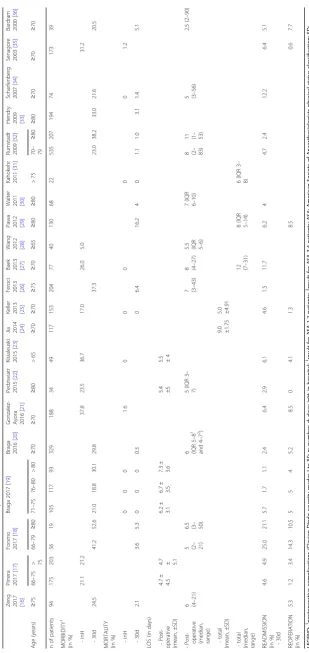
median of 13 intervention components. Adherence rates were reported in 9 studies and were the highest (≥80%) for pre-admission counselling, no bowel preparation, limited pre-operative fasting, antithrombotic and antimicrobial prophylaxis, no nasogastric tube, active warming, and limited intra-operative fluids. The median post-operative length of stay was 6 days. The median post-operative morbidity rate (Clavien-Dindo I-IV) was 23.5% in-hospital and 29.8% at 30 days. The in-hospital post-operative mortality rate was 0% in most studies and amounted to a median of 1.4% at 30 days. The median 30-day readmission rate was 4.9% and the median reoperation rate was 5.0%.
Conclusions:ERPs in older patients were in accordance with the ERP consensus guidelines. Although the number
of intervention components applied increased over time, outcomes in earlier and later studies remained comparable. Adherence rates were under-reported. Future studies should explore adherence and age-related factors, such as frailty profile, that could influence adherence.
Trial registration:PROSPERO 2018CRD42018084756.
Keywords:Aged, Aged, 80 and over, Colorectal surgery, Enhanced recovery, Fast track
© The Author(s). 2019Open Access This article is distributed under the terms of the Creative Commons Attribution 4.0
International License (http://creativecommons.org/licenses/by/4.0/), which permits unrestricted use, distribution, and
reproduction in any medium, provided you give appropriate credit to the original author(s) and the source, provide a link to the Creative Commons license, and indicate if changes were made. The Creative Commons Public Domain Dedication waiver (http://creativecommons.org/publicdomain/zero/1.0/) applies to the data made available in this article, unless otherwise stated. * Correspondence:[email protected]
1Department of Geriatric Medicine, University Hospitals Leuven, Leuven,
Belgium
Background
Fast Track protocols, also known as Enhanced Recovery
After Surgery (ERAS®), or Enhanced Recovery
Programmes (ERPs), have been developed by surgeons and anaesthesiologists to reduce the surgical stress
re-sponse, accelerate recovery, and improve overall
post-operative outcomes [1]. They were initially
intro-duced in the early nineties by Kehlet and colleagues as standard of care for colorectal surgery, and have spread
to other surgical specialties [1,2]. ERPs generally include
about 20 evidence-based intervention components
during the peri-operative period, and require the ac-tive participation of a multidisciplinary team and the
patient [3–5].
Due to demographic aging and advances in surgical and anaesthetic techniques, the demand for surgical
procedures in older persons is rapidly increasing [6,
7], but the ability of older patients to actively
partici-pate in ERPs and to achieve the same results as
younger patients has been debated [8, 9]. After all,
ERPs were not specifically designed for older patients. On the other hand, older patients might actually benefit more than younger patients, because they are more susceptible to adverse post-operative outcomes
and longer hospital stays [9, 10].
In 2014, Bagnall et al. published a first review about the safety, feasibility and efficacy of ERPs in patients aged 65 and over undergoing colorectal surgery,
includ-ing 16 studies published before February 2014 [11].
Launay-Savary et al. performed a new search until 2015 and included two extra studies: a meeting abstract and a
study later retracted from literature [12]. With new
lit-erature emerging since the latest reviews, and ERPs be-ing further standardised, a new systematic literature review was deemed useful.
The primary objective of this review was to map inter-vention components of ERPs in patients aged 65 years and older undergoing elective colorectal surgery. In addition, we analysed adherence to individual ERP com-ponents and outcomes of the ERPs in patients aged 65 years and older.
Methods
This review was performed in the framework of the
PRISMA guidelines (www.prisma-statement.org) and
was registered in PROSPERO, the international pro-spective register of systematic reviews (registration num-ber CRD42018084756).
Search strategy
An electronic bibliographic database search through PUBMED, EMBASE, and CINAHL was performed.
The following search string was used for PubMed and
adapted for the other databases (Additional file 1):
(((“colorectal surgery”[mesh]) OR ((colorectal[tiab] OR
colon[tiab] OR colonic[tiab] OR colectomy[tiab] OR rec-tum[tiab] OR rectal[tiab] OR pelvic[tiab]) AND
(surger-y[tiab] OR surgical[tiab] OR operation[tiab] OR
operative[tiab] OR resection[tiab]))) AND (ERAS[tiab]
OR “enhanced recovery” [tiab] OR “accelerated
recov-ery”[tiab] OR“expedited recovery”[tiab] OR“fast track”
[tiab] OR multimodal[tiab] OR multi-modal[tiab])). The search was limited to English, Dutch, French, German and Spanish articles published between January 1, 2000
and November 17, 2017. Reference lists and
PubMed-citations of the included articles, as well as former systematic review articles related to the topic, were cross-referenced to retrieve additional relevant studies.
Selection of relevant papers
All studies including adults aged 65 and over, undergo-ing elective colorectal surgery, were eligible for inclu-sion. The individual components of the applied ERP had to be described in detail, including at least one of the following outcomes for the (subgroup of ) older patients: length of stay (LOS) or post-operative morbidity. Study designs included were randomised and non-randomised controlled trials, before-after studies and prospective and retrospective observational studies. Studies were ex-cluded if they inex-cluded patients undergoing emergency surgery, if they referred to general guidelines instead of giving a detailed description of their ERP protocol, if they focused on limited (< 5) intervention components, or if no full text was available. Two reviewers (KF, MP) independently screened the titles and abstracts of the ar-ticles retrieved by the search and removed duplicate arti-cles, using Endnote. Full texts of relevant abstracts and articles obtained by cross-referencing were assessed for inclusion (KF, MM). Any discrepancies were discussed with a fourth reviewer (MD).
Data extraction and synthesis
Two reviewers (MP, MM) extracted data, each from half of the included studies, using standardised data extraction forms. A third reviewer (KF) double-checked the correctness and completeness of the ex-tracted data. In case of disagreement, a fourth reviewer (MD) was consulted. The following charac-teristics of the included studies were extracted: first author, year of publication, country and setting, study design, study population, in- and exclusion criteria, sample and age distribution, and the subsample of older people in an ERP included in this review. The reported ERP intervention components were grouped into 20 key components, in line with the 2012 ERAS® Society guidelines for peri-operative care in elective
number of studies including a certain ERP interven-tion component as well as the total number of ERP intervention components per study were calculated. Apart from LOS and post-operative morbidity, the
following outcomes, if available, were reported:
post-operative mortality, time to reach discharge cri-teria, adherence to ERP components, 30-day
readmis-sion rate and reoperation rate. Post-operative
morbidity and mortality were considered in-hospital and within 30 days of surgery. Post-operative morbid-ity was reported as the percentage of patients experi-encing post-operative complications (severity grades I to IV according to the Clavien-Dindo classification)
[13]. If the study reported the percentage of older
pa-tients in which an intended ERP component was ac-tually applied, this percentage was considered as the adherence to that ERP component. The most fre-quently reported discharge criteria, also referred to as ERP recovery goals, were summarised by reporting the time (in days or hours) to reach each recovery goal (i.e. no morbidity evidence, ambulation, first fla-tus, first stool, oral intake, pain control with oral
drugs) [1, 14].
Risk of bias (quality) assessment
The methodological quality of the included studies was assessed independently by three reviewers (KF, MP and
MM) through the Methodological Index for
Non-Randomised Studies (MINORS), containing eight items (the maximum item score per item is 2, the ideal
global score 16) [15]. Any discrepancies were discussed
and agreed upon with a fourth reviewer (MD).
Data synthesis and analysis
Results from individual studies and study groups are provided in the tables as percentages and averages (means or medians). To summarize the data in the manuscript, medians and ranges across study groups were calculated. Due to many differences among studies regarding study population, age groups, ERPs, risk of bias, definitions of outcomes and other methodological aspects, a formal meta-analysis was not performed.
Results
Article selection
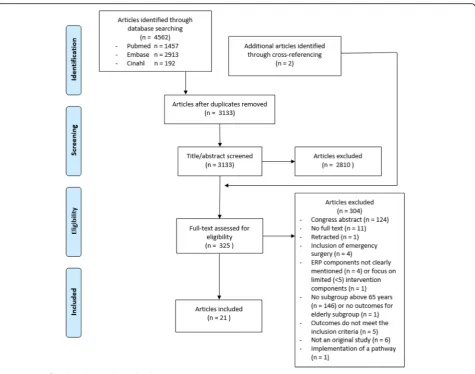
The search generated 4562 articles (Fig.1). After
remov-ing 1429 duplicates and excludremov-ing 2810 articles based on title and abstract, 323 full texts plus 2 additional articles found by cross-referencing, were evaluated for inclusion.
Finally, 21 articles were included [16–36]. Five of the
cluded articles did not provide ERP details, but were in-cluded because the applied ERP was described in detail
in another publication [18, 21,22, 25, 26,33]. Although
inclusion periods of the two studies published by Braga
et al. partially overlapped, we reported the results as two
individual studies [19,20].
Study and patient characteristics
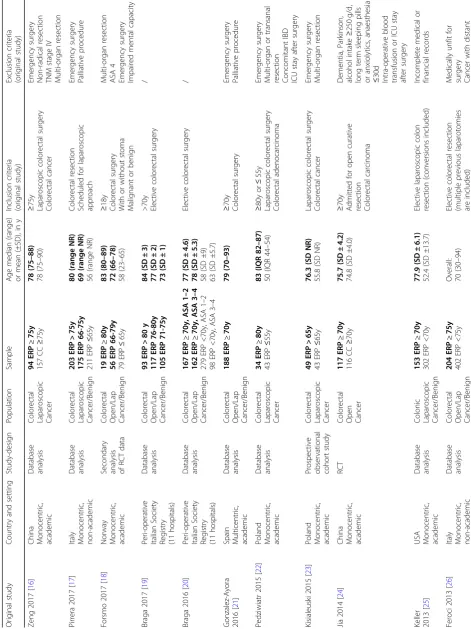
Three studies compared ERPs with conventional care in
an older age group [16, 24, 28] (Table 1). Ten studies
compared ERPs in old versus young patient groups [17,
18, 20, 22, 23, 25, 27, 29, 31, 35], while 2 studies
com-pared ERPs in different older age groups [19, 32]. Three
studies described ERPs in a single older age group [21,
34, 36]. Three studies investigated patient factors that
influence ERP outcomes, including age [26, 30, 33]. A
total of 7610 patients were included in all studies, of
whom 3495 (46%) patients (those ≥65 years in whom an
ERP was applied) were considered in this review. Four studies divided the older patients in different age groups
[17–19, 32]. As a consequence, the 21 studies included
in this review comprised 26 study groups.
Risk of bias (quality) assessment
The scores on the MINORS quality and risk of bias
as-sessment ranged from 8 to 14 out of 16 (Additional file2).
Only 8 studies had a clearly stated aim, including the population, the intervention and at least one primary outcome. Although not always divided into primary and
secondary endpoints, all studies had endpoints
appropriate to the aim of the study. Lower total scores were due to non-consecutive inclusion of patients, non-prospective collection of data, absence of prospect-ive study size calculation, or unblinded assessment of the study endpoints.
Components of the ERP
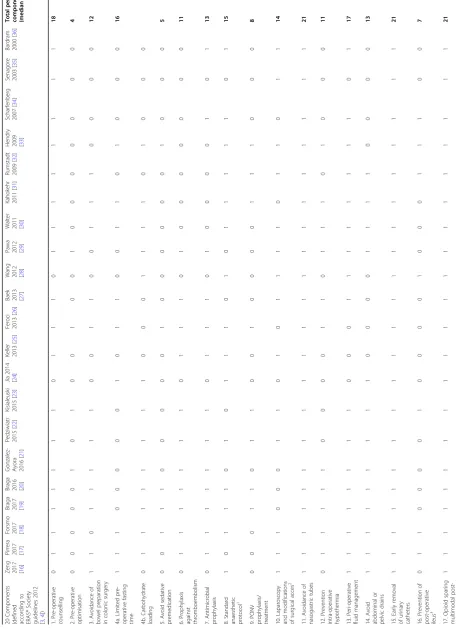
The number of ERP intervention components in the de-scribed ERP protocols varied between 7 and 16, with a
median of 13 (Table 2). All programmes described early
post-operative mobilisation, early post-operative oral in-take, opioid sparing multimodal post-operative analgesia, early urinary catheter removal, and avoidance of naso-gastric tubes as part of the intervention. Prevention of post-operative ileus (by chewing gum, laxatives, or Alvi-mopan), post-operative nausea and vomiting (PONV) prophylaxis or treatment, avoidance of sedative pre-medication, and pre-operative optimisation were not mentioned in over half of the studies. None of the ERPs mentioned peri-operative glycaemic control. Anaesthetic protocol information was often very limited. Therefore
the scoring for‘standard anaesthesia protocol’was based
but for laparoscopic surgery spinal analgesia or PCIA
are recommended as an alternative [3,4].
Adherence to the ERP
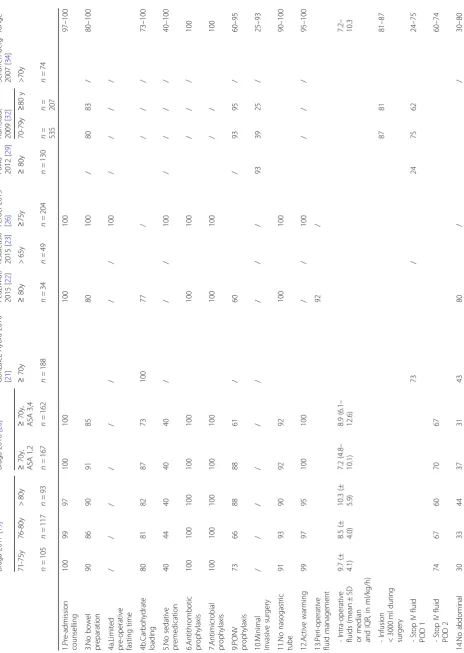
Nine studies reported adherence rates to a minimum of
1 and a maximum of 15 ERP components [19–23, 26,
29,32,34] (Table3). Adherence was the highest for
pre-and intra-operative ERP components, pre-and lower for post-operative components. ERP components with
ad-herence rates≥80% were: pre-admission counselling, no
bowel preparation, limited pre-operative fasting, anti-thrombotic and antimicrobial prophylaxis, no nasogas-tric tube, active warming, and limited intra-operative fluids. Other ERP components with adherence rates
≥60% included carbohydrate loading, PONV
prophy-laxis, and opioid sparing analgesia. ‘Early intake of oral
liquids’ ranged between 49 and 84% on post-operative
day (POD) 0 and‘early intake of solid foods’ranged
be-tween 51 and 86% on POD 1. Early mobilisation ranged between 55 and 90% on POD 0. Three studies reported
‘global compliance’and used the percentage of patients
that fully adhered to a number of selected components:
global compliance ranged between 56 and 85% [20–22].
Outcomes of the ERP
Results from individual studies per study group are given
in Table 4. The median post-operative morbidity rate
during the hospital stay was 23.5%, ranging from 5 to
37.8% (9 study groups) and was 29.8% at 30
post-operative days, ranging from 18.8 to 52.6% (13 study groups). The in-hospital mortality rate was 0% in 8 study groups, and 1.2 and 1.6% in two others. The me-dian mortality at 30 days was 1.4%, ranging from 0 to 16.2% (17 study groups).
Table
1
Study
and
patient
characteristics
(original
studies
included
in
this
review)
(Continued)
Orig
inal
study
Count
ry
and
setting
Study-design
Popu
lation
Sam
ple
Age
me
dian
(ra
nge)
or
me
an
(±SD),
in
y
Inclusion
criteria
(original
study)
Exclusion
criteria
(origi
nal
study)
Bardram
2000
[
36
]
Denm
ark
Mono
centric,
aca
demic
Retrospe
ctive
observationa
l
cohort
study
Colon
ic
Laparosc
opic
Canc
er/Ben
ign
39
ERP
≥
70y
,
lap
11
ERP
≥
70y,
conve
rted
O
verall:
81
(70
–
93)
Laparoscopic
colon
ic
res
ection
Laparoscopic
surge
ry
70
–
75
y:
be
nign
dis
ease
or
mal
ignant
disease
with
se
vere
cardiop
ulmonary
disease >
75y:
malignant
dis
ease
Not
elective
Tumou
rs
in
the
transve
rse
colon
or
rect
um
Patien
ts
not
self-c
aring
and
not
adm
itted
directly
from
home
LEGEND:
RCT
randomised
controlled
trial,
ERP
enhanced
recovery
programme,
CC
conventional
care,
vs
versus,
y
years
old,
g
gram,
d
day,
lap
laparoscopic,
SD
standard
deviation,
SE
standard
error
of
the
mean,
NR
not
reported,
TNM
tumour
node
metastasis,
ASA
American
society
of
anaesthesiologists
physical
status
class,
IBD
inflammatory
bowel
disease,
ICU
intensive
care
unit,
FTCII
fast
track
colon
II
open
quality
assurance
programme;
Bold:
patient
group
included
in
this
Table 2 Reported intervention components of the ERP 20 Components (defined according to ERAS® Society guidelines 2012 [ 3 , 4 ])
Zeng 2017 [16
]
Pirrera 2017 [17
]
Forsmo 2017 [18
]
Braga 2017 [19
]
Braga 2016 [20
]
Gonzalez- Ayora 2016
[ 21 ] Pedziwiatr 2015 [ 22 ] Kisialeuski 2015 [ 23 ] Jia 2014 [ 24 ] Keller 2013 [ 25 ] Feroci 2013 [ 26 ]
Baek 2013 [27
]
Wang 2012 [28] Pawa 2012 [29
]
Walter 2011 [30
] Kahokehr 2011 [ 31 ] Rumstadt 2009 [ 32 ]
Hendry 2009 [33
Table
2
Reported
intervention
components
of
the
ERP
(Continued)
20
Components
(defined according
to
ERAS®
Society
guidelines
2012
[
3
,
4
])
Zeng 2017 [16
]
Pirrera 2017 [17
]
Forsmo 2017 [18
]
Braga 2017 [19
]
Braga 2016 [20
]
Gonzalez- Ayora 2016
[
21
]
Pedziwiatr 2015
[
22
]
Kisialeuski 2015
[
23
]
Jia
2014
[
24
]
Keller 2013
[
25
]
Feroci 2013
[
26
]
Baek 2013 [27
]
Wang 2012 [28] Pawa 2012 [29
]
Walter 2011 [30
]
Kahokehr 2011
[
31
]
Rumstadt 2009
[
32
]
Hendry 2009 [33
]
Scharfenberg 2007
[
34
]
Senagore 2003
[
35
]
Bardram 2000
[
36
]
Total
per
ERP
component (median
=
13.5)
18.
Early
oral
intake
11
1
1
1
1
1
1
1
1
1
1
1
1
1
1
1
1
1
1
1
21
19.
Peri-operative
glycaemic
control
00
0
0
0
0
0
0
0
0
0
0
0
0
0
0
0
0
0
0
0
0
20.
Early
mobilisation
11
1
1
1
1
1
1
1
1
1
1
1
1
1
1
1
1
1
1
1
21
Total
ERP
components per
article
(median
=
13)
11
15
16
16
16
14
15
16
8
10
15
13
10
14
13
13
13
14
10
7
10
LEGEND:
0
=
not
reported
as
a
component
of
the
ERP;
1
=
reported
as
a
component
of
the
ERP;
ERP:
enhanced
recovery
programme;
PONV:
post-operative
nausea
and
vomiting;
1based
on
the
regional
anaesthe
sia
technique
(0:
no/inadequate
information,
epidural
anaesthe
sia
as
a
rout
ine
procedure
for
laparoscopic
surgery
in
studies
that
started
including
after
2012;
1:
epidural
anaest
hesia
for
all
patien
ts,
except
for
patients
undergo
ing
laparoscopic
surgery
after
2012);
2automatically
score
1
if
only
laparoscopic
patients
were
included
in
the
study;
3chewing
gum
or
laxatives
or
Table
3
Reported
adherence
to
the
ERP
components
(Continued)
Braga
2017
[
19
]
Braga
2016
[
20
]
Gonzalez-Ayora
2016
[
21
]
Pedziwiat
r
2015
[
22
]
Kisialeuski 2015
[
23
]
Feroc
i
2013
[
26
]
Paw
a
2012
[
29
]
Ru
mstadt
2009
[
32
]
Scharfen-be
rg
2007
[
34
]
range
71-75y
76-80y
>
80y
≥
70
y,
ASA
1,2
≥
70y,
ASA
3,4
≥
70y
≥
80y
>
65
y
≥
75y
≥
80
y
70-7
9y
≥
80
y
>70y
n
=
105
n
=
117
n
=9
3
n
=1
6
7
n
=
162
n
=
188
n
=3
4
n
=4
9
n
=
204
n
=
130
n
=
535
n
=
207
n
=7
4
drain 15.Earl
y
(per
proto
col)
UC
removal
70
67
69
78
62
65
80
64
56
56
–
80
17.Multim
odal
opioi
d
spa
ring
analg
esia
-Non-op
ioid
based
an
algesia
74
92
89
74
–
92
-Epidural
analges
ia
50
51
58
61
43
62
55
86
86
43
–
86
-Epidural
cathe
ter
rem
oval
≤
POD
3
36
38
47
78
75
69
36
–
78
18.Earl
y
oral
intake
-Oral
liq
uids
POD
0
59
59
49
56
57
75
69
84
49
–
84
-Oral
liq
uids
POD
1
90
92
90
87
46
46
–
92
-Oral
liq
uids
POD
0
–
1
84
-Solid
food
POD
1
53
57
52
52
57
82
73
60
51
86
51
–
86
-Solid
food
POD
2
77
86
82
92
39
39
–
92
20.Earl
y
mob
ilisation
-Out
of
be
d
POD
0
90
60
71
55
55
–
90
-Out
of
be
d
POD
1
93
91
89
95
86
94
55
20
69
53
20
–
95
Global Comp
liance
66
1
56
1
56
2
85
3
56
–
85
LEGEND:
all
results
in
%,
unless
otherwise
specified;
PONV:
post-operative
nausea
and
vomiting;
POD:
post-operative
day;
IV:
intravenous;
UC:
urin
ary
catheter;
ml:
millilitre;
kg:
kilogram;
h:
hour;
n:
number
of
patients;
y:
years
old;
ASA:
American
Society
of
Anaesthesiologists
physical
status
classification;
SD:
standard
deviation;
IQR:
inter
quartile
range;
118, 27
and
313
elements
used
to
assess
global
compliance;
/:
not
applicable
(the
intervention
component
was
not
part
of
the
ERP
or
(for
component
10)
the
study
included
laparoscopic
patients
Table
4
Outcomes
of
the
ERP
in
older
patients
Zeng 2017 [16
]
Pirrera 2017
[
17
]
Forsmo 2017
[
18
]
Braga
2017
[
19
]
Braga 2016
[
20
]
Gonzalez- Ayora 2016
[
21
]
Pedziwiatr 2015
[
22
]
Kisialeuski 2015
[
23
]
Jia 2014 [24
]
Keller 2013 [25
]
Feroci 2013 [26
]
Baek 2013 [27
]
Wang 2012 [28] Pawa 2012 [29] Walter 2011 [30
]
Kahokehr 2011
[
31
]
Rumstadt 2009
[
32
]
Hendry 2009 [33
]
Scharfenberg 2007
[
34
]
Senagore 2003
[
35
]
Bardram 2000
[
36
]
Age
(years)
≥
75
66
–
75
> 75
66
–
79
≥
80
71
–
75
76
–
80
>
80
≥
70
≥
70
≥
80
>
65
≥
70
≥
70
≥
75
≥
70
≥
65
≥
80
≥
80
>
75
70
–
79
≥
80
≥
80
≥
70
≥
70
≥
70
n
of
patients
94
175
203
56
19
105
117
93
329
188
34
49
117
153
204
77
40
130
68
22
535
207
194
74
173
39
MORBIDITY
1
(in
%) -inH
21.1
21.2
37.8
23.5
36.7
17.0
26.0
5.0
31.2
-30d
24.5
41.2
52.6
21.0
18.
8
30.1
29.8
37.3
23.0
38.2
33.0
21.6
20.5
MORTALITY (in
%) -inH
0
0
0
1.6
0
0
0
0
0
1.2
-30d
2.1
3.6
5.3
0
0
0
0.3
0
6.4
16.2
4
0
1.1
1.0
3.1
1.4
5.1
LOS
(in
days)
-
Post-operative (mean,
±SD)
4.7
±
4.5
4.7 ± 5.1
6.2
±
3.1
6.7
±
3.5
7.3
±
3.6
5.4 ±5
5.5 ±4
-Post- operative (median, range)
6 (4–
21)
5 (2– 21)
6.5 (3– 50)
6 (IQR
5
–
8
1
and
4
–
7
2)
5
(IQR
3
–
7)
7 (3–
43)
8 (4–
27)
5.5 (IQR 5–6)
7
(IQR
6
–
10)
8 (2– 83)
11 (1– 53)
5 (3–
56)
2.5
(2
–
90)
-total
(mean,
±SD)
9.0 ±1.75 5.0 ±4.91
-total
(median, range) 12 (7–
31)
8
(IQR
5
–
14)
6
(IQR
3
–
8)
READMISSION (in
%)
-30d
4.6
4.9
25.0
21.1
5.7
1.7
1.1
2.4
6.4
2.9
6.1
4.6
1.5
11.7
6.2
4
4.7
2.4
12.2
6.4
5.1
REOPERATION (in
%)
5.3
1.2
3.4
14.3
10.5
5
5
4
5.2
8.5
0
4.1
1.3
8.5
0.6
7.7
LEGEND:
1postoperative
complications
(Clavien-D
indo
severit
y
grades
I
to
IV);
n:
number;
d:
days;
inH:
in-hospital;
1result
for
ASA
1,2
patients;
2result
for
ASA
3,4
patients;
ASA:
American
Society
of
Anaesthesiologists
physical
status
classification;
SD:
standard
deviation;
IQR:
inter
quartile
days, respectively). Two studies reported LOS including
readmission days [21, 33], and one study reported mean
LOS for open and laparoscopic surgery separately (9.3
and 4.2 days, respectively) [35], which explains the
ab-sence of LOS-results for these studies in the table. Among the 16 studies reporting the 30-day readmis-sion rate, the median reported rate was 4.9%, ranging from 1.1 to 25.0% (21 study groups). Among the 12 studies reporting reoperation rate, the median reported rate was 5.0%, ranging from 0.6 to 10.5% (16 study
groups). Additional file3 summarises the attainment of
ERP recovery goals. Time to readiness for discharge (TRD or achievement of all recovery goals) was reported in 3 studies with a mean of 6.4, a median of 5.0, and a
median of 5.5 days, respectively [19,20,32].
Discussion
This review analysed intervention components, adher-ence and outcomes of ERPs in 21 studies in older elect-ive colorectal surgical patients.
The median number of ERP intervention components
per study was 13 (range 7–16), compared to 10 (range
4–18) in the earlier review by Bagnall et al. (2014) [11].
When comparing the studies included in our review, those published before 2014 implemented a median of
13 (range 7–15), and those after 2014 a median of 15.5
(range 11–16) components. This demonstrates that
more recent ERPs implement more ERP intervention components than older programmes do. To facilitate comparison of studies, the ERP interventions were grouped into 20 key components based on the 2012
ERAS® Society guidelines [3,4]. This explains minor
dif-ferences in the reported number of ERP components per study between this review and the review by Bagnall et al., as well as minor differences with what authors of the included studies report. Although only 4 studies were conducted after the publication of the 2012 ERAS® Soci-ety guidelines, the ERP components in these guidelines do not differ substantially from previous consensus
rec-ommendations [37,38], nor do they differ from more
re-cent guidelines by other societies (e.g. from the United
States, France) [39, 40]. It is worth mentioning that
some components remain somewhat vague in the
guide-lines: for example, no exact time frame is given for‘early
feeding’and ‘early mobilisation’, nor is the kind of food
and the intensity of physical exercise specified. The in-cluded studies therefore construct their own protocols, which leads to heterogeneity.
Some ERP components, e.g. pre-operative optimisa-tion, antithrombotic and antimicrobial prophylaxis, PONV prophylaxis and treatment, were less often re-ported than expected. Possibly, these components are considered peri-operative routine and are therefore not systematically mentioned by the authors in the ERP
protocol. Tight peri-operative glycaemic control with in-sulin was not reported in any of the ERPs. We hypothesize this is due to the fact that it only appeared
as an ERP component in the latest1 guideline in 2012,
with a warning for the risk of hypoglycaemia in a ward
setting [3,37,38].
To allow for a correct interpretation of the effective-ness of the programmes, adherence to individual ERP components, i.e. which ERP components the patients ac-tually receive (dependent on the providers) and which ones they are able to carry out or tolerate (dependent on
the patients), needs to be reported as well [18, 41, 42].
Nine studies (43%) reported adherence, although the dif-ference between interventions offered and tolerated was often unclear, and adherence was only given for a selec-tion of ERP components. Former studies demonstrated that ERP adherence is lower in the post-operative period compared to the pre- and intra-operative period, and this seems equally true for the older patients in our
re-view [43–45]. This should not automatically be
consid-ered as an implementation failure: declining adherence in the post-operative phase might reflect the develop-ment of complications, for which additional measures
can be taken [44]. Five studies compared adherence in
older versus younger patients [20,22,23,26,29], two in
different older age groups [19, 32], and two studies
de-scribed adherence in a single older age group [21, 34].
As the age limits of the groups varied and the ERP com-ponents assessed were too heterogeneous or limited in number, it was not possible to draw firm conclusions about adherence in relation to age. It was not possible either to draw conclusions about the factors that affect adherence among different age groups, such as location
[19, 21, 26] and invasiveness [21] of the surgery,
place-ment of a stoma [21, 26], and cancer diagnosis [19,26].
Only a higher ASA class seems consistently associated
with lower adherence [20,26]. Possibly, ability to adhere
to the programme in older patients may also be influ-enced by age-related factors: co-morbidity, frailty, func-tional impairments, cognitive impairments, ageism, or lack of personnel or materials (e.g. physiotherapists or walking aids) to take care of the more challenging older patients. Nevertheless, none of the presumed age-related factors above were studied.
A secondary objective of this review was to summarise outcomes of ERPs in older patients, without comparison to younger patients or conventional care: the two earlier reviews studied the safety and feasibility of ERPs (by
analysing cohort studies comparing different age
groups), and their efficacy (by analysing the only two existing RCTs of ERP versus conventional care in older
patients [24, 28]). They concluded that ERPs are safe
majority of the studies, and that ERPs had significantly
better outcomes than conventional care [11, 12]. In this
novel review we included 8 new studies (we excluded emergency surgery, which explains why two studies from the previous reviews were not included). The outcomes in the new studies are comparable to those in the older studies. Unfortunately, differences in age ranges of re-cruited patients, differences in in- and exclusion criteria of the studies, differences in ERP pathways, and differ-ences in definitions of outcomes or poorly defined ERP components and outcomes, and incomplete reporting of adherence preclude further causative analysis. Since the details of individual complications were very heteroge-neously reported in studies, we decided to report overall complication rates. Only one study reported the
inci-dence of postoperative delirium [24].
Some methodological aspects need to be taken into ac-count while interpreting the review results. First, only six studies included older patients or subgroups of older
patients prospectively [23,24, 27, 28,31, 34]. The other
studies were secondary analyses, database analyses or retrospective studies. Second, often only subgroups of patients from the original studies were included. For this reason, it was not possible to give more details about the included older population in terms of ratios for colon versus rectal surgery, laparoscopic versus open surgery, cancer versus benign disease, or ASA class. Third, the many differences among studies precluded meta-analysis of the results. Better quality research and standardised reporting is needed to draw conclusions on the optimal composition and the outcomes of the programme in older patients. Fourth, the included studies only report the chronological and not the biological age of their pa-tients in terms of co-morbidity, frailty, mental capacity and functional dependency. The older patients in this re-view may be apt to selection bias, as mainly physically and mentally fit patients tend to be recruited in studies,
and there might also be a referral bias [46]. A strength
of this review is the comprehensive search string with selection of papers in five different languages, without limitations on study design, and without searching for
‘older patients’. This ensures a comprehensive overview
of publications from the last 17 years describing the components, the adherence and the outcomes in (sub-groups of ) patients aged over 65 undergoing elective colorectal surgery.
The data provided by this review will be of added value to guide clinical decision-making and patient counselling. In addition, clinicians and researchers can use this overview as a reference to evaluate their own data. For future studies, there is a need to standardise and further fine-tune definitions of ERP intervention components and outcomes, and to provide guidance for
standardised reporting [42, 47]. This will facilitate
comparison among studies and allow meta-analysis. Ad-herence for all of the ERP components should be re-ported in a uniform way, and should reflect which ERP components patients actually receive, as well as which interventions they are able to carry out or tolerate. Large studies should describe patient characteristics, adherence and outcomes for their older patient groups in detail, to enable secondary analysis of the older patient popula-tion. Future studies and (inter)national audit initiatives will have to be specifically designed to study older pa-tients in relation to their frailty profile, preferably in-corporating a comprehensive geriatric assessment for
the evaluation of the older individual’s functional,
cogni-tive and psychosocial status, comorbidities and
polyphar-macy [10, 48, 49]. Based on these findings, it will be
possible to thoroughly describe the older population studied. This will allow to determine whether frail older patients can follow a standard ERP or whether it should be tailored to this specific population, and to interpret
outcomes in relation to older patients’profiles.
Conclusions
The ERP components applied in older patient popula-tions were similar to those described in the ERP
consen-sus guidelines, and the number of intervention
components in the ERPs increased over time. Neverthe-less, outcomes in earlier and later studies remained com-parable. Although important to interpret outcomes, adherence rates were rarely reported. The pre- and intra-operative adherence (more dependent on the pro-viders) was higher than the post-operative adherence (more influenced by patient-related factors). Future studies should explore adherence and age-related factors that could influence adherence, such as frailty profile.
Endnotes
1
An update of the 2012 ERAS® Society guideline is ex-pected by the end of 2018.
Additional files
Additional file 1:Search strategy for PUBMED, CINAHL and EMBASE. (DOCX 13 kb)
Additional file 2:MINORS quality assessment. (DOCX 43 kb) Additional file 3:Attainment of ERP recovery goals. (DOCX 32 kb)
Abbreviations
ASA:American society of anaesthesiologists physical status class;
Acknowledgements
We thank Thomas Vandendriessche, medical librarian, for his advice during the development process of a search string for this article; and Master of Nursing and Midwifery students Maxim Miserez and Michele Poelmans for their contribution to the article selection and data extraction.
Funding
No funding
Availability of data and materials
Available from the corresponding author upon request.
Authors’contributions
KF, MD, AW, JF were responsible for the study concept and study design. KF and MD performed the study selection, data acquisition, data analysis, data interpretation, and quality control. KF and MD prepared the manuscript. The manuscript was reviewed by AW, AD, MV, JT, and JF. All authors read and approved the final manuscript.
Ethics approval and consent to participate
Not applicable
Consent for publication
Not applicable
Competing interests
The authors declare that they have no competing interests.
Publisher’s Note
Springer Nature remains neutral with regard to jurisdictional claims in published maps and institutional affiliations.
Author details
1Department of Geriatric Medicine, University Hospitals Leuven, Leuven,
Belgium.2Department of Abdominal Surgery, University Hospitals Leuven,
Leuven, Belgium.3Department of Abdominal Surgical Oncology, KU Leuven, Leuven, Belgium.4Department of Anaesthesia, University Hospitals Leuven,
Leuven, Belgium.5Department of Chronic Diseases, Metabolism and Ageing
(CHROMETA), KU Leuven, Leuven, Belgium.6Institute of Nursing Science,
Department of Public Health, University of Basel, Basel, Switzerland.
Received: 26 August 2018 Accepted: 13 May 2019
References
1. Ljungqvist O, Scott M, Fearon KC. Enhanced recovery after surgery: a review. JAMA surgery. 2017;152(3):292–8.
2. Kehlet H, Slim K. The future of fast-track surgery. Br J Surg. 2012;99(8):1025–6. 3. Gustafsson UO, Scott MJ, Schwenk W, Demartines N, Roulin D, Francis N,
McNaught CE, MacFie J, Liberman AS, Soop M, et al. Guidelines for perioperative care in elective colonic surgery: enhanced recovery after surgery (ERAS®) society recommendations. Clin Nutr. 2012;31(6):783–800. 4. Nygren J, Thacker J, Carli F, Fearon KC, Norderval S, Lobo DN, Ljungqvist O,
Soop M, Ramirez J, Enhanced recovery after surgery society fPC, et al. guidelines for perioperative care in elective rectal/pelvic surgery: enhanced recovery after surgery (ERAS(®)) society recommendations. World J Surg. 2013;37(2):285–305.
5. Gianotti L, Beretta S, Luperto M, Bernasconi D, Valsecchi MG, Braga M. Enhanced recovery strategies in colorectal surgery: is the compliance with the whole program required to achieve the target? Int J Color Dis. 2014; 29(3):329–41.
6. Etzioni DA, Beart RW Jr, Madoff RD, Ault GT. Impact of the aging population on the demand for colorectal procedures. Dis Colon Rectum. 2009;52(4): 583–90; discussion 590-581.
7. Partridge JS, Harari D, Dhesi JK. Frailty in the older surgical patient: a review. Age Ageing. 2012;41(2):142–7.
8. Chestovich PJ, Lin AY, Yoo J. Fast-track pathways in colorectal surgery. Surg Clin North Am. 2013;93(1):21–32.
9. Deytrikh A, Tou S, Bergamaschi R. Tailor-made enhanced recovery programme for older patients. Techniques in coloproctology. 2015;19(11): 671–2.
10. Griffiths R, Beech F, Brown A, Dhesi J, Foo I, Goodall J, Harrop-Griffiths W, Jameson J, Love N, Pappenheim K, et al. Peri-operative care of the elderly 2014: Association of Anaesthetists of Great Britain and Ireland. Anaesthesia. 2014;69(Suppl 1):81–98.
11. Bagnall N, Malietzis G, Kennedy R, Athanasiou T, Faiz O, Darzi A. A systematic review of enhanced recovery care after colorectal surgery in elderly patients. Color Dis. 2014;16(12):947–56.
12. Launay-Savary MV, Mathonnet M, Theissen A, Ostermann S, Raynaud-Simon A, Slim K. Are enhanced recovery programs in colorectal surgery feasible and useful in the elderly? A systematic review of the literature. J. Visc. Surg. 2017;154(1):29–35.
13. Dindo D, Demartines N, Clavien PA. Classification of surgical complications: a new proposal with evaluation in a cohort of 6336 patients and results of a survey. Ann Surg. 2004;240(2):205–13.
14. Fiore JF Jr, Bialocerkowski A, Browning L, Faragher IG, Denehy L. Criteria to determine readiness for hospital discharge following colorectal surgery: an international consensus using the Delphi technique. Dis Colon Rectum. 2012;55(4):416–23.
15. Slim K, Nini E, Forestier D, Kwiatkowski F, Panis Y, Chipponi J.
Methodological index for non-randomized studies (minors): development and validation of a new instrument. ANZ J Surg. 2003;73(9):712–6. 16. Zeng WG, Liu MJ, Zhou ZX, Wang ZJ. Enhanced recovery programme
following laparoscopic colorectal resection for elderly patients. ANZ J Surg. 2017; ePub Jun 22.
17. Pirrera B, Lucchi A, Gabbianelli C, Alagna V, Martorelli G, Berti P, Panzini I, Fabbri E, Garulli G. E.R.a.S. pathway in colorectal surgery in elderly: our experience: a retrospective cohort study. Int J Surg. 2017;43:101–6. 18. Forsmo HM, Erichsen C, Rasdal A, Korner H, Pfeffer F. Enhanced recovery
after colorectal surgery (ERAS) in elderly patients is feasible and achieves similar results as in younger patients. Gerontol Geriatr Med. 2017;3: 2333721417706299.
19. Braga M, Beretta L, Pecorelli N, Maspero M, Casiraghi U, Borghi F, Pellegrino L, Bona S, Monzani R, Ferrari G, et al. Enhanced recovery pathway in elderly patients undergoing colorectal surgery: is there an effect of increasing ages? Results from the perioperative Italian society registry. Updat Surg. 2017; ePub Jun 15.
20. Braga M, Pecorelli N, Scatizzi M, Borghi F, Missana G, Radrizzani D. Enhanced recovery program in high-risk patients undergoing colorectal surgery: results from the PeriOperative Italian society registry. World J Surg. 2017; 41(3):860–7.
21. Gonzalez-Ayora S, Pastor C, Guadalajara H, Ramirez JM, Royo P, Redondo E, Arroyo A, Moya P, Garcia-Olmo D. Enhanced recovery care after colorectal surgery in elderly patients. Compliance and outcomes of a multicenter study from the Spanish working group on ERAS. Int J Color Dis. 2016;31(9): 1625–31.
22. Pedziwiatr M, Pisarska M, Wierdak M, Major P, Rubinkiewicz M, Kisielewski M, Matyja M, Lasek A, Budzynski A. The use of the enhanced recovery after surgery (ERAS) protocol in patients undergoing laparoscopic surgery for colorectal Cancer--a comparative analysis of patients aged above 80 and below 55. Polski przeglad chirurgiczny. 2015;87(11):565–72.
23. Kisialeuski M, Pedziwiatr M, Matlok M, Major P, Migaczewski M, Kolodziej D, Zub-Pokrowiecka A, Pisarska M, Budzynski P, Budzynski A. Enhanced recovery after colorectal surgery in elderly patients. Wideochirurgia i inne techniki maloinwazyjne = Videosurgery and other miniinvasive techniques. 2015;10(1):30–6.
24. Jia Y, Jin G, Guo S, Gu B, Jin Z, Gao X, Li Z. Fast-track surgery decreases the incidence of postoperative delirium and other complications in elderly patients with colorectal carcinoma. Langenbeck's Arch Surg. 2014;399(1):77–84. 25. Keller DS, Lawrence JK, Nobel T, Delaney CP. Optimizing cost and
short-term outcomes for elderly patients in laparoscopic colonic surgery. Surg Endosc. 2013;27(12):4463–8.
26. Feroci F, Lenzi E, Baraghini M, Garzi A, Vannucchi A, Cantafio S, Scatizzi M. Fast-track surgery in real life: how patient factors influence outcomes and compliance with an enhanced recovery clinical pathway after colorectal surgery. Surg Laparosc Endosc Percutan Tech. 2013;23(3):259–65. 27. Baek SJ, Kim SH, Kim SY, Shin JW, Kwak JM, Kim J. The safety of a "fast-track"
program after laparoscopic colorectal surgery is comparable in older patients as in younger patients. Surg Endosc. 2013;27(4):1225–32. 28. Wang Q, Suo J, Jiang J, Wang C, Zhao YQ, Cao X. Effectiveness of fast-track
29. Pawa N, Cathcart PL, Arulampalam TH, Tutton MG, Motson RW. Enhanced recovery program following colorectal resection in the elderly patient. World J Surg. 2012;36(2):415–23.
30. Walter CJ, Watson JT, Pullan RD, Kenefick NJ, Mitchell SJ, Defriend DJ. Enhanced recovery in major colorectal surgery: safety and efficacy in an unselected surgical population at a UK district general hospital. Surgeon. 2011;9(5):259–64.
31. Kahokehr AA, Sammour T, Sahakian V, Zargar-Shoshtari K, Hill AG. Influences on length of stay in an enhanced recovery programme after colonic surgery. Colorectal Dis. 2011;13(5):594–9.
32. Rumstadt B, Guenther N, Wendling P, Engemann R, Germer CT, Schmid M, Kipfmueller K, Walz MK, Schwenk W. Multimodal perioperative rehabilitation for colonic surgery in the elderly. World J Surg. 2009;33(8):1757–63. 33. Hendry PO, Hausel J, Nygren J, Lassen K, Dejong CH, Ljungqvist O, Fearon
KC. Determinants of outcome after colorectal resection within an enhanced recovery programme. Br J Surg. 2009;96(2):197–205.
34. Scharfenberg M, Raue W, Junghans T, Schwenk W. "fast-track" rehabilitation after colonic surgery in elderly patients--is it feasible? Int J Color Dis. 2007; 22(12):1469–74.
35. Senagore AJ, Madbouly KM, Fazio VW, Duepree HJ, Brady KM, Delaney CP. Advantages of laparoscopic colectomy in older patients. Arch Surg. 2003; 138(3):252–6.
36. Bardram L, Funch-Jensen P, Kehlet H. Rapid rehabilitation in elderly patients after laparoscopic colonic resection. Br J Surg. 2000;87(11):1540–5. 37. Fearon KCH, Ljungqvist O, Von Meyenfeldt M, Revhaug A, Dejong CHC,
Lassen K, Nygren J, Hausel J, Soop M, Andersen J, et al. Enhanced recovery after surgery: a consensus review of clinical care for patients undergoing colonic resection. Clin Nutr. 2005;24(3):466–77.
38. Lassen K, Soop M, Nygren J, Cox PB, Hendry PO, Spies C, von Meyenfeldt MF, Fearon KC, Revhaug A, Norderval S, et al. Consensus review of optimal perioperative care in colorectal surgery: enhanced recovery after surgery (ERAS) group recommendations. Arch Surg. 2009;144(10):961–9.
39. Carmichael JC, Keller DS, Baldini G, Bordeianou L, Weiss E, Lee L, Boutros M, McClane J, Feldman LS, Steele SR. Clinical practice guidelines for enhanced recovery after Colon and Rectal surgery from the American Society of Colon and Rectal Surgeons and Society of American Gastrointestinal and Endoscopic Surgeons. Dis Colon Rectum. 2017;60(8):761–84.
40. Alfonsi P, Slim K, Chauvin M, Mariani P, Faucheron JL, Fletcher D. French guidelines for enhanced recovery after elective colorectal surgery. J. Visc. Surg. 2014;151(1):65–79.
41. Moore GF, Audrey S, Barker M, Bond L, Bonell C, Hardeman W, Moore L, O'Cathain A, Tinati T, Wight D, et al. Process evaluation of complex interventions: Medical Research Council guidance. BMJ (Clinical research ed). 2015;350:h1258.
42. Feldman LS, Lee L, Fiore J. What outcomes are important in the assessment of enhanced recovery after surgery (ERAS) pathways? Can J Anesth. 2015; 62(2):120–30.
43. Ahmed J, Khan S, Lim M, Chandrasekaran TV, MacFie J: Enhanced recovery after surgery protocols - compliance and variations in practice during routine colorectal surgery. Colorectal Dis 2012, 14(9):1045–1051. 44. Messenger DE, Curtis NJ, Jones A, Jones EL, Smart NJ, Francis NK. Factors
predicting outcome from enhanced recovery programmes in laparoscopic colorectal surgery: a systematic review. Surg Endosc. 2017;31(5):2050–71. 45. van Zelm R, Coeckelberghs E, Sermeus W, De Buck van Overstraeten A,
Weimann A, Seys D, Panella M, Vanhaecht K. Variation in care for surgical patients with colorectal cancer: protocol adherence in 12 European hospitals. Int J Color Dis. 2017;32(10):1471–8.
46. Thake M, Lowry A. A systematic review of trends in the selective exclusion of older participant from randomised clinical trials. Arch Gerontol Geriatr. 2017;72:99–102.
47. Day RW, Fielder S, Calhoun J, Kehlet H, Gottumukkala V, Aloia TA. Incomplete reporting of enhanced recovery elements and its impact on achieving quality improvement. Br J Surg. 2015;102(13):1594–602. 48. Eamer G, Taheri A, Chen SS, Daviduck Q, Chambers T, Shi X, Khadaroo RG:
Comprehensive geriatric assessment for older people admitted to a surgical service. Cochrane Database Syst Rev 2018n 1:CD012485.