Randomized Trial of the Early Start Program of Home Visitation
David M. Fergusson, PhD*; Hildegard Grant, ADN, Registered Social Worker‡; L. John Horwood, MSc*; and Elizabeth M. Ridder, MSc*
ABSTRACT. Objective. To evaluate the extent to
which a program of home visitation (Early Start), targeted at families who are facing stress and difficulty, had ben-eficial consequences for child health, preschool educa-tion, service utilizaeduca-tion, parenting, child abuse and ne-glect, and behavioral adjustment.
Methods. The study used a randomized, controlled trial design in which 220 families who were participating in the Early Start program were contrasted with a control series of 223 families who were not participating in the program. Families were enrolled in the program after population screening that was conducted by community health nurses. Families were enrolled in the program for up to 36 months. Outcomes were assessed at 6, 12, 24, and 36 months after trial entry.
Results. Families in the Early Start series received a mean of 24 months of service. Comparisons between the Early Start and control series over the 36-month fol-low-up period revealed that families in the Early Start program showed significant benefits in the areas of im-proved utilization of child health services, reduced rates of hospital attendance for injury/poisoning, increased preschool education, increased positive and nonpunitive parenting, reduced rates of severe parent/child assaults, and reduced rates of early problem behaviors. Effect sizes (Cohen’s “d”) were found to be in the small to moderate range, with d ranging from .03 to .31 (median: .22).
Conclusions. The Early Start program was associated with small to moderate benefits in a wide range of areas relating to child health, preschool education, parenting, child abuse, and early behavioral adjustment. Com-parisons with other studies are made, and threats to validity are considered. Pediatrics 2005;116:e803–e809. URL: www.pediatrics.org/cgi/doi/10.1542/peds.2005-0948;
home visitation, randomized controlled trial, child abuse, child health.
ABBREVIATION. FSW, family support worker.
I
n all developed societies, there have been grow-ing concerns about issues relatgrow-ing to the health and psychosocial well-being of children and young people. These issues have spanned such mat-ters as child health, child abuse, conduct difficulties, substance use, crime, teen pregnancy, and teen sui-cide. All of these outcomes are linked by the theme that they are more frequent among children and young people who have been exposed to adverse childhood and environments characterized by mul-tiple social, educational, economic, and related dis-advantages.1–3In response to these concerns, there has been a growing investment in programs aimed at reducing the exposure of children and young people to such adversity. One approach that has been advocated is the use of methods of intensive home visitation.4–6
Typically, these programs are of lengthy duration and seek to assist families to achieve positive health and parenting goals. Although there has been a widespread support and advocacy for home visita-tion programs,7 rigorous evaluations of these
pro-grams using randomized trials have often failed to demonstrate benefits.8–12 For example, in a recent
review of randomized trials of home visitation, Gomby et al13 concluded that “none found
signifi-cant effects on all or even a majority of the measures employed, and many revealed no positive effects at all” (p 12). Despite the generally gloomy findings in this area, there is evidence that well-designed home visitation programs may be beneficial.
The most compelling evidence in this area comes from the work of Olds and colleagues6,14in
develop-ing the Nurse Family Partnership program (formerly the Nurse Home Visitation Program). Evaluations of this program have shown both long- and short-term benefits. However, evaluations of a number of alter-native models, including Hawaii Healthy Start,15,16,
Healthy Families America,11 Parents as Teachers,12
the Comprehensive Child Development Program,10
and the Home Instruction Program for Preschool Youngsters,17 have shown no benefits or small and
inconsistent benefits.13
In this article, we report the results of a random-ized trial of a New Zealand– based family support service (Early Start). This service was founded in the mid-1990s by a consortium of researchers, health professionals, service providers, and community representatives who were concerned about a range of issues relating to child health and well-being. To address these issues, the consortium set up a home visitation service targeted at families who are facing
From the *Christchurch Health and Development Study, Christchurch School of Medicine and Health Sciences, Christchurch, New Zealand; and ‡Early Start Service, Christchurch, New Zealand.
Accepted for publication Jun 13, 2005. doi:10.1542/peds.2005-0948
Conflict of interest: Dr Fergusson is the Chairman of the Board of Early Start.
stress and difficulty. The broad aims of this service were to provide families with sources of assistance, support, empowerment, and advice to address issues relating to health, parenting, and related matters during the preschool years. An important feature of this process of program development was that re-search evaluation was built into each stage of pro-gram development. This article describes the con-duct of the randomized trial and examines the extent to which those in the Early Start series showed im-proved outcomes in the areas of child health, pre-school education, utilization of welfare services, par-enting, child abuse and neglect, and early behavioral adjustment.
METHODS Overview of Research Design
The evaluation of the Early Start program used a randomized control design in which the outcomes of 220 families who were enrolled in the program were compared with the outcomes of 223 control families. Assessments were made at baseline and at 6, 12, 24, and 36 months after trial enrollment. Sample size was deter-mined by the availability of funding for services provided to the Early Start series. The study design had the ethical approval of the Canterbury Ethics Committee.
Client Recruitment
Clients for the trial were recruited using a population-based screening procedure. In this procedure, Plunket community nurses in the Christchurch urban region screened all new clients using an 11-point screening measure based on the measure used in the Hawaii Healthy Start Program. This screening measure cov-ered a series of areas of parent and family functioning, including age of parents, social support, planning of pregnancy, parental substance use, family financial situation, and family violence. Plunket nurses were asked to refer any family in which 2 or more risk factors were present. In addition, Plunket nurses were asked to refer any family in which there were serious concerns about the family’s capacity to care for the child. Plunket nurses are commu-nity nurses who visit families within 3 months of the birth of a child to provide health and parenting support. The service is free, and within Christchurch, Plunket nurses see ⬃95% of families who give birth to a child. During the 19-month recruitment period (January 1, 2000, to July 31, 2001), Plunket nurses saw 4523 fam-ilies; 588 of these families were eligible for the trial. Of those who were eligible for the trial, 443 (75%) agreed to participate in the study. In all cases, signed consent was obtained at the point of study referral.
Randomization
At the point of referral to the trial, families were randomly assigned to either Early Start or control series using a computer-generated sequence of random numbers. Of the 443 families who were referred to the trial, 220 entered the Early Start series and 223 entered the control series. Families in the Early Start series were contacted and invited to participate in the service. Of those who were invited to participate, 206 (96%) agreed to enter the service and 14 declined further participation in the trial. Of those in the control series, 221 (99%) agreed to participate in the trial. Those in the control series were paid an honorarium of (New Zealand) $50 per interview.
Service Delivery
Early Start uses a social learning model approach to home visitation. The critical elements of this model include (1) assess-ment of family needs, issues, challenges, strengths, and resources; (2) development of a positive partnership between the family support worker and client; (3) collaborative problem solving to devise solutions to family challenges; (4) the provision of support, mentoring, and advice to assist client families to mobilize their strengths and resources; and (5) involvement with the family throughout the child’s preschool years. This model aims to strike
a balance between deficits-based approaches that focus solely on family limitations and an exclusively strengths-based approach that may fail to attend to family deficits.
Initial Needs Assessment
All clients who were enrolled in Early Start were visited on a weekly basis during a 1-month period to conduct an in-depth assessment of family needs. At the end of this period, the level of family functioning was assessed using the Kempe Family Stress Checklist.18Families who exceeded the cut point score of 25 were
provided with the full Early Start service. Those who fell below this cut point were offered level 4 home visitation involving up to 2.5 hours of contact per 3 months. (Of the 220 families who were enrolled into the Early Start program, only 3.4% were offered level 4 home visitation).
Family Support Workers
Services were delivered by trained family support workers (FSWs) who visited families at home. All family support workers had nursing or social work qualifications and attended a 5-week training program. In New Zealand, the acquisition of social work or nursing qualifications requires passing a bachelor-level course at a relevant training institution. The decision to employ tertiary educated staff was based on the concerns of the Early Start Board to provide a professional level of service and also on emerging evidence suggesting improved outcomes for tertiary trained workers.19,20
Client Load
Each FSW had a client load of between 10 and 20 families, depending on levels of family need. The extent of family need was assessed using a level system that ranges from high need (level 1) to low need (level 4).
Service Goals
FSWs visited families to achieve a series of goals aimed at maximizing child and family health and well-being:
• Improvements in child health: timely medical visits for common childhood morbidity; high levels of compliance to immuniza-tion and well-child care checks; reducimmuniza-tions in hospital visits for preventable childhood morbidity, including childhood acci-dents/injuries and accidental poisoning; and improvements in home safety and home environment
• Reduction of child abuse: reduced agency contact for child abuse and neglect, reduced use of physical punishment, in-creased awareness of child abuse and neglect issues, and effec-tive use of child welfare services
• Improvements in parenting skills: parental sensitivity, positive parenting, and nonpunitive parenting
• Supporting parental physical and mental health: reductions in rates of unplanned pregnancy, early detection and treatment of depression, assistance with mental health and substance use disorders, and encouragement to use general practitioner ser-vices
• Encouraging family economic and material well-being: reduc-ing levels of welfare dependence, encouragreduc-ing the use of bud-geting services, encouraging workforce participation, and en-couraging forward economic planning
• Encouraging stable, positive partnerships: reduction of partner violence and partner conflict and improvements in partner relationships
Service Delivery Principles
Although the program of home visitation was tailored to meet individual family need, the delivery of services was based on a number of common principles:
• Understanding of the client’s individual and cultural perspec-tive
• Active involvement of clients in the service by sharing ideas and experiences and involving clients in problem solving
• Assisting clients to seek and generate their own solutions
• Teaching, mentoring, and providing the client with alternative strategies and solutions
• Acting as an interpreter for the client in dealing with new material, ideas, or suggestions
Research Assessments
Participants in the trial were assessed at baseline and at 6, 12, 24, and 36 months from trial enrollment.
1. Client interviews: at baseline and at 6, 12, 24, and 36 months, client families were assessed on a structured interview that was administered in the clients’ homes by a trained survey inter-viewer. Interviews typically lasted between 45 and 60 minutes.
2. Medical record data: interview data were supplemented by general practitioner information on immunization and well-child visits and by hospital record data on attendances made by the child who was enrolled in the trial.
Medical Outcomes
A series of measures were used to assess the medical outcomes of the trial. These included (1) the number of visits made to the family doctor by 36 months, (2) whether the child was up to date with all immunizations at 36 months, (3) whether the child had received all well-child checks provided by the family doctor by 36 months, (4) rates of hospital attendance for accidents/injuries and accidental poisoning up to 36 months, and (5) whether the child was enrolled with preschool dental services or a dentist at 36 months. Information on immunizations, well-child checks, and injury/poisoning was obtained from medical records (after signed parental consent), and other measures were based on parental report.
Preschool Education and Welfare Utilization
To assess the extent to which families used nonmedical com-munity services, 2 measures of service utilization were developed: (1) the duration of the child’s attendance at preschool education services by 36 months and (2) the number of community service agency contacts that the family had made up to 36 months.
Parenting
At 36 months, parents were administered a 49-item parenting questionnaire that contained items derived from the Child Rearing Practices Report21(J.H. Block,The Childrearing Practices Report: A
Set of Q Items for the Description of Parental Socialization Attitudes and Values, unpublished manuscript, 1981) and the Adult-Adolescent Parenting Inventory.22,23Factor analysis of this item set revealed
that the test items measured 2 general factors:
1. Positive parenting: those who scored high on this factor tended to agree with statements suggesting that they found parenting a rewarding task.
2. Nonpunitive parenting: those who scored high on this factor tended to disagree with statements that suggested that the use of physical punishment was the most effective way to manage child behavior.
For both dimensions, factor score estimates were constructed by summing the relevant test items. The resulting scales were of adequate reliability (positive parenting:␣⫽.89; nonpunitive par-enting: ␣ ⫽ .77). A total parenting score was constructed by summing the positive parenting and nonpunitive parenting scales. All measures were scaled to a mean of 10 with an SD of 1.
Child Abuse and Neglect
Child abuse and neglect was assessed using 2 measures. The first was parental report of severe punishment of the child by either parent, based on the severe/very severe assault subscales of the Parent-Child Conflict Tactics Scale24assessed at 12, 24, and 36
months. These subscales comprise 8 items that measure severe punitive behaviors (eg, “hit him/her with a fist or kicked him/her hard,” “grabbed him/her around the neck and choked him/her”). Parents were classified as engaging in severe physical assault when they reported at least 1 item during the assessment period. The second was parental report of contact with the Child, Youth and Family Service for issues relating to child abuse and neglect.
Child Behavior
At 36 months, child behaviors were assessed using 50 items from the Infant Toddler Social and Emotional Assessment scale.25
These measures spanned a series of behavioral dimensions, which then were categorized into 2 overall scores.
1. Externalizing behaviors: children who scored high on these behaviors tended to demonstrate such behaviors as (over)activ-ity, aggression/defiance, peer aggression, and emotional neg-ativity.
2. Internalizing behaviors: children who scored high on these behaviors tended to show more inhibition/separation and de-pression/withdrawal problems.
A total score of behavioral adjustment was calculated by sum-ming the externalizing and internalizing scores. Scale scores were of adequate reliability (internalizing:␣⫽.77; both externalizing and total score:␣⫽.92). All scores were scaled to a mean of 10 and an SD of 1.
Statistical Analyses
The results were analyzed using an “intention to treat” para-digm in which the results for the Early Start series were contrasted with results for the control series. The analysis of the trial used the following methods:
1. For dichotomous outcomes, differences were tested using2
analysis. For mean scores, differences were tested using Stu-dent’s t test for independent samples. For measuring effect sizes on a comparable basis, treatment differences for all com-parisons were described using Cohen’s “d.”26
2. Two methods were used to examine whether missing data posed a threat to trial validity. First, families with available data over the 36-month period were contrasted on a series of mea-sures that were obtained at baseline. Second, methods of miss-ing data estimation were used to estimate outcomes for all trial participants. Missing data estimation used the STATA program Impute.27
RESULTS
Client Characteristics at the Point of Trial Entry Table 1 compares families in the Early Start and control groups on a series of measures that were assessed at the point of trial entry:
1. Families who were enrolled in the trial were pre-dominantly welfare dependent, with low income, and had parents with limited educational achieve-ment. Although the client population consisted of predominantly white New Zealanders, the rate of Ma¯ori (the indigenous people of New Zealand) parents was approximately twice that of the rate of Ma¯ori in the general New Zealand population. 2. In all comparisons, there were no significant
dif-ferences between the 2 series.
Participation in Service Delivery and Research Assessments
Trial Outcomes
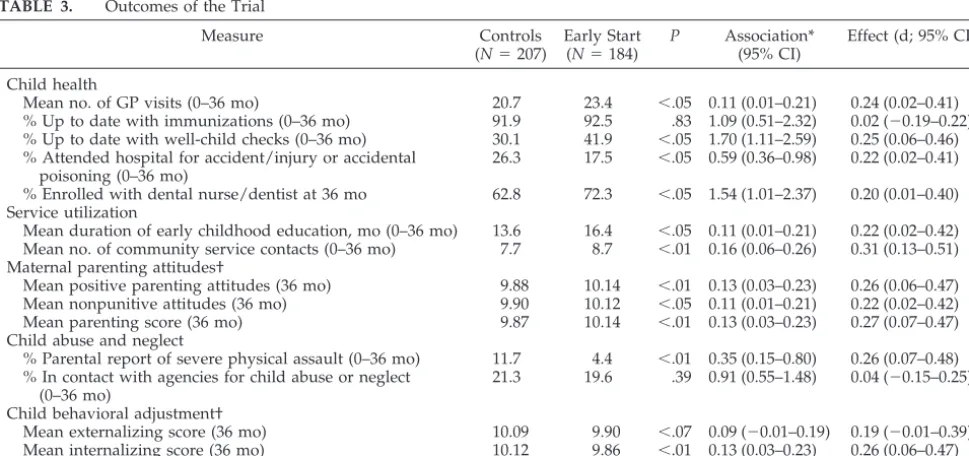
Table 3 compares the Early Start and control groups on a series of measures that summarize out-comes relating to child health and health care,
pre-school education, agency utilization, parenting, child abuse and neglect, and behavioral outcomes. Each comparison is tested for statistical significance using
ttests and2tests as applicable. The size of effect is
TABLE 1. Social and Demographic Characteristics at Baseline
Measure Controls
(N⫽221)
Early Start (N⫽206)
P
Maternal factors
Mean age of mother at enrollment 24.4 24.6 .67
% Maori 26.7 24.8 .65
% Lacked educational qualifications 69.9 70.6 .88
% Interparental conflict/assault during childhood 57.0 50.5 .18
% Child abuse during childhood 41.6 44.7 .53
% Ran away from home before age 16 49.8 42.7 .14
% Assaulted by current partner 25.6 35.0 .11
Paternal factors (biological father)
Mean age 26.6 27.3 .36
% Maori 25.4 30.7 .22
% Lacked educational qualifications 72.3 77.8 .23
Family factors
% Single parent family 63.8 64.6 .87
% Pregnancy unplanned 82.3 80.1 .57
% Welfare dependent 90.1 88.4 .57
TABLE 2. Rates of Participation in the Early Start Trial and the Early Start Service at Enrollment and at 6, 12, 24, and 36 Months After Enrollment.
Period Research Participation Service
Participation
Controls Early Start Active in Early
Start
N % N % N %
Enrollment 223 100 220 100 220 100
Baseline 221 99.1 206 93.6 206 93.6
6 mo 216 96.9 196 89.1 174 79.1
12 mo 216 96.9 198 90.0 162 73.6
24 mo 211 94.6 187 85.0 143 65.0
36 mo 207 92.8 184 83.6 131 59.5
TABLE 3. Outcomes of the Trial
Measure Controls
(N⫽207)
Early Start (N⫽184)
P Association* (95% CI)
Effect (d; 95% CI)
Child health
Mean no. of GP visits (0–36 mo) 20.7 23.4 ⬍.05 0.11 (0.01–0.21) 0.24 (0.02–0.41)
% Up to date with immunizations (0–36 mo) 91.9 92.5 .83 1.09 (0.51–2.32) 0.02 (⫺0.19–0.22) % Up to date with well-child checks (0–36 mo) 30.1 41.9 ⬍.05 1.70 (1.11–2.59) 0.25 (0.06–0.46) % Attended hospital for accident/injury or accidental
poisoning (0–36 mo)
26.3 17.5 ⬍.05 0.59 (0.36–0.98) 0.22 (0.02–0.41)
% Enrolled with dental nurse/dentist at 36 mo 62.8 72.3 ⬍.05 1.54 (1.01–2.37) 0.20 (0.01–0.40) Service utilization
Mean duration of early childhood education, mo (0–36 mo) 13.6 16.4 ⬍.05 0.11 (0.01–0.21) 0.22 (0.02–0.42) Mean no. of community service contacts (0–36 mo) 7.7 8.7 ⬍.01 0.16 (0.06–0.26) 0.31 (0.13–0.51) Maternal parenting attitudes†
Mean positive parenting attitudes (36 mo) 9.88 10.14 ⬍.01 0.13 (0.03–0.23) 0.26 (0.06–0.47) Mean nonpunitive attitudes (36 mo) 9.90 10.12 ⬍.05 0.11 (0.01–0.21) 0.22 (0.02–0.42)
Mean parenting score (36 mo) 9.87 10.14 ⬍.01 0.13 (0.03–0.23) 0.27 (0.07–0.47)
Child abuse and neglect
% Parental report of severe physical assault (0–36 mo) 11.7 4.4 ⬍.01 0.35 (0.15–0.80) 0.26 (0.07–0.48) % In contact with agencies for child abuse or neglect
(0–36 mo)
21.3 19.6 .39 0.91 (0.55–1.48) 0.04 (⫺0.15–0.25)
Child behavioral adjustment†
Mean externalizing score (36 mo) 10.09 9.90 ⬍.07 0.09 (⫺0.01–0.19) 0.19 (⫺0.01–0.39) Mean internalizing score (36 mo) 10.12 9.86 ⬍.01 0.13 (0.03–0.23) 0.26 (0.06–0.47) Mean total behavior score (36 mo) 10.11 9.87 ⬍.05 0.12 (0.02–0.22) 0.24 (0.04–0.44)
CI indicates confidence interval; GP, general practitioner.
* Association between treatment group and outcomes is described by the odds ratio for dichotomous measures and the correlation ratio for continuous measures.
described by the standardized difference (Cohen’s “d”) between means or proportions, and the associ-ation between treatment group and outcomes is de-scribed by the odds ratio for dichotomous outcomes and the correlation ratio () for continuous out-comes.
Table 3 shows the following:
1. Child health: Children in the Early Start series had greater contact with their family doctor (P⬍.05), were more up to date with well-child checks (P⬍
.05), had fewer hospital attendances for acci-dents/injuries and accidental poisoning (P⬍.05), and had higher rates of enrollment with preschool dental services (P ⬍ .05). However, those in the Early Start series did not have a significantly (P⬎
.80) higher rate of immunization than the control series. Effect sizes ranged from .03 to .25 (median: .22).
2. Preschool education and use of other community services: Those in Early Start were enrolled in early childhood education for a longer period (P ⬍ .01) and had higher rates of contact with com-munity services (P⬍.01). Effect sizes ranged from .22 to .31.
3. Parenting: Parents in the Early Start series re-ported significantly higher positive and nonpuni-tive parenting (P ⬍ .05) and had higher overall parenting scores (P ⬍ .01). Effect sizes ranged from .22 to .27.
4. Child abuse and neglect: Parents in the Early Start series reported a significantly lower rate of severe physical assault (P ⬍ .01). There were, however, no differences in rates of agency contact for child abuse and neglect. During the course of the trial, 7 children were admitted to the hospital for child abuse and neglect; of these, 5 came from the con-trol series and 2 came from the Early Start series. Effect sizes ranged from .04 to .26.
5. Behavioral adjustment: The Early Start series had a marginally significant (P ⬍ .07) lower rate of externalizing problems and significantly (P⬍.05) lower overall rates of internalizing and overall problems. Effect sizes ranged from .19 to .26.
Trial Dropout
As shown in Table 2, those in the Early Start group had a higher rate of trial dropout than those in the control series (16.4% vs 7.2%; P ⬍ .01). This higher rate of dropout arose largely from the fact that 14 of those who were assigned to the Early Start group declined to enter the trial after initial referral, com-pared with 2 families in the control group. To exam-ine the extent to which dropout posed a threat to validity, we conducted the following analyses:
1. Comparisons on baseline measures: In the first analyses, the 207 control and 184 Early Start fam-ilies who were assessed up to 36 months were compared on the measures that were obtained at baseline. These measures spanned a total of 50 variables describing maternal health and well-be-ing; partner adjustment; family stability, relation-ship satisfaction, and family violence; family
ma-terial circumstances and mama-terial well-being; and family susceptibility to stress and crisis. Compar-isons of the 2 groups on this series of measures showed no significant differences between the groups.
2. Missing data estimation: The second approach in-volved estimation of missing data on the outcome measures in Table 3 for all clients who did not have complete data for the 36-month period. These missing data were estimated using regres-sion methods for clients with baseline data. For those without baseline data, the values of the out-come variables were set to the mean value (or percentage) for the control series. These methods of estimation gave complete data for all clients who entered the trial. Re-analysis of the results using all clients produced findings that were sim-ilar to those in Table 3. For the full data analyses, Cohen’s “d” ranged from .01 to .32, with a median value of .21.
DISCUSSION
This randomized trial shows that the Early Start program produced benefits in a number of areas of childhood functioning:
1. Child health: Children in the Early Start series had greater contact with family doctors, higher rates of well-child care, and greater utilization of pre-school dental services. Each of these outcomes reflects areas targeted by the program. Although children in the Early Start series had a high rate of immunization, they did not differ in this respect from the control series. The high rates of immu-nization in the control series are explained by the fact that the local general practitioner organiza-tion (Pegasus Health) instituted a campaign to encourage immunization at the same time. 2. Preschool education and service utilization:
Chil-dren in the Early Start series had greater involve-ment in preschool education, and their families had higher usage of local health and welfare agen-cies.
3. Positive parenting: Parents in the Early Start series reported higher rates of positive parenting and nonpunitive parenting at the 36-month assess-ment.
4. Child abuse and neglect: Parents in the Early Start series reported a substantially lower rate of severe child assaults than did the control series (4% vs 11%), suggesting that the program was effective in reducing rates of physical child abuse. However, this trend was not reflected in rates of contact with official agencies for concerns relating to child abuse and neglect. The absence of association with agency contact may reflect that the Early Start series was under regular surveillance by family support workers and thus would be expected to have greater agency contact for abuse and neglect concerns.
The findings of this evaluation of the Early Start program seem to show a similar range of benefits to those reported by Olds et al14 in their evaluation of
the outcomes of the Elmira trial of the Nurse Family Partnership Program at 34 months follow-up. This similarity in the outcomes of Early Start and the Nurse Family Partnership Program raises interesting issues about the features that may distinguish these programs from less successful home visitation pro-grams. Although there are substantial differences between Early Start and the Nurse Family Partner-ship Program in terms of client selection and service delivery, the programs share a number of common features that may have contributed to their success: 1. In both cases, the programs were research based, with the program design and concerns being de-rived from the research literature rather than from service provision concerns. It may be suggested that the research basis of both programs increased the likelihood of showing positive benefits. It has been widely documented that research-led home visitation programs show greater benefits than those delivered within a clinical or service provi-sion context.7,11,28,29This has been thought to be
because research-led trials may place greater em-phasis on factors that increase the likelihood of trial success, such as fidelity of service delivery and client compliance.
2. A common feature of both programs was the use of staff with tertiary level qualifications in nursing (Nurse Family Partnership Program, Early Start) or social work (Early Start). There is growing ev-idence to suggest that effective home visitation requires the use of trained staff rather than para-professionals.19
3. An additional feature that was likely to be com-mon to both programs was the inclusion of super-visory quality control of both program delivery and program content.
A feature of the results that merits comment con-cerns the size of effect. As we note, effect sizes were in the small to moderate range. This tendency for evaluations of home visitation programs to show small effects has been commented on in several re-views.13,30We believe that there is a straightforward
explanation for this finding. This explanation centers around 2 features of the randomized trial evaluation of home visitation that differ from the conditions that prevail in standard clinical trials. First, those who enter trials of home visitation are not a homogeneous population experiencing a common set of problems; rather, they are a heterogeneous group experiencing a wide range of issues and difficulties. Second, those who participate in trials of home visitation do not receive a standard method of treatment but rather a program of home visitation designed to meet their needs. Reflection on these features suggests that it would not be expected that a varying treatment ap-plied to a heterogeneous population would produce large effects. However, what one would expect to find is that effective programs would show the pat-tern of small but pervasive benefits that are evident in this evaluation.
It is important to consider threats to validity in the trial. The first major threat to validity was that the trial design was an open trial in which both clients and research interviewers were aware of the treat-ment group to which the family was assigned. In part, this concern may be addressed by noting that the positive benefits for the trial were found using data from general practitioner record (immunization, well-child visits) and hospital records (accidents/ injuries and accidental poisoning, child abuse and neglect). To the extent that data that were gathered from different sources all suggest benefits for Early Start, there are grounds for suggesting that the open nature of the trial was not a major threat to study validity.
The second major threat to study validity comes from variations in the delivery of the service, ranging from those who entered the trial but received no service to those who remained in the service for the full follow-up period. In this instance, we addressed this issue by using an intention-to-treat paradigm.
An additional threat to study validity comes from the higher dropout rate for the Early Start series. This arose largely because 14 families who were assigned to the Early Start program declined to enter the pro-gram after being randomly assigned, whereas only 2 families from the control series declined to enter the research. To examine the extent to which differential rates of sample attrition may have affected trial va-lidity, we used 2 approaches. In the first approach, baseline data were used to compare the characteris-tics of the 184 Early Start families and 207 control families who were studied throughout the follow-up period. Despite extensive comparisons, there was no evidence of systematic differences between these groups, suggesting that losses to follow-up did not have an adverse effect on study randomization. In the second approach, missing data estimation meth-ods were used to give complete data for all families. The results of this analysis produced similar conclu-sions to the analysis of the observed data, again supporting the view that sample loss did not threaten study validity.
A potential limitation of the study design was that only 75% of families who were screened as positive agreed to enter the trial. Although this does not affect the internal validity of the trial results, the extent to which findings may generalize to all families who are eligible for the program is unknown.
In recent years, there has been growing pessimism about the ability of home visitation programs to de-liver effective outcomes for children and fami-lies.13,29. This pessimism comes from a growing
implementing these programs on a society-wide basis.
In our view, what is required is an increased in-vestment into research and development to under-stand more clearly the features that go into making programs successful and the features that mitigate against program success. The results of research to date suggest that although home visitation may have beneficial consequences for children and families, in many cases, seemingly well-designed programs fail to deliver their expected benefit. Finding out what makes programs work or fail is a matter of higher priority than the current practice of implementing home visitation programs on the basis of advocacy, hope, and the inconsistent evidence from current randomized trials.
ACKNOWLEDGMENTS
This research was funded by grants from the Health Research Council of New Zealand, the National Child Health Research Foundation, the Canterbury Medical Research Foundation, and the New Zealand Lottery Grants Board.
We thank the large numbers of individuals and agencies that have contributed to the development and success of Early Start. These include past and present members of the Board of Early Start; the staff and management of Early Start; and the funding bodies who contributed to this project, including the Family Start Fund, Trust Bank Community Trust, the Christchurch City Coun-cil, the Canterbury District Health Board, the Child, Youth and Family Service, and the Ministry of Health. Finally, we owe a debt of gratitude to the 443 families who agreed to participate in this research.
REFERENCES
1. Johnson JG, Cohen P, Brown J, et al. Childhood maltreatment increases risk for personality disorders during early adulthood.Arch Gen Psychi-atry.1999;56:600 – 606
2. Fergusson DM, Horwood LJ, Lynskey MT. The childhoods of multiple problem adolescents: a 15-year longitudinal study.J Child Psychol Psy-chiatry.1994;35:1123–1140
3. Jaffee S, Caspi A, Moffitt TE, et al. Why are children born to teen mothers at risk for adverse outcomes in young adulthood? Results from a 20-year longitudinal study.Dev Psychopathol.2001;13:377–397 4. Kempe H. Approaches to preventing child abuse: the health visitor
concept.Am J Dis Child.1976;130:941–947
5. Yoshikawa H. Long-term effects of early childhood programs on social outcomes and delinquency.Future Child.1995;5:51–75
6. Olds D, Henderson CR Jr, Cole R, et al. Long-term effects of nurse home visitation on children’s criminal and antisocial behavior: 15-year fol-low-up of a randomized controlled trial.JAMA.1998;280:1238 –1244 7. Gomby DS. Promise and limitations of home visitation.JAMA.2000;
284:1430 –1431
8. Duggan A, McFarlane E, Fuddy L, et al. Randomized trial of a statewide home visiting program: impact in preventing child abuse and neglect. Child Abuse Negl.2004;28:597– 622
9. Fraser JA, Armstrong KL, Morris JP, et al. Home visiting intervention for vulnerable families with newborns: follow-up results of a random-ized controlled trial.Child Abuse Negl.2000;24:1399 –1429
10. St Pierre RG, Layzer JI. Using home visits for multiple purposes: the Comprehensive Child Development Program.Future Child. 1999;9: 15–34
11. Daro DA, Harding KA. Healthy Families America: using research to enhance practice.Future Child.1999;9:152–176
12. Wagner MM, Clayton SL. The Parents as Teachers program: results from two demonstrations.Future Child.1999;9:91–115
13. Gomby DS, Culross PL, Behrman RE. Home visiting: recent program evaluations—analysis and recommendations.Future Child.1999;9:4 –26 14. Olds D, Henderson CR Jr, Kitzman H. Does prenatal and infancy nurse home visitation have enduring effects on qualities of parental caregiv-ing and child health at 25–50 months of life?Pediatrics.1994;93:89 –98 15. Duggan AK, McFarlane EC, Windham AM, et al. Evaluation of
Ha-waii’s Healthy Start Program.Future Child.1999;9:66 –90
16. Duggan A, Windham A, McFarlane E, et al. Hawaii’s healthy start program of home visiting for at-risk families: evaluation of family identification, family engagement, and service delivery.Pediatrics.2000; 105:250 –259
17. Baker AJ, Piotrkowski CS, Brooks-Gunn J. The Home Instruction Pro-gram for Preschool Youngsters (HIPPY).Future Child.1999;9:116 –133 18. Kempe H.Child Abuse and Neglect: The Family and the Community.
Cam-bridge, MA: Ballinger Publishing Company; 1976
19. Olds DL, Robinson J, Pettitt L, et al. Effects of home visits by parapro-fessionals and by nurses: age 4 follow-up results of a randomized trial. Pediatrics.2004;114:1560 –1568
20. Olds DL, Robinson J, O’Brien R, et al. Home visiting by paraprofession-als and by nurses: a randomized, controlled trial.Pediatrics.2002;110: 486 – 496
21. Dekovic M, Janssens JMAM, Gerris JRM. Factor structure and construct validity of the Block Child Rearing Practices Report (CRPR).J Consult Clin Psychol.1991;3:182–187
22. Bavolek SJ, Keene R.Adult-Adolescent Parenting Inventory-2: Revised and Renormed. Park City, UT: Family Development Resources, Inc; 1999 23. Hanson RA. Initial parenting attitudes of pregnant adolescents and a
comparison with the decision about adoption. Adolescence.1990;15: 629 – 643
24. Straus MA, Hamby SL, Finkelhor D, et al. Identification of child mal-treatment with the Parent-Child Conflict Tactics Scales: development and psychometric data for a national sample of American parents.Child Abuse Negl.1998;22:249 –270
25. Briggs-Gowan MJ, Carter AS. Preliminary acceptability and psychomet-rics of the Infant-Toddler Social and Emotional Assessment (ITSEA): a new adult-report questionnaire.Infant Ment Health J.1998;19:422– 445 26. Cohen J.Statistical Power Analysis for the Social Sciences. New York, NY:
Academic Press; 1977
27. Stata Statistical Software: Release 8.0 [program]. College Station, TX: Stata Corp; 2003
28. Olds DL, Henderson CR Jr, Kitzman HJ, et al. Prenatal and infancy home visitation by nurses: recent findings.Future Child.1999;9:44 – 65 29. Chaffin M. Is it time to rethink Healthy Start/Healthy Families?Child
Abuse Negl.2004;28:589 –595
DOI: 10.1542/peds.2005-0948
2005;116;e803
Pediatrics
David M. Fergusson, Hildegard Grant, L. John Horwood and Elizabeth M. Ridder
Randomized Trial of the Early Start Program of Home Visitation
Services
Updated Information &
http://pediatrics.aappublications.org/content/116/6/e803
including high resolution figures, can be found at:
References
http://pediatrics.aappublications.org/content/116/6/e803#BIBL
This article cites 25 articles, 3 of which you can access for free at:
Subspecialty Collections
http://www.aappublications.org/cgi/collection/home_care_sub
Home Health
_management_sub
http://www.aappublications.org/cgi/collection/administration:practice
Administration/Practice Management following collection(s):
This article, along with others on similar topics, appears in the
Permissions & Licensing
http://www.aappublications.org/site/misc/Permissions.xhtml
in its entirety can be found online at:
Information about reproducing this article in parts (figures, tables) or
Reprints
http://www.aappublications.org/site/misc/reprints.xhtml
DOI: 10.1542/peds.2005-0948
2005;116;e803
Pediatrics
David M. Fergusson, Hildegard Grant, L. John Horwood and Elizabeth M. Ridder
Randomized Trial of the Early Start Program of Home Visitation
http://pediatrics.aappublications.org/content/116/6/e803
located on the World Wide Web at:
The online version of this article, along with updated information and services, is
by the American Academy of Pediatrics. All rights reserved. Print ISSN: 1073-0397.