University of New Hampshire
University of New Hampshire Scholars' Repository
Crimes Against Children Research Center
Research Institutes, Centers and Programs
3-2001
Choosing and Using Child Victimization
Questionnaires.
Sherry L. Hamby
The University of the South - Sewanee
David Finkelhor
University of New Hampshire - Main Campus
, [email protected]
Follow this and additional works at:
https://scholars.unh.edu/ccrc
Part of the
Psychology Commons, and the
Sociology Commons
This Article is brought to you for free and open access by the Research Institutes, Centers and Programs at University of New Hampshire Scholars' Repository. It has been accepted for inclusion in Crimes Against Children Research Center by an authorized administrator of University of New Hampshire Scholars' Repository. For more information, please [email protected].
Recommended Citation
U.S. Department of Justice
Office of Justice Programs
Office of Juvenile Justice and Delinquency Prevention
A Message From OJJDP
Youth service professionals are increasingly expected to monitor local child victimization trends and evaluate the effectiveness of preven-tion and treatment programs. The use of questionnaires to measure
victimization can elicit considerable data, but which questionnaires are best suited to address which needs?
This Bulletin notes several benefits deriving from the use of standardized questionnaires. Specific guidelines are provided to help the reader determine the type of victimization to be measured, how the questionnaire should be administered, whether the results need to correspond to crime and child protection categories, what period of time is being measured, what the children’s ages are, and whether the results will be compared with national norms. Specific ques-tionnaires are reviewed, and recom-mendations for further reading are offered.
In the wake of increased public attention to the victimization of children and adolescents, the need for solid information has never been greater. Standardized questionnaires are important tools to accurately measure child victimization. Fortu-nately, many types of questionnaires are available, and the information that this Bulletin provides should assist you in determining which questionnaire will best meet your needs.
March 2001
Choosing and Using
Child Victimization
Questionnaires
Sherry L. Hamby and David Finkelhor
Scope of Problem
and Need for
Standardized
Questionnaires
Youth are the sector of the population most vulnerable to criminal victimization. Adolescents are victimized at two to three times the rate of adults and experience assaults that are as equally injurious as those perpetrated against adults (Wells and Rankin, 1995). Available data on chil-dren under age 12 suggest that they also experience high levels of victimization (Finkelhor and Hashima, 2001; Selner-O’Hagan et al., 1998; Straus et al., 1998).
Statistics like these and such events as the Columbine school shootings have greatly increased interest in the charac-teristics of crimes against children.
Professionals who work with children are the natural leaders to spearhead efforts to document the rates of child victimiza-tion and to implement intervenvictimiza-tions aimed at reducing it. These professionals include (but are not limited to) child abuse evaluation team members, juvenile court intake workers, child and family therapists, trauma counselors, forensic interviewers, violence prevention spe-cialists, police officers (especially those who work with juveniles, such as school resource officers), and researchers.
Increasingly, professionals who work with children are expected not only to design intervention and prevention programs but also to monitor victimi-zation patterns among their clients and evaluate the effectiveness of programs ranging from school-based violence
prevention to therapy for traumatized children. The growing interest in moni-toring patterns and evaluating outcomes has generated an increasing number of questionnaire measures of juvenile vic-timization, developed for a variety of specific research, clinical, and public policy needs. These questionnaires elicit considerable information about how many victims there are and how best to identify them. For example, question-naires have established that the majority of ordinary school children see or expe-rience violence, that caretakers will often tell interviewers about violent acts they have inflicted on their own children, and that juveniles will disclose experiences of sexual assault. Not all questionnaires are appropriate for all purposes, how-ever, and identifying and choosing from among the wide array of options can be time-consuming and difficult. This Bulle-tin is intended to ease the process of identifying and locating the question-naire that is best suited for varying situa-tions. It notes the benefits of question-naires, presents guidelines for selecting questionnaires, and reviews selected questionnaires related to the major forms of victimization (see tables 1–6).
Why Use Victimization
Questionnaires?
The main reason to use standardized self-report questionnaires is that they yield the most accurate reports of victimiza-tion. The following are some important benefits of questionnaires:
◆ Self-report questionnaires are prefer-able to official records because they capture many victimizations that are never reported to child protection agencies or the police. (Underreport-ing is a particularly serious problem in crime victimizations of juveniles (Finkelhor and Ormrod, 1999).)
◆ Self-report questionnaires are also preferable to relying on spontaneous disclosures by victims because victim-ization is a sensitive topic and victims are often reluctant to bring up the is-sue on their own.
◆ Standardized self-report question-naires are preferable to informal ques-tioning because they cover a wide range of victimizations that are often not addressed in informal questioning.
◆ Standardized self-report question-naires use tested terminology and definitions of categories that are clear and specific.
◆ Self-report questionnaires frequently have normative data available to allow for comparisons with the general population of youth or other groups.
Guidelines for
Selecting Victimization
Questionnaires
Anyone wanting to measure children’s victimization should consider a number of basic questions.
Do I want to find out
about a particular form of
victimization or about
many forms?
Several questionnaires focus on a single form of victimization. An example of a focused questionnaire would be the Parent-Child version of the Conflict Tac-tics Scales (Straus et al., 1998), which ex-clusively measures child maltreatment. Other questionnaires ask about more than one form of violence. For example, the Survey of Children’s Exposure to Vio-lence (Richters and Martinez, 1993) in-cludes items on community (as opposed to family) assault, property crimes, and witnessing violence. The advantage of focused scales is that they cover a topic in depth and often identify more cases of that particular form of victimization than would a more wide-ranging scale. The ad-vantage of multivictimization scales is that they provide data on the incidence and co-occurrence of several forms of victimization. Since many kinds of victim-ization co-occur (for example, family vio-lence and community viovio-lence), unless one gets information on both, one can mistakenly conclude that a child’s dis-tress or problem behavior stems from one kind of victimization, when another or both are behind the problem.
Do I need results that
correspond to official crime
or child maltreatment
categories?
Some studies need only general measures of victimization. For example, a study cor-relating level of victimization with level of posttraumatic stress symptoms or de-pression could probably use many sound
questionnaires. A study that is trying to show pretest to posttest improvement after participation in a therapy, social services, or prevention program may find useful any questionnaire that asks about the type(s) of victimization targeted by the program. Other projects, however, may require questionnaires that define certain victimizations, such as aggravated assault or physical abuse, in the same way police or child protective services (CPS) would. For example, a study that is trying to identify the number of abused and neglected children in a community and compare that number with the num-ber who have been reported to CPS may need the community measure to match child maltreatment categories of abuse and neglect quite closely. Similarly, a study of crime underreporting would probably require a measure that would easily allow the researchers to label unre-ported crimes according to conventional categories of theft, robbery, assault, and so on. Researchers who must present their results to legislators or other policy-makers may find it helpful if question-naires can be described using official cat-egories that are more likely to be familiar to professionals in fields other than children’s services.
How often the terms “crime” or “abuse” are mentioned also affects what respon-dents will report, because questionnaire wording suggests or implies the inter-viewer’s apparent interests. In other words, the language used in a question-naire helps to create a context that may influence the respondent’s answers. Ques-tionnaires about “crime” tend to elicit reports that fit stereotypical perceptions of what constitutes criminal activity. Thus, disclosures are more likely to in-volve nonsexual assaults, stranger perpe-trators, and incidents that were reported to the police (Hamby and Finkelhor, 2000). Questionnaires that do not focus exclusively on crime obtain generally higher rates of victimization, including many kinds of serious episodes that vic-tims do not consider as crime. Very broad contexts, however, may result in the re-porting of trivial events as crimes.
Context is created by a number of ques-tionnaire features, including not only the wording of the victimization questions but also the preamble to the victimization survey, the sequence of questions within
the victimization questionnaire, the other questions that are asked (for example, whether the questions are about family or home security), and the placement of the victimization questions in relation to other items and questionnaires. Although there is no standard prescription for the best context for victimization research, all of these issues should be considered in the design of any study.
Am I interested in obtaining
rates on recent violence
(e.g., last year), or do I want
rates on lifetime exposure?
An incident rate provides an estimate of the amount of victimization youth have experienced in a given period, such as within the last year or since the introduc-tion of an intervenintroduc-tion program. A lifetime prevalence rate provides an estimate of the youth who have ever experienced the type of victimization under study. There are advantages and disadvantages to each approach.
Incident rates. One advantage to incident rates is that there is less reliance on the respondent’s long-term memory. Studies have shown that people tend to underre-port victimizations that happened longer ago (U.S. Department of Justice, 1974). Although they may recall the incident if reminded of it, most people do not go around with a tally of all the victimiza-tions they have experienced and thus may not have a precise count available when they come upon a question in a questionnaire. The longer the time period asked about, the more inaccurate the re-porting of the total frequency of incidents and the details about specific incidents is likely to be. Another advantage of inci-dent rates is that the same time period can be used for all respondents. For chil-dren, even a seemingly small age differ-ence can lead to large differdiffer-ences in the chances of being exposed to victimiza-tion. For example, an 8-year-old has a 33 percent greater period of exposure than a 6-year-old. Thus, it would be impractical to compare first graders and third graders using lifetime exposure to violence, be-cause one would assume the lifetime rate for third graders is higher anyway.
The Crimes against Children Research Center
The Crimes against Children Research Center (CCRC) helps young victims of crime by providing high-quality research, statistics, and education to the public, policy-makers, law enforcement personnel, and various other child welfare practitioners. The crimes of concern to CCRC include physical and sexual abuse, abduction, homicide, rape, assault, property offenses, and the victimization of children on the Internet. CCRC activities include
◆ Preparing policy reports on key current issues.
◆ Analyzing national and local statistics on crimes against children.
◆ Developing assessment tools for practitioners and researchers.
◆ Promoting crime reporting and help-seeking by and increased services for crime victims.
◆ Evaluating state-of-the-art prevention and intervention programs.
◆ Sponsoring conferences, workshops, institutes, and courses for practitioners and researchers.
◆ Monitoring and interpreting trends.
The Crimes against Children Research Center was created in 1998 at the University of New Hampshire. It grew out of and expands upon the work of the Family Research Laboratory, which has been devoted to the study of family
violence, child victimization, and related topics since 1975. Initial funding for CCRC was provided by the U.S. Depart-ment of Justice, Office of Justice Programs, Office of Juvenile Justice and Delinquency Prevention. CCRC also draws on funding from grants, individual gifts, revenues from publications and programs, and State and Federal sources. CCRC staff include internationally recognized experts who have published numerous books and articles concerning the incidence and impact of violence against children.
The Center’s current projects include the first national study of youth victimization experiences on the Internet; a national evaluation of children’s advocacy centers, multidisciplinary agencies that are designed to reduce trauma to children whose crime victimization is being investigated and pros-ecuted; and the development of a screening tool to help researchers and practitioners better identify child crime victims.
A list of CCRC publications is available online at
www.unh.edu/ccrc/Publications.html. For further information contact:
Crimes against Children Research Center Family Research Laboratory
University of New Hampshire Durham, NH 03824
603–862–1888
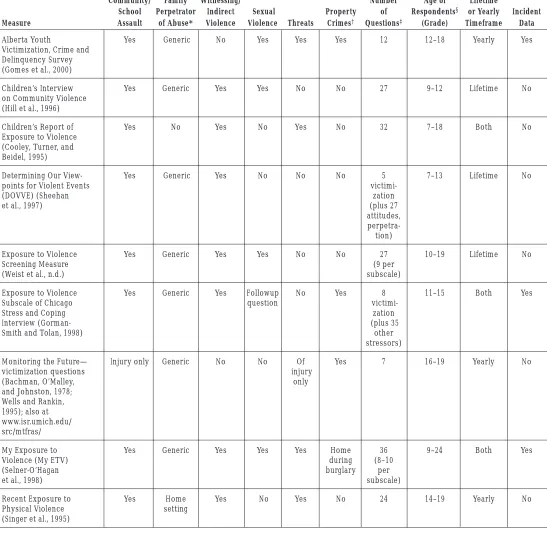
Table 1: Community Exposure to Violence Questionnaires
Type of Victimization Assessed
Community/ Family Witnessing/ Number Age of Lifetime
School Perpetrator Indirect Sexual Property of Respondents§ or Yearly Incident Measure Assault of Abuse* Violence Violence Threats Crimes† Questions‡ (Grade) Timeframe Data
Alberta Youth Yes Generic No Yes Yes Yes 12 12–18 Yearly Yes
Victimization, Crime and Delinquency Survey (Gomes et al., 2000)
Children’s Interview Yes Generic Yes Yes No No 27 9–12 Lifetime No
on Community Violence (Hill et al., 1996)
Children’s Report of Yes No Yes No Yes No 32 7–18 Both No
Exposure to Violence (Cooley, Turner, and Beidel, 1995)
Determining Our View- Yes Generic Yes No No No 5 7–13 Lifetime No
points for Violent Events
victimi-(DOVVE) (Sheehan zation
et al., 1997) (plus 27
attitudes,
perpetra-tion)
Exposure to Violence Yes Generic Yes Yes No No 27 10–19 Lifetime No
Screening Measure (9 per
(Weist et al., n.d.) subscale)
Exposure to Violence Yes Generic Yes Followup No Yes 8 11–15 Both Yes
Subscale of Chicago question
victimi-Stress and Coping zation
Interview (Gorman- (plus 35
Smith and Tolan, 1998) other
stressors)
Monitoring the Future— Injury only Generic No No Of Yes 7 16–19 Yearly No
victimization questions injury
(Bachman, O’Malley, only
and Johnston, 1978; Wells and Rankin, 1995); also at www.isr.umich.edu/ src/mtfras/
My Exposure to Yes Generic Yes Yes Yes Home 36 9–24 Both Yes
Violence (My ETV) during (8–10
(Selner-O’Hagan burglary per
et al., 1998) subscale)
Recent Exposure to Yes Home Yes No Yes No 24 14–19 Yearly No
Physical Violence setting
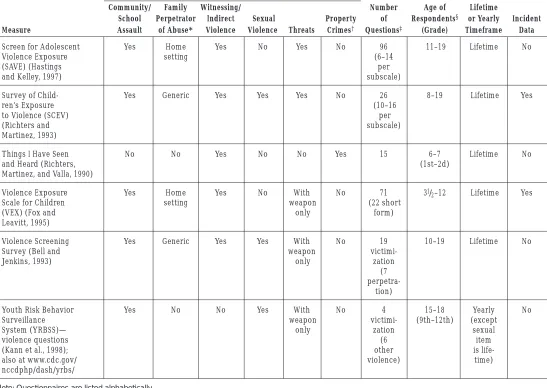
Table 1—Continued
Type of Victimization Assessed
Community/ Family Witnessing/ Number Age of Lifetime
School Perpetrator Indirect Sexual Property of Respondents§ or Yearly Incident Measure Assault of Abuse* Violence Violence Threats Crimes† Questions‡ (Grade) Timeframe Data
Screen for Adolescent Yes Home Yes No Yes No 96 11–19 Lifetime No
Violence Exposure setting (6–14
(SAVE) (Hastings per
and Kelley, 1997) subscale)
Survey of Child- Yes Generic Yes Yes Yes No 26 8–19 Lifetime Yes
ren’s Exposure (10–16
to Violence (SCEV) per
(Richters and subscale)
Martinez, 1993)
Things I Have Seen No No Yes No No Yes 15 6–7 Lifetime No
and Heard (Richters, (1st–2d)
Martinez, and Valla, 1990)
Violence Exposure Yes Home Yes No With No 71 31/
2–12 Lifetime Yes
Scale for Children setting weapon (22 short
(VEX) (Fox and only form)
Leavitt, 1995)
Violence Screening Yes Generic Yes Yes With No 19 10–19 Lifetime No
Survey (Bell and weapon
victimi-Jenkins, 1993) only zation
(7
perpetra-tion)
Youth Risk Behavior Yes No No Yes With No 4 15–18 Yearly No
Surveillance weapon victimi- (9th–12th) (except
System (YRBSS)— only zation sexual
violence questions (6 item
(Kann et al., 1998); other is
life-also at www.cdc.gov/ violence) time)
nccdphp/dash/yrbs/
Note: Questionnaires are listed alphabetically.
* “Generic” indicates that only general questions are asked about assaults and that family perpetrators are included only if the respondent thinks to do so. “Home setting” indicates that separate questions are asked about violence in the home, but it is not specified whether the violence is committed by stranger, nonstranger, or family perpetrator. “No” indicates that family violence is either specifically excluded or would be an inappropriate response to the question (as in studies of peer violence).
† Theft, vandalism, household burglary, or similar crimes that do not involve a personal assault on the victim. Robbery, which also involves threat or assault, is
not included in this category.
‡ Number of screening questions for victimization that would be asked of all respondents. As the number of administered followup questions will vary depending
on a child’s responses, these are not included in the total for those questionnaires that collect incident data. If a question about a form of violence is repeated for different settings (e.g., home, neighborhood, school) or level of exposure (e.g., witnessing, experiencing), then the resulting total number of questions is given. Subscales of many questionnaires can be used individually, depending on the goals of the study. Subscales do not necessarily correspond to categories used in the table.
§ To facilitate comparison across scales, grade has been converted to age when age is not available. When a scale has been used more than once, all available
Lifetime exposure rates. The main advan-tage of a lifetime exposure rate is that more victimization experiences will be identified. This can be important if your sample of respondents is small or the type of victimization under study is rare. The rarity of victimization changes with context. For example, in the United States, exposure to war or terrorist vio-lence is rare, but in other parts of the world it is common. Many inner-city com-munities experience more violence than most rural communities. Researchers studying a school program or interviewing children in a community setting will prob-ably find much lower victimization rates than those evaluating a group of children from a mental health clinic or a juvenile detention center. Ideally, if the sample of respondents is at least of moderate size (200 or more), at least 10 percent of the sample should report the type of
victimization being evaluated in order to compare victimized and nonvictimized groups statistically. If the rate of victimiza-tion falls below 10 percent, then more re-spondents will be needed so that at least 20 or 30 respondents are in the victimized group. Otherwise, any findings would be generalizations from the experiences of a very small number of individuals.
Do I want to use the
questionnaire as an
interview or in a
self-administered format?
Interviews. Interviews, including those conducted over the telephone, pose fewer problems with comprehension, as long as complex or technical vocabulary is not used (for example, terms like “aggravated assault”). They also have the advantage of allowing more specific followup to a respondent’s answers, because an
interviewer can be trained to ask some questions only if others have been an-swered in a certain way. Interviewers are also able to attend to children while they respond to the questions and can address issues of misunderstanding or discomfort. The disadvantages of interviews are that they can be extremely labor intensive and some children may feel less comfortable disclosing a victimization to an actual person rather than doing so privately on a questionnaire. A recently developed interview-administered questionnaire with good attention to reliability and va-lidity is My Exposure to Violence (Selner-O’Hagan et al., 1998).
Self-administered questionnaires. Self-administered questionnaires (SAQ’s) have the advantage of requiring less labor from researchers and clinicians and can even be administered in group settings (e.g., school). Because respondents are expected to complete them on their own, however,
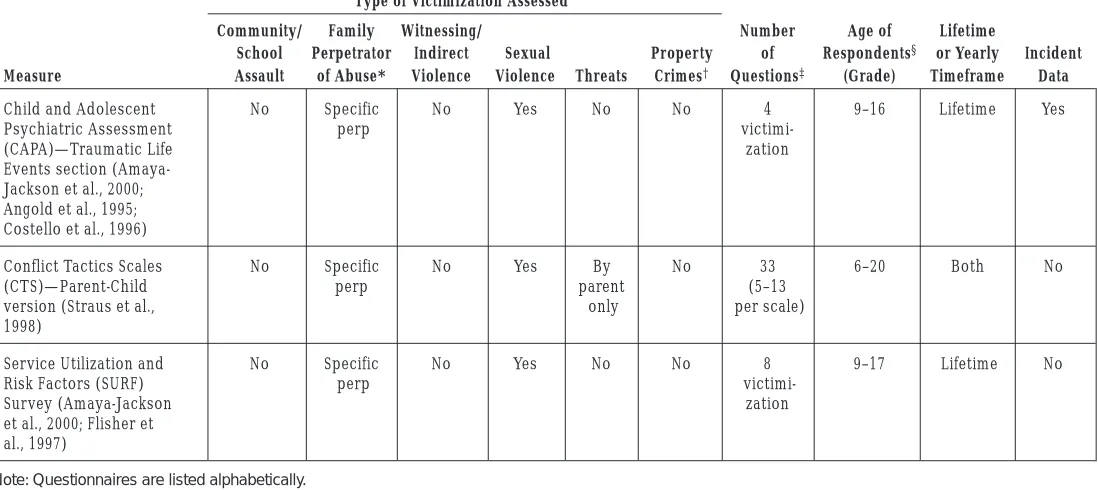
Table 2: Child Maltreatment Questionnaires
Type of Victimization Assessed
Community/ Family Witnessing/ Number Age of Lifetime
School Perpetrator Indirect Sexual Property of Respondents§ or Yearly Incident Measure Assault of Abuse* Violence Violence Threats Crimes† Questions‡ (Grade) Timeframe Data
Child and Adolescent No Specific No Yes No No 4 9–16 Lifetime Yes
Psychiatric Assessment perp
victimi-(CAPA)—Traumatic Life zation
Events section (Amaya-Jackson et al., 2000; Angold et al., 1995; Costello et al., 1996)
Conflict Tactics Scales No Specific No Yes By No 33 6–20 Both No
(CTS)—Parent-Child perp parent (5–13
version (Straus et al., only per scale)
1998)
Service Utilization and No Specific No Yes No No 8 9–17 Lifetime No
Risk Factors (SURF) perp
victimi-Survey (Amaya-Jackson zation
et al., 2000; Flisher et al., 1997)
Note: Questionnaires are listed alphabetically.
* “Specific perp” indicates that separate questions are asked about family perpetrators.
† Theft, vandalism, household burglary, or similar crimes that do not involve a personal assault on the victim. Robbery, which also involves threat or assault, is
not included in this category.
‡ Number of screening questions for victimization that would be asked of all respondents. As the number of administered followup questions will vary depending
on a child’s responses, these are not included in the total for those questionnaires that collect incident data. If a question about a form of violence is repeated for different settings (e.g., home, neighborhood, school) or level of exposure (e.g., witnessing, experiencing), then the resulting total number of questions is given. Subscales of many questionnaires can be used individually, depending on the goals of the study. Subscales do not necessarily correspond to categories used in the table.
§ To facilitate comparison across scales, grade has been converted to age when age is not available. When a scale has been used more than once, all available
Table 3: Sexual Assault Questionnaires
Type of Victimization Assessed
Community/ Family Witnessing/ Number Age of Lifetime
School Perpetrator Indirect Sexual Property of Respondents§ or Yearly Incident Measure Assault of Abuse* Violence Violence Threats Crimes† Questions‡ (Grade) Timeframe Data
National Survey of No Generic No Yes No No 3 15+ First No¶
Family Growth (NSFG) and
(Abma, Driscoll, and lifetime
Moore, 1998)
Sexual Experiences No Generic No Yes No No 10 14+ Lifetime No
Survey (Gidycz and (5 as
Koss, 1989; Koss and modified
Oros, 1982) for
adoles-cents)
Note: Questionnaires are listed alphabetically.
* “Generic” indicates that only general questions are asked about assaults and that family perpetrators are included only if the respondent thinks to do so.
† Theft, vandalism, household burglary, or similar crimes that do not involve a personal assault on the victim. Robbery, which also involves threat or assault, is not included in this category.
‡ Number of screening questions for victimization that would be asked of all respondents. As the number of administered followup questions will vary depending on a child’s responses, these are not included in the total for those questionnaires that collect incident data. If a question about a form of violence is repeated for different settings (e.g., home, neighborhood, school) or level of exposure (e.g., witnessing, experiencing), then the resulting total number of questions is given. Subscales of many questionnaires can be used individually, depending on the goals of the study. Subscales do not necessarily correspond to categories used in the table.
§ To facilitate comparison across scales, grade has been converted to age when age is not available. When a scale has been used more than once, all available age and grade information is presented.
¶ The 1995 version of the National Survey of Family Growth had three questions without incident data on sexual assault for which national norms are currently
available. The 2000 version has modified these questions and also collects some incident data.
SAQ’s must follow the simplest format pos-sible in order to be easy to understand. Ideally, the reading level required for SAQ’s will be low. At a minimum, questionnaires should require less than an eighth-grade reading level for adolescents and parents and less than a fifth-grade reading level for middle school students. The ability of el-ementary school students to complete SAQ’s on victimization has not been ad-equately tested, although sometimes ques-tionnaires are read aloud to groups of younger students, who then fill in their own answers. Self-administered question-naires are also limited in the amount of information they can obtain on specific incidents because followup questions, which often need to be tailored to an in-dividual’s responses, can easily lead to a dizzyingly complex pattern of skipping among questions. For example, the seriousness of a property victimization needs to be measured by a followup ques-tion about the value of the loss, whereas the seriousness of an assault needs to be followed up with a question about the ex-tent of any injuries suffered. One example of an SAQ measure of victimization is the Children’s Report of Exposure to Violence,
which has been shown to have good reli-ability and validity in samples of 9- to 18-year-olds (Cooley, Turner, and Beidel, 1995; Cooley-Quille, 1998).
Audio computer-assisted self-interviews. The newest technology used to administer questionnaires is called audio computer-assisted self-interview (audio CASI). With audio CASI, a child hears the question and the possible answers through a headset and touches a computer screen to re-spond. Studies have shown that, at least for adolescents and adults, many respon-dents disclose more sensitive information using an audio-CASI format (O’Reilly et al., 1994; Percy and Mayhew, 1997). This ap-pears to be due to the increased privacy of the audio-CASI setting. Turner and col-leagues (1998) conducted one of the most thorough tests of the new methodology with adolescents to date. They compared audio-CASI responses to those obtained using a pencil-and-paper self-administered questionnaire. They found increased re-porting for a variety of sensitive behaviors, including male-male sexual behavior, sub-stance use, violent perpetration, and vio-lent victimization. Although the results for
this method are extremely promising, audio-CASI equipment is very expensive and is typically used only when face-to-face contact with individual respondents is possible (because an interviewer must set up the equipment and show the child how it works). Nonetheless, it is likely that this method will be increasingly popular in the future.
What ages of children do
I want to survey?
Younger children. Younger children re-quire much more developmentally sensi-tive questions. The vocabulary needs to be simpler, and many more terms need to be reviewed for their age-appropriateness. For example, many experts suggest using “private parts” for questions about sexual assault rather than more medical or legal terms (Everson and Boat, 1994). The Things I Have Seen and Heard question-naire is one that has been used with chil-dren in first grade (Richters and Martinez, 1993). The Violence Exposure Scale for Children (VEX), which circumvents lan-guage issues by presenting cartoon images of various victimizations, has been used with preschoolers (Fox and Leavitt, 1995). Both have simplified lan-guage, omit some forms of victimization that may not be understood by young children, and use pictorial response categories to make responding easier.
Do I want to be able to
compare my results with
national norms or other
studies?
Questionnaires that supply national or community norms or have been used in other studies have several advantages. National or community norms allow re-searchers to compare the results from the group of respondents under study with those of a more general sample of youth. Thus, researchers can determine if the respondents in the sample have experi-enced more or less victimization than others. This can be helpful in terms of presenting your results to policymakers and funding agencies. Some scales also offer normative data for specific popula-tions, such as CPS clients, therapy clients, or juvenile offenders. Some examples of questionnaires with national norms are the National Crime Victimization Survey (Kindermann, Lynch, and
Cantor, 1997), the Monitoring the Future victimization questions (Wells and Rankin, 1995; Elliott, Huizinga, and Ageton, 1985), and the Parent-Child ver-sion of the Conflict Tactics Scales (Straus et al., 1998). Obtaining national norms is very expensive, however, and many well-constructed scales exist that do not offer normative data. Furthermore, because of the expense, many question-naires with national or community norms are briefer and more general screening instruments than questionnaires that do not provide norms. Previously developed questionnaires, especially those in wide usage, offer the advantage of being able to compare new findings with earlier re-sults. This is often true even if national norms are not available. In any situation in which longitudinal data are being col-lected, it is important to use the same questionnaire (or, at a minimum, very similar questionnaires) during each assessment.
Table 4: Peer Victimization Questionnaires
Type of Victimization Assessed
Community/ Family Witnessing/ Number Age of Lifetime
School Perpetrator Indirect Sexual Property of Respondents§ or Yearly Incident Measure Assault of Abuse* Violence Violence Threats Crimes† Questions‡ (Grade) Timeframe Data
Perceptions of Peer Peer only No No No No No 4 5–6 Lifetime No
Support Scale
victimi-(Kochenderfer and zation
Ladd, 1996) (plus 12
social support)
Social Experience Peer only No No No By peer No 10 8–12 Lifetime No
Questionnaire—Self only (plus 5 (3d–6th)
Report (Crick and prosocial
Grotpeter, 1996) behaviors)
Note: Questionnaires are listed alphabetically.
* “No” indicates that family violence is either specifically excluded or would be an inappropriate response to the question (as in studies of peer violence).
† Theft, vandalism, household burglary, or similar crimes that do not involve a personal assault on the victim. Robbery, which also involves threat or assault, is
not included in this category.
‡ Number of screening questions for victimization that would be asked of all respondents. As the number of administered followup questions will vary depending
on a child’s responses, these are not included in the total for those questionnaires that collect incident data. If a question about a form of violence is repeated for different settings (e.g., home, neighborhood, school) or level of exposure (e.g., witnessing, experiencing), then the resulting total number of questions is given. Subscales of many questionnaires can be used individually, depending on the goals of the study. Subscales do not necessarily correspond to categories used in the table.
§ To facilitate comparison across scales, grade has been converted to age when age is not available. When a scale has been used more than once, all available
A Review of Selected
Questionnaires
There has been a tremendous increase in the development of new questionnaires. Compared with 10 years ago, there are now numerous questionnaires that mea-sure various forms of child victimization, ranging from general questionnaires that measure exposure to community violence to specialized questionnaires that focus on specific types of victimization, such as child maltreatment or bullying. Tables 1–6 present representative questionnaires for the major forms of victimization. Research-ers interested in using a questionnaire should contact the author or publisher and request permission to do so. Some questionnaires are copyrighted. Contact information for the authors of the ques-tionnaires reviewed here is available in the articles cited in the tables. Web site addresses for two questionnaires are also provided in the tables.
Community Exposure to
Violence Questionnaires
The most general questionnaires are those that ask about exposure to violence in a child’s community. These question-naires were developed in part because of increased concern about and awareness of children’s exposure to street crime. Thus, often the questions concentrate on different forms of physical assault and, typically, at least half of the questions ask whether a child has witnessed violence as opposed to directly experiencing violence. Because of their focus on street crime, many of these measures also contain questions about whether a child has been exposed to drug deals or witnessed ar-rests, both of which, strictly speaking, fall outside most definitions of violence. Many of these questionnaires have been used primarily with samples of high-risk children who live in areas that are known to have above-average crime rates.
These questionnaires have established that a very large percentage of children have, in fact, experienced and/or wit-nessed violence. Witnessing assault, in particular, is typically reported by a clear majority of children, with exposure rates often in the 85-percent range (e.g., Hill and Jones, 1997). Most community violence questionnaires have shown good internal consistency and correlate with measures of depression, posttraumatic stress symp-toms, and behavioral problems. Their pri-mary disadvantages are the inadequate
attention to violence by family and inti-mate perpetrators, lack of national norms, and overestimation of children’s ability to understand terms such as “robbery.”
The most widely used community violence questionnaires are those developed by Richters, Martinez, and Valla (1990), Things I Have Seen and Heard (designed for first and second graders), and Richters and Martinez (1993), Survey of Children’s Expo-sure to Violence (SCEV; designed for older children). The My Exposure to Violence (My ETV) questionnaire (Selner-O’Hagan et al., 1998) is a fairly new instrument that has been developed with careful attention to reliability and validity. For very young chil-dren, the Violence Exposure Scale for Chil-dren (VEX) (Fox and Leavitt, 1995) has translated the questions typical of this class of questionnaires into cartoon-like drawings. For information on these and other community violence questionnaires, see table 1.
Child Maltreatment
Questionnaires
Child maltreatment questionnaires focus on the types of victimization that are in-vestigated and treated by CPS agencies. These include physical abuse, sexual abuse, and neglect, although not all scales cover all three forms of maltreatment. Assaults by caregivers are usually the fo-cus of these questionnaires, but sexual assaults by noncaregivers may be in-cluded because these are also sometimes investigated by institutions investigating child maltreatment.
Initially, there was some skepticism about whether caregivers would report their own use of violence against their chil-dren, but a number of national studies (e.g., Straus and Gelles, 1990; Straus et al., 1998) have established that caregiver self-reports produce higher estimates of child maltreatment than official data from CPS agencies, physicians, or police. There is some evidence, in fact, that parents will report more incidents of parent-to-child violence than children will (e.g., Grych, 1998; Jouriles and Norwood, 1995; Kruttschnitt and Dornfeld, 1992). As with community exposure measures, the reliability and validity of many child maltreatment scales are well-established. The primary problem with most child maltreatment scales is one of interpretation. Because spanking and other forms of physical discipline are le-gal, it can be difficult to determine which
questions clearly indicate physical mal-treatment. Neglect, which often is charac-terized by a pattern rather than by a single episode of inattention, has also proven to be hard to identify through self-reports. Sexual abuse is generally easier to identify because virtually any sexual contact between an adult and a child is considered abusive, but even that can be harder to distinguish with older adoles-cents who may be engaging in what they consider to be consensual acts.
The most commonly used measure of physical assault by parents is the Conflict Tactics Scales, which has recently been revised to include questions on neglect and sexual abuse (Straus et al., 1998). This measure was originally designed as a research tool, however, and its physical and psychological aggression questions do not map readily onto CPS categories. The Child Abuse Potential Inventory (Milner, 1986) is another very commonly used tool, but it focuses on stress and other correlates of abuse, rather than measuring maltreatment directly. Most other measures of child maltreatment are designed to gather information from adults about their own childhood histo-ries, although some of these have been used with teens (see table 2).
Sexual Assault
Questionnaires
Sexual assault questionnaires focus in depth on the many forms of sexual vic-timization, which include not only rape but also fondling, sexual harassment, and exposure to or involvement in por-nography. Furthermore, most sexual assault questionnaires ask about a broad spectrum of coercive sexual behaviors, which can include the use of alcohol or drugs, threats to end a relationship, and physical assault and weapons to force a juvenile into sexual activity. These mea-sures have shown that rates of sexual assault are much higher than previously thought and that it is important to avoid the use of emotionally laden and stigma-tized terms like “rape” when seeking self-reports. The main difficulties with mea-suring sexual assault among children are the sensitive nature of the questions and the difficulty of asking about sexual ex-periences in a way that young children will understand.
Table 5: Witnessing Domestic Violence Questionnaires
Type of Victimization Assessed
Community/ Family Witnessing/ Number Age of Lifetime
School Perpetrator Indirect Sexual Property of Respondents§ or Yearly Incident Measure Assault of Abuse* Violence Violence Threats Crimes† Questions‡ (Grade) Timeframe Data
Children’s Perception of No No Parent- No No No 48 7–21 Lifetime No
Interparental Conflict to-parent (4–7 per
Scale (Grych, Seid, and subscale)
Fincham, 1992)
Conflict Tactics Scales No No Parent- No No No 33 6–20 Both No
(CTS)—modified for (not as to-parent
victimi-witnessing (Straus et al., modified) zation
1996) (6–12 per
subscale)
Family Environment No Home Most No No No 9 11–17 Not No
Scale (Moos and setting family relation- Applicable
Moos, 1986) members¶ ship
(respond-conflict ents were
(plus 81 asked about
other typical level
family of conflict)
attributes)
Note: Questionnaires are listed alphabetically.
* “Home setting” indicates that separate questions are asked about violence in the home, but it is not specified whether this is committed by stranger,
nonstranger, or family perpetrator; “No” indicates that family violence is either specifically excluded or would be an inappropriate response to the question (as in studies of peer violence).
† Theft, vandalism, household burglary, or similar crimes that do not involve a personal assault on the victim. Robbery, which also involves threat or assault, is not included in this category.
‡ Number of screening questions for victimization that would be asked of all respondents. As the number of administered followup questions will vary depending on a child’s responses, these are not included in the total for those questionnaires that collect incident data. If a question about a form of violence is repeated for different settings (e.g., home, neighborhood, school) or level of exposure (e.g., witnessing, experiencing), then the resulting total number of questions is given. Subscales of many questionnaires can be used individually, depending on the goals of the study. Subscales do not necessarily correspond to categories used in the table.
§ To facilitate comparison across scales, grade has been converted to age when age is not available. When a scale has been used more than once, all available
age and grade information is presented.
¶ The Family Environment Scale questions ask the respondent to state whether or not a pattern of conflict is true of most family members on most days and so
presents a description of the average amount of conflict that has been experienced—not a description of all the incidents to which the respondent has been exposed.
current experiences of sexual assault (see table 3). The questionnaire that is most commonly used with college-age youth and adults is the Sexual Experiences Survey (SES) (Koss and Oros, 1982). It has also been adapted for use with girls of high school age (Gidycz and Koss, 1989). Fin-kelhor’s (1979) series of questions have been used in many studies but primarily to obtain reports from adults about past experiences of sexual assault. Many studies have used one or two questions to obtain sexual assault histories, but it is known that such brief measures will produce lower reported rates (Bolen and Scannapieco, 1999) and therefore should be avoided
when possible. Nonetheless, many studies of sexual assault among juveniles have used such brief measures. Examples of such studies include the Washington State Sur-vey of Adolescent Health Behaviors (Stock et al., 1997), which surveyed girls as young as those in eighth grade, and the National Survey of Family Growth (NSFG) (Abma, Driscoll, and Moore, 1998), which surveyed girls as young as age 15.
Peer Victimization
Questionnaires
Assaults by peers or siblings are one of the most common forms of violence against children. Peer victimization is increasingly
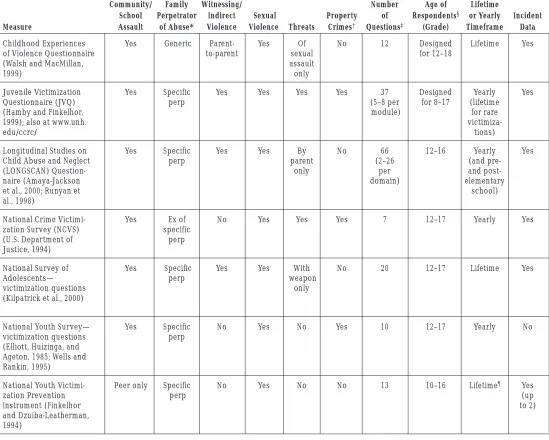
Table 6: Multidimensional Questionnaires
Type of Victimization Assessed
Community/ Family Witnessing/ Number Age of Lifetime
School Perpetrator Indirect Sexual Property of Respondents§ or Yearly Incident Measure Assault of Abuse* Violence Violence Threats Crimes† Questions‡ (Grade) Timeframe Data
Childhood Experiences Yes Generic Parent- Yes Of No 12 Designed Lifetime Yes
of Violence Questionnaire to-parent sexual for 12–18
(Walsh and MacMillan, assault
1999) only
Juvenile Victimization Yes Specific Yes Yes Yes Yes 37 Designed Yearly Yes
Questionnaire (JVQ) perp (5–8 per for 8–17 (lifetime
(Hamby and Finkelhor, module) for rare
1999); also at www.unh.
victimiza-edu/ccrc/ tions)
Longitudinal Studies on Yes Specific Yes Yes By No 66 12–16 Yearly Yes
Child Abuse and Neglect perp parent (2–26 (and
pre-(LONGSCAN) Question- only per and
post-naire (Amaya-Jackson domain) elementary
et al., 2000; Runyan et school)
al., 1998)
National Crime Victimi- Yes Ex of No Yes Yes Yes 7 12–17 Yearly Yes
zation Survey (NCVS) specific
(U.S. Department of perp
Justice, 1994)
National Survey of Yes Specific Yes Yes With No 20 12–17 Lifetime Yes
Adolescents— perp weapon
victimization questions only
(Kilpatrick et al., 2000)
National Youth Survey— Yes Specific No Yes No Yes 10 12–17 Yearly No
victimization questions perp (Elliott, Huizinga, and
Ageton, 1985; Wells and Rankin, 1995)
National Youth Victimi- Peer only Specific No Yes No No 13 10–16 Lifetime¶ Yes
zation Prevention perp (up
Instrument (Finkelhor to 2)
and Dzuiba-Leatherman, 1994)
Note: Questionnaires are listed alphabetically.
* “Generic” indicates that only general questions are asked about assaults and that family perpetrators are included only if the respondent thinks to do so. “Specific perp” indicates that separate questions are asked about family perpetrators. “Ex of specific perp” indicates that family perpetrators are included as a list of possible perpetrators in a broader question.
† Theft, vandalism, household burglary, or similar crimes that do not involve a personal assault on the victim. Robbery, which also involves threat or assault, is not included in this category.
‡ Number of screening questions for victimization that would be asked of all respondents. As the number of administered followup questions will vary depending on a child’s responses, these are not included in the total for those questionnaires that collect incident data. If a question about a form of violence is repeated for different settings (e.g., home, neighborhood, school) or level of exposure (e.g., witnessing, experiencing), then the resulting total number of questions is given. Subscales of many questionnaires can be used individually, depending on the goals of the study. Subscales do not necessarily correspond to categories used in the table.
§ To facilitate comparison across scales, grade has been converted to age when age is not available. When a scale has been used more than once, all available
age and grade information is presented.
what they want you to do?”). The Percep-tions of Peer Support Scale includes four questions on physical and emotional vic-timization and has been used with chil-dren as young as age 5 (Kochenderfer and Ladd, 1996; Ladd, Kochenderfer, and Coleman, 1997) (see table 4).
Witnessing Violence
Questionnaires
As mentioned above, most questionnaires on community exposure to violence in-clude questions on witnessing, in addition to experiencing, violence. Some of these questionnaires also contain questions about what is usually called “indirect ex-posure” to violence, which includes such things as having a close family member assaulted, but not when the child was physically present.
One form of witnessing violence that is currently receiving a lot of attention is the witnessing of domestic violence. The ques-tionnaires concerning these issues focus on assaults between parents (or between a parent and a stepparent, boyfriend, or girl-friend) that occur when children are either physically present or can see or hear the violence. The partner violence version of the Conflict Tactics Scales (Straus et al., 1996) has been adapted to measure children’s witnessing of violence and is the most commonly used measure in this field. It has been used with children as young as age 8 (Margolin and John, 1997) and more commonly with children in sixth grade and above (e.g., DuRant et al., 1995; Kruttschnitt and Dornfeld, 1992; Rogers and Holmbeck, 1997) to collect data on witnessing violence between par-ents. Other measures of family conflict include the Family Environment Scale (Moos and Moos, 1986) and the Children’s Perception of Interparental Conflict Scale (Grych, Seid, and Fincham, 1992) (see table 5).
Multidimensional
Questionnaires
The newest trend in the development of juvenile victimization questionnaires is the creation of interviews and surveys that ask about a number of different forms of victimization. These multidimensional questionnaires have some important
advantages. One advantage is the ability to learn about the overlap among forms of victimization. Another advantage is that multidimensional questionnaires can do a better job than unidimensional question-naires of identifying all of the victims in a group. For example, a questionnaire that asks only about sexual abuse will classify as nonvictims those youth who have expe-rienced physical abuse or any other non-sexual victimization. The main disadvan-tage of this approach is that it requires more questions.
The National Crime Victimization Survey (NCVS) is a well-known example of a mul-tidimensional survey. It has questions on both conventional crime victimization and sexual assault, and the newest ver-sion has improved the effort to identify family and acquaintance perpetrators. NCVS has some of the best nationally representative data available. It is a very complicated survey to administer, how-ever, and still tends to obtain reports primarily about stereotypical criminal assaults. It also uses vocabulary and con-cepts that may be difficult for children to fully understand. The new Childhood Ex-periences of Violence Questionnaire (Walsh and MacMillan, 1999), in a series of 12 questions (with some followup), in-cludes items on peer victimization, wit-nessing domestic violence, caregiver physical assault, and sexual assault. It is currently being tested in Canada.
The comprehensive Juvenile Victimization Questionnaire (JVQ) (Hamby and Finkel-hor, 1999) covers the broadest range of victimizations. This questionnaire includes sections on conventional crime, child mal-treatment, peer victimization, sexual as-sault, and witnessing and indirect violence. It also includes a section on extraordinary or catastrophic violence, including public shootings, hate crimes, terrorism, and other rare but very serious forms of violence. The sections can be used in-dividually or together to provide a com-prehensive overview of victimization. The questionnaire is designed to correspond to conventional categories of crime and child maltreatment. It also is currently being tested in a number of studies. Table 6 provides further information on multi-dimensional questionnaires.
Conclusion
Public awareness about the high rates of victimization among children and adoles-cents has never been greater. Consequently, the demand is also high for good informa-tion about the extent and forms of juvenile victimization. Professionals from a wide variety of fields (including social services, criminal justice, psychology, and health) are now expected to participate in identify-ing victimization and developidentify-ing effective intervention programs.
Both the identification of incidents of vic-timization and the development of effec-tive interventions are greatly enhanced through the use of self-report question-naires. Many studies have shown that the use of a standard questionnaire will elicit more reports of victimization than infor-mal assessment and will clarify the mean-ings of these reports. Questionnaires also identify many more instances of victimiza-tion than official police or CPS statistics.
To choose an appropriate victimization instrument, you need to consider several issues. These include what type of victim-ization you want to measure, whether you plan to conduct interviews or want a self-administered questionnaire, whether you need results to correspond to official crime and child protection categories, what period of time you want to know about, what ages of children you want to survey, and whether you would like to compare your results with national norms. There are many questionnaires currently available from which to choose that should be suitable for many needs.
For Further
Information
Many excellent books are available for those who are interested in learning more about issues of questionnaire design, de-velopment, and methodology. Many uni-versities also offer courses in survey methods, including summer workshops designed for professionals. The Univer-sity of Michigan’s Institute for Social Re-search is one source for such workshops (www.isr.umich.edu). Below is a list of suggested readings:
Dillman, D.A. 1978. Mail and Telephone Surveys: The Total Design Method. New York, NY: Wiley.
Salant, P., and Dillman, D.A. 1994. How To Conduct Your Own Survey. New York, NY: Wiley.
For further information about the mate-rial presented in this Bulletin or the Crimes against Children Research Center, contact:
Crimes against Children Research Center University of New Hampshire
Durham, NH 03824 603–862–1888 603–862–1122 (fax) E-mail: [email protected], [email protected] Internet: www.unh.edu/ccrc/
References
Abma, J., Driscoll, A., and Moore, K. 1998. Young women’s degree of control over first intercourse: An exploratory analysis.
Family Planning Perspectives 30(1):12–18. Amaya-Jackson, L., Socolar, R.R.S., Hunter, W., Runyan, D.K., and Colindres, R. 2000. Directly questioning children and adoles-cents about maltreatment. Journal of Inter-personal Violence 15(7):725–759.
Angold, A., Prendergast, M., Cox, A., Harrington, R., Simonoff, E., and Rutter, M. 1995. The Child and Adolescent Psychiat-ric Assessment (CAPA). Psychological Medi-cine 25:739–753.
Bachman, J., O’Malley, P.M., and Johnston, L. 1978. Monitoring the Future: A Continu-ing Study of the Lifestyles and Values of Youth. Ann Arbor, MI: University of Michi-gan, Institute for Social Research.
Bell, C.C., and Jenkins, E.J. 1993. Commu-nity violence and children on Chicago’s southside. Psychiatry 56:46–54.
Bolen, R.M., and Scannapieco, M. 1999. Esti-mating the prevalence of child sexual abuse in North America. Paper presented at the 6th International Family Violence Research Conference, Durham, NH, July 1999.
Cooley, M.R., Turner, S.M., and Beidel, D.C. 1995. Assessing community violence: The Children’s Report of Exposure to Violence.
Journal of the American Academy of Child and Adolescent Psychiatry 34(2):201–208.
Cooley-Quille, M. 1998. Assessing expo-sure to community violence. Paper pre-sented at the American Psychological As-sociation Conference, San Francisco, CA, August 1998.
Costello, E.J., Angold, A., Burns, B.J., Stangl, D.K., Tweed, D.L., Erkanli, A., and Worthman, C.M. 1996. The Great Smoky Mountains Study of Youth: Goals, design, methods, and the prevalence of DSM-III-R disorders. Archives of General Psychiatry
53:1129–1136.
Crick, N.R., and Bigbee, M.A. 1998. Rela-tional and overt forms of peer victimiza-tion: A multiinformant approach. Journal of Consulting and Clinical Psychology
66(2):337–347.
Crick, N.R., and Grotpeter, J.K. 1996. Children’s treatment by peers: Victims of relational and overt aggression. Develop-ment and Psychopathology 8:367–380. DuRant, R.H., Getts, A., Cadenhead, C., Emans, S.J., and Woods, E.R. 1995. Expo-sure to violence and victimization and depression, hopelessness, and purpose in life among adolescents living in and around public housing. Journal of Devel-opmental and Behavioral Pediatrics
16(4):233–237.
Elliott, D.S., Huizinga, D., and Ageton, S.S. 1985. Explaining Delinquency and Drug Use. Beverly Hills, CA: Sage Publications. Everson, M.D., and Boat, B.W. 1994. Put-ting the anatomical doll controversy in perspective: An examination of the major uses and criticisms of the dolls in child sexual abuse evaluations. Child Abuse and Neglect 18(2):113–129.
Finkelhor, D. 1979. Sexually Victimized Children. New York, NY: Free Press. Finkelhor, D., and Dzuiba-Leatherman, J. 1994. Children as victims of violence: A national survey. Pediatrics 94(4):413–420. Finkelhor, D., and Hashima, P.Y. 2001. The victimization of children and youth: A comprehensive overview. In Law and Social Science Perspectives on Youth and Justice, edited by S.O. White. New York, NY: Plenum Publishing, pp. 49–78.
Finkelhor, D., and Ormrod, R. 1999.
Reporting Crimes Against Juveniles.
Bulletin. Washington, DC: U.S. Department of Justice, Office of Justice Programs, Office of Juvenile Justice and Delinquency Prevention.
Flisher, A.J., Kramer, R.A., Hoven, C.W., Greenwald, S., Alegria, M., Bird, H.R., Canino, G.M., Connell, R., and Moore, R.E. 1997. Psychosocial characteristics of physically abused children and adoles-cents. Journal of the American Academy of Child and Adolescent Psychiatry
36(1):123–131.
Fox, N.A., and Leavitt, L.A. 1995. The Vio-lence Exposure Scale for Children—Revised (VEX–R). College Park, MD: University of Maryland.
Gidycz, C.A., and Koss, M.P. 1989. The im-pact of adolescent sexual victimization: Standardized measures of anxiety, depres-sion, and behavioral deviancy. Violence and Victims 4(2):139–149.
Gomes, J.T., Bertrand, L.D., Paetsch, J.J., and Hornick, J.P. 2000. The Extent of Youth Victimization, Crime, and Delinquency in Alberta, 1999. Calgary, Alberta: Canadian Research Institute for Law and the Family.
Gorman-Smith, D., and Tolan, P. 1998. The role of exposure to community violence and developmental problems among inner-city youth. Development and Psychopathology
10(1):101–116.
Grych, J.H. 1998. Children’s appraisals of interparental conflict: Situational and con-textual influences. Journal of Family Psy-chology 12(3):437–453.
Grych, J.H., Seid, M., and Fincham, F.D. 1992. Assessing marital conflict from the child’s perspective: The Children’s Per-ception of Interparental Conflict Scale.
Child Development 63:558–572.
Hamby, S.L., and Finkelhor, D. 1999. The comprehensive Juvenile Victimization Questionnaire. Paper presented at the 6th International Family Violence Research Conference, Durham, NH, July 1999.
Hamby, S.L., and Finkelhor, D. 2000. The victimization of children: Recommenda-tions for assessment and instrument de-velopment. Journal of the American Acad-emy of Child and Adolescent Psychiatry
39(7):829–840.
Hastings, T.L., and Kelley, M.L. 1997. De-velopment and validation of the Screen for Adolescent Violence Exposure (SAVE).
Journal of Abnormal Child Psychology
25(6):511–520.
Hill, H.M., Levermore, M., Twaite, J., and Jones, L.P. 1996. Exposure to community violence and social support as predictors of anxiety and social and emotional be-havior among African-American children.
Journal of Child and Family Studies
5(4):399–414.
Jouriles, E.J., and Norwood, W.D. 1995. Physical aggression toward boys and girls in families characterized by the battering of women. Journal of Family Psychology
9(1):69–78.
Kann, L., Kinchen, S.A., Williams, B.I., Ross, J.G., Lowry, R., Hill, C.V., Grunbaum, J., Blumson, P.S., Collins, J.L., and Kolbe, L.J. 1998. Youth risk behavior surveillance— United States, 1997. Morbidity and Mortality Weekly Reports 47(SS-3):1–89.
Kilpatrick, D.G., Acierno, R., Saunders, B., Resnick, H.S., Best, C.L., and Schnurr, P.P. 2000. Risk factors for adolescent sub-stance abuse and dependence: Data from a national sample. Journal of Consulting and Clinical Psychology 68(1):19–30. Kindermann, C., Lynch, J., and Cantor, D. 1997. National Crime Victimization Survey: Effects of the Redesign on Victimization Esti-mates. Washington, DC: U.S. Department of Justice, Office of Justice Programs, Bureau of Justice Statistics.
Kochenderfer, B.J., and Ladd, G.W. 1996. Peer victimization: Cause or consequence of school maladjustment? Child Develop-ment 67:1305–1317.
Koss, M.P., and Oros, C.J. 1982. Sexual Ex-periences Survey: A research instrument investigating sexual aggression and vic-timization. Journal of Consulting and Clini-cal Psychology 50(3):455–457.
Kruttschnitt, C., and Dornfeld, M. 1992. Will they tell?: Assessing preadolescents’ reports of family violence. Journal of Re-search in Crime and Delinquency
29(2):136–147.
Ladd, G.W., Kochenderfer, B.J., and Coleman, C.C. 1997. Classroom peer ac-ceptance, friendship, and victimization: Distinct relational systems that contribute uniquely to children’s school adjustment?
Child Development 68(6):1181–1197. Margolin, G., and John, R.S. 1997. Children’s exposure to marital aggression: Direct and mediated effects. In Out of the Darkness: Contemporary Perspectives on Family Violence,edited by G.K. Kantor and J.L. Jasinski. Thousand Oaks, CA: Sage Publi-cations, pp. 90–104.
Milner, J.S. 1986. The Child Abuse Potenial Inventory Manual. 2d ed. Webster, NC: Psytec.
Moos, R.H., and Moos, B.S. 1986. Family Environment Scale. 2d ed. Palo Alto, CA: Consulting Psychologists Press, Inc.
O’Reilly, J.M., Hubbard, M.L., Lessler, J.T., Biemer, P.P., and Turner, C.F. 1994. Audio and video computer assisted self-interviewing: Preliminary new technolo-gies for data collection. Journal of Official Statistics 10(2):197–214.
Percy, A., and Mayhew, P. 1997. Estimating sexual victimization in a national survey: A new approach. Studies on Crime and Prevention 6(2):125–150.
Richters, J.E., and Martinez, P. 1993. The NIMH Community Violence Project: I. Children as victims of and witnesses to violence. Psychiatry 56:7–21.
Richters, J.E., Martinez, P., and Valla, J.P. 1990. Levonn: A Cartoon-Based Structured Interview for Assessing Young Children’s Distress Symptoms. Bethesda, MD: Na-tional Institute of Mental Health.
Rogers, M.J., and Holmbeck, G.N. 1997. Effects of interparental aggression on children’s adjustment: The moderating role of cognitive appraisal and coping.
Journal of Family Psychology 11(1):125– 130.
Runyan, D.K., Curtis, P., Hunter, W.M., Black, M., Kotch, J.B., Bangdiwala, S., Dubowitz, H., English, D., Everson, M.D., and Landsverk, J. 1998. LONGSCAN: A consortium for longitudinal studies of maltreatment and the life course of chil-dren. Aggression and Violent Behavior: A Review Journal 3:275-285.
Selner-O’Hagan, M.B., Kindlon, D.J., Buka, S.L., Raudenbush, S.W., and Earls, F.J. 1998. Assessing exposure to violence in urban youth. Journal of Child Psychology and Psychiatry and Allied Professions
39(2):215–224.
Sheehan, K., DiCara, J.A., LeBailly, S., and Christoffel, K.K. 1997. Children’s exposure to violence in an urban setting. Archives of Pediatrics and Adolescent Medicine
151:502–504.
Singer, M.I., Anglin, T.M., Song, L., and Lunghofer, L. 1995. Adolescents’ expo-sure to violence and associated symp-toms of psychological trauma. Journal of the American Medical Association
273(6):477–482.
Stock, J.L., Bell, M.A., Boyer, D.K., and Connell, F.A. 1997. Adolescent pregnancy and sexual risk-taking among sexually abused girls. Family Planning Perspectives
29(5):200–203, 227.
Straus, M.A., and Gelles, R.J. 1990. Physical Violence in American Families: Risk Factors and Adaptations to Violence in 8,145 Fami-lies. New Brunswick, NJ: Transaction. Straus, M.A., Hamby, S.L., Boney-McCoy, S., and Sugarman, D.B. 1996. The Revised Conflict Tactics Scales (CTS2): Develop-ment and preliminary psychometric data.
Journal of Family Issues 17(3):283–316. Straus, M.A., Hamby, S.L., Finkelhor, D., Moore, D.W., and Runyan, D. 1998. Iden-tification of child maltreatment with the Parent-Child Conflict Tactics Scales: Devel-opment and psychometric data for a na-tional sample of American parents. Child Abuse and Neglect 22(4):249–270.
Turner, C.F., Ku, L., Rogers, S.M., Lindberg, L.D., Pleck, J.H., and Sonenstein, F.L. 1998. Adolescent sexual behavior, drug use, and violence: Increased reporting with com-puter survey technology. Science 280:867– 873.
U.S. Department of Justice. 1974. Crimes and Victims: A Report on the Dayton-San Jose Pilot Survey of Victimization. Wash-ington, DC: Law Enforcement Assistance Administration.
U.S. Department of Justice. 1994. Techni-cal Background on the Redesigned Na-tional Crime Victimization Survey. Bulle-tin. Washington, DC: U.S. Department of Justice, Office of Justice Programs, Bu-reau of Justice Statistics.
Walsh, C., and MacMillan, H. 1999. The de-velopment of a population-based instru-ment measuring maltreatinstru-ment of youth in Canada. Paper presented at the 6th Inter-national Family Violence Research Confer-ence, Durham, NH, July 1999.
Weist, M.D., Myers, P., Warner, B.S., Varghese, S., and Dorsey, N. n.d. A clini-cally useful screening interview to assess violence exposure in youth. Child Psychol-ogy and Human Development, in press. Wells, L.E., and Rankin, J.H. 1995. Juvenile victimization: Convergent validation of alternative measurements. Journal of Re-search in Crime and Delinquency
Acknowledgments
This Bulletin was written by Sherry L. Hamby, Ph.D., Research Assistant Profes-sor, Crimes against Children Research Center, University of New Hampshire; and David Finkelhor, Ph.D., Professor of Sociology, and Director, Crimes against Children Research Center, University of New Hampshire.
This Bulletin was prepared under grant number 98–JN–FX–0012 from the Office of Juvenile Justice and Delinquency Prevention, U.S. Department of Justice.
Points of view or opinions expressed in this document are those of the authors and do not necessarily represent the official position or policies of OJJDP or the U.S. Department of Justice.
Share With Your Colleagues
Unless otherwise noted, OJJDP publications are not copyright protected. We encourage you to reproduce this document, share it with your colleagues, and reprint it in your newsletter or journal. However, if you reprint, please cite OJJDP and the authors of this Bulletin. We are also interested in your feedback, such as how you received a copy, how you intend to use the information, and how OJJDP materials meet your individual or agency needs. Please direct your comments and questions to:
Juvenile Justice Clearinghouse Publication Reprint/Feedback P.O. Box 6000
Rockville, MD 20849–6000 800–638–8736
301–519–5600 (fax) E-mail: [email protected] The Office of Juvenile Justice and
PRESORTED STANDARD POSTAGE & FEES PAID
DOJ/OJJDP PERMIT NO. G–91 U.S. Department of Justice
Office of Justice Programs
Office of Juvenile Justice and Delinquency Prevention
Washington, DC 20531
Official Business