DNP Scholarly Projects
Student Scholarship
Spring 2019
Peer Support for Addiction in the Inpatient Setting
Rebecca Sweeney
University of New Hampshire, Durham
Follow this and additional works at:
https://scholars.unh.edu/scholarly_projects
Part of the
Health and Medical Administration Commons
,
Health Services Administration
Commons
,
Psychiatric and Mental Health Nursing Commons
,
Public Health and Community
Nursing Commons
, and the
Substance Abuse and Addiction Commons
This Clinical Doctorate is brought to you for free and open access by the Student Scholarship at University of New Hampshire Scholars' Repository. It has been accepted for inclusion in DNP Scholarly Projects by an authorized administrator of University of New Hampshire Scholars' Repository. For more information, please [email protected].
Recommended Citation
Sweeney, Rebecca, "Peer Support for Addiction in the Inpatient Setting" (2019).DNP Scholarly Projects. 16.
Peer Support for Addiction in the Inpatient Setting
Rebecca Sweeney MSN, MBA, RN, CMAC
University of New Hampshire
Faculty Mentor: Gene Harkless DNSc, APRN, FNP-BC, CNL, FAANP
Practice Mentor: Maren Batalden MD, MPH
TABLE OF CONTENTS
Abstract……… 4
Introduction ……….. 5
Problem Description ………. 5
Available Knowledge ………. 6
Peer Support Literature……….. 9
Hospital-based Studies………. 13
Rationale ……… 15
Study Purpose and Aims ……… 19
Methods………. 19
Context ………. 19
Facilitators……… 20
Barriers……… 20
Intervention ……… 21
Study of the Intervention ……… 23
Measures ……… 23
Analysis ……… 24
Ethical Considerations ……… 28
Results ………. 28
Quantitative data……….28
Demographics………..28
Insurance and ACO Attribution………. 31
Qualitative data………. 33
Patient Interviews……… 33
Recovery Coach Interviews……… 34
Staff and Provider Interviews……….. 36
Administrative Interviews……….. 37
Facilitators………. 38
Recommendations for Improvement………. 39
Discussion ………. 41
Summary ………. 41
Interpretation ………..42
Limitations ………. 44
Conclusions ……….. 45
Funding ……… 45
Abstract
Background: In 2006 the Institute of Medicine reported that combined mental illness and substance use
disorder was the second leading cause of disability and death in women and the highest cause in men. More recent data obtained from the 2016 National Survey on Drug Use and Health (Ahrnsbratz et al 2016) indicates in 2016 only one in ten of the people who need treatment, receive it. At Cambridge
Health Alliance’s Everett Hospital, the site of this pilot project, opioid overdose and acute alcohol
intoxication comprise one in every ten visits in the Emergency Department. In January of 2018, CHA partnered with North Suffolk Mental Health to embed two Recovery Coaches in the Emergency Room
and Inpatient setting to support and engagement and navigation into treatment for patients presenting to the hospital with addiction.
Aims: The aim of this study is to describe Year One of the Recovery Coach pilot project, with recommendations for improvement to inform further program growth.
Method: The population of patients who worked with a Recover Coach in Year One is described in terms of demographic information, insurance status and ACO attribution. Semi-structured interviews of patients, Recovery coaches, staff, providers, and administrators were conducted to extract qualitative
themes among the stakeholders.
Results: The average patient is described as a 44-year-old, white, low-income, English-speaking male living in a surrounding community with Alcohol use Disorder. Themes emerging from interviews indicate positive support for the program from all stakeholder perspectives. Strong themes of value in
patient engagement, Recovery Coach empowerment, and influence on staff and provider work satisfaction emerge, as well as several areas of opportunity for program improvement.
Conclusions: The findings of this study provide valuable stakeholder input that will improve the program
inpatient-based Recovery Coach model is different than other programs described in the literature.
However, this study may be of interest to another hospital planning to develop an inpatient-based model.
Introduction
Problem Description
In 2006 the Institute of Medicine reported that combined mental illness and substance use disorder was the second leading cause of disability and death in women and the highest cause in men.
More recent data obtained from the 2016 National Survey on Drug Use and Health (Ahrnsbratz et al 2016) indicates an estimated 21 million people 12 years of age and older need substance use treatment,
yet only one in ten of the people who needed treatment, received it. In its report “Improving the
Quality of Health Care for Mental and Substance-Use Conditions” (2006), the Institute of Medicine
attributed deficiencies in the care delivery system as the primary barrier that prevents many people from receiving appropriate treatment. It is well established that substance related illness has placed a burden on the workplace, child welfare systems, court and penal systems, and the health care system.
At Everett Hospital, the site of this pilot project, opioid overdoses comprise approximately two percent of total ED volume. Acute alcohol intoxication visits comprise approximately eight percent of total ED volume (CHA, 2018). Together, these two conditions make up one out of every ten ED visits.
These figures do not include the multitude of ED visits for medical conditions which were precipitated by drug or alcohol use. Many of the patients categorized through risk stratification as “high utilizers”
(defined as eight or more ED visits in six months) carry a diagnosis of addiction and cycle in and out of the ED without ever meaningfully engaging in treatment. Staff frequently cite frustration at seeing the
patients who desire treatment are unable to navigate the complicated addiction treatment system or
are unable to secure treatment in a system overwhelmed by demand. Too often the clinician cannot match treatment access with the brief point in time when the patient is ready to engage, and the opportunity is lost. Typically, patients are discharged from the ED with a referral for outpatient
treatment. Without a “bridge” between the inpatient and outpatient settings, the patient often
disengages, and treatment does not take place.
In January of 2018, CHA partnered with Tufts Health Public Plans to form an Accountable Care Organization (ACO) and entered into a financial risk sharing agreement for the care of an attributed
Medicaid population. Addictions have been identified as a major driver of cost in this population. Specifically, addictions are a primary root cause of hospital readmissions, as well as a major driver of inpatient costs. With this risk sharing arrangement, CHA is under greater pressure to more effectively manage and control total medical expenses in this Medicaid population.
Available Knowledge
In a 2006 report the IOM presented peer support as a best practice for treatment of mental illness and substance use disorder. In 2007 CMS Director Dennis Smith wrote State Medicaid Directors
with guidance on this issue. The letter states that “Peer support services are an evidence-based mental health model of care which consists of a qualified peer support provider who assists individuals with their recovery from mental illness and substance use disorders” and provided latitude to states so they
may have the option to offer peer-based support services under their states’ Medicaid program (CMS,
2007). In 2008 peer support was further supported in SAMHSA’s White Paper “The Role of Recovery
Support Services in Recovery-Oriented Systems of Care”, which recommended shifting from a model of acute interventions to that of a chronic disease model, otherwise referred to as a “recovery-oriented
support services”, defined as “non-clinical services that assist individuals and families to recovery from
drug or alcohol problems”, including peer support (Kaplan 2008, p. 9).
Peer support in a substance use context is frequently referred to as “peer coaching” or more recently, “recovery coaching” and is defined as “….a one to one relationship in which a peer leader with
more recovery experience than the person served encourages, motivates, and supports a peer who is
seeking to establish or strengthen his or her recovery……relationship…..is highly supportive, rather than
directive. (Sheedy & Whittier 2009, p. 3). SAMHSA (Substance Abuse and Mental Health Administration) has adopted Recovery Coaches as a best practice in a recovery-oriented system of care and has
developed Core Competencies and guidelines for the hiring and supervising of peers.
It is recognized that although peer support has been presented by policymakers as an evidence based best practice, there is very little peer-reviewed, comparison group research to support the effectiveness of this model (Sheedy & Whittier, 2009). In 2007 Rowe et al conducted a randomized
control trial of adults with serious mental illness, 35% of which also had co-occurring substance use disorder. Peer based intervention demonstrated a significant decrease in alcohol use, but no effect on non-drug use or criminal activity over a twelve-month period. Deering et al (2010) studied the
effectiveness of peer intervention in a population of Canadian street-based sex workers, some of whom
also used substances. Deering’s non-random comparison study demonstrated that women who had experienced the peer intervention were more likely to access inpatient addiction treatment. Smelson et
al (2013) used non-randomized control groups to study the effectiveness of peer interventions in a population of homeless veterans with mental illness, some with co-occurring substance use disorder. This study demonstrates significantly lower rates of drinking to intoxication and fewer reports of serious tension or anxiety when compared with the comparison group. Reif et al (2014) conducted a literature
review of the effectiveness of peer support for substance use disorders, with a moderate level of
types of peer support and different outcomes, and recommended that more research be conducted.
Bassuk et al (2016) conducted a systematic review of the effectiveness of peer supports, and her findings echo those of Reif, in that overall the research demonstrates a positive effect from peer support, but tremendous variation in studies combined with weak study design makes it difficult to generalize results. Bassuk also recommended that further research be conducted.
To obtain more detail, a literature review was conducted to evaluate the state of the evidence of peer support for addiction. Studies were included in the search if the design used a randomized control or comparison group method, studied adults with addiction, with an outcome measure of
sobriety (or some proxy for sobriety). Electronic databases and grey materials were searched, as well as hand searches of article reference lists. Table 1 lists the database search terms and outcomes, and Figure A describes the review and article selection process. Ultimately four studies meeting the above criteria were located. A summary of the evidence is described in the below section.
Table 1
Database Search Criteria
Date Data Base Outcome (# Articles)
Search Terms Search Terms
1/27/18 PubMed 7 1) Behavior, addiction 2) Substance-Related
Disorders 3) Mental Health
Services 4) Peer Group 5) Peer Support 6) Substance abuse 7) Recovery Coach 8) Behavior change 9) Substance Abuse
Disorder
[1, 2, 3, 4, 5]
1/27/18 Medline 25 [2, 5, 3, 9]
1/27/18 PsychInfo 38 [7, 4, 3, 9, 8]
1/27/18 Cochrane RCT
4 [7, 5, 3, 9, 8]
Peer Support Literature
Tracy et al (2011) studied the effectiveness of peer support in a group of high-risk, high-utilizing,
“unemployable” veterans on inpatient VA psychiatric units. The study compares post-discharge
outpatient engagement among patients who received peer support either alone or in conjunction with a
health and medical appointments (43% and 48% versus 33% in control group). The study also
demonstrates higher rates of inpatient substance use treatment in the year following hospitalization among patients who had peer support. This randomized study validates improved outpatient follow up and improved use of substance use treatment for patients who work with peers, whether alone or in conjunction with a group program. These effects remained constant through the studied time period of
one year. A major limitation of this study is a low enrollment rate; not an uncommon challenge in this population. Also, the patients in this study were deemed very high risk and it is unclear if the results can be generalized to the rest of the population with addiction.
In 2008, Ryan et al evaluated the effectiveness of Recovery Coaches in a population of women with active substance use disorder who were also active in the foster care system. The randomized study measured differences in rates of delivery of new substance exposed infant (SEI) between women receiving traditional services in contrast to women receiving traditional services with peer support. A
total of 931 women (261 in the control group and 670 in intervention group) were studied. Ryan
demonstrates a 28% lower hazard risk of SEI for women with peer support than in traditional treatment. Survival analysis also demonstrates positive findings. Both groups had similar rates of SEI for the first six
months, but differences were distinct in the 15 to 30-month period. Ten percent of women receiving traditional services had an SEI in the first 15 months. In contrast, it took thirty months for women in the Recovery Coach group to reach this rate of SEI. Study authors estimate the Recovery Coach program improved family reunification, saving the state of Illinois approximately $5.5 million in placement costs
in the first year of the program. A limitation to this study is that the amount and type of peer support provided is not quantified and there may have been significant variability in practice. Additionally, this study was conducted among a specific subset of women with an open foster care case, and it is unclear
Min et al (2007) studied differences in community tenure and three-year hospitalization rates in
a group of previously-hospitalized dual diagnosis patients. The intervention group participated in a peer
support program called the “Friends Connection” over a length of time ranging from one month to seven years, with an average time in the peer support program of 2.2 years. Groups were not
randomized. All eligible patients were enrolled in an Intensive Care Management (ICM) program, with
referrals made to the peer support program based on ICM discretion. The study demonstrates positive findings associated with peer support both in community tenure and three-year hospitalization rates. Survival analysis shows patients in the peer program had longer community tenure than in the
comparison group as follows: At one year, 41% in peer program hospitalized versus 50% in comparison group, at two years, 25% in peer group hospitalized versus 28% in comparison group, and at three years, 15% in peer group hospitalized versus 25% in comparison group. Significant differences among patients who had not been hospitalized in the three-year period were noted as well: 37.7% of patients in the
peer program had no hospitalizations, compared with 27.3% in the comparison group. Although these
findings support the authors’ hypotheses, there is a strong risk of selection bias, as the groups are not randomized and there are no criteria used to place patients into the intervention or comparison group.
Although the two groups appear to be similar with respect to demographic factors, they may differ in some other fundamental way.
O’Connell et al (2017) studied the effect of a skills training program and a peer support program among a population of 137 dual diagnosis, Medicaid-eligible, hospital inpatients. Patients were
randomized into three groups: a control group that received standard treatment plus transportation vouchers to outpatient treatment, a second group that received standard treatment, transportation vouchers and a skills training class, and a third group that received standard treatment with a peer-led
symptoms, self-reported alcohol use, inpatient hospitalization rates and outpatient utilization rates. The
study demonstrated improvement in positive symptoms, reduction of negative symptoms, improvement in social functioning scores, reduction in self-reported alcohol use, and lower hospital admission rates at six and twelve months among patients in the skills training and peer support groups. In addition, patients in the peer support group showed increases in self-criticism, relatedness, and longer lengths of
time in outpatient treatment than in the skills training or control groups. The attrition rate was high, but equally so among all three comparison groups. However, this may impact the generalizability of study findings.
Overall, the four studies demonstrate a positive impact (indirectly) on sobriety with peer support interventions, as evidenced by a variety of indirect measurements. Tracy et al (2011) demonstrated improved adherence with outpatient treatment with peer support services. Min et al (2007) showed a significant decrease in the pattern of hospital readmissions and longer community
tenure with peer support. Ryan et al (2007)’s study demonstrated significantly less substance exposed
infant births among women who had peer support, and O’Connell et al (2017) showed significant
decreases in self-reported alcohol intake and improvement in other quality of life indicators. This
literature review provides moderate strength of evidence that peer support (indirectly) enhances sobriety outcomes. This is consistent with the findings of previous systematic review (Bassuk et al 2016).
However, there are several limitations to this review. Primarily, the narrow scope and
heterogeneity among the four studies reviewed here limit generalizability. Second, most of the research examines the impact of peer support among a very high risk, urban segment of the entire population of patients with addiction. The study sample are not representative of the entire population, which further
limits generalizability. There is also a great deal of heterogeneity in the studied peer support
of exposure. In addition, studies do not make note of Recovery Coach characteristics such as
certification, experience, length of sobriety. An evaluation of dose-response effect would strengthen the hypothesized relationship between peer support and the outcome. These areas of inquiry are yet to be explored. Other limitations are inherent to working with a high-risk substance use population: high attrition rate, difficulty enrolling study subjects leading to small sample size, and lack of double blinding.
Hospital-Based Studies
A second literature review was conducted to include non-randomized studies, with the search limited to work studying peer intervention for addiction in an inpatient hospital setting. Four additional
studies were obtained in this manner. Two inpatient-based programs were identified in the peer-reviewed literature. The inpatient-based Addiction Consult Team at Massachusetts General Hospital (MGH) has been described in several studies. Wakeman et al (2017) evaluated the effectiveness of an Inpatient Consultation Team, which includes a Recovery Coach for certain patients engaged in Primary
Care at MGH clinics. Although the study found lower Addiction Severity Index (ASI) composite scores and greater self-reported number of days of abstinence (12.7 days versus 5.6 days in control group) after inpatient consultation intervention, it is unclear how many of the 399 patients worked with a
Recovery Coach and of the ones that did, to what extent the Recovery Coach intervention influenced the outcome. In the MGH model, the primary care-based Recovery Coaches provide support during
hospitalization and follow patients over time. Their role is described as offering support and assisting
with navigating services.
Several peer-reviewed articles describe inpatient-based Recovery Coach services in Rhode Island. The state of Rhode Island has funded AnchorED, which deploys certified Recovery Coaches to ten Emergency Departments. Waye et al (2018) describe the program by which ED providers identify
Recovery Coach, who is then deployed to the Emergency Department. The recovery coach provides
training on Narcan administration and attempts to engage the patient in continued outreach by a community-based AnchorMORE recovery coach. This descriptive study found strong engagement rates for the interventions (88.7% of patients with consults received naloxone training and 86.8% of patients agreed to community-based follow up). However, it is unclear to what extent the take-home Narcan kit
or the recovery coach influenced the level of engagement. Samuels et al (2018) describes
implementation of this program at two community-based Lifespan hospitals in Rhode Island in a pre-and post-intervention study that measures ED referral to addiction treatment, recovery coach referral, and
provision of a take-home Narcan kit before and after the AnchorED program was initiated. Samuels et al describes increases in self-reported provider referrals to treatment (9.16% to 20.74%) after program implementation. The researchers do make note of a peak in referrals at month four, followed by a subsequent and sustained drop. Providers cited several barriers to referral, including lack of availability
of Recovery Coach (limited hours and on-call) and patients wanting to leave ED before RC arrival. The Rhode Island program was targeted to opioid use disorder and excluded patients with alcohol or other non-opioid addictions.
The MGH and Rhode Island inpatient-based Recovery Coach programs are structurally quite different from the CHA pilot. First, the CHA pilot is targeted to any substance use disorder and is not limited to opioids as in the Rhode Island program. Second, the CHA Recovery Coach program is not bundled with another intervention such as Narcan self-teaching. The CHA program is also quite
different in that it extends beyond the Emergency Department into the inpatient medical-surgical and psychiatric units. And finally, the CHA Recovery Coaches role focuses on engagement, navigation to treatment, and often, direct facilitation of the post-hospital treatment plan. This role is distinct from
Rationale
The theory of healthcare coproduction is based on the understanding that healthcare is a
service industry, and services are co-produced with the professional and end user, in other words, the clinician and the patient. A conceptual model of healthcare service coproduction depicts a system whereby the clinician and patient interact within the healthcare system that exists in the broader
community and society. The authors write that “…the observation that health outcomes are a
consequence of the dispositions, capacities and behaviors of both parties seems self-evident.” (Batalden et al, 2015, p. 1). No health professional can “make” sobriety in a patient who is not willing or able to
engage in addressing his or her substance use disorder. In the peer support relationship, patients are not instructed in what they must do. Rather, peers cultivate a respectful relationship with patients based on shared experience, co-produce a recovery plan with the patient and assist the patient in navigating the recovery system to accomplish this plan. The coproduction conceptual model which
Figure B: Conceptual model of healthcare service coproduction
Source: Batalden, M. et al. (2015). Coproduction of healthcare service. BMJ Quality & Safety.
Batalden et al (2015) describe situations during which co-production may be especially challenging, including times when patients are too ill to actively participate in their treatment plan, or when patients lack desire or capacity to do so. Both situations are commonly present when a patient
with active addiction presents to the Inpatient hospital setting. The impact of these constraints is well described by the Cumulative Complexity Model, which describes the balance between patient workload and patient capacity. Patient workload includes not only effort and responsibilities associated with maintaining a life but also work imposed by the health system associated with managing a medical
condition including scheduling and keeping appointments, taking pharmaceuticals, adopting self-care
routines. Workload capacity, or “…the abilities and resources they can mobilize to manage this
financial and educational resources, social supports, as well as physical and mental health. When the
two are out of balance, disruption occurs. The disruption is manifested by “noncompliance” or reduced
participation in normal obligations. Addiction is a chronic illness that requires treatment that increases workload; the illness also compromises capacity in many ways by impairing mental and physical health, straining social supports, and reducing financial resources. Boehmer et al (2016) conducted a systematic
review of qualitative studies examining patient capacity. In this review, decreased capacity was associated with circumstances frequently found in patients with addiction: the experience of lack of empathy by others, difficulty mobilizing resources, and poor social functioning within the personal social
network and in relationships with healthcare teams. The review also found the following themes of
“facilitating factors”, or capacity-builders, to be kindness, empathy, treatment plan fit, and help to mobilize existing resources. When viewing addiction through the lens of the Cumulative Complexity Model, we can understand the interaction of treatment burden and capacity, as well as the factors that
impact capacity. Peer support intervention is targeted to the “facilitating factors” described in this
model, which may explain why peer support is effective. Building capacity facilitates coproduction.
Programs described in the literature review do not address the mechanisms by which peer
supports works. It is well understood that patients with addiction often struggle with self-care. Villena and Chesla (2010) studied the lived experience of 20 patients with co-occurring substance use, mental health and chronic medical disorders and found common themes in barriers to seeking treatment. Boehmer et al (2016) describe patient capacity-builders which support participation in self-care to
include: the ability to incorporate the chronic condition into one’s biography, mobilize resources, and
experience kindness and empathy about their condition in the environment. Current studies do not examine to what extent these capacity-building activities (which are commonly part of the Recovery
clinical staff. Common themes were: “trust…shared lived experience…nominal power dynamics and
past negative experience with non-peer staff” (p. 6).
A successful program requires staff and provider participation. The literature does describe some provider facilitators and barriers. Wakeman et al found that having a patient receive care in a post-addiction clinic (which included recovery coaches) improved provider attitudes toward caring for
patients with substance use disorder, and these providers are more likely to refer and provide addiction treatment (2017). The study implies that provider perception of lack of treatment resources is likely to reduce referral to treatment. Samuels et al (2018) did measure provider referral to Recovery Coach
intervention as described above but noted that further investigation of barriers to referral are indicated. Pantridge et al (2016) studied the role of peer support for substance use disorder treatment and found themes among staff who described common barriers to peer support being lack of transportation (to treatment), lack of meeting space, and lack of sustained funding. Further exploration of facilitators and
barriers to provider referral to Recovery Coach is warranted.
Peer support is part of a growing trend toward patient-centered care in a recovery-based model. There is not enough evidence at the current time to support peer intervention as a best practice (as has
been done by federal policy makers). However, peer support research has so far demonstrated a positive effect. Peer support is a relatively low-risk intervention. Health professionals may worry about the quality and support that is offered to patients by peers and worry about offering an implicit
“endorsement” of the peer support coach who may be offering poor medical advice. Peer support is a
fundamental component to the Alcoholics Anonymous recovery model and has been utilized safely for many years. The primary risk of peer support intervention is financial burden. Recovery coaches are generally internally funded; however, states are increasingly adding peer support as a billable service
Study Purpose and Aims
The aim of this project is to describe Year one of the Everett Hospital Recovery Coach pilot project to
inform the design as further growth of the program is considered.
Project Objective(s)
1. Describe the patients who consented to Recovery Coach intervention in terms of:
a. Type of addiction (alcohol, opioid, both) b. Insurance status and ACO attribution
c. Demographic data (gender, age, language, ethnicity, town)
2. Describe the patient perspective of the peer interaction 3. Describe the Recovery Coach perspective of the interaction 4. Describe the staff and provider perspective on the program
5. Describe system barriers and facilitators to the Recovery Coach pilot program
6. Summarize recommendations for improvement to inform program development
Methods
Context
The project takes place at Cambridge Health Alliance’s (CHA) Everett Hospital campus.
Cambridge Health Alliance (CHA) is a safety net system of community-based healthcare providers, consisting of three community hospitals: Cambridge Hospital, Everett Hospital and Somerville Hospital
programs, including the Cambridge Department of Health. CHA’s mission is “To improve the health of
our communities.”, however a large colorful banner in multiple languages on the front page of the
website describes the internal culture at CHA: “We care for all.” (Cambridge Health Alliance, 2017).
CHA is a teaching institution -- one of the primary teaching sites for Harvard Medical School and the sponsoring institution for graduate medical education programs in family medicine, internal
medicine, and adult and child psychiatry. The Malden Clinic is the primary site for Tufts Medical School’s
Family Medicine program. Residents see patients at the clinic and manage the teaching service on the inpatient side. In the community, CHA is primarily known for psychiatry and primary care, which are the
organization’s core competencies. These competencies are strongly aligned with the mission.
Psychiatric conditions are well represented in CHA’s patient population, and many patients have
complex medical, psychiatric, and social needs which require a strong primary care system.
Facilitators
There is much organizational support for the Recovery Coach project. Improving clinical and financial outcomes for our patients with addiction aligns with CHA’s strategic goals and plan and is a
high priority for the organization. At a staff level there is support for an intervention that is perceived by
staff to help them with the burden of caring for patients with addiction who often challenge the traditional healthcare system.
Barriers
Inserting non-clinical peers into busy Emergency Department and Inpatient settings is not without its challenges. From the peer perspective, an ED is a difficult environment for a non-clinical
person, and experiences in this setting may “trigger” someone with lived addiction experience. The
peer must be socialized to the health care setting and understand how to react to a clinical change in
“rules and regulations” of the hospital and healthcare, and how to provide peer support within this
framework. From a clinical staff perspective, it is challenging to understand the role of a non-clinical person in a health care setting, how to communicate in non-clinical terms, what sort of information is needed by the recovery coach, and how to communicate and work together with a patient. Staff may also view the Recovery Coach intervention as something that prevents timely discharge home or
transfer to the floor. A patient who wishes to go to detox must stay in the ED for a few additional hours while the bed is found, and arrangements made. This can impact ED flow.
The other major barrier is financial. In a safety net institution, funding additional staff positions
is challenging. Funding beyond the pilot phase must be supported by evidence of effectiveness and positive impact on the triple aim. There are also secondary expenses to the Recovery Coach program. Many patients who wish to go to detox lack transportation to get there. Recovery Coaches frequently transport patients in their own cars, but there are times this is not feasible due to either time or safety
issues. Cab vouchers to detox units often some distance away are costly and cannot be funded through existing streams. Flexible spending for prescription medication is also needed, as patients often cannot go to detox without a full supply of medications. Temporary DPH grant funding and internal
fund-raising has supported project costs in these areas, but a sustained funding stream is required.
Intervention
On January 8, 2018, CHA implemented a Recovery Coach pilot program at the Everett Hospital campus. Two recovery coaches, employed by North Suffolk Mental Health, were placed in the inpatient
setting four days per week, for ten-hour days. Patients presenting to the Emergency Department or Inpatient units with addiction are asked if they would like to meet with a Recovery Coach. A consult is placed into the EPIC electronic medical record, which sends email notification to the Recovery Coach. If
notification is sent, and the Recovery Coach will follow up with the patient on the next scheduled day of
work. In addition, the Recovery Coaches check in with providers and staff during their scheduled times of work to ask if there are any patients who should be seen. The provider obtains verbal consent from the patient and the referral is made.
There are two Recovery Coaches participating in this pilot. Both work two days per week. One
Recovery Coach is certified and has been in recovery for twenty-eight years. The other Recovery Coach is in the process of becoming certified and has been in recovery for nine years. In this setting, the peer support intervention begins by attempting to engage the patient (civil discourse). If the patient wishes
to engage, the Recovery Coach will co-create a recovery plan and assist the patient in navigating this plan (co-planning and co-execution). Often, in the Emergency Room setting, patients wish to go to detox, and the Recovery Coach facilitates this process by finding a bed, driving the patients to the detox and supporting them through the intake process if needed. The Recovery Coaches document on a
spreadsheet the patients they have seen and whether the patient wished to engage. If there is engagement, documentation will further include type of navigation (inpatient detox, intensive outpatient program, outpatient Medication-Assisted Treatment program, etc.). All patients who
“engage” are either “handed off” to a community-based Recovery Coach or given instructions on how to contact a community-based Recovery Coach upon discharge. Patients are given the personal contact information for their Recovery Coach and told to call them any time if they need assistance.
Since the Recovery Coaches are only at the hospital four days per week, there are often consults generated on days in which they are not physically present in the hospital. In these cases, the Recovery Coaches outreach the patient on the next scheduled work day, by phone if the patient has been
Study of the Intervention
A mixed methods approach is used to describe the population served by the intervention and key
components to the program from the perspective of stakeholders in order to inform the next phase of expansion. Qualitative data is obtained through a series of stakeholder interviews.
This program description will utilize several sources of quantitative data as follows:
1. NSMH’s database where Recovery Coaches manually enter information on each interaction.
This database includes patient name, whether patient wished to engage, and interventions performed.
2. Report of all Recovery Coach consults placed in EPIC
3. EPIC EMR data is used to validate manual data on the NSMH database 4. EPIC EMR data is used to report on demographic factors
Measures
The interview tools were developed and edited by two researchers. In addition, the patient interview tool was piloted with two hospital inpatients who had worked with the Recovery Coaches, with edits made based on feedback.
The population of patients who were referred to a Recovery Coach are described in terms of:
• Age
• Gender
• Primary language
• Ethnicity
• Geography
• ACO affiliation
• AUD and/or SUD
Open-ended, semi-structured Interviews were conducted to extract qualitative themes among stakeholders in the areas of:
• What in the pilot is working? What is not working?
• What are the system facilitators and barriers?
• What is the patient perspective of the peer support intervention?
• What is the Recovery Coach perspective of the program?
• What is the staff and provider perspective of the program?
• What are the stakeholder recommendations for improving the program?
Analysis
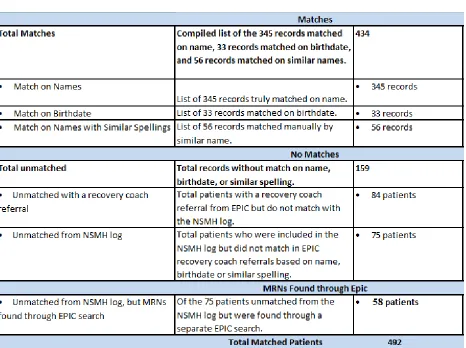
Patients with an EPIC Recovery Coach referral were matched against the NSMH database of 507
patients. There were challenges because the Recovery Coaches do not have access to the EPIC EMR and complete their documentation in a database maintained by NSMH. (The purpose of this database is to collect information about workload and process measures, not to communicate clinical information.)
Patients who go by a nickname or whose name was misspelled were unable to be matched in this initial process, which resulted in 434 EPIC-validated patients. There were 84 patients with a referral but not found on the NSMH log. It was felt this probably represented patients who were referred on days the
recovery coaches were not on duty and had been discharged by the time of visit. Even though these patients receive phone outreach, because this activity is not documented on the NSMH database, they were excluded. The remaining 75 patients were located on the NSMH database but no direct match to EPIC, and these patients were attempted to be manually matched by a trial and error process that
was identified, the date of recovery coach intervention listed on the NSMH database was matched with
a corresponding visit in the ED or inpatient hospital with addiction issue to validate the patient. Through this manual process, an additional 58 patients were located. In total, 492 unique patients were
validated. Refer to Table 2.
Table 2
EPIC reporting was used to generate a database of the following demographic characteristics of this cohort of 492 validated patients: age, gender, primary language, ethnicity, city of origin, insurance, ACO affiliation, and primary diagnosis of AUD (Alcohol Use Disorder) and/or SUD (Substance Use
Disorder). The organization’s internal diagnosis group was used for the latter. However, 180 out of 492
was conducted to validate presence of addiction and obtain diagnostic classification. It is noted that the
AUD and SUD groupers lacked specificity, as many diagnoses are in encounter-level data. This finding may be used to inform the development of future AUD registries. In addition, 28 insurance and ACO affiliations required primary source validation.
Qualitative data was collected thru semi-structured interviews with stakeholders. Open-ended
interview templates were constructed to gather information on perception of the program, facilitators and barriers, what parts of the program are most and least effective, and recommendations for
improvement. The following stakeholders were interviewed: patients, Recovery Coaches, hospital and
NSMH Administrators, physician providers, staff RNs, staff Social Workers, and staff Case Managers. Convenience sampling methods were used.
The study design called for completion of interviews of patients who had an interaction with a Recovery Coach within six months of the phone call so the intervention would be in recent memory.
181 eligible patients were identified from the NSMH database (interaction between 9/1/19-12/15/18). Initially, 60 patients were selected at random and called from a hospital phone. For those patients with a working phone, a generic voice mail was left asking them to contact the researcher to participate in a
survey. 0 patients picked up the phone and 0 returned the phone call. The recovery coaches were consulted for their opinion. It was felt that patients were not likely to take a call from the hospital, and so a second strategy developed. Both Recovery Coaches reviewed the list of eligible patients and selected a total of 38 patients that they felt would be more willing to speak about their experience. 31
of these patients were found in EPIC. 14 of them were called in advance by the Recovery Coach, who spoke to them about the survey and asked if they would be willing to participate. All the 14 agreed and said the researcher could call them. The researcher conducted phone outreach for the 31 patients.
answer the phone after three attempts, and seven patients were reached and successfully completed
the interview using the semi-structured survey template. This process is described in Figure C.
Figure C
Patient Interview Process
Both Recovery Coaches participated in extensive interviews using the survey template. In addition, a researcher shadowed both Recovery Coaches weekly over a three-week period and their observations and recommendations for program improvement were documented. Administrators at
Everett Hospital and NSMH also participated in the interview process.
The study design called for interview of staff and providers across multiple disciplines and service lines that interacted with the Recovery Coaches. The initial approach was to schedule a total of
six focus groups during times that staff, and providers tended to be “less busy”. In practice, this did not
to approach individual staff members with requests to participate. In total, 13 staff and providers were
interviewed, consisting of: three Med/Surg Social Workers, three Med/Surg Registered Nurses, one psych Registered Nurse, two ED providers, one Hospitalist provider, one Med/Surg RN Case Manager, one ED RN Case Manager, and one Admin Coordinator.
The interviews were recorded then manually transcribed. Simple thematic analysis was
conducted by reviewing the transcripts for emerging themes. Two researchers independently read the transcripts and identified themes for each response section. The two researchers then compared results. Only themes that were noted by both researchers were included in the final analysis.
Ethical Considerations
All stakeholder gave verbal consent to be interviewed. Patient interview notes and transcriptions were de-identified and maintained in a secure manner. Databases with patient
information were password-protected and maintained in a secure manner. The Institutional Review Boards at Cambridge Health Alliance and the University of New Hampshire granted this study an exemption from the IRB process, as it was deemed to constitute quality improvement work.
Results
Quantitative Data
Demographics
patients listed English as their primary language, followed by 11% as Spanish. Ethnicity data was unable
to be used, as only 105 out of 492 patients had ethnicity coded in the EMR.
Figure D
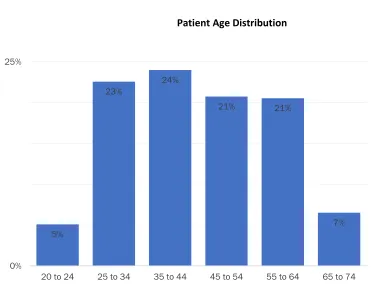
Median age of the patients was 43.5 years, with a range from 18 to 89 years of age. Eighty one
percent (81%) of all patients fell in the 20-64-year range. Age is graphically represented in Table 3. Sixty three percent (63%) of patients carried a diagnosis of Alcohol Use Disorder (AUD), and 50.2% carried a diagnosis of Substance Use Disorder (SUD). 14% of patients had both diagnoses. This distribution is graphically represented in Figure E.
100
88 88
53 47
14 13 13
9 6 6
4 4 3 2 2 2
0 120
Patients by City of Residence
Figure E
242patients with AUD
Dx 68
patients with AUD
Dx and SUD Dx 179
patients with SUD Dx
0 489
Figure 3
Patient Age Distribution
Insurance and ACO Attribution
Most patients (52.8%) had a Medicaid plan listed as the primary insurance. The most common
types of Medicaid plans were: Tufts Together with CHA (CHA’s Medicaid ACO) at 26.1%, followed by
Medicaid Fee for Service (15.3%), Boston Medical Center plans (14.6%), Partners ACO (13.8%), other Tufts Together plans (11.1%) and Community Care Cooperative (10.4%). It should be noted that the Mass Health ACO was initiated on March 1, 2019, with open enrollment remaining until June 1, 2019,
which is in the middle of this data collection period. This means that much of the Medicaid Fee for Service plans were likely converted to an ACO plan after March 1st, and there was other movement in
and out of ACO attributions, so there is likely distortion in this data.
The second most common insurance category (16.8%) is of patients without insurance, or limited coverage (Health Safety Net or Medicaid Limited). Patients with Medicare plans comprised
5%
23%
24%
21% 21%
7%
0% 25%
16.4% of the group, followed by commercial insurance (8.3%). Seventeen patients, or 3.45% were
enrolled in a SCO (Senior Care Option, for dually eligible Medicare and Medicaid enrollees), and 2.03% of patients had insurance purchased through the Healthcare Connector. The insurance data indicates that 75.08% of patients were likely to be considered low income. Insurance distribution is graphically described in Figure F. Insurance status representing low income groups are described in blue.
Figure F
Seventeen percent (17%) of patients in this population are attributed to a CHA Accountable Care Organization. Out of this sub-group, 73.4% are attributed to ACPP (Accountable Care Partnership Plan, or the Mass Health ACO), 20.5% are attributed to the BIDCO (Beth Israel Deaconess Care Organization) ACO, and 6.1% are attributed to CCA (Commonwealth Care Alliance), which has a risk-sharing agreement
16%
53% 3%
2% 17%
8%
Patient Insurance Breakdown
with CHA. In other words, approximately one in every five to six patients in this group who was seen by
a Recovery Coach is attributed to a CHA ACO.
Qualitative Data
Patient Interviews
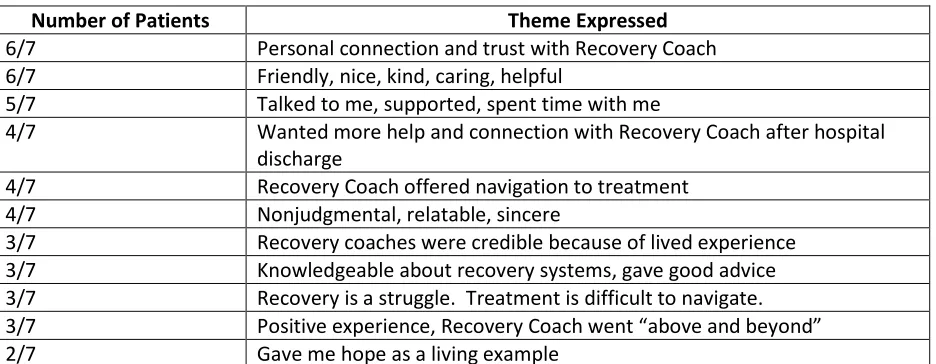
Out of the seven patients who participated in an interview, two had met with the Recovery
Coaches and declined treatment, four had assistance from the Recovery Coaches in navigating into recovery after hospital stay and had maintained sobriety, and one interview was with the mother of a patient who had worked with a Recovery Coach in the Emergency Room, had assistance in navigating to
detox, but had not maintained sobriety. Themes expressed by more than one patient are summarized in Table 4. Patients expressed a positive perception of the Recovery Coach intervention, with
expressions of trust in their peers. One patient expressed this by saying “The ones who’ve been there have the best advice….unless you’ve been there you can’t judge.” Even the patients who were not
Table 4
Patient Responses
Number of Patients Theme Expressed
6/7 Personal connection and trust with Recovery Coach 6/7 Friendly, nice, kind, caring, helpful
5/7 Talked to me, supported, spent time with me
4/7 Wanted more help and connection with Recovery Coach after hospital discharge
4/7 Recovery Coach offered navigation to treatment 4/7 Nonjudgmental, relatable, sincere
3/7 Recovery coaches were credible because of lived experience 3/7 Knowledgeable about recovery systems, gave good advice 3/7 Recovery is a struggle. Treatment is difficult to navigate. 3/7 Positive experience, Recovery Coach went “above and beyond”
2/7 Gave me hope as a living example
Recovery Coach Interviews
Both Recovery Coaches were extensively interviewed, and themes expressed by both coaches are summarized in Table 5. The Recovery Coaches expressed strongly positive feelings for doing this
hospital-based work. Both coaches describe the core functions of their work as based on connecting and building relationships. One of the Recovery Coaches described the work in the following way:
“Sometimes I can connect with someone when someone else won’t be able to…because of all I’ve been through I can connect with them….how many patients did you see, get
into detox, that’s not my criteria to success. My criteria…is a guy that didn’t want to talk
to anybody who I got to meet and talk to him and got to be friends with him and drove
him back to his job and connected him to outpatient and I’m gonna connect him to the suboxone clinic. Whether or not he shows up for it? But I may see him again in the ER in three months again but that is a successful connection because when he
comes he’s gonna say ‘Where’s that guy Jack who drove me home last time?’ It’s
not always a neat tidy end game that folks want for funding…..it wasn’t a failure it’s just we can’t count it a success because it didn’t happen on my timeline. It usually doesn’t work out that way. Usually the first connection is I just get them a warm
blanket and something to drink a sandwich and make ‘em laugh and maybe get them a ride home……keep the door open for that opening that might be when the
Implicit in this statement are several of the themes expressed by both Recovery Coaches that the
core of their work is relationally-based and often takes multiple connections over time.
Both Recovery Coaches expressed satisfaction with this work but expressed equal
frustration with disparities in access to treatment resources; in particular inpatient level detox and
step-down treatment. Both coaches describe the process of finding someone in the ED a detox bed
to be unnecessarily complicated, time consuming and unfair, with limited access for women and
people with Mass Health or no insurance. According to one of the Recovery Coaches, “If you’re on
the Mass Health system and want to be clean you have to be willing to be really
uncomfortable…..and you have to stick it out and do interviews for halfway houses while you’re in
holding…..it’s a lot to expect somebody to do.”
Table 4
Recovery Coach Responses
Themes Expressed by Recovery Coaches
Making connections, building relationships, spending time with patients is the core of the work I provide compassion, hope, and treat people with respect
“I understand”, “I’ve been there”, “I am like them”
I don’t judge people; I am there to support them wherever they are at Lack of housing, food, clothing often drives request for detox.
I am an advocate
Barriers to addiction treatment are challenging and make it difficult and frustrating to do my job Disparities in access for women and people with Medicaid or no insurance are challenging and make it difficult and frustrating to do my job
This job is difficult and draining. I need to practice self-care so I can be available for the patients. This job is empowering. I am a valued part of the Health Care Team.
I know that my presence here helps the staff manage these challenging patients.
Staff and Provider Interviews
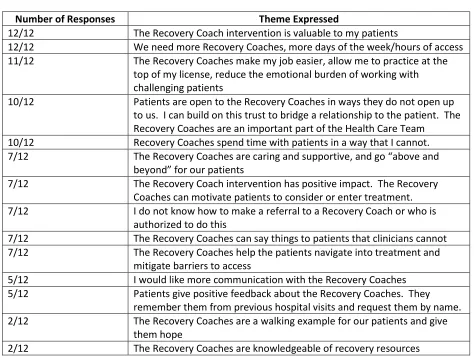
A total of twelve staff and providers were interviewed as follows: Four RNs, two RN Case Managers,
three Social Workers, three Physicians, representing the Emergency Department, inpatient medical-surgical and psychiatric units. Themes expressed by more than one staff member are summarized in Table 5. Interviews with staff and providers were overwhelmingly positive, with all of responses
reflecting a sense of value in peer support. Staff who work the most closely with the Recovery Coaches (Social Workers, Case Managers and ED physicians) all indicated the Recovery Coaches are able to engage and motivate patients for whom clinical staff have been unable, and they are able to leverage
this connection in their clinical work because the trust developed between the patient and Recovery Coach can build a bridge to a relationship with the clinician. Additionally, clinical staff and providers expressed strongly that the Recovery coaches reduce feelings of stress and burnout from caring for patients with addiction who cycle in and out of the hospital. One physician expressed satisfaction that
the organization was providing system-based programming to support their clinical work with the addiction population, helping to reduce feelings of burnout, as follows:
“The thing that is happening at CHA that is the most exciting to me is the idea that every time a patient with Substance Use Disorder has an encounter here at CHA is an
opportunity to enter into treatment and it hasn’t felt like that before….felt like we were squandering the opportunities. Now I feel much more positive that we as an institution
are meeting the needs of the patients…..I think the Recovery Coaches are a pretty essential piece of that program……Overall the spirit here around treatment of addiction is better than it was two years ago and more optimistic and I think they are part of
that.”
Clinical staff who work closely with the Recovery Coaches also expressed frustration with a lack
of formal communication system between the coaches and clinical staff, as the peer work is not
reflected in the EPIC EMR. Several staff whose work does not often intersect with the Recovery Coaches did not know that they were able to make a referral to a Recovery Coach, did not have an accurate
Table 5
Staff and Provider Responses
Number of Responses Theme Expressed
12/12 The Recovery Coach intervention is valuable to my patients
12/12 We need more Recovery Coaches, more days of the week/hours of access 11/12 The Recovery Coaches make my job easier, allow me to practice at the
top of my license, reduce the emotional burden of working with challenging patients
10/12 Patients are open to the Recovery Coaches in ways they do not open up to us. I can build on this trust to bridge a relationship to the patient. The Recovery Coaches are an important part of the Health Care Team
10/12 Recovery Coaches spend time with patients in a way that I cannot. 7/12 The Recovery Coaches are caring and supportive, and go “above and
beyond” for our patients
7/12 The Recovery Coach intervention has positive impact. The Recovery Coaches can motivate patients to consider or enter treatment. 7/12 I do not know how to make a referral to a Recovery Coach or who is
authorized to do this
7/12 The Recovery Coaches can say things to patients that clinicians cannot 7/12 The Recovery Coaches help the patients navigate into treatment and
mitigate barriers to access
5/12 I would like more communication with the Recovery Coaches 5/12 Patients give positive feedback about the Recovery Coaches. They
remember them from previous hospital visits and request them by name. 2/12 The Recovery Coaches are a walking example for our patients and give
them hope
2/12 The Recovery Coaches are knowledgeable of recovery resources
Administrative Interviews
Administrators from both Everett Hospital and North Suffolk Mental Health were interviewed.
Themes express by both administrators are summarized in Table 6. Both parties indicate the Recovery Coach program has a positive impact on their agency and is works by improving engagement and willingness to enter treatment. Both expressed that the work is beneficial to patients, but hospital staff
empowered. And they feel part of the system of care that actually views them as a team player and
their opinion matters and their intervention is vital.”
Table 6
Administrator Responses
Themes Expressed by Administrators Recovery Coaches are an important and valued part of the Health Care Team
The primary barrier to the Recovery Coach program is lack of sustained funding. Billing for Recovery Coach time carries clinical documentation requirements that changes core work functions.
Patients can relate to Recovery Coaches in ways they cannot relate to clinical staff. Recovery Coaches have improved engagement rates
Facilitators
Throughout the interviews, several themes emerged as facilitators of the Recovery Coach
program. First, the Recovery Coach program is widely perceived among staff, providers, and the
coaches themselves, as something that helps to offload work from an already over-burdened staff, both by reducing the cognitive burden of caring for challenging patients, but also by assisting with the
time-consuming and difficult process of finding detox and outpatient treatment resources. Second, the Recovery Coaches are felt to be an integrated member of the health care team, particularly in the Emergency Room setting. Their ability to establish a connection with patients is highly valued, with shared experience at the foundation of this connection. Stakeholders perceive the Recovery Coach
Barriers
Several themes also emerged as system barriers of the Recovery Coach program. First, the
coaches do not have EMR access, so communication between coaches and clinicians is verbal and systems are informal. Coaches and clinicians cited “clipboards”, or appearing to be a clinical person, as a barrier to patient engagement. This is in counterpoint to the need for clinicians to communicate with
the coaches. The difficulty in achieving this balance is a barrier. Second, clinicians who don’t work
closely with the Recovery Coaches (nurses and providers on the inpatient service) expressed confusion regarding the referral process. Several staff and both Recovery Coaches expressed dissatisfaction with
disparity in access to treatment as a major barrier to the program. Every person interviewed (including patients) cited a desire for more access to Recovery Coaches. Finally, lack of sustained funding for peer support and associated costs was cited as a system barrier.
Recommendations for Improvement
During the interview process, stakeholders were asked to identify areas of opportunity to improve the program. Improvement themes expressed by more than one stakeholder are summarized below in Table 6. Staff who work with the Recovery Coaches on the inpatient units indicated that
communication between the coaches and clinical staff can improve. Typically, health care providers communicate through EMR documentation, but Recovery Coaches are not clinical staff and do not have EMR access. A more formal procedure for communicating with clinical staff is needed. Inpatient staff also indicated a lack of clarity on some of the operational details of the program. In response, a
one-page reference guide “Things to Know about the Recovery Coach Program” has been developed in
collaboration with the Recovery Coaches and is being made available to staff. Multiple stakeholders identified problems with inpatient detox referrals: variation in practice, lack of access, lack of standards
development. Multiple stakeholders interviewed discussed the importance of supporting Recovery
Coach self-care. Coaches expressed that when they can escort hospital patients to the hospital-based AA and NA meeting, it allows them to practice self-care while doing this work. The possibility of expanding access to hospital-based peer support groups is being explored. Finally, the biggest area of opportunity expressed by stakeholders was a request for enhanced Recovery Coach coverage. As of
this writing, the program is in the process of expanding to seven day per week coverage at Everett Hospital and beginning four day per week coverage at the Cambridge Hospital Campus.
Table 6
Recommendations for Improvement
Area of Opportunity Theme Action Steps for Improvement
Inconsistency in RC schedule makes follow up with clinicians more challenging
Communication Schedules modified
Lack of clarity among staff on: patients appropriate for RC referral, who can make a referral
Training Developed a one-page reference guide for staff
Need for more consistent communication between RCs and clinical staff on
inpatient units
Communication Consider check-in after rounds (TBD) Added Social Workers to RC email distribution group
Patients requesting support after hospital discharge with recovery process, unclear that support is available
Systems Design Develop a written resource guide for patients
Pilot RC follow up after discharge to detox with a group of high-risk patients Process for detox placement from ED is
onerous
Systems Design Develop an ASAM criteria-informed workflow for decision support and standardize workflow for detox referrals
Ensure support of RC self-care Self-care Investigate whether additional AA/NA meetings at hospital campuses can be supported
When RCs aren’t here, we lose our opportunity with patients
Discussion
Summary
This study engaged stakeholders and used descriptive demographic data to understand the population served in the Recovery Coach pilot to develop an understanding of how the pilot worked (or
didn’t work), in order to inform further program development. Demographic data is used to describe
the “most common type” patient who works with a Recovery Coach as being a white, English-speaking adult male with alcoholism living in one of the communities surrounding the hospital. The “most common type” patient is likely to be poor with state-supported insurance. One in every five to six
patients in this sample are attributed to CHA’s risk-based population.
Stakeholder feedback regarding the peer support program is overwhelmingly positive. Recovery coaches and patients alike assigned high value to the relationship-building aspects of the intervention, for example: spending time, understanding, caring, empathy and support. These activities can be
viewed as capacity-builders in the framework of the Cumulative Complexity Model. In this model, when
disease burden or workload exceeds the patient’s capacity, patients are unable to actively participate in their treatment plan. This is often the case during the crisis of an Emergency Room or Inpatient hospital
visit. Enhancing capacity builders can mitigate the workload burden of the disease of addiction. That capacity builders are the foundation of patient engagement in peer support was supported in
stakeholder interviews. A patient who is engaged is willing to participate in care decisions, allowing for a co-produced (rather than a directed) treatment plan. Clinician interviews indicated that patients
become open to dialogue with them once the Recovery Coach connects and engages the patient with the treatment team. This activity facilitates co-production.
The Recovery Coaches do not direct recovery options, rather the plan is co-produced with
described by one of the Recovery Coaches: “Once they see there’s no angle with me, I’m not gonna
only be your friend if you stop using and tow the line, I’m gonna be there whether you slip and go
back or you don’t want to stop using or whatever but I keep that door open.” The addition of peer
support into the hospital setting is a systematic facilitator of co-produced healthcare.
The strength of this study is in the richness of the qualitative data from open-ended
stakeholder interviews, which allows for understanding of how the program works, with extraction
of recommendations for program improvement.
Interpretation
The Recovery Coach program model is different than other programs described in the literature,
and methods used in this descriptive study are different than most found in the literature. However, there are some similarities in these findings. Wakeman et al (2017) studied physician attitudes toward treating patients with Substance use Disorder at Massachusetts General Hospital and found more
favorable attitudes after organizational implementation of a system-wide SUD system of care, which included inpatient access to an addiction consultation team that included Recovery Coaches. The study found providers were more likely to identify, treat, and refer patients with addiction to outpatient treatment when they worked in a system of care that provided access. This is similar to themes
expressed by providers in this study, who expressed that having access to the Recovery Coach reduced the cognitive burden associated with caring for patients with addiction and improved access to care.
Jack et al (2017) conducted interviews with Recovery Coaches embedded in MGH’s primary care
already engaged with an outpatient treatment team (primary care). However, some similarities in
findings between these two studies. In both institutions, patients and coaches express that the shared lived experience helps build the connection, and this patient/Recovery Coach relationship is critical to successful engagement. Both groups express that Recovery Coaches fill a gap in the system of care for patients with addiction. However, there are differences in findings. The MGH Recovery Coaches
reported lack of clarity in their role, leading to tensions in the care team. We did not share this finding. There were other differences in the described work, likely because of the difference in work settings and program model.
Stakeholder interviews revealed positive feelings toward the Recovery Coach program. This is
not surprising, given that patients with addiction are well represented at Everett Hospital’s ED and
inpatient units: they are often considered to be high-risk, challenging patients whose needs are not well-met in a traditional hospital setting. The Recovery Coaches represent help for a population in need.
However, the strong influence of the program on staff and provider satisfaction was unexpected. A variety of reasons were given. Many stakeholders felt the Recovery Coaches improved treatment rates through engagement. Others reported feeling like they finally had institutional support in caring for a
challenging patient population. Many reported that the Recovery Coaches took the unpleasant work of finding detox placement (and other recovery navigation activities) off their plates, allowing them to function at the top of their license. Others described pride in working in a healthcare organization with an innovative care model for patients with addiction, “We have now become a place of best practice so
other hospitals are looking at the program that’s been designed here…”
Also, of interest is the population of patients who seek support from hospital-based Recovery Coaches. One out of every five to six of these patients is attributed to one of CHA’s risk-bearing
feelings expressed by stakeholders translate into improved outcomes in health and reduced health care
cost?
It is important to understand that the “most common type” patient with addiction who worked
with a Recovery Coach at CHA is likely to lack access to the type of supports needed for sustained participation in treatment, namely transportation, social supports, and disposable income. The
“average” patient is also likely to have access to only a short stay in detox and will have challenges connecting to step-down treatment after completion, making the current state of detox intervention of questionable efficacy. This population-specific data should inform the organization’s efforts to develop
an addiction continuum of care and should also be used to consider how post-hospital recovery is approached.
Limitations
Limitations in the quantitative data are that the entire population of patients seen by the
Recovery Coaches were unable to be matched to an EPIC MRN. The work of Recovery Coaches is non-clinical and not found in the electronic medical record, which makes it challenging to quantify the work.
The qualitative surveys were obtained through convenience sampling methods, it cannot be
stated that the individuals interviewed for this study are representative of the population of stakeholders.
Descriptive thematic analysis was used to extract themes expressed by stakeholders. This is a