Scholarship@Western
Scholarship@Western
Electronic Thesis and Dissertation Repository
8-26-2014 12:00 AM
Learning during the Transition Period: How Identifying Executives
Learning during the Transition Period: How Identifying Executives
as Designate CEOs Affects their Learning
as Designate CEOs Affects their Learning
Rida Mitri Elias
The University of Western Ontario
Supervisor Roderick E. White
The University of Western Ontario Graduate Program in Business
A thesis submitted in partial fulfillment of the requirements for the degree in Doctor of Philosophy
© Rida Mitri Elias 2014
Follow this and additional works at: https://ir.lib.uwo.ca/etd
Part of the Business Administration, Management, and Operations Commons
Recommended Citation Recommended Citation
Elias, Rida Mitri, "Learning during the Transition Period: How Identifying Executives as Designate CEOs Affects their Learning" (2014). Electronic Thesis and Dissertation Repository. 2314.
https://ir.lib.uwo.ca/etd/2314
This Dissertation/Thesis is brought to you for free and open access by Scholarship@Western. It has been accepted for inclusion in Electronic Thesis and Dissertation Repository by an authorized administrator of
(Thesis format: Monograph)
by
Rida Mitri Elias
Graduate Program in Business Administration
A thesis submitted in partial fulfilment of the requirements for the degree of
Doctor of Philosophy
School of Graduate and Postdoctoral Studies Western University
Ivey Business School London, Ontario, Canada
CEO succession is an important event in the life of an organization. It is
unavoidable. Around 80% of succession events are relay successions, where a CEO
successor is identified a few years before the actual succession event takes place. The
success of relay succession compared to horse race and outside successions has been
credited to the learning an heir apparent acquires during the transition period. However,
to my knowledge, none of the CEO succession research examines the learning process of
heirs apparent. Studies exploring leaders’ or executives’ learning have not investigated
whether their learning is any different due to their designation as heirs apparent or future
CEOs.
This study attempts to fill this gap through empirical qualitative research by
examining the change in executives’ learning and sensemaking processes after their
designation as heirs apparent. While executives have learned throughout their career, their
designation as heirs apparent has a direct impact on their identity, social context, and
interactions with their environment, the main properties used in the proposed theoretical
framework. Using a combination of learning and sensemaking perspectives, this study
builds premises proposing that the designation of executives as heirs apparent affects their
learning processes by (1) eliciting a new identity for them, (2) triggering a potential for a
future identity, (3) changing their social context, and (4) influencing their enacted
environment.
The research question guiding this study is: “how does the designation of
executives as heirs apparent affect their learning and prepare them to become CEOs?”.
To empirically validate my model and answer this thesis research question, I use a
CEOs who were promoted from within their organizations, outgoing and ex-CEOs, board
members, and consultants, as well as secondary data.
My findings provide a rich basis for analysis and some indications to support the
proposed model regarding the impact of designation on executives’ learning during the
transition period. This study suggests designation elicits a new identity for the executives
and induces changes in their environment affecting how they interpret cues from the
environment and adjust their behaviours and cognition accordingly. It also suggests
executives, after designation, undergo a deep thinking process to establish the standards
for their future identity as CEOs.
This thesis contributes to CEO succession literature in three ways. Firstly, the
research describes the conjectured learning process executives experience after
designation. Secondly, the thesis demonstrates the impact of the three types of enactment;
namely act, interact, and double interact; on the learning outcomes. Thirdly, the findings
also provide a basis to re-examine many of the prevailing descriptions, definitions, and
assumptions in the existing literature with respect to relay succession and heirs apparent.
This research helps generate important insights that may improve the CEO succession
process in organizations.
Keywords: CEO succession, relay succession, heir apparent, learning,
sensemaking, enactment, phenomenology
To all the guardian angels who helped me through my life
I started my PhD journey believing there is a positive linear relationship between
“I” and the “PhD degree”. I realized very early on I was wrong. It is rather a cyclical
relationship with quite a few ups and downs during the journey. I soon discovered
afterwards, “I” alone cannot get me through all the cycles.
I have always considered myself the luckiest person on earth. For one reason or
another, I was blessed to be surrounded by guardian angels who would slow the pace of
the down turn in every cycle. They would help me reverse the downward spiral and push
me to get up and continue. These angels are countless. I wish I could name each and
every one of you but I would end up with an acknowledgement section as long as my
dissertation, if not longer. Your inspiration, encouragement, and guidance are present in
my research, whether I mention your name or not.
First, I would like to thank my supervisor, Dr. Rod White, for accepting to take
me as his student, though I still do not understand why. I want you to know I will forever
be grateful for your guidance and mentorship. I have learned a lot working with you,
more than what I can say or show. You have challenged and stretched my thinking and
intellectual abilities to levels I could not have imagined existed. You showed me critical
thinking, a concept I had only heard about before, and I still have to learn a lot about.
Thank you.
I also owe a sincere thank you to Dr. Glenn Rowe, for what you have done for me
through and outside the thesis process. At the onset, I would not have been in the program
if it was not for your willingness to accept my application after the deadline. I highly
helped me get up and gain my strengths to keep going through this journey.
I have been fortunate to have an amazing supervisor in-law, Dr. Paul Beamish. I
owe you my deepest and wholehearted thank you. Your continued direct encouragement
and honest feedback helped me through the worst times in this journey. I also appreciate
your implicit help to push me through the process. I also owe a heartfelt thank you to
Maureen Beamish. Our side talks and your encouragement helped me believe in the light
at the end of the tunnel. For all this, Paul and Maureen, I will always be indebted to you.
I am honoured to have worked with Dr. Mark Zbaracki. Your persistent request to
improve the quality of my work, be it during the course I took or through the thesis
process, enabled me to think deeper and more holistically about research. Thank you. I
am also indebted to my thesis committee members: Dr. Gerard Seijts, Dr. Barbara Pierce,
and Dr. Peter Sherer. Your dedication, encouragement, and interest in the subject helped
me through my periods of doubt.
I have been blessed by the support I found in the Ivey family: faculty and staff. I
am thankful to Carol Stephenson and Kelly Cole for helping me with my first step in my
fieldwork. I want you to know you both gave me the confidence to embark on my data
collection journey. Thank you so much. I am indebted to Dr. Michael Rouse for giving
me the opportunity to be his teaching assistant and for writing many reference letters for
my job applications. To the faculty members who taught during the first two years in the
program: Dr. Debbie Compeau, Dr. Chris Higgins, Dr. Tima Bansal, Dr. Claus Rerup,
and Dr. Brad Corbett, your constructive feedback improved my analytical abilities a lot.
To the broader Ivey faculty members: Dr. Oana Branzei, Dr. Alison Konrad, Dr. Lynn
Dr. Simon Parker, Dr. Mary Crossan, Dr. Jean-Philippe Vergne, and many others, our
formal and informal discussions sharpened my thinking and set me up on a learning
journey I enjoyed a lot. To the PhD program directors: Dr. Debbie Compeau, Dr. June
Cotte, Dr. Matt Thomson, thank you for all the work you put in to follow-up on our
progress. To the PhD program staff members: Meagan Seale, Linda Dittmer-Pino, and
Mahilah Rafek, your continuous and genuine willingness to help makes our journey
easier. I owe special thanks to Anna Potrawiak , I appreciate your continuous support and
positive attitude even when I was on the verge of panicking. To Jane Weller, you have
been a great help for me through the years, always reminding me I am getting closer. To
Carly Vanderheyden, thanks for taking over all the administrative responsibilities and
allowing me to concentrate on my work. To the IT and LTR team members, thank you for
providing me with all the technical assistance I needed to finish my work.
I also owe special thanks to Liza Green and Derek Lee. You work quietly behind
the scenes. I want you to know, I have always appreciated the effort you put to process all
the complicated financial reports we submit. Thank you so much. To my rescuers in time
of need and deadlines, to Ivey’s current and ex-librarians: Nicole Nolan, Dolly
Borsato-Vassal, Alie Visser, Elizabeth Marshall, and Patrick Nelligan. You were always willing to
put the time and effort to help me find articles or even the weirdest piece of data. For this,
I thank you deeply. To the caretakers, all of you, especially Grace and Aisha who were
with me for a long time, thank you. You managed to help me take a break when I needed
it the most. Your smiling face and joyful chatting were always my motivators to go back
to work with a better attitude. I also want to thank Alex Beamish and Melissa Loucks for
requests for your services.
In August 2013, I won the Robert Bertram Award from the Canadian Foundation
for Governance Research (CFGR). Receiving this award has enriched my life in multiple
ways. Besides the financial support I received to conduct my research, I had the
opportunity to meet few amazing leaders and thinkers in Canada. I was fortunate to have
discussions with some of the smartest, most influential and inspiring business leaders
including my mentor David Beatty. I would like to especially thank Christian Buhagiar,
Stan Magidson, and Maureen Finlan at ICD for all their hard work and support. I will
always be grateful for the time board directors: Eileen Mercier, Carol Hansell, Helen
Handfield-Jones, Bob Bertram, Claude Lamoureux, and David Beatty for taking the time
to share their experience and wisdom with me. This research would not have been done
without CFGR. For this, I thank you all.
This research would have not been possible without the most generous gift
provided by all the CEOs, board directors, and field experts I met. I will forever be
indebted to each and every one of you for taking time out of your very valuable daily
activities to share your experiences with me. I will keep your names confidential as
promised but I wanted you to know I extremely appreciate your superb sense of humour
and your contribution to this work. I enjoyed every single minute of our discussions. I
also want to thank all of your assistants for coordinating the scheduling activities.
What is school without school friends? I am fortunate to have had the honour to
go to school with some of the smartest, geekiest, hardworking, and enjoyable group of
people. I have spent the best time in class and in offices discussing research and life with
Hossein Nejad, and Michael Wood. Thank you for listening to me during the up and
downturn of my PhD journey, I appreciate our friendship a lot. Then you meet the other
students with whom you share food, thoughts, and food for thoughts namely: Bahareh
Tehrani, Lucas Wang, Matt Tietz, Ramzi Fathallah, Majid Eghbali-Zarch & Fatemeh,
Maya Kumar, Vanessa Hasse, Karin Schnarr, Chya-Yi Liaw, Clara (Yanfei) Hu, Megan
Zhang, Duckjung Shin, Maryam Zadeh, Meredith Woodwark, Krista Pettit, Asad Shafiq,
Charan Bagga, Yamlaksira Getachew, Salar Ghamat, Daina Mazutis, Natalie Slawinsky,
Pat McDonald, Fouad Mirzaei, Jeannette Eberhard, Jennifer Jeffrey, Juan Wang, and
Yves Plourde. And life never stops surprising you and giving you new friends. To Anica
Zeyen, I have been blessed, though for a very short time, to have met and known you.
Life throws many challenges at everybody, but life also gave me a group of
amazing, caring, understanding and supportive best friends. To my special friend I met at
Ivey, Sara Hajmohammad, and her husband Safa Vakili, I thank you so much. I thank you
for opening your mind, heart, and home for me. Thank you for being there when I needed
you. Thank you for being as great as you are. To my lifelong best friend, maid of honour,
my kids’ godmother, Najoie Nasr, thank you. Thank you for listening to me across the
oceans, and thank you for the mental support you provided through this long journey. To
my authentic and welcoming friend, Abla Mansour, thank you. Thank you for screaming
with me when I screamed, for celebrating with me when I was happy, and for
understanding when I was frustrated. To my positive and always available to lend a hand,
Annelie Moukkaddem Baalbaki, thank you. Your positive attitude helped me believe,
whatever the situation is, it is not the end of the world. To Nada Khalidy Kouzi, who
Costa Doumani, thank you for all the professional, financial and psychological help you
have provided or was ready to provide to me during my studies.
We have a Lebanese proverb saying “Check the neighbours before checking the
house”. I have been fortunate to have amazing neighbours at Platt’s Lane. The most
special ones are Dragan and Tamara Sredojevic and their children Bogdana, Nina, and
Natalie. I cherish every moment we spent together in happy and in difficult times. Thank
you for taking care of my children when I needed you. Thank you for being open,
friendly, and very generous with your love.
I also have been blessed to have an insider friend, Dr. Walid Busaba, his wife
Manale Saikaly, and children Ana and Andrew. Thank you for making London feels a bit
like home. Knowing you were around was very helpful. Walid: thank you for being
available to answer my questions about the process and calming me down when things
were not going as fast as I expected.
To add to my blessings, I have been surrounded by the most amazing family
members ever. To the Saikalis: Khalo Michel, Nada, Wassim, Afrida, Adib, Nisreen,
Claudia, Hana, Zeina, and Fadi Michael, thank you for being wonderful. Thank you for
welcoming me and my family into your family. Thank you for hosting us for happy and
not so happy occasions. Thank you for towing us in the middle of the nights and making
us feel warmly welcomed. To the extended Saikali, Farah, Jreige, and Elias families,
thank you for all your encouragement and cheering during my PhD journey.
Some people believe they are lucky because they have a set of supporting parents,
hence I believe I am twice as lucky as the lucky people. I have been blessed with two sets
imagined I would be that lucky to have parents like you in my life. Thank you for helping
out throughout these years. Thank you for traveling thousands of miles to assist me in
finishing my thesis. I can keep saying thank you for pages to come and I will not be able
to describe your boundless love, so I thank you for being you. To Leila and Mitri Elias, I
thank you for your unconditional love. Thank you for checking up on me continuously
and believing in me. Thank you for praying for me throughout this journey. I can thank
you forever and still not be fair to you, so for you too, thank you for being you. To my
sisters and brothers: Styvania Elias, Elie Elias, Rana Farah, Rodrgiue Elias, Toufic Farah,
and your families, thank you for everything. Thanks for all the financial and
psychological support you have provided through this journey. A special thanks to my
sister Elena Hrachenko for being so positive and cheerful.
If the PhD journey was a tournament, my children would have been my
cheerleaders and my coaches. To Elias, you have taught me persistence. To Amal, I hope
one day I will learn to have your continuous positive attitude towards life. To Sara, my
youngest, you have taught me poise and wisdom, believe it or not. To Roy, you decided
to leave us too early; you will always be in my mind, heart, and life. I choose to believe
that you are watching over us, so thank you. I also owe a special thank you to Wilma
Baliosan for taking care of the kids and giving me time to work on my research.
A special thank you to one person who was with me every step of the way, 24
hours a day, 7 days a week, every week for six years, literally, my husband and PhD
colleague: Bassam Farah. You can hide from your colleagues at home and from your
family at work. How would you hide from your husband when he goes with you to work
home and work, and celebrated with me my best moments. He is the one who most of the
time saw the positive side of the events when I was only able to see the negative. I
admired his ability to persevere under very difficult situations and fight against all odds to
get what he wants. I learned from him how to accept the fall, then get up and keep going.
I cannot find the words to say thank you for your help through this journey, but I can say I
may have quit at several roadblocks had you not helped me out. I cannot promise our life
will be happy times always, but I can say, with 95% confidence level we will manage
to get through the challenges. Bassam I love you and thank you from the bottom of my
heart.
I am sure I only thanked and acknowledged the contributions of a small number of
people, the tip of the iceberg. I am sure there are many whose names are not in here but
whose influence is reflected in this work. To all of you, thanks a million.
Abstract ... ii
Dedication ... iv
Acknowledgements ... v
Table of Contents ... xiii
List of Figures ... xvi
List of Tables ... xvii
Chapter 1. Introduction ... 1
1.1. Motivation for the Study ... 1
1.2. Theoretical Lenses ... 5
1.3. Research Design ... 8
1.4. Thesis Organization ... 10
Chapter 2. Literature Review ... 11
2.1. CEO Succession ... 12
2.1.1. A General Overview ... 12
2.1.2. Heir Apparent Defined ... 15
2.1.3. Learning of Heirs Apparent ... 16
2.1.4. Summary ... 20
2.2. Learning ... 20
2.2.1. Learning Defined ... 21
2.2.2. Summary ... 26
2.3. Sensemaking ... 27
2.3.1. Sensemaking Defined ... 28
2.3.2. Summary ... 33
2.4. Integrating CEO Succession, Learning, and Sensemaking ... 34
Chapter 3. Theoretical Framework ... 36
3.2. Social Context ... 41
3.3. Co-Enactment ... 43
Chapter 4. Research Methods ... 57
4.1. Research Strategy ... 57
4.2. Research Design ... 62
4.2.1. Sample Selection ... 62
4.2.2. Data Collection ... 70
4.2.3. Data Coding and Analysis ... 81
4.3. Reflexivity Statement ... 86
4.4. Establishing Trustworthiness ... 89
4.5. Ethical Considerations ... 91
Chapter 5. Findings ... 93
5.1. Heir Apparent Designation Process ... 94
5.2. Premise One: Immediate Identity ... 103
5.3. Premise Two: Potential Identity ... 112
5.4. Premise Three: Social Context ... 117
5.5. Premise Four: Co-Enactment ... 130
5.5.1. Act ... 131
5.5.2. Interact ... 138
5.5.3. Double Interact ... 145
5.5.4. Double Interact turning into Act ... 154
5.6. Premise Five: Sense-ible Strategic Change ... 158
Chapter 6. Discussion ... 173
6.1. Overview ... 173
6.3. The Impact of the Change in Social Context on Learning ... 179
6.4. Types of Enactment and Learning Outcomes ... 181
6.5. CEO-Ds and the Implementation of Strategic Change ... 184
Chapter 7. Conclusion ... 187
7.1. Summary of Contributions ... 187
7.1.1. Contributions to the CEO Succession Literature ... 187
7.1.2. Sensemaking Literature ... 188
7.1.3. Learning Literature ... 189
7.2. Practical Implications ... 189
7.2.1. Board of Directors ... 191
7.2.2. CEOs: Designate and Incumbent ... 195
7.3. Limitations and Future Research ... 196
References ... 201
Appendix A: Learning Needs Differences Between Heirs Apparent ... 214
Appendix B: Letters of information and consent ... 215
Appendix C: Suggested Interview Guide... 219
Appendix D: Letter Requesting Participation ... 221
Appendix E: Check list for biases ... 223
Appendix F: Ethics Approval Notice ... 224
Appendix G: Executives’ thought processes ... 225
Appendix H: Description of the predecessor by the CEO ... 226
Curriculum Vitae ... 227
Figure 2.1: From the Heir Apparent to the CEO: The Theoretical Context ... 12
Figure 2.2: The Relationship between Cognition and Behaviour ... 24
Figure 2.3: The Seven Properties of Sensemaking ... 31
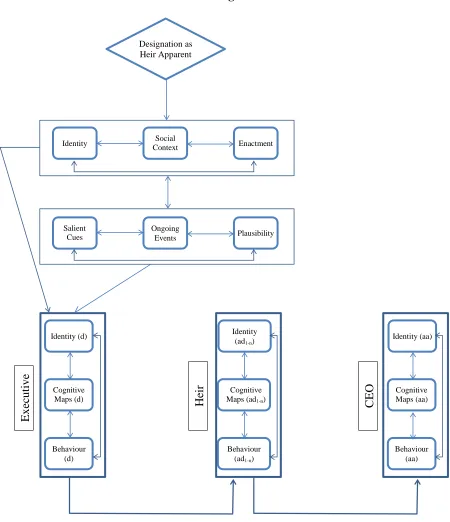
Figure 3.1: The Impact of the Heir Apparent Designation on the Executive’s Learning Process ... 56
Figure 4.1: Sample Composition by Type of Enactment ... 68
Figure 4.2: Sample Composition by Province ... 69
Figure 4.3: Sample Composition by Industry ... 69
Figure 4.4: Interviews Distribution per Month ... 73
Figure 4.5: Type of Approach ... 75
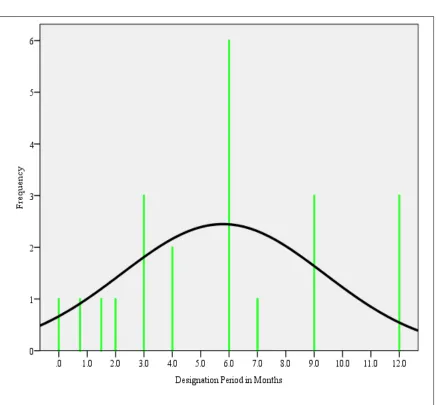
Figure 5.1: CEO-D Designation Tenure Per Month ... 98
Figure 5.2: Timeline Difference ... 170
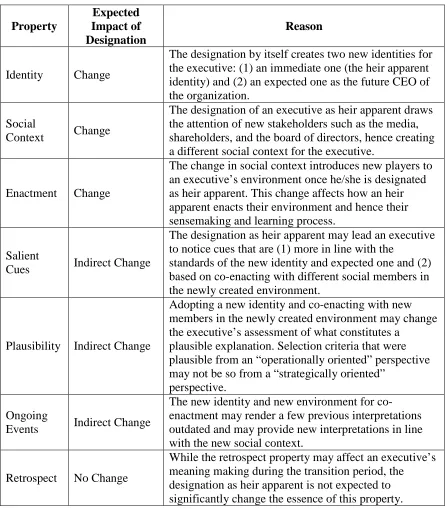
Table 2.1: The impact of the heir apparent designation on sensemaking properties ... 33
Table 5.1: Representative quotations illustrating the immediate impact of the designation on identity ... 107
Table 5.2: Representative quotations illustrating the reflection process and some of the premises for building identity standards for the executives’ new CEO identity ... 115
Table 5.3: Examples of change in the social context ... 121
Table 5.4: Examples of act style during the transition period and the resulting learning outcome ... 136
Table 5.5: Connecting learning from act to CEOs Statements ... 138
Table 5.6: Examples of interact style during the transition period and the resulting
learning outcome ... 142
Table 5.7: Connecting learning from interact to CEOs’ Statements... 145
Table 5.8: Examples of double interact style during the transition period and the resulting learning outcome ... 150
Table 5.9: Connecting learning from double interact to CEOs’ Statements ... 153
Table 5.10: Reports of strategic change implemented by CEO-Ds who engaged in double interact ... 163
Table 5.11: Reports of strategic change implemented by CEO-Ds who engaged in
act/interact ... 165
CHAPTER 1.
INTRODUCTION
First listed reason to sell
The remarkable success of Berkshire Hathaway is nearly wholly attributable to Warren Buffett and Charles Munger. Though Buffett has put in place a succession plan and has chosen a successor, the names of the to-be CEO remain under a veil. However, there remains an air of uncertainty regarding the performance of the company under a new CEO. In our view, it is unlikely that any new management of this conglomerate will be able to continue Buffett and Munger’s long-term market out-performance. (“Berkshire Hathaway”, Zacks Equity Research, August 22, 2013, available through Lexis Nexis)
First listed reason to buy
Prior to market open on 3 April TD announced its succession plan for President and CEO Ed Clark, a process that will play out in steps over the next 19 months and will culminate with current U.S. banking chief Bharat Masrani assuming the top spot at TD to begin November 2014. We believe that no bank we cover has been as closely linked with the strategic vision of its leader as has been the case with TD and CEO Clark, and as such the news of the elongated transfer provides answers to the important questions of “who?” and “when?” that have been an ongoing point of discussion for TD investors in the past few years. (“TD Bank Financial Group”, Macquarie Equities Research, April 4, 2013, available through Thompson One)
1.1. Motivation for the Study
CEO succession is an inevitable event every organization has to face
(Giambatista, Rowe, & Riaz, 2005; Grusky, 1960; Kesner & Sebora, 1994). A change in
any senior managerial position affects a firm’s political, financial, and social climate, as
well as its morale (Friedman & Saul, 1991). Thus, the turnover in the firm’s CEO position
is believed to have a significant impact on the firm’s performance (Alexander, Fennell, &
Halpern, 1993; Helmich & Brown, 1972). The above statements regarding Berkshire
Hathaway and TD Bank show the impact of CEO succession planning on analysts’
valuation of companies. Both reports use succession as the primary reason for their
which explains why CEO succession is one of the critical responsibilities of boards of
directors – second only to the financial performance of organizations (Biggs, 2004).
Given its importance, many researchers have studied the event of CEO
succession. Most studies have investigated the succession event itself or the passing of the
CEO title, emphasizing the impact of the characteristics of the incoming CEO or the
different types of succession on post-CEO-succession organizational performance
(Giambatista et al., 2005; Kesner & Sebora, 1994). However, the recent examples
provided below from The Wall Street Journal and The Globe and Mail indicate the
process of transferring the CEO title often starts with the identification of an heir apparent
long before the actual succession event.
Helping assess that strategy is the company’s new president and chief operating officer Keith Creel, a long-time protegé of Mr. Harrison from their days together at Illinois Central Railroad and then at Canadian National Railways Co. Mr. Harrison described Mr. Creel as his clear heir apparent (Dixon, 2013).
… Bank of Nova Scotia became the first of the major banks to strongly signal its next CEO. Brian Porter, a 31-year veteran of Canada’s third-largest bank, was named president of the bank on Wednesday, assuming that role from current chief executive officer Rick Waugh. Though Scotiabank executives did not elaborate on their reasons for the move, it is widely seen as setting the stage for Mr. Waugh’s eventual
departure after nearly 10 years at the helm (Robertson, 2012).
The transition has already taken place at Toyota Motor Corp., where Akio Toyoda, 56 years old, a great-grandson of the company’s founder, was elevated to CEO in 2009. It is expected to happen soon at Ford Motor Co., where Mark Fields, 51, was recently named chief operating officer, making him the heir-apparent to CEO Alan Mulally, who is 67 (Ramsey, 2012).
While Vancil (1987) was among the first researchers to emphasize the importance
of studying CEO succession, Cannella and Shen (2001) were among the first researchers
to highlight the importance of acquiring a deeper understanding of heir apparent or relay
as the heir apparent, is identified a significant period of time before the actual succession
event (Rowe, 1996; Vancil, 1987). Relay succession is the most common and least
disruptive form of succession in major corporations (Rowe, 1996; Vancil, 1987). It
constitutes more than 80% of total CEO changes in publicly traded companies (Carey,
Phelan, & Useem, 2009). Understanding the characteristics of effective relay succession
is hence a critical factor in understanding CEO succession more generally. In a landmark
study on CEO succession, Vancil (1987) suggested heirs apparent learn about the CEO
role during their transition tenure. In a similar, more recent study, Zhang and Rajagopalan
(2004) conjectured that heirs apparent outperform other types of successors because they
have the time to learn before becoming CEOs. These authors used the overlap time
between the incoming and outgoing CEOs as a proxy for learning, but they did not
provide any evidence about the actual learnings or learning processes of the heirs
apparent during the transition period. In the corporate world, human resource executives
focus on naming the replacement or heirs apparent to the outgoing executives. They
assume the incoming executives’ learning and development will happen naturally and
their interference is unnecessary (Hall, 1986). While most studies and management
practice infer that learning happens, the most recent literature review on CEO succession
by Giambatista et al. (2005) calls for more understanding between learning and CEO
succession.
In summary, CEO succession affects the valuation of companies (Graffin,
Carpenter, & Boivie, 2011; Shen & Cannella, 2003). Heir apparent or relay succession
constitutes the majority (around 80%) of succession practices in large organizations. The
succession to the learning heirs apparent acquire during the transition period (Vancil,
1987; Zhang & Rajagopalan, 2004), but little evidence has been provided to support this
argument. Consistent with Hall’s (1986) predictions, heir apparent research assumes
learning happens during the transition period. The most recent literature review study on
CEO succession has invited researchers to examine how the learning happens during
transition periods (Giambatista et al., 2005). However, to my knowledge, how the
designation of executives as heirs apparent affects their learning has not yet been studied.
In this dissertation, I explore the impact of the designation of executives as heirs
apparent on their learning during the transition period to becoming CEO. I focus on the
impact of designation on triggering a change in identity and in the social environment for
the executive affecting their learning. This is important because research has shown the
learning process is influenced by who the learners are (Jarvis, 2006) and by context
(Weick, 1995). Additionally, I elaborate on the learning process designate CEOs
experience and the impact of their enactment style with the incumbent CEOs on their
learning outcomes during the transition period. I also present some of the barriers and
enablers affecting their learning process. The main research question for this study is
hence: “how does the designation of executives as heirs apparent affect their learning
and prepare them to become CEOs?”.
The key concepts used in this dissertation are:
Designation: refers to the event when the executives themselves realized they were
Heirs apparent: refers to any officer who was a senior manager at the organization before
assuming the CEO role. This terminology has been replaced with CEO-Ds after the
fieldwork for reasons explained later.
Learning: describes a long-term change in the individual’s behaviour, cognition, and
identity.
Identity: though individuals have multiple identities, the executives’ identity used in this
dissertation refers to the meanings and behaviours executives attach to their professional
role as future CEO.
Social context: represents the perceived or actual influence of relevant actors in the
executives’ professional environment.
Enactment: denotes the interaction, mainly between the designated CEOs and incumbent
CEOs. It includes three different forms of interaction: Act, interact, and double interact.
1.2. Theoretical Lenses
While many things may occur during a relay succession process, this thesis
focuses on understanding the learning heirs apparent undergo during their transition
period. This is a focal point because the aforementioned learning is a common
explanation for the relative advantage of relay successions in terms of post-succession
organizational performance. Many studies have been conducted on how managers and
leaders learn. The thesis studies how the designation as an heir apparent affects
executives’ learning and CEO preparation. The aforementioned focus enhances our
(Cannella & Shen, 2001; Giambatista et al., 2005). It also assists boards of directors as
well as incumbent and incoming CEOs to improve CEO succession practices.
The thesis’ research question is “how the designation of executives as heirs
apparent affects their learning and prepares them to become CEOs”. This question aims
to understand how the designation as heirs apparent affects, if at all, the behaviour,
cognition, and identity of the designated executives during the transition period. To
address this question, I develop premises which support a model describing the impact of
the designation as future CEO on the executives’ identity and social context. I also
illustrate the influence of different executives’ enactment styles of their environment;
namely act, interact, and double interact; on the change in their behaviour, cognition, and
identity. I propose that the designation itself is important because it triggers a new
identity for the executives, that of future CEOs, and produces a corresponding effect on
their behaviour and mindset in order to affirm the new identity.
In addition to triggering an immediate identity, the heir apparent one, I expect the
designation will result in executives undergoing a learning process and questioning their
existing and perceived standards of the new role to create a new set of standards for their
future identity, the CEO identity. The incumbent CEOs represent the most well-known
exemplification to the designate CEOs of how CEOs act. I therefore propose that the
styles and standards of the incumbent CEOs constitute the starting point for the
designated CEOs’ new standards.
The designation creates a new social environment for the executives. I propose the
expectations of employees, board members, and stakeholders regarding the designated
organization. Executives may feel the need to align their behaviours and their mindset to
meet the new expectations of their social environment.
Finally, I suggest not all designate CEOs experience the same level of learning
during the transition period as conjectured in prevailing research on the heirs apparent
succession process. I propose different types of enactment result in different learning
outcomes. Since the incumbent CEO is an important potential person for the designate
CEO to learn from during the transition period, I build my arguments distinguishing
among three types of interaction – act, interact, and double interact (defined later in
chapter 3) (Weick, 1995, 2012); between the designate and the incumbent CEOs. I
propose double interact is the form of interaction that leads to the creation of shared
mental models between the CEOs, incumbent and designate, while act is the least likely
to reduce ambiguity and create a shared mental model. Interact leads to learning outcomes
in between the two extreme enactment forms.
I use sensemaking to explain meaning making from a social and action-oriented
perspective. This research starts at the individual level, the designate CEOs, and
transcends to the group level, the designate CEOs and members of their social context,
especially the incumbent CEO, the board of directors, and other relevant stakeholders.
Sensemaking helps to span these two levels to understanding the learning process of
designate CEOs during the transition period. However, it falls short in its ability to
explain how designate CEOs change or acquire new professional identities. To overcome
this gap, I use learning theories to explain how the designate CEOs create identity
standards for their future role. The combination of learning and sensemaking provides the
executives as heirs apparent affects their learning”). Combining learning and
sensemaking also allows for the consideration of both the individual and social levels
surrounding my area of interest.
1.3. Research Design
The prior research on heirs apparent and relay succession is limited despite the
importance of this phenomenon for organizations (Cannella & Shen, 2001), and is
primarily quantitative (Giambatista et al., 2005; Kesner & Sebora, 1994). Previous studies
in this field rely heavily on large samples and archival data to understand the impact,
mainly on organization performance, of measurable variables related to incoming and
outgoing CEOs (c.f. Giambatista et al., 2005; Kesner & Sebora, 1994). These quantitative
studies describe simplified relationships between variables (c.f. Antonacopoulou, 2001)
that result in the process of “learning” being accepted as “obvious”.
To understand the learning process of heirs apparent during the transition period, I
conducted a phenomenological study and in doing so, I answered a call for more
qualitative research by Giambatista et al. (2005) for the validation of quantitative studies’
interpretations of CEO succession. In this research, I attempted to explore the inference
regarding the learning of heirs apparent during the transition period (cf. Zhang &
Rajagopalan, 2004). A phenomenological study is most appropriate for research exploring
a specific experience of individuals, in this case, the learning of designate CEOs during
the transition period.
This methodology enabled me to capture the relationships between designation
furthermore aided me in gaining an understanding of the learning process and outcomes
under three different types of enactments. I used semi-structured structured interviews
with 22 CEOs to understand their experience during the transition period. I also
conducted interviews with outgoing CEOs, ex-CEOs, chairs of boards of directors, and
board members to establish a more comprehensive understanding of the CEO succession
event. I interviewed a consultant who specializes in helping organizations through CEO
succession and a journalist who reports on CEO successions in organizations in order to
have an external, independent view on the phenomenon. Given the public nature of my
participants and their organizations, I found a wealth of public information on their
succession event, which I used to validate some of the interviews. However, I used the
secondary information with extreme caution because of the tendency of organizations to
report a favourable image and change the representation of any possible
misunderstandings inside the organization. While these articles were helpful to me to
understand some of the complexities of the succession events, I was not in a position to
use any of this information directly in my research because of the risk of disclosing my
participants’ identities.
I analyzed data from the semi-structured interviews using NVivo to identify
shared elements in the experiences of the participants related to identity, social context,
and forms of enactment. I performed several transformations in the participants’
transcribed interviews in order to reach a thorough understanding of their experiences. I
used this data to produce a structure representing the shared elements in the experience of
all of the participants with respect to each of the premises constructed in the theoretical
Undoubtedly, my beliefs and experiences shaped this research (Creswell, 2013;
Giorgi, 2009). To inform the readers about my biases, I have included a reflexivity
statement to help readers interpret my findings while identifying my beliefs.
1.4. Thesis Organization
This thesis is organized in seven chapters. Chapter 1 provides an overview of the
area of interest, the research questions, and a brief description of the theoretical model
and methodology used. Chapter 2 presents a review of the relevant literatures on CEO
succession – with an emphasis on relay succession, learning, and sensemaking in order to
prepare the necessary background for the proposed theoretical model. Chapter 3 describes
the theoretical model and the supporting premises that explain the impact of heir apparent
designation on executives’ identity and social context and the resulting change in
behaviour and cognition. It also includes premises regarding how the different types of
enactment between the incumbent and incoming CEOs impact the incoming CEOs’
learning during the transition period. Chapter 4 explains the methodology used in this
study, including the rationale for the use of a phenomenological approach, the data
collection methods and the coding and analytical procedures. Chapter 5 presents the
analysis and interpretation of my findings and their support or lack thereof to the premises
and model. Chapter 6 offers a discussion of my findings given the special context of the
research. Chapter 7 provides a summary of the academic contributions and practitioner
implications of the findings, the limitations of this study, as well as the directions for
CHAPTER 2.
LITERATURE REVIEW
CEO succession events are unavoidable and disruptive for organizations. Rowe
(1996) argued relay successions are the least disruptive, horse races are more disruptive,
and CEO dismissals are the most disruptive. When an incumbent CEO is associated with
the good performance of an organization, the high expectations of this CEO may lead
stakeholders, especially shareholders, to believe the heir apparent may not achieve the
same level of performance. Thus, the disruption may occur because the stakeholders
question the capabilities of the incoming CEO.
Will the incoming CEO develop the necessary skills and knowledge to sustain the
good performance of the organization? Relay succession researchers assume heirs
apparent learn from outgoing CEOs but fail to explain how. To answer this question, I
used two complementary lenses: sensemaking and learning. Sensemaking explains the
impact of identity and social context on the executives’ learning. Sensemaking also
includes the social process through which executives interact with others to enact their
environment and update their capabilities. Learning explains how humans grow and build
a new set of standards for their changed professional identity. In this chapter, I review the
relevant literature on CEO succession, namely relay succession, learning, and
2.1. CEO Succession
What a firm becomes can be significantly influenced by how and to whom this [CEO’s] power and authority are passed … This makes CEO succession a defining event for virtually every organization (Kesner & Sebora, 1994, p. 352. Brackets are added.).
2.1.1. A General Overview
Strategy and organization scholars’ interest in CEO succession research grew
mainly because of the importance of the event to organizations. Succession is
unavoidable, and even a smooth succession results in insecurity in organizations
(Grusky, 1960). When the turnover in any managerial position affects a firm’s political,
financial, social climates, as well as its morale (Friedman & Saul, 1991), then the
turnover in the firm’s CEO position is believed to have a major impact on the firm’s
performance (Alexander et al., 1993; Helmich & Brown, 1972). Even in poorly
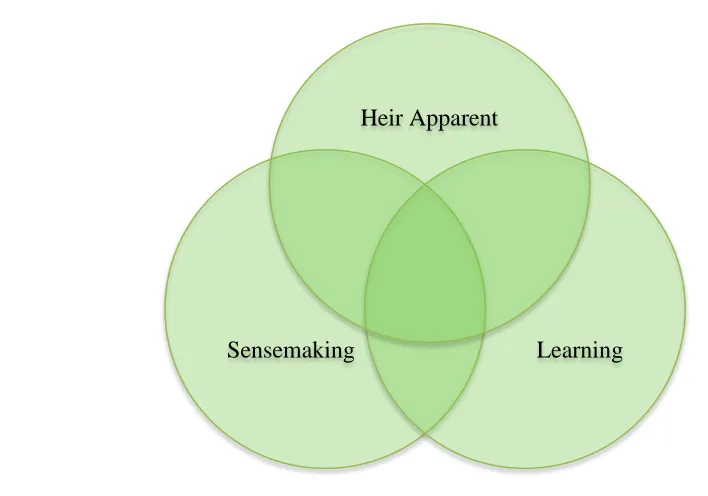
Figure 2.1: From the Heir Apparent to the CEO: The Theoretical Context
Sensemaking Learning
performing companies, changing the CEO may result in distancing the only individual,
i.e. the incumbent CEO, who understands the problem(s) and who may be the only one
able to suggest appropriate remedies (Morrow Jr., 2002; Zhang & Rajagopalan, 2004).
In addition to its importance to strategy and organization scholars, CEO
succession is also important for managers and boards of directors. CEO succession
constitutes a major concern for boards of directors, second only to corporate performance
(Biggs, 2004). It is also important for other stakeholders and continues to be a hot topic in
the popular media (Giambatista et al., 2005). Nominations of best and worst CEOs remain
a perennial favourite for news media at the beginning of every year. Analysts identify
companies lacking clear succession plans, speculate about who will succeed the current
CEOs, and try to predict companies’ post-succession performance. Berkshire Hathaway is
currently one of the companies under scrutiny for its unclear succession plans to the
outside world.
There have been two comprehensive reviews of prior research on leader
succession to date. The first review, by Kesner and Sebora (1994), was conducted on
leader succession research completed prior to the end of 1994. The second study, by
Giambatista et al. (2005), covered the period from 1994 to 2004. Most of the research
conducted on leader succession research is quantitative and addresses the antecedents
and consequences of succession (Giambatista et al., 2005; Kesner & Sebora, 1994), with
less emphasis on what happens during the transition period (Giambatista et al., 2005).
A question often addressed in the CEO succession literature is the origin of the
incoming CEO (Giambatista et al., 2005). Who are the better performers, insiders or
outsiders most of the time (Zhang & Rajagopalan, 2004, 2006). Others find the results to
be contextually based, where insiders outperform outsiders in well-performing
organizations and outsiders outperform insiders in poorly performing organizations
(Citrin & Ogden, 2010). Parker, Peters, and Turetsky (2002) found that companies in
distress with externally recruited CEOs double their risk of going bankrupt as compared
to companies where CEOs are internally promoted.
There are mainly two processes for insider CEO successions: a relay succession
and a horse race succession (Vancil, 1987). The relay process occurs when an
organization grooms one successor mostly known as the heir apparent for the CEO
position. Horse race succession occurs when several executives are considered as possible
candidates for the CEO position. Some companies may use a combination of these
processes whereby they use the horse race to appoint the heir apparent who later becomes
the CEO. General Electric employed this strategy during the transition between Reginald
Jones and Jack Welch in 1981 and between Jack Welch and Jeffrey Immelt in 2001.
Though both processes result in an insider at the top of the organization, they are different
in terms of their benefits and risks and in the degree of instability or turbulence that they
cause in the organization. A horse race usually leads to the exit of important talent from
the organization. Candidates who lose the race often feel compelled to leave and are
likely to find attractive jobs elsewhere (Lehmberg, Rowe, White, & Phillips, 2009).
Relay succession is considered the least disruptive form of all succession
processes (Vancil, 1987), both internally and externally. Internally, employees’ morale
and confidence are maintained by the smooth transition of leadership (Zajac, 1990).
(Davidson III, Nemec, & Worrell, 2001) and more positive shareholders reactions (Behn,
Riley, & Yang, 2005; Shen & Cannella, 2003) to their CEO succession events than
companies who select CEOs following a public horse race or hire outside CEOs.
This research focuses on understanding the heir apparent transition period for the
following two reasons. First, despite the mixed findings on the consequences of CEO
succession, relay succession is still the most common form of succession (Finkelstein &
Hambrick, 1996) representing more than 75% of all succession procedures (Allgood &
Farrell, 2003; Carey et al., 2009; Moriarty, 2009; Rowe, 1996; Zhang & Rajagopalan,
2004). Second, relay succession is assumed to be the least disruptive form of succession
for post-succession organizational performance (Helfat & Bailey, 2005; Vancil, 1987).
2.1.2. Heir Apparent Defined
Relay succession involves identifying a CEO successor, whom Vancil (1987)
referred to as the heir apparent, a few years before the actual succession event takes place.
Vancil (1987) did not limit the title of heir apparent to the COO or president. Later
studies, however, used the role of COO and/or president as a proxy to identify the heirs
apparent in organizations. This occurred because the studies were based on archival
datasets. Cannella and Shen (2001), among the first researchers to explore the position of
heirs apparent (Giambatista et al., 2005), defined an heir apparent as “any officer who
was the only person in a firm holding the title of president or of COO or both and who
was at least five years younger than the incumbent CEO” (p. 259). Many researchers,
interested in the concept of heirs apparent, adopted Cannella and Shen’s definition of an
modified it to exclude the condition related to the age difference between the CEO and
heir apparent (Boyer & Ortiz-Molina, 2008; Zhang & Rajagopalan, 2004, 2006).
Drawing on Vancil’s (1987) description of an heir apparent and Cannella and
Shen’s (2001) definition and later related adjustments, this study adopts the following
definition of an heir apparent: any manager in the company who was a senior executive,
including being the COO and/or president, before assuming the CEO role. This definition
is appropriate for this work because reliance on archival data is minimal. I conducted
extensive checking on each executive chosen before data was collected. I was able to
identify inside successors whether they were appointed COO and/or president or whether
they had a different title before becoming the CEO.
2.1.3. Learning of Heirs Apparent
In a relay succession, the heir apparent is selected a few years before the actual
succession event takes place (Vancil, 1987). This key feature of the relay succession
process has led many researchers to conjecture that heirs apparent have the time to learn
from incumbent CEOs. For example, using the upper echelons literature on executives’
cognitive orientation, Bigley and Wiersema (2002) argued that the longer the tenure of an
executive as the heir apparent, the more likely the incoming CEO will learn from the
outgoing CEO, not only in terms of job-related skills but also the outgoing CEO’s
strategic orientation. Using a learning lens, Zhang and Rajagopalan (2006) assumed heirs
apparent have enough time to learn the necessary job skills and outperform other types of
successors once they become the sitting CEOs. Shen and Cannella (2003) assumed heirs
apparent, given the status of incoming CEOs and the time, use the transition period to
post-succession expectations. Harris and Helfat (1997) built on the key feature of relay
succession to justify their argument that internal CEOs have more company-specific skills
and knowledge than external CEOs. The following anecdotal stories told by retired CEOs,
incumbent CEOs, and heirs apparent also provide insight into the dynamic between
outgoing and incoming CEOs and support the assumptions made by CEO succession
researchers:
I saw practically everything he did. I learned how to make decisions, for Kirk was excellent at making them fast and making most of them right. When you have his kind of experience and feel for a business, you can make very rapid decisions, particularly where you can forecast the result (Watson & Petre, 2000, p. 132). Retired Thomas Watson Jr. recalls his experience during the transition period from being an heir apparent to becoming IBM’s CEO.
I learned [from Jobs] that focus is key. You can only do so many things well, and you should cast aside everything else. I think he taught all of us that life is fragile, and we’re not guaranteed anything tomorrow, so give it all you’ve got.… It was a gift. It was an art… I saw it daily (Tweney, 2012). Tim Cook during his first year as Apple’s CEO.
There’s a lot I can learn from Jack. I think the transition is going to be natural. Both of us are always guided by doing what’s best for the company (CNNfn, 2000). Jeff Immelt when he was declared GE’s heir apparent and Welch’s successor.
However, while learning is assumed to be an essential component of the
development of heirs apparent, little is known both theoretically and empirically about
this phenomenon. Aside from a few anecdotal stories, previous research (cf. Bigley &
Wiersema, 2002; Harris & Helfat, 1997; Shen & Cannella, 2003; Zhang & Rajagopalan,
2004) only conjectures that given the time overlap between incoming and outgoing
CEOs, heirs apparent learn from incumbent CEOs. For example, Harris and Helfat (1997)
and Shen and Cannella (2003) did not include any variables measuring learning. Bigley
apparent based on their speculation that the tenure overlap allows the incoming CEOs to
learn from the outgoing CEOs. They thus measured learning as the length of executives’
tenure as heirs apparent. These studies account neither for the negative potential impact of
learning nor for the possibility that incumbent CEOs may be unwilling to train heirs
apparent and pass the baton.
Along with the advantages attached to learning from predecessors come the
disadvantages. Some researchers believe the ability of heirs apparent to induce strategic
change after they become CEOs is limited because they are trained by the previous CEOs
(Bigley & Wiersema, 2002). Many CEOs are suspected of selecting successors who are
similar to them and will carry on their vision for the company (Devries, 1988; Zajac &
Westphal, 1996). The cognitive independence of some heirs apparent is hence believed to
be compromised by the intense influence of and socialization by their predecessors
(Charan, 2005; Fondas & Wiersema, 1997). To show the limited ability of heirs apparent
to induce strategic change, Bigley and Wiersema (2002) used the literature on managerial
cognitive orientation. They argued the longer the executives have been designated as
heirs apparent, the more likely they acquire the same cognitive orientation as the
incumbent CEOs, and the less likely they are to induce strategic change. To achieve this,
they used heir apparent tenure (independent variable) as the proxy for the similarity
between the incoming and outgoing CEOs’ strategic orientation, and strategic refocusing
(dependent variable) as their measure of strategic change. They measured strategic
refocusing as the percentage variation in the organization’s level of diversification for the
three years following the succession event. However, their study did not control for the
the ability of an heir apparent to induce strategic refocusing over and above the status quo
of the organization. They also did not account for the quality of interaction between the
heir apparent and the CEO; they simply assumed the interaction between the two
executives led to similarities in their cognitive maps. Nevertheless, while heirs apparent
have the opportunity to “learn the ropes” from outgoing CEOs, it is assumed they may
run the risk of being restricted to learning the outgoing CEO’s mindsets (Bigley &
Wiersema, 2002).
Other streams of executive turnover research show CEOs are not always eager to
educate heirs apparent and give up their positions even when they are performing poorly
(Boeker, 1992; Fredrickson, Hambrick, & Baumrin, 1988; Sonnenfeld, 1988). Some
CEOs do not like to pass the baton for fear of losing their source of power and realizing
they are dispensable (Devries, 1988; Goh, 2002) and/or mortal (Levinson, 1974;
Sonnenfeld, 1988). Steve Jobs, for example, was disappointed when Apple’s share price
increased under the management of Tim Cook during his medical leave: “He (Steve Jobs)
was coming to grips with the thought that he might not be indispensable to the company.
Apple stock had fared well while he was away, going from $82 when he announced his
leave in January 2009 to $140 when he returned at the end of May” (Isaacson, 2011, p.
272). Whether the incumbent CEO chooses the heir apparent or not, it is believed some
incumbent CEOs will want to hold onto the power and prestige of the position for as long
as they can. Empirically, Cannella and Shen (2001) showed the more powerful the CEO
is, the less likely the heir apparent will get the CEO position. Immelt, for example, was
supposed to become the CEO of GE at the end of 2000 (CNNfn, 2000), yet Jack Welch
measured only the CEO power and ignored the CEO’s refusal to give up power. If the
CEOs were willing to give up power, they are more likely to help the heir apparent during
the transition period to assume the CEO role.
2.1.4. Summary
CEO succession events can be disruptive to organizations (Helfat & Bailey,
2005). There is a general agreement in the existing literature and practice-based research
on leader succession that grooming an heir apparent contributes to a smoother CEO
transition (Vancil, 1987) and positive post-succession performance (Zhang &
Rajagopalan, 2004). Most researchers who study heirs apparent argue the main reason
behind the preference for relay succession is the opportunity presented to the heir
apparent to learn the skills required from the incumbent CEO. This thesis will explore the
heir apparent learning process. Specifically, it will examine the impact of the designation
of executives as heirs apparent on their learning processes and highlight the enabling and
restricting conditions affecting the learning in an attempt to enhance the succession
process. This thesis answers Giambatista et al.’s (2005) call to explore the link between
learning and CEO succession.
2.2. Learning
Learning helps individuals acquire new behaviours, skills, and ideas. Learning to
learn helps individuals to continue to develop and grow (Jarvis, 2006; Ormrod, 2012).
Inherent in these statements is the following assumption: learning has a positive outcome.
However, individuals may also learn undesirable behaviours or beliefs (Jarvis, 2006)
understanding the learning process necessary for the development of human beings,
which is worth studying both for theoretical enrichment and practical value. The direct
scope of this research is not to qualify the outcome of learning as negative or positive,
some reference will be made if and when feasible. The purpose of this research is to shed
some light on the learning process in order to help companies and their boards develop a
learning environment to reach their intended outcome.
Human beings do not live in a vacuum. They construct their own personal
philosophies or mental models based on their interactions with the world. These mental
models represent individuals’ own perceptions of how the world operates (Craik, 1943)
and guide their thought processes, decisions, and behaviours (Feynman, Leighton, &
Hutchings, 1985), and hence represent their accumulated learning. New learning may
occur when an individual experiences disjuncture (Jarvis, 2006) or dissonance caused by
the occurrence of unexpected events or the non-occurrence of expected ones (Mandler,
1984). These unforeseen situations challenge the ability of an individual’s existing mental
models to explain what happened. While disjuncture or dissonance is necessary for new
learning, its mere occurrence is an insufficient condition to lead to new learning. The
following sections show that even in the presence of dissonance, the learner plays an
important role in whether new learning occurs.
2.2.1. Learning Defined
Behaviourism is one of the first perspectives applied to learning. Behaviourists
focus mainly on observable behaviours (i.e. objectively measured) to infer learning. They
investigate the relationship between an external stimulus and the resulting behaviour.
conditioning (Ormrod, 2012). Pavlov (1927, 2010) was the pioneer of the classical
conditioning impact on learning. This perspective explains the relationship between
external stimuli and behaviours or responses. The instrumental conditioning perspective
examines the effects of reinforcement in increasing or suppressing behaviour, known
respectively as operant conditioning or punishment. Rather than looking at the stimuli–
behaviour relationship, this perspective looks at the frequency of repeating or avoiding
certain behaviours as a result of whether the behaviour is followed by reinforcement
(Skinner, 1938) or punishment (Ormrod, 2012). Pure behavioural theorists assume
repetitive stimuli or repetitive consequences will lead to the expected behaviour and
ignore the cognitive models, maps, and abilities of the learners.
Cognitive theorists believe understanding learning cannot be reduced to the
analysis of the exhibited behaviour. They argue the information resulting from the
learner’s interaction with the environment is an unobservable process and may or may not
lead to observable behaviours. Purposive behaviourism or latent learning suggests a new
perspective for the study of learning. Unlike instrumental conditioning, this perspective
suggests reinforcement affects performance or the end result and not learning (Tolman &
Honzik, 1930). While the behaviourists believe learning happens when it can be observed
through new behaviours, Tolman and Honzik (1930) demonstrated learning may occur
without the individual’s behaviour necessarily reflecting the new behaviour.
Reinforcement triggers the change in behaviour not the learning. The latent learning
perspective links the occurrence of new behaviour, or the previously used variable to
measure learning, to reinforcement not to learning. Hence, rather than relying solely on
internal processes such as memory, attention, and cognitive schemas or mental models
(Jarvis, 2010; Mazur, 1993, 1998; Ormrod, 2012).
Behaviourists argue that in order to identify if learning happened we need to see it
in behaviour. Cognitive theorists contend learning may occur without behaviour
necessarily reflecting the learning. Inkpen and Crossan (1995) combine these approaches
and assert integrated learning occurs when changes in both behaviour and cognition take
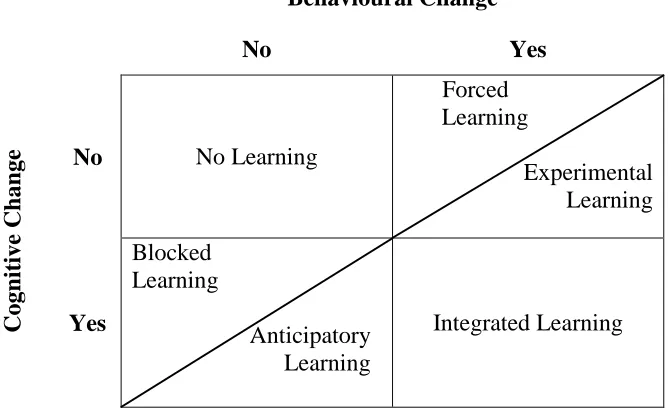
place. Figure 2.2 below illustrates the relationship between cognition and behaviour.
When neither cognition nor behavioural changes occur due to an
experience/stimulus, then no learning occurs. When both change, then integrated learning,
which is a form of sustained learning, occurs. When change occurs only in one area (for
example, cognition) without respective change in the second area (for example,
behaviour) then change is expected to be temporary and cannot lead to sustained learning;
the ultimate result is no learning. An example of this is blocked learning. The authors
argue temporary change in one or the other may lead to sustained learning only if it is
followed by the respective change in the other element, such as in the case of anticipatory
Figure 2.2: The Relationship between Cognition and Behaviour
Behavioural Change
No Yes
C
ogn
it
ive
C
h
an
ge No No Learning
Forced Learning
Experimental Learning
Yes
Blocked Learning
Anticipatory Learning
Integrated Learning
Source: Inkpen, A. C., and Crossan, M. M. 1995. Believing is seeing: Joint ventures and organization learning. Journal of Management Studies, 32(5): p. 599
The earliest research in the field links learning to behaviour while later studies
link it to cognition, and the most recent views connect learning to a change in both
behaviour and cognition (Inkpen & Crossan, 1995; Ormrod, 2012). However, these
definitions apply to all living organisms, not only human beings (cf. Tolman & Honzik,
1930). The most recent developments in the learning perspective emphasize the human
learner in order to provide a richer understanding of the learning process (Jarvis, 2006,
2010). By acknowledging the impact on and change in individual cognitive assets,
cognitive theorists highlight the importance of the learner in the learning process. Within
this perspective, the individual’s internal processes largely shape the learning (Burke &
Stets, 2009). Researchers in the field believe human learners bring to the learning
situation their own experiences, meaning systems, and self. The ‘self’ referenced
Building on the role individuals’ mental models play in understanding the world
around them, Mezirow (1997) developed transformational learning theory, which
explains how human beings learn to think like adults (Mezirow, 2012). The main focus of
Mezirow’s transformation theory is how individuals learn using their own purposes,
values, emotions, and beliefs. Mezirow differentiated between four ways of learning,
ranging from the expansion of current understanding to the total transformation of frames
of reference (Sherlock & Nathan, 2008). Mezirow explained how the change in
individuals’ social status may lead the individuals to evolve a new set of standards and
upgrade their frame of reference. Bandura (2001) explained how the social environment
influences the human learning and hence helps in the development of their new set of
standards. He argued human beings may imitate the observed and retained behaviour of
other beings in their social context if they believe these individuals and/or their
behaviours are important to their well-being.
My research emphasizes the criticality of the individual learner in the learning
process and develops premises accounting for the changes which might influence the
identity and internal processes of the heir apparent. The research builds on these concepts
in order to provide an explanation for the learning executives receive upon their
designation as heir apparent. The thesis contributes to the literature by providing a
perspective to explain how designated heirs apparent build the standards for their future
CEO identity. Building on cognitive, behavioural, and adult learning theories, this
dissertation adopts a customized definition to reflect human learning and acknowledges
the importance of the learner’s mental models in linking the antecedents, process, and