ABSTRACT
ISONHOOD, Jr., JAMES, H. Sample processing strategies for optimal PCR detection of pathogens in foods. (Under the direction of Dr. MaryAnne Drake and Dr. Lee-Ann Jaykus)
The research in this manuscript highlights new and improved methods to concentrate pathogens from a complex food matrix and detect them via PCR. These contributions to the science of rapid pathogen detection are unique in that they are designed to measure the efficacy of the concentration or capture technique without using a pre-enrichment step. To address the potential of pathogen concentration to facilitate PCR detection, the following objectives were performed: (i) evaluating the performance of differential centrifugation as a means to concentrate and clarify the food sample for rapid PCR detection of Listeria
monocytogenes, without pre-enrichment, (ii) investigating the efficacy of a novel immuno-capture device to immuno-capture E. coli O157:H7 and Salmonella typhimurium from foods.
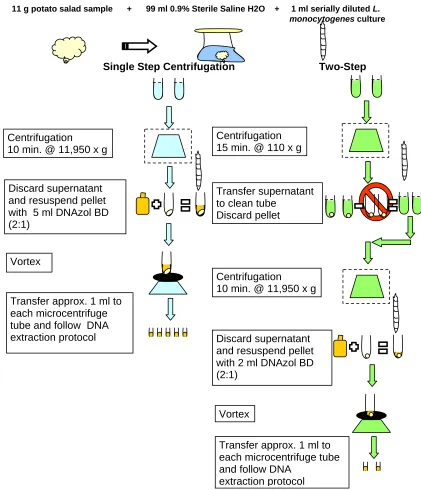
For the first objective, we investigated filtration followed by a two-step, differential centrifugation as a means to concentrate bacteria and remove a large portion of the food sample prior to DNA extraction, PCR amplification, and Southern hybridization of L. monocytogenes targeting a unique region of 16S rDNA. Simple high speed centrifugation (11,950 x g) was also investigated to test the efficacy of our two-step method. Our method incorporated use of a 11g sample of ready-to-eat deli salad diluted 1:10 with 99ml 0.9% sterile normal saline. The two-step method was able to reduce the sample volume by
approximately 10-fold rather than only 5-fold for simple high speed centrifugation. The two-step method was 1,000 fold (106 to 103 CFU/g) more sensitive than when using high speed
detection was achieved at input levels of 105 CFU/g for chicken salad, 104 CFU/g for macaroni salad, and 103 CFU/g for potato and seafood salads, with no pre-enrichment.
In our second objective, we evaluated the efficacy of a novel immuno-capture system (PathatrixTM) to capture S. typhimurium in buffered peptone water (BPW), ground turkey and nonfat dry milk and E. coli O157:H7 from BPW, ground beef and romaine lettuce. The Pathatrix system is unique in that it is designed to sample an entire 25g sample by circulating the homogenized 250ml volume across a surface of immunomagnetic beads. The samples were seeded with bacteria at levels ranging from 106 to 100 CFU/25g. The E. coli O157 format was able to capture 100% of input E. coli O157:H7 and PCR amplification was able to detect the pathogen at 100CFU/25g. The Salmonella format was not as robust, only capturing approximately < 1 % of cell input, but was able to produce a significant PCR detection limit of 102CFU/g when Pathatrix was preceded with the two-step centrifugation method. The two-step centrifugation further clarified the sample and improved detection by 1000-fold (105 to 102 CFU/25g).
SAMPLE PROCESSING STRATEGIES FOR OPTIMAL PCR DETECTION OF PATHOGENS IN FOODS
By
James H. Isonhood, Jr.
A dissertation submitted to the Graduate Faculty of North Carolina State University in partial fulfillment of the requirements for the Degree of Doctor of Philosophy
Food Science
Raleigh 2005
Approved by:
Dr. MaryAnne Drake Chair of Advisory Committee
Dr. Craig Altier
ii BIOGRAPHY
iii
ACKNOWLEDGEMENTS
I would like to express my most sincere appreciation and gratitude to my advisor Dr. MaryAnne Drake her guidance and support. I also want to thank Dr. Lee-Ann Jaykus who played a significant support role in direction of my research. I also want to send my
appreciation to my committee members, Drs. Donn Ward and Craig Altier for their support during my degree program. I would also like to thank the Drake and Jaykus labs for making the 3rd floor of Schaub and E-wing of the Flex building a fun place to be.
iv
TABLE OF CONTENTS
LIST OF TABLES... vi
LIST OF FIGURES ... vii
CHAPTER 1. LITERATURE REVIEW ESCHERICHIA COLI O157:H7 AND DEVELOPMENT OF RAPID METHODS FOR E. COLI O157:H7 DETECTION... 1
1.1. INTRODUCTION ... 1
1.2. CHARACTERISTICS OF EHEC... 4
1.3. OUTBREAKS... 5
1.3.1.Recent Outbreaks ... 9
1.4. PATHOGENICITY OF EHEC... 10
1.4.1. Shiga Toxins ... 11
1.4.2. Attaching and Effacing Lesions... 13
1.4.3. Adhesion ... 14
1.5. PREVALENCE... 16
1.6. GROWTH AND SURVIVAL IN FOODS... 17
1.7. DETECTION ... 20
1.8. METHODS TO SEPARATE BACTERIA FROM FOODS ... 25
1.8.1. Immunomagnetic Separation (IMS) ... 25
1.8.2. Metal Hydroxide Immobilization ... 28
1.8.3. ELISA ... 30
1.9. RAPID METHODS ... 31
1.9.1. PCR ... 31
1.9.1.1. PCR with EHEC ... 31
1.9.1.2. PCR Inhibitors ... 35
1.9.2. RT-PCR... 37
1.9.3. TD-PCR ... 41
1.9.4. NASBA ... 42
1.10. FLUORESCENT PROBES USED IN REAL-TIME PCR ASSAYS ... 46
1.10.1.FRET... 46
1.10.2. Molecular Beacons... 48
1.11. APPLICATIONS OF FLUORESCENCE DETECTION TECHNOLOGIES ... 52
1.11.1. Molecular Beacons... 52
1.11.2. Taqman ... 54
1.12. REFERENCES ... 61
CHAPTER 2. UPSTREAM SAMPLE PROCESSING FACILITATES PCR DETECTION OF LISTERIA MONOCYTOGENES IN MAYONNAISE-BASED READY-TO-EAT (RTE) SALADS... 75
2.1. ABSTRACT... 76
2.2. INTRODUCTION ... 77
2.3. MATERIALS AND METHODS... 78
2.3.1. Bacteria and Cultural Recovery Methods ... 78
2.3.2. Composition of Foods... 79
2.3.3. Deli Salad Growth Study ... 79
v
2.3.5. Isolation of Nucleic Acids ... 81
2.3.6. PCR Amplifications ... 81
2.3.7. Southern Blot Hybridization... 82
2.3.8. Statistical Analysis... 82
2.4. RESULTS ... 83
2.4.1. Preliminary Experiments ... 83
2.4.2. Comparison of the Two Upstream Sample Preparation Methods ... 83
2.4.3. Application of the Optimized Method to Four Salad Items... 85
2.5. DISCUSSION ... 86
2.6. ACKNOWLEDGEMENTS... 89
2.7. REFERENCES ... 91
CHAPTER 3. DETECTION OF E. COLI O157:H7 AND SALMONELLA TYPHIMURIUM FROM FOOD USING A NOVEL IMMUNO-CAPTURE SYSTEM AND PCR... 102
3.1. ABSTRACT... 103
3.2. INTRODUCTION ... 104
3.3. MATERIALS AND METHODS... 106
3.3.1. Bacteria and Culture Recovery ... 106
3.3.2. Model Matrices ... 107
3.3.3. Centrifugation and Pathatrix Processing... 107
3.3.4. DNA Extraction ... 109
3.3.5. PCR Amplification... 109
3.3.6. Southern Blot Hybridization... 110
3.3.7. Statistical Analysis... 111
3.4. RESULTS ... 111
3.4.1. Preliminary Experiments ... 111
3.4.2. Evaluation of Cell Recovery on Spread Plates ... 112
3.4.3. PCR Results ... 113
3.5. DISCUSSION ... 114
3.6. ACKNOWLEDGEMENTS... 118
3.7. REFERENCES ... 119
vi
LIST OF TABLES
vii
LIST OF FIGURES
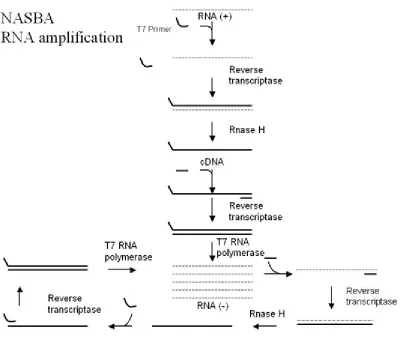
Figure 1.1 Schematic of NASBA... 44
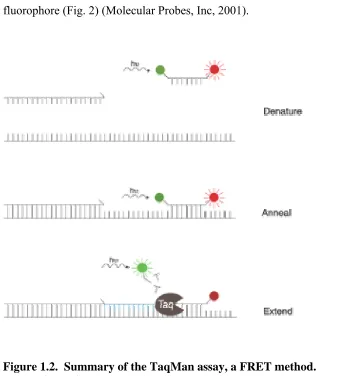
Figure 1.2. Summary of the TaqMan assay, a FRET method... 47
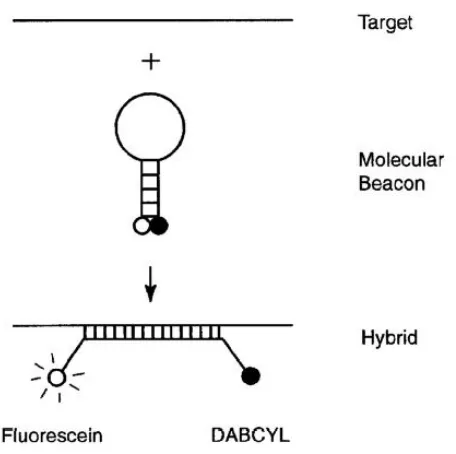
Figure 1.3. Molecular beacon hybridizing to target... 50
Figure 1.4. The Taqman Assay. ... 56
Figure 2.1. Schematic of 1-step and 2-step centrifugation upstream sample processing methods, followed by subsequent DNA extraction. ... 94
Figure 2.2. Growth/Survival of L. monocytogenes in potato, macaroni, chicken, and... 94
seafood salads stored at 5°C over a 2 week period... 94
Figure 2.3. Growth/Survival of L. monocytogenes in potato, macaroni, chicken, and... 94
seafood salads stored at 27°C over a 48h period. ... 94
Figure 2.4. Comparison of PCR detection limits for potato salad artificially inoculated with L. monocytogenes and processed using the single-step centrifugation method (A) or the two-step centrifugation method (B) followed by DNA extraction, PCR amplification and subsequent gel electrophoresis (top) and Southern hybridization (bottom). Each band represents DNA extracted from 11 g potato salad samples inoculated with L. monocytogenes to achieve levels of contamination between 101 and 106 CFU/g. Each experiment at each seeding level was done in triplicate. Inoculation level and detection limits are given below each lane. Lanes: M (marker), + (positive control reaction for detection of L. monocytogenes), -- (water control), and U (uninoculated potato salad)... 94
Figure 2.5. PCR detection of L. monocytogenes from artificially contaminated potato salad (A), macaroni salad (B), chicken salad (C), and seafood salad (D) processed by the two-step centrifugation method followed by DNA extraction, PCR amplification and subsequent gel electrophoresis (top) and Southern hybridization (bottom). Each band represents DNA extracted from 11 g of deli salad item inoculated with L. monocytogenes to achieve levels of contamination between 101 and 106 CFU/g. Each experiment at each seeding level was done in triplicate. Inoculation level and detection limits are given below each lane. Lanes: M (marker), + (positive control reaction for detection of L. monocytogenes), -- (water control), and U (uninoculated deli salad). ... 94
Figure 3.1. Flow Chart of Pathatrix processing. ... 122
viii
Figure 3.3. S. typhimurium detection from Pathatrix following a 2 h Pathatrix run from BPW (A), ground turkey (B), and nonfat dry milk (C) followed by DNA extraction, PCR
amplification, gel electrophoresis (top), and Southern hybridization (bottom). Ground turkey was pre-processed using centrifugation and processed in 0.1% peptone. Each band
CHAPTER 1
LITERATURE REVIEW
ESCHERICHIA COLI O157:H7 AND DEVELOPMENT OF RAPID METHODS FOR E. COLI O157:H7 DETECTION
1.1. INTRODUCTION
E. coli O157:H7 was first recognized as a pathogen in 1982 following two outbreaks in Oregon and Michigan (Jay, 2000). Not all Escherichia coli are pathogenic and these organisms are commonly found in the intestinal tracts as part of the normal facultative
anaerobic microflora of humans and warm-blooded animals. Escherichia coli strains that can cause diarrheal illness are assigned to six specific virulence groups based on virulence
properties, mechanisms of pathogenicity, clinical syndromes, and distinct O:H serogroups. These categories include: enteropathogenic E. coli strains (EPEC), enterotoxigenic E. coli strains (ETEC), enteroinvasive E. coli strains (EIEC), diffuse-adhering E. coli strains (DAEC), enteroaggregative E. coli strains (EAggEC), and enterohemorrhagic E. coli strains (EHEC) (Doyle et al., 1997).
EPEC
EPEC are mainly associated with infantile diarrhea. Many adults are carriers of EPEC, but do not show symptoms of illness. Even so, these organisms are capable of causing severe diarrhea. The original definition of EPEC was “diarrheagenic E. coli
2
attaching and effacing (AE) lesions and some have been shown to produce shiga toxins (Stx) as well as heat-labile and heat-stable toxins (Doyle et al., 1997) Some common serotypes in this group include O18ab, O19ac, O55, O86, O111, O114, O119, O125, O126, O127,
O128ab, O142, and O158 (Jay, 2000). ETEC
ETEC are a major cause of infantile diarrhea in developing countries and are also commonly implicated in cases of traveler’s diarrhea. These bacteria adhere to the proximal small intestine by fimbrial colonization factors (e.g., CFA/I and CFA/II), but do not invade, where they release heat-labile and heat-stable enterotoxins which cause fluid accumulation and resulting diarrhea (Doyle et al., 1997). Common serotypes of ETEC are O6, O8, O15, O20, O25, O27, O63, O78, O80, O85, O101, O115, O128ac, O139, O141, O147, O148, O149, O153, O159, O167 (Jay, 2000).
EIEC
3 DAEC
DAEC has been identified in cases of diarrhea in children in Mexico. The disease has been marked by mild diarrhea without blood or fecal leukocytes. The organism is capable of covering HEp-2 or HeLa cells uniformly in a diffuse-adherent pattern. In general, DAEC do not produce heat-labile or heat-stable toxins or significant levels of Shiga toxins (Stxs). Another defining characteristic is that DAEC do not invade epithelial cells or have EPEC adherence factor plasmids (Doyle et al., 1997).
EAggEC
EAggEC have been recently associated with persistant diarrhea in infants and children worldwide that can last >14 days. This group is similar to ETEC in the way they bind to intestine mucosal cells but are dissimilar in that they bind in small clumps. They are unique in the way they consistently form a unique pattern of aggregative adherence to HEp-2 cells. The observed appearance has been described as stacked bricks on the surface of HEp-2 cells (Doyle et al., 1997). EAggEC are noninvasive and some produce a heat-stable
enterotoxin EAST1 (Jay, 2000). Its significance as an agent of diarrheal disease is still unknown (Doyle et al., 1997) The serotypes found among this group include O3, O4, O6, O7, O17, O44, O51, O68, O73, O75, O77, O78, O85, O111, O127, O142, and O162 (Jay, 2000).
EHEC
The most frequently isolated serotype in this goup is E. coli O157:H7. The organism produces a toxin which is almost identical to the Shiga toxin produced by Shigella
dysenteriae. Disease caused by this microorganism can occur as mild diarrhea or
4
hemolytic uremic syndrome (HUS) or thrombotic thrombocytopenic purpurea (TTP) (Doyle et al., 1997; Todd and Dundas, 2001). The mortality rate of these complications is 3-17% and up to 30% in outbreaks (Todd and Dundas, 2001).
EHEC strains infect by attaching to small intestine mucosal cells by changing their surface structure by means of attachment and effacement. This occurs when the finger-like projections (microvilli) on the mucosal surface become elongated when the bacteria are in propinquity but not attached to the mucosa; these are lost when the bacteria are attached. Following invasion of mucosal cells, EHEC do not spread to adjacent cells. Non-O157 STEC have also been isolated from cases involving diarrhea and HUS (Law, 2000). Other serotypes of EHEC include O26:H11, O103, 0104, O111, and sorbitol-fermenting O157:H- (Doyle et al., 1997).
1.2. CHARACTERISTICS OF EHEC
E. coli O157:H7 was first recognized as a pathogen in 1982 following two outbreaks in Oregon and Michigan. The isolates were clinically different from EPEC and thus a new group of E. coli, EHEC, was formed. Distinguishing characteristics of E. coli O157:H7 from other groups of E. coli include its inability to ferment sorbitol, produce β-glucuronidase, and grow at or above 44.5°C. Most E. coli (93 %) of human origin can ferment sorbitol within 24 h, but E. coli O157:H7 does not. Most strains (93 %) also have the enzyme β
-5
glucuronidase producing E. coli O157 have been isolated and are estimated to account for 50 % of E. coli O157 infections in Germany. These unusual variants are thought to be a distinct clone of E. coli O157 (Law, 2000). Gunzer et al. (1992) isolated sorbitol fermenting,
β-glucuronidase positive O157 strains in 17 of 44 patients with diarrhea (18) and HUS (26) (Gunzer et al., 1992). Non O157 EHEC is also sorbitol positive and β-glucuronidase positive; making specific identification and differentiation of these EHEC strains more difficult.
E. coli O157:H7 growth studies in trypticase soy broth indicate that the organism grows well between 30-42°C, having generation times between 0.49 h and 0.64 h at 37°C and 42°C, respectively (Padhye and Doyle, 1992). Poor growth of the organism has been observed at 44-45°C, and no growth occurred within 48 h at 10 or 45.5°C. Procedures used to detect fecal coliforms in food use incubation temperatures of 44-45°C; thus E. coli O157:H7 would probably not be detected during normal screening for fecal coliforms using such procedures (Padhye and Doyle, 1992).
1.3. OUTBREAKS
6
these outbreaks involved two or more states compared to only two (4 %) of those reported in 1998. Then at the turn of the century, in 2000, the number peaked at 46 outbreaks (Rangel et al., 2005). This increase in the number of reported outbreaks and multistate outbreaks may be due to public health departments’ increased use of pulsed-field gel electrophoresis (PFGE) for subtyping strains. Widely dispersed cases and small clusters within states may be linked by using PFGE. These are cases that in the past may have not been known to be related, perhaps providing further explanation as to the increased reporting of outbreaks (CDC, 2000). Unfortunately some cases go unreported since infected persons having mild or no symptoms and those with nonbloody diarrhea are not likely to seek medical attention (Doyle et al., 1997). According to the Centers for Disease Control and Prevention, E. coli O157:H7 causes an estimated 73,500 cases of infection, 2,000 hospitalizations, and 60 deaths in the U.S. each year (CDC, 2001).
The majority of outbreaks occur during the warmer summer months. Within the United States, from 1982 to 2002, about 89% of outbreaks occurred from May to November (Rangel et al., 2005). In 1997 almost half (45.7 %) of the 1,167 recorded E. coli O157:H7 cases occurred in the months of July, August, and September (Jay, 2000). Possible reasons for increased summer illness include: (i) increased incidence of the pathogen in cattle or livestock during the summer; (ii) increased human exposure to ground beef or other
contaminated foods during the “cook-out” months; and/or (iii) increased improper handling or undercooking of products like ground beef during warm summer months than other months (Doyle et al., 2001).
7
recreational water, 11 (3%) animal contact, 10 (3%) drinking water, and 1 (0.3%) laboratory-related transmission route. Of the foodborne outbreaks, ground beef was the most common vehicle at 41%, followed by 23% unknown, 21% produce, 6% other beef, 5% other foods, and 4% in dairy products (Rangel et al., 2005). Most foods implicated have been associated with raw or undercooked foods of bovine origin such as raw milk or ground beef. Other foods associated with E. coli O157:H7 infection are vegetables, apple cider, cantaloupe, mayonnaise-containing salad dressing, and salami. Outbreaks involving alfalfa sprouts, fruit salads, and coleslaw have also occurred over the years. In recent years contamination of raw fruits and vegetables has become an important issue due to the lack of further processing of these foods.
The first outbreak of E. coli O157:H7 infection occurred in Oregon in 1982 rendering 26 individuals ill and 19 hospitalized. Illness for all patients was accompanied with bloody diarrhea and severe abdominal pain. The outbreak was associated with eating undercooked hamburgers at a fast-food restaurant chain. Another outbreak ensued three months later with the same fast-food restaurant chain. E. coli O157:H7 was again implicated as the causative agent and was isolated from patients and a frozen ground beef patty (Doyle et al., 2001).
8
In southeastern Massachusetts in the fall of 1991, an outbreak involving consumption of unpasteurized apple cider occurred. Twenty-three cases of E. coli O157:H7 infection from a total of 13 families were reported and six patients were hospitalized. Investigation at the site where the apple cider was processed indicated that the apples were pressed without
washing, the cider was not pasteurized, and no preservatives were used. Before this outbreak, apple cider was considered safe for consumption due to its high acidity and low pH (< 4.0) (Doyle et al., 2001).
The largest multistate outbreak of E. coli O157:H7 occurred in four western U.S. states in early 1993. The age of patients ranged from 4 months to 88 years and 90 % of patients had eaten at a single fast-food restaurant chain. One hundred seventy-eight were hospitalized, 56 developed HUS, and 4 children died. The cause of the outbreak was due to consumption of hamburgers that were insufficiently cooked by the fast-food restaurant chain. Investigations at the restaurant revealed that 10 of 16 hamburgers cooked had internal
temperatures of below 60° C, which was much lower than the minimum temperature of 68.3°C allowed by the state of Washington (Doyle et al., 2001). The consumption of dry fermented salami was implicated in a multistate outbreak in 1994. Studies later confirmed that E. coli O157:H7 can survive the fermentation, drying, and storage of fermented sausage (Doyle et al., 2001).
9
In 1997, the consumption of alfalfa sprouts was directly related to the illnesses of 60 persons caused by E. coli O157:H7. Of those that were ill, 44 had bloody diarrhea and 25 were hospitalized. Two had hemolytic uremic syndrome (HUS) and one developed
thrombotic thrombocytopenic purpura. In a case-control study, eighteen of 30 case-patients had eaten alfalfa sprouts within 7 days of the onset of illness (CDC, 1997).
In the fall of 2000, 51 people became ill from E. coli O157:H7 after visiting a petting farm in Pensylvania. Patients ranged in age from 1 to 54 (median 4) and symptoms included bloody diarrhea, fever, and vomiting. Sixteen patients, all under the age of ten, were
hospitalized. Eight patients developed HUS and one patient experienced renal failure and required renal transplantation. Increased risk of illness was associated with contact with calves and their environment, while hand-washing was protective (Crump et al., 2002).
1.3.1. Recent Outbreaks
In the summer months of 2002, a multistate outbreak linked by PulseNet, the National Molecular Subtyping Network for Foodborne Disease Surveillance, involved 28 cases in Colorado and six other states. Seven of the patients were hospitalized and five developed HUS. Ground beef was implicated in the outbreak and a nationwide recall of 18.6 million pounds of ground beef was issued (CDC, 2002).
10 1.4. PATHOGENICITY OF EHEC
11
2001). Such factors include the shiga toxins, attaching and effacing lesions, fimbrial adhesins, and the adhesin intimin.
1.4.1. Shiga Toxins
Shiga toxin is a holotoxin which is composed of an A-subunit of approximately 32 kDa in association with a pentamer of 7.7 kDa B-subunits. The A subunit is the enzymatic component and cleaves a single adenine residue from near the 3′ end of the 28S rRNA portion of the eukaryotic ribosomal complex. This action causes the inhibition of peptide elongation by blocking elongation factor-1 dependent aminoacyl-tRNA binding. The interaction or binding of the Shiga toxin to mammalian cells occurs by association of B-subunits with a membrane glycolipid of the globo-series, globotriaosylceramide (Gb3). Entry
into Gb3 containing cells is supposedly mediated by receptor-dependent endocytosis (Tesh
and O’Brien, 1991).
12
the B subunit of Shiga toxin. The peptide sequence of the A subunit was identical to the A subunit of ricin, a plant toxin. This provides evidence that some prokaryotic toxins may be evolutionarily linked to eukaryotic enzymes (Calderwood et al., 1987).
Shiga toxins are thought to be the main factors causing HC and HUS (Law, 2000). Human stool cultures from patients (7 with HUS, 1 healthy, and 2 with enteritis) indicated that non-O157 STEC represented between 0.03 and 68.1 % of the coliform flora (Beutin et al., 1996). Among the non-O157 isolates the toxin phenotype is variable and isolates producing only Stx1 are commonly found. The production of Stx2 is one of the defining characteristics of E. coli O157:H7, since most strains produce Stx2 only (Law, 2000). Some epidemiological evidence indicates that isolates producing Stx2 are more commonly
associated with serious disease than those producing only Stx1 or Stx1 and Stx2 (Scotland et al., 1987). Louise and Obrig (1992) hypothesized that lipopolysaccharide (LPS; endotoxin) may combine with Shiga toxin to facilitate vascular damage commonly observed in cases of HUS. They exposed the two toxins to human umbilical vein endothelial cells (HUVEC). When tested alone, LPS was not cytotoxic at concentrations at or below 10 μg/ml and Shiga toxin expressed dose dependent cytotoxic effects. Results indicated that when LPS and Stx were added to HUVEC in combination, there was a synergistic cytotoxic effect and this effect was enhanced with preincubation of LPS (Louise and Obrig, 1992).
13
resulting in fatal cortical tubular necrosis. Passive immunization with a monoclonal antibody to Stx2 prevented death while immunization with antibody against Stx1 did not prevent death. An E. coli strain (K-12) genetically engineered to contain Stx2 caused death in mice, while the same strain engineered with Stx1 did not (Wadolkowski et al., 1990).
Environmental factors have been shown to impact Shiga toxin production. Shiga toxin production was shown to increase with aeration (Weeratna and Doyle, 1991; Weagant et al., 1994; McIngvale et al., 2002). This fact is also supported by Palumbo et al. (1995) who reported that increased Stx production was based on the time and temperature that supported the optimal cell growth. Since aeration increases cell growth rate of E. coli O157:H7, one could deduce that greater development of Stx toxin would be produced under such conditions.
1.4.2. Attaching and Effacing Lesions
A very important trait characterizing EHEC is its ability to produce attaching and effacing (A/E) lesions on a variety of cell types. The ability to produce A/E lesions was first observed in EPEC strains. The lesions are characterized by degeneration and effacement of intestinal epithelial cell microvilli, intimate attachment of the bacteria to the cell surface, and assembly of highly organized cytoskeletal structures in the cells beneath the adherent bacteria. Various components make up the cytoskeletal structure including actin, talin, ezrin, and α -actinin (Doyle, 1997).
14
locus has been sequenced in both EPEC and E. coli O157 (Law, 2000). In EHEC,
pathogenicity islands are found of different sizes, and research suggests that genes associated with virulence are not limited to the largest islands (Perna et al., 2001) The LEE of E. coli O157 is slightly larger than the EPEC LEE, but has similarities in structure, organization, and gene arrangement (Paton and Paton, 1998). Secretion of the LEE-encoded proteins EspA, EspB, and EspD, necessary for initiation of signal transduction, is carried out by a type III secretion system. The LEE also contains the eaeA gene, encoding intimin, which is a 939-amino-acid outer membrane protein (OMP) that regulates intimate attachment to the enterocyte, and Tir (previously Hp90) which encodes the protein Tir (translocated intimin receptor) that functions as a receptor for intimin (Perna et al., 1998; Paton and Paton, 1998; Law, 2000).
1.4.3. Adhesion
15
strains that possessed the 60 MDa plasmid was piliated, yet all strains adhered to Henle 407 and Hep-2 cells. They concluded that pili were not solely responsible for attachment of E. coli O157:H7 to epithelial cells (Sherman et al., 1987). In vivo studies of E. coli O157 infection using rabbits and gnotobiotic piglets indicated that the severity or incidence of diarrhea and intestinal pathology was not affected by the presence or absence of the pO157 plasmid (Law, 2000).
16 1.5. PREVALENCE
Cattle are thought to be the main reservoir for E. coli O157:H7 and thus it is believed that cattle contribute greatly to the contamination of meats (Chapman et al., 1993). Wells et al. (1991) examined 1,266 fecal specimens from healthy cattle during an investigation of two sporadic cases of E. coli O157:H7 associated HUS, which had resulted from raw milk
consumption. The researchers collected samples from cattle on 22 farms, in a stockyard, and in a packing house. In addition, three raw hamburger specimens from a restaurant and 23 raw milk samples from two farms were collected. E. coli O157:H7 was isolated from 16 heifers or calves and 1 adult cow on 22 farms, 1 stockyard calf, 2 beef specimens, and 1 raw milk sample. Other STEC, other than O157, were found on 8 of 10 farms and the stockyard. Overall, the results revealed that 8% of adult cows and 19% of heifers and calves were positive for STEC (Wells et al., 1991).
17
Cattle from 29 pens of five Midwestern feedlots were sampled for the presence of E. coli O157:H7 (Smith et al., 2001). The researchers isolated E. coli O157:H7 from the feces of 719 of 3,162 (23%) cattle examined, which included at least one animal from each of the 29 pens. The percentage of E. coli O157:H7 isolations did not differ between feedlots, but did differ within feedlots. The isolates were more commonly associated with cattle kept in muddy pens (Smith et al., 2001). These surveys seem to indicate that the prevalence of E. coli O157:H7 depends on a variety of factors such as the number of cattle within a confined area, the sex and breed, and the condition of their pens. In addition, cattle are often transient carriers of E. coli O157:H7 and thus shedding of this organism can occur sporadically and over varying periods of time.
1.6. GROWTH AND SURVIVAL IN FOODS
Food model systems using nutrient rich broth have been used to characterize the growth and survival of E. coli O157:H7 in foods. Kauppi et al. (1996) tested STEC for their ability to grow in different media at low temperatures. The average generation time was higher in brain heart infusion broth (BHI)(13 h) compared to trypticase soy broth (TSB)(10 h) and milk (11 h) at 9.5°C. At temperatures near refrigeration (6.5°C), the STEC strains did not grow in BHI or TSB, but were able to grow in milk with a generation time of about 83 h (Kauppi et al., 1996). Most studies have found that EHEC remain viable in foods at 5° C and can grow at temperatures of 8°C or above, verifying the danger associated with temperature abused foods (Buchanan and Bagi, 1994; Rajkowski and Marmer, 1995; Palumbo et al., 1995; Palumbo et al., 1997). Palumbo et al. (1997) investigated the effects of low
18
and milk. Growth occurred in strains held at 8° C when no or low background microflora were present. Strains remained viable at 5° C and in the presence of high background microflora. Shiga toxin production was detected in low amounts that did not exceed the levels obtained from broth cultures at 37° C or 5° C (Palumbo et al., 1997).
Decreased toxin production has been observed in some food substrates. E. coli O157:H7 grown at 37°C in milk did not produce as much toxin as the same strain grown in BHI broth under the same conditions (Palumbo et al., 1997).
E. coli O157:H7 has the ability to grow over a broad range of pH (4.5 to 9) values (Zilberstein et al., 1984; Hersh et al., 1996). Since many food environments are either acidified or have an inherently low pH, the ability of EHEC to survive at low pH presents a significant food safety threat. Lin et al. (1995) reported that E. coli had a minimum growth pH of 4.4, which was slightly higher than that of Salmonella typhimium (pH 4.0). Previous research has indicated that bacterial exposure to a sublethal stress can result in subsequent increased resistance to that particular stress or increased resistance to other stresses (Jenkins et al., 1988, 1990; Farber and Pagotto, 1992; Buncic and Avery, 1998; Leenanon and Drake, 2001). Acid adaptation can increase the heat and freeze-thaw resistance of E. coli O157:H7 and nonpathogenic E. coli. Cold stress decreased heat resistance of E. coli O157:H7 and nonpathogenic E. coli, but allowed for greater survival during freezing and thawing (Leenanon and Drake, 2001).
19
placed under abusive temperatures (≥8°C). In ground beef, the exponential growth rate (EGR) and maximum population density (MPD) of E. coli O157:H7 increased with
decreasing fat content (Tamplin, 2002). Two native ground beef isolates (unspeciated) were added to sterilized ground beef along with E. coli O157:H7; there was a decrease in the EGR and MPD of E. coli O157:H7 as the competitive population increased (Tamplin, 2002).
The ability of E. coli O157:H7 to grow in fermented products such as sausage (Pond et al., 2001; Uyttendaele et al., 2001), Lebanon bologna (Chikthimmah et al., 2001), cheese (Saad et al., 2001), and buttermilk (McIngvale et al., 2000) has been studied. The sausage fermentation process was able to produce a mean log reduction within a range of 0.3 to 1.33, while the drying stage reduced the population by 1.37 to 2.70 log10. Since Lebanon bologna
is not processed above 48.8°C, Chikthimmah et al. (2001) investigated effects of curring salts (NaCl and Na NO2) on the destruction of E. coli O157:H7 during processing. High levels of
NaCl (5%) inhibited lactic acid bacteria, resulting in a higher pH (5.0) and better survival of E. coli O157:H7. The NaCl concentration had no direct effect on E. coli O157:H7, but inactivation of the organism increased significantly at all NaCl concentrations when the pH was lowered from 4.7 to 4.3 and the product heated from 37.7°C to 46.1°C in 5.5 h.
(Chikthimmah et al., 2001). Minas cheese, a fresh Brazilian cheese, provides a suitable environment for pathogens, such as E. coli O157:H7. Saad et al. (2001) found that cheeses without inoculated lactic acid cultures allowed for a 2 log10 increase in E. coli O157:H7
population which was maintatined over the storage period. Minas cheese inoculated with lactic acid bacteria controlled the growth of E. coli O157:H7 to only 0.5 log10 over a 24 hour
20
mustard or sweet pickle relish for more than one hour when stored at 5 or 23°C. However, E. coli O157:H7 was recovered for up to 7 days in ketchup stored at 5°C (Tsai and Ingham, 1997).
1.7. DETECTION
21
the colorimetric substrate BCIG). When low numbers of E. coli O157:H7 are suspected, the food may be enriched in modified trypticase soy broth containing novobiocin before being plated on selective media. Another procedure uses Tellurite-Cefixime-SMAC as the selective plating media. Recovery of E. coli O157:H7 from foods was improved using TC-SMAC compared to using HC agar (Hitchins et al., 1995). There exists a small population of non O157 isolates that do not ferment sorbitol, and therefore the incorporation of the MUG assay should be included in the analysis to distinguish E. coli O157:H7 from these atypical E. coli isolates. Selective enrichment followed by immunomagnetic separation may also be performed using anti-O157 beads (Dynabeads; Dynal). This method may result in improved assay sensitivity due to pathogen pre-concentration after enrichment and prior to selective plating on agar such as TC-SMAC (Hitchins et al., 1995).
22
hybridization or polymerase chain reaction. Detection of toxins produced by E. coli O157:H7 can be performed using tissue culture assays. (Hitchins et al., 1995).
Specifically, the potential for EHEC isolates to produce toxins may be evaluated using the rapid method of colony hybridization by oligonucleotide DNA probes that are specific for the stx1 and stx2 genes. Another rapid method utilizes primers specific to the stx1 and stx2 genes which can be incorporated into a PCR assay (Hitchins et al., 1995). There are several strains of Stx producing E. coli (STEC) other than O157, however, only those strains that have been clinically associated with HC are designated as EHEC. Of the EHEC strains, E. coli O157:H7 is the prototypic EHEC and most commonly implicated in illness worldwide (Feng and Weagant, 2002). Therefore O157:H7 specific DNA probe and multiplex PCR (5P PCR) is needed to detect the O157:H7 serotype and its toxigenic non-motile variants. The probe targets a +93 base mutation in the uidA gene that encodes for ß-glucuronidase, which is highly conserved in E. coli O157:H7 and its toxigenic non-motile variants. The 5P PCR couples uidA with primers specific for stx1, stx2, gamma variant of eae that is found in E. coli O157:H7, and the ehxA enterohemolysin genes to form an assay that simultaneously detect these virulence traits in Stx-producing E. coli and also determines if the strain is of the O157:H7 serotype (Feng and Weagant, 2002).
23
(modified EC broth with novobiocin) for 20 to 24 h at 35°C. Positive, negative, and uninoculated controls are prepared for each group of samples. An ELISA-based E. coli O157:H7/NM screening test can be done after enrichment, in which case positive samples are considered presumptive and are subject to further confirmation. Negative samples, however, are confirmed after such screening (Cray et al., 1998).
Isolation and confirmation steps can be taken from the enrichment culture in the stomacher bag. In this case, 5 ml of enrichment broth is processed by immunomagnetic separation using Dynal E. coli O157:H7 beads, along with appropriate positive and negative controls. The product of IMS is then spread plated on Rainbow agar plates and incubated 24-26 h at 35°C (Cray et al., 1998). E. coli O157:H7 colonies appear black or grey on Rainbow agar, but the colonies may have a bluish hue when surrounded by pink or magenta colonies. Positive E. coli O157 :H7 isolates (up to 5 per plate) are tested using latex agglutination assays for O157. For biochemical testing, Vitek methods are frequently used. To differentiate E. coli O157 from competitive organisms, triple sugar iron agar (TSI), cellobiose, and the motility test are particularly important. For toxin and toxin gene confirmation, various test kits (i.e. Meridian Premier EHEC Kit ) based on enzyme linked immunosorbant assay (ELISA) are available. If such tests do not demonstrate the presence of Shiga toxins, detection of one or more toxin genes should be accomplished using PCR. If the cultures are positive for E. coli O157:H7, then pulsed field gel electrophoresis (PFGE) can be performed for potential epidemiological association (Cray et al., 1998).
24
medium for direct overnight isolation of EHEC strains. Recovery of these strains from artificially contaminated ground beef was greater than 90 %. E. coli O157:H7 colonies grown on HC medium are blue, do not fluoresce under UV light, and are red following exposure to indole reagent (Szabo et al., 1986). Silk and Donnelly (1997) reported better recovery of injured E. coli O157:H7 from apple cider by surface plating on trypticase soy agar (TSA) incubated 2 h at 25° C followed by overlaying with violet red bile agar (VRBA) or sorbitol MacConkey agar (SMAC), compared to the use of other selective or differential media. A modified resuscitation method was also employed using the above method preceded by preincubation of 250 μl trypticase soy broth (TSB) with 1 μl sample for 2 h at 25° C prior to SMAC plating. Despite better recovery by incorporating a resuscitation step, detection was still less efficient than when compared to that obtained using nonselective TSA (Silk and Donnelly, 1997).
Haro-Kudo et al. (1999) determined the best media for use in enrichment procedures for the isolation of E. coli O157:H7. The most effective conditions were incubation at 42° C for 18 h in modified TSB (TSB supplemented with bile salts 3, dipotassium phosphate and novobiocin) or modified EC broth with novobiocin (mEC + N) for ground beef and radish sprouts (Haro-Kudo et al., 1999). The use of EHEC agar, a variation of sheep blood agar (washed sheep red blood cells added at 5% (v/v) to trypticase soy agar (TSA) supplemented with 10 mmol/L (final concentration) calcium chloride), for isolation of STEC from foods was assessed by Hudson et al. (2000). The three STEC serotypes O157:H7, O26, and
(10-25
1000 CFU/ml), depending on the serotype. It was difficult to isolate STEC strains from raw minced beef because enterohaemolysin-producing colonies were outnumbered by other colonies. In general, recovery of STEC was better in cooked meat products and salami than it was from raw minced meat using this EHEC agar method (Hudson et al., 2000).
Lehmacher et al. (1998) detected low numbers (2 to 6 CFU/g) of STEC from spiked stool and raw milk samples by plating samples on blood agar supplemented with vancomycin, cefixime, and cefsulodin (BVCC) after enrichment with mTSB supplemented with novobiocin (Lehmacher et al., 1998).
Many of the rapid kits available for the detection of E. coli O157:H7 require an enrichment step to boost the target cells to detectable levels. Blais et al. (1997a) studied enrichment of Escherichia coli O157:H7 in meat using modified E. coli (EC) broth with novobiocin (mEC + n) and the combined effects of agitation and incubation temperature (37° C or 42° C). Results indicated that 42° C without shaking was most effective in suppressing the growth of competitive ground beef microflora while allowing ample growth of E. coli O157:H7 (Blais et al., 1997a).
1.8. METHODS TO SEPARATE BACTERIA FROM FOODS
1.8.1. Immunomagnetic Separation (IMS)
26
beads are stored in phosphate buffered saline (pH 7.4 with 0.1% (human or bovine) serum albumin (HSA/BSA) and 0.02% sodium azide) (Dynal Biotech). Dynabeads®, a
commercial IMS bead product, are cited in the 8th edition of the Bacteriological Analytical Manual (Feng and Weagant, 2002).
The use of IMS-PCR has proven to be effective in facilitating the detection of E. coli O157:H7 in contaminated ground beef and dairy products, for which detection limits of 1 CFU/g or /ml have been reported (Ogunjimi and Choudary, 1999; McIngvale et al., 2002). Tortorello et al. (1998) compared six methods for the detection of E. coli O157:H7 in apple juice, including direct fluorescent antibody (DFA), antibody-direct epifluorescent filter technique (Ab-DEFT), direct selective plating on sorbitol MacConkey agar (SMAC), immunomagnetic separation coupled to either selective plating (IMS-SMAC) or the polymerase chain reaction (IMS-PCR), and flow cytometry (FC). The most sensitive (0.1 CFU/ml) and consistent detection of the slowest growing O157 strain was obtained by IMS-SMAC and IMS-PCR following 8 h of nonselective cultural enrichment. Without
enrichment, the level of detection was not as sensitive (SMAC, 10 CFU/ml and IMS-PCR 103 CFU/ml) (Tortorello et al., 1998).
Karch et al. (1996) compared immunomagnetic separation (IMS) to DNA-based methods and direct culture methods for isolation of E. coli O157:H7 strains from patients with HUS. They concluded that IMS was more sensitive (102 CFU/g with 107 coliform background microflora) than direct culture and had an advantage of being less
27
detect viable E. coli O157:H7 compared to plating on SMAC. Following IMS, the bacteria were stained with CTC, exposed to an anti-O157 fluorescein isothiocyanate conjugated antibody (FAB) and filtered for microscopic enumeration using solid-phase laser cytometry. This method detected higher numbers (mean recovery ratios) of target bacteria when
compared to plating on SMAC preceded by IMS (improvement of mean recovery ratio- beef, 6.0 times; peptone, 3.0 times; water, 2.4 times); detection limits for ground beef were around 10 CFU/g and for liquid samples were <10 CFU/ml (Pyle et al., 1999).
Bolton et al. (1996) studied detection of E. coli O157:H7 in raw meat products using enrichment and four subculture procedures. Enrichment in modified tryptone broth at 42° C for 6 h, IMS, and subculture on to cefixime, tellurite SMAC (ctSMAC) was the most
28
Immunomagnetic separation (IMS) using anti-E. coli O157 Dynabeads® was utilized by Restaino et al. (1996) to confirm suspect colonies obtained from a food sample by using nonselective enrichment and an antibody-direct epifluorescent filter technique (Ab-DEFT). A 10 h enrichment in modified buffered peptone water followed by Ab-DEFT (<1h) allowed detection of E. coli O157 artificially inoculated into beef patties at 0.1 CFU/g. The IMS method using anti-E. coli O157 Dynabeads was then used to confirm presumptively positive cultures of E. coli O157 after 24 h (Restaino et al., 1996). Chapman et al. (1994) compared IMS to direct culture on cefixime rhamnose sorbitol MacConkey agar (CR-SMAC) and cefixime tellurite sorbitol MaConkey agar (CT-SMAC) for isolation of E. coli O157:H7 from bovine feces. Prior to IMS (Dynabeads® anti E. coli O157) an enrichment step was
performed using modified buffered peptone water. When the sensitivities of the
methodologies were tested on bovine fecal samples, the enrichment culture IMS was 100-fold more sensitive than direct culture on either medium (Chapman et al., 1994).
1.8.2. Metal Hydroxide Immobilization
Zirconium chloride in water at pH 7.2 results in formation of multiple tetrameric complexes in which zirconium ions are connected by hydroxide bridges. The gelatinous precipitate (zirconium hydroxide) is effective in non-specifically immobilizing bacteria due to the formation of covalent bonds between the hydroxyl groups of the metal hydroxide and the amino acid side chains that are abundant on the surface of bacterial cells (Kennedy et al., 1976). Lucore et al. (2000) studied the effectiveness of metal hydroxides (zirconium
29
Following concentration and immobilization steps using zirconium hydroxide and low-speed centrifugation, the sample volume was reduced by 50-fold. The two pathogens tested, S. enterica serovar Enteritidis and L. monocytogenes, were recovered at a range of 78 to 96 % of input to 65 to 96 % of input, respectively. The bacterial-immobilization step was reported to be relatively nonspecific (Lucore et al., 2000) and may provide a less expensive alternative to IMS. The technique has been applied to the concentration of E. coli O157:H7 from dairy foods (McKillip et al., 2000b). Recently, Cullison and Jaykus (2002) reported successful magnetization of metal hydroxides. The researchers inoculated nonfat dry milk with 103 to 106 CFU/25 ml of S. enterica serovar Enteritidis, L. monocytogenes, or Bacillus cereus spores. The magnetized carbonyl iron-zirconium hydroxide mixture allowed bacterial recovery to exceed 75% to >90%, when assessed on the basis of loss to discarded supernatants, and this metal hydroxide was relatively nontoxic to S. Enteritidis and L. monocytogenes upon further investigation (Cullison and Jaykus, 2002).
The technique has also been successfully used to prepare food samples for pathogen detection using PCR and RT-PCR (McKillip et al., 2000b; Lucore et al., 2000). While bacterial concentration using titanous hydroxide did not improve total DNA yield of E. coli O157:H7 inoculated into skim milk, nonfat dry milk, reconstituted whey powder, and cheese, the purity of the DNA obtained following bacterial concentration was improved. E. coli O157:H7 inoculated into reconstituted whey powder at 106 CFU/ml could not be detected after simple nucleic acid extration, but when a bacterial concentration step was incorporated, a band was visualized from an inoculum as low as 104 CFU/ml (McKillip et al., 2000b).
30
enterica serovar Enteritidis and L. monocytogenes using a metal hydroxide immobilization method and RT-PCR targeting rRNA genes (Lucore et al., 2000).
1.8.3. ELISA
Weeratna and Doyle (1991) investigated simple methods for rapid detection of the toxin Stx1 in beef and milk by using a sandwich ELISA. The sensitivity of the ELISA assay was 0.5 ng of Stx1 per ml of milk and 1.0 ng of Stx1 per g of ground beef (Weeratna and Doyle, 1991). Novicki et al. (2000) explored the use of a two-step method using a
chromogenic selective-differential medium for the isolation of selected E. coli serotypes to be used in combination with an enzyme-linked immunosorbent assay (ELISA) that was specific for Stx1 and Stx2. The two-step method was much more sensitive (76.5 % for EHEC and 100 % for O157) than the use of selective media alone, such as sorbitol MacConkey agar (SMAC) (23.5 % for EHEC and 50 % for O157). Weimer et al. (2001) utilized a high-flow-rate fluidized bed (Immunoflow) to capture and concentrate bacteria prior to further analysis by ELISA, thereby eliminating the need for an enrichment step. Antibodies for E. coli O157:H7, Bacillus globigii, bovine serum albumin, or ovalbumin were covalently coupled to glass and ceramic beads. The lower limit of detection was one cell for E. coli O157:H7 and this was independent of sample size (only a 4L volume is mentioned of phosphate-buffered saline (PBS) containing 0.02% (vol/vol)Tween 20 (pH 7.2) (PBST) and a meat extract each spiked with 104 total cells). The maximum signal was observed at 104 cells for meat extract and 103 cells for PBST. The anti-E. coli O157:H7 modified beads
31
detection via a standard ELISA of the target organism in a 30 min format. (Weimer et al., 2001).
1.9. RAPID METHODS
1.9.1. PCR
The polymerase chain reaction (PCR) technique provides a means for rapid and selective detection of microorganisms by amplifying specific gene fragments. The PCR reaction consists of three steps: (i) denaturation of double-stranded DNA; (ii) annealing of short DNA fragments (primers) to single DNA strands; (iii) extension of the primers with a thermostable DNA-polymerase (Taq polymerase or Tth polymerase). After one complete cycle, the DNA is once again denatured followed by annealing and extension generating new copies of the original strands and of those strands made in the first cycle. As the process continues in the presence of excess primer and dNTP’s, there is an exponential increase in the number of copies of target DNA (Scheu et al., 1998).
1.9.1.1. PCR with EHEC
32
STEC genes EHEC-hlyA and eae could provide markers to differentiate EHEC from less pathogenic STEC, and other pathogenic or non-pathogenic E. coli (Meng et al., 1998).
Typically, studies involving PCR detection of EHEC will use targets such as the stx and eae genes. Multiplex PCR is a form of PCR in which two or more targets are amplified in the same reaction (Henegariu et al., 1997). Gannon et al. (1992) evaluated two
oligonucleotide primers for use in detecting stx1 and stx2 genes in multiplex PCR assays. The first pair produced a 600-bp PCR product targeting the stx1 gene and the second pair produced an 800-bp PCR product targeting stx2. When combined, the two primers were able to detect all STEC strains tested. An enrichment step (6 h at 42° C) in trypticase soy broth was used prior to the PCR assay and allowed for detection of as little as 1 CFU/g inoculum from ground beef (Gannon et al., 1992). Read et al. (1992) also utilized primer pairs targeting Stx1, Stx2, and Stx2v genes. All 223 STEC isolates, covering over 50 different serotypes, tested positive using the PCR assay, and the only other foodborne pathogen that tested positive for the assay was Shigella dysenteriae type 1 (Read et al., 1992).
Using oligonucleotides for Stx1 and Stx2 in a multiplex PCR assay, Venkateswaran et al. (1997) recorded a detection threshold of 102 CFU per PCR reaction (10 μl PCR mixture) of E. coli O157:H7 in sliced beef, but 103 CFU/g was required for consistent target amplification. A 6 h enrichment step in nonspecific medium and a two-step filtration
procedure was used to prevent inhibition (Venkateswaren et al., 1997). Pollard et al. (1990) amplified regions coding for stx1 and stx2 in STEC strains confirmed positive for
33
detection of E. coli O157:H7 and STEC in domestic and imported beef in Sweden. Paton et al. (1993) utilized oligonucleotide primers for PCR amplification of a 212- or 215-bp region of Stx genes from crude fecal culture extracts. The genes were then typed by hybridization of PCR products to Stx1 or Stx2 specific oligonucleotide probes. Using this procedure, the investigators were able to detect less than 10 STEC cells per ml of culture amongst a background microflora of more than 109 organisms per ml (Paton et al., 1993).
Gannon et al. (1993) studied variations of the eae gene within various STEC strains. The researchers were able to generate five HaeIII digestion profiles by amplification of a 2.3-kb DNA fragment from the 5’ end of eae gene. The HaeIII profiles for O serogroups, such as 26, 103, and 157, were different from each other, but were consistent among strains within O serogroups (Gannon et al. 1993). Meng et al. (1997) performed a multiplex PCR assay using primers amplifying a DNA sequence upstream of E. coli O157:H7 eaeA gene and genes encoding Stx1 and Stx2. Using this assay, E. coli O157:H7 could be detected and at the same time distinguished from other EHEC strains (O55:H7, O55:NM), and other STEC strains (Meng et al., 1997). Cebula et al. (1995) utilized the uidA gene (encoding β
-glucuronidase) in a mismatch-multiplex PCR assay to simultaneously identify E. coli
34
This technique involved the use of biotin labeled probes to capture DNA segments that contain specific regions of stx1 and stx2 by DNA-DNA hybridization. These hybrids were then isolated by streptavidin-coated magnetic beads and collected by a magnetic particle separator followed by conventional PCR amplification. A 7 h enrichment step allowed for detection of 102 CFU/ml, while a 10 h enrichment improved detection limits to 100 CFU/ml. When applied to detection of STEC in ground beef, a 15 h nonselective enrichment step facilitated detection of as little as 100 CFU/g (Chen et al., 1998).
A multiplex PCR was developed to rapidly detect EHEC from food by
simultaneously amplifying eae, stx1, stx2 genes and a fragment of the 60-MDa plasmid (Deng and Fratamico, 1996). All EHEC serogroup O157:H7 isolated from meat samples were identified using the multiplex PCR. Additionally, 70 experimentally inoculated ground beef and milk samples (initial inoculum 4 to 9 CFU/g or ml) were identified as positive after 6 h of cultural enrichment (Deng and Fratamico, 1996). Fratamico and Strobaugh (1998a) designed a multiplex PCR for detection of both E. coli O157:H7 and Salmonella spp. from enrichment cultures. The target genes used for E. coli included stx and eaeA. Multiplex PCR was performed following a 20-24 h (37°C) enrichment step in modified EC broth and
subsequent immunomagnetic separation. All targets were amplified even when the target bacterial concentration was as low as ≤1 CFU/g ground beef and bovine fecal sample enrichments or ≤1 CFU/ml beef carcass wash water and apple cider (Fratamico and
35
multiplex PCR, respectively (Fratamico and Strobaugh, 1998b). Another E. coli O157:H7 study (Fratamico et al., 2000) investigated using a plasmid encoded gene (hly933), and
chromosomal flagella (fliCh7; flagellar structural gene of H7 serogroup), stx 1 and 2, and
eaeA genes in a multiplex PCR. The results from the assay were obtained within 24 h and the sensitivity of the assay was <1 CFU/g of food (ground beef, blue cheese, mussels, and alfalfa sprouts) or bovine feces. Enrichment immediately after inoculating the samples and enrichment of previously frozen or refrigerated samples produced similar levels of detection. The investigators claimed that multiplex assay could shorten the time necessary for
confirmation of E. coli O157:H7 by 3 to 4 days (Fratamico et al., 2000).
1.9.1.2. PCR Inhibitors
36
De Boer et al. (1995) experienced inhibition of PCR when trying to detect low levels of pathogenic bacteria and fungi in plant tissue. The inhibitory agents were found to be plant polyphenolic molecules. The problem was completely alleviated with the addition of non-fat milk. These non-fat milk cocktails have been coined with the term BLOTTO (Bovine Lacto Transfer Technique Optimizer) and have been used to prevent non-specific binding of proteins and nucleic acids to nitrocellulose in Western and Southern blotting protocols. This technique has also been historically used to prevent non-specific binding in ELISA (De Boer et al., 1995). Bickley et al. (1996) found that the presence of more than 5% milk inhibited amplification using a standard PCR reaction. This inhibition was not attributed to the fat content of the milk, but to the calcium ions within the milk. The inhibition by calcium ions was partially reversed by increasing the magnesium concentration in the reaction (Bickley et al., 1996).
McKillip et al. (2000b) evaluated the effect of upstream sample processing and DNA extraction efficiency on the PCR-based detection of E. coli O157:H7 in artificially
37
fining agent) was added to the sample prior to IMS, which restored the sensitivity of the immuno-PCR (Ogunjimi and Choudary, 1999).
Shearer et al. (2001) evaluated a PCR based BAX system that utilized a specific target DNA sequence for the detection of Salmonella Enteritidis, E. coli O157:H7, Listeria spp., and L. monocytogenes from fresh fruits and vegetables. The BAX system is a user-friendly system containing all PCR reagents, including the polymerase enzyme, nucleotides, and primers, provided in tablet form. In this study, the BAX system proved more sensitive than the culture-based method for detection of E. coli O157:H7 on green pepper, carrot, radish, and sprout samples. Detection limits of samples spiked with a predicted number of less than 10 CFU was possible for most produce samples. However, low numbers of E. coli O157 were not consistently recovered from alfalfa sprouts (Shearer et al., 2001).
1.9.2. RT-PCR
The RT-PCR reaction is similar to PCR, except that an RNA template is utilized to make cDNA through the action of a reverse transcriptase. The first step in an RT-PCR assay involves treatment of the extracted nucleic acid with DNase to remove any residual DNA from the reaction mix. Then purified RNA is placed in a small reaction vessel with reverse transcriptase, which acts to transcribe the RNA to a single stranded cDNA. Then the sense strand is used as template to form the antisense DNA and subsequent formation of the double stranded cDNA. The cDNA is then amplified by PCR (Bej et al., 1991).
38
1996). Reverse transcriptase PCR (RT-PCR) is a useful tool for detecting messenger RNA (mRNA). Prokaryotic mRNA has a short half-life, making it ideal for determining cell viability. However, it is difficult to obtain intact mRNA from the cell, although the problem can be circumvented by rapidly lysing the microorganisms prior to extraction (Scheu et al., 1998). Most mRNA has a half-life of only a few minutes and turnover is rapid in living bacterial cells. While this makes mRNA a good indicator of cell viability, there are some cases in which mRNA associated with dead cells can persist in the environment (Bej et al., 1996; Sheridan et al., 1999).
Sheridan et al. (1998) investigated the detection of different types of RNA as
39
rRNA amplification may not be the most suitable target for the detection of viable pathogens in foods (McKillip et al., 1998; McKillip et al., 1999).
Different mRNA’s display different stabilities and subsequent different half-lives. Sheridan et al. (1999) found that E. coli cells killed with 50% ethanol could still be detected by RT-PCR targeting tufA mRNA when incubated in Luria-Bertani broth at different
40
was not able to detect heat-inactivated S. enteritidis, indicating the usefulness of the assay for the detection of viable microorganisms (Szabo and Mackey, 1999).
Klein and Juneja (1997) studied detection of viable L. monocytogenes cells using RT-PCR. They found that the iap gene was the most suitable target for detection of L.
monocytogenes and allowed detection of 10 to 15 CFU/ml from pure culture following 1 h enrichment, PCR, and amplicon detection by Southern hybridization. Approximately 3 CFU/g in artificially contaminated ground beef after a 2 h enrichment period could be detected. The assay was completed in about 54 h (Klein and Juneja, 1997). Kaucner and Stinear (1998) developed an RT-PCR assay for the simultaneous detection of Giardia cysts and Cryptosporidium oocysts from water samples. An internal positive control was used with the assay to determine the efficiency of mRNA isolation and possible RT-PCR
inhibition. Low levels in the order of a single cyst or oocyst could be detected from samples spiked with 100-µl packed pellet volumes of concentrates from creek or river water
(Kaucner and Stinear, 1998). McIngvale et al. (2002) investigated the use of RT-PCR for detection of viable STEC. Primers specific to stx2 mRNA were optimized and used to detect STEC in ground beef and trypticase soy broth (TSB). Cellular mRNA or DNA were
41 1.9.3. TD-PCR
Touchdown (TD) PCR is a simple method used to reduce nonspecific priming and increase specificity even when the degree of primer-template complementarity is not fully known (Hecker and Roux, 1996). During the PCR reaction the melting temperature (Tm) between the primer and the template is of great importance. Temperatures higher than the Tm will yield no product, while temperatures much lower than the Tm will yield unwanted
products due to false priming (Roux, 1994). Calculations of Tm for primers can give a wide
range of values, some ranging up to 27° C. TD-PCR operates over a broad range and can thus overcome the problem of obtaining an accurate Tm for primer optimization (Hecker and
Roux, 1996). The TD-PCR technique involves lowering the annealing temperature by 1° C every second cycle from i.e. 65° C to a ‘touchdown’ at 55° C, followed by 10 cycles carried out at the final temperature (55° C). Differences in Tm between the correct and incorrect
annealings will provide an advantage of 2-fold per cycle, or 4-fold per °C, to the correct product. Therefore a 5° C difference would result in a 45 (1024) fold advantage (Don et al., 1991). Once the annealing temperature drops to the level where nonspecific priming would occur, the target product will already have a head start and should outcompete any
nonspecific product for resources resulting in a single predominant amplicon (Hecker and Roux, 1996).
Roux (1994) evaluated the priming ability of mismatched primers by comparing conventional and touchdown PCR using a model system having defined base mismatches. False priming resulted in multiple bands with conventional PCR at low annealing
42
other two primer combinations. However, a single strong band of the correct size was
obtained for each of the convergently oriented primer pairs by using a TD-PCR system where the annealing temperature was lowered in one-degree intervals from 55° to 41° C, over 42 cycles (3 cycles/°C) followed by 10 cycles at 40° C. The researchers obtained similar results with 50° to 35° C over 45 cycles followed by a fresh reamplification of 1.0 μl of the product for 30 cycles at 40° or 55° C (Roux, 1994). Hecker and Roux (1996) obtained similar results which indicated that although TD PCR incorporated 30 to 40 cycles having annealing temperatures below 55° C (a temperature causing spurious products with conventional PCR), only target amplicons were observed. Hecker and Roux (1996) also studied a modified TD PCR known as stepdown (SD) PCR which involved the same number of cycles patterned over fewer but larger steps (3° or 5° C). One program tested involved 69° to 55° C in five 3° C steps with 20 more cycles at 55° C. The SD PCR method produced results equivalent to those obtained using TD PCR. The SD PCR does have the advantage of involving fewer steps when programming the thermocycler (Hecker and Roux, 1996).
1.9.4. NASBA
Nucleic acid sequence based amplification (NASBA) is an isothermal RNA
43
to the single stranded cDNA and AMV-RT generates a double stranded cDNA molecule containing a double stranded T7 promotor. Further, T7 RNA polymerase initiates transcription resulting in the generation of multiple anti-sense RNA copies. These RNA copies act as a template during subsequent amplification cycles (Widjojoatmodjo et al., 1999).
44 Figure 1.1 Schematic of NASBA
(Jean et al., 2001)
Kievits et al. (1991) evaluated the use of NASBA for detection of HIV-1. The NASBA method allowed amplification ranging from 2 x 10⁶ to 5 x 10⁷- fold after incubation at 41° C for 2.5 h. The detection limits were 10 HIV-1 target molecules in a model system (Kievits et al., 1991). Blais et al. (1997b) developed a highly specific nucleic acid sequence-based amplification (NASBA) system targeting the mRNA of the hlyA gene of L.
45
monocytogenes from dairy and egg products at levels of less than 10 CFU/g after 48 h enrichment in modified Listeria enrichment broth (Blais et al, 1997b).
Uyttendaele et al. (1995) evaluated NASBA amplification of rRNA and subsequent detection of amplification products by an enzyme-linked gel assay (ELGA) for detection of C. jejuni in foods, and this method was compared to conventional identification methods. They found that high numbers of indigenous microflora detracted from the sensitivity of both methods and resulted in a few false-negative results for both NASBA (1.42 %) and
conventional isolation (2.86 %). C. jejuni was detectable using NASBA at ratios of 10,000:1 (indigenous flora:target) and the detection limit was less than 10 CFU/10 g. Centrifugation following the enrichment step eradicated inhibition interference by food components. The analysis time using NASBA compared to conventional isolation was shortened from 6 days to 26 h (Uyttendaele et al., 1995).
Simpkins et al. (2000) utilized NASBA to overcome the problems associated with RT-PCR in detecting mRNA in the presence of a DNA background. The target mRNA was transcribed from the bacterial hsp70 homologue dnaK. Detection of viable Salmonella enterica by amplification of mRNA was consistent and significantly different results were obtained for viable versus heat-killed cells. NASBA amplification of RNase treated extracts resulted in no signal despite the high concentrations of DNA confirmed by PCR. This was a good indicator that NASBA was not affected by background DNA (Simpkins et al., 2000). Jean et al. (2001) evaluated the NASBA technique for the detection of hepatitis A
46
detection limit of 50 PFU (1 x 10⁴ PFU/ml). No interference occurred during amplification of HAV RNA, even in the presence of excess nontarget RNA or DNA. The NASBA system successfully detected HAV from experimentally inoculated samples of wastewater, lettuce, and blueberries. Several advantages of NASBA compared to RT-PCR include sensitivity, speed, and simplicity, making the NASBA system a powerful tool for detection of viral RNA (Jean et al., 2001).
1.10. FLUORESCENT PROBES USED IN REAL-TIME PCR ASSAYS
1.10.1. FRET
Fluorescence resonance energy transfer (FRET) is a process in which the energy from an excited fluorophore is transferred to an acceptor moiety at distances up to 70-100Å (Nazarenko et al., 1997). In other words, FRET is the emission or transfer of light energy from an unquenched fluorophore. Several FRET formats have been developed. A post-PCR probing step is required for some methods, while other methods are carried out in a closed tube format. Two commercialized FRET assays utilizing the closed tube format include molecular beacons and TaqMan. Drawbacks to these methods are that DNA is not detected directly, and the generated signal is dependent on the efficiency of the probe hybridization (Nazarenko et al., 1997).
47
the two fluorophores is disrupted and the fluorescence from the short-wavelength
fluorophore is increased, which results in a decrease in the signal from the long-wavelength fluorophore (Fig. 2) (Molecular Probes, Inc, 2001).
Figure 1.2. Summary of the TaqMan assay, a FRET method. (Molecular Probes, Inc., 2001)
48
min. The lower sensitivity by the FRET probe was due to disruption of fluorescent signals by the red iron oxide in the sequence capture beads. The fluorescent signal was significantly improved by detachment of captured mycobacterial DNA from the magnetic beads by heating and centrifugation prior to amplification. Huang et al. (2001) used a dual probe FRET PCR in an open tube format to detect Chlamydia by targeting omp1 DNA sequences. FRET PCR allowed for linear quantification of chlamydiae with as low as single copies of the DNA template. When using FRET PCR, it was important to place the probes at least 60 bp downstream of the primer annealing to the same DNA strand and to obtain fluorescence within 3 s of equilibrium at the annealing temperature. Failure to follow such guidelines results in the delay of signal appearance by up to 10 cycles (Huang et al., 2001). While some FRET assays have used two single fluorescence-labeled oligonucleotides, Taylor et al. (2001) chose only a single-oligonucleotide FRET probe because the target was small and GC rich and the single-probe format has been used with greater sensitivity than the double-probe approach. The highly conserved housekeeping gene, rpoB, was targeted by Qi et al. (2001) in a real-time PCR assay performed on a LightCycler via FRET to detect Bacillus anthracis. The assay was specific for 144 strains of B. anthracis from different geographical locations and did not cross-react with other related bacilli (175 strains), except for one strain, due to a similarity in nucleotide sequence. This PCR assay could be applied to purified DNA or crude vegetative cell isolates for detection in less than 1 h (Qi et al., 2001).
1.10.2. Molecular Beacons
49
possible or not desirable to isolate probe-target hybrids from a surplus of the hybridization probes, such as in real-time monitoring of DNA/RNA amplification reactions or detection of RNA within living cells (Tan et al., 2000) They can also be applied to traditional PCR.
Molecular beacons are single stranded nucleic acid molecules that form a stem-and-loop or hairpin structure. The stem-and-loop portion of the sequence is the probe, which is
complementary to the target nucleic acid sequence. The stem is formed by two complementary arm sequences that lie on either side of the probe sequence. The stem sequences are independent of the target sequence. A fluorescent component is covalently linked to the end of one arm and a non-fluorescent quenching component to the end of the other arm. The stem maintains close proximity between the two arms causing the