i
STRATEGIC PLANNING IN WOMEN GROUPS IN THE REALIZATION OF VISION 2030: WARENG SUB COUNTY IN ELDORET TOWN
JOSEPH BETT
REG NO: D53/OL/26787/2013
A RESEARCH PROJECT SUBMITTED IN PARTIAL FULFILMENT OF THE REQUIREMENT FOR THE AWARD OF THE DEGREE OF MASTER OF
BUSINESS ADMINISTRATION, SCHOOL OF BUSINESS,(STRATEGIC MANAGEMENT OPTION)
KENYATTA UNIVERSITY
ii DECLARATION
STUDENT’S DECLARATION
This project is my original work and has never been submitted for a degree in any other university or college for examination/academic purposes.
Signature……….….Date………..
JOSEPH BETT D53/OL/26787/2013
SUPERVISOR’S DECLARATION
This research project has been submitted for examination with my approval as the University Supervisor.
Signature………. Date………
Dr. JOYCE GAKOBO LECTURER
iii
DEDICATION
iv
ACKNOWLEDGEMENT
v
TABLE OF CONTENTS
DECLARATION ... ii
DEDICATION ... iii
ACKNOWLEDGEMENT ... iv
TABLE OF CONTENTS ... v
LIST OF TABLES ... viii
LIST OF FIGURES ... ix
OPERATIONAL DEFINITION OF TERMS ... x
ABBREVIATIONS AND ACRONYMS ... xi
CHAPTER ONE ... 1
INTRODUCTION... 1
1.0 Background of the Study ... 1
1.2 Statement of the Problem ... 5
1.3 Objectives of the Study ... 6
1.3.1 General Objectives ... 6
1.3.2 Specific Objectives of the Study ... 6
1.4 Research Questions ... 6
1.5 Significance of the Study ... 7
1.6 Scope of the Study ... 7
1.7 Limitations of the Study... 7
CHAPTER TWO ... 9
LITERATURE REVIEW ... 9
2.1 Introduction ... 9
2.2.1 The Resource Based View ... 9
2.2.2 Incrementalism Theory ... 10
2.3 Empirical Review ... 11
vi
2.3.2 Strategic Planning on Leadership Role of Women Groups in Realization of
V2030 ... 13
2.3.3 Strategic Planning on Management Role of Women Groups in Realization of V2030 ... 14
2.3.4 Strategic Planning on Commitment of Women Groups in Realization of V2030 ... 15
2.4 Summary of the Literature Review and Research Gap ... 16
2.5 Conceptual Framework ... 19
CHAPTER THREE ... 20
RESEARCH METHODOLOGY ... 20
3.0 Introduction ... 20
3.1 Research Design... 20
3.2 Target Population ... 20
3.4 The Data Collection Instruments ... 22
3.4.1 Questionnaire ... 22
3.4.2 Data Collection Procedure ... 23
3.5 Validity of Research Instruments ... 23
3.6 Reliability of the Research Instrument ... 24
3.7 Data Analysis and Presentation ... 24
3.8 Ethical Considerations ... 25
CHAPTER FOUR ... 26
DATA ANALYSIS AND INTERPRETATION ... 26
4.1 .Introduction ... 26
4.1.1 Response Rate ... 26
4.1.2 General Information ... 26
4.1.3 Financial Institution Attached to/Institution that Finance Your Group ... 27
4.1.4 Length of Borrowing from the Micro Finance Institution ... 28
4.1.5 Team in Charge of Formulation and Implementation of Strategic Plans ... 29
4.1.6 Monitoring of Strategies to Review Progress of Implementation ... 30
4.2 Group Sources of Finances ... 32
vii
4.2.2 Allocation of Sufficient Resources for Implementation of Group Objectives
... 33
4.3 The Order of Preferences on Leadership Role ... 35
4.4 Factors of Management Style that Affects Women Groups in Realization of V2030 37 4.5 The Group Committed and Supportive in Executing the Strategic Plans ... 38
Table 4.14 Commitment and Support of Group Members in Executing the Strategic Plans of the Group ... 38
4.6 Management Commitment ... 40
4.7 Do you understand What Vision 2030 Entails? ... 41
4.7.1 Access of the Financial Services from your Micro finance ... 43
4.7.2 The Rate at Which the Financial Services are Offered and its Availability . 44 4.7.3 Improvement in your Economic Welfare Since you Joined the Group ... 45
4.7.4 The Opinion on Situation of Literacy Levels ... 45
CHAPTER FIVE: ... 47
SUMMARY, CONCLUSIONS AND RECOMMENDATIONS ... 47
5.0 Introduction ... 47
5.1 Summary of Findings ... 47
5.2 Conclusion ... 48
5.3 Recommendations ... 49
REFERENCE ... 50
APPENDICES ... 54
Appendix 1: Letter of Authority ... 54
Appendix II: Questionnaires ... 54
Appendix III: Letter of Authorization ... 60
Appendix IV: List of Women Groups ... 63
viii LIST OF TABLES
Table 3.1 Target Population ... 21
Table 3.2 Sample size ... 22
Table 4.2 Financial Institution Attached To / Institution that Finance Your Group ... 27
Table 4.3 Length of Borrowing from the Micro Finance Institution ... 28
Table 4.4 Team in Charge of Formulation and Implementation of Strategic Plans ... 29
Table 4.5 Are You Member of the Team ... 29
Table 4.6 Do you meet to follow up on Implementation of Strategic Plan ... 30
Table 4.7 Monitoring of Strategies so as to Review Progress of Implementation ... 30
Table 4.8 How Often Do You Monitor the Strategic Plan. ... 31
Table 4.9 Group Source of Finances ... 32
Table 4.10 Do these Finances Arrive on Time ... 33
Table 4.11 Allocation of Sufficient Resources for Implementation of Group Activities ... 34
Table 4.12 Order of Preferences on Leadership Role of Women Groups ... 35
Table 4.13 Factors of Management Style that Affects Women Groups in Realization of V2030 ... 37
Table 4.15. How Often do you Meet as a Group to Discuss the Progress of your Strategic Plans? ... 39
Table 4.16 Management Commitment ... 40
Table 4.17 Vision 2030 ... 41
Table 4.18 Did the Group Help You Understand Kenya’s Vision 2030? ... 42
Table 4.19 Access of the Financial Services from your Micro Finance Institutions .... 43
Table 4.20 Rate at Which the Financial Services are Offered and its Availability ... 44
ix
LIST OF FIGURES
x OPERATIONAL DEFINITION OF TERMS
Strategy- Strategy refers to the framework which guides those choices that determine the nature and direction of the organization.
Strategic Plan – Strategic plan refers to a list of actions to be attained over a particular time period, it contains certain desired objectives derived from a careful analysis of internal and external factors likely to affect the organization. These strategic plans if implemented appropriately will move the organization from where it is to where it is intended to be in the future.
Implementation – This refers to operationalization of strategic plans laid down by the organization. It refers to putting organizational plans into action in order to realize its dreams.
Vision 2030 – Refers to strategy and key flagship projects to be carried out by the government in an effort to achieve political, economic and social success by the year 2030. The key areas in the economic sector include agriculture, tourism, manufacturing and trade.
xi ABBREVIATIONS AND ACRONYMS
C.E.O Chief Executive Officer
KWFT Kenya women finance trust
MDGs Millennium development goals
MFI Micro Finance Institutions
RBV Resource-based view
SPSS Statistical Package for Social Sciences
USA United States of America
VDS Vision Delivery Secretariat
xii ABSTRACT
1
CHAPTER ONE INTRODUCTION
This chapter contains information on the background of the study, statement of the problem, objectives of the study, significance of the study, research questions and scope of the study.
1.0 Background of the Study
A study conducted in USA by Romney (2000) on strategic planning process found that most of the activities in strategic planning are related to the strategic plan implementation. They include consensus building, information flow, group cohesiveness, control systems, and risk undertaking. The highlight is on the critical role that employees’
capability play in the implementation process, stressing that success in this area can become a core competency. Another study done by Porter and Harper (2003) contend that managers, employees, and institutional infrastructure must be brought together in a way that culminates in a high level of implementation capability, which when accomplished will provide an institution with a core competence.
Canole, (2003) conducted a study on strategic planning and found that strategic planning had several benefits. One of the major benefits was the change in the way people worked. The planning process involved the entire community; it was a much more democratic way of planning for the district. The study also revealed that strategic thinking and acting emanate from strategic planning. Several benefits emanate from strategic planning and women groups can follow:-it helps an institution to chart its future direction, to establish priorities, to diversify its products or services and deal effectively with rapidly changing circumstances (Lane, R., Bishop, H. & Wilson Jones, L., 2005)
2 1.1.1 Strategic Planning
A strategy is a set of activities or processes that an organization intends to use in order to achieve its set goals and aims (Pearce, 2009). The roadmap to success has to be well defined for any organization to be successful. A strategic plan helps to provide direction and focus for all employees. Management needs a well developed strategic plan in order to effectively establish expectations for their organization. Without a plan, expectations are developed in a void and there is little or no alignment with common goals. Bryson (2000) defines strategic planning as an organization process of defining its strategy or direction and making decisions on allocating its resources to pursue the strategy. The strength of the entire process of strategic planning is tested by the efficacy of the strategy finally forged by the firm (Canole, 2003).
Bryson (2000) notes that strategic planning is a disciplined effort to produce fundamental decisions and actions that shape and guide what a school is, what it does, and why it does it. To deliver the best results, strategic planning requires broad yet effective information gathering, development and exploration of strategic alternatives, and an emphasis on future implications of present decisions. Cawelti (2007) on the other hand defines strategic planning as a process deliberately designed to help leaders conceive of the kind of institution they would like to create to serve their followers.
An effective strategic planning process among women groups involves devising of a well-crafted mission and objectives statement, environmental scanning, strategy formulation, strategy implementation plan and strategy evaluation and control (Ralph, 2008).
1.1.2 Women Groups
3
collectively respond to specific needs affecting them and their families. Traditionally, women could gather at one of their member’s home to help in household chores,
harvesting or decorating their houses - in search for better lifestyles.
Women came together as groups on the basis of women’s own initiatives; they were and
are often engaged in a cross section of development activities that relate to them and their families (Cawelti, 2007). These groups have resulted in improved shelters, household education level, and improved nutrition and have successfully addressed poverty concerns. Continued increase of women group formation has led to improvement of quality of life although not absolute.
Chimhanzi (2004) suggests that cross-unit working relationships between departments or different strategy levels have a key role to play in the successful implementation of strategic decisions toward the realization of vision 2030. Effectiveness in strategic planning among women groups is affected negatively by conflict and positively by communication and interpersonal relationships. The relationships between different strategic levels also reflect the effect of relationships among different cross-organizational levels on strategy implementation (Slater & Olson 2001). Effective strategic planning for any organization includes full and active executive support, effective communication, employee involvement, thorough organizational planning and competitive analysis, and widespread perceived need for the strategic planning (Heathfield, 2002). The entire process of strategic planning is strategic change. Strategic change is like an iceberg covering, two thirds of it is beneath the surface. In an institution, everyone focuses on the content of the strategic change. But the problem isn't just to identify what needs to be done differently (Cawelti, 2007).
4
join groups to fulfill the needs as advocated by Abraham Maslow which include; physiological needs (food, water), security needs like shelter; social needs like acceptance or love; self esteem needs which includes egoistic needs; and self actualization needs like personal development. Through collaboration, they obtain competitive advantage through strategic alliances to increase synergy by group forming.
1.1.3 Kenya Vision 2030
Kenya Vision 2030 is the country’s development blueprint covering the period 2008 to 2030. Its objective is to help transform Kenya into a middle-income country providing a high quality life to all its citizens by the year 2030. It was developed through an all-inclusive and participatory stakeholder consultative process; the Vision is based on three pillars: the economic, to maintain a sustained growth of 10% per annum over the next 17 years; the social, a just and cohesive society enjoying equitable social development in a clean and secure environment; and the political, an issue-based, people-centered, result oriented and accountable demographic political system. (Republic of Kenya, 2003; 2004)
The Kenyan Government has created a Vision Delivery Secretariat (VDS), which provides strategic leadership and direction in the realization of the Vision 2030 goals to ensure the timely implementation of the flagship projects. The Secretariat is managed by the Director-General leading a team of four Directors and Secretariat members, under the overall guidance of the V2030 Delivery Board that plays a policy-making and advisory role. Among other things, the V2030 Delivery Secretariat provides strategic leadership and direction in the realization of V2030 goals, and closely collaborate with line ministries in developing the Five-Year Medium-Term Plans for the realization of the Vision. The V2030 Delivery Secretariat also has clear institutional linkages with other existing institutions, structures and organizations, both in the public as well as the private sector.
5
environment; constant inflation compounded with the weak currency; global recession, hence limited donor funding.
1.2 Statement of the Problem
Kenya V2030 is a development vehicle that requires everyone on board. The concept of women coming together to network capital is gaining more and more importance in social science. Women groups are formed as a response to inadequate visibility of grassroots women in development and decision-making forums that directly impact them and their communities. The women groups overcome the challenge through initiatives that are community-centered and women-led.
6
vision 2030 in Kenya. Many women groups have inadequacy in ideas in terms of resource management, inadequate skills in leadership, management and commitment to group objectives. It is from this background that this study aims to assess the need for strategic planning in women groups for meaningful contribution towards realization of V2030 in Kenya.
1.3 Objectives of the Study 1.3.1 General Objectives
This project generally aims at assessing the need for strategic planning in the case of women groups and how this may improve the efficiency and effectiveness of women groups as they take part in the process of moving towards the realization of V2030 in Kenya.
1.3.2 Specific Objectives of the Study
(i) To assess the effects of resources management in women groups in realization of vision2030 in Wareng Sub County
(ii) To investigate the effects of leadership role of women groups in realization of vision 2030 in Wareng Sub County
(iii) To find out the effects of management role of women groups in realization of vision 2030 in Wareng Sub County
(iv) To establish the effects of commitment of women groups in realization of vision 2030 in Wareng Sub County
1.4 Research Questions
(i) What are the effects of resource management in women groups in realization of vision 2030 in Wareng sub County?
(ii) Does leadership role of women groups affect the realization of vision 2030 in Wareng Sub County?
7
(iv) What are the effects of commitment of women groups in realization of vision 2030 in Wareng Sub County?
1.5 Significance of the Study
In the year 2006, the financial sector was identified as one of the priority sectors considered key to the realization of the V2030, (Government of Kenya Ministry of Planning). This study is therefore essential because the findings will assist microfinance institutions to women groups. Finance being a critical component of the economy, the government shall use the information to improve on the policies to adequately address the needs of microfinance institutions by making favorable policies. The consumers will benefit by getting quality services by use of improved policy. Researchers and scholars will benefit from the information in making recommendation on policies beneficial to microfinance institutions. It is hoped that the findings will excite potential researchers to take keen interest in the same area.
1.6 Scope of the Study
The research was limited to microfinance institutions within Eldoret town who offer financial services to registered women groups. Relevant information from the MFIs and the Department of social development in Wareng sub county. The target population was 131 women groups within the sub county who engage in various business activities and are affiliated to different micro finance institutions. This study is limited to 5 years from year 2012 to 2016. This period was chosen because women were seen to have become active in the development agenda and that the government of Kenya began to slightly regard women as contributors to economic development.
1.7 Limitations of the Study
8
population is vastly distributed within the sub county. To overcome this challenge, finances were sought from friends and relatives who are in support of this research project.
Communication challenges may slow down the collection of data from the groups. Some of the group members were able to read and write well while others did not understand the language used. To curb this limitation, a language translator was used and also the use of interviews may be vital for those members who may not read and write.
Time limitation was another problem. The time needed to reach each respondent may be so long if the questionnaires are administered singe handedly. The researcher may consider using the group leaders to acquire information from the group members. This way the time taken to complete the task may be reduced substantially.
9 CHAPTER TWO
LITERATURE REVIEW
2.1 Introduction
This chapter discusses the theoretical underpinnings of the study and a review of the literature related to the purpose of the study. The chapter is organized according to the specific objectives in order to ensure relevance to the research problem. The review shall also contain conceptual framework and summary of review of literature.
2.2 Theoretical Review
2.2.1 The Resource Based View
Resource-based view (RBV) by Barney, (2001) is a business management tool used to determine the strategic resources available to a company. The fundamental principle of the RBV is that the basis for a competitive advantage of a firm lies primarily in the application of the bundle of valuable resources at the firm’s disposal (Barney, 2001). To transform a short-run competitive advantage into a sustained competitive advantage requires that these resources are heterogeneous in nature and not perfectly mobile.
10
and development. Therefore competitive advantage is crucial to development of resources that will strengthen the firm’s ability to continue with performance (Barney,
2001).
The RBV asserts that resources are what help a firm to exploit opportunities and they determine whether the planned strategies will be achieved or not. The resources should not be easy to imitate, hard to substitute and should be rare. If the resources are rare, non-imitable and non-substitutable the better the competitive advantage to be build from implementation of strategies.
The RBV suggests that effective strategic plans in women groups results from firm specific resources and capabilities that are costly to be copied by other competitors. Strategic plans can be an avenue that can enable an organization to match such resources and capabilities. Implementation of strategic plans gives room for an organization to learn from the ‘best-in-industry’ and identify the specific processes they can also use or
practice to improve their performance. If such resources are not available, then women groups will have to look for ways of sourcing them so as to enable them to implement the strategic plans and achieve superior results. Failure to have these resources and identify ways of substituting unavailable resources makes it hard for strategic plans to be implemented effectively.
2.2.2 Incrementalism Theory
11
strategies is more acceptable in an organization since consultations, compromise and accommodation are built into the process. Managers do not have control over the strategic management process since it is an all inclusive process that considers strategies that are acceptable to all. The managers will rely on how the organization inclusively implements a strategy and design the best way. They will always list the advantages and disadvantages involved in implementing a strategy then devise ways of correcting problems limiting implementation and build on the benefits acquired from implementation of the strategy. This theory applies for an organization that is risk averse and they will only take a step after carefully establishing the impact of past results. It is therefore a theory that that the researcher will use in an effort to establish the importance of strategic planning in women groups as they contribute towards realization of V2030 in Kenya.
2.3 Empirical Review
2.3.1Strategic Planning on Resource Management of Women Groups in Realization of V2030
According to Johnson and Scholes (2002) analyzing the strategic capabilities of an organization is clearly important in terms of understanding whether the resources and competencies fit the environment, in which the organization is operating and the opportunities and threats that exists. Resource configuration is concerned with both the identification of resource requirements and how those resources are deployed to create competencies needed to underpin particular strategies. It is therefore necessary to undertake a resource audit in order to establish whether the available resources will be adequate for strategy implementation.
12
play that can prohibit effective resource allocation such as overprotection of resources, too great an emphasis on short run financial criteria, organizational policies, vague strategy targets (reluctance to take risks) and lack of sufficient knowledge. The way an organization handles its resource allocation (irrespective of whether they are staff, knowledge, skills, finance, time etc) is a crucial part of strategy implementation (Lynch, 2000).
Heracheous, (2000) states that, women around the world were for a long time seen as housewives with one thing in common, performing activities that had a link to the home and its occupants. However, in reality, the pattern of stay-at-home-wife and male breadwinner is inconceivable for the majority of women especially in Africa because their men are either too poor or have left the household. As countries get poorer, the pressure on women to earn intensifies. However most women cannot obtain work in the formal sector, women therefore tend to take up any kind of work in the informal sector majorly in micro-enterprises or petty trade (IFAD, 2009).
13
2.3.2 Strategic Planning on Leadership Role of Women Groups in Realization of V2030
Organizational leadership or style refers to management’s potential to express and communicate a strategic vision to the organization or a part of the organization, and to motivate and persuade others to acquire that vision ownership. Organizational leadership can also be defined as utilizing strategy in the management of employees. It is the potential to influence organizational members and to execute organizational change (Management Study Guide, 1998a).
A survey study carried out by Mwanza (2011) on factors influencing implementation of strategic plans in private Schools in Kitui district revealed that Kenyan schools faced challenges on planning for school resources and this was as a result of incompetent school management and inadequate strategic planning skills. From this study it was concluded that majority of the stakeholders felt that strategic planning was not too expensive and they had the required resources, hence they only need to plan. The study concluded that availability of enough books, science equipments, science laboratories and classrooms are a prerequisite to planning for academic excellence. Moreover, many of the respondents strongly agreed that availability of enough teachers for all subjects is a base to planning for schools’ good academic performance.
Another study by Koma (2013) on challenges facing implementation of strategic plans in public secondary schools in Mwingi Central District found out that challenges of implementation of strategic plans highly depended on resources available in a school. The study identified the strategic resources including funds, people, infrastructure and information. Funds were resources needed to be allocated in order to carry out a strategic decision. The study further revealed that the chief executive officer (C.E.O.) and his senior management faced a challenge of proper allocation of the resources available in the organization. The researcher recommended that training and a whole inclusive approach was necessary so as to ensure that there was an optimum use of resources.
14
divisions in the organization. The study further found out that an alternative might be to invest in an acquisition instead of continual pursuance of one present business. The findings of the study revealed that the decisions of this type, taken explicitly or not, will represent an option to senior management to redistribute the balance between the emphases on the firm’s different businesses. As such, the discretionary resource allocation tool might have a profound impact on a company’s strategic direction.
2.3.3 Strategic Planning on Management Role of Women Groups in Realization of V2030
Management should also be able to rally the employees who are the executors of the strategy towards attaining organizational objectives. Executors the people component of an organization) are responsible for transforming strategic intent and objectives into actions and managing the implementation processes (Govindarajan, 1989; Heracleous, 2000). Effectiveness of strategy implementation is, at least in part, affected by the “quality of people” involved in the process (Govendarajan, 1989). The importance of
people in the study of strategic management is evident in the different implementation frameworks, for example, Peters and Waterman (1984) which includes people as a factor that is crucial to ensure successful strategy implementation. It is therefore safe to conclude that if the “people factor” is ignored or not managed effectively, they could
potentially disrupt the implementation process.
Odame (2007) defines strategic planning as a method of formulating and implementing long-term plans in a broad and flexible manner in order to achieve the aspirations of the organization. The main components of strategic planning practices deals with asking questions about the present position of an organization, where it wants to be, means to get where it wants to be and what changes will take place in the organization’s
environment (Huang, 2006).
15
strategic planning include the long term view of an organization, defining the line of organization’s activities and ensuring a strategic ‘fit’ between the actions and
requirement by the environment. These ideas enable an organization to benefit on the opportunities offered by establishing a strategic fit therefore minimizing threats posed by the environment.
2.3.4 Strategic Planning on Commitment of Women Groups in Realization of V2030 There are direct relationships between women’s economic, educational and empowerment status Commitment of Women Groups in Realization of Vision 2030. Disadvantaged women to become successful entrepreneurs, should be given training in technical skills as obtaining business licenses and government 'procurement and in business skills as cash flow management, accounting or bookkeeping. Starting and operating a small business includes a possibility of success as well as failure. Because of their small size, a simple management mistake is likely to lead to sure death of a small enterprise hence no opportunity to learn from its past mistakes. Lack of planning, improper financing and poor management have been posited as the main causes of failure of small enterprises (O’Regan and Ghobadian, 2006). Lack of credit has also been identified as one of the most serious constraints facing SMEs and hindering their development due to lack Commitment of Women Groups (Oketch, 2000; Tomecko & Dondo, 1992; Kiiru, 1991).
16
goals. Human capacity building is a key element of sustainable development; entrepreneurial skills will help them acquire the mind set and know-how necessary to make self employment a viable career option. This will empower them to become self employed and engage in a productive livelihood which will also help them escape the trap of poverty and become active contributors in the economic and social activity of their community (Smith, 2006).
Various studies have focused on institutional related factors affecting implementation of strategies in organizations. For instance, Yang (2008) referred the highest management team in an organization as senior leaders who included the organizations Presidents, stakeholders, executive and senior level mangers .group leader management constitutes the board of management, the principal and other administrative functions like head of departments. The challenge of management commitment always revolves around role conflicts between the member and their leaders. The women leader is usually the Chief Executive Officer and as such is required to administer policies formulated by the board. This is not usually the case since most principals influence policy formulation and most women group also influences administration issues (Githongo, 2008).
A case study by Abolarin (2013) in Akamai University on impact of top management commitment on implementation of total quality management in an organization revealed that when management is actively involved in total quality management employees will be encouraged and highly motivated to implement organizational objectives. A reluctant top management therefore breeds a class of employees that are not result oriented.
2.4 Summary of the Literature Review and Research Gap
17
2030. Strategy implementation boils down to managing the action aspect of the strategic management process through which strategy is translated into actions aimed at achieving the strategic goals. Unlike strategy formulation that is more entrepreneurial and involves visionary and theoretical perspective, implementation is basically administrative and involves achieving strategic objectives by working through people, organizing, motivating, culture change, building and funding the optimal fit between strategy and the organization structure (Lynch, 2000).
Implementing strategies successfully is about matching the planned and the realizing strategies, which together aim at reaching the organizational vision. The components of strategy implementation communication, interpretation, adoption and action are not necessarily successive and they cannot be detached from one another. Okumus and Roper (1998) observe that despite the importance of the strategic execution process, far more research has been carried out into strategy formulation rather than into strategy implementation. Reasons put forward for this apparent dearth of research effort include that the field of strategy implementation is considered to be less “glamorous” as a subject area, and that researchers often underestimate the difficulties involved in investigating on need for strategic planning among women groups in the realization of V2030 especially as it is thought to be fundamentally lacking in conceptual models. More practical problems associated with the process of strategy implementation, meanwhile, include communication difficulties and “low” middle management skill levels (Otley, 2001).
18
sufficient knowledge. Women groups in Kenya mostly suffer from inadequate resource allocation from within and also from outside sources.
Sweetman (2002) states that, women around the world were for a long time seen as housewives with one thing in common, performing activities that had a link to the home and its occupants. This notion has slowly changed and women are now getting some attention and support from the government. The support however is still not sufficient and more needs to be done in order to ensure that women contribute substantially to the realization of V2030 in Kenya.
19 2.5 Conceptual Framework
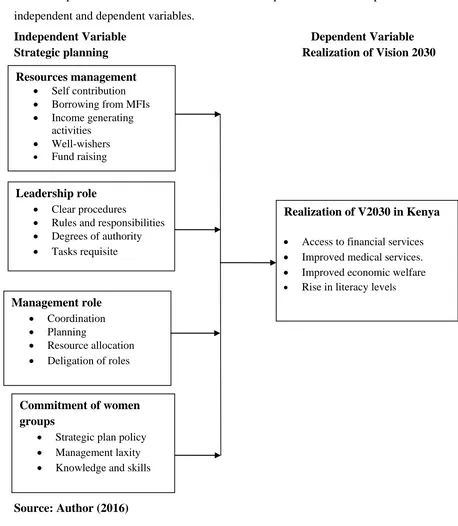
The conceptual framework below shows the conceptualized relationship between the independent and dependent variables.
Independent Variable Dependent Variable Strategic planning Realization of Vision 2030
Source: Author (2016)
Figure 2.1: Conceptual framework
The independent variable here includes the strategic planning which will include the resources management, leadership role, management role and commitment of women groups, while the dependent variables includes the realization of V2030 in Kenya
Resources management Self contribution Borrowing from MFIs Income generating
activities Well-wishers Fund raising
Leadership role Clear procedures
Rules and responsibilities Degrees of authority Tasks requisite
Management role Coordination Planning
Resource allocation Deligation of roles
Commitment of women groups
Strategic plan policy Management laxity Knowledge and skills
20
CHAPTER THREE
RESEARCH METHODOLOGY
3.0 Introduction
The chapter contains the following; research design, location of the study, target population, sampling technique, research instrument, data collection procedures and data analysis.
3.1 Research Design
The study undertook using the descriptive research study design. This study is of a social science nature and thus descriptive design is suitable since social science researches are of descriptive nature. Descriptive research design was selected because it allows for an in-depth collection of information that may be either qualitative or quantitative. It may also act as a precursor for future research since it allows for identification of variables that can be tested. Kothari, (2004) identifies that descriptive research design must focus on the following: - formulating the objective of the study, designing the methods of data collection, selecting the sample, collecting the data, processing and analyzing the data and reporting the findings.
3.2 Target Population
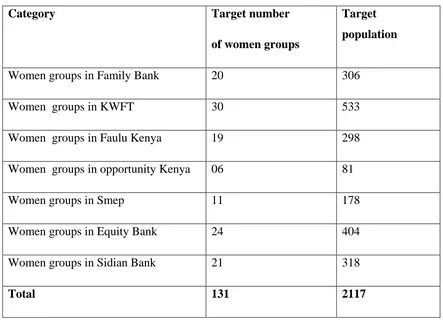
21 Table 3.1 Target Population
Category Target number
of women groups
Target population
Women groups in Family Bank 20 306
Women groups in KWFT 30 533
Women groups in Faulu Kenya 19 298
Women groups in opportunity Kenya 06 81
Women groups in Smep 11 178
Women groups in Equity Bank 24 404
Women groups in Sidian Bank 21 318
Total 131 2117
Source: Researcher, (2016)
3.3 Sample Size and Sampling Technique
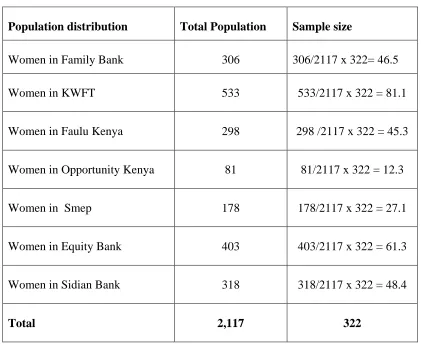
22 Table 3.2 Sample size
Population distribution Total Population Sample size
Women in Family Bank 306 306/2117 x 322= 46.5
Women in KWFT 533 533/2117 x 322 = 81.1
Women in Faulu Kenya 298 298 /2117 x 322 = 45.3
Women in Opportunity Kenya 81 81/2117 x 322 = 12.3
Women in Smep 178 178/2117 x 322 = 27.1
Women in Equity Bank 403 403/2117 x 322 = 61.3
Women in Sidian Bank 318 318/2117 x 322 = 48.4
Total 2,117 322
Source: Researcher, (2016)
3.4 The Data Collection Instruments
The data collection instruments were the tools to collect information from the intended target population (sample size). The data collection instruments that were used in this study were developed by the researcher. The study used the questionnaire. These are briefly discussed below.
3.4.1 Questionnaire
23
this study, the respondents were given enough time to complete the copies of the questionnaire before returning them for analysis. The questionnaire included both structured and semi-structured questions. This allowed the respondents to give their own views. The questionnaires were in two parts. The first parts sought to highlight demographic data; the next part obtains the information on specific areas relation to effects of strategic planning on resources management, strategic planning on leadership role, strategic planning on management role and strategic planning on commitment of women. Likert scales were useful in analyzing data in questions that directly involves the attitudes of the respondents.
3.4.2 Data Collection Procedure
Before collecting data, the researchers send a letter to the sampled women groups that allowed the collection of data in the institutions. The researcher sought permission from the leaders of the selected women groups after introducing himself and explaining the purpose of the study. After grant of permission, the researcher then proceeded to the respondents where they explain the purpose of the visit. The researcher then issues the questionnaires to the respondents while clarifying any issues that may arise from the questionnaires. The respondents assured of their confidentiality of any information they gave.
3.5 Validity of Research Instruments
24
supervisor and other research experts to ensure that the questions test or measure what they are supposed to measure.
3.6 Reliability of the Research Instrument
Reliability is the measure of the degree to which a research yields consistent results or data after repeated trials. It is the degree of consistency that the research instruments or procedures demonstrate. It is qualified by taking several measurements on the same subjects. Poor reliability degrades the precision of a single measurement and reduces the ability to track changes in measurement in a study (Mislevy, 2004). The reliability of data collection instruments was determined from the pilot study where the researcher was administering the research instruments to the other women group in Eldoret West sub-county. The research was administered questionnaires to the same respondents twice after a period of two weeks. The Cronbach’s coefficient alpha was applied on the results
obtained to determine how items correlate among them in the same instrument. Cronbach’s coefficient Alpha of more than 0.7 was taken as the cut off value for being
acceptable which will enhance the identification of the dispensable variables and deleted variables.
3.7 Data Analysis and Presentation
25 3.8 Ethical Considerations
Kombo and Tromp (2006), note that researchers whose subjects are people or animals must consider the conduct of their research, and give attention to the ethical issues associated with carrying out their research. This study dealt with people as respondents. Therefore, the researcher assured the respondents of confidentiality.
26 CHAPTER FOUR
DATA ANALYSIS AND INTERPRETATION 4.1 .Introduction
This chapter deals with data analysis, presentation and interpretation. The data obtained was coded and presented in form of tables and figures, most of the questions were closed ended making the questions easy to summarize. The open ended comments served to enrich the closed ended questions. In this section, we present background information of the respondents covered by the study and the general question responses.
4.1.1 Response Rate
The researcher distributed 322 questionnaires to the field and due to strict follow up, there was 100% response rate as shown in the table below.
Table 4.1 Response Rate
Response Frequency Percentage
Questionnaires 322 100 %
Source.Author (2016) 4.1.2 General Information
It was necessary to seek generalization in order to build information and assess demographic data such as the institution that finance the groups, length of borrowing from the micro finance institution and the strategic plan in women groups in realization of V2030 at Wareng Sub-County, Eldoret.
27
4.1.3 Financial Institution Attached to/Institution that Finance Your Group
The study sought to find out the financial institution attached to / institution that finance your group in Wareng Sub-County, Eldoret.
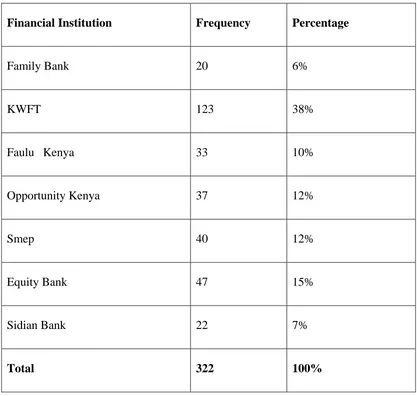
Table 4.2 Financial Institution Attached To / Institution that Finance Your Group
Financial Institution Frequency Percentage
Family Bank 20 6%
KWFT 123 38%
Faulu Kenya 33 10%
Opportunity Kenya 37 12%
Smep 40 12%
Equity Bank 47 15%
Sidian Bank 22 7%
Total 322 100%
Source Author: (2016)
28
Faulu Kenya comprised of 10%, Sidian Bank comprised of 7% and lastly Family Bank comprised of 6%. This implies that most women group were aware of micro finance institutions unlike banks.
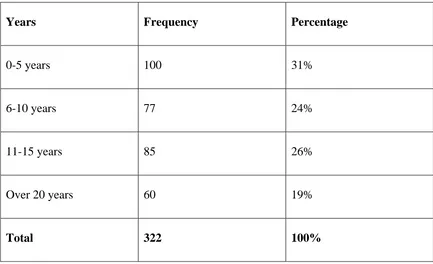
4.1.4 Length of Borrowing from the Micro Finance Institution
The study sought to find out the length of borrowing from the micro finance institution in Wareng Sub-County, Eldoret.
Table 4.3 Length of Borrowing from the Micro Finance Institution
Years Frequency Percentage
0-5 years 100 31%
6-10 years 77 24%
11-15 years 85 26%
Over 20 years 60 19%
Total 322 100%
Source Author: (2016)
29
4.1.5 Team in Charge of Formulation and Implementation of Strategic Plans
The study sought to find out the team in charge of formulation and implementation of strategic plans in Wareng Sub-County.
Table 4.4 Team in Charge of Formulation and Implementation of Strategic Plans
Teams Frequency Percentage
Yes 200 62%
No 122 39%
Total 322 100%
Source Author: (2016)
The study sought to find out whether the team is in charge of formulation and implementation of strategic plans in Wareng Sub-County. The study findings revealed that the majority of the respondents indicated yes which comprised of 62% and No comprised of 39%.
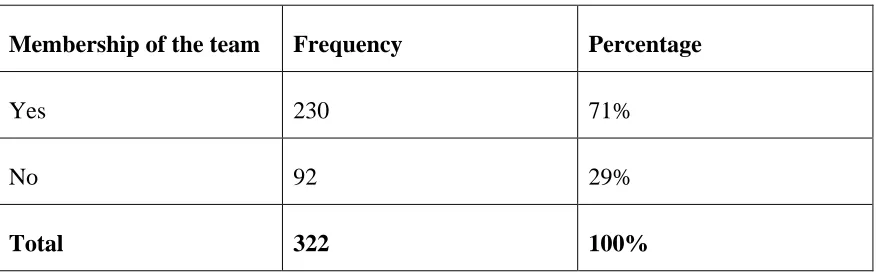
Table 4.5 Are You Member of the Team The responses were as shown in table 4.4 below:-
Membership of the team Frequency Percentage
Yes 230 71%
No 92 29%
Total 322 100%
30
The study findings from the above revealed that, the majority of the respondents indicated that there were member of the team comprised of 71% and 29% of the respondents indicated there were not members.
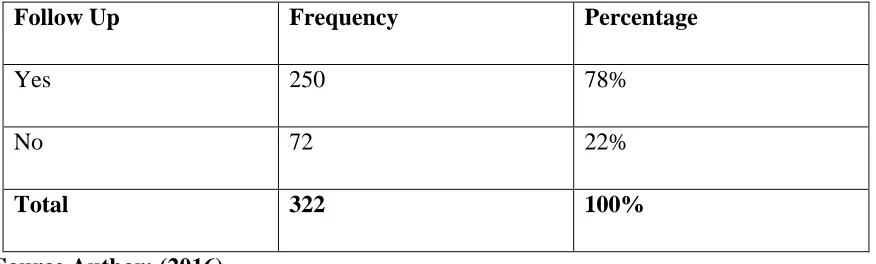
Table 4.6 Do you meet to follow up on Implementation of Strategic Plan
Follow Up Frequency Percentage
Yes 250 78%
No 72 22%
Total 322 100%
Source Author: (2016)
The study sought to find out whether the women group had meet to follow up on implementation of strategic plan. The study findings revealed that the majority of the respondents indicated yes which comprised of 78% while 22% of the respondents indicated No with of 22%. This implies that women were already aware of implementation of strategic plan.
4.1.6 Monitoring of Strategies to Review Progress of Implementation
The study sought to find out monitoring of strategies so as to review progress of implementation of strategic plans in Wareng Sub-County, Eldoret.
Table 4.7 Monitoring of Strategies so as to Review Progress of Implementation Strategies to Review Progress Frequency Percentage
Yes 270 84%
No 52 16%
Total 322 100%
31
The study findings revealed that the majority of the respondents indicated yes which comprised of 84% while 16% indicated no. These findings implied that monitoring of strategies in order to review progress of implementation of strategic plans is key for the success of the group.
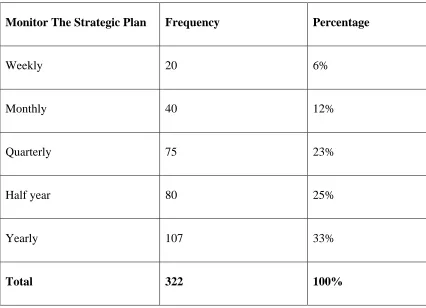
Table 4.8 How Often Do You Monitor the Strategic Plan.
Monitor The Strategic Plan Frequency Percentage
Weekly 20 6%
Monthly 40 12%
Quarterly 75 23%
Half year 80 25%
Yearly 107 33%
Total 322 100%
Source Author: (2016)
32 4.2 Group Sources of Finances
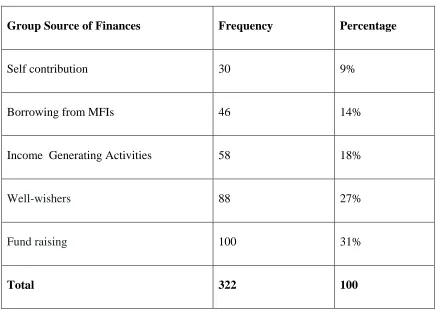
The study sought to find out the group sources of finance in Wareng Sub-County, Eldoret.
Table 4.9 Group Source of Finances
Group Source of Finances Frequency Percentage
Self contribution 30 9%
Borrowing from MFIs 46 14%
Income Generating Activities 58 18%
Well-wishers 88 27%
Fund raising 100 31%
Total 322 100
Source Author: (2016)
The study findings revealed that the majority of the respondents indicated that they got their finance from fund raising which comprised of 31%, well wishers comprised of 27%, income generating activities comprised of 18% while Borrowing from MFIs comprised of 14% and lastly 9% of the respondents indicated that they obtain from Self contribution and income generating activities.
33
who carried out a study on women contribution on productivity and found out that their productivity and contribution was low due to constraints of culture and tradition.
4.2.1 Do these Finances Always Arrive on Time
The study sought to find out if the finances arrive on time in Wareng Sub-County, Eldoret.
Table 4.10 Do these Finances Arrive on Time
Finances Arrival Frequency Percentage
Yes 290 90%
No 32 10%
Total 322 100%
Source Author: (2016)
The above table shows that 90% of the respondents agree that finances arrive on time while 10% of them said that the finances arrive late. The study findings revealed that the majority of the respondents get their funding on the required time.
34
Table 4.11 Allocation of Sufficient Resources for Implementation of Group Activities
Sufficient Resources Frequency Percentage
Yes 200 62%
No 122 38%
Total 322 100%
Source Author: (2016)
35 4.3 The Order of Preferences on Leadership Role
The study sought to find out the order of preferences on leadership role of women groups in Wareng Sub-County, Eldoret. This is shown in table 4.11
Table 4.12 Order of Preferences on Leadership Role of Women Groups
Roles N Min Max Mean Std Dev
Clear procedures, rules and responsibilities that give organizational members certainty
322 1 5 3.8714 0.3779
Enhances strategic implementation success.
322 1 5 4.2001 0.3124
Managers always determine the degrees of authority needed to manage each organizational unit.
322 1 5 4.0235 0.9961
Management pinpoints the key functions and tasks requisite for successful strategy execution
322 1 5 3.6658 0.6875
Source Author: (2016)
36
The respondents were also asked on whether the organization selects the right people for key positions in an effort to enhance the success of strategy implementation. We had a mean of 4.2001 and standard deviation of 0.3124. The higher mean shows that the respondents strongly agree with the fact that management select the right people for key
positions and a low standard deviation means that majority of the respondents gave a
common opinion.
Further, the respondents were asked on whether the management always determines the degrees of authority needed to manage each organizational unit, bearing in mind both the benefits and costs of decentralized decision making. We had a mean of 4.0235 and standard deviation of 0.9961. This means that the respondents agree that the management always determine the degree of authority needed to manage each organizational unit. The
low standard deviation means that the variables had a minimal deviation from the mean.
This means that most of the respondents gave an opinion that was almost similar.
The respondents were asked on whether the management pinpoints the key functions and tasks requisite for successful strategy execution. We had a mean of 3.6658 meaning that majority of respondents supported that management pinpoints the key functions and tasks
requisite for successful execution of strategy and standard deviation of as low as 0.6875
denoting that the opinions of respondents were not very divergent.
37
4.4 Factors of Management Style that Affects Women Groups in Realization of V2030
The study sought to find out the factors of management style that affects women groups in realization of vision 2030 in Wareng Sub-County.
Table 4.13 Factors of Management Style that Affects Women Groups in Realization of V2030
N Min Max Mean Std Dev
Implementation procedures affects
implementation of
strategic plan
322 1 5 3.3564 0.6208
Competing activities affects
implementation of
strategic plan
322 1 5 4.2146 0.527
Involvement of end users affects
implementation of
strategic plan
322 1 5 3.7894 0.3004
Resource allocation affects
implementation of strategic plan
322 1 5 4.0653 0.4365
38
The table above shows that implementation procedures affect implementation of strategic
plan with a mean=3.3564 and a standard deviation of 0.6208, competing activities affects implementation of strategic plan with a mean=4.2146 and a standard deviation of 0.527. The involvement of end users affects implementation of strategic plan as indicated with a mean of 3.7894 and a standard deviation of 0.3004. The resource allocation affects implementation of strategic plan as represented by a mean of 4.0653 and a standard deviation of 0.4365. From the above findings, all the variables had a higher mean and low
standard deviation implying that the respondents agreed to a larger extent that the
variables affect implementation of strategic plans. The low standard deviation means that
the views of respondents were almost the same.
4.5 The Group Committed and Supportive in Executing the Strategic Plans
The study sought to find out whether the group is committed and supportive in executing the strategic plans of the group in Wareng Sub-County, Eldoret.
Table 4.14 Commitment and Support of Group Members in Executing the Strategic Plans of the Group
Statements Frequency Percentage
Yes 300 93%
NO 22 7%
Total 322 100%
Source Author: (2016)
The study sought to find out if the group members participate in the execution of strategic plans of the group.
39
of 93% while 7% of the respondents indicated that the group is not committed and supportive in executing the strategic plans. Despite the challenges that they had been facing, group members were committed and supportive in executing the strategic plans.
O’Regan and Ghobadian, (2006), lack of credit has also been identified as one of the
most serious constraints facing SMEs and hindering their development. Abolarin, (2013) in Akamai University on impact of top management commitment on implementation of total quality management in an organization revealed that when management is actively involved in total quality management, members will be encouraged and highly motivated to implement organizational objectives.
Table 4.15. How Often do you Meet as a Group to Discuss the Progress of your Strategic Plans?
Statements Frequency Percentage
Always 72 22%
Occasionally 150 47%
Never 100 31%
Total 322 100%
Source Author: (2016)
40
The majority of groups basing on the above findings do meet occasionally as represented by the highest score of 47%.
4.6 Management Commitment
The study sought to find out the level of commitment by management on issues of strategic plans in their groups.
Table 4.16 Management Commitment
Management commitment
SA A U D SD Total
Strategic plan policy in our group is weak therefore
hindering implementation of the strategic plan
140(44%) 60(19%) 53(17%) 35(11%) 34(11%) 322(100%)
There is
management laxity (lack of follow-up) which influences the implementation of strategic plans in our group
170(53%) 80(25%) 35(11%) 25(8%) 12(4%) 322(100%)
Our leaders have knowledge and skills necessary
for group
management and implementation of strategic plans.
100(31%) 88(27%) 58(18%) 46(14%) 30(9%) 322(100%)
Source Author: (2016)
41
follows: -140(44%) of the respondents strongly agreed with this statement,19% agreed, the undecided were 17%. 11% disagreed while 11% strongly disagreed.
The respondents were asked on whether there was management laxity (lack of follow-up) which influences the implementation of strategic plans in their groups and the responses were as follows:-170 (53%)of the respondents strongly agreed, 25 % agreed, the undecided were 11%, 8% disagreed while 4% strongly disagreed with the statement.
The respondents were asked on whether their leaders had the requisite skills necessary for group management and implementation of strategic plans. The responses were as follows:-100(31%) of the respondents strongly agreed, 27 % agreed, the undecided were 18%, 14% disagreed while 9% strongly disagreed with this statement.
Odame (2007) further clarified that management role of women groups, strategic planning as a method of formulating and implementing long-term plans in a broad and flexible manner is necessary in order to achieve the aspirations of the organization.
4.7 Do you understand What Vision 2030 Entails?
The study sought to find out whether the respondents understand what vision 2030 entails.
Table 4.17 Vision 2030
Vision 2030 Frequency Percentage
Yes 200 62%
No 80 25%
Not sure 40 12%
Total 322 100%
42
The study sought to find out whether the respondents in various groups within Wareng sub-County understand what vision 2030 entails. The study findings revealed that majority of respondents indicated that they understand what vision 2030 entails which comprised of 62% while 25% of the respondents indicated that they were not conversant with vision 2030 and the least number at 12% indicated that they were not sure of their position. It is clear then that most of the group members understand what Kenya’s vision 2030 entails.
Table 4.18 Did the Group Help You Understand Kenya’s Vision 2030?
Understanding Vision 2030 Frequency Percentage
Yes 200 62%
No 122 37%
Total 322 100%
Source Author: (2016)
43
4.7.1 Access of the Financial Services from your Micro finance
The study sought to find out the easiness to Access the financial services from the micro finance institutions in Wareng sub-county, Eldoret.
Table 4.19 Access of the Financial Services from your Micro Finance Institutions
Access of the financial services
Frequency Percentage
Very easy 150 47%
Easy 100 31%
Not easy 40 12%
Indifferent 32 10%
Total 322 100%
Source Author: (2016)
44
4.7.2 The Rate at Which the Financial Services are Offered and its Availability The study sought to find out the rate at which the financial services are offered and its availability to women groups in Wareng Sub-County, Eldoret.
Table 4.20 Rate at Which the Financial Services are Offered and its Availability
Source Author: (2016)
The research sought to find out the rate at which the financial services are offered and its availability in Wareng Sub-County, Eldoret. The majority of the respondents at 56% said that the financial services offered are excellent. 25% of the respondents indicated Fair, 12% of the respondents indicated Poor and 7% of the respondents indicated that the availability of financial services was very poor. It is evident that the financial services are doing well in availing funds to the women groups in this sub-county.
Availability of financial services
Frequency Percentage
Excellent 180 56%
Fair 80 25%
Poor 40 12%
Very poor 22 7%
45
4.7.3 Improvement in your Economic Welfare Since you Joined the Group
The study sought to find out if there has been any improvement in economic welfare of the group members since they joined the various groups.
Table 4.21 Any Improvement in your economic welfare since you joined the group?
Response Frequency Percentage
Yes 200 62%
No 122 38%
Total 322 100
Source Author: (2016)
The study sought to find out if there was any improvement in the economic welfare of the dependants group members since they joined the group. The study findings revealed that the majority of the respondents indicated that there has been a notable improvement in economic welfare since they became members of the groups. This was represented by 62% of the respondents while 38% of the respondents indicated that there had been no improvement in their economic welfare despite joining women groups. This implies that majority of women had bought assets for their households and may have paid school fees for their children and therefore their living standards had improved.
4.7.4 The Opinion on Situation of Literacy Levels
46
Table 4.22 Opinion on Situation of Literacy Levels
Literacy levels Frequency Percentage
Excellent 150 47%
Fair 100 31%
Poor 50 16%
Very poor 22 7%
Total 322 100%
Source Author: (2016)
47 CHAPTER FIVE:
SUMMARY, CONCLUSIONS AND RECOMMENDATIONS 5.0 Introduction
This chapter presents summary of findings as discussed in chapter four and
interpretations, conclusions and recommendations based on the findings.
5.1 Summary of Findings
5.1.1 Resources Management in Women Groups in Realization of V2030.
The study sought to find out the financial institutions that offer finances to various women groups in Wareng sub-county, Eldoret. The majority of respondents indicated that most of the groups were attached to KWFT with and the least number of groups acquired their funds from Family bank This implies that most women groups were aware of micro finance institutions.
The study sought to find out the length of borrowing from the micro finance institutions. The study findings revealed that most of the respondents indicated that they have been borrowing for the last 5 years and those who had borrowed for between 11-15years were the least as indicated by 26%.of the respondents.
The study sought to find out whether the teams were in charge of formulation and implementation of strategic plans in the various groups. The study findings revealed that the majority of groups at 62% said that they use teams in running most of the group affairs.
5.1.2 Leadership Role of Women Groups in Realization of V2030.
The respondents were asked on whether there are clear procedures, rules and responsibilities that give organizational members certainty during a strategy implementation effort. Majority of the respondents agreed that there were indeed clear procedures that guide their operations.
48
needed to manage each organizational unit, bearing in mind both the benefits and costs of decentralized decision making, the respondents were asked on whether the management pinpoints the key functions and tasks requisite for successful strategy execution, the responses were as follows:-53% of the respondents strongly agreed, 24% agreed. The undecided were 11%, 8% disagreed while 4% strongly disagreed.
5.1.3 Management Role of Women Groups in Realization of V2030.
The respondents were asked on whether implementation procedures and competing activities affect implementation of strategic plans. They were also asked on whether involvement of end users affects implementation of strategic plans.
5.1.4 Commitment of Women Groups in Realization of V2030
Majority of the respondents agreed that, strategic planning policies in their groups were weak therefore hindering implementation of the strategic plans and that there is some management laxity (lack of timely follow-ups) which influences the implementation of strategic plans in their groups.
5.2 Conclusion
49 5.3 Recommendations
Based on the findings the study recommended that:-
If resources are well managed, high performance of women groups is attained leading to improved quality of life for the members and their dependants. This was revealed by 65% of the respondents who admitted that their welfare had improved since they joined women groups.
Leaders are a role model and they should join hands in motivating the other members to work together and aim for the best results. Leaders should take the lead so that others can support their initiatives. Good managers need to do things through others by delegating and inspiring people to perform to their best. They should take responsibility for their actions and maintain control over those people under their jurisdiction.
The management should put in place clear measures that ensure monitoring of the implementation progress of the strategic plans is done regularly and on a timely basis because if monitoring and evaluation is done after a very long time, errors may not be detected early.
5.4 Suggestion for Further Studies
50 REFERENCE
Abolarin, S. (2014). Approach to energy management. A case study of a medium scale printing press. Lagos, Nigeria: International journal of energy and power engineering.
Aosa, E. (1992). An empirical investigation of aspects of formulation and implementation within large manufacturing companies in Kenya.
Barney, J. (2001). Resource based theory on competitive advantage: A ten year retrospective on the resource based view. A journal on management review, 27, 643–645.
Bolo, A., & Nkirote, K. C. (2012). Bottlenecks in the execution of Kenya vision 2030 strategy: An empirical study. Prime journal of business administration and management (BAM), 2(3), 505-512.
Bryson, J. (2000). Strategic planning for public and nonprofit institutions: A guide to strengthening and sustaining organizational achievement. San Francisco, CA: Jossey-Bass Publishers.
Canole, M. (2003). District strategic planning: Is there evidence of strategic thinking and acting? Johnson & Wales University, Providence, Rhode Island: The graduate school educational leadership program.
Cawelti, E. Lindblom. (2007). Strategic change: "Logical Instrumentalism." Sloan management review, 20 (1), 7.
Chimhanzi, J. (2004). The impact of marketing/HR interactions on marketing strategy implementation. European journal of marketing, 38, 73-98.
Chitere, K. (1994). Good strategic planning and critical thinking in management. Journal of world business, 20, 121 -127.
David, F. (2009). Strategic management: Concepts and cases. River, NJ prentice hall, USA.
Dincer, Tatoglu., & Glaister. (2008). Strategy in educational leadership: In search of unity. Journal of educational administration, 46 (3), 353-375.
Githongo, S. (2008). Challenges facing secondary school headteachers as chief executive to board of governors in Bomet district, Kenya. Unpublished M.Ed project. Kenyatta University.