SCNT versus iPSCs:
proteins and small molecules in reprogramming
FEI HAN
#, XIA LI
#, DANDAN SONG, SHAOSHUAI JIANG, QUN XU and YUNHAI ZHANG*
Anhui Provincial Laboratory for Local Livestock and Poultry Genetic Resource Conservation and Breeding, College
of Animal Science and Technology, Anhui Agricultural University, Hefei, China
ABSTRACT Somatic cell nuclear transplantation (SCNT) and induced pluripotent stem cell (iPSC)
technologies can be employed to change cell fate by reprogramming. The discoveries of SCNT and
iPSCs were awarded the Nobel Prize for Physiology and Medicine in 2012, which reaffirmed the
importance of cell fate plasticity. However, the low cloning efficiency of SCNT and differences
be-tween iPSCs and embryonic stem cells (ESCs) are great barriers and may be caused by incomplete
or aberrant reprogramming. Additionally, the well characterized reprogramming factors Oct4, Sox2,
Klf4 and c-Myc (OSKM) are not simultaneously expressed at high levels in enucleated or early
em-bryonic oocytes, suggesting reprogramming may be different in the above two methods. Recent
studies have demonstrated that small molecules and specific proteins expressed in oocytes and
in early embryonic development play important roles in reprogramming by replacing transcription
factors, erasing reprogramming memory and accelerating the speed and extent of reprogramming.
In this review, we summarize the current state of SCNT and iPSCs technologies and discuss the
latest advances in the research of proteins and small molecules affecting SCNT and iPSCs. This is
an area of research in which chemical biology and proteomics are combining to facilitate improving
cellular reprogramming and production of clinical grade iPSCs.
KEY WORDS:
SCNT, iPSC, early embryo, oocyte, differentiation, protein, small molecule
Introduction
Each and every one of us developed from a totipotent egg
following fertilization, and the journey of embryonic development
from immature to specialized cells was previously considered
to be unidirectional. However, in 1962, Gurdon (Gurdon, 1962)
provided the first evidence that broke from this dogmatic view
and demonstrated that specialization of cells is reversible by
somatic cell nuclear transplantation (SCNT) in frogs. Since
then, SCNT has been used to clone sheep (Wilmut et al., 1997)
and pigs (Betthauser et al., 2000), and following great efforts,
SCNT-derived human embryonic stem cells (ESCs) were finally
generated from fetal dermal fibroblasts in 2013 (Tachibana et al.,
2013) and from 35- and 75-year-old males in 2014 (Chung et
al., 2014). Subsequently, adult somatic nuclei from newborn and
adult female patients with type 1 diabetes were reprogrammed in
to diploid pluripotent stem cells. This work showed the potential
for therapeutic applications (Yamada et al., 2014) and confirmed
the suitability of SCNT for large mammals, and the research area
www.intjdevbiol.com
*Address correspondence to: Yunhai Zhang. Anhui Provincial Laboratory for Local Livestock and Poultry Genetic Resource Conservation and Breeding, College of
Animal Science and Technology, Anhui Agricultural University, Hefei, Anhui, China. Tel/ Fax: +86-551-65786357; E-mail: [email protected]
#These authors contributed equally to this work.
Accepted: 14 May 2015.
ISSN: Online 1696-3547, Print 0214-6282
© 2015 UBC PressPrinted in Spain
Abbreviations used in this paper: bFGF, FGF2, basic fibroblast growth factor; BMP,
bone morphogenetic protein; ESCs, embryonic stem cells; GDF9, growth and
differentiation factor 9; iPSCs, induced pluripotent stem cells; Lif, leukemia
inhibitory factor; OSKM, reprogramming factors Oct4, Sox2, Klf4 and c-Myc;
PGCs, primodial germ cells; SCF, stem cell factor; SCNT, Somatic cell nuclear
transplantation; SNEL, reprogramming factors Sall4, Nanog, Esrrb, and Lin28;
TLR3, toll-like receptor 3.
is continuing to expand (Cibelli, 2014). However, the efficiency of
acquiring healthy offspring and patient-specific stem cells using
SCNT remains low, possibly due to incomplete or inappropriate
reprogramming of the transferred nuclear genome (Campbell et
al., 2007). Oocytes and early embryos perform crucial functions
in SCNT-mediated reprogramming, and extracts of oocytes (Bui
et al., 2012) have been used successfully to mediate somatic cell
reprogramming. However, many of the cellular and macromolecular
factors responsible for conferring totipotency or pluripotency to
somatic cells remain unknown.
fac-tors playing important roles in the maintenance of ESCs’ identity
also play pivotal roles in the induction of pluripotency in somatic
cells. Takahashi et al., acquired iPSCs from mouse and human
somatic cells using retroviruses, and these cells have the ability
to replicate indefinitely while maintaining pluripotency and the
ability to differentiate into cells of all three germ layers (Takahashi
and Yamanaka, 2006, Yu et al., 2007). These cells circumvent
the need for human embryos and can reduce or avoid immune
rejection by generating stem cells from the patient’s own cells.
Therefore, iPSCs provide an attractive alternative to ESCs and
hold great promise for disease modeling, drug selection and cell
therapies in both regenerative medicine and agriculture (Li et al.,
2014). A year after human iPSCs were generated for the first time,
various disease-specific iPSCs were produced that offer an
un-precedented opportunity to recapitulate both normal and diseased
human tissues in vitro (Park et al., 2008). Owing to the capacity
of proliferating indefinitely, iPSCs show a high efficiency for gene
targeting (Hockemeyer et al., 2009), which may have implications
for treating diseases resulting from genetic defects. In 2013, using
human iPSCs-derived cardiomyocytes from patients with hereditary
cardiac disorders, Liang et al., (Liang et al., 2013) demonstrated
the power of patient-specific iPSCs in drug selection and drug
toxicity screening for establishing the optimum drug dosage for
specific patients. However, low efficiency, genome instability and
epigenetic memories of donor cells during reprogramming remain
barriers to the future clinical use of iPSCs.
At present, achieving a perfect reprogramming method appears
to be some way off. A recent comparison of SCNT and iPSCs
technologies found that both can cause subtle molecular defects
(Krupalnik and Hanna, 2014). In this review, we further explore
the similarities, differences and the advantages, disadvantages of
these methods. Compared to SCNT, iPSCs and early embryos may
provide insight into possible perfect reprogramming approaches,
and may be useful for identifying proteins and small molecules
in oocytes or early embryos that may be critical for this process.
To this end, we have reviewed the source and function of such
proteins and small molecules reported to date, and summarized
the recent advances in SCNT and iPSCs technologies. The most
promising approaches for producing high quality, safe and
effec-tive pluripotent stem cells using proteins and small molecules are
given particular attention.
The current state of SCNT and associated problems
SCNT is a method of creating reconstructed embryos from
somatic cells and oocytes that consists of implanting a donor
nucleus from a somatic cell into an enucleated oocyte. This
ap-proach has produced viable offspring of a number of species for
reproductive purposes, and has also generated patient-specific
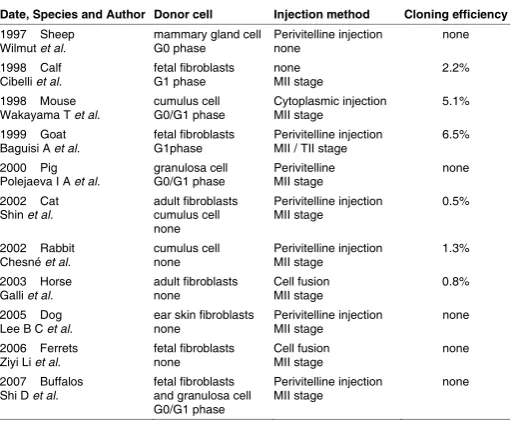
stem cell lines for therapeutic purposes (Fig. 1). Since the birth
of Dolly the sheep, SCNT has been used to clone cattle (Cibelli
et al., 1998), mice (Wakayama et al., 1998), goats (Baguisi et al.,
1999), pigs (Polejaeva et al., 2000), cats (Shin et al., 2002),
rab-bits (Chesne et al., 2002), horses (Galli et al., 2003), rats (Zhou
et al., 2003), dogs (Lee et al., 2005), and ferrets (Li et al., 2006)
from a range of cell types (Table 1). Human ESCs (hESCs) have
also been generated using SCNT and shown to be equivalent to
ESCs from embryos in vivo studies (Chung et al., 2014, Tachibana
et al., 2013, Yamada et al., 2014).
Despite multiple attempts, the efficiency of producing viable
offspring by SCNT remains stubbornly low (Maruotti et al., 2010).
This may be due to incomplete or aberrant reprogramming, and the
Date, Species and Author Donor cell Injection method Cloning efficiency
1997 Sheep
Wilmut et al. G0 phase mammary gland cell Perivitelline injection none none 1998 Calf
Cibelli et al. fetal fibroblasts G1 phase none MII stage 2.2% 1998 Mouse
Wakayama T et al. cumulus cell G0/G1 phase Cytoplasmic injection MII stage 5.1% 1999 Goat
Baguisi A et al. fetal fibroblasts G1phase Perivitelline injection MII / TII stage 6.5% 2000 Pig
Polejaeva I A et al. granulosa cell G0/G1 phase Perivitelline MII stage none 2002 Cat
Shin et al. adult fibroblasts cumulus cell none
Perivitelline injection
MII stage 0.5%
2002 Rabbit
Chesné et al. cumulus cell none Perivitelline injection MII stage 1.3% 2003 Horse
Galli et al. adult fibroblasts none Cell fusion MII stage 0.8% 2005 Dog
Lee B C et al. none ear skin fibroblasts Perivitelline injection MII stage none 2006 Ferrets
Ziyi Li et al. fetal fibroblasts none Cell fusion MII stage none 2007 Buffalos
Shi D et al. fetal fibroblasts and granulosa cell G0/G1 phase
Perivitelline injection
MII stage none
TABLE 1
KEY INFORMATION ON SCNT IN DIFFERENT SPECIES
Note: none represents no related information in the research. Cloning efficiency represents fetal / nuclear transfer embryos. G0/G1 represents Gap 0/Gap 1. MII represents metaphase II.
Date and Authors Extracts source and start cells types Method of Permeable membrane Mechanism
2003
Byrne et al Xenopus laevis GV oocytes Adult mouse thymocytes and adult human blood lymphocytes 10-20 streprtolysin for 7 days at 18°C Induce terminally differentiated mammalian cells to express Oct4 2008
Bui et al. Mouse GV oocytes Mouse cumulus cells 200 ng/ml streptolysin O for 40 min at 37°C Genomic reprogramming factors are present in the cytoplasm 2010
Cho et al. Mouse embryonic stem cell-derived proteins Mouse fibroblasts 230 ng/μl streptolysin O for 50 min at 37°C Neither by the contamination of donor ESCs nor by DNAs/RNAs from donor ESCs 2011
Miyamoto et al. DJ-1 in oocyte proteins Porcine fibroblasts cells 30 μg/ml digitonin Disturb expression of P53 pathway components 2012
Bui et al. Pig GV oocytes Porcine ear skin fibroblasts 300 ng/ml streptolysin O for 50 min at 38.5°C Induce demethylation of H3-K9 Promote Oct4-EGFP expression in SCNT-derived embryos 2014
Kong et al. Pig oocytes with 1
st polarbody and maternal vimentin protein
Porcine ear fetal fibroblasts none Inhibit DNA double-strand breaks Down regulate p53 expression
TABLE 2
SUMMARY OF EXTRACTS FROM OOCYTES AND PLURIPOTENT CELLS MEDIATING REPROGRAMMING
associated problems
Through the ectopic expression of defined factors in mouse
embryonic or adult fibroblasts, these differentiated cells can
be reprogrammed to iPSCs (Takahashi and Yamanaka, 2006).
Since iPSCs were first described, the use of these cells in the
development of reprogramming technologies has been rapid, and
numerous types of source cells have been employed. Researchers
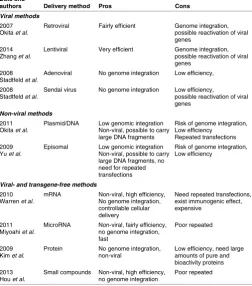
also use different methods to obtain iPSCs, including viral- and
transgene-free methods, non-viral methods, and viral methods
(Table 3). Though the last two methods are considered to take
risk of genome integration, the first method is still immature, and
further studies are needed for optimizing reprogramming process.
In general, these approaches up-regulate genes involved in
pluripotency and self-renewal, and down-regulate lineage
com-mitment genes (Krueger et al., 2010). Current prevailing
repro-gramming methods affect the quality of iPSCs and great strides
have been made to improve the safety, efficiency and speed of
these methods. In summary, eliminating oncogenes and adding
new factors such as Sall4, Tbx3 and Nr5
a
2 into reprogramming
cocktails, adjusting existing factor combinations, and altering the
proteins and small compounds present to reduce tumorigenicity
have all been shown to affect the quality of the iPSCs produced
(Han et al., 2010, Tsubooka et al., 2009, Wang et al., 2013). The
stoichiometry of factors and the order in which they are introduced
can also affect the speed and efficiency of reprogramming (Liu et
al., 2013). For instance, iPSCs based on tetraploid
complementa-tion that were generated in mouse embryonic fibroblasts (MEFs)
by ectopic Sall4, Nanog, Esrrb, and Lin28 (SNEL) were of higher
quality than classic Oct4, Sox2, Klf4 and c-Myc (OSKM)-derived
cells (Buganim et al., 2014).
At present, iPSCs technologies face the problems of
reprogram-ming extent, memory, and immunogenicity. The pluripotent genes
Fbx15, Oct4 and Nanog combined with drug-resistance genes and
cloning morphologies have been used to screen positive cell lines
(Takahashi and Yamanaka, 2006). At the early stages of
repro-gramming, iPSCs are always partially reprogrammed and possess
limited differentiation potential. For example, the first iPSCs line
could not produce adult chimeras and exhibited no germ
transmis-sion capacity (Okita et al., 2007, Takahashi and Yamanaka, 2006).
However, these partially reprogrammed cells proved powerful for
investigation of reprogramming mechanisms. Meanwhile, partially
reprogrammed iPSCs can elicit immune rejection (Martins-Taylor
and Xu, 2012, Polo et al., 2010). Although controversy concerning
the immunogenicity of iPSCs remains all the time, the
immuno-genicity of iPSCs generated by a viral integration approach was
higher than that of cells derived by an episomal method without
genomic integration (Zhao et al., 2011). These results suggest
that iPSCs derived by viral-free and gene-free methods, such as
protein- or small molecule-mediated methods, may result in lower
Date and
authors Delivery method Pros Cons
Viral methods 2007
Okita et al. Retroviral Fairly efficient possible reactivation of viral Genome integration, genes
2014
Zhang et al. Lentiviral Very efficient Genome integration, possible reactivation of viral genes
2008
Stadtfeld et al. Adenoviral No genome integration Low efficiency, 2008
Stadtfeld et al. Sendai virus No genome integration Low efficiency, possible reactivation of viral genes
Non-viral methods 2011
Okita et al. Plasmid/DNA Low genomic integration Non-viral, possible to carry large DNA fragments
Risk of genome integration, Low efficiency
Repeated transfections 2009
Yu et al. Episomal Low genomic integration Non-viral, possible to carry large DNA fragments, no
Warren et al. mRNA Non-viral, high efficiency, No genome integration, controllable cellular
Miyoahi et al. MicroRNA Non-viral, fairly efficiency, no genome integration, fast
Poor repeated
2009
Kim et al. Protein No genome integration, non-viral amounts of pure and Low efficiency, need large bioactivity proteins 2013
Hou et al. Small compounds Non-viral, high efficiency, no genome integration Poor repeated
TABLE 3
CHARACTERISTICS, PROS AND CONS OF iPSC
GENERATION METHODS
Fig. 1. Flow diagram and main purposes of somatic cell nuclear transplantation (SCNT).
exact molecular components
influenc-ing reprogramminfluenc-ing in SCNT are poorly
understood. Efficient reprogramming
of differentiated cell nucleus can also
be induced by oocyte extracts. Here,
extracts from oocytes or pluripotent stem
cells for successful efficient
reprogram-ming have been shown in Table 2. These
researches demonstrated that proteins
and small compounds in oocyte and early
embryos, not genetic materials, play vital
roles in reprogramming process. But
these proteins and small compounds in
oocytes and early embryos still need to
be defined and their potential functions
and mechanisms are unclear.
immunogenicity. On the other hand, the origin of the cell type can
also influence the immune properties of iPSCs, possibly due to
differences in reprogramming memory (Polo et al., 2010). The
dif-ference in transcription and epigenetic landscape between ESCs
and iPSCs is that the latter type bearing some memory of their
original differentiated state (Eguchi et al., 2014). The memory of
iPSCs can result in the partial retention of the transcriptional and
epigenetic features of the source cells. Additionally, iPSCs tend
to differentiate into source cells when differentiation is induced.
Interestingly, this phenomenon gradually disappears with multiple
passages (Lee et al., 2014). In 2013, Kumar et al., (Kumar et al.,
2013) found that inducing the enzyme cytidine deaminase could
diminish the epigenetic memory of iPSCs, resulting in a stable
pluripotent state.
Proteins and small molecules in SCNT and iPSCs
In 1981, mouse ESCs (mESCs) were obtained from blastocyst
pluripotent epiblast cells and cultured with inactivated fibroblast
feeders, serum and other ingredients (Evans and Kaufman, 1981).
It was found that cytokines from the feeder cells or serum such as
leukegmia inhibitory factor (Lif) (Gardner and Brook, 1997) and
bone morphogenetic protein (BMP) (Ying et al., 2003) were
es-sential for maintenance of pluripotency. Approximately 20 years
later, hESCs were first reported (Thomson et al., 1998). In
appar-ent contrast to mESCs, Lif (Humphrey et al., 2004, Thomson et
al., 1998) and BMP (Xu et al., 2002) have been shown to induce
differentiation in hESCs. In contrast, basic fibroblast growth
fac-tor (bFGF) greatly promoted the self-renewal of hESCs (Amit et
al., 2000). Therefore, researchers realized small molecules may
cause distinct states of pluripotent in stem cells in mouse and
human. In 2009, Nichols and Smith (Nichols and Smith, 2009)
proposed that two phases of pluripotency can be defined: naïve
and primed. The mESCs are naïve pluripotent state and lead to
broad and more robust developmental potential relative to primed
mouse epiblast cells and hESCs. Then, Hanna et al., (Hanna et
al., 2010) acquired naïve human ESCs/iPSCs which could grow
on feeder cells in PD0325901/CHIR99021/Lif/Forskolin. After
that, Ware et al., (Ware et al., 2014) also described two routes to
generate naïve hESCs by some small molecules and proteins like
MEK/ERK and GSK3 inhibitors with FGF2. These studies suggest
that specific proteins and small molecules play an important role
in establishing and maintaining the pluripotency of ESCs among
different species, and even the pluripotent state can inter-convert
through different combinations of small compouds and proteins.
Small molecules can be highly influential in reprogramming
procedures. During the early stages of reprogramming, activation of
the toll-like receptor 3 (TLR3) innate immunity pathway was shown
to be required for efficient nuclear reprogramming by comparing
the viral and protein delivery of reprogramming factors (Lee et al.,
2012). Furthermore, TLR3 activation was implemented by Poly
I:C, a type of TLR3 agonist. More recently, Notch inhibition was
shown to facilitate oncogene-independent generation of mouse
and human iPSCs (Ichida et al., 2014).
One hypothesis that accounts for the enhanced reprogramming
capacity posits that current strategies for inducing pluripotent stem
cells lack oocyte-specific factors (Gonzalez-Munoz et al., 2014)
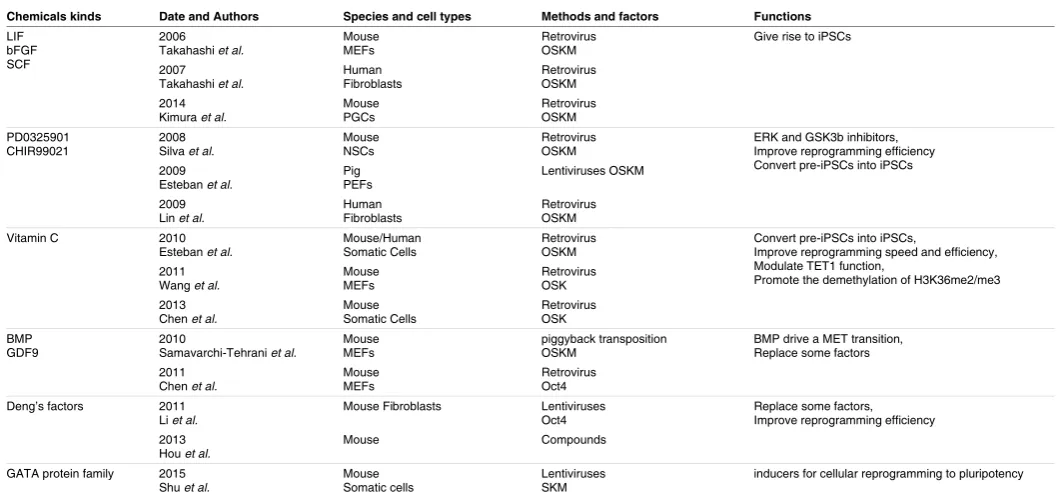
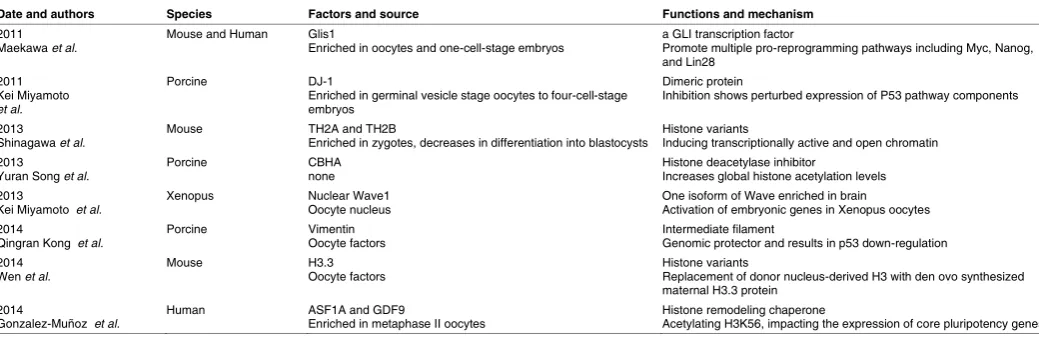
such as BMPs, GDF9 (Paradis et al., 2009) and ASF1A (Kocabas
et al., 2006) that are specifically enriched in oocytes,early embryos.
Furthermore, these factors could also contribute to achieving more
efficient reprogramming and illuminating the molecular pathways
involved (Table 4). There are many more factors in oocytes and
early embryos that may perform vital functions in reprogramming,
many of which are untested for iPSCs generation (Table 5).
Chemicals kinds Date and Authors Species and cell types Methods and factors Functions
LIF bFGF SCF
2006
Takahashi et al. Mouse MEFs Retrovirus OSKM Give rise to iPSCs 2007
Takahashi et al. Human Fibroblasts Retrovirus OSKM 2014
Kimura et al. Mouse PGCs Retrovirus OSKM PD0325901
CHIR99021 2008 Silva et al. Mouse NSCs Retrovirus OSKM ERK and GSK3b inhibitors, Improve reprogramming efficiency Convert pre-iPSCs into iPSCs 2009
Esteban et al. Pig PEFs Lentiviruses OSKM 2009
Lin et al. Human Fibroblasts Retrovirus OSKM Vitamin C 2010
Esteban et al. Mouse/Human Somatic Cells Retrovirus OSKM Convert pre-iPSCs into iPSCs, Improve reprogramming speed and efficiency, Modulate TET1 function,
Promote the demethylation of H3K36me2/me3 2011
Wang et al. Mouse MEFs Retrovirus OSK 2013
Chen et al. Mouse Somatic Cells Retrovirus OSK BMP
GDF9 2010 Samavarchi-Tehrani et al. Mouse MEFs piggyback transposition OSKM BMP drive a MET transition, Replace some factors 2011
Chen et al. Mouse MEFs Retrovirus Oct4 Deng’s factors 2011
Li et al. Mouse Fibroblasts Lentiviruses Oct4 Replace some factors, Improve reprogramming efficiency 2013
Hou et al. Mouse Compounds
GATA protein family 2015
Shu et al. Mouse Somatic cells Lentiviruses SKM inducers for cellular reprogramming to pluripotency
TABLE 4
PROTEINS AND SMALL MOLECULES IN OOCYTES THAT IMPROVE iPSC QUALITY AND SAFETY
Advantages and strategies of using proteins and small
molecules in reprogramming
Proteins and small molecules can be used to regulate biological
processes including reprogramming and have distinct advantages
over other approaches. Firstly, they can be synthesized in large
quantities and stored for long periods until needed. Secondly, the
effects are usually reversible and can often be tightly controlled
by duration and concentration. Lastly, owing to their stability and
easy manipulation, they are suitable for academic and industrial
applications. Numerous proteins and small molecules, whether
from feeder cells, serum or synthesized, have proved useful for
establishing and maintaining ESCs, and many play vital roles in
reprogramming, which allows genetic-free manipulation of stem
cells(Li et al., 2014). Besides, reseachers identified small molecules
can enhance genome editing in pluripotent stem cells through the
CRISPR/Cas9 technology, thus the use of small molecules
pro-vides a simple and effective strategy to enhance precise genome
engineering applications and facilitates the study of DNA repair
mechanisms (Yu et al., 2015).
Hamatani et al., (Hamatani et al., 2008) also proposed that
genome-wide gene expression data could be obtained from
microscopic specimens such as oocytes and pre-implantation
embryos due to technological advances. Understanding the highly
fluctuating dynamics of proteins and small molecules in oocytes
and early embryos will be invaluable for identifying novel factors
and mechanisms governing reprogramming. However,
discover-ing and characterizdiscover-ing these crucial molecular determinants of
reprogramming remains a challenging task.
On the one hand, the low efficiency of somatic cells cloning
using SCNT is a major barrier to the successful application of this
technology, and our understanding of the mechanisms underlying
nuclear reprogramming in SCNT must be expanded. The use of
SCNT for generating stem cells from humans and other primates
has been questioned for a variety of ethical and technical reasons.
Furthermore, since the discovery of iPSCs, there has emerged
a large body of opposition to the use of SCNT in humans,
in-cluding therapeutic cloning. In contrast, the use of iPSCs holds
tremendous potential for developing cell-based therapies for
degenerative diseases, drug screening, and developing disease
models via production of patient-specific stem cells (Peters et al.,
2010). In September 2014, iPSCs were trialed for the first time,
on a 70-year-old Japanese woman with a debilitating eye disease
(http://www.nature.com/news/japanese-woman-is-first-recipient-of-next-generation-stem-cells-1.15915). Researchers around the
world have since been watching closely to see whether the cells
can prevent further destruction of the retina while avoiding side
effects such as inducing an immune reaction or inducing cancerous
growth. Therefore, more and more such clinical trials are needed
to confirm the safety of iPSCs for medical applications.
It is widely appreciated that the oocyte cytoplasmic milieu is the
major factors controlling the conversion of differentiated somatic
cells to pluripotent stem cells. For example, the oocyte factors
BMPs, vimentin and GDF9 are known to play important roles in
nuclear reprogramming and iPSCs generation. Notably, the same
oocyte factors have opposite effects in different cell types or
spe-cies. For instance, BMPs suppress differentiation in mouse ESCs
(Ying et al., 2003) and promote somatic cell reprogramming in early
mice embryos (Samavarchi-Tehrani et al., 2010), but arrest human
somatic cell reprogramming (Chen et al., 2013b). Researchers
must therefore pay particular attention when translating results
between species.
Conclusion
Procedures for cellular reprogramming and for using iPSCs in
clinical applications must be safe, rapid and effective, and should
generate high quality pluripotent stem cells that are stable and
reproducible. Reprogramming methods using SCNT and iPSCs
have shown great potential. Since Dolly the sheep, SCNT has
proven more popular for animal cloning experiments, although the
use of methods employing iPSCs is growing. Rodriguez et al.,
(Ro-driguez et al., 2012) investigated signalling pathways participating
in the formation of the porcine inner cell mass, and this knowledge
could be applied to the development of porcine iPSCs. Perfect
Date and authors Species Factors and source Functions and mechanism
2011
Maekawa et al. Mouse and Human Glis1 Enriched in oocytes and one-cell-stage embryos a GLI transcription factor Promote multiple pro-reprogramming pathways including Myc, Nanog, and Lin28
2011 Kei Miyamoto et al.
Porcine DJ-1
Enriched in germinal vesicle stage oocytes to four-cell-stage embryos
Dimeric protein
Inhibition shows perturbed expression of P53 pathway components
2013
Shinagawa et al. Mouse TH2A and TH2B Enriched in zygotes, decreases in differentiation into blastocysts Histone variants Inducing transcriptionally active and open chromatin 2013
Yuran Song et al. Porcine CBHA none Histone deacetylase inhibitor Increases global histone acetylation levels 2013
Kei Miyamoto et al. Xenopus Nuclear Wave1 Oocyte nucleus One isoform of Wave enriched in brain Activation of embryonic genes in Xenopus oocytes 2014
Qingran Kong et al. Porcine Vimentin Oocyte factors Intermediate filament Genomic protector and results in p53 down-regulation 2014
Wen et al. Mouse H3.3 Oocyte factors Histone variants Replacement of donor nucleus-derived H3 with den ovo synthesized maternal H3.3 protein
2014
Gonzalez-Muñoz et al. Human ASF1A and GDF9 Enriched in metaphase II oocytes Histone remodeling chaperone Acetylating H3K56, impacting the expression of core pluripotency genes
TABLE 5
PROTEINS AND SMALL MOLECULES IN OOCYTES AND EARLY EMBRYOS MEDIATING REPROGRAMMING
reprogramming and production of high quality iPSCs remain the
major targets, and expanding our knowledge of early embryonic
development and ESCs differentiation will be important for
achiev-ing these aims. For instance, in 2015, Irie et al., (Irie et al., 2015)
generated human primodial germ cells (PGCs) from ESCs and
high quality naïve state iPSCs, and Sox17 is a critical specifier of
human PGCs fate, it may contribute to a major ultimate goal for
human health (Barrios et al., 2013).
High-throughput or next-generation sequencing is continuing
to improve at pace, and is making increasingly important
contribu-tions to clinical and industrial applicacontribu-tions. For example, de novo
sequencing, whole genomes and transcriptomes resequencing,
and single cell sequencing are now possible for detecting dymanic
changes in reprogramming process. These powerful technologies
have the potential to greatly expand our understanding of the
mechanisms underlying reprogramming, and will assist our pursuit
of perfect reprogramming methods.
In summary, both SCNT and iPSCs are highly influenced by
specific proteins and small molecules that are present in oocytes
and early embryos. This review has attempted to emphasize the
pivotal roles that these proteins and small molecules play in
gov-erning somatic cell reprogramming.
Acknowledgements
This work is supported by National Natural Science Foundation of
China (31272442).
References
AMIT, M., CARPENTER, M.K., INOKUMA, M.S., CHIU, C.P., HARRIS, C.P., WAKNITZ, M.A., ITSKOVITZ-ELDOR, J. and THOMSON, J.A. (2000). Clonally derived hu-man embryonic stem cell lines maintain pluripotency and proliferative potential for prolonged periods of culture. Dev Biol 227: 271-278.
BAGUISI, A., BEHBOODI, E., MELICAN, D.T., POLLOCK, J.S., DESTREMPES, M.M., CAMMUSO, C., WILLIAMS, J.L., NIMS, S.D., PORTER, C.A., MIDURA, P. et al., (1999). Production of goats by somatic cell nuclear transfer. Nat Biotech 17: 456-461.
BARRIOS, F., IRIE, N. and SURANI, M.A. (2013). Perceiving signals, building net-works, reprogramming germ cell fate. Int J Dev Biol 57: 123-132.
BETTHAUSER, J., FORSBERG, E., AUGENSTEIN, M., CHILDS, L., EILERTSEN, K., ENOS, J., FORSYTHE, T., GOLUEKE, P., JURGELLA, G., KOPPANG, R.
et al., (2000). Production of cloned pigs from in vitro systems. Nat Biotechnol
18: 1055-1059.
BUGANIM, Y., MARKOULAKI, S., VAN WIETMARSCHEN, N., HOKE, H., WU, T., GANZ, K., AKHTAR-ZAIDI, B., HE, Y., ABRAHAM, B.J., PORUBSKY, D. et al., (2014). The developmental potential of iPSCs is greatly influenced by reprogram-ming factor selection. Cell Stem Cell 15: 295-309.
BUI, H.T., KWON, D.N., KANG, M.H., OH, M.H., PARK, M.R., PARK, W.J., PAIK, S.S., VAN THUAN, N. and KIM, J.H. (2012). Epigenetic reprogramming in somatic cells induced by extract from germinal vesicle stage pig oocytes. Development 139: 4330-4340.
BUI, H.T., WAKAYAMA, S., KISHIGAMI, S., KIM, J.H., VAN THUAN, N. and WAKAYAMA, T. (2008). The cytoplasm of mouse germinal vesicle stage oocytes can enhance somatic cell nuclear reprogramming. Development 135: 3935-3945.
BYRNE, J.A., SIMONSSON, S., WESTERN, P.S. and GURDON, J.B. (2003). Nuclei of adult mammalian somatic cells are directly reprogrammed to oct-4 stem cell gene expression by amphibian oocytes. Curr Biol 13: 1206-1213.
CAMPBELL, K.H., FISHER, P., CHEN, W.C., CHOI, I., KELLY, R.D., LEE, J.H. and XHU, J. (2007). Somatic cell nuclear transfer: Past, present and future perspec-tives. Theriogenology 1: 3.
CHEN, J., GUO, L., ZHANG, L., WU, H., YANG, J., LIU, H., WANG, X., HU, X., GU, T., ZHOU, Z. et al., (2013a). Vitamin C modulates TET1 function during somatic cell reprogramming. Nat Genet 45: 1504-1509.
CHEN, J., LIU, H., LIU, J., QI, J., WEI, B., YANG, J., LIANG, H., CHEN, Y., WU, Y., GUO, L. et al., (2013b). H3K9 methylation is a barrier during somatic cell repro-gramming into iPSCs. Nat Genet 45: 34-42.
CHEN, J., LIU, J., YANG, J., CHEN, Y., CHEN, J., NI, S., SONG, H., ZENG, L., DING, K. and PEI, D. (2011). BMPs functionally replace Klf4 and support efficient repro-gramming of mouse fibroblasts by Oct4 alone. Cell Res 21: 205-212.
CHESNE, P., ADENOT, P.G., VIGLIETTA, C., BARATTE, M., BOULANGER, L. and RENARD, J.-P. (2002). Cloned rabbits produced by nuclear transfer from adult somatic cells. Nat Biotech 20: 366-369.
CHO, H.J., LEE, C.S., KWON, Y.W., PAEK, J.S., LEE, S.H., HUR, J., LEE, E.J., ROH, T.Y., CHU, I.S., LEEM, S.H. et al., (2010). Induction of pluripotent stem cells from adult somatic cells by protein-based reprogramming without genetic manipulation. Blood 116: 386-395.
CHUNG, Y.G., EUM, J.H., LEE, J.E., SHIM, S.H., SEPILIAN, V., HONG, S.W., LEE, Y., TREFF, N.R., CHOI, Y.H., KIMBREL, E.A. et al., (2014). Human somatic cell nuclear transfer using adult cells. Cell Stem Cell 14: 777-780.
CIBELLI, J.B. (2014). Human somatic cell nuclear transfer is alive and well. Cell
Stem Cell 14: 699-701.
CIBELLI, J.B., STICE, S.L., GOLUEKE, P.J., KANE, J.J., JERRY, J., BLACKWELL, C., PONCE DE LEON, F.A. and ROBL, J.M. (1998). Cloned transgenic calves produced from nonquiescent fetal fibroblasts. Science 280: 1256-1258. EGUCHI, A., LEE, G.O., WAN, F., ERWIN, G.S. and ANSARI, A.Z. (2014). Controlling
gene networks and cell fate with precision-targeted DNA-binding proteins and small-molecule-based genome readers. Biochem J 462: 397-413.
ESTEBAN, M.A., WANG, T., QIN, B., YANG, J., QIN, D., CAI, J., LI, W., WENG, Z., CHEN, J., NI, S. et al., (2010). Vitamin C enhances the generation of mouse and human induced pluripotent stem cells. Cell Stem Cell 6: 71-79.
ESTEBAN, M.A., XU, J., YANG, J., PENG, M., QIN, D., LI, W., JIANG, Z., CHEN, J., DENG, K., ZHONG, M. et al., (2009). Generation of induced pluripotent stem cell lines from Tibetan miniature pig. J Biol Chem 284: 17634-17640.
EVANS, M.J. and KAUFMAN, M.H. (1981). Establishment in culture of pluripotential cells from mouse embryos. Nature 292: 154-156.
GALLI, C., LAGUTINA, I., CROTTI, G., COLLEONI, S., TURINI, P., PONDERATO, N., DUCHI, R. and LAZZARI, G. (2003). Pregnancy: A cloned horse born to its dam twin. Nature 424: 635-635.
GARDNER, R.L. and BROOK, F.A. (1997). Reflections on the biology of embryonic stem (ES) cells. Int J Dev Biol 41: 235-243.
GONZALEZ-MUNOZ, E., ARBOLEDA-ESTUDILLO, Y., OTU, H.H. and CIBELLI, J.B. (2014). Cell reprogramming. Histone chaperone ASF1A is required for maintenance of pluripotency and cellular reprogramming. Science 345: 822-825.
GURDON, J.B. (1962). The developmental capacity of nuclei taken from intestinal epithelium cells of feeding tadpoles. J Embryol Exp Morphol 10: 622-640. HAMATANI, T., YAMADA, M., AKUTSU, H., KUJI, N., MOCHIMARU, Y., TAKANO, M.,
TOYODA, M., MIYADO, K., UMEZAWA, A. and YOSHIMURA, Y. (2008). What can we learn from gene expression profiling of mouse oocytes? Reproduction 135: 581-92.
HAN, J., YUAN, P., YANG, H., ZHANG, J., SOH, B.S., LI, P., LIM, S.L., CAO, S., TAY, J., ORLOV, Y.L. et al., (2010). Tbx3 improves the germ-line competency of induced pluripotent stem cells. Nature 463: 1096-1100.
HANNA, J., CHENG, A.W., SAHA, K., KIM, J., LENGNER, C.J., SOLDNER, F., CASSADY, J.P., MUFFAT, J., CAREY, B.W. and JAENISCH, R. (2010). Human embryonic stem cells with biological and epigenetic characteristics similar to those of mouse ESCs. Proc Natl Acad Sci USA 107: 9222-9227.
HOCKEMEYER, D., SOLDNER, F., BEARD, C., GAO, Q., MITALIPOVA, M., DE-KELVER, R.C., KATIBAH, G.E., AMORA, R., BOYDSTON, E.A., ZEITLER, B. et
al., (2009). Efficient targeting of expressed and silent genes in human ESCs and
iPSCs using zinc-finger nucleases. Nat Biotechnol 27: 851-857.
HOU, P., LI, Y., ZHANG, X., LIU, C., GUAN, J., LI, H., ZHAO, T., YE, J., YANG, W., LIU, K. et al., (2013). Pluripotent stem cells induced from mouse somatic cells by small-molecule compounds. Science 341: 651-654.
HUMPHREY, R.K., BEATTIE, G.M., LOPEZ, A.D., BUCAY, N., KING, C.C., FIRPO, M.T., ROSE-JOHN, S. and HAYEK, A. (2004). Maintenance of pluripotency in human embryonic stem cells is STAT3 independent. Stem Cells 22: 522-530. ICHIDA, J.K., T, C.W.J., WILLIAMS, L.A., CARTER, A.C., SHI, Y., MOURA, M.T.,
IRIE, N., WEINBERGER, L., TANG, W.W., KOBAYASHI, T., VIUKOV, S., MANOR, Y.S., DIETMANN, S., HANNA, J.H. and SURANI, M.A. (2015). SOX17 is a critical specifier of human primordial germ cell fate. Cell 160: 253-268.
KIM, D., KIM, C.H., MOON, J.I., CHUNG, Y.G., CHANG, M.Y., HAN, B.S., KO, S., YANG, E., CHA, K.Y., LANZA, R. et al., (2009). Generation of human induced pluripotent stem cells by direct delivery of reprogramming proteins. Cell Stem
Cell 4: 472-476.
KIMURA, T., KAGA, Y., SEKITA, Y., FUJIKAWA, K., NAKATANI, T., ODAMOTO, M., FUNAKI, S., IKAWA, M., ABE, K. and NAKANO, T. (2015). Pluripotent stem cells derived from mouse primordial germ cells by small molecule compounds.
Stem Cells 33: 45-55.
KOCABAS, A.M., CROSBY, J., ROSS, P.J., OTU, H.H., BEYHAN, Z., CAN, H., TAM, W.L., ROSA, G.J., HALGREN, R.G., LIM, B. et al., (2006). The transcriptome of human oocytes. Proc Natl Acad Sci USA 103: 14027-14032.
KONG, Q., XIE, B., LI, J., HUAN, Y., HUANG, T., WEI, R., LV, J., LIU, S. and LIU, Z. (2014). Identification and characterization of an oocyte factor required for porcine nuclear reprogramming. J Biol Chem 289: 6960-6968.
KRUEGER, W.H., SWANSON, L.C., TANASIJEVIC, B. and RASMUSSEN, T.P. (2010). Natural and artificial routes to pluripotency. Int J Dev Biol 54: 1545-1564. KRUPALNIK, V. and HANNA, J.H. (2014). Stem cells: The quest for the perfect
reprogrammed cell. Nature 511: 160-162.
KUMAR, R., DIMENNA, L., SCHRODE, N., LIU, T.C., FRANCK, P., MUNOZ-DESCAL-ZO, S., HADJANTONAKIS, A.K., ZARRIN, A.A., CHAUDHURI, J., ELEMENTO, O.
et al., (2013). AID stabilizes stem-cell phenotype by removing epigenetic memory
of pluripotency genes. Nature 500: 89-92.
LEE, B.C., KIM, M.K., JANG, G., OH, H.J., YUDA, F., KIM, H.J., SHAMIM, M.H., KIM, J.J., KANG, S.K., SCHATTEN, G. et al., (2005). Dogs cloned from adult somatic cells. Nature 436: 641-641.
LEE, J., SAYED, N., HUNTER, A., AU, K.F., WONG, W.H., MOCARSKI, E.S., PERA, R.R., YAKUBOV, E. and COOKE, J.P. (2012). Activation of innate immunity is required for efficient nuclear reprogramming. Cell 151: 547-558.
LEE, J.H., LEE, J.B., SHAPOVALOVA, Z., FIEBIG-COMYN, A., MITCHELL, R.R., LARONDE, S., SZABO, E., BENOIT, Y.D. and BHATIA, M. (2014). Somatic tran-scriptome priming gates lineage-specific differentiation potential of human-induced pluripotent stem cell states. Nat Commun 5: 5605.
LI, X., ZHANG, P., WEI, C. and ZHANG, Y. (2014). Generation of pluripotent stem cells via protein transduction. Int. J. Dev. Biol 58: 21-27.
LI, Y., ZHANG, Q., YIN, X., YANG, W., DU, Y., HOU, P., GE, J., LIU, C., ZHANG, W., ZHANG, X. et al., (2011). Generation of iPSCs from mouse fibroblasts with a single gene, Oct4, and small molecules. Cell Res 21: 196-204.
LI, Z., SUN, X., CHEN, J., LIU, X., WISELY, S.M., ZHOU, Q., RENARD, J.-P., LENO, G.H. and ENGELHARDT, J.F. (2006). Cloned ferrets produced by somatic cell nuclear transfer. Dev Biol. 293: 439-448.
LIANG, P., LAN, F., LEE, A.S., GONG, T., SANCHEZ-FREIRE, V., WANG, Y., DIECKE, S., SALLAM, K., KNOWLES, J.W., WANG, P.J. et al., (2013). Drug screening using a library of human induced pluripotent stem cell-derived cardiomyocytes reveals disease-specific patterns of cardiotoxicity. Circulation 127: 1677-1691. LIN, T., AMBASUDHAN, R., YUAN, X., LI, W., HILCOVE, S., ABUJAROUR, R.,
LIN, X., HAHM, H.S., HAO, E., HAYEK, A. et al., (2009). A chemical platform for improved induction of human iPSCs. Nat Methods 6: 805-808.
LIU, X., SUN, H., QI, J., WANG, L., HE, S., LIU, J., FENG, C., CHEN, C., LI, W., GUO, Y. et al., (2013). Sequential introduction of reprogramming factors reveals a time-sensitive requirement for individual factors and a sequential EMT-MET mechanism for optimal reprogramming. Nat Cell Biol 15: 829-838.
MAEKAWA, M., YAMAGUCHI, K., NAKAMURA, T., SHIBUKAWA, R., KODANAKA, I., ICHISAKA, T., KAWAMURA, Y., MOCHIZUKI, H., GOSHIMA, N. and YAMANAKA, S. (2011). Direct reprogramming of somatic cells is promoted by maternal tran-scription factor Glis1. Nature 474: 225-229.
MARTINS-TAYLOR, K. and XU, R.H. (2012). Concise review: Genomic stability of human induced pluripotent stem cells. Stem Cells 30: 22-27.
MARUOTTI, J., JOUNEAU, A. and RENARD, J.P. (2010). Faithful reprogramming to pluripotency in mammals - what does nuclear transfer teach us? Int J Dev
Biol 54: 1609-1621.
MIYAMOTO, K., NAGAI, K., KITAMURA, N., NISHIKAWA, T., IKEGAMI, H., BINH, N.T., TSUKAMOTO, S., MATSUMOTO, M., TSUKIYAMA, T., MINAMI, N. et al., (2011). Identification and characterization of an oocyte factor required for development
of porcine nuclear transfer embryos. Proc Natl Acad Sci USA 108: 7040-705. MIYAMOTO, K., TEPEREK, M., YUSA, K., ALLEN, G.E., BRADSHAW, C.R. and
GURDON, J.B. (2013). Nuclear Wave1 is required for reprogramming transcription in oocytes and for normal development. Science 341: 1002-1005.
MIYOSHI, N., ISHII, H., NAGANO, H., HARAGUCHI, N., DEWI, D.L., KANO, Y., NISHIKAWA, S., TANEMURA, M., MIMORI, K., TANAKA, F. et al., (2011). Repro-gramming of mouse and human cells to pluripotency using mature microRNAs.
Cell Stem Cell 8: 633-638.
NICHOLS, J. and SMITH, A. (2009). Naive and primed pluripotent states. Cell Stem
Cell 4: 487-492.
OKITA, K., ICHISAKA, T. and YAMANAKA, S. (2007). Generation of germline-competent induced pluripotent stem cells. Nature 448: 313-317.
OKITA, K., MATSUMURA, Y., SATO, Y., OKADA, A., MORIZANE, A., OKAMOTO, S., HONG, H., NAKAGAWA, M., TANABE, K., TEZUKA, K. et al., (2011). A more efficient method to generate integration-free human iPS cells. Nat Methods 8: 409-412. OKITA, K., NAKAGAWA, M., HYENJONG, H., ICHISAKA, T. and YAMANAKA, S.
(2008). Generation of mouse induced pluripotent stem cells without viral vectors.
Science 322: 949-953.
PARADIS, F., NOVAK, S., MURDOCH, G.K., DYCK, M.K., DIXON, W.T. and FOX-CROFT, G.R. (2009). Temporal regulation of BMP2, BMP6, BMP15, GDF9, BMPR1A, BMPR1B, BMPR2 and TGFBR1 mRNA expression in the oocyte, granulosa and theca cells of developing preovulatory follicles in the pig.
Repro-duction 138: 115-129.
PARK, I.-H., ARORA, N., HUO, H., MAHERALI, N., AHFELDT, T., SHIMAMURA, A., LENSCH, M.W., COWAN, C., HOCHEDLINGER, K. and DALEY, G.Q. (2008). Disease-Specific Induced Pluripotent Stem Cells. Cell 134: 877-886.
PETERS, A., BURRIDGE, P.W., PRYZHKOVA, M.V., LEVINE, M.A., PARK, T.S., ROXBURY, C., YUAN, X., PEAULT, B. and ZAMBIDIS, E.T. (2010). Challenges and strategies for generating therapeutic patient-specific hemangioblasts and hemato-poietic stem cells from human pluripotent stem cells. Int J Dev Biol 54: 965-990. POLEJAEVA, I.A., CHEN, S.-H., VAUGHT, T.D., PAGE, R.L., MULLINS, J., BALL,
S., DAI, Y., BOONE, J., WALKER, S., AYARES, D.L. et al., (2000). Cloned pigs produced by nuclear transfer from adult somatic cells. Nature 407: 86-90. POLO, J.M., LIU, S., FIGUEROA, M.E., KULALERT, W., EMINLI, S., TAN, K.Y.,
APOSTOLOU, E., STADTFELD, M., LI, Y., SHIODA, T. et al., (2010). Cell type of origin influences the molecular and functional properties of mouse induced pluripotent stem cells. Nat Biotech 28: 848-855.
RODRIGUEZ, A., ALLEGRUCCI, C. and ALBERIO, R. (2012). Modulation of pluri-potency in the porcine embryo and iPS cells. PLoS One 7: 8.
SAMAVARCHI-TEHRANI, P., GOLIPOUR, A., DAVID, L., SUNG, H.K., BEYER, T.A., DATTI, A., WOLTJEN, K., NAGY, A. and WRANA, J.L. (2010). Functional genom-ics reveals a BMP-driven mesenchymal-to-epithelial transition in the initiation of somatic cell reprogramming. Cell Stem Cell 7: 64-77.
SHI, D., LU, F., WEI, Y., CUI, K., YANG, S., WEI, J. and LIU, Q. (2007). Buffalos (Buba-lus bubalis) cloned by nuclear transfer of somatic cells. Biol Reprod 77: 285-91. SHIN, T., KRAEMER, D., PRYOR, J., LIU, L., RUGILA, J., HOWE, L., BUCK, S.,
MURPHY, K., LYONS, L. and WESTHUSIN, M. (2002). A cat cloned by nuclear transplantation. Nature 415: 859.
SHINAGAWA, T., TAKAGI, T., TSUKAMOTO, D., TOMARU, C., HUYNH, L.M., SIVARAMAN, P., KUMAREVEL, T., INOUE, K., NAKATO, R., KATOU, Y. et al., (2013). Histone variants enriched in oocytes enhance reprogramming to induced pluripotent stem cells. Cell Stem Cell 14: 217-227.
SHU, J., ZHANG, K., ZHANG, M., YAO, A., SHAO, S., DU, F., YANG, C., CHEN, W., WU, C., YANG, W. et al., (2015). GATA family members as inducers for cellular reprogramming to pluripotency. Cell Res 25: 169-180.
SILVA, J., BARRANDON, O., NICHOLS, J., KAWAGUCHI, J., THEUNISSEN, T.W. and SMITH, A. (2008). Promotion of reprogramming to ground state pluripotency by signal inhibition. PLoS Biol 6: e253.
SONG, Y., HAI, T., WANG, Y., GUO, R., LI, W., WANG, L. and ZHOU, Q. (2013). Epigenetic reprogramming, gene expression and in vitro development of porcine SCNT embryos are significantly improved by a histone deacetylase inhibitor--m-carboxycinnamic acid bishydroxamide (CBHA). Protein Cell 5: 382-393. STADTFELD, M., NAGAYA, M., UTIKAL, J., WEIR, G. and HOCHEDLINGER, K.
(2008). Induced pluripotent stem cells generated without viral integration.
Sci-ence 322: 945-949.
R., MA, H., KANG, E., FULATI, A., LEE, H.S., SRITANAUDOMCHAI, H. et al., (2013). Human embryonic stem cells derived by somatic cell nuclear transfer.
Cell 153: 1228-1238.
TAKAHASHI, K., TANABE, K., OHNUKI, M., NARITA, M., ICHISAKA, T., TOMODA, K. and YAMANAKA, S. (2007). Induction of pluripotent stem cells from adult human fibroblasts by defined factors. Cell 131: 861-872.
TAKAHASHI, K. and YAMANAKA, S. (2006). Induction of pluripotent stem cells from mouse embryonic and adult fibroblast cultures by defined factors. Cell 126: 663-676. THOMSON, J.A., ITSKOVITZ-ELDOR, J., SHAPIRO, S.S., WAKNITZ, M.A., SWIER-GIEL, J.J., MARSHALL, V.S. and JONES, J.M. (1998). Embryonic stem cell lines derived from human blastocysts. Science 282: 1145-1147.
TSUBOOKA, N., ICHISAKA, T., OKITA, K., TAKAHASHI, K., NAKAGAWA, M. and YAMANAKA, S. (2009). Roles of Sall4 in the generation of pluripotent stem cells from blastocysts and fibroblasts. Genes Cells 14: 683-694.
WAKAYAMA, T., PERRY, A.C.F., ZUCCOTTI, M., JOHNSON, K.R. and YANAGIMACHI, R. (1998). Full-term development of mice from enucleated oocytes injected with cumulus cell nuclei. Nature 394: 369-374.
WANG, J., GU, Q., HAO, J., JIA, Y., XUE, B., JIN, H., MA, J., WEI, R., HAI, T., KONG, Q. et al., (2013). Tbx3 and Nr5alpha2 play important roles in pig pluripotent stem cells. Stem Cell Rev 9: 700-708.
WANG, T., CHEN, K., ZENG, X., YANG, J., WU, Y., SHI, X., QIN, B., ZENG, L., ESTEBAN, M.A., PAN, G. et al., (2011). The histone demethylases Jhdm1a/1b enhance somatic cell reprogramming in a vitamin-C-dependent manner. Cell
Stem Cell 9: 575-587.
WARE, C.B., NELSON, A.M., MECHAM, B., HESSON, J., ZHOU, W., JONLIN, E.C., JIMENEZ-CALIANI, A.J., DENG, X., CAVANAUGH, C., COOK, S. et al., (2014). Derivation of naive human embryonic stem cells. Proc Natl Acad Sci USA 111: 4484-4489.
WARREN, L., MANOS, P.D., AHFELDT, T., LOH, Y.H., LI, H., LAU, F., EBINA, W., MANDAL, P.K., SMITH, Z.D., MEISSNER, A. et al., (2010). Highly efficient reprogramming to pluripotency and directed differentiation of human cells with synthetic modified mRNA. Cell Stem Cell 7: 618-630.
WEN, D., BANASZYNSKI, L.A., LIU, Y., GENG, F., NOH, K.M., XIANG, J., ELEMENTO, O., ROSENWAKS, Z., ALLIS, C.D. and RAFII, S. (2014). Histone variant H3.3
is an essential maternal factor for oocyte reprogramming. Proc Natl Acad Sci
USA 111: 7325-30.
WILMUT, I., SCHNIEKE, A.E., MCWHIR, J., KIND, A.J. and CAMPBELL, K.H. (1997). Viable offspring derived from fetal and adult mammalian cells. Nature 385: 810-813. XU, R.H., CHEN, X., LI, D.S., LI, R., ADDICKS, G.C., GLENNON, C., ZWAKA, T.P.
and THOMSON, J.A. (2002). BMP4 initiates human embryonic stem cell differ-entiation to trophoblast. Nat Biotechnol. 20: 1261-1264.
YAMADA, M., JOHANNESSON, B., SAGI, I., BURNETT, L.C., KORT, D.H., PROSSER, R.W., PAULL, D., NESTOR, M.W., FREEBY, M., GREENBERG, E. et al., (2014). Human oocytes reprogram adult somatic nuclei of a type 1 diabetic to diploid pluripotent stem cells. Nature 510: 533-536.
YING, Q.L., NICHOLS, J., CHAMBERS, I. and SMITH, A. (2003). BMP induction of Id proteins suppresses differentiation and sustains embryonic stem cell self-renewal in collaboration with STAT3. Cell 115: 281-292.
YU, C., LIU, Y., MA, T., LIU, K., XU, S., ZHANG, Y., LIU, H., LA RUSSA, M., XIE, M., DING, S. et al., (2015). Small molecules enhance CRISPR genome editing in pluripotent stem cells. Cell Stem Cell 16: 142-147.
YU, J., HU, K., SMUGA-OTTO, K., TIAN, S., STEWART, R., SLUKVIN, II and THOMSON, J.A. (2009). Human induced pluripotent stem cells free of vector and transgene sequences. Science 324: 797-801.
YU, J., VODYANIK, M.A., SMUGA-OTTO, K., ANTOSIEWICZ-BOURGET, J., FRANE, J.L., TIAN, S., NIE, J., JONSDOTTIR, G.A., RUOTTI, V., STEWART, R. et al., (2007). Induced pluripotent stem cell lines derived from human somatic cells.
Science 318: 1917-1920.
ZHANG, Y., WEI, C., ZHANG, P., LI, X., LIU, T., PU, Y., LI, Y., CAO, Z., CAO, H., LIU, Y. et al., (2014). Efficient reprogramming of naive-like induced pluripotent stem cells from porcine adipose-derived stem cells with a feeder-independent and serum-free system. PLoS One 9: e85089.
ZHAO, T., ZHANG, Z.N., RONG, Z. and XU, Y. (2011). Immunogenicity of induced pluripotent stem cells. Nature 474: 212-215.
Generation of pluripotent stem cells via protein transduction
Xia Li, Pengfei Zhang, Chao Wei and Yunhai Zhang
Int. J. Dev. Biol. (2014) 58: 21-27
http://dx.doi.org/10.1387/ijdb.140007XL
Porcine induced pluripotent stem cells analogous to
naïve
and
primed
embryonic stem cells of the mouse
Bhanu Prakash V.L. Telugu, Toshihiko Ezashi and R. Michael Roberts
Int. J. Dev. Biol. (2010) 54: 1703-1711
http://dx.doi.org/10.1387/ijdb.103200bt
5 yr ISI Impact Factor (2013) = 2.879
Faithful reprogramming to pluripotency in mammals - what does nuclear transfer
teach us?
Julien Maruotti, Alice Jouneau and Jean-Paul Renard
Int. J. Dev. Biol. (2010) 54: 1609-1621
http://dx.doi.org/10.1387/ijdb.103195jm
Reprogramming cell fate to pluripotency: the decision-making signalling pathways
Daniela Sanges and Maria-Pia Cosma
Int. J. Dev. Biol. (2010) 54: 1575-1587
http://dx.doi.org/10.1387/ijdb.103190ds
The influence of donor nucleus source on the outcome of zebrafish somatic cell
nuclear transfer
Kannika Siripattarapravat, Boonya Pinmee, Eun-Ah Chang, Juan D. Muñoz, Koichi Kawakami