K. Ramanathan*
Department of Biotechnology, School of Bio Sciences and Technology, VIT University, Vellore, Tamil Nadu, India.
*Corresponding author’s E‐mail: [email protected]
Accepted on: 10‐01‐2016; Finalized on: 31‐01‐2016.
ABSTRACT
Molecular docking strategy is of immense importance in the field of pharmaceutical industry to predict the exact binding conformations of the small molecules into the structures of macromolecular targets. Subsequently, score and/or binding free energy data (∆G) calculated by the algorithms are used to analyze the complex structures. The binding conformations further examined by means of score and/or binding free energy data (∆G) of the complex structures. Most importantly, this algorithm successfully applied in different disease types such as Influenza, HIV, cancer etc. Nevertheless, the selection of appropriate algorithms and scoring schemes are remains the significant challenge in this field. In the present investigation, we have summarized the available online tools and software, key concepts alongside specific applications in the recent years. We sincerely hope that this review certainly helpful to illustrates the basic underlying concepts in the docking study.
Keywords: Molecular docking; Scoring function; Commercial algorithms; Recent applications; Docking accuracy.
INTRODUCTION
olecular docking is a computational method used to predict the preferred orientation of the ligands (often small molecules) into the binding pocket of their receptor (macromolecular target). Knowledge of the preferred orientation or the strength of association in turn could be examined based on the suitable scoring functions. In general form, only the atomic coordinates of the two molecules will be necessary for the docking study. No additional data are provided for docking analysis. However, in practice, knowledge of the binding sites may be given. During the analysis, a native structure exists for receptor 1 but not for ligand 1. On the contrary, Ligand 1 was co‐crystallized with receptor 2. In these circumstances, the structure of ligand 1 could be extracted from the complex with receptor 2. The use of modeled structures in the docking analysis is an even more challenging task1.
Flexibility plays a key role in docking analysis. In particular, the computational procedures inherent to docking are mainly based on the extent of flexibility that they attempt to address. These can be classified into three stages by their degree of approximation: (i) Rigid docking. Rigid docking is a highly simplistic model that considers the two proteins as two rigid solid bodies. (ii) Semi‐flexible docking. The semi‐flexible model is asymmetric; one of the molecules, usually the smaller ligand, is considered flexible, while the receptor is considered as rigid. (iii) Flexible docking. Both molecules are considered flexible, although clearly the extent of flexibility is necessarily limited, or simplified2.
Molecular docking study widely used to screen large libraries of molecules that will modulate the activity of a biological receptor. It is also used to model the interaction between a small molecule and a protein at the
atomic level, which help us to characterize the behavior of small molecules in the binding site of target proteins as well as to explore fundamental biochemical processes3. The algorithm has two basic steps: (i) prediction of the ligand conformation as well as its position and orientation within these sites (usually referred to as pose) and (ii) assessment of the binding affinity using the scoring function. Different types of scoring schemes are available in practice.
Classical force‐field‐based scoring functions4 estimate the binding energy by calculating the sum of the non‐bonded interactions such as electrostatics and van der Waals forces. In some of the algorithms may accounts the hydrogen bonds, entropy contributions and salvations parameter also during the binding energy calculation. Recently, techniques, such as linear interaction energy5 and free‐energy perturbation methods (FEP)6 can be used to further refine the force‐field‐based scoring functions in docking analysis. The problem associated with the force‐ field‐based scoring functions is the slow computational speed.
In empirical scoring functions7, binding energy decomposes into several energy components, such as hydrogen bond, ionic interaction, hydrophobic effect etc. The empirical scoring functions have relatively simple energy terms to evaluate. However, it is unclear as to how well they are suited for ligand‐protein complexes beyond the training set. Moreover, each term in the empirical scoring functions may be treated in a different manner by different software. Finally, the numbers of the terms included are also different in different algorithm. Knowledge‐based scoring functions8‐10: the score is calculated by favoring preferred contacts and penalizing repulsive interactions between each atom in the ligand and protein within a given cutoff. The advantage of
A Systematic Review on Molecular Docking Algorithms and its Challenges
M
knowledge‐based functions is the computational simplicity. Therefore, this kind of scoring scheme employed mainly to screen large compound databases. Recently, Consensus scoring11 scheme is introduced in the docking analysis that combines several different scores to assess the docking conformation. The pose of ligand or a potential binder could be accepted only when it scores well under a number of different scoring strategies. Overall, the docking field begins to flourish only in the mid‐1980s. Though it suffers from well‐known liabilities, it has predicted new ligands for over 50 targets in the last five years alone. Moreover, the use of docking approach alongside high‐throughput screening (HTS) would certainly enrich the hit rates by many fold12. Here, we have reviewed the key concepts of some of the best algorithms in the docking field and its application in the recent years especially in drug designing strategies.
Docking Algorithms
Freely accessible docking algorithms
Patch Dock
Patch Dock is an automated server for rigid and symmetric docking. The purpose of Patch Dock method is to perform structure prediction of protein–protein and protein–small molecule complexes. Patch Dock13 is a geometry‐based molecular docking algorithm. The Molecular docking algorithm is based on the principle of shape complementarity14,15. It is mainly aimed at finding docking transformations that yield good molecular shape complementarity. The input required for the docking is two molecules of any type: proteins, DNA, peptides, drugs, in the form of PDB. The molecules are either being uploaded to the server or the PDB files can be retrieved directly from the Protein Data Bank. Also, we can enter the PDB code to the server as input. The output results are generated automatically on the webpage that presents the top 20 solutions. The results contain geometric score, desolvation energy, interface area size and the actual rigid transformation of the solution16. The solutions can also be downloaded in Zip file format from the server page. Recently, the server was employed in different areas such as identification of Hepatitis C Virus inhibitors by virtual screening approach to find out novel inhibitors for H5N1 Influenza A virus, dapsone resistance in leprosy and even it is employed for azobenzene reductase docking and its interactions study17‐19. The Patch Dock web services are available at http://bioinfo3d.cs.tau.ac.il/Patch Dock/.
Gramm‐X
Gramm‐X is a protein docking automated web server. It significantly develops the utility of the docking methodologies in the biological community. The main application of the server is protein‐protein docking. GRAMM‐X employs FFT (Fast Fourier Transformation) GRAMM methodology, for shape complementarity and a softened Lennard‐‐Jones potential function to model
conformational changes that take place during protein‐ protein binding20‐22. The input file format required for the server is PDB format. GRAMM‐X displays their results in the form of the top scoring models that is mainly based on soft Lennard‐Jones potential, evolutionary conservation of predicted interface, statistical residue‐ residue preference, the volume of the minimum, empirical binding free energy and atomic contact energy23,24. In recent times, for the investigations of mechanism of interactions of scorpion neurotoxins with the predicted structure of the D1 dopamine receptor server is employed efficiently. Services are available at http://vakser.compbio.ku.edu/resources/gramm/grammx /25.
RosettaDock
RosettaDock is a protein‐protein docking server. It has been progressively used in protein docking and design approaches in order to predict the structure of protein‐ protein interfaces. RosettaDock is a program based on structure‐prediction26. It searches the rigid‐body and side‐ chain conformational space of the two interacting proteins to find a complex structure with minimum free‐ energy27. RosettaDock is mainly based on multi‐start, multi‐scale Monte Carlo algorithm. Structures for the docking analysis are uploaded in the standard Protein Data Bank (PDB) format for respective partners. RosettaDock server shows an illustrative output page in the form of result. The output web page displays the 10 best scoring structures with docked images and coordinates files in order by energy with specific rank. In recent years the server is being used for docking a small‐ molecule ligand into the protein comparative model, for studying protein‐protein interaction. The server is available at: http://rosettadock.graylab.jhu.edu28.
SwissDock
potential small molecules33. The server is also employed for high‐throughput ligand screening34. Much more research studies have been performed by employing this server. Web Service for SwissDock is available at http://www.swissdock.ch.
Molecular Docking Server
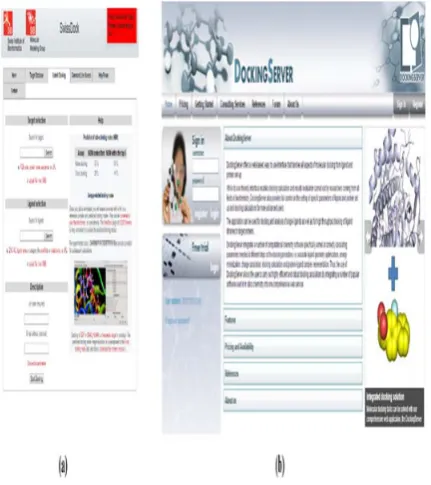
The molecular docking server offers a web‐based, easy to use interface that is useful for all aspects of molecular docking of protein and ligand system. Molecular docking methods are commonly used for predicting binding modes and to calculate the energies of ligands to protein. It can also be used for the docking analysis of target proteins with a single ligand as well as for high throughput docking of ligand libraries. The server uses AutoDock interface35 and semi‐emperical method for accurate docking analysis36. The input for the docking is required in the form of PDB structures for both ligand and macromolecule (protein). Also, we can directly download the ligand and protein molecule from PubChem and Protein Data Bank respectively. Finally, docking results are processed automatically in different ways for the better understanding of the results displayed. The results displayed consist of docking energies, frequencies and downloadable PDB coordinates, figures of the docked complex structures, ligand‐protein interactions. Recently, the molecular docking server was employed to study drug protein interactions and to predict the effect of highly deleterious mutation by calculating the free energy in the docked complex37. Moreover, it is employed for designing Potential inhibitors against acetylcholinesterase and glutathione S‐transferase associated with alzheimer's disease38. The service for the docking server is available at: http://www.dockingserver.com/web. The homepage of the respective servers is shown in Figure 1 and 2. In addition to above described web servers a lot many other servers are also available for the docking analysis, such as HADDOCK, ZDOCK, ClusPro, SymmDock, FireDock etc. which are freely accessible.
Stand‐alone docking tools
ArgusLab
ArgusLab operates with the help of Windows operating system. It is extensively used in molecular modelling and drug design. In ArgusLab, for flexible ligand docking, the ligand is described as a torsion tree39. The topology of a torsion tree is a determining factor affecting the efficient docking process. The scoring method used in Argus Lab is AScore. It is an empirical scoring function and based on various parameters such as the van der Waals interaction between the ligand and the protein, the hydrophobic effect, the hydrogen bonds between the ligand and the protein, the deformation effect and the effects of the translational and rotational entropy loss in the binding process40. For the calculation of binding energies of the docked complexes, the AScore function with the parameters read from the AScore.prm file is used. Recently, ArgusLab employed to predict the free energy
of binding in drug resistance in the Hepatitis B Virus Polymerase (M204V), influenza mutations (R292K, H274Y, N294S) and lung cancer types41‐45. ArgusLab can be downloaded free of cost at http://www.arguslab.com.
AutoDock
AutoDock is a fast automatic docking tool and considered as the best docking method to predict the free energy of binding46. AutoDock 4 is a free software. AutoDock 4 comprises of Autogrid and AutoDock. The main function of AutoDock to execute the docking process to set of grids and autogrid recalculates these grids. AutoDock has been successfully employed in the X‐ray crystallography, structure‐based drug design, lead optimization, virtual screening, protein‐protein docking and chemical mechanism studies. In AutoDock, protein is generally assigned with Kollman united atom charges and solvation values, whereas the ligand is assigned with Gasteiger charges47. AutoDock handles the Lamarckian genetic algorithm (LGA) to search for the best conformers. AutoDock utility has been used in latest research of cancer research, nalidixic acid resistance mechanism in Salmonella enterica and paclitaxel resistant in β‐tubulin (R306C, F270V mutation)48‐51. In addition to the binding energy, intermolecular energy, electrostatic energy, torsional free energy, total internal energy and van der Waals energy can be calculated. The results are highly accurate and predictable and up to 40,000 rigid dockings can be performed in a single day on a single computer. Recently, AutoDock is being implemented to dock with nano particles with protein structure52.
AutoDock Vina
AutoDock Vina is an open‐source program for doing molecular docking. It was executed by Dr. Oleg Trott in the Molecular Graphics Lab at The Scripps Research Institute. AutoDock Vina calculates grid size automatically and does not depend upon on choosing atom types53. It is specially executed for receptor‐ligand studies. There are three main steps involved in AutoDock Vina. First step is the preparation of the protein, the second step is defining the active site and the third one is the preparation of the ligand. AutoDock Vina is two times faster than AutoDock 4 and files such as the AutoGrid and AutoDock (GPF, DPF) and grid map files are not required54. A default protocol in AutoDock Vina comprises of maximum number of 2.5 x10⁵ energy evaluations, a maximum number of 2.7 x 10⁴ results generations and a mutation rate of 0.02 and a crossover rate of 0.8 are generally applied. It can be downloaded from the website (http://vina.scripps.edu/download.html). AutoDock Vina has been successfully implemented, especially in virtual screening, flexibility analysis and docking of metal ions55,56.
Hex Server
correlations. In this server, the smaller protein is taken as a ligand. The Hex Server automatically removes water molecules and other hetero atoms from the input files in the server58. On this server, the protein PDB codes from the protein data bank are used and its calculation is based on the each protein rotates on its own coordinate origin and varies the separation between the two origins59. Then the score is calculated for each orientation and the highest score is taken into account. It is a fast server and the results can be obtained via email. This server is freely available at http://hexserver.loria.fr/60.
Molegro Virtual Docker
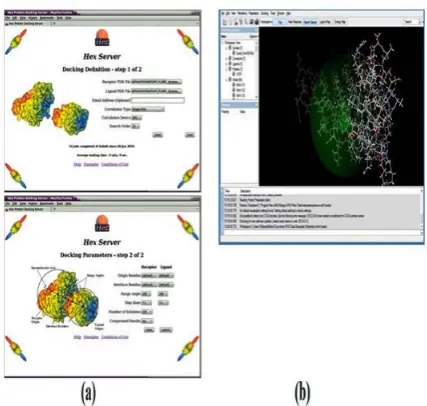
Molegro Virtual Docker offers the simplest and most precise approach to anticipate how molecules connect with proteins in a completely integrated environment61. It anticipates the protein‐ligand interactions, determine molecular similarity and shows how ligand binds to the protein receptor. It is useful in drug discovery as it screens the potential lead molecules62. In this docking tool, changes such as repair, mutate or minimize side chains can be made before docking and automated preparation of input structures. It assigns hydrogens, charges, bond orders, hybridization to the molecules and extract 3D molecule descriptors based on chemical properties63. It works on Windows, Mac, Linux operating systems. Recently, molegro virtual docker software has been utilised in virtual screening and QSAR studies64. The homepage of the respective servers is shown in Figure 3 and 4.
Similarly docking algorithms such as I Gene, ADAM, eHiTS, ICM‐Dock etc are available to study the drug protein interactions.
Commercial Docking tools
Yet Another Scientific Artificial Reality Application (YASARA)
YASARA is molecular‐graphics, modeling and simulation program for Windows, Linux, Mac OS X and Android. It creates the high level of interaction with the ‘artificial reality’. The initial stage of YASARA is “YASARA View” which is free while higher stages are YASARA Model, YASARA Structure, and YASARA Dynamics. YASARA Structure provides user‐friendly protein‐ligand docking65. In the Docking module, YASARA DOCK predicts the protein‐DNA interactions. Docking is carried out using three different approaches AUTODOCK, VINA, and Fleksy. It includes a tuned derivative of the original Autodock. VINA is tightly related to the original AutoDock, but it is really needed due to its higher performance. Fleksy is a program for flexible and induced fit docking using receptor ensemble to describe protein flexibility. In the YASARA docking program, energy is calculated under YAMBER3 force field condition complex with the difference between the sum of potential and solvation energies of the separated compounds and the sum of potential and salvation energies. YASARA Structure module merges different molecule into a single file or
structure ensemble. The output of the docking runs is sorted based on the binding energy. YASARA docking gives positive binding energy. So, more the positive energy indicates the higher affinity between the molecules66. Recently, YASARA structure module is utilized for identification of novel inhibitors against Acetylcholinesterase3, study of Rifampicin resistance in M. leprae4 and also Crizotinib resistance in NSCLC67‐69.
HyperChem
HyperChem is well‐known molecular modeling software70. Docking using HyperChem predicts the best docking mode between protein and ligand molecule, and can suggest the direction of molecular design in a structure‐based manner. It supports high‐level drug design such as the lead optimizations as well as the ability to predict the lead compounds. It utilizes novel docking algorithm which is non‐grid algorithm based on the PIEFII technology. PIEFII technology predicts the binding site and ligand pharmacophore points. The non‐grid algorithm predicts the precise interaction energy for the entire system than the approximated interaction energy predicted using grid based docking simulation programs. HyperChem docking supports many of the force field parameters such as MM+, Ambers, OPLS, BIO+83, CHARMM19 etc. It supports the restart function which can restart or start the docking simulations from the desired conformation without loss of the energy calculation71. The energies arising from all atoms and molecules in the protein molecule system are calculated explicitly and accurately. The non‐grid algorithm predicts the conformations and binding energy. Negative binding energy denotes that lower binding energy higher the binding affinity. Combining with other simulations, HyperChem docking program was utilized in the study of retinoic acid binding with retinoid X receptors8 and in addition to that, analyzing the binding of Rutin fatty acid with bioconjugate and cyclodextrin molecules72,73.
Genetic Optimization for Ligand Docking (GOLD)
depression inhibitors from benzoxazolinone derivatives and in the investigation of tubulin binding modes76,77. GOLD reliably identifies the correct binding mode of ligand towards the protein molecule.
Grid‐based Ligand Docking with Energetics (GLIDE)
Glide is a docking program for predicting binding modes of ligand to the protein and ranking ligands via high‐ throughput virtual screening. Glide offers the full spectrum of speed and accuracy from the high‐ throughput virtual screening of millions of compounds to extremely accurate binding mode predictions, providing consistently high enrichment at every level. Glide able to dock ligand with both rigid and flexible protein molecule. Glide utilizes a hierarchical series of filters to search for a possible position for the ligand in the active‐site region of the receptor. Glide program generates a set of conformers for input ligand and performs an exhaustive search for possible positions and orientations of ligand over the active site of the protein. Conformers of ligand that pass this initial filtration are undergoing to energy minimization on precomputed OPLS‐AA van der Waals and electrostatic grids for the receptor. Final scoring is carried out on the energy‐minimized conformers. Glide utilizes two scoring protocols GlideSP and GlideXP78. In addition to the Glide Score, it calculates Emodel, a composite scoring function. The different conformers of binding are ranked based on the Glide Score and also lowest Emodel conformer. The lowest Glide Score is the best docking conformer of the ligand with the protein79. In the evaluation of benzotriazole derivatives16 and characterization of the inhibitory effect of PDE4B Glide docking were utilized. Glide docking program is twice as reliable as GOLD80.
Discovery Studio
Discovery Studio Standalone is a complete molecular modeling platform designed for the independent modeler. Different modules are utilized for docking such as CDOCKER, DS Flexible docking, and DS Ligand fit. CDOCKER utilizes molecular dynamics (MD) simulated‐ annealing‐based algorithm. This docking program is suitable for large‐scale lead optimization problems81. DS Flexible Docking is a realistic approach performs rational flexible docking in which the docking of small molecules is influenced by existing low‐energy conformations of side chains in the active site. It also combines with CHARMm for accurate receptor sampling82. DS Ligand fit accurately docks the ligand to the protein active sites. It incorporates shape‐based searching and Monte Carlo sampling of ligands. The 3D structure of the protein and 2D or 3D structure of the ligand are given as the input parameter file. Cavity detection and docking are the two procedures of the Ligand fit. Cavity detection uses the flood‐filling algorithm to identify the best cavity for the binding of the ligand. Docking procedure employs conformational search, selection of binding pose and grid‐based energy calculation. LigScore1, LigScore2, PLP1, PLP2, JAIN, and PMF are different scoring functions used
in the DS Ligandfit83. Higher dock score have the binding higher affinity. Ligand fit was used in the study biodegradation of phenol and it also utilized in the identification of kinase 1 inhibitors84,85. The homepage of the respective servers is shown in Figure 5.
Figure 1: Snapshot obtained from (a) Patch Dock, (b) GRAMM‐X and (c) Rosetta Dock.
Figure 3: Snapshot obtained from (a) ArgusLab, (b) Auto Dock and (c) Auto Dock Vina.
Figure 4: Snapshot obtained from (a) Hex Server and (b) Molegro.
Figure 5: Snapshot obtained from (a) YASARA, (b) HyperChem and (c) GOLD.
CONCLUSION
Despite the recent advancement in the field of drug discovery, many challenges are to be addressed. For instance, antibiotic resistance is one of the biggest threats to global health today. It can affect anyone, of any age, in any country. Most importantly, antibiotic resistance leads to longer hospital stays, higher medical costs and increased mortality. This situation could be controlled by the introduction of key concepts called, Personalized Medicine or Precision Medicine. However, time and cost are the two major obstacles needs to be addressed to make this happen. Indeed, computational docking approach and the advancement in this field was heavily influenced to address the acknowledged limitations of personalized medicine. Despite the docking successes highlighted in this review, achieving success is not trivial. The protein and the ligands file preparation, selection of the docking algorithm, setting and tuning the parameters and carrying out the post docking analysis requires profound expertise. It is especially useful in reducing a collection of large number of compounds down to a manageable number. The false positive prediction could be eliminated in the docking approach by employing multiple docking or re‐docking procedures. Subsequently, the results will be normalized based on the output obtained from the algorithms. It is recommended, if at all possible, use docking in parallel with other techniques (experimental HTS, pharmacophore modeling, etc.) to select as many compounds as possible for experimental confirmation. In the light of the progress that has been made, considering the successful applications in the different disease types and the ongoing developments, it is conceivable that the importance of docking will continue to increase significantly.
Acknowledgement: The authors express a deep sense of gratitude to the management of VIT University for all the support, assistance and constant encouragements provided by them to carry out this work.
REFERENCES
1. Schafferhans A, Klebe G, Docking ligands onto binding site representations derived from proteins built by homology modeling, J Mol Biol, 307(1), 2001, 407–427.
2. Fraga S, Parker JM, Pocok JM, Computer simulations of protein structures and interactions, New York: Springer Verlag, 1995, 2081.
3. McConkey BJ, Sobolev V, Edelman M, The performance of current methods in ligand‐protein Docking, Current Science, 83(7), 2002, 845–855.
4. Aqvist J, Luzhkov VB, Brandsdal BO, Ligand binding affinities from MD simulations, Acc Chem Res, 35(6), 2002, 358–365.
6. Briggs JM, Marrone TJ, McCammon JA, Computational Science New Horizons and Relevance to Pharmaceutical Design, Trends Cardiovasc Med, 6(6), 1996, 198–206. 7. Verkhivker GM, Bouzida D, Gehlhaar DK, Rejto PA, Arthurs
S, Colson AB, Freer ST, Larson V, Luty BA, Marrone T, Rose PW, Deciphering common failures in molecular docking of ligand protein complexes, J Comput Aided Mol Des, 14(8), 2000, 731–751.
8. Ishchenko AV, Shakhnovich EI, SMall Molecule Growth 2001 (SMoG2001): an improved knowledge‐based scoring function for protein‐ligand interactions, J Med Chem, 45(13), 2002, 2770–2780.
9. Feher M, Deretey E, Roy S, BHB: a simple knowledge‐based scoring function to improve the efficiency of database screening, J Chem Inf Comput Sci, 43(4), 2003, 1316–1327. 10. Wallqvist A, Jernigan RL, Covell DG, A preference‐based
free‐energy parameterization of enzyme‐inhibitor binding. Applications to HIV‐1‐protease inhibitor design, Protein Sci, 4(9), 1995, 1881–1903.
11. Charifson PS, Corkery JJ, Murcko MA, Walters WP, Consensus scoring: A method for obtaining improved hit rates from docking databases of three‐dimensional structures into proteins, J Med Chem, 42(25), 1999, 5100– 5109.
12. Coleman RG, Carchia M, Sterling T, Irwin JJ, Shoichet BK, Ligand Pose and Orientational Sampling in Molecular Docking, PLOS one, 8(10), 2013, e75992.
13. Duhovny D, Nussinov R and Wolfson H J, Efficient unbound docking of rigid molecules. In Guigo R and Gusfield D (eds), Proceedings of the Fourth International Workshop on Algorithms in Bioinformatics, Springer‐Verlag GmbH Rome, Italy, 2452, 2002, 185–200.
14. Schneidman Duhovny D, Inbar Y, Nussinov R, Wolfson HJ, Geometry‐based flexible and symmetric protein docking, Proteins, 60(2), 2005, 224‐231.
15. Kumar A and Ramanathan K, Virtual Screening Approach to Identify Potential ALK Inhibitor from Traditional Chinese Medicine Database. Research Journal Pharmaceutical, Biological and Chemical Sciences, 6(1), 2015, 94‐101. 16. Zhang C, Vasmatzis G, Cornette J L and DeLisiC,
Determination of atomic desolvation energies from the structures of crystallized proteins, J Mol Biol, 267, 1997, 707–726.
17. Kumar A, Gupta K, Verma K, Iyer K, Shanthi V and Ramanathan K, Identification of Novel Hepatitis C Virus NS3‐4A Protease Inhibitors by Virtual Screening Approach, J Microbial Biochem Technol, 6(4), 2013, 1‐7.
18. Kumar A, Iyer K, Shanthi V and Ramanathan K, Extraction of bioactive compounds from Millingtonia hortensis for the treatment of dapsone resistance in leprosy. J Microbial Biochem Technol, 6(5), 2014, 1‐6.
19. Ramanathan K, Shanthi V, Sethumadhavan R, In silico identification of catalytic residues in Azobenzenereductase from Bacillus subtilis and its docking studies with azo dyes. Interdiscip Sci, 1(4), 2009, 290‐7.
20. Katchalski‐Katzir E, SharivI, Eisenstein M, Friesem A A, AflaloC and Vakser IA, Molecular surface recognition:
determination of geometric fit between proteins and their ligands by correlation techniques. Proc Natl Acad Sci USA, 89(6), 1992, 2195–2199.
21. Vakser IA and Aflalo C, Hydrophobic docking: a proposed enhancement to molecular recognition techniques, Proteins, 20(4), 1994, 320–329.
22. Vakser IA, Protein docking for low‐resolution structures, Protein Eng, 8(4), 1995, 371‐377.
23. Schafer H, Van Gunsteren W F and Mark AE, Estimating relative free energies from a single ensemble: hydration free energies, J Comput Chem, 20(15), 1999, 1604–1617. 24. Tovchigrechko A and Vakser IA, Development and testing
of an automated approach to protein docking, Proteins, 60(2), 2005, 296–301.
25. Sudandiradoss C, Priya Doss CG, Rajasekaran R, Ramanathan K, Purohit R, Sethumadhavan R, Investigations on the interactions of scorpion neurotoxins with the predicted structure of D1 dopamine receptor by protein– protein docking method, A bioinformatics approach, C R Biol, 331(7), 2008, 489‐99.
26. Lyskov S and Gray J J, The RosettaDock server for local protein–protein docking, Nucleic Acids Res, 36, 2008, 233‐ 8.
27. Gray J J, Moughon S, Wang C, Schueler‐Furman O, Kuhlman B, Rohl C A and Baker D, Protein‐protein docking with simultaneous optimization of rigid‐body displacement and side‐chain Conformations, J Mol Biol, 331(1), 2003, 281– 299.
28. Combs SA, Deluca SL, Deluca SH, Lemmon GH, Nannemann DP, Nguyen ED, Willis JR, Sheehan JH, Meiler J, Small‐ molecule ligand docking into comparative models with Rosetta, Nat Protoc, 8(7), 2013, 1277‐1298.
29. Grosdidier A, Zoete V and Michielin O, Blind docking of 260 protein‐ligand complexes with EADock 2.0. J Comput Chem, 30(13), 2009, 2021–2030.
30. Brooks B R, Brooks C L, Mackerell A D Jr, Nilsson L, Petrella R J, Roux B, Won Y, Archontis G, Bartels C, Boresch S, CHARMM: the biomolecular simulation program, J Comput. Chem. 30(10), 2009, 1545–1614.
31. Haberthur U and Caflisch A. FACTS: fast analytical continuum treatment of solvation. J. Comput. Chem. 29(5), 2008, 701–715.
32. Jmol: an Open‐Source Java Viewer for Chemical Structures in 3D, http://wwwjmol.org/.
33. Ketkar A, Zafar M K, Maddukuri L, Yamanaka K, Banerjee S, Egli M, Choi J Y, Lloyd R S, Eoff R L, Leukotriene Biosynthesis Inhibitor MK886 Impedes DNA Polymerase Activity, Chem Res Toxicol, 26(2), 2013, 221‐232.
34. Jorge‐Finnigan A, Brasil S, Underhaug J, Ruíz‐Sala P, Merinero B, Banerjee R, Desviat LR, Ugarte M, Martinez A, Pérez B, Pharmacological chaperones as a potential therapeutic option in methylmalonicaciduriacblB type, Hum Mol Genet, 22(18), 2013, 3680‐3689.
36. Bikadi Z and Hazai E, Application of the PM6 semi‐empirical method to modeling proteins enhances docking accuracy of AutoDock, J Chem inform, 1, 2009, 15.
37. Lohitesh K, Bahl T, Behera A K, Ramanathan K, Shanthi V, Insilico investigation of missense mutations in succinate dehydrogenase complex 5 gene using different genomic algorithms, Asian Journal of Pharmaceutical and Clinical Research, 8(3), 2015, 189‐192.
38. Lalwani A, Paul S, Ahmed I, Ramanathan K, Potential inhibitors against acetylcholinesterase and glutathione S‐ transferase associated with alzheimer's disease, Journal of Chemical and Pharmaceutical Research, 6(3), 2014, 1527‐ 1532.
39. Thompson MA. Poster presentation: molecular docking using ArgusLab: an efficient shape‐based search algorithm and the Ascore scoring function. Fall A.C.S meeting, Philadelphia. 2004.
40. Chaitanya M, Babajan B, Anuradha CM, Naveen M, Rajasekhar C, Madhusudana P, Kumar CS. Exploring the molecular basis for selective binding of Mycobacterium tuberculosis Asp kinase toward its natural substrates and feedback inhibitors: a docking and molecular dynamics study, J Mol Model, 16(8), 2010, 1357–1367.
41. Srividhya M, Ramanathan K, Analysis of Hepatitis B virus drug‐resistant mutation (M204V) using molecular dynamics simulation techniques, Biologia, 69(11), 2014, 1445‐1452. 42. Srividhya M, Ramanathan K, Molecular Dynamics
Simulation Approach to Understand Lamivudine Resistance in Hepatitis B Virus Polymerase, Pharmaceutical Chemistry Journal, 49(7), 2015, 432‐438.
43. Karthick V, Ramanathan K, Insight into the oseltamivir resistance R292K mutation in H5N1 influenza virus: a molecular docking and molecular dynamics approach, Cell Biochem Biophys, 68(2), 2014, 291‐9.
44. Karthick V, Shanthi V, Rajasekaran R, Ramanathan K. In silico analysis of drug‐resistant mutant of neuraminidase (N294S) against oseltamivir, Protoplasma, 250, 2013, 197– 207.
45. Karthick V, Shanthi V, Rajasekaran R, Ramanathan K, Exploring the cause of oseltamivir resistance against mutant H274Y neuraminidase by molecular simulation approach. Appl Biochem Biotechnol, 167, 2012, 237–249. 46. Kumar A and Ramanathan K, Analyzing resistance pattern
of non‐small cell lung cancer to crizotinib using molecular dynamic approaches, Indian Journal of Biochemistry and Biophysics, 52(1), 2015, 23‐28.
47. Morris GM, Goodsell DS, Halliday RS, Huey R, Hart WE, Automated docking using a Lamarckian genetic algorithm and empirical binding free energy function, J Comput Chem, 19, 1998, 1639–1662.
48. Kumar A and Ramanathan K, Exploring the Structural and Functional Impact of ALK F1174L Mutant using Bioinformatics Approach. Journal of Molecular Modeling, 20(7), 2014, 2324.
49. Kanika Verma and K Ramanathan, Exploring the Impact of F270V Mutation in the β‐tubulin (Bos Taurus) Structure and Its Function: A Computational Perspective, Biotechnology Letters, 37(5), 2015, 1003‐1011.
50. Kanika Verma, K Ramanathan, Investigation of Paclitaxel Resistant R306C Mutation in β‐Tubulin – A Computational Approach, J Cell Biochem, 1324, 2015, 1318–24.
51. Preethi B, Shanthi V, K Ramanathan, Investigation of nalidixic acid resistance mechanism in Salmonella enteric using molecular simulation techniques, Appl Biochem Biotechnol, 177(2), 2015, 528‐40.
52. Preethi B, K Ramanathan, Molecular level understanding of nalidixic acid resistance in Salmonella enteric serovar typhimurium associates with S83F sequence type, European Biophysics Journal, 2015, DOI: 10.1007/s00249‐ 015‐1073‐2.
53. Shivendu Ranjan, Nandita Dasgupta, Sudandiradoss Chinnappan, Chidambaram Ramalingam, Ashutosh Kumar, A Novel Approach to Evaluate Titanium Dioxide Nanoparticle–Protein Interaction Through Docking: An Insight into Mechanism of Action. Proc Natl Acad Sci India, Sect B Biol Sci, 2015, DOI 10.1007/s40011‐015‐0673. 54. Trott O, Olson AJ, AutoDock Vina: improving the speed and
accuracy of docking with a new scoring function, efficient optimization, and multithreading, J Comput Chem, 31, 2009, 455–461.
55. Sandeep G, Nagasree KP, Hanisha M, Kumar MM, AUDocker LE: A GUI for virtual screening with AUTODOCK Vina. BMC Res Notes, 4, 2011, 445.
56. Chang MW, Ayeni C, Breuer S, Torbett BE, Virtual screening for HIV protease inhibitors: a comparison of AutoDock 4 and Vina, PLoS One, 4, 2010, 5(8), e11955.
57. Baba N, Akaho E, VSDK: Virtual screening of small molecules using AutoDock Vina on Windows platform, Bioinformation, 6(10), 2010, 387‐388.
58. Ritchie DW, Venkatraman V, Mavridis L, Using graphics processors to accelerate protein docking calculations, Stud Health Technol Inform, 159, 2010, 146‐55.
59. Gary Macindoe, Lazaros Mavridis, Vishwesh Venkatraman, Marie‐Dominique Devignes and David WR, HexServer: an FFT‐based protein docking server powered by graphics processors. Nucleic Acids Research, 38, 2010.
60. Macindoe G, Mavridis L, Venkatraman V, Devignes MD, Ritchie DW, Hex server: an FFT‐based protein docking server powered by graphics processors, Nucleic Acids Res, 38, 2010, 445–449.
61. Ritchie DW, Kemp GJL, Protein Docking Using Spherical Polar Fourier Correlations, PROTEINS: Struct Funct Genet, 39, 2000, 178‐194.
62. Rampogu SD. Role of breast cancer inhibitors on diabetes mellitus‐ an in silico approach, J Diabetes Metab Disord, 14, 2015, 11.
63. Raghunath Satpathy, Rajesh Ku. Guru, Rashmiranjan Behera. Computational QSAR analysis of some physiochemical and topological descriptors of Curcumin derivatives by using different statistical methods. J Chem Pharm Res, 2(6), 2010, 344‐350.
65. Raghunath Satpathy, Rajesh Guru, Rashmiranjan Behera, Computational QSAR analysis of some physiochemical and topological descriptors of Curcumin derivatives by using different statistical methods, J Chem Pharm Res, 2(6), 2010, 344‐350.
66. Krieger E, Koraimann G, Vriend G, Increasing the precision of comparative models with YASARA NOVA‐‐a self‐ parameterizing force field, Proteins, 47(3), 2002, 393‐402. 67. Jakubík J, Randáková A, Doležal V, On homology modeling
of the M2 muscarinic acetylcholine receptor subtype, J Comput Aided Mol Des, 27, 2013, 525–538.
68. Jagmohan Sharma, K. Ramanathan, Rao Sethumadhavan, Identification of Potential Inhibitors against Acetylcholinesterase Associated With Alzheimer's Diseases: A Molecular Docking Approach, Journal of Computational Methods in Molecular Design, 1(1), 201, 44‐51.
69. Nisha J, Shanthi V, Computational Simulation Techniques to Understand Rifampicin Resistance Mutation (S425L) of rpoB in M. leprae, J Cell Biochem, 116(7), 2015, 1278‐1285. 70. Kumar A, Shanthi V and Ramanathan K, Computational Investigation and Experimental Validation of Crizotinib Resistance Conferred by C1156Y Mutant Anaplastic Lymphoma Kinase, Molecular Informatics, 34(2‐3), 2015, 105‐114.
71. Froimowitz M, HyperChem: a software package for computational chemistry and molecular Modeling, Biotechniques, 14(6), 1993, 1010‐1013.
72. Tsuji M, Docking Study with HyperChem and Homology Modeling, Science, 319(5863), 2008, 624‐627.
73. Tsuji M, Shudo K, Kagechika H, Docking simulations suggest that all‐trans retinoic acid could bind to retinoid X receptors, J Comput Aided Mol Des, 29(10), 2015, 975‐988. 74. Iulia Andreea Pînzaru, Daniel I, Hădărugă, Nicoleta G,
Hădărugă B, Rădoi Francisc Peter Rutin, Saturated fatty acid bioconjugate/cyclodextrin supramolecular systems: molecular modeling and docking studies, Journal of Agroalimentary Processes and Technologies, 17(2), 2011, 123‐129.
75. Jones G, Willett P, Glen RC, Leach AR, Taylor R, Development and validation of a genetic algorithm for flexible docking, J Mol Biol, 267(3), 1997, 727‐748.
76. Verdonk ML, Cole JC, Hartshorn MJ, Murray CW, Taylor RD Improved protein‐ligand docking using GOLD. Proteins,
52(4), 2003, 609‐623.
77. Manikandan S, Saranya AR, Ramanathan T, Kesavanarayanan KS, The LK, Salleh MZ, Identification of Benzoxazolinone Derivatives Based Inhibitors for Depression and Pain Related Disorders Using Human Serotonin and Norepinephrine Transporter as Dual Therapeutic Target: A Computational Approach, International Journal of Phytomedicine, 7(2), 2015, 193‐ 198.
78. Abolhasani H, Zarghi A, Hamzeh‐Mivehroud M, Alizadeh AA, Shahbazi Mojarrad J, Dastmalchi S, In‐silico Investigation of Tubulin Binding Modes of a Series of Novel Antiproliferative Spiroisoxazoline Compounds Using Docking Studies, Iran J Pharm Res, 14(1), 2015, 141‐147. 79. Repasky MP, Shelley M, Friesner RA, Flexible ligand docking
with Glide, Curr Protoc Bioinformatics, Chapter 8, 2007. 80. Kawatkar S, Wang H, Czerminski R, Joseph‐McCarthy D,
Virtual fragment screening: an exploration of various docking and scoring protocols for fragments using Glide, J Comput Aided Mol Des, 23(8), 2009, 527‐539.
81. Shah JJ, Khedkar V, Coutinho EC, Mohanraj K, Design, synthesis and evaluation of benzotriazole derivatives as novel antifungal agents, Bioorg Med Chem Lett, 25(17), 2015, 3730‐3737.
82. Wu G, Robertson DH, Brooks CL, Vieth M, Detailed analysis of grid‐based molecular docking: A case study of CDOCKER‐ A CHARMm‐based MD docking algorithm, J Comput Chem, 24(13), 2003, 1549‐1562.
83. Jones G, Willett P, Glen RC, Leach AR, Taylor R, Development and validation of a genetic algorithm for flexible docking, J Mol Biol, 267(3), 1997, 727‐748.
84. Venkatachalam CM, Jiang X, Oldfield T, Waldman M, LigandFit: a novel method for the shape‐directed rapid docking of ligands to protein active sites, J Mol Graph Model, 21(4), 2003, 289‐307.
85. Ray S, Banerjee A, Molecular level biodegradation of phenol and its derivatives through dmp operon of Pseudomonas putida: A bio‐molecular modeling and docking analysis. J Environ Sci (China), 36, 2015, 144‐151. 86. Jaradat NJ, Khanfar MA, Habash M, Taha MO, Combining
docking‐based comparative intermolecular contacts analysis and k‐nearest neighbor correlation for the discovery of new check point kinase 1 inhibitors, J Comput Aided Mol Des, 29(6), 2015, 561‐581.