Volume 2008, Article ID 183536,13pages doi:10.1155/2008/183536
Research Article
Distributed Temporal Multiple Description Coding for
Robust Video Transmission
Olivier Crave,1, 2Christine Guillemot,1B ´eatrice Pesquet-Popescu,2and Christophe Tillier2
1Institut de Recherche en Informatique et Syst`emes Al´eatoires, Institut National de Recherche en Informatique
et en Automatique, 35042 Rennes Cedex, France
2Groupe des ´Ecoles des T´el´ecommunications, D´epartement TSI Signal-Images, ´Ecole Nationale Sup´erieure des
T´el´ecommunications, 46 rue Barrault, 75634 Paris C´edex 13, France
Correspondence should be addressed to Olivier Crave,[email protected]
Received 22 March 2007; Accepted 6 June 2007
Recommended by Peter Schelkens
The problem of multimedia communications over best-effort networks is addressed here withmultiple description coding(MDC) in a distributed framework. In this paper, we first compare four video MDC schemes based on different time splitting patterns and temporal two- or three-band motion-compensated temporal filtering (MCTF). Then, the latter schemes are extended with systematic lossy description coding where the original sequence is separated into two subsequences, one being coded as in the latter schemes, and the other being coded with a Wyner-Ziv (WZ) encoder. This amounts to having a systematic lossy Wyner-Ziv coding of every other frame of each description. This error control approach can be used as an alternative to automatic repeat request (ARQ) or forward error correction (FEC), that is, the additional bitstream can be systematically sent to the decoder or can be requested, as in ARQ. When used as an FEC mechanism, the amount of redundancy is mostly controlled by the quantization of the Wyner-Ziv data. In this context, this approach leads to satisfactory rate-distortion performance at the side decoders, however it suffers from high redundancy which penalizes the central description. To cope with this problem, the approach is then extended to the use of MCTF for the Wyner-Ziv frames, in which case only the low-frequency subbands are WZ-coded and sent in the descriptions.
Copyright © 2008 Olivier Crave et al. This is an open access article distributed under the Creative Commons Attribution License, which permits unrestricted use, distribution, and reproduction in any medium, provided the original work is properly cited.
1. INTRODUCTION
Due to the real-time nature of envisioned data streams, multimedia delivery usually makes use of transport proto-cols, that is, User Datagram Protocol (UDP) and/or Real-time Transport Protocol (RTP) which do not include con-trol mechanisms which would guarantee a level of Quality of
Service (QoS). The data transmitted may hence suffer from
losses due to network failure or congestion. Traditional ap-proaches to fight against losses mostly rely on the use of Automatic repeat request (ARQ) techniques and/or forward error correction (FEC). ARQ offers to the application level a guaranteed data transport service. However, the delay in-duced by the retransmission of lost packets may not be ap-propriate for multimedia applications with delay constraints. FEC consists in sending redundant information along with the original information. The advantage of FEC is that there is no need for a feedback channel. However, if the channel
degrades rapidly due to fading or shadowing, or if the es-timated probability of transmission errors is lower than the actual value, then the FEC parity information is not sufficient for error correction. Hence, the video quality may degrade rapidly, leading to the undesirablecliff effect.
WynZiv (WZ) coding can also be used as a forward er-ror correction (FEC) mechanism. This idea has been initially suggested in [2] for analog transmission enhanced with WZ-encoded digital information. The analog version serves as side information (SI) to decode the output of the digital channel. This principle has been applied in [3,4] to the prob-lem of robust digital video transmission. The video sequence is first conventionally encoded, for example, using an MPEG coder. The resulting bitstream constitutes the systematic part of the transmitted information which could be protected with classical FEC. Errors in parts of the bitstream, for exam-ple, the temporal prediction residue in conventional predic-tive coding, may still lead to predicpredic-tive mismatch and error propagation. The video sequence is in parallel WZ-encoded, and the corresponding data is transmitted to facilitate recov-ery from this predictive mismatch. The Wyner-Ziv data can be seen as extra coarser descriptions of the video sequence, which are redundant if there is no transmission error. The conventionally encoded stream is decoded and the corrupted data is reconstructed using error concealment techniques. The reconstructed signal is then used to generate the SI to decode the WZ-encoded data. However, error propagation in the MPEG-encoded stream may negatively impact the qual-ity of the SI and degrade the RD performance of the system.
This problem is addressed here by structuring the data to be encoded into two descriptions. In the first scheme, odd and even frames are splitted between the two descriptions. Three levels of a motion-compensated Haar decomposition are then applied on the frames of each description. In the sec-ond scheme, the frames are first splitted into groups of two consecutive frames between the descriptions. Three levels of a motion-compensated Haar decomposition are then applied on each description. The third and fourth schemes resemble the first and second ones but are built upon a three-band
(3B) Haar MCTF [5]. These schemes result in good
cen-tral Rate-Distortion (RD) performances, but in high-PSNR-quality variation at the side decoders.
The tradeoffbetween the performance of the central and side decoders obviously depends on the amount of redun-dancy between the two descriptions. The quality of the sig-nal reconstructed by the side decoders can be enhanced by systematic lossy encoding of the descriptions. The original sequence is separated into two subsequences, one being coded as in the latter schemes, the other being Wyner-Ziv en-coded. This amounts to having a systematic lossy Wyner-Ziv coding of every other frame of each description. This error control system can be used as an alternative to ARQ or FEC. The additional bitstream can be systematically sent to the de-coder or can be requested, depending upon the existence of a return channel and/or the tolerance of the application to latency. The amount of redundancy added in each descrip-tion is mostly controlled by the quantizadescrip-tion of the Wyner-Ziv data. This first approach leads to satisfactory RD
perfor-mance of side decoders, however suffers from high
redun-dancy which penalizes the central description, when used as an FEC mechanism. To cope with this problem, the method is then extended to the use of motion-compensated tempo-ral filtering for the Wyner-Ziv frames, in which case only the
Source
Figure1: Generic MDC scheme with two descriptions.
low-frequency subbands are WZ-coded and sent in the de-scriptions.
The paper is organized as follows.Section 2gives some
background on MDC.Section 3describes four video MDC
schemes based on different time splitting patterns and
tem-poral two- or three-band MCTF. Sections4and5show how
some robustness can be added to these schemes using sys-tematic lossy description coding.Section 6reports the simu-lation results of the proposed codecs. Conclusions and per-spectives are given inSection 7.
2. MULTIPLE DESCRIPTION CODING: BACKGROUND
In essence, MDC operates as illustrated in Figure 1. The
MDC encoder produces several correlated—but
indepen-dently decodable—bitstreams called descriptions. The
mul-tiple descriptions, each of which preferably has equivalent quality, are sent over as many independent channels to an
MDC decoder consisting of acentral decoder together with
multipleside decoders. Each of the side decoders is able to decode its corresponding description independently of the other descriptions, producing a representation of the source with some level of minimally acceptable quality. On the other hand, the central decoder can jointly decode multiple de-scriptions to produce the best-quality reconstruction of the source. In the simplest scenario, the transmission channels are assumed to operate in a binary fashion; that is, if an error occurs in a given channel, that channel is considered dam-aged, and the entirety of the corresponding bitstream is con-sidered unusable at the receiving end.
As an example of MDC, consider a wireless network in which a mobile receiver can benefit from multiple de-scriptions if they arrive independently, for example, on two neighboring access points. In this case, when moving be-tween these two access points, the receiver might capture one or the other access point, and, in some cases, both. Another way to take advantage of MDC in a wireless environment is by using two frequency bands for transmitting the two de-scriptions. For example, a laptop may be equipped with two wireless cards (e.g., 802.11a and g) with each wireless card receiving a different description. Depending on the dynamic changes in the number of clients in each network, one wire-less card may become overloaded, and the corresponding de-scription may not be transmitted. In wired networks, diff er-ent descriptions can be routed to a receiver through diff er-ent paths by incorporating this information into the packet header [9]. In this situation, the initial scenario of binary “on/off” channels might no longer be of interest. For exam-ple, in a typical CIF-format video sequence, one frame might be encoded into several packets. In such cases, the system should be designed to take into consideration individual or bursty packet losses rather than a whole description. Several directions have been investigated for video using MDC. In [10–13], the proposed schemes are largely deployed in the spatial domain within hybrid video coders such as MPEG and H.264/AVC; a thorough survey on MDC for such hybrid coders can be found in [14].
On the other hand, only a few works investigated MDC schemes that introduce source redundancy in the temporal domain, although this approach has shown some promise.
In [15], a balanced interframe MDC was proposed starting
from the popular DPCM technique. In [16], the reported
MDC scheme consists of temporal subsampling of the coded error samples by a factor of 2 so as to obtain two threads at the encoder which are further independently encoded using prediction loops that mimic the decoders (i.e., two-side pre-diction loops and a central prepre-diction loop). MDC has also been applied to MCTF-based video coding: existing work for
t+ 2D video codecs with temporal redundancy addresses
3-band filter banks [17,18]. Another direction for wavelet-based MDC video uses the polyphase approach in the tem-poral or spatio-temtem-poral domain of coefficients [19–21].
3. TEMPORAL MULTIPLE DESCRIPTION CODING SCHEMES
Let us first consider the scheme illustrated inFigure 2where odd and even frames are splitted between the two descrip-tions. One level of a motion-compensated Haar decomposi-tion is then applied on the frames of each descripdecomposi-tion. The temporal detail frames are encoded, while the passage from one level to the next one is done by interleaving the approx-imation frames from both descriptions. This new sequence will be subsequently distributed again among the two de-scriptions. This scheme will be called the Haar frame-level temporal MDC (F-TMDC) scheme.
The second scheme (seeFigure 3), called the Haar GOF-level temporal MDC (G-TMDC) scheme, starts by splitting groups of two consecutive frames between the descriptions.
LLL LLH
Figure 2: Haar F-TMDC: odd/even temporal splitting and two-band Haar MCTF.
Figure3: Haar G-TMDC: frames go two by two to descriptions and then a two-band Haar MCTF is applied in each one.
Again, one level of a Haar MCTF is applied to these couples of frames, and the details are encoded in their respective de-scriptions. As before, the passage from the first level to the next one is done by interleaving the approximation frames from the two descriptions. Next, the scheme continues as the Haar F-TMDC scheme, by encoding with Haar MCTF odd
and even frames in different descriptions. One can remark
that it is not possible to have the same gathering as at the first level in groups of two frames, since the temporal filtering would be performed on approximation frames coming from different descriptions, so in case one of them is lost, it will not be possible to reconstruct any of them. Another remark is that longer temporal filters would also be difficult to use in this framework, since for all the MDC schemes presented here, the temporal distance between frames in the same de-scription is higher than one, and the longer the filter, the smaller the correlation between the frames. Therefore, we re-strict ourselves to Haar MCTF, even though the coding per-formance of 5/3 MCTF is known to be better in absence of losses.
LL
LH LH
Description 1
Description 2
H H H H H H
0 1 2 3 4 5 6 7 8 9 10 11 12 13 14 15 16 17
H H H H H H
LL
LH LH
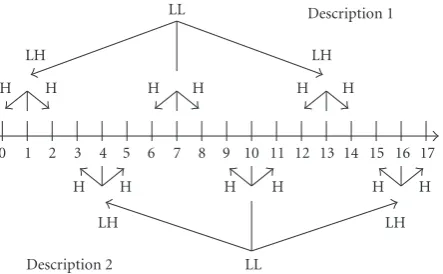
Figure4: 3B F-TMDC: odd and even frames are separated and a 3-band MCTF is then applied in each description.
LL
LH LH
Description 1
Description 2
H H H H H H
0 1 2 3 4 5 6 7 8 9 10 11 12 13 14 15 16 17
H H H H H H
LL
LH LH
Figure5: 3B G-TMDC: a 3-band MCTF is applied to groups of three frames of each description.
objective performance may be expected to be good. On the other hand, for the Haar G-TMDC scheme, the temporal dis-tance between missing frames from the lost description is of two, so their interpolation could be more complex.
The third scheme, called the 3B F-TMDC scheme, illus-trated inFigure 4involves a temporal splitting of the input frames in odd and even ones, for the two descriptions, fol-lowed by a Haar 3-band MCTF on each flow, and approxima-tion frames are interleaved to form the new sequence at the second decomposition level. Three-band Haar MCTF works like two-band Haar MCTF: a predict operator is applied in a symmetrical way between x3t andx3t+1, respectively, be-tweenx3tandx3t−1, resulting in two detail frames. Then, the update step involves the average of the motion-compensated details with the central framex3t. Improved update operators
have been proposed for both two- and three-band schemes [22] minimizing the reconstruction error in these spatio-temporal filtering structures.
The last MDC scheme, called the 3B G-TMDC scheme, is similar to the 3B F-TMDC scheme, except that groups of three consecutive frames are separated in each description (seeFigure 5). A Haar 3-band MCTF is applied this time on triplets. As in the case of two-band schemes, for this decom-position, compared with the previous one, one can expect
higher performance for the central decoder. At the side de-coders, due to the greater temporal distance between frames used for interpolating missing ones, one may expect a deteri-oration compared to the 3B F-TMDC scheme. Indeed, for the 3B F-TMDC scheme, the temporal distance between miss-ing frames is only one, while for the 3B G-TMDC scheme, the side decoders will have to interpolate from frames being spaced of three frames to fill in gaps resulting from the loss of one description. On the other hand, there is a gain in perfor-mance related to the fact that the original encoding is done on groups of consecutive frames, instead of frames spaced by one. These two antagonist trends will be studied inSection 6.
4. SYSTEMATIC LOSSY DESCRIPTION CODING IN THE PIXEL DOMAIN
The schemes above present different tradeoffs between the quality (PSNR and visual) of the central and lateral
descrip-tions. These tradeoffs depend on the amount of redundancy
introduced in the two descriptions. In the MDC schemes above, the redundancy mostly results from the fact that, given the temporal splitting of the input sequence into two subsequences which form the descriptions, temporal corre-lation between adjacent frames in the input sequence is not optimally exploited. The quality of the signal reconstructed by the side decoders can be enhanced by systematic lossy en-coding of the descriptions. In this section and in the simula-tion results, we only consider the 3B F-TMDC (Figure 4) and 3B G-TMDC (Figure 5) schemes ofSection 3but the Haar F-TMDC and G-F-TMDC schemes can be extended in a similar manner.
Let us first consider the MDC coding architecture de-picted inFigure 6(encoder) andFigure 7(decoder). At the encoder, the source is first divided into two sequences lead-ing to twononredundantdescriptions of the input sequence. Two approaches are considered for splitting the frames. In the first one, similarly to the 3B F-TMDC scheme of the previous section, the two subsequences are constructed by splitting odd from even frames as shown inFigure 8, while the second approach consists in separating the frames in groups of three frames as shown inFigure 9as in the 3B G-TMDC scheme. The corresponding schemes will be referred to as 3B frame-level distributed MDC (F-DMDC) and 3B G-DMDC schemes. In each description, the frames of one sub-sequence are considered askey frameswhile the frames of the other are considered as Wyner-Ziv frames. The subsequence of key frames is first temporally transformed using a Haar 3-band MCTF with two levels of temporal decomposition. The remaining frames (Wyner-Ziv frames) are transformed with an integer 4×4 block-based discrete cosine transform (DCT) and quantized with a uniform scalar quantizer. The transformed coefficients are structured into spatial subbands and each bit-plane of the quantized subbands is then sepa-rately turbo-encoded. The resulting parity bits are stored in a buffer. At the side decoders, the key frames are decompressed and the SI is generated by interpolating the intermediate frames from the key frames. The turbo decoder then corrects this SI using the parity bits. The parity sequences stored in
Input video
Demultiplexer
Temporal filter
EZBC encoder
Temporal filter
EZBC encoder DCT
DCT
Turbo encoder
Turbo encoder Q
Q Coarse quantizer
Coarse quantizer
V2 V1
D1
D2
Figure6: Implementation of the systematic lossy description encoder in the pixel domain.
Key frames
Wyner-Ziv frames
Multiplexer Temporal
inverse filter EZBC
decoder
DCT−1 Turbo
decoder
Interpolation
Q−1
Output video
Figure7: Implementation of the systematic lossy description side decoder in the pixel domain.
LL
LH LH
Description 1
Description 2
H H H H H H
0 1 2 3 4 5 6 7 8 9 10 11 12 13 14 15 16 17
H H H H H H
LL
LH LH
W W W W W W W W W
W W W W W W W W W
Figure8: 3B F-DMDC: the sequence is split into its even and odd frames. One subsequence is conventionally encoded while the other is WZ-encoded.
request via the feedback channel. When the estimate of the bit error rate at the output of the decoder exceeds a given threshold, extra parity bits are requested. This amounts to controlling the rate of the code by selecting different punc-turing patterns at the output of the turbo code. The bit error rate is estimated from the log likelihood ratio on the output bits of the turbo decoder. The correlation parameter used in
LL
LH LH
Description 1
Description 2
H H H H H H
0 1 2 3 4 5 6 7 8 9 10 11 12 13 14 15 16 17
H H H H H H
LL
LH LH
W W W W W W W W W
W W W W W W W W W
Figure9: 3B G-DMDC: the sequence is split into groups of three frames. One subsequence is conventionally encoded while the other is WZ-encoded.
the turbo decoding is obtained from the residue of the mo-tion compensated key frames.
Input video
Demultiplexer
Temporal filter
EZBC encoder
Temporal filter
EZBC encoder
DCT
DCT
Turbo encoder
Turbo encoder Q
Q Coarse quantizer
Coarse quantizer
V2 V1
D1
D2
Figure10: Implementation of the systematic lossy description encoder in the MCTF domain.
Key frames
Wyner-Ziv frames
Multiplexer
Multiplexer Temporal
inverse filter
Temporal inverse filter Temporal
filter EZBC
decoder
DCT−1 Turbo
decoder
Interpolation
Q−1
Output video
Figure11: Implementation of the systematic lossy description side decoder in the MCTF domain.
frames, but also on the quality of the SI, and therefore on the degree of quantization of the key frames.
5. SYSTEMATIC LOSSY DESCRIPTION CODING IN THE MCTF DOMAIN
To reduce the Wyner-Ziv bitrate and improve the RD perfor-mance of the central decoder, a second architecture is pro-posed where the Wyner-Ziv frames are first transformed by the same Haar 3-band MCTF as the one used for the key frames in the 3B G-TMDC scheme but with only one tem-poral level to keep a reasonable distance between the sub-bands. Furthermore, before entering the Wyner-Ziv encoder, the subbands are lowpass-filtered such that only the low-frequency subbands are WZ-encoded. The codec architec-ture is depicted in Figures10(encoder) and11(decoder). For this codec, the approach of separating the frames according to the GOP size of the temporal filter is used to obtain the two subsequences as shown inFigure 12. At the side decoders, the SI is obtained by transforming the interpolated frames with a Haar 3-band MCTF and the resulting low frequencies are used as SI to decode the Wyner-Ziv subbands. To reconstruct the frames, the decoded low-frequency subbands are com-bined with the high-frequency subbands of the interpolated
frames to get a sequence of subbands that is finally inverse filtered and reconstructed.
We will see inSection 6that since only the low frequen-cies are WZ-encoded, the RD performances at the central de-coder should outperform the performances of the schemes presented in the previous section.
6. SIMULATION RESULTS
6.1. Performance analysis of the temporal MDC schemes
We first compare the four proposed MDC video coding schemes ofSection 3. They have been implemented using the
MC-EZBC software [23]. Three temporal levels of
decompo-sition are performed for the two-band MCTF schemes (i.e., the Haar F-TMDC and Haar G-TMDC schemes) and two levels for the 3-band MCTF schemes (i.e., the 3B F-TMDC and 3B G-TMDC schemes). The MCTF is performed us-ing hierarchical variable-size block matchus-ing (HVSBM)
al-gorithm with block sizes varying from 64×64 to 4×4 and
LL
LH LH
Description 1
Description 2
H H H H H H
0 1 2 3 4 5 6 7 8 9 10 11 12 13 14 15 16 17
H H H H H H
LL
LH LH
LW LW LW
LW LW LW
Figure 12: 3B G-DMDC scheme in the MCTF domain: the se-quence is split into groups of three frames. One subsese-quence is con-ventionally encoded while the other is temporally filtered and only the low-frequency subbands are WZ-encoded.
25 30 35 40 45 50
PSNR
(dB)
0 200 400 600 800 1000
Rate (kBit/s)
Central decoder, Haar F-TMDC Central decoder, Haar G-TMDC Lateral decoder, Haar F-TMDC Lateral decoder, Haar G-TMDC
Figure 13: Performance comparison of the Haar F-TMDC and Haar G-TMDC schemes (Foreman, QCIF 15 fps).
The central and side RD performances of the Haar F-TMDC and Haar G-F-TMDC schemes, involving two-band MCTF, are shown in Figures13and14. As expected, the cen-tral decoder of the Haar G-TMDC scheme performs better than that of the Haar F-TMDC scheme. The side decoder of the Haar F-TMDC scheme slightly outperforms the one of the Haar G-TMDC scheme. This reflects the difficulty of in-terpolating two consecutive frames when only one descrip-tion is received in the Haar G-TMDC scheme. For the Fore-man sequence, one can also remark that even though the two schemes only differ at the first temporal level of decompo-sition, the gap between their coding performances is quite large (around 2 dB and 1 dB for the central and side decoders, resp.). The performance gap is lower for the Hall Monitor
se-30 32 34 36 38 40 42 44
PSNR
(dB)
40 60 80 100 120 140 160 180 200 Rate (kBit/s)
Central decoder, Haar F-TMDC Central decoder, Haar G-TMDC Lateral decoder, Haar F-TMDC Lateral decoder, Haar G-TMDC
Figure 14: Performance comparison of the Haar F-TMDC and Haar G-TMDC schemes (Hall Monitor, QCIF 15 fps).
25 30 35 40 45 50
PSNR
(dB)
0 200 400 600 800 1000
Rate (kBit/s)
Central decoder, 3-band F-TMDC Central decoder, 3-band G-TMDC Lateral decoder, 3-band F-TMDC Lateral decoder, 3-band G-TMDC
Figure15: Performance comparison of the 3B F-TMDC and 3B G-TMDC schemes (Foreman, QCIF 15 fps).
quence (0.5 dB for the central decoders and only 0.25 dB for the side decoders).
The RD performance of the 3B F-TMDC and 3B G-TMDC schemes, based on 3-band MCTF, is illustrated in
Figures 15 and 16. As in the case of two-band MCTF
schemes, grouping consecutive frames before filtering and encoding them in different descriptions leads, as expected, to better results for the central decoder of the 3B G-TMDC
30 32 34 36 38 40 42 44
PSNR
(dB)
40 60 80 100 120 140 160 180 200 Rate (kBit/s)
Central decoder, 3-band F-TMDC Central decoder, 3-band G-TMDC Lateral decoder, 3-band F-TMDC Lateral decoder, 3-band G-TMDC
Figure16: Performance comparison of the 3B F-TMDC and 3B G-TMDC schemes (Hall Monitor, QCIF 15 fps).
sequence and 0.5 dB for Hall Monitor has been obtained.
This improvement is however obtained at the expense of a PSNR loss (of up to 2 dB for Foreman and 1 dB for Hall Mon-itor) of the side decoders. The side decoders need to interpo-late three missing frames from frames which are temporally distant.
6.2. Performance analysis of the distributed MDC schemes
The PSNR and visual performance advantage brought by the Wyner-Ziv encoded data is then assessed. The results of the 3B F-DMDC and G-DMDC schemes are thus compared
against the performance of the 3B MDC scheme [18]; it is
based on the same 3-band MCTF but with temporal redun-dancy added by subsampling the temporal 3-band structure by a factor 2, instead of a factor 3.
The tests have been performed for four rate-distortion
points for the Wyner-Ziv bitrate corresponding to the 4×
4 quantization matrices depicted inFigure 17. Within a 4×
4 quantization matrix, the value at positionk inFigure 17
indicates the number of quantization levels associated to the DCT coefficients bandbk; the value 0 means that no
Wyner-Ziv bits are transmitted for the corresponding band. In the following, the various matrices will be referred to asQiwith
i=1,. . ., 4. The higher the indexi, the higher the bitrate and
the quality.
The bitrates used for the key frames are 20, 40, 60, 80, 100, 150, and 200 kBit/s for Hall Monitor and 80, 100, 150,
200, 250, 500, and 1000 kBit/s for Foreman. Figures18and
19 show the performances of the 3B F-DMDC scheme at
the central decoder for Foreman and Hall Monitor. The bi-trate corresponds to the global rate (both descriptions). For Hall Monitor, the 3B F-TMDC scheme systematically
out-16 8 0 0
8 0 0 0
0 0 0 0
0 0 0 0
Q1
32 8 0 0
8 0 0 0
0 0 0 0
0 0 0 0
Q2
32 8 4 0
8 4 0 0
4 0 0 0
0 0 0 0
Q3
32 16 8 4
16 8 4 0
8 4 0 0
4 0 0 0
Q4
Figure17: Four quantization matrices associated to different RD performances.
25 30 35 40 45 50
PSNR
(dB)
0 200 400 600 800 1000 1200
Rate (kBit/s)
3-band F-TMDC 3-band F-DMDC,Q1
3-band F-DMDC,Q2
3-band F-DMDC,Q3
3-band F-DMDC,Q4
3-band MDC
Figure18: Central distortions of the 3B F-DMDC scheme com-pared with the 3B MDC codec (Foreman, QCIF 15 fps).
performs the 3B MDC scheme (+1 dB) but performs worse
(−0.5 dB) in the case of Foreman. As expected, when a
Wyner-Ziv stream is added to the descriptions, the PSNR val-ues decrease. Figures20and21show the performances of the 3B F-DMDC scheme at the side decoder. This time, the 3B F-DMDC scheme slightly outperforms the 3B MDC scheme with or without extra information, especially for Foreman and for the highest bitrates.
fluc-28 3-band F-DMDC,Q1
3-band F-DMDC,Q2
3-band F-DMDC,Q3
3-band F-DMDC,Q4
3-band MDC
Figure19: Central distortions of the 3B F-DMDC scheme com-pared with the 3B MDC codec (Hall Monitor, QCIF 15 fps).
26
0 200 400 600 800 1000 1200
Rate (kBit/s)
3-band F-TMDC 3-band F-DMDC,Q1
3-band F-DMDC,Q2
3-band F-DMDC,Q3
3-band F-DMDC,Q4
3-band MDC
Figure20: Side distortions of the 3B F-DMDC scheme compared with the 3B MDC codec (Foreman, QCIF 15 fps).
tuations in time are not taken into account.Figure 24shows the PSNR variation from the 50th to the 100th frame of the Foreman sequence at 307 kBit/s for the 3B F-DMDC scheme
using the quantization matrixQ1and the 3B MDC scheme
at the central and side decoders. At the side decoder, this figure shows that the PSNR values of the 3B MDC scheme
drop sharply (as low as 16.5 dB) when the missing frames
are simply interpolated, whereas it is more stable for the
3B F-DMDC scheme (the lowest value being 25.9 dB), even
though the mean PSNR value is only 1 dB lower for the 3B
26 3-band F-DMDC,Q1
3-band F-DMDC,Q2
3-band F-DMDC,Q3
3-band F-DMDC,Q4
3-band MDC
Figure21: Side distortions of the 3B F-DMDC scheme compared with the 3B MDC codec (Hall Monitor, QCIF 15 fps).
0
0 200 400 600 800 1000 1200
Rate (kBit/s)
3-band F-TMDC 3-band F-DMDC,Q1
3-band F-DMDC,Q2
3-band F-DMDC,Q3
3-band F-DMDC,Q4
3-band MDC
Figure 22: PSNR variations at the central decoder of the 3B F-DMDC scheme in the MCTF domain compared with the 3B MDC codec (Foreman, QCIF 15 fps).
MDC scheme than for the 3B F-DMDC scheme. However, at the central decoder, the 3B MDC scheme performs
bet-ter than the 3B F-DMDC scheme (+2.2 dB) because the data
contained in the Wyner-Ziv bitstream is simply discarded and does not contribute to the central decoding.
Figures22and23show the variations in PSNR between
0
0 200 400 600 800 1000 1200
Rate (kBit/s)
3-band F-TMDC 3-band F-DMDC,Q1
3-band F-DMDC,Q2
3-band F-DMDC,Q3
3-band F-DMDC,Q4
3-band MDC
Figure23: PSNR variations at the side decoder of the 3B F-DMDC scheme compared with the 3B MDC codec (Foreman, QCIF 15 fps).
10
Central decoder, 3-band F-DMDC,Q1
Central decoder, 3-band MDC Lateral decoder, 3-band F-DMDC,Q1
Lateral decoder, 3-band MDC
Figure24: Central and lateral PSNR variation from the 50th to the 100th frame of the Foreman sequence (QCIF, 15 fps) at 307 kBit/s.
use of an additional Wyner-Ziv bitstream dramatically re-duces the PSNR variations with gains that could reach 100 compared to the 3-band MDC scheme at 1000 kBit/s. This figure clearly shows the benefit of using higher values ofQi
at the side decoders;Q4being more stable than all the other schemes.
Figures 25 and 26 show the performances of the 3B
G-DMDC scheme at the central decoder for Foreman and Hall Monitor. As expected, the coding performances are bet-ter than the ones with the 3B F-TMDC scheme and, this
30
0 200 400 600 800 1000 1200 1400
Rate (kBit/s)
3-band G-TMDC 3-band G-DMDC,Q1
3-band G-DMDC,Q2
3-band G-DMDC,Q3
3-band G-DMDC,Q4
3-band MDC
Figure25: Central distortions of the 3B G-DMDC scheme com-pared with the 3B MDC codec (Foreman, QCIF 15 fps).
24 3-band G-DMDC,Q1
3-band G-DMDC,Q2
3-band G-DMDC,Q3
3-band G-DMDC,Q4
3-band MDC
Figure26: Central distortions of the 3B G-DMDC scheme com-pared with the 3B MDC codec (Hall Monitor, QCIF 15 fps).
time, the 3B G-TMDC scheme systematically outperforms
the 3B MDC scheme (+1.5 dB for Foreman and +2 dB for
Hall Monitor). However, the 3B G-DMDC scheme with an added WZ-encoded stream still performs worse than the 3B MDC scheme especially for the lower bitrates, and the higher Qiis, the lower the RD performances are at the central
de-coder. Figures27and28show the performances of the 3B
26
0 200 400 600 800 1000 1200 1400
Rate (kBit/s)
3-band G-TMDC 3-band G-DMDC,Q1
3-band G-DMDC,Q2
3-band G-DMDC,Q3
3-band G-DMDC,Q4
3-band MDC
Figure27: Side distortions of the 3B G-DMDC scheme compared with the 3B MDC codec (Foreman, QCIF 15 fps).
24 3-band G-DMDC,Q1
3-band G-DMDC,Q2
3-band G-DMDC,Q3
3-band G-DMDC,Q4
3-band MDC
Figure28: Side distortions of the 3B G-DMDC scheme compared with the 3B MDC codec (Hall Monitor, QCIF 15 fps).
scheme does not perform well compared to the 3B F-DMDC scheme because of the important amount of parity bits that are requested at the turbo decoding due to the bad quality of the SI.
Creating the two descriptions by splitting the sequence into even and odd subsequences makes the temporal filter-ing less efficient, the correlation between the frames is weaker and it results in poor RD performances at the central de-coder. Furthermore, by sending Wyner-Ziv data for all the frames of the sequence, we end up with a totally redundant scheme. To solve this problem, we propose a 3B G-DMDC
30
0 200 400 600 800 1000 1200
Rate (kBit/s)
3-band G-TMDC
3-band G-DMDC in the MCTF domain,Q1
3-band G-DMDC in the MCTF domain,Q2
3-band G-DMDC in the MCTF domain,Q3
3-band G-DMDC in the MCTF domain,Q4
3-band MDC
Figure29: Central distortions of the 3B G-DMDC scheme in the MCTF domain compared with the 3B MDC codec (Foreman, QCIF 15 fps).
3-band G-DMDC in the MCTF domain,Q1
3-band G-DMDC in the MCTF domain,Q2
3-band G-DMDC in the MCTF domain,Q3
3-band G-DMDC in the MCTF domain,Q4
3-band MDC
Figure30: Central distortions of the 3B G-DMDC scheme in the MCTF domain compared with the 3B MDC codec (Hall Monitor, QCIF 15 fps).
scheme in the MCTF domain where the frame splitting is
done as inFigure 12and only the low-frequency subbands
are WZ-encoded.
Figures29and30 show the performances of the 3B
26 28 30 32 34 36 38 40
PSNR
(dB)
0 200 400 600 800 1000 1200
Rate (kBit/s)
3-band G-TMDC
3-band G-DMDC in the MCTF domain,Q1
3-band G-DMDC in the MCTF domain,Q2
3-band G-DMDC in the MCTF domain,Q3
3-band G-DMDC in the MCTF domain,Q4
3-band MDC
Figure 31: Side distortions of the 3B G-DMDC scheme in the MCTF domain compared with the 3B MDC codec (Foreman, QCIF 15 fps).
for Foreman and Hall Monitor. It performs better than the 3B MDC scheme for the smallest values of Qi (i < 4) and
the higher bitrates (starting at around 300 kBit/s for Fore-man and 60 kBit/s for Hall Monitor). At the same time, the
performance at the side decoder shown in Figures31and32
is still better than that of the 3B MDC scheme even though it is lower than the ones of the 3B F-DMDC and 3B G-DMDC schemes.
7. CONCLUSION AND FUTURE WORK
In this paper, a video MDC architecture based on temporal splitting of the frames in a sequence followed by MCTF has been considered. It has first been generalized to a temporal splitting of groups of frames and to 3-band MCTF. Experi-mental results have shown that grouping consecutive frames before filtering and encoding them in different descriptions provides better results at the central decoder and worse re-sults at the side decoders than directly separating even and odd frames. This effect is even more visible for high-motion sequences.
Two systematic lossy description coding schemes, where missing frames in each description are Wyner-Ziv encoded, have then been introduced in order to limit the strong quality time variations of the side descriptions of the temporal MDC approaches. The results show that both schemes perform better than the 3B MDC scheme at the side decoders for most of the bitrates and that the variation in quality between the frames is reduced, leading to less artifacts. However, the RD performances at the central decoder are always worse than that of the 3B MDC scheme even though the same schemes
24 26 28 30 32 34 36 38 40
PSNR
(dB)
0 50 100 150 200 250
Rate (kBit/s)
3-band G-TMDC
3-band G-DMDC in the MCTF domain,Q1
3-band G-DMDC in the MCTF domain,Q2
3-band G-DMDC in the MCTF domain,Q3
3-band G-DMDC in the MCTF domain,Q4
3-band MDC
Figure 32: Side distortions of the 3B G-DMDC scheme in the MCTF domain compared with the 3B MDC codec (Hall Monitor, QCIF 15 fps).
without extra information perform better. This is due to the fact that, so far when used as an FEC mechanism, the Wyner-Ziv information is simply discarded when both descriptions are received and does not contribute to any improvement in the central decoding quality. Note that in presence of a return channel, the amount of WZ data can be controlled accord-ing to the impairments observed on the transmission chan-nel. In order to have a finer tuning of the rate of the
Wyner-Ziv data which has a strong impact on the tradeoffbetween
central and side description quality, when used as an FEC mechanism, the schemes have then been extended to the case where the Wyner-Ziv frames are first temporally filtered and only the low-frequency subbands are WZ-encoded and sent as extra redundancy in the descriptions. The results showed that this scheme can outperform the 3B MDC scheme for the highest bitrates and the lowest quantization indices. The RD
performance at the side decoders does not suffer too much
from the fact that no Wyner-Ziv information is sent for the high-frequency subbands.
ACKNOWLEDGMENT
The developments have been partly based on the distributed video coding software developed by the European Discover consortium which has been built upon the IST-TDWZ codec [24].
REFERENCES
[2] S. Shamai, S. Verd ´u, and R. Zamir, “Systematic lossy source/ channel coding,” IEEE Transactions on Information Theory, vol. 44, no. 2, pp. 564–579, 1998.
[3] S. Rane, A. Aaron, and B. Girod, “Systematic lossy forward er-ror protection for erer-ror-resilient digital video broadcasting,”
inVisual Communications and Image Processing (VCIP ’04),
vol. 5308 ofProceedings of SPIE, pp. 588–595, San Jose, Calif, USA, January 2004.
[4] A. Sehgal, A. Jagmohan, and N. Ahuja, “Wyner-Ziv coding of video: an error-resilient compression framework,”IEEE
Trans-actions on Multimedia, vol. 6, no. 2, pp. 249–258, 2004.
[5] C. Tillier and B. Pesquet-Popescu, “3D, 3-band, 3-TAP tem-poral lifting for scalable video coding,” inProceedings of IEEE
International Conference on Image Processing (ICIP ’03), vol. 2,
pp. 779–782, Barcelona, Spain, September 2003.
[6] L. Ozarow, “On a source-coding problem with two channels and three receivers,”The Bell System Technical Journal, vol. 59, no. 10, pp. 1909–1921, 1980.
[7] A. El Gamal and T. Cover, “Achievable rates for multiple de-scriptions,”IEEE Transactions on Information Theory, vol. 28, no. 6, pp. 851–857, 1982.
[8] R. Venkataramani, G. Kramer, and V. K. Goyal, “Multiple de-scription coding with many channels,”IEEE Transactions on
Information Theory, vol. 49, no. 9, pp. 2106–2114, 2003.
[9] J. G. Apostolopoulos, “Reliable video communication over lossy packet networks using multiple state encoding and path diversity,” in Visual Communications and Image Processing
(VCIP ’01), B. Girod, C. A. Bouman, and E. G. Steinbach, Eds.,
vol. 4310 ofProceedings of SPIE, pp. 392–409, San Jose, Calif, USA, January 2001.
[10] W. S. Lee, M. R. Pickering, M. R. Frater, and J. F. Arnold, “A robust codec for transmission of very low bit-rate video over channels with bursty errors,”IEEE Transactions on Circuits and
Systems for Video Technology, vol. 10, no. 8, pp. 1403–1412,
2000.
[11] A. R. Reibman, H. Jafarkhani, Y. Wang, M. T. Orchard, and R. Puri, “Multiple-description video coding using motion-compensated temporal prediction,”IEEE Transactions on
Cir-cuits and Systems for Video Technology, vol. 12, no. 3, pp. 193–
204, 2002.
[12] I. V. Bajic and J. W. Woods, “Domain-based multiple descrip-tion coding of images and video,”IEEE Transactions on Image
Processing, vol. 12, no. 10, pp. 1211–1225, 2003.
[13] N. Franchi, M. Fumagalli, R. Lancini, and S. Tubaro, “Multiple description video coding for scalable and robust transmission over IP,”IEEE Transactions on Circuits and Systems for Video
Technology, vol. 15, no. 3, pp. 321–334, 2005.
[14] Y. Wang, A. R. Reibman, and S. Lin, “Multiple description cod-ing for video delivery,”Proceedings of the IEEE, vol. 93, no. 1, pp. 57–70, 2005.
[15] V. A. Vaishampayan and S. John, “Balanced interframe mul-tiple description video compression,” inProceedings of IEEE
International Conference on Image Processing (ICIP ’99), vol. 3,
pp. 812–816, Kobe, Japan, October 1999.
[16] Y. Wang and S. Lin, “Error-resilient video coding using mul-tiple description motion compensation,”IEEE Transactions on
Circuits and Systems for Video Technology, vol. 12, no. 6, pp.
438–452, 2002.
[17] M. van der Schaar and D. S. Turaga, “Multiple descrip-tion scalable coding using wavelet-based modescrip-tion compensated temporal filtering,” inProceedings of IEEE International
Con-ference on Image Processing (ICIP ’03), vol. 3, pp. 489–492,
Barcelona, Spain, September 2003.
[18] C. Tillier, B. Pesquet-Popescu, and M. van der Schaar, “Multi-ple descriptions scalable video coding,” inProceedings of the
12th European Signal Processing Conference (EUSIPCO ’04),
Vienna, Austria, September 2004.
[19] J. Kim, R. M. Mersereau, and Y. Altunbasak, “Network-adaptive video streaming using multiple description coding and path diversity,” inProceedings of IEEE International
Con-ference on Multimedia & Expo (ICME ’03), vol. 2, pp. 653–656,
Baltimore, Md, USA, July 2003.
[20] N. Franchi, M. Fumagalli, G. Gatti, and R. Lancini, “A novel error-resilience scheme for a 3-D multiple description video coder,” inProceedings of the Picture Coding Symposium, pp. 373–376, San Francisco, Calif, USA, December 2004. [21] S. Cho and W. A. Pearlman, “Error resilient compression and
transmission of scalable video,” inApplications of Digital Image
Processing XXIII, A. G. Tescher, Ed., vol. 4115 ofProceedings of
SPIE, pp. 396–405, San Diego, Calif, USA, July-August 2000. [22] C. Tillier, B. Pesquet-Popescu, and M. van der Schaar,
“Improved update operators for lifting-based motion-compensated temporal filtering,” IEEE Signal Processing
Letters, vol. 12, no. 2, pp. 146–149, 2005.
[23] P. Chen and J. W. Woods, “Bidirectional MC-EZBC with lift-ing implementation,”IEEE Transactions on Circuits and
Sys-tems for Video Technology, vol. 14, no. 10, pp. 1183–1194, 2004.
[24] C. Brites, J. Ascenso, and F. Pereira, “Improving transform do-main Wyner-Ziv video coding performance,” inProceedings of IEEE International Conference on Acoustics, Speech, and Signal
Processing (ICASSP ’06), vol. 2, pp. 525–528, Toulouse, France,