ABSTRACT
LIAN, HONG. Transcriptomic and Physiological Analysis of a Recombinant Pyrococcus furiosus Strain Metabolically Engineered to Produce 3-Hydroxypropionate from CO2 and Maltose. (Under the direction of Dr. Robert M. Kelly).
As a new paradigm for renewable fuels, Electrofuels expand the boundaries of traditional biofuels that rely on photosynthetic carbon fixation. Electrofuels could overcome the drawback inherent to biofuels approaches via direct utilization of CO2 to bypass energy intermediate sugar, more efficient non-photosynthetic CO2 fixation pathways and durable low potential energy sources. Here, we aim to metabolically engineer a hyperthermophilic archeaon, P. furiosus strain COM1, as a host for production of desired liquid fuels or valuable chemicals (e.g., 3-hydroxypropionate) by incorporation of the 3HP/4HB cycle from the thermoacidophile M. sedula. Sub-pathway 1 (SP1) of the 3-hydroxypropionate/4-hydroxybutyrate (3HP/4HB) cycle is composed of the heteromultimeric acetyl-CoA/propionyl-CoA carboxylase (E1) (encoded by Msed_0147, Msed_0148, and Msed_1375), malonyl-CoA reductase (E2) (encoded by Msed_0709), and malonic semialdehyde reductase (E3) (encoded by Msed_1993). These three enzymes sequentially convert HCO3- and acetyl-CoA into 3-hydroxypropionate (3-HP). To achieve our goal, the in
Transcriptomic and Physiological Analysis of a Recombinant Pyrococcus furiosus Strain Metabolically Engineered to Produce 3-Hydroxypropionate
from CO2 and Maltose
by Hong Lian
A dissertation submitted to the Graduate Faculty of North Carolina State University
in partial fulfillment of the requirements for the degree of
Doctor of Philosophy
Chemical Engineering
Raleigh, North Carolina 2014
APPROVED BY:
_______________________________ ______________________________ Robert M. Kelly Balaji M. Rao
Committee Chair
ii BIOGRAPHY
iii
ACKNOWLEDGMENTS
iv
TABLE OF CONTENTS
LIST OF TABLES ... ix LIST OF FIGURES ... xi Chapter 1: Biological Conversion of Carbon Dioxide and Hydrogen into Liquid Fuels and Industrial Chemicals ...1 The rise of electrofuels ...2 What is an Electrofuel and why it is advantageous over traditional Biofuels? ...2
Electrofuels: State of the art ...3
3HP/4HB cycle and Metallosphaera sedula ...6
Pyrococcus furiosus as electrofuel host ...8 Carboxylases ...9
Classification and functions of carboxylases ...9
Comparison of autotrophic carboxylases and their connection to pathway physiology ...10
Application of carboxylases in synthetic biology ...13 Biotin protein ligase, an accessory enzyme to acetyl-CoA carboxylase ...14 Carbon dioxide capture ...15
CO2 concentrating mechanisms and carbonic anhydrase in RubisCO-based carbon fixation ...15
Novel CO2-concentrating mechanisms and carbonic anhydrase for Electrofuels ...17
3-hydroxypropionic acid: A valuable intermediate in the 3HP/4HB cycle ...19
3-hydroxypropionic acid, a valuable industrial chemical ...19
Chemical method for 3-HP production ...20
v
Summary ...25 REFERENCES ...27 Chapter 2: Carbonic Anhydrase (CA) from the Extremely Thermoacidophilic
Archaeon Metallosphaera sedula (Msed_0390, CAMS) Represents a New Sub-class of β-Carbonic Anhydrases ...46 ABSTRACT ...47 Introduction ...48
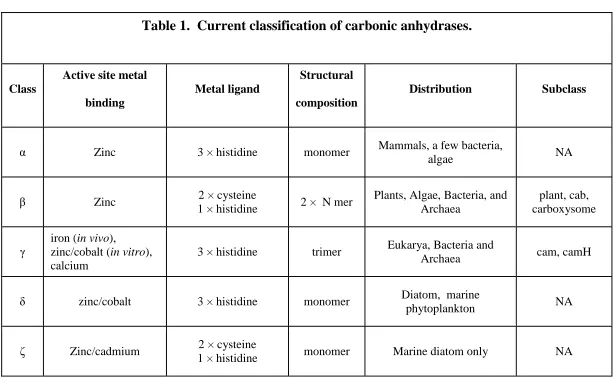
Current classification of carbonic anhydrases (CA) ...48
β-class carbonic anhydrases ...50
γ-class carbonic anhydrases ...51
Functional roles of carbonic anhydrases ...52
Exploration of CA in Metallosphaera sedula to facilitate 3HP/4HB cycle function (in vivo
and in vitro) ...54 Methods and Materials ...55
Cloning and heterologous expression of M.sedula carbonic anhydrase in E.coli ...55
Purification of C-terminal 6×His-tagged carbonic anhydrase ...56
Molecular weight determination ...56
CO2 hydration: Wilbur-Anderson assay. ...57
Esterase assay...57
Metal analysis ...58
vi
Sequence alignment with previously identified β-CAs ...59
Potential applications of CAMS in carbon dioxide capture and sequestration ...60 CAMS’s physiological role in carbon capture and carbon concentration mechanisms in M. sedula, and its relation to 3HP/4HB cycle ...63 REFERENCES ...66 Chapter 3: Characterization of Recombinant Acetyl-CoA/propionyl-CoA Carboxylase (E1), Malonyl-CoA Reductase (E2), Malonic Semialdehyde Reductase (E3), and Protein Biotin Ligase (BPL) from the Extremely Thermoacidophilic Archaeon Metallosphaera sedula and in vitro Conversion of HCO3- and Acetyl-CoA into 3-Hydroxypropionate ...81
ABSTRACT ...82 Introduction ...84
BPL: Biotin protein ligase, an accessory enzyme for activating E1 ...85
Classification and functions of BPL ...86
Structure and mechanism of BPLs ...88
Substrate specificity of biotinylation ...91 Methods and Materials ...92
Cloning and heterologous expression of M. sedula SP1 genes in E. coli ...92
Cloning and heterologous expression of M. sedula E1 in Pfu ...95
MW 112 growth ...96
Purification of recombinant SP1 enzymes ...96
Molecular mass determination ...99
Enzyme assays ...99
vii
Assembly of recombinant E1 to E3 in vitro ...103
Gas chromatography method for 3-HP detection ...103
High performance liquid chromatography – based methods for 3-HP detection ...103
Bioinformatics...104
Results and Discussion ...104
Biochemical characterization of recombinant E2 and comparison with native E2 and homologs from S. tokodaii ...104
Biochemical confirmation of recombinant E3 ...105
Inability to express active E1 expression in E. coli and failure of post-modification (biotinylation) ...105
Identification and biochemical characterization of biotin protein ligase from M. sedula ...106
Biochemical characterization of recombinant E1 heterologously expressed in P. furiosus .107 Assembly of recombinant E1, E2, E3 in vitro to produce 3-HP ...108
REFERENCES ...109
Chapter 4: Transcriptomic and Physiological Analysis of a Recombinant Pyrococcus furiosus Strain Metabolically Engineered to Produce 3-Hydroxypropionate from CO2 and Maltose...141
ABSTRACT ...142
Introduction ...144
Methods and Materials ...146
Plasmid construction ...146
Strain construction ...146
viii
Transcriptional response analysis ...147
Biochemical assays ...148
Results and Discussion ...149
Effect of recombinant M. sedula CA and BPL on 3-HP production in P. furiosus ...149
3-HP production by P. furiosus MW76 ...150
Transcriptome analysis ...151
REFERENCES ...157
ix
LIST OF TABLES Chapter 1
Table 1. Enzymes of 3-hydroxypropionate/4-hydroxybutyrate cycle ...38
Table 2. Classification of carboxylases based on different functions ...39
Table 3. Maximal production of 3-HP in recombinant E. coli and K. pneumonia ...39
Chapter 2 Table 1. Current classification of carbonic anhydrase ...72
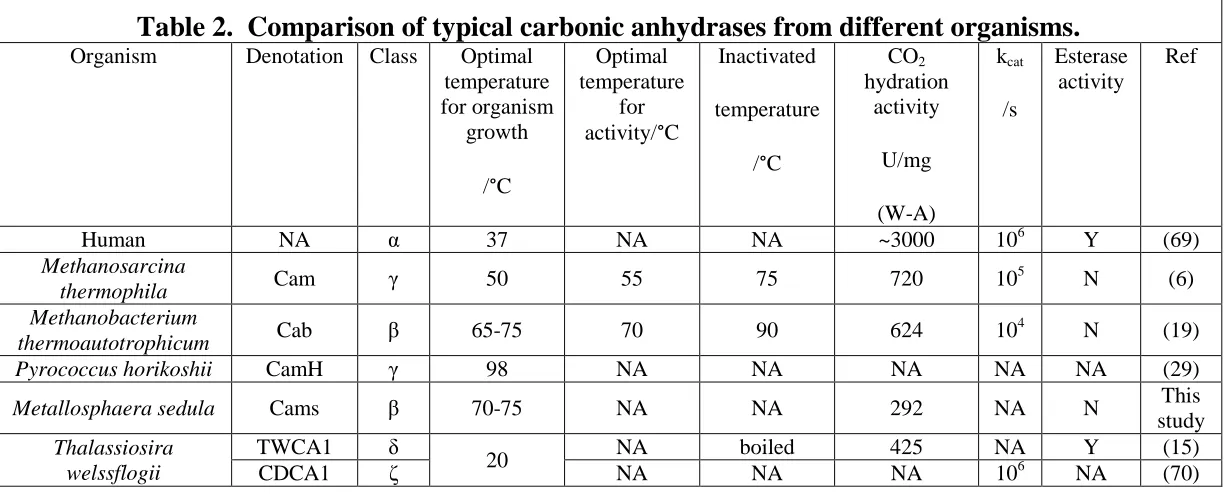
Table 2. Comparison of typical carbonic anhydrases from different organisms ...73
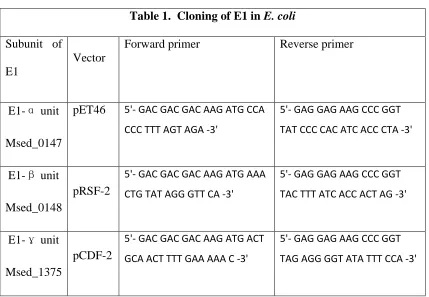
Chapter 3 Table 1. Cloning of E1 in E. coli...114
Table 2. P. furiosus Strains used in this study ...115
Table 3. Biotin quantification assay for recombinant E1 produced from E. coli ...116
Table 4. Molecular weight determination for all the SP1 enzymes in this study ...117
Table 5. Comparison of recombinant E2 from S. tokodaii and M. sedula ...118
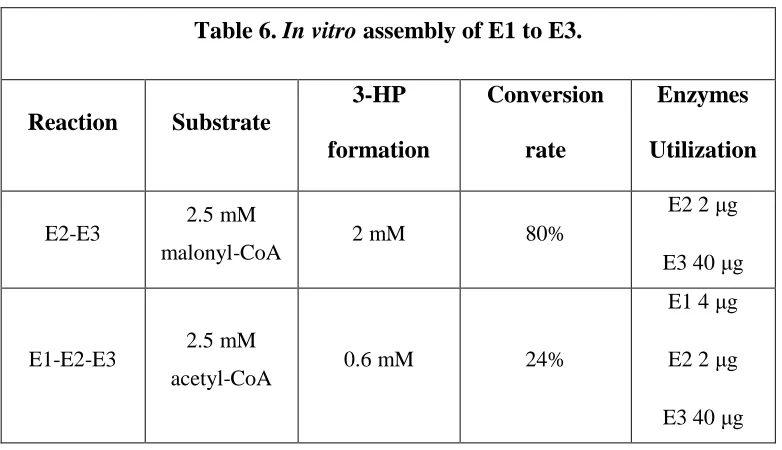
Table 6. In vitro assembly of E1 to E3 ...119
Chapter 4 Table 1. P. furiosus strains used in this study ...160
Table 2. Specific ORFs inserted into P. furiosus strains ...161
Table 3. Transcription levels of M. sedula ORFs in MW76 at 2.5 h and 40 h incubation at 72°C (compared to COM1) ...162
x
Table 5. Selected P. furiosus ORFs whose expression is down-regulated in COM1 (40 h vs. 2.5h incubation at 72°C) ...165 Table 6. Selected P. furiosus ORFs whose expression is up-regulated in MW76
xi
LIST OF FIGURES Chapter 1
Figure 1. Pyruvate and acetyl-CoA as precursors for liquid fuel molecules ...40
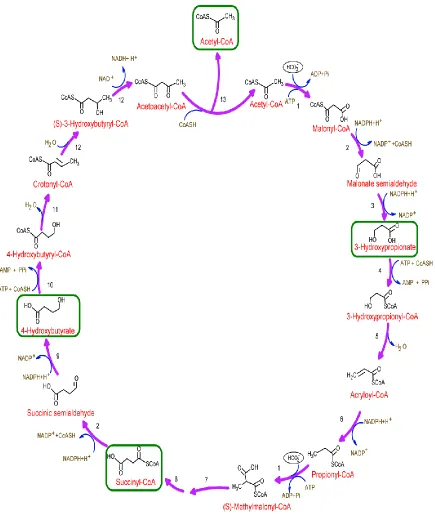
Figure 2. 3-hydroxypropionate/4-hydroxybutyrate cycle ...41
Figure 3. The biotin protein ligase reaction mechanism ...42
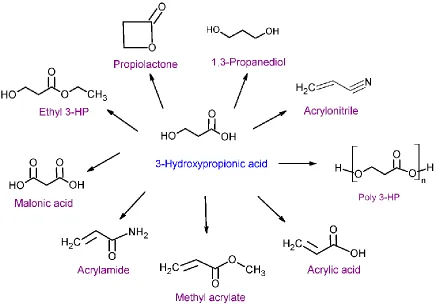
Figure 4. 3-hydroxypropionate (3-HP) as precursor for valuable chemicals ...43
Figure 5. 3-HP synthesis from glucose via seven metabolic pathways ...44
Figure 6. 3-HP synthesis from glycerol via CoA-dependent (reductive pathway) or CoA-independent pathway ...45
Chapter 2 Figure 1. Purification of recombinant CAMS (Msed_0390) ...74
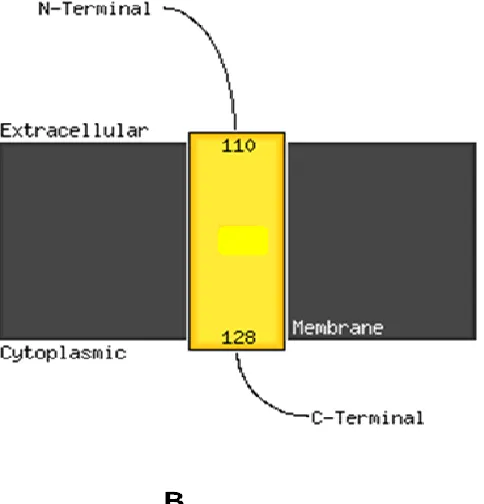
Figure 2. Prediction of transmembrane region of CAMS by PSIPRED ...75
Figure 3. Multiple sequence alignment of CAMS with documented or putative carbonic anhydrases of cab, plant and carboxysome type ...76
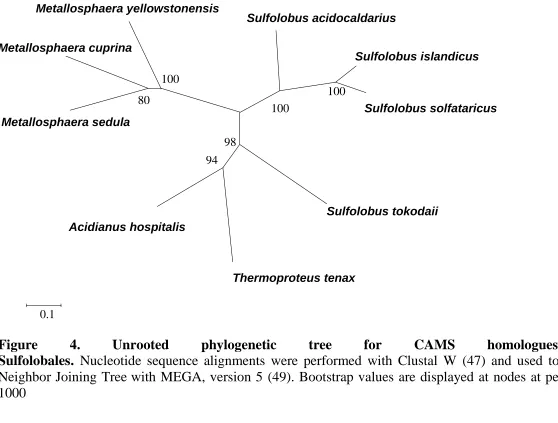
Figure 4. Unrooted phylogenetic tree for CAMS homologues within Sulfolobales ...80
Chapter 3 Figure 1. Domain architecture of different classes of biotin protein ligase ...120
Figure 2. BirA repressor function. ...121
Figure 3. Plasmids used for chromosomal insertion of synthetic operons into P. furiosus COM1 to construct MW112 for recombinant E1 production ...122
Figure 4. Chemical basis of the HABA biotin assay ...123
Figure 5. Kinetics for malonyl-CoA reductase (E2) ...124
xii
Figure 7. Optimal temperature for Malonyl-CoA reductase (E2) ...126 Figure 8. E2 and E3 activity detected from an E2-E3 coupled assay ...127 Figure 9. SDS-PAGE for E1 subunits heterologously expressed in E. coli and purified by IMAC ...128 Figure 10. Identification of biotin protein ligase from M. sedula ...129 Figure 11. Alignment of partial amino acid sequences of BCCP around the canonical lysine residue ...130 Figure 12. Pfu MW 112 growing curve for recombinant E1 production ...131 Figure 13. SDS-PAGE for IMAC purification of recombinant E1 from Pfu MW112 ...132 Figure 14. Recombinant E1 activity (produced from pfu strain MW 112 and IMAC
purified) was confirmed in an E1-E2 coupled assay ...133 Figure 15. Demonstration of 3-HP formation from In vitro assembly of SP1 based on GC method after derivatization with BSTFA ...134 Figure 16. HPLC chromatograph for 3-HP formation via E2-E3 reaction in vitro ...140 Chapter 4
1
Chapter 1
Biological Conversion of Carbon Dioxide and Hydrogen
2
The rise of Electrofuels
What is an Electrofuel and why it is advantageous over traditional Biofuels?
As a new paradigm for renewable energy, Electrofuels expand the boundaries of traditional biofuels that rely on photosynthetic carbon fixation. To provide energy-dense, infrastructure-compatible liquid fuels at dramatically higher conversion efficiencies, the Electrofuels program was launched by the US Department of Energy (DOE) Advanced Research Projects Agency-Energy (ARPA-E) in 2009. Various projects were instituted to develop metabolically-engineered microbial strains capable of assimilating energy, fixing inorganic carbon, and producing fuel molecules, all of which are independent of photosynthesis (1). Such foundational efforts in microbiology, genomics, metabolic engineering, and synthetic biology are anticipated to revolutionize the biofuels sector.
3
Under limited land resources, biofuels feedstocks and food crops have significant competition in open markets. Though aquatic species, such as microalgae, have become attractive because of their significantly higher average photosynthetic efficiency than typical land crops (biomass yield averages around 20 g/m2/day, with peaks of 60 g/m2/day), acquiring high quantities of algal biomass from artificial culture for downstream processing is problematic. The design of enclosed photobioreactors to prevent culture collapse or takeover by low oil strains is challenging and expensive (4,5). To summarize, the current cellulosic biofuel mode relies on photosynthesis in green plants or algae, both of which constrain the further improvement of energy efficiency in biofuel production.
Electrofuels could overcome the drawback inherent to biofuels approaches via direct utilization of CO2 to bypass energy intermediate sugar, more efficient non-photosynthetic CO2 fixation pathways and durable low potential energy sources. At the core of the program are the chemolithoautotrophic organisms, capable of fixing and reducing inorganic carbon, and thus dependent on non-photosynthetic pathways for deriving energy from a variety of inorganic substrates (1).
Electrofuels: State of the art (i) Carbon fixation pathways:
4
cases involving enzymes that are oxygen-tolerant or oxygen-sensitive. The direct net products of these pathways are pyruvate (3HP bicycle) and acetyl-CoA (all other four pathways), both of which are energy-rich intermediates that directly feed liquid fuel synthesis (See Figure 1) (8). Electrofuels research is evaluating the characteristics of each of these pathways, as well as synthetic pathways not found in the natural world (1).
RAP is the only non-cyclic CO2 fixation pathway that directly utilizes reduced C1 compounds (CO, formic acid, formaldehyde, methanol, etc.) as free metabolites or as moieties attached to specific C1 carrier compounds, while in other pathways, CO2 is assimilated into the carbon backbone of metabolites via carboxylation reactions (6,9). The RAP is also unique due to its additional physiological roles for energy conservation and as an electron sink (9). Except for the CBB cycle that may sometimes serve solely for recycling of electron carriers (10,11), other pathways support autotrophic growth (9). The RCC, 3HP bicycle, 3HP/4HB and DC/4HB cycles show significant structural similarity and all involve two conserved metabolites: acetyl-CoA and succinyl-CoA. The RCC and the 3-HP bicycle operate solely in bacterial lineages, while the DC/4HB and the 3HP/4HB cycle are used only by archaea. Despite the considerably overlapping parts within the 3HP bicycle, 3HP/4HB cycle and DC/4HB cycle, they seem to have evolved independently (9).
5
(tetrahydropterin and cobalamin) and operates under strict anaerobiosis. That is why the distribution of RAP in nature is restricted (6). RCC is also an energy efficient route (12), for example, used by the anaerobic photosynthetic green sulphur bacteria that live at a depth of over 100 m below the surface of anoxic water-bodies, where extremely low light energy is available (14). The energy costs of the 3HP bicycle are higher, and it has rather limited distribution in the green non-sulfur phototrophs Chloroflexaceae family (15). Both 3HP/4HB and DC/HB cycles are not energetically efficient (i.e., higher ATP requirement than the other pathways) (12). However, their thermotolerance is an important feature for (hyper)thermophilic crenarchaea. 3HP/4HB can be used strategically in mesophiles as well, due to its postulated existence in mesophilic “marine group I” archaea representing ~20% of all picoplankton cells in the world oceans (16). Additionally, archaea do not need large amount of sugars and fatty acids for cell wall and cell membrane construction (6,17). Therefore, the product from 3HP/4HB and DC/HB, acetyl-CoA and pyruvate, can be utilized primarily as principal biosynthetic precursors (6).
(ii) Energy assimilation and host development:
6
can also be genetically engineered into chemolithoautotrophs for growth and fuel production on formate or H2 (1).
With hydrogen gas as source of reducing power for CO2 fixation, either a natural H2-utilizing autotroph or a suitable heterotroph can be engineered to produce the desired Electrofuel (22). Ralstonia eutropha represents the ‘autotrophic’ approach, and its genetic tools include plasmid-based expression systems (23) and chromosomal modifications via homologous recombination (24,25,26). Some species in the genus Clostridium are also natural H2-utilizing autotrophs, whose genetic tools await further development. Beyond the optimization of endogenous CO2-fixation machinery, further concern is that the carbon flow should be directed to Electrofuel production rather than to native cellular metabolism (22). The second avenue for Electrofuel development using heterotrophs will be addressed in this study, focusing on P. furiosus. This can be accomplished by using a highly competent strain (COM1) that enables chromosomal modification (27,28). Overexpression of its native cytoplasmic hydrogenase I (SHI) has been achieved (29), thereby potentially facilitating H2 uptake for regeneration of reducing power.
(iii) Liquid fuel synthesis:
Electrofuels leverage recent advances in metabolic engineering and synthetic biology to direct carbon and energy fluxes from pyruvate and acetyl-CoA to final fuel molecules dependent on a variety of pathways (1). (see Figure 1).
3HP/4HB cycle and Metallosphaera sedula
co-7
workers established that this pathway occurs in Metallosphaera sedula (Topt 73°C) (31). Also, the presence of high acetyl-CoA/propionyl-CoA carboxylase activities indicates the operation of this cycle in Sulfolobus metallicus (Topt 75°C), Acidianus brierleyi (Topt 70°C) and Acidianus ambivalens (Topt 80°C) (32,33,34). M. sedula can grow heterotrophically on peptides, autotrophically on CO2 (sole carbon source) and H2, and mixotrophically, including on casamino acids and FeSO4 or metal sulfides (35). The 3HP/4HB cycle in M. sedula, is summarized in (Table 1 and Figure 2). The cycle starts with one acetyl-CoA and assimilates two CO2 molecules (in the form of bicarbonate), forming 3-HP and 4-HB as key intermediates, and finally regenerates two acetyl-CoA molecules. A key feature of 3HP/4HB pathway is that all of the high-energy reductant is supplied as NADPH. In this cycle, Enzymes 1 (E1) and 2 (E2) are both bi-functional, catalyzing two different reactions. So far, all the enzymes in this cycle have been confirmed in M. sedula through biochemical characterization (22).
8
Though gene disruption by cross-species complementation has been reported in M. sedula (38), the potential for metabolic engineering in this organism requires continued development of its genetic system (22). Therefore, an alternative host should be selected for implementing the 3HP/4HB pathway for biological conversion of carbon dioxide into a variety of chemical and fuel molecules.
Pyrococcus furiosus as electrofuel host
9
has an order of magnitude higher H2-uptake activity than H2-evolution activity at 80⁰C. As such, it contributes to the generation of NADPH for biosynthesis, by recycling the ‘waste’ product of respiration, H2, produced by Pfu MBH (45). The recently reported ability to over-express SHI in engineered P. furiosus (29) enhances this organism’s capability to metabolize H2 to regenerate NADPH for continued driving of 3HP/4HB cycle. Therefore, by integration into the chromosome of P. furiosus under the control of constitutive native promoters, production of acetyl-CoA from the 3HP/4HB cycle, and its conversion to desired liquid fuels from other fuel synthesis pathways, can be achieved and then optimized.
Carboxylases
Classification and functions of carboxylases. Carboxylases are among the most important enzymes in the biosphere, catalyzing the incorporation of a CO2 molecule into an organic substrate. They play critical roles in the fixation of inorganic carbon (CO2 or HCO3-), carbon assimilation and anaplerosis, all important biosynthetic processes, as well as contribute to redox metabolism (46,49). Such diverse functions and wide distribution in nature benefit from using a single C1 unit, CO2, which is far less toxic than formaldehyde, the alternative C1 unit used in biology (47,48). CO2 is readily available to the cell, either as atmospheric gas or in its hydrated form (HCO3-), the substrate for all biotin-dependent carboxylases.
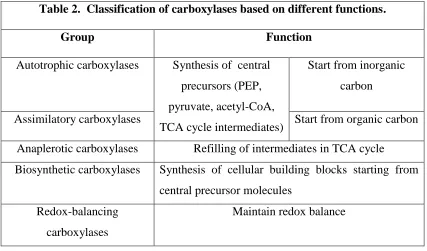
Depending on different functionality, carboxylases can be classified into five groups (46) (see Table 2):
10
carbon, while central precursor molecules are converted from organic growth substrate via assimilatory carboxylases serving in heterotrophic pathways.
2) Anaplerotic carboxylases contribute to the refilling of intermediates in TCA cycle when they are utilized for biosynthesis.
3) Unlike the above three group carboxylases that ultimately provide central precursors, biosynthetic carboxylases are involved in the synthesis of cellular building blocks starting from central precursor molecules.
4) The last one, redox-balancing carboxylases transfer reducing equivalents [NAD(P)H] onto CO2, the terminal electron acceptors, to maintain redox balance.
11
consumed energy comprises nearly 60% of the total energetic difference between the CBB cycle and rTCA cycle (46). Moreover, RubisCO exhibits a wasteful oxygenase side-reaction in which ribulose-1,5-bisphosphate is oxidized by molecular oxygen, thereby losing the captured carbon (50). The 3-hydroxypropionate (3HP) bicycle is equally energetically expensive as the CBB cycle (6) and the extra energy cost over rTCA cycle can mostly be ascribed to the property of the central carboxylase, acetyl-CoA/propionyl-CoA carboxylase, catalyzing a non-reductive carboxylation. Although a further reduction of fixed CO2 is required here, as in the CBB cycle, the activation of the fixed CO2 group for reduction occurs within this carboxylation step, requiring hydrolysis of ATP. In contrast, in the CBB cycle, activation is catalyzed by phosphoglyceratekinase (46). Similar to the 3HP bicycle, the 3-hydroxypropionate/4-hydroxybutyrate (3HP/4HB) cycle uses biotin-dependent acetyl-CoA/propionyl-CoA carboxylase (51,52) to catalyze energy-intensive carboxylation reactions. The dicarboxylate/hydroxybutyrate (DC/HB) cycle employs pyruvate:ferredoxin oxidoreductase and phosphoenolpyruvate (PEP) carboxylase (53), leading to a more energetically favorable reductive carboxylation.
12
magnitude (55).The oxygen sensitivity of carboxylases limit the rTCA cycle to certain anoxic environments, and, as such, it is mainly found in anaerobic and microaerobic organisms. The oxygen tolerance of RubisCO determines the wide distribution of the CBB cycle in strictly aerobic and facultatively anaerobic autotrophic organisms (6). Due to the side function as oxygenase, there are multiple RubisCO isoforms existing in many facultatively anaerobic proteobacteria, differentially expressed as a function of the ratio of CO2 to O2 that it encounters (56). The 3HP bicycle operates in the facultatively aerobic green non-sulfur bacterium Chloroflexus aurantiacus (57). Corresponding to the oxygen sensitivity of its ferredoxin-dependent carboxylase, the DC/HB cycle only exists in anaerobic autotrophic species of the Orders Thermoproteales and Desulfurococcales (12,58). In contrast, the 3HP/4HB cycle is distributed in (micro) aerobic, members of the Sulfolobales, and aerobic marine group I archaea (12,52).
In general, the carboxylases that catalyze carboxylation via a reductive mechanism are more efficient, and contribute significantly to the low energy cost of the rTCA cycle and DC/HP cycle, in exchange of the oxygen tolerance of the organisms. The CBB cycle, the 3-HP bicycle, and the 33-HP/4HB cycle all use non-reducing carboxylases, and though more energy intensive, they are adapted to (micro)aerobic environment inhabited by their host microorganism (46).
13
the carbon and nitrogen resources of the cell (9). However, pyruvate synthase and 2-ketoglutarate synthase, which are known to have very low specific activity, can still facilitate the fast growth of Hydrogenobacter thermophilus strain TK-6, when it is oxidizing H2 under aerobic conditions (55).
Application of carboxylases in synthetic biology. Synthetic CO2 fixation pathways can be applied to production of Electrofuels, biopharmaceuticals, or fine chemicals from CO2 and an appropriate energy source. In addition to the traditional focus on optimization of existing natural pathways and their corresponding carboxylases determining carbon flux (46, 60), synthetic biology can be used to create novel “customized” CO2 fixation pathways via combination of different enzymatic reactions from different sources or organisms. Bar-Even
et al. computationally assembled the synthetic carbon fixation pathways, some of which showed significant quantitative advantages over their natural counterparts on kinetics, energetic and topology (59). This can overcome the historical and evolutionary burdens intrinsic to the six natural autotrophic pathways.
Carboxylases can be the limiting (bottleneck) enzyme in synthetic pathways (46). For example, pyruvate carboxylase of Corynebacterium glutamicum redirects carbon flux to the synthesis of fermentation products that are derived from the TCA cycle. Overexpression of this enzyme resulted in a 50% increase in lysine production (61). Likewise, acetyl-CoA carboxylase overproduction resulted in a 6-fold increase in the rate of fatty acid synthesis in
14
drive the operation of synthetic CO2 fixation pathways to the highest rates, systematic search tool was used by Bar-Even et al. (59) to investigate the pathways employing known favorable carboxylating enzymes, characterized by high specific activities and affinities toward CO2 or HCO3-. The most promising synthetic pathways revealed from their analysis featured the most efficient carboxylating enzyme, PEP carboxylase. Alternatively, novel robust carboxylases can be designed, since the capacity of known enzymes to catalyze the reactions of non-native substrates can be evaluated by computational screening (64).
Biotin protein ligase, an accessory enzyme to acetyl-CoA carboxylase
15
release of AMP (67) (see Figure 3). Corynebacterium glutamicum is a biotin auxotrophic Gram-positive bacterium engineered for large-scale production of amino acids (68). The biotin-dependent pyruvate carboxylase is key enzyme for anaplerotic oxaloacetate synthesis in C. glutamicum under biotin-sufficient conditions, applied to lysine production (61). L-lysine production by C. glutamicum is positively affected by biotin (69). Overproduction of the pyruvate carboxylase improved supply of the L-lysine precursor oxaloacetate during anaplerosis (61). On the other hand, the activity of pyruvate carboxylase can be further enhanced. Overexpression of the BPL gene (birA) from C. glutamicum increased the level of the pyruvate carboxylase holoenzyme, resulting in a significant growth advantage in glucose minimal medium, as well as a two-fold higher L-lysine yield on glucose compared with the control strain (68).
Carbon dioxide capture
CO2 concentrating mechanisms and carbonic anhydrase in RubisCO-based carbon
-16
dependent oxygenase activity, so the wasteful photorespiration and the loss of carbon can be inhibited (73).
Carbonic anhydrases (CAs) are essential components of CO2 concentrating mechanisms (CMMs). Their variety of functions accord with the type of CMMs in which they are involved, and can be summarized mainly as follows (70,71,72,74):
(a) Conversion of bicarbonate to CO2, for fixation by RubisCO. This is always the final step required in all known CMMs.
(b) Conversion of CO2 to bicarbonate, for pre-fixation by phosphoenolpyruvate (PEP) carboxylase. This mostly occurs during four carbon (C4) mechanism and crassulacean acid metabolism (CAM) in terrestrial higher plants. The pre-fixation product will be decarboxylated and release CO2 again for RubisCO.
(c) Co-localization with RubisCO in specialized microcompartments (i.e. ‘carboxysomes’ in cyanobacteria or ‘pyrenoid’ in eukaryotic green algae such Chlamydomonas spp., where carbon fixation occurs.)
(d) Facilitation of diffusion of CO2 via forcing rapid equilibration between CO2 and bicarbonate.
17
domain of the mitochondrial NADH dehydrogenase complex and a matrix localized β-type CA that converts CO2 to HCO3- and/or transfers HCO3- from mitochondria into the cytosol. HCO3- is then transported from the cytosol into the chloroplast by a putative bicarbonate translocase or by a pathway resembling partial C4 metabolism. In chloroplast, β-type CA dehydrates bicarbonate into CO2 as substrate for RubisCO.
CMMs in cyanobacteria are summarized by Badger and Price (72). At least four different inorganic carbon uptake systems (including two bicarbonate transporters and two CO2 uptake systems) are present to accumulate HCO3- in the cytosol of the cell. HCO3 -subsequently diffuses into the interior of the microcompartment (‘carboxysome’), where it is dehydrated by a specialized CA co-localized with RubisCO. The carboxysome is believed to be a CO2 diffusion barrier (75), so RubisCO can be CO2-saturated. The availability of multiple cyanobacterial genomes enables the comparative genomics of the CCM in cyanobacteria and reveals different carboxysome types, HCO3- and CO2 transport systems and carbonic anhydrase types (72).
Novel CO2-concentrating mechanisms and carbonic anhydrase for Electrofuels.
18
human, indicating sufficient CA activity is required and the function of some CAs can be replaced by foreign CAs beloning to different families.
CAs are ubiquitous enzymes in nature and their roles have been noted widely in non-CBB carbon fixation pathways. For example, a β-type CA was discovered in
Methanobacterium thermoautotrophicum, a thermophilic methanoarchaeon synthesizing cell carbon from CO2 through incomplete reductive tricarboxylic acid cycle (TCA) (77,78). This CA was presumed to concentrate HCO3- in the vicinity of pyruvate carboxylase and phosphoenolpyruvate (PEP) carboxylase for the synthesis of oxaloacetate (79). Carbon fixation pathways are generally energy-consuming processes. However, acetogens can reduce CO2 into acetate using the reductive acetyl-CoA or Wood/Ljungdahl pathway during which ATP synthesis results (80). CA activity has been detected in acetogens,
Acetobacterium woodii and Clostridium thermoaceticum, which may facilitate their energy conservation (81). Just as different carbon fixation pathways feature different first committed-step CO2 fixing enzymes, the detection of novel CA in organisms living by non-RubisCO-based carbon fixation probably represents a starting point for exploring novel CMMs.
19
conditions and CO2-utilizing enzyme reservoir of these organisms are quite different from those of photo- and chemoautotrophs living by RubisCO-based carbon fixation.
As mentioned previously, the heterotrophic archaeon P. furiosus, the host for an engineered 3HP/4HB pathway, appears to contain only a γ-type CA (82). The extent to which this CA can facilitate CO2-utilization by the 3HP/4HB cycle in P. furiosus is unclear at present. Genome sequencing indicates the existence of genes encoding CAs in M. sedula
(35), and the potential interaction between CA and the 3HP/4HB cycle raises a question: is it necessary to engineer CA in P. furiosus? In any case, the means for concentrating and/or hydrating CO2 is obviously an area that merits attention for Electrofuels development (22). 3-hydroxypropionic acid: A valuable intermediate in the 3HP/4HB cycle
20
[poly (3HB)] and poly-(2-hydroxypropionic acid) [poly (2HP)], the resulting [Poly (3-HP)] is more resistant to hydrolytic cleavage than [Poly (2-HP)], but more enzymatically cleavable than [poly-(3-HB)] without carrying methyl groups at the polymer backbone. These advantages allow [poly-(3-HP)] to substitute traditional petroleum-based polymers. As estimated, 3.63 million tons of 3-HP is sold in global markets annually (83) (see Figure 4). Chemical method for 3-HP production. 3-HP can be synthesized from several chemical routes, including hydration from acrylic acid in the presence of liquid acid or solid acid catalyst (86), or the oxidation of 1,3-propanediol (1,3-PD) via a palladium-containing supported catalyst (87). However, both acrylic acid and 1,3-propanediol are expensive and make the process economically unfavorable (88). Some other synthesis options such as hydrolysis of 3-hydroxypropionitrile or β-propiolactone are also not commercially feasible, since the starting materials have toxicity and carcinogenicity (89).
Biological routes for 3-HP production. The commercial market for 3-HP and the disadvantage of chemical synthesis methods for 3-HP production has motivated studies of biological production since the early 2000s. 3-HP can be made naturally as end product through a range of metabolic pathways in some microorganisms (88). Lactobacillus species produce 3-HP via metabolizing glycerol (90,91); Alcaligenes faecalis, Byssochlamys sp.,
21
photosynthetic green non-sulfur bacterium (57), while the latter is functional in members of the Sulfolobales, such as Metallosphaera sedula (31,96).
Generally, a high product concentration (> 100g/L), productivity (> 2g/L/h) and substrate-to-product yield (> 50%) are important for the production of a commercially viable chemical. None of the aforementioned natural microorganisms can fulfill those criteria for 3-HP production, lacking cheap and abundant substrates and well-developed genetics systems and fermentation processes (88). Therefore, the development of genetically engineered microorganisms and optimization of the production process are essential. As summarized by Kumar et al. (88), various biochemical pathways have been suggested for 3-HP production from glucose or glycerol as substrate (see Figure 5-6). Seven pathways utilizing glucose were proposed and patented by US-based agricultural company Cargill, all of which have been investigated experimentally; only Pathway II and III exhibit promising prospects of application (84,97,98, 99,100,101,102).
22
β-alanine is an important precursor for 3-HP in pathways III, IV, VI, and VII (see Figure 5). A recombinant E. coli with constructed pathway III (105) can produce 9.2 g/L 3-HP. Pathways VI and VII have been suggested to address the lack of ATP generation in pathways III and IV. This is because the energy consuming steps can be bypassed through the use of alanine 2,3-aminomutase, which transfers an amino group from α- to β-carbon. Its isoenzyme, lysine 2,3-aminomutase, has been engineered by Liao et al. (106) to convert α-alanine to β-α-alanine. However, little detailed information has been provided for 3-HP microbial production through pathway VI and VII (88).
23
(108,109,110,111,112,113), especially three ALDHs isolated from E. coli, K. pneumoniae
and Azospirillium brasilense that have high activities for 3-HPA. Both NAD+ and NADP+ an be used by these ALDHs, but a higher activity was observed with NAD+ for most aldehydes. 3-HP production via a CoA-independent pathway has been demonstrated in E. coli, accompanied by several challenges, such as the intracellular accumulation of toxic 3-HPA caused by imbalance between the activities of the GDHt (DhaB) and ALDH (AldH). To address the problem, HPA should be rapidly utilized by efficient ALDHs. In recombinant E. coli strain SH-BGK1, the native AldH was replaced with α-ketoglutaric semialdehyde dehydrogenase (KGSADH) of A. brasilense, considered as the most suitable ALDH for 3-HP production (113). Another strategy adopted by Raj et al. was to control the enzyme ratio in E. coli SH-BGA1, in which aldH is cloned in a high-copy plasmid and dhaB in a low-copy plasmid (114).
24
coenzyme B12 negatively impacts the economic feasibility, and a coenzyme B12 natural producer which can work as host strain, such as K. pneumonia, might be used to remedy this problem.
K. pneumonia has been studied most extensively for 3-HP production from glycerol. Gene manipulation methods can be adapted from that of E. coli due to the evolutionary and biochemical proximity of the two species (120). Moreover, K. pneumoniae shows a high glycerol assimilation rate, and the glycerol metabolic pathways have been well characterized (88).
In K. pneumoniae, glycerol is assimilated through either ‘oxidative’ or ‘reductive’
pathways. The production of 3-HP occurs in the reductive pathway, in which 3-HPA can branch off to either 3-HP or 1,3-propanediol (PDO), depending on the activity of the relevant enzymes (oxidoreductase and 3-HPA-specific ALDH) and the availability of redox cofactors (NAD+ and NADH) (88) (See Figure 6). One strategy for 3-HP accumulation is to prevent carbon flow toward PDO by deletion of oxidoreductase and overexpression of ALDH, while an alternative strategy of co-production of PDO and 3-HP has been adopted by many researchers (108,121,122) .
25
anaerobic conditions should be maintained for effective coenzyme B synthesis and adequate carbon flux toward 3-HP. Maintaining proper aeration conditions becomes critically important for the successful production of 3-HP with K. pneumonia (88). Seeking an alternative solution, PDO can be co-produced with 3-HP simultaneously, since NADH or NAD+ can be recycled within the reductive pathway (See Figure 6). In this case, 3-HP production can be performed under anaerobic or microaerobic conditions. The highest 3-HP titer achieved so far in K. pneumoniae is 48.9 g/L, along with 25.3 g/L PDO and 24.9 g/L lactic acid in 28 h (122). This titer is almost as high as the best case from a recombinant E. coli fed by glucose (104). Furthermore, the 3-HP produced in this K. pneumoniae strain has higher yield (mol/mol) and productivity (g/L/h) (see Table 3).
Summary
26
27 REFERENCES
1. Conrado RJ, Haynes CA, Haendler BE, Toone EJ. 2013. Electrofuels: A new paradigm for renewable fuels, p. 1037-64. In Lee JW(ed), Advanced Biofuels and Bioproducts. Springer, New York, N.Y.
2. Sticklen MB. 2008. Plant genetic engineering for biofuel production: towards affordable cellulosic ethanol. Nat. Rev. Genet. 9:433-443.
3. Mosier N, Wyman C, Dale B, Elander R, Lee YY, Holtzapple M, Ladisch M. 2005. Features of promising technologies for pretreatment of lignocellulosic biomass. Bioresour. Technol. 96:673-686.
4. Brown A. 2010. Algae - The future for bioenergy? Summary and conclusions from the IEA Bioenergy ExCo64 Workshop.
5. Vasudevan PT, Briggs M. 2008. Biodiesel production--current state of the art and challenges. J. Ind. Microbiol. Biotechnol. 35:421-430.
6. Berg IA. 2011. Ecological aspects of the distribution of different autotrophic CO2 fixation pathways. Appl. Environ. Microbiol. 77:1925-36.
7. Thauer RK. 2007. Microbiology. A fifth pathway of carbon fixation. Science 318:1732-1733.
8. Connor MR, Liao JC. 2009. Microbial production of advanced transportation fuels in non-natural hosts. Curr. Opin. Biotechnol. 20:307-15.
9. Bar-Even A, Noor E, Milo R. 2012. A survey of carbon fixation pathways through a quantitative lens. J. Exp. Bot. 63:2325-42.
10. Wang X, Falcone DL, Tabita FR. 1993. Reductive pentose phosphate-independent CO2 fixation in Rhodobacter sphaeroides and evidence that ribulose bisphosphate carboxylase/oxygenase activity serves to maintain the redox balance of the cell. J. Bacteriol. 175:3372-3379.
11. Tichi MA, Tabita FR. 2000. Maintenance and control of redox poise in Rhodobacter capsulatus strains deficient in the Calvin-Benson-Bassham pathway. Arch. Microbiol. 174:322-333.
28
BE, Fuchs G. 2010. Autotrophic carbon fixation in archaea. Nat. Rev. Microbiol. 8:447-60.
13. Deppenmeier U, Müller V. 2008. Life close to the thermodynamic limit: how methanogenic archaea conserve energy. Results Probl. Cell Differ. 45:123-152.
14. Manske AK, Glaeser J, Kuypers MMM, Overmann J. 2005. Physiology and phylogeny of green sulfur bacteria forming a monospecific phototrophic assemblage at a depth of 100 meters in the Black Sea. Appl. Environ. Microbiol. 71:8049-8060. 15. Strauss G, Fuchs G. 1993. Enzymes of a novel autotrophic CO2 fixation pathway in
the phototrophic bacterium Chloroflexus aurantiacus, the 3-hydroxypropionate cycle. Eur. J. Biochem. 215:633-43.
16. Karner MB, DeLong EF, Karl DM. 2001. Archaeal dominance in the mesopelagic zone of the Pacific Ocean. Nature 409:507-510.
17. Gonzalez O, Gronau S, Falb M, Pfeiffer F, Mendoza E, Zimmer R, Oesterhelt D. 2008. Reconstruction, modeling & analysis of Halobacterium salinarum R-1 metabolism. Mol. Biosyst. 4:148-159.
18. Brigham CJ, Gai CS, Lu J, Speth DR, Worden RM, Sinskey AJ. Engineering
Ralstonia eutropha for production of isobutanol from CO2, H2, and O2, p. 1065-90. In Lee, J. W. (ed), Advanced Biofuels and Bioproducts. Springer, New York, NY.
19. Valdes J, Ossandon F, Quatrini R, Dopson M, Holmes DS. 2011. Draft genome sequence of the extremely acidophilic biomining bacterium Acidithiobacillus thiooxidans ATCC 19377 provides insights into the evolution of the Acidithiobacillus genus. J. Bacteriol. 193:7003-4.
20. Hommes NG, Sayavedra-soto LA, Daniel J, Arp DJ. 2003. Chemolithoorganotrophic growth of Nitrosomonas europaea on fructose. J. Bacteriol. 185: 6809-14.
21. Valdés J, Pedroso I, Quatrini R, Dodson RJ, Tettelin H, Blake R, Eisen J a, Holmes DS. 2008. Acidithiobacillus ferrooxidans metabolism: from genome sequence to industrial applications. BMC Genomics 9:597.
22. Hawkins AS, McTernan PM, Lian H, Kelly RM, Adams MW. 2013. Biological conversion of carbon dioxide and hydrogen into liquid fuels and industrial chemicals. Curr. Opin. Biotechnol. 24:1-9.
29
utilization range of Ralstonia eutropha strain H16 by metabolic engineering to include mannose and glucose. Appl. Environ. Microbiol. 77:1325-1334.
24. Orita I, Iwazawa R, Nakamura S, Fukui T. 2012. Identification of mutation points in Cupriavidus necator NCIMB 11599 and genetic reconstitution of glucose-utilization ability in wild strain H16 for polyhydroxyalkanoate production. J. Biosci. Bioeng. 113:63-69.
25. Kawashima Y, Cheng W, Mifune J, Orita I, Nakamura S, Fukui T. 2012. Characterization and functional analyses of R-Specific enoyl coenzyme A hydratases in polyhydroxyalkanoate-producing Ralstonia eutropha. Appl. Environ. Microbiol. 78:493-502.
26. Lindenkamp N, Volodina E, Steinbuchel A. Genetically modified strains of
Ralstonia eutropha H16 with beta-ketothiolase gene deletions for production of copolyesters with defined 3-Hydroxyvaleric acid contents. Appl. Environ. Microbiol. 78:5375-5383.
27. Lipscomb GL, Stirrett K, Schut GJ, Yang F, Jenney FE, Scott RA, Adams MWW, Westpheling J. 2011. Natural competence in the hyperthermophilic archaeon
Pyrococcus furiosus facilitates genetic manipulation: Construction of markerless deletions of genes encoding the two cytoplasmic hydrogenases. Appl. Environ. Microbiol. 77:2232-2238.
28. Bridger SL, Lancaster WA, Poole FL, Schut GJ, Adams MWW. 2012. Genome sequencing of a genetically tractable Pyrococcus furiosus strain reveals a highly dynamic genome. J. Bacteriol. 194: 4097-4106.
29. Chandrayan SK, McTernan PM, Hopkins RC, Sun J, Jenney FE, Adams MWW. 2012. Engineering hyperthermophilic Archaeon Pyrococcus furiosus to overproduce its cytoplasmic [NiFe]-hydrogenase. J. Biol. Chem. 287:3257-3264.
30. Auernik KS, Cooper CR, Kelly RM. 2008. Life in hot acid: pathway analyses in extremely thermoacidophilic archaea. Curr. Opin. Biotechnol. 19:445-453.
31. Hügler M, Huber H, Stetter KO, Fuchs G. 2003. Autotrophic CO2 fixation pathways in archaea (Crenarchaeota). Arch. Microbiol. 179:160-73.
32. Burton NP, Williams TD, Norris PR. 1999. Carboxylase genes of Sulfolobus metallicus. Arch. Microbiol. 172:349-353.
30
Autotrophic carbon dioxide fixation in Acidianus brierleyi. Arch. Microbiol. 166:368-371.
34. Menendez C, Bauer Z, Huber H, Gad’on N, Stetter KO, Fuchs G. 1999. Presence of acetyl coenzyme A (CoA) carboxylase and propionyl-CoA carboxylase in autotrophic Crenarchaeota and indication for operation of a 3-hydroxypropionate cycle in autotrophic carbon fixation. J. Bacteriol. 181:1088-98.
35. Auernik KS, Kelly RM. 2009. Physiological versatility of the extremely thermoacidophilic archaeon Metallosphaera sedula supported by heterotrophy, autotrophy and mixotrophy transcriptomes. Appl. Environ. Microbiol. 76:931-5. 36. Estelmann S, Hügler M, Eisenreich W, Werner K, Berg IA, Ramos-Vera WH,
Say RF, Kockelkorn D, Gad’on N, Fuchs G. 2011. Labeling and enzyme studies of the central carbon metabolism in Metallosphaera sedula. J. Bacteriol. 193:1191-200. 37. Scott R, Naser U, Friedrich P, Selmer T, Buckel W, Golding BT. 2004.
Stereochemistry of hydrogen removal from the “unactivated” C-3 position of 4-hydroxybutyryl-CoA catalysed by 4-hydroxybutyryl-CoA dehydratase. Chem .Commun. 10:1210-1211.
38. Maezato Y, Johnson T, McCarthy S, Dana K, Blum P. 2012. Metal resistance and lithoautotrophy in the extreme thermoacidophile Metalosphaera sedula. J. Bacteriol. 194: 6856-63.
39. Fiala G, Stetter KO. 1986. Pyrococcus furiosus sp. nov. represents a novel genus of marine heterotrophic archaebacteria growing optimally at 100°C. Arch. Microbiol. 145:56-61.
40. Sun J, Hopkins RC, Jenney FE, McTernan PM, Adams MWW, Rodrigues-Lima F. 2010. Heterologous expression and maturation of an NADP-dependent [NiFe]-hydrogenase: A key enzyme in biofuel production. PLoS One 5:e10526.
41. Schut GJ, Bridger SL, Adams MWW. 2007. Insights into the metabolism of elemental sulfur by the hyperthermophilic archaeon Pyrococcus furiosus: characterization of a coenzyme A-dependent NAD(P)H sulfur oxidoreductase. J. Bacteriol. 189:4431-41.
42. Sapra R, Bagramyan K, Adams MWW. 2003. A simple energy-conserving system: proton reduction coupled to proton translocation. Proc. Natl. Acad. Sci. U. S. A. 100:7545.
31
hyperthermophilic archaeon Pyrococcus furiosus and assessment of its role in sulfur reduction. J. Bacteriol. 182:1864.
44. Ma K, Adams MWW. 2001. Hydrogenases I and II from Pyrococcus furiosus. Methods Enzymol. 331:208.
45. Silva PJ, Van Den Ban ECD, Wassink H, Haaker H, de Castro B, Robb FT, Hagen WR. 2000. Enzymes of hydrogen metabolism in Pyrococcus furiosus. Eur. J. Biochem. 267:6541-6551.
46. Erb TJ. 2011. Carboxylases in natural and synthetic microbial pathways. Appl. Environ. Microbiol. 77:8466-77.
47. Aresta M, Dibenedetto A. 2007. Utilisation of CO2 as a chemical feedstock: opportunities and challenges. Dalton Trans. 28:2975-2992.
48. Hopkinson RJ, Barlow PS, Schofield CJ, Claridge TDW. 2010. Studies on the reaction of glutathione and formaldehyde using NMR. Org. Biomol. Chem. 8:4915-4920.
49. Ragsdale SW. 2008. Enzymology of the Wood-Ljungdahl pathway of acetogenesis. Ann. N. Y. Acad. Sci. 1125:129-136.
50. Badger MR, Bek EJ. 2008. Multiple Rubisco forms in proteobacteria: their functional significance in relation to CO2 acquisition by the CBB cycle. J. Exp. Bot. 59:1525-1541.
51. Hügler M, Krieger RS, Jahn M, Fuchs G, Hügler M. 2003. Characterization of acetyl-CoA/propionyl-CoA carboxylase in Metallosphaera sedula. Eur. J. Biochem. 270:736-744.
52. Berg IA, Kockelkorn D, Buckel W, Fuchs G. 2007. A 3-hydroxypropionate/4-hydroxybutyrate autotrophic carbon dioxide assimilation pathway in Archaea. Science. 318:1782.
53. Huber H, Gallenberger M, Jahn U, Eylert E, Berg IA, Kockelkorn D, Eisenreich W, Fuchs G. 2008. A dicarboxylate/4-hydroxybutyrate autotrophic carbon assimilation cycle in the hyperthermophilic Archaeum Ignicoccus hospitalis. Proc. Natl. Acad. Sci. U. S. A. 105:7851-6.
32
and pyruvate ferredoxin oxidoreductase from Thermotoga maritima. J. Bacteriol. 178:248-257.
55. Yamamoto M, Arai H, Ishii M, Igarashi Y. 2006. Role of two 2-oxoglutarate:ferredoxin oxidoreductases in Hydrogenobacter thermophilus under aerobic and anaerobic conditions. FEMS Microbiol. Lett. 263:189-193.
56. Yoshizawa Y, Toyoda K, Arai H, Ishii M, Igarashi Y. 2004. CO2-responsive expression and gene organization of three ribulose-1,5-bis-phosphate carboxylase/oxygenase enzymes and carboxysomes in Hydrogenovibrio marinus
strain MH-110. J. Bacteriol. 186:5685-5691.
57. Holo H. 1989. Chloroflexus aurantiacus secretes 3-hydroxypropionate, a possible intermediate in the assimilation of CO2 and acetate. Arch. Microbiol. 151: 252-6. 58. Ramos-Vera WH, Berg IA, Fuchs G. 2009. Autotrophic carbon dioxide assimilation
in Thermoproteales revisited. J. Bacteriol. 191:4286-97.
59. Bar-Even A, Noor E, Lewis NE, Milo R. 2010. Design and analysis of synthetic carbon fixation pathways. Proc. Natl. Acad. Sci. U. S. A. 107:8889-94.
60. Raines CA. 2006. Transgenic approaches to manipulate the environmental responses of the C3 carbon fixation cycle. Plant. Cell Environ. 29:331-339.
61. Peters-Wendisch PG, Schiel B, Wendisch VF, Katsoulidis E, Möckel B, Sahm H, Eikmanns BJ. 2001. Pyruvate carboxylase is a major bottleneck for glutamate and lysine production by Corynebacterium glutamicum. J. Mol. Microbiol. Biotechnol. 3:295-300.
62. Millard CS, Chao YP, Liao JC, Donnelly MI. 1996. Enhanced production of succinic acid by overexpression of phosphoenolpyruvate carboxylase in Escherichia coli. Appl. Environ. Microbiol. 62:1808-1810.
63. Erb TJ, Brecht V, Fuchs G, Müller M, Alber BE. 2009. Carboxylation mechanism and stereochemistry of crotonyl-CoA carboxylase/reductase, a carboxylating enoyl-thioester reductase. Proc. Natl. Acad. Sci. U. S. A. 106:8871-8876.
64. Assary RS, Broadbelt LJ. 2011. Computational screening of novel thiamine-catalyzed decarboxylation reactions of 2-keto acids. Bioprocess Biosyst. Eng. 34:375-388.
33
66. Chapman-Smith A, Jr. JEC, Cronan JE. 1999. In vivo enzymatic protein biotinylation. Biomol. Eng. 16:119-25.
67. Streaker ED, Beckett D. 2006. Nonenzymatic biotinylation of a biotin carboxyl carrier protein: unusual reactivity of the physiological target lysine. Protein Sci. 15:1928-1935.
68. Peters-Wendisch P, Stansen KC, Götker S, Wendisch VF. 2012. Biotin protein ligase from Corynebacterium glutamicum: role for growth and L-lysine production. Appl. Microbiol. Biotechnol. 93:2493-502.
69. Ko YT, Chipley JR. 1984. Role of biotin in the production of lysine by
Brevibacterium lactofermentum. Microbios. 40:161-171.
70. Cannon GC, Heinhorst S, Kerfeld CA. 2010. Carboxysomal carbonic anhydrases: Structure and role in microbial CO2 fixation. Biochim. Biophys. Acta 1804:382-92. 71. Badger MR, Price GD. 1994. The role of carbonic anhydrase in photosynthesis.
Annu. Rev. Plant Physiol. Plant Mol. Biol. 45:369-392.
72. Badger MR, Price GD. 2003. CO2 concentrating mechanisms in cyanobacteria: molecular components, their diversity and evolution. J. Exp. Bot. 54:609-622.
73. Tabita FR. 1999. Microbial ribulose 1,5-bisphosphate carboxylase/oxygenase: A different perspective. Photosynth. Res. 60:1-28.
74. Zabaleta E, Martin MV, Braun H-P. 2012. A basal carbon concentrating mechanism in plants? Plant Sci. 187:97-104.
75. Dou Z, Heinhorst S, Williams EB, Murin CD, Shively JM, Cannon GC. 2008. CO2 fixation kinetics of Halothiobacillus neapolitanus mutant carboxysomes lacking carbonic anhydrase suggest the shell acts as a diffusional barrier for CO2. J. Biol. Chem. 283:10377-84.
76. Kusian B, Sültemeyer D, Bowien B, Su D. 2002. Carbonic anhydrase is essential for growth of Ralstonia eutropha at ambient CO(2) concentrations. J. Bacteriol. 184:5018-5026.
77. Smith KS, Ferry JG. 1999. A plant-type (beta-class) carbonic anhydrase in the thermophilic methanoarchaeon Methanobacterium thermoautotrophicum. J. Bacteriol. 181:6247-53.
34
In Ferry JG(ed), Methanogenesis: ecology, physiology, biochemistry, and genetics. Chapman and Hall, New York, N.Y.
79. Smith KS, Cosper NJ, Stalhandske C, Scott R a, Ferry JG. 2000. Structural and kinetic characterization of an archaeal beta-class carbonic anhydrase. J. Bacteriol. 182:6605-13.
80. Stephen WR, Pierce E. 2008. Acetogenesis and the Wood-Ljungdahl pathway of CO2 fixation. Biochim. Biophys. Acta. 1784: 1873-1898.
81. Schnappauf G, Braus GH, Gössner AS, Drake HL, Braus-Stromeyer SA. 1997. Carbonic anhydrase in Acetobacterium woodii and other acetogenic bacteria. J. Bacteriol. 179:7197-7200.
82. Smith KS, Jakubzick C, Whittam TS, Ferry JG. 1999. Carbonic anhydrase is an ancient enzyme widespread in prokaryotes. Proc. Natl. Acad. Sci. U. S. A. 96:15184-9. 83. Aden A, Bozell J, Holladay J, J.White, Manheim A, Elliot D, Lasure L, Jones S,
Gerber M, Ibsen K, Lumberg L, Kelley S. 2004. Top value-added chemicals from biomass: Results of screening for potential candidates from sugars and synthesis gas. U.S. Dep. Energy 1:13-19.
84. Jiang X, Meng X, Xian M. 2009. Biosynthetic pathways for 3-hydroxypropionic acid production. Appl. Microbiol. Biotechnol. 82:995-1003.
85. Mochizuki M, Hirami M. 1997. Structural effects on the biodegradation of aliphatic polyesters. Polym. Adv. Technol. 8:203-209.
86. Meng XS, Abraham T, Tsobanakis P. 2007. Process for preparing 3-hydroxycarboxylic acids. Patent US20070015936A1.
87. Behr A, Botulinski A, Carduck F-J, Schneider M. 1996. process for preparing 3-hydroxypropionic acid. Patent EP0579617A1.
88. Kumar V, Ashok S, Park S. 2013. Recent advances in biological production of 3-hydroxypropionic acid. Biotechnol. Adv. 31: 945-961.
89. Pina CD, Falletta E RM. 2011. A green approach to chemical building blocks. The case of 3-hydroxypropanoic acid. Green Chem. 13:1624-32.
35
91. Garai-Ibabe G, Ibarburu I, Berregi I, Claisse O, Lonvaud-Funel A, Irastorza A, Dueñas MT. 2008. Glycerol metabolism and bitterness producing lactic acid bacteria in cidermaking. Int. J. Food Microbiol. 121:253-261.
92. Ansede JH, Pellechia PJ, Yoch DC. 1999. Metabolism of acrylate to beta-hydroxypropionate and its role in dimethylsulfoniopropionate lyase induction by a salt marsh sediment bacterium, Alcaligenes faecalis M3A. Appl. Environ. Microbiol. 65:5075-5081.
93. Takamizawa K, Horitsu H, Ichikawa T, Kawai K, Suzuki T. 1993. β-hydroxypropionic acid production by Byssochlamys sp. grown on acrylic acid. Appl. Microbiol Biotechnol. 40:196-200.
94. Dave H, Ramakrishna C, Desai JD. 1996. Degradation of acrylic acid by fungi from petrochemical activated sludge. Biotechnol. Lett. 18:963-4.
95. Andersen G, Björnberg O, Polakova S, Pynyaha Y, Rasmussen A, Møller K, Hofer A, Moritz T, Sandrini MPB, Merico A-M, Compagno C, Akerlund H-E, Gojković Z, Piskur J. 2008. A second pathway to degrade pyrimidine nucleic acid precursors in eukaryotes. J. Mol. Biol. 380:656-66.
96. Saini R, Kapoor R, Kumar R, Siddiqi TO, Kumar A. 2011. CO2 utilizing microbes - A comprehensive review. Biotechnol. Adv. 29:949-60.
97. Gokarn RR, Selifonova OV, Jessen HJ, Steven JG, Selmer T, BuckelW. 2001. 3-hydroxypropionic acid and other organic compounds. Patent US7186541B2.
98. Henry CS, Broadbelt LJ, Hatzimanikatis V. 2010. Discovery and analysis of novel metabolic pathways for the biosynthesis of industrial chemicals: 3-hydroxypropanoate. Biotechnol. Bioeng. 106:462-473.
99. Liao HH, Gokarn RR, Gort SJ, Jessen HJ, Selifonova OV. 2005. Alanine 2,3-aminomutase. Patent EP1575881B1.
100. LiaoHH,Gokarn RR,Gort SJ, JessenHJ, SelifonovaOV. 2007. Production of 3-hydropropionic acid using beta-alanine/pyruvate aminotransferase. Patent US20070107080A1.
101. Marx A, Wendisch VF, Rittmann D, Buchholz S. 2007. Microbiological production of 3-hydroxypropionic acid. Patent WO2007042494A3.
36
lactic and 3-hydroxypropanoic acid: implications for industrial fermentation processes. Metab. Eng. 6:245-255.
103. Rathnasingh C, Raj SM, Lee Y, Catherine C, Ashok S, Park S, Mohan S. 2012. Production of 3-hydroxypropionic acid via malonyl-CoA pathway using recombinant
Escherichia coli strains. J. Biotechnol. 157:633-40.
104. Lynch MD, Gill RT, Warnecke LT. 2011. Method for producing 3-hydroxypropionic acid and other products. Patent WO2011038364A1.
105. Jessen HJ, Liao HH, Steven J, Selifonova OV. 2011. Beta-alanine/alpha-ketoglutarate aminotransferase for 3-hydroxypropionic acid production. Patent US8030045B2.
106. Liao HH,Gokarn RR, Gort SJ, Jessen HJ, Selifonova O. 2003. Nucleic acid and polypeptide sequences for alanine 2,3-aminomutase and their use for production of β-alanine, pantothenate, 3-hydroxypropionic acid, and 1,3-propanediol. Patent WO03/062173A2.
107. Luo LH, Kim CH, Heo S-Y, Oh B-R, Hong W-K, Kim S, Kim D-H, Seo J-W. 2012. Production of 3-hydroxypropionic acid through propionaldehyde dehydrogenase PduP mediated biosynthetic pathway in Klebsiella pneumoniae. Bioresour. Technol. 103:1-6.
108. Huang Y, Li Z, Shimizu K, Ye Q. 2012. Simultaneous production of 3-hydroxypropionic acid and 1,3-propanediol from glycerol by a recombinant strain of
Klebsiella pneumoniae. Bioresour. Technol. 103:351-9.
109. Jo J-E, Mohan Raj S, Rathnasingh C, Selvakumar E, Jung W-C, Park S. 2008. Cloning, expression, and characterization of an aldehyde dehydrogenase from
Escherichia coli K-12 that utilizes 3-Hydroxypropionaldehyde as a substrate. Appl. Microbiol. Biotechnol. 81:51–60.
110. Ko Y, Ashok S, Zhou S, Kumar V, Park S. 2012. Aldehyde dehydrogenase activity is important to the production of 3-hydroxypropionic acid from glycerol by recombinant Klebsiella pneumoniae. Process. Biochem. 47:1135-43.
111. Luo LH, Seo J-W, Baek J-O, Oh B-R, Heo S-Y, Hong W-K, Kim D-H, Kim CH. 2011. Identification and characterization of the propanediol utilization protein PduP of
Lactobacillus reuteri for 3-hydroxypropionic acid production from glycerol. Appl. Microbiol. Biotechnol. 89:697-703.
37
dependent aldehyde dehydrogenase encoded by the puuC gene of Klebsiella pneumoniae DSM 2026 that utilizes 3-hydroxypropionaldehyde as a substrate. Biotechnol. Bioprocess. Eng. 15:131-8.
113. Rathnasingh C, Raj SM, Jo J-E, Park S. 2009. Development and evaluation of efficient recombinant Escherichia coli strains for the production of 3-hydroxypropionic acid from glycerol. Biotechnol. Bioeng. 104:729-739.
114. Mohan Raj S, Rathnasingh C, Jung W-C, Park S. 2009. Effect of process parameters on 3-hydroxypropionic acid production from glycerol using a recombinant
Escherichia coli. Appl. Microbiol. Biotechnol. 84:649-657.
115. Daniel R, Bobik TA, Gottschalk G. 1998. Biochemistry of coenzyme B12-dependent glycerol and diol dehydratases and organization of the encoding genes. FEMS Microbiol. Rev. 22:553-566.
116. Toraya T. 2002. Enzymatic radical catalysis: coenzyme B12-dependent diol dehydratase. Chem. Rec. 2:352-66.
117. Xu XL, Zhang GL, Wang LW, Ma BB, Li C. Quantitative analysis on inactivation and reactivation of recombinant glycerol dehydratase from Klebsiella pneumoniae
XJPD-Li. J. Mol. Catal. B: Enzym. 56:108-14.
118. Mori K, Tobimatsu T, Hara T, Toraya T. 1997. Characterization, sequencing, and expression of the genes encoding a reactivating factor for glycerol-inactivated adenosylcobalamin-dependent diol dehydratase. J. Biol. Chem. 272:32034-32041. 119. Kwak S, Park Y-C, Seo J-H. 2013. Biosynthesis of 3-hydroxypropionic acid from
glycerol in recombinant Escherichia coli expressing Lactobacillus brevis dhaB and dhaR gene clusters and E. coli K-12 aldH. Bioresour. Technol. 135:432-9.
120. Celińska E. 2012. As a 1, 3-propanediol producer-the metabolic engineering approach. Crit. Rev. Biotechnol. 32:274-288.
121. Ashok S, Raj SM, Rathnasingh C, Park S. 2011. Development of recombinant
Klebsiella pneumoniae ∆dhaT strain for the co-production of 3-hydroxypropionic acid and 1,3-propanediol from glycerol. Appl. Microbiol. Biotechnol. 90:1253-1265. 122. Huang Y, Li Z, Shimizu K, Ye Q. 2013. Co-production of 3-hydroxypropionic acid
38 TABLES
Table 1. Enzymes of 3-hydroxypropionate/4-hydroxybutyrate cycle
Enzyme # Enzymes from 3-HP/4-HB
Pathway
Msed ORF E1 (α, β, γ) Acetyl/propionyl-CoA carboxylase Msed_0147(a)
Msed_0148(b) Msed_1375(g)
E2 Malonyl-CoA/Succinyl-CoA reductase Msed_0709
E3 Malonate semialdehyde reducatse Msed_1993
E4 3-Hydroxypropionyl-CoA synthetase Msed_1456
E5 3-Hydroxypropionyl-CoA dehydratase Msed_2001
E6 Acryloyl-CoA reductase Msed_1426
E7 Methylmalonyl-CoA epimerase Msed_0639
E8 (α) Methylmalonyl-CoA mutase-catalytic subunit
Msed_0638
E8 (β) Methylmalonyl-CoA mutase-cobalamin B12-binding subunit
Msed_2055
E9 Succinate semialdehyde reductase Msed_1424
E10 4-Hydroxybutyrate-CoA ligase Msed_0394
Msed_0406 Msed_1353
E11 4-Hydroxybutyrl-CoA dehydratase Msed_1321
E12 Crotonyl-CoA hydratase/ (S)-3-hydroxybutyrl-CoA dehydrogenase
Msed_0399
39
Table 2. Classification of carboxylases based on different functions.
Group Function
Autotrophic carboxylases Synthesis of central precursors (PEP, pyruvate, acetyl-CoA, TCA cycle intermediates)
Start from inorganic carbon
Assimilatory carboxylases Start from organic carbon Anaplerotic carboxylases Refilling of intermediates in TCA cycle
Biosynthetic carboxylases Synthesis of cellular building blocks starting from central precursor molecules
Redox-balancing carboxylases
Maintain redox balance
Table 3. Maximal production of 3-HP in recombinant E. coli and K. pneumonia (Adapted from (89)).
Organism Carbon source
Aeration condition
Titer
(g/L)
Yield
(mol/mol)
Productivity
(g/L/h)
Ref
E. coli glucose Aerobic 49.0 0.46 0.71 (104)
40 FIGURES
41
42
43
44
45
46
Chapter 2
Carbonic Anhydrase (CA) from the Extremely Thermoacidophilic
Archaeon
Metallosphaera sedula
(Msed_0390, CAMS)
Represents a New sub-class of
47
ABSTRACT
Msed_0390, encoded in the genome of the extremely thermoacidophilic archaeon