• No results found

<p>Effectiveness Of Polyethylene Cover Versus Polyethylene Cover With Artificial Tear Drop To Prevent Dry Eye In Critically Ill Patients: A Randomized Controlled Clinical Trial</p>

N/A
N/A
Protected

Academic year: 2020

Share "<p>Effectiveness Of Polyethylene Cover Versus Polyethylene Cover With Artificial Tear Drop To Prevent Dry Eye In Critically Ill Patients: A Randomized Controlled Clinical Trial</p>"

Copied!
8
0
0

Loading.... (view fulltext now)

Full text

(1)

O R I G I N A L R E S E A R C H

Effectiveness Of Polyethylene Cover Versus

Polyethylene Cover With Arti

cial Tear Drop To

Prevent Dry Eye In Critically Ill Patients: A

Randomized Controlled Clinical Trial

This article was published in the following Dove Press journal: Clinical Ophthalmology

Tahereh Nikseresht1 Alireza Abdi2

Alireza Khatony 3

1Student Research Committee, Kermanshah University of Medical Sciences, Kermanshah, Iran;2Clinical Research Development Center, Imam Reza Hospital, Kermanshah University of Medical Sciences, Kermanshah, Iran; 3Health Institute, Social Development and Health Promotion Research Center, Kermanshah University of Medical Sciences, Kermanshah, Iran

Purpose: To compare the effectiveness of polyethylene cover versus polyethylene cover with artificial tear drop to prevent dry eye in critically ill patients.

Methods: In this clinical trial, 208 patients were randomly assigned into two groups of polyethylene cover, and polyethylene cover with artificial tear drop. In each of the two groups, one eye was randomly selected as a control eye and the other was considered as an intervention eye. In the polyethylene cover group, the eye was covered with polyethylene. In the polyethylene cover and artificial tear drop group, an artificial tear drop was applied every 8 hrs to the eye, and then it was covered with polyethylene. The control eye received the routine intensive care unit eye care (washing the inside of the eye and the eyelids with distilled water). In both groups, the eyes were examined for eye dryness by an ophthalmologist for 5 days.

Results:The incidence of dry eye after the use of both polyethylene cover and polyethylene cover with artificial tear drop methods was lower than that of a conventional method. Both methods of polyethylene covering and polyethylene covering with artificial tear drop were effective, but clinically, the method of polyethylene cover with artificial tear drop was more effective.

Conclusion: Both methods of polyethylene covering and polyethylene covering with artificial tear drop were more effective than a conventional method, but the method of polyethylene cover with artificial tear drop was clinically more effective. Therefore, it is recommended for use in critically ill patients.

Keywords:artificial tear drop, dry eye, intensive care unit, polyethylene cover, prevention

Introduction

In the intensive care unit (ICU), patients are often very ill, and changes in their

level of consciousness affect their natural ocular surface defense mechanisms.1Eye

care is one of the important aspects of care for ICU patients, which is usually

neglected.2In 75% of patients under heavy sedation, the incomplete closure of the

eyelids causes dryness of the eye surface.3,4 Also in ICU patients, mechanical

ventilation with positive pressure causes fluid imbalance that leads to conjunctival

edema, which is one of the causes of incomplete closure of the eyelids and ocular problems. Evidence suggests that 60% of intubated ICU patients are at risk of eye

surface injury such as dry eye disease, due to incomplete closure of the eyelids.5

Dry eye disease is a multifactorial condition caused by loss of tearfilm hemostasis.6

Correspondence: Alireza Khatony Clinical Research Development Center, Imam Reza Hospital, Nurse Blvd., Kermanshah, Iran

Tel/fax +98 83 3827 9394 Email [email protected]

Clinical Ophthalmology

Dovepress

open access to scientific and medical research

Open Access Full Text Article

Clinical Ophthalmology downloaded from https://www.dovepress.com/ by 118.70.13.36 on 20-Aug-2020

(2)

Different care is available to prevent the onset of ocular complications in intubated patients under mechanical ven-tilation. These include the use of methylcellulose drop, ophthalmic ointment, closing of eyelids by adhesive tape,

and use of eye patches or polyethylene cover.7

Several studies have examined the effects of various eye care methods in preventing eye injuries, but their results are contradictory and controversial. In this regard, one study compared the effects of two methods of lubri-cating drops and polyethylene cover on preventing eye

injuries in patients whose blink reflux was reduced or

lost. The results indicated that, the use of polyethylene

cover was more effective.8In another study, the effect of

combined use of Hypromellose drop and Lacri-lube, and polyethylene cover in prevention of corneal epithelial damage in ICU patients was compared, and results showed

the similar effects of both methods.9In another study, the

effects of two methods of lanolin ointment and polyethy-lene cover on prevention of corneal abrasion in patients admitted to the ICU were compared with each other, and the results showed similar effects of both methods in

preventing corneal abrasion.10 Another study compared

the effects of carbomer dye drop and polyethylene cover on the prevention of dry eye, and the results showed a

more effective role of polyethylene cover in this regard.11

Despite the existence of various eye-care protocols for the prevention of ocular complications in ICU patients, studies

are still not sufficient in this regard.12,13

Because dry eye is very common in ICU patients and may lead to more serious complications such as corneal

perforation, scleritis, and endophthalmitis,14,15and

consid-ering the contradictory results of existing studies, the authors of this study decided to examine the effects of

“polyethylene cover”and“polyethylene cover with artifi

-cial tear drop”on the prevention of dry eye in critically ill

patients.

Materials And Methods

Study Design

This study was a single-blind randomized clinical trial which was conducted from July 2016 to May 2017, and was based on the CONSORT guideline.

Study Hypothesis

The research hypothesis was: both methods of“polyethylene

cover”and“polyethylene cover with artificial tear drop”are

more effective in preventing dry eye than the conventional method.

Sample And Sampling Method

The statistical population consisted of all patients admitted to the ICUs of educational hospitals in the city of Ilam, Iran. The sample size was determined to be 208

indivi-duals with a confidence level of 95% and power of 80%

using the studies of Cortese and Koroloff.8,9 The

partici-pants were selected by convenience method and were

randomly allocated into one of the two groups of “

poly-ethylene cover,” and “polyethylene cover with artificial

tear drop”by lottery. The number of participants in each

group was 52 and in each participant, one eye was con-sidered as the control eye and the other eye was concon-sidered as the intervention eye. In each participant, each eye was randomly selected as the intervention eye or the control eye using a table of random numbers. Inclusion criteria included being 18 years old or above, having a GCS of 8 or less, absence of trauma on the face and head, lack of corneal dryness and abrasion (approved by ophthalmolo-gist), having no history of eye diseases, having no history of using ophthalmic lubricants (before hospitalization), having no history of hospitalization in ICU during the past month, being intubated and connected to the ventila-tor, being in ICU for more than 24 hrs, incomplete closure of the eyelids due to the use of anesthetic-sedation drugs,

having negative results of Schirmer and fluorescein tests

during the study, and giving a written and informed

con-sent through the first-degree relatives (parents or legal

guardian of the patient) for participation in the study. Patients were excluded from the study in case of death, transfer to other wards, tracheal extubation, increased

con-sciousness, and return of the blink reflexes.

Measurement Instruments

The data-collection tool was a two-part questionnaire. The

first part contained 15 questions about demographic

char-acteristics, type of disease, duration of hospitalization, GCS score, use or non-use of anesthetic-sedative drugs, duration and amount of anesthetic-sedation drugs, and amount of peak inspiratory pressure (PIP) and positive end expiratory pressure (PEEP).

The second part of the questionnaire was related to the

results of Schirmer andfluorescein tests. The graded

ster-ile stripes with the brand name of SM Tube, made in

Japan, were used. To perform the fluorescein test, the

sterile fluorescein stain stripes were manufactured by

Clinical Ophthalmology downloaded from https://www.dovepress.com/ by 118.70.13.36 on 20-Aug-2020

(3)

Iranian company Elham Teb, and the HSL150 hand-held Slit Lamp, manufactured in Germany, were used. The polyethylene covers used in this study were paper sterile stripes made by Pars Atlas Company in Iran. Also, the

artificial tear drops, brand name Tearlose, were made by

Sina Darou Company in Iran.

Interventions

At first, the study permission was obtained from the

Kermanshah University of Medical Sciences (KUMS) dep-uty for research and technology, and then, the researcher attended the ICUs of Imam Khomeini and Shahid Mostafa Khomeini Educational Hospitals of Ilam and visited the eligible patients. The conditions of all eligible patients were examined at the beginning of the study by an ophthalmolo-gist for eye dryness and corneal abrasions.

For examination of eye dryness, Schirmer graded stripes were used as follows to diagnose dryness: the tip of the strip was situated at the edge of lower eyelid and if the strip became moist less than 5 mm, it represented eye dryness. If the strip became moist for 5 mm or more, it was considered

as lack of eye dryness. After confirming the lack of eye

dryness, fluorescein staining was used to examine corneal

abrasion. For this purpose, a sterile tape with afluorescein

orange-colored substance on one side was slowly rubbed against the inner edge of the lower eyelid, and the eyelid was opened and closed several times to spread the color on

the eye surface. Then, with the help of fluorescein staining

blue light, the cornea was examined by an ophthalmologist. The areas with abrasions in the cornea became green under the blue light of the slit lamp.

After confirming the absence of corneal abrasion, the

samples were randomly allocated into two groups of

“polyethylene cover”and“polyethylene cover with artifi

-cial eye drop”(n= 52 for each group). In each group, one

eye was considered as the“control eye”and the other was

considered as the“intervention eye.”Selection of the eyes

as control or intervention was done randomly using a table

of random numbers. In the “polyethylene cover”group, a

coverage was applied from the top of the eyebrow to the

cheekbone prominence, and its surrounding was fixed by

an anti-allergy adhesive tape. In the “polyethylene cover

with artificial tear drop,”an artificial tear drop was placed

in the lower eyelid of the intervention eye by the researcher every 8 hrs, and then the polyethylene cover was applied from the top of the eyebrow to the cheekbone

prominence, and was fixed by an anti-allergy adhesive

tape. In both groups, the polyethylene cover was replaced

by the researcher on a daily basis, or if it was removed from the surface of the skin, ruptured or contaminated.

The “control eyes”received the routine ICU eye care by

the researcher, which included washing the inside of the eye and the eyelids with distilled water and then drying them with sterile gauze. The duration of intervention was

five days. During this period, the“intervention”and“

con-trol” eyes in both groups were examined daily for eye

dryness by an optometrist in the evening shift, and the results were recorded in the relevant forms. It should be noted that, if before the end of the 5-day period, the blink

reflex returned, the subject became alert or was extubated,

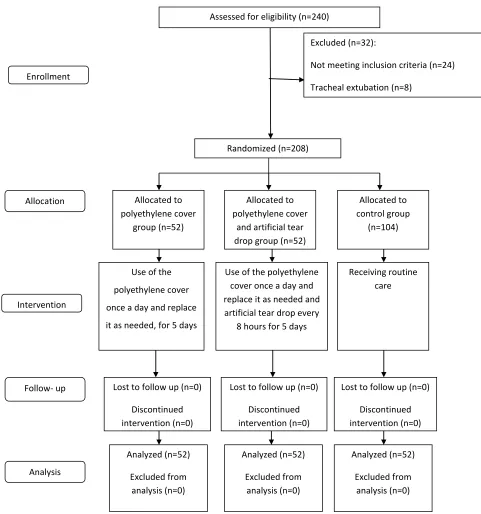
he/she had to be excluded from the study (Figure 1).

Data Analysis

Data were analyzed by the Statistical Package for the Social Sciences (SPSS V.18.0; SPSS Inc., Chicago, IL, USA) using descriptive (simple and relative frequency, mean, and standard deviation) and analytical statistics

(Kolmogorov–Smirnov test, independent t-test, Friedman

test, Fischer’s exact test and Mann–Whitney U-test). At

first, the normality of data was assessed using the

Kolmogorov–Smirnov test. Non-parametric tests were

used to analyze the data because all the variables except

age had an abnormal distribution. Independentt-test was

used to compare the mean age of the two groups. Friedman test was used to assess the dry eye status in each control and intervention eye during 5 days of the

study. Fischer’s exact test was used to compare the level

of eye dryness between the intervention and control eyes

in each of the study groups. Also, the Mann–Whitney

U-test was used to compare the eye dryness between the

intervention eyes in the two groups of “polyethylene

cover”and”polyethylene cover with artificial tear drop.”

The significance level was set at 0.05.

Ethical Considerations

This trial was conducted in accordance with the Declaration of Helsinki. The Ethics Committee of the University approved the study with the code: 1395.177.KUMS.REC. The study with code IRCT201506294736N8 was registered at the Clinical Trials Center of Iran. In the current study, all subjects were unconscious and intubated, so a written

informed consent was obtained from the first-degree

rela-tives of subjects (parents or their legal guardians) and they

were assured about the confidentiality of their personal data

and patient information.

Clinical Ophthalmology downloaded from https://www.dovepress.com/ by 118.70.13.36 on 20-Aug-2020

(4)

Results

Of the 104 subjects, 75 were men (72%) and 29 were female (28%). Their mean hospital stay in the ICU was 10 ± 3 days.

The mean age of the subjects in the groups of“polyethylene

cover”and“polyethylene cover with artificial tear drop”was

53 ± 20.5 and 51.3 ± 19.7 years, respectively. No statistically

significant difference was found between the two groups in

terms of demographic characteristics and confounder vari-ables, including type of disease, duration of hospitalization,

GCS score, use or non-use of anesthetic-sedative drugs, duration and amount of anesthetic-sedative drugs, and

amount of PIP and PEEP (Table 1).

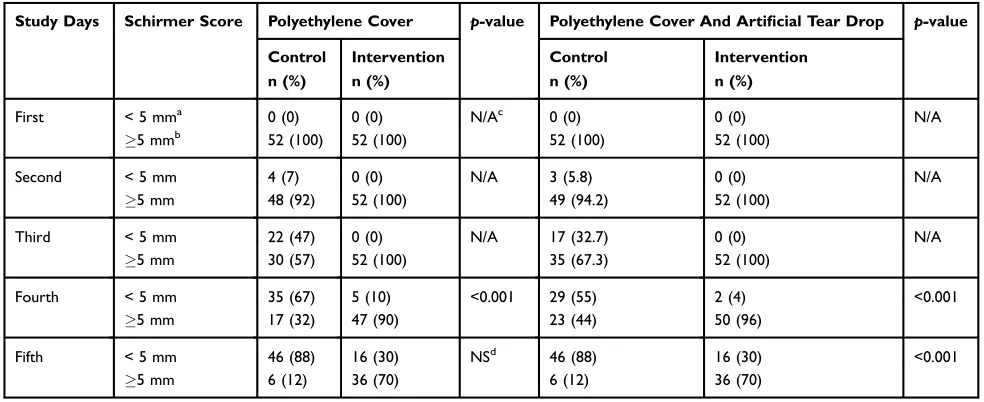
In the“polyethylene cover”group, the incidence of eye

dryness in the intervention eye was statistically different at

different days of the study (p< 0.001). In thefirst, second,

and third days, none of the subjects developed eye

dry-ness, but on the fourth day,five eyes (10%) and on thefifth

day, 16 eyes (30%) out of 52 eyes developed eye dryness.

Randomized (n=208)

Allocated to polyethylene cover

group (n=52)

Allocated to control group

(n=104)

Use of the

polyethylene cover

once a day and replace

it as needed, for 5 days

Use of the polyethylene cover once a day and replace it as needed and artificial tear drop every

8 hours for 5 days Assessed for eligibility (n=240)

Receiving routine care Excluded (n=32):

Not meeting inclusion criteria (n=24)

Tracheal extubation (n=8)

Lost to follow up (n=0)

Discontinued intervention (n=0) Intervention

Lost to follow up (n=0)

Discontinued intervention (n=0)

Analyzed (n=52)

Excluded from analysis (n=0)

Analyzed (n=52)

Excluded from analysis (n=0) Enrollment

Allocation

Follow- up

Analysis

Allocated to polyethylene cover

and artificial tear drop group (n=52)

Lost to follow up (n=0)

Discontinued intervention (n=0)

Analyzed (n=52)

Excluded from analysis (n=0)

Figure 1CONSORT diagram of study process.

Clinical Ophthalmology downloaded from https://www.dovepress.com/ by 118.70.13.36 on 20-Aug-2020

(5)

There was a significant difference between the control eyes in terms of dry eye incidence at different days of

the study (p < 0.001). The occurrence of dry eye in this

group was increasing, so that on thefirst day, none of the

subjects had dry eye and on the second, third, and fourth days of the study, 4 (7%), 22 (47%), and 35 (67%) eyes developed eye dryness, respectively. Most of the dry eye

cases were recorded on thefifth day of the study, on which

46 of 52 eyes (88%) developed eye dryness. On the fourth

day of the study, there was a statistically significant

dif-ference in the polyethylene cover group between the

inter-vention and control eyes (p< 0.001) in terms of dry eye

incidence, but on other days this difference was not

sig-nificant. In other words, on the fourth day of the study, the

use of polyethylene cover was more effective than “

con-ventional care”in preventing dry eye (Table 2).

In the group of“polyethylene cover with artificial tear

drop,” the incidence of eye dryness in the intervention

eyes was statistically different at different days of the

study (p < 0.001), so that on the first, second, and third

days, none of the subjects had dry eye, but on the fourth

day, two eyes (4%) and on thefifth day, 16 eyes (30%) out

of 52 eyes developed eye dryness. In the control eye

group, there was a statistically significant difference

between the incidence of dry eye at different days of the

study (p< 0.001). The occurrence of dry eye in this group

was increasing, so that on thefirst day, none of the

sam-ples had dry eye and on the second, third, and fourth days of the study, 3 (6%), 17 (33%), and 29 (55%) eyes were suffering from eye dryness. Most of the dry eye cases were

related to thefifth day of the study, on which 46 of 52 eyes

(88%) developed eye dryness.

Table 1Demographic Characteristics Of Participants In Each Of The Study Groups

Variables Polyethylene

Cover (n= 52)

Polyethylene Cover And Artificial Tear Drop (n= 52)

p-value

Age (mean ±SD) 53.01 ± 20 51 ± 19 NS*

Sex (male: female) 38:14 37:15 NS

Marital status (single: married) 39:13 34:18 NS

ICU length of stay (mean ±SD) 10 ± 3 9 ± 2 NS

Glasgow Coma Scale (mean ± SD) 5.2 ± 1 6 ± 1 NS

Days of sedation (mean ± SD) 0 ± 1 1 ± 1 NS

Use of sedation (% of subjects) 42 57 NS

PIP†(mean ± SD) 21.2 ± 4.82 22 ± 5.42 NS

PEEP‡(mean ± D) 5±1 5.4±0.81 NS

Notes:*

Non-significant.†Peak inspiratory pressure.‡Positive end expiratory pressure.

Table 2Comparison Of The Level Of Eye Dryness In The Intervention And Control Eyes In Each Group From The First To Fifth Day Of The Study

Study Days Schirmer Score Polyethylene Cover p-value Polyethylene Cover And Artificial Tear Drop p-value

Control n (%)

Intervention n (%)

Control n (%)

Intervention n (%)

First < 5 mma 0 (0) 0 (0) N/Ac 0 (0) 0 (0) N/A

5 mmb 52 (100) 52 (100) 52 (100) 52 (100)

Second < 5 mm 4 (7) 0 (0) N/A 3 (5.8) 0 (0) N/A

5 mm 48 (92) 52 (100) 49 (94.2) 52 (100)

Third < 5 mm 22 (47) 0 (0) N/A 17 (32.7) 0 (0) N/A

5 mm 30 (57) 52 (100) 35 (67.3) 52 (100)

Fourth < 5 mm 35 (67) 5 (10) <0.001 29 (55) 2 (4) <0.001

5 mm 17 (32) 47 (90) 23 (44) 50 (96)

Fifth < 5 mm 46 (88) 16 (30) NSd 46 (88) 16 (30) <0.001

5 mm 6 (12) 36 (70) 6 (12) 36 (70)

Notes:a

A value of less than 5 mm indicates eye dryness.b

A value of equal or more than 5 mm indicates absence of eye dryness.c

N/A: Not applicable.d

NS: Non-significant.

Clinical Ophthalmology downloaded from https://www.dovepress.com/ by 118.70.13.36 on 20-Aug-2020

(6)

In the “polyethylene cover with artificial tear drop”

group, there was a statistically significant difference in

the incidence of eye dryness between the intervention

and control eyes on the fourth and fifth days (p< 0.001).

On the fourth day, 55% of the samples in the control group and 4% of the subjects in the intervention group suffered

from dry eye. On thefifth day, the control eyes of 88% of

the subjects developed eye dryness, while in the interven-tion eyes, only 30% of the Schirmer tests was positive (Table 2).

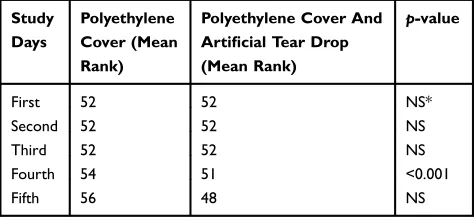
In thefirst, second, third, and fifth days of the study,

there was no statistically significant difference between the

two groups of “polyethylene cover” and “polyethylene

cover with artificial tear drop” in terms of eye dryness.

However, on the fourth day, this difference was

statisti-cally significant (p< 0.001) (Table 3).

Discussion

The aim of this study was to compare the effects of two

methods of“polyethylene cover”and“polyethylene cover

with artificial tear drop” on the prevention of dry eye in

critically ill patients. In our study, both methods of“

poly-ethylene cover” and “polyethylene cover with artificial

tear drop” were more effective in preventing eye dryness

than conventional methods. The method of“polyethylene

cover with artificial tear drop”was clinically more

effec-tive than the use of polyethylene cover alone. Several studies have been carried out on the effects of different eye care methods in the prevention of dry eye, but their results were contradictory. In this regard, one study com-pared the effects of two methods of polyethylene cover and carbomer drop on prevention of dry eye in patients admitted to ICU, and the results showed that polyethylene

cover was more effective than the other method.11 Our

results are in line with this study in indicating the

effec-tiveness of the “close chamber” method in reducing the

level of eye dryness. In another clinical trial, the effect of

“polyethylene cover”and“viscotears gel”on the

preven-tion of corneal injury in patients admitted to the ICU was compared and the results showed that both methods had

the same effect on the prevention of corneal injury.14 In

the above study, the effects of two methods of close chamber (polyethylene cover) and open moist chamber (viscotears gel) have been compared, but in our study, two methods of close chamber (polyethylene cover) and

open moist chamber (polyethylene cover with artificial

tear drop) have been compared together. The results of

our study showed that the“closed moist chamber”method

was more clinically effective than the “close chamber”

method. In another study, the effects of three methods of

artificial tear drop, moist chamber, and polyethylene cover

on prevention of corneal injury in patients admitted to the ICU were investigated. The results showed that polyethy-lene cover and moist chamber were more effective than

artificial tear drops and had similar effect on dry eye

prevention.16 Our results are in line with this study, as

both studies indicate that the use of a close chamber method is more effective than an open chamber method in preventing eye injuries. They both can help the eye surface to stay moist for longer periods of time.

In one study, the effects of two methods of moist chamber and vitamin A ophthalmic ointment on the pre-vention of dry eye and corneal abrasion in ICU patients were compared and the results indicated that vitamin A

ointment was more effective.15Our results contradict the

findings of this study. In this study, two methods of open

and close chamber have been compared, while in our study, two close chamber methods were compared together. In the above study, the open chamber method (ointment) was more effective than the close chamber method, but in our study, both close chamber methods were similarly effective in preventing the eye injuries. In another study, the effects of two methods of ophthalmic lubricants and hydrogel dressings on the prevention of keratopathy in patients admitted to the ICU were com-pared, and the results revealed similar effects of both

methods.17 In this study, the effects of two methods of

open chamber (ophthalmic lubricant) and close chamber (hydrogel dressing) were compared and the results showed similar effects of both methods, while in our study, two types of close chambers were compared and the results

indicated that “close moist chamber” method was

clini-cally more effective. In a clinical trial, the effects of four methods of eye care, including the use of adhesive tape,

Table 3Comparison Of Eye Dryness Between The Two Groups From The First To Fifth Day Of The Study

Study Days

Polyethylene Cover (Mean Rank)

Polyethylene Cover And Artificial Tear Drop (Mean Rank)

p-value

First 52 52 NS*

Second 52 52 NS

Third 52 52 NS

Fourth 54 51 <0.001

Fifth 56 48 NS

Note:*Non-significant.

Clinical Ophthalmology downloaded from https://www.dovepress.com/ by 118.70.13.36 on 20-Aug-2020

(7)

antibiotic ointment, artificial tear drop, and ophthalmic lubricant ointment on the prevention of eye injury in patients under general anesthetic were compared. The results showed similar effects of three methods of adhesive tape, antibiotic ointment, and ophthalmic lubricant in pre-venting eye and corneal injuries. This is why, in the

artificial tear drop group, eye injury was significantly

higher than the other three groups.18 In the above study,

all of the methods used for eye care were open chamber, but in our study two close chamber methods were used and compared. In our study, due to the simultaneous use of

artificial tear drop and polyethylene cover, the chance of

eye injury was significantly reduced. The reason for this

reduction could be due to the combined effects of artificial

tear drop and polyethylene cover in keeping the moisture in the eye. The polyethylene cover prevents exposure of the eye surface to the environment and acts as a protective barrier to help prevent tear evaporation from the surface of the eye, which helps maintain the stability of the lacrimal

film. In another study, the use of two methods of open

chamber (ophthalmic lubrication with adhesive tape) and close chamber (swimming glasses) in preventing corneal injury in patients under general or semi-anesthesia were compared. The results showed that the close chamber method was more effective than the open chamber

method.19 Our results are in line with this study. In the

above study, the close chamber method was more effective in preventing eye injury than the open chamber method. In

our study, the use of the close chamber methods “

poly-ethylene cover” and “polyethylene cover with artificial

tear drop” was more effective than the use of the open

chamber method in the control group. In another research, three methods of polyethylene cover, liposic ointment, and

artificial tear were compared for prevention of keratopathy.

One eye of each patient was considered as intervention group and the other as control. The results indicate that polyethylene is more effective in preventing keratopathy

than other methods.20 Consistent with this study, our

results also revealed that the closed chamber method is more effective in preventive eye injury than the open chamber method. In a single-blind clinical trial, the effect of normal saline on the incidence of keratopathy was

investigated. For this purpose, the patient’s eyes were

randomly assigned to one of the two control and interven-tion groups. The interveninterven-tion group received standard care plus normal saline, but the control group received only

standard care including simple eye ointment, artificial

tears, and eye patching. The results showed that routine

care is more effective than routine and normal saline in

preventing eye surface damage.21 In the above-mentioned

study, two open chamber methods were compared, but in the present study, the effect of two closed chamber meth-ods was compared with the open chamber method in the prevention of ocular surface damage, in which the close chamber method was more effective. According to the results of the aforementioned studies as well as our study, it can be argued that in ICU patients whose immune mechanisms are impaired, the use of a close chamber

combined with ophthalmic lubricants can play a significant

role in preventing eye dryness and injuries by creating a moist chamber.

We encountered several limitations in our study. The

duration of study was only five days for each subject,

which given the facilities that we had, did not allow an extended period of intervention. In our study, there was no age limit for the entry of subjects to the study, which had a potential to affect our results due to differences in the physical conditions of subjects at different ages. Because most of the subjects in our study had head trauma and intracranial hemorrhage, and had undergone brain sur-geries, they had to be monitored and examined regularly

for pupil reflexes, and this interfered with the use of the

polyethylene cover as it had to be removed during the ocular examination. After the examination the cover was replaced. Another limitation of our study was the changes in dosage of anesthetic-sedative drugs, which reduced the

duration of mechanical ventilation use and the patient’s

stay in ICU. If this happened before the end of the study, the subject was excluded from the study and was replaced by a new subject. In the present study, the role of medica-tions on dry eye was not investigated, although the effect of this factor can be moderately controlled due to the random allocation of subjects to study groups. Also, it is

notable we compared the efficacy of three methods;

there-fore, we tried to reveal the best way for preventing dry eye disease among the mentioned approaches.

Conclusion

Both methods of“polyethylene covering”and “

polyethy-lene covering with artificial tear drop”were more effective

than the conventional method (washing the inside of the eye and the eyelids with distilled water and then drying

with sterile gauze), but the method of“polyethylene cover

with artificial tear drop” was clinically more effective.

Therefore, the use of the combined method of“

polyethy-lene cover with artificial tear drop” is recommended for

Clinical Ophthalmology downloaded from https://www.dovepress.com/ by 118.70.13.36 on 20-Aug-2020

(8)

eye care in critically ill patients. The present study was conducted on subjects under mechanical ventilation, who mostly had traumatic and non-traumatic brain damage, thus similar studies are recommended in other patients. Our study was without age limits, so similar studies are

recommended to be conducted on subjects with a specific

and limited age range. The duration of our study wasfive

days; therefore, similar studies with a longer intervention period are recommended.

Availability Of Data And Materials

Data and material are available by contacting the corre-sponding author. Data can be shared for up to one year after the article is published. In order to access the raw data, it is necessary to obtain the permission of the University Research Vice-Chancellor.

Disclosure

The authors report no conflicts of interest in this work.

References

1. Marshall AP, Elliott R, Rolls K, et al. Eyecare in the critically ill: clinical practice guideline. Aust Crit Care. 2008;21(2):97–109. doi:10.1016/j.aucc.2007.10.002

2. Dawson D. Development of a new eye care guideline for critically ill patients.Intensive Crit Care Nurs.2005;21(2):119–122. doi:10.1016/j. iccn.2005.01.004

3. Ramirez F, Ibarra S, Varon J, Tang R. The neglected eye: ophthalmo-logical issue in the intensive care unite. Crit Care Shock. 2008;11 (3):73.

4. Sy A, O’Brien KS, Liu MP, et al. Expert opinion in the management of aqueous Deficient Dry Eye Disease (DED). BMC Ophthalmol. 2015;15(1):133. doi:10.1186/s12886-015-0122-z

5. McHugh J, Alexander P, Kalhoro A, et al. Screening for ocular surface disease in the intensive care unit.Eye.2008;22(12):1465. doi:10.1038/ sj.eye.6702930

6. Craig JP, Nichols KK, Akpek EK, et al. TFOS DEWS II definition and classification report.Ocular Surf.2017;15(3):276–283. doi:10.1016/j. jtos.2017.05.008

7. Lenart SB, Garrity JA. Eye care for patients receiving neuromuscular blocking agents or propofol during mechanical ventilation.Am J Crit Care.2000;9(3):188.

8. Cortese D, Capp L, McKinley S. Moisture chamber versus lubrica-tion for the prevenlubrica-tion of corneal epithelial breakdown.Am J Crit Care.1995;4(6):425–428.

9. Koroloff N, Boots R, Lipman J, Thomas P, Rickard C, Coyer F. Randomised controlled study of the efficacy of hypromellose and lacri-lube combination versus polyethylene/cling wrap to prevent corneal epithelial breakdown in the semiconscious intensive care patient. Intensive Care Med. 2004;30(6):1122–1123. doi:10.1007/ s00134-004-2203-y

10. So HM, Lee CCH, Yan WW, et al. Comparing the effectiveness of polyethylene covers (Gladwrap) with lanolin (Duratears) eye oint-ment to prevent corneal abrasions in critically ill patients: a rando-mized controlled study.Int J Nurs Stud.2008;45:1566.

11. Kocaçal Güler E, Eşerİ, Eğrilmez S. Effectiveness of polyethylene covers versus carbomer drops (Viscotears®) to prevent dry eye syndrome in the critically ill. J Clin Nurs. 2011;20(13-14):1916– 1922. doi:10.1111/j.1365-2702.2010.03559.x

12. Sorce LR, Hamilton SM, Gauvreau K, et al. Preventing corneal abrasions in critically ill children receiving neuromuscular blockade: a randomized, controlled trial. Pediatr Crit Care Med. 2009;10 (2):171–175. doi:10.1097/PCC.0b013e3181956ccf

13. Zhou Y, Liu J, Cui Y, et al. Moisture chamber versus lubrication for corneal protection in critically ill patients: a meta-analysis.Cornea. 2014;33(11):1179–1185. doi:10.1097/ICO.0000000000000224 14. Kousha O, Kousha Z, Paddle J. Exposure keratopathy: incidence, risk

factors and impact of protocolised care on exposure keratopathy in critically ill adults. J Crit Care. 2018;44:413–418. doi:10.1016/j. jcrc.2017.11.031

15. Babamohamadi H, Nobahar M, Razi J, et al. Comparing vitamin A and moist chamber in preventing ocular surface disorders.Clin Nurs Res.2018;27(6):714–729. doi:10.1177/1054773817695618 16. Shan H, Min D. Prevention of exposure keratopathy in intensive care

unit.Int J Ophthalmol Clin Res.2010;3(4):346.

17. Ezra DG, Chan MPY, Solebo L, et al. Randomised trial comparing ocular lubricants and polyacrylamide hydrogel dressings in the pre-vention of exposure keratopathy in the critically ill.Intensive Care Med.2009;35(3):455. doi:10.1007/s00134-008-1284-4

18. Kocatürk Ö, Kocatürk T, Kaan N, Dayanır V. The comparison of four different methods of perioperative eye protection under general anesthesia in prone position. J Clin Anal Med.2012;3(2):163–165. doi:10.4328/JCAM.607

19. Sivasankar S, Jasper S, Simon S, et al. Eye care in ICU.Indian J Crit Care Med.2006;10(1):11–14. doi:10.4103/0972-5229.24683 20. Kalhori RP, Ehsani S, Daneshgar F, Ashtarian H, Rezaei M. Different

nursing care methods for prevention of keratopathy among intensive care unit patients.Global J Health Sci.2016;8(7):212. doi:10.5539/ gjhs.v8n7p212

21. Davoodabady Z, Rezaei K, Rezaei R. The impact of normal saline on the incidence of exposure keratopathy in patients hospitalized in intensive care units. Iran J Nurs Midwifery Res. 2018;23(1):57. doi:10.4103/ijnmr.IJNMR_187_16

Clinical Ophthalmology

Dovepress

Publish your work in this journal

Clinical Ophthalmology is an international, peer-reviewed journal cover-ing all subspecialties within ophthalmology. Key topics include: Optometry; Visual science; Pharmacology and drug therapy in eye dis-eases; Basic Sciences; Primary and Secondary eye care; Patient Safety and Quality of Care Improvements. This journal is indexed on PubMed

Central and CAS, and is the official journal of The Society of Clinical Ophthalmology (SCO). The manuscript management system is completely online and includes a very quick and fair peer-review system, which is all easy to use. Visit http://www.dovepress.com/ testimonials.php to read real quotes from published authors.

Submit your manuscript here:https://www.dovepress.com/clinical-ophthalmology-journal

Clinical Ophthalmology downloaded from https://www.dovepress.com/ by 118.70.13.36 on 20-Aug-2020

Figure

Figure 1 CONSORT diagram of study process.
Table 1 Demographic Characteristics Of Participants In Each Of The Study Groups
Table 3 Comparison Of Eye Dryness Between The Two GroupsFrom The First To Fifth Day Of The Study

References

Related documents

Abstract—Source Anonymous Message authentication (SAMA) is one of the most effective ways to prevent unauthorized and corrupted messages from being forwarded in

Of the animals vaccinated 21 days before natural infection by contact as the challenge, 2 out of 5 animals (pigs 51 and 55) were protected, with no detectable clinical signs and

However, the chosen dissection tool sig- nificantly affects the depth of this coagulation necrosis with UC generating a greater necrotic margin than ME when used for soft

The aim of the study was to assess the presence of pathogenic microbes on treatment tables in one outpatient teaching clinic and determine a simple behavioral model for

(a) Optical beam propagating in the ZnTe slab with no THz signal, (b) the blue shift corresponds to the case in which the input time delay is 0.3914 ps, (c) the red shift corresponds

The private sector involvement (PSI) in the attempt to solve the Greek debt crisis and the eventual haircut of private investors by 53.5 % intensified concerns that investors

The theoretical basis for determining the principles and methods of the historical development of the spatial-temporal composition of urban planning is basic research

Setting the rainfall duration equal to each of the four alternative values of t c , we estimated the critical rain- fall intensity using the ombrian curve of the