A Study Of The Effectiveness Of Using Language
Games In Teaching Vocabulary‖ In Secondary
School
Ranmeet Kaur
Abstract: Teaching students to understand vocabulary in the English language is important, and yet challenging. Students are not eager to learn vocabulary due to its complexity and would perceive that vocabulary lessons as dull and unexciting. With the purpose of injecting the element of play and learning in a vocabulary classroom, this study investigated the effectiveness of using language games in teaching vocabulary in a secondary school in Shah Alam, Selangor, Malaysia. Language games were chosen as they could expose students to a more fun and interactive way of learning vocabulary as element of fun in a learning environment would be appealing to students regardless of their varying learning styles and language proficiency. This study was conducted in a government secondary school in Shah Alam, Malaysia involving 33 Form 1 ESL students from a mixed-proficiency class where data was collected quantitatively using Pre-test and Post-test questions and open ended and close ended questionnaires. Results from the pre and post-tests significantly showed that language games in English language lessons, specifically focusing on vocabulary acquisition, helped to increase the students‘ motivation to learn vocabulary while improving their ability to memorize the new words learned. The study‘s findings highlighted that use of language games was effective during lessons as the games attracted them to the learning process and simultaneously heightened their interest to learn the language.
————————————————————
1.0
INTRODUCTION
This is a research about ―The Effectiveness of Using Language Games in Teaching Vocabulary‖ in secondary school. Vocabulary is a term where students are losing the meaning and the students feel bored in learning it. Vocabulary is all about words and stands for, the words in a language or a special set of words you are trying to learn. Another meaning for vocabulary that can be understand is that it‘s a sum or stock of words employed by a language, group, individual, or work or in a field of knowledge where the teachers could apply the learning process with the implementation of language games. Whereby, the combination of using vocabulary and language games had been very important in tool for students as they need something new in their learning and been a tool for a teacher as can help the teacher for the teaching process. Teachers could use language games to teach the students as it could attract the students and their understandings more detail, as there are some students which prefer in different learning style. Because different student have different level of understanding and learning styles. We need to really focus on the students understanding and how they going to learn the syllabus with the help of the teachers, and other type of materials that will be used to teach them in classroom as students need to be taught using varieties type of materials and they need to have fun while learning the topics as not all the students will like English. The effectiveness of using language games to teach Vocabulary, it could attract the students through entertainment and nowadays students they like to play games as most of the time they spend on gadgets. It aims at highlighting an examination of the effective vocabulary improvement. Therefore, language games may be an entertaining technique that helps learners to be acquainted with new words, consolidating lexical items and memorizing them. The importance of vocabulary in English language imposes greater urgency to the need of more effective means by which language proficiency can be enhanced.
Vocabulary in school, but they are not really focusing as the students are not really have any type of interesting learning it. As for them learning English already tiring and they need to learn vocabulary as an addition topic for it.
1.1 Background of the study
Vocabulary is a term where everyone thinks that it‘s difficult to learn and it‘s something new that we had never learnt before, but the fact is that vocabulary is always been there but it‘s just we never really focus for it, we just discourage the learning style. The real issue is that, we had ignored in language pedagogy, even during the heyday of the development of the Communicative Language Teaching (CLT). For example, Wilkins (1972; 1974), as an early representative advocate of the Communicative Approach, clearly indicated that learning vocabulary is as important as learning grammar. He believes that near native speaking levels can be distinguished by whether learners can use, say, collocations well. Without such ability, even if there are no grammatical mistakes, users cannot be categorised as native speakers. As for language games, certain times teachers don‘t really teach students using language games as it will take a lot of time and it will be difficult for them to handle a big group of students. But it shouldn‘t be the disadvantage of teaching the students, teachers should use language games to teach students and to prevent the students will participate and enjoy the learning process. As for earlier it was easy to handle students and they focus more to learning then playing games, but as now technology had taken over by the traditional style where earlier teachers just teach using textbooks or using whiteboard. But now in current generation students are more to games and technology, so teachers should implement the teaching style in the learning style. By using the games in the classroom the teacher is giving their students a bigger role, and they is stepping out of the frontline which is a positive thing because it allows students to take on more responsibility. Also that allows students to do more on their own, and that can very well result in an increase in their confidence level. (Langran & Purcell.1994. p.12-14).
1.2 Statement of problem
Students are not attract to the learning process of the teachers, they feel bored when the teacher use the same method, style and didn‘t apply any type of games towards the classroom teaching. Teachers should be aware of the techniques they use to help their students learning process as it will affect their learning. If let said teachers use only traditional way, the students won‘t give their full involvement and cooperation towards the learning process. This could lead to an extended level where the students won‘t give their full time learning process. They will be playing in the classroom and won‘t be fully concerned with what the teachers are teaching. Second problem that can be defined or can be view is that in Malaysia students vocabulary level is very low, they are not really focusing for the vocabulary part. They are using traditional level to teach the students whereby the students are more to technology and more to entertainments. They don‘t really prefer to just do rehearsal, writing words on papers or learning passively through teacher‘s explanations, and this has created severe problems with learning skills. Students prefer to learn
language in a relaxed environment such as vocabulary games, as it could be fun and be effectiveness towards the learning process. And there are still teachers which don‘t really focus on vocabulary as they need to teach their other syllabus and it takes some time to explain to the students. The third or not least the problem that been faced, students are not really confidence when they are speaking or delivering something. When teacher gives any task to the students they will be able to do so and could present in front of the classroom. There are some students which feel nervous when presenting something in front of their classmates, they don‘t have the confidence that they could present it well. Therefore, games can encourage students discovering and voluntary involvement to the learning process, it can also establish a better bonding between teacher and students. Besides that, a good designed language games can create a real communication context in the classroom which can help learners to improve their speaking ability when they are presenting a role model, or in terms of acting based on the task been given. There are plenty of language games that involve all the skills that a particular students should know. Students should acquire all the four skills as reading, writing, listening and speaking.
1.3 Purpose of the study
The purpose of the study is to: Identify the ‗Effectiveness of Using Language Games in Teaching Vocabulary‘.
1.4 Objectives of the study
To ensure the research move smoothly, we need to ensure that we had our own objective that we need to follow and fix so that the research been conducted goes well. The main objective that can be followed for this research are mainly:
I. To identify how effectiveness is the language games towards the students understanding for secondary school. II. To identify the effectiveness of teaching
the Vocabulary with the combination of language games.
III. To identify the techniques in teaching vocabulary using language games. IV. To identify how students could attract
towards the learning of the vocabulary through language games.
V. To enhance students abilities to learn new words and apply it.
1.5 Research Questions
The style of questions that I had choose to be used during my research is unstructured. This is because I need their opinion and some points for my questions. Examples of questions that I wold like to ask towards the teachers and students will be:
a) Did language games improved your vocabulary level? YES or NO
b) Which type of language games that you feel interesting?
c) Do you feel teachers should use language games to teach in classroom?
d) Does the use of language games have positive effects on learning vocabulary?
1.6 Research Hypothesis
In a research, hypothesis is a stage where it‘s suggest an explanation of a phenomenon where a null hypothesis is a hypothesis which a researcher tries to disprove. Normally, the null hypothesis represents the current view the researcher wants to challenge based on the topic they had chosen. The meaning of hypothesis comes closer, and to find an answer to a specific problem. The research hypothesis is often based on observations that evoke suspicion that the null hypothesis is not always correct. Therefore, we can‘t assume the result before we start our research, we need to conduct a research to get an answer. Therefore, the students can have difference in the learning process of the vocabulary using the language games. It depends sometimes there will be no difference or there could be difference after the learning process in a way where they learn vocabulary using language games. It‘s all depends on the student achievement after they been taught and how the teacher had deliver the knowledge using games to interact and makes the classroom more happening. They will have strategies to teach the students and based on this the students achievement will be either increase or decrease. Therefore, students and teachers role it‘s important as not only the students‘ achievement been included but how the teacher had done her part in the learning process.
1.7 Scope of the study
The focus of the study will be form 1 33 ESL students, the students will be from SMK Seksyen 19, and it‘s basically in Malaysia learning contexts. The students will be from all level of proficiency level, they will be mix as it‘s not easy to get just one level of proficiency level in a particular class. So the proficiency level can be mix and not focusing for one particular level or a particular class which is based on one particular proficiency level. To proposed the study on The Effectiveness of Using Language Games in Teaching Vocabulary. Students will be taught using simple language games and games that based on their proficiency level. Students are expose to the new learning style in a way to improve their knowledge on vocabulary so that they can improve their skills and apply it in their daily life. When they are learning something new but in games term they are excited and they will cooperate in the lesson and give their full involvement so that their group members can win. Students love when there is a competition, and they will really focus so that they can win and they will be expose to the words that they are going too learnt or they had learnt. The limitation that happened during the research been carried out was, the numbers of students was increased then what been expected. As not all the classes have the same number of students, different class have different number of students. Although the amount of the students was beyond expectation, but the problems that occurred was the participation of the students in classroom. As not all the lesson they will be participating as they had other programme to attend. And the whole thing will be about the effectiveness of using language games in the learning of vocabulary in primary school students.
1.8 Limitations of the study
The limitation that been occurred is that, ‗limitation of time‘ because we will be lacking of time while conducting my
research. As we only will be in a school for less than 4months so it‘s difficult to gain more information about the students‘ achievement. We need more time to conduct our research as it‘s not easy to get information of 33 students where we only will be spending time with them very less or just an hour in a day. We need more time to be with the students to ensure they really get the right information and the knowledge that we will be giving them. And there will be some students won‘t be able to attend classes as they will be having events or programmes at school which required them to not attend classes almost a week or more than that. The second limitation will be the cross time with the students, as we are not familiar to the students achievement or how their teacher had been teaching them before we had started our teaching. We at least need to be with them for more than 4months to get the right information about the students. Because when we don‘t have knowledge about the students background and proficiency level, we won‘t be able to get the right source and how to develop their skills as it‘s not easy to gain more information just in 4 months as there will be some students which will be absent for most of the classes. We need to focus on them too. And we can get the right information if we are teaching them for a long period. It‘s will be difficult for us to gain more information about them, they will be new for us and we will be new to them we can‘t just jump in a conclusion where we will be expecting they will be advance students and teaching them based on our own way. We need to really know the students well if let said we can gained something better and the students gain more knowledge about what we going to teach them. The last and not least, the limitation that occurred during the progress of the research was, the usage of technology. As in this current era technology had taken over the traditional style of learning. It‘s important to be with the new era whereby it will enhance the students‘ ability and improve the student learning style. Where there is a technology teacher can be using variety of terms games to teach the students, if let said teacher just focus the teaching style using traditional game it won‘t be that fun and the students will feel more lazy to join the learning. Students prefer to be in modern era and that‘s doesn‘t mean that we shouldn‘t implement the traditional way. We should use both but we shouldn‘t use the same game to teach the students again and again because students will feel bored very fast.
1.9 Significance of the study
Vocabulary it‘s important to learn in classroom as the students will able to improve their speaking or communication skills. Teachers should know what type of methods that ca be used to teach the students because if choose a wrong method to teach it will be difficult to teach the students as there will be sequence in teaching process, The importance of teaching vocabulary using language games are very important as it‘s could develop the students learning styles. Methods are occasionally used to teach and learn vocabulary as they are only used for a limited time. But as games, it can help the teachers to create contexts in which the language is useful and meaningful.
1.10 Conclusion
research as the topic that been chosen will be unknown for certain field people so they need information about the topic in detail, what were the history about the topic so that will be easier for the people to read and have knowledge and example about the topics. Readers could have information about the problems that been faced about the topic and been included about the other researcher that been giving information about same topic, besides that it could be conclude about the purpose of the topic because it‘s important to know the importance about the topic. Therefore if there is purpose of a research objective should be included to ensure the aim of the study. It is important to give examples of the questions that going to be asked so that will be easier for the readers to read and have knowledge about what going to be asked. Therefore, once done with the questions it is necessary to know about the hypothesis because it‘s the part where will be listed after been listed with the questions that been created for the teachers and students. Here the hypothesis can be explained in the terms of either there will be difference in the learning of vocabulary or there will be no difference in the learning process of vocabulary using language games. Besides that, scope and limitation play a role where we going to conduct the research what will be the possible limitation that can be detected when conducting the research and what all this research about. In this category, scope and limitation can be listed as one as it tells about the same thing but each stage gives more information. Lastly will be the significant, as it gives information about the importance of choosing this topic, why we need to conduct the research and what can be detected. Once done with this all stages it‘s important to conclude what been gained and what will be the next step after done with one chapter.
CHAPTER 2 LITERATURE REVIEW
2.0 Introduction
Literature review is all about how other researchers had done their research about a particular topic where it can be used as reference to get an idea on how to do a literature review as without someone supporting a research it considers as fail. Besides that it can be used as guidelines for new learners to start their research and if there are no any reference then it could be difficult for new learning student to start their studies. Besides that, literature review is one of the most important steps to start a research. The main purpose of literature review is to convey to the readers done and the knowledge with the ideas that have been there as reference for readers to know what they are going to get information and been supported by other researchers that done their point of view based on the same topic. If let said want the research process to be successful then it‘s important to have general knowledge and need to read about other articles to gain more information about a particular topic. Besides that, literature review is not all about the reading the great literally texts of the world without understanding the meaning and what the researchers trying to deliver in their research. But literature review refers to any type of collection of materials on a topic that been chosen, literature can be anything from a set of articles that have all the elements that can be used and read by the readers. Therefore, when writing a review, it
doesn‘t mean that readers want you to write or express your opinion it could be from other resources too. In a research paper, the usage of the literature as a foundation of the support for a new insight that been contribute. Literature review can be just a summary of the sources that been read. If let said a reader or a researcher have limited time to read articles then, a literature review can help them in terms of having the overview or act as a stepping stone. Literature review not only about one person but others too, multiple people idea been thoughts. In addition, a literature review can be a step to the introduction of the research paper as it is an introduction about a topic that going to be listed in the literature review. It could be the stage of the paper project, and supervisor could access with the literature review whereby the students could follow the right path.
2.1 iOPERATIONAL DEFINITIONS
2.1.1
Vocabulary
- Basically vocabulary can be defined as the words of a language, including single items and phrases or chunks of several words which covey a particular meaning, the way individual words do. Vocabulary addresses single lexical items—words with specific meanings but it also includes lexical phrases or chunks.
2.1.2 Language games
- The term language game refers to a fairly widespread language play phenomenon in which phonological forms of words are systematically altered so as to disguise what they are. Other terms that are sometimes used instead of language games are secret languages, disguised speech, play-languages, and ludlings. The most well-known language game in the English-speaking world is Pig Latin.
2.1.3 ESL
- English as second language or can be listed as ESL, it‘s a traditional term for the use or the study of the English language by the non-native speakers in an English speaking environment. 2.1.4 Communicative Language Teaching (CLT)
- The communicative approach, is an approach to language teaching that emphasizes interaction as both the means and the ultimate goal of study.
2.2 THEORETICAL FRAMEWORK
Vocabulary
To ensure the students understand very well and the research is successful there are few steps that need to follow to ensure the students and the teacher gain something from the research. Based on the diagram above. Each stage need to identify and use it to ensure all the elements had been applied.
2.3 PREVIOUS STUDIES
Learning through language games could actually enhance the students‘ ability to learn the vocabulary, as the students need to develop the learning skills in a way where they could enjoy the learning process. One of the most important issues in second language teaching and learning is vocabulary learning and perhaps one of the most difficult aspects of learning a second language is the retention of learned vocabularies (Holden, 1999). According to Hatch and Brown (1995), there are numerous types of approaches, techniques, exercises and practice that can be used to teach vocabulary, but teachers should decide what types would be best for their students and their circumstances. In this regard, Rivers (1981) mentioned: ―as language teachers, we must arouse interest in words a certain excitement in personal development in this area, we can help our students by giving them ideas on how to learn vocabulary and some guide on what to learn‖ (p. 463). Therefore, vocabulary teaching and learning were ignored, to a great extent, in certain methods of language teaching for some decades, there is now a widespread agreement upon the need for language learners to improve their knowledge of vocabulary (Coady and Huckin, 1997). Besides that, word memorization is important in language learning, and memorization is helped when words are recycled regularly. Vocabulary development is a continuous process, where learners meet the words many times in their learning to increase and deepen their knowledge and their use of words in the foreign language (Cameron, 2001). According to Riahipour and Saba (2012) they had disagree that traditional activities such as memorization of long vocabulary lists, derivations, repetition of words, translation, fill-in-the-blank exercises are boring for students. Scrivener (as cited in Riahipour & Saba 2012, p.1259) states that
using long list of words and their translation items make no guarantee that remembering will take place. By using vocabulary games, learning process is going to be more valuable, this method can make vocabulary learning more enjoyable, so it can help students to retain target words more quickly. In addition to memory and performance benefits, games and interactive learning methods have important social benefits for students. These activities allow
Oral
Listening
Reading
Receptive
Speaking
Writing
Productive
students to practice using the vocabulary of the discipline, which social constructivists purport to be central to learning (Kelly & Green, 1998; Vygotsky, 1962). It also provides positive reinforcement for working with others to accomplish the goal of the activity.
2.3.1 The importance of learning vocabulary
Vocabulary knowledge is often viewed as a critical tool for second language learners because a limited vocabulary in a second language impedes successful communication. It‘s very important to have communication, as when you communicate with others the communication will be seen by everyone. For instance, when two people are having communication it‘s important to look at the usage of words that been used, the correctness of using vocabulary while having communication. Vocabulary plays a big role for each aspect of a person daily life. Underscoring the importance of vocabulary acquisition, Schmitt (2000) emphasizes that ―lexical knowledge is central to communicative competence and to the acquisition of a second language‖ p. 55) Nation (2001) further describes the relationship between vocabulary knowledge and language use as complementary: knowledge of vocabulary enables language use and, conversely, language use leads to an increase in vocabulary knowledge. The importance of vocabulary is been used daily in and out the school. In classroom, the achieving students possess the most sufficient vocabulary, either the students are using more or less the words and the vocabulary. In English as a second language (ESL) and English as a foreign language (EFL) learning vocabulary items plays a vital role in all language skills (i.e. listening, speaking, reading, and writing (Nation,2011).Rivers and Nunan (1991), furthermore, argue that the acquisition of an adequate vocabulary is essential for successful second language use because without an extensive vocabulary, we will be unable to use the structures and functions we may have learned for comprehensible communication. The main 4 skills will be interpreted into vocabulary because for each skills we can teach and develop the students potential in vocabulary. How they going to used it in terms where they don‘t just use it but understand the sequence that will happen during having conversation with others. Research has shown that second language readers rely heavily on vocabulary knowledge and the lack of that knowledge is the main and the largest obstacle for L2 readers to overcome (Huckin,1995). In production, when we have a meaning or concept that we wish to express, we need to have a store of words from which we can select to express this meaning or concept. ‗‗When students travel, they don‘t carry grammar books, they carry dictionaries‘‘ (Krashen, as cited in Lewis, 1993, p25Many researchers argue that vocabulary is one of the most important-if not the most important- components in learning a foreign language, and foreign language curricula must reflect this. Wilkins (1972) states that: ‗‗There is not much value in being able to produce grammatical sentences if one has not got the vocabulary that is needed to convey what one wishes to say … While without grammar very little can be conveyed, without vocabulary nothing can be conveyed‘‘ p97).
2.3.2 Teaching vocabulary
There is few researchers indicates it difficult to teach vocabulary to students and can cause problems during the learning process, this is because teachers might not be confident about the best practice that they can use or should use to teach the students. Sometimes there will be time where the teachers indicates that, they are not sure where to start from the instructional emphasis on word learning. Teaching new words basically is learning a language as languages are based on words. It‘s not easy to learn a language without learning the words that can attract the conversation between two or more people. Nevertheless, most teachers and students thinks that acquisition of the vocabulary is a central factor in teaching a language (Walters, 2004). Teaching vocabulary is one of the most discussed parts of teaching English as a second language or foreign language. During the teaching and learning process takes place, problems might appear to the teachers because they have difficulties in teaching students in a way to get a better feedback from the students. The achievement should be shown in each particular class been taught. There are many techniques that a teacher can find out and try to teach the students. In addition, the teachers can figure out on how to get a result which not only satisfy the teachers but towards the student‘s achievement too. Despite this, teachers can try several of methods to teach the students vocabulary where they will participate and achieve the goals. Because when the materials that been used is interesting and challenging for the students they will participate and try to get the correct answer of it. In other words, the students will feel happy and excited to learn new vocabulary in classroom. Despite this, teachers should know that the students are learning something new although it‘s been there for some time it‘s just that the teaching way wasn‘t really implemented in teaching vocabulary in a classroom. It‘s something new whereby before this they mostly learns the 4 skills and grammar, but now they need to learn vocabulary to increase their knowledge on using new words.
2.3.3 Kinds of Vocabulary
Some experts had divided vocabulary into two types: active and passive vocabulary. Harmer (1991) distinguishes between these two types of vocabulary. The first type of vocabulary refers to the one that the students have been taught and that they are expected to be able to use. Meanwhile, the second one refers to the words which the students will recognize when they meet them, but which they will probably not be able to pronounce. Haycraft, quoted by Hatch and Brown (1995), indicate two kinds of vocabulary, namely receptive vocabulary and productive vocabulary.
a. Receptive Vocabulary
Receptive vocabulary is words that learners recognize and understand when they are used in context, but which they cannot produce. It is vocabulary that learners recognize when they see or meet in reading text but do not use it in speaking and writing (Stuart Webb, 2009).
b. Productive Vocabulary
needed for receptive vocabulary plus the ability to speak or write at the appropriate time. Therefore, productive vocabulary can be addressed as an active process, because the learners can produce the words to express their thoughts to others (Stuart Webb, 2005).
I. Vocabulary Mastery
In order to understand the language, vocabulary is crucial to be mastered by the learner. Vocabulary mastery is needed to express our ideas and to be able to understand other people's sayings. According to Webster (1992) mastery refers to (1) a. the authority of a master: dominion, b. the upper hand in a contest or competition; superiority, ascendancy and (2) a. possession or display or great skill or technique, b. skill or knowledge that makes one master of a subject comment. While Hornby (1995) defines mastery as complete knowledge or complete skill. From that definition, mastery means complete knowledge or great skill that makes someone a master in a certain subject.
2.3.4 The Techniques in Teaching Vocabulary
This parts explains the techniques used by a teacher of teaching English in delivering the meaning and form of vocabulary that we can implement it. There are several techniques that can be determined the teaching of vocabulary, but there are few things to remember that if a teacher wants to present a new vocabulary or lexical words to the students, it‘s shows that the teacher not only want the students to learn, use it when they should use it but remember the new words for their future. They need to practice, learnt and revised to prevent students from forgetting the techniques that been taught by the teachers to the students. The techniques that teachers can be used to teach students are:
a. Using Objects
Using this technique includes the use of realia, visual aids, and demonstration. They can function to help learners in remembering vocabulary better, because our memory for objects and pictures is very reliable and visual techniques can act as cues for remembering words (Takač, 2008). In addition, Gairns&Redman(1986) statethat real objects technique is appropriately employed for beginners or young learners and when presenting concrete vocabulary. Objects can be used to show meanings when the vocabulary consist of concrete nouns. Introducing a new word by showing the real object often helps learners to memorize the word through visualization. Objects in the classroom or things brought to the classroom can be used.
b. Drawing
Objects can either be drawn on the blackboard or drawn on flash cards. The latter can be used again and again in different contexts if they are made with cards and covered in plastic. They can help young learners easily understand and realize the main points that they have learned in the classroom.
c. Using Illustrations and Pictures
Pictures connect students‘ prior knowledge to a new story, and in the process, help them learn new words. There are plenty of vocabularies that can be introduced by using illustrations or pictures. They are excellent means of
making the meaning of unknown words clear. They should be used as often as possible. The list of pictures includes: posters, flashcards, wall charts, magazine pictures, board drawings, stick figures and photographs. Pictures for vocabulary teaching come from many sources. Apart from those drawn by the teacher or students, they are sets of colourful pictures intended for schools. Pictures cut out of newspapers and magazines are very useful as well. Nowadays many readers, vocabulary books and course books contain a vast number of attractive pictures that present the meaning of basic words. The teacher can use learning materials provided by the school. They can also make their own visual aids or used pictures from magazines. Visual support helps learners understand the meaning and helps to make the word more memorable.
d. Contrast
Some words are easily explained to learners by contrasting it with it‘s opposite, for instance, the word" good" contrasted with the word "bad". But some words are not. It is almost impossible to contrast the words whose opposite is the gradable one. When the word "white" is contrasted with the word "black", there is an "in between" word‖ grey‖. Furthermore, verb "contrast" means to show a difference, like photos that reveal how much weight someone lost by contrasting the "before" and "after" shots Many more studies have also shown that vocabulary is best acquired if it is similar to what is already learnt (e.g. Rudska et al., 1982, 1985), it is not surprising that learning synonyms is a way to expand our vocabulary. Learning about synonyms is important also because this is how dictionaries are organised. Putting bilingual dictionaries aside, mono-lingual dictionaries essentially use words to explain words, and in this process, synonyms are often used (Ilson, 1991).
e. Enumeration
An enumeration is a collection of items that is a complete, ordered listing of all of the items in that collection. It can be used to present meaning. In other words, this technique helps when any word is difficult to explain visually. We can say "clothes" and explain this by enumerating or listing various items. Teacher may list a number of clothes e.g. address, a skirt, trousers, and then the meaning of the word "clothes" will became clear. The same is true of ‗vegetable‘ or ―furniture‖, ‘for example (Harmer 1991).
f. Mime, Expressions and Gestures
teaching strategy is thus relevant for comprehension (Tellier, 2007). However, its utility may depend on the kind of gesture used by the teacher. It has been highlighted that foreign emblems, for instance, may lead to misunderstandings when it is not known by the learners (Hauge, 1999; Sime, 2001).
g. Guessing from Context
Guessing from context as a way of dealing with unfamiliar vocabulary in unedited Selections has been suggested widely by L1 and L2 reading specialists (Dubin, 1993). Nation and Coady (1988) claim that there are two type of contexts. The first type is the context within the text, which includes morphological, semantic and syntactic information in a specific text, while the second one is the general context, or non-textual context, which is the background knowledge the reader has about the subject being read. Williams (1985) agrees with Nation and Coady in considering the specific context as ‗‗the other words and sentences that surround that word. It follows that other words in the context of the unfamiliar word often ‗throw light on‘ its meaning. These other words can be found in the sentence containing the unknown word or other sentences beyond the sentence of the unknown item. Similarly, McCarthy (1988) sees context as within the text itself i.e. the morphological, syntactic, and discourse information, which can be classified and described in terms of general features
I. Eliciting
This technique is more motivating and memorable by simply giving pupils a list of words to learn.
j. Translation
Even though translation does not create a need or motivation of the learners to think about word meaning (Cameron, 2001), in some situations translation could be effective for teachers, such as when dealing with incidental vocabulary (Thornbury, 2002), checking students‘ comprehension, and pointing out similarities or differences between first and second language, when these are likely to cause errors (Takač, 2008). There are always some words that need to be translated and this technique can save a lot of time.
II.
Scale
After the students had learnt two contrasted or related gradable items, this can be a useful way of revising with the students and in addition feeding in the new items that they going to learn for the day.
III.
Examples of the type
To illustrate the meaning of subordinates, such as flowers, vegetables, and foods, it is a common procedure to exemplify them e.g. rose, jasmine, and orchid are all flowers. But the technique cannot be applied in delivering the words that belong to more than one ordinate.
Drilling
Drilling is employed to make learners get accustomed to the word form especially to how it sounds. To make learners more familiar with the word, drilling should be clear and
natural (Thornbury, 2002). Drilling is very necessary since learners need to say the word to themselves as they learn it to recall the words from memory (Ellis & Beaton, 1993, in Read, 2000).
Spelling the Word
The primary means of spelling is actually memorizing words (Reed, 2012). Word spelling needs to be considered since spelling forms of English words is not always inferred by the pronunciation.
Learners’ Active Involvement
Employing this technique, the teacher encourages the students to find out word‘s meaning by elicitation (Takač, 2008). Elicitation maximizes learners‘ speaking opportunities, and acts as a way of checking learners‘ understanding (Thornbury, 2002). This technique also includes personalization, which is using the word by learners in a context or sentence that is related to their life. Related to the above techniques, Pinter (2006) argues that teachers are suggested to conduct planned presentations of vocabulary as various as possible, so it is better that teachers present word meaning and form by combining more than one technique. In addition, Takač (2008) points out that in choosing which techniques to be used in the classroom, teachers consider time availability, the content or teaching material.
2.4 CONCLUSION
A literature review is not just read about others researcher paperwork but it also a guideline for new beginner which just going to persuade with their paperwork. It will help refresher to do their research where they can help others to do with their research paper. It‘s a specific topic of interest to you and incudes a critical analysis of the relationship among different people works, and relating this research and relating to our research paper or to provide a theoretical framework. At this stage we will be concluding about the introduction, operational definitions, theoretical framework, benefits, factors which involved, the previous studies and the last part will be concluding.
We get information on how a particular researcher had done their job and how they had managed to get information from the participants in short time. There is many ways to get information and parts that we need to consider during conducting our research we need to ensure that we are doing everything based on their achievements that they had received earlier. Literature review really helps other researcher as there will be some difficult part that may occurs, to prevent it we need to read and get information about the other researcher so that we can prepared well and won‘t be hard in future. There will be difficult as need to read full research to gain information but its help to get the right way and information regarding it.
CHAPTER 3 METHDOLOGY
3.0 INTRODUCTION
for the purpose of making business decisions. The methodology may include publication research, interviews, surveys and other research techniques, and could include both present and historical information. There are four main aspects of the research methodology: design, sampling, data collection, the data analysis. If inappropriate methodology is used, or if appropriate methodology is used poorly, the results of a study could be misleading. The methodology is the general research strategy that outlines the way in which research is to be undertaken and, among other things, identifies the methods to be used in it. These methods, described in the methodology, define the means or modes of data collection or, sometimes, how a specific result is to be calculated.[4] Methodology does not define specific methods, even though much attention is given to the nature and kinds of processes to be followed in a particular procedure or to attain an objective. Methodology is the systematic, theoretical analysis of the methods applied to a field of study. It comprises the theoretical analysis of the body of methods and principles associated with a branch of knowledge. Typically, it encompasses concepts such as paradigm, theoretical model, phases and quantitative or qualitative techniques. When proper to a study of methodology, such processes constitute a constructive generic framework, and may therefore be broken down into sub-processes, combined, or their sequence changed. A paradigm is similar to a methodology in that it is also a constructive framework. In theoretical work, the development of paradigms satisfies most or all of the criteria for methodology.[6] An algorithm, like a paradigm, is also a type of constructive framework, meaning that the construction is a logical, rather than a physical, array of connected elements.
3.1 RESEARCH DESIGN
Research design specifies what group(s) for which data will be collected, to which group(s) and when the intervention will occur, and when the data will collected from each group. The strength of a design, and the possible biases inherent in a design, depend on the type of questions being addressed in the research. The type design that I had chosen is ―Experimental designs‖, as experimental design sometimes alleged to be the ―gold standard‖. Experimental designs are not needed to answer descriptive and associational questions, and they can do only part of what is needed in cost-benefit analyses. Their potential strength is only in answering causal questions, and their power for that is easily compromised when researching complex educational or workplace innovations. As for experimental design, I did the pre-test, post-test or by giving them a random sampling questions and the participants are form 1 students and the English teachers. Basically, I gave them questionnaire based on the topic, we need to identify either it‘s a cause or an effect experimental that we going to do so. As cause have their own terms and the effect too, because once we had chosen the right thing we won‘t be facing any problem as not easy to do one of course certain time we can mix the cause and effect. That‘s why we need to be careful in choosing our topic and the type of design.
3.2 PARTICIPANTS
This research will be conducted by giving away questionnaire or survey forms to the form 1 students which will be 33 ESL secondary students from SMK Seksyen 19. These students will originated from different level of proficiency level, and had acquired the background knowledge on vocabulary in terms using language games where they will be learning not the traditional way but in different way. The place that this research will be conducted will be in a secondary school, where the researcher could conduct the research and gained a positive feedback from the students and the teachers. How I going to gain the data will be from the sampling, as sampling is a way where we won‘t be choosy and being fair to all the students.
Sampling
Sometimes a study involves the entire population of interest, but more often it involves only a small portion of the students, employees, families, schools, communities, or other ―units of analysis.‖ Sampling serves two purposes:
It reduces the costs and time required to do the research;
It often improves the quality of information by allowing more intensive data collection than would otherwise be possible; and,
The sampling that I had choose is convenience, because at this moment I will be teaching the same class for almost 4months so will be easier for me to observed them and it‘s easy to get them. And I don‘t need to spend much time to get the students done with the questionnaire and the test, as they will be in a particular class for a year and it makes easier for me to consult them. Besides that, it‘s not that costly as they are there, I don‘t need to search for them. I can get information and feedback whenever I need.
3.3 INSTRUMENTATION
The way that could collect the information or how to conduct the research will be:
a) Pre-test
Students will be given a test before been taught vocabulary using the language games, to ensure the students ability and what they feel about the language games and about the vocabulary. The learning style of using language games and without using language games to teach vocabulary. Students need to answer the questions that been given to them.
b) Post-test
Students will be given questions after been taught vocabulary using language games to identify the changes that might acquire after the students been taught using the language games. Either it had effect the students learning process or they could learn it better. Besides that to different shape their answer when they had answered it during the pre-test and post-test. All the feedback will be analysis to ensure that the teaching of vocabulary using the language games could enhance the students learning process. c) Open ended questionnaire
Students and Teachers need to write their opinion based on the learning and teaching using language games. Teachers need to elaborate either language games are appropriate in teaching and could enhance the students learning.
Students will be given questionnaire about the language games where they need to tick either the language games could affect their learning or not. They need to choose few answers but at this section the students no need to explain or write their points. Because there will be different level of proficiency students which will be answering the questions.
3.4 PROCEDURE
Firstly before we been given the students that we will be given to be teach for the next four month, we need to identify what level are they either they are beginner, intermediate or advance students so that, they able to answer the questionnaire and able to understand the simple questions that been given to them. Before I gave them the Vocabulary test, we need to give them questionnaire to identify either they have basic knowledge about ‗what is vocabulary‘ they answer the test that been prepared for
them. Secondly, we need to give them the questionnaire, so that we able to identify their understanding about ‗What is Vocabulary‘ because when we are teaching them will be easier to deliver them the information and make them understand faster. Students will be given two type of questionnaire so that it will be easier for them to answer the questions that been asked to them as there will be students which can‘t answer the questions that been given to them. Same time teachers will be given questionnaire too to gets information from them about their understanding on Vocabulary and how they will be delivering the meaning of each words either using normal ways or some interesting way so that the students not only learning it but practicing it too. Teachers will be given questionnaire teacher which teaching the current class but to all the English teachers in the school. Thirdly, once done with the questionnaire, students will be given Vocabulary test to identify their level and find out the ways to improve their understanding for Vocabulary. To identify either they prefer to learn the Vocabulary in which way, how they been learning the Vocabulary words. Either they are learning one week once or daily, or they are learning with all the skills of writing, reading, listening and speaking. Once all the students had answered the test, the process of marking will be done and the techniques will be figure out to ensure that the students able to improve their understanding on Vocabulary will be better and they able to get better results in the next test that will be conducted for them. Fourthly, the first treatment that can be implement in their learning process will be by giving them the words and ask them to match to the meanings that been given. They need to identify the meanings not only by matching to the
meaning but also will be asked during the games session where there will be recall the words that been given to them earlier. Once they are master in simple words, harder words will be mixed with the simple words so that they are familiar with the words. Besides that, the second treatment that can be implement for the students will be, by giving them only the words that they need to find the meanings and have competition on it, which groups able to finish it fast then other groups, by this not only they will be able to find the meaning but also able to search faster than the other
PROCEDURE
Knowing the class and
the students
Giving away the
questionnaire to
students
Conducting
Pre-test with the
students
Giving away
questionnaire
to teachers
Process of marking
the papers and
finding the way to
improve their
knowledge
Treatment stage 2
Conducting the
Post- test
Marking and
collecting the
data
Treatment
groups. Therefore once they are done with treatments, students will be given the same test to ensure either they understand better or not after the treatments that been applied on them. This will show either they really understand what been taught and they had improved their level of understanding on Vocabulary.
3.5 CONCLUSION
As it can be conclude that, methodology it‘s very important in research as it will have a brief information about the participants, research design, instrumentation, procedure and the expectation of the timeline. Here I will be concluding about the types of methodology and why I had used this type of methods. Basically, there are many type of methods that we can used to conduct a research, we just need some specific topic that can be listed as the main point and conduct a research. We need to focus on what type of research we are going to conduct and what will be the significance in conducting this research. It is important to know the participants that we had chosen and the place that we going to conduct the research, either the place is suitable or not and the number of the participants are eligible for our research. Once all the details are there for the participants next step will be how we going to do, what are the methods that going to follow to conduct this research, do we need to do survey, observation, or give them questionnaire or other part of instrument that can be used to gather the information. It is very important to focus on one method and how you going to do so, the type of design is important as based on that we going to do a case study, ethnography or an experimental study. We only can choose one and based on that we need to do the research. We can‘t mix the design it should be only one.
Figure 1: Result of pre – test examination
Table 1: Result of pre-test examination
Chapter 4: Findings and Discussion
4.0 Introduction
This chapter mainly about the practical part of this research that had been conducted for 4months at school. It is devoted to investigate the how effectiveness of teaching vocabulary using language games. To gets the right information about the effectiveness, research been conducted to identify the students understanding and comparison before and after teaching them vocabulary using language games. The data will be collected for ‗Vocabulary test‘, ‗students‘ questionnaire‘, and ‗teachers‘ questionnaire‘. Vocabulary test will be conducted twice before any lesson been taught to get their information and percentage of their understanding on vocabulary, the second test with the same questions will be done within the week 12 from week 2 to week 12. Because then the comparison of marks can be determined whether they had develop the skills and understand the concept of learning vocabulary using language games, did they achieved the part which they were required to get. Therefore, the data been collected for each stage to ensure the students‘ progress in each stage and they had developed it. Had they improved their vocabulary with the learning style of using language games to develop more their understanding in terms of the meaning and the whole concept of the research? Two types of test been done for the students to ensure that they had understand and improve their knowledge in vocabulary. The questions will be same for two test, the marks will be seen based on that. Language games will be provided for the students to not only collect the data but for their attention and attraction to do the task that been given to them. Because it‘s not easy to attract them with simple game and to make them participate all the lessons that been provided for them.
4.1 Findings
[PERC
ENTA
GE]
[PER
CEN
TAG
E]
[PERCE
NTAGE]
[PERCE
NTAGE]
Result of pre-test
examination
0-5 score 6 - 10 score 11 - 15 score 16 - 20 score
SCORE NO OF
STUDENTS
NO OF STUDENTS PERCENTAGE (%)
0 – 5 5 15
6 – 11 22 67
12 - 15 4 12
16 – 20 2 6
4. 1.1 Pre test
Table 1 shows the number and the percentage of the students score in pre- test examination that students had answered their answer based on the questions that been given to them. The marks will be from ‗0‘ to ‗20‘, in other words each questions represents 2 marks. There were 33 students which had answered the examination questions that been prepared. On average most students obtained the score of 6 – 11 in pre – test, while the lowest score that the students had gained during the pre-test examination were 2. 5 students had received 0 to 5 marks for their pre-test examination which were the lowest score among all the other students. Moreover, 22 students had gained 6 to 11 marks for their pre-test examination. Basically they were the highest among their other friends which had gained lowest than them. 4 students had gained marks from 11 to 15 marks, based on their result only 4 of them which almost getting highest mark. Another 2 students had gained 16 to 20 marks for their pre-test, only this two students which had received highest marks overall but the amount of students which had passes it, it‘s too little compare to students which had received 6 to 11 marks.
4.1.2 Post-test
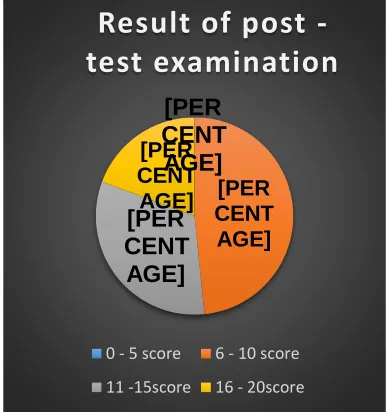
Table 2: Result of post-test examination
Table 2 shows the data information on result of post-test examination that been done by 33 students. The data shown in numbers of the students, the score and the percentage that been calculated for 33 students for 10 questions which each questions required 2marks.
Figure 2: Results on post – test examination
On average most students obtained the score of 16 – 20 in post – test, while the lowest score that the students had gained during the post-test examination were 6 to 10. The least number of score that the students had received for their post-test examination will be 6 to 10 marks. Which this particular students had received around 8 to 10 marks for their post-test. To compare with the earlier test this students had increased their result from their pre-test examination that they had done. Besides that, 2 students had received 11 to 15 marks for their post-test examination, likewise their pre-test they had received their marks slightly lowest then their post-test. They had increased their result. Overall, 28 students had gained full mark for their post-test examination that been given to them.
4.1.3 Questionnaire Findings
Teacher‘s questionnaire
1. How do you think students are motivated in the usage of language games in the learning process of Vocabulary? Why?
Most of the teachers felt that students enjoy learning vocabulary, grammar, and other skills using language games because it‘s interesting and students enjoy playing games during the lesson. Students won‘t feel bored and the excitement will be there.
2. Do you deliver new words in your lesson? YES NO How?
All the teachers do deliver new words in their lesson when they are teaching in the classroom. One of the teacher had used deliver new words in terms of synonyms and antonyms. The other three teachers they had answered that, they delivered new words by highlighting the new words that can be used and related to the topic that they had learnt for the day. In addition by including new words in reading passage and providing them the meaning of the new words.
3. What kind of problems does the students faced when gaining new vocabulary words without the usage of language games?
[PER
CENT
AGE]
[PER
CENT
AGE]
[PER
CENT
AGE]
[PER
CENT
AGE]
Result of post -
test examination
0 - 5 score 6 - 10 score
11 -15score 16 - 20score
SCORE NO OF
STUDENTS
NO OF STUDENTS PERCENTAGE (%)
0 – 5 0 0
6 – 11 3 32
12 - 15 2 19
16 – 20 28 49
The students don‘t feel motivated, less attracted, students won‘t feel big impact of the learning process, as the explanation goes dull and boring towards the learning process. Compared to games they are more motivated and they listen more than normal explanation that been delivered to them. 4. Do you think students need to be taught
vocabulary using language games? YES NO The teachers felt that vocabulary should be taught using language games as it would attract the students.
5. When you are teaching new vocabulary, do you use:
Always Certain times
Depends Never Definition
Translation Synonymy /
Antonym Word parts Examples
Only a teacher which always deliver definition, translate, synonymy, antonym and words parts. This particular teacher do give examples certain times when she think the students need to be given examples regarding it. The other teachers, they are mostly more to certain times and depends on the teaching.
6. Have you been using language games in the learning process of Vocabulary? YES NO Three teachers had agreed that they been using language games in the learning process of vocabulary in classroom. Only one particular teacher don‘t really use language games to teach vocabulary to the students.
7. How often do you use language games in your teaching? NEVER SELDOM ALWAYS All the teachers seldom use language games in their teaching. As it will take some time.
8. Do you think the usage of language games could increase student‘s vocabulary? Why?
All the teachers think that language games could increase the students vocabulary because, students can remember more new words and memorise the new words through games. They are expose to new words by playing games.
9. How do you see language games as: Entertaining method Educating method Both
Only one particular teacher had answered education method, and the other three teachers had answered both. They are using entertaining method and educating method.
10. Considering that vocabulary gathers all the four skills, which one is more affected by language games? Listening Speaking Reading Writing
Two teachers had chosen listening and speaking skills that is more affected by language games. One teacher had chosen listening skill only and not
least the last teacher had chosen reading skill as more affected by language games.
4.1.4 Students questionnaire
1. As a student do you think, vocabulary is important in learning English language? Why?
Most of the students had answered yes. They do think that vocabulary is important in learning English language. In other words they think it‘s important because, they can learn new words everyday and enhance their vocabulary.
2. What are the main problems you face in learning new vocabulary?
It‘s difficult for them to remember the words that they are learning everyday, normally they just read and just write the meaning of it, they don‘t really implement in their any type of skills. And they learn in normal way they don‘t play games to learn it. there is no practice shown to remember the new words.
3. Do you participate in games that been held in classroom?
All the students had agreed that they do practice in games that been held in classroom. They don‘t really be silent in classroom. They likes to participate in the games that been prepared for them.
4. How was your feeling when participating in a game in the classroom?
Most of the students had answered they feel happy, excited, cool and enjoying learning something new using games.
5. Do you think games benefit you during the learning process? Why?
All the students had agreed that it‘s benefit them during the learning process. They preferred to learn this way because they can speak clearly, they can practice more.
6. Do you want the technique of language games to be applied in teaching vocabulary?
All of the students preferred the techniques of language games to be applied in teaching vocabulary because it‘s fun and students will be more interested to learn.
4.1.5 Students questionnaire
1) Do you think language games are interesting to be used in teaching?
a) Yes b) No
Based on the figure 1 above, 90% students had answered ‗Yes‘, they had agree that they think language games are interesting to be used in teaching. They like to learn using language games. Besides that, 4 students out of 10% didn‘t agree that, language games are interesting to be used in teaching.
2) Do you like to learn using language games?
a) Yes b) No
Answers No of students No of students percentage Yes 28 85%
No 5 15%
Based on the figure 2 above, 85% students had answered ‗Yes‘, they had agree that they like to learn using language games. They enjoy learning vocabulary using language games. Only 5 students of 15% percentage students didn‘t prefer to learn using language games.
3) Do you like games?
a) Yes b) No
Answers No of students
No of students percentage
Yes 31 94%
No 2 6%
Based on the figure 3 above, 94% students had answered ‗Yes‘, they had agree that they
like games. In addition, there were only two student of 6% student which didn‘t prefer games. The students preferred to
just learn it without playing any kind of games or language games.
4) Do you learn new words every day?
a) Yes b) No
Answers No of students
No of students percentage Yes 28 85%
No 5 15%
Based on the figure 4 above, 85% students had answered ‗Yes‘, they had agree that they do learn new words everyday. They learn each word based on the list of words that been given to them and after they memorise it. In addition, there were only one student of 15% student which don‘t learn new words every day because of not attending the class lesson as they had programme and event that been prepared by the school for them.
5) Do you play language games in classroom?
a) Yes b) No c) Maybe
Answers No of students No of students percentage
Yes 29 92%
No 1 3%
Maybe 3 5%
Based on the figure 5 above, 92% students had answered ‗Yes‘, they had agree that they like to play language games during the lesson at classroom. In addition, there were only one student of 3% student which didn‘t prefer to play using language game. Besides that, 5% of students had answered maybe they will preferred playing language
90% 10%
Do you think …
85% 15%
Do you like to learn
using language games?
Y E S
85% 15%
Do you learn new words
everyday?
Y E S
92% 3% 5%