ISSN(Online): 2319-8753 ISSN (Print): 2347-6710
I
nternational
J
ournal of
I
nnovative
R
esearch in
S
cience,
E
ngineering and
T
echnology
(An ISO 3297: 2007 Certified Organization)
Website: www.ijirset.com
Vol. 6, Issue 6, June 2017
A Review on Optimization of a Smart IOT
Gateway
Rashida Shujaee1, Prof. M. Nasiruddin2
M. Tech Student, Department of Electronics & Communication Engineering, ACET, Sadar, Nagpur, India1
HOD & Professor, Department of Electronics & Communication Engineering, ACET, Sadar, Nagpur, India2
ABSTRACT: The technologies of Internet of Things have been widely used in logistics, Smart Meter, public security, intelligent building and so on, with the development of sensor, wireless mobile communication, embedded system and cloud computing. Because of its huge market prospects, Internet of Things has been paid close attention by several governments all over the world, which is regarded as the third wave of information technology after Internet and mobile communication network. IOT Gateway that bridges between wireless sensor networks with traditional communication networks or Internet plays an important role in IOT applications, which facilitates the seamless integration of wireless sensor networks and mobile communication networks or Internet, and the management and control with wireless sensor networks. In this paper, we proposed an IOT Gateway system based on Zigbee and Wi-Fi protocols according to the typical IOT application scenarios and requirements from telecom operators, presented the data transmission between wireless sensor networks and mobile communication networks, protocol conversion of different sensor network protocols, and control functionalities for sensor networks, and finally gave an implementation of prototyping system and system validation.
KEYWORDS: Gateway, IOT, WSN, Zigbee, GPRS
I. INTRODUCTION
As early as 1999, the concept of the Internet of Things (IOT) was proposed by the Auto-ID Laboratory of MIT. IOT refers to a network which can connect things identified in the physical world throughout various networks with different protocols. The Internet of Things (IOT) is a system, Combination of Embedded controllers, sensors, Softwares and Network. Simply it merges the physical objects with online world. In recent years, the Internet of Things (IoT) technology has attracted many attentions. It allows a number of smart objects that have been embedded with wired/wireless communication interfaces to automatically communicate and interact with each other. The IoT can make the unidentifiable objects into identifiable, recognized, interconnected intelligent objects. The development of IoT can support a variety of applications, including Intelligent Power, Intelligent Transportation, Intelligent Medicine and Healthcare, Intelligent Art, Intelligent Logistics, Intelligent Environmental Monitoring, Smart Life, etc.
Emerging and blooming Internet of Things (IoT) technology increasingly affects backbone network development via its various applications, the traffic data volume from numerous connected IoT terminals, the rich connection modes, and so on. Several researchers tried to clarify such effects; however most of such contributions are diverse and specially not in a traffic view. On the other hand, though this is the real case, they have ignited a special focus that a big part among the effects is accounted for by an IoT Gateway (IOTGW). In a IoT network, different IoT devices are connected directly to an internet router or by using an IoT Gateway which acts as a bridge between the constrained IoT network and the internet. IoT devices connect to the internet to upload data and to receive requests from a server. Users can access uploaded data from their devices through a web interface and control them using web applications installed on a server.
ISSN(Online): 2319-8753 ISSN (Print): 2347-6710
I
nternational
J
ournal of
I
nnovative
R
esearch in
S
cience,
E
ngineering and
T
echnology
(An ISO 3297: 2007 Certified Organization)
Website: www.ijirset.com
Vol. 6, Issue 6, June 2017
This is due to the availability of inexpensive, low powered miniature components like processors, radios and sensors that were often integrated on a single chip (system on a chip (SoC)).
With the advent of the Internet of Things (IoT), the number of connected sensors soon will reach trillions, working with billions of intelligent systems involving in-numerous applications will drive new consumer and business behavior. The demand for increasingly intelligent industry solutions based on IoT will drive trillions of dollars in opportunity for IT industry and even more for the companies that take advantage of the IoT.
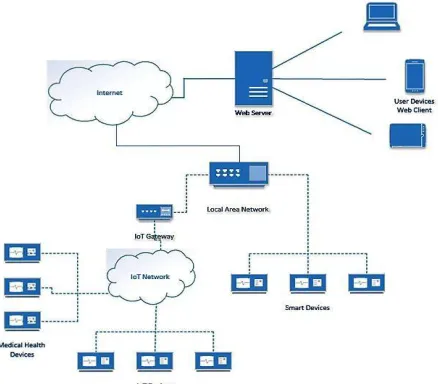
Fig 1.IoT deployment andapplication scenarios
Figure 1.1 depicts a typical IoT network in a home. The figure shows different IoT devices connected directly to an Internet router or by using an IoT gateway which acts as a bridge between the constrained IoT network and the internet. In this figure IoT devices connect to the internet to upload data and to receive requests from a server. Users can access uploaded data from their devices through a web interface and control them using web applications installed on the server.
In this paper, we proposed an IoT Gateway system based on ZigBee and Wi-Fi protocols according to the typical IoT application scenarios and requirements from the data transmission between wireless sensor networks and internet, protocol conversion of different sensor network protocols, and finally gave an implementation of prototyping system and system validation.
A. Objective
1. To design and implement IoT gateway, a bridge which connects between traditional network and sensor network.
2. To design and implement Zigbee based Internet of Things Gateway which will act as bridge between sensor network and internet.
ISSN(Online): 2319-8753 ISSN (Print): 2347-6710
I
nternational
J
ournal of
I
nnovative
R
esearch in
S
cience,
E
ngineering and
T
echnology
(An ISO 3297: 2007 Certified Organization)
Website: www.ijirset.com
Vol. 6, Issue 6, June 2017
II. RELATED WORK
As the popularity of IOT is growing up abruptly, It is expected that more and more no. of devices will be connected to the Internet in upcoming years. In this section, we will take a brief review of some existent Internet of thing (IOT) gateways.
Emara, K. A., Abdeen, M., &Hashem [3] - proposed gateways for interconnection. Those gateways connect networks with different protocols such as ZigBee, Bluetooth, GPRS and Ethernet transparently. But those gateways are not flexible, because they cannot be customized for different applications.
L.Wu, Y. Xu, and F.Wang [4] - designed a plug-configurable-play service-oriented gateway, aiming to make it fast and easy to employ various external sensor network applications. The gateway encapsulates data, capabilities and information of heterogeneous sensor networks to homogenous resources. It provides external applications with access of corresponding resources through friendly and uniform interfaces, which are independent of types of sensor networks. The gateway is not for specific kinds of sensor networks or applications. The feature of plug-configurable-play is achieved by separating the universal program from sensor network specific information. But the gateway is running on PC, and demands for higher hardware environment. So the advantages in the actual IoT applications are not obvious.
Jong-Wan, Yong-ki, Choon-Sung, & Dong-Rye [5] - proposed a system composing of a main server and several sensing servers connecting with different sensor networks. But in their system, most tasks are completed by different network-dependent sensing servers other than a smart gateway. This indicates the hardware cost will be too high.
Shan Yin,YuemingLu,Yonghua Li [6] - In this paper author specified a system based on IOT which will connect all home appliances together and a centralized gateway based on RFID. So that they would communicate properly but linkage policy used here is manual, not feasible.
Shang Guoqiang, Chen Yamming, zuo Chao, Zhu Yanxu [1] – In this paper, the author has specified a pluggable gateway system which would run on high power also has an external interface for software development.
Qian, Ruicong, Yan, and Weijun [2] - In this paper the author specified a gateway for interconnection .different protocols like ZIGBEE, BLUETOOTH etc, but they are not that flexible just due to their customization for different applications.
III.METHODOLOGY
A. Hardware
1. To propose overall architecture for gateway.
2. To design Printed Circuit Board (PCB) Layout for Gateway.
3. Hardware implementation of Microcontroller (ATMega328P), Wi-Fi module (ESP8266) and ZigBee of Gateway on PCB.
B. Software
1. To develop a C code for SPI communication between sensor node and Microcontroller in arduino IDE. 2. Log the sensor data onto ThingSpeak (Open source data platform and API for the Internet of Things). 3. Continuous monitoring of real time data.
C. Introduction to IOT Gateway
ISSN(Online): 2319-8753 ISSN (Print): 2347-6710
I
nternational
J
ournal of
I
nnovative
R
esearch in
S
cience,
E
ngineering and
T
echnology
(An ISO 3297: 2007 Certified Organization)
Website: www.ijirset.com
Vol. 6, Issue 6, June 2017
sensors’ nodes and the central hub is based on ZigBee, Bluetooth Low Energy (BLE), or Power over Ethernet (PoE). The hub that acts as an aggregator of multiple raw datasets generated by the sensor nodes is called an IoT gateway.
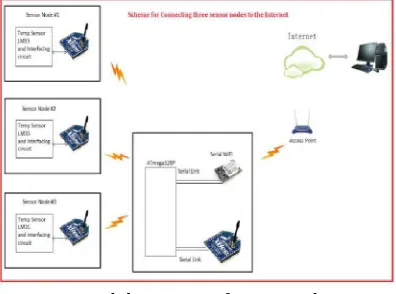
Fig 2. Whole processing of Gateway and WSN
Above figure shows overall system hardware of the project. It includes microprocessor of ATMega 328P, dedicated to controlling the operation of entire data acquisition .system is used to collect data from different sensors, process them and sent it to open source data platform. In this system, the Zigbee (series 2) would be the radio transceiver responsible for data transmission with many other nodes. WIFI unit will function as its own with lower cost and less space requirement. ESP 8266EX gives a standalone Wifi network solution.
D. Architecture of IOT
Fig 3. Basic Architecture of an IOT
The architecture of an IoT, which comprises of sensing layer, network layer and application layer, is shown in Figure 3. In the sensing layer, substantial numbers of identifiers and sensors are placed in the object or environment to detect events, scenarios, motions of objects or collect environmental information. Through the transmission technologies provided in the network layer (such as wireless ZigBee, Bluetooth, Wifi or wired networks), sensors transmit the detected data to the back-end management system for processing. The collected data are then analysed, extracted and integrated in the application layer before being converted into value-added services for application in various IoT areas, such as medical care, transportation, healthcare, environmental surveillance, and arts and humanities.
ISSN(Online): 2319-8753 ISSN (Print): 2347-6710
I
nternational
J
ournal of
I
nnovative
R
esearch in
S
cience,
E
ngineering and
T
echnology
(An ISO 3297: 2007 Certified Organization)
Website: www.ijirset.com
Vol. 6, Issue 6, June 2017
people live in the physical world, whereas the internet is part of the digital world. Therefore, the basic principle for establishing an IoT service involves connecting various smart objects into a human interactive network, enabling internet access for smart objects. Thus, developing a method by which people can be provided with superior control over the internet and be informed of the status of interactive objects in the physical world will be the main focus of IoT. IoT technology can be used to efficiently manage, control and monitor for the state of smart objects. Thus, relevant applications of IoT have recently received much international attention as a high-tech industry with unlimited potential and opportunities. Additionally, substantial resources have been invested to facilitate the promotion, research and development of this industry.
E. IOT Communication
As WSN will allow API packets to be sent and received.That packet should go through processing in order to access the internet. Processing will involve encapsulation of data and translation of addresses, to form a packet and unpack the internet packets so as to get a WSN packet.
IV.CONCLUSION
With the advancements in technology, it is expected that the availability of internet is everywhere and online at all time. Low-cost smart sensor node development enabled things to be connected easily and corresponding information can be accessible globally. With the features of scalability, fault tolerance and effective power consumption of nodes and transceiver “Internet of Things” have facilitated ubiquity computational ability to internetwork heterogeneous smart devices easily and facilitate availability of data anywhere. An efficient method for internetworking of WSN and the internet is given. The key idea of proposed method is to provide low-cost solution and flexible connection mechanisms for integrating Internet of things with home automation systems. The advantages of the developed system are to have greater control over routing of packets (security and customization) and ability to adapt to other wireless sensor networks.
REFERENCES
[1] Shang Gguoqiang; Chen Yanming; Zuochao; Zhu Yanxu, “Design and Implementation of a Smart IoT Gateway.” In 2013 IEEE International Conference on Green Computing and Communications and IEEE Internet of Things and IEEE Cyber, Physical and Social Computing. [2] Qian, Z., Ruicong, W., Qi, C., Yan, L., &Weijun, Q. IoT Gateway: Bridging Wireless Sensor Networks into Internet of Things. In 2010
IEEE/IFIP 8th International Conference on the Embedded and Ubiquitous Computing (EUC’2010), pages 347-352.
[3] Emara, K. A., Abdeen, M., &Hashem, M. A gateway-based framework for transparent interconnection between WSN and IP network. In EUROCON '09, pages 1775-1780.
[4] L.Wu, Y. Xu, C. Xu, and F.Wang, “Plug-configure-play service oriented gateway for fast and easy sensor network application development,” in Proceedings of the 2nd International Conference on Sensor Networks (SENSORNETS ’13), 2013.
[5] Jong-Wan, Y., Yong-ki, K., Choon-Sung, N., & Dong-Rye, S. Sensor Network Middleware for Distributed and Heterogeneous Environments. In International Conference on New