International Journal of COPD 2018:13 3255–3267
International Journal of COPD
Dove
press
submit your manuscript | www.dovepress.com 3255
O r I g I n a l r e s e a r C h
open access to scientific and medical research
Open access Full Text article
Validation of aCCess: an automated tool to
support self-management of COPD exacerbations
lonneke M Boer1
Maarten van der heijden2
nathalie Me van Kuijk1
Peter JF lucas2
Jan h Vercoulen3,4
Willem JJ assendelft1
erik W Bischoff1
Tjard r schermer1,5
1Department of Primary and
Community Care, radboud university medical center, radboud Institute for health sciences, nijmegen, the netherlands; 2Department
of Computing sciences, radboud University, nijmegen, the netherlands;
3Department of Medical Psychology,
radboud university medical center, radboud Institute for health sciences, nijmegen, the netherlands;
4Department of Pulmonary Diseases,
radboud university medical center, radboud Institute for health sciences, nijmegen, the netherlands;
5netherlands Institute for health
services research (nIVel), Utrecht, the netherlands
Background: To support patients with COPD in their self-management of symptom worsening,
we developed Adaptive Computerized COPD Exacerbation Self-management Support (ACCESS), an innovative software application that provides automated treatment advice without the interference of a health care professional. Exacerbation detection is based on 12 symptom-related yes-or-no questions and the measurement of peripheral capillary oxygen saturation (SpO2), forced expiratory volume in one second (FEV1), and body temperature. Automated treatment advice is based on a decision model built by clinical expert panel opinion and Bayes-ian network modeling. The current paper describes the validity of ACCESS.
Methods: We performed secondary analyses on data from a 3-month prospective observational
study in which patients with COPD registered respiratory symptoms daily on diary cards and measured SpO2, FEV1, and body temperature. We examined the validity of the most important treatment advice of ACCESS, ie, to contact the health care professional, against symptom- and event-based exacerbations.
Results: Fifty-four patients completed 2,928 diary cards. One or more of the different pieces of ACCESS advice were provided in 71.7% of all cases. We identified 115 symptom-based exacerbations. Cross-tabulation showed a sensitivity of 97.4% (95% CI 92.0–99.3), specificity of 65.6% (95% CI 63.5–67.6), and positive and negative predictive value of 13.4% (95% CI 11.2–15.9) and 99.8% (95% CI 99.3–99.9), respectively, for ACCESS’ advice to contact a health care professional in case of an exacerbation.
Conclusion: In many cases (71.7%), ACCESS gave at least one self-management advice to
lower symptom burden, showing that ACCES provides self-management support for both day-to-day symptom variations and exacerbations. High sensitivity shows that if there is an exac-erbation, ACCESS will advise patients to contact a health care professional. The high negative predictive value leads us to conclude that when ACCES does not provide the advice to contact a health care professional, the risk of an exacerbation is very low. Thus, ACCESS can safely be used in patients with COPD to support self-management in case of an exacerbation.
Keywords: COPD, exacerbations, telehealth, software application, treatment advice, self-management, health, mobile health, automated device, diagnostic accuracy
Introduction
COPD is a heterogeneous disease with fluctuations in daily respiratory symptoms. Many patients with COPD suffer from acute exacerbations. These episodes are defined as “sustained worsening of the patient’s condition from the stable state, and beyond normal day-to-day variations, that are acute in onset and necessitate a change in regular medication”.1 Exacerbations pose a substantial burden on patients and society, since
they are the main cause of hospitalization,2 mortality,3 and health care utilization4 in
COPD, and lead to a more rapid decline in lung function5,6 and health status.6–8
Correspondence: lonneke M Boer Department of Primary and Community Care (elg 117), radboud University Medical Center, PO Box 9101, 6500 hB nijmegen, the netherlands Tel +31 24 361 6332
email [email protected]
Journal name: International Journal of COPD Article Designation: Original Research Year: 2018
Volume: 13
Running head verso: Boer et al
Running head recto: Validation of automated COPD exacerbation self-management support DOI: 167272
International Journal of Chronic Obstructive Pulmonary Disease downloaded from https://www.dovepress.com/ by 118.70.13.36 on 22-Aug-2020
For personal use only.
Dovepress Boer et al
When exacerbations are treated promptly, recovery time9,10
and hospital admissions10,11 can be reduced. However, many
patients poorly recognize the difference between regular day-to-day variations and exacerbations and do not respond to an imminent exacerbation adequately.8,9,11 Self-management
programs that include patient education and the use of written action plans have been developed to improve patients’ self-management behavior at times of an exacerbation. A written action plan contains instructions about the medication to use and the actions to take when a patient notices that respira-tory symptoms worsen. Research has shown that the use of written action plans may enhance prompt treatment of exac-erbations and, as a result, improve health-related quality of life,12 reduce recovery time9,13–15 and hospital admissions.12,16,17
Therefore, current clinical COPD guidelines recommend a written exacerbation action plan for every COPD patient with frequent exacerbations to keep at home.18,19 However,
it has been reported that in ~50% of exacerbations, patients do not adhere to the instructions in the action plan.9
Exacer-bation self-management appears to be negatively influenced by habituation to symptoms, heterogeneity of exacerbations, low self-empowerment, and patients’ belief that they should not bother others with their problems.20,21
To optimize patients’ self-management during symptom worsening that may indicate an exacerbation in development, there is a need for easy-to-use tools to better support patients in the recognition and interpretation of symptoms than a paper action plan does, and to further improve self-empowerment and stimulate a sense of urgency to seek medical treatment, when needed. Therefore, we have previously developed a software application called “Adaptive Computerized COPD Exacerbation Self-management Support” (ACCESS).22 This
software application aims to 1) identify exacerbations in an early phase and 2) directly provide self-management advice without the intervention of a health care professional. The advice enables patients to take prompt and adequate action in case of an imminent exacerbation. In this study, we deter-mined whether patients with COPD can safely use ACCESS as a self-management support tool in case of symptom wors-ening. More specifically, our research question was “What is the validity, expressed as sensitivity, specificity, positive and negative predictive value, of ACCESS’ clinically most impor-tant advice, ie, to contact a health care professional today, which is given when a COPD exacerbation is imminent?”
Methods
study design, population, and sample size
We performed secondary analyses on data that were obtained in a 3-month prospective observational studythat was designed to cross-validate the Bayesian network model (Supplementary materials). Patients with COPD were recruited from the outpatient clinic and the pulmonary rehabilitation program of the Radboud University Medical Center, Dekkerswald (Nijmegen, the Netherlands). Patients were eligible if they had a spirometry-confirmed diagnosis of COPD (ie, post-bronchodilator FEV1/FVC ,0.7), were known by their health care professional to have a high exacer-bation risk, were able to communicate in the Dutch language, and were not familiar with physical or mental problems that would prevent adherence to study protocol. Additionally, in the outpatient population, patients had to be able to visit Dekkerswald if their symptoms worsened. At the pulmonary rehabilitation center, eligible patients received oral and written information about the study from a research team member. In the outpatient clinic, eligible patients received a written invitation to participate from their pulmonary nurse. After a week, patients who agreed to participate received individual oral and written instructions from a member of the research team. Within the inclusion period, patients from the outpatient clinic were invited to participate in sets, simultaneous to the consecutive inclusion of patients from the rehabilitation program. No formal sample size calcula-tion was performed, but 50 exacerbacalcula-tions were considered sufficient for the cross-validation of the Bayesian network model (Supplementary material). In previous research in this patient population, an average of 4.2 exacerbations per year per patient was observed,23 so, theoretically, 50 patients
would need to participate for 3 months to reach the number of 50 exacerbations.
Written informed consent was obtained from all the par-ticipating patients. The Medical Ethics Committees of the regions Arnhem and Nijmegen approved the study (approval number 2013/385).
aCCess software application
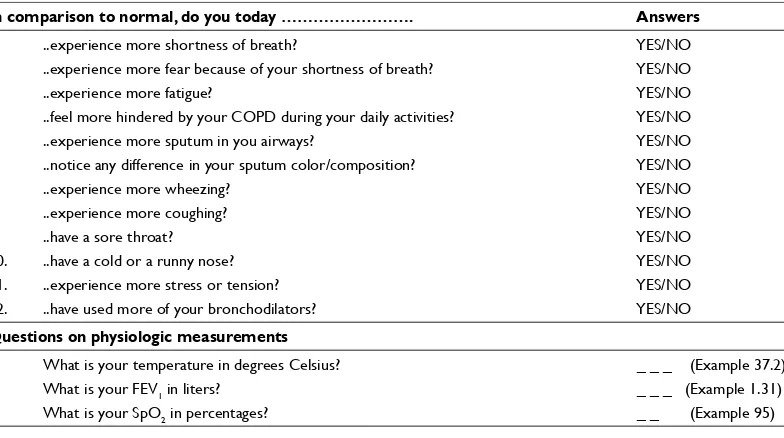
ACCESS is an innovative automated exacerbation self-management support system. The system is innovative as it combines exacerbation detection with automated treatment advice without the interference of a health care professional. Exacerbation detection is based on the results of 12 yes-or-no questions about worsening of symptoms, emotions, and bronchodilator use and the outcomes of measurement of peripheral capillary oxygen saturation (SpO2 in %, Contec Pulse Oximeter, CMS50D), FEV1 (in liters, Vitalograph asma-1), and body temperature (in degrees Celsius, Medisana FTN infrared thermometer) (Figure 1). After data recording and depending on the outcomes, ACCESS directly generates 1–6 automated treatment options to support self-management
International Journal of Chronic Obstructive Pulmonary Disease downloaded from https://www.dovepress.com/ by 118.70.13.36 on 22-Aug-2020
Dovepress Validation of automated COPD exacerbation self-management support
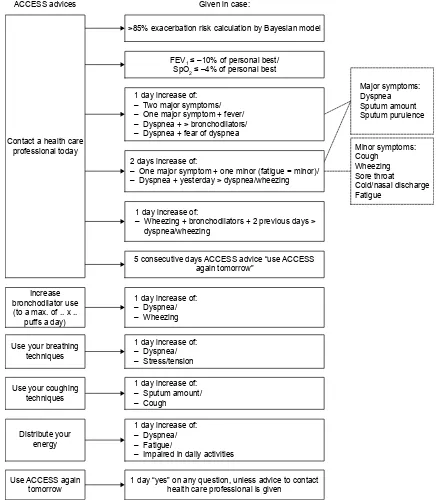
to alleviate symptom burden. In case the responses to the questions and/or the measurements indicate an imminent/ possible exacerbation, ACCESS always advises to use the system again the next day. Which advice ACCESS will give is based on a decision tree that was designed by an expert panel of clinicians (Figure 2) and the risk of an exacerbation as predicted from a Bayesian network model that is incorpo-rated in ACCESS.22 The system is adaptive in the sense that
it is personalized by the patient’s health care professional, who sets personal reference values for FEV1 and SpO2, inserts patient-specific medication instructions, and decides on which pieces of advice are relevant for the patient. We refer to the supplementary file for more details about the develop-ment, content, and evaluation of the system.
Data collection
During the 3-month follow-up, patients completed paper diary cards with the 12 ACCESS questions and three physi-ological measurements (SpO2, FEV1, and body temperature; Supplementary material) every day. All data were gathered on paper to prevent missing data due to difficulty in the use of the software. The diary cards were collected weekly. The automated treatment advice was calculated by the ACCESS computer model after the 3-month observation period for each entry and added to the study database (see Figure 2 for the decision model).
Patients were instructed to contact their chest physician or respiratory nurse every time they had a worsening of any respiratory symptom. The chest physician diagnosed whether an exacerbation was present or not and recorded diagnosis
and treatment plan on a standardized form. Additionally, at the end of follow-up, the patients’ medical records were examined in detail by the investigators (LB, EB) for exac-erbation occurrences.
Furthermore, each patient completed a separate “best value” form on a stable day together with a health care professional or an investigator (LB) to establish the refer-ence values for the patient’s personal best measurements of FEV1 and SpO2.
exacerbations
We used a symptom-based and an event-based definition of exacerbations to compare ACCESS’ advice to contact a health care professional with.
1. Symptom-based definition: the diary card data were used to identify symptom-based exacerbations using the following definition: a change for at least 2 consecutive days in two or more major symptoms (dyspnea, sputum purulence, sputum amount), or a change in any one major symptom plus one or more minor symptoms (cold, wheeze, sore throat, cough).5,24,25
We counted a new exacerbation episode when it was preceded by at least 2 days without exacerbation. 2. Event-based definition: all contacts documented by
health care professionals that led to a new prescription of prednisolone and/or antibiotics or hospitalization were considered event-based exacerbations.
statistical analyses
Missing diary card data were excluded from analyses, since on a day with missing data, ACCESS cannot determine Figure 1 Content of aCCess.
Abbreviations: aCCess, adaptive Computerized COPD exacerbation self-management support; spO2, peripheral capillary oxygen saturation; FeV1, forced expiratory
volume in one second.
,QFRPSDULVRQWRQRUPDOGR\RXWRGD\««««««««
4XHVWLRQVRQSK\VLRORJLFPHDVXUHPHQWV
H[SHULHQFHPRUHVKRUWQHVVRIEUHDWK"
H[SHULHQFHPRUHIHDUEHFDXVHRI\RXUVKRUWQHVVRIEUHDWK" H[SHULHQFHPRUHIDWLJXH"
IHHOPRUHKLQGHUHGE\\RXU&23'GXULQJ\RXUGDLO\DFWLYLWLHV" H[SHULHQFHPRUHVSXWXPLQ\RXDLUZD\V"
QRWLFHDQ\GLIIHUHQFHLQ\RXUVSXWXPFRORUFRPSRVLWLRQ" H[SHULHQFHPRUHZKHH]LQJ"
H[SHULHQFHPRUHFRXJKLQJ" KDYHDVRUHWKURDW" KDYHDFROGRUDUXQQ\QRVH" H[SHULHQFHPRUHVWUHVVRUWHQVLRQ" KDYHXVHGPRUHRI\RXUEURQFKRGLODWRUV"
:KDWLV\RXUWHPSHUDWXUHLQGHJUHHV&HOVLXV" :KDWLV\RXU)(9LQOLWHUV"
:KDWLV\RXU6S2LQSHUFHQWDJHV"
$QVZHUV
<(612 <(612 <(612 <(612 <(612 <(612 <(612 <(612 <(612 <(612 <(612 <(612
BBB([DPSOH BBB([DPSOH BB([DPSOH
International Journal of Chronic Obstructive Pulmonary Disease downloaded from https://www.dovepress.com/ by 118.70.13.36 on 22-Aug-2020
Dovepress Boer et al
whether or not one or more pieces of advice should be given. We used descriptive statistics to examine the occurrence of the 6 automated pieces of advice. When an exacerbation was imminent, ACCESS should have advised patients to contact a health care professional. So, because of the clinical importance, we examined the relationship between ACCESS’ advice to contact a health care professional and symptom-based exacerbations with cross-tabulations. Sensitivity, specificity, and positive and negative predictive values were
calculated. To consider ACCESS as being safe, sensitivity should be high (ie, if an exacerbation is indeed present, ACCESS should advise to contact a health care professional in virtually all cases), and negative predictive value should be high (ie, if ACCESS does not advise to contact a health care professional, there should be no exacerbation in virtually all cases). We looked at the second day of each exacerba-tion episode, because we wanted to examine if ACCESS provides timely advice, and this was the first day that an
GD\LQFUHDVHRI ±7ZRPDMRUV\PSWRPV ±2QHPDMRUV\PSWRPIHYHU ±'\VSQHD!EURQFKRGLODWRUV ±'\VSQHDIHDURIG\VSQHD &RQWDFWDKHDOWKFDUH
SURIHVVLRQDOWRGD\
0DMRUV\PSWRPV '\VSQHD 6SXWXPDPRXQW 6SXWXPSXUXOHQFH
)(9±RISHUVRQDOEHVW
6S2±RISHUVRQDOEHVW
GD\VLQFUHDVHRI
±2QHPDMRUV\PSWRPRQHPLQRUIDWLJXH PLQRU ±'\VSQHD\HVWHUGD\!G\VSQHDZKHH]LQJ
GD\LQFUHDVHRI
±:KHH]LQJEURQFKRGLODWRUVSUHYLRXVGD\V! G\VSQHDZKHH]LQJ
FRQVHFXWLYHGD\V$&&(66DGYLFH³XVH$&&(66 DJDLQWRPRUURZ´
$&&(66DGYLFHV *LYHQLQFDVH
0LQRUV\PSWRPV &RXJK
:KHH]LQJ 6RUHWKURDW
&ROGQDVDOGLVFKDUJH )DWLJXH
GD\³\HV´RQDQ\TXHVWLRQXQOHVVDGYLFHWRFRQWDFW KHDOWKFDUHSURIHVVLRQDOLVJLYHQ
GD\LQFUHDVHRI ±'\VSQHD ±:KHH]LQJ ,QFUHDVH
EURQFKRGLODWRUXVH WRDPD[RI[
SXIIVDGD\
GD\LQFUHDVHRI ±'\VSQHD ±)DWLJXH
±,PSDLUHGLQGDLO\DFWLYLWLHV 'LVWULEXWH\RXU
HQHUJ\
GD\LQFUHDVHRI ±6SXWXPDPRXQW ±&RXJK
8VH\RXUFRXJKLQJ WHFKQLTXHV 8VH\RXUEUHDWKLQJ
WHFKQLTXHV
GD\LQFUHDVHRI ±'\VSQHD ±6WUHVVWHQVLRQ
!H[DFHUEDWLRQULVNFDOFXODWLRQE\%D\HVLDQPRGHO
8VH$&&(66DJDLQ WRPRUURZ
Figure 2 expert decision model of aCCess advice.
Abbreviations: aCCess, adaptive Computerized COPD exacerbation self-management support; spO2, peripheral capillary oxygen saturation; FeV1, forced expiratory
volume in one second.
International Journal of Chronic Obstructive Pulmonary Disease downloaded from https://www.dovepress.com/ by 118.70.13.36 on 22-Aug-2020
Dovepress Validation of automated COPD exacerbation self-management support
exacerbation could actually be established according to our definition.5,24,25 We performed post hoc descriptive analyses
to further explore the precise reasons behind ACCESS’ advice to contact a health care professional in the absence of a symptom-based exacerbation.
To compare ACCESS’ advice to contact a health care professional to the actual diagnosis of the health care profes-sionals, the ACCESS advice was also cross-tabulated with event-based exacerbations. Again, sensitivity, specificity, and positive and negative predictive values were calculated.
IBM Statistical Package for Social Sciences (SPSS) 22 was used for all analyses.
Results
Patients and exacerbations
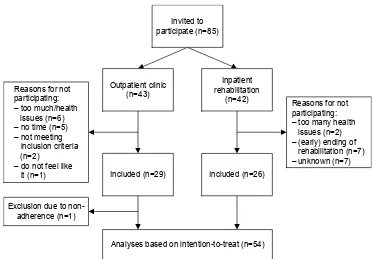
Twenty-six patients from the rehabilitation department and 28 patients from the outpatient clinic were included between November 2013 and April 2014 (Figure 3). Together, these 54 patients completed 2,928 of the 2,992 diary cards (97.9% completeness) during a mean participation period of 55.4 (±SD 25.1) days. One hundred and fifteen symptom-based exacerbations were reported by 42 patients, with a median duration of 6.0 (IQR 7.4) days. Twenty-nine event-based episodes were documented from 22 patients. There were four hospital admissions in three patients, and no deaths during the follow-up period. Table 1 shows the baseline
characteristics and median number of exacerbations of the study population.
automated advice of aCCess
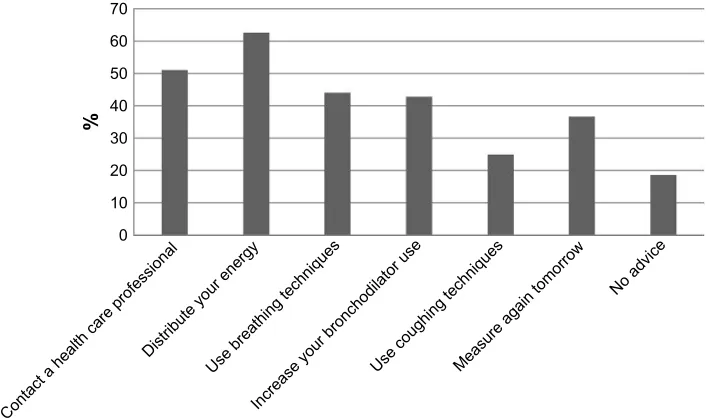
On 2,099 of the 2,928 days (71.7%), ACCESS provided one or more pieces of treatment advice. In 285 cases (9.7%), there was only the advice to measure again the next day, and in 544 cases (18.6%) there was no advice given, meaning that no symptom changes were reported that day. Figure 4 shows that the advice to contact a health care professional was given on 1,493 days (51.0% of 2,928 days). The advice to be thoughtful about how to distribute one’s energy over the day was given most often, in 1,829 cases (62.5%). The advice to use breathing techniques was provided in 1,285 cases (43.9%), the advice to maximize bronchodilator use was provided in 1,249 cases (42.7%), and the advice to use coughing techniques in 730 cases (24.9%).
Validity of aCCess advice compared
to symptom-based exacerbations
Table 2 shows the cross-tabulation between the advice to contact a health care professional and the actual presence (the second day) of a symptom-based exacerbation. In 112 of the 115 exacerbations, ACCESS advised to contact the health care professional, so sensitivity was 97.4% (95% CI 92.0–99.3). Specificity was 65.6% (95% CI 63.5–67.6),
,QYLWHGWR SDUWLFLSDWHQ
2XWSDWLHQWFOLQLF Q
,QSDWLHQW UHKDELOLWDWLRQ
Q
,QFOXGHGQ ,QFOXGHGQ
$QDO\VHVEDVHGRQLQWHQWLRQWRWUHDWQ 5HDVRQVIRUQRW
SDUWLFLSDWLQJ ±WRRPXFKKHDOWK
LVVXHVQ ±QRWLPHQ ±QRWPHHWLQJ LQFOXVLRQFULWHULD
Q
±GRQRWIHHOOLNH LWQ
5HDVRQVIRUQRW SDUWLFLSDWLQJ ±WRRPDQ\KHDOWK LVVXHVQ ±HDUO\HQGLQJRI UHKDELOLWDWLRQQ ±XQNQRZQQ
([FOXVLRQGXHWRQRQ DGKHUHQFHQ
Figure 3 Flowchart of patient participation in the study.
International Journal of Chronic Obstructive Pulmonary Disease downloaded from https://www.dovepress.com/ by 118.70.13.36 on 22-Aug-2020
Dovepress Boer et al
positive predictive value was 13.4% (95% CI 11.2–15.9), and negative predictive value was 99.8% (95% CI 99.3–99.9).
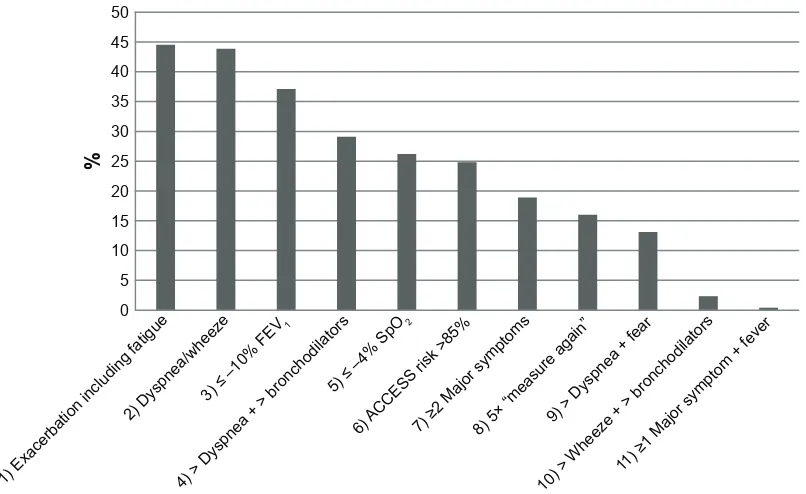
In-depth analyses were performed to examine the cases where the advice to contact a health care professional was given by ACCESS, but no symptom-based exacerbation turned out to have occurred (n=725). Figure 5 shows that the main reasons for ACCESS to advise patients to contact their health care provider were: 1) a drop in FEV1 of at least 10% compared to the patient’s personal best value; 2) increased fatigue in combination with a worsening of at least one major symptom for at least two consecutive days; and 3) increased dyspnea that day in combination with increased dyspnea and/or wheeze the previous day.
Validity of aCCess advice compared to
event-based exacerbations
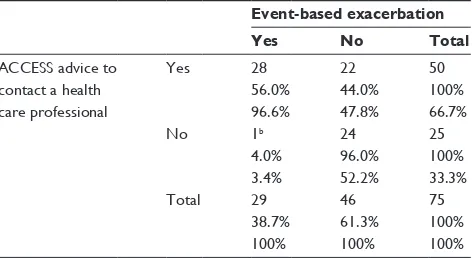
A total of 29 event-based exacerbations were documented (Table 3). For the event-based exacerbations, sensitivity of
the ACCESS advice to contact a health care professional was 96.6% (95% CI 80.4–99.8), specificity was 52.2% (95% CI 37.1–66.9), positive predictive value was 56.0% (95% CI 41.4–69.7), and negative predictive value was 96.0% (95% CI 77.7–99.8).
In one occasion, a course of prednisolone had been prescribed but ACCESS had not advised to contact a health care professional (Table 3). It turned out that this patient had started his study participation during an exacerbation, and on his first day, he reported minor symptoms and prednisolone was prescribed. The advice to contact a health care profes-sional was given by ACCESS on the next day.
Discussion
In this study, we reported on the automatically provided treatment advice of the ACCESS software application, which aims to support COPD patients to take timely and adequate action in their self-management in case of symptom changes and exacerbations. We found that on the majority of days (71.7%), ACCESS provided one or more pieces of treatment advice to reduce symptom burden. In 51.0% of the cases, the advice was given to contact a health care professional that day. Hence, in 20.7% of all cases, ACCESS did not detect an (developing) exacerbation, but the pieces of advice – other than to contact a health care professional – were provided to lower the burden of day-to-day symptom fluctuations.
Next, we investigated the safety of ACCESS by examining the validity of its advice to contact a health care professional. The high sensitivity of this advice for both symptom- and
Table 1 Baseline characteristics of the study population (n=54) represented in mean (sD), median (IQr), or frequency (%)
age, years (sD) 64.7 (8.6)
Male (%) 32 (59.3)
FeV1, litersa (sD) 1.26 (0.6)
FeV1% predicteda (sD) 44.4 (18.2)
BMI, kg/m2,a (sD) 26.2 (4.8)
Follow-up time, days (sD) 55.4 (25.1)
symptom-based exacerbation episodes per month (IQr) 1.1 (3.5) event-based exacerbation episodes per month (IQr) 0.0 (0.7) Note: an=44.
Abbreviations: IQr, interquartile range; BMI, body mass index; FeV1, forced
expiratory volume in one second.
&RQWDFWDKHDOWKFDUHSURIHVVLRQDO
'LVWULEXWH\RXUHQHUJ\
8VHEUHDWKLQJWHFKQLTXHV
,QFUHDVH\RXUEURQFKRGLODWRUXVH
0HDVXUHDJDLQWRPRUURZ
1RDGYLFH
8VHFRXJKLQJWHFKQLTXHV
Figure 4 representation of percentages of times each advice was provided by aCCess, based on 2,928 diary cards. On each day, more than one advice could be provided. Abbreviation: aCCess, adaptive Computerized COPD exacerbation self-management support.
International Journal of Chronic Obstructive Pulmonary Disease downloaded from https://www.dovepress.com/ by 118.70.13.36 on 22-Aug-2020
Dovepress Validation of automated COPD exacerbation self-management support
event-based exacerbations (97.4% and 96.6%, respectively) showed that when an exacerbation is imminent, ACCESS is very likely to advise the patient to contact a health care professional. The high negative predictive value of the advice for both symptom- and event-based exacerbations (99.8% and 96.0%, respectively) showed that when ACCESS does
not advise to contact a health care professional, there is a very low risk of an imminent exacerbation. Based on these results, we conclude that ACCESS’ advice to contact a health care professional is safe for patients to follow, because the chance of under-treatment of exacerbations seems negligible. However, specificity was moderate to low (65.6% and 52.2% for symptom- and event-based exacerbations, respectively) and positive predictive values were low (13.4% and 56.0% for symptom- and event-based exacerbations, respectively). This suggests that contact with a health care professional may not be needed in all the cases that ACCESS provides the advice. It should be noted that ACCESS has not been developed to replace the health care professional but to decrease patient delay in case of a developing exacerbation. Thus, part of the moderate to low specificity and low posi-tive predicposi-tive value can be explained by the discrepancy between our reference standard (an exacerbation) and the aim of ACCESS’ advice: contact a health care professional to consult about alarming symptoms which may (or which may not) be caused by an exacerbation. Furthermore, some of these advice-triggering signs or symptoms were measures that were not included in the definition of a symptom-based
Table 2 Cross-tabulation of symptom-based exacerbationsa vs the
advice to contact a health care professional given by aCCess Symptom-based exacerbation
Yes No Total
aCCess advice to contact a health care professional
Yes 112
13.4% 97.4%
725 86.6% 34.4%
837 100% 37.7%
no 3
0.2% 2.6%
1,382 99.8% 65.6%
1,385 100% 62.3%
Total 115
5.2% 100%
2,107 94.8% 100%
2,222 100% 100% Note: aBased on the second consecutive day of worsening of at least one major
symptom (dyspnea, sputum purulence, sputum amount) and one minor symptom (cold, wheeze, sore throat, cough).5,24,25
Abbreviation: aCCess, adaptive Computerized COPD exacerbation self-management support.
0DMRUV\PSWRPIHYHU !:KHH]H!EURQFKRGLODWRUV
!'\VSQHDIHDU î³PHDVXUHDJDLQ´ 0DMRUV\PSWRPV $&&(66ULVN! ±6S2
!'\VSQHD!EURQFKRGLODWRUV ±)(9
'\VSQHDZKHH]H
([DFHUEDWLRQLQFOXGLQJIDWLJXH
Figure 5 representation of reasons for aCCess’ advice to contact a health care professional, in the absence of a symptom-based exacerbation (n=725). In each event, more than one reason may apply.
Notes: 1) a worsening of at least 2 consecutive days in two or more major symptoms (dyspnea, sputum purulence, sputum amount) or a change in any one major symptom plus a cold and/or wheeze and/or sore throat and/or cough and/or fatigue; 2) dyspnea and/or wheeze and dyspnea and/or wheeze the previous day; 3) decrease in FeV1 is
10% or more of personal best; 4) increased dyspnea and increased bronchodilator use; 5) decrease in spO2 is 4% or more of personal best; 6) risk calculation of Bayesian
network is higher than 85%; 7) a worsening of two or more major symptoms (dyspnea, sputum purulence, sputum amount); 8) fifth consecutive day that advice “measure again tomorrow” (indication of worsening of any symptom) is given; 9) increased dyspnea and fear of increased dyspnea; 10) third day of increased wheeze and increased bronchodilator use; 11) any one major symptom (dyspnea, sputum purulence, sputum amount) and fever (see also Figure 2).
Abbreviation: aCCess, adaptive Computerized COPD exacerbation self-management support; spO2, peripheral capillary oxygen saturation; FeV1, forced expiratory
volume in one second.
International Journal of Chronic Obstructive Pulmonary Disease downloaded from https://www.dovepress.com/ by 118.70.13.36 on 22-Aug-2020
Dovepress Boer et al
exacerbation that we used as reference standard, such as a drop in FEV1 and peripheral capillary oxygen saturation val-ues, or fatigue. This definitely has influenced specificity and positive predictive value, but the advice still may have been clinically relevant, since these parameters are mentioned in the literature as possible indicators of an exacerbation.26–31
Still, the expert panel may also have been overly cautious in assigning the pieces of advice in the decision model, which is understandable because of heterogeneity of symptoms and onset of exacerbations.
Comparison to other literature
In most other telehealth systems that have been developed for COPD in recent years, a health care professional moni-tors the input of patients actively, and patients are contacted in case of an imminent exacerbation.32–38 These health care
professionals may be cautious in their monitoring too. More-over, these systems require continuous availability of health care professionals, and patients may come to rely on the health care professional to contact them in case of alarming symptoms instead of the other way around. Thus, instead of improving patient’s self-management and reducing patient delay, the latter may even increase. To our knowledge, only one other electronic support system provides automated advice to patients with COPD.39 This Web-based application
advises on the start of prednisolone or antibiotics in case of an exacerbation, whereas our system provides various pieces of self-management advice right from the onset of symptom changes, even before an exacerbation can be established. Besides, so far as we know, the validity of the Web-based application has not been tested yet. We found a high rate of symptom-based exacerbations (ie, a median of 1.1 exacerba-tions per month) compared to other studies.5,14,23 This may be
caused both by the inclusion of patients who were likely to be frequent exacerbators and our methodological approach to count a new episode when there were 2 days without exacerbation or missing days preceding the entry. In our view, this approach resembles a home situation best, where we aim to improve early recognition and patients should be advised at any time of a symptom worsening.
strengths and limitations
Patients recorded the exacerbation-related data daily on paper diary cards that were compiled weekly. This resulted in a very high completeness of data (97.9%) and reduced the potential for recall bias. Also, the use of paper diary cards instead of using ACCESS as software application prevented potential bias caused by differences in digital skills among our study population. The mean follow-up time in our study was shorter than planned. Our initial plan was to include the pulmonary rehabilitation patients in the first week after start-ing rehabilitation and follow them for the complete duration of the program, which is 12 weeks. However, many patients were not enrolled in our study until week 4 of the rehabilita-tion program, resulting in a shorter follow-up period than the expected 12 weeks. Still, we found a high rate of symptom-based exacerbations, because of the inclusion of patients who were known by their health care professional to have a high risk of exacerbations. We did not perform a sample size calculation, although this is recommended in the STARD 2015 guideline,40 as we conducted secondary analyses on data
that were obtained for the cross-validation of the Bayesian network model. Furthermore, at this moment, there is no other tool with a well-studied diagnostic accuracy with which we can compare ACCESS. The validity of ACCESS was tested in a population that was recruited in an outpatient clinic and in our pulmonary rehabilitation department and were prone to have exacerbations. This could have caused selection bias and it may be questioned whether our results can be generalized to a less severe COPD population with a lower risk of having exacerbations, such as in primary care. However, we previously demonstrated that in primary care also, the frequency of symptom-based exacerbations among patients with COPD is high.41
Future research
Further research to assess the clinical effectiveness of this support is ongoing (ClinicalTrials.gov Identifier: NCT02553096). If we find that moderate specificity results in unnecessary health care utilization, extended analyses are needed to investigate if specificity could be increased, without losing the high sensitivity.
Table 3 Cross-tabulation of event-based exacerbationsa vs the
advice to contact a health care professional given by aCCess Event-based exacerbation
Yes No Total
aCCess advice to contact a health care professional
Yes 28
56.0% 96.6%
22 44.0% 47.8%
50 100% 66.7%
no 1b
4.0% 3.4%
24 96.0% 52.2%
25 100% 33.3%
Total 29
38.7% 100%
46 61.3% 100%
75 100% 100% Notes: aexacerbations treated with a course of antibiotics and/or prednisolone or
resulted in hospitalization. bPatient started a course of prednisolone on his first day
of study participation, reporting only minor symptoms that day.
Abbreviation: aCCess, adaptive Computerized COPD exacerbation self-management support.
International Journal of Chronic Obstructive Pulmonary Disease downloaded from https://www.dovepress.com/ by 118.70.13.36 on 22-Aug-2020
Dovepress Validation of automated COPD exacerbation self-management support
Conclusion
In nearly three-quarters of the cases, ACCESS provided one or more of the following pieces of self-management advice – increase bronchodilator use, use breathing tech-niques, use coughing techtech-niques, be thoughtful on how to distribute one’s energy over the day, and to contact a health care professional. This shows that ACCESS supports patients in their self-management of day-to-day symptom variations. Additionally, this study showed that ACCESS provided the advice to contact a health care professional on time, ie, on the second day of an exacerbation, with high sensitivity and negative predictive value, and thus appears to be a safe tool to use at home for patients with COPD. ACCESS has not been developed to replace the health care professional but to assist patients to take timely and adequate action in case of symptom worsening. In this way, ACCESS may improve self-management, decrease patient delay in seeking medical treatment when an exacerbation is imminent, and reduce disease burden by COPD.
Data sharing statement
The datasets used and/or analyzed during the current study are available from the corresponding author on reasonable request.
Acknowledgments
We would like to thank all patients who participated in this study for their commitment to the study, as well as all team members, especially Marleen Kolenbrander and Samantha van der Hoogen, the nurses, pulmonary nurses, and pulmonologists, of the rehabilitation department of Dekkerswald, and Heleen van der Niet and Netty Plat, pul-monary nurses of the outpatient clinic of the Radboudumc. Furthermore, we would like to thank Jeanine Antons, MD, for her contribution to the design of the present study, and Professor Yvonne Heijdra, MD, Dr Johan Molema, MD, and all the health care professionals of the expert panel for their contribution to the development of ACCESS. This study was funded by the Netherlands Organization for Health Research and Development, Boehringer Ingelheim, and the Radboud University Medical Center. None of the funding bodies had any role in the design of the study and collection, analysis, and interpretation of data and in writ-ing the manuscript.
Author contributions
All authors contributed to data analysis, drafting and revising the article, gave final approval of the version to be published, and agree to be accountable for all aspects of the work.
Disclosure
None of the authors received any support from any com-pany for the submitted work. All authors have completed the Unified Competing Interest form at http://www.icmje. org/conflicts-of-interest/ (available on request from the cor-responding author). PL has a patent 20140206949 issued to Petrus Lucas; EB received personal fees from Boehringer Ingelheim and GlaxoSmithKline, outside the submitted work; TS received a grant from GlaxoSmithKline and personal fees from Boehringer Ingelheim, outside the submitted work. The other authors report no conflicts of interest in this work.
References
1. Rodriguez-Roisin R. Toward a consensus definition for COPD exac-erbations. Chest. 2000;117(5 Suppl 2):398S–401S.
2. Beeh KM, Glaab T, Stowasser S, et al. Characterisation of exacer-bation risk and exacerbator phenotypes in the POET-COPD trial.
Respir Res. 2013;14:116.
3. Suissa S, Dell’Aniello S, Ernst P. Long-term natural history of chronic obstructive pulmonary disease: severe exacerbations and mortality.
Thorax. 2012;67(11):957–963.
4. Montes de Oca M, Aguirre C, Lopez Varela MV, Laucho-Contreras ME, Casas A, Surmont F. Exacerbations and health care resource utilization in patients with airflow limitation diseases attending a primary care setting: the PUMA study. Int J Chron Obstruct Pulmon Dis. 2016; 11:3059–3067.
5. Donaldson GC, Law M, Kowlessar B, et al. Impact of prolonged exacerbation recovery in chronic obstructive pulmonary disease. Am J
Respir Crit Care Med. 2015;192(8):943–950.
6. Halpin DM, Decramer M, Celli B, Kesten S, Liu D, Tashkin DP. Exac-erbation frequency and course of COPD. Int J Chron Obstruct Pulmon
Dis. 2012;7:653–661.
7. Bourbeau J, Ford G, Zackon H, Pinsky N, Lee J, Ruberto G. Impact on patients’ health status following early identification of a COPD exacerbation. Eur Respir J. 2007;30(5):907–913.
8. Xu W, Collet JP, Shapiro S, et al. Negative impacts of unreported COPD exacerbations on health-related quality of life at 1 year. Eur Respir J. 2010;35(5):1022–1030.
9. Bischoff EW, Hamd DH, Sedeno M, et al. Effects of written action plan adherence on COPD exacerbation recovery. Thorax. 2011;66(1): 26–31.
10. Wilkinson TM, Donaldson GC, Hurst JR, Seemungal TA, Wedzicha JA. Early therapy improves outcomes of exacerbations of chronic obstruc-tive pulmonary disease. Am J Respir Crit Care Med. 2004;169(12): 1298–1303.
11. Bucknall CE, Miller G, Lloyd SM, et al. Glasgow supported self-management trial (GSuST) for patients with moderate to severe COPD: randomised controlled trial. BMJ. 2012;344:e1060.
12. Lenferink A, Brusse-Keizer M, van der Valk PD, et al. Self-management interventions including action plans for exacerbations versus usual care in patients with chronic obstructive pulmonary disease. Cochrane
Database Syst Rev. 2017;8:CD011682.
13. Trappenburg JC, Monninkhof EM, Bourbeau J, et al. Effect of an action plan with ongoing support by a case manager on exacerbation-related outcome in patients with COPD: a multicentre randomised controlled trial. Thorax. 2011;66(11):977–984.
14. Zwerink M, Kerstjens HA, van der Palen J, et al. Cost-effectiveness of self-treatment of exacerbations in patients with COPD: 2 years follow-up of a RCT. Respirology. 2016;21(3):497–503.
15. Effing T, Kerstjens H, van der Valk P, Zielhuis G, van der Palen J. (Cost)-effectiveness of self-treatment of exacerbations on the severity of exacerbations in patients with COPD: the COPE II study. Thorax. 2009;64(11):956–962.
International Journal of Chronic Obstructive Pulmonary Disease downloaded from https://www.dovepress.com/ by 118.70.13.36 on 22-Aug-2020
Dovepress Boer et al
16. Rice KL, Dewan N, Bloomfield HE, et al. Disease management program for chronic obstructive pulmonary disease: a randomized controlled trial. Am J Respir Crit Care Med. 2010;182(7):890–896.
17. Sedeno MF, Nault D, Hamd DH, Bourbeau J. A self-management educa-tion program including an aceduca-tion plan for acute COPD exacerbaeduca-tions.
COPD. 2009;6(5):352–358.
18. From the Global Strategy for the Diagnosis, Management and Pre-vention of COPD, Global Initiative for Chronic Obstructive Lung Disease (GOLD); 2017. Available from: http://goldcopd.org. Accessed August 28, 2018.
19. Criner GJ, Bourbeau J, Diekemper RL, et al. Prevention of acute exacerbations of COPD: American College of Chest Physicians and Canadian Thoracic Society Guideline. Chest. 2015;147(4):894–942. 20. Korpershoek Y, Vervoort S, Nijssen L, Trappenburg J, Schuurmans MJ.
Factors influencing exacerbation-related self-management in patients with COPD: a qualitative study. Int J Chron Obstruct Pulmon Dis. 2016;11:2977–2990.
21. Kessler R, Ståhl E, Vogelmeier C, et al. Patient understanding, detection, and experience of COPD exacerbations: an observational, interview-based study. Chest. 2006;130(1):133–142.
22. van der Heijden M, Lucas PJ, Lijnse B, Heijdra YF, Schermer TR. An autonomous mobile system for the management of COPD. J Biomed
Inform. 2013;46(3):458–469.
23. Donaldson GC, Seemungal TA, Bhowmik A, Wedzicha JA. Relationship between exacerbation frequency and lung function decline in chronic obstructive pulmonary disease. Thorax. 2002;57(10):847–852. 24. Anthonisen NR, Manfreda J, Warren CP, Hershfield ES, Harding GK,
Nelson NA. Antibiotic therapy in exacerbations of chronic obstructive pulmonary disease. Ann Intern Med. 1987;106(2):196–204.
25. Seemungal TA, Donaldson GC, Bhowmik A, Jeffries DJ, Wedzicha JA. Time course and recovery of exacerbations in patients with chronic obstructive pulmonary disease. Am J Respir Crit Care Med. 2000; 161(5):1608–1613.
26. Salwan AA, Spigt M, Laue J, Melbye H. Predictors of treatment with antibiotics and systemic corticosteroids for acute exacerbations of asthma and chronic obstructive pulmonary disease in primary care.
BMC Fam Pract. 2015;16:40.
27. Shah SA, Velardo C, Farmer A, Tarassenko L. Exacerbations in chronic obstructive pulmonary disease: identification and prediction using a digital health system. J Med Internet Res. 2017;19(3):e69.
28. Al Rajeh AM, Hurst JR. Monitoring of physiological parameters to pre-dict exacerbations of chronic obstructive pulmonary disease (COPD): a systematic review. J Clin Med. 2016;5(12):E108.
29. Irwin DE, Atwood CA, Hays RD, et al. Correlation of PROMIS scales and clinical measures among chronic obstructive pulmonary dis-ease patients with and without exacerbations. Qual Life Res. 2015; 24(4):999–1009.
30. Quintana JM, Unzurrunzaga A, Garcia-Gutierrez S, et al. Predictors of hospital length of stay in patients with exacerbations of COPD: a cohort study. J Gen Intern Med. 2015;30(6):824–831.
31. Strassmann A, Frei A, Haile SR, Ter Riet G, Puhan MA. Commonly used patient-reported outcomes do not improve prediction of COPD exacerbations: a multicenter 4½ year prospective cohort study. Chest. 2017;152(6):1179–1187.
32. Antoniades NC, Rochford PD, Pretto JJ, et al. Pilot study of remote telemonitoring in COPD. Telemed J E Health. 2012;18(8):634–640. 33. de San Miguel K, Smith J, Lewin G. Telehealth remote monitoring for
community-dwelling older adults with chronic obstructive pulmonary disease. Telemed J E Health. 2013;19(9):652–657.
34. Halpin DM, Laing-Morton T, Spedding S, et al. A randomised con-trolled trial of the effect of automated interactive calling combined with a health risk forecast on frequency and severity of exacerbations of COPD assessed clinically and using EXACT PRO. Prim Care Respir J. 2011;20(3):324–331.
35. Lilholt PH, Witt Udsen F, Ehlers L, Hejlesen OK. Telehealthcare for patients suffering from chronic obstructive pulmonary disease: effects on health-related quality of life: results from the Danish “TeleCare North” cluster-randomised trial. BMJ Open. 2017;7(5): e014587.
36. Pedone C, Chiurco D, Scarlata S, Incalzi RA. Efficacy of multipara-metric telemonitoring on respiratory outcomes in elderly people with COPD: a randomized controlled trial. BMC Health Serv Res. 2013; 13:82.
37. Pinnock H, Hanley J, Mccloughan L, et al. Effectiveness of telem-onitoring integrated into existing clinical services on hospital admis-sion for exacerbation of chronic obstructive pulmonary disease: researcher blind, multicentre, randomised controlled trial. BMJ. 2013; 347:f6070.
38. Segrelles Calvo G, Gómez-Suárez C, Soriano JB, et al. A home tele-health program for patients with severe COPD: the PROMETE study.
Respir Med. 2014;108(3):453–462.
39. Tabak M, Brusse-Keizer M, van der Valk P, Hermens H, Vollenbroek-Hutten M. A telehealth program for self-management of COPD exacerbations and promotion of an active lifestyle: a pilot randomized controlled trial. Int J Chron Obstruct Pulmon Dis. 2014;9:935–944. 40. Bossuyt PM, Reitsma JB, Bruns DE, et al. STARD 2015: an updated
list of essential items for reporting diagnostic accuracy studies. BMJ. 2015;351:h5527.
41. Bischoff EW, Akkermans R, Bourbeau J, van Weel C, Vercoulen JH, Schermer TR. Comprehensive self management and routine monitoring in chronic obstructive pulmonary disease patients in general practice: randomised controlled trial. BMJ. 2012;345:e7642.
International Journal of Chronic Obstructive Pulmonary Disease downloaded from https://www.dovepress.com/ by 118.70.13.36 on 22-Aug-2020
Dovepress Validation of automated COPD exacerbation self-management support
Supplementary materials
Previous steps in the development
of aCCess
The aim of the ACCESS system is to support COPD patients in exacerbation self-management by detecting exacerbations and providing tailored and timely treatment advice.
Building and optimizing the Bayesian network model
van der Heijden et al1 have described the first
develop-mental phase of ACCESS (Figures S1 and S2, Step 1). In summary, a Bayesian network model was constructed based on expert opinion of two pulmonary physicians, who pro-vided relevant parameters based on their clinical experience and contemporary literature. A Bayesian network model is a flexible probabilistic model that can compute the probability of the presence of a disease based on available symptoms, also in case of missing data, and predictions can be per-sonalized by entering patient-specific data. Based on the expert-driven model and available data, a data-driven model was created and compared to the occurrence of symptom-based exacerbations.1 This resulted in a risk prediction of
exacerbations based on 12 yes or no questions which are complemented with measurements of peripheral capillary oxygen saturation (SpO2), forced expiratory volume in one second (FEV1), and body temperature. Furthermore, a pilot study among patients with COPD was performed to examine usability of the smart phone and sensors.1
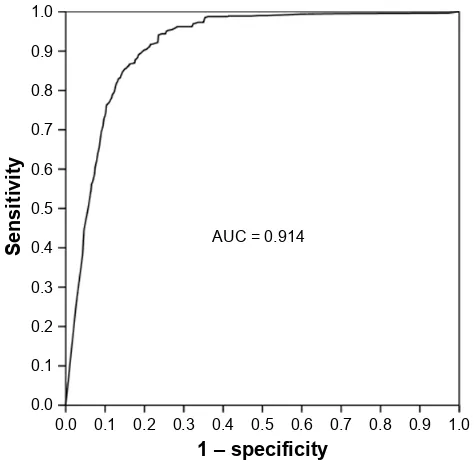
Primary aim of the study described in the current paper was to gather data for a cross-validation procedure to opti-mize and test the Bayesian network model to automatically detect exacerbations. The data were divided in six groups of nine randomly selected patients. In each of the six cross-validity checks, the model learned to identify exacerbations based on the entries of the five training sets and was then tested for diagnostic accuracy on the sixth set. Gold standard were symptom-based exacerbations. The final model, result-ing from the cross-validation procedure, showed an area under curve of the receiver operating curve of 91.4% (95% CI 90.3–92.5; Figure S3).
After the cross-validation procedure, a cutoff point of 85% was chosen to indicate when an exacerbation was at hand. Any risk calculation beyond this point should lead to an automatic advice of ACCESS to contact a health care professional or start a course of prednisolone.
Development and integration of automatic treatment advices
The next goal was to formulate treatment advice based on the risk calculation of the Bayesian network model to be given automatically by ACCESS. However, when discussing the matter in detail with clinicians, it became clear that self-management advice could not solely be based on the risk calculation of ACCESS. To decide in which specific situation what advice should be given by ACCESS, clinical
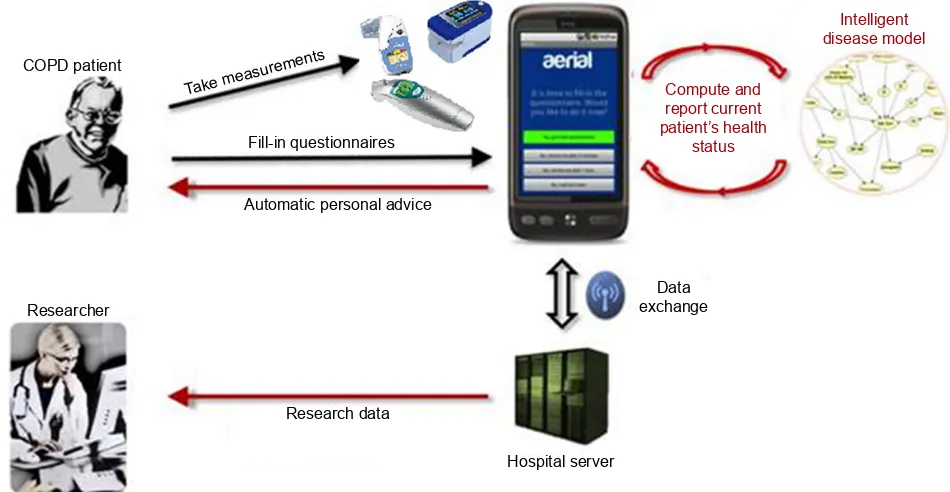
Figure S1 schematic presentation of the aCCess system.
Abbreviation: aCCess, adaptive Computerized COPD exacerbation self-management support. +RVSLWDOVHUYHU 5HVHDUFKGDWD
$XWRPDWLFSHUVRQDODGYLFH
5HVHDUFKHU &23'SDWLHQW
)LOOLQTXHVWLRQQDLUHV
7DNHPHDVXUHPHQWV
'DWD H[FKDQJH
&RPSXWHDQG UHSRUWFXUUHQW SDWLHQW¶VKHDOWK
VWDWXV
,QWHOOLJHQW GLVHDVHPRGHO
International Journal of Chronic Obstructive Pulmonary Disease downloaded from https://www.dovepress.com/ by 118.70.13.36 on 22-Aug-2020
Dovepress Boer et al
expertise was used (Figure S2, Step 2). Expert involvement was realized in a three-step procedure: 1) an expert panel consisting of a pulmonary physician, a general practitioner, and a clinical psychologist discussed with which symp-toms they wanted a patient to take what action, based on their clinical experience and contemporary guidelines for COPD exacerbation management; 2) various health care professionals – pulmonary physicians, pulmonary nurses, general practitioners, practice nurses – provided the advices they would give in four standardized cases on paper; and 3) these advices were then discussed by the expert panel and minor adjustments were made to the decision model.
In contrast to what we had previously anticipated, the expert panel focused on its clinical judgment, rather than using the risk calculation of the Bayesian network model as a base for the advices. This was perhaps inevitable in many
cases, since several advices are initiated based on specific symptoms. Eventually, a cutoff point of the risk calculation of the Bayesian network model was chosen to underlie the expert panel’s decision model for automatic advice. This cutoff point was set at 85%, with a sensitivity of 65.8% (95% CI 62.4–69.0), specificity of 91.5% (95% CI 90.2–92.6), positive predictive value of 75.0% (95% CI 71.6–78.1), and negative predictive value of 87.3% (95% CI 85.8–88.6). When this cutoff point is reached, ACCESS will always provide the advice to contact a health care professional.
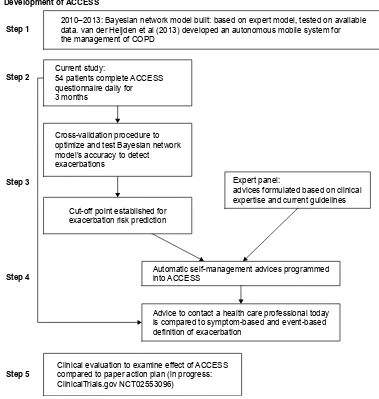
The advices are personalized by the patient’s health care professional, who enters the patient’s FEV1 and SpO2 values in the system as reference values, and adds specific medication instructions for maximal bronchodilator use. Specific advices can be blocked for a patient, if his health care professional deems this best. For instance, if the patient Figure S2 schematic overview of the development of the adaptive Computerized COPD exacerbation self-management support (aCCess) system.
&XUUHQWVWXG\
SDWLHQWVFRPSOHWH$&&(66 TXHVWLRQQDLUHGDLO\IRU PRQWKV
&XWRIISRLQWHVWDEOLVKHGIRU H[DFHUEDWLRQULVNSUHGLFWLRQ
([SHUWSDQHO
DGYLFHVIRUPXODWHGEDVHGRQFOLQLFDO H[SHUWLVHDQGFXUUHQWJXLGHOLQHV
'HYHORSPHQWRI$&&(66
±%D\HVLDQQHWZRUNPRGHOEXLOWEDVHGRQH[SHUWPRGHOWHVWHGRQDYDLODEOH GDWDYDQGHU+HLMGHQHWDOGHYHORSHGDQDXWRQRPRXVPRELOHV\VWHPIRU WKHPDQDJHPHQWRI&23'
$XWRPDWLFVHOIPDQDJHPHQWDGYLFHVSURJUDPPHG LQWR$&&(66
$GYLFHWRFRQWDFWDKHDOWKFDUHSURIHVVLRQDOWRGD\ LVFRPSDUHGWRV\PSWRPEDVHGDQGHYHQWEDVHG GHILQLWLRQRIH[DFHUEDWLRQ
6WHS 6WHS
6WHS 6WHS
6WHS &OLQLFDOHYDOXDWLRQWRH[DPLQHHIIHFWRI$&&(66FRPSDUHGWRSDSHUDFWLRQSODQLQSURJUHVV &OLQLFDO7ULDOVJRY1&7
&URVVYDOLGDWLRQSURFHGXUHWR RSWLPL]HDQGWHVW%D\HVLDQQHWZRUN PRGHO¶VDFFXUDF\WRGHWHFW H[DFHUEDWLRQV
International Journal of Chronic Obstructive Pulmonary Disease downloaded from https://www.dovepress.com/ by 118.70.13.36 on 22-Aug-2020
International Journal of COPD
Publish your work in this journal
Submit your manuscript here: http://www.dovepress.com/international-journal-of-chronic-obstructive-pulmonary-disease-journal
The International Journal of COPD is an international, peer-reviewed journal of therapeutics and pharmacology focusing on concise rapid reporting of clinical studies and reviews in COPD. Special focus is given to the pathophysiological processes underlying the disease, intervention programs, patient focused education, and self management protocols.
This journal is indexed on PubMed Central, MedLine and CAS. The manuscript management system is completely online and includes a very quick and fair peer-review system, which is all easy to use. Visit http://www.dovepress.com/testimonials.php to read real quotes from published authors.
Dovepress
Dove
press
Validation of automated COPD exacerbation self-management support
±VSHFLILFLW\
6HQVLWLYLW\
$8&
Figure S3 rOC curve of cutoff values of the Bayesian network model’s risk calculation to identify a symptom-based exacerbation.
Abbreviations: rOC, receiver operating curve; aUC, area under the curve.
has not been taught coughing techniques, the advice to use coughing techniques would be irrelevant, maybe even confusing.
As a last step in the developmental phase, we have examined in the current study if patients are advised safely and correctly, by comparing the clinically most important ACCESS advice – “Contact a health care professional today” – with a symptom-based and an event-based defi-nition of exacerbations (Step 4). For a clinical evaluation of ACCESS, a randomized controlled trial is in progress, comparing the effect of ACCESS with the effect of a written action plan on exacerbation time (Step 5).
Reference
1. van der Heijden M, Lucas PJ, Lijnse B, Heijdra YF, Schermer TR. An autonomous mobile system for the management of COPD. J Biomed
Inform. 2013;46(3):458–469.
International Journal of Chronic Obstructive Pulmonary Disease downloaded from https://www.dovepress.com/ by 118.70.13.36 on 22-Aug-2020