ABSTRACT
Pure Mg wires with a maximum cumulative area reduction of 98% were obtained by successful cold drawing. Me-chanical properties, microstructures and texture evolution of the as-drawn wires were investigated by tensile tests, transmission electron microscopy (TEM) and electron backscattering diffraction (EBSD). Depending on the mechanical properties and microstructure evolution, continuous dynamic recrystallization (DRX) had taken place during the cold drawing process. DRX during cold deformation has not been reported in other literatures before.
Keywords: Cold Drawing; Magnesium Alloys; Dynamic Recrystallization; TEM
1. Introduction
Magnesium alloys have potentially suitable applications in some automobile and electronics parts due to their excellent specific properties and low weight, so these materials have attracted significant interest [1]. Magne- sium and its alloys show generally low ductility because of the few slip systems in hexagonal close-packed (HCP) lattice and so are categorized in hard plastic materials [2]. Nowadays, tension and compression tests at room tem- perature are the most common methods used to study room deformation behavior of Mg alloys, and the true strain is less than 0.5 [3-7]. Researches on severe plastic- ity deformation behaviors of Mg alloys at room tem- perature can be hardly seen in literatures.
It has been explained in Mg alloys [8-11] that new fine grain evolution can result from continuous DRX includ- ing twinning DRX and rotation DRX at ambient to mod- erate temperatures and, in contrast, from conventional (i.e. discontinuous) DRX including a nucleation of new grains and their larger-scale growth taking place under hot deformation. The reasons why the DRX mechanisms are changed by deformation conditions and how the mechanisms operated remained unclear. DRX of Mg and its alloys at low temperature have not been reported in other literatures.
In this article, a maximum cumulative area reduction of 98% corresponded to a true strain value of 3.86 was
obtained by successful cold drawing, and evolutions of microstructure, mechanical properties and the deforma- tion mechanism during severe cold deformation of pure Mg was investigated.
2. Experimental Procedures
The materials used in the present study are a hot drawn pure Mg (Mg ≥ 99.99%, other alloying elements ≤ 0.01%) wire with a diameter of 2 mm. Figure 1 shows the mi- crostructure and the texture of the initial material con- sisted of equiaxed grains with a mean linear intercept grain size of 38 ± 0.5 μm. Then it was followed by a suc- cessful cold drawing processing with each passed area reduction of 8% ~ 12% ( 1
dn1 dn
2100%,where n is the numbers of processing passes, d is the diameter of wire and is the area reduction of each pass.). The initial pure Mg wires were cold drawn to a maximum cumulative area reduction of 98%
( 1
dn d0
2100%, where is the cumulative area reduction) which corresponded to a true strain value of 3.86 according to the relationship of ln
dn d0
2 (where dn is the wire diameter via n processing passesand d0 is the starting diameter.).
To investigate the mechanical properties, uniaxial ten- sile tests were carried out on the Instron 5569 at room temperature with a constant initial strain rate of 1.67 ×
Microstructures, Textures and Mechanical Properties Evolution during Cold Drawing of Pure Mg 9
Figure 1. Microstructure and texture of the initial pure Mg wire. (The sample direction of the inverse pole figures is drawing direction).
10−3·s−1 and micro-hardness tests were carried out with
pressure of 100 N and time of 15 s respectively.
Metallographic observations were identified by TEC- NAI 20 Transmission electron microscopy (TEM) and electron backscattering diffraction (EBSD) performed on JEOL 733 electron probe equipped with TSL OIM Analysis system, with the observation planes parallel to the drawing direction.
3. Results
3.1. Microstructures
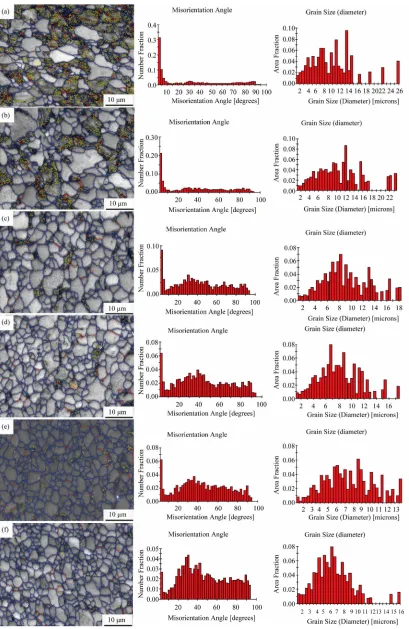
Figure 2 displays the microstructures, misorientation dis- tribution and grain size distribution charts of the as- drawn wires with different area reduction obtained by EBSD in the plane parallel to the drawing direction cor- responding to the crystal reference system with the draw- ing direction, respectively. High-angle boundaries (HAB) angles with misorientations more than 15˚ are delineated by black lines, while low-angle boundaries (LAB) angles in the range of 5˚ - 15˚ by red lines and those in range of 2˚ - 5˚ by yellow lines.
It can be seen that the grains became finer and finer while proportion of the LAB angles in range of 2˚ - 5˚
and the HAB angles in range of 80˚ - 90˚ declined with the drawing process, the LAB in range of 2˚ - 5˚ corre- sponded to the deformation boundaries and the HAB in range of 80˚ - 90˚ corresponded to the {11 - 20} <10 - 11> twinning boundaries. When the cumulative area re- duction smaller than 30%, A large number of severely deformed zones composed of LAB angles were found in the microstructures and some initial grains still existed. The grain size distributions of the samples were decom- posed into regions of coarse grains and fine grains. When the cumulative area reduction in the range of 40% to 50%, only a few of LAB groups in range of 2˚ - 5˚ can be
found. While the cumulative area reduction exceeded 70%, LAB groups totally disappeared; LAB existed in individual form. Microstructures of the samples were composed of almost only recrystallized grains with high- angle boundaries. Finally grains size of the as-drawn wires was refined from 38 μm into 6μm due to continu- ous DRX.
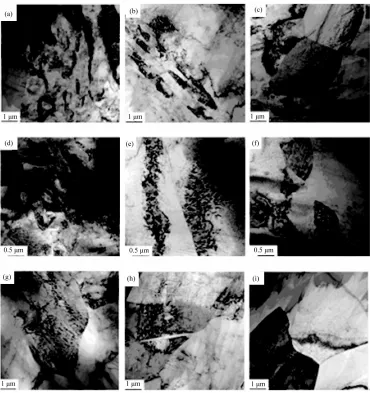
Figure 3 shows the microstructure evolution of pure Mg during cold drawing process obtained by TEM. When the area reduction is 15%, form Figures 3(a) and
(b) it can be seen that a great deal of parallel shear bands and {10 - 12} twinning were observed in the microstruc- tures. This evidenced that basal slip and {10 - 12} twin- ning is the main deformation mechanisms during cold deformation of pure Mg. Simultaneously some final grains with grain size of 0.5 ~ 2 μm were observed in the severely deformed zones, as shown in Figure 3(c). When the area reduction is 30%, the microstructure is almost the same as 15%, the only difference is that the number of the parallel shear bands, twinning and the final grains increased, as shown in Figures 3(d)-(f). When the area reduction is 50%, the number of the parallel shear bands and twinning decreased. Meanwhile, the number of the final grains increased, some small grains began to grow, as shown in Figure 3(g). With the cumulative area re- duction increasing (specimens deformed to 70% and 90%), wide parallel shear bands and twinning almost dis- appeared, the microstructure is composed of large re- crystallized grains; Some slender shear bands and twin- ning was observed in the inside of the recrystallized grains, as shown in Figures 3(h) and (i).
3.2. Texture Evolution
Microstructures, Textures and Mechanical Properties Evolution during Cold Drawing of Pure Mg 11
Figure 3. Microstructures of the as-drawn wires.
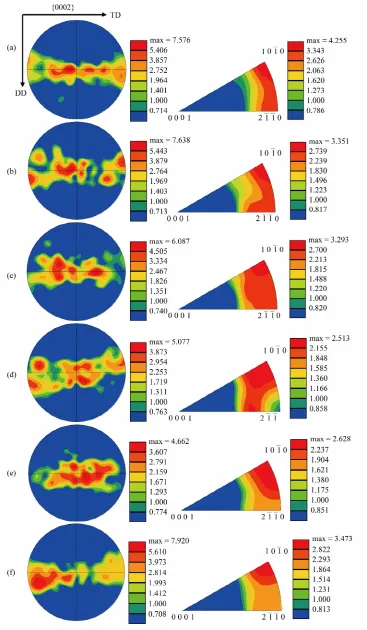
a recrystallization texture with basal plane (0002) and <11 - 20> direction parallel to the drawing direction (DD), as shown in Figure 1. After the drawing process, the as-drawn wires showed a blended texture. Some grains showed deformation texture with basal plane (0002) and <11 - 20> direction parallel to the drawing direction and some grains exhibited recrystallization tex- ture with basal plane (0002) and <11 - 20> direction pa- rallel to the drawing direction, shown in Figure 4. From
Figure 5, the grains boundaries with deformation texture were relatively straight, but the grains boundaries with recrystallization texture were relatively wavy. The pro-portion of the recrystallization texture declined with the drawing process, it can be seen from both Figures 4 and
5.
3.3. Mechanical Properties
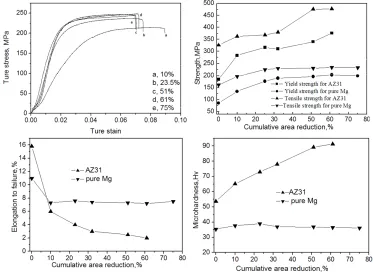
Figure 6 shows the mechanical properties of the as- drawn wires. It can be seen that both the microhardness
(HV) and the tensile strengths, i.e., yield strengths (YS) and ultimate tensile strengths (UTS) increase with in-creasing cumulative area reduction at < 30%, while opposite for ductilities. With the cold drawing process keeping on, the microhardness, the tensile strengths and the ductilities of the as-drawn wires had not obviously changed. This phenomenon is very common during hot deformation due to dynamic recovery (DRV) and DRX but it is very peculiar in cold deformation. It can be speculated that DRV or DRX had taken place during the cold drawing process of pure Mg. Mechanical properties of AZ31 Mg alloy wires with the same drawing process are also shown in Figure 6; it shows an obvious strain hardening behavior during the cold drawing process.
4. Discussion
Microstructures, Textures and Mechanical Properties Evolution during Cold Drawing of Pure Mg 13
Figure 5. Inverse pole figures with different area reduction. (a) 20%; (b) 90%. (The samples direction of the inverse pole fig- ures are drawing direction).
Figure 6. Mechanical properties of the as-drawn wires.
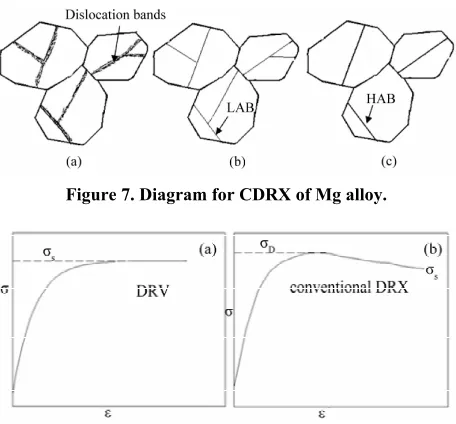
The characteristic of continuous DRX is that nuclea- tion and growth stages of primary recrystallization do not occur. Various terms have been used to describe such micro structural transformations, including “continuous recrystallization” (the most widely used), “in-situ recrys-
[image:6.595.112.485.375.648.2]in Figure 5(b). The mechanical properties curves in this article confirmed that continuous DRX has taken place during cold drawing.
[image:7.595.59.287.497.709.2]Why continuous DRX does not take place for AZ31 Mg alloy wires with the same processing? It has been reported that the DRX temperature for pure metals is higher than its alloys, i.e., the DRX temperature increases from 400˚C to 440˚C when adding 0.04% Li element in pure Cu. It has been reported that DRX is not observed in 99.99% Al, but is in ≥99.999% Al, because the mobility of the GB is so much enhanced by absence of impurities that it undergoes SRX at 20˚C after cold working [20,21]. Alloy elements will obstruct the moving and arraying of dislocations, and will restrain nucleation and sliding of grain boundary during recrystallization. So the recrystal- lization temperature for alloy is much higher than pure metal. Hence, pure Mg exhibits an obvious DRX pheno- menon during drawing at room temperature, while AZ31 Mg alloy shows an obvious strain hardening behaviors.
Figure 7. Diagram for CDRX of Mg alloy.
Figure 8. σ− ε curves controlled by DRV (CDRX) and con-ventional DRX.
plications—Potential,” Materials Science and Engineer- ing: A, Vol. 302, No. 1, 2001, pp. 37-45.
doi:10.1016/S0921-5093(00)01351-4
[2] A. Styczynski, C. Hartig, J. Bohlen and D. Letzig, “Cold Rolling Textures in AZ31 Wrought Magnesium Alloy,”
Scripta Materialia, Vol. 50, No. 7, 2004, pp. 943-947.
doi:10.1016/j.scriptamat.2004.01.010
[3] H. Y. Wu and F. Z. Lin, “Mechanical Properties and Strain- Hardening Behavior of Mg Alloy AZ31B-H24 Thin Sheet,”
Materials Science and Engineering: A, Vol. 527, No. 4-5,
2010, pp. 1194-1199. doi:10.1016/j.msea.2009.09.049 [4] Z. Trojanova, Z. Drozd, P. Lukac and F. Chmelik, “De-
formation Behaviour of Mg-Li Alloys at Elevated Tem- peratures,” Materials Science and Engineering: A, Vol.
410-411, 2005, pp. 148-151. doi:10.1016/j.msea.2005.08.088
[5] T. Samman and G. Gottstein, “Room Temperature Formability of a Magnesium AZ31 Alloy: Examining the Role of Texture on the Deformation Mechanisms,”
Materials Science and Engineering: A, Vol. 488, No. 1-2,
2008, pp. 406-414. doi:10.1016/j.msea.2007.11.056 [6] Y. Chino, H. Iwasaki and M. Mabuchi, “Stretch For-
mability of AZ31 Mg Alloy Sheets at Different Testing Temperatures,” Materials Science and Engineering: A, Vol. 466, No. 1-2, 2007, pp. 90-95.
doi:10.1016/j.msea.2007.02.027
[7] C. H. Caceres and A. H. Blake, “On the Strain Hardening Behaviour of Magnesium at Room Temperature,” Mate- rials Science and Engineering: A, Vol. 462, No. 1-2, 2007, pp. 193-196. doi:10.1016/j.msea.2005.12.113
[8] S. E. Ion, F. J. Humphreys and S. H. White, “Dynamic Recrystallisation and the Development of Microstructure during the High Temperature Deformation of Magne- sium,” Acta Metallurgica, Vol. 30, No. 10, 1982, pp. 1909- 1919. doi:10.1016/0001-6160(82)90031-1
[9] R. Kaibyshev and O. Sitdikov, “Recrystallization and Re- lated Phenomena (ReX’96),” MIAS, Vol. 20, 1997, pp. 287-294.
[10] A. Galiyev, R. Kaibyshev and G. Gottstein, “Correlation of Plastic Deformation and Dynamic Recrystallization in Magnesium Alloy ZK60,” Acta Materialia, Vol. 49, No.
7, 2001, pp. 1199-1207.
Microstructures, Textures and Mechanical Properties Evolution during Cold Drawing of Pure Mg 15
[11] O. Sitdikov, K. Kaibyshev and T. Sakai, “Dynamic Re- crystallization Based on Twinning in Coarse-Grained Mg,”
Materials Science Forum, Vol. 419-422, 2003, pp. 521-
526. doi:10.4028/www.scientific.net/MSF.419-422.521 [12] E. Hormbogen and U. Koster, In: F. Haessner, Riederer,
Eds., Materials, Verlag, Berlin, 1978, p. 159.
[13] E. Hornbogen, “Combined Reactions,” Metallurgical Transactions A, Vol. 10, No. 8, 1979, pp. 947-972.
doi:10.1007/BF02811643
[14] H. J. McQueen and J. J. Jonas, “Treatise on Materials Science and Technology,” In: R. J. Arsenault, Ed., Vol. 6, Academic Press, New York, 1975, pp. 393-493.
[15] E. Nes, “Strain-Induced Continuous Recrystallization in Zr-Bearing Aluminium Alloys,” Journal of Materials Science, Vol. 13, No. 9, 1978, pp. 2052-2055.
doi:10.1007/BF00552917
[16] E. Nes, Metal Science Journal, Vol. 13, 1979, pp. 211-
220.
[17] R. D. Doherty, G. Gottstein, J. Hirsch, W. B. Hutchinson, K. Lucke, E. Nes and P. J. Wilbrandt, Proc. ICOTOM8,
TMS, Warrendale, 1988, pp. 563-572.
[18] F. J. Humphreys and M. Hatherly, “Recrystallization and Related Annealing Phenomena,” Oxford, Pergamon, 1995, pp. 120-123.
[19] X. Yang, H. Miuna and T. Sakai, “Dynamic Evolution of New Grains in Magnesium Alloy AZ31 during Hot De- formation,”Materials Transactions, Vol. 44, No. 1, 2003,
pp. 197-203. doi:10.2320/matertrans.44.197
[20] H. Yamagata, “In Situ Observation of Dynamic Re-
crystallization in Five-Nine Aluminum by a Transmission Laue Method,” Scripta Metallurgica et Materialia, Vol.
30, No. 4, 1994, pp. 411-416. doi:10.1016/0956-716X(94)90595-9
[21] M. E. Kassner, H. J. McQueen, J. Pollard, E. Evangelista and E. Cerri, “Restoration Mechanisms in Large-Strain Deformation of High Purity Aluminum at Ambient Tem- perature,” Scripta Metallurgica et Materialia, Vol. 31, No.
10, 1994, pp. 1331-1336.