Georgia State University
ScholarWorks @ Georgia State University
Economics Dissertations Department of Economics
Fall 12-17-2015
Essays on the Economic Impact of Conflict on
Communities and Individuals
Melissa Rose Trussell Georgia State University
Follow this and additional works at:https://scholarworks.gsu.edu/econ_diss
This Dissertation is brought to you for free and open access by the Department of Economics at ScholarWorks @ Georgia State University. It has been accepted for inclusion in Economics Dissertations by an authorized administrator of ScholarWorks @ Georgia State University. For more information, please [email protected].
Recommended Citation
Trussell, Melissa Rose, "Essays on the Economic Impact of Conflict on Communities and Individuals." Dissertation, Georgia State University, 2015.
ABSTRACT
ESSAYS ON THE ECONOMIC IMPACT OF CONFLICT ON COMMUNITIES AND INDIVIDUALS
By
MELISSA ROSE TRUSSELL
JUNE 2015
Committee Chair: Dr. James C. Cox
Major Department: Economics
This dissertation uses varying approaches to examine effects of war on communities and
individuals in developing countries, specifically in Liberia, West Africa. The first essay is based
on joint work with Robert Moore, which was published in 2012. In it, we use a case study of
Saclepea, Liberia, to illustrate the role that an appropriately designed local economic
development (LED) plan can play in a rural African community emerging from crisis. This case
demonstrates the need for the involvement and cooperation of many parties, including
multilateral aid agencies, local, national, and foreign government agencies, multilateral and
other international non-governmental organizations (NGOs) and local non-profit organizations,
businesses, and individuals. Clear understanding of the stage of assistance (relief,
rehabilitation, development) helps to define the role of each entity and the appropriate goals
for specific developmental efforts. This case confirms that local participation and involvement
in development efforts is an important factor in the sustainability and success of these efforts.
The second essay seeks to answer questions of economic impact of child soldiering in
Liberia. Specifically, I look at post-war earnings and educational attainment of former child
different effects on soldiers than on non-soldiers but that the effects for soldiers do not differ
greatly between those who fought as children and those who fought as adults. Moreover,
contrary to intuition or to findings in previous literature, the lasting effects for former soldiers
do not, in sum, seem to be negative.
In the third essay, I take an experimental approach to understanding trust and
trustworthiness among former child soldiers in Liberia. Liberian subjects’ decisions in the
standard investment game indicate that former child soldiers do not differ in trusting behavior
from either adult soldiers or non-soldiers. However, non-soldiers are less trusting than adult
soldiers, and child soldiers are less trustworthy than those who started fighting as adults. In a
sample of only former child soldiers, those who had only witnessed violence are more
trustworthy than those who had been victims of violence. As a whole, Liberians in this
experiment tend to trust more than Americans who played the same investment game in
previous studies.
The final essay examines many instances of the same investment game to explore the
questions of how violence affects trusting and trustworthy behaviors and how those behaviors
affect a country’s level of violence or peacefulness. Average responses of players in the
investment game are compared across countries experiencing varying degrees of peacefulness
as measured by the Institute of Economics and Peace’s (2015) Global Peace Index. The primary
finding is that this macroeconomic peace index can predict trusting behavior but has no effect
ESSAYS ON THE ECONOMIC IMPACT OF CONFLICT ON COMMUNITIES AND INDIVIDUALS
BY
MELISSA ROSE TRUSSELL
A Dissertation Submitted in Partial Fulfillment of the Requirements for the Degree
of
Doctor of Philosophy in the
Andrew Young School of Policy Studies of
Georgia State University
GEORGIA STATE UNIVERSITY
Copyright by Melissa Rose Trussell
ACCEPTANCE
This dissertation was prepared under the direction of the candidate’s Dissertation Committee. It has been approved and accepted by all members of that committee, and it has been accepted in partial fulfillment of the requirements for the degree of Doctor of Philosophy in Economics in the Andrew Young School of Policy Studies of Georgia State University.
Dissertation Chair: Dr. James C. Cox
Committee: Dr. Robert E. Moore
Dr. Kurt Schnier Dr. Volkan Topalli
Electronic Version Approved: Mary Beth Walker, Dean
Andrew Young School of Policy Studies Georgia State University
iv DEDICATION
This dissertation is dedicated to a generation of Liberians whose childhoods were stolen
by a war they neither asked for nor deserved. To the men and women whose experiences are
v
ACKNOWLEDGEMENTS
I am grateful to my dissertation committee – James Cox, Robert Moore, Kurt Schnier,
and Volkan Topalli – for their insight and guidance throughout this journey. In particular, I
would like to thank my chair, Dr. Cox, for introducing me to experimental economics and for
guiding me through the precise process of constructing and conducting an experiment in a
developing country.
I am indebted to my mentor Dr. Robert Moore for convincing me to become an
economist and for believing in me when I did not. Thank you for making my passion your
priority and for holding me to a standard of excellence. It is no exaggeration to say I would not
be here without your leadership, mentorship, and friendship.
I would like to thank my family and friends for your support and for providing
therapeutic distractions from my work. To my parents, thank you for being my greatest
cheerleaders and for never letting me believe your love or pride depend on my academic
achievements. And to my Liberian family Pastor Monmia, Ma T, and all of Refuge Baptist
Church, thank you for welcoming me into your community and into your families. To my
brother Ocebeo Toway, thank you for providing your invaluable insights into Liberian culture
and economy and for your tireless efforts in assisting me with the logistics of my experiment.
And to Kalen Gary, thank you for making all of this possible – for travelling with me, for working
so hard and so well to make my experiment happen without a hitch, for spending hours typing
data into spreadsheets, and for sharing the emotional burden of hearing the heartbreaking
vi
My essays benefitted from comments of each of the following: Thomas Mroz, Barry
Hirsch, Julie Hotchkiss, Yi Li, Fernando Rios-Avila, Steve Skinner, and Sandy Skinner. My
experimental procedures were developed with the benefit of feedback from my pilot subjects,
Amanda Bathe, Jayme Breedlove, Lauren Dykstra, Michael Ellis, Yi Li, Mary Chase and
Christopher Mize, Robert and Sarah Willis, and Xiaoran Yang. Dr. Christopher Blattman kindly
provided access to the data used in Chapter 3.
Funding for my 2014 trip to Saclepea and for the experiments I conducted there was
provided by the Dean’s Office of the Andrew Young School of Policy Studies through the
Andrew Young School Dissertation Fellowship, the Experimental Economics Center in the
vii
TABLE OF CONTENTS
DEDICATION ... iv
ACKNOWLEDGEMENTS ... v
LIST OF TABLES ... xi
LIST OF FIGURES ... xii
Chapter I. Introduction ... 1
Chapter II. Local Economic Development in Saclepea, Liberia ... 3
Introduction ... 3
The crisis: Liberian civil wars and their impact on Saclepea ... 7
The restoration period ... 10
Relief ... 11
Disarmament ... 11
Rehabilitation ... 13
Reintegration programs ... 13
Schools ... 15
Road repair ... 16
Settling land disputes ... 17
Healthcare ... 18
Business and market ... 19
Development... 20
Development: Accomplishments ... 20
Schools ... 20
Saclepea Community Computer Center ... 21
Women’s Center ... 22
Healthcare ... 24
Development: Opportunities and needs ... 24
Healthcare ... 25
Electricity and plumbing ... 25
Savings and finance ... 26
Education ... 27
Gender issues ... 28
Postal service ... 29
viii
Development plan ... 30
Recommended next steps for development ... 31
Lessons learned from the Saclepea experience ... 33
Conclusions ... 37
Chapter III. Impacts of Child Soldiering Experiences on Education and Employment in Liberia ... 40
Introduction ... 40
Background ... 41
Motivation... 43
Data ... 45
Methods ... 47
Results ... 52
Soldiering status models ... 52
Effects through health or physical problems ... 59
Effects through gender ... 60
Effects through birth cohort ... 61
Effects through marriage and children ... 63
Effects of other control variables ... 64
Violence level models ... 69
Discussion... 70
Limitations ... 73
Implications and Conclusion ... 75
Chapter IV: Trust and Trustworthiness among Former Child Soldiers: An Experimental Approach ... 77
Introduction ... 77
Background ... 78
Literature Review ... 79
Role of Trust and Trustworthiness in Economic Decision-making ... 79
Effects of Child Soldiering on Trust Behavior ... 80
Effects of Child Soldiering on Education and Labor Outcomes... 81
Experimental design and protocol ... 84
Setting ... 84
Recruitment ... 85
The Experiment ... 86
ix
Conjectures ... 89
Results ... 90
Child soldiers vs. other Liberian groups ... 90
Results among only child soldiers ... 100
Liberian subjects vs. American and other African subjects ... 101
Discussion... 103
Second movers ... 103
First movers... 105
Liberians vs. Americans and other ... 106
Limitations ... 108
Trust and Reciprocity or Other-regarding Preferences? ... 108
Problems with Causal Inference: Which Comes First? ... 109
Selection into the Experiment ... 110
Conclusions and Implications ... 110
Chapter V. The Cyclical Relationship of Peace and Trust ... 113
Introduction ... 113
Relevant Literature ... 113
Relationship between war and trust... 113
Measuring trust ... 115
Data and methodology ... 116
Results ... 125
Replication results ... 125
Adding Global Peace Index ... 125
Co-dependence of trust and peace ... 129
Sensitivity analysis ... 132
Conclusion ... 135
Chapter VI. Conclusion ... 137
Appendix A. Additional Tables for Chapter III ... 142
Appendix B: Notes on the relationship between school years and earnings in Chapter III ... 151
Appendix C. Recruitment Instrument for Chapter IV ... 155
Appendix D. Subject Instructions for Chapter IV ... 157
Appendix E. Post-Experiment Interview for Chapter IV ... 161
x
Appendix G. Additional tables for Chapter V ... 167
REFERENCES ... 170
xi LIST OF TABLES
Table 2-1. Recovery tasks by entity type and stage ... 12
Table 2-2: Summary of development progress... 32
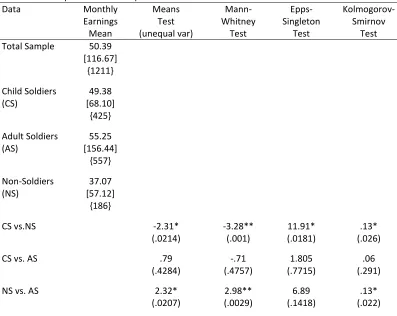
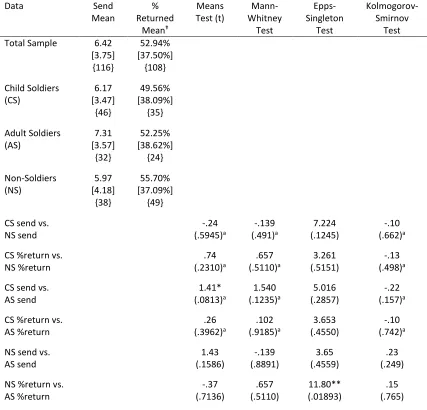
Table 3-1. Group means and nonparametric tests† ... 44
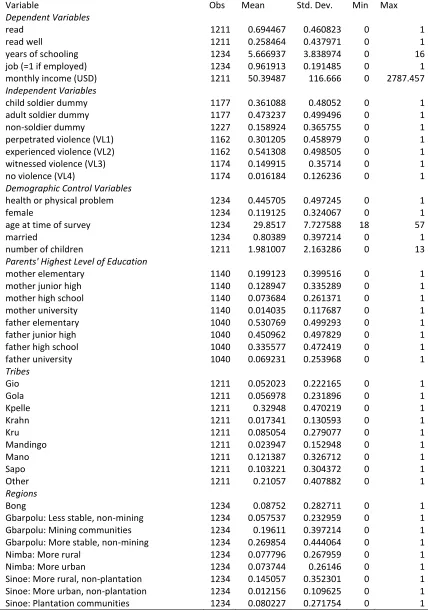
Table 3-2. Summary of data ... 48
Table 3-3. Recruitment regions ... 50
Table 3-4. Job model, statistically significant coefficients only ... 53
Table 3-5. Earnings model for employed subjects, statistically significant coefficients only ... 54
Table 3-6. Model of ability to read at all, statistically significant coefficients only ... 55
Table 3-7. Model of ability to read well, statistically significant coefficients only ... 56
Table 3-8. School years model, statistically significant coefficients only ... 57
Table 3-9. Wald tests for equality of coefficients from soldiering status models ... 58
Table 3-10. Coefficients on combined major tribe variables. ... 68
Table 3-11. Violence level models, violence level coefficients only ... 69
Table 4-1. Groupwise pairings for investment game ... 87
Table 4-2. Descriptive Statistics ... 91
Table 4-3. Group means and nonparametric tests ... 95
Table 4-4. Tobit models for first movers ... 97
Table 4-5. Tobit models for second movers ... 99
Table 4-6. Tobit models for child soldiers alone ... 100
Table 4-7. Group means, non-parametric, and parametric tests- Liberia vs. USA ... 102
Table 5-1. Control variables predicted by Johnson and Mislin (2011) to affect investment game behavior ... 117
Table 5-2. Indicators included in calculation of the Global Peace Index ... 119
Table 5-3. List of countries and regions included in analysis ... 123
Table 5-4. Replication of Johnson and Mislin (2011) models ... 127
Table 5-5. Trust and trustworthiness models with Global Peace Index ... 128
Table 5-6. Models of GPI on trust and trustworthiness... 130
Table 5-7. 3SLS systems of simultaneously solved equations ... 131
Table 5-8. Additional macroeconomic variables used in sensitivity analysis ... 133
xii
LIST OF FIGURES
Figure 2-1. Map of Nimba County ... 39
Figure 3-1. Map of Liberia's counties ... 46
Figure 3-2: Average predicted monthly earnings as a function of age ... 63
Figure 3-3: Average predicted monthly earnings as a function of mother’s education ... 66
Figure 3-4: Average predicted monthly earnings as a function of father’s education ... 66
Figure 3-5: Average predicted monthly earnings as a function of years of schooling... 72
Figure 4-1. Amount passed by first movers ... 93
Figure 4-2. Percent returned by second movers ... 94
Figure 5-1. Percent sent by first movers ... 126
1
Chapter I. Introduction
This dissertation uses varying approaches to examine economic effects of war on
communities and individuals in developing countries, specifically in Liberia, West Africa. In the
next chapter, joint work with Robert E. Moore, we look qualitatively at local economic
development (LED) in the city of Saclepea, Liberia. Using a case study approach, we apply
themes from the LED literature to Saclepea. Categorizing post-war rebuilding tasks into the
distinct stages of relief, rehabilitation, and development helps to identify measurable goals and
to prioritize those goals. It then becomes apparent that lasting, positive development requires
appropriate contribution of resources and expertise from governments, NGOs, businesses, and
international organizations but that it is also necessary for those actors to be intentional about
involving local individuals and entities in all stages of rebuilding.
Chapter 3 takes an econometric approach to answering questions of quantitative,
microeconomic effects of war on individuals who were involved. I use both parametric and
nonparametric analyses to compare earnings across three groups of Liberians six years after the
war’s end: former child soldiers, former adult soldiers, and non-soldiers. I find that non-soldiers
have lower earnings than soldiers, and I present parametric models of employment rate,
literacy, and years of schooling to help explain the earnings differences.
In Chapter 4, I use an investment game experiment to delve further into differences
among the three types of subjects differentiated in Chapter 3. The investment game pairs
subjects into first movers and second movers, and through a short interaction allows the
experimenter to measure the first mover’s trusting behavior and the second mover’s
2
soldiers are less trustworthy than adult soldiers. Furthermore, I find that Liberian subjects
taken together are both more trusting and more trustworthy than American subjects who have
participated in the same investment game.
In Chapter 5, I look more closely at why subjects in some countries might be more
trusting than subjects in other countries. I use a macroeconomic index of countries’
peacefulness along with a pre-existing dataset compiling over eighty instances of the same
investment game from studies in countries around the world. I control for differences in
implementation of the investment game and find that more peaceful countries are home to
more trusting subjects but that peace does not affect trustworthiness. I also model
peacefulness as a dependent variable to allow for the possibility of a simultaneous or cyclical
relationship between peace and trust or trustworthiness. Indeed, I find that such a relationship
exists. Trust does not have a significant effect on peace, but more trustworthy countries are
3
Chapter II. Local Economic Development in Saclepea, Liberia1
Introduction
The goal of this paper is to illustrate the critical role that an appropriately designed local
economic development (LED) plan can play in the enhancement of the quality of life of a
community, especially a community emerging from crisis. In a recent paper, Rogerson and
Rogerson (2010, p. 475) identify a “clear need to capture and examine data on LED experiences
from across the continent” of Africa. They also note the “imperative for pursuing LED
approaches” in rural African regions and small towns (Rogerson and Rogerson, 2010, p. 474).
This paper seeks to provide some of this needed evidence based on the experience, LED plans,
and LED progress and sustainability in the relatively remote city of Saclepea in Liberia. Saclepea
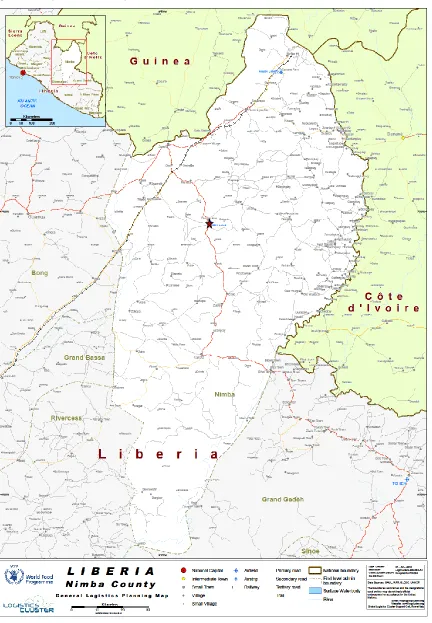
is a city of less that 20,000 people in Nimba County near the borders of Guinea and Côte
d’Ivoire, about 375 kilometers from the Liberian capital of Monrovia.2
In a recent book on LED assistance strategy, economists Corbett and Fikkert (2009),
distinguish among three specific types of assistance: relief, rehabilitation, and development.
Distinguishing characteristics of appropriate relief are urgent and temporary. Relief is aid
provided in response to some form of crisis (war or natural disaster, for example). While
dependency may be present when relief is given, it can be attributed to the externally imposed
crisis. Recipients of relief can well imagine that they could be the donors in a future crisis, and
1 This essay is largely based on joint work with Robert E. Moore (see Trussell & Moore, 2012).
2 Trussell has provided more extensive background information on Saclepea at
4
dignity can thereby be preserved. The aid provided is urgent in that it may be essential to
short-run survival.
As a community emerges from the immediate crisis, there is a need for rehabilitation.
Rehabilitation is the restoration of the positive attributes of the community, which were
present prior to the crisis. At this stage, Corbett and Fikkert (2009, p. 110) suggest, the aid
should become more participatory. Rehabilitation is aid that repairs and restores but should be
put in place in partnership with the recipient community. Rehabilitation is working with, not
doing for.
In this framework, the process of development begins upon completion of rehabilitation
efforts. Corbett and Fikkert (2009, p. 105) define development around the concept of
relationships. Development is not brought to or done for, but rather it is done in partnership
with a community. They identify a key dynamic of development to be an empowering process
that allows each individual involved to more fully achieve his or her potential.
In the context of LED in the United States, Lupton (2007, 2011), an LED practitioner,
touches on themes similar to those of Corbett and Fikkert (2009). Lupton makes the distinction
between betterment and development. He observes, “Betterment improves conditions;
development strengthens capacity” (Lupton, 2007, p. 39). He further notes that efficiency in
delivering aid is not the same as effectiveness of development. A program can be very efficient
in providing food relief but have no long-run impact (development). The problem is that
betterment, or the doing for a target community, while improving conditions, is a one-way
exchange with donors on one side and recipients on the other. This imbalance leads either to
5
of food, clothing, and holiday gift distribution programs. In each case the donor initially feels
good; the recipient has received assistance and is better off, at least temporarily; but the
positive aspects of this interaction are short-lived before souring. The donor becomes
overwhelmed with the needs of and is repelled by the hoarding reaction of the recipients. The
recipients suffer loss of dignity due to the dependency created by their receiver status and
often come to have an undercurrent of resentment for the donors, regardless of how much
benefit they are receiving. Betterment is temporary and therefore ineffective at leading to
long run and ongoing improvements in human conditions in the target community.
In Lupton’s (2007) view, development, on the other hand, strengthens capacity by
creating healthy interdependency. This interdependency is the result of more balanced
exchange, where value is given on both sides of the transaction. In short, Lupton (2007) posits
that the role of aid giver is to create a mutually beneficial exchange (or market) where none
existed before. This is the role of a private sector market in a well-developed economy.
In the orthodox economic theory perspective, markets arise, unaided by public sector
intervention or non-profit organizations, to satisfy societal needs when certain standard
preconditions are met. The need to intervene to foster markets where none exists implies that
standard preconditions (infrastructure, supporting or protecting governmental institutions,
etc.) are not present, or are too weak, or that there is some form of market failure (monopoly
power, asymmetric information, physical or geographical barriers to trade, etc.) that prevents
the natural (for profit) emergence of a market. Lupton’s (2007) analysis does not delve into
6
missing preconditions prior to attempting intervention. Failure to do so could lead to an
underestimation of the challenge at hand.
Corbett and Fikkert (2009, p. 115-9) further warn of the problems of paternalism
specifically in resource, spiritual, knowledge, labor, and managerial forms. Paternalism poisons
the relationships necessary for successful capacity building development. Rather than focus on
what is missing in a community, Corbett and Fikkert (2009, p. 126) and Lupton (2011, p. 139,
177) advise starting with an understanding of the community assets. They describe this process
as Asset-Based Community Development (ABCD).
The critical factors and participant roles of the local economic development (LED)
process in Africa are nicely defined in Rogerson and Rogerson (2010). Our paper is an attempt
to apply the accepted definitions of LED to a specific African case. Additionally, we hope to gain
insight by applying the strategic LED assistance models of Corbett and Fikkert (2009) and
Lupton (2007, 2011). Part of the challenge is that in a specific case there are not cleanly
defined boundaries among the identified core features of LED and participant roles.
Nevertheless, we will attempt to disentangle these for the Liberian city of Saclepea to
determine what can be learned and to illustrate how a development plan can be informed and
improved with this analysis.
We begin with an initial assessment based on first-hand observations between 2010 and
2012. We discuss the recent history of development in Saclepea and describe lessons learned
from Saclepea’s progress between the end of Liberia’s civil wars and 2014, when Trussell
7
not an exhaustive list of development progress in Saclepea since the original analysis, but they
provide some insight into the vector of growth in the city since 2012.
The crisis: Liberian civil wars and their impact on Saclepea
From the drafting of the country’s first constitution in 1847, through the 1970s, Liberia
was a peaceful and relatively prosperous West African nation (Approved Revised Draft
Constitution of the Republic of Liberia, n.d.; BBC, 2012). Liberia's GDP per capita in 1970 was
greater than that of any of its neighboring countries and more than twice that of Ghana
(Heston, Summers, & Aten, 2011). Saclepea, in northeastern Liberia, was no exception to the
Liberian trend of prosperity. Historically, the Mano and Gio tribes resided in Saclepea;
therefore, most of the town's land belonged to individuals and families of these tribes. But, by
the end of the 1980s, business in Saclepea was dominated by members of the Mandingo tribe.
In fact, descendants of multiple tribes lived in Saclepea, and the tribes coexisted – even
intermarried – peacefully (O. Toway, personal communication, September 20, 2011).
In 1980, however, the country was shaken when the Liberian presidency was forcefully
taken from President William Tolbert in a coup led by Samuel Doe, a Liberian military leader,
who became the first Liberian president not descended from freed American slaves, known as
Americo-Liberians (BBC, 2012; Liberia: Coup at Dawn, 1980). Doe's take-over came after
growing perturbation with corruption in Tolbert's regime and with Americo-Liberian leadership
in general (Liberia: Coup at Dawn, 1980). Doe was officially elected president in 1985, but the
election was known to be fraudulent (WGBH Educational Foundation, 2002). His policies
8
Nimba County (Uppsala Conflict Data Program, n.d.). In their effort to increase their economic
and political power, the Mandingo tribe sided with Doe's Krahn tribe. Mano and Gio in
Saclepea and throughout Nimba County became targets of discrimination and violence (O.
Toway, personal communication, September 20, 2011). Thus, under Doe, political and ethnic
tensions continued to increase in Saclepea and in all of Liberia (Uppsala Conflict Data Program,
n.d.).
As a result of these growing tensions, Doe's regime became a target of political plots.
First, in 1985, Thomas Quiwonkpa staged a failed coup but was quickly assassinated (Liberia
Comrades Turned Enemies, 1985). Later, Charles Taylor, a former member of Doe’s regime,
organized an invasion of Liberia across the Côte d’Ivoirian border in 1989 (Peace Direct, 2011).
Taylor's army was primarily recruited from among Gio and Mano Liberians (Uppsala Conflict
Data Program, n.d.). By 1990, Doe had been killed and his government toppled, but factions
split off from each side of the Doe-Taylor conflict, and fighting among these splinter groups
continued and escalated (Peace Direct, 2011). War became rampant in Liberia, with warriors
fighting for various causes, usually related to tribal loyalties. A ceasefire was finally reached in
1996 (Peace Direct, 2011). The next year, Charles Taylor was elected president of Liberia in
democratic elections overseen by the United States (US), the United Nations (UN), the
Organization of African Unity, and the Economic Community of West African States (ECOWAS)
(History of Liberia, 2004).
Peace was short-lived. Political and tribal tension continued to grow, intensified by
Taylor's controversial support for rebels in Sierra Leone's Civil War. In 1999, a second civil war
9
widespread, brutal combat, Taylor resigned in 2003, bringing an end to the second civil war.
UN peacekeepers moved into Liberia, setting the stage for the country’s democratic election of
President Ellen Johnson-Sirleaf in 2005. (Peace Direct, 2011)
During the wars, schools, healthcare, electricity, and water or sanitation systems were
destroyed throughout Nimba County, and formal sector jobs in the county became almost
nonexistent (Nimba County Development Committee, 2008). Saclepea became a “ghost town”
according to one observer. Mano and Gio fighters burned Mandingo businesses and homes,
and they reclaimed land they had previously sold to members of other tribes. Only those who
wielded weapons and joined the fighting were safe in the town. Others were forced to flee,
many hiding for extended periods in the undeveloped bush of rural Nimba County (O. Toway,
personal communication, September 20, 2011).
Liberia has enjoyed relative stability since the second war’s end (Peace Direct, 2011).
Liberians still work, however, to reconstruct their country after fourteen years (1989-2003) of
devastating conflict (Uppsala Conflict Data Program, n.d.). Infrastructure was destroyed in
Liberia’s capital city of Monrovia and throughout rural Liberia. Many Liberian homes and
businesses lost electricity in 1989 and still have not seen its return (Peace Direct, 2011).
According to Penn World Table data, the country's GDP per capita when the wars ended in
2003 was less than 21 percent of its level at the time of the 1980 coup (Heston, Summers, &
Aten, 2011).
In Saclepea, though great strides have been made in the areas of business and
development, much work remains. There are many unsettled land disputes flooding the judicial
10
tribes. In addition, Saclepea was a rebel training ground for child soldiers, and the ramifications
of child soldiering are still felt today, particularly in terms of decreased education and limited
job opportunities for former child soldiers (O. Toway, personal communication, September
20-21, 2011). By one report, “Many of the young people have spent more time engaged in war
than in school” (Nimba County Development Committee, 2008). Of grave concern are the
short- and long-term effects of the trauma of war on the people of Saclepea. A random-sample
study of Nimbaians in 2008 found evidence of posttraumatic stress disorder (PTSD) in 48.3% of
participants (Galea, Rockers, Saydee, Macauley, Varpilah, & Kruk, 2010).
All told, at war's end, over 250,000 Liberians – more than ten percent of the country's
pre-war population – had died, and one-third of the remaining population had sought refuge in
other countries (Heston, Summers, & Aten, 2011; Peace Direct, 2011). Those who stayed to see
the end of both civil wars struggle to pick up the pieces.
The restoration period
Using Corbett and Fikkert's (2009) and Lupton’s (2011) three-stage response to crisis –
relief, rehabilitation, development – one may identify an obvious beginning of the relief period
after a single event crisis such as an earthquake, a tsunami, a bombing, etc. Relief is needed to
restore order immediately following any such event, and once a semblance of stability is
established, rehabilitation may begin. When a crisis occurs over an extended period of time,
the boundary between relief and rehabilitation may not be as easy to precisely determine.
For Saclepea, in the case of the Liberian civil conflict, we consider that relief was
11
about and peace was restored. Figuratively in the Corbett and Fikkert (2009) model and
literally in this case, relief is administered to stop the bleeding caused by a crisis. It seems,
then, that relief in Saclepea had run its course by the end of the war or very shortly thereafter.
With peace came the need for rehabilitation.
Since the entire nation had been crippled by the war, most of the responsibility for the
initiation of rehabilitation fell to international agencies and non-governmental organizations
(NGOs). Table 2-1 provides a brief overview of relief, rehabilitation, and development work
that has begun or been completed in Saclepea, and the table identifies five categories of major
entity types in the process: the Liberian national government, Saclepea’s local government,
intergovernmental organizations (e.g. the UN), international NGOs, and local NGOs or
businesses. According to both Rogerson and Rogerson (2010) and Corbett and Fikkert (2009),
the organizations in all of these categories must cooperate with specific focus on local
development to build Saclepea’s best chance for successful and sustainable development.
Relief
Disarmament
Immediately before and after the official end of Liberia’s civil conflict, the UN and other
agencies moved into the country to aid in the disarmament process. Within two months of the
signing of the peace agreement, the UN in conjunction with several NGOs developed an action
plan for disarmament in Liberia. The action plan charged a Joint Implementation Unit (JIT) with
carrying out a Disarmament, Demobilization, Rehabilitation, and Reintegration (DDRR) program
under the supervision of Liberia’s National Commission on Disarmament, Demobilisation,
12
established and given overall command of DDRR. (UN Development Programme Liberia,
2003-2004)
The disarmament and demobilization program took place in three phases, each phase
opening new disarmament centers progressively further from Monrovia. In all, disarmament
centers were in eight locations throughout Liberia. At each location, weapons were voluntarily
surrendered by men, women, and children – Liberians and non-Liberians – to be destroyed
(Agència Catalana de Cooperació al Desenvolupament, n.d.). The closest disarmament location
to Saclepea was the last location to open (on August 17, 2004) and was in Ganta, about 50 Table 2-1. Recovery tasks by entity type and stage
STAGE
ENTITY TYPE Relief Rehabilitation Development
National Government
disarmament rebuilding schools healthcare
road repair
settling land disputes
Local Government settling land disputes electricity and plumbing
International NGO
reintegration programs computer center
rebuilding schools and
providing supplies
savings and finance
healthcare
Intergovernmental (e.g. U.N.)
disarmament reintegration programs
provision of school
supplies
road repair
Local NGO/Business
business and market improving education
computer center
Women's Center and
gender issues
savings and finance
13
kilometers from Saclepea but relatively easily accessed by a direct road between the two cities
(UN Development Programme Liberia, 2003-2004).
Disarmament phases officially began on December 7, 2003, and ended in
November 2004. By official UNMIL count, 101,495 men, women, and children had been
disarmed and demobilized by the end of the program (Agència Catalana de Cooperació al
Desenvolupament, n.d.).
Rehabilitation
Reintegration programs
After the successful peace agreement and disarmament, Liberians could begin the
process of rehabilitating from the war’s devastation. For former combatants, the first stages of
rehabilitation were included as benefits of the DDRR programs offered by NCDDRR. This official
reintegration program was designed to provide two-and-a-half years of aid before
ex-combatants would be considered “normal” citizens of their communities. Former members of
militant forces, regardless of age, were eligible for reintegration packages provided they first
participated in the NCDDRR disarmament program. Three percent of reintegration program
participants (1651 individuals) chose to settle in Nimba County (UN Development Programme
Liberia, 2003-2004).
The goals of the programs were reconciliation in communities and social and economic
reintegration into society. First, reconciliation and social reintegration: UNMIL went
throughout the country with the message of peace; special emphasis was given to reintegrating
14
provided to community members; and some ex-combatants were given aid to return directly
into participation alongside other community members in education or business. For economic
assistance, aid recipients had several options: 1) 8 months of vocational training,
apprenticeship, or publicly provided jobs; 2) 3 years of regular schooling; 3) a one-time
allotment of agricultural products or aid in establishing an animal farm; and 4) for those who
met further reliability requirements, micro-finance (UN Development Programme Liberia,
2003-2004).
Consistent with Rogerson and Rogerson’s (2010) descriptions of local economic
development in Africa, reintegration programs were designed to require involvement – both
through funding and implementation – from various government and non-government, local
and international organizations, coordinated through the Technical Coordination Committee
and the Project Approval Committee. For example, the United States Agency for International
Development (USAID), Handicap International, and other agencies with expertise in issues
related to women, children, or disabled individuals were called on to assist with reintegration of
those groups. The World Food Programme provided food allowances to new reintegration
participants. Liberia’s own public vocational college, Booker Washington Institute, contributed
both training opportunities and program marketing (UN Development Programme Liberia,
2003-2004).
Liberia’s DDR programs officially ended in April of 2009, having given opportunities for
reintegration aid to 101,495 demobilized Liberians. Smaller, community-level programs
continue to target the approximately 5000 ex-combatants who demobilized but had not
15
Nations High Commission for Refugees (UNHCR) began a dedicated effort to return home and
reintegrate the nearly 63,000 Liberians remaining as refugees outside the country (UNHCR,
2012).
Schools
Rebuilding education is critical to rehabilitating Liberia. In Saclepea, schools did not
officially close during the war, but attendance was, at times, impossible. Saclepeans report
having been chased away from school by armed fighters (O. Toway, personal communication,
March 28, 2012). After the war’s end, Liberia’s national government and international NGOs
(e.g. the Red Cross) moved into Saclepea to rebuild schools. UNHCR, USAID, and other
international organizations contributed school supplies and support. Even still, nearly six years
passed after the war before Saclepean families began to send their children to school with any
regularity for a couple of reasons: 1) many families remained fearful that the war was not really
over, and 2) others felt education was useless in a society in which success and power could be
attained through wielding weapons.
Recognizing that Liberian education still is not fully restored to the state it would have
been in without the war, the West African Examination Council (WAEC) administers a unique
test to Liberians, whose education standards are lower than other WAEC member countries
(The West African Examinations Council, n.d.). Indeed, Saclepea’s schools suffer, among other
issues, overcrowding and under-funding or -staffing. The Peace Corps provides a few outside
teachers for Saclepea’s government school, but improvement of facilities, class sizes, and
16
Road repair
Fourteen years of civil conflict left Liberian infrastructure in a state of devastating
disrepair. A chief concern in and around Saclepea was road condition, particularly between
Saclepea and the larger cities of Ganta and Monrovia. Once a two or three hour drive, now a
trip to Monrovia, if possible at all, would take a minimum of six hours and could take days. In
order to rehabilitate their post-war economy, Saclepeans needed to be able to do business in
Monrovia, Liberia’s port city. Moreover, even within the city, children were sometimes unable
to attend school when potholes filled with rainwater blocked their passage from home to
school. Each county district, including Saclepea’s, listed road repair as its top priority in the
Nimba County Development Agenda (Nimba County Development Committee, 2008).
UNMIL’s station in Saclepea helped with some of the road repair issues. The UN
repaired roads they often used in their daily operations. Thus, the road between Saclepea and
Ganta, where UNMIL has another station, was repaired relatively quickly, and some stretches of
the road to Monrovia have also been made drivable. In 2010 a grassroots community effort
convinced UNMIL to work together with community members to repair one of the worst
potholes within Saclepea so children would not be kept from school during rainy season. This
effort is exemplar of the motivation and cooperation required of local economic development
described by Rogerson and Rogerson (2010). It also displays the importance of gauging
community needs to prioritize projects, a necessity in rehabilitation and development according
17
While roads in much of Liberia still are nowhere near adequate, road construction is
underway throughout the country, including on the roads from Monrovia, through Ganta and
Saclepea, and south to Tapita. Travel from Monrovia to Saclepea was 8+ hours our first visit in
2010 and had improved to 6 hours in 2014. Main roads will be paved to provide safe and
reliable transportation even during Liberia’s rainy season. These repairs will allow Saclepean
vendors to sell in markets in surrounding towns.
Settling land disputes
After fourteen years of unrest, property rights and ownership of land were often fuzzy
at best. Nimba County has experienced the worst of Liberia’s post-war land disputes. In
particular, disputes have raged between the Mandingo tribe, who sided with Doe’s
administration in the war, and the Mano and Gio tribes, who sided with Taylor after they were
targeted by Doe. When the Mandingos moved into Nimba long before the war, the native
tribes welcomed them and lived together with them peacefully, but the formalities of granting
official property rights were overlooked. Thus, when war caused a rift between the groups,
land disputes erupted, sparking arson and further violence.
When violence over disputed land spiked in Nimba in 2006, President Sirleaf appointed
the Special Presidential Nimba Land Disputes Commission to evaluate claims and report
suggestions for resolution. That Commission’s recommendations led to opening new areas for
business to allow members of both parties to own and operate businesses in prominent areas
18
Disputes continued, and in 2008, a second Commission was appointed to evaluate
claims, specifically including claims in Saclepea. This Commission’s work involved 71,389,000
Liberian Dollars (LD) worth of land and promised “win-win” solutions in each case (Violence
Again in Nimba Land Feud, 2012).
As of May 2012, many suggestions from the first Commission had not been
implemented, and solutions promised by the second Commission had not been announced.
But, by June, in accordance with findings and recommendations of the second Commission,
monetary compensation had been provided to displaced parties of disputes in 75% of the
Commission’s coverage area, including in Saclepea. Violence is still a threat in the areas of
Nimba that have not received promised compensation, and in 2012, concerned citizens in
Ganta organized to petition for a speedy solution (Carter, 2012; Violence Again in Nimba Land
Feud, 2012). Reports indicated that tensions surrounding land disputes had improved but not
completely subsided in 2014.
Healthcare
Prior to Liberia’s civil war, Saclepea had accessible, yet sometimes inadequate,
healthcare. Access to healthcare deteriorated during the fourteen-year conflict. Not long after
peace agreements were signed, the French organization Medcins Sans Frontiers (MSF or
Doctors Without Borders) began to help restore Saclepean healthcare to its pre-war condition.
MSF staffed the Saclepea Health Center on the outskirts of town from 2003 until 2009, when
MSF deemed the Center prepared for the international organization’s withdrawal (O. Toway,
19
Funded by the Liberian government, the Center includes a public pharmacy and
provides in-patient and outpatient care free of charge. It has now, in fact, surpassed the level
of care provided in Saclepea before the civil war (O. Toway, personal communication, May 17,
2012). Thus, the Saclepea Comprehensive Health Center is a success story demonstrating ways
of helping without hurting; MSF took charge of rehabilitation but involved local personnel so
that by the end of MSF’s stay in Saclepea, the Center was prepared to operate and continue
growth without outside intervention.
Business and market
Business in Saclepea nearly vanished during the fourteen-year war. Only those who
were willing to fight were able to have businesses. The only jobs available were soldiering jobs,
and if a non-soldier were caught trying to buy or sell, his belongings would be stripped from
him without cause or delay (O. Toway, personal communication, June 1, 2012).
After the war, Saclepea’s businesses began to bounce back relatively quickly, spurred by
international NGOs, who bought food and supplies locally when they moved into the region to
aid the recovery. Saclepea’s economy now revolves around its weekly market, which has
outgrown its pre-war popularity and is now one of the largest outdoor markets in Liberia. The
center of town features a small-scale daily market and a bustling business district of small shops
open daily to sell items like furniture, flooring, cell phone charging services, cassette tapes, and
20
Development
In order to best capture the progress of efforts to date in Saclepea, we have separated
the analysis of the development stage into two parts. In the next section, we review the
development accomplishments, and in the following section, we review the remaining
opportunities and needs.
Development: Accomplishments
Schools
After rehabilitation efforts had rebuilt schools in Saclepea, local churches began to
contribute to development of education beyond pre-war standards by establishing their own
schools as a means of providing education but also of financially supporting the churches. In
2012, Saclepea had fourteen schools, the majority of which were privately funded. By 2014,
the city had at least two new private elementary schools.
Saclepea struggles to improve education quality; therefore, Atlanta-based non-profit
West Africa Crossroads Corporation (WACC) funded teacher training in Saclepea in 2010. The
training lasted for 20 eight-hour days and involved three classes of 40 teachers each, 75 percent
of whom considered themselves Saclepeans. Making local involvement a priority, WACC
provided only direction and funding (salaries for instructors and administrators, stipends for
participants), and staffing and enrolling were left to Saclepea’s District Education Officer (DEO).
Training was well received, with 100 percent positive feedback from teachers and
administrators, but WACC board members were unhappy with administrative oversight. WACC
21
appointed himself and a Saclepean principal to be trainers (and earn trainers’ salaries).
Moreover, WACC received information that the amount of time spent on administrative tasks,
such as taking attendance, was more than ideal, and valuable instruction time was lost.
WACC has since shifted its focus toward computer-based learning with the
establishment of the Saclepea Community Computer Center. WACC president Steve Skinner
reports, “We don't believe it is feasible to bring the existing base of teachers up to competent
levels of performance; hence, our focus on computers” (personal communication, June 26,
2012 & September 13, 2012).
Saclepea Community Computer Center
In January of 2011, WACC – committed to following the model set forth by Corbett and
Fikkert (2009) – mentored Saclepeans through the process of opening a public, for-profit
community computer center. The Saclepea Community Computer Center (SCCC) provided
computer training courses as well as open computer and Internet access (with fee for time in
use) to community members. SCCC’s board members and employees all were Saclepean
citizens, and by the end of 2011, SCCC had recorded “over 1000 hours of web browsing, 300
graduates of computer classes, [and] 5000 pages of printed documents and certificates” (West
Africa Crossroads Corporation, 2011).
The SCCC was fully owned and operated by Saclepeans, and WACC intentionally limited
its involvement to analyzing financial reports and providing advice when it was requested.
WACC reported in September of 2012 that the Center was “making money and [had] a healthy
22
build a new facility on donated land, and the building’s foundation had been laid. (Sandy
Skinner, personal communication, September 19, 2012).
Unfortunately, due to some poor management decisions and disagreements among
board members and between staff and the board, the SCCC had been closed several months
when we arrived in early 2014. Under the leadership of the founding board chairman, new
board members had been appointed to take the place of members who had been absent from
meetings, and the original staff had been fired and replaced. Almost no communication was
being made with WACC.
The building that had begun years earlier was not completed, and the SCCC had recently
started renting a new space in town. The new board was working to reopen the center for daily
operation in this space and had begun recruiting for a computer class to be offered there in the
near future.
Women’s Center
Saclepea native Theresa Monmia founded the Saclepea Women’s Center in 2008 to
raise awareness of the plight of women and girls facing gender based violence (GBV). Located
near the center of town, the Women’s Center offers workshops and counseling for both victims
and perpetrators of GBV.
In 2014 it was clear that the Women’s Center was still an impressive and highly
successful force for development in Saclepea. Prior to 2014, the Saclepea Women’s Center was
operated by local Saclepean women and affiliated with the International Rescue Committee
23
of violence against women, but they were not authorized to settle cases of domestic dispute;
rather, they reported cases to IRC who would then send caseworkers to Saclepea to investigate
and settle the cases.
In February of 2014, the IRC turned over legal responsibilities of the Women’s Center
wholly to the local women. Having worked closely with IRC caseworkers for many years, the
Center’s local volunteers were prepared to be named social workers themselves and given
authority to settle legal domestic disputes. The Center also was able to establish a payroll that
included these new caseworkers as formal employees.
Several cases were tried and decided by the new, local caseworkers during the few
weeks that we were in Saclepea. One or more caseworkers investigated circumstances, heard
testimony, and pronounced judgment in each case. The decision of the caseworker and
punishments or awards announced by her are legally binding, similar to judgment in a civil suit
in the U.S. Caseworkers do not try criminal cases but often are called upon to give testimony
before criminal courts.
In addition to bringing justice in cases of domestic abuse, a focus of the Women’s Center
efforts is to economically empower women, thereby allowing them the freedom to remove
themselves from abusive relationships. The Center owns a large swamp in which they employ
women to plant, cultivate, and harvest rice. Women then take part in cleaning and selling the
rice in Saclepea’s market, and they divide the profits among themselves. In 2010, the Center
was awarded a contract from the World Food Programme to provide all the rice for school
lunches in Saclepea and surrounding areas. The women also have recently begun to farm crops
24
The Women’s Center offers its members the opportunity to participate in a savings club
to help them manage their money. Participants contribute monthly, and the money they save
is invested in the Center’s rice business. At the end of each year, women are given back their
investment plus a portion of the rice profit, and they may choose to reinvest for the following
year. The Saclepea Women’s Center is making a non-trivial impact on local economic
development in Saclepea as it builds a strong force of economically independent women.
Healthcare
Saclepea has several privately funded health clinics and one public clinic, each with its
own pharmacy. Healthcare in Saclepea is supported not only by local and national
organizations but also by international aid. Pharmacies are stocked by international NGOs who
send overstocked or outdated drugs from other countries to Liberia. Moreover, Saclepea’s
public health center received a large shipment of hospital beds and other medical equipment
from WACC in 2011 (West Africa Crossroads Corporation, 2011).
The public health clinic suffered setbacks during the 2014-2015 Ebola outbreak when
several staff members were forced into three weeks of quarantine after contacting a patient
with the disease. Since the outbreak was concentrated in Monrovia, Saclepea saw only a few
cases of Ebola, and the health clinic was able to return quickly to regular operation.
Development: Opportunities and needs
In 2008, Nimba County officials, with the help of the UN, prepared a county
25
health facilities remain in poor condition,” and then establishes goals and a timeline for their
improvement (Nimba County Development Committee, 2008). The following subsections
discuss some of the stated needs as well as other observed areas for improvement.
Healthcare
While Saclepea has better healthcare than surrounding villages, there remains
significant room for improvement. Saclepea has three mid-sized health centers with
pharmacies, but physicians’ assistants or nurses generally treat patients because doctors are
not often present in any of the centers (Medical Centers Risk Closure, 2010). The nearest
facility with a surgical capacity is in Ganta. In 2010 the publicly-funded Saclepea Health Center
applied to the Liberian government to become a full-fledged hospital including an operating
room, but the application was denied because funding was already being directed toward
building a hospital in the city of Sanniquellie in Nimba, approximately 80 kilometers (by
mostly-unpaved road) northeast of Saclepea.
Electricity and plumbing
Availability of electricity and indoor plumbing in Saclepea has been the same since
before the war: only wealthy community members are able to afford either. Most of Saclepea’s
homes have no restrooms; some have outhouses with latrines and with or without toilets; a
few have indoor restrooms with toilets and septic tanks but without running water for flushing
26
Saclepea’s industries lack the ability to operate with full efficiency because they do not
have access to commercial electrical power. For example, both tailors and carpenters work
exclusively with hand- or foot-powered machinery. Their other options are solar power or
gasoline or diesel generators, none of which are considered financially feasible for most
businesses. This issue could be solved through electrification or through establishment of trade
cooperatives for sharing the cost of generators and electric equipment. In fact, carpenters in
Saclepea have demonstrated that such cooperatives are feasible at least in some trades by
joining together to purchase electrical equipment that is shared among the carpenters.
Hope is on the horizon for the electrification of Saclepea. Liberia’s neighbor Côte
d’Ivoire has an electric grid supplied by privately owned gas and hydroelectric generators, and
Ivoirians export electricity throughout West Africa to countries including Benin, Togo, Burkina
Faso, and Ghana (Electrical Power in Côte d’Ivoire, 2012). Liberia has begun to allow Côte
d’Ivoire to extend its electric system across the border into Nimba County. Electricity poles and
lines have been installed from the Ivoirian border, through Ganta, and into Saclepea. Power
lines have not yet been run to individual homes or businesses in Saclepea, but Saclepeans
anticipate being able to purchase Ivoirian electricity within the year.
Savings and finance
Saclepea has no formal bank. Small loans are available through some businesses and
organizations, but interest rates are extremely high. No long-term loans are offered, and the
duration of available loans is so short the loans are often useless. Saclepeans who would start
27
the loan market exaggerates the hurdles. There is, therefore, a financing gap in Saclepea that
could be filled by an organization – business or NGO – offering affordable and fair microcredit
to would-be business owners.
A bank or other financial institution could also respond to a local market for savings
opportunities. The success of the Women’s Center savings club is evidence not only that
Saclepea has demand for savings plans but also that local opportunities for pooled savings
investment and interest earnings exist.
Education
One of the three stated goals of the Nimba County vision statement is that “all citizens
of Nimba County will have access to education” (Nimba County Development Committee,
2008). As noted above, Saclepea has made strides to return its education system to pre-war
standards, and by some measures, the current system has grown beyond the pre-war level, but
the overall quality of educational opportunities available in Saclepea is so poor that it hampers
development.
Unfortunately, schools do not seem to be on a trajectory of substantial improvement.
We visited two private elementary schools in 2014 that had opened since 2011. These new
schools do not differ much in quality from other schools we had visited. One encouraging
difference, though, is that both of these newer schools offer a daycare program for children
younger than typical school age. The daycare classes function much like daycare in the U.S.,
providing parents with a safe place to leave young children during the day. The children
28
Young men and women in Saclepea want to learn. Even without attendance
requirements, they crowd classrooms daily. But, textbooks are a rare find, and teachers
without training in their subjects or in pedagogy are the norm. Many high school graduates are
deficient in language and math skills, and they have little to recommend them for employment.
The only two public (and affordable) colleges in Liberia are in Harper, in Maryland County, and
in Monrovia, neither of which is within commuting distance from Saclepea. Most high school
graduates, if they can afford tuition, cannot afford moving and living expenses. Fortunate
students or graduates are taken as apprentices and taught a trade like carpentry, sewing, or
commercial art. Others are offered positions as high school teachers, becoming yet another
untrained educator.
A common observation among Saclepeans is that many high school graduates “roam
around” or drive motorcycle taxis wishing for opportunities for higher education or training in a
trade. Given better opportunities, more young Saclepeans could become contributors to the
economic welfare of the city. Accordingly, Saclepea would benefit from regular teacher
training, a trade school or technical college, or a four-year college in or near Saclepea.
Gender issues
Saclepea’s economy suffers from a striking absence of females in education and in the
workforce. Families seem stuck in a cycle that devastates the culture and economy: 1) in
middle school, girls become pregnant and begin to drop out of school to care for children. 2)
Children become an economic burden, and mothers trade sex for economic security. 3) These
29
economy or to pull themselves out of this cycle. 4) Young girls know they are financial burdens
to their mothers and begin very early to sell themselves to alleviate that burden. 5) The cycle
begins again for the next generation of girls.
Since Saclepea is without refrigeration, nursing mothers do not have the option of
leaving their children with a caregiver. Thus, mothers of young children who would otherwise
be able to work cannot leave home for extended periods. Almost half of Saclepea’s labor force
is incapacitated by unplanned, unwanted perpetual pregnancy.
Saclepea’s Women’s Center offers some hope of interrupting this cycle, but faster
progress could be made with more forces dedicated to addressing gender issues in Saclepea.
For example, offering night classes for young mothers may enable them to continue education
they have missed due to pregnancy and motherhood.
Postal service
Saclepea is currently without a reliable means of shipping and receiving letters or
packages from outside. A post office has been erected in Saclepea, but it is not yet operational.
Residents hope to have access to local P.O. boxes in the near future. Meanwhile, some
individuals and businesses have opened boxes at a post office in Ganta.
The Saclepea market depends on sales of goods brought in from Monrovia and cities in
surrounding countries, but individual sellers routinely make long, dangerous trips across
unpaved, potholed roads to gather goods. Merchants will benefit from privately or publicly
30
Current assessment
Development plan
The Nimba County Development Agenda was drafted in 2008 for implementation
through 2012. Many of its goals have not yet been met. Still, with a couple of key exceptions –
roads and education – Saclepea has progressed through both relief and rehabilitation and is on
the cusp of significant development opportunities. Most current development efforts
intentionally include local involvement; some even are spearheaded by local residents (e.g.
church schools, the orphanage health center, and the Saclepea Women’s Center).
In 2012, President Johnson-Sirleaf appointed the Acting Superintendent of Nimba
County, Hon. Teeko Tozay Yorlay, to be the Assistant Superintendent for Development of
Nimba. In a press statement following his appointment, Yorlay thanked “the elders, women,
paramount, clan and general town chiefs, statutory district superintendents, township and
district commissioners, our development partners, international and local NGO’s, Civil Society
Organizations, as well as the general public” and Nimba’s youth for past support of
development in the county. He also called for the continued cooperation of “all […] Nimbaians,
development partners, local and international NGO’s, the CSO’s and CBO’s to support us,
collaborate with us and cooperate with us every step of the way” in a renewed development
effort in the county (Yorlay, 2012).
The evidence strongly suggests that the economy in Saclepea is, in fact, improving.
While the quality of education has not made great strides, educational opportunities are
expanding, especially for younger children. Saclepea’s domestic dispute cases are now tried
31
has had a rocky beginning, the desire to make it work is still alive among the city’s leaders. And
perhaps most importantly, with improvements to infrastructure (roads and utilities), businesses
face lower costs and higher prospects for growth. But, Saclepea is not fully out of the woods. If
the city is to continue its transition from post-war recovery to development, all levels of
government will need to work with inter-governmental organizations and NGOs to provide the
appropriate amount of support while working toward giving local individuals and organizations
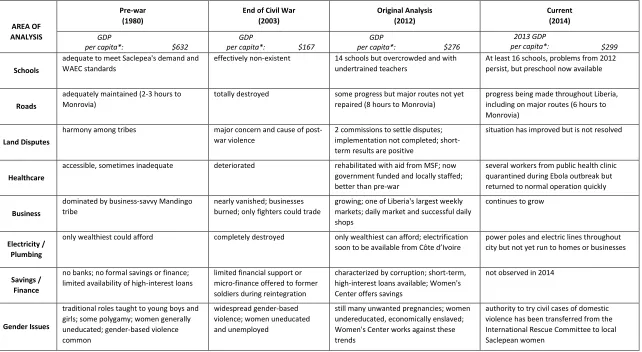
increasing responsibility for local economic development. Table 2-2 summarizes progress that
has been made, and the following section outlines recommended next steps.
Recommended next steps for development
Next steps in continuing development in Saclepea are two-fold: steps that should be
taken by national and international organizations and those that should be locally
concentrated. The national government, with help as necessary from the UN or other
international organizations, should continue to focus on rebuilding Liberia’s infrastructure,
particularly roads. Adequate transportation throughout the country is absolutely necessary if
Saclepea is to have viable access to other local markets and thus reach its full development
potential. As roads are reconstructed, special attention should be given to involving,
empowering, and employing local governments and individuals to insure that the projects are
ordered by greatest local impact.
Saclepeans should direct their focus toward improving education and providing sources
32 Table 2-2: Summary of development progress
AREA OF ANALYSIS
Pre-war (1980)
End of Civil War (2003) Original Analysis (2012) Current (2014) GDP
per capita*: $632
GDP
per capita*: $167
GDP
per capita*: $276
2013 GDP
per capita*: $299
Schools
adequate to meet Saclepea's demand and WAEC standards
effectively non-existent 14 schools but overcrowded and with undertrained teachers
At least 16 schools, problems from 2012 persist, but preschool now available
Roads
adequately maintained (2-3 hours to Monrovia)
totally destroyed some progress but major routes not yet repaired (8 hours to Monrovia)
progress being made throughout Liberia, including on major routes (6 hours to Monrovia)
Land Disputes
harmony among tribes major concern and cause of post-war violence
2 commissions to settle disputes; implementation not completed; short-term results are positive
situation has improved but is not resolved
Healthcare
accessible, sometimes inadequate deteriorated rehabilitated with aid from MSF; now government funded and locally staffed; better than pre-war
several workers from public health clinic quarantined during Ebola outbreak but returned to normal operation quickly
Business
dominated by business-savvy Mandingo tribe
nearly vanished; businesses burned; only fighters could trade
growing; one of Liberia's largest weekly markets; daily market and successful daily shops
continues to grow
Electricity / Plumbing
only wealthiest could afford completely destroyed only wealthiest can afford; electrification soon to be available from Côte d’Ivoire
power poles and electric lines throughout city but not yet run to homes or businesses
Savings / Finance
no banks; no formal savings or finance; limited availability of high-interest loans
limited financial support or micro-finance offered to former soldiers during reintegration
characterized by corruption; short-term, high-interest loans available; Women's Center offers savings
not observed in 2014
Gender Issues
traditional roles taught to young boys and girls; some polygamy; women generally uneducated; gender-based violence common
widespread gender-based violence; women uneducated and unemployed
still many unwanted pregnancies; women undereducated, economically enslaved; Women's Center works against these trends
authority to try civil cases of domestic violence has been transferred from the International Rescue Committee to local Saclepean women