Full Length Research Article
COMPLEX CREEP COMPLIANCE MODULI OF POLYMER MATERIAL UNDER FORCE HARMONIC
LOADING AT THE DIFFERENT AMPLITUDE, TEMPERATURE AND FREQUENCY
*Mohammad Hashemi and Yaroslav Zhuk
National Taras Shevchenko University of Kyiv, Department of Theoretical and Applied Mechanics, Ukraine
ARTICLE INFO ABSTRACT
Viscoelastic properties of polymeric materials are of fundamental importance to understand their mechanical behaviour, especially dealing with dynamic and vibration problems. In the present research, the generalized and modified yield theory of Goldberg constitutive model is used to predict the time dependent inelastic response of polymer materials. The approach that uses the complex-value amplitude relations is preferred rather than direct numerical integration of the complete set of constitutive equation for the material, in the other words, to simulate the response in terms of amplitudes, the relations between the amplitudes of main field variables are established with making use of complex moduli concept. It is usually done by making use of equivalent linearization technique. It is shown that this technique leads to overestimation of stress amplitude. To avoid this, the modified equivalent linearization technique is applied. Characterization of the complex moduli dependence on frequency and temperature as well as amplitude of stress intensity is performed. Results demonstrate a weak dependence of imaginary part of compliance moduli on the frequency of the loading within the wide interval of it, while variation of imaginary part of compliance moduli with increasing temperature is more pronounced.
Copyright©2017, Mohammad Hashemi and Yaroslav Zhuk. Thisis an open access article distributed under the Creative Commons Attribution License, which permits unrestricted use, distribution, and reproduction in any medium, provided the original work is properly cited.
INTRODUCTION
Viscoelastic or elasto-plastic material under cyclic loading (beyond the elastic domain) yields a hysteresis loop in the stress-strain relationship. In the other words, a part of the strain energy is not recovered but dissipated during the cycle. This phenomenon is usually called the “dissipative heating” (Beards, 1996 and Zhuk, 2004). These materials can exhibit specific time dependent properties and can be deformed inelastically being exposed to high stress levels. There are currently two approaches to address this issue. In the first approach, the complex set of constitutive equations governing response of numerous internal parameters is introduced. The relationship between these parameters and the strain and temperature history yields evolution equations, which account for both dynamic recovery, and also creep. For polymers, the constitutive modeling utilizes, either directly or with some modifications, viscoplastic constitutive equations which have been developed for metals. The generalized yield theories of Schapery, Perzyna, Frank and Brockman, Goldberg and others (Bodner, 1975; Frank, 2001, Goldberg, 2002 and Zaïri, 2005),
*Corresponding author: Mohammad Hashemi,
National Taras Shevchenko University of Kyiv, Department of Theoretical and Applied Mechanics, Ukraine.
apply to identify this relationship. It is generally admitted that to describe the material time dependent behavior accounting for different features and peculiarities over the cycle of vibration, a direct integration of the set of constitutive equations is necessary. Usually it appears to be time and resource costly for multi-cyclic processes. Within the second approach, the approximate amplitude relations are used to characterize the cyclic response of the material, i.e. the relations between amplitudes of the main mechanical field parameters over the cycle (Senchenkov, 2004). Naturally, the application of this technique is justified for the class of problems where there is no need for detailed information on the material response during the cycle (life prediction of the structure, failure due to overheating as a result of internal dissipation etc.). The key point of the amplitude theories is concept of complex moduli (Senchenkov, 2004). For an inelastic (particularly viscoelastic) material, the modulus governing the relation between strain and stress amplitudes is represented by a complex quantity with real and imaginary parts referred to as storage and loss modulus respectively. The former characterizes elastic response of material and the latter one defines the dissipative ability of the material (Senchenkov, 1996). In other words, the energy is stored during the loading part of cycle and released under unloading phase, whereas the energy loss occurs during complete cycle due to dissipative
ISSN: 2230-9926
International Journal of Development Research
Vol. 07, Issue, 01, pp.10942-10946, January,2017
DEVELOPMENT RESEARCH
Article History:
Received 24th October, 2016
Received in revised form 11th November, 2016
Accepted 27th December, 2016
Published online 30th January, 2017
Key Words:
properties of the material. The drawback of the approach was the overestimation of stress amplitudes as a result of making use of standard equivalent linearization technique for calculation of both storage and loss moduli. To overcome this difficulty, the modified scheme was proposed in (Zhuk, 2004; Senchenkov, 2004 and Hashemi, 2015). But applicability of the method should be verified for each particular type of the material. Considering the importance of examination of self-heating effect under cyclic loading in polymeric materials, researches done on time dependent behavior of polymeric materials are mainly aimed to study the viscoelastic behavior in different frequency application over wide ranges of loading amplitudes. These researches show that, the temperature will change with respect to the frequency spectrum of cyclically loading due to the stress relaxation processes in the material, thus it is necessary to determine the dependence of the modal characteristics in a frequency domain on mechanical properties at special steady state of temperature. This paper is devoted to investigation of the technique applicability to the typical viscoelastic materials such as PR-520, and to determination the frequency and temperature effects on complex compliance moduli for wide range of force loading amplitudes. Particular attention will be paid to simulation of cyclic response of pure polymer material (PR-520) to monoharmonicforce loading in the frame of the second approach.
Constitutive relations
To accurately predict an overall performance and lifetime of polymer, it is necessary to model time dependent and inelastic responses. Viscoelastic materials such as polymer materials have the particularity of possessing viscous, elastic and, under some conditions, plastic behavior. Constitutive material models of viscoelastic solids have been proposed for isotropic materials undergoing small deformation gradients whereas the inelastic strain can be calculated as the difference of the total strain and elastic strain. Goldberg et al. (Goldberg, 2002 and Gilat, 2006), proposed a model for predicting the viscoplastic response of neat polymers, utilizing a set of state variables as an indication of the resistance of polymeric chains against flow. It should also be mentioned that polymer’s mechanical properties and loading/strain rate are the two main parameters that govern the nonlinear response of the polymer. The formulation employed in this model is based on that used by Pan and co-workers (Hashemi, 2015). According to this model, the inelastic strain components can be expressed in terms of the deviatoric stress components as follows
, δ J
s Z
exp D =
ε ij ij
n
e in
ij
22
0
2 2
1 2
(1)
where,
ε
ijin is the inelastic strain rate tensor which can bedefined as a function of deviatoric stress(
s
ij) and the statevariables Z and . The state variable controls the level of
the hydrostatic stress effects. J2is the second invariant of the deviatoric stress tensor that can be expressed as a function of σij. Moreover, D0 and n are material constants; D0 represents the maximum inelastic strain rate and n controls the
rate dependency of the material. The equivalent effective stress(e), also be defined as a function of the mean stress,
such that the summation of the normal stress components σkk is three times of the mean stress, as follows
,
3
3
2 kke
J
(2)the evolution of the internal stress state variable Z and the hydrostatic stress state variable are defined by the
equations
,
e
)
Z
Z
(
q
Z
ine
1 (3)
,
)
(
1in e
e
q
(4)whereq is a material constant representing the “hardening” rate, and Z1and
1 are material constants representing the maximum values of Z and , respectively. The initial values of Z and are defined by the material constants Z0and0.The term in e
e in equations 3 and 4 represents the effective deviatoric inelastic strain rate.
Complex moduli approach
In this investigation, approximate model of inelastic behavior developed in (Zhuk, 2004 and Frank, 2001), for the case of proportional force harmonic loading has been used. In this case, the cyclic properties of the material are described in terms of complex compliance moduli. It is important to notice that the inelastic deformation is considered to be incompressible and thermal expansion is dilatational, it may be more convenient in some applications to separate the isotropic stress-strain relations into deviatoric and dilatational components that can be shown by equations as
, ε σ K ε , ε s J =
e kk
V kk in ij ij ij
3 1 2
1
(5)
whereJ is the compliance modulus, KV is the bulk modulus, i , j, k1,2,3 and repeated index implies a summation over.
Due to incompressibility of plastic deformation, in0
kk
ε , i.e. the plastic strain rate is deviatoric: in in.
ij ij e
ε
According to this model, if a body as a system subjected to harmonic deformation or loading, then its response is also close to harmonic law
. t sin s t cos s ) t ( s
, t sin e t cos e = ) t ( e
ij ij
ij
ij ij
ij
(6)
The complex amplitudes of the deviator of total strain, e~ , ij
inelastic strain, in ij
e
~ , and the stress deviator,
ij
s , are related in the Nth cycle by the complex compliance modulus, J~N, and plasticity factor, ~JN,under force harmonic loading as shown below
,...
,
,
N
,
s~
~
e~
,
s~
J
~
e
~
ij JN in ij N
ij ij
1
2
3
2
1
, (7)here
,
i
~
,
J
i
J
J
~
,
e
i
e
e~
,
s
i
s
s~
,
e
i
e
e~
JN JN JN N N N in in in ij ij ij ij ij ijij ij ij
andN is the cycle number; ()and ()denote the real and
imaginary parts of complex quantities. The compliance modulus and plasticity factor are functions of the intensity of the stress-range tensor, frequency and temperature
)
,
,
s
(
~
~
),
,
,
s
(
J
~
J
~
N
N 0
JN
JN 0
, (8)where the square of the intensity of stress-range tensor is calculated as
s
02
s
ij
s
ij
s
ij
s
ij
.The imaginary parts of the complex moduli and plasticity factor are determined from the condition of equality of the energies dissipated over a period and are calculated according to the formula
, T , dt ) ( T ) ( , J , s D J TN ) N ( T N N JN N N
2 1 2 4 1 2 0
(9)whereD is the rate of dissipation of mechanical energy.
The real parts are found with making use of the condition that
generalized cyclic diagrams eaN eaN(s0,)and
) , (s0
e
epaN paN , which relate the ranges of the strain and plastic-strain intensities in the Nth cycle, coincide in the frame of the complete and approximate approaches
,
)
,
s
(
s
)
,
s
(
e
)
,
s
(
,
)
,
s
(
J
s
)
,
s
(
e
)
,
s
(
J
/ JN paN JN / N aN N 2 1 0 2 2 0 0 2 0 2 1 0 2 2 0 0 2 04
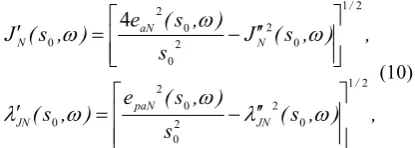
(10)whereJN and JN are the sought-for real part of compliance moduli and plasticity factor. In spite of the fact that the single-frequency approximation based on harmonic linearization has a well agreement with precise model of nonlinear behavior, it's necessary to analyze its practical accuracy for specific classes of problems. As mentioned in the introduction, the second approach is based on the concept of complex moduli, which are determined by standard and modified techniques of equivalent linearization.
It is important to notice that, the imaginary parts of complex moduli are defined by the exact expression for rate of dissipation averaged over the period of cyclic loading while to improve the accuracy of real parts of complex compliance moduli the modified approach is proposed as shown in equation 10. According to equation 10, the complex compliance moduli for isothermal loading case depend on the
frequency, temperature and amplitude of force loading only. The purpose of this paper is to investigate the influence of these parameters on complex compliance moduli.
Numerical technique and the material properties
In the present work, as it was mentioned above, due to significant nonlinearity of the stiff type, the numerical integration of Goldberg equations was adopted. To solve the implicit equation 1, one should utilize an appropriate numerical discretization technique. Three step scheme of attacking the problem of complex compliance moduli determination was designed. At the first step, the elastic-viscoplastic response of the material to harmonic deformation was calculated by numerical technique for different amplitudes of loading stress at different frequencies and temperature. At the second step, the stabilized cyclic stress–strain and inelastic-strain–strain diagrams were obtained for the whole set of calculated data. At the final step, the complex compliance moduli were calculated by the averaging over the period of vibration of the results of direct integration and making use of cyclic diagrams and formulae 9 and 10. The system of nonlinear ordinary differential equations that describes the polymer response to harmonic loading in the case of pure shear consists of the one-dimensional equations of Goldberg model comprising equations 1, 3, 4 are solved.
The law of strain deviator variation s s0 sin t, as well as
Hooke law for shear stress should be added to the system.
.
ε
s
J
=
e
12 12 12in2
1
(11)The values of material constants for RP-520, which were used for calculations, have been taken from [8]. The list of the values is given in Table 1.
NUMERICAL RESULTS AND DISCUSSION
The results of transient response simulation and effects of frequency and temperature on the complex moduli in the frame of modified technique described in Sec.3 are presented. Evolution of strain and inelastic strain for epoxy resin (PR-520) under force harmonic loading in pure shear with strain amplitude s0 45MPa are shown in Fig. 1 and Fig. 2 respectively for frequency 1Hz at different temperatures. These figures show the inelastic behavior occurs earlier at 80
C
while its behavior is elastic for 25 and 50 C
.It‘s important
to notice that all response of material are asymmetric.
Fig. 3 illustrates the actual loop under cyclic loading in the MPa
s0 45 at the frequency 1Hz for 25, 50, 80 C
. As
mentioned for Figure 2, this figure illustrates the actual loops are linearlyat 25 and 50Cwhile is as loopfor 80 C and
[image:3.595.36.204.282.336.2]inelastic behavior occurs in this temperature. The material demonstrates cyclically stable response over the whole interval
Table 1. The values of material constants for RP-520
v α1
α0
q n Z1 MPa
Z0 MPa
D0 1/sec
E MPa Temp, oC
[image:3.595.35.243.441.515.2]of loading amplitudes and frequencies investigated. Fig. 4 illustrates the actual loop with strain amplitude s0 70MPa at the frequency 1Hz for 25C. As it was mentioned earlier,
[image:4.595.321.545.52.224.2]this actual loop can be approximated with making use of modified equivalent linearization scheme.
[image:4.595.53.271.124.293.2]Fig. 1. Strain evolution under force harmonic loading
Fig. 2. Inelastic strain evolution under force harmonic loading
Fig. 3. Actual loops under cyclic loading
In the same figure, the actual loop (line 1) is shown along with the loops calculated in the frame of modified (line 2) equivalent linearization techniques. The cyclic diagrams at stabilized stage of the vibration ea ea(s0) (i.e. concretization
of general cyclic diagram eaNeaN(s0,) used in the formulae
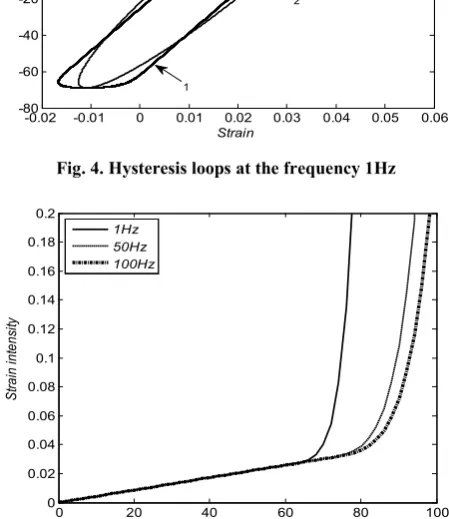
[image:4.595.320.545.151.411.2](10)for N) are shown in Fig. 5.
Fig. 4. Hysteresis loops at the frequency 1Hz
Fig. 5. Cyclic diagram for PR-520 at 1, 50, 100Hz
The curves are calculated for cyclic pure shear for different frequencies (1, 50,100 Hz) at 25C. Using the cyclic diagram
and making use of the formulae 9 and 10, the imaginary and real parts of the complex compliance moduliand plasticity factor(the imaginary moduli Jand JN, real moduli J and
JN
) in the frame of modified equivalent linearization scheme are determined.The improved values of J and J have been found according to the modified scheme for different frequencies at steady-state cyclic regime and constant temperature.Dependency of J, and J, on the amplitude of
stress,
s
0, and frequency for the PR-520 are shown in Fig.6 for 1, 50, 100 Hz at 25C.Fig. 6. The real and imaginary parts of complex compliance modulus at various frequencies
0 1 2 3 4 5
-0.02 -0.01 0 0.01 0.02 0.03 0.04 0.05 0.06
Time, sec
S
tr
a
in
25 C 50 C 80 C
0 5 10 15 20 25
-5 0 5 10 15
20x 10
-3
Time, sec
In
e
la
st
ic
st
ra
in
25 C 50 C 80 C
-0.02 -0.01 0 0.01 0.02 0.03 0.04
-60 -40 -20 0 20 40 60
Strain
S
tr
es
s,
M
P
a
25 C 50 C 80 C
-0.02 -0.01 0 0.01 0.02 0.03 0.04 0.05 0.06
-80 -60 -40 -20 0 20 40 60 80
Strain
S
tr
ess,
M
P
a
1
2
0 20 40 60 80 100
0 0.02 0.04 0.06 0.08 0.1 0.12 0.14 0.16 0.18 0.2
Stress intensity,MPa
S
tr
a
in
in
te
nsi
ty
1Hz 50Hz 100Hz
0 20 40 60 80 100 120
0 0.5 1 1.5 2 2.5 3 3.5 4 4.5
5x 10
-3
Stress intensity, Mpa
J'and
J''
, M
P
a
J''-1Hz J'-1Hz J''-50Hz J'-50Hz J''-100Hz J'-100Hz
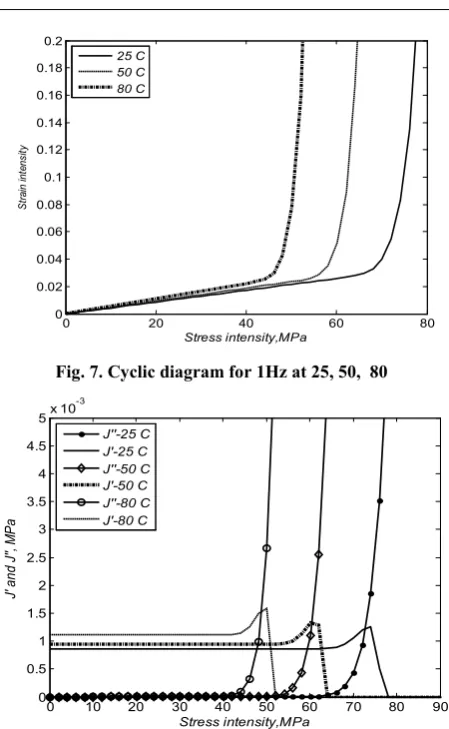
[image:4.595.52.273.325.496.2] [image:4.595.47.277.529.701.2] [image:4.595.320.542.609.773.2]Fig. 7. Cyclic diagram for 1Hz at 25, 50, 80
Fig. 8. The real and imaginary parts of complex compliance modulus at various temperatures
This figure and cyclic diagram show the inelastic behavior occurs at higher stress amplitude with increase of frequency. The trend of real part of compliance modulus presented in Fig. 6 show Its independence on frequency in the elastic region. With increase of frequency the real part of compliance drops later to zero after yield point. It show the strength of materials is increased. The loss modulus increase significantly after yield point while, its increasing values occurs at higher stress amplitude with increase of frequency. The cyclic diagrams at stabilized stage of the vibration at 1Hz for different temperatures are shown in Fig. 7. The effect of temperature on behavior of material is observed clearly. This figure show the inelastic behavior occurs at lower stress amplitude with increasing of temperature. According to the procedure mentioned above, dependency of complex compliance modulus, Jand J, on the amplitude of stress,
s
0, and temperature are shown in Fig.8 for 25, 50, 80 C. As it is seenin this figure, the inelastic behavior occurs at lower stress amplitude with increasing of temperature. The trend of J modulus behavior presented in Fig. 8 show that its values increase slightly with increase of temperature while, the J increase significantly with increase of temperature after yield point. Within the interval of interest between 25 and 80C, for
higher values of stress intensity, the J modulus increases significantly.
Conclusions
In this investigation, the problem of characterization of material response to harmonic loading is addressed. The approach that uses the complex-value amplitude relations is preferred rather than direct numerical integration of the complete set of constitutive equation for the viscoelastic material. In this paper, Goldberg model was used to simulate the time dependent response of PR-520 under force harmonic loading. Obtained histories of main field variables evolution were used to find the stress–strain cyclic diagram and real as well as imaginary parts of complex compliance modulus with making use of modified equivalent linearization techniques over wide range of frequency and amplitude. Results of calculations show evidently that, the strength of polymeric material (Epoxy PR520) increases with increase of frequency while, the strength of material decreases with increase of temperature. The sensitivity of cyclic diagrams to frequency variations at the low values is more profound than at the region of higher frequency. It’s important to notice that with the increase of strength of material the sensitivity to frequency is reduced. Therefore the behavior of saturation type is clearly exhibited. In general, it is possible to conclude that complex moduli demonstrate the weak dependence on the frequency and strong dependence on temperature within the interval investigated.
REFERENCES
Beards, C. E. 1996. Structural Vibration: Analysis and Damping. – London.
Bodner, S. R, Partom, Y. 1975. Constitutive equations for elastoviscoplastic strain hardening material. Trans. ASME,
J. Appl. Mech. 42. p. 385–389.
Frank, G. J, Brockman R. A.2001. A Viscoelastic-viscoplastic constitutive model for glassy polymers. Int. J. Solids
Struct. 38. p. 5149-5164.
Gilat, A., Goldberg, R. K, Roberts, G. D. Incorporation of the effects of temperature and unloading into the strain rate dependent analysis of polymer materials utilizing a state variable approach, Earth and Space,pp. 1-8, 2006.
Goldberg R. K. 2002. Computational simulation of the high
strain rate tensile response of polymer matrix
composites.NASA/TM-2002-211489.
Hashemi, M, Zhuk Y.A. 2015.A procedure for complex moduli determination for polycarbonate plastic under harmonic loading. Bulletin of KNU. Ser.: Physical and Mathematical Sciences, No. 4. – P. 67-73.
Senchenkov I. K, Zhuk Y. A, Karnaukhov V. G. 2004. Modeling the thermomechanicalbehavior of physically nonlinear materials under monoharmonic loading. Int.
Appl. Mech. 40. p. 943–969.
Zaïri F, Woznica K, Naï A. M. 2005. Phenomenological nonlinear modeling of glassy polymers. C. R. Mecanique. 333. p. 359–364.
Zhuk, Y. A, Senchenkov I. K. 2004. Modelling the stationary vibrations and dissipative heating of thin-walled inelastic elements with piezoactive layers. Int. Appl. Mech. 40. p. 546–556.
0 20 40 60 80
0 0.02 0.04 0.06 0.08 0.1 0.12 0.14 0.16 0.18 0.2
Stress intensity,MPa
S
tra
in int
ens
it
y
25 C 50 C 80 C
0 10 20 30 40 50 60 70 80 90
0 0.5 1 1.5 2 2.5 3 3.5 4 4.5
5x 10
-3
Stress intensity,MPa
J'
a
n
d
J'
',
M
P
a
J''-25 C J'-25 C J''-50 C J'-50 C J''-80 C J'-80 C