Educational Policy Studies Dissertations Department of Educational Policy Studies
Spring 5-13-2016
Unsilenced: Black Girls' Stories
LaToya Owens
Follow this and additional works at:https://scholarworks.gsu.edu/eps_diss
This Dissertation is brought to you for free and open access by the Department of Educational Policy Studies at ScholarWorks @ Georgia State University. It has been accepted for inclusion in Educational Policy Studies Dissertations by an authorized administrator of ScholarWorks @ Georgia State University. For more information, please [email protected].
Recommended Citation
This dissertation, UNSILENCED: BLACK GIRLS’ STORIES, by LATOYA RUSSELL
OWENS, was prepared under the direction of the candidate’s Dissertation Advisory Committee.
It is accepted by the committee members in partial fulfillment of the requirements for the degree,
Doctor of Philosophy, in the College of Education and Human Development, Georgia State
University.
The Dissertation Advisory Committee and the student’s Department Chairperson, as
representatives of the faculty, certify that this dissertation has met all standards of excellence and
scholarship as determined by the faculty.
__________________________________ Joyce E. King, PhD
Committee Chair
__________________________________ Jennifer Esposito, PhD
Committee Member
________________________________ Kristen L. Buras, PhD
Committee Member
__________________________________ Venus Evans-Winters, PhD
Committee Member
October 10, 2015
__________________________________
William L. Curlette, PhD
Chairperson, Department of Educational Policy Studies
__________________________________ Paul A. Alberto, PhD
By presenting this dissertation as a partial fulfillment of the requirements for the advanced
degree from Georgia State University, I agree that the library of Georgia State University shall
make it available for inspection and circulation in accordance with its regulations governing
materials of this type. I agree that permission to quote, to copy from, or to publish this
dissertation may be granted by the professor under whose direction it was written, by the College
of Education’s Director of Graduate Studies, or by me. Such quoting, copying, or publishing
must be solely for scholarly purposes and will not involve potential financial gain. It is
understood that any copying from or publication of this dissertation which involves potential
financial gain will not be allowed without my written permission.
All dissertations deposited in the Georgia State University library must be used in accordance
with the stipulations prescribed by the author in the preceding statement. The author of this
dissertation is:
LaToya S. Russell Owens Educational Policy Studies
College of Education and Human Development Georgia State University
The director of this dissertation is:
Joyce E. King, PhD
Department of Educational Policy Studies College of Education and Human Development
LaToya Russell Owens
ADDRESS: 3902 King Fisher Dr. Atlanta, GA 30349
EDUCATION:
PROFESSIONAL EXPERIENCE:
2010-2012 Development and Research Associate
The Bishop John T. Walker School for Boys
2009-2010 Development Associate
The Posse Foundation
2008-2009 Instructional Mediator/Researcher
New York University Metropoli-tan Center
PUBLICATIONS:
McArthur, S., Edwards, E. & Russell Owens, L. (2015). “Emancipatory Research Methods for Black Girls.” Pedagogies of Resistance and Self-Determination. In review.
Russell Owens, L. (2015). “Desegregating Maryland’s HBCUs: An Update and Critique.” South-ern Education Foundation. Atlanta, GA.
Russell Owens, L. (2015). “I was a High Achieving High School Student: And I Chose an HBCU.” HBCU Digest.
King, J. E. & Russell, L. (2015). The State of Black Education in the New Millennium. In Insti-tute of the Black World 20th Century Black Paper. http://ibw21.org/ibw-black-paper/
Ph.D. 2015 Georgia State University Educational Policy Studies
M.A. 2010 New York University
Education Leadership, Politics and Advocacy
B.S. 2007 Florida A&M University
King, J. E., Akua, C., & Russell, L. (2014). Liberating urban education for human freedom. In H. R. Milner & K. Lomotey (Eds.), Handbook for research on urban education (pp. 52-107). New York, NY: Routledge.
PRESENTATIONS:
“Profiles in Higher Education Innovation: Advancing Completion with a Purpose” Invited Panel. Association of Public & Land-Grant Universities, Atlanta, GA, June 26, 2015.
“Emancipatory Research Methods for Black Girls” Roundtable Session. American Education Research Association, Chicago IL, April 18, 2015.
“College Knowledge: Promoting Access and Success” Workshop Presentation. National Associ-ation for College Admission Counseling, Miami, FL, March 20, 2015.
“Black and Latino Male College Enrollment: Considerations for Advising High School Students with Special Attention to MSIs” Workshop Presentation. National Association for College Ad-mission Counseling, Fort Worth, Texas, February 8, 2015.
“Black Faces in White Spaces: Identity and Community Orientation among Middle Class Black Girls in a White Suburban Environment” Roundtable Presentation. International Conference on Urban Education, Montego Bay, Jamaica, November 7, 2014.
Black Women’s Perspectives on the Trajectories of Black Males in Education, Invited Panel. In-ternational Colloquium on Black Males, Atlanta, GA, Morehouse College, October 2, 2014.
“Education and Achievement: Standards for Black Males” Paper Presentation. International Col-loquium on Black Males, Atlanta, GA, Morehouse College, October 4, 2014.
“Popular Culture as a Site of Education” Paper Presentation, Sources of Educational Excellence Conference, Atlanta, GA, April 19, 2014.
“Changing Education for Black Children in America: the Game Plan” Paper Presentation, Sources of Educational Excellence Conference, Atlanta, GA, April 19, 2014.
PROFESSIONAL SOCIETIES AND ORGANIZATIONS:
Sources of Educational Excellence Conference, Planning Committee Co-Chair 2015
A Black Education Congress Southern Regional Conference, Graduate Student Coordinator 2014 American Educational Research Association, Graduate Student Reviewer 2013-2014
A Black Education Congress, Planning Committee Member 2013
UNSILENCED: BLACK GIRLS’ STORIES
by
LATOYA RUSSELL OWENS
Under the Direction of Joyce E. King, PhD
ABSTRACT
Black girls continue to suffer from inequitable treatment in schools resulting in disparate academic and social outcomes. While deficit ideologists have continued to attribute outcomes to cultural deficiencies within the Black community, research has found various systemic issues of racism and sexism seriously affecting Black girls in schools. However, the experiences of this population remain under or uninvestigated. When Black girls’ experiences in school are investi-gated, they are commonly framed as a group in need of saving and their perspectives and voices eliminated from the work. Further, this group is often homogenized and all their experiences lim-ited to those of the inner-city or urban environments. Using a critical raced-gendered epistemol-ogy, grounded in critical race theory and Black feminism/womanism, this qualitative interview study explores Black high school girls’ experiences in a predominately White suburban public school in the southeast. Through the method of storytelling that includes constructing counter narratives, five girls (ages 14-16) relay their experiences in this predominately White suburban educational space. Parent reflections as well as document review augment these girls’ stories to further illuminate their experience. A grounded theory analysis of these data uses my own cul-tural intuition. This analytic approach foregrounds the intersectionality of Black girls’ under-standing of their racial and gendered educational experiences in a predominantly White suburban environment, the systemic barriers that serve to inhibit their success, and the methods of re-sistance girls use to persist in these spaces. This study is significant in both its methodology as well as results, offering critical insight into how to conduct equitable and liberatory research and create education policies to improve outcomes for this underserved group.
INDEX WORDS: Black girls, Black Feminism, Womanism, Critical Race Theory,
by
LATOYA RUSSELL OWENS
A Dissertation
Presented in Partial Fulfillment of Requirements for the
Degree of
Doctor of Philosophy
in
Research, Measurements and Statistics
in
Educational Policy Studies
in the
College of Education and Human Development
Georgia State University
Copyright by LaToya S. Russell Owens
DEDICATION
Dedicated to TJ.
ACKNOWLEDGMENTS
I want to thank the ancestors for equipping me, my parents for preparing me, my husband for
loving me, my friends for supporting me, my mentors for assisting me, TJ for completing me and
Black girls for intruiguing me. I love you all.
Table of Contents
LIST OF TABLES ... iv
LIST OF FIGURES ... v
1 THE PROBLEM... 1
2 REVIEW OF THE LITERATURE ... 14
3 METHODOLOGY ... 48
4 RESULTS ... 75
5 DISCUSSION AND IMPLICATIONS ... 141
Implications ... 160
Suggestions for Further Research ... 166
Conclusions ... 168
REFERENCES………...171
LIST OF TABLES
Table 1. Participant Demographic Data……… 51
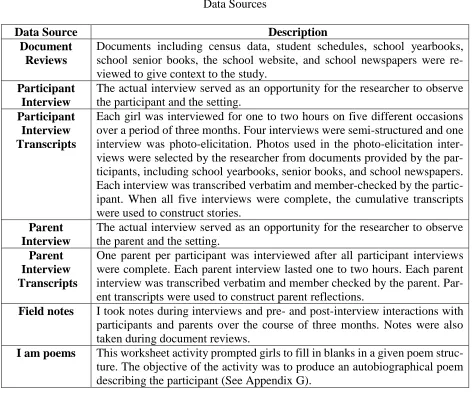
Table 2. Data Sources……… 53
Table 3. Parent Response………..141
LIST OF FIGURES
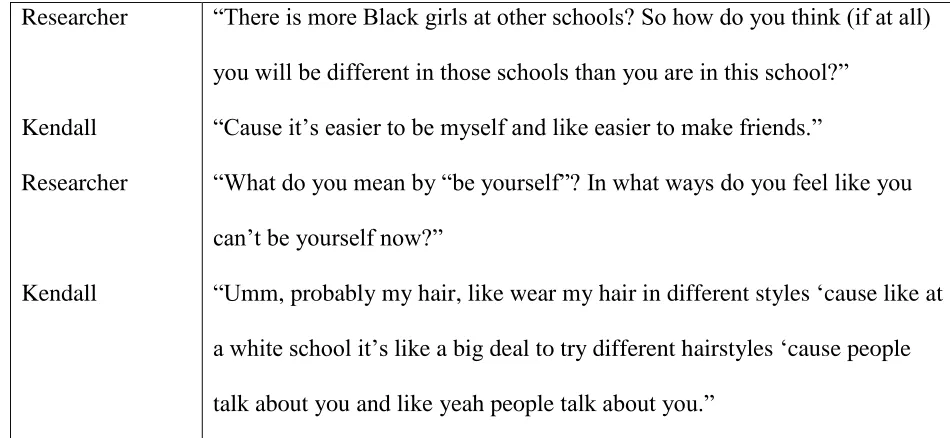
Figure 1. Dialogical conversation (Kendall)……….………56
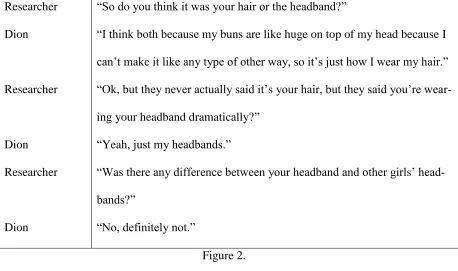
Figure 2. Dialogical conversation (Dion)………..………57
Figure 3. Data representation………..……..….………64
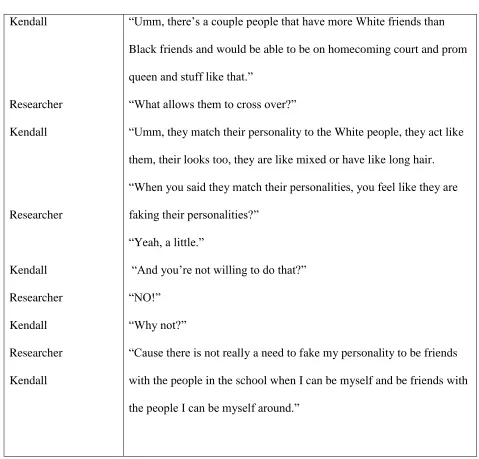
Figure 4. Interview excerpt (Kendall)…………...….………82
Figure 5. Field note (Kendall)………88
Figure 6. Interview excerpt (Dion)………..………..93
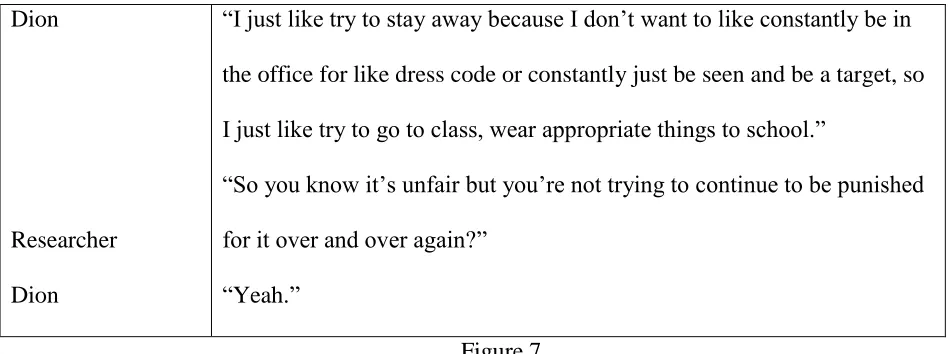
Figure 7. Interview excerpt (Dion)…...……….……94
Figure 8. Field Note (Dion)……….……….……….99
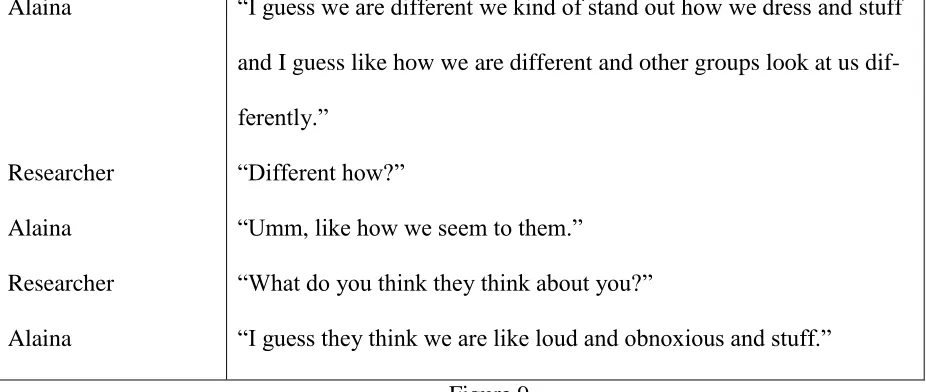
Figure 9. Interview excerpt (Alaina)………...……….…103
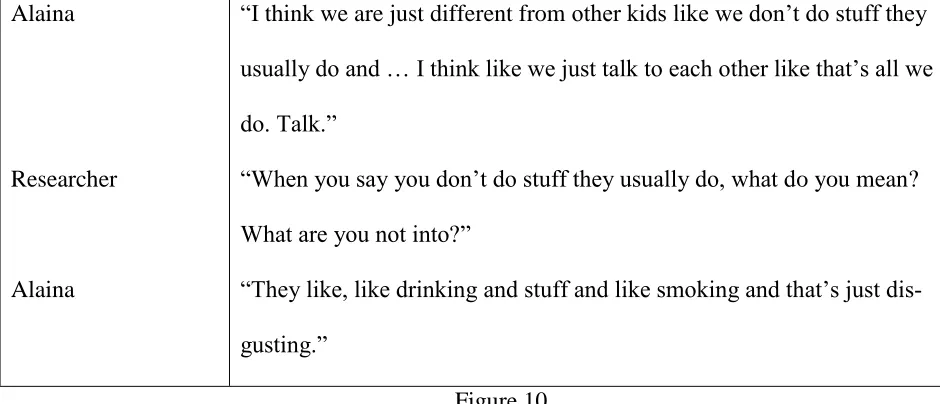
Figure 10. Interview excerpt (Alaina) ……....……….104
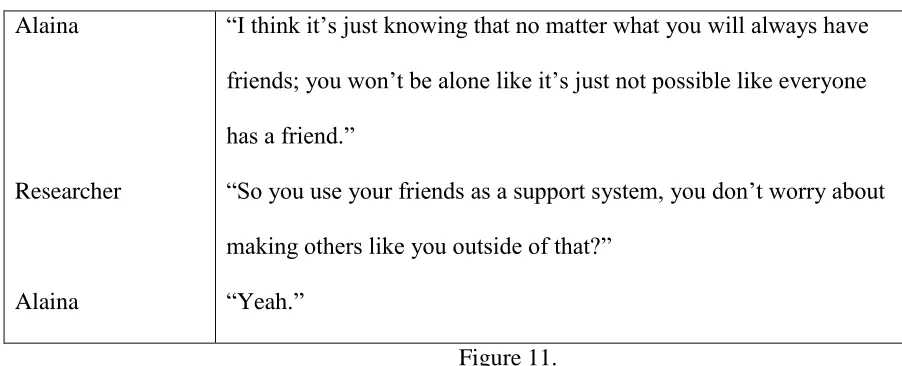
Figure 11. Interview excerpt (Alaina) …..….………..…106
Figure 12. Field Note (Alaina)……….110
Figure 13. Field Note (Laila)………...………122
Figure 14. Interview excerpt (Michelle) ……..………...129
1 THE PROBLEM
Introduction
This inquiry is a qualitative interview study designed to construct counter-stories and
give a platform for the voices of Black high school girls in a predominantly White suburban
community (Olson, 2011). This study investigates issues that negatively affect their education,
parental socialization, and school experiences. In this chapter, I provide a description of the
re-search problem, including Black girls’ academic identities, deficit ideologies, intersecting race,
gender, and social class oppressions, social statuses, and experiences. An overview of these
is-sues supports a specific focus on Black girls because they have experiences distinct from both
Black boys and White girls, and are disadvantaged in ways not commonly addressed in research
(Evans-Winters, 2005).
Using a critical raced-gendered epistemology informed by critical race theory and Black
feminism/Womanism, this qualitative interview study explores Black high school girls’
experi-ences in a predominately White suburban public school in the southeast. The method of
storytell-ing that includes constructstorytell-ing counter narratives permits five girls (ages 14-16) to relay their
ex-periences in this predominately White suburban educational space. Parent reflections as well as
document reviews augment these girls’ stories to further illuminate their experiences. A
grounded theory analysis of these data uses my own cultural intuition. This analytic approach
foregrounds Black girls’ understanding of their racial and gendered educational experiences in a
predominantly White suburban environment, the systemic barriers that serve to inhibit their
Academic Identity
Black girls in suburban, high-performing, well-resourced, and predominately White
schools are academically underperforming in comparison to their White peers. Using enrollment
in Algebra 1 as a measure, Diette (2012) found that “the marginal effects of racial composition
on the relative disparity in enrollment are significantly larger for Black females than Black
males” in highly integrated schools (p. 322). Research shows that Black students in
high-achiev-ing suburban schools struggle with educational achievement and access. They are less likely to
be enrolled in advanced courses, which affects their academic self-concepts as well as their
col-lege enrollment prospects (Darity, Castellino, Tyson, Cobb, & McMillen, 2001; Diette, 2012).
Deficit Ideology
The disparity in achievement between students is generally discussed in terms of the
achievement gap. In this discussion, Black and Brown students, the victims of institutional
op-pression, are deemed responsible for the difference in outcomes because of the presumed deficits
in their culture. The existence of this achievement gap is determined by the difference in
aca-demic outcomes for students along racial lines in terms of a variety of measures that indicate a
deficit in ability among students of color (King, 2005; Irizarry, 2009). However, many scholars argue that what has long been deemed a failure of these students is actually a fault of the
educa-tion system and its failure to respond to the culture and needs of students of color (Carter, 2008;
Hilliard, 1978; King, 2010; Paris, 2012; Valenzuela, 1999). Thus, Black students are often
deemed failures for their inabilities to fully assimilate to White middle-class values. Assimilation
is required in schools as cultural training, where children are forced to exhibit dominant
suc-cessful. For girls, exhibiting such norms means they must also conform to ideal forms of
femi-ninity by displaying docility, passivity, complacency, and “ladylike” behavior (Henry, 1998;
Morris, 2007). Thus, those Black students who retain cultural ties and behavior are depicted as
underachieving, deviant, and impediments to the overall success of the race, a phenomenon that
supports the disproportionate criminalization and mistreatment of Black girls in schools, and
ulti-mately results in a show of disparity in outcomes (Paris, 2012). Consquently, in discussions of
the achievement gap, it is imperative to highlight this underlying deficit ideology. Indeed, the
achievement gap itself is a problematic concept, as test measures that are really indicators of
institutional racial disparity are instead used as indicators of academic outcomes or achievement.
This deficit approach is important to note when researching Black girls and when considering the
current research available on this population.
Race and Gender Oppressions
Relatedly, Black girls suffer from various forms of inequitable treatment in school,
in-cluding racial and gender stereotyping, lower academic expectations, harsher disciplinary
penal-ties, and barriers to various school activities. Blackgirls face additional obstacles in comparison
to other groups due to their race and gender, and are forced to negotiate bias among school
per-sonnel in order to succeed academically. Black girls’ inequitable experiences in school include
more frequent citations for dress-code violations, more disciplinary referrals than their White
peers, more frequent and higher levels of discipline for talking back to teachers in class, and
more suspensions than their White, Latina, and Asian peers (NAACP Legal Defense Fund,
2014). A recent report on educational inequity for African American girls found that, “While
Af-rican AmeAf-rican males are the most likely to be disciplined in school, AfAf-rican AmeAf-rican females
Additionally, the report notes that African American girls are being disproportionately
pushed out of schools due to overly punitive disciplinary policies that result in lost learning time
and early involvement with the juvenile justice system. African American female students are
also disproportionately suspended and expelled compared to girls of other races. In fact, an
anal-ysis of 2006-07 data on the suspension of middle school students showed that African American
girls in urban middle schools had the fastest growing rates of suspension of any group of girls or
boys (NAACP Legal Defense Fund, 2014). The types of offenses that are responsible for Black
girls’ disproportionate discipline are important; Ohio State University’s 2012-2013 data
indi-cated that “the most subjective category, disobedience and disruptive behavior, was the category
for which Black girls were the most often disciplined” (NAACP Legal Defense Fund, 2014, p.
150).
Social Status and Experiences
Black girls’ social patterns are also often viewed as backwards or inappropriate by
teach-ers and administrators in schools (Chavous et al., 2008; Frazier-Kouassi, 2002; Morris, 2005;
Skiba, Michael, Nardo, & Peterson, 2002). Offenses like disobedience and disruptive behavior
are subjective in nature and left to the discretion of the teacher or administrator. Thus, viewing
stereotypical images of Black girls as loud, confrontational, or assertive as opposed to
“tradition-ally feminine,” modest, and passive, generates different types of punishments for Black girls than
for girls of other races (Morris, 2007). Blake, Butler, Lewis, and Darensbourg (2011) further
ex-plain that Black girls’ failure to meet traditional Euro-American standards of femininity may also
be the cause of disproportionate rates of discipline when they are involved in physical
alterca-tions, since physical fights or visibly and physically expressing anger is considered unladylike
Consequently, even when Black girls achieve academically, they have to navigate very
unique educational obstacles because teachers often question their manners and behavior.
Gen-eral perceptions of White womanhood often prompt teachers to deem Black girls as unfeminine
(Morris, 2007). Black girls and women alike are often stereotyped as “angry” or “aggressive,”
and “promiscuous” or “hyper-sexualized,” assumptions that shape teachers’ and administrators’
views of Black girls, creating an implicit bias against them in school (Harris-Perry, 2011).
Navi-gating these stereotypes and biases create additional obstacles that ultimately affect Black girls’
academic outcomes as well as their identity development (Morris, 2007). However, in
discus-sions of the achievement gap or general Black girl underachievement, these additional obstacles
are rarely discussed or even acknowledged, and therefore go unaddressed. However, it is
essen-tial to address them, as they are directly related to disparities in the education system.
Further, studies on Black students in predominantly White suburban schools found that
highly capable Black students with monetary resources were often either discriminated against or
overlooked (Carter Andrews, 2009, 2012; Proweller, 1998; Tatum, 2004). For example, in a
year-long qualitative study of resistance among high-achieving Black students in a
predonately White high school, Carter Andrews (2009) found that students had to navigate racial
mi-croaggressions in the forms of racial spotlighting and racial ignoring. The author noted that these
microaggressions were embedded in school culture and experienced in all facets of school life,
including classroom and social and extracurricular spaces, which caused emotional and
psycho-logical stress. Solórzano (1998) refers to these instances of subtle but prevalent racism as racial
microaggressions, and describes them as the contemporary form of racism that continues to play
itself out in the daily lives of students of color. Carter Andrews (2009) adds that being the only
Specifically analyzing the gendered element of the Black student experience in a
predom-inately White suburban high school, Holland (2013) found that Black girls integrated into a
pre-dominantly White school expressed a discomfort in the environment not indicated by Black
boys. Black girls noted having to deal with negative stereotypes and intense academic pressure,
having less contact with students outside of their racial group and neighborhood, and never
so-cially integrating into the school. Yet, while the girls indicated feeling a “weight on their
shoul-ders,” or an extra burden upon entering the school, Black males in the study felt that a weight
lifted, and they enjoyed minor celebrity status as athletes and informants on hip hop culture
while escaping the struggles of the inner-city (Holland, 2013). Though both gendered groups
re-counted instances of racism in the school, the same associations with the inner-city and hip hop
culture that enhanced Black males’ social statues positioned the girls to be stereotyped as loud or
obnoxious. Holland (2013) also found differences in dating practices and school structure that
disproportionately affected male and female students’ social integration; Black girls indicated
that they felt less able to cross racial lines in dating and other forms of in-school socialization
than Black boys, and they were left with fewer possibilities for dating and friendship.
Also related to dating, the NAACP Legal Defense Fund’s (2014) report noted that, in
ad-dition to violence and trauma, sexual harassment is a barrier to learning that disproportionately
impacts girls and their academic achievement, and African American girls report widespread
sexual harassment in school. A survey study found that 56 percent of school-aged girls report
ex-periencing sexual harassment (Hill & Kearl, 2011). African American girls were more likely
than White students to “change the way they go to or from schools,” or even change to a new
school in response to sexual harassment (Hill & Kearl, 2011). There are nationwide differences
American girls report being sexually harassed compared to 56 percent of White girls (American
Association of University Women Education Fund, 2001). Furthermore, speaking to the
signifi-cance of both race and gender, research suggests that responses from teachers and administrators
to the reported harassment of African American girls is inadequate and is also fueled by
stereo-types about Black girls, with school personnel often misidentifying Black girls as aggressors in
instances of sexual harassment (NAACP Legal Defense Fund, 2014).
Parental Socialization and Experiences
Additionally, research highlights that Black parents in predominately White spaces are
aware of students’ navigation of racialized school environments. Tatum (1987, 1992, 2004)
found that middle- and upper-middle-class Black parents were aware that their predominately
White environment may endanger the positive racial identity formation of their children, and
en-gaged in different approaches in rearing and socializing their children in an attempt to combat
environmental effects. Tatum (2004) concluded that young people raised in race-conscious
fami-lies developed a more positive racial identity that enabled them to persist in and undermine the
White-dominated racial order that participants indicated existed in their predominately White
suburban schools.
However, the experience of Black girls in these spaces is not represented in research on
girls, as it overwhelmingly focuses on the experience of White middle-class girls. Similarly,
re-search on the Black student experience does not reflect the gendered aspect of Black girls’
expe-riences (Brown, 2009). Consequently, there is very little research on the educational expeexpe-riences
of Black girls, an oversight that leaves them generally invisible. Brown (2009) attended to this
issue of invisibility for Black girls by arguing that part of the reason why their issues are not
about Black girlhood. Thus, girls are not seen as experts on their own experiences. In fact, they
are neither seen nor heard; rather, it is the “problems” they pose to society that are addressed—
not their existences as human beings. As a result, research, education, and programs that spring
from this focus on the Black girl do not consider them, but instead highlight what have been
deemed “Black girl problems” or inadequacies. These problems have been decided for Black
girls, and their designation as “inadequate” precludes them from creating knowledge or
inform-ing the decisions made about themselves.
When suburban contexts are considered, the research is even more limited (Banks, 2005;
Morris, 2007; Proweller, 1998). Indeed, more research is needed to account for the specific
expe-riences of Black girls in these spaces as well as the variations in those expeexpe-riences. Thus, the
re-search problem is that systemic racism and gender stereotyping have taken on various forms in
PK-12 education that directly affect the experiences and thus the identity development and
aca-demic outcomes of Black girls. This issue is ignored in predominantly White suburban spaces,
and is further compounded by Black girls’ and women’s lack of inclusion in research on Black
girls’ educational experiences and academic outcomes. These works speak not only to the need
for more research on Black students in predominately White suburban environments, but for a
specific look into the schooling of Black girls, as there are demonstrated intra-racial disparities
related to gender (Diette, 2012; Holland, 2013). We presently do not know the experiences of
Black girls in predominately White suburban spaces, nor how best to support and improve their
academic experiences therein, which is why I ask the following questions and conduct my
Research Questions
This qualitative interview study is couched in two theoretical frameworks: critical race
theory and Black feminism/Womanism. These frameworks allow for the use of Delgado Bernal’s
(1998) cultural intuition as a methodological research practice that connects personal experience,
historical and ancestral wisdom, and the research process. Cultural intuition highlights the
im-portance of the researcher’s ability to interpret the research based on collective and personal
ex-perience as well as community memory, thus challenging the notion/validity of objective
re-search. This is key to an analysis of Black girls’ academic and social identity experiences, as
var-ious factors shown to affect those experiences have been prevvar-iously neglected in deficit-based
research (Evans-Winters, 2005).
The research questions that guide this study are: 1) what are the experiences of Black
girls in predominately White suburban educational settings? and 2) what are the tools and
strate-gies girls use to resist intersecting oppressions in order to persist in these environments? In order
to investigate these questions, this study has collected stories to “unsilence” Black girls, thereby
allowing educational researchers to better understand the raced, gendered, and classed
educa-tional experiences of Black girls in predominantly White suburban environments.
Overview and Purpose of the Study
This study has the following purposes: to explore how Black girls in a predominately
White suburban high school context experience intersecting oppressions; to highlight the ways in
which Black girls show resistance in predominately White school environments; and to provide a
inter-views to construct counter stories that illuminate their perspectives on their educational
experi-ences. In doing so, my participants and I eliminate the researcher-subject divide, develop a
rela-tionship, and participate in a dialogical process that yields their stories.
It is not expected that all narratives will inherently counter dominant or traditional
frame-works; however, my cultural intuition—i.e., my insight as a researcher and as a Black woman
who has experienced education in this kind of setting—is particularly relevant in constructing,
interpreting, and analyzing these stories. The necessity of reflexive and dialogic conversation for
humanizing a culturally informed research process is exemplified in King and Mitchell’s (1995)
Black Mothers to Sons: Juxtaposing African American Literature with Social Practice. In this
study, the researchers engaged the participants as co-researchers, using a group conversation or
“kitchen table” method of interviewing based on Afrocentric ways of knowing. King and
Mitch-ell (1995) note that this method served not only to honor indigenous ways of knowing in a
“com-munal, spiritual and holistic” manner, but also to reduce tension in the research process and
facil-itate in-depth personal and emotional discussions (p. 3). In this present study, stories were
cre-ated through a methodological approach that includes mutual dialogue on Black girls’
experi-ences in school—experiexperi-ences shared by both the participants and the researcher—to create
mu-tual learning and understanding. This mumu-tual understanding was pivotal in both the data
collec-tion and analysis processes. Mutual respect and understanding allowed me to form a relacollec-tionship
with the participants that in turn created a space for them to provide richer data than would have
been possible if such a relationship had not existed. Also, the relationship we formed alongside
the participants’ review of their data enhanced the way I used my own cultural intuition in the
This research draws on various qualitative methods, including storytelling via
semi-struc-tured interviews, document analysis, and cultural intuition. The use of dialogue is critical for the
entire research process because it extends the focus beyond the told stories to the storytelling
process itself. Indeed, the storytelling process holds potential for girls to be recognized as
knowledge holders of their own experiences, as well as to change the nature of research on this
population by changing the relationship between the researcher, the participants, and the
pro-cesses of data collection, analysis, and interpretation (Chase, 2007). Indeed, it is imperative to
attend to the subject positions of both the participants and the researcher by engaging in
continu-ous self-reflection and transparency, because this study aims to attest to the importance and value
of both the everyday experiences of these girls as well as my own experiences in informing the
process of story collection and narrative interpretation.
Therefore, my researcher subjectivities are also crucial to this inquiry; in fact, my own
experience in both predominately White and predominately Black educational settings prompted
my interest in this work. As a child, I attended predominately White elementary and middle
schools in the suburbs, but in high school I took advantage of a busing/magnet program that
al-lowed me to attend a more racially diverse school in the inner-city. (It is important to point out,
however, that if I were currently attending school, my experience would be drastically different
because the end of busing/magnet programs has produced extreme re-segregation in this
particu-lar district.) Reflecting on this reality, I feel that coming of age in such an isolating context had a
significant effect on my social and emotional states as well as on my academic decisions, even
though I had some relief in high school. This research study is designed in an effort to
under-stand how Black girls who are currently in similar situations are negotiating this very particular
Significance
My own story navigating the racialized and gendered terrain of the PK-12 education
sys-tem, which is discussed in Chapter 3 and serves as a template for this work, acknowledges the
significance of voice as a political tool. My narrative tells how, as a Black girl in predominantly
White suburban educational settings, I have experienced systemic racism, sexism, and resistance
in the education system. Resistance is defined as efforts to self-define and speak back to and
within marginalizing and oppressive educational spaces (Collins, 2001; Solórzano & Delgado
Bernal, 2001). In this way, girls who are resisting can be seen, not as victims of oppression, but
as survivors. This work is also significant because it addresses the intersectional experiences of
Black girls from the point of view of the actual perspectives of Black girls. This research not
only diversifies the literature on the Black student experience, but also the sparse literature on
Black girls in general. This study represents variation in their everyday lives and perceptions,
even within the same socio-economic class. As Evans-Winters (2005) noted:
Not all African American female students are poor or working class, live in the inner city
or urban areas, nor all identify as Black or perform ‘Blackness’ in the same way. Thus,
most will benefit from a more all-embracing multivocular Black feminism. (p. 16-17)
Finally, this study is especially significant considering the work being done to improve
educa-tional and life outcomes for Black boys through the US federal government’s 2014 My Brother’s
Keeper Initiative (Obama, 2014). Morris (2012) has argued that the current crisis, the
criminali-zation and incarceration of Black children, is not adequately fought by developing interventions
for males and translating them to issues for Black girls. Rather, we need an intersectional
ap-proach that adequately speaks to the particular positions of Black girls and women. This research
improve outcomes for Black girls who suffer from an inequitable education system in ways that
are distinct but equally deleterious as those of the larger Black community. The research is also
intended to support the girls who participate in the work. Storytelling as a methodology is used
to empower girls to self-define and speak back to dominant stereotypes.
Assumptions
This research is designed with the following assumptions: Black girls’ school experiences
and academic outcomes are impacted by intersecting oppressions (Collins, 2001; Crenshaw,
1989; Phillips, 2006); Black girls use tools or strategies to persist in predominately White spaces
(Evans-Winters, 2005; Proweller, 1998); parents of Black girls participate in their schooling and
thus offer valuable knowledge pertaining to girls’ narratives (Tatum, 2004); and girls have
di-verse school experiences informed by their histories and socialization (Stevenson et al., 2003;
Tatum, 2004; Yosso et al., 2009). Additionally, using the methodological tool of cultural
intui-tion assumes that, as a Black woman with similar school experiences, I have a unique insight that
enables me to construct the stories of these Black girls and to interpret and analyze these and
2 REVIEW OF THE LITERATURE
In this chapter, I synopsize literature related to the experiences of Black girls in
educa-tion, specifically in predominately White spaces of education. I begin by discussing educational
theoretical literature concerning the relationship between classism and racism, with particular
at-tention given to the Black student experience in predominately White spaces. Next, I review
lit-erature that highlights the state of Black girls in education and the systemic racism, classism, and
sexism that mark their experiences. Finally, I provide an overview of critical race theory (CRT),
and Black feminist and Womanist frameworks, which offer this work a critical raced and
gen-dered intersectional perspective. These bodies of literature provide a conceptual foundation for
an understanding of the raced, gendered, and classed experiences of Black girls in predominately
White educational settings.
Black Students in Predominately White Spaces
What follows is an explanation of Black students in predominately White spaces,
includ-ing research focused on student deficits, resistance and resilience against structural oppressions,
and the significance of race in these spaces.
Academics
A bulk of the education research conducted on Black students has focused on explaining
and remedying the achievement gap between Black and White students. There have been several
explanatory frameworks offered to shed light on the existence of this perceived academic gap
(Darling-Hammond, 2004; Fordham & Ogbu, 1986; Ladson-Billings, 2006; Ogbu, 2003). While
low-income or inner-city Black youth are often the focus, scholars have also attended to the
dis-parity in academic outcomes among middle class Black and White students (Darity, 2001;
Academic Identity
Because there is variation in Black student academic orientation as well as identity, it is
critical to study the spaces in which these identities are formed. Carter (2009) has described
aca-demic orientation as a personality trait traditionally characteristic of acaaca-demically motivated
stu-dents; in short, students with a positive academic orientation see themselves as good students and
place high value on self-defined achievement. Nasir (2011) defined identity as “a sense of self
constructed from available social categories, taken up by individuals and ascribed by cultural
groups and social settings. Identities take shape as a part of cultural process of becoming—a
be-coming that guided by our ever-evolving sense of who we are and who we can be” (p. 17).
Thus, identity informs how Black students situate themselves as learners. While many
Black parents have made the choice to move their children from underserved inner-city schools
to high-achieving predominately White suburban schools, studies show that Black students do
not fair better academically or socially in these contexts; the racialized gap in academic
perfor-mance persists (Darity, 2001; Diette, 2012; Ferguson, 2002). Accordingly, research indicates that
many Black students in predominately White secondary schools often feel marginalized based on
the color of their skin (Cary, 1991; Domhoff & Zweigenhaft, 1991). This research indicates that
though predominately White suburban schools may increase Black students’ access to
educa-tional resources, systemic inequity and sociological and psychological issues maintain the
race-based difference in academic outcomes, and thus affect Black students’ ability to situate
them-selves as successful learners.
One of the most persistent and contested explanations of the racialized gap in academic
achievement—also referred to as the achievement gap—is the oppositional identity theory, or the
Ogbu’s research and theories concerning the variability of the academic performance of minority
students, this study of Black students at a Washington, D.C. high school posits that Black
stu-dents have developed an oppositional culture to academic achievement because of the
associa-tion with assimilaassocia-tionist efforts. In other words, such students disengage because they view
edu-cational attainment to be directly associated with dominant European culture, which they do not
wish to emulate. Later, Ogbu and Simons (1998) addressed intra-racial differences, further
ex-plaining that involuntary (African American or non-immigrant) minorities are less economically
successful than voluntary minorities. They suggested that non-immigrant minorities do not
ex-ceed the levels of immigrant students, and experience more cultural difficulties in school because
they link academic achievement to assimilation into White culture (Ogbu & Simons, 1998). The
authors argued that there are strong negative effects of “fictive kinship” and collective identity
on the academic decisions and outcomes of Black students (Ogbu & Simons, 1998). They also
noted that “What the students reject that hurt their academic performance are ‘White’ attitudes
and behaviors conducive to making good grades” (Ogbu & Simons, 1998, n.p.).
In a later study of suburban middle-class Black students in Shaker Heights, Ohio, Ogbu
(2003) offered a more in-depth explanation of the oppositional culture theory termed the ‘acting
White’ phenomenon. In an investigation of disproportionate academic outcomes among
middle-class students, Ogbu (2003) found that behaviors associated with acting White included speaking
standard English, enrollment in Honors and AP (advanced placement) classes, being seen as
smart during lessons, and having White friends. Thus, he concluded that Black students
experi-ence from their Black peers pressure to refrain from adopting what the peers perceive as White
attitudes and behaviors. This refusal negatively affects academic outcomes, as those behaviors
Ogbu (2003) maintained that an oppositional identity to schooling is developed among
Black students as students, parents, and community members attempt to preserve a group
iden-tity, previously termed collective identity. The researcher cited two ways the belief in acting
White and the struggle to preserve group identity can result in academic uncertainty for Black
students. He argued that Black students feel they have to choose to either conform to school
de-mands and receive rewards for certain attitudes and behaviors that are viewed as White, or
ad-here to community interpretations and disapproval of (or ambivalence toward) those same
atti-tudes and behaviors (Ogbu, 2003). Similarly, in an earlier study of Capitol High in Washington,
D.C., Fordham (1988) found that, in order to deal with the burden of acting White, which is the
pressure to adopt mainstream or Eurocentric characteristics for academic and general
achieve-ment, Black students adopted strategies of racelessness, a form of accommodation to dominant
racial and class structures in public schools—in short, a coping mechanism (Fordham, 1988). In
order to adopt a raceless identity, students are said to minimize “their relationship to the Black
community and to the stigma attached to ‘Blackness’” (Fordham, 1988, p. 57). Fordham noted
that students perceived racelessness as a way to increase their chances for vertical mobility in
school and in their future work roles. Dominant racial and class structures include school
curric-ula predicated on a Euro-American culture (Buras, 2008), language or speech biases (Delpit,
2012), and discriminatory hiring practices among teachers (Buras, 2008; King & Russell, 2015)
among other structural issues.
However, neither the ‘acting White’ nor racelessness hypotheses provide explanations for
high-achieving Black students who retain their culture. Those researchers who do focus on the
resiliency/resistance of Black students have found that high-achieving Black students are often
2012). Further research focused on the assets and strengths of Black students in the face of
op-pression reveals that the work of Ogbu and Fordham (1986) is deficit-based, steeped in perceived
deficits of Black children and the Black community in general. The variation in Black students
and communities as well as in Black student achievement indicates that what serves as a barrier
to Black student achievement is neither Black culture nor orientation to education and academic
achievement; rather, it is the racism embedded in the education system.
Resistance and Resilience
Thus, many scholars investigating the experiences of Black middle-class students have
explored Black students’ resistance mechanisms, which oppose the coping mechanisms found in
the previous studies. In an investigation of the ways Black students deal with discrimination,
Ward (1999) distinguished resistance from coping, explaining both as ways in which Black
peo-ple respond to experiences with racial prejudice and discrimination. The author notes that
resili-ence is the successful negotiation of these stressful circumstances; thus, resistance supports
resil-ience.
For example, in a study of academically successful Black students, D. Carter (2008)
found that their “critical race consciousness and pride in being members of the Black community
were two elements that enabled them to develop strategies for succeeding in the school context
and pursuing their future goals” (p. 20). As a result, D. Carter (2008) called for a “combination
of a positive racial identity, critical race consciousness and a pragmatic attitude about the utility
of schooling,” to enable Black students to persist in school (p. 16). Specifically researching
Black students in predominantly White contexts, Carter Andrews (2009) noted that, while these
students did not adopt a raceless identity, they did think of academic achievement as a raceless
themselves as Black achievers and understanding how racism works to constrain or deter their
academic success was critical to their ability to resist the notion that academic success was the
property of White students (Carter Andrews, 2009).
Relatedly, in a study of Black males, Graham and Anderson (2008) provided evidence
that positively embracing concepts of “Blackness” is associated with higher academic
achieve-ment and resilience. This research negates the oppositional identity theory, as these studies have
found that socialization practices rooted in Black cultural ideals and strong group identity
en-courages academic success. It is this same idea of a group identity or fictive kinship system that
Ogbu and Simons (1998) found discouraged academic achievement among Black students.
Gra-ham’s and Anderson’s (2008) results also transcend class boundaries; the study found evidence
of positive racial associations with academic achievement among both lower-income and
mid-dle-class Black students. This finding directly informs my study, as I am investigating the effects
of race at a particular social class level, and contending that race and racism are factors in the
ed-ucational experiences of middle-class Black girls.
Addressing Fordham’s (1988) theory of racelessness, James Stanlaw and Alan Peshkin
(1988) conducted an ethnographic study of Black youth in a predominantly White public high
school. These researchers discovered that, at their specific school site, Black students were able
to fully integrate themselves into the school culture and benefited from what the researchers
called a positive Black visibility. This finding suggests that, instead of simply adopting raceless
identities (Fordham, 1988), Black students handle racism and marginalization in predominantly
White school settings in other ways. While developing a positive Black visibility is an act of
re-sistance to negative pressures, a strategy of racelessness is seen as a coping mechanism, and both
Peshkin, 1988). While Stanlaw and Peshkin (1988) do not directly dispute the existence of the
raceless strategy, their theory of positive Black visibility expands a monolithic or single
repre-sentation of Black students’ academic behaviors. Highlighting the variation in Black student
identity even among high-achieving Black students, scholars argue that academic identities
de-velop differently in different school environments (Stanlaw & Peshkin, 1988).
Similarly, investigating Fordham’s (1988) claim that Black students use a raceless
iden-tity to achieve academically, Harris and Marsh (2010) found that students who had some racial
conception of themselves were much more successful in school. As a result, the researchers
ar-gued that discussions of race and curricula explicitly geared toward developing a healthy racial
concept may better help students achieve academic success. Thus, one conclusion is that
differ-ing research finddiffer-ings on Black student achievement is a result of varydiffer-ing school environments
and education practices. This research indicated that some school environments and communities
may encourage the development of a Black achiever identity, while other school environments
are discouraging. For future research, Harris and Marsh (2010) advised scholars to study whether
the patterns they found differed under different conditions, including gender differences.
Furtherinvestigating school structure inequities, Diamond, Lewis, and Gordon (2007)
ex-plored educational opportunities in a desegregated suburban secondary school. In an interview
study, researchers found that, while Black students reported that racism limited their educational
opportunities, specifically identifying the tracking mechanism at the school, they did not oppose
school achievement. The authors did not specifically explore how gender operated in this
partic-ular school space. While their first finding was in line with the basis of Ogbu’s (2003) argument,
because of racial inequity, this research conflicted with Ogbu’s second finding, as students
per-ceiving these limits did not develop an oppositional orientation toward education or academic
achievement.
This research supports the push for more attention to structural impediments as it
indi-cates that, not only did Black students report experiencing very little negative peer pressure
lated to academic achievement (in fact, it equaled that reported by White students), students
re-ported significant challenges with White peers and teachers as an equal obstacle or barrier to
aca-demic achievement (Diamond et al., 2007). This research adds a new element to the existing
findings, as Diamond et al. (2007) studied not only behavioral patterns of Black students, but
White students as well, thus allowing them to underscore the finding that adolescents can
experi-ence negative academic peer pressure regardless of their race. Researchers have also argued that
Ogbu’s (2003) research on Black student disengagement “is limited because only Black students
and not White students were interviewed and, as a result, distinguishing between general patterns
of school aversion that occur among all students and those that might be specific to Black
stu-dents’ peer groups is difficult” (Diamond et al., 2007, p. 655).
Tyson et al. (2005) noted that:
Typically, high-achieving students, regardless of race, are to some degree
stigma-tized as ‘nerds’ or ‘geeks.’ The data suggest that school structures, rather than
cul-ture, may help explain when this stigma becomes racialized, producing a burden of
acting White for Black adolescents, and when it becomes class-based, producing a
When Tyson et al. (2005) noticed racialized differences in achievement, Black students made
de-cisions based on fears of not faring well academically rather than the influence of peers,
contra-dicting the ‘acting White’ hypothesis and pointing again to school structures as sites encouraging
racialized difference in achievement. For instance, students may avoid optional standardized
tests, such as the PSAT or advanced courses because of racialized tracking practices. Thus, they
argue that the ‘burden of acting White’ cannot be attributed solely to Black culture; White
stu-dents were shown to have the same experiences, suggesting that some school cultures contribute
to the animosity between high- and low-achieving students.
Race Matters
Davis and Welcher (2013) investigated whether class position buffers students in middle-
and upper-class suburban areas against racial disadvantage in school, a claim supported by
vari-ous researchers (Featherman & Hauser, 1978; Hout, 1986; Wilson, 1978, 1987, 1996). Wilson
(1978) is an original supporter of this idea, and theorized that class relieves the negative impact
of race for Black people, thus making race less of a factor in middle-class Black life than class.
However, many scholars refute Wilson’s hypothesis, instead arguing that race is a salient factor
in the lives of Black people at every class position. These scholars argue that “race matters”:
rac-ism and racial discrimination are embedded in school structures, and they take new forms and
play out differently in different arenas (Bonilla-Silva, 2010; Feagin, 1991; Feagin & O’Brien,
2010; Feagin & Sikes, 1995; Hughes & Thomas, 1998).
Davis and Welcher (2013) found data that supports the race matters argument. In their
analysis of school quality, defined by “academic climate, behavioral environment, and physical
facilities of a school, as well as school demographics associated with poverty and disadvantage
vulnerable to racial inequality, and did not enjoy the same class privileges afforded to White
stu-dents (Davis & Welcher, 2013, p. 468). Additionally, these researchers found that:
. . .because residential segregation produces schools that contain fewer higher
scor-ing students, more teacher turnover, higher levels of poverty, and more classroom
disorder, middle-class Blacks must use fiscal resources that could be allocated to
other necessities (savings for college, retirement, etc.) in order to acquire access to
the kinds of schooling environments that residential location affords Whites. (Davis
& Welcher, 2013, p. 486)
Supporting this finding, Lindsay (2011) observed that Black and White students had different
ex-periences at all socio-economic levels, and Black middle-class students—middle class being
de-fined as one parent with a college degree—are shown to have experiences similar to that of
low-income Black students as compared to middle-class White students. Similarly, Tatum (2004)
conducted an interview study of Black college students who had grown up in predominately
White neighborhoods and schools, and found that students across the board noted that, in their
suburban, predominately White environments, they felt teachers did not expect them to excel
ac-ademically, that peers had stereotypical views of them, and that they were alienated by or
invisi-ble in the curriculum, but used a positive race-associated identity to succeed and persist
academi-cally. Tatum (2004) reported that, according to interviewees:
Opportunities to immerse themselves in information and contact with people from
their own racial background was important but often lacking for these youth. In
all of the cases presented, the opportunity for same-race peer relationships, the
op-portunity to gain new information about African-American heritage and
adults were reported as important components in these students’ successes and in
their resolution of racial identity issues. (p. 133)
Tatum (2004) concluded that, as a result of a missing framework in the educational
prac-tice literature on racial identity development, Black students are not receiving the needed support
to excel both socially and academically in these environments. Tatum (2004) explained that,
be-yond being integrated into White environments, “Black children need to know that there is a
her-itage of African American excellence to which they can aspire,” and argued that the concept of
Black excellence is imperative for Black students to view themselves as achievers (p. 133).
Hilli-ard and Sizemore (1984) this concept of cultural excellence, and argued for change in school
structure. Hilliard and Sizemore (1984) explained cultural excellence as self-knowledge that
al-lows a Black student to “become a contributing problem-solving member of his or her own
com-munity and in the wider world as well” (NABSE, 1984, p. 23).
In his study of Black communities in St. Louis, Morris (2009) deemed the Black students
in a predominately White suburban school “sacrificial lambs” (p. 59). Morris (2009) found that
Black students’ relationship with the predominately White suburban school was sacrificial
be-cause it did not allow for reciprocal exchange of culture, values, or knowledge, among other
things. Black students were received into the school as inferior, and only welcomed in order for
the school to prove its compliance with integration and its ability to produce “good Black
stu-dents” (Morris, 2009, p. 83). Morris (2009) also observed a dissonance in expectations from
Black parents and teachers in the school. The author explains that, while Black parents had high
expectations for their students, teachers generally felt that they were not academically prepared
to attend the school. These beliefs, which are reflected in school practices as well as in the
2009). That is, the school did not include Black culture in any educational experiences and
erased students from history as well as from their current space in the school, thus impeding their
ability to define themselves as Black achievers (Morris, 2009).
Carter Andrews (2012) argued for the need for attention to Black excellence as a way to
encourage the development and maintenance of positive racial self-definition among Black
stu-dents in predominately White schools. In her study of the adaptive behaviors of high-achieving
Black students in a predominately White upper-class high school in Massachusetts, her findings
revealed that, not only did Black students’ strong racial senses of self help them manage racial
micro-aggressions both in classroom and non-classroom contexts, but their experiences with
rac-ism encouraged stronger senses of racial selves. She noted that this racial sense of self was a
mo-tivating factor for achievement despite their oppressive environment. Consistent with Tatum’s
(2004) findings, the Black students in Carter Andrews’ (2012) study reported dealing with
vari-ous forms of racial assault, including
assumptions about these students as members of the Black racial group by
position-ing them as native informants, starposition-ing at them durposition-ing race-related discussions,
ste-reotyping them as delinquent individuals based on preconceived notions about their
neighborhood environment, devaluing their thoughts and ideas during class
discus-sion, positioning them as invisible during class discussions, and attempting to
de-humanize them by directing derogatory racial slurs at them. (p. 38)
Carter Andrews (2012) concluded that students’ concepts of racialized achievement and
collective identity were strategies that allowed them to “effectively navigate within and across
classroom and non-classroom domains despite experiencing racial discrimination and to acquire
Carter Andrews (2012) described racialized achievement as the exhibition of a strong awareness
of racism, and developing strategies for managing racial microaggressions and subtle insults
di-rected toward people of color (including verbal, nonverbal, and/or visual insults) that allow one
to remain engaged and academically successful while maintaining a strong racial sense of self.
These studies indicate that these middle-class suburban educational spaces are imperative
to research for various reasons. With the gap between rich and poor widening, and districts
end-ing many race-based programs geared toward integration, such as busend-ing or magnet schools
(Smith, 2004), many suburban Black students are left stranded in racially isolated, heavily
mar-ginalizing environments. While at least 30 percent of Black children are currently being schooled
in these predominately White suburban environments, there is very little research focused on
an-alyzing their experiences (D. Carter, 2005; Orfield, 2001; Tatum, 1987, 1992, 2004; Wells &
Crain, 1999). Further, while the few studies mentioned captured the influences of race and class
on the experience of Black middle-class students in predominately White suburban schools, they
failed to acknowledge the role of gender in students’ experiences.
Black Girls in School
In order to further understand the systemic oppression experienced by Black girls in
pre-dominately White educational settings, it is important to examine the interplay of race, class, and
gender in this environment. While the research discussed speaks to the myriad of race and
class-based challenges that Black children face in schools, a specific review of literature detailing the
intricacies of the way gender intersects with race and class is required in understanding how
Black girls navigate this academic climate. This section addresses Black girls’ absence in
sexism for in education, experiences with invisibility in school, and positive academic
influ-ences.
Gender Narrative Exclusion
Traditional research focused on deficiencies and pathologies of Black girls, and aimed at
controlling or managing female reproduction and or societal concerns, fails to recognize the
mul-titude of structural stressors that negatively affect these girls. For example, the Moynihan Report
argued that the rise in Black single-mother-headed families and the Black female disposition
were to blame for Black poverty and the demise of the Black family and community, but it
seem-ingly disregarded structural racism, slavery, and various economic issues facing the Black
com-munity (Moynihan, Rainwater, & Yancey, 1967). Thus, reform efforts and the programs aimed at
improving educational outcomes for this group have not been effective because they have not
considered the assemblage of issues Black girls confront. The normative discussion concerning
the education of Black girls is associated with the Black/White achievement gap or general Black
underachievement, and is hampered with deficit-based ideology about Black student capabilities.
Aside from the deficit-oriented literature on Black students as a whole, there is a specific “gaze”
from society that describes Black adolescent girlhood in terms of promiscuous sexuality and
de-viant behaviors (Leadbetter & Way, 1996; Moynihan et al., 1967; Tolman & Higgins, 1996).
Thus, Black girls are seen as students who must overcome both their race and gender,
character-istics that make them inherently inferior. Ladner (1971) contradicted this view of deviant
adoles-cence in her study of Black girls living in a housing project in St. Louis when she concluded that
there were various myths surrounding the Black female adolescent, and noted that the issues they
While the My Brother’s Keeper Initiative (Obama, 2014) has recognized a need for
spe-cific attention to the experience of Black males in school, research that highlights gender-based
obstacles for girls is also needed. Various researchers have observed that Blackgirls face
addi-tional obstacles in comparison to other groups due to their race and gender, and have been forced
to negotiate bias among school personnel in order to succeed academically.
Further, Black girls are commonly dismissed from contributing to research on their own
experiences. Brown (2009) attended to this element of the invisibility of Black girls not only in
school but also in research and programs with Black girls in general. Brown contended that
Black women are readily dismissed in conversations about Black girlhood, but insists on
includ-ing Black girls in the conversation as experts on their own lives; she notes that this kind of
inclu-sion is missing in conversations about hip hop, and in girls’ studies as well as in girls’
program-ming. She noted that the Reviving Ophelia narrative (Pipher, 1994) and “Girl Power” are
femi-nist organizing discourses in girls’ studies that have failed to include Black girls, which
“effec-tively silence[s] and exclude[s] the experience of girls of color in general” (p. 36). Brown (2009)
added that there is a narrative discrepancy wherein Black girls are not consulted on the multitude
of issues wherein they are the center of discussion, which again highlights the need for
theoreti-cal frameworks like Black feminism and Womanism that rely on Black women’s voices and
per-spectives.
Academic and Peer Interactions
Holland’s (2013) study on the social integration of urban Black and Latino minority
stu-dents into a predominately White suburban high school in the northeast also relates to the
posi-tion of Black girls in predominately White areas. Holland (2013) found racial divides similar to
noted that students were divided by race in various school spaces, including the cafeteria and
classrooms, but she also found a variation in integration patterns within race among minority
stu-dents. Holland (2013) found that girls dealt with negative incidents associated with stereotypes
of Black girls influenced by hip hop culture, whereas Black boys received positive attention from
White peers for the same associations with hip hop (Holland, 2013).
In another study relevant to Black girls’ experiences with teachers in predominately
White schools, Proweller (1998) identified teacher attitudes and practices that discouraged Black
girls’ engagement in a private school. These practices included:
(a) tendencies to interact more positively with Black girls who were of African
and/or Caribbean descent, (b) lack of genuine care for their academic and social
well-being, (c) teachers’ stereotypical beliefs regarding African American girls and
(d) utilization of instructional strategies that were incongruent with the needs and
experiences of the students. (Proweller, 1998, p. 216)
The author concluded that, as the primary reason students either engage or disengage in school,
teachers must seek effective culturally relevant practices for meeting the unique needs of Black
girls (Proweller, 1998).
Racism and Sexism
Also concerning the distinctive position of Black girls in school and their interactions
with teachers, Morris (2007) had similar findings in an ethnographic study of Black girls in a
predominately minority school. The researcher found that, while girls achieved academically,
they had to navigate very unique educational obstacles, as teachers often questioned their
man-nerisms and behavior, perceiving them as loud and unladylike. Black girls’ behavior was
both male and female teachers of various races viewed Black girls as both “coarse” and
“overly-assertive,” which shaped the girls’ experiences in their classrooms (p. 491). These perceptions
were drawn from behaviors such as calling out answers or questioning teachers about
infor-mation. Morris (2007) observed that, when other ethnic groups or males did the same thing, they
were less likely to be scolded or disciplined for such behavior.
The author also noted that, given their comments about Black girls being prematurely
adult and “fast,” teachers viewed Black girls as socially but not academically mature (p. 503).
Black girls’ perceived loudness was the teachers’ biggest criticism in this study. Thus, it was not
for breaking rules that Black girls were being admonished, but for the “way” they acted or
be-haved. Ultimately, Morris (2007) found that Black girls’ school experiences are shaped by
teach-ers’ efforts to reform what they perceive as unladylike behavior, and to move the girls from
be-ing loud and aggressive to bebe-ing silent and passive. On the contrary, Black and Latino boys,
whom Morris (2007) observed as receiving the harshest discipline, were punished for mainly
be-havioral issues. Morris (2007) noted that navigating these additional obstacles could ultimately
affect Black girls’ academic outcomes, as well as their identity development.
Adding to Morris’ (2007) study, Archer-Banks & Behar-Horenstein (2012) revisited
Fordham and Ogbu’s (1986) oppositional identity theory, studying how African American girls
cope with inequities and discrimination to achieve success in school. The researchers found that
girls were “viewed as ‘inadequately feminine,’ with school personnel spending more time
cor-recting their speech and dress patterns, and less time promoting their academic skills”
(Archer-Banks & Behar-Horenstein, 2012, p. 200). Among the girls included in their study, researchers
found that many resisted personnel with various strategies, including creating strong