Proposed E-learning system for Iraqi Universities
Sulaiman Abd Anter
*, Abdallah M Abualkishik
**, Yousif I. Al Mashhadany
**** ,**
Information Technology, Universiti Tenaga Nasional ***
Electrical Engineering Department - University of Anbar
Abstract- The leaning systems in Iraqi universities face many challenges of managing the learning efforts such as activities, services, and infrastructures. The universities budgets are restricted which maximize the difficulty of provide efficient learning services. The universities need to manage their learning environment aspects effectively to minimize the learning resources costs and maximize the level of learning environment management. This paper presents proposed E-learning system for Iraqi universities in order to manage the learning environment and reduce the expenses of the learning processes; the quantitative approach using questionnaire used to analyze the current challenges of learning environment; the qualitative approach using interview used to analyze the most suitable E-learning features and characteristics to avoid the current challenges of leaning environment in Iraqi universities. The proposed model provide the services accessibility and availability using internet as platform to maximize the learning environment management and reduce the operation costs of learning processes. The researcher ensures the proposed model validity through acceptance interview with E-learning experts to check the model usability, usefulness, and services quality.
Index Terms- proposed E-learning, IT Management, Learning Expenses, Learning Availability
I. INTRODUCTION
ducational domain is one of the main domains that use internet and electronic applications to enhance the management of teachers and students outcomes performances; the main aims of using electronic applications in educational organizations i.e. E-learning is to manage the educational resources such as teachers, students and materials efficiently and to reduce the learning resources costs (Srivastava and Agarwal 2013; Gluckman.P, 2013). There are many acceptable definitions that describe the E-learning term, and each definition describe El-earning based on the problems, elements and objectives that lead to adopt E-learning in educational organizations. (Cantoni et al., 2004; Dewhurst and Williams, 1998; Smith and Rupp 2004) mentioned that, in general the E-learning is internet-based learning that provides many advantages over the traditional learning approaches such as availability, accessibility and reduce expenses. Therefore, the E-learning developed as a solution for the challenges of traditional learning environment to maximize the outcomes performances of learning systems. (Cantoni et al., 2004; Dewhurst and Williams, 1998;Smith and Rupp 2004) There are many adoption characteristics of E-learning or internet-based learning, as the following:
Reduce the money costs of infrastructure and minimize the processing through manage the educational material, service and infrastructures efficiently.
Provide real time services by download/upload, and access the learning materials anytime and anywhere.
Offer the learning material and make it available 24 hours per days for lectures and students.
Reduce the teachers and students requirements such as media storages that were used to store the learning materials.
Allow the features of teamwork’s and information sharing between students and lecturers.
(Yizengaw 2008; Deuren et al. 2013) The main problem of this research is that the learning environments development needs huge expenses to ensure the high outcomes performances of learning processes such as learning activities and infrastructures. Thus, the universities need to allocate large part of their budgets for the purpose of learning services and infrastructures development. However, the universities budgets have many restrictions due to many reasons such as the learning process is not profitable business. The service and infrastructure management of leaning environment is one from the most challenges that face the universities due to complexity of learning environment aspects in order to minimize the needed learning services and infrastructures without negative effects on learning outcomes performances. On the other hand, there is difficulty to manage the learning environment aspects (teachers, students, learning strategies of colleges, and IT resources) efficiently in order to maximize the learning outcomes performance (Yizengaw 2008; Yuan & Powell 2013).
E-learning approach considered as efficient solution to avoid the various challenges of traditional learning processes; the flexible services and contents of E-learning approaches lead to maximize the management efficiency of dynamic learning processes. On other hand, the resources centralization, availability, and accessibility will reduce the needed resources of traditional learning environment which minimize the learning resources expenses. Moreover, the E-learning approach provide automatic management for learning aspects which reduce the management mistakes of traditional learning process through electronic and known services and activities of teachers and students with in the learning strategies context of universities.
www.ijsrp.org
II. RELATED WORKS
There are many researchers focus on analyze the factors and features that lead to successful implementation of E-learning systems. (Hassanzadeh & Kanaani 2012; Akaslan & Law 2011; Ferdousi 2009; Chatzoglou et al) the quality and accuracy of the provided information and services is one of the most important success implementation of E-learning in universities. Thus, the information, people and services need to be managed efficiently in order to provide valuable and accurate information and services for the students based on their profiles statuses. On the other hand, (Al-alak & Alnawas 2011; Hodges 2008) the students and lecturers face many challenges of retrieved the learning information at real time, and the offline services inside universities campuses are costly due to the need of IT resources
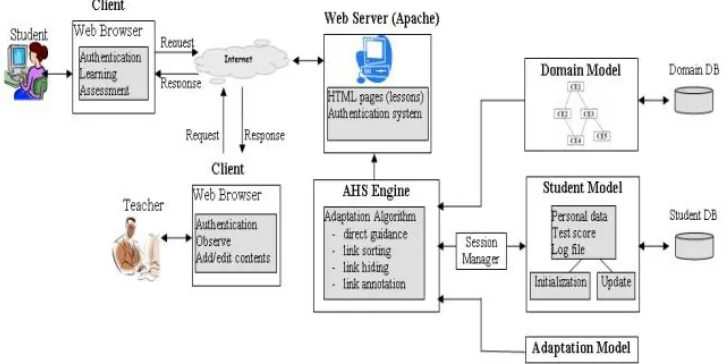
[image:2.612.125.489.242.424.2]such as computer and internet labs. Thus, information and services online accessibility is necessary to provide E-learning information availability and reduce the university budgets of IT resources. Moreover, (Premchaiswadi et al. 2012; Abbad 2011; Alajmi 2010; Lee 2006) the E-learning systems could be improved many characteristics in order to maximize the outcomes performances of learning process; (i) usefulness of information and services, (ii) ease of use the services and functions. However the students and lecturers attitudes and acceptance of E-learning systems effect by the services and functions characteristics. Therefore, the interactivity and flexibility features considered as important successful factor on E-learning implementations. Table 1 summarizes the practical researches of E-learning implementation.
Figure 1. E-learning model of Esichaikul et al. (2011).
No Name year s
Regio
n Description Factors methodology
1. Hassanzad
eh et al. 2012 Iran.
to survey and present a model for measuring success of e-learning systems in universities.
1- information quality; 2- system quality 3- service quality ; 4- intention to use
5- user satisfaction ; 6- net benefits Questionnaire
2.
Porouhan. P & Premchais wadi
2012 Thaila nd
extended version of the "Technology
Acceptance Model" (TAM) was developed to investigate the underlying factors of e learning system in Thailand,
1-EXTERNAL VARIABLES; 2-Perceived usefulness" (PU) ; 3- 2-Perceived ease of use"(PEOU); 4- attitude towards using; 5- behavioural intention to use computers (BI); 6- actual system use
Questionnaires
3.
Al-alak.B &
Alnawas.I
2011 Jordan
To investigate Jordanian lecturers' attitudes towards the adoption of e-learning system.
1- Perceived Usefulness; 2- Perceived Ease of Use; 3 Normative Pressure; 4 -Experience ; 5 - Computer Anxiety ; 6 - Computer Knowledge; 7 – Management Support
Questionnaire.
4. Abbad.M 2011 Saudi Arabia
to discuss the main Factors of a successful e-learning adoption by students.
1- attitudes; 2-behavioural intention to use computers (BI); 3- perceived usefulness (P); 4- perceived ease of use (PEOU); 5- Subjective Norm; 6- Internet Experience
7- System Interactivity; 8- Self- Efficacy; 9- Technical Support
Understanding; Identify existing evidence, support
proposed model
5. Akaslan.D
& Law.E 2011 Turkey
investigates the extent to which the HEIs associated with the science of electricity in Turkey are ready for E-learning. It also examines two factors that presumably affect
the perceptions of academic staff on e-learning
Readiness (Phase 1): 1- Technology : a- Stability; b- hardware; c - software. 2- People: a- Attitude; b- Confidence; c- Experience
3- Content: a- Theory; b- Practice; 4- Institution: a- University; b- Faculty; c- Department ; Acceptance (Phase 2):1- Perceived Usefulness
2- Perceived Ease of Use; Training (Phase 3): 1- Teacher; 2- Learner ; 3- Facility; 4- Personal
Questionnaire
6. Alajmi.M 2010 Kuwait
Using e-learning was designed to measure four scales: where faculty members fell in Rogers‘s diffusion of innovation .
1- Diffusion of Innovation ; 2- Attitudes and Skills (Self-
efficacy) ; 3- Barriers to E-Learning
The
questionnaire of the whole survey.
7.
Ferdousi.P 2009 United States
Investigate the factors that may affect instructors’ intention to use e-learning systems in two-year colleges.
1-Resistance to Change (RC) ; 2-Perceived Value (PV)
3-Computer Self-Efficacy (CSE)
4-Attitude toward E-Learning Systems (ATT)
E-learning systems at two-year colleges.
8. Chatzoglo
u et al. 2009 Greece
This study deals with the prognosis of employees’ intention to use a web-based training process, by extending the technology acceptance model.
1-learning goal orientation; 2- management support
3- enjoyment; 4- self-efficacy ;5- computer anxiety
A structured questionnaire was designed and data uestionnaire .
9. Ball.D 2008 United States
investigate factors influencing instructors’ intention to use Tegrity®, an emerging educational technology in traditional IS
1- Computer Self-Efficacy (CSE); 2- Computer Anxiety (CA)
3- Experience with the Use of Technology (EUT)
This study developed a survey
www.ijsrp.org
According to Esichaikul et al. (2011) model there are four main aspects of learning environment need to be managed using E-learning to maximize the management performance of traditional learning processes; IT resources, Administration processes, teachers activities and students activities. Figure 1 shows to Esichaikul et al. (2011) E-learning model.
III. METHODOLOGY
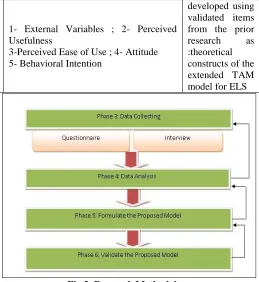
Figure 2 illustrates the methodology of this research which consists from four main phases which are:
1- Quantitative data approach: the researcher collect and analyze the management and costs challenges of learning environments using questionnaire to collect data from Al-Anbar University staff as case study of Iraqi universities.
2- Qualitative data approach: based on the analyzed data of quantitative approach the researcher collects the most suitable E-learning solutions from experts to avoid the management and costs challenges of learning environment in Iraqi universities.
3- Develop the proposed model: the E-learning proposed model developed based on the findings of qualitative approach and the analyzed E-learning determinates from related works.
[image:4.612.315.574.58.340.2]4- Validate the proposed E-learning model: the researchers ensure the quality, ease of use, and usefulness of the proposed model through interview with E-learning experts.
Fig 2. Research Methodology
IV. FINDINGS
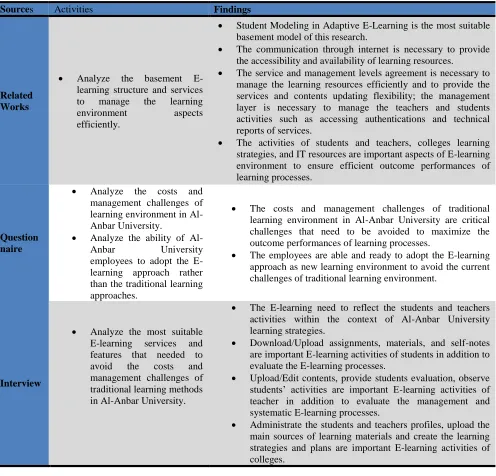
Table 2 presents the findings of the research approaches which lead to develop the proposed E-learning model.
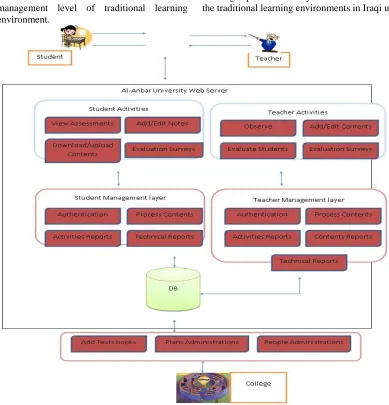
Figure 3 presents the proposed E-learning model of this research based on the findings of the development resources. There are four main aspects of the proposed E-learning model which are:
Teachers: the teachers responsible about provide many activities; (i) provide learning contents such as courses materials and supporting references, (ii) provide the tasks to evaluate the students learning outcomes such as tests and assignments, (iii) observe the students activities to support the weakness behaviors of students learning activities; the teachers activities will processes automatically to improve efficient management of teaching effort which reduce the teaching processes stress and time, and ensure accurate learning processes such as automatic tests evaluation. On the other hand the teachers need to evaluate the E-learning processes management such as colleges and systematic (IT management) performances through evaluation surveys. 10. Lee.Y 2006 Taiwa
n
To investigate the factors effecting the adoption of the e-learning system (ELS) in mandatory and voluntary settings, through an extension of the technology acceptance model (TAM).
1- External Variables ; 2- Perceived Usefulness
3-Perceived Ease of Use ; 4- Attitude 5- Behavioral Intention
Table 2. presents the findings the research approaches
Sources Activities Findings
Related Works
Analyze the basement E-learning structure and services to manage the learning environment aspects efficiently.
Student Modeling in Adaptive E-Learning is the most suitable basement model of this research.
The communication through internet is necessary to provide the accessibility and availability of learning resources.
The service and management levels agreement is necessary to manage the learning resources efficiently and to provide the services and contents updating flexibility; the management layer is necessary to manage the teachers and students activities such as accessing authentications and technical reports of services.
The activities of students and teachers, colleges learning strategies, and IT resources are important aspects of E-learning environment to ensure efficient outcome performances of learning processes.
Question naire
Analyze the costs and management challenges of learning environment in Al-Anbar University.
Analyze the ability of Al-Anbar University employees to adopt the E-learning approach rather than the traditional learning approaches.
The costs and management challenges of traditional learning environment in Al-Anbar University are critical challenges that need to be avoided to maximize the outcome performances of learning processes.
The employees are able and ready to adopt the E-learning approach as new learning environment to avoid the current challenges of traditional learning environment.
Interview
Analyze the most suitable E-learning services and features that needed to avoid the costs and management challenges of traditional learning methods in Al-Anbar University.
The E-learning need to reflect the students and teachers activities within the context of Al-Anbar University learning strategies.
Download/Upload assignments, materials, and self-notes are important E-learning activities of students in addition to evaluate the E-learning processes.
Upload/Edit contents, provide students evaluation, observe students’ activities are important E-learning activities of teacher in addition to evaluate the management and systematic E-learning processes.
Administrate the students and teachers profiles, upload the main sources of learning materials and create the learning strategies and plans are important E-learning activities of colleges.
Colleges: the college responsible about administration activities such as provides the learning plans, upload the basement learning materials i.e. electronic text books, and administrate the students and teachers profiles. The colleges activities will ensure that the electronic learning processes reflect the learning plans and strategies of the university. On the other hand, the colleges can track the students and teachers activities which support the learning processes evaluation.
IT Resources: there are three main IT resources that provided to save the learning processes costs and maximize the management performance of learning efforts; (i) internet as communication platform services and information availability and accessibility in order to minimize the costs that needed to develop learning resources based on traditional methods such as computer labs, classroom resources, and papers expenses, (ii) manage the services, information, and activities through services and management agreement layers using central web server of Al-Anbar University, and (iii)
www.ijsrp.org
efficiently which reduce the data redundancy and roles conflictions. Thus, the IT resources will reduce the costs and maximize the management level of traditional learning environment.
[image:6.612.111.500.90.495.2]The proposed E-learning model provides the features of accessibility, availability, and flexibility in order to manage the learning aspects efficiently which lead to reduce the expenses of the traditional learning environments in Iraqi universities.
Fig 3. Proposed E-learning Model
V. CONCLUSION
This main outcome of this research is proposed E-learning model for Iraqi universities, specifically for Al-Anbar University as case study; the E-learning model validated through E-learning experts to ensure the usability, reliability, and quality of model structure and components. The proposed E-learning model considered as efficient solution to maximize the management performance of learning environment in Al-Anbar University in order to reduce the learning processes expenses or costs, and maximize the learning outcomes of teachers and students. The main success factors of the developed model are; (i) services and information availability and accessibility, (ii) flexibility of updating model components i.e. services and materials, and (ii) services and infrastructure management using central web server.
ACKNOWLEDGMENT
The authors would like to express our gratitude to our universities for supporting the researches and publications.
REFERENCES
[1] M. Abbad, A conceptual model of factors affecting e-learning adoption. IEEE.Global Engineering Education Conference (EDUCON), 2011 [2] D. Akaslan, E. Law, Measuring teachers' readiness for e-learning in higher
education institutions associated with the subject of electricity in Turkey. IEEE.Global Engineering Education Conference (EDUCON), 2011 [3] B. A. Al-alak, I. A. Alnawas, Measuring the acceptance and adoption of
e-learning by academic staff. Knowledge Management & E-Learning: An International Journal (KM&EL), 3(2), 2011, pp 201-221.
[4] Brandon-hall.com, Glossary of E-learning terms, retrieved March 14, 2005 from http://www.brandonhall.com/public/glossary/index.htm.
[6] P. D. Chatzoglou, L. Sarigiannidis, A. Diamantidis, Investigating Greek employees’ intention to use web-based training. Computers & Education, 53(3), 2009, pp 877-889.
[7] D. Dewhurst, A. Williams, An investigation of the potential for a computer-based tutorial program covering the cardiovascular system to replace traditional lectures. Computers & Education, 31(3), 1998, pp 301-317. [8] EBS. , E-Learning Benchmarking Survey. Flag Flexible Learning Advisory
Group. Retrieved from http://flexiblelearning.net.au/wp-content/uploads/2013-E-learning-Benchmarking-Survey-FINAL.pdf. 2013 [9] V. Esichaikul, S. Lamnoi, C. Bechter, Student Modelling in Adaptive
E-Learning Systems. Knowledge Management & E-E-Learning: An International Journal (KM&EL), 3(3), 2011, pp 342-355.
[10] B. J. Ferdousi, A study of factors that affect instructors’ intention to use e-learning systems in two-year colleges. Nova Southeastern University. 2009 [11] A. Hassanzadeh, F. Kanaani, S. Elahi, A model for measuring e-learning
systems success in universities. Expert Systems with Applications, 39(12), 2012, pp 10959-10966.
[12] C. B. Hodges, “Designing to motivate: motivational techniques to incorporate in e-Learning experiences”. The Journal of Interactive Online Learning. Vol. 2, No. 3. 2008
[13] Y.C. Lee, An empirical investigation into factors influencing the adoption of an e-learning system. Online Information Review, 30(5), 2006, pp 517-541.
[14] S. Naidu, E-learning: A guidebook of principles, procedures and practices: Commonwealth Educational Media Centre for Asia (CEMCA). 2003 [15] S. Naidu, E-learning: A Guidebook of Principles. Procedures and Practices,
2nd Revised Edition, CEMCA.New Zealand Government. (2013). Information and Communications Technology (ISSN 2324-5077). 2006 [16] Newman. “Advantages and Disadvantages of E-leraning”: online.
Available:http://www.newman.ac.uk/Students-Websites/~m.m.friel/.2008
[17] D. Oblinger, Boomers, genxers, and millennials: Understanding the new students. Educause: July/August. 2003
[18] D. Oblinger, J. Oblinger, Educating the net generation, An Educause e-book publication: http//www. educause. edu/ir/library/pdf/pub7101. pdf. 2005 [19] Ottawa. Report of the E-Learning working Group. Retrieved from
http://www.uottawa.ca/vr-etudes-academic/en/documents/e-learning-working-group-report.pdf. 2013
[20] A. D. Smith, W. T. Rupp, Managerial implications of computer-based online/face-to-face business education: a case study. Online Information Review, 28(2), 2004, pp 100-109.
[21] M. P. Srivastava, R. Tiwari, N. Sharma, Manuscript Info Abstract. International Journal, 1(7), 2013, pp 591-599.
[22] T. Yizengaw, Challenges of Higher Education in Africa and Lessons of Experience for the Africa-US Higher Education Collaboration Initiative: Washington DC: National Association of State Universities and Land-Grant Colleges (NASULGC). 2008
[23] L.Yuan, S. Powell, MOOCs and open education: Implications for higher 2013
AUTHORS
First Author – Sulaiman Abd Anter, Information Technology,
Universiti Tenaga Nasional
Second Author – Abdullah M Abualkishik, Information
Technology, Universiti Tenaga Nasional
Third Author – Yousif I. Al Mashhadany, Electrical