© 2016, IRJET | Impact Factor value: 4.45 | ISO 9001:2008 Certified Journal | Page 84
Digital Smart System for Restaurants Using Wireless Technology
Kunal P. Gundle
1, Anuja A. Harshe
2, Kajol B. Kinage
3, Niraj L. Ghanawat
4B.E Student, Computer Engineering, PVPIT,Pune1 , B.E Student, Computer Engineering, PVPIT, Pune 2, B.E
Student, Computer Engineering, PVPIT, Pune 3, B.E Student, Computer Engineering, PVPIT, Pune 4
---***---
Abstract— Today technology is ruling our lives in almost every field. It has totally changed the traditional methods of doing daily activities, thus making life easier and effective. But it is not much evident in the food sector specifically in food ordering and serving areas in hotels, restaurants, cafes, etc. Today also most of the hotels in India use the traditional pen and paper approach for food ordering and serving which waste time and energy resulting in customer dissatisfaction and losses for the restaurants. To resolve this problem a touch based digital smart system is proposed for managing automatically the overall food ordering and serving procedure. This work aims to give fine dining experience to the customer. This paper describes the development of digital smart system using wireless technology for communication with centralized database for record and an android application for placing order with no more waiting for waiter. The goal is to save time of customers by providing facilities like vacancy list at reception, digital food ordering, instant e-billing and fast parking service which will result in customer satisfaction and ultimately profit the restaurant. This automated system saves time, reduce human errors, reduce manpower and gives customer satisfaction, thus beneficial for both restaurant and customer.
Keywords- Digital food ordering system, touch based digital ordering system, automated ordering system, wireless food ordering system.
1. INTRODUCTION
People’s standard of living has been increased and fully changed due to technology. It has totally changed the traditional methods of doing daily activities, thus making life easier and effective. But it is not much evident in the food sector specifically in food ordering and serving areas in hotels, restaurants, cafes, etc.[4] Even today also the restaurants use the common manual process of using waiter waiting to take order with pen and paper. In this traditional pen and paper approach the waiter writes down the order according to the customers which then is given to kitchen chefs, keeps records of it and then makes bill[2]. This process is simple and common but may result in
human errors. The waiter may mistake in noting the customer orders or may provide late order taking and late food serving which may result in customer’s dissatisfaction and restaurant losses. To solve this drawbacks in manual process an automated touch based digital smart system is proposed in this paper to manage the overall food ordering and serving process. The following section explains the development of digital smart system using wireless technology for communication with centralized database for record and an android application for placing order with no more waiting for waiter. The goal is to save time of customers by providing facilities like vacancy list at reception, digital food ordering, instant e-billing and fast parking service thus beneficial for both restaurant and customer. This work aims to give fine dining experience to the customer. This system provides efficiency and accuracy with cost effectiveness for restaurants. Procedure for Paper Submission
2. LITERATURE SURVEY
Early many approaches were developed over traditional pen and paper method such like Personal Digital Assistant(PDAs)[6], KIOSK system[8], computer based food ordering[5], etc., to manage automatically the food ordering procedure. These systems are attractive, user friendly and easy to operate but still do not meet the expectations. Following explains the above approaches in detail.
2.1Personal Digital Assistant (PDAs)
© 2016, IRJET | Impact Factor value: 4.45 | ISO 9001:2008 Certified Journal | Page 85 every customer. There is no facility to give a
feedback from the customers[9]. Also technical details are required for the restaurant manager to update or change information. PDAs are not so attractive and consist of only text information.
2.2KIOSK system
KIOSK[8] consists of a screen that contains the menu list. It is more advanced system which contains the textual information and images about the menu items along with prices. KIOSK screen in installed at the restaurants cash counter. Customer when visits the restaurant he has to check the menu list on the KIOSK screen. He then selects his items to be order. Payment is done through the KIOSK screen by payment option. His ordered list with the order number is sent to the chef in the kitchen. When the order is ready the order number is announced on the screen at the cash counter. The customer receives his order. This system also has limitations too. If the restaurant is in its peak time[7] then this system ends up in forming a big queue for the KIOSK screen. It leads to inconvenience and waste of time among the customers. However, this system is good for restaurants having moderate number of customers.
2.3Computer Based Food Ordering
In this computer based food ordering system[5], when customer comes to the restaurant, he has to tell the order to the cashier and make the payment. The cashier makes a bill with order number written on the bill. Then the customer has to wait at his table. The cashier sends order to the kitchen. When the order is ready, the waiter the food to the customer at his table. This system has same limitations as above. If a number of customers increase in the restaurant then it is difficult for the cashier to take the orders from each customer and send to the kitchen.
To overcome the above problems an automated touch based digital smart system is proposed to manage the overall food ordering and serving process[1]. The goal is to save time of customers by providing facilities like vacancy list at reception, digital food ordering, instant billing and fast parking service which will result in customer satisfaction and ultimately profit the restaurant. This automated system saves time, reduce human errors, reduce manpower and gives customer satisfaction, thus beneficial for both restaurant and customer[2]. It gives a fine dining experience to the
customer. This system provides efficiency and accuracy with cost effectiveness for restaurants.
3. PROPOSED SYSTEM
A touch based digital ordering system consists of an Android, Bluetooth and GSM. Android supports automation of routine tasks in wireless environment. This makes the system convenient to use for both the customers and restaurants in a cost effective way. It makes the fine dining experience of the customer. The customer can use any language they are known and are comfortable with, to operate the system. Also they can prefer any language to communicate with waiter. The system allows to get real time feedback from customers. It helps managers easy to update and to announce various offers on different occasions. It also help managers to analyze the best-selling items by getting those values from the database. It provides vacancy list for the customers at the receptionist which will help customers to book and grab the table easily with no more waiting thus saves time. The system gives e-billing facilities so that the customer can use credit or debit cards to pay the bill. The system gives fast parking service to the customers so that as soon as they do billing a check out message is send to the parker and he is ready with the customers car in the parking which will also save the customers time. This system is very cost effective, as it requires one time investment in installing android device[1] at each table. Thus it reduces the manpower and saves money of the restaurant.
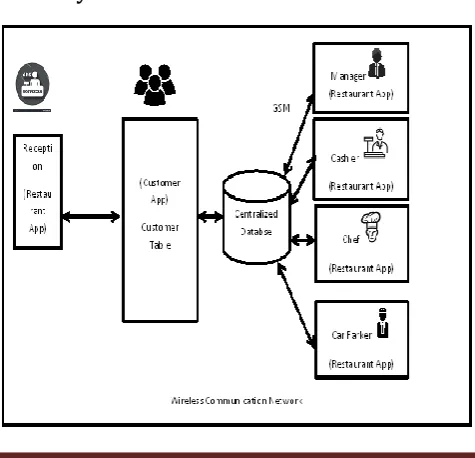
[image:2.595.319.557.548.777.2]© 2016, IRJET | Impact Factor value: 4.45 | ISO 9001:2008 Certified Journal | Page 86 Figure 1. System Architecture
The Touch Based Digital Smart system consists of two main parts customer app and restaurant app. The android customer app is made for customers which are identified by the table number on which this app is installed. The order is sent from a particular customer along with the table number. The second is the restaurant app. It has five users – reception, manager, cashier, chef and parker. This app has different functionality. At reception the app will provide the vacancy list for the customers on large display to book and grab the the vacant table with no more waiting. Manager has administrative access on the app and has full control over the system and the centralized database. The cashier can check the ordered items and their prices and then collect the money from the appropriate customer. The system gives e-billing facilities so that the customer can use credit or debit cards to pay the bill. The chef gets and marks the order when it is ready and then informs the manager which in turn informs the waiter to serve the order. The system gives fast parking service to the customers so that as soon as they do billing a check out message is send to the parker and he is ready with the customers car in the parking which will also save the customers time. So the app at the parker is ready to receive message to make fast parking service. This system consists of six different areas reception, customers dining area, manager area, kitchen area, cash counter and parking.
3.2System Components
The system components are:
3.2.1 Android Operating System - Android is a
Linux operating system specially designed for touchscreen devices. It is cheaper than other mobile operating systems like IOS.
3.2.2 Touchscreen - Touch screens are a clear
sheet of plastic with small sensors that detect pressure from fingertip or a pointing material or device. When they are pressed, they perform different functions like clicking, dragging, etc. Touch screens works great for the cause and are effective for direct select.
3.2.3 LCD – It is Liquid Crystal Display. LCD is used
to display the orders along with the table number to the chef.
3.2.4 Arduino - Arduino is a sensor tool for
computers that can sense and control the physical world than the desktop computer. It is used in the system to connect the chef’s android device to the LCD by Bluetooth.
3.2.5 GSM – GSM is a means of wireless
communication in the proposed system. It is preferable over other wireless communication because it has less cost, improved quality performance, high range, and reliability.
3.3Algorithm
Two algorithms are used to resolve our problem Dijkstra’s algorithm and K-means clustering algorithm.
3.3.1 Dijkstra’s algorithm
Greedy algorithms use problem solving methods based on actions to see, if there’s a better long term strategy. Dijkstra’s algorithm uses the greedy approach to solve the single source shortest problem. It just adds the shortest edge without worrying about the overall structure, without looking ahead. It makes a locally optimal choice at each step. Algorithm starts at the source vertex, s, it grows a tree, T, that ultimately spans all vertices reachable from S. Vertices are added to T in order of distance i.e., first S, then the vertex closest to S, then the next closest, and so on.
Following procedure assumes that graph G is represented by adjacency lists.
DIJKSTRA (G, w, s)
1. INITIALIZE SINGLE-SOURCE (G, s)
1. S ← { } // S will ultimately contains vertices of final shortest-path weights from s
2. Initialize priority queue Q i.e., Q ← V[G] 3. while priority queue Q is not empty do 4. u ← EXTRACT_MIN(Q) // Pull out new
vertex
5. S ← S È {u}
© 2016, IRJET | Impact Factor value: 4.45 | ISO 9001:2008 Certified Journal | Page 87 6. for each vertex v in Adj[u] do
7. Relax (u, v, w)
[image:4.595.74.232.166.379.2]3.3.2 K-means clustering algorithm.
Figure 2. K-means clustering algorithm.
This is an algorithm to classify the objects based on attributes/features into K number of group. K is positive integer number. The classification is done by minimizing the sum of squares of distances between data and the corresponding cluster centroid. Thus, the purpose of K-mean clustering is to classify the data.
3.4Mathematical Model
Customer satisfaction and saving time is the main goal of the system. So the mathematical model is based on the calculating the time complexity of Dijkstra Algorithm as big-O notation given below, 1. Each vertex can be connected to (V-1) vertices, hence the number of adjacent edges to each vertex is V - 1. Let us say E represents V-1 edges connected to each vertex.
2. Finding & Updating each adjacent vertex's weight in min heap is O(log(V)) + O(1) or O(log(V)). 3. So the time complexity for updating all adjacent vertices of a vertex is E*(logV).
4. Hence, time complexity for all V vertices is
[image:4.595.314.556.314.553.2]4. RESULT ANALYSIS
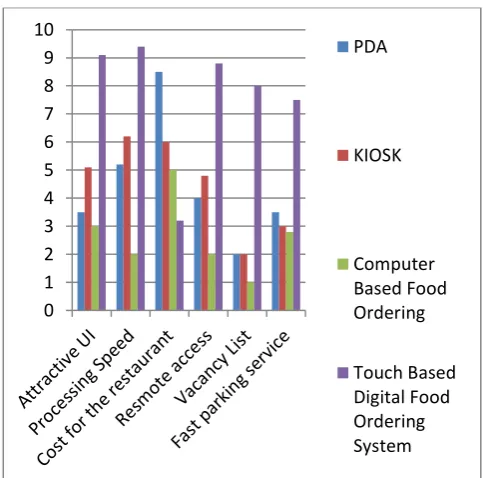
Figure 2. shows a graph of features of the system vs. rating scale for the 3 different methods in
Restaurant sector namely, the PDA System, KIOSK system, Computer Based Food Ordering and the Touch Based Digital Smart System. The user interface of Touch Based Digital Smart System is more attractive than the PDA and KIOSK systems. Comparing the processing speed of these three systems we find that speed of Touch Based Digital Smart System is good. Hence Touch Based Digital Smart System is the cheapest automation solution for the restaurant owners.
Figure 3. Comparison of Various Automated Food Ordering techniques in Restaurant sector.
5.
CONCLUSION
In this paper, an automated touch based digital Smart system for the restaurant is proposed to overcome the traditional method of pen and paper. This system changes the manual process of food ordering and thus reduce manpower and saves cost of labor. It requires only one time investment in installing the devices in the restaurant. It eliminates human errors due to automation. It saves time. Since this system makes the fast Smart it prevents from queue formation. It also simplifies the overall food ordering process with real time feedbacks from customers making the system more dynamic.
0 1 2 3 4 5 6 7 8 9 10
PDA
KIOSK
Computer Based Food Ordering
Touch Based Digital Food Ordering System
© 2016, IRJET | Impact Factor value: 4.45 | ISO 9001:2008 Certified Journal | Page 88 It saves time of customers by providing facilities
like vacancy list at reception, digital food ordering, instant e-billing and fast parking service which will result in customer satisfaction and ultimately profit the restaurant. The customer can use any language they are known and are comfortable with, to operate the system. Also they can prefer any language to communicate with waiter. The manager can make changes using his app and give offers on foods to increase the productivity of his restaurant. The system gives e-billing facilities so that the customer can use credit or debit cards to pay the bill. The system gives fast parking service to the customers so that as soon as they do billing a check out message is send to the parker and he is ready with the customers car in the parking which will also save the customers time. It gives fine dining experience for the customers. This system provides customers a user-friendly, convenient and attractive user interfaces with images of every food item by which they can easily place the orders. Customers can call the waiter for help by just a single click. Thus, the proposed system is advancement in the field of food industry by automatically managing the system using wireless technology. This automated system saves time, reduce human errors, reduce manpower and gives customer satisfaction, thus beneficial for both restaurant customer. This system provides efficiency and accuracy with cost effectiveness for restaurants.
6. FUTURE SCOPE
In future more functionalities like lodge management, event management in all overall management of the restaurant by using this digital smart system same can be implemented. It can also be implemented to order online from outside the restaurant by making such an application that can be used by the customers to place orders from their homes.
ACKNOWLEDGMENT
Every research work has support, guidance and help of many people and it becomes the important responsibility of the author to express deep sense of gratitude for the same. So we take this
opportunity to express our deep sense of gratitude for our guide Prof. H. V. Kumbhar, for giving us this good opportunity to select and present this topic and also for providing all the facilities and
knowledge required for the successful completion of our research work. With all respect and
gratitude, we would like to thank all the people, who have helped us directly or indirectly to make our work complete.
REFERENCES
[1] Bhaskar Kumar Mishra, Bhawani Singh Choudhary, Tanmay Bakshi, Touch Based Digital Ordering System on Android using GSM and Bluetooth for Restaurants, IEEE INDICON, 2015.
[2]. Resham Shinde, Priyanka Thakare, Neha Dhomne, Sushmita Sarkar, “Design and Implementation of Digital dining in Restaurants using Android”, in International Journal of Advance Research in Computer Science and Management Studies, Volume 2, Issue 1, January 2014.
[3]. Shweta Shashikant Tanpure, Priyanka R. Shidankar, Madhura M. Joshi, “Automated Smart System with Real-Time Customer Feedback”, in International Journal of Advanced Research in Computer Science and Software Engineering, Volume 3, Issue 2, February 2013.
[4]. Kirti Bhandge, Tejas Shinde, Dheeraj Ingale, Neeraj Solanki, Reshma Totare, “A Proposed System for Touchpad Based Food Ordering System Using Android application”, in International Journal of Advanced Research in Computer Science & Technology (IJARCST 2015), Vol. 3, Issue 1 (Jan. - Mar. 2015).
[5]. Sushmita Sarkar, Resham Shinde, Priyanka Thakare, Neha Dhomne, Ketki Bhakare, “Integration of Touch Technology in Restaurants using Android”, in IJCSMC, Vol. 3, Issue. 2, February 2014, pg.721 – 728.
[6]. Varsha Chavan, Priya Jadhav, Snehal Korade and Priyanka Teli, “Implementing Customizable Online Food Ordering System Using Web Based Application”, in International Journal of Innovative Science, Engineering & Technology, Vol. 2 Issue 4, April 2015.
© 2016, IRJET | Impact Factor value: 4.45 | ISO 9001:2008 Certified Journal | Page 89 International Journal of Research in Engineering
and Technology.
[8]. Ashutosh Bhargave, Niranjan Jadhav, Apurva Joshi, Prachi Oke, Prof. Mr. S. R Lahane, “Digital Ordering System for Restaurant Using Android”, in International Journal of Scientific and Research Publications, Volume 3, Issue 4, April 2013.