© 2017, IRJET | Impact Factor value: 6.171 | ISO 9001:2008 Certified Journal
| Page 1290
Development of a New Solid Insulation with the use of Phenol
Formaldehyde Resin Material for a Liquid-Immersed Transformer
Satvir Singh
1, Vishavdeep Jindal
2, Tanu Aggarwal
31
Lecturer, Department of Electrical Engineering, Punjab Institute of Technology GTB Garh, Moga, Punjab, India.
2Assistant Professor, Department of Electrical Engineering, GZSCCET Bathinda, Punjab, India.
3
Assistant Professor, Department of Electrical Engineering, Punjab Institute of Technology GTB Garh, Moga,
Punjab, India.
---***---Abstract -
The use of paper as a solid insulation materialin various engineering applications is so extensive due to its physical and electrical properties and ease of manufacture. As a result of flexibility of paper, it has been selected or designed as an electrical insulation material for various parts and components in high voltage technology. In the current study, a kraft paper employed in conventional transformers is selected as a raw electrical insulation material and further modified with layering of phenol formaldehyde resin through laboratory procedures, improved the electrical and mechanical properties of newly developed paper as compared to the existing one.
Key Words: Kraft paper; Phenol Formaldehyde Resin; Electric Strength in air; Electric strength in oil.
1. INTRODUCTION
The transformer, a very important member of power network, is like a backbone of the power system. Most of the transformers are oil-immersed one and their insulation is provided by mainly dielectric mineral oil and solid insulation paper. Insulation paper, which is widely used in oil-immersed transformers, is made of natural cellulose [1, 2]. In the early days, a few insulation materials were known for low temperature superconducting power applications. But nowadays insulation materials have made significant changes and progress and Kraft paper is one of the widely used insulating materials in transformers.
Transformer insulation should be developed continuously with an increase in voltage and power in transformer. A plenty of the research work has been done by researchers on the modification and improvement of oil insulation [3– 5]. However, research to improve the insulation paper is not approached to high levels, which is also a very important concern in regard to enhance the efficiency of a transformer and in other electrical equipments for which it is used.
2. USE OF PHENOL FORMALDEHYDE RESIN
The Alkyl Phenolic Resins is the result of condensation reaction between aldehyde & alkyl phenols and is commonly used in rubber products. The phenol alkyl resin ensures good solubility in hydrocarbons and serves as indispensable modifying agent for chloroprene rubber. When particles of Phenol Formaldehyde Resin are used in layering, they can be attached to the cellulose surface. The bonding with the cellulose paper is like a lamination. This effect may greatly change the dielectric properties of oil-impregnated insulation paper. Therefore, high density Formaldehyde resin is used for the layering process. The results show that this newly prepared paper by layering improves the electric strength of solid in oil. An experimental procedure was performed for the modification of the insulation paper because raw paper got torn out if it directly applied for insulation in a transformer.
3. SAMPLE PREPARATION
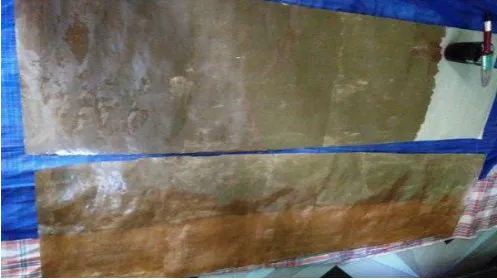
[image:1.595.308.557.546.686.2]The layering process of raw paper is done with the help of a tool called brush in small step movements.
Fig -1: Kraft Paper Sheet
© 2017, IRJET | Impact Factor value: 6.171 | ISO 9001:2008 Certified Journal
| Page 1291
layering and with layering are compared to get desiredresults.
Total six samples are taken in which first two samples are of original Kraft paper and Electra paper and out of other four samples; two are prepared by the one side layering and another two with double side layering.
Identification of sample is:
KP- without Layering EP- without Layering KP1- One side layered EP1-One side layered KP2- Both side layer EP2- Both side layer
All the three samples of Kraft paper are prepared from a sheet of 100x30 cm2. Thickness of whole sheet is 0.89 mm nearest to 4 mil. Similarly, three samples of Electra paper are prepared from the size of 75x75 cm2, thickness 0.114 mm slightly more than 4 mil.
4. EXPERIMENTAL
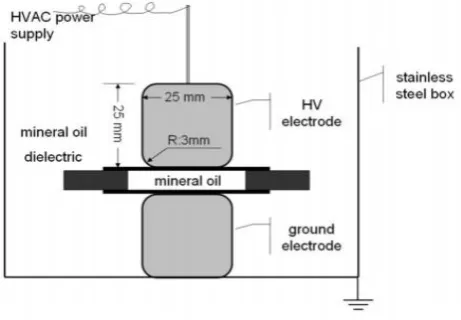
[image:2.595.308.561.383.536.2]The diagram of the electrodes for measuring the breakdown voltage of the hand sheets is shown in Figure 2. The diameter and height of the high-voltage (HV) and ground electrodes were both 25 mm. A copper bar was used to connect the HV electrode with the HV AC current power. In this experiment test, mineral oil was used for the dielectric in the stainless steel box.
Fig -2: Diagram of electrodes
The focus of the experiment was the electric strength of paper in oil and air. Therefore, the thickness of the oil gap was only 3 mm. The oil gap was formed in the 3 cm-diameter whole of the 3 mm-thick paperboard. The external diameter of the paperboard was 6 cm. The thickness of the four kinds of experimental hand sheet papers 85,104,150 microns Kraft paper samples KP KP1 KP2 and 67,94,114 microns for Electra paper samples EP EP1 EP2. The hand sheet papers were cut into 4 cm-diameter circles. All samples were put into the vacuum
chamber and were dried at 90 °C for 48 h, and then the mineral oil at 40 °C was infused into the glass bottles in the vacuum chamber to immerse samples for 24 h.
5. TEST APPARATUS
The test is carried out in air and oil accordance with clause 5 of IEC publication 243. The electrodes shall be in accordance with Sub-clauses 6.1.1 or 6.1.3 of the publication. The preferred electrodes are the 25/75 mm electrodes. The smaller electrodes shall be used only if the width of the material prevents the use of the large electrodes. The faces of the electrodes shall be parallel and free from pits or other imperfections.
[image:2.595.45.276.444.604.2]All test pieces shall be sufficiently large to avoid flash-over. The requirements number of test may be made on one test piece. Where more than one thickness is required to form the test piece, the number of superimposed layers shall be given in Part 3.The application of voltage in accordance with the Sub-clause of IEC publication 243. Criterion of breakdown, see clause of that publication. Nine tests made according to standard
Fig -3: BDV Tester
6. RESULTS
© 2017, IRJET | Impact Factor value: 6.171 | ISO 9001:2008 Certified Journal
| Page 1292
Table -1: Readings of samples collectedReadings of Samples
Property Units KP KP1 KP2
EP EP1 EP2”
Electrical Strength in
air
kV/mm 11.33 12.72 14.15 12 13.57 15.11
Electrical Strength in
oil 45.75 55.5 64.8 47 57.75
66
6. DISCUSSIONS
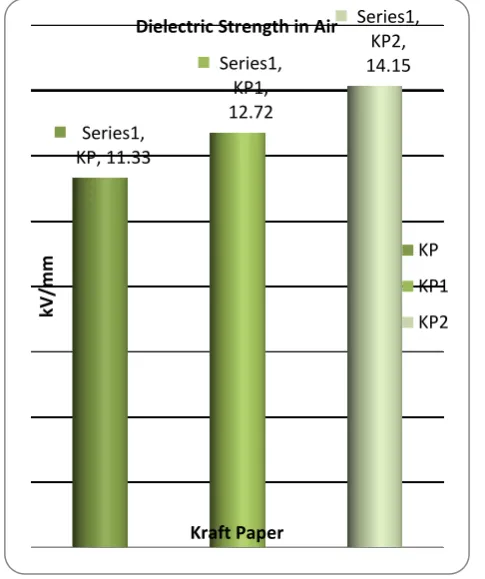
[image:3.595.33.291.115.261.2]The graphs are plotted to comparison of original sample KP and EP with KP1 KP2 EP1 EP2. After results it obtained electric strength of paper in oil improved very well. But Electric Strength in air increased little bit that is not much important because we have to need to strong the electrical strength of paper in oil for use in transformer.
[image:3.595.44.554.341.684.2]Fig - 4: Dielectric Strength in Air Kraft Paper
Fig-5: Dielectric Strength in Air Electra Paper
Fig-6: Dielectric Strength in Oil Kraft Paper Series1,
KP, 11.33
Series1, KP1, 12.72
Series1, KP2, 14.15
kV/
m
m
Kraft Paper Dielectric Strength in Air
KP
KP1
KP2
Series1, EP, 12
Series1, EP1, 13.57
Series1, EP2, 15.11
kV/
m
m
Electra Paper Dielectric Strength in Air
EP
EP1
EP2
Series1, KP, 45.75
Series1, KP1, 55.5
Series1, KP2, 64.8
kV/
m
m
Kraft Paper Dielectric Strength in Oil
KP
KP1
[image:3.595.42.285.377.667.2]© 2017, IRJET | Impact Factor value: 6.171 | ISO 9001:2008 Certified Journal
| Page 1293
Fig-7: Dielectric Strength in Oil Electra PaperThe graph shown in last four Figures are Dielectric Strength of papers in air and oil. These Figures represents the values obtained for Dielectric Strength recorded by the procedure followed in laboratory at room temperature on the sample of fresh and modified insulating papers w.r.t. kV/mm of Dielectric Strength. The Dielectric Strength is improved after the modification of paper in both air and oil for Phenol Formaldehyde Resin. The graph shows the descending trend for the Dielectric Strength as we move from right to left along the different sample axis. The resultant value of all the readings obtained from procedure was the arithmetical mean as shown by dot on Dielectric Strength line.
7. CONCLUSIONS
In summary, it is easy to implement method as implemented to improve the Dielectric properties of the Kraft paper. Additional test of physical & dielectric properties were also performed on fresh and modified paper to examine the full potential of the Kraft paper, and it was found that Dielectric breakdown characteristics of both modified Kraft and Electra papers with phenol formaldehyde resin in oil and air have the better results as compared to the original samples of Kraft paper and Electra paper.
REFERENCES
[1] T. V. Oommen and T. A. Prevost, “Cellulose insulation in oil-filled power transformers—part II—maintaining insulation integrity and life,” IEEE Electrical Insulation Magazine, vol. 22, no. 2, pp. 5–14, 2006.
[2] T. V. Oommen and T. A. Prevost, “Cellulose insulation in oil-filled power transformers—part II—maintaining insulation integrity and life,” IEEE Electrical Insulation Magazine, vol. 22, no. 2, pp. 5–14, 2006.
[3] T. V. Oommen and T. A. Prevost, “Cellulose insulation in oil-filled power transformers—part II—maintaining insulation integrity and life,” IEEE Electrical Insulation Magazine, vol. 22, no. 2, pp. 5–14, 2006.
[4] T. V. Oommen and T. A. Prevost, “Cellulose insulation in oil-filled power transformers—part II—maintaining insulation integrity and life,” IEEE Electrical Insulation Magazine, vol. 22, no. 2, pp. 5–14, 2006.
[5] P. KopWansky, L. Tomco, and K. Marton, “The DC dielectric breakdown strength of magnetic fluids based on transformer oil,” Journal of Magnetism and Magnetic Materials, vol. 289, no. 1, pp. 415–418, 2005.
[6] Enis Tuncer, Georgios Polizos, Isidor Sauers, and D. Randy James, “Electrical insulation paper and its physical properties at cryogenic temperatures” IEEE transaction on applied superconductivity Volume: 21, issue 3, page 1438-1440 June 2011.
[7] M. Ohashi, S. Kawakami, Y. Yokogawa, and G. C. Lai, “Spherical aluminum nitride fillers for heat-conducting plastic packages,” Journal of the American Ceramic Society, vol. 88, no. 9, pp. 2615–2618, 2005.
[8] P. Pang and P. Englezos, “Application of pretreated ground calcium carbonate in mechanical pulp suspensions,” Pulp and Paper Canada, vol. 104, no. 6, pp. 37–39, 2003.
[9] Masood, M. U. Zuberi and E. Husain, “ Breakdown strength of solid dielectrics in liquid nitrogen” IEEE transactions on dielectrics and electrical insulation vol. 15, no 4, page 1051-1055 august 2008.
[10] Masood, M. U. Zuberi and E. Husain, “ Breakdown strength of solid dielectrics in liquid nitrogen” IEEE transactions on dielectrics and electrical insulation vol. 15, no 4, page 1051-1055 august 2008.
[11] T A Prevost, T V. Oommen, "Cellulose insulation in oil-filled power transformers: Part I- History and development [J]", IEEE Electrical Insulation Magazine, vol. 1, no. 22, pp. 28-35, 2006.
Series1, EP, 47
Series1, EP1, 57.75
Series1, EP2, 66
kV/
m
m
Electra Paper Dielectric Strength in Oil
EP
EP1
© 2017, IRJET | Impact Factor value: 6.171 | ISO 9001:2008 Certified Journal
| Page 1294
[12] Akira Miyoshi, “ A method for thermally upgradinginsulating paper using alkyl-naphthalene oil. IEEE transactions on electrical insulation,Volume: EI-11, issue 3, Sept. 1976.