© Association of Academic Researchers and Faculties (AARF)
A Monthly Double-Blind Peer Reviewed Refereed Open Access International e-Journal - Included in the International Serial Directories.
Effectiveness of Instruction Program on Teachers' Knowledge in Primary School regarding Chickenpox Diseases at Al-Najaf City
Noora Farhan Hassan ALAbedi 1, Abeer Miri 2 , Zahra Abdull Abbas Taher 3 Faculty of Nursing, University of Kufa.
ABSTRACT
Objectives:-To find out the effect of instructional program on Teachers' knowledge about chickenpox disease. To find out association between the instructional program
and demographic characteristics of teachers
Methodology: A quasi-experimental design was carried out Al-Najaf Al-Ashraf Education Directorate / Primary Schools, from January 2019 until March 2019.
Results: The results of present study shows that most of the study group has been weak knowledge in pre-test; a high significant mean difference among study group
concerning to their pre-test and post-test scores; There is a clear difference between
the post test of the control group who have not been exposed to any instructional
program and the study group who were exposed to instructional sessions.
Conclusion: There is an improvement in teachers' knowledge in the study group in post-test after exposure to the instructional program. Mass media is the main source
of Teachers' knowledge regarding chickenpox diseases.
Recommendations: Teachers need to join special courses to improve their knowledge so that they can contribute in educating students through the information
obtain from the courses because the students in this age group are more affected by
the teacher.
Keywords: Instruction Program, Teachers' Knowledge, Chickenpox Diseases
International Research Journal of Natural and Applied Sciences
ISSN: (2349-4077)
Impact Factor 5.46 Volume 6, Issue 8, August 2019
© Association of Academic Researchers and Faculties (AARF)
A Monthly Double-Blind Peer Reviewed Refereed Open Access International e-Journal - Included in the International Serial Directories.
INTRODUCTION
Chickenpox: known as Varicella, it is the disease that results from primary infection with the varicella-zoster virus (VZV). It is a highly contagious viral disease
in early childhood and can be fatal disease specially in neonates because it causes
very serious complications.(1)
A varicella disease is transmitted directly by air spray from the respiratory
secretions of the infected person when (coughing or sneezing) or by touching the
virus particles that come from the blisters of the varicella. Also, it is simply spread
from someone with an infection to another person who has not got the disease or has
not received the varicella vaccine.
Incubation period for varicella diseases is ten to twenty one days after
exposure. It may be prolonged in patients with impaired immune system. Individuals
with varicella are considered infectious from 24 to 48 hour before the skin rash
appears and until all lesions are crusted (scabbed) (2)
All age groups (from newborn to adult), and person's with
immunecompromised all of them are a higher risk for infectious with chickenpox
disease. Also, Individuals with HIV, cancer and AIDS have more severe disease and
a longer time. Chickenpox causes serious complications that can lead to death in
some cases including pneumonia , secondary bacterial infections, dehydration,
cerebella ataxia and encephalitis. Isolate infected persons with the disease and stay
inside the house is one of the best ways to prevent the spread of the disease. An
individual with chickenpox should avoid unnecessary exposure to neonate and
patients with immunodeficiency diseases.(3)
Health care providers play an important role in educating people about the
disease (including signs and symptoms, and modes of transmission) and how to
prevent it. Public practices about prevention of chickenpox disease may be
influenced by their knowledge about disease and accessibility of effective preventive
© Association of Academic Researchers and Faculties (AARF)
A Monthly Double-Blind Peer Reviewed Refereed Open Access International e-Journal - Included in the International Serial Directories.
The incidence of varicella has changed in the last 15 years with the beginning
of chickenpox vaccine.(5) .In Iraq, annual cases of infections have increased from
38818 in 2009 to 51066 in 2014.(6)
Statement of problem: Instruction program on Teachers' knowledge in primary school regarding chickenpox diseases
1-
To find out the effect of instructional program on teachers knowledge aboutchickenpox disease by comparing the pre and post-test score.
2-
To find out relationship between instructional program and demographiccharacteristics of the teachers.
Study design: A quasi-experimental
to find the effectiveness of instruction program on Teachers' knowledge about
chickenpox diseases; the study
was start from January 7th, 2019 to March 7th, 2019.
Study Setting: The study was conducted in the primary schools in AL- Najaf city.
Study sample: The sample consists of 100 teachers, it is divided in 2 groups; 50
teachers are exposed to the instruction program as study group and other 50 teachers
© Association of Academic Researchers and Faculties (AARF)
[image:4.595.65.534.95.501.2]A Monthly Double-Blind Peer Reviewed Refereed Open Access International e-Journal - Included in the International Serial Directories. Results:
Table 1: Distribution of the study and control groups according to demographic data
Demographic data Groups
Study Control
Sig.
Freq. % Freq. %
Age
<= 35 19 38 15 30 Chi-square (3.266)
df (2)
P-Value (0.195)
36 - 51 29 58 28 56
52 Up 2 4 7 14
Gender
Male 24 48 30 60 Chi-square (1.499)
df (1)
P-Value (0.224)
Female 26 52 20 40
Residence
Rural 1 2 0 0 Chi-square (1.010)
df (1)
P-Value (0.315)
Urban 49 98 50 100
Marital status
Single 37 74 45 90
Chi-square (0.478)
df (3)
P-Value (0.189)
Married 5 10 1 2
Divorced 6 12 3 6
Widower 2 4 1 2
Years of experience
<= 5 16 32 8 16 Chi-square (9.091)
df (2)
P-Value (0.011)
6 - 10 14 28 7 14
11 Up 20 40 35 70
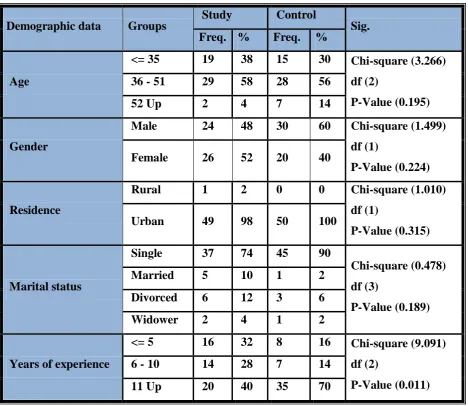
This table indicate that more than half of both groups at (36-51) years old.
Regarding to sample gender, in the study group (52%) from them are females and (60) are
male from control group. Concerning residence, the majority of the study sample from urban
areas. Regarding to marital status, the highest percent from them (90%) in control group, and
(74%) of study group are single. concerning to experience years, (40%) from participates in
© Association of Academic Researchers and Faculties (AARF)
[image:5.595.79.520.103.508.2]A Monthly Double-Blind Peer Reviewed Refereed Open Access International e-Journal - Included in the International Serial Directories. Table 2: Sources of Teachers' information about chickenpox diseases
Items Rating and
intervals
Study Control
Freq. Percent Freq. Percent
Are you receiving
information about
chickenpox diseases
yes 28 56% 45 90%
Total
No 22 44.0% 5 10.0%
50 50
Sources of information
Doctor 1 2.0% 12 24.0%
Doctor &
Mass
Media
2 4.0% 0 0.0%
Nurse &
Mass
Media
1 2.0% 2 4.0%
Friends 5 10.0% 12 24.0%
Mass
Media 19 38.0% 19 38.0%
Total 50 50
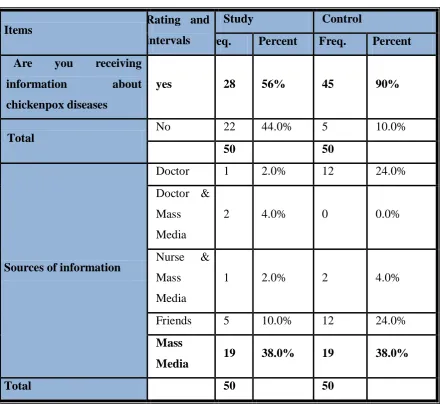
Table 2 reveals that (56%) in the study group and (90%) in control group receive
© Association of Academic Researchers and Faculties (AARF)
[image:6.595.82.514.126.653.2]A Monthly Double-Blind Peer Reviewed Refereed Open Access International e-Journal - Included in the International Serial Directories. Table 3: Teachers' knowledge of study group at pre-post test regarding to instructional
program concerning chickenpox diseases
items Pre-Test Post- test
M.S Assessment M.S Assessment
1. The main causes of chickenpox is 1.46 Weak 2.00 Good
2. Chickenpox can be spread through: Person to person
by direct contact 1.60
Good
2.00 Good
3. Who is the most individual vulnerable to the
chickenpox 1.64
Good
1.96 Good
4. is considered from the common signs and symptom of
chickenpox 1.22
Weak
1.98 Good
5. Incubation period of this diseases is 1.40 Weak 1.64 Good
6. Chickenpox vaccine is recommended for the 1.44 Weak 1.96 Good
7. Common side effects of chickenpox vaccine 1.52 good 1.92 Good
8. is one of very rare severe side effects of chickenpox
vaccine 1.06
Weak
1.66 Good
9. is considering more serious complications of
chickenpox diseases 1.54
good
1.96 Good
10.is considering one of complications of chickenpox in
the first 20 weeks of pregnancy 1. 48
Weak
2.00 Good
11.is the best way to avoid infection 1.44 Weak 1.92 Good
12.Is it possible that a person be infected with
chickenpox more than once? 1.34
Weak
1.80 Good
13.should not be receiving the chickenpox vaccine. 1.22 Weak 1.64 Good
14.When the child feels the stiff neck and fever that lasts
longer than 4 days then he/she must be 1.76
good
1.96 Good
15.Patient with………. is advised to notify your
doctor immediately 1.48
Weak
1.76 Good
16.Patient infected with itching skin will be advised as
follows
1.34 Weak
1.84 Good
17.In cases of severe illness, treatment should be 1.58 good 2.00 Good
18.The most common beneficiaries of the chickenpox
vaccine are
1.28 Weak
1.70 Good
19.it is one of the risk factors for adult people 1.62 good 1.98 Good
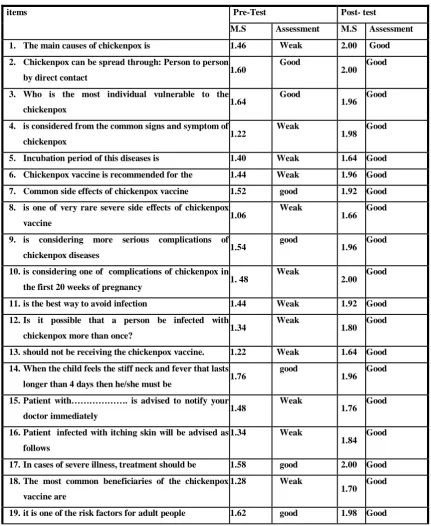
Table 3 reveals that the majority of participates in the study group have been poor
knowledge in pre-test, while in post-test all of them (100%) are good knowledge after
© Association of Academic Researchers and Faculties (AARF)
[image:7.595.55.543.76.198.2]A Monthly Double-Blind Peer Reviewed Refereed Open Access International e-Journal - Included in the International Serial Directories. Table 4: Overall assessment of Teachers' knowledge in the Study group
Domain
Pre-test Post-test
Freq. % M.S Assessment Freq. % M.S Assessment
Overall knowledge
Incorrect 30 60%
1.48 Weak 0 0% 1.87 Good
Correct 20 40% 50 100%
Total 50 100% 50 100%
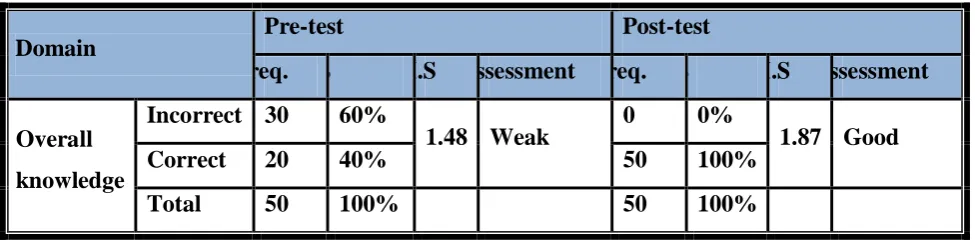
This table show the overall assessment for study group concerning teachers
knowledge about chickenpox is good in post-test while is poor knowledge in pre-test.
Table 5: Teachers' knowledge of control group at pre-posttest regarding to instructional program concerning chickenpox diseases
items
Pre-Test Post- test
M.S Assessment M.S Assessment
1. The main causes of chickenpox is 1.32 Weak 1.32 Weak
2. Chickenpox can be spread through: Person to person by direct contact 1.20 Weak 1.22 Weak
3. Who is the most individual vulnerable to the chickenpox 1.22 Weak 1.12 Weak 4. is considered from the common signs and symptom of chickenpox 1.34 Weak 1.34 Weak
5. Incubation period of this diseases is 1.40 Weak 1.30 Weak
6. Chickenpox vaccine is recommended for the 1.32 Weak 1.32 Weak 7. Common side effects of chickenpox vaccine 1.48 Weak 1.48 Weak 8. is one of very rare severe side effects of chickenpox vaccine 1.16 Weak 1.26 Weak
9. is considering more serious complications of chickenpox diseases 1.36 Weak 1.36 Weak
10. is considering one of complications of chickenpox in the first 20 weeks of
pregnancy 1.42
Weak
1.42 Weak
11. is the best way to avoid infection 1.48 Weak 1.48 Weak
12. Is it possible that a person be infected with chickenpox more than once? 1.44 Weak 1.44 Weak
13. Should not be receiving the chickenpox vaccine. 1.70 Good 1.70 Good 14. When the child feels the stiff neck and fever that lasts longer than 4 days
then he/she must be 1.58 Good 1.58 Good
15. Patient with………. is advised to notify your doctor immediately 1.44 Weak 1.55 Good
16. Patient infected with itching skin will be advised as follows 1.46 Weak 1.58 Good
17. In cases of severe illness, treatment should be 1.54 Good 1.54 Good
18. The most common beneficiaries of the chickenpox vaccine are 1.54 Good 1.52 Good
19. it is one of the risk factors for adult people 1.56 Good 1.65 Good
Table 5 indicate that the control group in pre and post test has been weak knowledge because they don't
[image:7.595.65.532.295.686.2]© Association of Academic Researchers and Faculties (AARF)
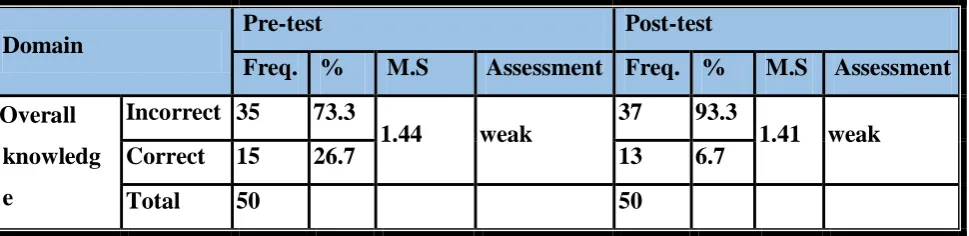
[image:8.595.59.544.119.237.2]A Monthly Double-Blind Peer Reviewed Refereed Open Access International e-Journal - Included in the International Serial Directories. Table 6: Overall assessment with Significant Difference between Pre-Test and Post-Test Scores in control group.
Domain
Pre-test Post-test
Freq. % M.S Assessment Freq. % M.S Assessment
Overall knowledg e
Incorrect 35 73.3
1.44 weak
37 93.3
1.41 weak
Correct 15 26.7 13 6.7
Total 50 50
This table show that there is no significant difference among control group relative to
their pre-test and post-test scores
Table 7: Statistical comparison of the teachers' knowledge between pre and post test in both groups
No. Mean ± SD t df Sig. (2-tailed)
Study pre 50 1.48 ± 0.132 20.48 49 0.0001
(HS)
post 50 1.87 ± 0.082
Control
pre 50 1.44 ± 0.112
1.070 49 0.290
(NS)
post 50 1.41 ± 0.122
[image:8.595.77.519.359.501.2]Total 50
Table 7 show that a highly significant relationship between post-test of the study group
who are participated in the instructional sessions and control group (not exposed to any
instructional sessions at p-value (0.0001).
Table 8: Relationship between Teachers' knowledge (Post-test) and their demographic characteristics
Demographic characteristics Chi-square (X2) df P-value (Sig.)
Age (years) 5.12 1 0.024 (S)
Gender 2.508 2 0.285 (NS)
Marital status 1.11 3 0.775 (NS)
Residence area 0.120 1 0.312 (NS)
Years of experience 1.59 2 0.49 (NS)
© Association of Academic Researchers and Faculties (AARF)
A Monthly Double-Blind Peer Reviewed Refereed Open Access International e-Journal - Included in the International Serial Directories.
This table reveals that there is a non significant relationship between Teachers'
knowledge and demographic characteristics for the study group, except the age of the teacher
found a significant relationship.
DISCUSSION
According to (Table 1) show that, more than half of both groups at age group of (36-51)
years. This result is agreed with the result done by Khalifa and Faraj(2014) they reported that (40) years this age group is dominant age for the participants.(7) In regard to sample
gender, the highest percentage are females in study groups and male in control groups. Which
is in consistency with Hussein, et al (2011) they mentioned that the female is dominant
gender in study groups.(8)
Concerning to residence area, the majority of study sample are living in urban area.
about to marital status, the majority of study sample in both groups are single. In regard to
experience years, majority of teachers are 11 and above years of experience. This result is
approved with Hussein, et al (2011) they mentioned that the higher percentage of study sample have more than 16 experience years.(8)
Table 2 reveal that the highest percentage of teachers received information about
chickenpox diseases, the mass media is the main source about this information. Mass media
including (TV, radio, newspapers, etc) can have an effect on a person's behavior because of
availability and accessibility at present time.
In (Tables 3 and 5) shows that the knowledge of participant is deficit in the pre-test in
study and control group. This means that teachers don't obtain sufficient knowledge towards
communicable diseases.
Khalifa and Faraj(2014), in their study mentioned that awareness of teachers' towards control of communicable diseases was poor.(7)
Regarding to (Tables 4 and 6) reveals that teachers knowledge regarding chickenpox
diseases has been improved after exposure to instructional program in the study group, this
results is disagreement with results indicated their responses of teachers were very
© Association of Academic Researchers and Faculties (AARF)
A Monthly Double-Blind Peer Reviewed Refereed Open Access International e-Journal - Included in the International Serial Directories.
The researcher confirms that deficit of Teachers' knowledge in pre-test in both groups
regarding chickenpox diseases may be due to lack of educational training courses that prevent
the spread of communicable diseases.
(Table 7) indicate that there is a high significant relationship between post-test in the
study group who are participated in the instructional sessions and control group who aren't
exposed to any instructional sessions regarding chickenpox diseases; this indications that the
effective of instructional program provided by the researcher to the teachers in the primary
school.
In (table 8) indicates that a non significant relationship between demographic
characteristics of study group and teachers knowledge (post-test) for all characteristics,
except participant gender, there is a found significant relationship. This result supported with
other study they mention that a significant relationship between age and Teachers' knowledge
(Zagade and Deshpande, 2013). (10) May be due to the reason that the increase the age of the individual the greater increased knowledge and awareness towards certain disease and how to
deal with them.
Conclusions:
1- Most of the teachers are within age group (36-51) years, also the study finding most of
study sample had between (10 and above) years of experience.
2- Mass media is the main source of Teachers' knowledge regarding chickenpox diseases.
3- There are improves in Teachers' knowledge in post-test for study group after exposer to the
instructional program.
4- There aren't any significant alterations in their knowledge toward chickenpox diseases at
pre-posttest in control group.
5- Finally, The effectiveness of instructional program is significant relationship with age for
study group.
Declaration of Interest: Nil.
© Association of Academic Researchers and Faculties (AARF)
A Monthly Double-Blind Peer Reviewed Refereed Open Access International e-Journal - Included in the International Serial Directories. Ethical Clearance: After the approval of protocol by the Ethical Review Board, faculty of nursing/ university of kufa/Iraq and before enrollment, all participant gave their
informed consent.
References:
1-
WHO. Varicella and herpes zoster vaccines: WHO position paper, June 2014.http://www.who.int/wer/2014/wer8925.pdf?ua=1. Accessed 30 May 2016.
2-
American Academy of Pediatrics. Varicella-Zoster Virus Infection. In: KimberlinDW,BradyMT, Jackson MA, Long SS, eds. Red Book: 2015 Report of the Committee on
Infectious Diseases. 30th ed. Elk Grove Village, IL. American Academy of Pediatrics;
2015: 846-860.
3-
Vezzosi L, Santagati G and Italo F., Knowledge, attitudes, and behaviors of parentstowards varicella and its vaccination,BMC Infectious Diseases (2017) 17:172.
4-
Ho, E., Ereno, I., Ibrahim, M., &Yeo, C., Knowledge, attitudes, and practices regardingchickenpox disease and its prevention in Singapore: comparison between parents and
medical students. Proceedings of Singapore Healthcare, 2012, 21(4), 257-264.
5-
Chickenpox and Shingles: School Reporting and Disease ControlRecommendations-Minnesota Dept. of Health. 2006.
6-
Republic of Iraq, Ministry of Health, Annual Report, 2014.7-
Faraj, R; Khalifa, M.: Assessment of Science Teachers' Awareness towardsCommunicable Diseases Control in Baghdad City Primary Schools, nursing national
Iraqi specialty, 2014, 27.2: 7-16.
8-
Hussein, A., Sheren, N. & Fatah, K.: Knowledge and Attitude of Teachers aboutCommunicable Diseases in some of Primary Schools in Erbil. Kufa Journal for Nursing
Sciences, 2011, 2(2).
9-
Deshpande, P. and Zagade T.: A Study to Assess the Effectiveness ofStructured Teaching Program regarding Knowledge on Non- Communicable Diseases
among Class IV Workers, International Journal of Science and Research (IJSR), 2016,