m
document was prepared under t h e sponsorship of t h e Commission of the European Communities.
Neither t h e Commission of t h e European Communities, i t s contractors nor any person acting on their behalf :
P Ä R I S I T
iisBwiiS
i'!
"^''•"■P'Stfï
Make any w a r r a n t y or representation, express or implied, with respect to t h e accuracy, completeness, or usefulness of t h e information contained in this document, or t h a t t h e use of any information, apparatus, method, or process disclosed in this document may not infringe privately owned rights ; or
:.¡jtni
Assume any liability with respect to t h e use of, or for damages resulting from t h e use of any information, apparatus, methodnr nrhpASS disclosed i n t h i s d o c u m e n t .
Ill
This report is on sale a t t h e
.
' if** · R L
at the price of F F 4.
«»««rifilai
iiftpSêililp
cover page 4
FB 40.— DM 3.20 Lit. 500 Fl. 3 ,
lrwipitMJAl?efflii*u3j'MlíiÚÍ5ií3 a tiun IH' ϋΛϊαΓί^Ή' OTífiijElr. li'tlt·" if «Rl When ordering, please quote t h e E U R number and t h e title,
which are indicated on the cover of each report.
OaÊmfmkíWf
» H l
Printed b y L. Vanmelle S.A. Brussels, J a n u a r y 1968
7bì ι document was rex
mm.
!"1
1
s document was reproduced on the feasis of the best available copy.
EUR 3737 e
FORMATION OP COLLOIDAL SOLUTIONS OF Pulv AND THE CONVERSION INTO Pu02 MICROSPHERES by K.P. LOUWRIER, T. STEEMERS and E. ZAMORANI
European Atomic Energy Community — EURATOM
Joint Nuclear Research Center — Karlsruhe Establishment (Germany) European Institute for Transuranium Elements
Brussels, January 1968 — 18 Pages — 6 Figures — FB 40
Different methods to produce sols of PuO: are presented and the feasibility to form microspheres is tested.
Formation of microspheres with a tapered column and in a beaker is described.
Thermogravimetric analysis in connection with the drying procedure is discussed.
Metallographic inspection of the microspheres is presented.
EUR 3737 e
FORMATION OF COLLOIDAL SOLUTIONS OF PuIV AND THE CONVERSION INTO Pu02 MICROSPHERES by K P . LOUWRIER, T. STEEMERS and E. ZAMORANI
European Atomic Energy Community — EURATOM
Joint Nuclear Research Center — Karlsruhe Establishment (Germany) European Institute for Transuranium Elements
Brussels, January 1968 — 18 Pages — 6 Figures — FB 40
Different methods to produce sols of Pu02 are presented and the feasibility to form microspheres is tested.
Formation of microspheres with a tapered column and in a beaker is described.
Thermogravimetric analysis in connection with the drying procedure is discussed.
Metallographic inspection of the microspheres is presented.
EUR 3737 e
FORMATION OF COLLOIDAL SOLUTIONS OF PuIV AND THE CONVERSION INTO Pu02 MICROSPHERES by K P . LOUWRIER, T. STEEMERS and E. ZAMORANI
European Atomic Energy Community — EURATOM
Joint Nuclear Research Center — Karlsruhe Establishment (Germany) European Institute for Transuranium Elements
Brussels, January 1968 — 18 Pages — 6 Figures — FB 40
Different methods to produce sols of PuO: are presented and the feasibility to form microspheres is tested.
Formation of microspheres with a tapered column and in a beaker is described.
Thermogravimetric analysis in connection with the drying procedure is discussed.
EUR 3737e
EUROPEAN ATOMIC ENERGY COMMUNITY - EURATOM
FORMATION OF COLLOIDAL SOLUTIONS
OF Pu
IV
AND THE CONVERSION
INTO Pu0
2
MICROSPHERES
by
K. P. LOUWRIER, T. STEEMERS and E. ZAMORANI
1968
Joint Nuclear Research Center Karlsruhe Establishment - Germany
SUMMARY
Different methods to produce sols of Pu02 are presented and the feasibility to form microspheres is tested.
Formation of microspheres with a tapered column and in a beaker is described.
Thermogravimetric analysis in connection with the drying procedure is discussed.
Metallographic inspection of the microspheres is presented.
KEYWORDS
S° L S METALLOGRAPHY
PLUTONIUM OXIDES COLLOIDS
SPHERES SOLUTIONS
E525«2E2?F, PLUTONIUM COMPOUNDS
- 3
CONTENTS
Introduction ··· 5
Formation of colloidal solutions 6
Production of microspheres ...·· 9
List of figures
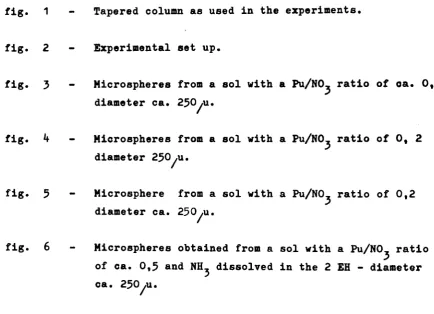
fig. 1 - Tapered column as used in the experiments.
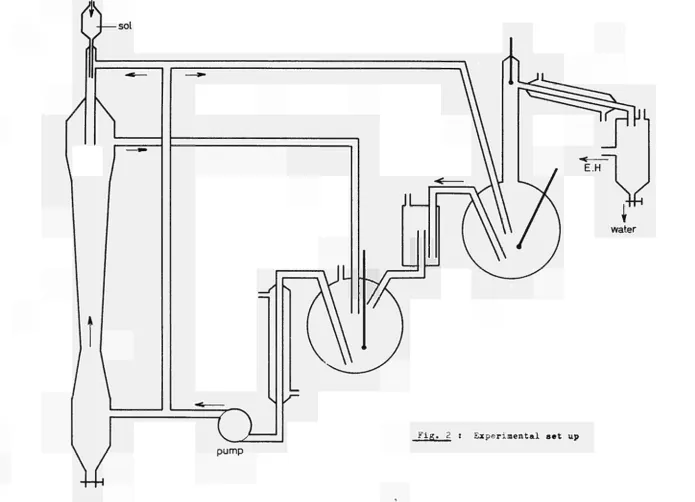
fig. 2 - Experimental set up.
fig. 3 - Microspheres from a sol with a Pu/NO- ratio of oa. 0,5 diameter ca. 250 AX,
fig. h - Microspheres from a sol with a Pu/NO, ratio of 0, 2 diameter 250 ,u.
fig. 5 - Microsphere from a sol with a Pu/NO, ratio of 0,2 diameter ca. 250-u.
[image:8.595.69.504.155.469.2]Formation of colloidal solutions of Pu and the conversion
into PuO- microspheres ^+'
Introduction
Dense nuclear fuel of oxides and oxide mixtures can be produced through the sol-gel method. Powder, microspheres and shards can be produced at temperatures far below the generally accepted sintering temperatures. A considerable experience exists in the fieli of Th, U and Th-U fuel. Experience with Pu is rare. The two methods that are reported are :
1. Method developed in Oak Ridge National Laboratory (1). A high nitrate sol is made by digesting plutonium hydroxide in HNO . A baking step is applied to the high nitrate gel to obtain a powder that can be dispersed to give a low nitrate sol.
2. Procedure developed by CNEN (2) NO ~ is removed from a Pu ni-trate solution through solvent extraction and a sol with a NO_/Pu ratio of 1 is obtained.
This report deals with different methods to make Pu colloidal solutions with the aim to make a sol with a low NO /Pu content.
Formation of colloidal solutions
Different methods were used to obtain colloidal solutions and a great variety of solutions with different properties were made. It is known that the feasibility for the production of microspheres depends among other factors upon the NO to Pu ratio in the sol. The aim of the work is the production of sols with a low NO-, to Pu-ratio.
The methods used are :
1. Peptisation of a plutoniumhydroxide that is quickly precipitated from a Pu nitrate solution at a high pH. This forms a sol with a NO to Pu ratio of 0.5 - 0.7 and about 2 M in Pu.
2. Dialysis of a sol with a NO, to Pu ratio of about 0.7. In this way we obtain sols 0.3 M in Pu with a NO to Pu ratio of 0.35·
3. Baking of a gel formed from a sol with a high NO to Pu ratio and redispersing the residue.
*f. Precipitating a Pu hydroxide under such conditions that a con-version to a sol with a low NO to Pu ratio is possible.
Ad 1. A solution containing about 30 gr of Pu/liter and a free aci-dity of 1.5 M HNO was poured into 12 % % NH.OH solution. The precipitate was filtered, washed and dispersed into a 10
fold excess of water (based on a final concentration of 2 M Pu). Enough HNO was added to form a NO to Pu ratio of 0.5 - 0.7. The mixture was evaporated in about 6 hours to a sol of 2 M. This sol was clear, green transparent and had a low viscosity. Very likely it consisted out of small particles.
X-ray measurements on the original precipitate or sol did not reveal any structure. An aging effect within some days on the precipitate was not observed. This is in contrast with similar
IV
7
-precipitate and sol have the structure of CeOp and where aging
of the precipitate is important.
Ad 2. The sol described before was dialysed. This is carried out in a P.V.G. container separated by a semi-permeable membrane from a watery suspension of ion exchanger I.H.A. ^00 in the alkaline f orra.
The sol and the ion exchanger suspension were constantly stirred and the pH of the sol is constantly measured.
The pH changes from 1.3. to 3.0 during 16 hours of dyalysis and the resulting liquid was so viscous that it had to be diluted to get a better streaming sol. The pH was measured directly with a glass electrode in the colloidal solution with a calomel electrode as reference. The measurements were not corrected for' special effects. This sol was extremely tixotropic and rather unstable. Is gellyfied
IV
at 90° C and a small portion of Pu precipitated irreversibly. This precipitation occured also after two weeks standing at room temperature. It was practically impossible to obtain a NO.- to Pu ratio lower than 0.35 with this method and then the sol was already rather diluted, O.36 M.
The colour of the sol was unchanged. It was still a dark green transparent solution.
Ad 3« Several experiments were made with the aim of decreasing the NO, to Pu ratio by heating the gel.
The gel was heated for different times at temperatures ranging from 180° - 230o C under normal and reduced pressure. The
re-maining powder was dispersed in water. When the solid was still dispersable we again obtained transparent sols with a slightly lower NO to Pu ratio than initially. Practically always an in-soluble heel was left behind. It was difficult to reproduce the experiments.
8
considerably hydrolysed at a pH of 1 - 2 (3, ^» 5,)· A slower hydrolysis may result in a larger initial particle and this can result in a sol with a lower nitrate content. A series of Pu precipitations at different pH's was made. The oxihydrate was dispersed in HNO and the possibility to form a low nitrate sol was checked by heating the mixture. The next method was the most successful. A Pu nitrate solution containing 30 g Pu/L and
1,5 N in free HNO was brought at a ρΉ of 1,1 - 1,2 with ammonia by pouring the Pu solution into a solution of pH 1,1 - 1,2
that was kept at this pH by simultaneously adding of ammonia. At this point the colour of the mixture was greenish and the solu tion became cloudy. The next step was precipitation at pH 7« This precipitate was washed with water and with diluted ammonia. The washing with diluted ammonia was necessary to remove all ni
trate. The NO to Pu ratio in precipitate which is only washed with water remains constant at 0.2.
The precipitate again was dispersed in an excess of water to which HNO was added to give a NO, to Pu ratio of 0.1 - 0.2.
The mixture was evaporated with continuous stirring until a volume corresponding with 2 M Pu sol resulted. After 8 hours of heating the resulting product was a course sol with an appearance different from those mentioned before. It had a low viscosity,
was lighter green in colour and was not transparent. After standing for one day a more viscous part settled. This sol consisted
- 9
Production of microspheres
The methods for the production of microspheres was based on the one developed at Oak Ridge National Laboratory. It is based on water extraction of a sol low in nitrate with a long chain alcohol. Depending on the required size the beads can be produced in a beaker or in a
tapered column. Beads of a size of ca. 50 /a were made by pouring the sol
into a beaker filled with 2 - aethylhexanol that is stirred at constant speed. With this method, the dispersion in size is considerable. Beads up to 500/u were produced in the tapered column.
The sol was dispersed through a double nozzle system into a counter current of eathylhexanol in the column (Fig. 1 and 2). The water content of the aethylhexanol was kept at ca. 1% by constantly distilling a water aethylhexanol mixture at ca. 150° C in a side loop. The temperature of the aethylhexanol was kept at ca. 20° C. At higher temperatures the viscosity is too low and the counter current must be too strong. We have added different surfactants such a sarkesyl-O, primene and oil BX 5 to the aethylhexanol. The last was considered the best since we could use it in very low concentration, depending on the sol used 0.1 °/oo - 1 °/oo. (Oil BX 5 is a lauryl (poly - 1 -
oxa-propene), oxaethane carboxylic acid made by Cheray, Bodegraven, Holland).
The aethylhexanol should contain about 1 % of water. If it is
too dry, the beads gel too fast and will fracture. During the pro-duction of microspheres once in a while we added surfactant when the beads showed a tendency to stick together. ¡Sticking of heads to the glass wall of the column was eliminated by treating glass with chlor-silan. Beads made of sols with a NO,/Pu ratio of 0,5 show also a strong tendency to agglomerate. Higher surfactant concentrations have to be used in that case. The sol was dispersed into the aethylhexanol and after about 20 min. the beads were collected and washed with
10
water
- 12
To have an idea of optimal conditions we dried some beads in a thermobalance. A considerable loss of weight was seen up until ca.
170o C and with a higher N0~ content a weight loss around 260° C was
observed. The first loss may correspond with release of water and aethylhexanol and the last may be due to decomposition of nitrate. The initial drying process was as follows. The temperature was raised to 110° C in 5 hours, kept at this temperature, raised to 170° C in 3 hours, kept for 5 hours at this temperature, raised in 2 hours to 250° C and kept overnight at this temperature. The beads made with a sol that had a N0_ to Pu ratio higher than 0.35 break in this process and after
cal-cination showed many cracks (fig. 3) or, even worse fell to pieces.
If the drying time at 1700 C was shortened the beads became powder,
probably because of a sudden release of aethylhexanol. Preliminary experiments have shown a faster way of drying. This was done with hot air which is nearly saturated with water vapour. After the beads are dried, they are calcinated in air at 900° C for 3 hours. The metallo_
graphic cuts through beads produced with method No. h are shown in
fig. 't and 5· The diameter of the beads in about 250/u.
In an attempt to use directly a sol with a NO, to Pu ratio of 0,5 we added ammonia to the aethylhexanol. During the drying, a considerable
amount of beads broke, but those that remained showed no por es (fig. 6 ) .
— 13
FIG. 3
Microspheres from a sol with a Pu/NOa ratio of ca. 0,5 — diameter ca. 250 μ
FIG. 4
— 14 —
FIG. 5
Microsphere from a sol with a Pu/NO:, ratio of 0,2 — diameter ca. 250 μ
FIG. 6
15
-Production of 100 gr. microspheres
100 gr. of PuOp beads were reduced in an H atmosphere from 1600 - 1700°C resulting in microspheres with an average diameter of 285/u. The structure of the beads did not change much in this step. Porous beads obtained a more closed porosity. The beads will be cover-ed with different layers of pyrolytic carbon and a layer of silic carbide. The first layer of pyrolytic carbon will be a porous layer. Pu 0 was chosen as fuel since a lower CO pressure will be built up in the covered particle.
The beads were examined after reduction for different caracteristics. The results are presented in table I. The O/Pu ratio was determined
Specimens PuS017 PUS018 PUSO19 PuS020 Weight of Pu (gs) ¿^,573 11,478 26,679 18,641 X-ray « C/Pu 1,7^ 1,67 1,76 1,73 analysis Density (g/cc) 10,90 10,7^ 10,94 10,87 0/M gravimetric 1,759 1,679 1,772 1,721 Picnometer density (g/cc) 10,38 10,05 10,69 10,50 Temporature of reduction
CO
I6OO 1720 I70Ö I6OO Time of reduction (hours) 4 4 4 4 I Table I- 17
Literature :
(1) ORNL - 3945. Chemical Technology division. Annual Progress
Report, I966.
(2) Sol-gel processes for the production of oeramic fuels at
CNEN laboratories,by C. Cogliati et.al. comitato nazionale per l'energia nucleare. Roma 1967·
(3) D.W. Oekenden & Watch. The preparation and properties of
some plutonium compounds.
J. Chem.Soc. 1956, 3358.
(4) Kraus & Nelson. The hydrolytic behaviour of Ü- and
Trans-U-elements. AECD - I888, 1948.
(5) Lutz et al. Hydrolyse du plutonium tetravalent.
C.Ε.Α. - R - 3092, 1966.
iM*ì
^•»niiínijiB
lì
i l
NOTICE TO THE READERAU Euratom reports are announced, as and when they are issued, in the monthly periodical EURATOM INFORMATION, edited by the Centre for Information and Documentation (CID). For subscription (1 year : US$ 15, £ 5.7) or free specimen copies please write to :
Handelsblatt GmbH "Euratom Information" Postfach 1102
D-4 Düsseldorf (Germany)
or
Office central de vente des publications des Communautés européennes 2, Place de Metz Luxembourg
IL
røiW#i*:asa&-S
Jl!i!¡!!Í¡!i!ni:yi¡y¡!¡¡;l;lj|!lk
g l To disseminate knowledge is to disseminate prosperity — I mean Γ general prosperity and not individual riches — and with prosperity 1 disappears the greater part of the evil which is our heritage from
Alfred Nobel
É S Í É M
SALES OFFICEsiiltíÉitíiaií^i
AU Euratom reports are on sale at the offices listed below, at the prices given on the back of the front cover (when ordering, specify clearly the EUR number and the title of the report, which are shown on the front cover).
'i^¿H||!LÍlljJil.(ttS&i ■ÍÍÍÍÍUT'BL'JMIJIIKÍÍÍÍ'ÍIWTI'! 'ίΛ
OFFICE CENTRAL DE VENTE DES PUBLICATIONS DES COMMUNAUTES EUROPEENNES
2, place de Metz, Luxembourg (Compte chèque postal N° 191-90)
BELGIQUE — BELGIË
MONITEUR BELGE
40-42, rue de Louvain - Bruxelles BELGISCH STAATSBLAD Leuvenseweg 40-42 - Brussel
LUXEMBOURG
OFFICE CENTRAL DE VENTE DES PUBLICATIONS DES COMMUNAUTES EUROPEENNES 9, rue Goethe - Luxembourg
DEUTSCHLAND
BUNDESANZEIGER
Postfach - Köln 1 9ER
Kmm
L
rSCHLAI
UNDESA ostfach¿,-¡,¡
STAATSDRUKKERIJ
Christoffel Plan tij nstraat - Den Haag
i' ; til·:.'.-*'!: Ί ' ii.¡*r2¡Iz*r* •J'îii*.■M"· BUM i ¡5. i ρ ' .M Í U Ι . ' Ί ΐ ΐ ι Ι iJPiíi "'«klvli.
NEDERLAND