WE CAN QUIT
Findings from the
Action Research Study
FULL REPORT
Deirdre Fullerton,Insights Health and Social Research
Linda Bauld and Fiona Dobbie
Institute for Social Marketing, University of Stirling and UK Centre for Tobacco and Alcohol Studies
We Can Quit: Findings from the Action Research Study 1
Contents
Acknowledgements 4
Glossary and Abbreviations 5
Chapter 1: Introduction and Background 6
1.1 Introduction 7
1.2 The We Can Quit Action Research 7
1.3 Background and Rationale for We Can Quit 8
1.3.1 Tobacco Use Among Women 8
1.3.2 Women and Smoking Cessation 8
Chapter 2: Research Methods 10
2.1 Phase 1 and Phase 3: Evidence Review and Model Identification 11
2.2 Phase 2: Stakeholder Consultation 12
2.3 Phase 3: Model Identification and Development of We Can Quit Model 12 2.4 Phase 4: Evaluation of the Delivery of We Can Quit Model Pilot 12
2.4.1 Validated Monitoring Data 13
2.4.2 Client Satisfaction Survey and Qualitative Interviews with Participants 13
2.4.3 Survey of Partner Organisations and Follow-up Workshop 13
Chapter 3: Findings from Evidence Review (Phase 1) 14
3.1 Barriers and Facilitators to Smoking Cessation 14
3.2 Approaches to Smoking Cessation (General Population) 15
3.2.1 Brief Advice and Behavioural Support 16
3.2.2 Nicotine Containing Products 16
3.2.3 Combination of Behavioural Support and Medication 17
3.2.4 Relapse Prevention Interventions 18
3.2.5 Other Approaches 18
3.3 Smoking Cessation Support for Women 18
3.3.1 Cognitive Behaviour Therapy (CBT) for Women 18
3.3.2 NRT for Women 18
3.3.3 Bupropion and Varenicline for Women 19
3.3.4 Exercise Programmes for Women 19
3.3.5 Characteristics of Interventions Directed to Women 19
3.4 Approaches to Delivering Smoking Cessation Support for Low Income Women Smokers 19
3.4.1 Working with Community and Voluntary Services (CVS) 20
3.4.2 Interventions Directed to Low Income Parents 21
3.4.3 Smoke Free Homes Initiatives 21
3.4.4 Financial Incentives 22
3.5 Key findings from Community-based Approaches and Approaches Directed to Women living in
Contents
Chapter 4: Findings from the Consultations with Stakeholders (Phase 2) 23
4.1 Key findings from the Survey of Service Providers 24
4.1.1 Barriers to Smoking Cessation 24
4.1.2 Importance of Sources of Smoking Cessation Support for Women Living
in Disadvantaged Areas 26
4.1.3 Views on the Support Needs of Sub-Groups of Women Living in Disadvantaged Areas 27
4.1.4 Improving the Uptake of Available Services 28
4.1.5 Challenges and Opportunities to Smoking Cessation Provision - Service Providers 29
4.1.6 Current Community-based Approaches 30
4.1.7 Key Points from Stakeholder Survey (Phase 2) 30
4.2 Findings from the Focus Groups (Development of Programme) 31
4.2.1 Focus Groups with Women - Key Findings 32
Chapter 5: Identification of Potential Models for We Can Quit (Phase 3) 33
5.1 The Sister to Sister (StS) Model 34
Chapter 6: The Design and Delivery of the We Can Quit (Phase 4) 37
6.1 Introduction 38
6.2 Rationale 38
6.2.1 Core Principles of the We Can Quit approach 38
6.2.2 Developing the Delivery Model 38
6.3 Background to the Pilot Sites 38
6.3.1 Description of Area A 40
6.3.2 Description of Area B 40
6.4 Establishing Local Partnerships 40
6.4.1 Role of the Community Pharmacist in Providing NRT 41
6.5 Preparing for Delivery 41
6.5.1 Recruiting the Community Facilitators 41
6.5.2 Training the Community Facilitators 42
6.5 Supporting the Community Facilitators 42
6.6 Programme Delivery 43
6.6.1 Recruiting the Women 43
6.6.2 Promoting We Can Quit 43
6.6.3 Traditional Promotion Methods 43
6.6.4 Active Methods 43
6.6.5 Social Media 44
6.6.6 Selecting Suitable Venues 44
6.6.7 Promoting the Partnership Approach to Smoking Cessation 44
6.7 Summary 45
Chapter 7: Findings from the Evaluation of the We Can Quit Pilot (Phase 5) 46
We Can Quit: Findings from the Action Research Study 3
Contents
7.2 Findings from the Client Satisfaction Survey and Feedback Interviews 55
7.2.1 Reasons for Attending 55
7.2.2 Support Received 56
7.2.3 Access to Nicotine Replacement Therapy (NRT) 59
7.2.4 Benefits of the We Can Quit Programme 60
7.2.5 Improvements to the We Can Quit and Future Directions 62
7.3 Survey and Follow-up Workshop with Local Partners and Stakeholders 64
7.3.1 Views on the We Can Quit programme 64
7.3.2 Experience of Planning or Delivering the We Can Quit Programme 67
7.3.3 Improvements to the Planning and Delivery Process 69
7.3.4 Improvements to the Delivery of We Can Quit 70
7.3.5 Future Direction – Key messages from the Stakeholder Event 71
Chapter 8: Conclusions and Recommendations 73
8.1 Key Findings from the Pilot Study 74
8.2 Recommendations for Improvements to Planning and Delivery 75
8.3 Recommendations for the Future Development of the We Can Quit model 76
8.4 Policy Recommendations 77
8.5 Research Recommendations 78
References 79 Appendices 84
Tables and Figures
Table 4.1: Barriers Women from Disadvantaged Areas Face Regarding Smoking Cessation 25 Table 4.2: Source of Smoking Cessation Support for Women Living in Disadvantaged Areas 26
Table 7.1: Client Characteristics at Baseline (Week 1) 49
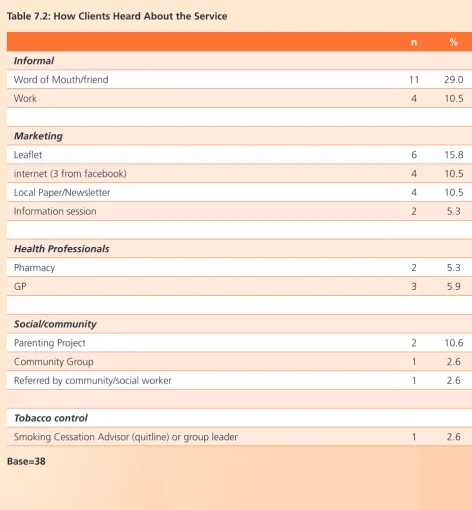
Table 7.2: How Clients Heard About the Service 51
Table 7.3: Interventions Received 52
Table 7.4: Source of Support Should Participants Start to Smoke Again (CSS) 52
Table 7.5: Type of NRT Used 52
Table 7.6: Quit Rates 53
Table 7.7: Quit Rates (Excluding Drop Outs) 54
Table 7.8: Support or Help Used During Programme 56
Table 7.9: Support or Help Participant Would Use in Future if Needed 56 Table 7.10: Stakeholders’ Views on the Importance of the Different Components of the We Can Quit
Programme 65
Table 7.11: Stakeholders’ views on the reach, added value, and future roll out of We Can Quit 66
Figure 1: Efficacy of Behavioural Support and Medication 17
Figure 2: Summary of Service Providers’ Open Ended Responses on the Needs of Female
Smokers Living in Disadvantaged Areas. 27
Figure 3: Ways to Increase Uptake of Smoking Cessation Support for Women Living in
Disadvantaged Areas 28
Figure 4: Barriers to Delivering Smoking Cessation Support Experienced by Staff 29
Acknowledgements
The authors would like to thank all those who have participated in, and assisted with this action research project. Our particular thanks to the community and local HSE partners who made it possible to pilot the We Can Quit Model in their areas. We would like to thank all the women who gave their time to take part in the focus groups, the client satisfaction survey and the follow-up interviews. We would also like to thank all the stakeholders, both national and local, who participated in the different surveys and consultations during phases two and four of the research. We would like to give our particular thanks to the We Can Quit research advisory group, Noelle Cotter (Institute of Public Health), Jacqueline Healey, National Woman’s Council Ireland, Kevin O’Hagan, Rachel Wright, Emma Browne, and Joanne Vance (Irish Cancer Society).
We acknowledge and appreciate the work of Joanne Vance, for her lead role in developing and implementing the We Can Quit model (Phase 4) and in the preparation of Chapter 6 of this report. To Angela King, (King Consultancy) for all her work in detailing the training process for this study. Particular thanks are due to all the community facilitators for collecting the data and Rachel Burke and Brenda Flannery, who collated the data for analysis and followed up with participants at 6 and 12 months.
Finally, we would like to acknowledge the HSE Department of Health Promotion & Improvement, particularly Miriam Gunning and Jean Molloy who provided their expertise and support to the training and implementation phase.
We Can Quit: Findings from the Action Research Study 5
Glossary and Abbreviations
BS Behavioural Support
Bupropion/Zyban Bupropion (Zyban) is a non-nicotine based pharmacotherapy that reduces the urge to smoke and the symptoms of nicotine withdrawal.
CBT Cognitive Behavioural Therapy
CO Carbon Monoxide
CO monitor A machine that measures levels of toxic CO in the breath.
CSS Client Satisfaction Survey
CVS Community Voluntary Sector
GIUFB Give it Up For Baby
HSE Health Service Executive
ICS Irish Cancer Society
IPHI Institute of Public Health Ireland
LDPC Local Development Partnership Companies
MABS Money Advice and Budgeting Service
NAB Neighbourhood Advisory Board
NAG Neighbourhood Advisory Group
NCRI National Cancer Research Institute
NGO Non Government Organisation
NRT Nicotine Replacement Therapy
NWCI National Women’s Council of Ireland
RAPID Revitalising Areas by Planning, Investment and Development
SES Socio-economic status
Varenicline Varenicline (Champix) is a pharmacotherapy which alleviates symptoms of craving and withdrawal and also acts on the brain’s dopamine receptors to reduce the pleasurable effects of smoking
CHAPTER 1
We Can Quit: Findings from the Action Research Study 7
1.1 Introduction
Tobacco use is the leading cause of preventable death in Ireland with 5,500 smokers dying each year from tobacco related diseases (Dept of Health 2013a). In 2009 approximately €500 million of health expenditure in Ireland was directly due to smoking related diseases. Ireland ranks second highest for smoking related causes of death in the EU (Ferlay et al 2010 cited in Healthy Ireland Dept of Health 2013b). Current figures suggest that one in three people in Ireland will develop cancer during their lifetime, with an average of 30,000 new cases each year. This number is expected to rise to over 40,000 per year by 2020. One in four cases of cancer is preventable, and smoking remains the leading cause of preventable cancers, particularly lung cancer.
More women in Ireland are now dying from lung cancer than breast cancer (NCRI, 2011). Women in lower socioeconomic groups have the highest rate of smoking in Ireland (SLAN Burgha et al , 2009), with women aged 18 to 29 having a rate of smoking (56%) which is twice that of women from more affluent groups of the same age. These women are also less likely to quit smoking. Recent data highlight the differences in smoking across the different population groups, with the C2 (skilled manual workers) and DE group (semi-skilled, unskilled workers or unemployed) accounting for nearly two thirds of smokers (62.9%) (Hickey and Evans 2015).
Tobacco Free Ireland (Dept of Health 2013) recognises the importance of channelling smoking cessation to lower socio-economic groups.
‘targeted and tailored smoking cessation interventions should be used where necessary, for example in socially disadvantaged areas’ (Dept of Health 2013 pg 52).
The links between cancer and smoking amongst women in Ireland, and other developed countries, have been recognised by international organisations such as the World Health Organisation through the Framework Convention of Tobacco Control. The WHO has called for a gendered lens to be applied to tobacco control policies (WHO, 2010). Despite this,
few countries have attempted to tailor interventions to meet the needs of women. This is particularly the case in relation to the provision of services to help women stop smoking, where there is some evidence that existing services may not be meeting the needs of female smokers, particularly those living in more disadvantaged areas. Research has noted that women are less successful than men at quitting (Perkins, 2001, Perkins et al, 1999). In the UK, evaluations of NHS stop smoking services have consistently found that while more women access these services than men, their quit rates are lower (Ferguson et al, 2005, Bauld et al, 2009, Bauld et al, 2011, Bauld et al, 2012, Hiscock et al, 2011). This is also reflected in national routine data where four week quit rates for women have been slightly lower than men’s over the past decade in both Scotland and England (ISD Scotland, 2013; The Information Centre, 2012).
1.2 The We Can Quit Action
Research
In recognition of the context outlined above, and following the Women and Smoking: Time to Face the Crisis Conference in July 2012, the Irish Cancer Society (ICS) formed a partnership with the National Women’s Council Ireland (NWCI) and Institute of Public Health Ireland (IPHI) to develop an innovative community based approach to support smoking cessation among women from socially and economically disadvantaged communities, and established a national advisory group to lend support to the initiative. As part of this project ICS commissioned the action research to inform the development a community based smoking cessation model to support women to stop smoking, and established an external advisory group to support the project (See Appendix 1).
acceptability and potential effectiveness of the We Can Quit model.
This report presents the key research findings from the 5 Phases.
n Phase 1: Evidence Review (conducted by the research team presented in Chapter 3) n Phase 2: Engagement with stakeholders
(conducted by the research team with ICS and partners organisations presented in Chapter 4) n Phase 3: Model Identification (conducted
by research team in with ICS and partner organisations presented in Chapter 5)
n Phase 4: Model Design and Delivery (ICS team and partner organisations presented in Chapter 6)
n Phase 5: Evaluation of Pilot Delivery (Research team and ICS presented in Chapter 7 and Chapter 8
The report concludes with a summary of the key learning from the process of designing and delivery a community based smoking cessation service and provides some recommendations for policy, practice and research.
1.3 Background and Rationale
for We Can Quit
1.3.1 Tobacco Use Among Women
Smoking is a health inequalities issue, demonstrated by the fact that women living in the most deprived circumstances have a higher rate of smoking of lung cancer than women in the least deprived circumstances (NCRI, 2011). One in three people in Ireland will develop cancer during their lifetime. In Ireland an average of 30,000 new cases of cancer are diagnosed each year. More women in Ireland are dying from lung cancer than breast cancer (NCRI, 2011). Women in lower socioeconomic groups have the highest rate of smoking in Ireland (SLAN 2007,
status (SES) women, higher SES women are more likely to be successful in a quit attempts (Harman et al 2006).
Research has also noted the cumulative effect of disadvantaged on women’s smoking. Exposure to childhood disadvantage, early motherhood and financial hardship has been found to be associated with heavy smoking among young women
(Graham et al., 2006). Patterns of smoking can also impact on the next generation. Children living in socioeconomically disadvantaged communities are more likely to have parents who smoke (Sims et al 2010), and their homes are more likely to have fewer smoking restrictions (Akhtar et al 2009). Parental smoking in the home increases the child’s chances of become an adult smoking (via role modelling) and has direct and immediate impact on children’s health (Coleman and Bauld 2011).
A number of authors have argued that smokers from lower SES groups should be targeted for greater efforts to support smoking cessation. Such efforts need to focus as much on the social conditions that affect women’s lives as on the individual level interventions (Graham et al., 2006), including approaches to improve the life options of women (Kandel et al 2009).
1.3.2 Women and Smoking Cessation
Recent research in England (Beck, 2013, unpublished PhD thesis) found that women
accessing cessation services appeared to experience more disadvantage and have more caring
We Can Quit: Findings from the Action Research Study 9 venues and appointment times, as well as providing
more tailored support including information on pharmacotherapy, and providing advice on changing smoking ‘routines’.
In terms of developing cessation services, one key concern is whether women who smoke are motivated to quit or would even contemplate accessing support to stop. UK research estimates that up to 16% of smokers have no desire to quit (Jarvis et al, 2003). These smokers tend to be older, more dependent on nicotine, and from more socio-economically deprived backgrounds (whether they are women or men). It is acknowledged that progress in reaching this group will depend on delivering interventions that are targeted to the particular needs and perceptions of these smokers.
CHAPTER 2
We Can Quit: Findings from the Action Research Study 11 The We Can Quit project had five objectives. These
were to:
1. Develop a community-based smoking cessation programme which encourages women living in socially and economical disadvantaged areas to quit smoking
2. Foster environments which support women who want to quit smoking
3. Identify supports and barriers to quitting 4. Learn about the mechanisms which help
women quit
5. Identify appropriate structures for the sustainability of the programme
Different research methods were employed for each phase of the research. Phases 1 and 3 relied on evidence from the national and international research literature. Phases 2 and 5 employed mixed methods approaches to consult with key stakeholders (women and service providers) to (a) identify the support needs of women smokers; (b) to gain their views of the We Can Quit Pilot; and (c) assess the effectiveness of the pilot.
2.1 Phase 1 and Phase 3:
Evidence Review and
Model Identification
A systematic review approach was employed to identify, screen and synthesise the international research evidence. Using these procedures three bodies of research were assembled and synthesised to provide the evidence base to underpin the development of the We Can Quit model.
1. Barriers and Facilitators. This included research exploring the barriers and facilitators experienced by women living in disadvantaged areas when considering stopping smoking, as well as research with service providers delivering such services.
2. Effectiveness of Smoking Cessation Support. This included review level evidence describing the effectiveness of approaches to support smoking cessation (e.g. behavioural support, stop smoking medication such as
Nicotine Replacement Therapy (NRT)), with a particular focus on women. This body of evidence consisted of findings from systematic reviews of effectiveness including Cochrane Reviews.
3. Effective Means of Engagement. Research describing different approaches/interventions to engage with low income women on the subject of smoking cessation in community settings. This body of evidence consisted of findings from both reviews and primary studies.
Reflecting the three bodies of literature, the search strategy used three sets of keywords summarised in Appendix 2. Searches were carried out for papers published between 2003 to 2013 using the following databases and websites: AMED (Allied and Complementary Medicine); ASSIA (Applied Social Science Index and Abstracts); British Nursing Index; CINAHL (Cumulative Index of Nursing and Allied Health Literature); Cochrane Central Register of Controlled Trials; Cochrane Database of Systematic Reviews; DARE Database; EMBASE; Medline; PsycINFO; Sociological Abstracts; SIGLE; SCOPUS, NHS Centre for Reviews and Dissemination; Social Science Citation Index and Google Scholar. Websites of relevant organisations were also included (e.g. Health Scotland, ASH, Roy Castle, Quit etc).
2.2 Phase 2: Stakeholder
Consultation
Phase 2 was stakeholder consultation to inform the design of We Can Quit. Stakeholders in this instance included female smokers from disadvantaged areas, and a range of service providers with a role to play in supporting smoking cessation. This phase of the research had two objectives. Firstly, to gauge stakeholders’ views on the need for a smoking cessation intervention designed for women living in disadvantaged communities; and secondly, to assess the suitability of different possible approaches or models. Service providers were consulted with by means of an on-line survey, and focus group interviews were used to consult with female smokers living in different areas.
The findings from the literature review informed the design of the stakeholder questionnaire which was hosted on-line using Survey Monkey. The survey link was cascaded to service providers identified by the Irish Cancer Society and the external multi-agency advisory group members.
This stage of the research also involved a consultation with female smokers living in disadvantaged area. Four focus groups consisting of a total of 24 women were convened with women in living in urban and rural locations in Ireland. The aim of the group was to consult with different age women to hear their experiences of quitting, what helped with and what hindered previous attempts, and to gain a greater insight into their support needs.
2.3 Phase 3: Model Identification
and Development of We Can
Quit Model
Phase 3 focused on identifying and reviewing models or approaches that aim to address the specific needs of women smokers and or smokers living in disadvantaged areas. From this process the
developing the We Can Quit programme to fit into the Irish context.
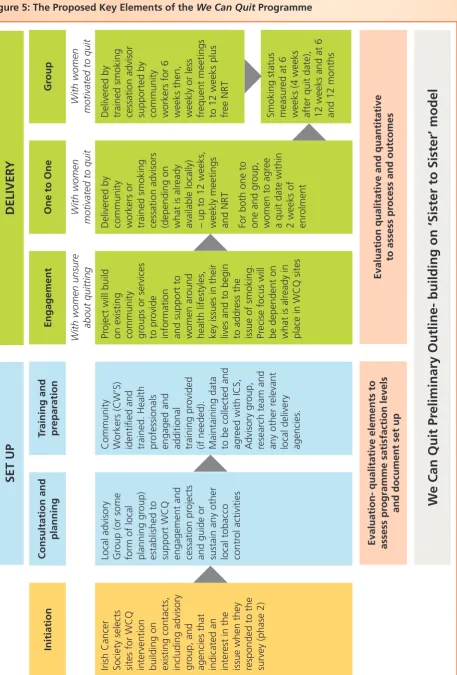
The core elements of the We Can Quit model included:
n An integrated partnership approach between a national health charity, local community sector organisations and the local health service: supported by a local advisory structure n Proactive pooling of skills, expertise and
resources from partners to deliver services to meet the common objectives of supporting smokers living in a disadvantaged area to quit n Delivering a group smoking cessation support
programme which:
- follows the HSE recommended national standards for smoking cessation practice; - Is co-delivered by community and health
workers in a 12 week workshop style programme;
- provides access to free NRT (combined therapies); and
- is confidence boosting and celebratory, achievements are shared with family, friends and community.
2.4 Phase 4: Evaluation of the
Delivery of We Can Quit
Model Pilot
We Can Quit: Findings from the Action Research Study 13
2.4.1 Validated Monitoring Data
Information from all women who consented to participate in the research was collected by the group facilitator at baseline, 4 weeks after quit date, and 12 weeks after the programme commenced. The baseline data gather information on demographic characteristics including socio-economic status (SES), smoking behaviour, and the smoking patterns of family members. At weeks 6 and 12 the monitoring data collected smoking status with (CO monitor); the range of interventions received including whether NRT was accessed and whether single or combination therapy, and quit attempt.
2.4.2 Client Satisfaction Survey and
Qualitative Interviews with
Participants
Client satisfaction was assessed using an anonymous self completion survey administered to all women at the end of the programme. The survey was combined with short follow-up interviews at after the end of the programme with a sample of participants from each site (n=8). The interviews asked how the participant learned about the programme, what her experience of the programme was, and her perceptions of the main benefits of programme. The interview also explored any perceived weaknesses of the We Can Quit approach, and sought suggestions for future improvements to the programme.
2.4.3 Survey of Partner Organisations
and Follow-up Workshop
In order to explore how the programme was planned and delivered in each site, the final stage of the research involved self completion survey of partner organisations involved in either the planning or delivery of the We Can Quit in the two areas. The questionnaire asked the respondent about their role in the We Can Quit programme, explored their experiences of planning or delivering the programme, and sought their views on the different components of the We Can Quit model. As part of the survey, and during the follow-up workshop, the
added value of the community-based approach to supporting women to quit was examined.
CHAPTER 3
Findings from
We Can Quit: Findings from the Action Research Study 15 This chapter presents the key findings from the
rapid review of the literature. The review evidence is presented in three sections.
1. Barriers and facilitators to smoking cessations for women living in disadvantaged areas. 2. Evidence of the effectiveness of approaches
to supporting smoking cessation (overview of evidence for general population)
3. Evidence of the effectiveness of different approaches to smoking cessation support for low smokers, with a particular focus on tailored community-based interventions directed to women.
3.1 Barriers and Facilitators to
Smoking Cessation
Both primary studies and existing systematic reviews (McNeill et al 2012; Torchalla et al 2012; Gollust et al 2008; Bock et al 2009) describe a number of barriers to smoking cessation experienced by women from disadvantaged communities. These include:
n Addiction: nicotine dependence, psychological attachment to tobacco use; sometimes combined with other substance misuse problems.
n Dealing with social and economic factors: stress, childcare difficulties (parenting alone/ young children), poverty, dealing with debt, unemployment/boredom.
n Cultural factors: difficulties in challenging a culture of smoking, intergenerational smoking, peer pressure.
n Individual factors: lack of skills or confidence to deal with stress/debt etc. (self-esteem/self-confidence), mental health problems/depression, fear of being judged, fear of failure.
n Access to services: availability of services, not engaged with services, limited transport to services, limited childcare to access services, limited reach of services to disadvantaged groups/hard to reach populations; and stigma and discrimination (e.g. Lesbian or bisexual women/women with mental illness).
n Lack of knowledge/awareness of different supports and services; lack of confidence and/ or awareness of the effectiveness of different approaches (including pharmacotherapies) and their associated costs.
The literature also points to a number of barriers experienced by professionals when delivering smoking cessation interventions (Blumenthall et al 2007; Gollust et al 2008; Bryant et al 2011; McNeill et al 2012). These include:
n Organisational factors: time/resources
constraints; lack of organisational commitment; staff turnover; smoking policies; concerns about costs associated with providing counselling and/ or pharmacotherapy
n Situational and individual factors: staff lacking confidence and/or skills to deliver smoking cessation messages and work with disadvantaged groups; lack of awareness of local support (e.g. cessation clinics/quit lines etc); limited access and opportunity to engage with low income smokers
n Context of client relationships: can often be a crisis situation; staff perceptions of patient lack of readiness to quit; lack of trust in the relationship between worker and client.
3.2 Approaches to Smoking
Cessation (General
Population)
Overall, there is evidence to support the following:
n Behavioural Support (BS) involving: - brief advice from a health professional - one to one or group behavioural support - telephone quit lines (particularly proactive
support)
n Stop smoking medication including:
- Nicotine replacement therapy (single or dual product)
- Bupropion (Zyban) - Varenicline (Champix)
Evidence is also now available regarding the efficacy of Cytisine (a further stop smoking medication) (Etter 2006) but this is not available or licensed as a medicine in many parts of Western Europe including Ireland.
3.2.1 Brief Advice and Behavioural
Support
Brief advice from a health professional, particularly a GP, has been shown to have a positive effect on smoking cessation. However, as the We Can Quit programme was to involve more intensive support, the research concentrated on a longer duration of advice, usually referred to as ‘Behavioural Support’ (BS).
Evidence indicates that there are a range of approaches to behavioural support that can help people stop smoking. For example, face to face individual and group behavioural support are effective, as is proactive telephone support (Mottillo et al., 2009; Lancaster & Stead, 2005; Stead & Lancaster, 2005; Stead et al. (2008). Compared to self-help and other less intensive interventions, the chances of quitting are approximately doubled when good quality behavioural support is delivered. However, there is not enough evidence to evaluate whether group therapy is more effective or cost-effective than intensive individual counselling (Stead & Lancaster, 2005).
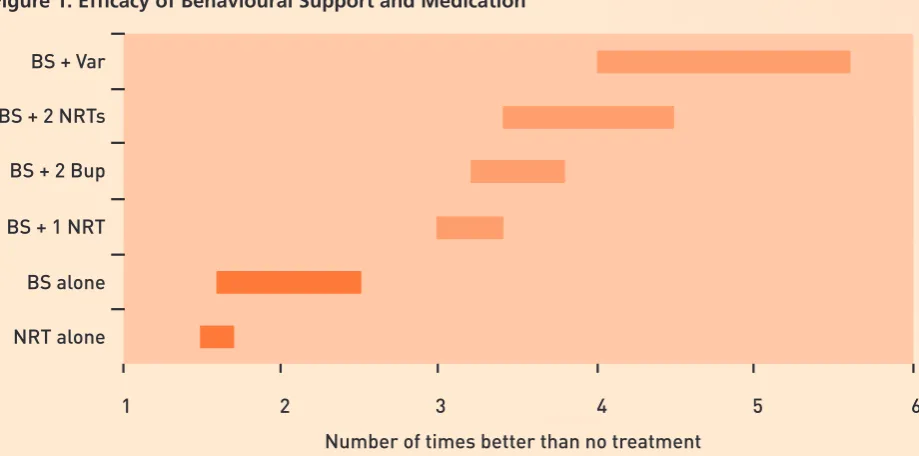
treatment is a combination of behavioural support and varenicline (Champix), followed by behavioural support and more than one NRT product (patch plus gum, for example). However, even the delivery of behavioural support plus one NRT product is more than three times more likely to result in smoking cessation (usually measured at six months in the trials included in Cochrane reviews) than just brief advice or no treatment.
3.2.2 Nicotine Containing Products
There is now a variety of nicotine containing products available for smokers aiming to cut down or stop smoking. Some of these are available as medicines and are effective as smoking cessation aids, in particular NRT. Others are unlicensed and sold as consumer products in Ireland as elsewhere. The majority of these unlicensed products are electronic cigarettes (e-cigarettes), sometimes known as vapourisers. The evidence on the
effectiveness of ecigarettes for smoking cessation is growing (Hajek, Etter et al. 2014). However, these products were not a focus of the We Can Quit study and were still not widely used in Ireland at the time the project commenced, although this changed during the course of the research.
In the We Can Quit programme, the stop smoking medication available was NRT. Thus, although good evidence exists regarding the efficacy of varenicline and buproprion for smoking cessation, we focus here on NRT.
We Can Quit: Findings from the Action Research Study 17 those with stable heart disease), patch use for those
with skin disorders, and importantly, the safety and efficacy of NRT use during pregnancy is still not firmly established (Coleman et al, 2012).
There is an additional body of evidence on the use of NRT to cut down to quit combined with behavioural support. Several recent systematic reviews have shown that cutting down using NRT over a relatively short period (such as 6 weeks) before quitting is just as successful as an abrupt quit attempt with NRT (Moore et al 2009; Wang et al. 2008).
3.2.3 Combination of Behavioural Support
and Medication
A number of studies have examined whether services offering a combination of behavioural support and medication are able to reach disadvantaged smokers (women and men), and whether such approaches are successful in helping people quit (Hiscock et al, 2011, Fiore et al, 2008). Many of these have involved evaluations of programmes that commonly consist of between 6-12 weeks of one to one or group behavioural support, provided by a health professional or lay worker trained in smoking cessation combined with free or subsidised provision of stop smoking
[image:19.595.75.535.103.331.2]medication. As carbon monoxide (CO) screening when setting a quit date and then at follow up has been shown to be an effective motivational instrument to maintain abstinence (i.e. Jarvis et al 1986), many of these programmes also include the measurement of CO in exhaled breath as part of the behavioural support offered. Findings from these studies have been included in recent systematic reviews that go beyond trials to include a number of other study designs (Bauld et al, 2010, Hiscock et al, 2010). Overall, these studies have shown that these types of services can reach these groups. Indeed, there is evidence that the NHS Stop Smoking Services (SSS) in England (which offer behavioural support and a prescription for smoking cessation medication) has been successful in increasing its reach in less affluent areas (Chesterman et al, 2005. West et al 2013). Smokers from disadvantaged communities are just as likely to be motivated to stop and just as likely to try stop as their more affluent neighbours, but studies show their quit rates tend to be lower (Kotz and West, 2009, Hiscock et al, 2011).
Figure 1: Efficacy of Behavioural Support and Medication
BS + Var
BS + 2 NRTs
BS + 1 NRT
BS alone
Number of times better than no treatment NRT alone
1 2 3 4 5 6
BS + 2 Bup
3.2.4 Relapse Prevention Interventions
Research from the English Stop Smoking Services estimate that approximately 75% of successful quitters at 4 week relapsed to smoking 6 months after their quit date (Coleman et al 2010). In their review of relapse prevention interventions Coleman et al (2010) found some evidence to suggest that extending pharmacotherapy treatment (such as NRT, bupropion or varenicline), is both effective and cost-effective for preventing relapse to smoking. However, in their review of relapse prevention approaches, Hajek et al (2013) found only limited evidence from rigorous studies to support the effectiveness of different relapse prevention strategies. They concluded that while there was insufficient evidence to support the use of any specific behavioural interventions the verdict is strongest for interventions focused on identifying and resolving tempting situations, as most studies included a focus on this. Hajek et al found some studies on the extended treatment with varenicline may help some smokers, and further studies of extended treatment with nicotine replacement are needed.
3.2.5 Other Approaches
Fear of weight gain is often identified as one of the barriers to cessation, particularly among women. One review examined the effectiveness of exercise for smoking cessation (Ussher et al. 2014). Exercise prescription and duration of follow-up varied extensively between the studies. Long-term impact on smoking cessation was found in one study. The authors conclude that while there is evidence to recommend exercise as an aid for reducing tobacco withdrawal and cravings there is insufficient evidence to recommend exercise as a specific aid in smoking cessation. More research based upon high quality trials is needed in this area to inform cessation practice.
cessation that may also have an effect on weight. While some interventions appeared promising, the authors found insufficient evidence to make strong clinical recommendations for effective programming.
3.3 Smoking Cessation Support
for Women
The vast majority of trials and observational studies of cessation programmes have been involved both male and female participants. Only two of the reviews located examined smoking cessation among women (Tortilla et al 2012; Bock et al 2009). Bock et al (2009) examined the effectiveness of different treatments (e.g. Cognitive Behavioural Therapy (CBT), and pharmacotherapies (NRT, bupropion, and varenicline) delivered to women, while Torchalla et al (2012) summarised the characteristics of interventions delivered to women (Torchalla et al, 2012).
3.3.1 Cognitive Behaviour Therapy (CBT)
for Women
The Bock et al (2009) review identified one study (Schmitz and colleagues 2007) that examined the efficacy of bupropion (Zypan), cognitive behavioural therapy, and supportive therapy (ST). Women under the age of 30, and who smoked more than 10 cigarettes a day were assigned to one of four conditions: CBT plus bupropion; ST plus bupropion; CBT plus placebo; or ST plus placebo. The CBT psychological interventions were 1-hour weekly group sessions. Participants who received bupropion combined with the CBT achieved higher smoking abstinence rates than participants receiving bupropion and supportive therapy. However, among participants receiving a placebo, ST was superior to CBT. Bock et al conclude that additional research is required to determine the efficacy of CBT alone with women smokers.
We Can Quit: Findings from the Action Research Study 19 although there are some variations between product
types (Fiore et al 2008, Silagy et al 2004). Bock et al cite recent meta-analyses which found no gender differences in response to NRT (Munafo 2008). Bock et al also found some evidence that longer term use of some form of NRT (such as nicotine gum) may be especially helpful to women concerned about post cessation weight gain (Nordstrom et al 1999), but cautioned that the results of studies examining this have been mixed.
3.3.3 Bupropion and Varenicline
for Women
Bock and colleagues’ review identified one meta-analysis of 19 placebo-controlled trials that showed that bupropion (Zyban) approximately doubles cessation rates (Hughes et al 2004). Overall, placebo-controlled clinical trials show no differences in bupropion efficacy between men and women. Most placebo-controlled clinical trials have not examined gender differences in response to varenicline (Champix). Overall abstinence rates using varenicline have not shown any differences in cessation rates between the sexes (OR, 2.41 vs placebo and1.7 vs nicotine replacement at 12 weeks) (Eisenberg et al 2008; Scharf et al 2008).
3.3.4 Exercise Programmes for Women
There is some evidence that physical activity interventions when delivered alongside smoking cessation services can assist cessation and help to address weight gain in some clients. To date most programmes using exercise to support smoking cessation have been delivered to both sexes, to women in general (rather than disadvantaged women) or to pregnant women (Ussher et al, 2012). Our searches identified one study exploring the effectiveness of exercise programmes with women suffering from depression that may have some relevance for the We Can Quit. Vickers et al (2009) reported on a RCT of 10 weekly individually tailored exercise counselling sessions designed to motivate increased regular physical activity and short bouts of exercise in response to urges to smoke. The control group received information on health topics including sleep hygiene, nutrition and health, screening tests for women.
3.3.5 Characteristics of Interventions
Directed to Women
Torchalla and colleagues (2012) examined what types of smoking cessation services or interventions had been delivered to women, what their
characteristics were and how successful they were. They identified 39 studies, 36 of these were conducted in the USA. They covered multiple study designs, and most focused on subgroups of women (for example women with cardiovascular disease), and reported outcomes for a particular topic of relevance to women in the programmes such as concerns around weight gain. The interventions delivered varied and they grouped these into 6 headings:
n Interventions to address exercise, weight gain concerns
n Mood/stress management
n Matching quit date to menstrual cycle n Peer counselling
n Brief interventions in a health care setting Interventions with no face to face contact (e.g. telephone counselling)
Overall, the findings from the review were that while interventions tailored for women can be effective, no single model was recommended. Both the Bock et al. (2009) and Torchalla et al (2012) reviews conclude that while significant progress has been made in examining the process of smoking cessation among women, further attention is needed to elucidate the therapies and approaches that are most effective for women who are trying to quit smoking.
3.4 Approaches to Delivering
Smoking Cessation Support
for Low Income Women
Smokers
As already discussed there are relatively few studies of ‘women only’ cessation programmes, and only a small number have aimed to reach low income women in particular. Different approaches have been used. In the section below we present some of the examples of community based approaches to delivering smoking cessation work for low income women in the sections below. Additional information on specific programmes is available in the Appendix 3.
3.4.1 Working with Community and
Voluntary Services (CVS)
Within the literature, there is emerging evidence pointing to the importance of working in partnership with the community and voluntary services (CVS) in order to deliver smoking cessation support to people living on socially and economically disadvantaged areas. Survey research with CVS in Australia indicated that community organisations are receptive to supporting smoking cessation, but require further support to integrate such support into usual care (Bonevski et al 2013; Bryant 2013).
One study in Australia (Bonevski et al 2011) delivered tailored smoking cessation interventions to smokers (males and females) from disadvantaged areas via a case worker within a Non-Government Organisation (NGO) community-based organisation. The organisation operated seven days a week, provided counselling services four days a week and a range of other services which included: financial and relationship counselling; life skills courses; and emergency relief. A baseline screening survey regarding nicotine dependence, previous quit attempts, depression, partner smoking status, and financial stress was used to produce an individualised checklist of the types of assistance each client may need. The intervention used motivational interviewing, pharmacotherapy, allocation of a support person and support pack,
completion, followed by at least two phone contacts (one week apart) (See Appendix 3 for fuller description).
In England, a recent pilot study in Nottingham with low income families found some merit in working with Children Centres (centres set up by government to provide services for low income families) (McEwen et al 2012a; McEwen et al 2012b). Referral Liaison Advisers (RLAs) were employed to attend the Children Centres to identify and engage with smoking parents, offer advice and refer to local stop smoking services using an opt-out referral system (i.e. consent to referral was assumed unless a the parent specifically stated that they were not interested) (see Appendix 3 for further detail). This approach did increase referrals to the specialist stop smoking services (SSSs) (Roy Castle Lung Cancer Foundation’s Fag End service and the NHS New Leaf service in Nottingham). The study concluded that referring smokers to the Smoke-free Homes initiative can be a useful way of engaging clients into a discussion about stopping smoking; recruiting a ‘champion’ in the Children Centres, and having a dedicated worker from the Stop Smoking Service (i.e. the RLA) regularly available at the Children Centre was effective in raising the profile of SSSs and Smoke Free Homes initiatives. McEwen et al caution that smoking cessation support service should be timely in their response to referrals to maximise the impact and the likelihood of action by the family members; and highlights the need for imaginative ways of raising tobacco awareness to avoid any stigmatisation of tobacco users or resistance to messages, preferably embedding any advice with other issues that are routinely discussed.
We Can Quit: Findings from the Action Research Study 21 established to provide guidance on community
preferences, contexts, and a comprehensive community assessment. Using this process the community partners developed an intervention with 4 major components: neighbourhood-level component (2 antismoking activities and 1 policy change), peer groups support (behavioural counselling), one to one coaching sessions by community health workers (CHW), and the provision of NRT. At six month follow-up the 7-day point prevalence abstinence was 39% in the treatment condition compared with 11.5% in the control condition. After several feasibility and pilot studies, this collaborative partnership is now engaged in a randomized controlled trial that is testing the effectiveness of a multilevel smoking cessation intervention in public housing neighbourhoods in 2 states in the USA.
Another model There’s a Way out for me programme (Stewart et al 2010, 2011) used a community based approach to reach low income women living in the Edmonton, Winnipeg and Vancouver in Canada. The community based programme provided 14 weekly group support sessions delivered peers, professional facilitators and volunteer buddies. The study was small scale with 44 participants and was evaluated using a 13 item survey following intervention and 8 item survey 3 months later. The process evaluation indicated that the support group ‘mobilised and reinforced’ participants’ intentions to quit, increased the women’s life skills and self esteem. Support came in the form of emotional, informational, affirmation and practical support from women who face similar challenges, and the women were able to share. The authors concluded that a holistic approach tailored for the low income women is required to meet the smoking cessation support needs of women from low incomes. Community agencies played an important role in recruiting the women to the programme and research.
3.4.2 Interventions directed to Low
Income Parents
Within the literature there are a range of examples of smoking cessation interventions that have been delivered to pregnant women in different settings. However, a small number of programmes have been
delivered to women at different stages of their lives. For example, a small number of studies evaluated the effectiveness of smoking cessation approaches delivered to mothers (and parents) of children attending paediatric clinics and welfare centres. For example, in the USA Curry et al (2003) report on an RCT of a smoking cessation intervention delivered to ethnically diverse low income women attended paediatric centres. The women, recruited using handouts and information sheets distributed by clinic receptionists, were offered a brief motivational message from the child’s clinician, self-help guide to quitting, 10-minute motivational interview with nurse or research assistant and up to three outreach telephone calls. Clinicians received training on the interventions and followed a protocol including Ask Advise Assist and the women received a self-help guide to quitting Make yours a fresh start family: A Magazine for Women who Smoke. At follow-up the intervention group demonstrated slightly more successful verified quit rates that the control group (14% (I) versus 7% (C) at 12 months (adjusted OR = 2.77).
In general, the evidence base on the effectiveness of interventions directed to parents is very mixed. A recent Cochrane Review (Baxi et al 2014) was unable to determine whether interventions directed to parents influenced parental smoking or their children’s exposure to second hand cigarette smoke, although the review did include a small number studies that demonstrated some success by providing intensive counselling within clinician settings (such as those described above).
3.4.3 Smoke Free Homes Initiatives
3.4.4 Financial Incentives
In recent years the role of incentives to promote the uptake of cessation services or help maintain abstinence has received growing attention the literature (Cahill and Perera 2011; Aveyard and Bauld 2011; Tappin et al 2014), particularly for low income and pregnant women (Lumley et al 2009). A recent evaluation of the Quit4U programme in Scotland (Ormston et al 2012), which offered financial incentives combined with NRT and behavioural support to encourage and support to smokers living in disadvantaged areas to quit, found higher quit rates at one, three and 12 months compared with the average quit rates of other NHS cessation services in Scotland (there was some loss to follow-up which made comparison with other studies difficult). The authors concluded the Quit4U programme represented a highly cost-effective use of NHS resources. Participants’ accounts of the support received from pharmacies suggests that CO tests may have helped to provide an additional focus for encouragement and support, which may, in turn have improved engagement with pharmacy staff (see Appendix 3 for further information).
3.5 Key findings from
Community-based
Approaches and Approaches
Directed to Women Living in
Disadvantaged Area
The review level research provided some clear messages for the development of community based smoking cessation supports for women living in disadvantaged areas.
n The need for tailored services to make them more ‘client-centred’ by providing cessation support at accessible settings (Murray et al 2008 cited by Bonevski et al 2011; Stewart et al 2009, Andrews et al 2005, 2012).
n The importance of working with the community and voluntary sector. There is an emerging body of evidence pointing to the potential of partnerships with community and voluntary sector to deliver tailored smoking cessation messages and support to communities living in disadvantaged areas (see Bonevski et al 2011, McEwan et al 2012; Andrews et al, 2012). n Some studies and recent commentaries have
pointed to the potential benefits of adopting an assets-based approach with parents/ communities to harness their motivation to protect their children from smoking (Amos et al 2008) but the evidence of the effectiveness of this approach alone is limited (Baxi et al 2014). n There is good evidence from trials in the USA for
the efficacy of financial incentives for smoking cessation in pregnancy (Lumley et al 2009) but less is known about the effectiveness of this approach with the general population. There is some emerging evidence from Scotland on the effectiveness of financial incentives combined with NRT and behavioural support (Ormston et al 2012).
Irish Cancer Society 23
CHAPTER 4
Findings from the
Consultations with
In this Chapter we present the findings from the survey of service providers and the focus groups with four groups of female smokers living in disadvantaged areas.
4.1 Key findings from the Survey
of Service Providers
As described in Chapter 2, the e-survey was cascaded by the Irish Cancer Society to the key contacts identified by the national advisory group. This provided a profile of the contacts that included public, private and voluntarily sector organisations working in health and community development (see Appendix 4). A good number of responses (n=93) were received, of which n=88 were valid (i.e. complete/or non duplicate). A range of organisations participated in the survey including: HSE (Physiotherapy/Occupational Therapy, Primary care, Smoking Cessation Services, Health promotion, Hospital, etc), National Organisations (including charities/research), Youthreach, Family Resource Centres, Women’s organisations, Private practices, Community Development/Traveller organisations, and homeless agencies.
It should be noted that the survey was not intended to be representative of all health and community service providers in Ireland, but was conducted to gain greater insight into service providers’ views and experiences of the barriers facing women when trying to quit, and to learn about possible opportunities to address such barriers.
In the sections below the key findings from the survey are presented grouped by (a) perceptions of barriers facing women; (b) sources of support for smoking cessation; (c) service providers’ views on support needs of women smokers and staff delivering smoking cessation services; and (d) examples of community based approaches to support.
Please note that the findings from the closed questions are presented in actual numbers of responses (not percentages) using tables and figures. The key messages from the open ended responses are categorised and presented in a narrative summary with supporting extracts from the responses.
4.1.1 Barriers to Smoking Cessation
We Can Quit: Findings from the Action Research Study 25
Table 4.1: Barriers Women from Disadvantaged Areas Face Regarding Smoking Cessation
Barrier Very
important/ important
Unimportant/ Very unimportant
Neither important or unimportant
Addiction 82 0 2
Coping with high levels of stress 81 0 2
Emotional attachment to cigarettes 79 0 3
Unemployment 75 1 7
Culture of smoking in community 74 3 7
Fear of weight gain 70 4 10
Lack of awareness of support 68 7 8
Lack of community support 62 6 14
Information not available/accessible 52 12 16
Lack of childcare to attend support 51 12 18
Perception that health professional is not approachable/interested
49 11 20
Tobacco industry manipulation 40 17 23
Perceived cost of service 36 22 20
Fear of being judged 35 16 29
Transport to service 31 14 34
Other 21 2 12
4.1.2 Importance of Sources of Smoking Cessation Support for Women living
in Disadvantaged Areas
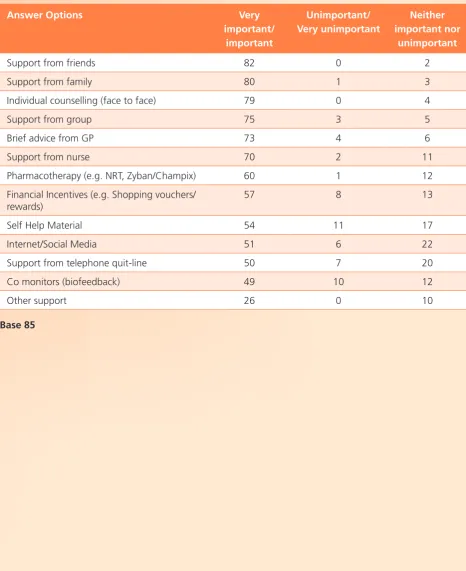
[image:28.595.57.524.226.798.2]Respondents were asked their views on different types of smoking cessation support identified in the review of the literature (Table 4.2). Support from family and friends were clearly perceived as very important by nearly all respondents. In the main, findings are consistent with the literature, with most respondents viewing support (one to one of group) being important or very important. Brief advice from GPs and support from nurses were also considered important.
Table 4.2: Source of Smoking Cessation Support for Women Living in Disadvantaged Areas
Answer Options Very
important/ important
Unimportant/ Very unimportant
Neither important nor
unimportant
Support from friends 82 0 2
Support from family 80 1 3
Individual counselling (face to face) 79 0 4
Support from group 75 3 5
Brief advice from GP 73 4 6
Support from nurse 70 2 11
Pharmacotherapy (e.g. NRT, Zyban/Champix) 60 1 12
Financial Incentives (e.g. Shopping vouchers/ rewards)
57 8 13
Self Help Material 54 11 17
Internet/Social Media 51 6 22
Support from telephone quit-line 50 7 20
Co monitors (biofeedback) 49 10 12
Other support 26 0 10
We Can Quit: Findings from the Action Research Study 27 Other support needs were identified as important
included group support, help to manage stress, access to local services, access to NRT (low cost) and holistic approaches to address some of the wider social, psychological and financial pressures facing women living in disadvantaged areas (further details on these needs are presented in the section on the support needs of different groups of women below).
4.1.3 Views on the Support Needs of
Sub-Groups of Women living in
Disadvantaged Areas
Respondents were asked their views on the support needs of different groups of women living in socially and disadvantaged areas (rural and urban). Over half of respondents to this question felt that women in living in disadvantaged areas (n=46) and young women (n=47) had additional support needs, and approximately two fifths (n=38) felt that women in rural areas had additional support needs. A number of respondents expanded upon their views on the additional smoking cessation support needs of disadvantaged women which can be grouped within four broad inter-related themes summarised in Figure 2 and discussed below.
Individual Work/Holistic Approaches
Addressing the specific support needs of women from disadvantaged was a common theme. Suggestions included personal development work, support with finances and help to build the skills to cope with other pressures which impact on their smoking behaviour (e.g. dealing with stress, parenting, domestic violence etc).
Alternative Therapies
This view centred on providing alternatives therapies to support smoking cessation, such as hypnosis, relaxation therapy, providing links to exercise programmes, and stress management.
Cultural Change
[image:29.595.67.537.365.767.2]Cultural change towards smoke free homes and environments was seen as an importance element to support smoking cessation. Suggestions of ways to support this included working with local support
Figure 2: Summary of Service Providers’ Open Ended Responses on the Needs of Female Smokers Living in Disadvantaged Areas.
Individual Work/Holistic Appoaches
Self esteem work Coping strategies Counselling on other issues Support with finances/other pressures
Personal development
Alternative Therapies
Hypnosis Relaxation therapy
Links to exercise Stress management
Cultural Change
Support groups Peer support/local champions Link SCS to community groups/local tailored
provision/Normalise SCS Harm reduction/staged approaches
Information:
Addiction NRT
Effect Second Hand Smoke Benefits of quitting (health/finance)
Non-judgemental advice Low literacy resources
What is needed (female smokers in disadvantaged
groups, peer support and local champions, linking smoking cessation services to local community groups, and tailoring support to local needs. Other suggestions included normalising smoking cessation support and services, supporting harm reduction (e.g. cutting down to quit), staged approaches to cessation and initiatives to encourage smoke free workplaces and homes.
Information
Providing women with information on the nature and effects of nicotine addiction, continued smoking and second hand smoking was a common theme. Linked to this was the importance of describing the benefi ts of stopping smoking for health and fi nances. Respondents pointed to the need to provide this information in a non-judgemental manner and using easy read low literacy resources.
4.1.4 Improving the Uptake of Available
Services
[image:30.595.48.520.428.724.2]To gauge respondents’ views on possible ways to improve the uptake of smoking cessation services in Ireland, respondents were presented with a range of strategies and asked to rank each one using a scale of 1 to 10, with 1 representing the least important and 10 the most important. To assess the perceived importance of each strategy, an average score was calculated for each strategy (high score indicating high importance and low score indicating low importance). Overall n=84 service providers responded to the question with positive responses (average score more than 5) to each strategy (see Figure 3). The strategies receiving the highest scores included access to free NRT/medication, local support groups, the provision of information on different types of smoking cessation support, information on supports available locally, and fl exible appointments.
Figure 3: Ways to Increase Uptake of Smoking Cessation Support for Women Living in Disadvantaged Areas
We Can Quit: Findings from the Action Research Study 29
4.1.5 Challenges and Opportunities to
Smoking Cessation Provision -
Service Providers
The questionnaire also included a section on the challenges experienced by staff when delivering smoking cessation services to women in disadvantaged areas. Consistent with the other research studies, survey respondents experienced a number of challenges to deliver smoking cessation when working with low income women. Despite several respondents saying they did not know (because they had no experience to draw on),
n=38 (45%) felt staff faced additional challenges, and n=30 (35%) felt they would require additional support to support women to quit. Encouragingly, half of the respondents (n=42 49%) felt there were opportunities for staff to deliver smoking cessation alongside their current role. Open ended text to supplement the responses are summarised below. These challenges can be grouped into three related themes: social and community factors; the relationship with the client; and organisational factors. Figure 4 below presents a summary of the three themes.
The type of barriers and challenges facing staff to support women living in disadvantaged areas to quit include: the lack of priority cessation has for some women with high number of stressors; a perceived fatalistic attitude of smokers; staffs’ own smoking behaviour; the relationship between the smoker and the health professional; staff’s fear of preaching; getting referrals; lack of interest; lack of resources or priority for staff to deal with smoking cessation; staff skill and confidence and their ability to deal with the wider issues impacting on smoking behaviour.
An additional challenge raised by one respondent was the expected outcome of the intervention. The effectiveness of the intervention is often judged on the successful quit rather than the journey to quitting.
[image:31.595.74.539.316.489.2]A challenge is that support is expected to result in a quit outcome, whereas engaging with women in disadvantaged areas, and beginning the process of awareness raising, and perhaps protecting children from passive smoke in the home, can be a valid outcome in itself.
Figure 4: Barriers to Delivering Smoking Cessation Support Experienced by Staff
Smoking Cessation not a priority for women Non attendance at groups
Addressing the wider support needs Access to community
Staff’s own tobacco use Staff skill and confidence Smoker/Staff relationship Fear of preaching Need for time to build trust
Focus on illness rather than prevention Getting referrals to service
Location of the service Resources/lack of priority Accessibility of services Training
Social and community factors
4.1.6 Current Community-based
Approaches
To help inform model design respondents were asked if they were involved in the delivery, or offered training/support to support the delivery of, community based initiatives to women living in disadvantaged areas. Around half (n=41) of respondents did, however only 16 were evaluated. Of the 41 programmes described, n=13 focused on low income women (but did not have a focus on health), n=12 described smoking cessation approaches that reach women in low income areas (but not designed specifically to meet their needs); n=9 described a community based smoking cessation service; and n=4 described a training service to support community based smoking cessation, and 3 described other approaches. While many described providing support elements important for a smoking cessation service for women living in disadvantaged areas, none described a community based smoking cessation addressing all of the identified needs of such women within the context of delivery effective smoking cessation support (i.e. behavioural support plus access to 2 forms of NRT).
The approaches described reflect many of the suggestions already discussed and include:
n the provision of opportunistic advice within primary care and hospital care settings (e.g. brief advice from physiotherapist/Occupational therapist, Public Health Visitor) including asking smoking status at all appointments, providing brief intervention, and advising smoking to see GP);
n advice and support via lay health workers/CHW; n personal development work;
n locating mainstream services in areas of high disadvantage;
n the active promotion of services;
4.1.7 Key Points from Stakeholder
Survey (Phase 2)
In general, the findings from the stakeholder survey were similar to those emerging from the international literature on the barriers facing women when thinking about quitting, and possible facilitators to supporting women to quit.
n Addiction/emotional attachment to cigarettes, stress, and unemployment were viewed to be key barriers facing women living in disadvantaged communities when quitting by nearly all respondents. The culture of smoking in community, and a fear of weight gain were also viewed as very important or important barriers to smoking cessation.
n Many of the service providers are aware of the specific support needs of smokers living in socially and economically disadvantaged areas, particularly women. These needs centred on four key areas:
- individual work (e.g. self esteem work, coping strategies, personal development); - alternative therapies (e.g. hypnosis, stress
management;
- cultural change (e.g. local champions/peer led services, normalise smoking cessation services, community based support); and - providing information (e.g. addiction, NRT,
SHS).
n Free NRT/medication and provision of local support groups were perceived very important to improve uptake of smoking cessation support n Practitioners identified the need to find
sustainable ways to access and work with socially disadvantaged groups as service providers were perceived to face a number of challenges to deliver smoking cessation when working with low income women. These focused on three themes: - social and community factors;
We Can Quit: Findings from the Action Research Study 31
4.2 Findings from the Focus
Groups (Development of
Programme)
As previously described (Chapter 2) four focus groups were conducted with women in living in urban and rural locations in Ireland to explore their views on smoking cessation. The aim of the focus groups was to gain a range of views from different aged female smokers living in socially and economically disadvantaged rural and urban settings. The women were recruited through community based development organisations, community health workers, Youthreach, and training organisations. Within each group there was a mixture of smokers (light to moderate to heavily dependent). To commence each session, the researcher asked the individuals in the group to state what age they were when they started smoking and how many cigarettes they currently smoked. Smokers were also asked to describe previous quit attempts (see Appendix 6 for topic guide).
Most of the older women started to smoke at an early age (aged 11-14), and many of their friends and family are also described as smokers. A number of the participants in both the older and younger groups reported suffering from smoking related illnesses such as COPD and asthma. In the rural group many of the young women started smoking in their early teens (aged 11-14), but in the urban group the pattern was mixed with a number starting to smoke early in the teens but an equal number commencing later in the teens/early 20s. The group who started to use tobacco later did so after starting to use cannabis. Their continued cannabis use was also given by one young woman as a reason for relapse after previous quit attempts.
All four focus groups identified common barriers. These included:
n level of addiction/dependency;
n the culture of smoking within the community/ peers;
n the social context of smoking (peers/family); and n coping with stress.
Women in the older smoker groups (aged 30-55) were more likely to report having received advice from health professionals to quit and/or to describe previous quit attempts. Only a small number of the younger women reported previous quit attempts, and any smoking cessation advice received was given in context of a pregnancy or a chronic health condition (asthma).
When asked what type of approaches might help smokers consider quitting, in all groups the women reported that local champions, accurate information on NRT, and other stop smoking medication would help. It is important to note that in all groups there were discussions about the benefits and disadvantages of NRT as a support to cessation. It was clear that the women were not fully informed about the different NRTs or the other pharmacotherapies available as a support to cessation. Notably, not all were aware of the availability of NRT on prescription for medical card holders. A small number of women held very negative perceptions of the different therapies and feared side effects.