Performance Evaluation of MQTT as a Communication Protocol
for IoT and Prototyping
Yuya Sasaki
1,*, Tetsuya Yokotani
21Graduate School of Electrical Engineering and Electronics,Kanazawa Institute of Technology, Ishikawa, Japan
2
Department of Electronics, Information and Communication Engineering, College of Engineering, Kanazawa Institute of Technology, Ishikawa, Japan
Received 03 March 2018; received in revised form 05 August 2018; accepted 14 September 2018
Abstract
The hypertext transfer protocol (HTTP) has been widely used as a communication protocol for Internet access.
However, for Internet of things (IoT) communication, which is expected to grow in the future, HTTP requires a large
overhead and cannot provide efficiency. In order to solve this problem, lightweight communication protocols for IoT
have been discussed. In this paper, we clarify some problems of HTTP for IoT and propose MQ telemetry transport
(MQTT), which is a promising candidate for the IoT protocol, after conducting a performance comparison with
HTTP.
Keywords: IoT, HTTP, MQTT, lightweight protocol, performance evaluation
1.
Introduction
In recent times, there have been numerous discussions on the Internet of things (IoT) worldwide [1-2]. A large number of
IoT devices are connected to networks, and IoT devices collect data from various sensors. Though the data size of sensor
devices is very small, it is communicated in large quantities through the network.
Currently, Internet access requires TCP/UDP/IP and application protocols over these protocols. Amongst the application
protocols, hypertext transfer protocol (HTTP) [3] is common. It is applied for general Internet access. In IoT communication, a
large number of devices communicate using very small data packets. When HTTP is applied to IoT communication, protocol
overhead causes serious degradation of performance. Moreover, the IP address in IoT is thought to depend on the physical
location and causes complexity in network control. In order to solve these problems, data aware networking (DAN), [4] e.g.,
information centric networking (ICN) [5-6], named data networking (NDN) [7], and content centric networking (CCN) [8], is
being considered and discussed to be used as the architecture of IoT. MQ telemetry transport (MQTT) [8] is categorized as
DAN. MQTT has been developed for IoT. Protocol overhead is reduced, and information is transferred in a name-based system
referred to as topical. It is not required that the address in MQTT depends on the physical location as the IP address. Offered
traffic in the network is reduced to transfer information.
This paper describes, performance evaluation of IoT communication based on MQTT, and compares the performance of
HTTP and MQTT protocol. This paper reports prototyping of IoT devices based on MQTT and HTTP. Finally, it proposes
using a combination of MQTT and conventional IP.
2.
Related Technologies and Standardization Trends
In order to realize IoT communication, active discussions have been held between the industry, academia, and
government. Discussions on various topics such as technology development, international standardization strategy, and
promotion of demonstration experiments are held by the IoT promotion consortium [10]. In this section, taking these
arguments into consideration, we summarize the discussion on environmental in this paper.
2.1. Communication network for IoT
The communication network scenario for IoT is reported in [11]. Fig. 1 shows the system configuration required for
realizing IoT communication.
In Fig. 1, the area network is introduced for IoT communication. However, wide area network infrastructure coexists with
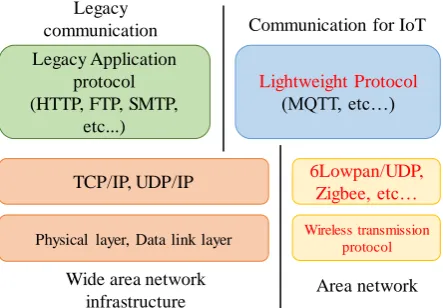
various services of legacy and IoT. An outline of the communication protocol is shown in Fig. 2. In the wide area network
infrastructure, IP communication is widely spread. Presently, IoT communication cannot be differentiated from IP
communication. However, HTTP has been used for wide Internet access, and every time information is accessed, a need for a
three-way handshake with the TCP is required. In case of IoT communication, a large number of small packets are generated
because they handle traffic from the sensors. In the case of HTTP, a large communication capacity is required to attach a
header to each of them. For this reason, as shown in Fig. 2, lightweight protocol for IoT communication is necessary.
Fig. 1 System configuration of IoT
Fig. 2 Outline of communication protocol including for IoT
2.2. International standardization trend
The discussion on international standardization of lightweight protocol for IoT is summarized in this section. The IoT
standardization can be represented as shown in Fig. 3.
Discussions have been made on the architecture and requirements of communication systems in ISO/IEC, JTC1/SC41,
and ITU-T SG13. Among them, there is a need for a lightweight protocol with low overhead. Specifically, instead of using
IoT devices
Information processing infrastructure Application
Gateway
Sensor etc…
Optical communication
Wireless communication
Area network (LAN, HAN, PAN, BAN, …)
Optical communication
Wireless communication
Wide area network infrastructure
Optical communication
Legacy Application protocol (HTTP, FTP, SMTP,
etc...)
Lightweight Protocol
(MQTT, etc…)
TCP/IP, UDP/IP
Physical layer, Data link layer Wireless transmission protocol 6Lowpan/UDP,
Zigbee, etc…
Legacy
communication Communication for IoT
Wide area network
location-dependent information such as IP address, “Name-based access method” that directly accesses information is
regarded to be more efficient. These are classified as ICN. For example, [4] defines a framework for it. Discussions have been
made on the detailed methods, such as IRTF and oneM2M Forum standards [12-13]. MQTT discussed in this paper is also
regarded as an effective method.
Fig. 3 Standardization overview on IoT
3.
Overview of HTTP and MQTT
In this section, HTTP and MQTT are summarized with respect to communication sequences.
3.1. Overview of HTTP
The HTTP protocol is used for the communication of information written in hypertext markup language (HTML). As a
feature, in order to obtain information, it is necessary to specify the information location. Uniform resource locator (URL) is
used to specify the address of that information. In principle, it conducts stateless communication. Connection/disconnection of
a communication session is performed every time information is accessed. However, when HTTP is operated over TCP/IP,
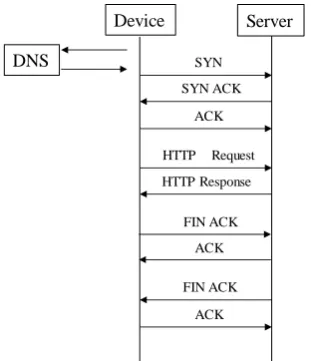
reliable communication is provided. HTTP communicates with two responses, HTTP request and HTTP response. The HTTP
communication sequence is shown in Fig. 4.
Fig. 4 Communication sequences on HTTP
3.2. Overview of MQTT
MQTT is a communication protocol of the PUBLISH /SUBSCRIBE type, and the client communicates via MQTT broker
[14]. As a feature of MQTT, the fixed header of the MQTT packet is a minimum of two bytes. MQTT uses proprietary
name-based methods called topics to transfer information. A topic does not depend on the physical location of the IP address.
The network load can be reduced by routing. From Fig. 5, topic has a hierarchical structure. There are three types of topic
IEC
ISO
De jure
ITU-T SG13, SG20 JTC 1 / SC41 Vertical Architecture Platform type architecture
forum
IETF, IRTF, W3C, IEEE, AIOTI, …..
oneM2M Architecture
· Requirements
Detailed provision · protocol specification
SYN
SYN ACK
Device Server
ACK
HTTP Request
HTTP Response
FIN ACK
ACK FIN ACK
ACK
designation methods such as a perfect match, forward match, and partial match. Moreover, MQTT can set three levels of
delivery guarantee. Therefore, it can be set according to the importance of communication. From the sequence diagram of Fig.
6, MQTT does not connect/disconnect the session for each communication; however, it keeps a communication session
connected. Therefore, the communication session is simplified and communication wastage is reduced. From these features,
MQTT applies to IoT communication, small fixed header size, and it is thought that the communication becomes lightweight
from retention of communication sessions.
Fig. 5 Structural example of topic Fig. 6 Communication sequences on MQTT
4.
Comparison of HTTP and MQTT Traffic
In IoT communication, when a large number of devices are connected, overhead is caused. It causes problems such as
network delay and server load. Therefore, we evaluate their performance from the viewpoint of traffic and examine the suitable
protocol for IoT [15-16].
4.1. Definition of the network model
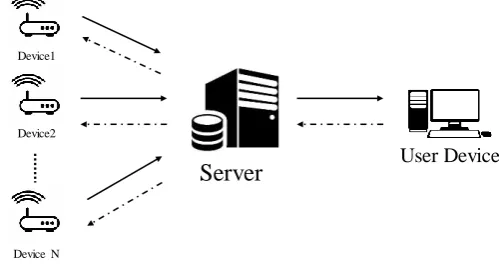
Fig. 7 shows the network model for the comparison with HTTP and MQTT for communication traffic. In Fig. 7, it is
assumed that some devices such as sensors are connected to the server. It is a model that receives data from some sensor device
via server.
Fig. 7 Network Model
4.2. HTTP traffic
HTTP is applied to the network model of Fig. 7, and traffic in data send/receive is calculated as follows. From the
communication sequence of Fig. 4, each communication packet is summed, and the obtained traffic is taken as traffic in one
communication. Here, the size of HTTP request/response packets is set to 300 Bytes each. It is assumed that 100 and 1000
sensor devices are connected to the transmitting devices. Its payload size is 0 Bytes. sensor
temperature camera
floor1 room1
*Writing example of topic sensor/temperature/room1
room2 room3 etc…
PUBLISH Broker
CONNECT
CONNACK
PUBLISH
PUBACK
SUBSCRIBE
CONNECT
CONNACK
PUBLISH
PUBACK SUBSCRIBE
SUBBACK
Device1
Device2
Device N
4.3. MQTT traffic
MQTT is applied to the network model of Fig. 7, and the traffic is calculated [17]. From the communication sequence of
MQTT in Fig. 6, the sum of packet sizes of MQTT packets is taken as traffic of one communication. Consider the case of
operating on TCP/IP, one communication is from the PUBLISH devices to reception of data on the SUBSCRIBE devices.
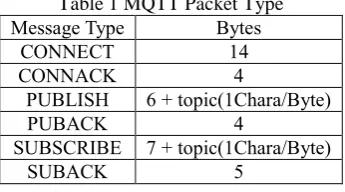
Table 1 shows each header size of MQTT.
Table 1 MQTT Packet Type
Message Type Bytes
CONNECT 14
CONNACK 4
PUBLISH 6 + topic(1Chara/Byte)
PUBACK 4
SUBSCRIBE 7 + topic(1Chara/Byte)
SUBACK 5
4.4. Comparison result of HTTP and MQTT traffic
Fig. 8 Traffic volume of HTTP and MQTT
The traffic of HTTP and MQTT as discussed in Section 4-2 and 4-3 are as shown in Fig. 8. From this, compare the traffic
on HTTP and MQTT, as the communication increases, difference in traffic between HTTP and MQTT increases, and when
communication occurs 30 times, MQTT becomes about 1/5 of the traffic compared to HTTP. As can be seen from Fig. 8, in
MQTT, the traffic of both 500 and 1000 devices connected to the server is less than half of the traffic connected with 500
devices by HTTP. Therefore, it can be understood from this that traffic can be reduced using MQTT in IoT communication.
5.
Comparison of Network Resources
5.1. Definition of network resources
By comparing the network resources of HTTP and MQTT, we present the definition of network resources. It is defined as
the occupation time in server from the start of communication to the end of device (Fig.9).
Fig. 9 Definition of network resources 0
5000 10000 15000 20000 25000 30000
0 5 10 15 20 25 30
Tr
af
fi
c
[K
B]
Number of communications HTTP 500Devices HTTP
1000Devices
MQTT 500Devices
MQTT 1000Devices
Communication start Communication end
Information access
5.2. Measurement of access delay time
In order to calculate network resources, we measure the access delay in actual communication [15] [18]. For verification,
we used Raspberry Pi as a device and Wireshark [19] of packet capture software to measure the communication access delay
time (Fig. 10).
Fig. 10 Network configuration of access delay measurement
In the case of HTTP communication, the access delay time is measured when the server is accessed from the PC to acquire
data. In the case of MQTT communication, the access delay time is measured from the PUBLISH device to the SUBSCRIBE
device via the MQTT broker.
Fig. 11 HTTP access delay time
Fig. 12 MQTT access delay time PC (wireshark) HTTP Server
HTTP communication
MQTT Broker (wireshark)
SUBSCRIBE Device PUBLISH Device
MQTT communication HTTP Request HTTP Response
PUBLISH PUBLISH
4.909 4.91 4.911 4.912 4.913 4.914 4.915 4.916 4.917
1 2 3 4 5 6 7 8 9 10 11 12 13 14 15 16 17 18 19 20
Ti
m
e[
s]
Number of communications
AVE: 4.9115[s]
0 0.0005 0.001 0.0015 0.002 0.0025 0.003 0.0035 0.004
1 2 3 4 5 6 7 8 9 10 11 12 13 14 15 16 17 18 19 20
Ti
m
e[
s]
Number of communications
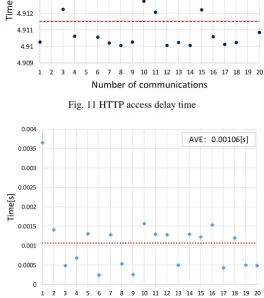
The results of the access delay time measurement of HTTP and MQTT are shown in Fig. 11 and 12. Communication was
carried out 20 times each, and the average was calculated. In HTTP (Fig. 11), the access delay was about 4.91 s on an average.
In MQTT (Fig. 12), the average was about 0.00106 s. In the first instance of communication for the MQTT, access delay is
large in order to establish a communication session.
Because of looking at each sequence, in HTTP, a delay of about 4.8 to 4.9 s occurs when a FINACK packet of a session
disconnection request from a server is sent. This delay is considered to be a processing delay or keep time by using the server
software. That does not mean that such delays will occur in all HTTP communications. However, even if we subtract about 4.9
seconds from the measured HTTP access delay time, we found that there is about 10 times short access delay time of MQTT
communication. There are differences in the size of each protocol, in the case of HTTP, it seems that there was a big difference
in the access delay time owing to differences such as connection/disconnection of communication sessions.
5.3. Required network resources
Next, network resources shown in Fig. 9 are evaluated. We assume that access to information follows Poisson distribution
and time required for access follows an exponential distribution of average access time obtained in Section 5-2. In addition,
capacity of network resources is assumed to be sufficiently large. In this case, if the device generating information is K, it is
represented by M/M/∞//K (finite population model). Equilibrium state probability in this model is Pk, the arrival rate of the
information is λ, assuming that the average processing time is h, necessary network resource N is expressed by Eq (1).
𝑁 = ∑ 𝑘 ⋅ 𝑝𝑘 =
∑ 𝑘 ⋅ (𝜆ℎ)𝑘(𝑘
𝑘)
𝑘 𝑘=0
(1 + 𝜆ℎ)𝑘
𝑘 𝑘=0
= 𝑘 ⋅ 𝜆ℎ
1 + 𝜆ℎ (1)
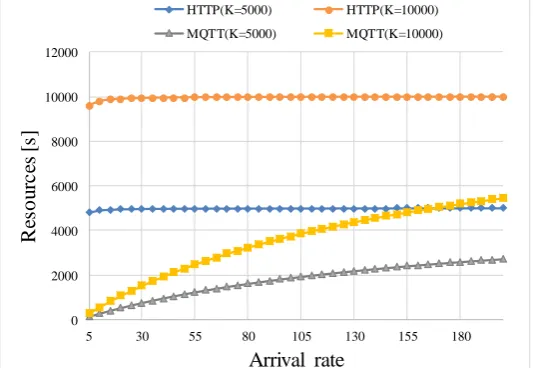
Fig. 13 shows the numerical calculation using arrival rate λ as a parameter with respect to Equation (1). As can be seen
from Fig. 13, the MQTT requires less network resources for HTTP.
Fig. 13 Comparison of network resources
6.
Affinity with IP
The Internet is currently based on IP communication. However, the movement of devices frequently occurs in IoT
communication. Assuming this, since IP communication depends on the location, smooth communication cannot be obtained.
Therefore, network architectures such as DAN attract attention [4] [20].
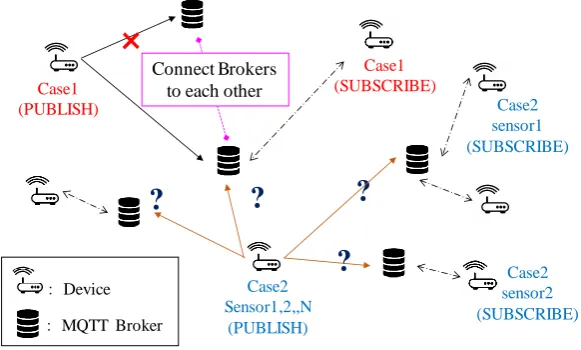
We consider the relationship of MQTT with IP when applied to a wide area network. It is assumed that MQTT is applied
to a wide area network, as shown in Fig. 14. It is assumed that there are multiple MQTT brokers in many devices.
0 2000 4000 6000 8000 10000 12000
5 30 55 80 105 130 155 180
R
es
o
u
rc
es
[
s]
Arrival rate
HTTP(K=5000) HTTP(K=10000)
In this scenario, there are two possible routing problems. Case 1, the PUBLISH devices connected to the MQTT broker
and the SUBSCRIBE devices communicate. If devices that want to obtain data are connected to another MQTT broker, the
connection needs to be changed. However, PUBLISH devices do not know to which MQTT broker the SUBSCRIBE device is
connected.
Case 2, the PUBLISH device has multiple sensors. For each sensor data, the PUBLISH device sends data to the MQTT
broker. At this time, it is unknown where the SUBSCRIBE device is divided for each sensor data is connected.
Fig. 14 Wide-Area Network configuration of MQTT
As a solution to these problems, there is a method of connecting the MQTT broker in a ring shape. Alternatively, data may
be sent to all adjacent MQTT brokers. In this case a large overhead will occur. Therefore, it may be possible to link topic and IP
and perform routing using a mechanism like DNS. Therefore, when MQTT is used assuming a wide area network, it is difficult
to communicate with only name-based routing that is independent of IP [21] [22].
It is similar to the above routing mechanism, and MQTT has another version for wireless sensor network MQTT-SN
(MQTT for sensor networks). For routing, a predefined topic ID and short topic are introduced. Therefore, there is a feature
where mapping is done automatically by informing the topic ID and topic to the client, gateway, and broker in advance without
setting it.
It has already been thought that when a name and address are attached independently, it can be further simplified or linked
to another ID or the likes. This idea is not limited to MQTT; it can be said that it is common to name-based protocols. As a
more sophisticated mechanism, it is conceivable that a name is automatically allocated in name-based routing.
7.
Conclusions
TU-T Y. 3033 defines four goals and twelve design goals that reflect the new requirements of future network, which
specifies the framework of DAN [4]. The essence of DAN is name-based communication that routes data objects in the
network by name or identifier, and the name-based communication allows DAN to locate data objects irrespective of the
location. Name-based communication has received considerable attention as it guarantees the continuation of communication
without being interrupted by the change of data object position [23].
In this paper, we evaluate the performance from a viewpoint of traffic volume, access delay, and network resources on
overhead with both the HTTP and the MQTT protocols applied to the IoT platform and compare them. From this, it is found
that MQTT is superior to HTTP when applied to IoT. However, for this network model, as shown in Fig. 7, and in wide area
IoT networks, as discussed in Section 6, it is necessary to study the problem caused by transfer of name-based information
future works.
Case1 (PUBLISH)
Case1 (SUBSCRIBE)
×
Case2 Sensor1,2,,N
(PUBLISH)
?
?
?
?
Case2 sensor1 (SUBSCRIBE)
Case2 sensor2 (SUBSCRIBE)
Connect Brokers to each other
References
[1] D. Miorandi, S. Sicari, F. D. Pellegrini, and I. Chlamtac, “Internet of things: vision, applications and research challenges,” Ad Hoc Networks, vol. 10, no. 7, pp. 1497-1516, September 2012.
[2] A. Al-Fuqaha, M. Guizani, M. Mohammadi, M. Aledhari, and M. Ayyash, “Internet of things: a survey on enabling technologies, protocols, and applications,” IEEE Communications Surveys & Tutorials, vol. 17, no. 4, pp. 2347-2376, June 2015.
[3] R. Fielding and J. Reschke, “Hypertext transfer protocol (HTTP/1.1),” IETF, RFC 7230-7235, 2014.
[4] ITU-T, “Framework of data aware networking for future networks,” ITU-T Recommendation, Y.3033, January 2014. [5] G. Xylomenos, C. Ververdis, V. A. Siris, N. Fotiou, C. Tsilopoulos, X. Vasilakos, K. Katsaros, and G. C Polyzos, “A survey of information-centric networking research,” IEEE Communications Surveys & Tutorials, vol. 16, no. 2, pp. 1024-1049, 2014.
[6] M. Amadeo, C. Campolo, J. Quevedo, D. Corujo, A. Molinaro, A. Iera, R. Aguiar, and A. V. Vasilakos,
“Information-centric networking for the internet of things: challenges and opportunities,” IEEE Network, vol. 30, no. 2, pp. 92-100, March 2016.
[7] M. M. S. Soniya and K. Kumar, “A survey on named data networking,” Proc. Electronics and Communication Systems 2nd International Conf., IEEE Press, June 2015, pp. 1520-1522.
[8] O. Waltari and J. Kangasharju, “Content-centric networking in the internet of things,” 2016 13th IEEE Annual CCNC, pp. 73-78, March 2016.
[9] “MQTT.org,” http://mqtt.org/.
[10] “IoT Acceleration Consortium,” http://www.iotac.jp/.
[11] T. Yokotani, “Tutorial: M2M/IoT technical overview and its standardization,” Proc. The 18th Asia-Pacific Network Operation and Management Symposium, October 2016.
[12] T. Kinosita and T. Hirata, “Technical standardization of IoT / M2M, industry alliance trend,” Proc. IEICE general conf. March 2017.
[13] T. Sato and K. Yu, “Introduction of standards activities for information-centric networking,” IEICE general conference BT-2-3, 2017.
[14] M. Särelä, T. Rinta-aho, and S. Tarkoma, “RTFM: publish/subscribe internetworking architecture,” IST Mobile Summit, June 2008.
[15] Z. Babovic, J. Protic, and V. Milutinovic, “Web performance evaluation for internet of things applications,” IEEE Access, vol. 4, pp. 6974-6992. October 2016.
[16] D. Thangavel, X. ma, A. Valera, H. Tan, and C. Tan, “Performance evaluation of MQTT and CoAP via a common middleware,” 2014 IEEE Ninth International Conf. on ISSNIP, IEEE Press, April 2014, pp. 1-6.
[17] T. Yokotani and Y. Sasaki, “Comparison with HTTP and MQTT on required network resources for IoT,” Proc. Control, Electronics, Renewable Energy and Communications, IEEE Press, September 2016, pp. 1-6.
[18] R. Nakamura and H. Ohsaki, “Performance evaluation and improvement of large-scale content-centric networking,” Proc. Information Networking (ICOIN), IEEE Press, April 2017, pp. 103-108.
[19] “Wireshark,” https://www.wireshark.org/.
[20] J. Chen, S. Li, H. Yu, Y. Zhang, D. Raychaudhuri, R. Ravindran, H. Gao, L. Dong, G. Wang, and H. Liu, “Exploiting ICN for realizing service-oriented communication in IoT,” IEEE Communications Magazine, vol. 54, no. 12, pp. 24-30, December 2016.
[21] antitharanukul, K. Osathanunkul, K. Hantrakul, P. Pramokchon, and P. Khoenkaw, “MQTT-topic naming criteria of open data for smart cities,” Proc. Computer Science and Engineering Conf. (ICSEC), IEEE Press, December 2016, pp. 1-6. [22] N. Tantitharanukul, K. Osathanunkul, K. Hantrakul, P. Pramokchon, and P. Khoenkaw, “MQTT-topics management
system for sharing of open data,” Proc. Digital Arts, Media and Technology (ICDAMT), IEEE Press, March 2017, pp. 62-65.
[23] J. López, M. Arifuzzaman, L. Zhu, Z. Wen, and S. Takuro, “Seamless mobility in data aware networking,” Proc. 2015 ITU Kaleidoscope: Trust in the Information Society, IEEE Press, December 2015, pp. 1-7.
Copyright© by the authors. Licensee TAETI, Taiwan. This article is an open access article distributed under the terms and conditions of the Creative Commons Attribution (CC BY-NC) license