Organized by C.O.E.T, Akola. Available Online at www.ijpret.com
84
INTERNATIONAL JOURNAL OF PURE AND
APPLIED RESEARCH IN ENGINEERING AND
TECHNOLOGY
A PATH FOR HORIZING YOUR INNOVATIVE WORK
A SWARM INTELLIGENCE OPTIMIZATION APPROACH FOR PROBABILISTIC
EMERGENT ROUTING
PROF. A. V. ZADE
1, DR. R. M. TUGNAYAT
21. Research Scholar, Sant Gadge Baba Amravati University, Amravati, MH. 2. Principal, Shankarprasad Agnihotri College of Engineering, Wardha, MH.
Accepted Date: 05/09/2017; Published Date: 10/10/2017
Abstract:
The world around us is becoming increasingly complex every day and changes dynamically. The problems that we face require ada ptive and scalable systems that can offer solutions with ever-rising level of autonomy. Traditional approaches are becoming obsolete because they were designed for a simpler world. Therefore, any advancement in understanding and solving of complex problems can have an impact on the entire set of disciplines in engineering, biology, sociology, etc. Swarm Intelligence is a problem-solving behavior that occurs as a result of a multiplicity of interactions between independent components that make up the entire system. The algorithms inspired by the cooperative behavior in nature, as in colonies of social insects, rely on artificial swarms of agents and were initially applied to solve the combinatorial optimization problems. Swarm intelligence comes from the biological study of social insect and insight about how they manage to solve complex problems in their daily lives. Research field as swarm systems are examples of behavior based systems. The most common form of communication among social insects is the use of pheromones. Pheromones are chemical s ignals sent out from one individual to trigger a reaction behavior on the receiving individuals of the same species. The proposed approach can be useful in traveling salesman problem also in optimized way of path finding.Keywords:
Swarm Intelligence, Hive, Piping, Quorum..
Corresponding Author: PROF. A. V. ZADE
Co Author: - DR. R. M. TUGNAYAT
Access Online On:
www.ijpret.com
How to Cite This Article:
Prof. A. V. Zade, IJPRET, 2017; Volume 6 (2): 84-92
PAPER-QR CODE
SPECIAL ISSUE FOR
INTERNATIONAL LEVEL CONFERENCE
"ADVANCES IN SCIENCE,
Organized by C.O.E.T, Akola. Available Online at www.ijpret.com
85
INTRODUCTIONSwarm Intelligence approaches are more promising for Mobile Ad hoc Networks (MANET) and wireless sensor networks due to the following prominent aspects [4],
i.
Locality of interactionsii.
Availability of multiple pathsiii.
Self-organizing behaviorsiv.
Scalable performance robustness to failuresv.
Easiness of design and tuningThe subtype of networks that is self-configured, infrastructure less, network of mobile devices connected by wireless links, is named Mobile Ad hoc Network (MANET). MANET can also be defined as, a collection of mobile wireless nodes that intercommunicate on share wireless channels.
Mobile Ad-Hoc Networks (MANETs) are formed by a collection of mobile nodes, each equipped with wireless communication capabilities, without relying on any fixed infrastructure or centralized administration. In order to maintain network connectivity, each node may act as an
ad hoc router, forwarding data packets for other mobile nodes that may not be within direct transmission range of each other. This enables fast deployment of high-bandwidth infrastructure-independent networks.
Due to unique characteristics of mobile ad hoc networks, nontrivial challenges could be posed to security design, such as open peer-to-peer network architecture, shared wireless medium, stringent resource constraints and highly dynamic network topology. The use of Swarm Intelligence (SI) in solving Traveling Salesman Problem (TSP) where a salesman who wants to find the shortest possible trip through a set of cities on his tour of duty, visiting every node once. Also reducing traffic congestion is quite urgent because the amount of money lost due to congestion in traffic networks.
Organized by C.O.E.T, Akola. Available Online at www.ijpret.com
86
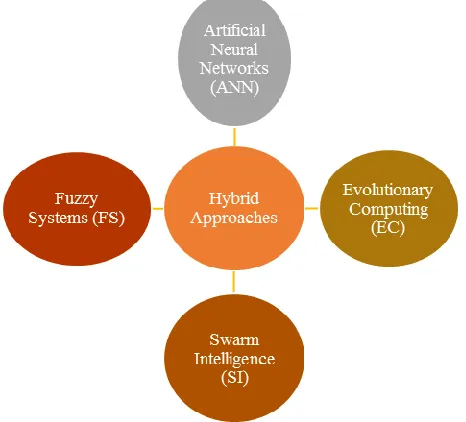
Figure. 1: General Optimization ApproachesBee colony algorithm is currently used in many areas to solve combinatorial optimization problems. In their algorithm, servers and HTTP request queues in an Internet server colony are modeled as foraging bees and flower patches respectively. This section describes the existing work done on this area of research. Nakrani and Tovey (2004) first proposed the use of a honey bee algorithm for dynamic allocation of Internet servers. The experimental results show that the algorithm performs reasonably well in the dynamic allocation problem. Social insect colonies can be considered as dynamical system gathering information from environment and adjusting its behaviour in accordance to it. While gathering information.
2. LITERATURE REVIEW:
Joshua Kirby et al.[1] introduced a novel swarming interpolation framework and validated its effectiveness on static fields. Proposed framework can be used to control autonomous mobile sensors into flexible spatial arrangements in order to interpolate values of a field in an unknown region. Sorin Ilie and Costin Badica [2] proposed a framework based on Ant Colony Optimization on a Distributed Architecture (ACODA), for implementation of SI algorithms aimed at solving complex graph search problems. In [3] Jiraporn Kiatwuthiamorn and Arit Thammano proposed an optimization technique based on the ant colonies. Sifat Momen[4] investigates that effects of biasness in brood caring on the performance of the colony, it is observed that a little biasness in brood caring results in a statistically improvement in the performance of the colony. Omid Nezami et al. [5] found the appropriate regions of search space by introducing new artificial particles based on historical information.
Organized by C.O.E.T, Akola. Available Online at www.ijpret.com
87
that end-to-end delay for swarm based routing is low compared to AODV. However, the good put for these algorithms is lower than for AODV in scenarios with high mobility [10].3. Dynamic Diversity Enhancement Particle Swarm Optimization algorithm
Animal behavior has always been a source of amazement to mankind. In many areas the abilities of the animals surpasses the abilities of us humans, but with the use of technology we have been able to best the animals in more and more areas. By studying the behavior of animals we have been able to find many interesting solutions animals apply to the problems in their environment. These solutions have inspired many people to think of problems in new ways, sometimes leading to new solutions, often with great results. But few things are more impressive than the way some creatures organize themselves in larger groups: birds, fishes and ants; flocks, shoals and swarms. If we can understand the mechanism of how these organizations emerge, we might be able to use the same mechanics to achieve what we have not achieved before.
The three rules formulated are still the basis of modern flocking,
1. Cohesion: Steer to move toward the average position of local flockmates. Cohesion is the rule that keeps the
flock together, without it there would not be any flocking at all.
2. Separation: Steer to avoid crowding local flockmates.[3] If a flocking behaviour is to be convincing it must also avoid collisions between the boids. This rule attempts steer the boid away from possible collisions.
3. Alignment: steer towards the average heading of local flockmates. This rule tries to make the boids mimic each others course and speed. If this rule was not used the boids would bounce around a lot and not form the beautiful flocking patterns that can be seen in real flocks.
3.1 Particle swarm optimization
Particle Swarm Optimization or PSO is a population based evolutionary algorithm developed by Eberhart and Kennedy in 1995, inspired from social behavior of natural species such as bird flocking or fish schooling. Each particle represents a point of multidimensional search space or a solution of the multidimensional problem that flies through a search space, denoted by Xi = (xi1, xi2,...,xid ,..., xiD) for a D-dimensional problem, and looking for a globally optimal solution. So each member of the swarm adjusts its position in the search space from time to time according to the flying experience of its own and of its neighbors (or colleagues). In PSO, best position that the particle i meets in previous generations is denoted by Pi = ( pi1, pi2,..., pid ,..., piD), and the best one among all the particles in the swarm is represented as Pg = ( pg1, pg2,..., pgd ,..., pgD). The two basic equations of PSO which implement flying of particles are the velocity equation and the position one as the Equation (1).
Organized by C.O.E.T, Akola. Available Online at www.ijpret.com
88
are acceleration constants. They represent the weighting of the stochastic acceleration terms that pull each particle toward personal best and global best positions. The constants r1, r2 are the uniformly generated random numbers in the range of [0 , 1]. Velocity clamp is clamped to a maximum magnitude (Vmax) was firstly used to adjust the ability between exploration and exploitation [4, 23]. However, velocity clamp only makes algorithm les like to diverge, it cannot help algorithm “jump out” a local optimum or refine the candidate solution. In each iteration a new velocity value for each particle is calculated based on its current velocity, the distance from the local best position, and the global best position. The new velocity value is then used to calculate the next position of the particle in the search space according to Equation (1). This process is then iterated a number of times or until a certain condition occurs.4. ANT SYSTEM ALGORITHM:
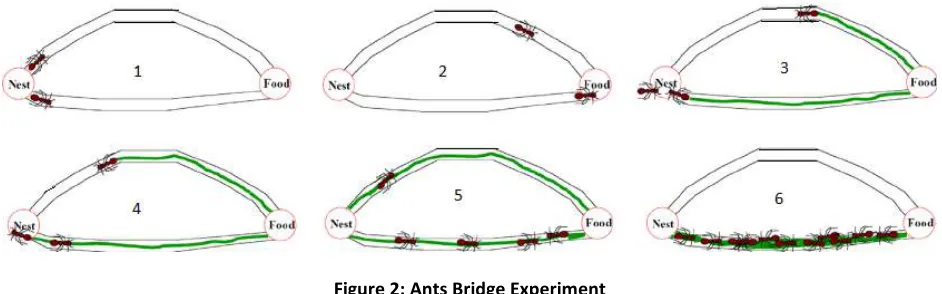
Ant Colony Optimization (ACO) is a swarm-based metaheuristic which models the foraging behavior of ant colonies in nature the ants through collaboration can solve complex problems such as finding the shortest path to a food source. This feature can be used to solve the engineering problems that require this kind of optimization. When traversing from one node to another, ants leave pheromone trails on the edges connecting the nodes. The pheromone trails attract other ants that lay more pheromone, which consequently leads to pheromone trail accumulation.
Figure 2: Ants Bridge Experiment
Negative feedback is applied through pheromone evaporation that, importantly, restrains the ants from taking the same route and allows continuous search for better solutions.
5. Honey Bee Swarms Intelligence:
Organized by C.O.E.T, Akola. Available Online at www.ijpret.com
89
Figure 3: Honey bee dancing languageDance patterns may contain two items of information, namely distance and direction of the food source. If a food source is located close to the hive (less than 50 m) the bee performs a round dance but if the food source is at a greater distance (more than 150 m) the bee performs a "waggle dance".
6. SIMULATION ENVIRONMENT:
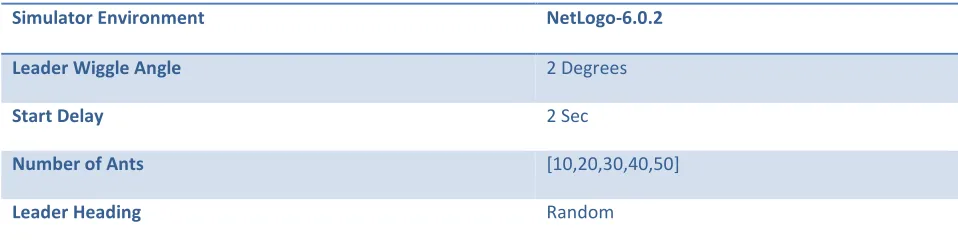
The ANT-Lines model shows the swarm intelligence of ANT colonies. A swarm of tens of thousands can accurately pick the best solution available among dozens of potential choices through self-organizing behavior. The behavior of ants following a leader towards a food source, the leader ant moves towards the food along a random path; after a small delay, the second ant in the line follows the leader by heading directly towards where the leader is located. Each subsequent ant follows the ant ahead of it in the same manner.
Table 1: Simulator Parameters
Simulator Environment NetLogo-6.0.2
Leader Wiggle Angle 2 Degrees
Start Delay 2 Sec
Number of Ants [10,20,30,40,50]
Leader Heading Random
Organized by C.O.E.T, Akola. Available Online at www.ijpret.com
90
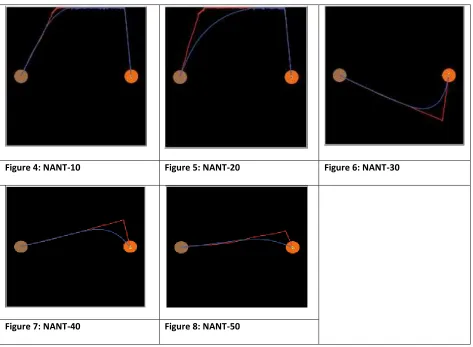
Figure 4: NANT-10 Figure 5: NANT-20 Figure 6: NANT-30
Figure 7: NANT-40 Figure 8: NANT-50
When the leader ant gets close enough to the food to “smell” it, it stops wiggling and heads directly for the food. The leader ant leaves a red trace as it moves. Each subsequent ant follows the ant ahead of it by heading directly towards it before it takes each step. The follower ants do not leave a trace. The yellow line of ants, however, traces out a curve in the drawing. The last ant to go leaves a blue trace. Hence from the above plots it is confirmed that as the number of ants increases for the foraging the chances for the shortest path is greater.
7. CONCLUSION:
Organized by C.O.E.T, Akola. Available Online at www.ijpret.com
91
REFERENCES1. Joshua Kirby, Marco A. Montes de Oca, Steven Senger, Louis F. Rossi, Chien-Chung Shen, “Tracking Time-Dependent Scalar Fields with Swarms of Mobile Sensors”, IEEE 7th International Conference on Self-Adaptive and Self-Organizing Systems, IEEE Computer Society, ISSN: 978-0-7695-5129, June 2013.
2. Sorin Iliea, Costin Badica, “Multi-agent distributed framework for swarm intelligence”, ELSEVIER Proc., International Conference on Computational Science, ICCS 2013, 18 (2013) pp. 611 – 620, 1877-0509, 2013.
3. Jiraporn Kiatwuthiamorn, Arit Thammano, “A Novel Optimization Algorithm Based on the Natural Behavior of
the Ant Colonies”, ELSEVIER Proc. 20(2013) pp. 90-95, 1877-0509, 2013.
4. Sifat Momen, “Ant-Inspired Decentralized Task Allocation Strategy in Groups of Mobile Agents”, ELSEVIER Proc.
20(2013) pp.169-176, 1877-0509, 2013.
5. Omid Mohamad Nezami, Anvar Bahrampour, Paria Jamshidlou, “Dynamic Diversity Enhancement in Particle Swarm Optimization (DDEPSO) algorithm for preventing from premature convergence”, 17th Asia Pacific Symposium on Intelligent and Evolutionary Systems, IES2013, ELSEVIER Proc. 24 ( 2013 ) pp.54 – 65, 1877-0509, 2013.
6. Imane M. A. Fahmy, Laila Nassef, Hesham A. Hefny, “ Predicted Energy-Efficient Bee-inspired Routing (PEEBR)
Path Selection Optimization”, (INFOS), 2012, Proc. IEEE on 8th International Conference Informatics and Systems,
ISBN: 978-1-4673-0828-1, 14-16 May 2012
7. Patrick Benavidez, Kranthimanoj Nagothu1, Anjan Kumar Ray, Ted Shaneyfelt, “Multi-Domain Robotic Swarm
Communication System”, SoSE '08 Proc. IEEE International Conference on System of Systems Engineering, Singapore, pp. 1 – 6, ISBN:978-1-4244-2172-5, June 2008.
8. John S. Baras, Harsh Mehta, “A Probabilistic Emergent Routing Algorithm for Mobile Ad Hoc Networks”, Proc. of
WiOpt ’03: Modeling and Optimization in Mobile, AdHoc and Wireless Networks, Sophia-Antipolis, France, March
3-5, 2003.
9. Amol V. Zade, R. M. Tugnayat, “Ant Colony Optimization (ACO) in Disaster Information Network”, Published In
International Journal Of Innovations In Engineering Research And Technology (IJIERT), ISSN: 2394-3696, Volume 1, Issue 2, and Dec-2014.
10. Amol V. Zade, R. M. Tugnayat,, “A Honey Bee Swarm Intelligence Algorithm For Communication Networks”, Published in International Journal Of Engineering Sciences & Research Technology (IJESRT), ISSN: 2277-9655, Volume 4, Issue 1, pp. 644-647, January 2015.
11. Wilensky, U. (1997). NetLogo Ant Lines model. http://ccl.northwestern.edu/netlogo/models/AntLines. Center for Connected Learning and Computer-Based Modeling, Northwestern University, Evanston, IL.