Solid Waste Management in the Informal Settlements:
A Land Use Planning Perspective
Wilfred Ochieng Omollo
Department of Planning and Development, Kisii University, Kisii, Kenya
Abstract
This paper is based on a study conducted in Langas, an informal settlement located in Eldoret Town, Kenya. Itbrings to light key challenges in domestic solid waste management (SWM) facing the settlement. It largely contends that although Langas, a product of unplanned boundary extension, is now within the spatial jurisdiction of Eldoret Town, the County Government of Uasin Gishu (CGUG) has not improved SWM service to the neighbourhood. The target population comprised of 6,842 mapped residential developments. The corresponding sample of 361 was selected using a random number table. Results postulated that key emerging challenges towards effective domestic SWM included absentee landlords who flout development control orders; inadequate receptacles; indiscriminate disposal by households; unreliable collection by CGUG; low household incomes, and limited public education. The study concludes by asserting that past boundary extensions of Eldoret Town in the absence of adequate land use planning and development control are the root cause for inadequate SWM in Langas and other informal settlements. Recommendations made included, but not limited to, preparing a comprehensive land use plan, organizing citizen fora on SWM, regular solid waste collection, establishing a Municipal Board to address service delivery, and adoption GIS and remote sensing as smart technologies to aid in SWM.
Keywords
Solid waste management, Langas informal settlement, Eldoret Town1. Introduction
More than half of the world’s population (55%) lived in urban areas in 2018, a proportion that is expected to increase to 68% by 2050. Projections further show that urbanization, a gradual shift in the residence of the human population from rural to urban areas, in combination with the overall growth of the world’s population, could add another 2.5 billion people to urban areas by 2050 [1]. This will significantly result in the growth of informal settlements, especially in developing countries, a problem markedly elicited by inadequate land use planning [2]. Although informal settlements are defined in a multiplicity of ways, there is a general agreement on their core characteristics: inhabitants have no security of tenure vis-à-vis the land or dwellings they inhabit, with modalities ranging from squatting to informal rental housing; neighbourhoods usually lack, or are cut off from the basic services and city infrastructure; housing may not comply with approved land use planning regulations; and are often situatedingeographicallyandenvironmentallyfragile areas.
* Corresponding author:
[email protected] (Wilfred Ochieng Omollo) Published online at http://journal.sapub.org/env
Copyright © 2019 The Author(s). Published by Scientific & Academic Publishing. This work is licensed under the Creative Commons Attribution International License (CC BY). http://creativecommons.org/licenses/by/4.0/
They are a common feature of developing countries and a product of an urgent need for shelter by the urban poor [1]. In Kenya, the African Population and Health Research Centre [3] reported that over 60% of the urban dwellers in Nairobi City County live in informal settlements, which occupy only 5% of the city’s total residential land. Due to the proliferation of these settlements, the problem of domestic SWM in the country has become enormous. This in turn act as a barrier to sustainable urbanization.
Anschütz [4] defines solid wastes as discarded non-liquid materials with no value in the eyes of the first generator or user. The definition of "solid" waste encompasses wastes that are neither wastewater discharges nor atmospheric emissions. On his part, Cointreau [5] defines domestic solid waste as wastes generated from the consequence of household activities. As a service, SWM is nonexclusive, meaning once provided, it benefits the overall public welfare and not only the residents who receive the service [6].
From the foregoing background review, the objectives of this study were twofold: (a) to investigate challenges regarding domestic SWM in Langas informal settlement, and (b) to provide planning policy recommendations towards improved domestic SWM in the study area. Langas is among the informal settlements in Eldoret Town currently facing daunting challenges in domestic SWM, hence contributing to environmental degradation. For instance, soils at many sites have been rendered unusable through continued deposition of these wastes. Air is also polluted by particulates and smoke emanating from burning of wastes.
The settlement makes an ideal case for the current study on account of four reasons. First, it is the largest informal settlement in Eldoret Town. As per Kenya’s 2009 population housing and census survey [11], over 30% of the town’s population lives in Langas. Second, before 1988,
Langas was agricultural land, a status that changed after being incorporated into the municipality through the 1988 boundary extension, as a result changing its land use from agricultural to unplanned residential settlement. Third, the town's physical development plan was prepared in 1984 to cover 59 km2. During this time, Langas and other peri-urban settlements were within the jurisdiction of the defunct County Council of Wareng’. Fourth, there is a scarcity in the literature on the nexus between the problem of domestic SWM and inadequate land use planning.
When town boundaries are extended as often in Kenya, most land use planners tend to focus on roads and water works, neglecting SWM. It only dawns on them much later when the problem becomes intolerable [12]. The problem of SWM in the informal settlements of Eldoret Town owes origin to unplanned boundary extensions (Figure 1).
Figure 1. Key informal settlements and boundary extensions in Eldoret Town (Source: Ochieng [13])
Upon being declared a township in 1914, Eldoret Town covered 11 km2. Its elevation to municipal status in 1958 led to a boundary extension of up to 25 km2. In 1974, the town's boundary was further extended to 59 km2. The final extension occurred in 1988 to enclose the current 147.9 km2. It is these extensions that made Langas and other informal settlements initially under a rural local authority of the County Government of Wareng' to be incorporated into the
town. Although Langas was integrated into Eldoret Town after 1988 boundary extension, no land use planning was undertaken by previous planning authorities to mitigate the foreseeable problem of domestic SWM. In the near future, further unplanned extensions are bound to provide room for the proliferation of new periurban informal settlements that are likely to be exemplified by inadequate domestic SWM. This study was hence timely since it took place when a
To M oibe n
T
o
I
te
n
To M oib
en
T o S
o y
To K ital e
To Turb
o
To K isumu Maili N ne
Kamkun ji
Munyaka
Lan gas
Hill Scho ol V illage
Mwirutu ya Mumbi Kahoya
Huruma
Mwend eri
Kimumu
Kingo ngo
Uni vers
ity
of E ldor
et
A ir f
ie ld
Kenya Pip eline
Kapsoya To Nairob i
Indu strial area Pio neer
Eldoret Polytechn ic
Outsp an
Siani Farm
R. Sosiani
R. Oldonyo Sa duk
R. Kipkare n
Railway
1988 boundary Road
River
1914 boundary 1974 boundary
Langas (study area)
Other informal settlements Legend
10 0 5 10 Km
proposal was being made to further extend the town’s boundary to cover a massive 656 km2. The study, in consequence, contributes to the existing body of knowledge in urban environmental planning by corroborating the nexus between unplanned boundary extensions along with inadequate land use planning on the one hand, and the extent to which domestic SWM is delivered by planning authorities as an obligatory public service on the other hand.
2. Methodology
2.1. Background to the Location and Description of the Study Area
Eldoret, the fifth largest urban centre in Kenya (Figure 2), is the designated administrative capital of Uasin Gishu County, one of the 47 county governments constituting the Republic of Kenya. It had a population of 252,051 as per the 2009 Kenya population and housing census survey. With an annual growth rate of 6.0%, the population is further projected to 451,384 by 2019. Eldoret Town is set 313 km South West of Nairobi, the capital city of Kenya. The Langas informal settlement is situated in Langas Ward within Pioneer Location. According to the Kenya 2009 census survey, Langas Ward had a population of 66,973 [11].
Figure 2. Location of Eldoret Town in Kenya (Source: CountryWatch [37])
2.2. Target Population, Sample Size, Sample Design, and Data Collection
There were no records maintained by CGUG on the number of residential building developments in Langas informal settlement. Owing to this limitation, buildings were identified using a high spatial resolution satellite image (QuickBird-2, 0.34-metre spatial resolution, dated June 2018) obtained from the Regional Centre for Mapping of Resources for Development, Nairobi, and thereafter digitized to establish a sampling frame in the form of an attribute table. The process entailed settlement's boundary delineation followed by the digitization of developments.
Ground truthing to make certain that delineated boundary was accurate in addition to confirming that digitized developments were residential was undertaken. In the end, 6,842 developments were mapped to form the target population. Determination of sample size was guided by the Sample Size Determination Table provided by Krejcie and Morgan [14]. In accordance with the Table, if the
population (N) is between 6,000 and 6,999, the sample size (n) should be 361. The study employed simple random sampling through the application of Random Number Table, where questionnaires were used to collect data from households. The resulting response rate was 68%, graded by Mugenda and Mugenda [15] as adequate for data analysis and reporting.
3. Findings and Discussions
3.1. Households Socioeconomic Profile and Domestic Solid Waste Generation
household size was four. Regarding the educational background, 6% had attended tertiary institutions, 30% high schools, 58% primary schools, while 6% had no formal education. Further, the average household income per month was Kshs. 24,200 compared to a corresponding average expenditure of Kshs. 13,900. Much of the household income was used in paying house rent and buying food. These were taken as the basic needs that must be accorded highest priority.
The World Bank [16] projected Gross Domestic Product (GDP) per capita growth rates for Kenya from 2018 to 2020. Results depict the growth as increasing from 5.7% in 2010 to 5.8% in 2019 and gradually rising to 6.0% in 2020. With an average income of Kshs 24,200, the household monthly income for Langas is progressively projected in line with the reported GDP per capita growth (Table 1).
Table 1. Projected income and affordable limits for SWM in Langas,
2018-2020
Year Projected GDP per Year (%)
Average Income (Kshs/month)
Affordable Limit (Kshs/ month)
2018 5.7 24,200 242
2019 5.8 25,603 256
2020 6.0 27,139 272
Source: Based on the World Bank report on the state of Kenya’s economy, 2010 Note: 1 Kshs = 101 USD as per March 2019 Central Bank of Kenya exchange rate [17]
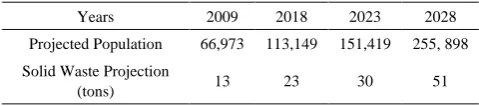
The study assumed the affordability limit for financing SWM to be 1% of household monthly income. This relates to other cities of developing countries such as Penang in Malaysia (0.67%), Bangkok in Thailand, and Surabaya in Indonesia, 0.5%, respectively [4, 18], an indication that privatization of SWM may not succeed in Langas because most private operators in Eldoret Town do not charge less than Kshs. 300 per month. Since no past studies had been conducted to determine the per capita domestic solid waste generation rates in Langas, the study assumed an average per capita rate of 0.5 kg. This compared to studies conducted in Africa by UN-Habitat [19]. These include Port Novo (Benin) 0.5 kg, Accra (Ghana) 0.4 kg, Kampala (Uganda) 0.6 kg, and Nairobi (Kenya) 0.6 kg. A forecast for domestic solid waste generation in Langas is presented in Table 2.
Table 2. Forecast for domestic solid waste generation in Langas,
2018-2028
Years 2009 2018 2023 2028
Projected Population 66,973 113,149 151,419 255, 898 Solid Waste Projection
(tons) 13 23 30 51
Source: Base year for projection was 1999 Kenya’s population census survey [11].
According to the Cheserek [20], only 15% of solid wastes generated from Eldoret Town are collected, an indication that much remains unaccounted for. It is evident from Table 2 that an increase in the settlement's population is
statistically and significantly correlated with the volume of solid wastes generated (r = 1.00, N = 4, p = .00). Thus, in the absence of effective planning, much of the generated waste will end up being illegally disposed of by residents.
3.2. Households Perception of SWM
The study first sought to establish from sampled households, their top priority concerning the preferred service that they felt CGUG should instantaneously deliver to their neighbourhoods. This was an important indicator because acknowledging that SWM is a felt need may readily define the extent to which households were willing to participate in its improvement. Research findings demonstrated that 58% identified SWM compared to 9% who proposed an improvement of roads, 6%, enhancing water supply, 18% building of a market, 3% provision of sewer reticulation and installation of street lights respectively. Generally, it can be construed that 30% of households do not perceive SWM service as an immediate felt need.
3.3. Absentee Landlords
Tenants in Kenyan towns are not included in planning for residential housing primarily because they are not owners and have no large-scale financial stake in housing investment [21]. On account of this, Syagga and Aligula [22] argued that absentee property owners are difficult to handle in popular informal settlements in Kenya, and although they stay little known, they still forcefully control activities through their agents. Likewise, a majority of households in Langas as corroborated by 82% were tenants, an indication that most structure owners did not live in the settlement. Dealing with such developers creates obstacles towards SWM since it is not feasible to fully engage them in enhancing service delivery. The problem is compounded given that most structures (61%) were developed without approval, yet as per the First Schedule (Form PPA 1, section B) of the Physical Planning Act (Cap. 286) [23], one of the conditions considered when approving building developments are the methods of solid waste disposal. These findings are in line with that of the Centre for Urban Research and Innovations (CURI) [24] that established that because over 80% of slum dwellers in Nairobi City were tenants from absentee landlords, it was challenging to fully involve them in urban service delivery programmes such as SWM.
3.4. Method of Solid Waste Storage
buckets, 23 % cartons, 6% metallic buckets and 14% plastic bags and woven baskets respectively. Plastic buckets were common because they are cheap to acquire, easy to carry around and do not rust. Although these receptacles should be animal proof, insect proof, weatherproof, washable and robust enough to meet exigencies of normal use, none in Langas merited these recommended standards.
Apart from so rage, location of primary receptacles is a key variable in domestic SWM. This is because receptacles which are strategically located can easily be identified and emptied by the refuse collectors, compared to those that cannot be easily sighted. The survey revealed that 62% of the households placed their receptacles in front of their houses, compared to 38% who did not. It was, however, also observed that although most households placed their receptacles in front of their houses, a majority still failed to receive a collection service attributable to the inaccessibility of their houses, a problem caused by the poor condition of roads which in turn hindered refuse collection vehicles from easily reaching them.
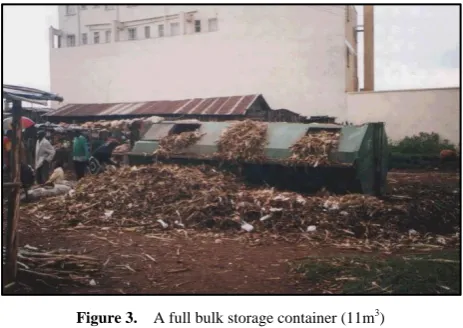
In addition to primary receptacles, Langas had only twenty-three communal receptacles provided by CGUG. These are used to temporarily store solid wastes prior to being collected for final disposal. Considering that the neighbourhood had more than 1,000 households, those who cannot access these facilities are likely to resort to unsustainable techniques, primarily, open dumping. This may suggest why most inner sections of Langas are characterized by huge piles of uncollected domestic solid wastes (Figure 3). Furthermore, the twenty-three existing receptacles are only located along the major roads and none in the interior sections of the study area.
Figure 3. A full bulk storage container (11m3)
(Source: Field survey, 2018)
3.5. Methods for Solid Waste Disposal
Solid waste disposal aims at discarding materials that can no longer be reused or recycled. It specifically entails the discharge, deposit, injection, dumping, spilling, leaking, or placing of any waste into or on any land or water so that the waste or any other constituent may enter the environment or be emitted into the air, or discharged into any waters, including ground waters [5]. In developing countries, the most common practice of waste processing is uncontrolled
open dumping, a method, which requires little capital investment and has low operational costs [20, 7, 26].
Inherent to the informal settlements in Eldoret Town, unplanned domestic solid waste disposal is one of the significant environmental concerns in Langas. The study found out that 85% of the households who had no collection service relied on various unapproved disposal techniques. While 60% relied on open dumping, 38% buried their waste in pits, with another 2% practising open burning. None of these techniques is approved by the CGUG's by-law on SWM. The problem continues since CGUG's lacks the capacity of enforcing this important by-law. Due to the irregular collection, illegally dumped solid wastes are occasionally scattered by dogs, poultry, goats and cattle. Children also scavenge from such wastes (Figure 4).
Figure 4. A cow feeding from a full “din” standard container
(Source: Field survey, 2018)
As demonstrated in Figures 3 and 4, uncontrolled disposal of domestic solid waste in Langas evidently presents a permanent risk of pollution, infection and injury.
3.6. Access to Solid Waste Collection Service
3.7. Willingness to Pay for SWM Service
One of the roles of county governments in Kenya is the provision of essential urban infrastructure and services. To do so efficiently, they need a strong revenue base [16]. However, most local governments in developing countries experience a shortfall in meeting revenue targets from the taxes they impose [28]. This is a pointer that user charges as a way of covering SWM cost should not be neglected even though the service is a public good. Thus, under part V of the Urban Areas and Cities Act (UACA) [29], it is admissible why households in Langas are expected to pay conservancy fees. Nevertheless, from an economic perspective, this might not come to fruition because 80% of households not served by a collection service were not willing to pay. While 65% felt that CGUG should offer the service at no cost, 35% suggested that the current fee of Kshs. 40 was too high. It was further established that 74% of households with a collection service were not willing to support an increase of conservancy fee. Among those without a collection service, but were willing to pay, their average proposal was Kshs. 50 per month. This may, however, not sustain an inclusive service delivery because most of the households are not willing to pay for SWM service.
3.8. Public Education on Domestic SWM
For SWM efforts to be deemed successful, involvement and participation of the citizens are necessary. As such, SWM can only be effective if key stakeholders are fully informed of the various activities and policies geared towards ridding the environment of solid wastes [30]. Until the late 1980s, SWM programmes in most African cities were formulated and carried out by government agencies without significant public participation [26]. Today, public gatherings and committee meetings at neighbourhood levels have enabled positive results to be realized through inclusive participation [31, 32, 19]. This promotes consultations by securing a public commitment to supporting better service delivery. In this regard, inviting the public to be part of decision-making ought to be one of the key performance indicators (KPIs) for SWM in Eldoret Town. However, the tactic is yet to take root in Langas as demonstrated by 97% of households who reported not to have been sensitized on SWM initiatives. This may suggest why 85% were not aware of any legislation related to SWM. It was also found out that although CGUG sometimes conducts publicity campaigns, it seldom involves households as key stakeholders.
3.9. Resource Recovery Initiatives
One of the best ways of reducing the amount of solid waste disposed of is to increase the rate of recovery and reuse of waste materials [33]. This suggests that SWM should have an integrated approach, recognizing opportunities for waste reduction, recycling and reuse, coupled with a safe means of disposal. The overall goal is to conserve the environment and maximize employment creation [34]. Resource recovery is thus a potential strategy towards improved domestic SWM in
Langas informal settlement.
Regardless of this, just 14% of households practise resource recovery. Papers, glasses and plastic bottles are mostly recovered and reused. In particular, plastic bottles are popular because they are used for storing liquids. Old newspapers are commonly used for lighting energy saving stoves while some households use selected pages as wallpapers. Similarly reused are plastic bags acquired after purchasing goods from shops where business operators use them as packaging materials. Limited resource recovery has consequently increased the volume of domestic solid waste stored at the generation points, making primary receptacles to fill within a short time. This has hastened the volume of solid wastes collected and transported by CGUG. Generally, 86% of households are yet to embrace resource recovery initiatives, a subject largely attributed to lack of awareness.
3.10. Institutional Context of Domestic SWM
The general public has a perception that SWM is the sole responsibility of the respective local authorities [35]. Similarly, in Langas, despite the inefficiency exhibited by CGUG, 90% of households still view it as the most desirable institution for SWM, compared to 10% that favoured private operators. However, as previously observed, considering low average household income in Langas, privatization may not succeed because private entrepreneurs operating in Eldoret Town do not levy less than Kshs. 300 per month. This indicates that GGUG will continue being the lead institution responsible for domestic SWM in Langas. However, of concern, although Community Based Organizations (CBOs) are known to play a key role in urban service delivery, none carry out SWM in Langas, instead, their scope is limited on socioeconomic issues. For instance, it was found out that CBOs located in Langas were predominantly organized around ethnicity and religion, while others were development oriented focusing on service provision sectors such as education and health. Lack of CBOs participation in SWM could easily suggest why households do not perceive them as potential partners in environmental management.
3.11. Development Control
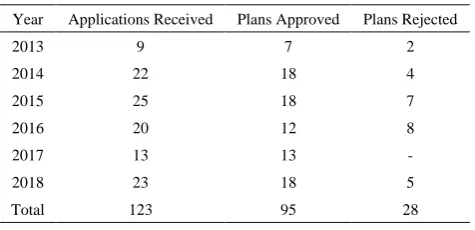
Table 3. Approval of building plans in Langas, 2013–2018
Year Applications Received Plans Approved Plans Rejected
2013 9 7 2
2014 22 18 4
2015 25 18 7
2016 20 12 8
2017 13 13 -
2018 23 18 5
Total 123 95 28
Source: CGUG, 2018
Table 3 enlightens that between 2013 and 2018, only 95 applications were approved, a chance that applicants whose proposals were rejected (28) could still have gone ahead and developed on account of inadequate monitoring and enforcement. Drawing from a study by Ngetich et al. [37], CGUG lacks the capacity to enforce development control. This evidently presents a limitation towards SWM in Langas. It was earlier mentioned that the Physical Planning Act (Cap. 286) [23] requires developers, when applying for a development permit, to clearly indicate the intended method (s) for refuse disposal.
4. Conclusions and Recommendations
Past unplanned boundary extension of Eldoret Town (1988) coupled with an absence of land use planning and development control is conjectured as the root cause for inadequate SWM in Langas informal settlement, and indeed in most informal settlements in Eldoret Town. As such, challenges relating to domestic SWM continue unabated notwithstanding the existing legal framework that explicitly grants GGUG a clear mandate of not only enforcing development control but also delivering an effective SWM system. This, in turn, negates the 11th Sustainable Development Goal (SDG) on making cities and human settlements inclusive, safe, resilient and sustainable. The problem further negates development control objectives of aesthetics, conservation and safety.
The following planning recommendations are therefore made in an attempt to attain sustainable SWM in Langas: a) As provided for under Section 36 (g) of UACA [28],
CGUG should prepare an all-inclusive Integrated Development Plan covering the entire spatial extent of Eldoret town to provide the basis for undertaking development control. The plan envisages providing a spatial framework for regulating developments, therefore deterring the anticipated proliferation of informal settlements that contribute to unsustainable domestic SWM. In other words, the central argument in this paper is that any future expansion of the town’s boundary into the rural hinterlands should first be preceded by a comprehensive land use development planning to provide the basis for development control. This should thereafter be followed by an action plan for infrastructure
and service delivery.
b) CGUG should profile and prepare a comprehensive database through an integrated Land Information System regarding all property owners in Eldoret Town with a specific reference to Langas informal settlement. c) CGUG and its partners should sensitize the public
through regular citizen fora as construed under Section 22 (1) (a) (i) of UACA [28], on complementary roles they ought to play in promoting sustainable SWM with a particular reference to compliance with applicable laws. Envisioned fora will provide a platform for engaging stakeholders on how to improve SWM, a scheme in line with the 11th SDG which has set a target of direct participation structure of civil society in urban planning that operates regularly and democratically.
d) In according to Section 20 (1) (b) of UACA [28], CGUG should establish a Municipal Board to execute among other responsibilities, developing feasible strategies and programmes, including the setting of measurable KPIs targeting services such as SWM.
e) CBOs operating in Langas should be encouraged through incentives to also focus on prevailing environmental issues that have a significant bearing on the settlement so as complement CGUG’s efforts towards addressing the widespread problem of domestic SWM.
f) CGUG should not only collect domestic solid wastes at planned and consistent intervals, but also provide an adequate number of communal receptacles as a strategy for curbing indiscriminate disposal of domestic solid wastes.
g) CGUG should consider privatizing SWM in high and medium income residential neighbourhoods, including the central business district, and major institutions in Eldoret Town. The intention is to prioritize SWM in low-income neighbourhoods such as Langas.
h) As a matter of priority, CGUG should consider, integrating GIS and remote sensing (smart e-waste management) for enhanced SWM. These should be applied in mapping the location and spatiotemporal extent of disposal sites; quantifying and monitoring the amount of waste generated at each site; predicting future scenarios concerning the volume of wastes likely to be generated, and determining the optimal or a least cost path towards disposal sites.
i) CGUG should build operational capacity towards an enhanced development control framework by deliberately recruiting more land use planners to ensure that all developments comply with approval conditions as set out in the notifications for approval (Form PPA2 of the Physical Planning Act, Cap. 286).
REFERENCES
ion/2018-revision-of-world-urbanization-prospects.htmlJone s.
[2] Jones P, 2012, Pacific urbanization and the rise of informal settlements: Trends and implications from Port Moresby. Urban Policy and Research, 30 (2), 145-160.
[3] African Population and Health Research Center, 2014, Population and health dynamics in Nairobi’s informal settlements: Report of the Nairobi cross-sectional slums survey. Nairobi: APHRC.
[4] Anschütz, J., 2006, Community-based solid waste management and water supply projects: Problems and solutions compared. Nieuwehaven: Netherlands Agency for International Cooperation.
[5] Cointreau S. J., 1991, Financial arrangements for viable solid waste systems in developing countries. A paper presented at the Third International Expert Group Seminar, Bandung, Indonesia.
[6] Massoud, M., and El-Fadel, M., 2002, Public private partnerships for solid waste management. Environmental Management, 30 (5), 621-630.
[7] Remigos, M.V., 2010, An overview of the management practices at solid waste disposal sites in African cities and towns. Journal of Sustainable Development in Africa, 12 (7), 239-239.
[8] van Dijk, M. P., 2006, Managing cities in developing countries. Theory and practice of urban management. Cheltenham: Edward Elgar.
[9] Sinthumule, N.I., and Mkumbuzi, H.S., 2019, Participation in community-based solid waste management in Nkulumane suburb, Bulawayo, Zimbabwe. Resources, 8 (30), 1-16. [10] Kenya, Republic of, 2010, Vision 2030: Popular Version. [11] Kenya, Republic of, 1999, Population, and housing census
survey, volume I. Nairobi: Government Printer.
[12] Cheserek, G.J, and Opata, G.P., 2011, Environmental and housing problems of low-income households in Eldoret Municipality, Kenya. Journal of Emerging Trends in Economics and Management Sciences, 2 (4), 320-32. [13] Ochieng, W.O., 2004, Planning for domestic and commercial
solid waste management in informal settlements: A case study of Langas in Eldoret Town, Kenya. (M.A. Thesis, Department of Urban and Regional Planning, University of Nairobi). Retrieved from http://erepository.uonbi.ac.ke/handl e/11295/65642.
[14] Krejcie, R.V., and Morgan, D.W., 1970, Determining sample size for research activities. Educational and Psychological Measurement. 30, 607-610. Retrieved from www.researchgate.net/file.PostFileLoader.html?id.
[15] Mugenda, A., and Mugenda, O., 2003, Research methods: Quantitative and qualitative approaches. Nairobi: Acts Press. [16] World Bank, 2010, Newsletters and technical publications
on municipal solid waste management. Retrieved from http://www.unep.org/ietc/esir/pub/msw/ro/africa/topic_h.asp. [17] Central Bank of Kenya, 2019, Key CBK indicative exchange rates. Retrieved from https://www.Central bank.go.ke/forex/. [18] Japan International Corporation Agency (JICA), 1998, The
study on solid waste management in Nairobi City in the Republic of Kenya: Final Report.
[19] UN-Habitat, 2009, The management of secondary cities: Traditional and modern institutional arrangements. Nairobi: UN-Habitat.
[20] Cheserek, E., 2012, Could you smell what is choking Eldoret from your place? The Standard Newspaper, 18-19.
[21] Mwangi, I.K., 1997, Private sector participation and municipal waste management in Benin City, Nigeria. Environment and Urbanization, 12 (103), 103-117.
[22] Syagga, P.M., and Aligula, E.M., 1999, Management and agency in the urban real property market in Kenya. Saheker: Hachen.
[23] Kenya, Republic of, 1996, The Physical Planning Act (Chapter 286). Nairobi: Government Printer.
[24] Centre for Urban Research and Innovations, 2018, Integrated solid waste management plan for the City of Nairobi, Kenya. Retrieved from http://www.centreforurbaninnovations.com/c ontent/slum-lords-among-greatest-impediment-informal-settl ement-improvement-Nairobi.
[25] UN-Habitat, 1988, Refuse collection vehicles for developing countries. UN-Habitat: Nairobi.
[26] United Nations Environment Programme (UNEP), 2010, Waste management planning: An environmentally sound approach for sustainable urban waste management - Introductory guide for decision. Nairobi: UNEP, 2009, Private sector participation and municipal waste management in Benin City, Nigeria. Environment and Urbanization, 12 (103), 103-117.
[27] Sulu, S. A., 1987, Development of maintenance strategy for urban solid wastes collection. A Paper presented at the 1987 Nigerian National Workshop on Engineering Maintenance. [28] Kenya, Republic of, 2011, Urban Areas and Cities Act.
Nairobi: Government Printer.
[29] Hammed, T. B., Sridhar, M.K.C. and Wahab, B., 2016, Enhancing solid waste collection and transportation for sustainable development in the Ibadan Metropolis, Nigeria. European Journal of Research in Social Sciences. 4 (7), 23-32.
[30] Agevi, E., 2001, Participatory approaches to strategic urban planning. Workshop proceedings of strategic metropolitan development and management plan for Nairobi City, Nairobi 5-6 December 2001.
[31] Moningka, D., 2000, Community participation in solid waste management: Factors favouring the sustainability of community participation: A literature review, ENDA/ WASTE, Gouda.
[32] Sabir, S., 2006, Solid and liquid waste management. Emirates Journal for Engineering Research, 11(2), 19- 36.
[33] National Environment Management Authority (NEMA), 2015, The national solid waste management strategy. Retrieved from https://www.nema.go.ke/..national%20solid %.
from https://www.researchgate.net/publication/321330758_p ublic_perceptions_on_effectiveness_of_solid_waste_manage ment_in_colombo_municipality_area.
[35] Kenya, Republic of (2010). Constitution. Nairobi: Government Printer.
[36] Ngetich, J.K., Opata, G.P., and Mulongo, L.S., 2016, Making
urban planning and development control instruments work for Kenyan cities: The case of the City of Eldoret. Journal of Emerging Trends in Economics and Management Sciences (JETEMS), 7(4), 246-254.
![Figure 1. Key informal settlements and boundary extensions in Eldoret Town (Source: Ochieng [13])](https://thumb-us.123doks.com/thumbv2/123dok_us/8706145.1739684/2.595.79.531.282.633/figure-informal-settlements-boundary-extensions-eldoret-source-ochieng.webp)
![Figure 2. Location of Eldoret Town in Kenya (Source: CountryWatch [37])](https://thumb-us.123doks.com/thumbv2/123dok_us/8706145.1739684/3.595.139.479.245.503/figure-location-eldoret-town-kenya-source-countrywatch.webp)