i
BODY IMAGE
IN AUSTRALIAN ADOLESCENTS
Exploring Functional and Aesthetic Body Image across the
Sporting Context
by
Bree D. Abbott, B.A. (Hons)
This thesis is presented for the degree of
Doctor of Philosophy
at Murdoch University.
ii
School of Psychology
Murdoch University, Perth, Western Australia
I declare that this thesis is my own account of my research and contains as its main
content work which has not previously been submitted for a degree at any tertiary
institution.
iii
BODY IMAGE IN
AUSTRALIAN ADOLESCENTS
Exploring Functional and Aesthetic Body Image across the Sporting Context
Bree Abbott Murdoch University
PERTH, WESTERN AUSTRALIA
ABSTRACT
This thesis take a multidimensional view on body image, suggesting that perceptions of the body are not restricted to the way the body “looks”; they may also extend to the way the body “functions”. A new measure of body image; the Embodied Image Scale (EIS), was developed specifically to measure the cognitive, behavioural and affective components of body image across both the aesthetic and functional dimensions of the body. This thesis also explored contexts with the potential to foster a positive body image among adolescent girls, who are considered to be at high risk of developing a poor body image.
iv
boys. The functional dimension of the body was valued and invested in more by boys than girls who placed higher focus on the aesthetic dimension.
Study 2 explored changes in functional and aesthetic body satisfaction among Western Australian adolescents over a year. Girls reported lower overall body
satisfaction than boys. Although both boys and girls reported a significant decrease in body satisfaction over the 12-month period, this decrease was stronger for female
participants. Cohort differences were also found, with older adolescents reporting higher functional body satisfaction. This study highlights the poor condition of adolescent girls’ body image and confirms a need to explore contexts with the potential to improve body image among these young women.
Study 3 explored the association between sports and physical activity participation and body image among Australian adolescent girls. Sports participants reported higher value, investment in, and satisfaction with their functionality than non-participants and physically active girls. Although they reported higher functional behavioral-investment, girls who participated in general physical activity did not differ significantly from non-participants on functional satisfaction. Body image was also found to differ significantly among girls participating in different sport types. The results indicated that, although girls in different sport types differ in their body image, any involvement was associated with more functional body image than being sedentary.
v
activities. Overall, girls reported more experiences of physical competence and body objectification during sports compared to activities. Bodily experiences differed between aesthetic and non-aesthetic sport types; however, this difference varied when between-person and within-between-person analyses were conducted. Experiences of body objectification were positively related to aesthetic body values. Satisfaction in both the functional and aesthetic body was positively predicted by girls’ experiences of physical competence.
vi
LIST OF ORIGINAL PUBLICATIONS
This thesis comprises the following publications:
1. Abbott, B. D. & Barber, B.L (2010). Embodied image: Gender differences in functional and aesthetic body image among Australian adolescents. Body Image, 7, 22-31.
2. Abbott, B. D. & Barber, B.L (2011). Differences in functional and aesthetic body image between sedentary girls and girls involved in sports and
physical activity: Does sport type make a difference? Psychology of Sport & Exercise, 12 (3), 333-342.
3. Abbott, B. D., Barber, B. L. & Dziurawiec, S. (In Press). What difference can a year make? Changes in functional and aesthetic body satisfaction among male and female adolescents over a year. Australian Psychologist
The following empirical study has been submitted to a peer reviewed journal and is currently being reviewed and considered for publication.
vii
ACKNOWLEDGEMENTS
The PhD journey for me has been a long yet rewarding one. I have been able to travel overseas and have met the scholars I have admired and learnt from. There are many people who have been a part of my journey in one way or another and I would like to take the opportunity to thank each and every one of you.
First and foremost, I would like to thank my supervisors Bonnie Barber and Suzanne Dziurawiec for all of your support over the years. Bonnie you inspired me to begin my Phd and asked me more questions than I ever had answers for, but in doing so you have made me a better researcher and a stronger critic of my own work. You have also become an amazing friend and someone who I hope to know and learn from for the rest of my life. Suzanne you have been the beacon of light that has guided and encouraged me to finish this thesis. Your support was invaluable and I could not have finished this thesis without it.
I would also like to thank my colleagues, and friends, from Murdoch University.
These friends have made years at Murdoch a very memorable and enjoyable time of
my life. I would like to thank Gaynor Edwards, Corey Blomfield and Renee Carey in
particular, for their thoughtful comments on earlier versions of my chapters. I would also
viii
I would also like to extend my appreciation to all of the high schools involved in the YAPS project as well as the students who responded to the YAPS survey. This thesis could not have been completed without your participation and honesty. The YAPS survey was funded by a grant from the Australian Research Council to Bonnie Barber and Jacquelynne Eccles.
Several chapters within this thesis have been published, and thus, I must also thank the reviewers who took the time to read and critique each manuscript. The comments and suggestions made by these reviewers have improved the research within this thesis and has been a valuable contribution.
I would also like to thank my family for all of their love and support over my PhD journey, your enthusiasm and belief in me has played an integral role in my finishing this thesis. I could not have done this without all of you.
Finally, I would like to thank my amazing husband Daniel who has patiently stood beside me throughout my entire journey. Your unequivocal belief in me and
unconditional support has enabled me to achieve things I never knew I was capable of. You have given me two beautiful children; Charlotte and Leroy, and although they have both momentarily distracted me from my path, they have also made me more
ix
TABLE OF CONTENTS
Abstract………. v
List of Original Publications………. ix
Acknowledgements………... xi
CHAPTER ONE………... 1
Overview Conceptual Model……… 6
CHAPTER TWO……….. 17
Literature Review Multidimensional Body Image………... 19
What is Body Image? ………. 19
Function and Form……….. 21
Measuring Body Image……… 23
Affective Body Image………. 23
Cognitive-Behavioural Body Image……… 26
The Gendered Body Ideal……… 29
Adolescence and Body Image………. 31
Adolescent Girls, Body Image and Body Objectification………... 35
Sports, Body Image and Adolescent Girls……… 37
Encouraging a Focus on Function Through Sports………. 38
Sports Participation……….. 38
The Current Thesis……… 45
References………. 48
Preface to Chapter Three……… 69
CHAPTER THREE……….. 73
Study 1: Embodied image: Gender differences in functional and aesthetic body image among Australian adolescents. Preface to Chapter Four……….. 117
CHAPTER FOUR………. 123
Study 2: What difference can a year make? Changes in functional and aesthetic body satisfaction among male and female adolescents over a year. Preface to Chapter Five……….. 153
CHAPTER FIVE……….. 157
Study 3: Differences in functional and aesthetic body image between sedentary girls and girls involved in sports and physical activity: Does sport type make a difference? Preface to Chapter Six……… 201
CHAPTER SIX……… 205
Study 4: Experiences of body objectification and physical competence during adolescent leisure participation: The relation to aesthetic and functional body image. CHAPTER SEVEN……….. 245
x
Function and Form: A Multidimensional Body Image... Gender Differences……….. Body Image Changes Over Time………. Contexts Promoting a Focus on Function over Form………..
Sports and Physical Activity……… Aesthetic and Non-Aesthetic Sports……… Strengths and Limitations……… Implications
Future Directions
245 247 249 251 252 255 261 267 269
APPENDICES……….. 279
Appendix A: Body Image Instruments Summary Appendix B: Embodied Image Scale
1
CHAPTER ONE: Overview
When Australian adolescents are asked about their greatest concerns, one in three report body image as one of their biggest worries (Mission Australia, 2010). Adolescence is a developmental period marked by considerable psychological and physiological change, and the body, along with the many physical changes it experiences, becomes a salient factor in the daily lives of youth. Unfortunately, it is during adolescence that the experience of body dissatisfaction increases, particularly among young women who consistently report higher body dissatisfaction than young men (Barker & Galambos, 2003; Davidson & McCabe, 2006). Not only are adolescent girls becoming more aware of their changing bodies, they are also being bombarded with sexualised messages regarding their bodies and are exposed to objectified views of the female body. It has been suggested that girls and women in Western societies are socialised to view their bodies as aesthetic object that others can gaze upon to enjoy, or to scrutinize (Frederickson & Roberts, 1997). Focusing on the aesthetic qualities of the body encourages women and girls to place a high level of importance on their
2
focus into their body image may enable women and girls to dilute or filter the impact that body objectification may have on their body perceptions.
This thesis takes a multi-dimensional perspective when exploring body image among adolescents. This thesis introduces a new measure of body image that aims to encompass both the functional and aesthetic dimensions of the body across the cognitive, behavioural and affective components that construct body image. The first two empirical studies within this thesis explored functional and aesthetic body image among adolescents. Changes in functional and aesthetic body image among adolescents were also followed overtime to identify and compare patterns of body image change, particularly between males and females. This thesis also explores contexts with the potential to foster a positive and balanced body image in adolescent females. The two remaining empirical studies within this thesis explored body image within the sporting context and the potential bodily experiences participation in different leisure activities may offer girls.
Preceding the empirical studies presented in this thesis, is a comprehensive review of the literature. Chapter 2 presents and reviews body image research from past and present, and identifies four major gaps within the literature. It is from this literature review, that the research questions driving this thesis arose, and the subsequent
empirical studies aim to answer. The first major gap identified was not within the research primarily, but with the measurement of body image. Body image is a
3
Cash, 2004). This thesis aims to explore the functional dimension of body image or what the body can “do” in conjunction with the aesthetic dimension. However few
instruments are available that measure this dimension of body image in the
multidimensional manner in which it is defined. The majority of body image measures investigate the aesthetic dimension of body image (see Appendix A for an overview of available body image measures); consequently the ability to simultaneously measure the functional and aesthetic dimensions of the body was hindered. As a result the first major aim of this thesis was to develop a new measure of body image (Appendix B) that encompassed the multidimensional nature of the construct and explore its psychometric
properties.
Due to the aforementioned instrumental shortcomings, the second major gap identified was a lack of research on functional body image. Few studies have explored functional and aesthetic body image in combination, thus very little is known about how components in one dimension (for example; aesthetically based values) may impact on the other dimension (for example; satisfaction with functionality). In addition, minimal research has examined both functional and aesthetic body image across time,
specifically during adolescence, when body image experiences a dramatic change. By exploring both dimensions of body image, we may begin to understand how valuing and investing in the body for both its functional aesthetic qualities may impact the
evaluations made towards it. Consequently, the second aim of the current thesis was to
explore functional and aesthetic body image among male and female adolescents and
4
It has been suggested that fostering functional body focus in young women may combat the negative objectified messages they are receiving about their bodies (Scott & Derry, 2005). This thesis not only examined body image among adolescents, it also explored contexts with the potential to foster a functional body image among teenage girls. Sports and physical activity are contexts where the functionality, rather than the appearance, of the body is a salient factor in participants’ success. Participation in sports allows girls to realise their physical potential and strengths (Jaffe & Manzer, 1992; Jaffe & Ricker, 1993; Williams & Cash, 2001), and develop a sense of physical competence (Burgess et al., 2006; Ference & Muth, 2004; Marsh & Jackson, 1986). Thus, sports programs have the potential to encourage girls to experience their bodies in an
instrumental manner, and incorporate these experiences into their body image (Brady, 1998; 2005). When the sports research was examined, it was noted that when sports participation was examined, a differentiation between different sports types was often not made; rather, participation was compared to non-participation. In addition, when investigating adolescent sports participation, many studies have used retrospective data in adult college samples, rather than actual adolescent samples. Thus a need was
identified to not only explore the impact that organised sports participation may have on adolescent body image in a current sample of adolescents, but also differentiate between different sport types whilst doing so.
5
sport type directly with the other. Thus, the third aim of the current thesis was to explore functional and aesthetic body image in adolescent female sports participants
(distinguishing between aesthetic and non-aesthetic sports), general physical activity
participants, and non-participants. A distinction was made between aesthetic and non-aesthetic sports as each dimension of the body (functional and non-aesthetic) may contribute to sport success differently. In addition to distinguishing between sport types, a
distinction was also made between organised sport and general physical activity (such as going to the gym, walking etc). General forms of physical activity also have the
potential to offer girls the opportunity to experience and invest in the functional aspects of the body. Few studies have compared general physical activity to organised sport or non-participation, as such this thesis attempts to address this gap by doing so.
6
during their sports participations; however, they also report being sexually objectified. This thesis aims to compliment previous qualitative studies by quantifying girls’ experiences of body objectification and physical competence during their leisure
pursuits and linking them to functional and aesthetic body image. Thus, the final aim of the current thesis was to explore females’ experiences of body objectification and physical competence during their aesthetic sport, non-aesthetic sport, and non-sport
activity participation and to investigate how these experiences were linked to body
image.
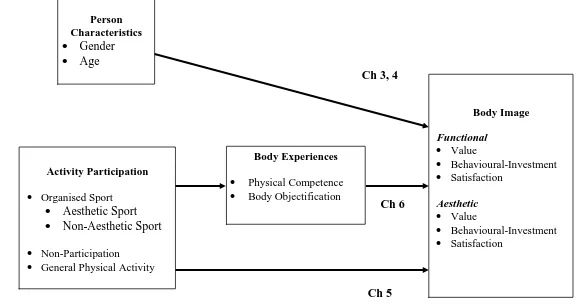
A conceptual model was developed to address the identified gaps in the research literature, to use as a framework for testing the link between both functional and
aesthetic body image and sports participation. Four empirical studies were designed to test the links within this model. The focus of each of the studies is shown in Figure 1 (the numbers adjacent to the links in the model represent each relevant chapter). As mentioned previously, body image is a major concern among many youth and has been highlighted as one of the top concerns of young Australian women (Mission Australia, 2010). Females consistently report a poorer body image than males (Chapters 3 and 4 both highlight this gender discrepancy), consequently the final two studies presented in Chapter 5 and 6 focus solely on adolescent girls.
7
high schools located throughout metropolitan and rural Western Australia. YAPS-WA was originally funded by a three-year Australian Research Council (ARC) grant awarded to Professor Bonnie Barber and Professor Jacqueline Eccles in 2007. In 2010, the YAPS-WA project received an additional three-year grant and will now continue collecting longitudinal data until 2012. Data collection commenced in 2007. Two
6
Figure one: Conceptual model representing the proposed links between sports participation and body image. The numbers alongside the links represent the number of the chapter that examines the link.
Activity Participation
• Organised Sport
• Aesthetic Sport • Non-Aesthetic Sport • Non-Participation
• General Physical Activity
Body Experiences
• Physical Competence • Body Objectification
Body Image
Functional • Value
• Behavioural-Investment • Satisfaction
Aesthetic • Value
• Behavioural-Investment • Satisfaction
Control Variables
• BMI
• Relative Pubertal Timing
Ch 3, 4
Ch 5 Ch 6
Person Characteristics
7
The four empirical studies in this thesis examine data from Wave 1 and Wave 2 of the YAPS-WA study. Data from both males and females in each cohort were examined across the first two studies, one cross-sectional, using Wave 2 data, and the other longitudinal, examining both Wave 1 and Wave 2 data. The remaining two cross-sectional studies outlined in this thesis draw on Wave 2 data, and includes female participants only. This thesis is partially comprised of published manuscripts. Therefore, each empirical chapter is an independent study, consisting of its own abstract, relevant literature review, method section, results section and discussion. Consequently, the references, in addition to relevant appendices, are presented at the conclusion of each chapter. Each chapter also has its own preface, outlining the rationale and aims of each study as well as how each study relates to the conceptual model. A summary of each empirical chapter will now follow.
Chapter 3. In order to study the functional dimension of body image
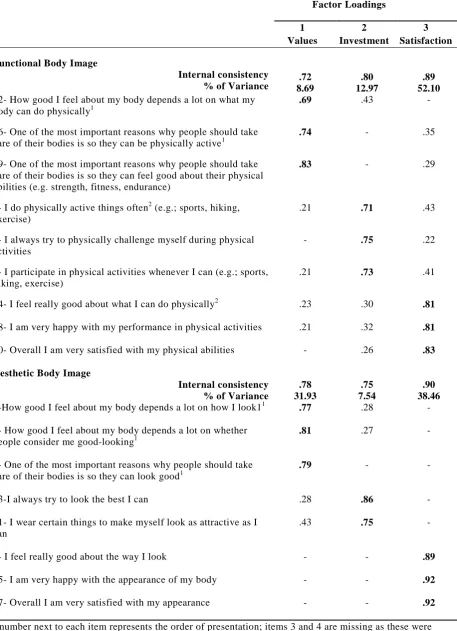
alongside the aesthetic dimension, an instrument was needed that not only measured both the functional and aesthetic dimensions of the body, but also encapsulated the multiple components of body image. Chapter 3 introduces the Embodied Image Scale (EIS), a measure of body image developed specifically for this thesis. The EIS was designed to measure the cognitive (values), behavioural
(behavioural-investment), and affective (satisfaction) components of body image across both the aesthetic and functional body dimensions. This chapter explores the psychometric properties of the EIS among Australian adolescents and discusses its use as a
8
aesthetic body image prevents researchers from gaining a comprehensive understanding of body image among adolescent boys and girls.
Chapter 4. Very little research in this field has investigated adolescents’ functional body image over time and most studies have used cross-sectional and correlational analyses. Therefore, a need to examine the longitudinal nature of
functional body image was noted, particularly to identify whether it follows the same trend as aesthetic body image. Chapter 4 was designed as a longitudinal study, specifically exploring changes in functional and aesthetic body satisfaction among West Australian adolescents over a twelve-month period. Body image was
investigated as a malleable construct, with changes being explored over time within the individual, and between groups. Gender and cohort differences were again examined to establish whether the differences identified in chapter three were consistent over time. This is one of the first studies to explore changes in both functional and aesthetic body image among Australian adolescents over time. Chapter 4 also highlights a growing gap between girls’ and boys’ body satisfaction during adolescence, specifically the low body satisfaction found among girls. Brought to light by this chapter, is a need to explore potential contexts that may encourage girls to evaluate their bodies in a more positive manner.
9
aesthetically focused sports with non-aesthetic sports. This chapter highlights the uniqueness of sports, finding that, although being physically active may be more beneficial to body image than being sedentary, participating in sports fostered a functional body image to a greater extent than involvement in general physical activity or being sedentary. Chapter 5 also highlights the importance of taking into account the type of sport within which girls are involved, when investigating body image among athletes, as those participating in non-aesthetic sports differed from those involved in aesthetically-based sports. These differences found in chapter 5 brought about the question of “why” different sport types might be differentially related to body image, which lead to the additional research presented in chapter 6.
Chapter 6. Chapter 5 identified a link between sports participation and body image among female adolescents, suggesting that participation in sports (regardless of sport type) is associated with a body image that incorporates the functional
10
At the conclusion of this thesis, the findings of the four empirical studies presented are summarised in Chapter 7 as a general discussion. The implications of this research are also discussed, in particular, the relevance and contribution the EIS makes to the body image literature and how it may be used by researchers
investigating body image in the future. All questionnaires used to gain data for this thesis are included in Appendices A-C at the conclusion of this thesis. Overall, this thesis is innovative in its view of body image and endeavours to provoke further discussion and thought into the addition of functionality in body image research. It is hoped that this thesis may be used by professionals, such as teachers, coaches, academics, and program developers, who work with, or for the benefit of
11
References
Avalos, L. C., & Tylka, T. L. (2006). Exploring a model of intuitive eating with college women. Journal of Counseling Psychology, 53(4), 486-497.
Barker, E. T., & Galambos, N. L. (2003). Body dissatisfaction of asolescent girls and boys: risks and resource factors. Journal of Early Adolescence, 23, 141-165. Brown, T. A., Cash, T. F., & Milulka, P. J. (1990). Attitudinal body-image
assessment: Factor analysis of the Body-Self Relations Questionnaire.
Journal of Personality Assessment, 55(1/2), 135-144.
Brady, M. (2005). Creating safe spaces and building social assets for young women in the developing worlds: A new role for sports. [Review]. Women's Studies Quarterly, 33(1/2), 35-49.
Brady, M. (2005). Letting girls play: Using sport to create safe spaces and build social assets. New York: Population Council.
Burgess, G., Grogan, S., & Burwitz, L. (2006). Effects of a 6-week aerobic dance intervention on body image and physical self-perceptions in adolescent girls.
Body Image, 3, 57-66.
Cash, T. F., & Deagle, E. A. (1997). The nature and extent of body-image disturbance in anorexia nervosa and bulimia nervosa: A meta-analysis.
International Journal of Eating Disorders, 22, 107-125.
Cash, T. F., Melnyk, S. E., & Hrabosky, J. I. (2004). The assessment of body image investment: An extensive revision of the appearance schemas inventory.
International Journal of Eating Disorders, 35(3), 305-316.
12
Cok, F. (1990). Body image satisfaction in Turkish adolescents. Adolescence, 25(98), 409-413.
Davison, T. E., & McCabe, M. P. (2006). Adolescent body image and psychosocial functioning. Journal of Social Psychology, 146(1), 15-30.
Ference, R., & Muth, D. K. (2004). Helping middle school females form a sense of self through team sports and exercise. Women in Sport & Physical Activity Journal, 13(1), 28-35.
Franzoi, S. L. (1995). The body-as-object versus the body-as-process: Gender differences and gender considerations. Sex Roles, 33(5/6), 417-437. Franzoi, S. L., & Shields, S. A. (1984). The body esteem scale: multidimensional
structure and sex differences in a college population. Journal of Personality Assessment, 48(2), 173-178.
Fredrickson, B. L., & Roberts, T. (1997). Objectification theory: Toward understanding women's lived experiences and mental health risks.
Psychology of Women Quarterly, 21, 173-206.
Furnham, A., Badmin, N., & Sneade, I. (2002). Body image dissatisfaction: gender differences in eating attitudes, self-esteem, and reasons for exercise. The Journal of Psychology, 136(6), 581-596.
Hansen, D. M., Larson, R. W. & Dworkin, J. B. (2003). What adolescents learn in organised activities: a survey of self-reported developmental experiences.
Journal of Research on Adolescence, 13(1), 25-55.
13
Jaffe, L., & Manzer, R. (1992). Girls' perspectives: physical activity and self-esteem.
Melpomene Journal, 11(3), 14-23.
Jaffe, L., & Ricker, S. (1993). Physical activity and self-esteem in girls: the teen years. Melpomene Journal, 12(3), 19-26.
Kitchen, E. N. (2006). The negiotiation of gender and athleticism by women athletes.
Unpublished masters thesis Georgia State University, Atlanta. Larson, R. W. (2000). Toward a psychology of positive youth development.
American Psychologist, 55(1), 170-183.
Larson, R. W., Hansen, D. M. & Moneta, G. (2006). Differing profiles of developmental experiences across types of organised youth activities.
Developmental Psychology, 42(5), 849-863.
Lehman, S. J., & Silverberg Koerner, S. S. (2004). Adolescent women's sports involvement and sexual behavior/health: A process level investigation.
Journal of Youth and Adolescence, 33(5), 443-455.
Marsh, H. W. (1996). Physical Self-Description Questionnaire: Stability and discriminant validity. Research Quarterly for Exercise and Sport, 67, 249-264.
Marsh, H. W., & Jackson, S. A. (1986). Multidimensional self-concepts, masculinity, and femininity as a funtion of women's involvement in athletics. Sex Roles, 15(7/8), 391-415.
Mckinley, N. M. (1998). Gender differences in undergraduates' body esteem: The mediating effect of objectified body consciousness and actual/ideal weight discrepancy. Sex Roles, 39(1/2), 113-123.
14
Mission Australia. (2010). National Survey of Young Australians 2010: Key and Emerging Issues. Retrieved August 29, 2011 from
Noles, S. W., Cash, T. F., & Winstead, B. A. (1985). Body image, physical attractiveness, and depression. journal of Consulting and Clinical Psychology, 53(1), 88-94.
Rierdan, J., & Koff, E. (1997). Weight, weight-related aspects of body image and depression in early adolescent girls. Journal of Adolescent Health, 18(4), 286-291.
Rierdan, J., Koff, E., & Stubbs, M. L. (1989). Timing of menarche, preparation, and initial menstrual experience: Replication and further analyses in a prospective study Journal of Youth and Adolescence 18(5), 413-426.
Rieder, S., & Ruderman, A. (2001). Cognitive factors associated with binge and purge eating behaviours: The interaction of body dissatisfaction and body image importance. Cognitive Therapy and Research, 25(6), 801-812. Scott, B. A., & Derry, J. A. (2005). Women in their bodies: Challenging
objectification through experiential learning. Women's Studies Quarterly, 33(1/2), 188-209.
Strelan, P., Mehaffey, S. J., & Tiggemann, M. (2003). Self-objectification and esteem in young women: the mediating role of reasons for exercise. Sex Roles, 48(1/2), 89-95.
15
Williams, P. A., & Cash, T. F. (2001). Effects of a circuit weight training program on the body images of college students. International Journal of Eating
Disorders, 30, 75-82.
17
CHAPTER TWO: Literature Review
The body is a gateway to experiencing and exploring the world. It is the first thing people see when they look at us, the primary way we make a first impression on others, and it is the canvas upon which we express who we are. It is not
surprising, then, that the cultures we live in create and outline what the ideal body comprises of. This ideal body may vary across cultures, between genders, and also between individuals. Striving to obtain this ideal image can highlight discrepancies that may potentially exist between the ideal body and the way one’s actual body is perceived by the self. The value placed on obtaining different aspects if the body ideal, the effort exerted to achieve such an ideal, and the evaluations made towards the body construct what is known as body image (Cash, 2002). It is this body image that can influence many other aspects of well-being, including behaviours, thoughts and relationships with others as well as with ourselves (Grogan, 2008). The study of body image, or the way individuals perceive their own body, is therefore an integral element in the understanding of our own psychology and well-being.
The body is salient factor in everyday life and, as a result, it has the potential to impact on our sense of self as well as our interpersonal relationships (Davison & McCabe, 2006). Holding a negative view of the body, or having a poor body image, can have detrimental effects on well-being. A negative body image or body
18
association between poor body image and the use of unhealthy practices to obtain an ideal body. A negative body image has been associated with unhealthy eating and weight loss techniques (Ferreiro, Seoane, & Senra, 2011; Stice, Mazotti, Krebs, & Martin, 1998), as well as eating disorders such as anorexia nervosa and bulimia (Stice & Shaw, 2002). Although much of the research is concentrated in female populations, incidences of eating disorders and unhealthy dieting are increasing among males (Braun, Sunday, Huang & Halmi, 1999). In addition, males and females striving to obtain a muscular ideal may also resort to unhealthy muscle building strategies such as the use of anabolic steroids (McCreary, Hildebrandt, Heinberg, Boroughs, & Thompson, 2007; Olivardia, Pope, Borowiecki, & Cohane, 2004) to assist in them in achieving their perceived body ideal. As a result, it is important to investigate body image in both males and females, particularly during developmental periods when considerable body image change occurs.
19
during adolescence and sought to investigate contexts that promote a healthy body image among adolescent girls. Body image was examined as a multidimensional construct, and both the functional and aesthetic dimensions of the body were included in its measurement. The following review of the literature will examine body image, its measurement, and contexts with the potential to foster a positive body image among adolescents.
This chapter will be broken into two major sections. The first section defines body image and explores the notion that body image is a multi-dimensional
construct, consisting of both aesthetic and functional dimensions. The inclusion of body function into the construct of body image is examined and the numerous scales and questionnaires used to measure body image are then reviewed. Finally, the nature of body image during adolescence is discussed as well as the need to explore this construct in greater depth, specifically among young women. The second section of this literature review examines organised sports as contexts with the potential to positively impact the body image of young women. The prevalence of sports participation among adolescent females is presented along with the many benefits that participation in sports can offer youth. The relation between sports and both aesthetic and functional body image is then considered. Finally, the gaps in the body image literature identified and the aims of the current thesis addressing these gaps are outlined.
Multidimensional Body Image
20
be one of those elusive terms within psychology, defined differently by different scholars, mostly contingent on the school of thought to which they adhere. Thus, the measurement of body image is has not been consistent throughout the literature, resulting in many studies using “body image” interchangeably with various other terms, a practice that contributes to the intangible nature of the construct of body image. Thompson and colleagues (1999) highlight 16 such terms (weight
satisfaction, size perception accuracy, body satisfaction, appearance satisfaction, appearance evaluation, appearance orientation, body-esteem, body concern, body disphoria, body dysmorphia, body schema, body percept, body distortion, body image, body image disturbance and body image disorder; p. 10), all of which relate to different elements of body image in one way or another. Although studies into body image have primarily been concerned with body satisfaction or dissatisfaction, what is clear is that body image may encompass many other components.
The notion that body image is a multidimensional construct is permeating into more of the recent research in the area (Cash & Pruzinsky, 2002). Body image is theorised to consist of cognitive, behavioural and affective components. That is, body image incorporates the way people think about their body (cognitive), including their attitudes, the value or importance they may place on different aspects of the body. In addition, body image also includes the behavioural-investment
21
has towards their own body (Thompson, Heinberg, Altabe & Tantleff-Dunn, 1999). That is, facets of body image may vary between individuals, with different aspects or characteristics of the body being more salient and important to some than they are to others.
Function and form. For young children, the body is primarily used as the vehicle through which they interact with and experience the world. Bodily concerns are more likely to be based upon learning to use the body in different ways in order to become more physically competent. Mastering new skills such as the ability to run and jump are the focus of body concerns, as well as the ability to improve on these skills (such as running faster and jumping higher). However, with age, the simplistic relationship that was once held with the body becomes more complex, as more concerned is directed towards the body’s appearance (Grogan, 2008). Although investigating the aesthetic dimension of body image is essential in understanding body image, the functionality of the body is also an important dimension to study examining the construct. The functional dimension of the body may be valued more by some than it is by others. For example, where a dancer may value her appearance and worry about the way her body looks as she is dancing, a basketball player may be more concerned with how fast she can run and how accurately she can shoot goals than how it looks as she competes. In addition the appearance of the body may be less important to an individual who has suddenly experienced damage or impairment to a body function (for example; a stroke victim or paraplegic), and their physical functioning may be at the forefront of their body concerns.
22
dimension of the body; thus, it is no surprise that this dimension of body image has been thoroughly explored. Concern towards the aesthetic dimension of the body, although also important among men, is particularly predominant among women who are socialized to view their bodies in an objectified manner (Fredrickson & Roberts, 1997). Although a salient factor in body image, the aesthetic dimension of the body is only one facet of the body, and, in order to further knowledge regarding body image, focus needs to be broadened beyond aesthetics alone. Although the body may be used to project an outward image or representation of ourselves to others, it also enables the performance of certain functions and the ability to have certain
experiences. The functional dimension of the body may also have an impact on the perceptions held towards the body, or body image, and as a result functionality needs to be incorporated into studies of body image. .
When examined alongside the aesthetic dimension of the body, results from one of the few studies in this area suggest the functional body was evaluated more positively than the aesthetic body by both males and females (Franzoi, 1995). In addition, a functional focus has been associated with a sense of body appreciation among women (Avalos & Tylka, 2006). Consequently, continuing to focus purely on body aesthetics when exploring body image, not only reinforces the Western
obsession with appearance, but also inhibits our understanding of the construct of body image, specifically in populations where the functional dimension of the body is of particular importance (for example males, athletes, individuals with a physical impairment or disability). Thus, when investigating body image, it is important that both the functional and aesthetic dimensions of the body are measured and
23
Measuring Body Image
Scholars and clinicians have used various instruments (figure rating scales, questionnaires and interviews) to measure body image and body image disturbance. The instrument used may be influenced by several factors; the school of thought from which researchers and clinicians adhere to, the culture within which their research exists, the questions their research aims to explore, and the participants or population of concern (for example; age, gender, ethnicity). A table is provided in appendix A, which summarises many of the measures that have been used to explore body image throughout the literature, highlighting the dimensional focus (aesthetic or functional) of each measure and outlining the components of body image (cognitive, behavioural and affective) each instrument explores. The majority of these instruments are aesthetically focused, with few measuring the functional dimension of the body. In addition, the bulk of these instruments measure the
affective component of body image, or participants’ satisfaction with their body, thus failing to capture the multiple components of body image. Very few measures
include the cognitive and behavioural components of body image, and of these, only a handful combine the cognitive, behavioural and affective components concurrently.
24
Inventory (EDI), which is concerned with participants’ dissatisfaction with the size of various body parts (Garner, Olmstead & Polivy, 1983; Shore & Porter, 1990; Wood, Becker & Thompson, 1996). Body dissatisfaction, as it is represented by the EDI, is conceptualised as dissatisfaction solely with body size or weight. However, concern or dissatisfaction with weight may be viewed as a predominantly Western female concern (Fredrickson & Roberts, 1997), and thus this type of body
dissatisfaction may not extend to other populations, such as males or specific ethnic groups (Celio, Zabinski & Wilfley, 2002). Thus, measuring body satisfaction or dissatisfaction should extend beyond body size alone.
Some measures explore participants’ satisfaction with specific areas of the body and different body parts. The Body Satisfaction Scale (BSS; Slade, Dewey, Newton, Brodie & Kiemle, 1990) groups body parts into three categories; body, head and general, and thus explores participants’ satisfaction with several non-weight related areas. However, the BSS is again focused primarily on satisfaction with appearance. The Body Cathexis Scale (BCS; Secord & Jourard, 1953; Jourard & Secord, 1954) and the Body-Esteem Scale (BES; Franzoi & Shields, 1984) also explore satisfaction in regards to body parts, however, both scales include subscales that also measure satisfaction with different aspects of body function. The BCS evaluates participants’ satisfaction with their health/fitness and also their muscular strength, whereas the BES includes physical condition for both males and females, and body strength among males, specifically.
25
particular body ideal. For example, the Body Image States Scale (BISS; Cash, Fleming, Alindogan, Steadman & Whitehead, 2002), explores participants’
satisfaction with the aesthetic appearance of their body in comparison to the average
person. This scale can also be used to assess body satisfaction in the current moment, as well as across different contexts.
When bodily comparisons are made they may not be restricted to the everyday average body; comparisons may also be made between ourselves and a cultural ideal. Body dissatisfaction has been explored as a discrepancy between the individual’s perception of their actual body and the ideal body they wish to obtain or aspire to hold. The most predominant measures used to establish the actual-ideal discrepancy are figure rating scales (Cafri, Roehrig & Thompson, 2004; Thompson & Altabe, 1991; Thompson & Gray, 1995; Williamson et al., 1989). These scales (see Appendix A) present participants with a series of contour drawings or figures that represent the male or female body in a range of shapes or sizes (obese to underweight). Using these drawings/figures, participants are asked to select the figure that most accurately reflects their current body shape and also the figure that reflects their ideal body shape. The discrepancy between the two figures selected is a representation of body dissatisfaction. However, these scales have also been used to gain a rating of socially acceptable body shapes (Doll, Ball & Willows, 2004).
Figure rating scales are useful to gain a snapshot into participants’ perceptions regarding their body shape; however, they do not capture the
26
reflect the addition of weight for females, and weight and muscularity for males; therefore, they exclude the vast variations in body shape found throughout society. With one exception; the Body Image Self-Evaluation Colouring Lens (Gusella, Clark & van Roosmalen; 2004), the majority of these scales neglect the functional
dimension of body image. Body Image Self-Evaluation Colouring Lens presents participants with a hand drawn figure representing either a male or female body of appropriate physical development (pre-adolescent, adolescent or fully mature). Half of the figure is labelled form and the remaining half is labelled function. Participants are asked to indicate (by colouring in) the parts of the body they like and dislike by using two different colours and the percentage of each colour is calculated to indicate positive and negative body evaluations. This is done for both the functional half and the form half. The use of this scale however, is minimal and is predominantly restricted to samples of eating disorder patients. Overall, figure rating scales do not capture the complexity of body image; however, they may be used as an effective way to gain a snapshot into the distance between a person’s real body and the body they consider to be ideal.
27
The measurement of the value and investment individuals place in their bodies has previously been accomplished using a single cognitive-behavioral dimension (Brown, Cash & Milkulka, 1990). However, separating values and investment into distinct dimensions may enable a deeper understanding of body satisfaction, by identifying which dimension is more influential in an individual’s evaluation of their body. For example, Rodiger and colleagues (2007) found women who reported that their appearance is a strong determinant of their self-worth were less likely to report a favourable body image; however, their investment in the body’s physical attractiveness was found to be unrelated to body image.
Consequently, investment in one’s appearance might not be detrimental to body image, but valuing the body for its aesthetic qualities might be and, therefore, measuring these components in combination fails to identify this distinction.
A scale that does examine the cognitive component of body image
individually is the Appearance Schemas Inventory (ASI; Cash & Labarge, 1996) and its revised version (ASI-R; Cash, Melnyk & Hrabosky, 2004). These scales aim to measure the meaning, importance, and influence of appearance to participants. Measures on the ASI-R have been found to relate to a greater actual-ideal
28
The most comprehensive scales to date, covering the cognitive, behavioural and affective components of body image, across both the functional and aesthetic dimensions of the body, are the Physical Self-Description Questionnaire (PDSQ; Marsh, 1996) and the Multidimensional Body Self Relations Questionnaire (MBSRQ; Brown et al., 1990). The PDSQ explores physical self-concept and incorporates several aspects of the body (such as: appearance, strength, health and fitness). However, the PDSQ is an instrument designed to measure physical self-concept and does not distinguish between the cognitive, behavioural and affective components of body image; subsequently, some components are measured
concurrently rather than individually. The MBSRQ also assesses multiple
dimensions of body image, and, although the affective component (satisfaction) of body image is distinguished, the cognitive and behavioural components are measured in combination as a single component. Measuring the cognitive (values), behavioural (investment) and affective (satisfaction) components of body image independently from each other might allow the role that each plays in body image to be examined, increasing our understanding of our body perceptions.
After reviewing the many body image measures available, a major gap in the clinical and academic arena was noted. Although, an understanding that the construct of body image has multiple components is being acknowledged and accepted
throughout the literature, focus has still remained concentrated on one dimension of the body: appearance. A meta-analytic review conducted by Hausenblas and Symons Downs (2001) noted the over-representation of appearance satisfaction (specifically size and weight) in the body image literature and recommend a more
29
identified for the development of a multidimensional measure that assesses the cognitive, behavioural and affective components across both the aesthetic and functional dimensions of the body. In doing so, a further understanding may be gained into the similarities and differences existing between different groups, particularly between groups who may place contrasting value on each body dimension (for example gender differences).
The Gendered Body Ideal
The body is an entity that has the potential to be altered via many avenues. We can change the way it looks through fashion, cosmetics, exercise, and even cosmetic surgery. We can also train our bodies to become stronger, faster and more co-ordinated, altering its physical capabilities. The changes and the investment we make to obtain a certain body may be dependent on the ideal body that we hope to achieve. However, this ideal body is not necessarily the same for everyone, and may vary according to an individual’s gender, ethnicity (Jaffe & Lutter, 1995; Paxton et al., 2006) and the culture they may live in (Williams, Ricciardelli, McCabe, Waqa & Bavadra, 2006).
The focal point of the ideal body is quite different between males and females. Males’ ideal body is often associated with functional qualities or characteristics (for example, muscularity and strength; Cohane & Pope, 2001; Olivardia, et al., 2004; Peixoto Labre, 2002). Females, however, tend to focus on the aesthetic qualities of the body, particularly appearance and weight (McCabe,
30
more than for its appearance (Fredrickson & Roberts, 1997). The divergence in cultural body ideals endorsed by males and females may result in their body
evaluations being based upon satisfaction with different body dimensions (aesthetic vs. functional).
Not only is the ideal body different for males and females, the ideal body is also an ever-changing image, constructed via the cultural and societal standards of history and time (Grogan, 2008). For example, the feminine ideal has changed dramatically from the fertile, reproductive figure idealized in the 1600’s by artists, such as Rubens and Rembrandt. Over the past century, the ideal body for women has both shrunk and grown several times. In the 1920’s, fashion demanded a more boyish figure that was both hipless and breastless. However, in the 1940-50’s breasts became more fashionable through feminine pin-ups, such as Marilyn Monroe who personified sensuality. But, within the same period, popular actresses, such as Audrey Hepburn and Grace Kelly became icons for sophistication and beauty, and slimness again became fashionable. This ultra-thin feminine ideal was reinforced in the 1960’s with models such as Twiggy, who were presented as childlike, boyish and ultra-thin. Unfortunately, the unrealistic ultra-thin ideal has been maintained into the 1990’s and 2000’s with supermodels, such as Kate Moss, reinforcing the “waif” like image. In addition, the introduction of technology has enabled more unrealistic images of women’s bodies to permeate into popular culture, as real images are now able to be photo-shopped and edited dramatically, creating not only unrealistic images of women, but also unobtainable body ideals.
31
presented naked and muscular, representing the aesthetic male ideal. However, unlike artists of ancient Greece and Rome, who revered the male body as more beautiful than the female form, the male body today is less likely to be objectified, and is valued for its instrumentality rather than aesthetics. Until the 1980’ and
1990’s, sexualized images of the male body were rare in the media; but this is slowly changing as advertisers broaden their market audiences. Overall, across time,
functionality has continued to shape what is considered to be the ideal male body. It is clear that the ideal body may not be the same for all individuals, and the body can be valued, invested in, and evaluated for both its aesthetic and functional qualities.
Adolescence and Body Image
Annual studies conducted by Mission Australia (2006; 2007; 2008; 2009; 2010) exploring the concerns of over 45, 000 young Australians aged 11-24, have consistently found body image to be among the top three biggest concerns reported by Australian adolescents, with older adolescents consistently more concerned with their body image than younger adolescents. These studies highlight the importance of body image during the adolescent developmental period. It is during adolescence that gender discrepancies in body image become more apparent, as changes in body image appear to follow different patterns for males and females (Clark &
32
period. Among females, by contrast, body dissatisfaction was found to increase significantly between the ages of 13 and 15 years, and to stabilize between the ages of 15 and 18 years. However, other studies have found no gender differences in body image change patterns during adolescence, although a drop in body satisfaction was experienced by both males and females (Eisenberg, Neumark-Sztainer & Paxton, 2006).
When functional aspects of body image are explored longitudinally throughout adolescence, more consistent patterns of change are found. Overall, females report a consistent decrease in functional body image, which includes their perceptions of their physical conditioning, sport competence and physical strength and muscularity (Crocker et al, 2006; Crocker, Sabiston, Forrestor, Kowalski, Kowlaski & McDonough, 2003). Both males and females also report a decrease in sport competence, which was found to accelerate during late adolescence (Jacobs, Lanza, Osgood, Eccles & Wigfield, 2002). Overall, change in aesthetic and
functional body satisfaction during adolescence can be described as varied and more research in this area is sorely needed. By following both aesthetic and functional body image in adolescents over time, we can begin to understand at what period during adolescence is body image of greatest concern to youth.
When the physiological changes that occur to the body during adolescence are considered, it is not surprising that adolescents’ body image also experiences a change and becomes a more central component in adolescent interpersonal and psychological development (Levine & Smolak, 2004). The process of puberty during adolescence transforms the childish body into one that is biologically and
33
increase the attention given to the body (from the self and others), and can result in body image becoming a salient factor in the lives of adolescents.
The process of puberty can have a differential impact on body image, particularly when considering body image between males and females (Cok, 1990). The onset of puberty, for females, increases adiposity, widens hips, initiates breast development and begins a transition that tends to move girls further away from the current ultra-thin cultural ideal. As result of their pubertal development, girls tend to become curvier (with increase weight gain and breast development), resulting in post pubescent females reporting higher levels of body dissatisfaction than prepubescent females (Thompson & Chad, 2000). However, among males, pubertal development results in broader shoulders, increased strength and muscle development, bringing their bodies closer to, rather than further away from, the masculine ideal. Thus, males who mature later than their peers often express a higher level of body dissatisfaction than their early or on time peers (Cohane & Pope, 2001; Piexoto Labre, 2002).
The increase in height and weight as a result of puberty is associated with an increase in the body’s overall Body Mass Index (BMI). Increases in BMI have been found to negatively influence body satisfaction and body image (Barker &
Galambos, 2003; Muth & Cash, 1997; Paxton et al., 2006; Stice & Whitenton, 2002). A linear relationship between body dissatisfaction and BMI is consistent among females, with obese females expressing the greatest dissatisfaction with their bodies followed by overweight, normal weight and underweight females respectively (Muth & Cash, 1997; Stice & Whitenton, 2002). The relationship among males, however, may be considered more curvilinear, with underweight and overweight males
34
1997; Presnell, Bearman & Stice., 2004). Overall, the physiological changes occurring throughout puberty tend to make the body more salient to ourselves and others. However, other sociocultural factors may also play a role in adolescents’ concern towards their body image (Levine & Piran, 2004).
Sociocultural influences on body image have been theorized to stem from multiple sources, such as peers, family and the media (van de Berg, Thompson, Obremski-Brandon, & Coovert, 2002). The combination of these sources contributes to what may be referred to as an appearance culture, encouraging a focus on
appearance or aesthetics, which can, in turn, lead to body image concern among adolescents (Clark & Tiggemann, 2006; Jones & Crawford, 2006). A particularly influential source of body image concern is the peer group, within which appearance conversations are rife, social comparisons are drawn, and appearance-related teasing often occurs (Jones, 2004). But, the target of social comparisons and focus of
appearance conversations within the peer culture may be different for males and females. Males tend to receive messages about their bodies’ function and
35
Adolescent Girls, Body Image and Body Objectification
In childhood, both girls and boys focus on what their bodies can do (jump high, run fast, climb trees); however, during adolescence girls tend to lose this relationship with their bodies, as their focus moves from function to form. Over the lifespan, body dissatisfaction is an experience more common among females than males (Barker & Galambos, 2003; Cash, Fleming, Alindogan, Steadman & Whitehead, 2002; Davison & McCabe, 2006; Furnham, Badmin & Sneade, 2002; Muth & Cash, 1997). It is during adolescence that this gender discrepancy becomes more apparent (Rosenblum & Lewis, 1999), with females as young as 8-10 years reporting higher body dissatisfaction than their male counterparts (Thompson, Corwin & Sargent, 1997; Wood et al., 1996). Just over one third (34%) of young Australian females report that body image is one their greatest worries (Mission Australia, 2010) and, throughout the literature, female adolescents consistently report greater body dissatisfaction their male peers (Barker & Galambos, 2003; Cash et al., 2002; Cok, 1990; Davidson & McCabe, 2006; Furnham, Badmin & Sneade, 2002; Muth & Cash, 1997). As females progress into young adulthood, their levels of body dissatisfaction tend to decrease (Rosenblum & Lewis, 1999), however they continue to be higher among females in comparison to males and remain consistently so throughout the lifespan.
36
culture (Jackson, 2002), and body image is maintained and constructed through the socialisation of these values (Thompson et al., 1999). In Western cultures, both males and females are bombarded with messages that emphasise beauty, thinness and attractiveness of the female form in particular, socialising appearance-focused values (Fredrickson and Roberts, 1997; Smolak, 2004; Thompson et al., 1999). The internalisation of Western ideals creates an often unattainable benchmark against which individuals will base goals and evaluate not just their own bodies, but those of others also. It is this inability to reach an impossible appearance ideal that can lead girls to become dissatisfied with their body’s appearance.
Fredrickson and Roberts (1997) developed Objectification Theory to understand how being female in a culture that places great emphasis on the appearance of the body influences womens’ perceptions towards their bodies and themselves. In many Western societies, girls and women are socialised to view the female body as an object to be invested in and evaluated for its form or aesthetic appeal, rather than for its function (Fredrickson & Roberts, 1997; Scott & Derry, 2005; Williams et al., 2006). The body becomes the basis for the evaluations of others and the self, and females begin to be evaluated as a body, rather than as themselves. Over time women may internalize this “observer” perspective and begin to subscribe to excessive body monitoring, a sense of body shame, body
37
consistently throughout a female’s life, with girls as young as 10 reporting an internalization of objectified messages (Lindberg, Hyde & McKinley, 2006).
However, sexual objectification becomes more apparent and relevant for girls during adolescence. Their body that was once used as a vehicle to travel through, engage with, and experience the world, is now a highly scrutinised commodity, continually modified and maintained to a cultural standard that is not only artificial but
unattainable (Scott & Derry, 2005).
The female body, during adolescence, becomes a target for sexual
objectification by both males and females, and as their bodies develop, adolescent girls begin to learn that they are not being evaluated as a person, but rather as “a body” (Fredrickson & Roberts, 1997). Exposure to alternative body values and ideals may be of particular importance in the prevention of body image disturbances among adolescent females. Redirecting girls’ focus to body function and internal bodily experiences, such as a feeling of physical competence, may filter objectifying experiences through an introspective and functional lens. Incorporating perceptions of functionality into body image has been associated with a sense of body
appreciation among women (Avalos & Tylka, 2006) and, thus, may encourage girls to take more than just an observer’s perspective, when making evaluations about their bodies. Therefore, it may be beneficial to explore contexts where females are encouraged to endorse other dimensions of their bodies (such as functionality), and incorporate a sense of physical competence into their body image.
Sports, Body Image and Adolescent Girls
“I think it can be so important to body image, to just feel in touch with your bodies…to feel
your whole self doing something… when I’m on the bike, and my legs are making me move
up a mountain…I’ve never felt such a deep appreciation for my body and what it can do”
38
Encouraging a Focus on Function through Sports. The above quote is from Nicole, a 29 year woman and participant in a qualitative study investigating the relationship between athleticism and body image among women (Kitchen, 2006). Nicole is describing how she views her relationship with her body whilst mountain biking. This quote highlights that body function is an important dimension to body image and also illustrates how participation in physical activity might enable some women to gain an awareness and appreciation of the functional qualities of their bodies. It is important that girls are given an opportunity to be exposed to contexts where messages about the body are not primarily appearance-focused and the ideal body is valued and invested in for its function over, or in addition to, its form. These contexts may provide girls with an alternative perspective from which to evaluate their bodies. The sporting environment may have the potential to provide adolescent girls with such a perspective, providing girls with views and experiences of the body that challenge the objectified image portrayed in dominant western culture
(Tiggemann, 2001). Sports programs have the capacity to encourage a body image that incorporates physical skill and potential by delivering healthy messages to girls regarding their bodies (Brady, 2005; 1998). Participation in sports activities
encourages girls to form an instrumental relationship with their bodies. Exploring this relationship can introduce girls to a body that is invested in as an instrumental tool (Tiggemann, 2001), re-balancing girls’ focus between function and form.
39
participation in organised sports has been associated with several positive developmental outcomes and experiences (Broh, 2002; Eccles, Barber, Stone & Hunt, 2003; Fraser-Thomas, Cote & Deakin, 2005; Larson, 2000; McNeal, 1995;) it is during adolescence that participation rates in sports activities drop (Australian Bureau of Statistics; ABS, 2006). Despite gender equality in access to sports club membership, participation rates are significantly lower in female adolescents than males, with adolescent girls reporting spending significantly less time in physical activities than their male peers (Aarnio et al., 2002; ABS, 2006; 2009a; 2009b; Dovey, Reeder & Chalmers, 1998). Lower participation rates among females may be explained by the barriers that adolescent girls themselves perceive towards sports participation. Adolescent girls report feeling self-conscious or uncomfortable about their bodies, a lack of confidence in their physical abilities and feeling unfeminine, as reasons to resist participating in sports (Biscomb, Matheson, Beckerman & Jarett, 2000; Dwyer et al., 2006; Robbins, Pender & Kazanis, 2003). Overall, although sports offer adolescent girls many benefits, their participation is being hindered, in part, by their own lack of confidence in their instrumental body and
self-consciousness towards their aesthetic body.
40
2009; Ference & Muth, 2004), and lower levels of self-objectification (Greenleaf, 2005). In particular, sports participation is associated with more confidence and satisfaction with the functional aspects of the body. Specifically, sports participants report higher self-assessed physical fitness (Aarnio et al., 2002), higher sports competence (Gadbois & Bowker, 2007; Jaffe & Manzer, 1992; Jaffe & Ricker, 1993), higher instrumentality, internal locus of control and personal efficacy (Parson & Betz, 2001), and a more positive physical self-concept (Schumaker, Small & Wood, 1986) than non-participants.
41
Although a large amount of research has examined the link between body image and sports participation, very few studies have extended these investigations into why this link is found. Sports and physical activity have the potential to provide opportunities for experiential learning, which is considered a major key to
challenging body objectification among females (Scott & Derry, 2005). Being involved in sports provides a context where girls are able to experience, invest in, and value the functionality of their bodies (Kitchen, 2006). Krane and colleagues (2004) explored the connection between sports and body image by interviewing adult female athletes regarding their body perceptions. The athletes reported that their participation in sports allowed them to experience their bodies as physically useful, and they felt pride about their strong bodies and physical capabilities. This sense of functionality extended beyond the sporting context, with participants reporting a sense of empowerment as a result of the skill and strength they discovered through participation. These ideas have been echoed by other qualitative studies. For
example, Russell (2004) identified that, during sport, women reported experiencing the functionality of the body, which participants felt allowed them to widen their body perceptions and incorporate their evaluations of body function into their body image. Overall, the evidence indicates that participation in sports offers girls the opportunity to experience their bodies in various ways.
42
in which appearance is a factor in success, such as gymnastics or dance) have been explored, participants have reported high levels of self-objectification, body surveillance (Tiggemann & Slater, 2001), drive for thinness (Slater & Tiggemann, 2010), and disordered eating behaviours (Smolak et al., 2000). Those findings suggest that aesthetically-focused sports may reinforce body objectification and an observer’s perspective and, thus, may encourage girls to adopt an aesthetic focus when evaluating their bodies. However, very few studies have explored body image difference between aesthetic and non-aesthetic sport types, and none have compared functional and aesthetic body image whilst making this distinction. As such, very little is known as to how different sport types may impact the functional and aesthetic dimensions of body image. In order to gain a wider understanding of female sports involvement, and the potential benefits this involvement can provide, researchers need to investigate participation more thoroughly. Rather than focusing primarily on participation versus non-participation, researchers need to identify the type of physical activity girls are involved in and also extend their investigations by differentiating between different sport types.
Organised sports however, may not be unique in their potential to offer girls opportunities to experience and invest in the body’s functionality. General forms of physical activity such as attending health clubs, jogging daily or taking frequents walks, may also encourage girls to explore their functional body. However,